For thirty-five years, American adults had a number to work with. Two drinks a day for men, one for women. That number no longer exists. On January 7, 2026, HHS and USDA released the 2025-2030 Dietary Guidelines for Americans and removed any specific guidance on alcohol consumption, replacing it with advice to consume less alcohol for better overall health.
So the question millions of older Americans are quietly asking has no federal answer anymore. How much is actually safe for a body that is 65, not 25?
Quick Answer: Alcohol hits harder after 60 because your body composition changed. Total body water drops, lean muscle falls, and liver blood flow slows, so the same drink produces a higher peak blood alcohol level and takes longer to clear. Add prescription medications, which most older adults take, and the pour that felt fine at 40 can affect balance, memory, sleep, and blood pressure far more at 65.
At a Glance
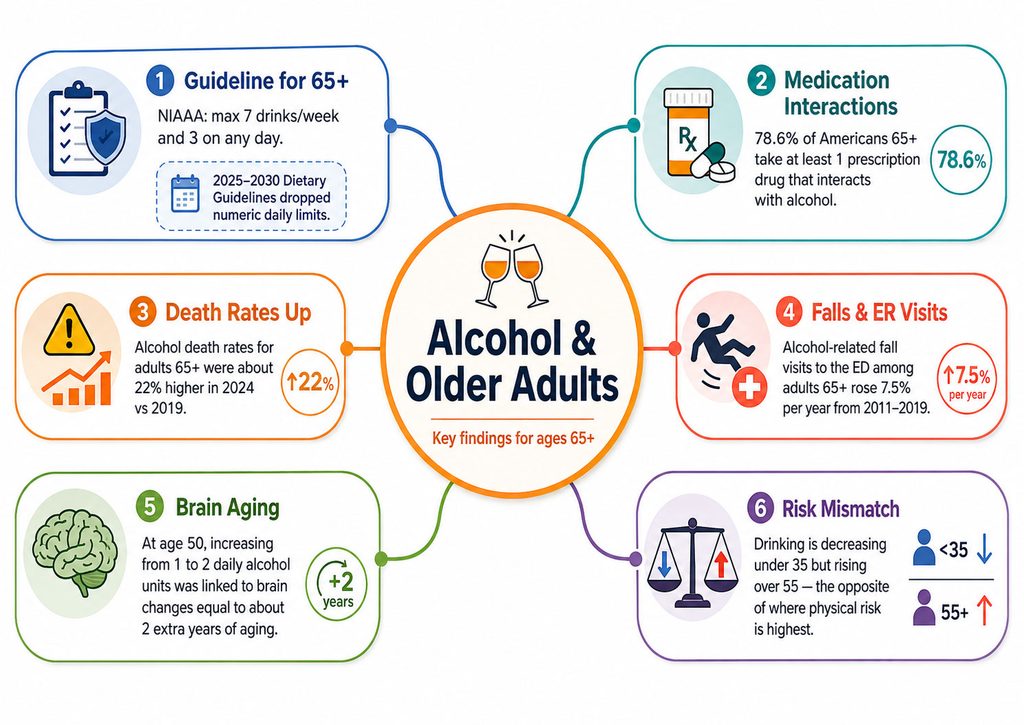
- The 2025-2030 Dietary Guidelines dropped numeric daily limits entirely, but NIAAA guidance for adults over 65 still stands at no more than 7 drinks a week and no more than 3 on any single day.
- Among Americans aged 65 and older, 78.6% use at least one prescription medication that interacts with alcohol.
- Alcohol death rates among adults 65 and older ran about 22% higher in 2024 than in 2019.
- Emergency department visits for alcohol-associated falls among adults 65 and older rose 7.5% per year from 2011 to 2019.
- In 50-year-olds, moving from one daily alcohol unit to two was linked to brain changes equivalent to aging two years.
- Drinking is falling sharply among Americans under 35 and rising among those over 55, which is the opposite of where the physical risk sits.
The Reversal Nobody Is Talking About
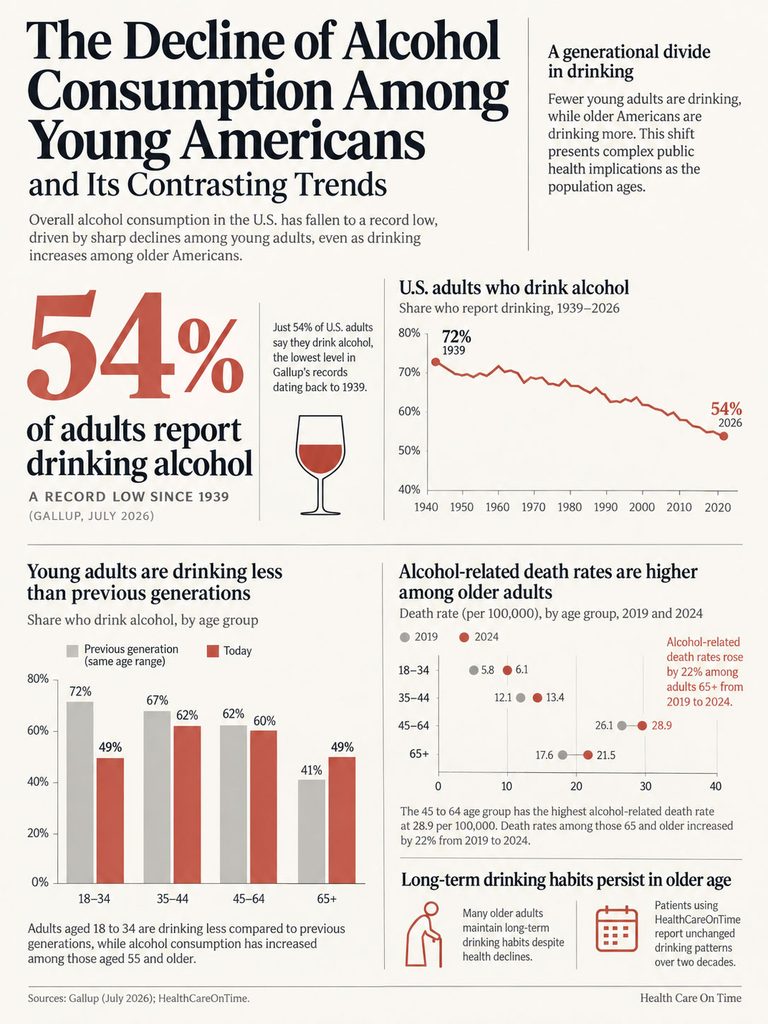
Americans are drinking less than at any point on record. Gallup’s July 2026 survey found 54% of adults say they drink alcohol, holding at a record low for a second straight year, the lowest reading since Gallup began asking in 1939.
That sounds like unambiguous good news. Look at who is doing the cutting and it gets more complicated.
Gallup found that adults aged 18 to 34 are less likely to say they drink than young adults in prior decades, while drinking is up among those 55 and older. The generation with the most resilient physiology is stepping back. The generation with the least is not.
Meanwhile the mortality data moved the other way. In 2024, alcohol death rates among adults 65 and older sat about 22% higher than in 2019, and rates among adults 45 to 64 were the highest of any age band at 28.9 per 100,000.
Patients booking liver and metabolic panels through HealthCareOnTime often describe drinking that has not changed in twenty years. That is precisely the issue. The drinking stayed the same while the body did not.
What Actually Changes Inside Your Body After 50
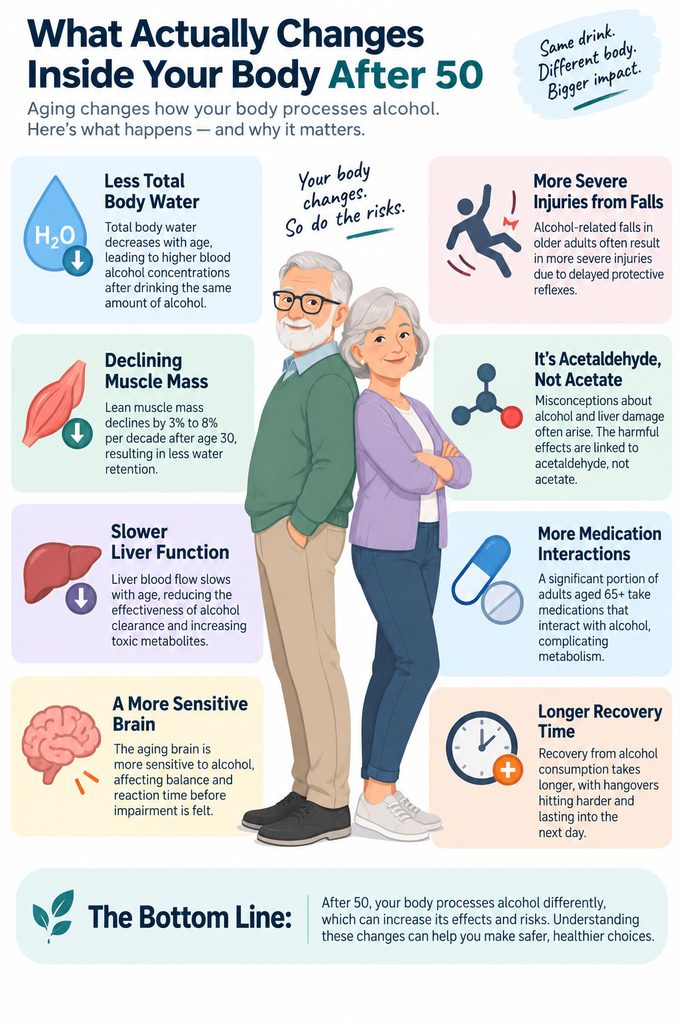
The alcohol did not get stronger. You changed. Four shifts happen quietly across your 40s, 50s, and 60s, and together they explain almost everything about why the second glass of wine now feels like the third one used to.
Our medical reviewers see this misread constantly. People assume lower tolerance means their liver is failing. Usually it means their body simply has less room to dilute what they drink.
Total Body Water Drops, So the Same Drink Is Less Diluted
Alcohol distributes through the water in your body, not through fat tissue. NIAAA notes that because of changes in the body, including reduced muscle mass and body water, some older adults reach higher blood alcohol concentrations than younger people after drinking the same amount.
Picture the same shot of whiskey poured into a full pitcher versus a half-full one. Nothing about the whiskey changed. The concentration did.
That single shift explains why older adults can develop alcohol-related problems at lower drinking amounts than younger people, as NIAAA puts it directly.
Lean Muscle Falls and Fat Rises
Muscle holds water. Fat holds very little. Cleveland Clinic notes that adults lose roughly 3% to 8% of lean muscle mass each decade after age 30, leaving less muscle tissue available to retain water.
Run that forward. Someone who was 30 in 1990 and is 66 today may have lost a meaningful share of the tissue that used to buffer every drink, even if their weight on the bathroom scale never moved.
This is also why two people of identical weight react differently, and why women feel alcohol more strongly than men at every age. Body composition matters more than the number on the scale.
Liver Blood Flow and First-Pass Metabolism Slow
Your liver enzymes do not disappear. The blood carrying alcohol to them simply moves more slowly, and that reduces how much gets cleared on the first pass through.
Cleveland Clinic geriatricians describe the same mechanism. As circulation slows with age, less blood flows through the liver, the metabolizing process slows, and toxic metabolites start to build up.
There is a second squeeze. Medications compete for the same liver pathways, and alcohol tends to win that competition, which leaves less capacity for processing the drugs themselves.
Your Brain Becomes More Sensitive, Not Less
The aging brain responds more strongly to alcohol’s sedative effects, particularly on balance and reaction time. Those effects appear before you feel impaired, which is the dangerous part.
Why Balance Fails Before You Feel Drunk
Postural control depends on fast, unconscious corrections that you never notice making. Alcohol slows those corrections at blood levels well below the point where speech slurs.
Older adults also have slower protective reflexes when a fall starts. That combination explains why alcohol-related falls in this age group produce unusually severe injuries, a point the emergency data confirms later in this article.
One Correction Worth Making
Several widely read health pages state that a chemical called acetate builds up in the liver and causes cirrhosis. The chemistry does not work that way.
Alcohol dehydrogenase converts ethanol into acetaldehyde, a genuinely toxic and carcinogenic compound. A second enzyme converts acetaldehyde into acetate, which is comparatively harmless and gets burned for energy.
The damage tracks acetaldehyde and the oxidative stress that comes with clearing it, not acetate. Patients who book liver panels with us often ask which step causes the harm. It is the middle one, and it is the step that slows with age.
| Body factor | Typical at 30 | Typical at 65+ | What it means when you drink | Source |
| Body water available to dilute alcohol | Higher | Reduced with age | Same drink reaches a higher blood alcohol concentration | NIAAA |
| Lean muscle mass | Peak levels | 3% to 8% lower per decade after 30 | Smaller water-holding compartment for alcohol | Cleveland Clinic |
| Liver blood flow | Baseline | Reduced as circulation slows | Slower clearance, alcohol and metabolites linger | Cleveland Clinic |
| Alcohol-interactive prescriptions | Uncommon | 78.6% of adults 65+ take at least one | Alcohol competes with medications for liver processing | Breslow, NIAAA (NHANES) |
| Effect from identical intake | Reference level | Stronger effects from the same amount | Impairment starts sooner and at lower intake | NIAAA |
| Recovery time | Hours | Often extends into the next day | Hangovers hit harder and clear more slowly | Cleveland Clinic |
Table 1. The same two drinks at 30 versus 65.
How Much Is Safe Now That the Federal Number Is Gone
This is the part almost no health article has caught up with, and it is the question the audience actually came for.
What Changed on January 7, 2026
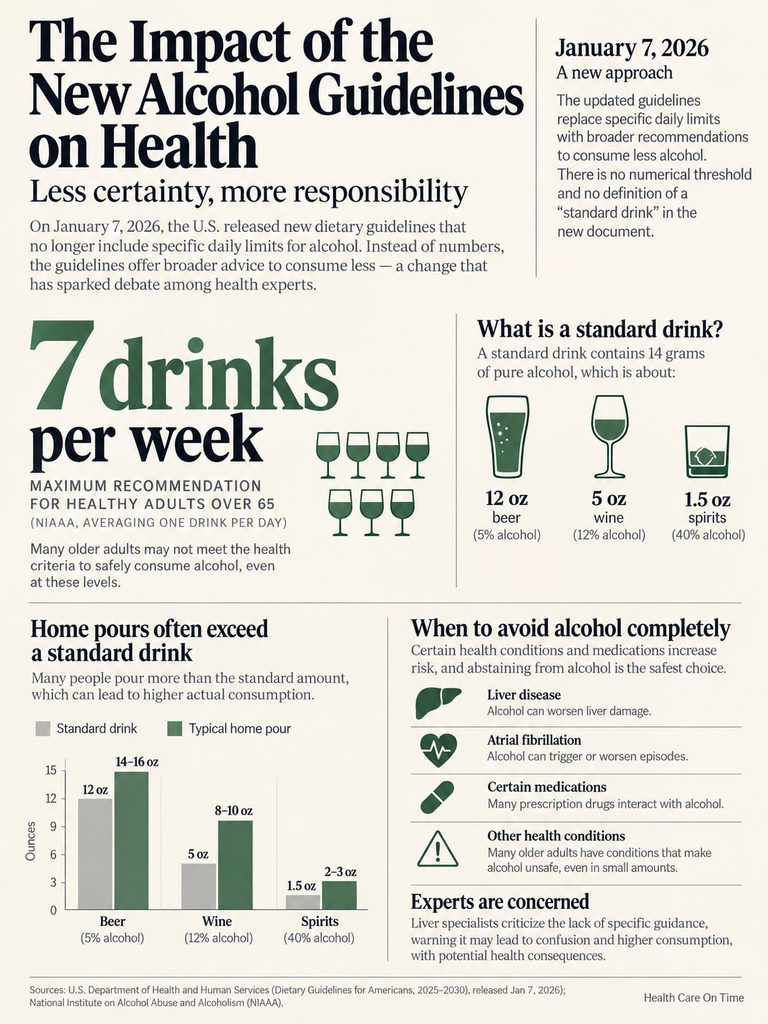
The updated 2025-2030 guidance removed the previous recommendation limiting alcohol to one drink or fewer daily for women and two or fewer for men, replacing it with broader advice to consume less alcohol for better health.
There is no numerical threshold in the new document, no definition of a standard drink, and no accompanying reference to alcohol-related harms.
Read that carefully, because the distinction matters. Federal wording changed. Evidence of harm did not.
Why Liver Specialists Pushed Back
The American Association for the Study of Liver Diseases responded within two days. AASLD stated that the revised guidelines omit specific guidance, do not establish daily limits, and do not account for biological differences in alcohol metabolism between men and women.
The Lancet Gastroenterology and Hepatology called the change a step backwards. The medical societies did not soften their position when the guidelines did.
The Number That Did Not Change
NIAAA guidance for older adults sits separately from the Dietary Guidelines and remains in force. For people older than 65 who are healthy and take no medicines, NIAAA advises no more than 7 drinks a week, averaging one standard drink a day, and no more than 3 drinks on any single day.
Two conditions carry enormous weight in that sentence: healthy, and taking no medicines. Most Americans over 65 satisfy neither.
For everyone outside those two conditions, the honest answer is lower, and how much lower depends on what else is in your medicine cabinet.
What Counts as One Standard Drink
The CDC and NIAAA define a standard drink as 14 grams of pure alcohol, roughly 0.6 fluid ounces. In practical terms that is 12 ounces of regular beer, 5 ounces of wine, or 1.5 ounces of distilled spirits.
Why the Pour at Home Is Rarely One Drink
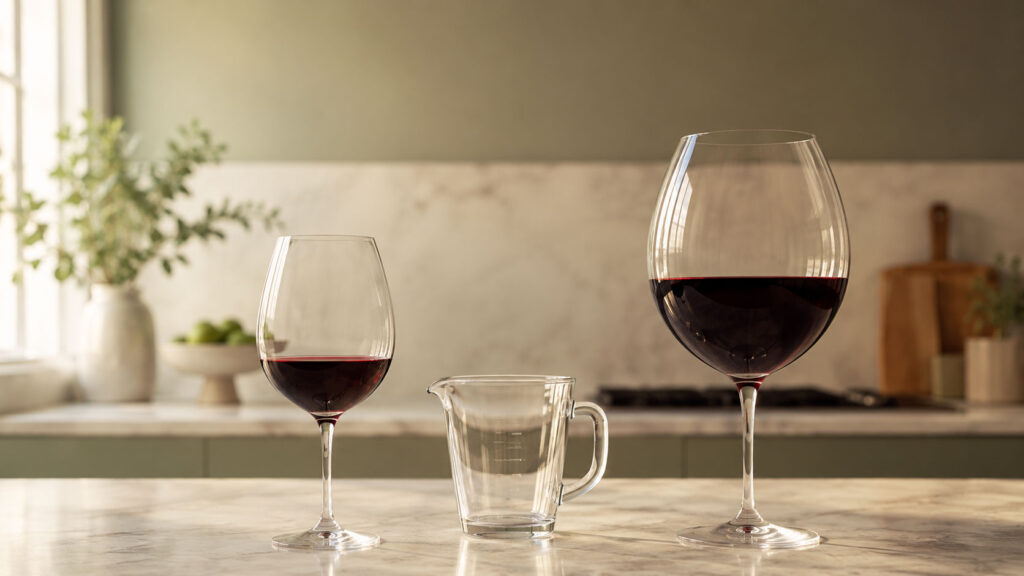
Do the arithmetic on a real evening. A restaurant wine pour commonly runs 6 to 9 ounces, and a generous home pour into a large bowl glass can hit 10 ounces. At 10 ounces, that one glass is two standard drinks before you have sat down.
Craft beer compounds it further. A 12-ounce beer at 8% alcohol contains about 1.6 standard drinks, not one, because the standard-drink figure assumes roughly 5% beer.
Spirits are the sharpest offender. A home cocktail poured by eye typically contains 2 to 3 ounces of liquor, which is 1.3 to 2 standard drinks in a single glass.
Someone drinking two glasses of wine a night at 8 ounces per pour is consuming about 22 standard drinks a week. The NIAAA ceiling for a healthy adult over 65 is 7.
Who Should Skip Alcohol Entirely
Some situations call for zero rather than moderation. That list includes anyone with liver disease, atrial fibrillation, a history of falls, pancreatitis, or current or past alcohol use disorder.
It also includes anyone taking sedatives, sleep medication, opioids, muscle relaxants, or blood thinners. Specialists have specifically named liver disease, atrial fibrillation, and high fall risk as reasons not to drink at all.
If a recent panel flagged your liver enzymes, resolve that before deciding anything about drinking. Our guides on elevated ALT results and high AST results explain what those numbers indicate.
Does Alcohol Actually Speed Up Aging? What the Research Shows
This is the question people search privately and rarely raise with their doctor. The evidence is stronger than most expect and more limited than headlines claim.
Brain Volume: The Equivalent-Years Finding
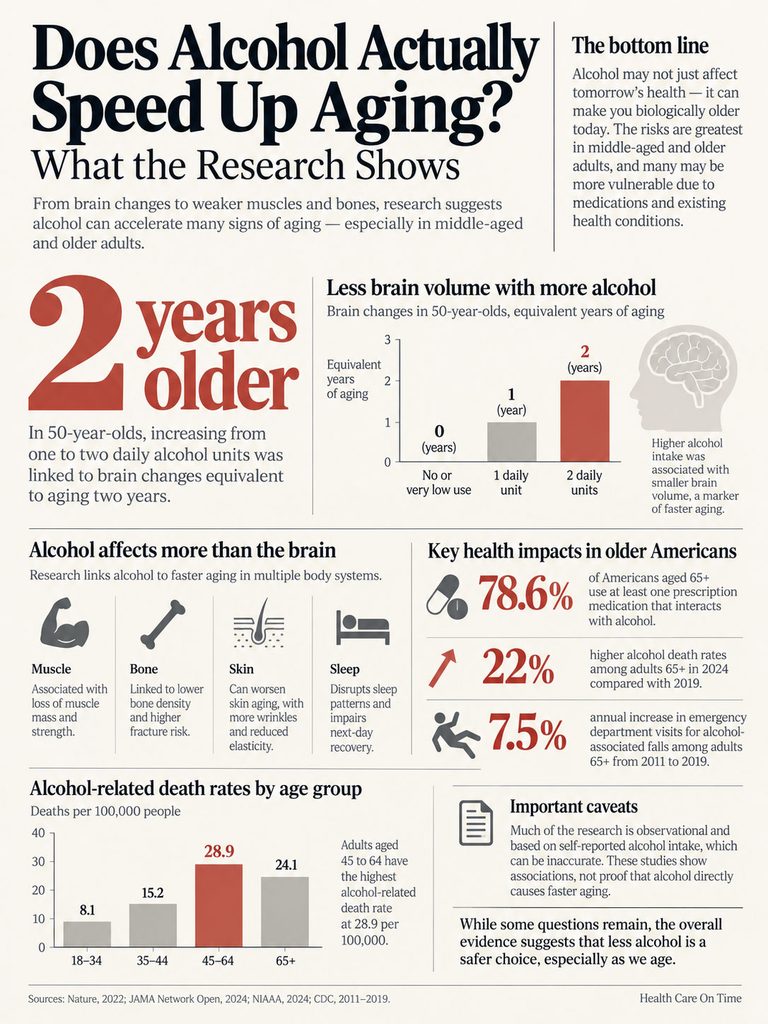
University of Pennsylvania researchers analyzed brain MRIs from 36,678 generally healthy middle-aged and older adults in the UK Biobank. They found negative associations between alcohol intake and brain structure that were already apparent in people consuming an average of only one to two daily units.
The way the team expressed the scale is what makes it land. In 50-year-olds, moving from one alcohol unit a day to two was associated with brain changes equivalent to aging two years, and moving from two to three units was equivalent to aging three and a half years.
The relationship is not a straight line. Going from zero to one unit made little difference, while losses accelerated above that point.
One conversion matters for American readers. A UK unit is smaller than a US standard drink, so two US drinks a day sits well into the steeper portion of that curve.
Biological Age: What the Epigenetic Clocks Show
DNA methylation clocks estimate how old your cells behave, independent of your birth date. Researchers applied two of them to 3,823 Framingham Heart Study participants aged 24 to 92.
The age pattern is the striking result. Higher long-term average alcohol consumption was significantly associated with accelerated GrimAge and PhenoAge in middle-aged participants (45 to 64) and older participants (65 to 92), but not in the youngest group aged 24 to 44.
A companion Northwestern Medicine analysis added detail on beverage type. Liquor showed roughly two and a half times the effect on biological aging that beer did, and daily liquor consumption over five years was associated with about a four-month acceleration in biological age.
Interpret these honestly. They are associations within observational cohorts, not proof that alcohol caused the acceleration. What they establish is that the same drinking pattern registers differently in a 55-year-old body than in a 30-year-old one.
Skin, Muscle, and Bone
Alcohol interferes with the three tissues that age most visibly. It suppresses muscle protein synthesis, disrupts calcium handling and bone remodeling, and dehydrates skin while widening surface capillaries.
Bone carries the sharpest consequence. The National Institute on Aging notes that older people have thinner bones than younger people, so their bones break more easily, and that too much alcohol can lead to balance problems and falls resulting in hip or arm fractures.
Thin bones plus impaired balance is the exact combination behind hip fractures. Our article on the effects of aging on skin covers the dermatologic side in depth.
Sleep Architecture and Next-Day Recovery
A nightcap shortens the time it takes to fall asleep, then dismantles the second half of the night. Alcohol suppresses REM sleep early and produces rebound wakefulness as it clears, which is why 3 a.m. awakenings follow evening drinking so reliably.
Cleveland Clinic geriatricians note that alcohol disrupts sleep at any age and compounds the sleep problems that are already common after 65.
The irony is sharp. Many older adults drink specifically because they cannot sleep, which makes the underlying problem worse over weeks.
What the Evidence Does Not Show
These are observational studies relying on self-reported intake, and people consistently underestimate what they drink. Residual confounding is real, since heavier drinkers differ from lighter drinkers in diet, smoking, income, and exercise.
None of this produces a precise personal risk figure for any individual. It produces a direction and a dose relationship, which is what population data can honestly deliver.
| What the number measures | Figure | Population and year | Source |
| Alcohol death rate, adults 65+ | 21.5 per 100,000, about 22% above 2019 | United States, 2024 | KFF analysis of CDC WONDER, Feb 2026 |
| Alcohol death rate, adults 45 to 64 | 28.9 per 100,000, highest of any age band | United States, 2024 | KFF analysis of CDC WONDER, Feb 2026 |
| Alcohol-interactive medication use | 78.6% | US adults 65+, NHANES 1999-2010 | Breslow et al., NIAAA |
| ED visits for alcohol-associated falls | 618,099 visits, rising 7.5% per year | US adults 65+, 2011-2020 | Annals of Emergency Medicine, 2023 |
| Binge drinking, past month | About 10% | US adults 65+, 2025 | SAMHSA NSDUH |
| Adults who drink at all | 54%, a record low held two years running | US adults 18+, July 2026 | Gallup |
| Alcohol-attributable cancer burden | About 100,000 cases and 20,000 deaths yearly | United States | Surgeon General Advisory, Jan 2025 |
Table 2. Alcohol and older Americans by the numbers.
The Risks That Climb Fastest After 60
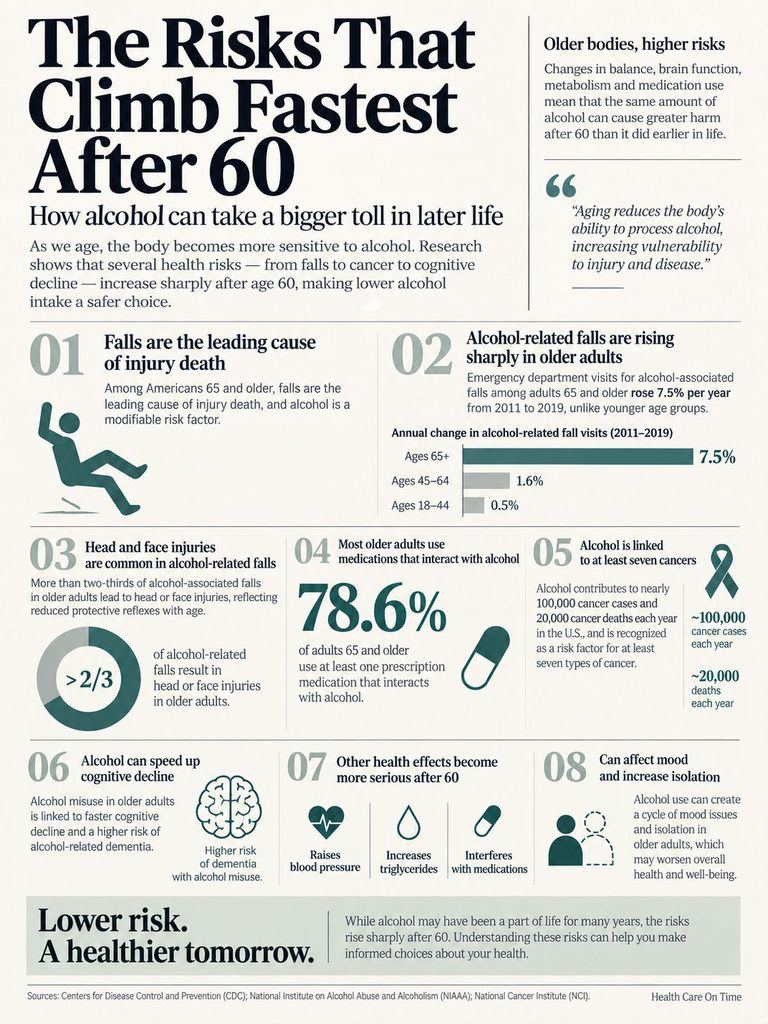
Falls and Fractures
Falls are the leading cause of injury death among Americans 65 and older, and alcohol is one of the few contributing factors you can change this week.
The trend line is what should get attention. Between 2011 and 2019, the annual rate of emergency department visits for alcohol-associated falls rose 7.5% per year among older adults, a sustained increase not detected in younger age groups.
Men were affected disproportionately, with a fall-related ED visit roughly 3.6 times more likely to involve alcohol among men than among women.
Why Head and Face Injuries Dominate
In alcohol-associated falls, the head and face were the most commonly injured body parts and internal injury was the most common diagnosis. More than two-thirds of alcohol-related fall injuries involved the head and face, against about a third of falls with no alcohol involved.
The explanation is mechanical rather than mysterious. An older adult under the influence of alcohol has reduced self-protective reflexes and may not break the fall with the arms, so the head takes the impact.
Add the elevated risk of subdural hematoma in older adults and a fall that would have meant a bruised wrist at 40 becomes a hospital admission at 70.
Medications: The Largest Everyday Hazard
This is the most common risk in this article and also the most fixable. NIAAA researchers examined 26,657 NHANES participants and found alcohol-interactive medication use reached 78.6% among adults 65 and older, with cardiovascular agents, central nervous system agents, and metabolic agents most common.
The lead author noted a compounding problem. As we age, the ability to metabolize alcohol decreases, so alcohol may remain in the system longer to interact with medications, while the metabolism of several interacting medications also slows.
Across the patients our diagnostic network serves, the medication list recalled from memory is almost always shorter than the actual one. Bring the bottles.
| Medication class | Common examples | What alcohol does | Practical rule |
| Sedatives and sleep aids | Benzodiazepines, zolpidem | Amplifies sedation and confusion, raising fall and overdose risk | Do not combine at any amount |
| Opioid pain medication | Oxycodone, hydrocodone, tramadol | Compounds respiratory depression | Do not combine at any amount |
| Blood thinners | Warfarin, apixaban | Increases bleeding risk and destabilizes clotting control | Discuss any drinking with your prescriber first |
| Blood pressure medication | Lisinopril, losartan, amlodipine | Blunts drug effect and worsens dizziness on standing | Limit strictly and monitor home readings |
| Diabetes medication | Insulin, sulfonylureas, metformin | Can trigger delayed low blood sugar hours later | Never drink on an empty stomach |
| Acetaminophen products | Tylenol and many cold remedies | Raises liver injury risk alongside regular drinking | Avoid combining and check combination products |
Table 3. Alcohol and common prescription classes after 60.
That last row catches people out regularly. Many nighttime cold and pain formulas contain acetaminophen without announcing it on the front of the box.
Cancer Risk Most Americans Still Do Not Know About
In January 2025, the US Surgeon General issued an advisory identifying alcohol as a risk factor for at least seven cancers: mouth, throat, larynx, esophageal, liver, breast, and colorectal.
The advisory attributed nearly 100,000 cancer cases and 20,000 cancer deaths per year to alcohol, ranking it the third leading preventable cause of cancer in the country behind tobacco and obesity.
Breast cancer risk rises at levels as low as one drink per day. That figure lands hard for women who have treated a nightly glass of wine as a health-neutral habit for decades.
Awareness is climbing from a low base. Annenberg tracking found 40% of adults said alcohol increases cancer risk in September 2024, rising to 56% shortly after the advisory. The 2026 Dietary Guidelines then moved in the opposite direction from that advisory recommendation.
Memory, Judgment, and Dementia Risk
NIAAA notes that alcohol misuse by older adults is associated with faster cognitive decline in memory, thinking, and judgment, and that these effects can meaningfully reduce quality of life.
Heavy long-term drinking can also cause alcohol-related dementia, a distinct diagnosis from Alzheimer’s disease.
A second problem is specific to this age group. Early cognitive change and early alcohol-related impairment look nearly identical from the outside, and families often assume the first without ever testing for the second.
Nutrition compounds it. Folate deficiency causes anemia and thiamine deficiency can trigger delirium, both more likely when a large share of daily calories arrives as alcohol rather than food.
Liver, Blood Pressure, and Blood Sugar
Alcohol raises blood pressure directly while interfering with the medications prescribed to lower it. It also raises triglycerides and inflammatory markers.
Patients frequently ask us which lab values shift first. In practice it is usually liver enzymes and blood pressure, well before anything appears on imaging.
Our guides on high CRP levels and blood pressure ranges by age explain how to read those results in context.
Mood, Isolation, and the Loop That Sustains Both
The National Institute on Aging notes that some people develop a harmful reliance on alcohol later in life, often after major changes such as the death of a spouse, a move, or failing health.
Alcohol is a depressant. Used to manage loneliness, it deepens the mood problem it was meant to soften, and the resulting sleep disruption feeds back into both.
The Warning Signs That Get Mistaken for Normal Aging
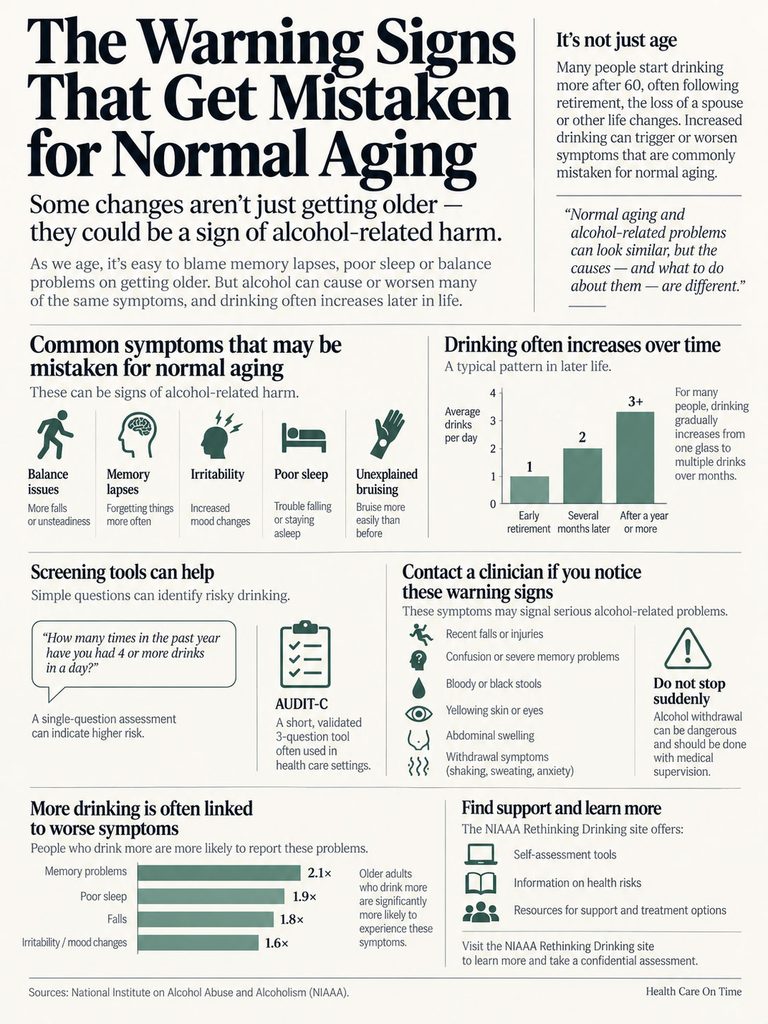
Symptoms Families and Clinicians Routinely Misread
The National Institute on Aging is direct about this. Families, friends, and health care workers sometimes overlook concerns about older people drinking because the side effects are mistaken for other age-related conditions, such as a problem with balance.
The same misreading applies to memory lapses, irritability, poor sleep, and unexplained bruising.
One test cuts through it. If a symptom appeared or worsened over the same months that drinking increased, that timing is clinical information worth reporting.
Late-Onset Drinking
A substantial share of older adults with alcohol problems developed them after 60, frequently following retirement, bereavement, or a health scare.
The picture rarely matches the stereotype. Daily wine that climbed quietly from one glass to three over eighteen months is far more typical than anything dramatic.
What Screening Looks Like
Screening is short and not adversarial. The single-question version asks how many times in the past year you had 4 or more drinks (women) or 5 or more (men) in one day, and any answer above zero opens a longer conversation.
The AUDIT-C runs three questions covering frequency, typical quantity, and heavy days. Both are free, take under two minutes, and are considerably more accurate than self-assessment.
The NIAAA Rethinking Drinking site hosts both tools along with a drink-size calculator. Working through them privately before an appointment usually makes that appointment more productive.
When to Contact a Clinician This Week
Reach out promptly for a fall in the past six months, new confusion, black or bloody stools, yellowing of the skin or eyes, swelling in the abdomen or legs, or shaking and sweating when you have not had a drink.
That final symptom outranks the rest. Physical withdrawal signs mean stopping abruptly without supervision can be dangerous rather than simply uncomfortable.
Cutting Back Without Quitting Cold
Most people reading this do not want to quit. They want to keep something they enjoy while removing the part that is costing them, and that goal responds well to structure.
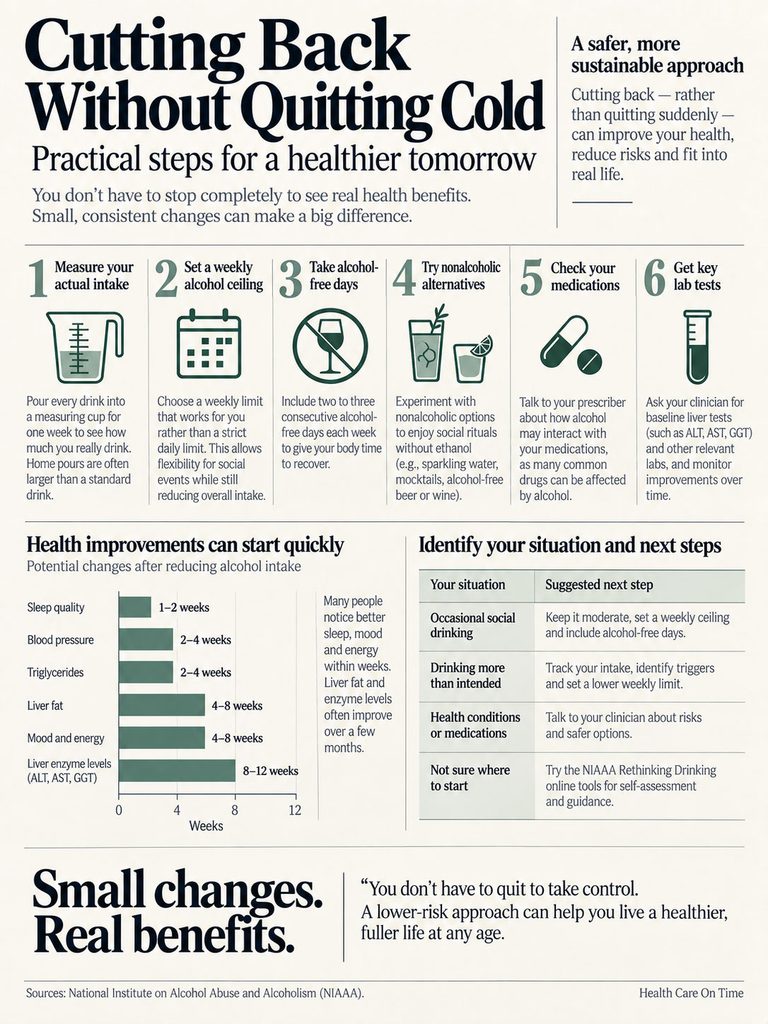
Measure What You Are Actually Pouring
For one week, pour into a measuring cup before the liquid goes in the glass. Change nothing else about your routine.
Most people find their nightly one glass is closer to two standard drinks. Correcting the pour alone can cut weekly intake by 40% without touching the habit itself.
Write down the number of standard drinks, not the number of glasses. Those are different measurements and only one of them is useful.
Set a Weekly Ceiling Instead of a Daily One
A weekly number survives real life better than a daily one, because it absorbs a wedding or a holiday dinner without turning into a failure.
Put the number in writing. The NIAAA 7-per-week ceiling is a defensible starting point for a healthy adult over 65 taking no medications, and lower is appropriate for everyone else.
Build In Consecutive Alcohol-Free Days
Two or three consecutive alcohol-free days each week do more for sleep and liver enzymes than shaving a half glass off every night.
Consecutive is the operative word. Back-to-back days give your system an uninterrupted recovery window instead of a series of partial ones.
Where Nonalcoholic Options Genuinely Help
The social ritual is usually what people miss, not the ethanol itself. Cleveland Clinic geriatricians suggest experimenting with nonalcoholic options, including flavored seltzer with lime, which can stand in for a cocktail in social settings.
Gallup found this is already mainstream. Among both drinkers and nondrinkers, 17% had consumed nonalcoholic beer, wine, or spirits instead of an alcoholic drink at some point in the past year.
One caution applies. Some nonalcoholic beers contain up to 0.5% alcohol, which matters if you are avoiding alcohol for medical reasons or in recovery.
Bring the Medication List to the Conversation
Ask your prescriber a specific question: which of these interacts with alcohol, and how much is too much given what I take? That phrasing produces an actionable answer far more often than asking whether it is fine to drink.
Include over-the-counter products and supplements, since those are the items most often left off the list.
Labs Worth Asking About
A liver panel covering ALT, AST, and GGT establishes an objective baseline. Adding a CBC, lipid panel, and A1c covers the systems alcohol affects most directly.
Repeat the identical panel after eight to twelve weeks of reduced drinking. In our experience, watching your own numbers move persuades people far more effectively than any population statistic.
What Improves, and How Fast
Sleep quality typically improves within one to two weeks. Blood pressure often falls within two to four weeks. Liver enzymes elevated from alcohol alone frequently improve over four to twelve weeks.
The Cleveland Clinic position is blunt for anyone worried about memory in particular. If you are concerned, do not drink, and clinicians can help you find the best way forward if quitting feels difficult.
| If this is you | What it usually means | What to do next |
| Over 65 and taking any daily prescription | You fall outside the NIAAA healthy, no-medicines condition | Review every medication with your prescriber before setting a drinking limit |
| Drinking 3 or more on an occasion | At or above the NIAAA single-day ceiling for this age group | Cap occasions at 2 drinks and add two consecutive alcohol-free days weekly |
| Any fall in the past 12 months | Balance and protective reflexes are already compromised | Treat alcohol as an active fall risk factor and discuss stopping with your clinician |
| Waking at 3 a.m. most nights after drinking | Rebound wakefulness as alcohol clears your system | Move the last drink 4 hours before bed, or drop evening alcohol for 2 weeks |
| Family has commented on your drinking | Outside observers usually notice before the drinker does | Complete an AUDIT-C screen and bring the score to your next appointment |
| ALT, AST, or GGT flagged on a recent panel | Possible alcohol-associated liver stress | Stop drinking and retest in 8 to 12 weeks with your physician |
| Shaking or sweating when you skip a day | Physical dependence on alcohol | Do not stop abruptly; contact a clinician this week about supervised tapering |
Table 4. Your situation, your next step.
Frequently Asked Questions
At What Age Does Alcohol Start to Affect You More?
Changes begin in the 40s and become noticeable for most people in their 50s and 60s. Body water and lean muscle decline steadily from age 30, so the shift is gradual rather than sudden. Medications added in later decades usually accelerate the change more than aging alone does.
How Many Drinks a Day Is Safe After 65?
NIAAA advises no more than 7 drinks per week, averaging one a day, with no more than 3 on any single day, for healthy adults over 65 who take no medications. Since roughly 78% of this age group takes an alcohol-interactive medication, most people should aim lower and confirm the number with their clinician.
Is a Glass of Red Wine Still Good for Your Heart?
The protective-drinking finding has weakened considerably. Analyses correcting for the fact that many non-drinkers quit because of illness show much smaller or absent benefit. The 2025 Surgeon General advisory recommended reassessing existing limits given cancer risk at low intake levels.
Why Are My Hangovers So Much Worse Now?
Higher peak blood alcohol from reduced body water, slower liver clearance, and worse sleep disruption stack on top of each other. Recovery that took a morning at 30 can consume a full day at 65. Dehydration effects also hit harder because kidney water conservation declines with age.
Does Alcohol Make You Look Older?
It contributes. Alcohol dehydrates skin, dilates surface capillaries, disrupts the deep sleep during which skin repairs itself, and depletes nutrients involved in collagen production. Heavy drinking also correlates with earlier facial volume loss. The effect is real, though smaller than cumulative sun exposure.
Can Drinking Alcohol Cause Dementia?
Heavy long-term drinking can cause alcohol-related dementia, a recognized clinical diagnosis. Lighter drinking shows associations with reduced brain volume across large imaging studies, though those remain observational. NIAAA links alcohol misuse in older adults to faster decline in memory, thinking, and judgment.
What Medications Should Never Be Mixed With Alcohol?
Sedatives, sleep medication, opioids, and muscle relaxants top the list because the sedation compounds dangerously. Blood thinners raise bleeding risk, diabetes medications can cause delayed low blood sugar, and regular acetaminophen alongside regular drinking increases liver injury risk. Always check combination cold products.
How Long Does Alcohol Stay in Your System at 70?
Longer than it did at 30. The liver still clears roughly one standard drink per hour on average, but reduced blood flow through the liver and a higher starting blood alcohol level stretch total clearance time. Two drinks that cleared in three hours may now take four or more.
Is It Too Late to Quit Drinking at 65?
No. Blood pressure, sleep quality, balance, and liver enzymes all respond within weeks for most people. Cancer risk reduction accumulates more slowly, but stopping changes the trajectory meaningfully at any age. Fall risk improves almost immediately, which matters most in this age group.
Why Do I Feel Anxious the Morning After Now?
As alcohol clears, the nervous system rebounds into a temporarily overexcited state, producing next-day anxiety. The effect intensifies when sleep is already fragmented, which is common after 60. Older adults typically experience both the disruption and the rebound more strongly than younger drinkers.
Does Quitting Alcohol Reverse Any of the Damage?
Partially. Fatty liver changes and elevated liver enzymes often improve substantially within weeks to months. Blood pressure and sleep quality usually recover. Established cirrhosis and structural brain volume loss do not fully reverse, though further progression generally slows or stops entirely.
Do the New Dietary Guidelines Mean Drinking Is Safer Than We Thought?
No. The 2025-2030 guidelines removed numeric limits without any new evidence showing reduced harm. AASLD and The Lancet Gastroenterology and Hepatology both criticized the change publicly. The underlying science on cancer risk, liver disease, and injury did not shift in your favor.
Medical Disclaimer: This article provides general health information and does not replace advice from a licensed clinician. Alcohol interacts with hundreds of prescription and over-the-counter medications, and safe limits differ for every individual based on health conditions, medications, and body composition. Anyone who experiences shaking, sweating, rapid heartbeat, or severe anxiety when skipping alcohol should not stop drinking abruptly, since unsupervised withdrawal can be life-threatening. Speak with a physician before changing your alcohol intake or any medication.
References
- National Institute on Alcohol Abuse and Alcoholism: Aging and Alcohol
- National Institute on Aging: Facts About Aging and Alcohol
- Dietary Guidelines for Americans: Guidance on Alcoholic Beverages
- AASLD: Concern Over Removal of Evidence-Based Alcohol Guidance in the 2025-2030 Dietary Guidelines
- The Lancet Gastroenterology and Hepatology: Alcohol Guidance in US Dietary Guidelines
- US Surgeon General Advisory on Alcohol and Cancer Risk
- Daviet et al., Nature Communications: Alcohol Consumption and Gray and White Matter Volumes in the UK Biobank
- Wang et al., Aging: Alcohol Consumption and Epigenetic Age Acceleration Across Human Adulthood
- Breslow et al., Alcoholism: Clinical and Experimental Research: Alcohol-Interactive Prescription Medication Use Among Current Drinkers
- Annals of Emergency Medicine: Emergency Department Visits for Alcohol-Associated Falls Among Older Adults
- KFF: Alcohol Deaths, National Trends and Variation by Demographics and States
- Gallup: Americans Drinking Remains at Record Low
- Johns Hopkins Medicine: Alcohol and Older Adults
- Cleveland Clinic: What To Know About Alcohol and Aging
- CDC/NCHS FastStats: Alcohol Use
- Northwestern Medicine: What Alcohol Can Do to Your Biological Age