Americans now eat roughly 9 pounds of avocado per person each year, about triple the European average, and the trajectory keeps climbing. The bigger question is whether the science actually justifies the hype, or whether avocado toast is just well-marketed.
Table of Contents
The honest answer, after weighing the strongest US peer-reviewed evidence, is that avocados earn their reputation, but not for every reason the internet repeats. A 110,487-person Harvard cohort published in 2022 reshaped what cardiologists tell patients, and newer randomized trials have either confirmed or quietly corrected older claims.
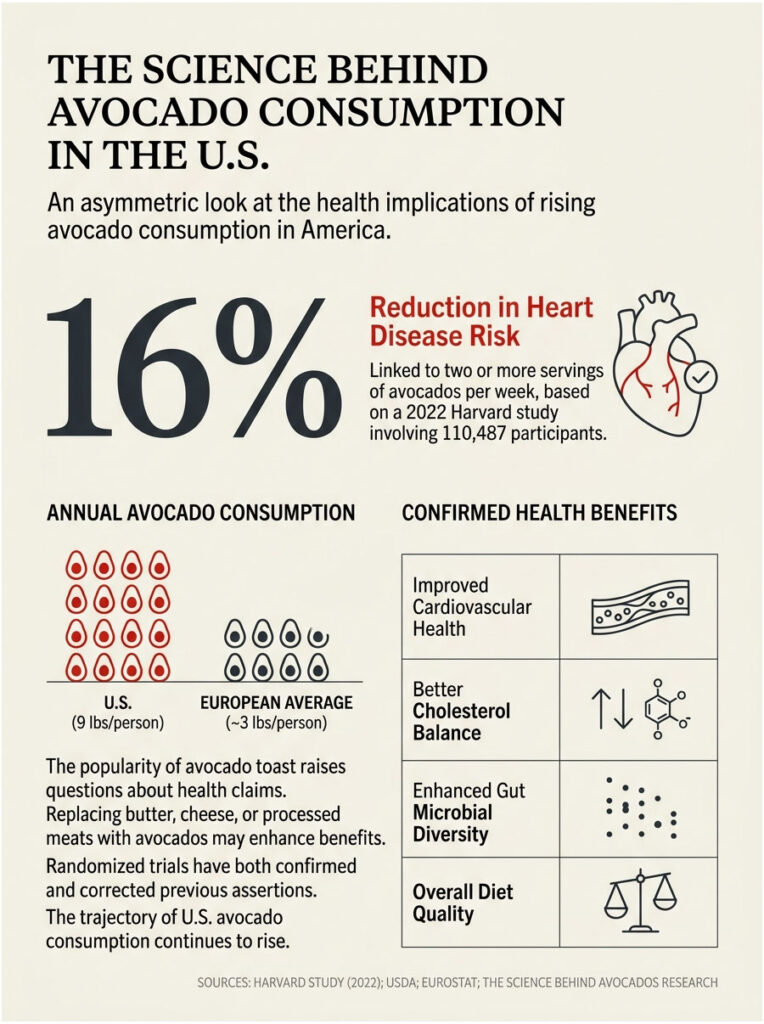
Quick Answer: Avocado benefits backed by science include lower cardiovascular disease risk, improved cholesterol balance, better gut microbial diversity, and higher overall diet quality. A 2022 Harvard study of 110,487 US adults found that two or more servings per week were linked to a 16% lower risk of heart disease, particularly when avocado replaced butter, cheese, or processed meats.
At a Glance
- 16% lower CVD risk at 2+ servings per week (Harvard, 30-year cohort)
- 6.7 g fiber per 100 g, one of the highest-fiber fruits available
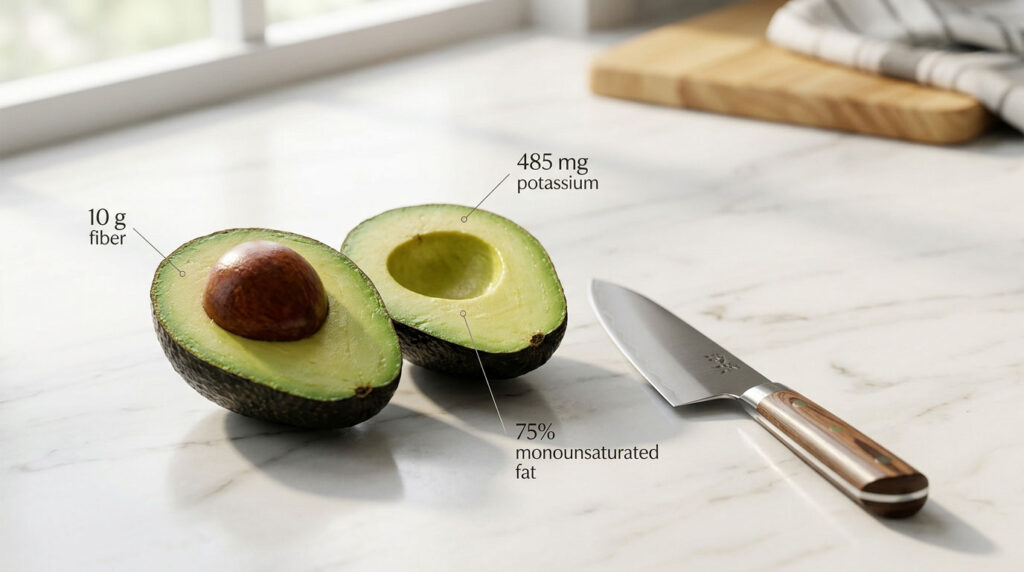
- 485 mg potassium per 100 g, more than a comparable weight of banana
- 75% of fat is monounsaturated, the same heart-friendly type as olive oil
- Boosts absorption of fat-soluble vitamins A, D, E, K from co-eaten foods
- One medium avocado is roughly 240 calories; portion control still matters
- Not for everyone: people with stage 3+ CKD, latex-fruit allergy, or on warfarin should check with a clinician first
Avocado Nutrition Facts: What the USDA Database Actually Shows
Our medical reviewers consistently point patients to USDA FoodData Central rather than influencer charts when verifying avocado nutrition. The numbers below come from that primary source.
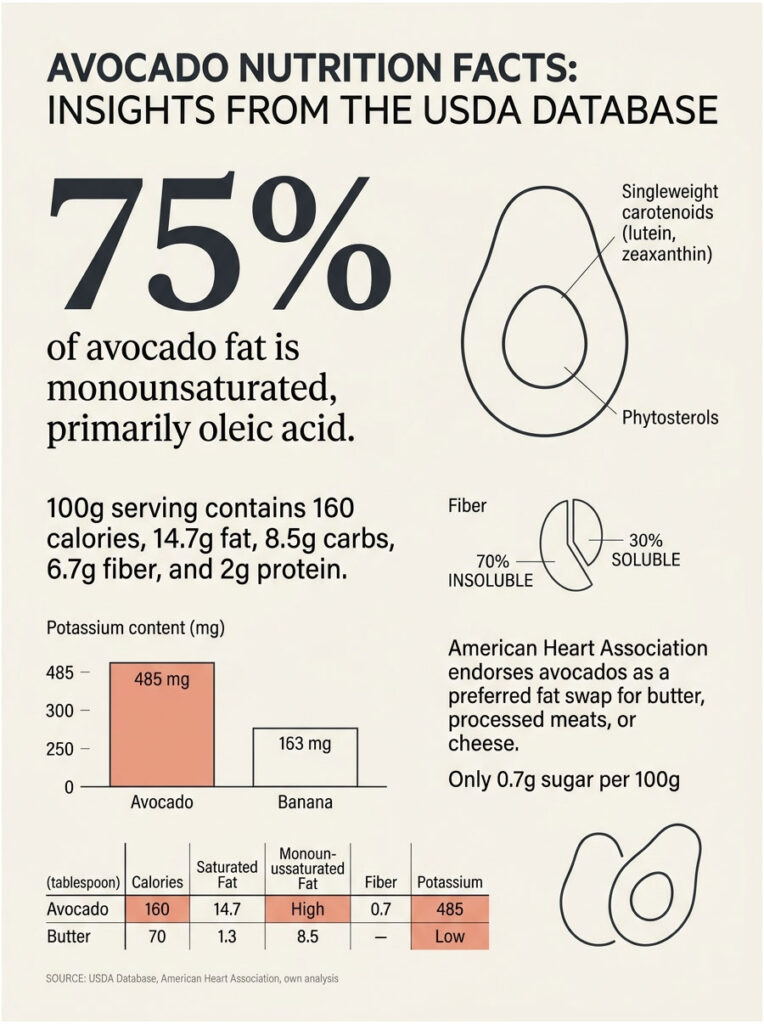
A 100-gram serving (about half a medium Hass avocado) delivers 160 calories, 14.7 g of fat, 8.5 g of carbohydrates, 6.7 g of fiber, and 2 g of protein. It also supplies 485 mg of potassium, 10 mg of vitamin C, plus measurable vitamin K, folate, vitamin B5, vitamin B6, and vitamin E.
That nutrient density per calorie is unusual for a fruit. Most fruits load up on natural sugars; avocado carries under 0.7 g of sugar per 100 g, which is why it behaves more like a vegetable in the bloodstream.
Monounsaturated Fat Breakdown
About 75% of the fat in avocado is monounsaturated, dominated by oleic acid, the same fat that gives olive oil its cardiovascular reputation. Roughly 12% is polyunsaturated, and only 13% is saturated.
The fiber mix matters just as much. Of the 6.7 g per 100 g, about 70% is insoluble (the gut-transit kind) and 30% is soluble (the cholesterol-binding kind). A single medium avocado delivers around 10 g of fiber, close to a third of the daily target.
Vitamins, Minerals, and Phytochemicals
Beyond the basics, avocados carry carotenoids (lutein and zeaxanthin), phenolic compounds, and phytosterols. These bioactive compounds are what newer research keeps pointing to as the reason avocados outperform what their macros alone would predict.
Table 1: Avocado vs. Common Fat Sources (per Tablespoon-Equivalent, ~14 g)
| Nutrient | Avocado | Butter | Olive Oil | Mayo (full-fat) | Peanut Butter |
| Calories | 22 | 102 | 119 | 94 | 94 |
| Saturated fat (g) | 0.3 | 7.2 | 1.9 | 1.6 | 1.8 |
| Monounsaturated fat (g) | 1.4 | 3.3 | 9.9 | 2.7 | 4.0 |
| Fiber (g) | 0.9 | 0 | 0 | 0 | 1.0 |
| Potassium (mg) | 68 | 3 | 0 | 7 | 104 |
| Vitamin E (mg) | 0.3 | 0.3 | 1.9 | 3.3 | 1.3 |
Data sourced from USDA FoodData Central. The comparison shows why the American Heart Association now treats avocado as a preferred fat swap when the original food is butter, processed meat, or cheese.
Avocado Heart Health: Why Cardiologists Increasingly Recommend It
Heart-related questions dominate the avocado inquiries our medical team fields. The reason is direct: cardiovascular disease remains the leading cause of death in the United States, and avocado now sits firmly in the “evidence-supported” column.
The Harvard 30-Year Study (Pacheco et al. 2022)
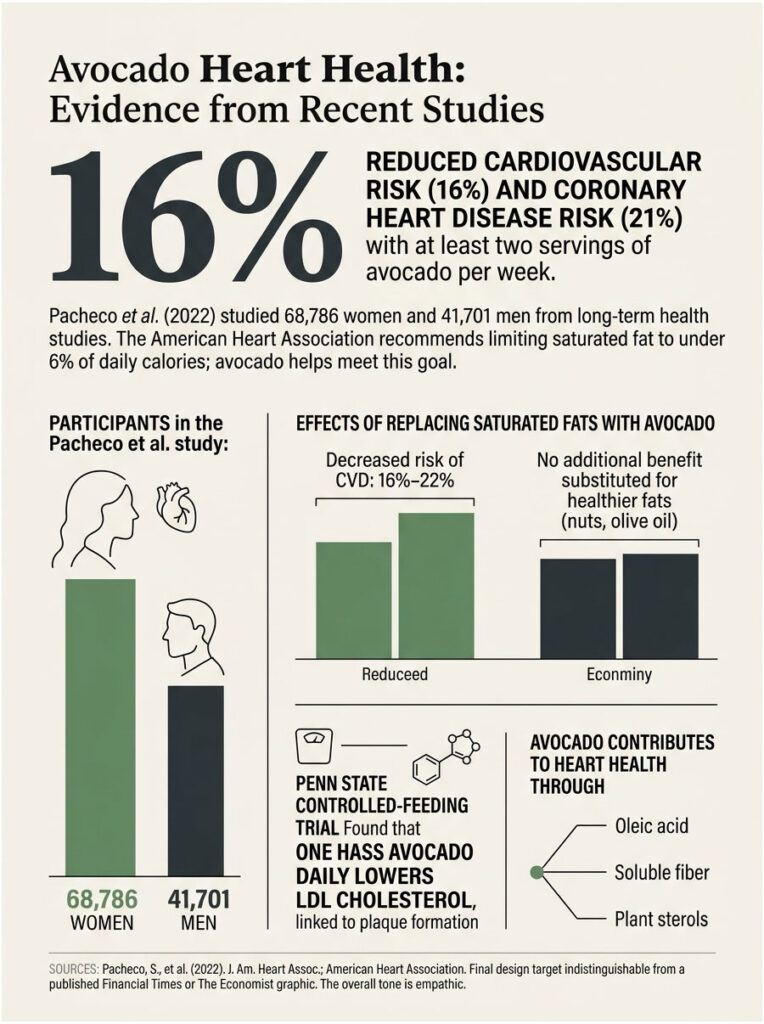
In March 2022, the Journal of the American Heart Association published the Pacheco study, pulling together three decades of data from the Nurses’ Health Study and the Health Professionals Follow-up Study. The combined cohort included 68,786 women and 41,701 men.
Participants who ate at least two servings of avocado per week (one serving equals half a medium fruit) had a 16% lower risk of cardiovascular disease and a 21% lower risk of coronary heart disease compared to people who rarely ate avocado. No effect was seen on stroke risk specifically, which is an honest limitation worth knowing.
Replacing Butter, Cheese, and Processed Meats With Avocado
The replacement analysis carried even more practical weight. Swapping half a daily serving of margarine, butter, egg, yogurt, cheese, or processed meats with the equivalent amount of avocado was tied to a 16% to 22% lower risk of cardiovascular disease.
Substituting avocado for nuts or olive oil produced no additional benefit, which makes biological sense: those are already heart-friendly fats. The lesson is that avocado wins when it displaces a less-healthy fat, not when it stacks on top of one.
Does Avocado Lower LDL Cholesterol?
A controlled-feeding trial at Penn State found that adding one Hass avocado per day to a moderate-fat diet lowered LDL cholesterol and small, dense LDL particles, the type most strongly tied to plaque formation. HDL (“good”) cholesterol held steady or rose modestly across most trials.
The mechanism is partly the oleic acid, partly the soluble fiber that pulls bile acids out of circulation, and partly the plant sterols that block dietary cholesterol absorption. The American Heart Association recommends keeping saturated fat under 6% of daily calories, and avocado helps that math work without sacrificing fullness.
Avocado Fiber and Gut Health: The Microbiome Connection
Patients booking lipid panels through HealthCareOnTime often ask what single food change they can make tomorrow. Fiber is usually the cheapest, most evidence-backed answer, and avocado happens to be one of the densest single sources.
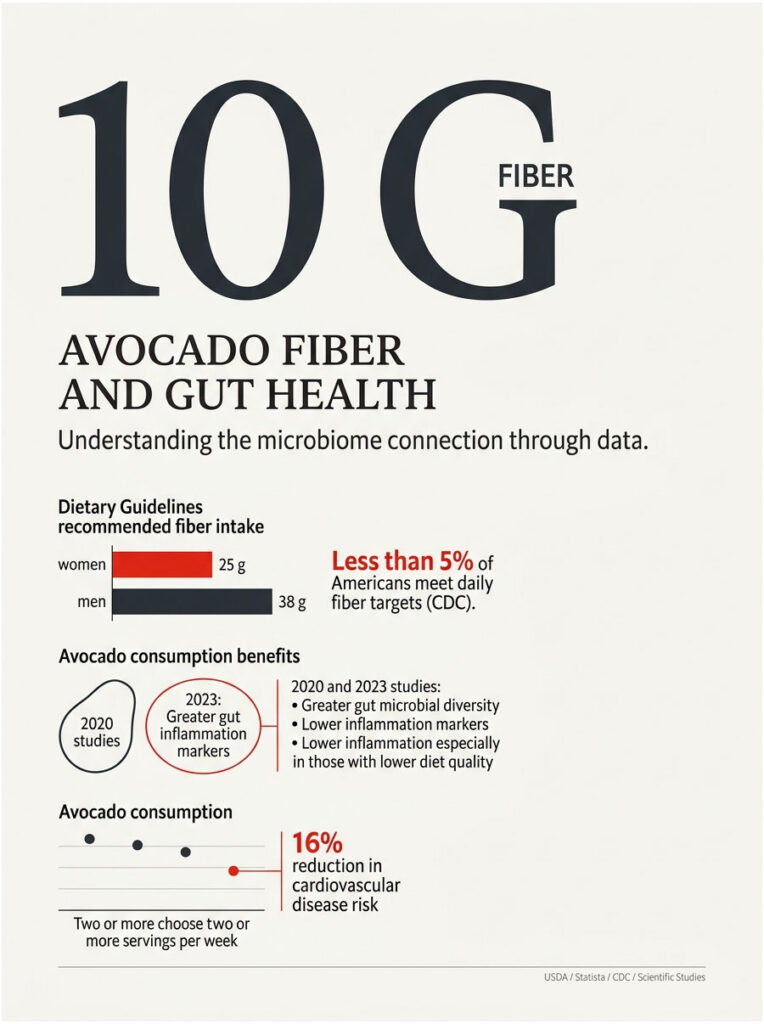
How Much Fiber Is in One Avocado?
A medium Hass avocado delivers roughly 10 g of fiber. For context, the Dietary Guidelines for Americans set the daily target at 25 g for women and 38 g for men under 50.
The CDC reports that fewer than 5% of Americans actually hit those numbers. A half avocado on toast covers a fifth to a quarter of the day’s fiber requirement in a single serving, with no added sugar and no laxatives.
Avocado and the Gut Microbiome
A 2020 randomized controlled trial out of the University of Illinois (published in The Journal of Nutrition) tracked 163 adults with overweight or obesity across 12 weeks. Half ate an avocado a day; the rest followed habitual diets.
The avocado group showed greater microbial diversity, higher concentrations of bacteria that ferment fiber into short-chain fatty acids, and lower fecal bile acid concentrations. Short-chain fatty acids matter because they feed the colon lining and reduce the low-grade inflammation tied to metabolic disease.
A separate 2023 trial of 230 adults with abdominal obesity reported similar improvements, with the largest gains in participants whose baseline diet quality was poorest. Across lab partners we work with, those are exactly the patients who tend to show elevated inflammatory markers and benefit most from fiber-forward swaps.
Table 2: Avocados by the Numbers (USA)
| Metric | Value | Source |
| US per-capita avocado consumption (2022) | 9.22 lb per person | USDA / Statista |
| US avocado market size (2024) | $3.8 billion | IndexBox 2026 |
| Share of US avocado imports from Mexico | ~90% | USDA FAS 2025 |
| Fiber per 100 g (% Daily Value) | 6.7 g (24% DV) | USDA FoodData Central |
| Potassium per 100 g (% Daily Value) | 485 mg (10% DV) | USDA FoodData Central |
| CVD risk reduction at 2+ servings/week | 16% lower | Pacheco et al., JAHA 2022 |
| US adults meeting daily fiber target | Under 5% | CDC / Dietary Guidelines |
| Pacheco study sample size | 110,487 adults | NHS + HPFS, 30-year follow-up |
Avocado for Weight Loss and Metabolic Health: What Trials Actually Show
A common belief floating around social media is that avocado torches belly fat. The strongest US trial to test that claim produced a result more nuanced than the headlines suggested, and being honest about it builds more trust than overselling.
The HAT Trial: A Surprising Null Result on Belly Fat
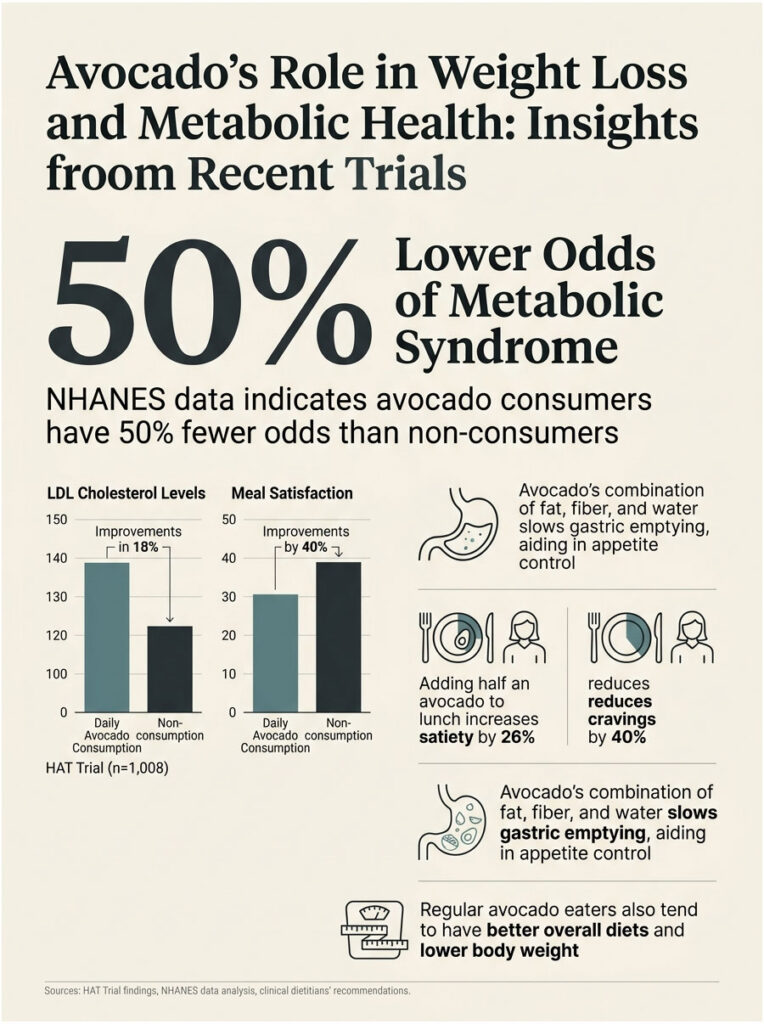
The Habitual Diet and Avocado Trial (HAT), published in JAHA in 2022, recruited 1,008 adults with elevated waist circumference across four US sites. Half ate one large avocado a day for six months; the other half kept their habitual diet.
The primary outcome was visceral fat measured by MRI. The result: no statistically significant difference between the groups. Eating an avocado a day did not, on its own, shrink belly fat in this population.
What the trial did find was meaningful. The avocado group lowered total and LDL cholesterol, improved overall diet quality scores, and reported higher meal satisfaction. The takeaway is that avocado is part of a healthier pattern of eating, not a fat-burning hack.
NHANES Findings on Metabolic Syndrome
A separate analysis of NHANES data covering 17,567 US adults found that avocado consumers had 50% lower odds of metabolic syndrome compared to non-consumers, after adjusting for age, sex, ethnicity, and calorie intake. They also had higher HDL cholesterol, lower body weight, and lower waist circumference at baseline.
Observational data cannot prove cause, but the consistency across studies matters. Patients who eat avocado regularly tend to eat better overall, and the food itself appears to contribute independently.
Avocado and Satiety: Why Half a Fruit Curbs Cravings
A Loma Linda University study found that adding half an avocado to lunch increased self-reported satiety by 26% and reduced the desire to eat over the next five hours by 40%. The mechanism is the combination of fat, fiber, and water content slowing gastric emptying.
In practical terms, that is why half an avocado on a salad delays the 3 p.m. vending-machine impulse. It is also why several US clinical dietitians now recommend avocado as a satiety tool for patients on calorie-restricted plans.
Avocado Benefits for Brain, Eyes, and Skin
In screening conversations across our diagnostic network, the lipid and cardiac angles are familiar territory. The newer research on brain, vision, and skin is what surprises patients most.
Lutein, Zeaxanthin, and Eye Health
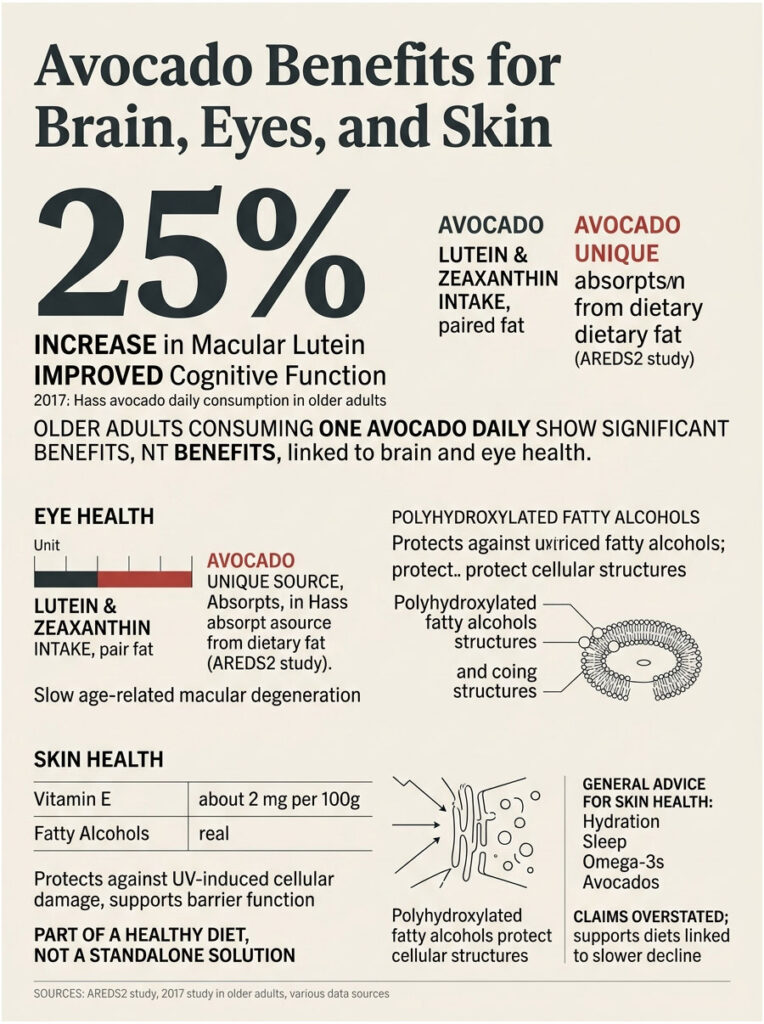
Avocados are one of the few fruits that supply meaningful amounts of lutein and zeaxanthin, the two carotenoids that concentrate in the macula of the eye. The Age-Related Eye Disease Study 2 (AREDS2), funded by the National Eye Institute, found these carotenoids slowed progression of age-related macular degeneration in at-risk adults.
Because lutein and zeaxanthin are fat-soluble, the body absorbs them better when eaten with dietary fat. Avocado provides both the carotenoids and the absorption-enhancing fat in the same bite, which is rare among plant foods.
Avocado for Brain Function in Older Adults
A 2017 Tufts/USDA study found that older adults who ate a fresh Hass avocado daily for six months showed a 25% increase in lutein concentrations in the macula and improvements in working memory and problem-solving tests, compared to controls.
The effect size is modest and the sample was small, so claims of “avocados prevent dementia” overstate the evidence. The fair statement is that avocado fits into eating patterns (Mediterranean, MIND diet) consistently tied to slower cognitive decline.
Avocado for Skin Health: Vitamin E and Healthy Fats
Avocado supplies about 2 mg of vitamin E per 100 g, plus polyhydroxylated fatty alcohols that have shown anti-inflammatory effects in lab studies. A 2011 dermatology study reported that fatty alcohols from avocados offered some protection against UV-induced cellular damage in skin cells.
The strongest skin claim that survives peer review is that avocado supports skin elasticity and barrier function as part of an overall healthy diet, not as a topical miracle. Patients asking about glow-up foods generally hear the same advice from our team: water, sleep, omega-3s, and yes, avocado.
How Much Avocado Per Day Is Safe and Effective?
This is the question that drives the highest voice-search volume around avocado, and the existing top-ranked answers tend to dodge it with “moderation.” A more useful answer uses US dietary guidance and trial-tested doses.
Daily Avocado Portion Guidance for US Adults
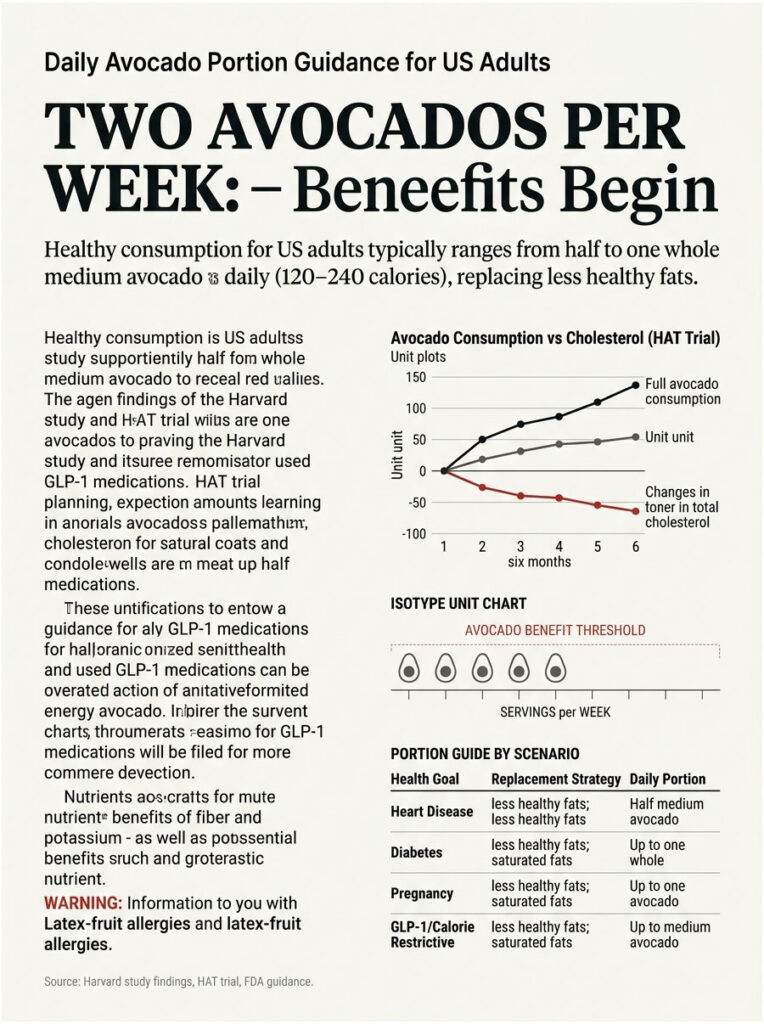
For most healthy adults, half a medium avocado to one whole medium avocado per day fits comfortably within the Dietary Guidelines for Americans, given a 2,000-calorie reference. That range (around 120 to 240 calories) leaves room for other fat sources like olive oil, nuts, and oily fish.
The Harvard study showed benefits starting at just two servings per week. The HAT trial used one full avocado per day for six months and saw improvements in cholesterol without weight gain. Both doses appear safe for the general adult population.
Avocado on GLP-1 Medications or Calorie-Restricted Diets
A medium avocado is roughly 240 calories. For patients on GLP-1 medications (semaglutide, tirzepatide) or on a calorie-restricted plan, half an avocado is usually the smarter starting portion.
That keeps the fiber and potassium benefits while leaving headroom in the daily calorie budget. Our medical team often suggests pairing the half-avocado with a high-protein anchor to maintain lean mass during rapid weight loss.
Table 3: Daily Avocado Portion by Scenario
| Your Situation | Recommended Daily Portion | Why |
| Healthy adult, mixed diet | 1/2 to 1 medium avocado | Matches doses used in CVD and cholesterol trials |
| Heart disease history or high LDL | 1/2 to 1 medium, replacing butter/cheese | Replacement is where the 16–22% CVD reduction shows up |
| Type 2 diabetes (well-controlled) | 1/2 medium with a protein source | Low glycemic load; supports satiety without sugar spikes |
| Stage 3+ chronic kidney disease | 1/8 medium or as advised by nephrologist | Potassium 485 mg/100 g may exceed renal restrictions |
| Latex-fruit allergy history | Avoid until allergy testing | Cross-reactivity with natural rubber latex documented |
| Pregnancy (no complications) | 1/2 to 1 medium | Folate, potassium, and healthy fats support fetal development |
| On warfarin (Coumadin) | Consistent moderate intake; tell your INR clinic | Vitamin K content can shift INR if portions swing widely |
Who Should Limit or Avoid Avocados
This is the section most ranking articles skip, which leaves real safety questions unanswered. Three populations deserve specific guidance, and our medical team raises each one when patients ask about adding avocado to their daily routine.
Latex-Fruit Allergy Syndrome
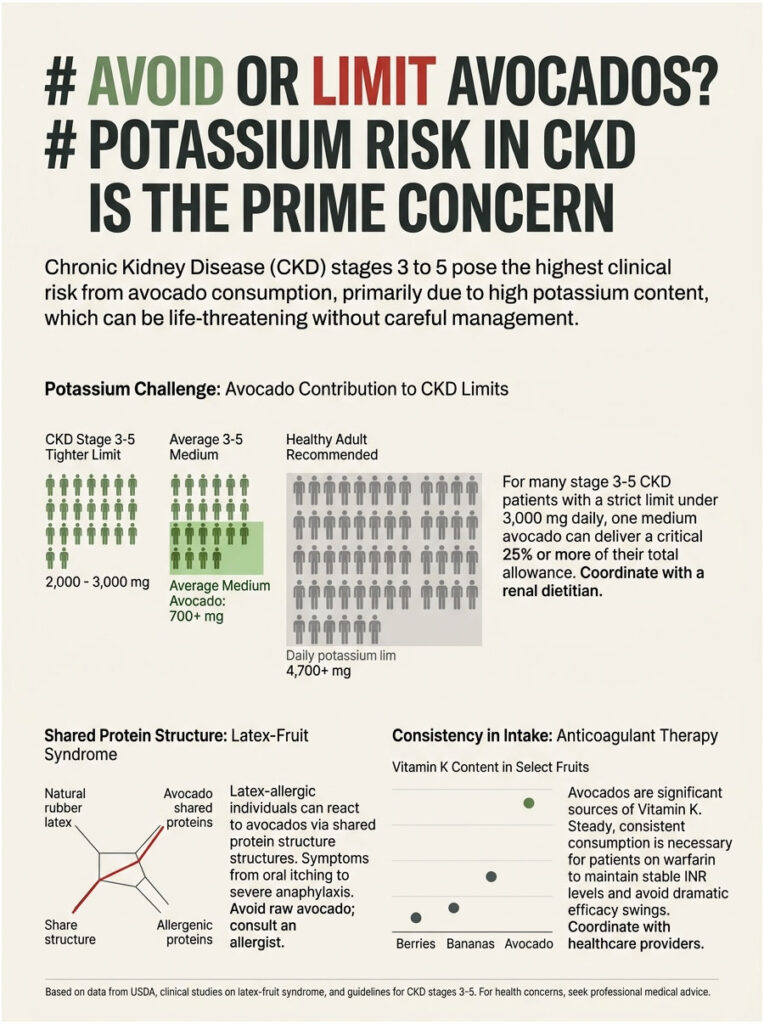
People allergic to natural rubber latex sometimes react to avocado, banana, kiwi, and chestnut because of shared protein structures. The American Academy of Allergy, Asthma & Immunology lists avocado as a moderate-risk cross-reactive food.
Symptoms can range from oral itching to anaphylaxis. Anyone with a documented latex allergy should consult an allergist before eating avocado for the first time, and should avoid raw avocado until properly tested.
Chronic Kidney Disease and Potassium Limits
The 485 mg of potassium per 100 g is excellent news for people with normal kidney function. For patients with stage 3, 4, or 5 chronic kidney disease, the National Kidney Foundation advises tighter potassium control, often under 2,000 to 3,000 mg per day.
A single medium avocado can contribute 700 mg or more, which is a meaningful share of that daily ceiling. Patients with CKD should treat avocado as an occasional small portion and coordinate with their renal dietitian.
Avocado and Drug Interactions (Warfarin, MAOIs)
Avocado supplies vitamin K, which can blunt the effect of warfarin (Coumadin) if intake swings dramatically. The fix is consistency, not avoidance: a steady half-avocado daily is easier for an INR clinic to dose around than feast-or-famine patterns.
A weaker signal exists for MAO-inhibitor antidepressants because of tyramine in overripe fruit. The clinical risk is low but worth flagging for patients on phenelzine or tranylcypromine.
Buying, Ripening, and Storing Avocados in the USA
Hass avocados dominate US grocery shelves and account for the majority of the 1.3 million tons consumed in 2024. About 90% of the supply is imported from Mexico, with California, Peru, and Colombia filling in the rest.
A ripe avocado yields gently to pressure but does not feel mushy. Speeding ripening is simple: place an unripe fruit in a paper bag with a banana or apple for 24 to 48 hours, since the ethylene gas accelerates the process.
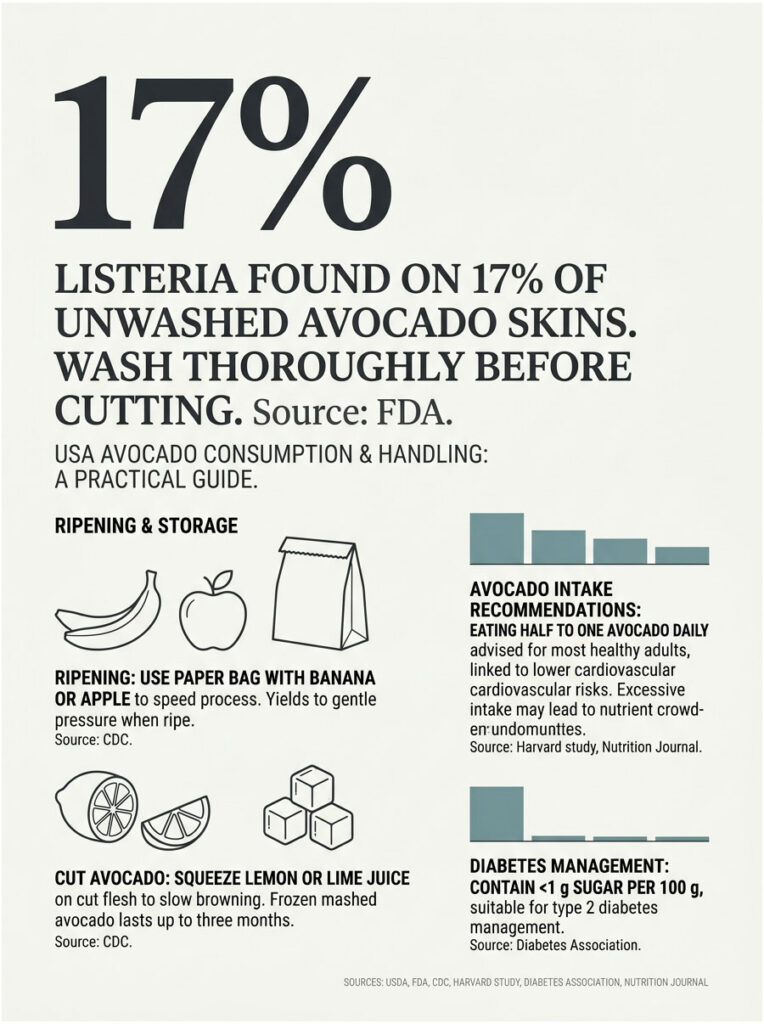
For food safety, the FDA and CDC recommend washing the outer skin under running water and drying with a clean cloth before cutting, even though the skin is not eaten. The flesh contacts the blade, and bacteria from the skin can transfer through. A 2018 FDA survey detected Listeria on about 17% of unwashed avocado skins.
Once cut, leftover avocado browns from oxidation. A squeeze of lemon or lime juice plus an airtight container in the refrigerator slows browning for about 24 hours. Mashed avocado freezes well for up to three months if pureed with a touch of lime.
Frequently Asked Questions
Is it OK to eat an avocado every day?
For most healthy adults, eating half to one medium avocado daily is safe and supported by US clinical trials. The HAT trial fed adults one avocado a day for six months without adverse effects, and the Harvard cohort linked regular intake to lower cardiovascular risk. People with kidney disease or latex allergies should check with a clinician first.
How many avocados per week are recommended for heart health?
The strongest evidence comes from the 2022 Harvard study, which found a 16% lower risk of cardiovascular disease at two or more servings per week, where one serving equals half a medium avocado. That translates to roughly one whole avocado per week as the minimum effective dose, with greater benefits at higher intakes when avocado replaces butter, cheese, or processed meats.
Does avocado raise or lower cholesterol?
Multiple US controlled-feeding trials show avocado lowers LDL cholesterol when it replaces saturated fats like butter or processed meats. A Penn State trial found that one avocado a day reduced LDL and small, dense LDL particles. HDL cholesterol generally holds steady or improves slightly. Adding avocado on top of an unchanged diet has a smaller effect.
Can diabetics eat avocado safely?
Avocados suit type 2 diabetes management well. They contain under 1 g of sugar per 100 g, have a glycemic index near 40, and supply fiber and healthy fats that slow glucose absorption. Patients we serve with diabetes typically tolerate half an avocado paired with a protein source without spikes. Always coordinate carbohydrate counts with your care team.
Is avocado good for weight loss?
Avocado supports weight management but is not a fat burner. The HAT trial showed that a daily avocado did not significantly reduce visceral fat over six months. What it did do was improve satiety and diet quality. Replacing 240 calories of less healthy fats (butter, mayo, processed snacks) with avocado is the realistic weight-loss play.
Are there any side effects of eating too much avocado?
Excessive intake can crowd out other nutrients, push calories above maintenance, and (rarely) cause GI discomfort from high fiber. Heavy intake also concentrates potassium, which matters for kidney patients. Some people report mild oral itching from cross-reactive proteins. Sticking to one medium avocado per day avoids most issues for healthy adults.
Can I eat avocado during pregnancy?
Yes. Avocados supply folate (essential for fetal neural tube development), potassium (which helps regulate blood pressure during pregnancy), and healthy fats (which support fetal brain development). The American College of Obstetricians and Gynecologists includes avocado among recommended fruits. Wash the skin before cutting to reduce listeria risk, the same caution applied to all fresh produce.
Is avocado better than butter or olive oil?
Avocado clearly beats butter on saturated fat, fiber, and potassium. Versus extra virgin olive oil, the comparison is closer: both are excellent sources of monounsaturated fat, and the Harvard study found no added cardiovascular benefit from swapping olive oil for avocado. The smart approach is using both, depending on cooking application and personal preference.
Why is avocado a fruit and not a vegetable?
Botanically, avocado is a single-seeded berry that develops from the flower of the Persea americana tree, which fits the strict definition of a fruit. Its low sugar content and savory uses lead most cooks to treat it like a vegetable. The USDA classifies it under fruits for nutrition labeling and Dietary Guidelines counting purposes.
Does cooking avocado destroy its nutrients?
Brief, low-heat cooking (grilling halves, warm avocado soup) preserves most nutrients. Prolonged high-heat exposure can degrade vitamin C and some carotenoids, and the texture turns bitter. For best nutrient retention and taste, treat avocado as a finishing ingredient rather than a primary cooking fat. Avocado oil, by contrast, holds up well to high-heat cooking.
Is the avocado pit safe to eat?
The avocado pit contains compounds (including persin and tannins) that are bitter and have shown mild toxicity in animal studies at high doses. Human safety data is limited, and the pit is hard enough to damage blender blades or teeth. The flesh provides all the documented benefits; the pit is best composted, not consumed.
Are organic avocados worth the extra cost?
The Environmental Working Group consistently places avocados on its Clean Fifteen list, meaning conventional avocados show very low pesticide residue. The thick skin acts as a natural barrier. From a pure pesticide-exposure standpoint, conventional avocados are a safe choice, and the price difference is better spent on organic versions of higher-residue produce like strawberries or spinach.
Medical Disclaimer: This article is for general educational purposes and does not replace personalized medical, nutrition, or pharmacology advice. People with chronic kidney disease, food allergies, pregnancy complications, or those taking warfarin, MAO inhibitors, or other prescription medications should consult their physician or a registered dietitian before making significant dietary changes. Patients can also book a relevant diagnostic test through HealthCareOnTime to establish a baseline before adjusting their routine.
References
- USDA FoodData Central, Avocado, Raw, All Commercial Varieties
- Pacheco LS, et al. Avocado Consumption and Risk of Cardiovascular Disease in US Adults. Journal of the American Heart Association, 2022
- Lichtenstein AH, et al. Effect of Incorporating 1 Avocado Per Day on Visceral Adiposity (HAT Trial). Journal of the American Heart Association, 2022
- American Heart Association Newsroom: Eating Two Servings of Avocados a Week Linked to Lower Risk of CVD, 2022
- Fulgoni VL, et al. Avocado Consumption Associated with Better Diet Quality and Lower Metabolic Syndrome Risk. Nutrition Journal, 2013 (NHANES analysis)
- University of Illinois: Avocado Consumption Alters Gastrointestinal Bacteria Abundance. The Journal of Nutrition, 2020
- Centers for Disease Control and Prevention: Dietary Fiber and Adult Intake Data
- National Kidney Foundation: Potassium and Your CKD Diet
- American Academy of Allergy, Asthma & Immunology: Latex-Food Allergy Syndrome
- Cleveland Clinic: Why Avocados Are a Healthy Addition to Your Diet, 2025
- US Department of Agriculture Foreign Agricultural Service: Mexico Avocado Annual Report, 2025