Pineapple tastes like dessert, so most people file it under “treat” and assume it carries a hefty calorie cost. The numbers tell a different story. A full cup of fresh pineapple has fewer calories than a granola bar, with a load of vitamin C the bar can’t touch.
Table of Contents
So before you ration your slices, here’s exactly what a serving costs you, straight from USDA data, plus everything else worth knowing about this fruit. The short version: pineapple is one of the easier sweet cravings to satisfy without busting your calorie budget.
Quick answer: Fresh pineapple has about 50 calories per 100 grams, roughly 82 calories per cup of chunks (165 grams), around 42 calories in a thin slice, and close to 450 calories in a whole medium fruit, according to USDA data. It’s nearly fat-free, mostly water and carbs, and delivers about 88% of your daily vitamin C in a single cup along with a big dose of manganese.
At a glance:
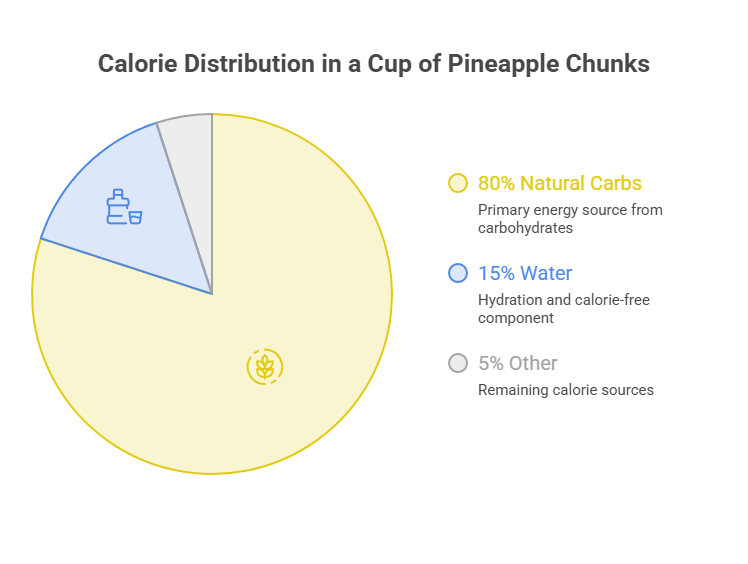
- A cup of pineapple chunks has about 82 calories, mostly from natural carbs and water.
- Per 100 grams, pineapple has just 50 calories, putting it among lower-calorie fruits.
- One cup covers roughly 88% of the Daily Value for vitamin C.
- Manganese is the standout mineral, at about two-thirds of the Daily Value per cup.
- Pineapple has a medium glycemic index (around 66), so portion and pairing matter.
- Fresh pineapple beats canned-in-syrup, juice, and dried versions on calories and sugar.
How Many Calories Are in Pineapple?
The honest answer depends on how much you eat and in what form. Fresh, raw pineapple is naturally low in calories because it’s mostly water, around 86% by weight.
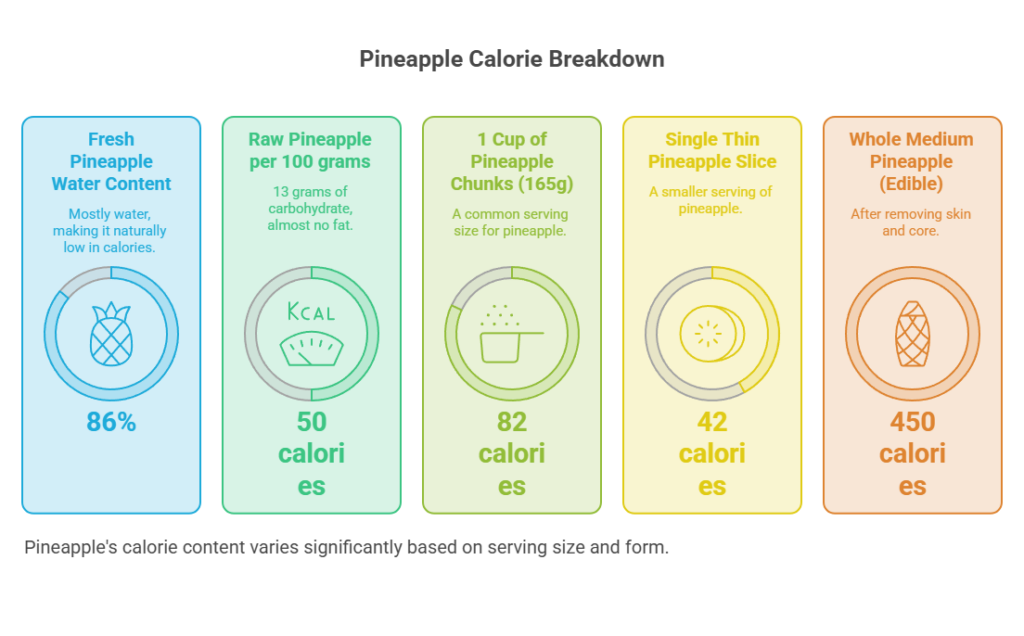
According to USDA FoodData Central, raw pineapple of all varieties contains about 50 calories per 100 grams. That same 100 grams holds roughly 13 grams of carbohydrate and almost no fat.
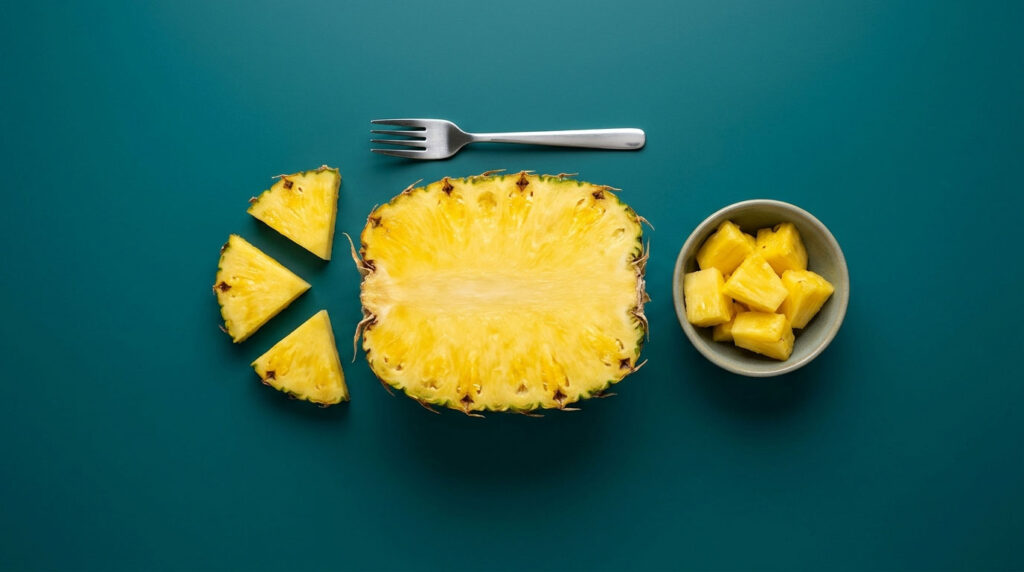
The serving most people picture is a cup of chunks, which weighs about 165 grams and lands near 82 calories. A single thin slice runs closer to 42 calories, while a whole medium pineapple, once you remove the skin and core, holds around 450 calories of edible fruit.
Calories by Serving Size and Form
Form changes everything. Canned pineapple in heavy syrup and dried pineapple pack far more sugar and calories than the fresh fruit, while juice concentrates the sugar without the fiber.
Our nutrition team points out that the gap between a cup of fresh chunks and a cup of canned-in-syrup can nearly double your calorie intake, which is why the form you choose matters as much as the amount on your plate.
Pineapple Calories by Serving and Form
| Serving / Form | Amount | Calories | Sugars (g) |
| Raw pineapple | 100 g | 50 | 9.9 |
| One thin slice | ~84 g | 42 | 8.3 |
| One cup, chunks | 165 g | 82 | 16.3 |
| Whole medium fruit (flesh only) | ~905 g | ~450 | ~89 |
| Pineapple juice | 1 cup (250 g) | ~133 | ~30 |
| Canned in juice | 1 cup | ~150 | ~28 |
| Canned in heavy syrup | 1 cup | ~200 | ~43 |
| Dried pineapple | 100 g | ~350 | ~80 |
For perspective, a cup of pineapple (82 calories) sits squarely in the middle of the fruit pack. A cup of watermelon has about 46 calories and strawberries about 49, while mango runs near 99, grapes around 104, and a cup of sliced banana about 134. Pineapple’s sweetness makes it feel heavier than it is.
Full USDA Nutrition Breakdown
Calories only tell part of the story. What makes pineapple worth eating is the package of nutrients riding along with those carbs.
Macronutrients
Pineapple is built almost entirely from water and carbohydrate. A cup of chunks delivers about 21.6 grams of total carbs, of which roughly 16.3 grams are natural sugars and about 2.3 grams are fiber.
Protein and fat are minimal, at under 1 gram of protein and a fraction of a gram of fat per cup. That low fat and high water content are why pineapple feels light despite its sweetness.
The fiber matters more than the small number suggests. It slows digestion slightly, supports gut health, and helps the fruit feel more filling than its calorie count would imply.
Here’s how those calories break down by source. About 94% of pineapple’s calories come from carbohydrate, roughly 4% from protein, and only about 2% from fat.
That carb-dominant profile is typical of fruit. It’s also why pineapple gives quick, usable energy, the kind that’s handy before a workout or as an afternoon pick-me-up rather than a heavy snack.
Pineapple Nutrition Facts per 1 Cup (165 g)
| Nutrient | Amount per Cup | % Daily Value | Source |
| Calories | 82 | — | USDA |
| Total carbohydrate | 21.6 g | 8% | USDA |
| Sugars | 16.3 g | — | USDA |
| Dietary fiber | 2.3 g | 8% | USDA |
| Protein | 0.9 g | 2% | USDA |
| Total fat | 0.2 g | 0% | USDA |
| Vitamin C | 78.9 mg | 88% | USDA |
| Manganese | 1.5 mg | 67% | USDA |
| Potassium | 180 mg | 4% | USDA |
Daily Values are based on the FDA’s 2,000-calorie reference diet. Your own needs may run higher or lower.
Micronutrients
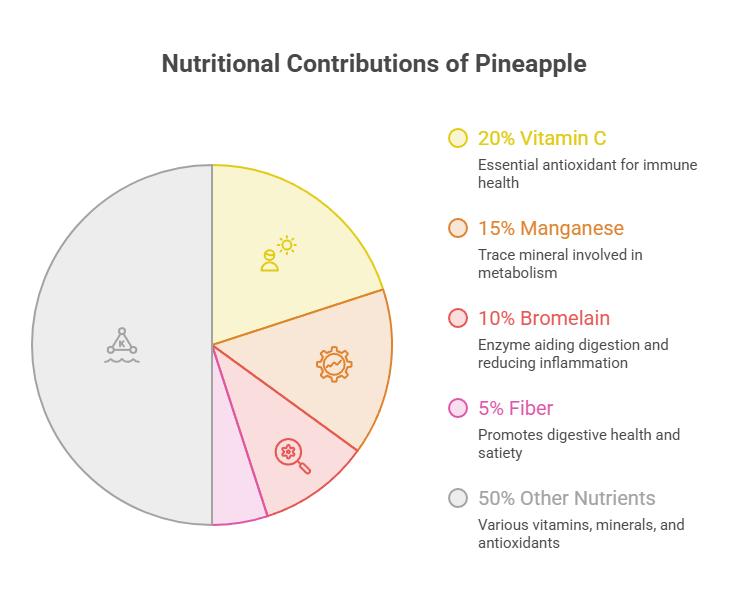
This is where pineapple earns its keep. As Healthline reports, one cup provides about 78.9 milligrams of vitamin C, close to 88% of the Daily Value, making pineapple one of the better fruit sources of this nutrient.
Manganese is the quieter standout. A cup supplies roughly 1.5 milligrams, about two-thirds of the Daily Value, a mineral your body uses for metabolism, bone health, and antioxidant defense.
Pineapple also carries smaller amounts of vitamin B6, potassium, copper, and folate. Patients booking vitamin and blood work through HealthCareOnTime often ask which fruits help with vitamin C, and pineapple consistently ranks near the top per serving.
How Pineapple Stacks Up Against Other Fruits
Calories alone don’t tell you whether a fruit is a good choice. Looking at sugar and key nutrients side by side puts pineapple in proper context.
Per cup, pineapple is moderate in calories and sugar, but it punches well above its weight on vitamin C. Watermelon and strawberries are lighter, while banana and grapes are denser and higher in sugar.
| Fruit (1 cup) | Calories | Sugar (g) | Vitamin C (%DV) | Standout |
| Pineapple | 82 | 16.3 | 88% | Manganese |
| Watermelon | 46 | 9.4 | 21% | Lycopene |
| Strawberries | 49 | 7.4 | 99% | Vitamin C |
| Mango | 99 | 22.5 | 67% | Vitamin A |
| Banana (sliced) | 134 | 18.3 | 17% | Potassium |
| Grapes | 104 | 23.4 | 6% | Antioxidants |
The takeaway: pineapple is a smart middle-of-the-road pick. It isn’t the lowest-calorie fruit, but few options match its vitamin C per serving, and it brings manganese and bromelain that most fruits simply don’t have.
Is Pineapple High in Sugar?
Plenty of people hesitate over pineapple’s sweetness, and that hesitation is fair. Pineapple is one of the sweeter common fruits, so the sugar deserves a straight answer rather than a brush-off.
How Much Sugar and What Kind
A cup of pineapple holds about 16.3 grams of natural sugar. That sugar is a blend of sucrose, glucose, and fructose, the same sugars found across fruit, packaged with fiber, water, and vitamins rather than stripped and added.
That packaging is the key difference. The natural sugar in whole pineapple behaves very differently in your body than the added sugar in candy or soda, because the fiber and water slow how fast it reaches your bloodstream.
Glycemic Index and Blood Sugar
Pineapple has a glycemic index of about 66, which falls in the medium range. Its glycemic load per 100-gram serving is roughly 8.6, which is actually low, because a typical serving doesn’t contain a huge amount of carbohydrate.
What that means in practice: pineapple can raise blood sugar moderately, especially eaten alone in large amounts. Our medical reviewers note that pairing it with protein or healthy fat, and keeping to about a cup, blunts the spike considerably. Ripeness matters too, since a very ripe, sweeter pineapple tends to raise blood sugar a little faster than a firmer one. Anyone tracking blood sugar closely can confirm the effect with simple at-home or lab testing.
Pineapple and Your Health Goals
The same fruit can support weight loss, fit a diabetes plan, or wreck a keto day. How pineapple fits depends entirely on what you’re trying to accomplish.
Weight Loss
Pineapple works well for weight management because it has low calorie density, meaning lots of food volume for relatively few calories. The water and fiber help you feel full, and the natural sweetness can satisfy a dessert craving for around 82 calories a cup.
The catch is portion awareness. Across the readers we hear from, the people who run into trouble aren’t eating fresh chunks; they’re drinking juice or snacking on dried rings, where calories and sugar climb fast. A cup of fresh pineapple as a sweet course after dinner can also curb the urge to reach for higher-calorie desserts, a simple win for anyone counting calories.
Diabetes and Blood Sugar
Pineapple isn’t off-limits for people with diabetes, but portion and pairing are everything. A smaller serving of about half a cup to a cup, eaten with protein or fat and as part of a balanced meal, keeps the blood-sugar impact in check.
In cases reviewed by our team, the difference between a problem food and a fine one usually comes down to how much and how it’s eaten, not the fruit itself. Spreading fruit across the day rather than eating a large bowl at once also keeps blood sugar steadier.
Keto and Low-Carb
Here pineapple is genuinely tricky. At about 21.6 grams of carbs per cup, a single serving can eat up most of a strict keto budget of 20 to 50 grams a day.
If you’re low-carb, a few small pieces for flavor is realistic, but a full cup rarely fits. This is the one diet where pineapple’s natural sugar works against you.
If Your Goal Is X, Eat Pineapple Like This
| Your Goal | How to Eat Pineapple | Why |
| Weight loss | Stick to about 1 cup, fresh and whole | Low calorie density, fiber, and water keep you full |
| Managing blood sugar | Pair half to one cup with protein or fat | Medium GI; pairing slows the rise |
| Keto or low-carb | Limit to a few small pieces | 21.6 g carbs per cup uses most of the daily budget |
| Better digestion | Choose fresh pineapple for its bromelain | The enzyme helps break down protein |
| Maximizing vitamin C | One cup covers about 88% of the DV | Few fruits deliver this much per serving |
| Cutting added sugar | Pick fresh over canned-in-syrup or juice | Syrup and juice add calories and concentrated sugar |
Health Benefits Beyond Calories
Pineapple offers more than a low calorie count. Its mix of nutrients and plant compounds is linked to several real benefits backed by research.
Vitamin C and Immunity
That 88% of the Daily Value for vitamin C in a single cup supports your immune system, helps your body absorb iron from plant foods, and is needed to make collagen for skin and connective tissue.
Vitamin C is also a strong antioxidant, helping neutralize the free radicals tied to aging and chronic disease. Hitting most of your daily target from one serving of fruit, with calories to spare, is a genuine win. It also plays a role in wound healing and keeping gums healthy, two things that quietly suffer when intake runs low.
Bromelain, Digestion, and Inflammation
Pineapple is the only common food source of bromelain, a group of enzymes that break down protein. Bromelain is why fresh pineapple can make your tongue tingle and why cooks use it to tenderize meat.
Research links bromelain to easier digestion and reduced inflammation, and it has been studied for recovery and swelling after surgery. Patients commonly ask us whether fresh or canned delivers more, and the answer is fresh, since the heat used in canning deactivates most of the enzyme. Most of the bromelain sits in the core and stem, so eating closer to the center gives you a little more of it.
Antioxidants and Manganese
Beyond vitamin C, pineapple contains antioxidant polyphenols and flavonoids that help protect your cells from damage. The manganese it provides plays a role in enzyme activity, bone formation, and how your body processes blood sugar and fat.
Together, these compounds make pineapple more than empty sweetness. It’s a nutrient-dense choice that happens to taste like a treat, which is a rare combination.
Hydration, Heart, and Skin
Because pineapple is about 86% water, it quietly helps with hydration, especially in summer when fresh fruit replaces heavier, saltier snacks.
Its potassium supports healthy blood pressure, while vitamin C feeds the collagen your skin and blood vessels rely on. None of this makes pineapple a cure for anything, but it adds up to a fruit that supports several systems at once for very few calories.
Who Should Be Careful With Pineapple?
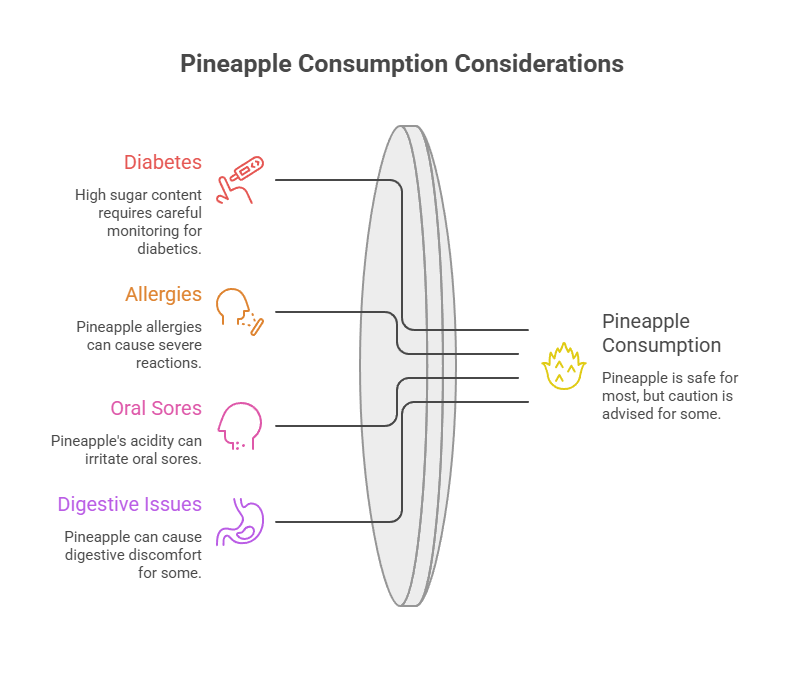
Pineapple is safe and healthy for most people, but a few groups have reason to go easy or check with a doctor first.
Allergies and Mouth Irritation
Some people react to pineapple with itching, tingling, or swelling around the mouth, a form of oral allergy syndrome. The bromelain enzyme can also leave the tongue or lips feeling raw if you eat a large amount in one sitting.
Rinsing your mouth afterward, or pairing pineapple with dairy like yogurt, tends to ease that sting. A true allergic reaction with hives or trouble breathing, though rare, needs immediate medical attention.
Medication Interactions
Bromelain may boost the effect of blood thinners and certain antibiotics, which can raise the risk of bleeding or stronger drug side effects. Our medical reviewers note that anyone taking anticoagulants or antibiotics should ask their doctor before adding large amounts of pineapple or any bromelain supplement.
Reflux, Sugar, and Sensitive Stomachs
Pineapple’s natural acidity can aggravate acid reflux or heartburn in people prone to them. And because it runs higher in sugar than many fruits, those managing blood sugar should mind the portion.
Eating pineapple as part of a meal, rather than on an empty stomach, usually softens both the acid and the blood-sugar effect.
Fresh vs Canned vs Juice vs Dried
The form you choose changes the nutrition math more than most people realize. Fresh pineapple is the gold standard for calories, sugar, and enzyme content.
Canned pineapple in juice is a reasonable backup, but canned in heavy syrup adds significant sugar and calories, sometimes pushing a cup toward 200 calories. Always check whether the label reads “in juice” or “in syrup,” since the difference is large.
Pineapple juice strips away the fiber and concentrates the sugar, so a cup can hit around 133 calories and raise blood sugar faster than the whole fruit. Dried pineapple is the most concentrated of all, often near 350 calories per 100 grams, and is very easy to overeat by the handful.
When fresh isn’t available, frozen pineapple chunks with no added sugar are an excellent option that keeps most of the nutrition intact, and they work beautifully in smoothies.
When you do buy canned or packaged pineapple, read the label. Look for “no sugar added” and check the sugars line, since two cans that look alike can differ by 15 grams of sugar or more per serving. Draining and rinsing canned pineapple also washes away some of the syrup.
Pineapple Calories in Common Dishes and Drinks
Pineapple rarely shows up alone. Once it lands in a smoothie, a cocktail, or a dessert, the calorie math changes fast, so it helps to know the rough numbers before you dig in.
A pineapple smoothie made with juice, yogurt, and banana can run 250 to 400 calories, depending on portions and add-ins. Swapping juice for water or unsweetened almond milk, and using frozen chunks instead of added sugar, keeps it much lighter.
Grilled pineapple is one of the better ways to enjoy it. A few rings add only about 40 to 60 calories per slice, and grilling caramelizes the natural sugar without adding any, which makes it a standout side for chicken or pork.
Cocktails are where the calories hide. A pina colada often carries 300 to 450 calories from the coconut cream, rum, and sweetened mixers, far more than the pineapple itself contributes.
On pizza, pineapple is rarely the calorie problem. A couple of tablespoons add only 15 to 25 calories, so the cheese and crust matter far more. Stirred into plain Greek yogurt, by contrast, pineapple makes a high-protein snack that usually lands under 200 calories.
How to Enjoy Pineapple (Without Overdoing It)
You don’t need to fear pineapple; you just need to eat it smartly. A serving of about one cup of fresh chunks fits almost any healthy eating plan.
Pick a ripe fruit by choosing one that feels heavy for its size and smells slightly sweet at the base. Store cut pineapple in the fridge and eat it within a few days for the best flavor and nutrient content.
To slow the sugar and add staying power, pair pineapple with a protein or fat: cottage cheese, Greek yogurt, nuts, or a slice of cheese. Add it to salads, salsa, stir-fries, or grilled skewers, where a little brightness goes a long way.
For easy ideas, blend a few chunks into a morning smoothie, thread them onto skewers for the grill, dice them into a salsa for fish or tacos, or freeze chunks to drop into sparkling water. Each keeps the portion modest while making the fruit feel like more than a quick snack.
If you’re watching calories or blood sugar, measure your portion at first rather than eating straight from the whole fruit. A quick look at how much equals a cup makes it easy to stay on track without feeling deprived.
Does Pineapple Burn Fat or Belly Fat?
A popular myth claims pineapple, or its bromelain enzyme, melts fat or targets belly fat. It’s a tempting idea, but the science doesn’t back it up.
No single food burns fat. Bromelain helps digest protein and may ease inflammation, but it doesn’t dissolve body fat or spot-reduce your waistline. Weight loss comes from your overall calorie balance, not one magic fruit.
Where pineapple genuinely helps is as a smart swap. Choosing a cup of fresh pineapple over a cookie or a sugary drink trims calories while adding fiber, water, and vitamin C, and those small swaps add up over time.
So enjoy pineapple as part of a balanced diet, not as a fat-burning shortcut. The honest version is less exciting, but it’s far more useful for real results.
Putting Pineapple’s Calories in Context
It’s easy to overthink the calories in a single fruit. Stepping back helps. At about 82 calories, a cup of pineapple is a small slice of a typical 2,000-calorie day, roughly 4%.
Compared with common snacks, pineapple wins easily. That same 82 calories is less than a granola bar at around 190, a small bag of chips at about 150, or a chocolate-chip cookie near 140, and it brings vitamins those snacks don’t.
If you like exercise math, you’d burn off a cup of pineapple with roughly 20 to 25 minutes of walking. Most people never need to think that hard about it; eaten as whole fruit in normal portions, pineapple fits comfortably into a healthy diet.
The bigger picture is balance. Fruit is one of the food groups Americans consistently fall short on, so the calories in pineapple are rarely the thing worth worrying about, especially next to added sugars and ultra-processed snacks.
Federal dietary guidance encourages about 1.5 to 2 cups of fruit a day for most adults. A serving or two of pineapple fits neatly inside that target while helping you hit your vitamin C and fiber goals, and it counts toward the variety nutritionists recommend across the week.
Frequently Asked Questions
How many calories are in one cup of pineapple?
A cup of fresh pineapple chunks (about 165 grams) has roughly 82 calories, based on USDA data. Almost all of those calories come from natural carbohydrate, with about 16 grams of sugar, 2.3 grams of fiber, and very little fat or protein.
How many calories in a whole pineapple?
A whole medium pineapple, counting only the edible flesh after removing the skin and core, contains around 450 calories. The exact number varies with size and ripeness, since a larger fruit holds more flesh and a riper one carries slightly more sugar.
How many calories in one slice of pineapple?
A thin slice of fresh pineapple, weighing about 84 grams, has roughly 42 calories. Thicker rings or larger slices will run higher, so the calorie count scales directly with how big and how thick you cut the slice.
Is pineapple good for weight loss?
Yes, in reasonable portions. Pineapple has low calorie density, meaning lots of volume for few calories, plus water and fiber that help you feel full. Stick to fresh chunks, watch portions, and skip the juice and dried versions, which pack far more calories and sugar.
How much sugar is in pineapple?
A cup of fresh pineapple contains about 16 grams of natural sugar, a mix of sucrose, glucose, and fructose. Because it comes packaged with fiber and water, this natural sugar affects your body more gently than the added sugar in soda, candy, or syrups.
Is pineapple bad for diabetics?
Not necessarily. Pineapple has a medium glycemic index, so people with diabetes can enjoy it in smaller portions, paired with protein or fat, as part of a balanced meal. Keeping to about half a cup to a cup helps limit the effect on blood sugar.
Is canned pineapple as healthy as fresh?
Fresh is better. Canned pineapple in juice is an acceptable option, but canned in heavy syrup adds a lot of sugar and calories. Canning’s heat also destroys most of the bromelain enzyme, so fresh or unsweetened frozen pineapple keeps more of the nutritional benefits.
How many calories in pineapple juice?
A cup of pineapple juice has about 133 calories, noticeably more than the whole fruit per serving. Juice removes the fiber and concentrates the natural sugar, so it raises blood sugar faster and fills you up less than eating fresh pineapple chunks does.
What vitamins are in pineapple?
Pineapple is richest in vitamin C, providing about 88% of the Daily Value per cup. It also supplies vitamin B6, folate, and small amounts of other B vitamins, along with the mineral manganese and lesser amounts of potassium and copper.
Can you eat pineapple on keto?
It’s difficult. At about 21.6 grams of carbs per cup, one serving can use most of a strict keto budget of 20 to 50 grams a day. A few small pieces for flavor may fit, but a full cup rarely works on a ketogenic diet.
What is bromelain in pineapple?
Bromelain is a group of natural enzymes found in pineapple that break down protein. It causes the tingling sensation when you eat fresh pineapple and is used to tenderize meat. Research links it to easier digestion, reduced inflammation, and support for recovery after surgery.
How much pineapple should you eat a day?
About one cup of fresh chunks a day fits most healthy eating plans and delivers strong vitamin C without excess sugar. If you’re managing blood sugar, calories, or following low-carb eating, a smaller portion of about half a cup is a sensible target.
Disclaimer: This article is for general nutrition education and isn’t medical or personalized dietary advice. Nutrient values are approximate and vary by ripeness, size, and variety. If you have diabetes, a fruit allergy, or other health concerns, talk with your doctor or a registered dietitian before making changes.