
Two melons sit in your grocery cart on a July afternoon, both sweet, both dripping with water, both promising summer in a bite. One is quietly far richer in vitamins than the other, and most shoppers grab the wrong one for their actual health goal.
Table of Contents
The truth is that neither melon is a loser. But line up the numbers and a clear pattern emerges about which fruit serves which purpose, and the gaps in some nutrients are larger than anyone expects.
Both fruits trace back to the same plant family, both run over 90% water, and both land on summer tables across America. Yet their nutrient profiles diverge sharply once you look past the sweetness. That divergence is exactly what makes this comparison worth getting right.
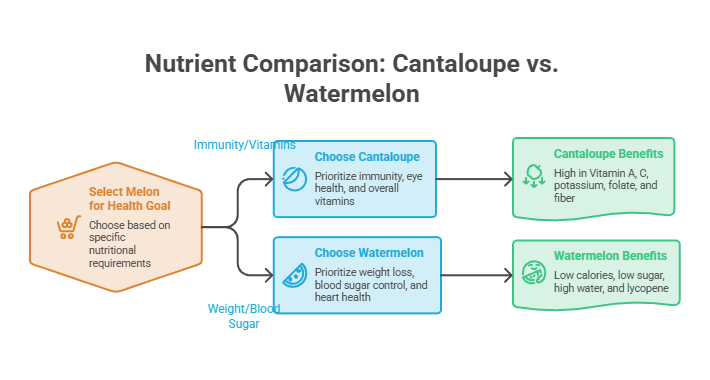
Quick Answer: Cantaloupe is the more nutrient-dense melon, delivering far more vitamin A, vitamin C, potassium, folate, and fiber per cup. Watermelon wins on fewer calories, less sugar, higher water content, and lycopene for heart health. For weight loss and blood sugar, pick watermelon. For immunity, eye health, and overall vitamins, pick cantaloupe. Both belong in a healthy diet.
At a Glance
- Cantaloupe carries roughly 5 times more vitamin A and over 3 times more vitamin C than watermelon per equal weight.
- Watermelon is lower in calories (46 vs 60 per cup) and sugar (9.4 g vs 13.9 g).
- Cantaloupe holds far more potassium (about 473 mg vs 170 mg per cup).
- Watermelon supplies lycopene for heart health; cantaloupe supplies beta-carotene for eye health.
- Cantaloupe offers about twice the fiber of watermelon.
- Cantaloupe’s netted rind carries a higher food-safety risk and a longer US recall history.
- The healthier melon depends entirely on your personal goal.
The Quick Verdict: It Depends on Your Health Goal
Most articles tiptoe around the obvious question, so here is the honest answer. There is no single winner, because the two melons excel at different jobs.
Melon sales climb every summer, and search interest in which one is healthier climbs right along with them. Shoppers want a quick rule, not a shrug, so this guide commits to clear picks while still respecting that bodies and goals differ.
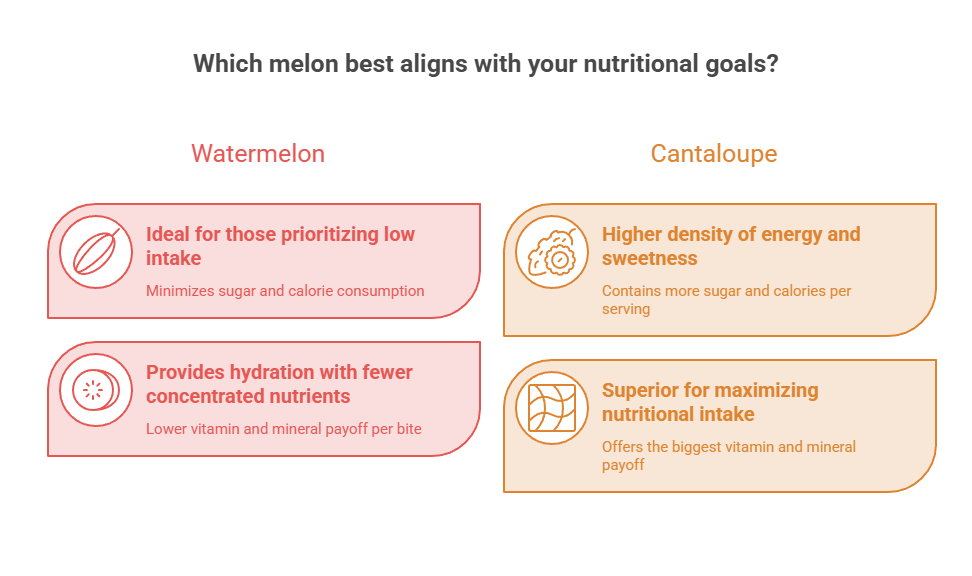
If your priority is keeping calories and sugar low, watermelon takes it. If you want the biggest vitamin and mineral payoff per bite, cantaloupe wins by a wide margin.
Our medical reviewers note that the right choice almost always comes down to what a person is trying to accomplish, not some universal ranking. A marathon runner, a person with diabetes, and someone managing macular health would each pick differently.
Where Cantaloupe Wins
Cantaloupe is the micronutrient champion. It dramatically out-delivers watermelon on vitamin A, vitamin C, potassium, folate, and fiber, all in a serving that still costs only about 60 calories.
That nutrient density makes it a strong pick for immune support, eye health, and blood pressure management. The orange flesh is a direct signal of its beta-carotene load.
Think of cantaloupe as the multivitamin of the melon world. A single cup chips away at several daily nutrient targets at once, which is rare for a food this sweet and this low in calories.
Where Watermelon Wins
Watermelon is the lightweight contender. It carries fewer calories, less sugar, and slightly more water, which makes it the better fit for weight management and steady blood sugar.
It also holds lycopene, the antioxidant tied to cardiovascular and skin protection. For anyone counting calories through a hot summer, watermelon is the leaner choice.
Watermelon also leans on sheer water volume to fill you up. You can eat a generous bowl, feel satisfied, and still spend fewer calories than a small handful of nuts would cost. That makes it a quiet ally for appetite control.
Table 1: Watermelon vs Cantaloupe Nutrition Face-Off
| Nutrient (basis noted) | Watermelon | Cantaloupe | Winner |
| Calories (per cup) | 46 | 60 | Watermelon |
| Total carbs (per cup) | 11.5 g | 14.4 g | Watermelon |
| Sugar (per cup) | 9.4 g | 13.9 g | Watermelon |
| Fiber (per cup) | 0.6 g | 1.6 g | Cantaloupe |
| Vitamin A (per 100 g) | 28 µg | 169 µg | Cantaloupe |
| Vitamin C (per 100 g) | 8.1 mg | 36.7 mg | Cantaloupe |
| Potassium (per cup) | ~170 mg | ~473 mg | Cantaloupe |
| Folate (per 100 g) | 3 µg | 21 µg | Cantaloupe |
| Water content | 91.4% | 90% | Watermelon |
| Glycemic load (per serving) | ~5 | ~4 | Tie (both low) |
The scoreboard tilts toward cantaloupe on raw nutrition, while watermelon holds the line on calories and sugar. The right pick still depends on your goal, so keep reading.
Nutrient Deep Dive: What the Numbers Actually Mean
A column of numbers is easy to skim past. The size of these gaps deserves a closer look, because some of them are genuinely large.

It helps to remember what these melons are not. Neither is a protein source, neither carries much fat, and neither is a fiber powerhouse on the level of beans or oats. What they offer is a low-calorie, hydrating delivery system for specific vitamins and minerals, and that is where the real differences live.
Vitamin A: Cantaloupe’s Knockout Punch
This is the most lopsided category in the entire comparison. Per 100 grams, cantaloupe delivers about 169 micrograms of vitamin A versus watermelon’s 28, which is roughly 504% more.
A single cup of cantaloupe can cover a large share of your daily vitamin A target. That vitamin supports vision, immune function, and skin health, and it arrives as beta-carotene the body converts as needed.
Patients booking vitamin panels through HealthCareOnTime often ask which everyday foods close common gaps. Cantaloupe is one of the easiest answers for vitamin A.
Vitamin A also plays a role in the immune system and in keeping skin and mucous membranes healthy. Because cantaloupe delivers it as beta-carotene, the body takes only what it needs and stores the rest as a precursor, which lowers the risk of overdoing it compared with supplements.
Vitamin C: Another Cantaloupe Landslide
The pattern repeats with vitamin C. Cantaloupe carries about 36.7 milligrams per 100 grams against watermelon’s 8.1, roughly 353% more.
One cup of cantaloupe supplies more than half a day’s vitamin C for most adults. That supports immune defense, collagen production, and iron absorption from plant foods.
Watermelon still contributes vitamin C, just in smaller amounts. If immunity is your aim, cantaloupe is the stronger glass to fill.
Vitamin C is water-soluble, so the body does not store it and needs a steady supply. A cantaloupe habit is an easy way to keep topping up, especially during cold season when immune support is top of mind for many households.
Potassium and Electrolytes
Potassium is the mineral most Americans underconsume, and cantaloupe shines here. A cup delivers around 473 milligrams compared to watermelon’s roughly 170.
Potassium helps regulate blood pressure and supports muscle and nerve function. For someone working to manage hypertension through diet, cantaloupe quietly does more work per serving.
To put the gap in context, a cup of cantaloupe delivers roughly the potassium of a medium banana, but with far fewer calories. That makes it a useful, lower-calorie way to nudge potassium intake toward recommended levels.
Folate, Magnesium, and the Small-Print Minerals
The minor nutrients still tell a story. Cantaloupe carries about 7 times the folate of watermelon, around 21 micrograms versus 3 per 100 grams.
Folate matters for cell growth and is especially important during pregnancy. Watermelon counters with a modest magnesium contribution, but on the micronutrient ledger overall, cantaloupe keeps pulling ahead.
Neither melon is a meaningful source of protein or fat, which is normal for fruit. Both are essentially water plus carbohydrate plus a scattering of vitamins and minerals, so the comparison really comes down to which micronutrients each one concentrates.
Antioxidant Showdown: Lycopene vs Beta-Carotene
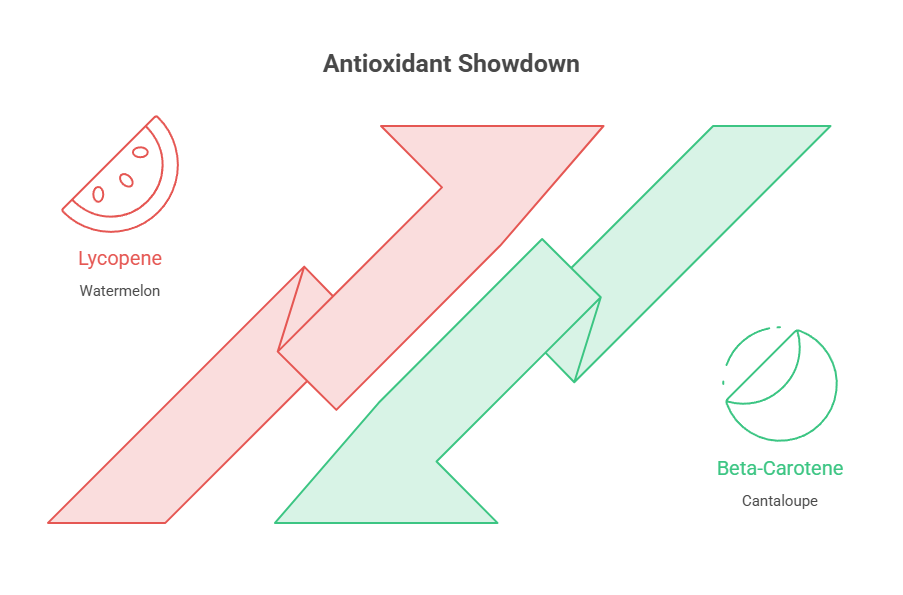
This is where watermelon finally lands a real punch. The two melons carry different antioxidant pigments, and each protects the body in a different way.
Watermelon’s Lycopene and Heart Health
The deep red of watermelon comes from lycopene, the same antioxidant that makes tomatoes red. Watermelon actually carries more lycopene per serving than cantaloupe.
Research links lycopene to cardiovascular protection and a reduced risk of certain cancers, along with some defense against sun damage to skin. For heart-focused eaters, that red pigment is a meaningful bonus.
Lycopene absorption actually improves when the fruit is paired with a little healthy fat. A drizzle of olive oil on a watermelon and feta salad does more than taste good; it helps your body take up more of the antioxidant.
Cantaloupe’s Beta-Carotene and Eye Health
Cantaloupe’s orange color signals beta-carotene, plus lutein and zeaxanthin. These carotenoids concentrate in the eye and help protect against age-related vision decline.
Our lab partners report that patients managing eye health are often surprised that a sweet melon can support their goals. Cantaloupe earns its place on that list.
Lutein and zeaxanthin gather in the macula, the part of the retina responsible for sharp central vision. Diets richer in these carotenoids are associated with a lower risk of cataracts and age-related macular degeneration, two of the most common causes of vision loss in older Americans.
Why Pigment Color Predicts the Benefit
The colors are not decoration; they are the nutrients themselves. Red flesh means lycopene, orange flesh means carotenoids, and each delivers a distinct protective effect.
This is why nutrition experts suggest eating a range of colors. Choosing both melons across a week, rather than just one, covers more antioxidant ground.
The plate-of-colors idea is not just a slogan. Different pigments protect different tissues, so a red melon and an orange melon together do more for the body than a double helping of either one alone.
Calories, Sugar, and Blood Sugar Impact
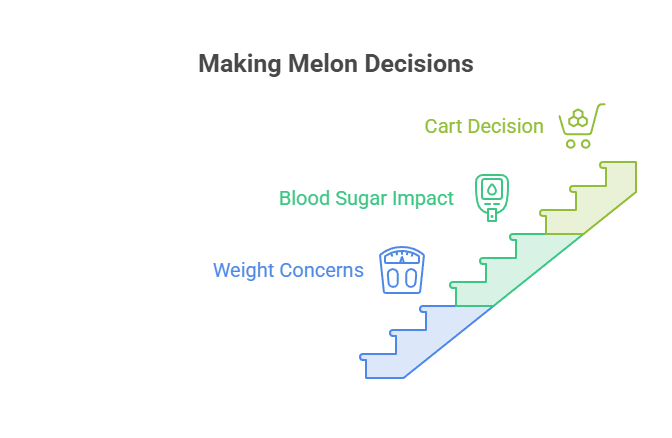
For many readers, this is the section that decides the cart. Weight and blood sugar concerns drive a lot of melon decisions.
The Calorie and Sugar Math Per Cup
Watermelon is the lighter option. A cup runs about 46 calories with 9.4 grams of sugar, while cantaloupe lands near 60 calories with about 13.9 grams of sugar.
The difference is modest per cup but adds up across a big summer bowl. For strict calorie counting, watermelon has the edge.
Picture a three-cup serving, easy to reach when a melon is sweet and the day is hot. That is roughly 138 calories of watermelon versus about 180 of cantaloupe, plus a noticeably larger sugar total for the cantaloupe. The per-cup gap quietly triples.
Glycemic Index and Load for Both Melons
Both melons share a reputation for high glycemic index numbers, yet both carry a low glycemic load per serving. The small carbohydrate amount per cup keeps the real-world blood sugar impact gentle for either fruit.
Cantaloupe’s extra fiber can slightly soften its glucose response, which is one reason some clinicians view it kindly for blood sugar. Whole fruit beats juice for both melons every time.
The takeaway is reassuring for most people. Neither melon is the blood sugar villain its high glycemic index reputation suggests, because a realistic serving simply does not deliver enough carbohydrate to cause a sharp spike. Portion size, not melon choice, is what moves the needle.
Which Melon for Diabetics and Prediabetics
For people managing blood sugar, both melons can fit in measured portions paired with protein. Watermelon’s lower sugar gives it a slight edge for tight carb budgets, while cantaloupe’s fiber and potassium add value.
The deeper question of fruit and blood sugar is covered in the HealthCareOnTime guide on watermelon and diabetes. Portion control remains the deciding factor for either melon.
A practical tip applies to both: eat the melon as part of a meal that includes protein or fat rather than on its own. That slows digestion and keeps the glucose rise gentle, regardless of which melon ends up on the plate.
Table 2: US Health Context and Melon Relevance
| US Health Metric | Figure | Why the Melon Choice Matters |
| Adults with diabetes (CDC) | 38+ million | Lower-sugar watermelon aids carb budgets |
| Adults with prediabetes (CDC) | ~98 million | Portion-aware fruit choices help |
| Adults not meeting potassium intake | Majority of US adults | Cantaloupe’s 473 mg/cup helps close the gap |
| Adults below vitamin A targets | Sizable share | Cantaloupe covers a large daily portion |
| US obesity prevalence (CDC) | ~40% of adults | Low-calorie melons support weight goals |
| Recommended daily fruit servings | 1.5 to 2 cups | Both melons fit easily |
These numbers show why the pick is not trivial. Each melon maps onto a different common American health gap.
Hydration, Weight Loss, and Fitness Use Cases
Summer eating is often about cooling down and staying light. Both melons help, with slightly different strengths.
Water Content Face-Off
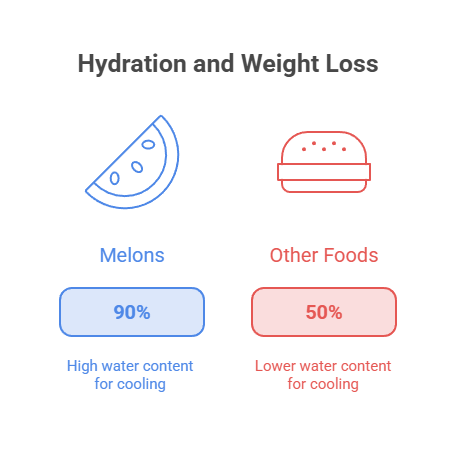
Watermelon edges this one at about 91.4% water versus cantaloupe’s 90%. The margin is small, so both are excellent hydrators on a hot day.
That high water content is part of why both melons feel so refreshing and filling. Either makes a smart post-sun snack.
On the hottest days, eating water-rich fruit is a quiet way to top up fluids without thinking about it. A bowl of either melon contributes real hydration alongside plain water, which is helpful for anyone who struggles to drink enough during a heat wave.
Weight Loss: The Volume-Eating Advantage
Both melons let you eat a satisfying volume for few calories, the core principle of volume eating. Watermelon’s lower calorie count gives it a narrow lead for pure weight management.
Across patients we serve, swapping a calorie-dense dessert for a bowl of either melon is an easy, sustainable trade. The fullness from water and fiber helps curb later snacking.
There is a behavioral angle too. Cutting and chilling melon in advance makes it the grab-first option in the fridge, which quietly displaces chips or ice cream. Convenience often decides what people actually eat.
Post-Workout: Electrolytes vs L-Citrulline
After exercise, cantaloupe’s higher potassium and magnesium support electrolyte replenishment. That makes it a strong recovery choice for sweaty workouts.
Watermelon counters with L-citrulline, an amino acid linked to blood flow and reduced muscle soreness. Athletes can reasonably reach for either, depending on whether electrolytes or circulation is the priority.
For a long, sweaty session, cantaloupe’s potassium helps replace what sweat carries away. For a shorter workout where recovery and next-day soreness matter most, watermelon’s L-citrulline may have the edge. Many athletes simply rotate both through the week.
Food Safety: The Melon Risk Nobody Talks About
Every competing article skips this, and it matters for American shoppers. Melons carry a real, documented food-safety history.
Why Cantaloupe’s Netted Rind Harbors Bacteria
Cantaloupe’s rough, netted skin gives bacteria more places to hide than watermelon’s smooth rind. When the knife cuts through a contaminated surface, it can drag pathogens into the flesh.
This is why cantaloupe appears in food-safety warnings more often than watermelon. The texture that makes it distinctive also makes it harder to clean.
The risk is not a reason to avoid cantaloupe; it is a reason to handle it well. The bacteria live on the outside, so the danger comes almost entirely from cutting an unwashed melon and transferring surface contamination to the flesh you eat.
US Recall History
Cantaloupe has been linked to multiple US outbreaks of Listeria and Salmonella over the years, some of them deadly. The FDA and CDC have issued recalls tied to contaminated cantaloupe more than once.
Watermelon is not risk-free, but its smooth surface and lower outbreak record give it a safety edge. Our medical reviewers note that proper handling sharply reduces the risk for both.
People at higher risk deserve extra caution: older adults, pregnant women, young children, and anyone with a weakened immune system. For these groups, pre-cut cantaloupe that has sat out at uncertain temperatures is best avoided, since Listeria can grow even under refrigeration.
Safe Handling Steps for Both Melons
Wash the whole melon under running water and scrub the rind before cutting, even though you won’t eat the skin. Refrigerate cut melon within two hours and use it within a few days.
Keep cut melon below 40°F and discard any left at room temperature too long. These simple steps protect everyone at the table.
Use a clean knife and cutting board, and avoid letting the blade touch the flesh after it has passed through an unwashed rind. A two-hour limit at room temperature is the general rule; in hot outdoor settings above 90°F, that window shrinks to about one hour.
How to Choose: Your Goal, Your Melon
By now the pattern is clear, so the smartest move is to match the melon to the mission. The question of which melon is healthier finally has a practical answer: the one that fits your goal.
Picking Ripe Melons at the Store
A ripe watermelon feels heavy for its size and has a creamy yellow ground spot. A ripe cantaloupe smells sweet at the stem end and yields slightly to gentle pressure.
Both should feel firm and dense. A heavy melon usually means a juicy one.
Easy Ways to Eat More of Both
Watermelon pairs naturally with feta, mint, and a squeeze of lime, or blends into a no-cook gazpacho for hot evenings. Frozen cubes make a slow-eating treat that naturally limits portion size.
Cantaloupe shines wrapped in a thin slice of prosciutto, scooped over cottage cheese, or diced into a morning yogurt bowl. Pairing either melon with a little protein turns a sweet snack into a more balanced one. Patients commonly ask us for simple swaps like these, and melons make some of the easiest.
Table 3: Match Your Goal to the Right Melon
| Your Goal | Pick This Melon | Why |
| Weight loss | Watermelon | Fewer calories and sugar per cup |
| Blood sugar control | Watermelon | Lower sugar, low glycemic load |
| Immune support | Cantaloupe | Over 3 times the vitamin C |
| Eye health | Cantaloupe | Beta-carotene, lutein, zeaxanthin |
| Heart health | Watermelon | Lycopene for cardiovascular support |
| Blood pressure | Cantaloupe | Far higher potassium per cup |
| Pregnancy folate | Cantaloupe | About 7 times more folate |
| Kidney potassium limits | Watermelon | Lower potassium load |
Frequently Asked Questions
Which is healthier, watermelon or cantaloupe?
Cantaloupe is more nutrient-dense, with far more vitamin A, vitamin C, potassium, and folate per serving. Watermelon is lower in calories and sugar and richer in lycopene. The healthier choice depends on your goal, whether that is weight loss, immunity, or heart health.
Which melon has less sugar?
Watermelon has less sugar, with about 9.4 grams per cup compared to cantaloupe’s roughly 13.9 grams. Both are still moderate-sugar fruits with a low glycemic load, so portion size matters more than the small difference between them.
Which melon is best for weight loss?
Watermelon edges out cantaloupe for weight loss because it has fewer calories (46 vs 60 per cup) and less sugar. Both melons support weight goals through high water content and low calorie density, making either a smart swap for heavier desserts.
Is watermelon or cantaloupe better for diabetics?
Both can fit a diabetes plan in measured portions. Watermelon’s lower sugar gives it a slight edge for tight carb budgets, while cantaloupe’s extra fiber may soften its glucose response. Pair either with protein and watch portion sizes.
Which melon is better for your eyes?
Cantaloupe is better for eye health. Its beta-carotene, lutein, and zeaxanthin support vision and help protect against age-related decline. Watermelon contains some of these compounds but in much smaller amounts than the orange-fleshed cantaloupe.
Does cantaloupe have more potassium than watermelon?
Yes, by a wide margin. Cantaloupe provides about 473 milligrams of potassium per cup versus watermelon’s roughly 170 milligrams. That makes cantaloupe a stronger choice for blood pressure support and electrolyte replenishment after exercise.
Which melon is better during pregnancy?
Cantaloupe offers more folate, about 7 times that of watermelon, which supports fetal development. Both are hydrating and safe when handled properly. Pregnant women should wash melons thoroughly and avoid pre-cut melon left at unsafe temperatures.
Why is cantaloupe linked to food recalls?
Cantaloupe’s rough, netted rind traps bacteria like Listeria and Salmonella more easily than watermelon’s smooth surface. Cutting can carry those pathogens into the flesh. Washing and scrubbing the rind before cutting reduces the risk significantly.
Can you eat cantaloupe every day?
For most people, a cup-sized serving of cantaloupe daily is fine and nutritious. Those watching potassium intake due to kidney concerns should limit it, since cantaloupe is potassium-rich. As with any fruit, very large amounts may cause stomach upset.
Is frozen melon as healthy as fresh?
Frozen melon with no added sugar retains most of its nutrients and makes a refreshing treat. Freezing changes the texture but preserves vitamins and minerals well. Check labels on packaged frozen melon to confirm there are no added sweeteners.
Should I just eat both melons?
Yes, mixing both is often the smartest approach. Watermelon covers calories, hydration, and lycopene, while cantaloupe covers vitamins, potassium, and eye-protective carotenoids. Eating a range of colors gives you the broadest nutrient coverage across the week.
Which melon is better for your skin?
Both help, through different paths. Watermelon’s lycopene offers some protection against sun damage, while cantaloupe’s vitamin C supports collagen production and vitamin A aids skin repair. Their high water content also keeps skin hydrated from the inside.
Medical Disclaimer: This article is for general informational purposes and does not replace personalized medical or nutritional advice. Individual needs vary by health status, medication, and conditions such as kidney disease or diabetes. Always consult your physician or a registered dietitian before making significant dietary changes. People with weakened immune systems should take extra care with melon handling and storage.