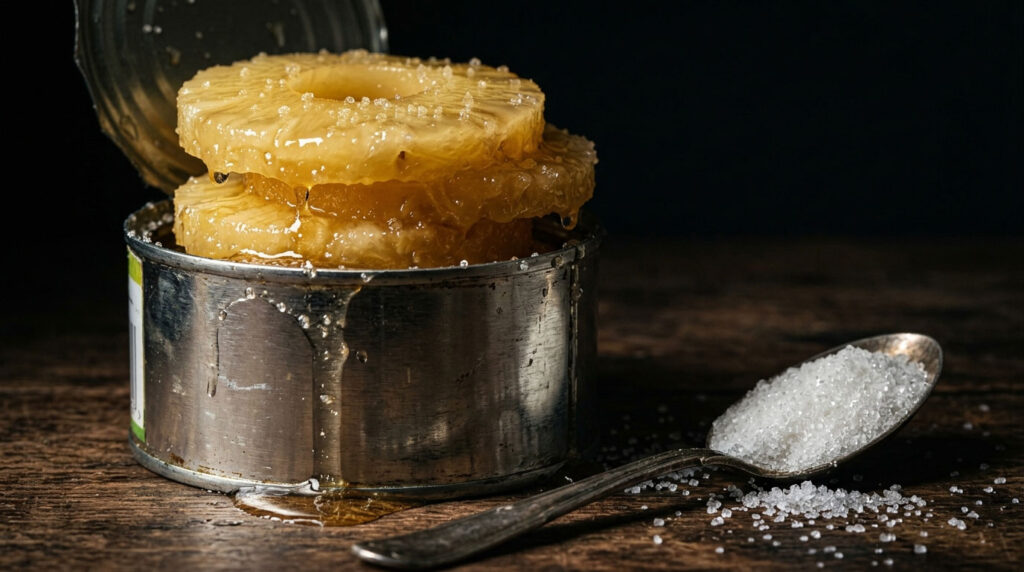
You’re at the grocery store with a whole golden pineapple in one hand and a tidy can in the other, and the question hits: does the can quietly cost you the good stuff? It’s a fair worry, and the answer is more interesting than a flat “fresh is better.”
Table of Contents
Both can fit a healthy diet. The differences come down to a few specific nutrients and one decision on the can’s label that matters more than most people realize.
Quick Answer: Fresh pineapple wins on vitamin C and bromelain, the natural enzyme tied to digestion and inflammation, because canning’s heat reduces both. Canned pineapple packed in 100% juice (drained) is a solid, convenient runner-up that keeps fiber and manganese. The version to limit is canned in heavy syrup, which piles on added sugar. The simplest rule: read the label and choose juice or water over syrup.
At a Glance
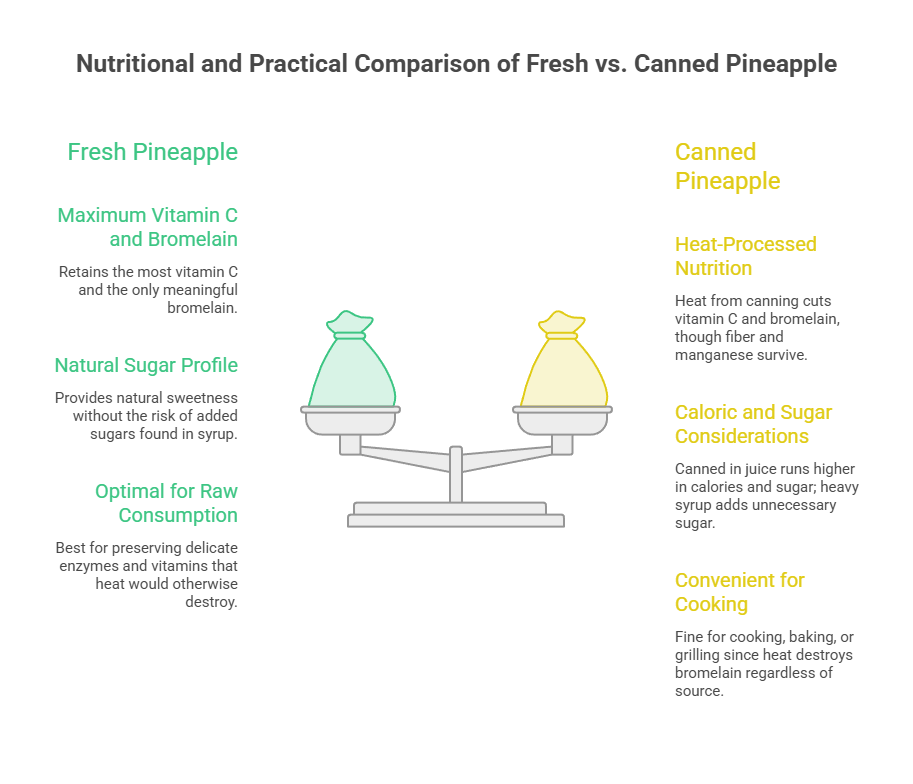
- Fresh pineapple keeps the most vitamin C and the only meaningful bromelain. Heat from canning cuts both.
- Canned in 100% juice or water is nutritious and convenient. Canned in heavy syrup adds sugar you don’t need.
- Fiber and manganese survive canning, so canned still counts as real fruit nutrition.
- Fresh has more vitamin C per cup, while canned in juice runs higher in calories and sugar.
- For cooking, baking, or grilling, canned is fine, since heat would destroy bromelain anyway.
- If you watch added sugar or manage diabetes, skip syrup, drain and rinse, and mind your portion.
- The label is everything: “100% juice,” “in water,” or “no sugar added” beats “heavy syrup” every time.
Fresh vs Canned Pineapple: What’s Actually Different
Pineapple starts out the same fruit no matter how it’s sold. What changes is everything that happens between the field and your fork.
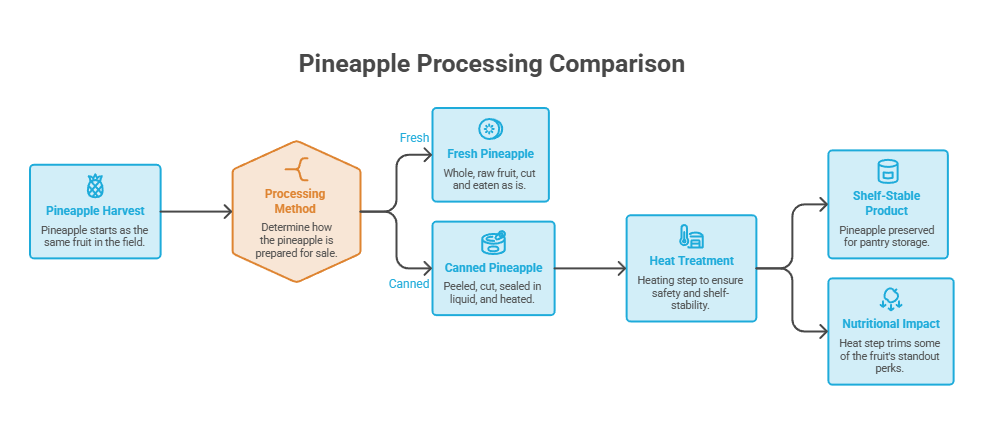
Fresh pineapple is the whole, raw fruit, cut and eaten as is. Canned pineapple is peeled, cut, sealed in a can with a packing liquid, and heated to make it safe and shelf-stable for years.
Our nutrition reviewers note that this heat step is the hinge of the whole comparison. It’s what preserves the fruit for the pantry, and it’s also what trims a few of pineapple’s standout perks.
How Canning Changes the Fruit
Canning uses heat to kill microbes and lock in shelf life. That same heat is hard on two things pineapple is famous for: vitamin C and bromelain.
Vitamin C is water-soluble and heat-sensitive, so some of it degrades during processing and leaches into the packing liquid. Bromelain, an enzyme, is even more fragile and is largely deactivated by the temperatures canning requires.
The packing liquid matters too. Juice or water keeps things simple, while syrup folds in extra sugar that changes the fruit’s whole nutrition profile.
The Three Things That Shift Most
If you remember nothing else, remember these three. Vitamin C drops, bromelain mostly disappears, and sugar can climb depending on the packing liquid.
Everything else stays remarkably close. Fiber, manganese, and most minerals come through canning largely intact, which is why canned pineapple is still genuinely good for you.
Patients who book nutrition-related testing with HealthCareOnTime often ask whether canned fruit “even counts.” It does. The goal here is helping you pick the version that fits your needs, not scaring you off the can.
The Nutrition Head-to-Head
Numbers make this concrete. The table below compares one cup of fresh pineapple against one cup canned in juice and one cup canned in heavy syrup, using USDA-based figures.
Keep in mind that exact values vary by brand, ripeness, and how much liquid you drain.
| Per 1 cup (about 165 g) | Fresh | Canned in 100% juice (drained) | Canned in heavy syrup |
| Calories | About 75 to 82 | About 110 | About 150 to 200 |
| Sugar | About 16 g (natural) | About 25 g (mostly natural) | About 30 g or more (includes added sugar) |
| Vitamin C | About 79 mg (88% DV) | About 17 mg | About 12 to 17 mg |
| Bromelain | Present and active | Negligible (destroyed by heat) | Negligible |
| Fiber | About 2.3 g | About 2.4 g | About 2 g |
| Manganese | About 2.6 mg (67 to 76% DV) | Mostly retained | Mostly retained |
Calories and Sugar
Fresh pineapple is the lighter choice. A cup of fresh chunks runs about 75 to 82 calories, while drained canned pineapple has about 110 calories per cup.
The sugar story is similar. One cup of raw pineapple has about 21 grams of carbohydrate including 16 grams of sugar, while a cup of canned pineapple in juice has about 28 grams of carbohydrate including 25 grams of sugar.
Here’s the nuance worth holding onto: pineapple’s own sugar is natural, not added. The extra grams in juice-packed cans come mostly from the fruit and juice, while heavy syrup is where true added sugar enters the picture.
Vitamin C, the Biggest Gap
This is where fresh pulls clearly ahead. A cup of fresh pineapple delivers roughly 78.9 mg of vitamin C, about 88% of the daily value, making it one of the more vitamin-C-rich fruits you can grab.
Canning takes a real bite out of that. Raw pineapple has about 78 milligrams of vitamin C per cup, while a cup of canned pineapple has just 17 milligrams.
The size of the loss depends on time and temperature during processing. Studies show that juice pasteurization can lead to vitamin C losses of 2 to 47%, depending on time and temperature, so the exact gap varies by product.
Bromelain, the Enzyme Canning Destroys
Bromelain is pineapple’s signature. It’s a group of enzymes that break down protein, which is why fresh pineapple can tenderize meat and give your tongue that faint tingle.
It’s also the most heat-sensitive thing in the fruit. The enzyme bromelain is almost completely destroyed by canning, so canned pineapple offers essentially none of the active enzyme.
If you eat pineapple specifically for bromelain’s digestive or anti-inflammatory reputation, fresh is the form that delivers it. Our medical reviewers note that food-level amounts are modest either way, but only fresh provides any meaningful active enzyme.
What Survives Canning (Fiber, Manganese, Minerals)
Plenty makes it through intact, which is the part thin blog posts often skip. Fiber is nearly identical: about 2.4 grams per cup canned versus 2.3 grams per cup fresh.
Manganese also holds up well, and it’s a big deal in pineapple. A cup of fresh provides roughly 67% of the daily value for manganese, and canned keeps most of it.
Some minerals barely budge. Phosphorus, iron, and zinc stay about the same, while canned pineapple is slightly higher in potassium, calcium, and magnesium. So canned still brings real nutrition to the table.
In Juice vs In Syrup: The Choice That Matters Most
If there’s one decision that decides whether canned pineapple is a smart pick or a sugar trap, it’s this one. The packing liquid changes the math more than the canning itself.
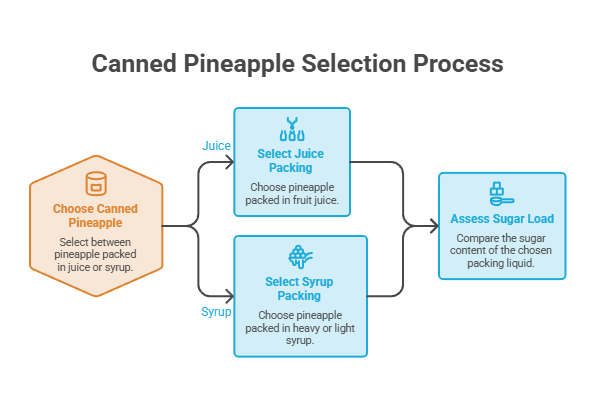
Across the readers we serve, this is the detail that gets overlooked most at the store. Two cans that look nearly identical can carry very different sugar loads.
Why Heavy Syrup Is the Real Problem
Heavy syrup is sugar water. It soaks into the fruit and pushes the calorie and sugar counts well above fresh, adding sugar that brings little nutrition with it.
That matters because most Americans already overshoot on added sugar. The American Heart Association recommends a daily cap on added sugars of no more than 6 teaspoons (25 grams) for most women and 9 teaspoons (36 grams) for most men.
A serving of syrup-packed pineapple can eat into that budget fast. The Harvard Nutrition Source explains that natural sugar packaged with fiber behaves differently in the body than added sugar with none.
How to Read the Can Label
The label tells you what you need in seconds. Look for “packed in 100% juice,” “in water,” or “no sugar added,” and steer clear of “heavy syrup” or “light syrup.”
Then check the Nutrition Facts panel for “Added Sugars” listed under “Total Sugars.” A product with little or no added sugar is the one you want.
One easy upgrade: drain the liquid, and rinse the chunks under water if you like. That simple step washes away some of the surrounding sugar before the fruit ever reaches your plate.
Health Benefits of Pineapple (Both Forms)
Whichever form you choose, pineapple earns its spot in the fruit bowl. Both versions deliver nutrients worth having, with fresh holding a couple of extra advantages.
These benefits come from real food rather than megadoses, so think of pineapple as one tasty piece of an overall pattern, not a cure for anything.
Vitamin C and Immune Support
Pineapple is a vitamin C standout, especially fresh. Vitamin C is a water-soluble antioxidant that helps protect cells, supports the immune system, and aids collagen production for healthy skin.
It also helps your body absorb non-heme iron, the kind found in plant foods. Pairing pineapple with beans or leafy greens can give that iron a small absorption boost.
Canned pineapple still contributes some vitamin C, just less than fresh. If immune support is your aim, fresh or juice-packed canned both help; syrup-packed simply adds sugar along the way.
Manganese and Bone Health
Manganese is pineapple’s quiet superpower, and it survives canning well. Manganese is an essential mineral involved in bone formation, metabolism, and antioxidant defenses.
A single cup covers most of your daily manganese need, which is unusual for a fruit. That holds whether the pineapple is fresh or canned, so both forms support this benefit.
Our lab partners report that minerals like manganese tend to be stable through processing, unlike fragile vitamins. It’s a good reminder that “processed” doesn’t automatically mean “stripped of nutrients.”
Bromelain, Digestion, and Inflammation (Fresh Advantage)
Bromelain is the benefit fresh pineapple owns. It may aid digestion by helping break down protein, and it has been studied for anti-inflammatory effects.
The catch, again, is heat. Because canning deactivates the enzyme, only fresh pineapple delivers active bromelain in a meaningful way.
That said, the amounts in any food are modest compared with concentrated supplements. Fresh pineapple is a pleasant way to get a little bromelain, not a substitute for medical treatment.
When Canned Pineapple Is the Smarter Pick
Fresh isn’t automatically the right answer for every situation. Plenty of times, canned is the practical, even superior, choice.
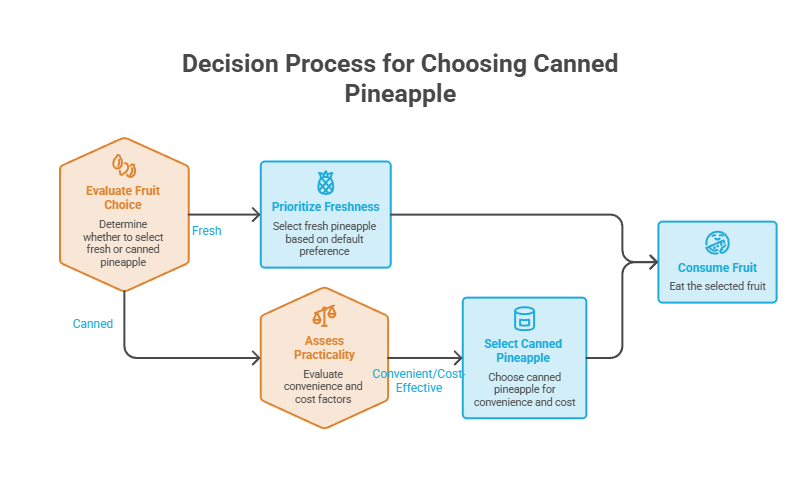
This is where the thin “fresh always wins” takes fall short. Convenience and cost shape what you’ll actually eat, and the fruit you eat beats the fruit you skip.
Convenience, Cost, and Year-Round Availability
Fresh pineapple takes work. You select a ripe one, wrestle it through peeling and coring, and use it within about five to seven days before it turns.
Canned pineapple is pre-cut, ready to eat, and pantry-stable for years. Cost-wise, canned often wins per serving, especially off-season when fresh imports get pricey, and it’s available everywhere year-round.
For busy weeks, tight budgets, or households that waste fresh produce, canned in juice keeps pineapple on the menu. That consistency has real value for a healthy diet.
Cooking and Baking (Heat Destroys Bromelain Anyway)
If you’re cooking pineapple, fresh’s enzyme edge evaporates. Heat from baking, grilling, or stir-frying would deactivate bromelain and degrade vitamin C regardless.
So for a pineapple upside-down cake, a glaze, or a sheet-pan dinner, canned is a smart, cost-effective pick. You lose little by reaching for the can in these recipes.
Canned also brings consistency. There are no underripe or overripe surprises, which helps when a recipe needs a predictable texture and sweetness.
The Marinade Trick (Canned Won’t Turn Meat Mushy)
Here’s a kitchen quirk many cooks learn the hard way. Fresh pineapple’s bromelain can break down meat so much that a long marinade turns it mushy.
Canned pineapple solves this neatly. Because canned pineapple lacks bromelain, you can use it as a marinade without it breaking down the meat.
If you love the flavor of pineapple in marinades but not the mush, canned is the better tool. Fresh works too if you cook it briefly first to tame the enzyme.
Frozen Pineapple: The Third Option
Most “fresh vs canned” debates forget a strong middle option. Frozen pineapple deserves a seat at the table, especially for smoothies and busy kitchens.
Freezing is gentler on nutrients than canning, and it usually skips added sugar entirely. For many shoppers, it splits the difference between fresh quality and canned convenience.
How Frozen Stacks Up
Frozen pineapple is typically frozen near ripeness without syrup or added sugar. Because it avoids the high heat of canning, it often holds onto more vitamin C than the canned version.
Bromelain may still take a hit, since some frozen fruit is briefly blanched before freezing, and the enzyme is fragile. Even so, frozen generally lands closer to fresh than canned does on the nutrients that matter.
Our nutrition reviewers note that frozen fruit is picked and frozen quickly, which helps lock in quality. It’s a dependable way to keep pineapple on hand without the sugar of syrup.
When to Choose Frozen
Frozen shines in smoothies, oatmeal, and baking, where soft texture after thawing isn’t a problem. It’s pre-cut, year-round, and easy to portion straight from the bag.
It’s less ideal for eating raw by the forkful, since thawed pineapple turns soft and watery. For that fresh-fruit bite, whole pineapple still wins.
If you want low sugar plus convenience, frozen is often the sweet spot. Keep a bag in the freezer for quick, no-prep servings any time of year.
Who Should Watch the Sugar
Pineapple is naturally sweet, so portion and packing liquid matter for some people more than others. A little awareness goes a long way.
None of this means pineapple is off-limits. It means choosing the right form and a sensible serving size.
Diabetes and Blood-Sugar Considerations
People managing blood sugar can still enjoy pineapple, with a few smart moves. Fresh or juice-packed canned (drained) beats syrup-packed, which spikes the sugar content.
Portion control helps most. A cup of chunks rather than open-ended grazing keeps the carbohydrate load reasonable, and the fruit’s fiber slows sugar absorption a bit.
Anyone with diabetes or specific dietary needs should personalize this with a clinician. Our medical reviewers stress that individual targets vary, so general tips are a starting point, not a prescription.
Portion Sizing and Pairing
Pairing pineapple with protein or healthy fat steadies its effect on blood sugar. A few nuts, a scoop of Greek yogurt, or cottage cheese turns a sweet snack into a more balanced one.
Stick to a defined serving instead of eating from the can. One cup is a satisfying, sensible amount for most people.
This pairing trick works for everyone, not just those watching glucose. It also keeps you fuller longer, which helps with overall eating patterns.
How to Choose and Store Each
A little know-how makes both forms better. Picking and storing well protects flavor, texture, and nutrition.
The right choice often comes down to your week ahead: time, budget, and how you plan to use the fruit.
Picking a Ripe Fresh Pineapple
Use your senses. A ripe pineapple smells sweet at the base, feels heavy for its size, and has fresh, green leaves rather than browning ones.
Avoid fruit with soft spots, fermented or sour smells, or dried-out crowns. Once cut, store chunks in an airtight container in the fridge and use them within three to five days.
A whole pineapple can sit at room temperature until ripe, then move to the fridge. Cutting it only when you’re ready helps preserve that heat-sensitive vitamin C.
Buying and Storing Canned
Reach for cans labeled “100% juice,” “in water,” or “no sugar added.” Skip heavy and light syrup when you can, and glance at the added-sugar line on the label.
Unopened cans last for years in a cool, dry pantry. Once opened, transfer leftovers to a covered container in the fridge and use within a few days.
The decision table below pulls it all together so you can match the right pineapple to the moment.
| Your Goal or Scenario | Best Pick | Why |
| Maximum vitamin C and bromelain | Fresh | Canning’s heat cuts vitamin C and destroys bromelain |
| Convenience, budget, year-round access | Canned in 100% juice | Pre-cut, shelf-stable, cheaper off-season, still nutritious |
| Cooking, baking, or grilling | Either (canned is fine) | Heat would destroy bromelain anyway, so fresh’s edge is lost |
| Watching added sugar or managing diabetes | Fresh, or canned in juice/water (drained) | Avoids heavy syrup; pair with protein and mind portions |
| Meat marinade that shouldn’t go mushy | Canned | No active bromelain, so it won’t break down the meat |
| Smoothies or low-sugar convenience | Frozen (no sugar added) | Gentler than canning on vitamin C, no syrup, easy to portion |
Common Myths About Canned Pineapple
Canned fruit carries a reputation that’s only half true. A few myths steer people away from a convenient, healthy option for the wrong reasons.
Clearing them up helps you choose based on facts rather than vibes. Here are three that come up most.
Myth: Canned Pineapple Has No Nutrients
This one is simply false. Canned pineapple keeps its fiber, most of its manganese, and a range of minerals, and it still provides some vitamin C.
What it loses is concentrated in two things: a chunk of its vitamin C and nearly all its bromelain. Calling it “empty” ignores everything that survives the can.
The takeaway is to judge canned pineapple by what it keeps, not only by what it loses. For everyday fruit intake, that’s a perfectly respectable nutrient package.
Myth: All Canned Pineapple Is Loaded With Sugar
It depends entirely on the packing liquid. Pineapple canned in 100% juice or water carries mostly the fruit’s natural sugar, not piles of added sugar.
Heavy syrup is the real culprit, and it’s avoidable. Reading the label and draining the liquid keeps a can of pineapple well within a sensible sugar range.
Treat “in juice” and “in syrup” as two different products. One is close to fresh on sugar; the other is the version worth saving for an occasional treat.
Myth: Canned Pineapple Aids Digestion Like Fresh
This is the claim that doesn’t hold up. The digestive reputation comes from bromelain, and canning destroys the enzyme almost entirely.
So if digestion is your reason for eating pineapple, fresh is the form to choose. Canned is still nutritious, just not for that particular benefit.
It’s a small distinction, but an honest one. Matching the form to your reason for eating pineapple is how you get the benefit you’re actually after.
Myth: Fresh Pineapple Is Always Worth the Extra Cost
Not necessarily. If half a fresh pineapple tends to spoil in your fridge, the cheaper can you actually finish is the better value and the better nutrition.
Cost only pays off when the fruit gets eaten. For some households, canned or frozen wins precisely because it fits the way real weeks go.
By the Numbers: Fresh vs Canned Pineapple
The figures below sum up the comparison at a glance, drawn from USDA data and peer-reviewed research. Treat them as typical values, since brands and processing differ.
| Metric (per 1 cup) | Figure | Source |
| Vitamin C, fresh pineapple | About 79 mg (88% DV) | USDA FoodData Central |
| Vitamin C, canned in juice | About 17 mg | USDA-based analyses |
| Calories, fresh vs canned in juice | About 75 to 82 vs about 110 | USDA FoodData Central |
| Sugar, fresh vs canned in juice | About 16 g vs about 25 g | USDA FoodData Central |
| Manganese, fresh | About 67 to 76% DV | USDA / NIH |
| Vitamin C lost to heat processing | About 2 to 47% | Peer-reviewed studies |
Two takeaways stand out. Fresh clearly leads on vitamin C per cup, and the packing liquid, not the can itself, drives the sugar difference that matters most.
Everything else lands close enough that canned pineapple remains a legitimately healthy choice. The “best” option is simply the one you’ll enjoy and eat consistently.
Frequently Asked Questions
Is canned pineapple as healthy as fresh?
Almost, with two exceptions. Canned pineapple keeps most of its fiber, manganese, and minerals, so it’s still nutritious. Fresh wins on vitamin C and bromelain, which canning’s heat reduces. Choosing canned in 100% juice rather than heavy syrup closes much of the gap on sugar and calories.
Does canned pineapple have bromelain?
Not in any meaningful amount. Bromelain is a heat-sensitive enzyme, and the high temperatures used in canning destroy nearly all of it. If you want pineapple specifically for bromelain’s digestive or anti-inflammatory reputation, fresh pineapple is the form that actually delivers the active enzyme.
How much sugar is in canned pineapple?
About 25 grams of sugar per cup for pineapple canned in juice, versus roughly 16 grams in a cup of fresh. Heavy syrup pushes it higher and adds true added sugar. Most of the sugar in juice-packed pineapple is natural, but draining and rinsing trims some of the surrounding sweetness.
Is canned pineapple in juice healthy?
Yes. Canned in 100% juice (drained) is a convenient, nutritious option that retains fiber, manganese, and some vitamin C. It runs a bit higher in calories and sugar than fresh, and it lacks bromelain, but it’s a genuinely good fruit choice, especially compared with syrup-packed versions.
Does canning destroy vitamin C?
It reduces it significantly. Vitamin C is water-soluble and heat-sensitive, so canning degrades a portion and some leaches into the liquid. Studies put pasteurization losses anywhere from about 2 to 47%, depending on time and temperature, which is why fresh pineapple offers notably more vitamin C per cup.
Which canned pineapple is the healthiest?
Look for “packed in 100% juice,” “in water,” or “no sugar added,” and avoid heavy or light syrup. Check the Nutrition Facts panel for the added-sugars line. Draining, and optionally rinsing, the chunks removes some surrounding sugar and makes a good choice even better.
Is canned pineapple good for weight loss?
It can fit. Pineapple is fat-free and reasonably low in calories, especially juice-packed and drained rather than syrup-packed. The fiber adds some fullness. Watch portions and the packing liquid, since heavy syrup adds calories and sugar that work against a weight goal without adding nutrition.
Can people with diabetes eat canned pineapple?
Often, yes, with care. Choose fresh or juice-packed (drained), not heavy syrup, keep to about a one-cup portion, and pair it with protein or healthy fat to slow sugar absorption. Because individual needs vary, anyone with diabetes should personalize this with their doctor or a registered dietitian.
Is fresh or canned pineapple better for cooking?
Canned is often the smarter pick for cooking. Heat destroys bromelain and degrades vitamin C no matter which you use, so fresh’s advantages disappear once the pineapple is baked, grilled, or simmered. Canned also brings consistent texture and sweetness, which helps in recipes.
Does draining or rinsing canned pineapple reduce sugar?
Yes, somewhat. Draining the packing liquid removes the sugary juice or syrup the fruit sits in. Giving the chunks a quick rinse under water washes away a little more of the surface sugar. Neither step removes the natural sugar inside the fruit, but both lower the total.
Is frozen pineapple better than canned?
Frozen is often a great middle ground. It’s usually frozen without added sugar and skips the heat of canning, so it tends to keep more vitamin C than canned. Bromelain may still be reduced. Frozen is ideal for smoothies and offers convenience similar to canned, usually with less sugar than syrup-packed.
How many calories are in fresh vs canned pineapple?
A cup of fresh pineapple has roughly 75 to 82 calories. A cup of pineapple canned in juice (drained) has about 110 calories, and heavy-syrup versions can reach 150 to 200 per cup. The extra calories come mainly from the packing liquid, which is why the label matters.
Disclaimer: This article is for general education and isn’t a substitute for personalized medical or nutrition advice. Individual needs vary, especially for people managing diabetes, allergies, or other conditions. For guidance tailored to your health, talk with your doctor or a registered dietitian.
References
- Pineapple, raw, all varieties, USDA FoodData Central
- Added Sugars, American Heart Association
- Added Sugar in the Diet, Harvard T.H. Chan School of Public Health, The Nutrition Source
- Vitamin C, NIH Office of Dietary Supplements
- Manganese, NIH Office of Dietary Supplements
- Pineapple: Health Benefits and Nutrition Facts, Live Science (citing the Linus Pauling Institute and Mayo Clinic)