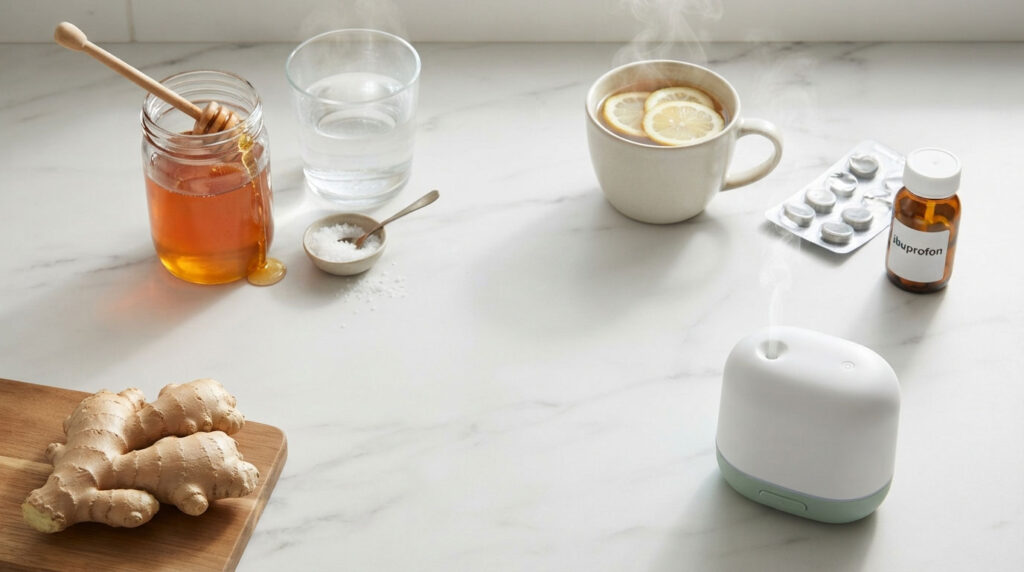
Here’s what nobody tells you when your throat feels like it’s lined with sandpaper: most sore throats heal on their own in about a week, with or without treatment. So “fast” was never about curing it by morning. It’s about feeling human tonight, sleeping through the ache, and knowing which fixes work in minutes versus which take days.
Table of Contents
This guide is built around what the CDC, Mayo Clinic, and Cleveland Clinic actually recommend, with every remedy ranked by how quickly it brings relief. You’ll get the 15 that work, the few that don’t, and a plain way to tell a harmless cold from something that needs a doctor.
| Quick Answer: To get rid of a sore throat fast, do four things at once: gargle warm salt water, take 1 to 2 teaspoons of honey, use an NSAID like ibuprofen for pain and swelling, and suck a medicated lozenge or spray for instant numbing. Add warm fluids, a humidifier, and rest. Lozenges and sprays work in minutes; ibuprofen within an hour. Most sore throats fully heal in five to seven days. |
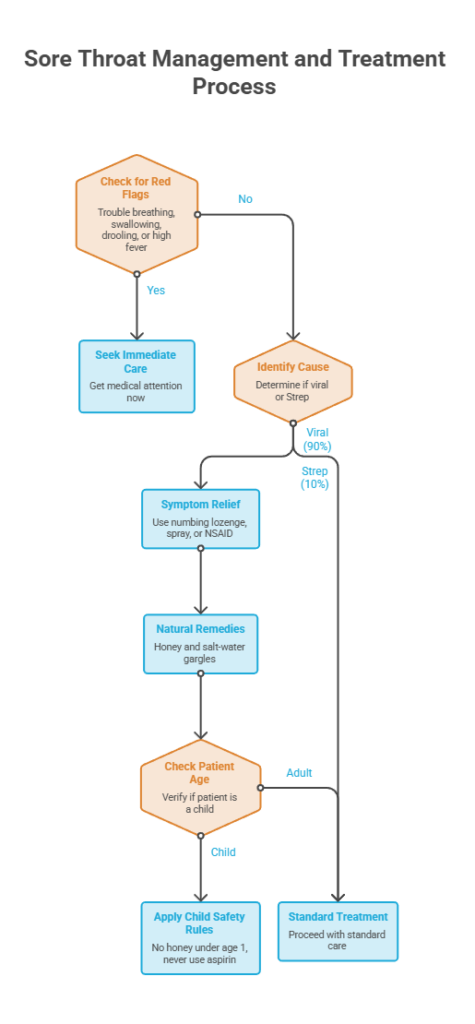
| At a Glance About 9 in 10 sore throats are viral and clear without antibiotics.Fastest symptom relief comes from a numbing lozenge or spray plus an NSAID.Honey and salt-water gargles have real science behind them, not just tradition.Strep causes only about 10% of adult sore throats, yet most people still get antibiotics.Red flags (trouble breathing or swallowing, drooling, high fever) mean get care now.Kids have special rules: no honey under age 1, and never aspirin. |
What Actually Causes a Sore Throat (and Why It Changes Your Fix)
Before you reach for anything, know what you’re fighting. The cause decides whether home remedies are enough or whether you need a prescription. Get this right and you’ll stop wasting time on fixes that were never going to work.
Viral vs Bacterial: The 90/10 Reality
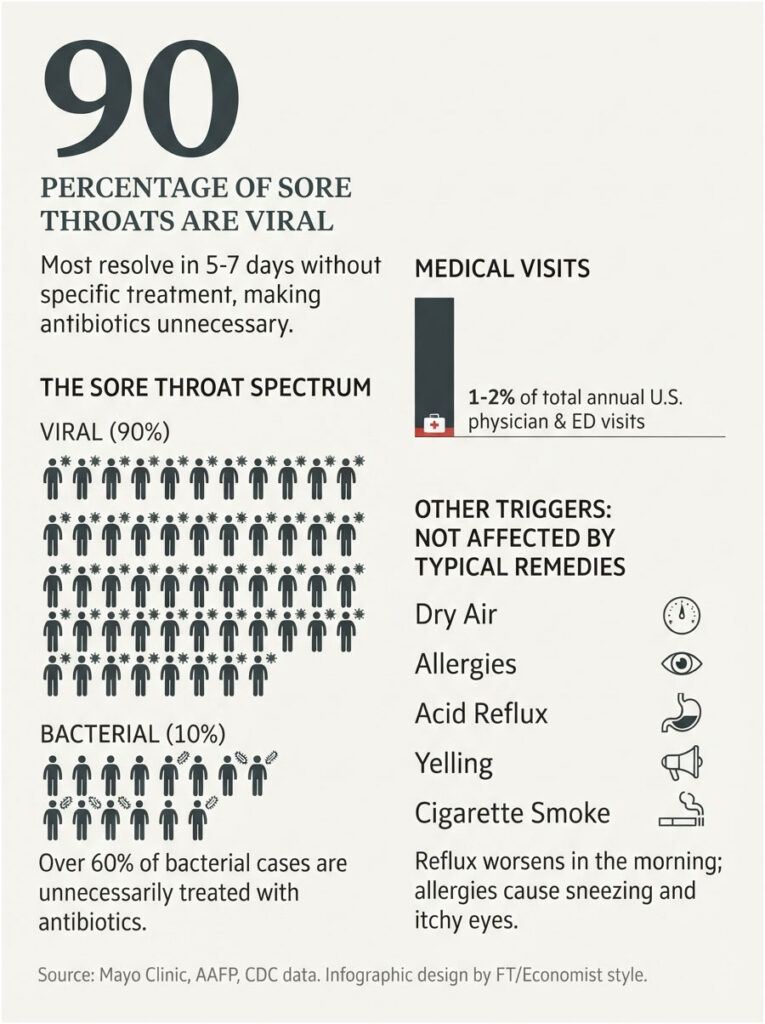
Most sore throats come from viruses, the same ones behind colds and the flu. The Mayo Clinic notes a viral sore throat usually goes away on its own in five to seven days and needs no treatment. Antibiotics do nothing against a virus.
Bacterial sore throats are the minority, and the main one is strep, from Group A Streptococcus. Per the AAFP, only about 10% of adults seeking care for a sore throat have strep, yet 60% or more are prescribed antibiotics. That gap matters, and it comes up again below.
The Other Triggers Nobody Suspects
Not every sore throat is an infection. Dry winter air, allergies, acid reflux, yelling at a concert, and cigarette smoke all inflame the throat. None of these respond to honey and rest the way a cold does.
Reflux soreness tends to feel worse in the morning or when you lie flat. Allergy throats come with itchy eyes and sneezing. Spotting the pattern keeps you from treating the wrong problem, which is exactly what the decision table below is for.
Sore throat is one of the most common reasons Americans see a doctor. The Frontiers review of CDC data notes that 1 to 2% of all visits to physicians’ offices and emergency departments in the United States every year are for sore throat.
The 15 Fastest Sore Throat Remedies
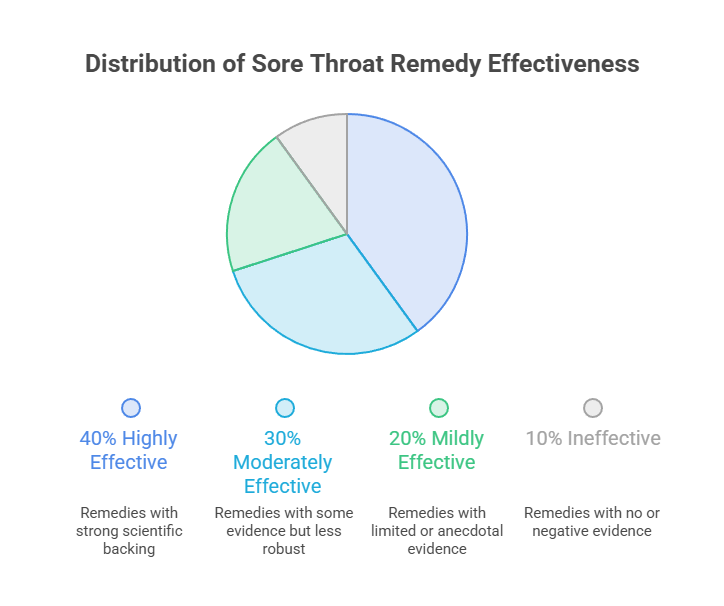
This is the heart of it. The table ranks every remedy by how it works, how to use it, how fast you’ll feel it, and how strong the evidence is. Then the standouts get a breakdown. Note the honest evidence ratings; several popular remedies are tradition more than proof.
| Remedy | How It Works | How to Use / Dose | Speed of Relief | Evidence |
| Honey | Coats the throat, calms cough, mild antibacterial | 1–2 tsp straight or in warm tea, 30 min before bed | Soothes in minutes, builds over hours | Strong |
| Salt-water gargle | Reduces swelling, loosens mucus, rinses irritants | 1/4–1/2 tsp salt in 4–8 oz warm water; gargle, spit; every 3 hrs | Mild, cumulative | Moderate |
| Medicated lozenge | Numbs pain, boosts saliva to keep throat moist | Dissolve slowly, one every 2–3 hrs; not under age 4 | Minutes | Moderate–Strong |
| Warm liquids (tea, broth) | Loosen mucus, soothe tissue, hydrate | Sip 8+ oz every couple of hours | Minutes, temporary | Moderate |
| Cold treats (popsicles, ice) | Numb pain, lower inflammation | Suck slowly; best when heat feels bad | Minutes | Moderate |
| Ibuprofen (NSAID) | Cuts pain and the swelling behind it | 200–400 mg every 6–8 hrs with food, per label | 30–60 minutes | Strong |
| Acetaminophen | Relieves pain and fever | Per label; child formulas available | 30–60 minutes | Strong |
| Numbing spray (benzocaine/phenol) | Blocks pain at the surface | Spray as directed, up to 4x/day | Seconds | Moderate–Strong |
| Antihistamine | Dries postnasal drip when allergies are the cause | Per label; only with allergy symptoms | 30–60 minutes | Situational |
| Chamomile tea | Soothes, mild anti-inflammatory | Steep 5 min, sip, add honey | Minutes, temporary | Limited |
| Ginger | Anti-inflammatory compounds | Simmer 1-inch fresh root in water; drink 2–3x/day | Mild | Limited |
| Slippery elm / marshmallow root | Mucilage coats and soothes | As tea or lozenge; take 1 hr apart from other meds | Mild | Traditional |
| Baking soda gargle | Soothes, neutralizes acid, breaks up mucus | 1/2 tsp in warm water; gargle every 3 hrs | Mild, cumulative | Moderate |
| Apple cider vinegar gargle | Popular soother; little direct proof | 1 tbsp ACV plus 1 tsp honey in warm water | Mild | Limited |
| Humidifier / steam | Moistens airway, eases dryness | Run overnight at 40–50% humidity; clean often | Gradual | Moderate |
Soothe-and-Coat Remedies
Honey earns its reputation. It coats the throat, calms irritation, and quiets the cough that keeps re-aggravating you. Healthline points to research where honey beat common cough suppressants at taming nighttime coughs.
Take one to two teaspoons straight, or stir it into warm tea, about 30 minutes before bed for overnight relief. One firm rule from every pediatric guideline: never give honey to a child under age 1, because of the risk of infant botulism.
Readers ask this constantly: honey or a throat spray? They do different jobs. Honey soothes and heals over time; a numbing spray blocks pain in seconds. The smart move is using both together.
Salt-water gargle is old, cheap, and still recommended by nearly every major clinic. It reduces swelling, loosens mucus, and rinses irritants. The Mayo Clinic recipe is a quarter to half teaspoon of table salt in 4 to 8 ounces of warm water.
Gargle for a few seconds, then spit; don’t swallow it. Cleveland Clinic suggests repeating every three hours. Worth flagging: skip this for kids under 6, who tend to swallow instead of spit.
Medicated lozenges buy fast, portable relief. Ones with benzocaine or menthol lightly numb the throat and get saliva flowing, which keeps tissue from drying out. Let them dissolve slowly rather than chewing, roughly one every two to three hours.
Keep lozenges and hard candy away from children under 4; they’re a choking hazard. Sore throat pops made for kids are a safer swap.
Warm liquids (tea, broth, hot water with lemon) loosen mucus and soothe raw tissue. Chicken soup counts, and there’s a reason it’s the classic sick-day meal. Warmth relaxes the throat while keeping you hydrated.
Cold treats work the opposite angle. If heat sounds miserable, reach for popsicles, ice chips, or sorbet. The cold numbs pain and brings down inflammation. Cleveland Clinic notes both warm and cold liquids help, so use whichever your throat prefers.
Medicine-Cabinet Fast Fixes
Ibuprofen is often the fastest way to knock down throat pain, because it targets both the pain and the swelling underneath. In a placebo-controlled trial, ibuprofen gave significant relief of sore throat pain versus placebo. Take 200 to 400 mg with food, following the label.
Acetaminophen (Tylenol) is the go-to when you can’t take NSAIDs, and it’s safe for young children in the right dose. It handles pain and fever, though it won’t reduce swelling the way ibuprofen does.
One safety line worth repeating: never give aspirin to children or teens. Mayo Clinic warns it’s linked to Reye’s syndrome, a rare but potentially life-threatening condition.
Numbing throat sprays with benzocaine or phenol are the closest thing to an instant off-switch for pain. They work in seconds and last a couple of hours. Use them as directed, usually no more than four times a day.
Antihistamines help only one specific case: when postnasal drip from allergies is the real culprit. Drying that drip stops the constant throat irritation. With no allergy symptoms, skip this one.
Kitchen and Herbal Options
Chamomile tea is gently soothing and may calm inflammation. It’s a comforting bedtime option that also nudges you toward the rest and hydration your body needs to heal.
Ginger contains compounds with anti-inflammatory properties. Simmer a one-inch piece of fresh root in water, add honey and lemon, and drink it two or three times a day. It’s soothing, though the evidence is lighter than for honey.
Slippery elm and marshmallow root both contain mucilage, a gel-like fiber that coats the throat. Healthline notes these are traditional remedies that still need more research. Take slippery elm at least an hour apart from other oral medications.
Baking soda gargle soothes the throat and helps break up mucus. Cleveland Clinic suggests dissolving half a teaspoon of salt or baking soda in warm water and gargling every three hours.
Apple cider vinegar gargle is popular online, mixed with warm water and honey. Be honest with yourself: it’s traditional, and direct evidence is thin. If it soothes you, fine, but it’s not a proven fix.
Environment and Rest
A humidifier or steam fights the dry air that makes a raw throat worse, especially in winter or if you sleep with your mouth open. Aim for 40 to 50% humidity, or take a steamy shower in a pinch. Clean humidifiers often so they don’t grow mold.
Underneath all 15 sit three habits that speed everything up: drink fluids steadily, rest your body and voice, and stay away from smoke and other irritants. They’re not flashy, but skipping them slows recovery.
How Fast Is “Fast,” Really? A Relief Timeline
Let’s set honest expectations, because searches for “cure a sore throat in an hour” set people up for disappointment. Different remedies work on different clocks, and stacking them is how you cover every window.
In minutes, numbing lozenges and sprays dull pain directly. This is your best bet for talking through a meeting or falling asleep tonight. The relief is real but temporary, lasting an hour or two.
In an hour or so, an NSAID like ibuprofen reaches full effect, easing both pain and the swelling behind it. Pair it with a lozenge and you’ve covered both the fast hit and the sustained relief.
For overnight improvement, the winning combination is honey 30 minutes before bed, an NSAID, a humidifier running, and your head propped up slightly. You’ll wake up markedly better, even though the infection itself isn’t gone.
In days, the actual healing happens. A viral sore throat needs five to seven days to resolve no matter what you do. The remedies make that stretch bearable; they don’t shrink it to zero. Still hurting after a week? That’s your cue to get checked.
Sore Throat or Something Serious? Strep and Red Flags
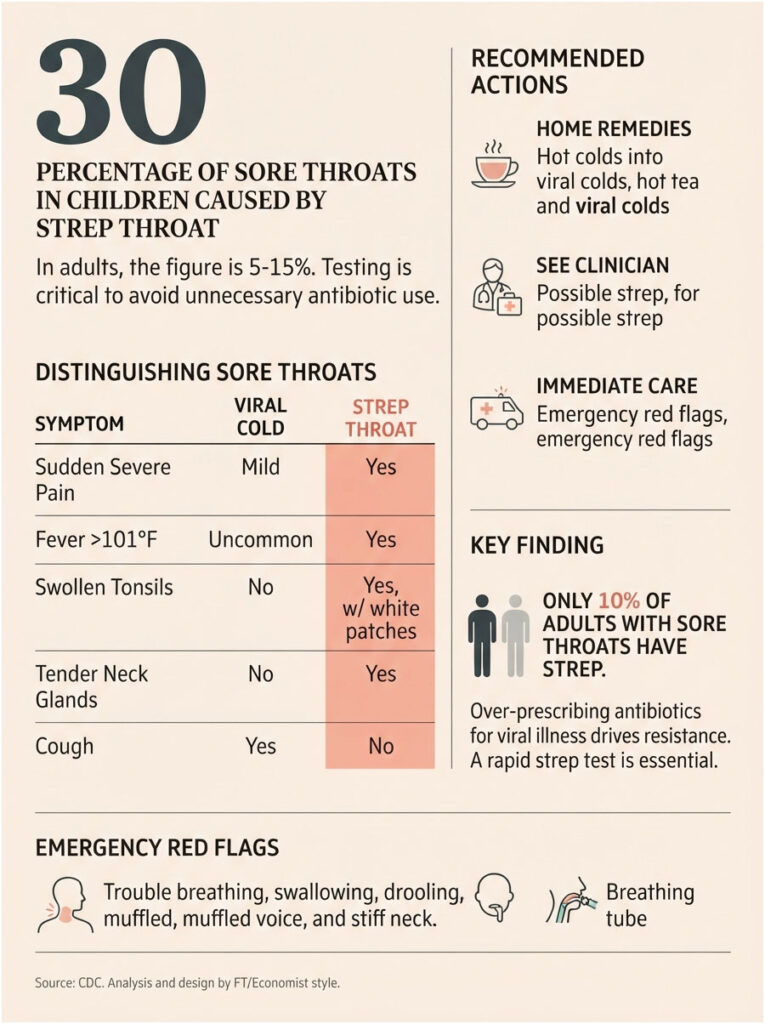
A question that lands in the HealthCareOnTime inbox during every cold season is whether it’s strep. Most of the time it isn’t, but knowing the difference keeps you from either panicking or ignoring something real. Use the table, then read the red flags.
The Viral vs Strep Self-Check
Strep tends to hit fast and hard: sudden severe throat pain, fever, swollen tonsils sometimes with white patches, and tender neck glands, usually without a cough. A cough and runny nose point the other way, toward a garden-variety virus.
Strep is less common than people fear. It causes 20 to 30% of sore throats in children and 5 to 15% in adults, according to CDC figures. That “no cough” clue is one clinicians actually weigh, since coughing and a runny nose lower suspicion for strep on standard scoring tools.
| If You Have This | Likely Cause | What to Do |
| Cough, runny nose, mild soreness | Viral cold | Home remedies, fluids, rest; expect 5–7 days |
| Sudden severe pain, fever over 101°F, no cough, white tonsil patches | Possible strep | See a clinician for a rapid strep test |
| Itchy eyes, sneezing, seasonal timing | Allergies | Antihistamine; remove triggers |
| Burning throat worse lying down, sour taste | Acid reflux | Elevate head, avoid late meals; see a doctor if it persists |
| Trouble breathing or swallowing, drooling, muffled voice | Airway emergency | Seek emergency care now |
| Sore throat lasting over a week, or fever returning | Needs evaluation | Book a medical visit |
Emergency Red Flags
Some symptoms mean stop reading and get help. Trouble breathing, trouble swallowing, drooling, a muffled “hot potato” voice, or a stiff neck can signal a serious infection around the airway. Go to emergency care now, not tomorrow.
Also see a clinician promptly for a fever over 101°F with no cough, white patches on the tonsils, a rash, or any sore throat that drags past a week. These raise the odds of strep or another condition needing treatment.
Testing beats guessing here. Because only about 10% of adults with a sore throat have strep while most still receive antibiotics, a quick rapid strep test tells you whether you actually need them. Taking antibiotics you don’t need fuels resistance and does nothing for a virus.
Sore Throat by the Numbers (US Data)
The scale of this everyday complaint is bigger than most people realize, and the data explains why doctors push testing before prescribing. The CDC reports that strep throat alone drives an estimated 5.2 million outpatient visits and 2.8 million antibiotic prescriptions each year in people under 65.
| Metric | Figure | Source |
| Share of all US medical visits for sore throat | 1–2% of office and ED visits | CDC / Frontiers review |
| Annual US strep outpatient visits (under 65) | ~5.2 million | CDC |
| Annual US antibiotic prescriptions for strep | ~2.8 million | CDC |
| Adults with sore throat who actually have strep | ~10% | AAFP |
| Adults with sore throat who receive antibiotics | 60% or more | AAFP |
| Strep as the cause: children vs adults | 20–30% (kids) / 5–15% (adults) | CDC |
Those 2.8 million prescriptions are the ones that should happen, tied to confirmed strep. The concern is the millions more written for viral throats that antibiotics can’t touch. HealthCareOnTime’s editorial stance follows the CDC on this: match the treatment to the cause, and test when strep is a real possibility.
Remedies to Skip (Myths That Waste Your Time)
Not everything in the “natural cure” bin earns a spot. Cutting the dead weight is its own kind of fast relief, because it points you at what works sooner.
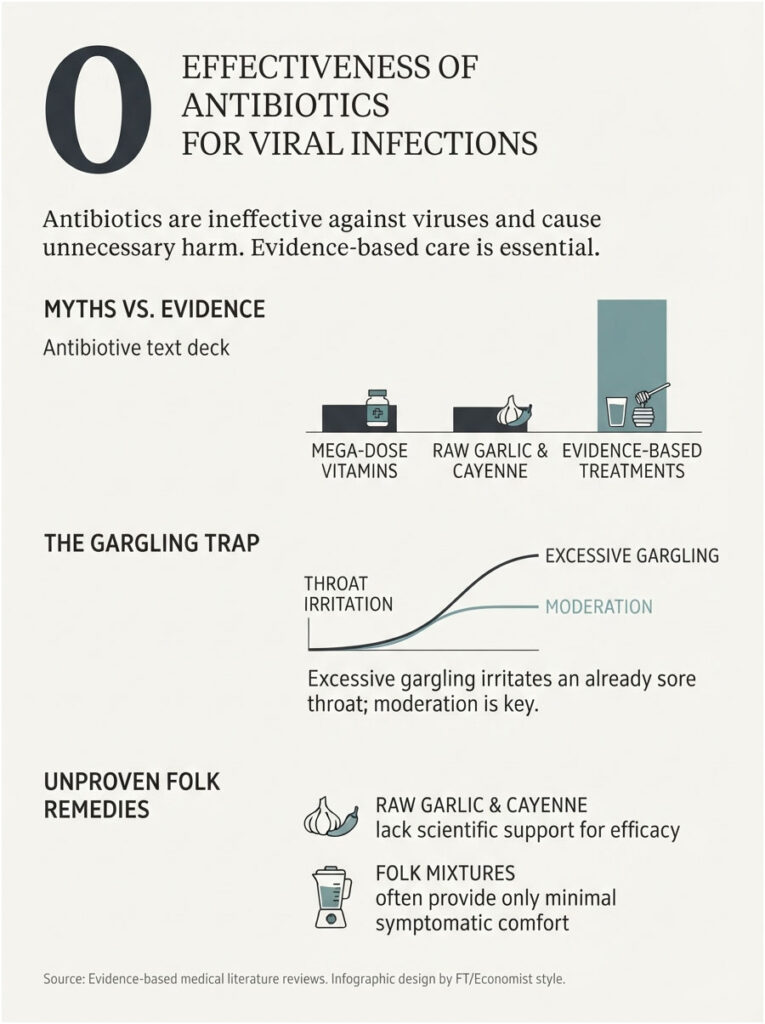
Antibiotics for a viral throat top the list. They won’t shorten a cold-related sore throat, and Mayo Clinic is clear that antibiotics don’t treat a virus. Pushing for them does more harm than good.
Mega-dose “immune boosters” promising to zap a sore throat overnight rarely deliver. Vitamin C may slightly shorten some respiratory symptoms, but it’s no off-switch, and large doses can upset your stomach.
Endless aggressive gargling doesn’t heal you faster and can irritate an already raw throat. A few times a day is plenty. More is not better.
Unproven folk cures like chewing raw garlic or downing cayenne get passed around every winter. They’re mostly harmless, and some people swear by the warmth, but treat them as comfort, not cure. The rule that holds up: follow the evidence, not the hype.
Special Cases: Kids, Pregnancy, and Throats That Keep Coming Back
The standard playbook shifts for certain people. Getting these details right is where a health resource earns trust, so here’s what changes.
Children
Kids need extra care. No honey before age 1, ever, because of botulism risk. Skip hard lozenges and candy for children under 4 due to choking. And never reach for aspirin, given the Reye’s syndrome link.
Safe, effective options for children include acetaminophen or ibuprofen in child formulations, plenty of fluids, a cool-mist humidifier, and popsicles. When in doubt about a young child, call the pediatrician.
Pregnancy
During pregnancy, the gentle remedies shine: salt-water gargles, honey, warm fluids, and rest carry no real downside. Acetaminophen is generally the preferred pain reliever, but any medication, including NSAIDs, should be cleared with your doctor first.
When It Keeps Coming Back
A sore throat that returns again and again usually isn’t bad luck. Chronic culprits include allergies, acid reflux, dry air, and recurring tonsil infections. Treating the root cause, not the symptom, is what finally breaks the cycle.
If reflux is the driver, that’s a conversation about diet and meal timing. If tonsils are the issue, an ENT referral may be worth it. Persistent symptoms deserve a real evaluation rather than another round of lozenges.
Simple Ways to Prevent the Next Sore Throat
Fast relief is the goal today, but dodging the next sore throat is worth a minute of your time too. Most prevention comes down to a few plain habits that block the viruses and irritants that start the trouble in the first place.
Wash your hands often, especially through cold and flu season, and try to keep them away from your eyes, nose, and mouth. Most sore throats spread through respiratory droplets and contaminated surfaces, so this single habit does a surprising amount of heavy lifting. Keep hand sanitizer nearby for the times a sink isn’t handy.
Don’t share cups, utensils, straws, or toothbrushes with anyone who’s under the weather. If you’ve had strep specifically, swap your toothbrush for a fresh one once you’re a day or two into antibiotics, since hanging onto the old one can reintroduce the same bacteria you’re trying to clear.
Run a humidifier through the dry winter months to keep the air, and your throat, from drying out while you sleep. Steer clear of cigarette smoke wherever you can, since regular exposure alone is enough to keep a throat chronically raw and more open to infection.
Manage the slow-burn causes too. Keeping seasonal allergies in check and getting a handle on acid reflux removes two of the most common reasons a sore throat keeps circling back month after month. If either one is a pattern for you, that’s a conversation worth having with your doctor.
None of this takes a special routine. Steady sleep, regular hydration, and a diet with plenty of fruits and vegetables give your immune system what it needs to shrug off the everyday viruses behind most sore throats before they ever take hold.
During the winter peak, a little extra awareness pays off. Give sick friends and coworkers some space, avoid touching your face in crowded places, and don’t skimp on rest when your body is clearly asking for it.
Prevention won’t make you bulletproof, and even careful people catch the occasional cold. The point is stacking the odds in your favor so sore throats show up less often and hit less hard when they do.
Your Fast-Relief Action Plan
The approach that works is simple: layer the fast fixes over the healing basics, in order. Here’s the sequence.
- First hour: Take an NSAID like ibuprofen with food, and use a numbing lozenge or spray for immediate relief. Start sipping warm tea with honey.
- First 24 hours: Gargle warm salt water every few hours. Keep fluids going steadily. Run a humidifier, especially overnight, and get to bed early.
- First 3 days: Keep the routine going. Rest your voice, avoid smoke, and eat soft, soothing foods. Expect gradual improvement, not an instant cure.
- When to escalate: No improvement after a week, a fever over 101°F, white tonsil patches, or any trouble breathing or swallowing means it’s time to see a clinician.
Follow that layered plan and you hit both goals at once: fast comfort now, and steady healing over the days your body needs.
Frequently Asked Questions
What kills a sore throat the fastest?
For the quickest relief, combine a numbing lozenge or throat spray (benzocaine or menthol) with an NSAID like ibuprofen. The lozenge or spray dulls pain in minutes, while ibuprofen reduces the underlying swelling over the next hour. Add honey and warm fluids for extra soothing.
How do I get rid of a sore throat overnight?
You can feel dramatically better by morning, though “overnight cure” oversells it. Take honey about 30 minutes before bed, use an NSAID, run a humidifier, and prop your head up slightly. This eases pain and helps you sleep, which is when your body does most of its healing.
Can a sore throat go away in 24 hours?
Sometimes, yes, if the cause is minor irritation, dry air, or mild allergies. Infection-related sore throats usually last longer, typically five to seven days for a virus. If yours vanishes in a day, it was probably irritation rather than a cold or strep.
Does gargling salt water really work?
Yes, and it’s backed by long-standing clinical advice. Salt water reduces swelling, loosens mucus, and rinses the throat. Mix a quarter to half teaspoon of salt in warm water, gargle a few seconds, and spit. Repeat every few hours. Skip it for young children who can’t spit reliably.
Is honey or a throat spray better?
They solve different problems, so use both. Honey coats the throat and calms coughing over time, with real research support. A numbing spray blocks pain in seconds but wears off in a couple of hours. Honey heals the day; spray rescues the moment.
How do I know if it’s strep?
Strep usually brings sudden severe pain, fever, swollen tonsils (sometimes with white patches), and tender neck glands, typically without a cough. A cough and runny nose point toward a virus. The only sure way to confirm strep is a rapid strep test at a clinic.
Should I see a doctor for a sore throat?
Most sore throats don’t need one. See a clinician for a fever over 101°F, white tonsil patches, a rash, symptoms lasting more than a week, or severe pain. Get emergency care immediately for trouble breathing or swallowing, drooling, or a muffled voice.
What’s the best OTC medicine for a sore throat?
Ibuprofen is often best because it fights both pain and swelling; acetaminophen is the alternative if you can’t take NSAIDs. For fast local relief, add a medicated lozenge or numbing spray. Always follow the label, and check with a pharmacist if you take other medications.
Why is my sore throat worse at night?
Lying flat lets mucus pool and postnasal drip collect at the back of your throat, and dry bedroom air makes it rawer. Reflux also worsens when you’re horizontal. Try elevating your head, running a humidifier, and taking honey before bed to ease nighttime pain.
How long does a sore throat last?
A viral sore throat typically clears in five to seven days. Strep improves within a day or two of starting antibiotics. Irritation from dry air or allergies can pass much faster. If yours lasts beyond a week or keeps returning, get it evaluated.
Can I get rid of a sore throat without medicine?
Often, yes. Salt-water gargles, honey, warm and cold fluids, a humidifier, rest, and steady hydration soothe most viral sore throats without any medication. These home remedies won’t cure strep, though, which needs antibiotics, so watch for the strep red flags above.
What should I eat and drink with a sore throat?
Go for soothing, easy-to-swallow options: warm broth, tea with honey, smoothies, yogurt, mashed potatoes, and popsicles. Stay well hydrated to keep the throat moist. Avoid acidic, spicy, or scratchy foods (citrus, chips, hot sauce) that can irritate inflamed tissue further.
| Disclaimer: This article is for general informational purposes and isn’t a substitute for professional medical advice, diagnosis, or treatment. Sore throat symptoms vary by person and cause. Always consult a qualified healthcare provider about your specific situation, and seek emergency care for trouble breathing or swallowing. |
References
- Centers for Disease Control and Prevention: Group A Strep Surveillance and Trends
- Mayo Clinic: Sore Throat, Diagnosis and Treatment
- Cleveland Clinic: Best Sore Throat Remedies for Fast Recovery
- Healthline: Sore Throat Natural Remedies
- American Academy of Family Physicians: Streptococcal Pharyngitis, Rapid Evidence Review
- Frontiers in Cellular and Infection Microbiology: Group A Streptococcal Pharyngitis Review
- Penn State Health: Five Home Remedies to Soothe Your Sore Throat