The same small patch of your body can host period cramps, a bladder infection, and appendicitis, and from the outside those three can feel almost identical. That is what makes lower abdominal pain in females so hard to read on your own.
Table of Contents
Quick Answer: Lower abdominal pain in females usually traces back to one of three systems packed into that small space: reproductive (menstrual cramps, ovarian cysts, endometriosis, fibroids), urinary (UTIs, kidney stones), or digestive (constipation, IBS, appendicitis). Most causes are mild and pass on their own. A few, like ectopic pregnancy or a ruptured cyst, are emergencies. Sudden severe pain, fainting, fever, or any pain during pregnancy needs urgent care.
At a Glance
• Three organ systems share the lower abdomen, so the cause is rarely obvious from location alone.
• Where it hurts (left, right, or center) narrows the list but almost never confirms it.
• Timing against your menstrual cycle is one of the strongest clues you can hand a doctor.
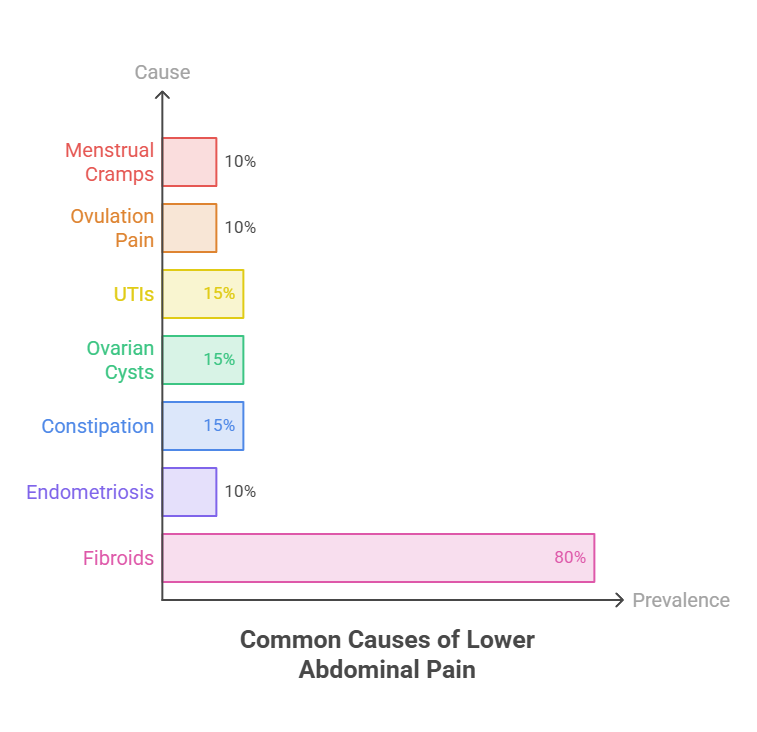
• The most common culprits are menstrual cramps, ovulation pain, UTIs, ovarian cysts, and constipation.
• Endometriosis affects an estimated 5 to 15 percent of reproductive-age US women, and up to 80 percent develop fibroids by age 50.
• Red-flag rule: sudden severe pain, fainting, fever, heavy bleeding, or pain in pregnancy means seek care now.
What Lower Abdominal Pain in Females Actually Means
Lower abdominal pain refers to any ache, cramp, or pressure felt below the belly button. Because this region is also called the pelvis, you will often hear the same discomfort described as pelvic pain.
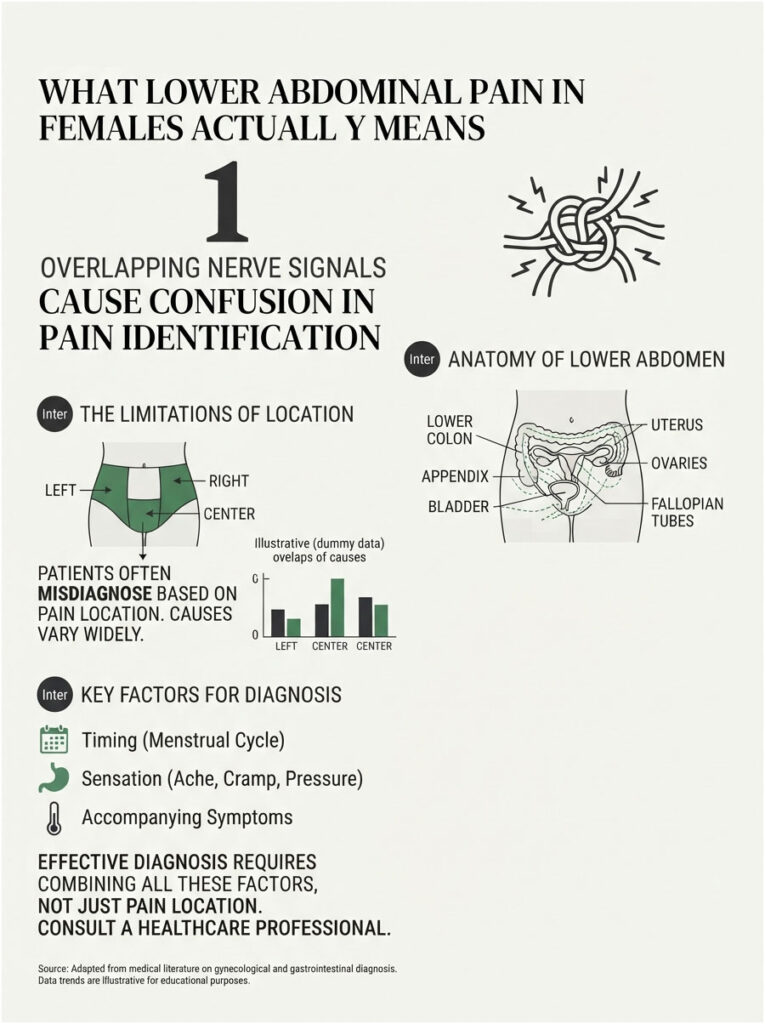
The confusion starts with anatomy. Below your navel sits a crowd of organs from three different systems, and they are packed close enough that the brain struggles to tell them apart.
The Organs Crowded Into Your Lower Abdomen
Your lower abdomen holds parts of the digestive tract (the lower colon and appendix), the urinary system (the bladder and lower ureters), and the female reproductive organs (the uterus, ovaries, and fallopian tubes). All of them share the same neighborhood, as the Cleveland Clinic explains in its overview of the region.
That crowding is exactly why a woman can mistake intestinal cramps for period pain, or a bladder infection for something gynecological. The nerves carrying pain signals from these organs overlap, so the body sends a blurry message rather than a clear one.
Why “Where It Hurts” Only Tells Part of the Story
Pointing to the spot that hurts feels like it should solve the puzzle, and it does help. Left, right, and center each point toward a different short list of causes.
Location alone rarely seals the answer, though. Patients who book pelvic ultrasounds with us often arrive convinced they already know the source, only to learn the pain was coming from a system they had not considered.
The clues that actually move the needle are location plus three more things: how the pain feels, when it shows up against your cycle, and what other symptoms travel with it. Put those four together and the list of suspects shrinks fast, which is the approach the rest of this guide follows.
The 12 Most Common Causes of Lower Abdominal Pain in Females
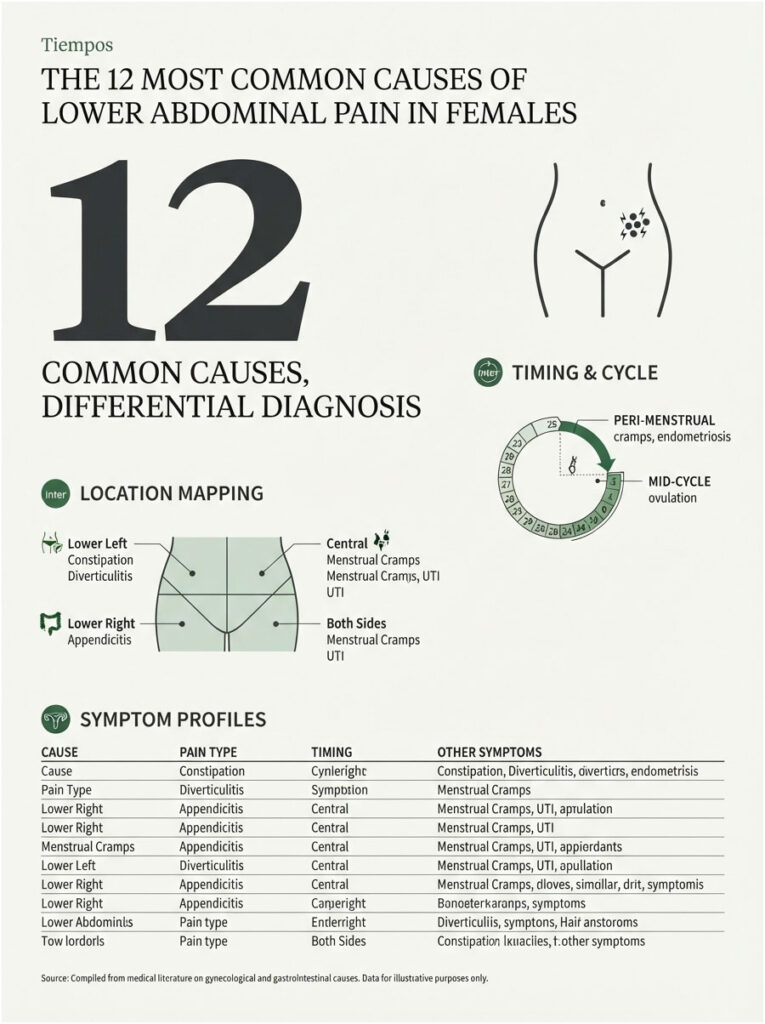
Most lower abdominal pain in women comes from one of a dozen usual suspects. Grouping them by system makes each one easier to recognize when it shows up.
Reproductive Causes
Menstrual Cramps (Dysmenorrhea)
Menstrual cramps happen when the uterus contracts to shed its lining. The pain sits low and central, often radiating to the lower back and upper thighs, and it usually eases within a day or two of your period starting.
Cramps are the most familiar form of lower abdominal pain in females, and mild to moderate cramping is normal. Pain that stops you from working, sleeping, or standing upright is not, and pain that keeps getting worse each cycle is worth flagging to a clinician.
Ovulation Pain (Mittelschmerz)
Around the middle of your cycle, roughly two weeks before your period, an ovary releases an egg. Some women feel this as a brief, sharp twinge on one side, a phenomenon doctors call mittelschmerz, German for “middle pain.”
The discomfort is short, usually minutes to a day, and it tends to switch sides from month to month. It is harmless in most cases, though a sudden severe version can occasionally mimic more serious one-sided problems.
Ovarian Cysts
Ovarian cysts are fluid-filled sacs that form on or in an ovary, and most cause no symptoms at all. When they grow large, twist, or rupture, they can produce dull pressure or a sudden sharp pain on one side, sometimes with bloating.
A ruptured cyst or a twisted ovary (called ovarian torsion) can cause intense, sudden pain with nausea and belongs in the emergency category. Our medical reviewers note that one-sided pain arriving out of nowhere is one of the patterns that most often earns an urgent scan.
Endometriosis
Endometriosis occurs when tissue similar to the uterine lining grows outside the uterus, on the ovaries, tubes, or nearby organs. It causes deep, cramping pelvic pain that peaks around your period and can come with pain during sex, painful bowel movements, and heavy bleeding.
This condition is far more common than many women realize. NIH research describes it affecting several million reproductive-age women in the United States, with prevalence estimated at 5 to 15 percent of women of reproductive age and highest between ages 30 and 40. Because the pain gets dismissed as “bad periods,” diagnosis is often delayed by years.
Uterine Fibroids
Fibroids are benign growths in the wall of the uterus. Depending on their size and position, they can create a heavy sense of pressure or fullness low in the abdomen, along with heavy periods, frequent urination, and constipation.
They are strikingly common. The Office on Women’s Health reports that 20 to 80 percent of women develop fibroids by age 50, with the highest rates in the 40s and early 50s. Black women face a notably higher lifetime risk than White women, a disparity confirmed across multiple US studies.
Pelvic Inflammatory Disease (PID)
PID is an infection of the female reproductive organs, often stemming from an untreated sexually transmitted infection such as chlamydia or gonorrhea. It can produce a dull or severe ache across the lower abdomen, sometimes with fever, abnormal discharge, and pain during sex.
PID is a cause you do not want to wait out. The CDC warns that delayed treatment can lead to scarring, chronic pelvic pain, and infertility, so new pelvic pain paired with fever or unusual discharge deserves prompt evaluation.
Urinary Causes
Urinary Tract Infection (UTI)
A UTI develops when bacteria travel into the bladder, causing pressure or aching just above the pubic bone along with burning urination and a constant urge to go. UTIs are one of the most frequent reasons women feel lower abdominal discomfort.
They are also remarkably widespread. According to NIH data, between 50 and 60 percent of adult women will have at least one UTI in their lifetime. Left untreated, a bladder infection can climb to the kidneys and turn into a far more serious illness.
Kidney Stones
Kidney stones are hard mineral deposits that cause waves of severe pain as they move through the urinary tract. The pain often starts in the side or back and radiates toward the lower abdomen and groin.
Blood in the urine, nausea, and an inability to sit still are common companions. Stone pain tends to come in intense surges rather than a steady ache, which helps set it apart from most gynecological causes.
Digestive Causes
Constipation and Gas
Trapped stool and gas are among the most overlooked reasons for lower abdominal pain in females. The discomfort shifts around, often settles on the left, and typically eases after a bowel movement or passing gas.
These causes are usually diet-related and short-lived. A surprising share of “mystery” lower belly pain resolves once fiber, fluids, and bowel habits improve, which is why clinicians ask about them early.
Irritable Bowel Syndrome (IBS)
IBS is a chronic condition that produces cramping lower abdominal pain, often relieved by passing stool, alongside bloating and alternating diarrhea and constipation. Stress and certain foods are frequent triggers.
Because IBS pain sits so close to the reproductive organs, women sometimes spend months chasing a gynecological answer before the digestive cause becomes clear. A symptom diary usually breaks the tie between the two.
Appendicitis
Appendicitis is inflammation of the appendix, and it is a medical emergency. The pain classically begins near the navel, then migrates to the lower right abdomen over 12 to 24 hours, becoming steadily worse.
Fever, nausea, and loss of appetite often accompany it. Any pain that starts vague and central then locks into the lower right with these signs needs same-day medical attention, since a burst appendix is dangerous.
Diverticulitis
Diverticulitis happens when small pouches in the colon wall become inflamed or infected, usually causing constant tenderness in the lower left abdomen. It grows more common with age, particularly after 40.
Fever and a change in bowel habits often join the pain. Unlike the passing cramps of gas or constipation, diverticulitis pain stays put and tends to intensify rather than come and go.
Here is how these dozen causes compare at a glance.
| Condition | Where It Usually Hurts | What It Feels Like | Tell-Tale Extra Signs | Typical Timing |
| Menstrual cramps | Central lower abdomen | Dull, throbbing ache | Lower back ache, light bleeding | Just before and during period |
| Ovulation pain | One side, low | Sharp twinge | Clear discharge, spotting | Around mid-cycle |
| Ovarian cyst | One side, low | Dull pressure or sharp | Bloating, fullness | Any time; worse if it ruptures |
| Endometriosis | Central and one or both sides | Deep, chronic cramp | Painful periods, pain with sex | Worse around period |
| Uterine fibroids | Central, low pressure | Heavy fullness | Heavy periods, frequent urination | Ongoing, with cycle flares |
| PID | Both sides, low | Dull to severe ache | Fever, abnormal discharge | Often after STI exposure |
| UTI | Central, above pubic bone | Burning pressure | Burning urination, urgency | Sudden onset |
| Kidney stones | Side and back to lower front | Waves of severe pain | Blood in urine, nausea | Sudden, in waves |
| Constipation and gas | Shifts, often left | Cramping, bloated | Hard stools, relief after passing | Diet-related |
| IBS | Low, often left | Cramp that eases after stool | Alternating bowel habits | Stress or food triggers |
| Appendicitis | Starts near navel, moves lower right | Steady, worsening | Fever, nausea, no appetite | Builds over 12 to 24 hours |
| Diverticulitis | Lower left | Constant, tender | Fever, changed bowel habits | More common after age 40 |
Left Side vs Right Side vs Center: What Location Tells You
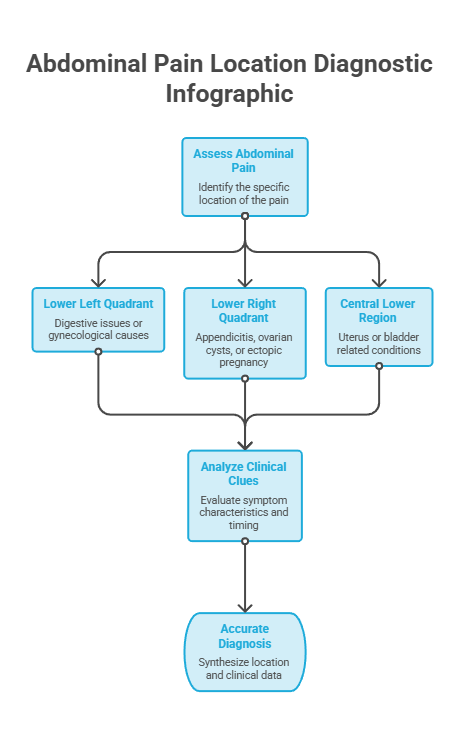
Where the pain lands is the first filter most women reach for, and it does trim the list. Just remember that each side houses more than one organ, so location points a direction rather than naming a diagnosis.
Lower Left Abdominal Pain in Females
The lower left holds the descending and sigmoid colon, the left ovary, and the left fallopian tube. Pain here most often comes from digestive sources like constipation, gas, IBS, or diverticulitis.
Gynecological causes still belong on the list. A cyst on the left ovary or left-sided ovulation pain can produce the same lower left ache, so the extra clues matter as much as the location itself.
Lower Right Abdominal Pain in Females
The lower right is home to the appendix, the right ovary, and the right fallopian tube. The one cause you cannot afford to miss here is appendicitis, especially when pain migrates from the navel and worsens with fever.
Right-sided ovarian cysts, ovulation pain, and ectopic pregnancy also present in this zone. Sudden, severe lower right pain in a woman who could be pregnant is treated as an emergency until an evaluation proves otherwise.
Central Lower Abdominal Pain
Pain dead-center, just above the pubic bone, usually points toward the uterus or bladder. Menstrual cramps, fibroids, and UTIs are the leading central causes.
In the pelvic workups our network sees, location alone almost never closes the file. A central ache with burning urination reads very differently from a central ache that arrives like clockwork with each period, even though the finger points to the same spot.
Putting the Four Clues Together
A single worked example shows how the pieces combine. Say the pain is lower right, sharp, appears around day 14, and comes with a little clear discharge. Location suggests the appendix or right ovary, but the mid-cycle timing and the twinge quality point firmly toward ovulation.
Now change one detail. The same lower right pain that instead builds over a day, brings a fever, and kills your appetite shifts the likely answer to appendicitis. Same spot, completely different story, which is why doctors weigh all four clues rather than any one.
Pain and Your Cycle: Period, Ovulation, or Something Else
For anyone who menstruates, cycle timing is one of the most powerful clues available. Doctors lean on it heavily, and you can too.
Pain That Tracks Your Period
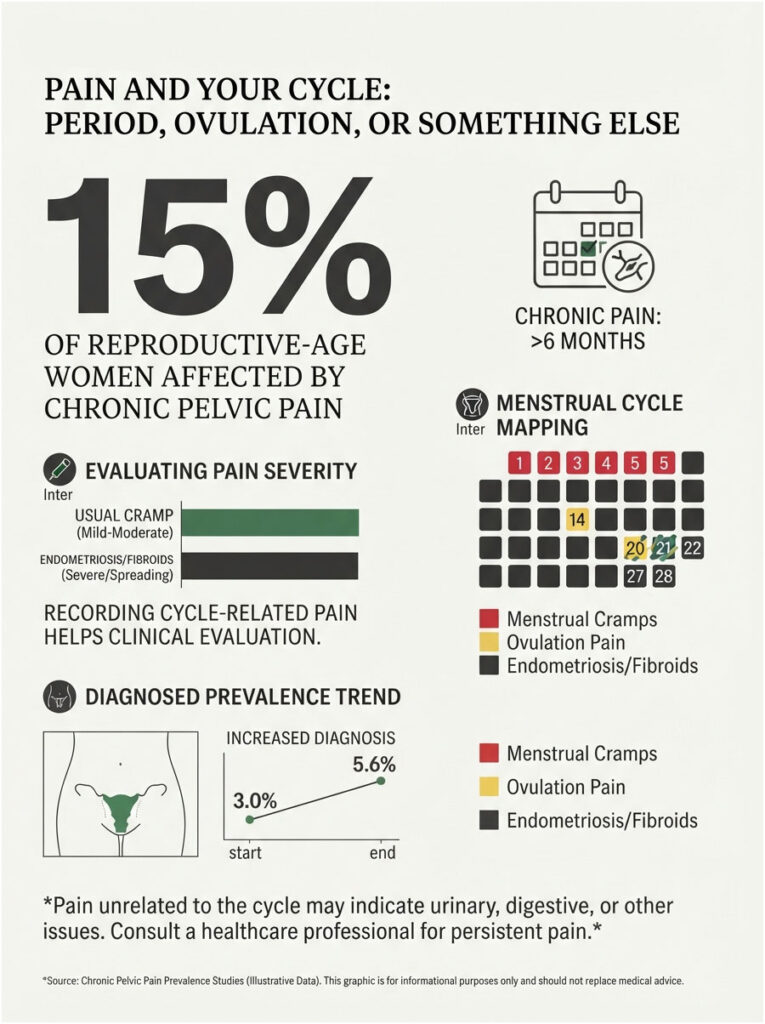
Pain that arrives in the day or two before bleeding and fades as your period ends usually points to menstrual cramps. When that cyclical pain is severe, spreads, or comes with pain during sex, endometriosis or fibroids move up the list.
Keeping a simple record of which days hurt turns a vague complaint into a pattern a clinician can act on. Predictable, period-linked pain and random pain lead down very different diagnostic roads.
Pain in the Middle of Your Cycle
One-sided pain around day 14 often points to ovulation. It is usually brief and harmless, though it can be sharp enough to make you catch your breath.
If mid-cycle pain becomes severe, lasts more than a day, or comes with dizziness, it deserves a closer look to rule out a cyst that has ruptured or twisted.
Pain That Ignores Your Cycle Entirely
Lower abdominal pain with no relationship to your period widens the field toward urinary, digestive, and non-cyclical gynecological causes. Chronic pelvic pain, defined as pain lasting six months or more, falls into this group.
This is more common than most women expect. Research summarized by the NIH puts chronic pelvic pain at roughly 15 percent of reproductive-age women. A separate US population study found the annual prevalence of diagnosed chronic pelvic pain rose from 3.0 to 5.6 percent over a recent decade, so it is a growing reason women seek care.
Lower Abdominal Pain During Pregnancy
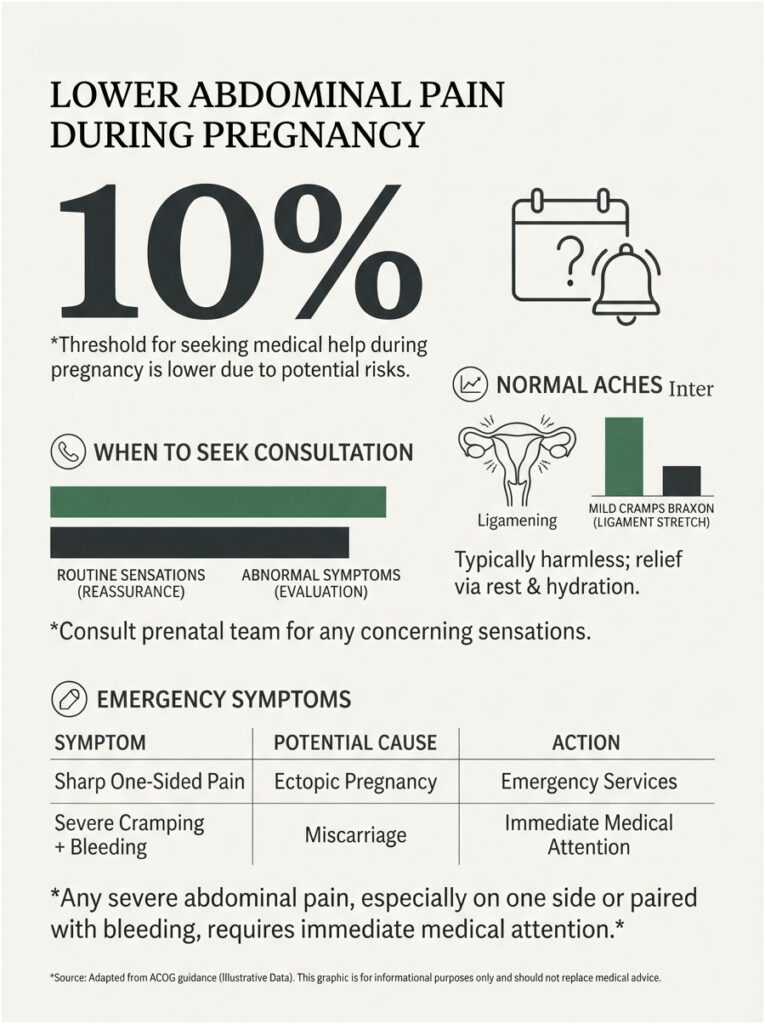
Pregnancy changes the rules. Some lower abdominal discomfort is expected, and some is an emergency, so the threshold for calling a provider is lower than usual.
Normal Pregnancy Aches
As the uterus grows, the ligaments and muscles supporting it stretch, producing mild, crampy aches often felt on the sides. Round ligament pain and the tightening of Braxton Hicks contractions later in pregnancy are usually harmless.
Gentle position changes, rest, and hydration typically ease these everyday aches. A midwife or prenatal team can reassure you about which sensations are routine and which are not.
When Pregnancy Pain Is an Emergency
Some causes cannot wait. An ectopic pregnancy, where a fertilized egg implants outside the uterus, causes sharp one-sided lower abdominal pain and can become life-threatening if a fallopian tube ruptures.
Severe cramping with bleeding may signal miscarriage, and pain with other symptoms can point to serious complications later in pregnancy. The safe rule is simple: any lower abdominal pain that is severe, one-sided, or paired with bleeding means contacting your OB or the ER right away.
Red Flags: When Lower Abdominal Pain Is an Emergency
Most lower abdominal pain in females is not dangerous. The job is spotting the small share that is, and a few clear warning signs make that possible without a medical degree.
Certain combinations should send you straight to emergency care rather than a wait-and-see approach. The table below turns those red flags into direct actions.
| Warning Sign or Scenario | What It Might Signal | Recommended Action |
| Sudden, severe pain with fainting or dizziness | Ruptured cyst, ectopic pregnancy, internal bleeding | Call 911 or go to the ER now |
| Any lower abdominal pain during pregnancy | Ectopic, miscarriage, or other emergency | Contact your OB or the ER immediately |
| Pain with fever, chills, and a rigid, tender belly | Appendicitis, PID, or serious infection | Same-day ER evaluation |
| Heavy vaginal bleeding with severe pain | Miscarriage, hemorrhage, or fibroid complication | Urgent care or ER |
| Pain plus burning urination, back pain, and fever | Kidney infection spreading from a UTI | Same-day appointment or urgent care |
| Persistent or worsening pain over several days | Cyst, endometriosis, fibroids, or another condition | Book a doctor visit this week |
When symptoms fall short of these red flags but still linger or interfere with daily life, that is your cue to schedule an appointment rather than tough it out for weeks.
The Numbers: How Common These Conditions Really Are
Women often feel alone with lower abdominal pain, yet the underlying conditions are widespread. Seeing the scale can make it easier to take the symptom seriously and to push for answers instead of minimizing them.
| Condition | US Prevalence or Key Stat | Source |
| Endometriosis | Affects an estimated 5% to 15% of reproductive-age women; peaks at ages 30 to 40 | NIH / PMC |
| Uterine fibroids | 20% to 80% of women develop them by age 50 | Office on Women’s Health |
| Urinary tract infection | 50% to 60% lifetime incidence in adult women | NIH |
| Chronic pelvic pain | Affects about 15% of reproductive-age women | NIH / PMC |
| Chronic pelvic pain trend | US annual prevalence rose from 3.0% to 5.6% over a recent decade | US population study |
| Fibroid disparity | Lifetime incidence by age 50 exceeds 80% in Black women versus about 70% in White women | Office on Women’s Health / NIH |
The women our care teams talk to are frequently surprised how common their condition turns out to be. One theme runs through these numbers: diagnostic delay. Conditions like endometriosis and fibroids are widespread, yet many women wait years for a name because early pain gets brushed off as normal.
How Doctors Diagnose the Cause
Because so many organs share the lower abdomen, doctors work through a short, logical sequence rather than guessing. Knowing what to expect takes some of the anxiety out of the visit.
What to Expect at Your Visit
A clinician will start with questions: where the pain sits, how it feels, how it relates to your cycle, whether you could be pregnant, and what other symptoms travel with it. A pelvic exam often follows to check the uterus and ovaries for tenderness or masses.
This is where your preparation pays off. Coming in with a clear timeline of your pain gives the doctor a head start and cuts down on repeat visits and guesswork.
Common Tests
From there, targeted tests narrow the field. A urinalysis checks for a UTI, a pregnancy test rules ectopic pregnancy in or out, and a complete blood count looks for signs of infection or inflammation.
Imaging fills in the rest. A pelvic ultrasound is the workhorse for spotting cysts and fibroids, while a CT scan comes into play for suspected appendicitis or kidney stones. Across the lab panels processed through HealthCareOnTime, a plain urine test, a pregnancy test, and an ultrasound together resolve the majority of common cases before anything more invasive is needed.
Getting Relief: Home Care and Medical Treatment
Treatment depends entirely on the cause, so the smartest first step is figuring out what you are dealing with. That said, several measures safely ease mild pain while you sort it out.
What You Can Safely Try at Home
For everyday cramps, gas, or a mild flare, a heating pad on the lower abdomen, steady hydration, gentle movement, and an over-the-counter anti-inflammatory such as ibuprofen often bring relief. Tracking your cycle and adjusting fiber and fluids helps with both cramp-related and digestive pain.
The Mayo Clinic notes that heat can work about as well as some pain relievers for period cramps. These steps manage symptoms, though; they do not treat infections or structural problems, and pain that keeps returning is telling you home care is not enough.
When You Need Prescription or Procedural Treatment
A UTI needs antibiotics, endometriosis and fibroids may call for hormonal therapy or surgery, and appendicitis requires urgent surgical care. There is no home remedy that fixes these.
Every treatment carries trade-offs, and the right choice depends on your diagnosis, age, symptom severity, and plans for pregnancy. Guidance from groups like the American College of Obstetricians and Gynecologists helps clinicians match the option to the person rather than applying a one-size answer.
How to Track Your Symptoms Before Your Appointment
The gap between “something hurts” and a clear diagnosis usually comes down to detail. A short log, kept over a couple of weeks, gives your doctor the pattern they need to move quickly.
- Note the exact location: left, right, or center, and whether it moves.
- Record the timing against your cycle: before your period, mid-cycle, or unrelated.
- Describe the pain type: sharp, dull, cramping, burning, or pressure.
- List triggers and relievers: food, stress, bowel movements, urination, or rest.
- Track companions: fever, discharge, nausea, bleeding, or urinary changes.
- Bring the log to your visit so nothing gets lost to memory.
A symptom diary is the single most useful thing patients hand us at a first visit. It turns a fuzzy story into a timeline that points straight at the likely cause and spares you a second appointment just to gather the basics.
Frequently Asked Questions
What organs are in the lower abdomen in females?
The lower abdomen holds parts of three systems: the digestive tract (lower colon and appendix), the urinary system (bladder and lower ureters), and the reproductive organs (uterus, ovaries, and fallopian tubes). This overlap of systems in one small area is exactly why pinpointing the source of pain can be difficult.
When should I worry about lower abdominal pain?
Worry when pain is sudden and severe, comes with fainting, fever, heavy bleeding, or vomiting, or occurs during pregnancy. Also seek care for pain that persists or worsens over several days. Mild pain that eases on its own is usually less concerning, but tracking it still helps you catch a pattern early.
Can a UTI cause lower abdominal pain in females?
Yes. A urinary tract infection commonly causes pressure or aching just above the pubic bone, along with burning urination and a frequent urge to go. UTIs are very common in women. Left untreated, they can spread to the kidneys, so burning urination with back pain or fever needs prompt medical care.
What does ovarian cyst pain feel like?
Ovarian cyst pain is usually a dull pressure or ache on one side of the lower abdomen, often with bloating or a sense of fullness. Most cysts cause no symptoms at all. A sudden, sharp, severe one-sided pain can signal a ruptured or twisted cyst, which is a medical emergency needing immediate care.
Is lower abdominal pain an early sign of pregnancy?
Mild cramping can occur in early pregnancy as the uterus changes, and some women feel light twinges around implantation. It is not a reliable sign on its own, since many things cause the same feeling. Any pregnancy-related pain that is severe or one-sided, especially with bleeding, needs immediate evaluation to rule out ectopic pregnancy.
Why do I have lower abdominal pain but no period?
Pain without a period points toward causes unrelated to menstruation: a UTI, constipation, IBS, an ovarian cyst, or ovulation pain. It can also be an early sign of pregnancy. If pain is ongoing or paired with other symptoms, a doctor can order a urine test, pregnancy test, and ultrasound to find the cause.
What causes lower right abdominal pain in females?
The lower right holds the appendix, right ovary, and right fallopian tube. Appendicitis is the most urgent cause, especially when pain moves from the navel and worsens with fever. Right ovarian cysts, ovulation pain, and ectopic pregnancy are other possibilities that may need an ultrasound or CT scan to sort out.
What causes lower left abdominal pain in females?
The lower left contains part of the colon, the left ovary, and the left fallopian tube. Digestive causes like constipation, gas, IBS, and diverticulitis are most common here. Gynecological causes such as a left ovarian cyst or ovulation pain can produce the same ache, so timing and accompanying symptoms help separate them.
Can stress cause lower abdominal pain in women?
Yes, indirectly. Stress is a well-known trigger for IBS flares, which cause cramping lower abdominal pain, bloating, and changed bowel habits. Stress can also intensify how strongly you feel existing pain. Managing stress often reduces IBS-related discomfort, though persistent or severe pain still deserves a proper medical check.
How do I tell normal period cramps from something serious?
Normal cramps are dull, central, and predictable, easing within a day or two of your period. Concerning signs include pain severe enough to disrupt daily life, pain that spreads or worsens over time, pain during sex, or heavy bleeding. Those patterns warrant a conversation with a clinician rather than another month of waiting.
What does endometriosis pain feel like?
Endometriosis pain is typically deep, cramping pelvic pain that peaks around your period and can persist between cycles. It often comes with pain during sex, painful bowel movements, and heavy periods. Because it mimics severe cramps, it is frequently overlooked, so painful periods that disrupt your life deserve a full evaluation.
When should lower abdominal pain send me to the ER?
Go to the ER for sudden severe pain, pain with fainting or dizziness, a rigid tender belly with fever, heavy bleeding with pain, or any significant pain during pregnancy. These can signal appendicitis, a ruptured cyst, ectopic pregnancy, or serious infection, all of which need immediate treatment to stay safe.
Disclaimer: This article is for general educational purposes and does not replace professional medical advice, diagnosis, or treatment. Lower abdominal pain has many possible causes, and only a qualified healthcare provider can diagnose your specific situation. If you have severe, sudden, or worsening pain, pain during pregnancy, or any red-flag symptoms described above, seek medical care promptly. Always consult your doctor with questions about your health.
References
- Lower Abdominal Pain: Common Causes and Treatment, Cleveland Clinic
- Uterine Fibroids, Office on Women’s Health (U.S. Department of Health and Human Services)
- About Pelvic Inflammatory Disease, Centers for Disease Control and Prevention
- An Introduction to the Epidemiology and Burden of Urinary Tract Infections, NIH / PMC
- Endometriosis and Chronic Pelvic Pain in US Women, NIH / PMC
- Incidence, Prevalence, and Trends in Endometriosis Diagnosis: A US Population-Based Study, PubMed
- Menstrual Cramps: Diagnosis and Treatment, Mayo Clinic
- Women’s Health, American College of Obstetricians and Gynecologists