Most American adults eat only about 15 grams of fiber a day, roughly half of what the body needs. A single medium pear closes about a fifth of that gap in one sweet, juicy snack. That quiet efficiency, plus a natural stool-softening sugar most people have never heard of, is why pears keep surfacing whenever digestion slows down.
Table of Contents
Quick answer: Yes, pears are one of the best fruits for constipation. A medium pear delivers about 5.5 to 6 grams of fiber (around 21% of the daily target), plus sorbitol, a natural sugar alcohol that pulls water into the intestines to soften stool. Their high water content keeps things moving. Eat the skin, where most of the fiber sits. For occasional constipation, relief often arrives within a day.
At a Glance
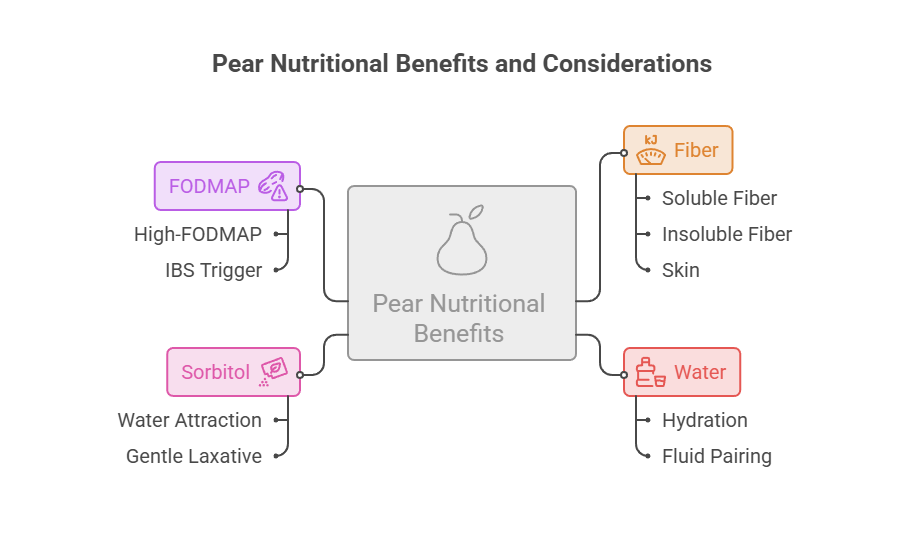
- A medium pear holds about 5.5 to 6 grams of fiber, roughly 21% of the FDA Daily Value.
- Pears combine soluble fiber (pectin), insoluble fiber, sorbitol, and about 84% water.
- The skin carries most of the fiber, so keep it on.
- Sorbitol works as a gentle, natural laxative by drawing in water.
- Pears are high-FODMAP, so they can backfire for people with IBS.
- One to two pears a day, paired with fluids, suits most people.
The Short Answer: Yes, and Here’s Why
First, a quick definition. Constipation usually means fewer than three bowel movements a week, along with hard or lumpy stools, straining, or a sense that you did not fully empty, a description the NIDDK uses in its patient guidance. Pears target the mechanical side of that problem: soft stool that passes with less effort.
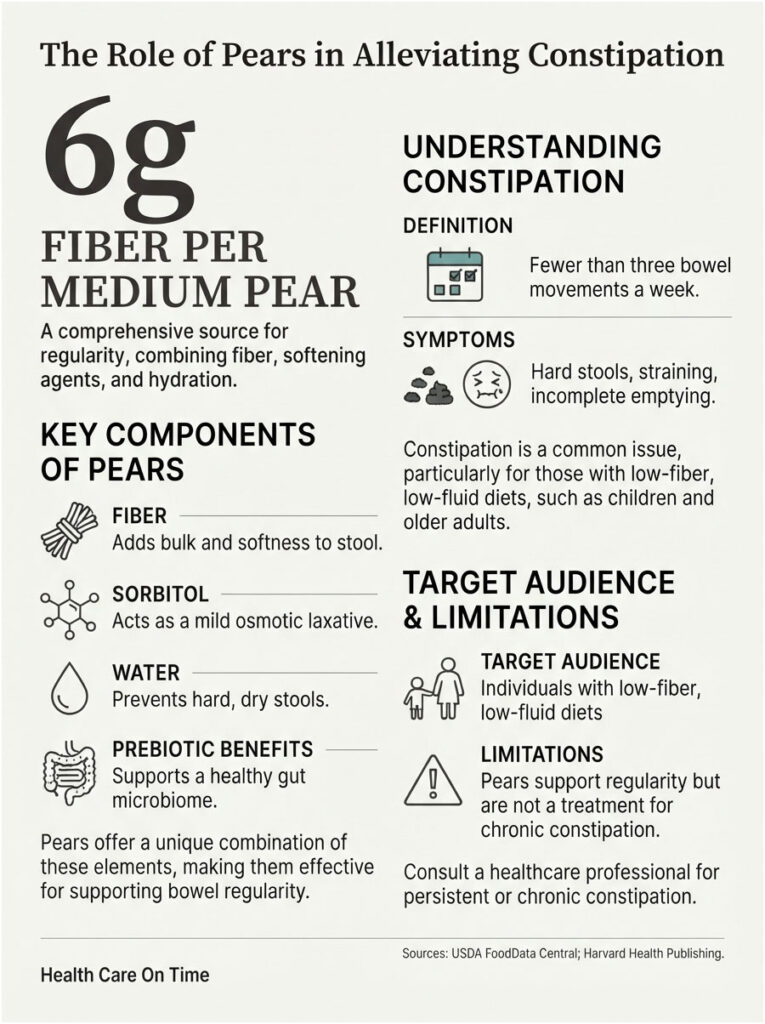
Pears earn their digestive reputation honestly. The fruit brings together four things that each help stool move: fiber, sorbitol, water, and food for your gut bacteria.
Fiber adds bulk and softness. Sorbitol acts like a mild osmotic laxative. Water keeps stool from turning hard and dry. Together they nudge a sluggish system back into rhythm.
Our medical reviewers note that pears stand out because they cover several bases at once, not just one. Many so-called constipation foods offer fiber alone; pears pair fiber with a natural stool softener and plenty of fluid in the same bite.
That combination matters most for the everyday, occasional constipation so many people deal with. It also explains why pears show up in advice for both children and older adults, two groups where gentle options win.
Who benefits most? People whose constipation stems from a low-fiber, low-fluid routine, which covers a large share of cases. If your diet is already high in fiber and you are still struggling, the cause may lie elsewhere, and a pear alone will not fix it.
The honest limit is worth stating up front. Pears support regularity as part of a fiber-friendly diet; they are not a treatment for chronic medical constipation, which deserves a doctor’s input.
How Much Fiber Is Actually in a Pear?
Here is where pears quietly outperform. One medium pear with the skin holds about 5.5 to 6 grams of fiber, according to USDA FoodData Central and the Cleveland Clinic.
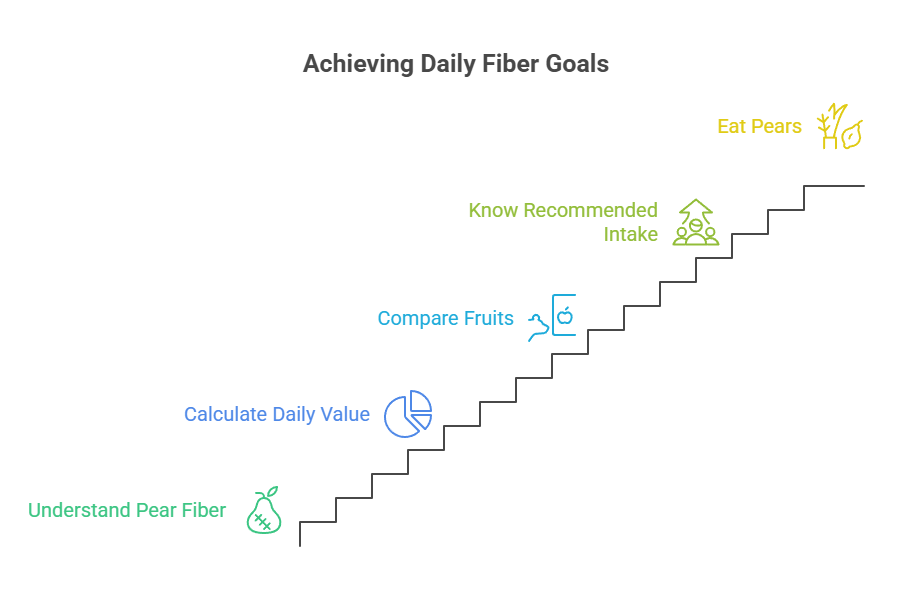
That is roughly 21% of the FDA Daily Value of 28 grams, which the FDA sets for a 2,000-calorie diet. In plain terms, one pear does about a fifth of a full day’s fiber work before you have eaten anything else.
Pears rank among the most fiber-dense common fruits. Reporting drawing on Houston Methodist dietitians places pears as the second most fiber-rich fruit, just behind berries, and the Mayo Clinic lists pears on its high-fiber foods chart.
Your personal target shifts with age and sex. The USDA guideline works out to about 14 grams of fiber per 1,000 calories, which lands near 25 to 28 grams a day for women under 50 and 31 to 34 grams for men under 50, dropping to 22 grams for women 51 and older and 28 grams for men in that group.
Set against those numbers, one pear covers roughly 18% to 27% of a day’s goal on its own. Two pears can knock out nearly half a woman’s target, a real dent from a single food.
Fiber content also depends on size and form, which is why the table below matters before you reach for canned or juiced versions.
| Pear type or serving | Fiber (g) | Calories | Water and sorbitol notes | Good for constipation? |
| Medium fresh pear, skin on (~178 g) | 5.5 to 6 | ~96 to 101 | ~84% water; contains sorbitol | Yes, top choice |
| Large fresh pear (~230 g) | 6.5 to 7 | ~130 | High water plus sorbitol | Yes, most fiber |
| Small fresh pear (~148 g) | ~4.3 | ~80 | Moderate water and sorbitol | Yes |
| Asian (nashi) pear, 1 fruit | ~4.4 | ~50 to 60 | Crisp, very high water | Yes, hydrating |
| Canned pears in juice, 1 cup | ~4 | ~120 | Skin removed, less fiber; more sugar in syrup | Weaker choice |
| Dried pear, 1/2 cup | ~6.8 | ~230+ | Low water, concentrated sorbitol and sugar | Yes, watch portions |
| Pear juice, 1 cup | ~1.5 | ~150 | Insoluble fiber mostly lost; sorbitol kept | Mild, gentle help |
Notice the pattern. Fresh whole pears win. Juice keeps the sorbitol but loses most insoluble fiber, and canned pears in syrup trade fiber for added sugar. Fresh really is the format that does the most work.
Cooking changes the picture only a little. Stewing or poaching a pear with the skin keeps most of its fiber intact, while canning and peeling strip a fair amount away. If convenience matters, frozen pear slices hold their fiber well and work fine in smoothies.
Soluble vs Insoluble Fiber in Pears
Pears carry both kinds of fiber, and each does a different job. About 2.2 grams of a medium pear’s fiber is insoluble, the type that adds bulk and speeds stool through the colon.
The rest is largely soluble fiber, led by pectin. Pectin absorbs water and forms a soft gel, which makes stool easier to pass and feeds helpful gut bacteria along the way.
This soluble and insoluble mix is part of why pears feel gentle rather than harsh. You get the bulking action of one type and the softening, water-holding action of the other at the same time, which is a harder balance to hit with a fiber supplement.
Why the Skin Holds the Fiber
Peeling a pear is a small habit with a real cost. Most of the fruit’s fiber, plus many of its antioxidants, sit in the skin.
Strip it off and you can lose roughly a third of the fiber. Our nutrition-focused reviewers point out that keeping the skin on is the single easiest way to get full value from a pear.
Wash it well, eat it whole, and skip the peeler. Your gut gets the fiber it came for, at no extra effort or cost.
Why Pears Work for Constipation: Four Mechanisms
Patients who book digestive-health tests through HealthCareOnTime often ask how a sweet fruit can act like a mild laxative. The answer is that pears work through four routes at once, which is unusual for a single food.
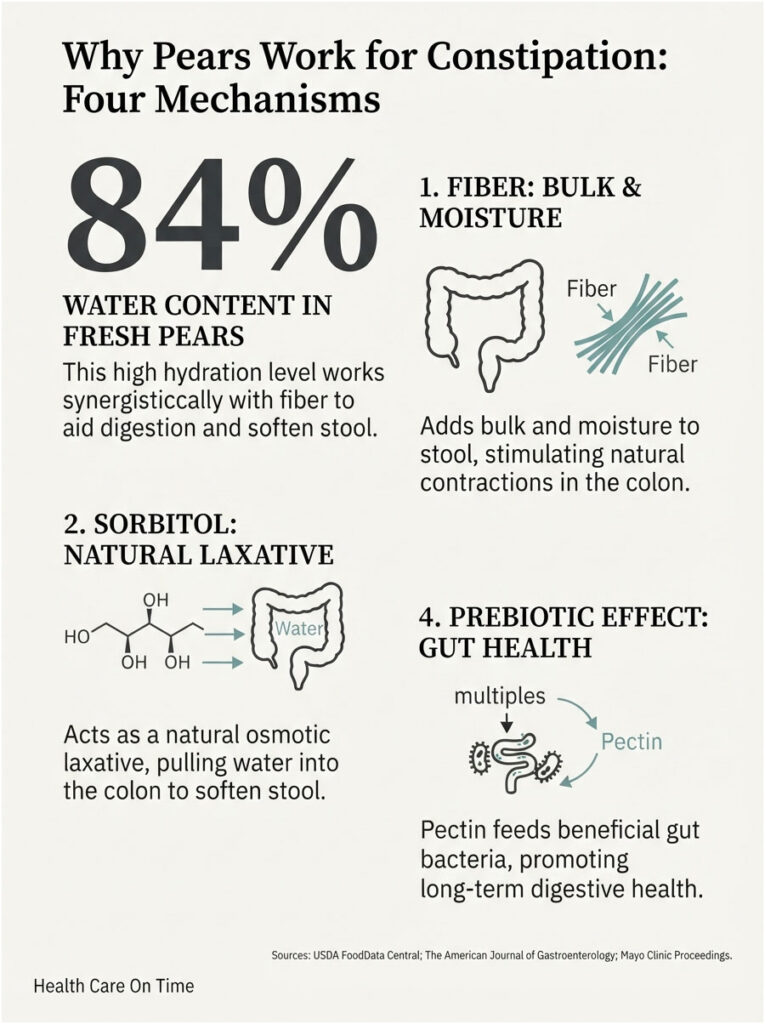
Fiber: Bulk and Softening
Fiber is the headline act. It adds volume to stool and helps it hold water, which stimulates the natural muscle contractions that push waste along the colon.
Higher fiber intake is tied to better stool frequency and consistency in people dealing with constipation. The FDA itself lists eating enough fiber as a way to increase bowel-movement frequency and improve gut health, which is a rare direct nod on a government label.
The catch is that fiber needs water to work. That is exactly where a pear’s next two features come in.
Sorbitol: A Natural Osmotic Laxative
Sorbitol is the quiet workhorse. It is a naturally occurring sugar alcohol the body absorbs poorly, so it travels into the large intestine mostly intact.
There it acts as an osmotic agent, pulling water into the colon. That extra water softens stool and encourages movement, which is the same principle behind many over-the-counter laxatives.
Sorbitol is a big reason pear juice is a common first step for gentle relief, as noted by Signos and pediatric-nutrition sources. It is also why a large serving can loosen stool faster than you might expect.
Amounts matter here. A single pear carries a modest, gut-friendly dose of sorbitol, while a big glass of juice or a handful of dried pears delivers much more, which is why the concentrated forms act faster and can overshoot into gas or loose stool.
Water Content: Around 84%
Hard, dry stool is a hallmark of constipation, and hydration fights it directly. A fresh pear is about 84% water, so every pear delivers meaningful fluid alongside its fiber.
This pairing is smart. Fiber pulls in water to soften stool; without enough fluid, extra fiber can actually make constipation worse. A pear brings both at once, which supplements rarely do.
Think of the water as the delivery system that lets the fiber and sorbitol do their jobs.
Prebiotic Effect on the Gut Microbiome
The last mechanism plays out over time. Pectin in pears acts as a prebiotic, feeding the beneficial bacteria that keep the colon healthy, an effect documented in gut-microbiome research on prebiotic-rich foods.
A stronger, more balanced gut community is linked to smoother digestion and more regular movements. Across the patients our diagnostic network serves, gut-health markers tend to look better in people who eat plenty of plants, pears included.
So while the first three mechanisms bring quick relief, the prebiotic effect helps keep you regular for the long run.
How to Eat Pears for Constipation Relief
The form you choose changes the result. Fresh, juiced, canned, and dried pears each behave differently, so match the format to your goal and your gut.
| If you… | Then… | Keep in mind |
| Have occasional constipation | Eat 1 to 2 fresh pears with the skin, plus water | Relief often comes within a day |
| Want the gentlest, fastest option | Try a small glass of 100% pear juice | Sorbitol works quickly; less fiber than whole fruit |
| Are helping a constipated toddler | Offer pureed pear or a little pear juice, with pediatric guidance | Start small; sorbitol can loosen stool fast |
| Have IBS or follow low-FODMAP | Limit or avoid pears | Sorbitol and fructose can trigger gas, cramps, diarrhea |
| Are increasing fiber quickly | Add pears gradually and drink more fluids | Fiber without water can worsen constipation |
| Are an older adult with chewing trouble | Stew or poach pears, skin on | Keeps the fiber, softens the texture |
| Notice blood, weight loss, or weeks of symptoms | Stop self-treating and see a doctor | Red flags need medical review |
Fresh vs Juice vs Canned vs Dried
Fresh whole pears with the skin are the gold standard. They carry the most fiber, keep all the sorbitol and water, and add no sugar.
Pear juice is gentler and faster. It loses most insoluble fiber during processing but keeps sorbitol and fluid, which is why a small glass can help within hours. It is a reasonable pick for someone who cannot easily chew whole fruit.
Canned pears are a step down. Peeling removes fiber, and syrup packs add sugar, so choose versions packed in water or 100% juice when you can. Drain the syrup if that is all you have.
Dried pears concentrate fiber and sorbitol into a small package, so they help, but the sugar and calories climb fast. A quarter to a half cup is plenty; treat them like a topping, not a bowlful.
How Many Pears Per Day
For most adults, one to two fresh pears a day is a sensible amount that supports regularity without overdoing sugar or FODMAPs.
Across the readers our care team hears from, the most common mistake is not too few pears but adding fiber too fast without extra water. Ramp up slowly over a week or two and drink more fluids as you go.
If two pears leave you gassy or loose, that is a signal to scale back rather than push through.
How Long It Takes to Work
Timing depends on the form. A small glass of pear juice can prompt a bowel movement within a few hours for some people, thanks to fast-acting sorbitol.
Whole pears work more gradually, often over a day or so, as the fiber and sorbitol move through your system. Steady daily intake beats a single large serving, and it is easier on your stomach too.
Consistency is the real lever. A pear now and then helps in the moment, but a daily habit, paired with enough water and some movement, is what keeps most people regular over the long haul. Think of pears as part of a routine, not a one-time fix.
What the Research Actually Shows
Evidence for pears sits on solid but modest ground, and honesty here builds trust. Fiber’s role in constipation is well established; the pear-specific research is smaller but pointed.
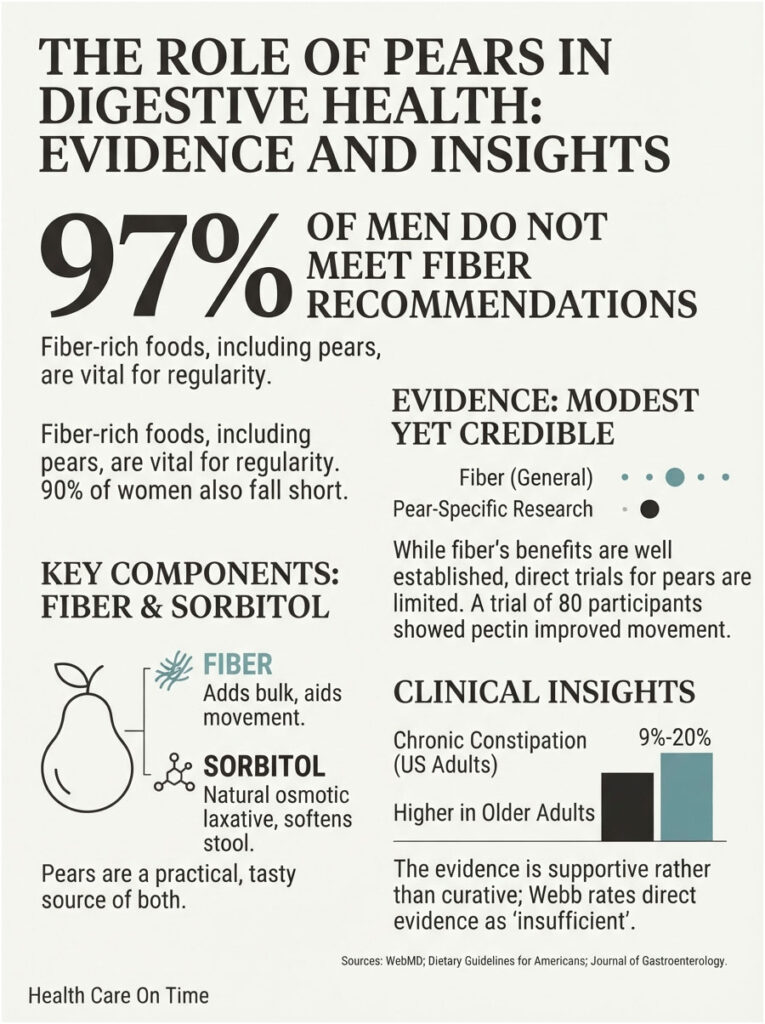
In one trial of 80 people with constipation, pectin, the soluble fiber that stars in pears, significantly improved movement through the digestive tract and eased symptoms, per the Cleveland Clinic’s review.
A systematic review of pears and health in the journal Nutrition Today catalogs the fruit’s fiber and sorbitol content as the basis for its digestive benefits. Our nutrition-focused reviewers read this evidence as supportive rather than absolute.
Balance matters. The WebMD ingredient monograph rates direct evidence for pears and constipation as “insufficient,” which is a fair caution. Pears are strong dietary support, not a proven cure, and any page telling you otherwise is overselling.
The numbers below frame why fiber-rich foods like pears matter so much across the country.
| Statistic | Figure | Source |
| FDA Daily Value for fiber | 28 g per day | FDA |
| Average US adult fiber intake | ~15 to 16 g per day | USDA / Dietary Guidelines for Americans |
| Adults falling short of fiber target | 90% of women, 97% of men | Dietary Guidelines 2020 to 2025 |
| Fiber in one medium pear | ~5.5 to 6 g (~21% DV) | USDA FoodData Central / Cleveland Clinic |
| US adults with chronic idiopathic constipation | 9% to 20% | American College of Gastroenterology |
| Older adults (60+) with chronic constipation | About 1 in 3 | National population survey |
| Insoluble fiber per medium pear | ~2.2 g | USDA-based analysis |
Those figures tell a simple story. The shortfall is nearly universal: under the 2020 to 2025 Dietary Guidelines, about 90% of women and 97% of men miss their fiber target.
Constipation follows that gap. It is common, driving more than 2 million physician visits a year, and women are affected more often than men. Chronic idiopathic constipation alone hits 9% to 20% of US adults, the American College of Gastroenterology reports, and roughly a third of people over 60 live with it.
Against that backdrop, an easy, tasty, fiber-plus-sorbitol food is a practical tool, even if it is not a cure.
Pears vs Other Fruits for Constipation
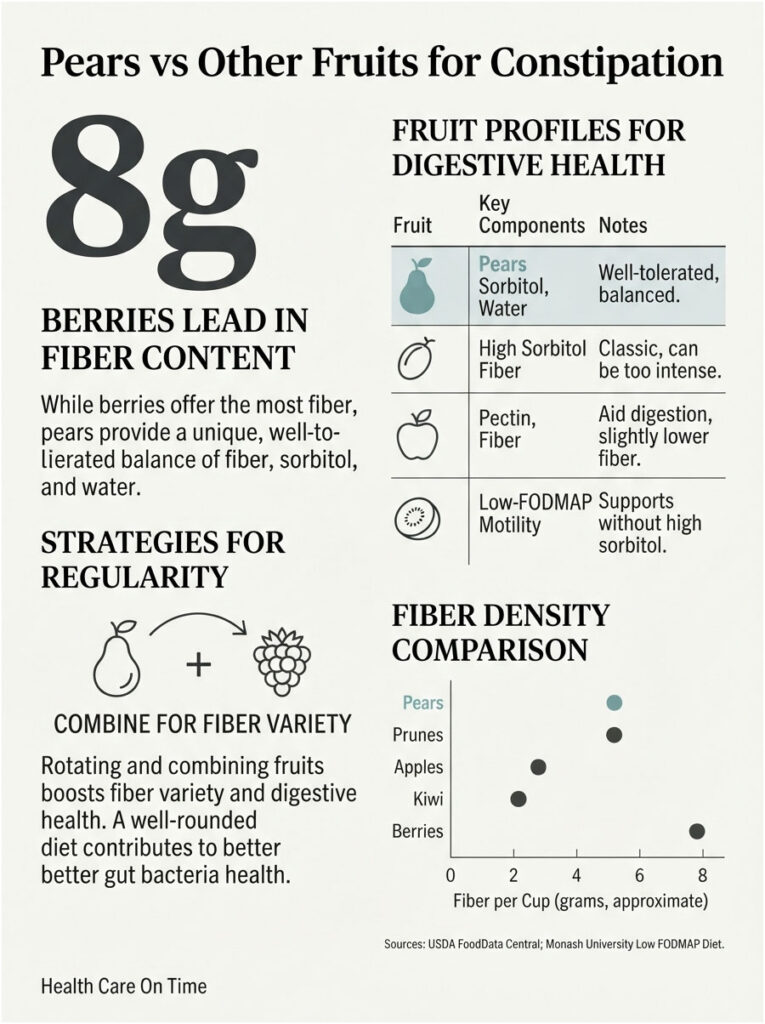
Prunes usually get top billing, but pears hold their own and often taste better to more people. The choice comes down to fiber, sorbitol, and tolerance.
| Fruit (serving) | Fiber (g) | Sorbitol? | Notes for constipation |
| Pear, 1 medium (skin on) | ~6 | Yes | Fiber, sorbitol, and water; well tolerated by most |
| Prunes, ~5 dried | ~3 to 4 | Yes (high) | Classic laxative fruit; very high sorbitol |
| Apple, 1 medium (skin on) | ~4.5 | Small | Pectin-rich; slightly less fiber than a pear |
| Kiwi, 2 fruit | ~4 to 5 | No | Enzyme aids motility; low-FODMAP option |
| Berries, 1 cup | ~8 | No | Highest fiber; strong alternative |
Prunes carry the most sorbitol, so they hit hard and fast, which some people find too intense. Pears offer a gentler mix of fiber, sorbitol, and water that many tolerate more comfortably.
Apples run close on pectin but trail pears slightly on total fiber. Kiwi is a strong low-FODMAP pick if pears bother your stomach, and berries top everyone on raw fiber.
For a well-rounded plate, rotating pears with these fruits covers more ground than leaning on any single one. Variety also keeps your gut bacteria fed with a wider range of fibers.
You can also stack them. A breakfast bowl with pear slices, a few berries, and a spoonful of chia layers several fiber types and a little sorbitol into one meal, an easy way to move toward your daily target without relying on any single fruit.
When Pears Might Not Help, or Could Make It Worse
Pears are friendly for most people, but not everyone. A few situations call for caution, and skipping past them would do readers a disservice.
The FODMAP and IBS Caveat
Pears are high in FODMAPs, specifically sorbitol and fructose. For people with irritable bowel syndrome or sensitive guts, the same compounds that soften stool can trigger gas, bloating, cramping, and even diarrhea.
In questions our team fields about IBS, pears come up often as a food that soothes some people and unsettles others. If you follow a low-FODMAP plan, pears usually belong on the limit-or-avoid list, at least during the elimination phase.
Children can be sensitive too. The sorbitol and fructose that help a constipated toddler can tip into loose stools quickly, so small amounts and pediatric guidance are wise, a point stressed by pediatric nutrition sources.
Too Much of a Good Thing
More fiber is not always better, especially in a rush. Loading up on pears without drinking enough water can leave stool bulky but dry, which worsens the very problem you are trying to fix.
Add pears and other high-fiber foods gradually. Pair them with plenty of fluids so the fiber can soften rather than clog, and give your gut a week or two to adjust.
Very large servings of dried pears or pear juice are the usual culprits behind gas and cramps, so portion size matters as much as frequency.
When to See a Doctor
Food is a first step, not a cure-all. Some symptoms signal something beyond diet that needs a professional look.
Seek medical care if constipation lasts more than a few weeks, or comes with blood in the stool, unexplained weight loss, severe abdominal pain, vomiting, or a sudden change in bowel habits. The NIDDK flags these as reasons to call a doctor rather than wait.
Persistent constipation can also point to medication side effects or an underlying condition, so it is worth a conversation rather than an endless supply of fruit.
Easy Ways to Add Pears to Your Day
Getting more pears in is simple, and small habits stick best. The goal is steady fiber, not a one-time fiber flood.
Slice a whole pear, skin on, over oatmeal or yogurt for a fiber double-up at breakfast. Toss diced pear into a green salad for sweetness and crunch that also feeds your gut.
Blend a pear into a smoothie with berries and a little water for a fiber-rich drink. Grate one into overnight oats, or freeze pear slices for a cold snack that still carries the skin’s fiber.
For older adults or anyone with chewing trouble, stew or poach pears with the skin on to keep the fiber while softening the texture. A warm stewed pear with cinnamon is an easy evening option.
Keep a pear in your bag as a portable snack for the afternoon slump. Pairing it with a handful of nuts adds even more fiber and staying power.
Baking is another route. Fold diced pear into muffins, oatmeal bars, or a warm crumble, skin on, for a dessert that quietly adds fiber. Just watch the added sugar, since that is where baked treats can undo the benefit.
Spread pears and other fiber sources across the day, whole grains, beans, and vegetables, so the total climbs toward that 28-gram target. Spreading fiber out is far easier on the gut than a single large dose, and it keeps you fuller between meals.
Frequently Asked Questions
How many pears should I eat to relieve constipation?
One to two fresh pears a day works for most adults, delivering around 6 to 12 grams of fiber plus sorbitol and water. Start with one, keep the skin on, and drink extra fluids so the fiber can soften stool rather than harden it. Scale back if you feel gassy.
How long does it take for a pear to help constipation?
It varies by form. A small glass of pear juice may prompt a bowel movement within a few hours because sorbitol acts quickly. Whole fresh pears usually work more gradually, often within a day, as the fiber and sorbitol move through your digestive system.
Is pear juice good for constipation?
Yes, pear juice is a gentle, fast option. It loses most insoluble fiber during processing but keeps sorbitol and water, which draw fluid into the intestines to soften stool. A small glass is a common first step for both children and adults, best paired with a balanced, fiber-rich diet.
Are canned pears good for constipation?
They help less than fresh. Canning removes the skin and much of the fiber, and syrup-packed versions add sugar. If you use canned pears, pick ones packed in water or 100% juice, drain the liquid, and treat them as a backup rather than your main fiber source.
Can eating too many pears cause diarrhea?
Yes. The sorbitol and fructose that soften stool can, in large amounts, pull too much water into the intestines and cause loose stools, gas, and cramping. This is more likely in children and in people with IBS or FODMAP sensitivity. Moderation keeps pears helpful rather than harsh.
Are pears good for constipation in babies and toddlers?
Often, yes. Pureed pear or a little pear juice is a common gentle remedy, thanks to sorbitol and fiber. Because young children react fast to sorbitol, start with small amounts and check with your pediatrician before using pears to treat a child’s constipation.
Which is better for constipation, pears or prunes?
Both work. Prunes carry more sorbitol, so they act stronger and faster, which some people find harsh. Pears offer a gentler blend of fiber, sorbitol, and water that many tolerate more comfortably. Trying both and seeing which suits your gut is a reasonable approach.
Should I eat pears with the skin on?
Yes. Most of a pear’s fiber and antioxidants live in the skin, and peeling can strip away roughly a third of the fiber. Wash the pear well and eat it whole to get the full digestive benefit, the simplest way to boost its constipation-fighting power at no extra cost.
Can pears cause constipation instead of relieving it?
Rarely, and usually only when fiber climbs fast without enough water. Extra fiber with too little fluid can leave stool bulky but dry. For nearly everyone, pears ease constipation; pairing them with adequate water keeps them working in your favor.
Are Asian pears good for constipation?
Yes. Asian (nashi) pears offer fiber, a high water content, and a crisp texture, so they support regularity much like European pears. Fiber per fruit runs a little lower in some varieties, but the hydration and gentle bulk still help move things along nicely.
Are pears safe for constipation during pregnancy?
Generally, yes. Pears are a whole-food, fiber-rich option that many pregnant people use for the common problem of pregnancy constipation. They add fiber and fluid without medication. As with any pregnancy diet question, confirm your overall plan with your prenatal provider.
What’s the best time of day to eat a pear for digestion?
There is no single magic hour. Consistency matters more than timing. Some people like a pear in the morning to get things moving, others as an afternoon snack. Spreading fiber across the day, rather than one large serving, tends to be easiest on the gut.
Medical disclaimer: This article is for general information and education only and is not medical advice. It does not replace diagnosis or treatment from a qualified healthcare provider. Constipation lasting more than a few weeks, or accompanied by blood, weight loss, or severe pain, needs medical attention. Talk with your doctor before making dietary changes to manage a health condition, especially during pregnancy or for infants and children.
References
- FDA: How to Understand and Use the Nutrition Facts Label
- FDA: Daily Value on the Nutrition and Supplement Facts Labels
- USDA FoodData Central
- USDA Dietary Guidelines for Americans, 2020 to 2025
- Cleveland Clinic: 5 Reasons Pears Are Good for You
- Mayo Clinic: High-Fiber Foods Chart
- NIDDK: Constipation
- American College of Gastroenterology: Chronic Constipation in the United States
- Signos: Fruits to Relieve Constipation Naturally
- Begin Health: Do Pears Help with Constipation in Kids?
- WebMD: Pear Ingredient Monograph
- Houston Methodist via The Independent: Pears and Fiber