Americans are abandoning the one fruit with a controlled clinical trial behind it. Per-capita fresh pear consumption has slid to roughly 2.64 pounds a year, down steadily since 2000, which works out to about six pears per person annually. US production fell another 26 percent in 2024. Meanwhile, researchers in Tallahassee were measuring what two pears a day did to blood pressure in adults with metabolic syndrome, and the numbers moved.
Table of Contents
Quick Answer
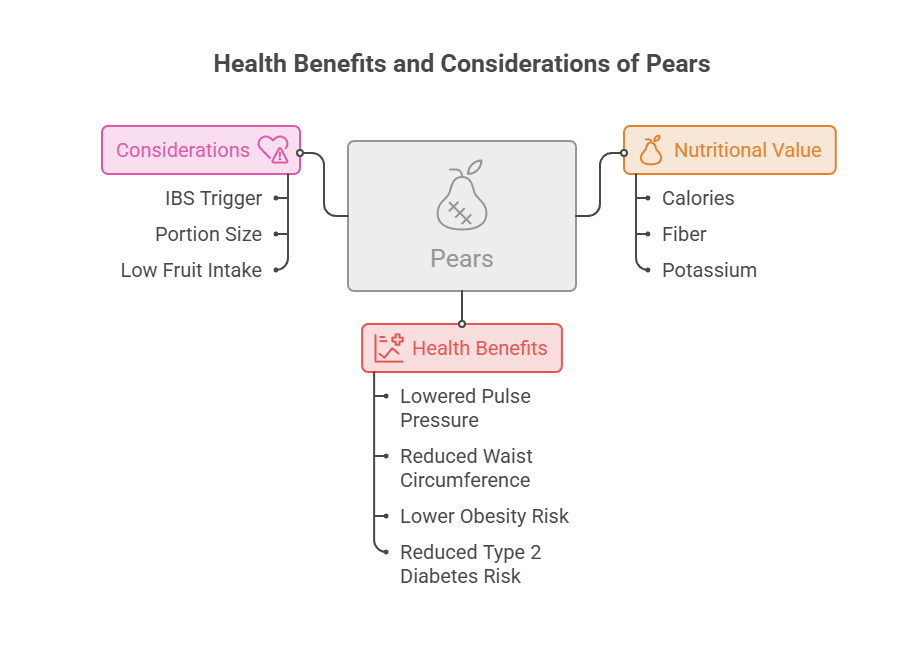
The health benefits of eating pears regularly come mostly from fiber. One to two medium pears daily supply 6 to 12 grams (21 to 43 percent of the Daily Value), plus potassium, copper, and skin polyphenols. Research links steady pear intake to lower pulse pressure, smaller waist circumference, better bowel regularity, and reduced type 2 diabetes risk. People with IBS should start with small portions because of sorbitol.
At a Glance
• One medium pear supplies about 101 calories, 6 grams of fiber, and 206 mg of potassium
• A Florida State University trial found two pears daily for 12 weeks lowered pulse pressure and waist circumference
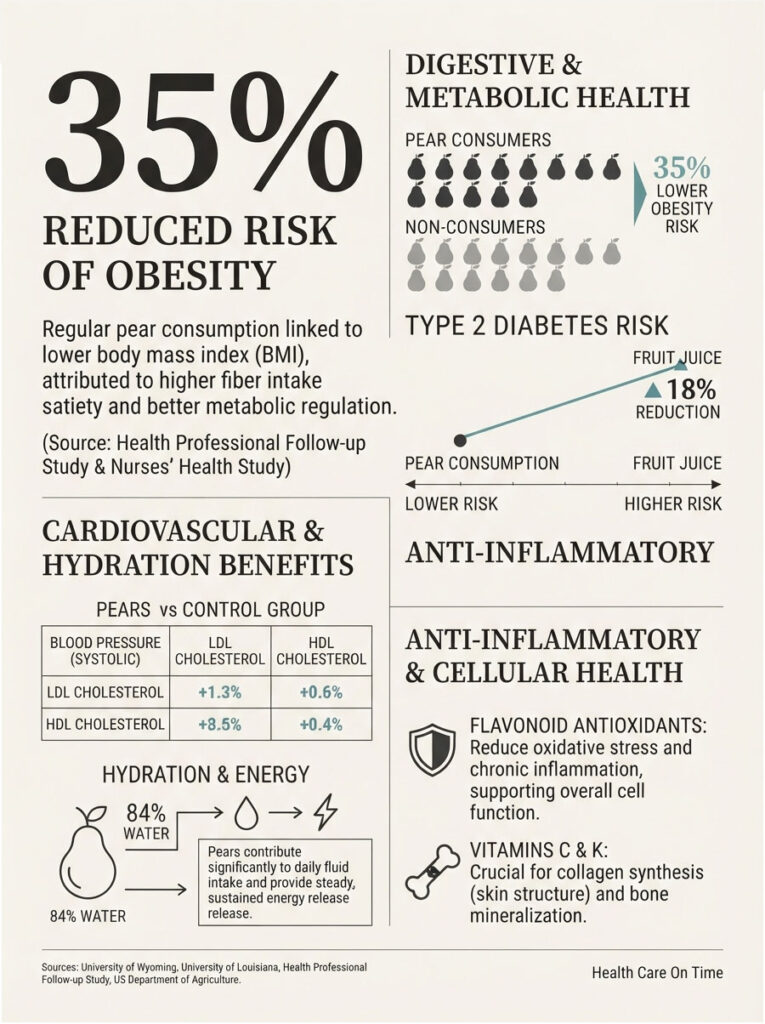
• NHANES data show adult pear eaters were 35 percent less likely to be obese
• Harvard cohort research ties apples and pears to reduced type 2 diabetes risk
• The peel carries up to six times more polyphenols than the flesh
• Only 12.3 percent of US adults hit federal fruit targets, and average fiber intake sits near 15 grams against a 25 to 38 gram goal
• High sorbitol and fructose content makes pears a frequent IBS trigger, so portion size matters
What One Pear Actually Delivers
Most fruit gets praised in vague terms. Pears earn their reputation on one measurable trait: fiber per calorie.
One Medium Pear, By the Numbers
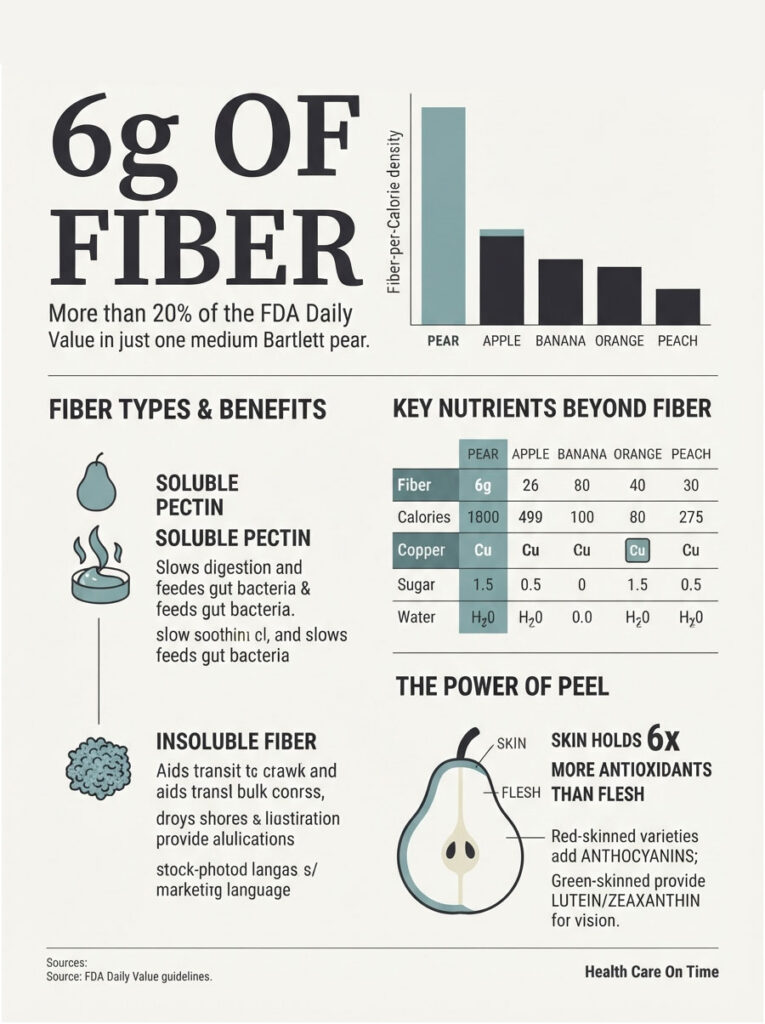
A medium Bartlett pear weighing about 178 grams (roughly 6.3 ounces) provides 101 calories, 1 gram of protein, 27 grams of carbohydrate, 6 grams of fiber, 9 percent of the Daily Value for vitamin C, 7 percent for vitamin K, 4 percent for potassium, and 16 percent for copper, according to USDA FoodData Central.
Six grams is the number that matters. One piece of fruit covers roughly 21 percent of the FDA Daily Value for fiber with no added sugar, sodium, cholesterol, or fat.
The fiber splits between two types. Soluble pectin forms a gel that slows digestion and feeds gut bacteria, while insoluble fiber adds bulk and speeds transit.
Copper is the underrated entry on that list. It supports immune function, cholesterol metabolism, and nerve signaling, and one pear covers a sixth of the daily requirement. Our medical reviewers point out that copper rarely appears on standard panels, so most people have no idea where they stand on it.
Are Pears High in Sugar?
This is the first objection people raise, and it deserves a direct answer. A medium pear contains roughly 17 grams of naturally occurring sugar.
Context changes the reading. Those sugars arrive packaged with 6 grams of fiber and 84 percent water, which is why pears land in the low glycemic index band alongside apples, oranges, and strawberries.
The comparison that matters is pear versus pear juice. Strip the fiber and the same sugars hit the bloodstream at a completely different rate, which is exactly what the Harvard cohort data captured.
Why the Skin Carries the Payload
Peeling a pear is the most common mistake in pear nutrition. The skin is where antioxidant density concentrates.
Peeling Costs You Most of the Polyphenols
Research indicates the peel holds up to six times more polyphenols than the flesh. Quercetin, chlorogenic acid, and catechins all cluster in that thin outer layer.
Pear skin also contributes a substantial share of total fiber. Strip it and a 6-gram pear drops closer to 4 grams, which weakens every benefit that follows.
Red-skinned varieties add anthocyanins, the same pigment class found in blueberries. Green-skinned varieties supply lutein and zeaxanthin, both involved in maintaining vision with age.
How Pears Stack Up Against America’s Favorite Fruits
Patients booking tests with us often ask whether a pear beats the apple they already eat. The comparison is closer than most articles admit, and it depends entirely on which metric you care about.
| Fruit (1 medium, raw) | Calories | Fiber (g) | Potassium (mg) | Vitamin C (% DV) | Strongest For |
| Pear, Bartlett (178 g) | 101 | 6.0 | 206 | 8% | Fiber per calorie, pectin load |
| Apple with skin (182 g) | 95 | 4.4 | 195 | 9% | Quercetin, crunch, satiety |
| Banana (118 g) | 105 | 3.1 | 422 | 11% | Potassium, pre-workout fuel |
| Orange (131 g) | 62 | 3.1 | 237 | 78% | Vitamin C, folate |
| Asian pear (275 g) | 116 | 9.9 | 333 | 12% | Highest total fiber per fruit |
| Peach (150 g) | 59 | 2.3 | 285 | 11% | Lowest calorie option |
The pear wins outright on fiber against apples, bananas, oranges, and peaches at comparable calories. Asian pears beat everything on total fiber, though they are a noticeably larger fruit.
Why This Fruit Matters More Right Now
The case for pears is not that they are exceptional. It is that they happen to solve the exact nutritional shortfall most Americans have.
The American Fiber Gap Nobody Closes
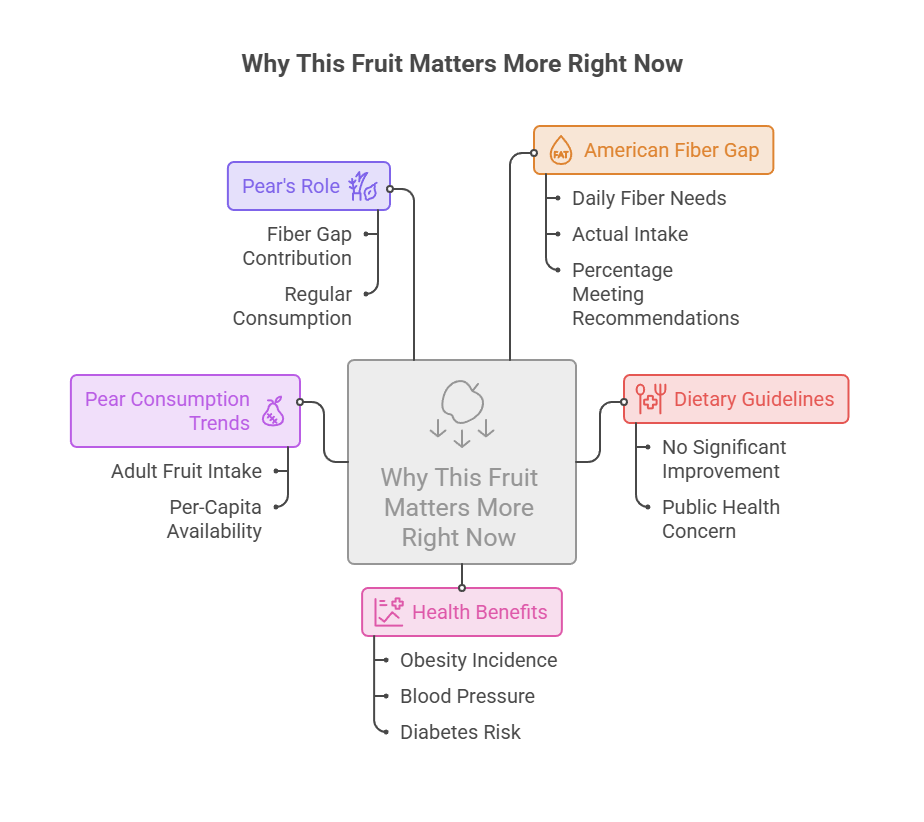
Adults should get roughly 25 grams of fiber daily for women and 38 grams for men, based on 14 grams per 1,000 calories. Actual intake sits near 15 grams.
Research presented at NUTRITION 2021 found that only 5 percent of men and 9 percent of women reach the recommended daily amount, per the American Society for Nutrition. Fewer than one in ten US adults clears the bar.
The Dietary Guidelines for Americans list dietary fiber as a nutrient of public health concern. That designation has held for two decades with no meaningful improvement in the numbers.
Newer work keeps reinforcing why the gap matters. A 2025 analysis of NHANES data covering 39,184 adults found those with the highest fiber intake had a 26 percent lower obesity incidence than those with the lowest.
Pear Consumption Is Falling While Fiber Needs Climb
CDC surveillance found 12.3 percent of adults met fruit recommendations in 2019, ranging from 8.4 percent in West Virginia to 16.1 percent in Connecticut, per CDC MMWR.
Pears have lost more ground than most produce. Retail per-capita availability slipped from 3.1 pounds in 2011 to 2.7 pounds by 2019, and higher household income correlated with higher pear purchasing, which points to price and access as part of the story.
What “Regularly” Actually Means in the Research
Two doses appear across the literature. Trials measuring blood pressure used two medium pears daily. Population studies measuring diabetes risk used three servings per week.
Both are realistic. Neither requires rebuilding how you eat.
| Metric | US Figure | What It Means for You | Source |
| Adults meeting daily fruit targets | 12.3% | Nearly 9 in 10 Americans fall short | CDC BRFSS, MMWR 2022 |
| Average adult fiber intake | ~15 g/day vs 25 to 38 g target | One pear closes about 24% of the gap | Dietary Guidelines for Americans |
| Adults meeting fiber recommendations | 5% of men, 9% of women | Fiber is the most underconsumed nutrient | American Society for Nutrition, 2021 |
| Per-capita fresh pear use | 2.64 lb per year (2022) | Roughly six pears per person annually | USDA Economic Research Service |
| Obesity odds among pear consumers | 35% lower | Pear eaters weighed less at equal calorie intake | NHANES 2001-2010, LSU AgCenter |
| Pulse pressure, 2 pears daily, 12 weeks | 54 to 51 mmHg | Measurable vascular change in three months | Food & Function, Florida State University |
| Type 2 diabetes risk, apples and pears | 18% lower | A weekly habit, not a daily obligation | Meta-analysis, 5 cohorts, 228,315 adults |
The Health Benefits of Eating Pears Regularly
Here is where the evidence sits, ordered by strength of research rather than by how appealing the claim sounds.
Digestive Regularity and a Better Gut Microbiome
This is the best-supported benefit and the first one people notice. Pears deliver both fiber types plus sorbitol, a sugar alcohol with mild osmotic action.
Pectin, the dominant soluble fiber in pears, has been studied directly for constipation. In a study of 80 people with constipation, pectin significantly improved movement through the digestive system and reduced symptoms, as summarized by Cleveland Clinic.
How Pectin Actually Works
Pectin dissolves into a gel that holds water inside the stool. Softer stool moves more easily, which explains why the effect shows within days rather than weeks.
The second mechanism runs slower. Colonic bacteria ferment pectin into short-chain fatty acids, particularly butyrate, which feeds the cells lining the colon directly.
Pectin also promotes growth of beneficial bacteria in the colon. That prebiotic effect compounds over months, and it is the reason gut researchers keep flagging pears as an under-studied whole food.
Blood Pressure and Vascular Function
The strongest cardiovascular evidence comes from a controlled trial rather than a survey, which changes how much weight it carries.
Inside the 12-Week Florida State Trial
Researchers ran a randomized, placebo-controlled crossover trial. Forty men and women aged 45 to 65 with metabolic syndrome received either two medium fresh pears or a calorie-matched control drink daily across two 12-week periods separated by a 4-week washout.
Results published in Food & Function showed systolic pressure trending down from 134 to 130 mmHg and pulse pressure falling significantly from 54 to 51.
Pulse pressure is the gap between systolic and diastolic readings. A widening gap signals arterial stiffness and predicts cardiovascular events independently of systolic pressure alone.
Waist circumference dropped significantly in the pear group while rising in the control group. Leptin concentrations fell too, meaning three separate markers moved on one dietary change.
Our medical reviewers flag the honest limitation: forty participants is a small sample and the effect sizes are modest. This is supportive evidence, not a replacement for antihypertensive therapy.
Cholesterol and Lipid Markers
Soluble fiber binds bile acids in the small intestine and carries them out, forcing the liver to pull cholesterol from circulation to make more. That is the mechanism behind fiber’s effect on LDL.
A meta-analysis of 15 clinical trials supports fiber’s role in lowering cholesterol. Pears contribute roughly 2 to 3 grams of soluble fiber per medium fruit.
Procyanidin antioxidants in pears may also decrease stiffness in heart tissue, lower LDL cholesterol, and raise HDL. The peel’s quercetin content adds an anti-inflammatory contribution on top of that.
Blood Sugar and Type 2 Diabetes Risk
Twenty-seven grams of carbohydrate makes people with blood sugar concerns nervous. Population data point the other direction.
Harvard researchers followed 66,105 women in the Nurses’ Health Study, 85,104 in Nurses’ Health Study II, and 36,173 men in the Health Professionals Follow-Up Study. Across 3,464,641 person-years, 12,198 developed type 2 diabetes, and the pooled hazard ratio for apples and pears was 0.93 per three servings weekly.
The juice contrast is what stands out. People drinking one or more servings of fruit juice daily raised type 2 diabetes risk by as much as 21 percent, and swapping three weekly juice servings for whole fruit produced a 7 percent risk reduction, per the Harvard Gazette.
A later meta-analysis pooled five prospective cohorts covering 14,120 diabetes cases among 228,315 participants. Apple and pear consumption was associated with an 18 percent reduction in type 2 diabetes risk, with each additional weekly serving linked to a further 3 percent reduction (PubMed).
Weight and Waist Circumference
The obesity finding comes from nationally representative US data, which gives it more standing than any single-clinic result.
An LSU AgCenter analysis of NHANES 2001-2010 found adult pear consumers weighed less than non-consumers and were 35 percent less likely to be obese. The lead researcher attributed it to fiber, noting no difference in energy intake or physical activity between the two groups.
Pear consumers in that analysis also ate notably more fiber overall (23.9 g versus 16 g daily), plus more vitamin C, copper, and magnesium, with lower intakes of added sugars, total fat, and saturated fat.
Patients commonly ask us whether swapping one snack for a pear moves the scale. On its own, rarely. As part of displacing processed snacks across a month, the pattern data suggest it contributes.
Inflammation and Oxidative Stress
Pears supply flavonoid antioxidants that counter oxidative damage. Chronic low-grade inflammation sits underneath heart disease, type 2 diabetes, and several cancers.
A 2018 review linked high flavonoid intake to reduced risk of diabetes and of developing or dying from heart disease. Vitamin C contributes to the same effect.
Variety matters more than most guides acknowledge. A comparative analysis found Beurre Bosc carried the highest total polyphenol and tannin content among five varieties tested, while Josephine de Malines led on total flavonoid content and antioxidant capacity (PMC).
Bone, Skin, and Eye Support
Pears supply vitamin K, which participates in bone mineralization and calcium regulation. One medium pear covers about 7 percent of the Daily Value.
Vitamin C drives collagen synthesis, affecting skin structure and wound healing. Copper contributes to connective tissue formation and iron absorption.
Green-skinned varieties provide lutein and zeaxanthin, two compounds concentrated in the retina. Both are studied for their role in preserving vision as people age.
Hydration and Everyday Energy
Pears run roughly 84 percent water by weight. A medium pear contributes about 5 ounces of fluid toward daily needs.
The carbohydrate profile produces steady rather than spiking energy because fiber moderates absorption. That makes a pear a defensible mid-afternoon choice when the alternative is the vending machine.
What Changes, Week by Week
Timelines set expectations honestly. Here is the realistic sequence based on the mechanisms above.
Days 1 to 7: Digestion Responds First
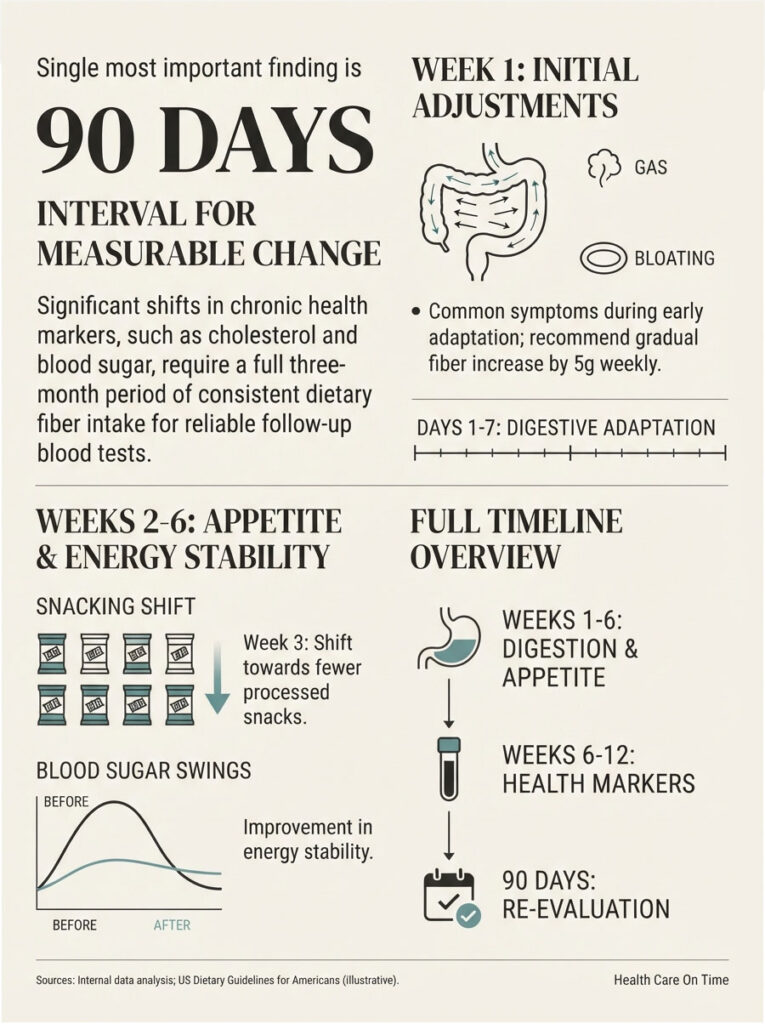
Bowel regularity shifts first. The combination of pectin, insoluble fiber, sorbitol, and water typically registers within two to five days.
Some people get gas or mild bloating in this window. That is fermentation doing its job, and it usually settles as gut bacteria adapt to the new substrate.
In cases reviewed across our diagnostic network, this early adjustment is the single most common reason people abandon a new fiber habit. Adding 5 grams per week rather than jumping straight to a daily pear prevents most of it.
Weeks 2 to 6: Satiety and Snacking Patterns Shift
Appetite regulation changes next. Fiber slows gastric emptying, which stretches fullness between meals.
Most people report reaching for fewer processed snacks by week three. That substitution, rather than the pear itself, drives most of the weight-related benefit.
Energy stability often improves in the same window, since replacing a refined carbohydrate snack removes one blood sugar swing from the day.
Weeks 6 to 12: Where the Measurable Markers Move
Blood pressure and waist circumference are slow movers. The Florida State trial needed the full 12 weeks before pulse pressure change reached significance.
Lipid and glucose markers follow similar timelines. Anyone planning to verify results with a blood test should allow at least 90 days between baseline and follow-up.
Which Pear Should You Actually Buy?
Most US grocery stores stock eight to ten varieties, and they are not interchangeable.
The Variety Guide
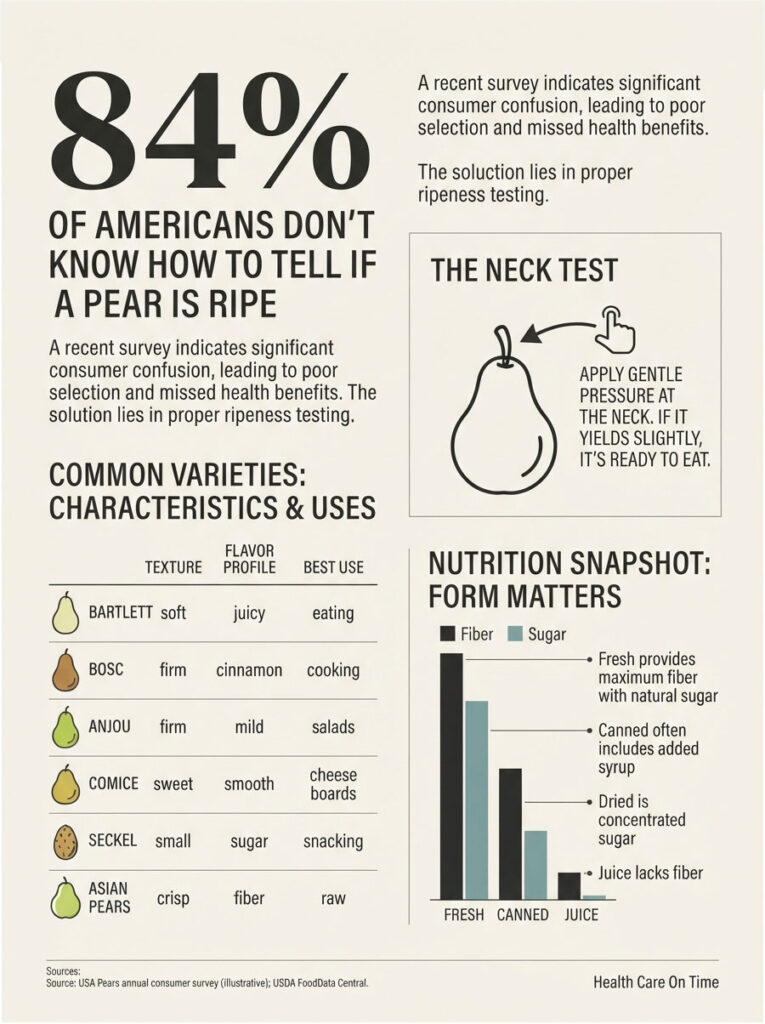
Bartlett accounts for roughly 75 percent of commercial US pear production. It is the classic soft, juicy, fragrant pear, best fresh or blended, and its skin brightens from green to yellow as it ripens.
Bosc has bronze russeted skin, an elongated neck, and firmer flesh with notes of cinnamon and nutmeg. It holds shape through poaching and baking, and it tested highest for polyphenols in comparative research.
Green and Red Anjou stay firm as they ripen and never change color, which confuses shoppers into cutting them too early. They work well in salads and on cheese boards.
Comice is the sweetest common variety with very smooth texture. Seckel, the small “sugar pear,” was first cultivated in Pennsylvania around the 1800s and is the only pear variety domestically introduced in the US.
Asian pears, also called Nashi, stay crisp like apples, run larger, and carry the highest total fiber per fruit.
The Neck Test for Ripeness
Squeezing the body bruises the fruit and tells you nothing. Press gently near the stem instead.
If the neck yields slightly under thumb pressure, the pear is ripe. Pears ripen from the inside out, so by the time the body feels soft, the center has already turned mealy.
Pears are harvested before ripening. Leave them at room temperature for two to five days, then refrigerate to hold them at peak for another week.
Fresh vs Canned vs Dried vs Juice
Fresh whole pears with skin are the reference standard. Every other form trades something away.
Why Canned Pears in Syrup Undo the Benefit
Canned pears are peeled and cored, which removes most polyphenols and a large share of the fiber. Juice-packed versions run about 51 calories per 100 grams with 2 grams of fiber and 8 grams of sugar.
Heavy syrup adds free sugars with no offsetting fiber. If canned is what you have, choose juice-packed and drain it before serving.
Dried pears concentrate fiber and sugar together. Portion them the way you would any dried fruit, meaning a small handful rather than a bowl.
Pear juice removes nearly all fiber while keeping the sugar intact. The Harvard cohort finding on juice and diabetes risk applies directly.
Who Should Be Careful With Pears
This is the section most pear articles skip, and skipping it does readers real harm.
IBS, Sorbitol, and the FODMAP Problem
Pears are a documented trigger for irritable bowel syndrome. Monash University, which developed the low FODMAP diet, lists pears among fruits particularly high in excess fructose and notes that apples and pears contain both fructose and sorbitol (Monash FODMAP).
That double load is the problem. Unabsorbed fructose and sorbitol reach the colon intact, pull in water osmotically, and ferment fast.
The result is gas, bloating, cramping, and sometimes urgency or loose stools. Cooking does not reduce FODMAP content, and neither does canning.
If you have IBS or suspect fructose malabsorption, start with a quarter of a peeled pear and space servings hours apart. Symptoms typically surface within four hours, which makes self-testing straightforward.
Oral Allergy Syndrome and Birch Pollen Cross-Reactivity
Pears belong to the Rosaceae family alongside apples, peaches, plums, and cherries. People allergic to birch pollen frequently react to all of them.
Roughly 70 percent of birch pollen allergic patients experience hypersensitivity reactions to cross-reactive foods, a condition called pollen-food syndrome (PMC).
Symptoms usually appear within 5 to 15 minutes of eating raw pear and involve itching and swelling in the mouth and throat. Heat often denatures the responsible protein, so baked pears may be tolerated when raw ones are not.
Systemic reactions including hives, vomiting, or anaphylaxis can occur but are uncommon. Anyone with throat tightness or breathing difficulty needs emergency care, not a food diary.
Type 2 Diabetes: Portion Size Still Matters
Population data are favorable, but 27 grams of carbohydrate is still 27 grams. A whole pear on an empty stomach produces a different curve than the same pear with almond butter.
Pair pears with protein or fat. Test your own response with a glucose meter if you use one, since individual variation between people is substantial.
Skip pear juice entirely when managing blood sugar. The fiber that makes whole pears reasonable is precisely what juicing strips out.
Advanced Kidney Disease and Potassium Load
A medium pear carries about 206 mg of potassium, which is moderate among fruits. For most people that counts as a benefit.
For patients with stage 4 or 5 chronic kidney disease, or anyone on a potassium-restricted diet, every source counts against the daily allowance. Across the metabolic panels processed through HealthCareOnTime, elevated serum potassium is one of the more frequent incidental findings, and diet is the first thing nephrologists review.
Discuss fruit portions with your nephrologist rather than adjusting on your own.
Infants and Toddlers: What Pediatric Guidance Says
Pear is one of the “P fruits” pediatricians recommend for constipation, alongside prunes, peaches, and plums.
The American Academy of Pediatrics notes that the North American Society of Pediatric Gastroenterology, Hepatology, and Nutrition constipation guideline suggests using the sorbitol and other carbohydrates in prune, pear, and apple juice to increase stool frequency and water content in constipated infants (AAP Pediatrics).
Mayo Clinic advises that for babies one month and older who are constipated, water is usually best first, though apple or pear juice contains sorbitol that helps relieve constipation.
The same property cuts both ways. One study found signs of malabsorption in five of seven infants given pear juice compared with two of seven given white grape juice. Volume control matters, and pediatrician guidance comes first.
How to Eat Pears for the Best Results
How Many Pears Per Day Is Right for You
One to two medium pears daily fits comfortably inside the federal recommendation of 1.5 to 2 cup-equivalents of fruit. Two pears is the dose used in the blood pressure research.
More than three daily starts crowding out other produce and pushes sorbitol into territory that causes digestive complaints in many people. Variety across fruit types beats volume of any single one.
Pairing Rules That Flatten the Glucose Curve
Eat pears with a protein or fat source when blood sugar is a concern. Sliced pear with a tablespoon of nut butter, a handful of walnuts, or a serving of cottage cheese all work well.
Whole and raw beats blended. Blending ruptures cell walls and accelerates absorption even when the fiber stays in the glass.
Timing matters less than people assume. Eating a pear roughly 20 minutes before a meal takes advantage of the satiety effect when weight management is the goal.
Eight Ways to Work Pears Into a Normal American Week
- Sliced into oatmeal with cinnamon
- Roasted alongside pork or chicken
- Diced into an arugula salad with walnuts and blue cheese
- Halved and broiled with a light drizzle of honey
- Blended into a smoothie with spinach and Greek yogurt
- Layered on whole-grain toast with ricotta
- Poached in red wine for dessert
- Eaten whole, skin on, straight out of hand
| If This Is You | Recommended Amount | How to Eat It | Watch For |
| Healthy adult, no GI issues | 1 to 2 medium pears daily | Whole, skin on, any time of day | Nothing specific |
| Chronic constipation | 1 to 2 daily plus 8 oz water each | Ripe, skin on, consistent timing | Ramp up over 1 to 2 weeks |
| Type 2 diabetes | 1 medium pear, once or twice daily | Pair with protein or fat; never juice | Post-meal glucose response |
| IBS or frequent bloating | Start at 1/4 peeled pear | Small portions spaced hours apart | Gas or cramping within 4 hours |
| Weight loss goal | 1 to 2 daily replacing a processed snack | Whole fruit, 20 minutes before meals | Swapping in juice or syrup-packed |
| High blood pressure | 2 medium pears daily | Whole, skin on, split across the day | Pair with reduced sodium intake |
| CKD stage 4 to 5 | As directed by your nephrologist | Measured portions only | Serum potassium on your next panel |
| Infant with constipation | Per pediatrician guidance | Pureed pear or small juice volume | Diarrhea, gas, appetite loss |
Pears, Fiber, and Your Lab Numbers
A dietary change is only as useful as your ability to verify it. Fiber-driven improvements show up on standard panels if you order the right ones.
Which Markers Diet Changes Actually Move
Soluble fiber intake correlates with LDL cholesterol reduction, which appears on a lipid profile alongside HDL and triglycerides. Blood pressure change shows on a cuff reading, not a lab report.
Blood sugar effects register on fasting glucose immediately and on HbA1c over roughly three months. Inflammation may shift on a high-sensitivity CRP test.
Potassium and kidney function appear on a metabolic panel, which matters for anyone raising fruit intake with existing kidney concerns.
When to Test and What to Ask For
Establish a baseline before changing your diet, not after. Patients booking tests with us frequently want a follow-up too early, and a four-week retest rarely shows anything meaningful.
Allow 90 days minimum between baseline and follow-up for lipid and HbA1c changes. HbA1c reflects about three months of average glucose, so testing sooner measures the pattern you already left behind.
Bring the specific change you made to the appointment. “Added two pears daily and cut afternoon snacks” gives a clinician something concrete to interpret.
Frequently Asked Questions
How many pears should I eat in a day?
One to two medium pears daily suits most healthy adults, supplying 6 to 12 grams of fiber within federal fruit guidelines. The blood pressure research used two daily. Going past three raises sorbitol intake enough to trigger digestive complaints in many people and crowds out other produce.
Is it OK to eat a pear every day?
Yes, for most people. Daily intake is associated with better fiber, vitamin C, copper, and potassium intake plus lower obesity risk in national survey data. Exceptions include people with IBS, fructose malabsorption, pear allergy, or advanced kidney disease requiring potassium restriction.
Are pears healthier than apples?
Pears win on fiber, roughly 6 grams versus 4.4 in a medium apple at similar calories. Apples carry more quercetin. Harvard cohort research grouped the two together and found identical diabetes-risk benefit, so alternating between them is a perfectly reasonable strategy.
Do pears help you lose belly fat?
Indirectly. In the Florida State trial, participants eating two pears daily for 12 weeks showed significantly reduced waist circumference while the control group increased. The mechanism is fiber-driven satiety and calorie displacement. No single food targets abdominal fat on its own.
Should you eat pear skin?
Yes. The peel holds up to six times more polyphenols than the flesh plus a large share of total fiber. Peeling drops a 6-gram pear closer to 4 grams. Wash thoroughly under running water instead of removing the skin.
Are pears good for diabetics?
Generally yes, in controlled portions. Pears sit in the low glycemic index range, and pooled cohort data link apple and pear intake to an 18 percent reduction in type 2 diabetes risk. Pair with protein or fat, limit to one medium pear per sitting, and avoid pear juice.
Why do pears give me gas and bloating?
Pears are high in both excess fructose and sorbitol, two FODMAP groups that resist absorption in the small intestine. They reach the colon intact, draw in water, and ferment quickly. This is normal physiology, not a defect, and it affects people with IBS most strongly.
Do pears help with constipation?
Yes, reliably. Pectin, insoluble fiber, sorbitol, and high water content combine to soften stool and speed transit. Effects typically appear within two to five days. Pediatric guidelines specifically cite pear juice sorbitol for infant constipation under medical supervision.
Which pear variety is the healthiest?
Bosc tested highest for total polyphenols and tannins in comparative research. Asian pears deliver the most total fiber per fruit. Practically, differences are small, and eating a mix of colors and varieties with the skin on beats optimizing for any one type.
Are canned or dried pears as good as fresh?
No. Canned pears are peeled and cored, losing most polyphenols and roughly two-thirds of the fiber, dropping to about 2 grams per 100 grams. Dried pears concentrate fiber and sugar together. Choose juice-packed over syrup, drain it, and portion dried pears carefully.
What is the best time of day to eat a pear?
Timing matters less than consistency. Eating one about 20 minutes before a meal uses the satiety effect for weight management. For constipation, consistent daily timing helps establish a bowel pattern. Anyone tracking blood sugar should pair pears with protein regardless of hour.
Can pears lower blood pressure?
Modestly, on limited evidence. A 12-week Florida State University trial in 40 adults with metabolic syndrome found systolic pressure trending from 134 to 130 mmHg and pulse pressure falling significantly from 54 to 51. This supports, but does not replace, prescribed blood pressure treatment.
Medical Disclaimer
This article is for informational purposes only and does not constitute medical advice, diagnosis, or treatment. The research described reflects population trends and small clinical trials, not guaranteed individual outcomes. Consult a licensed physician or registered dietitian before making dietary changes, particularly if you have diabetes, kidney disease, irritable bowel syndrome, a known food allergy, or take prescription medication. Never delay or disregard professional medical advice because of something you read here.
References
- USDA FoodData Central, Pears, raw, Bartlett
- CDC MMWR: Adults Meeting Fruit and Vegetable Intake Recommendations, United States, 2019
- Influence of Daily Fresh Pear Consumption on Biomarkers of Cardiometabolic Health, Food & Function
- Fruit Consumption and Risk of Type 2 Diabetes, Three Prospective Cohorts (Harvard Gazette)
- Apple and Pear Consumption and Type 2 Diabetes Mellitus Risk: A Meta-Analysis
- Fresh Pear Consumption, Nutrient Intake, Diet Quality, and Weight Parameters, NHANES 2001-2010
- American Society for Nutrition: Most Americans Are Not Getting Enough Fiber
- Cleveland Clinic Health Essentials: Health Benefits of Pears
- Mayo Clinic: Infant Constipation Treatment
- American Academy of Pediatrics: Fruit Juice in Infants, Children, and Adolescents
- Monash University FODMAP Food List
- Phenolic Composition and Antioxidant Potential of Five Pear Varieties
- Birch Pollen Related Pear Allergy: A Single-Blind Oral Challenge Trial
- USDA Economic Research Service: US Per Capita Fresh Pear Use
- USA Pears: Pear Varieties Guide