
For thirteen straight years, more Americans had weight loss surgery than the year before. Then the line bent.
US procedure volumes fell below 200,000 in 2024 for the first time since 2020, a drop of more than 20% in twelve months, according to research presented at the 2026 American Society for Metabolic and Bariatric Surgery meeting. Obesity rates did not fall alongside it.
Table of Contents
Patients did not conclude that the operation stopped working. They concluded that a pill-free injection pen had changed the risk calculation. Whether they were right is the question this article answers with numbers instead of opinion.
Our medical reviewers field this question more than almost any other in the weight management category, and the honest answer has more texture than either camp usually allows.
Quick Answer
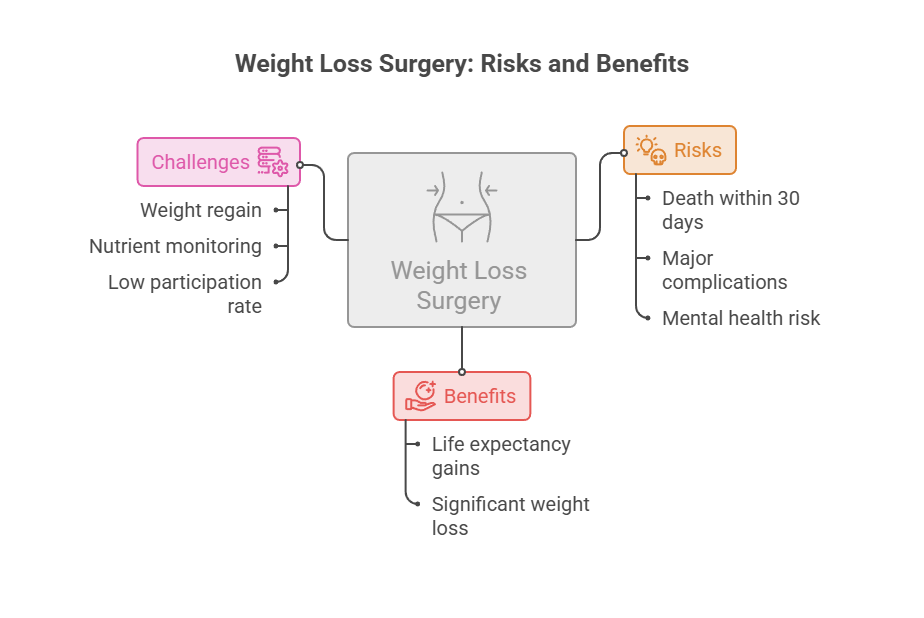
For most adults with a BMI of 35 or higher, yes. Weight loss surgery carries a 30-day death risk of roughly 0.03% to 0.2%, comparable to gallbladder removal, while adding a median 5.1 to 9.3 years of life expectancy depending on diabetes status. The benefits of weight loss surgery clearly outweigh the risks for well-selected candidates who commit to lifelong follow-up. For everyone else, the answer turns on details below.
At a Glance
• Death within 30 days runs 0.03% to 0.2%, similar to laparoscopic gallbladder removal, with a 3% to 6% risk of major complications.
• A Lancet analysis of 174,772 people found median life expectancy gains of 9.3 years for patients with diabetes and 5.1 years for those without.
• Head-to-head research presented at ASMBS 2025 found surgery patients lost 58 pounds at two years against 12 pounds on GLP-1 medications.
• Between 15% and 40% of patients regain meaningful weight, usually years later.
• Weight loss surgery risks do not end at discharge; nutrient monitoring is permanent.
• Mental health risk rises for a minority of patients, which is why screening exists.
• Only about 1% of Americans who qualify ever have the operation.
What Counts as Weight Loss Surgery in the US Today
The phrase covers several operations that work through different mechanisms and carry genuinely different risk profiles. Treating them as one category is the first mistake most readers make.
The Procedures American Surgeons Actually Perform
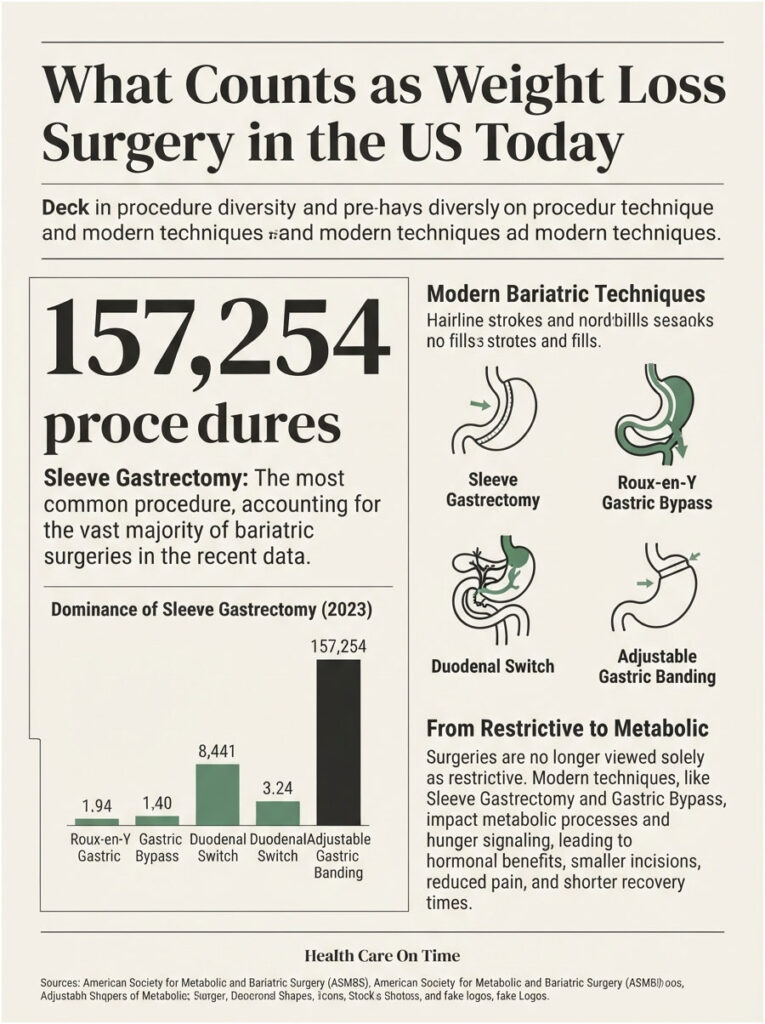
Sleeve gastrectomy dominates. The surgeon removes roughly 75% to 80% of the stomach, leaving a narrow tube about the size of a banana, with no rerouting of the intestine.
Roux-en-Y gastric bypass creates a small stomach pouch and connects it directly to the lower small intestine. Food skips most of the stomach and the first stretch of intestine, changing both intake and hunger signaling.
In 2023, American surgeons performed 157,254 sleeve procedures and 63,132 gastric bypasses out of 270,089 total operations, per the ASMBS Numbers Taskforce. Adjustable gastric banding, once the most popular choice, fell to 773 cases.
Two smaller categories complete the picture. Duodenal switch procedures including SADI-S produce the largest weight loss and the highest nutritional risk, while endoscopic sleeve gastroplasty stitches the stomach smaller through the mouth with no incisions.
Restrictive Versus Metabolic: Why the Field Renamed Itself
These operations were long described as restrictive, meaning a smaller stomach meant smaller meals. That explanation turned out to be incomplete.
Surgery shifts gut hormone signaling within days, frequently before meaningful weight comes off. Blood sugar in patients with type 2 diabetes often improves before discharge, which pure restriction cannot account for.
Hence the modern name, metabolic and bariatric surgery. Patients who grasp this distinction tend to arrive at consultation with far more realistic expectations, something our medical reviewers see consistently.
Why “Stomach Stapling” Is a 1990s Term
If a relative warns you about stomach stapling, they are describing an operation nobody performs anymore. Between 96.2% and 98.8% of bariatric procedures in recent years were done laparoscopically rather than through a large open incision.
Smaller incisions mean less pain, shorter stays, and a fraction of the wound complications that built the old reputation of the field. Most sleeve patients go home inside 48 hours.
Who Actually Qualifies, and Who Should Wait
Eligibility rules changed recently, and much of the content still ranking on Google quotes the old ones. If you were told years ago that you did not qualify, that may no longer hold.
The 2022 Guideline Change That Replaced 30-Year-Old Rules
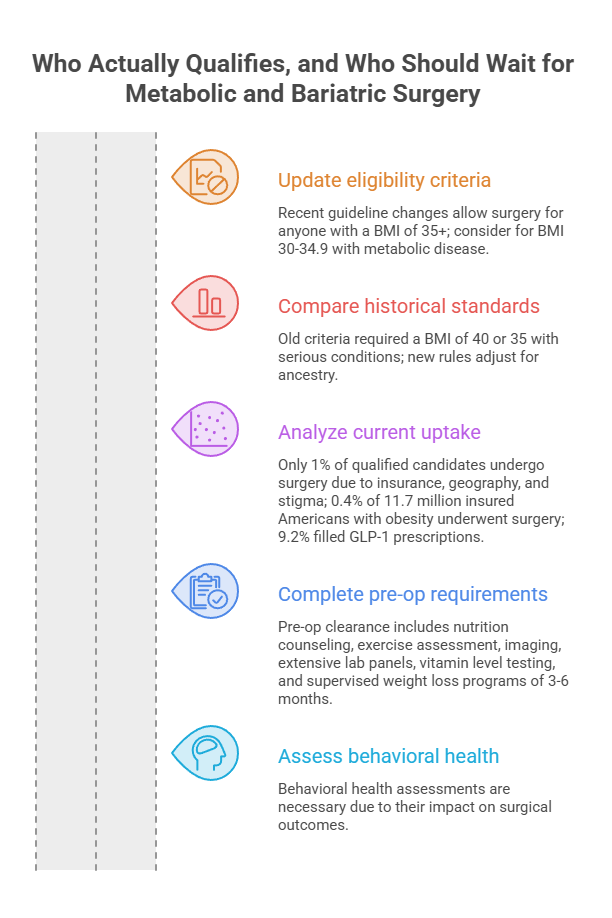
The 2022 joint ASMBS and IFSO guidelines recommend metabolic and bariatric surgery for anyone with a BMI of 35 or higher, regardless of whether other health conditions are present, and say it should be considered for people with metabolic disease and a BMI between 30 and 34.9.
These replaced a National Institutes of Health consensus statement written more than thirty years earlier. The superseded rules required a BMI of 40, or 35 with a serious related condition.
Thresholds also adjust by ancestry, with a BMI above 25 suggesting clinical obesity in Asian populations and surgery offered above 27.5. Metabolic risk at a given BMI varies across populations, and the guidelines now reflect that.
One caution matters enormously here. Insurance criteria have not caught up with clinical guidelines, so qualifying medically and qualifying for coverage are two separate hurdles cleared at different times.
The Access Gap Behind the 1% Figure
Roughly 1% of patients who qualify as candidates actually undergo the procedure. That is not a statement about effectiveness. It is a statement about referral patterns, insurance friction, geography, and stigma.
In a study of 11.7 million insured Americans with obesity, overweight, or diabetes diagnoses, just 0.4% underwent surgery while 9.2% filled a GLP-1 prescription. The lower-friction option absorbs most demand regardless of which produces better outcomes.
The Pre-Op Workup Nobody Warns You About
Clearance takes months, not weeks. Accredited programs typically require nutrition counseling, an exercise assessment, upper endoscopy or imaging, and an extensive lab panel.
Patients booking pre-surgical blood work through HealthCareOnTime regularly ask why the panel runs so long. Baseline vitamin D, B12, iron, ferritin, folate, thyroid function, HbA1c, and a lipid profile all get measured, because a post-surgical deficiency is invisible without a starting point.
Many insurers add a supervised weight loss program of three to six months before approving the claim. That requirement is administrative rather than clinical, and it frustrates patients more than any other stage.
Psychological Evaluation and Why It Exists
Nearly every accredited center requires behavioral health assessment. It is not a test you pass or fail, and it is not there to judge your character.
It exists because the strongest predictors of a poor outcome are behavioral, not surgical. Untreated binge eating, active substance use, and unmanaged depression each raise the odds of regain and postoperative distress.
The Benefit Side of the Ledger
Evidence quality here is unusually high for a surgical field. These are large matched cohorts and randomized trials, not case series.
Weight Loss That Actually Holds
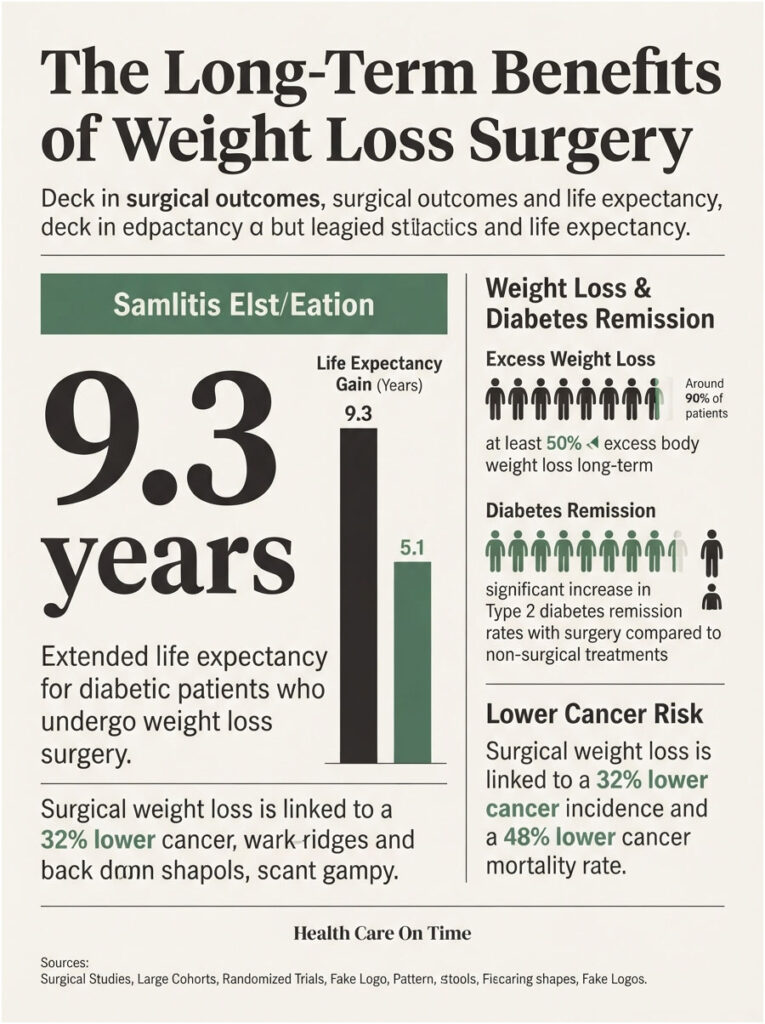
The ASMBS reports that around 90% of patients lose 50% of their excess body weight and keep it off long term. Excess body weight means pounds above a healthy range, not total body weight, and confusing the two inflates expectations badly.
Measured as total body weight loss, figures are more modest and more useful. The STAMPEDE trial recorded five-year weight loss near 23% with gastric bypass and 19% with sleeve gastrectomy.
For someone starting at 300 pounds, 23% is roughly 69 pounds still gone at year five. No diet trial and no medication trial has matched that durability without ongoing treatment.
Type 2 Diabetes Remission
This is where surgery separates itself most sharply from every alternative. A meta-analysis of long-term studies found surgery raised diabetes remission nearly sixfold against non-surgical treatment, while cutting microvascular events by 63% and macrovascular events by 48%.
A multicenter cohort found 46% of patients still in remission five years after sleeve gastrectomy. Remission differs from cure, and relapse tracks closely with weight regain.
Across metabolic panels processed through our diagnostic network, our lab partners report the same pattern. HbA1c falls early and stays down for as long as the weight loss holds.
Heart Disease, Cancer, and Years of Life
The Lancet analysis covering 174,772 participants found median life expectancy 9.3 years longer for surgical patients with diabetes and 5.1 years longer for those without. The advantage was substantially larger for people who already had diabetes at the time of surgery.
The SPLENDID matched-cohort study from Cleveland Clinic followed 5,053 surgical patients against 25,265 matched controls and found 32% lower cancer incidence and 48% lower cancer mortality at a median 6.1 years.
The ASMBS summarizes reductions as 40% lower death risk from heart disease, 92% lower from diabetes, and 60% lower from cancer. Those come from observational data, so selection effects almost certainly inflate them to some degree.
What the Numbers Mean for a 45-Year-Old With Diabetes
Consider a patient with a BMI of 42 and type 2 diabetes on three medications. Her 30-day surgical death risk sits near 0.1%, roughly one in a thousand.
Against that single exposure, the evidence points toward nearly a decade of added life expectancy and a strong chance of stopping diabetes medication. Framed that way, the trade looks lopsided.
Table 1: Weight Loss Surgery by the Numbers
| Metric | Latest US Figure | What It Means for You | Source and Year |
| Adults with obesity (BMI 30+) | 40.3% | Roughly 100 million American adults | CDC NCHS Data Brief 508, NHANES Aug 2021 to Aug 2023 |
| Adults with severe obesity (BMI 40+) | 9.4% | Over 20 million adults automatically meet surgical criteria | CDC NCHS Data Brief 508, 2024 |
| Bariatric procedures performed | 270,089 in 2023 | Sleeve accounted for 157,254 of them | ASMBS Numbers Taskforce, 2025 |
| Change in surgery use, 2022 to 2024 | Down 34.1% | Fewer high-volume surgeons at some centers | JAMA Surgery, May 2026 |
| Change in GLP-1 use, 2022 to 2024 | Up 140.4% | Medication is now the default first step | JAMA Surgery, May 2026 |
| Life expectancy gain with diabetes | 9.3 years (median) | The strongest single argument for surgery | The Lancet, 2021 |
| Reduction in cancer incidence | 32% lower | Benefit scaled with amount of weight lost | SPLENDID, Cleveland Clinic |
| Two-year cost difference vs GLP-1 | About $11,689 saved | Surgery cost curve declines; medication cost curve does not | JAMA Surgery, 2025 |
The Risk Side of the Ledger
Here is the part hospital marketing pages compress into a paragraph. Weight loss surgery risks arrive in three windows, and those windows look nothing alike.
The First 30 Days
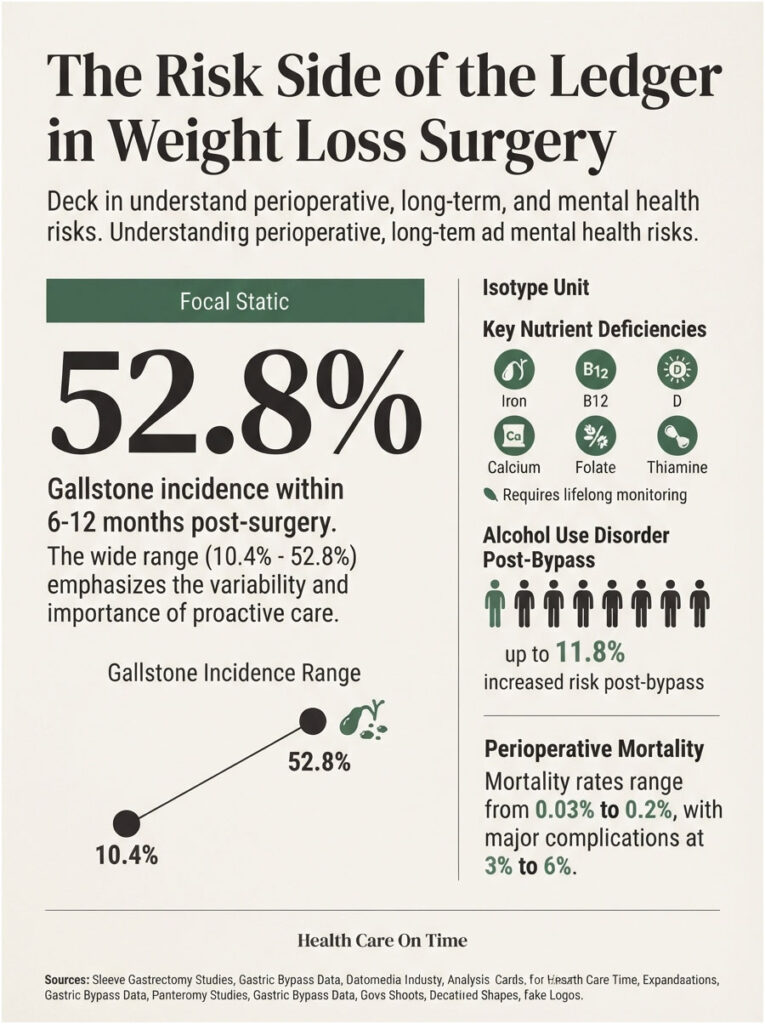
Perioperative mortality ranges from 0.03% to 0.2%, comparable to laparoscopic gallbladder removal, with a 3% to 6% risk of major complications and a 1% to 3% chance of needing reoperation.
Procedure-level differences are real. A Stanford analysis of nearly 270,000 procedures found 30-day mortality of 0.08% for sleeve gastrectomy, 0.14% for gastric bypass, and 0.03% for gastric banding, with serious complication rates of 0.96%, 1.25%, and 0.25% respectively.
You will encounter complication figures quoted as both roughly 1% and roughly 5%. That gap reflects definitions rather than disagreement, since narrow definitions count only leaks, bleeds, and reoperations while broad ones fold in readmissions and minor events.
The two most feared early events are anastomotic leak, where a surgical connection fails, and pulmonary embolism, a clot traveling to the lungs. Both are uncommon, and both explain why staff walk you down the hallway the same evening.
The First Two Years
Gallstones are common and predictable. Reported gallstone incidence after bariatric surgery runs from 10.4% to 52.8% within 6 to 12 months, with symptomatic cases in 3.0% to 22.9% of patients receiving no preventive treatment.
Rapid weight loss alters bile composition, which is why many surgeons prescribe ursodiol for six months. One cohort found the rate of weight loss, rather than total pounds lost, predicted who developed symptomatic stones.
Acid reflux is the main trade-off with sleeve gastrectomy. Published rates of new-onset reflux after sleeve range from 0% to 34.9% in Western countries, with one retrospective series finding 16.1%.
Dumping syndrome affects a meaningful share of gastric bypass patients. Sugar and fat reach the small intestine too quickly, producing cramping, nausea, sweating, and diarrhea within half an hour of eating.
The Long Game: Nutrients and Bone
This risk never expires. Nutrient deficiency after weight loss surgery is not a complication, it is an expected consequence you manage permanently.
Iron, vitamin B12, vitamin D, calcium, folate, and thiamine head the list. Bypass patients carry higher B12 deficiency risk than sleeve patients, with a relative risk near 1.24 in one meta-analysis.
Thiamine deserves separate attention because deficiency can cause lasting neurological damage and can develop within weeks if vomiting blocks supplement absorption. Persistent vomiting after surgery is an emergency, not an inconvenience.
Patients ordering annual post-bariatric panels through our network are following the correct protocol. Guidelines call for monitoring every three to six months in year one, then yearly for life.
The Risks Nobody Puts in the Brochure
Two areas get systematically underplayed in patient-facing content, and skipping them would not serve you.
Alcohol Sensitivity After Bypass
Gastric bypass changes alcohol metabolism directly. The procedure eliminates first-pass metabolism and accelerates gastric emptying, so alcohol enters the bloodstream faster and hits harder than before surgery.
Reported alcohol use disorder rates after bariatric surgery range from roughly 7.6% to 11.8%. Most programs advise avoiding alcohol entirely through the first year and treating it cautiously afterward.
Mental Health After Surgery
The evidence here is genuinely mixed, and anyone flattening it is selling something. An umbrella review found surgery significantly improved anxiety, depression, and binge eating symptoms while also showing a significant harmful association with suicide, self-harm, and alcohol use disorder.
Reviews report roughly a fourfold increase in suicide death and self-harm risk compared with the general population, though researchers note it remains unclear whether risk truly rises after surgery or was already elevated in people living with severe obesity.
Risk concentrates early, with more than two-thirds of postoperative suicides occurring within three years. That is exactly why behavioral health follow-up belongs in your plan from the start rather than ending at presurgical screening.
The Main Weight Loss Surgery Risks in One List
- Anastomotic leak or bleeding in the first days after surgery
- Blood clots in the legs or lungs
- Gallstones during rapid weight loss
- New or worsening acid reflux, especially after sleeve gastrectomy
- Dumping syndrome after gastric bypass
- Lifelong iron, B12, vitamin D, calcium, and thiamine deficiency risk
- Bone density loss across the following decade
- Increased alcohol sensitivity and elevated alcohol use disorder rates
- Higher self-harm and suicide risk in a minority of patients
- Weight regain and possible revision surgery
What Happens If You Choose Nothing
Every risk figure above needs a comparison point, and no treatment is not a neutral baseline. It is its own risk profile, just one that accumulates quietly instead of arriving on a scheduled date.
Severe obesity carries elevated rates of type 2 diabetes, obstructive sleep apnea, fatty liver disease, osteoarthritis, several cancers, and cardiovascular death. Those risks compound annually rather than resolving.
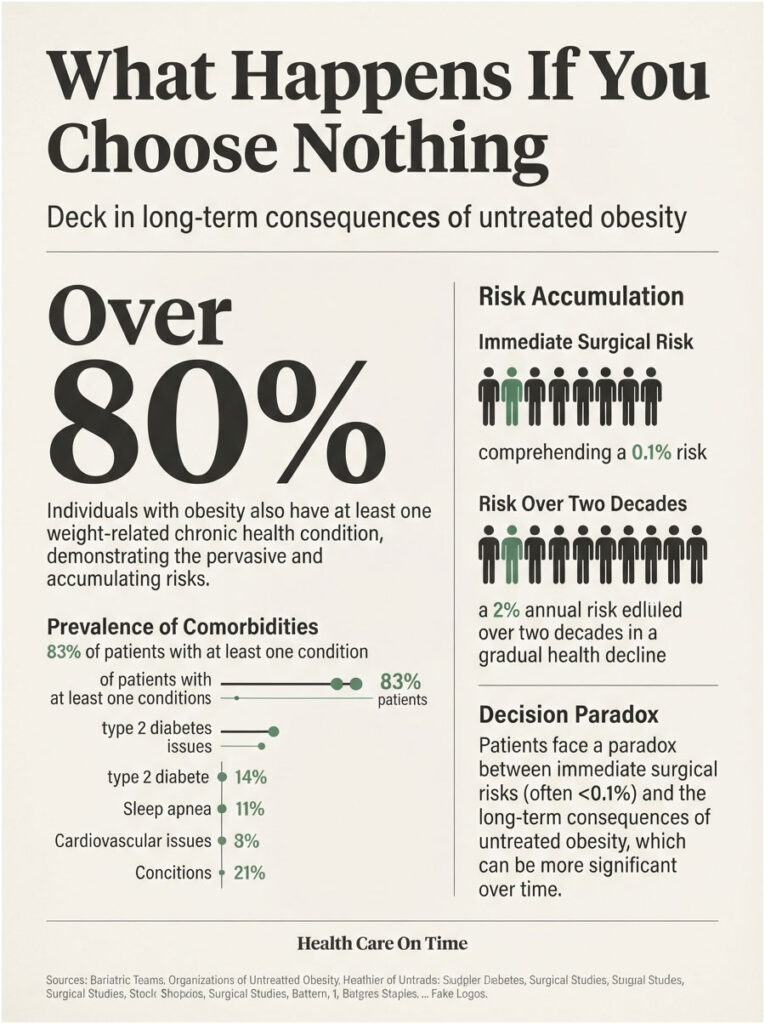
More than 80% of people with obesity also live with at least one weight-related chronic health condition, as one bariatric program director framed it. The decision is rarely surgery versus health; it is surgery versus a slower, less visible risk curve.
Bariatric teams weigh the relatively low complication rate against the risks of not operating, alongside the poor track record of non-surgical approaches at producing sustained weight loss.
Our medical reviewers put it this way to patients who feel paralyzed by the decision. A one-time 0.1% risk is easy to picture, and a 2% annual risk stretched over twenty years is not, but the second number is usually larger.
Putting Both Sides Together: Does the Math Favor Surgery?
As one surgeon quoted by Medical News Today put it, in appropriate patients the health risks from obesity far exceed the risks associated with the operation. The phrase “appropriate patients” carries almost all the weight in that sentence.
Appropriate means correct BMI category, treated mental health, no active substance use, realistic expectations, accredited center, and genuine willingness to attend follow-up for decades. Miss those conditions and the arithmetic changes.
Table 2: Procedure-by-Procedure Benefit Versus Risk
| Procedure | Total Weight Loss | 30-Day Mortality | 30-Day Serious Complications | Main Long-Term Trade-Off | Best Fit For |
| Sleeve gastrectomy | 19% at 5 years | 0.08% | About 0.96% | New or worsening acid reflux | Most first-time candidates; simpler anatomy |
| Roux-en-Y gastric bypass | 23% at 5 years | 0.14% | About 1.25% | Dumping syndrome plus higher B12 and iron deficiency risk | Severe reflux, type 2 diabetes, higher starting BMI |
| SADI-S or duodenal switch | 35% to 40% at 2 years | 0.2% to 0.4% | About 3% to 4% | Highest malnutrition and protein deficiency risk | BMI 50+, or revision after failed sleeve |
| Endoscopic sleeve gastroplasty | 15% to 18% at 2 years | Near 0% | About 1% to 2% | Smaller, less durable weight loss | BMI 30 to 40 declining abdominal surgery |
| Adjustable gastric band | 15% to 20% at 2 years | 0.03% | About 0.25% | Band slippage and high reoperation rate | Rarely used now; 773 US cases in 2023 |
| GLP-1 medication (non-surgical) | 4.7% real-world at 2 years | Not applicable | Nausea, vomiting, rare pancreatitis | Weight returns after stopping; permanent monthly cost | BMI 27 to 35, or bridging before or after surgery |
Surgery Versus GLP-1 Medications
This is the comparison every reader wants and the one no older ranking article makes.
What the Head-to-Head Data Shows
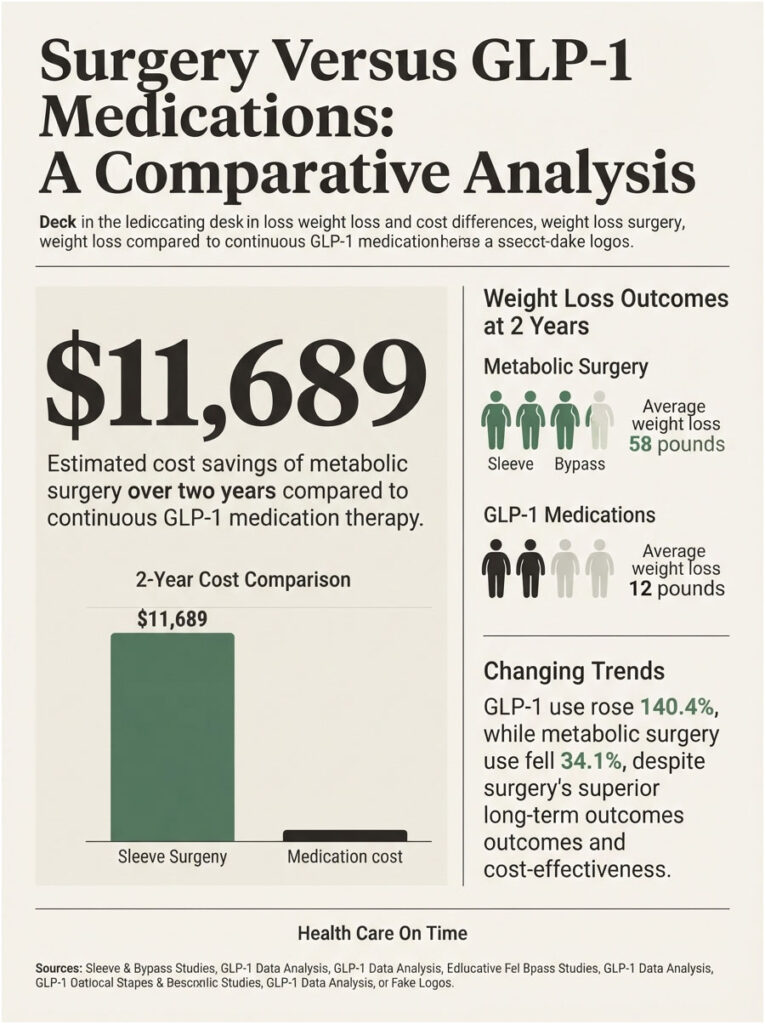
NYU Langone and NYC Health + Hospitals researchers found that at two years, sleeve and bypass patients lost an average of 58 pounds against 12 pounds for patients prescribed a GLP-1 for at least six months, or 24% total weight loss versus 4.7%.
Patients staying on continuous GLP-1 therapy for a full year did better at roughly 7% total weight loss, still well short of surgery. Real-world adherence, not drug potency, explains most of that gap.
Clinical trials of tirzepatide and semaglutide report far higher figures. Trial participants receive free medication, structured coaching, and frequent contact, which almost no insured American gets outside a study.
Cost Over Two Years
A JAMA Surgery cohort of 30,458 patients from Highmark Health insurance claims found surgery associated with greater weight loss while saving roughly $11,689 in ongoing costs across two years compared with GLP-1 receptor agonists.
That number surprises people. Surgery front-loads cost and then declines, while medication starts cheap and never stops.
Why Volumes Are Falling Anyway
Harvard T.H. Chan School of Public Health researchers documented GLP-1 use rising 140.4% while metabolic and bariatric surgery use fell 34.1%. Patients choosing surgery were more medically complex than those prescribed medication.
The shift is not evidence that surgery stopped working. It is evidence that patients and physicians prefer the option requiring no operating room, and that many never revisit the decision afterward.
Using Both: Medication After Surgery
The two are not mutually exclusive, and combining them is now standard practice. A meta-analysis of 964 patients with recurrent weight gain after surgery found semaglutide produced about 11% additional total weight loss and tirzepatide about 13.6%.
Our medical reviewers note that this changes the calculus for anyone whose main fear is regain. A sleeve that stalls at year four is no longer a dead end.
What It Costs in the US and What Insurance Covers
Money drives more of these decisions than patients admit, and online cost information is dominated by surgery centers quoting their own prices.
Self-Pay Price Ranges
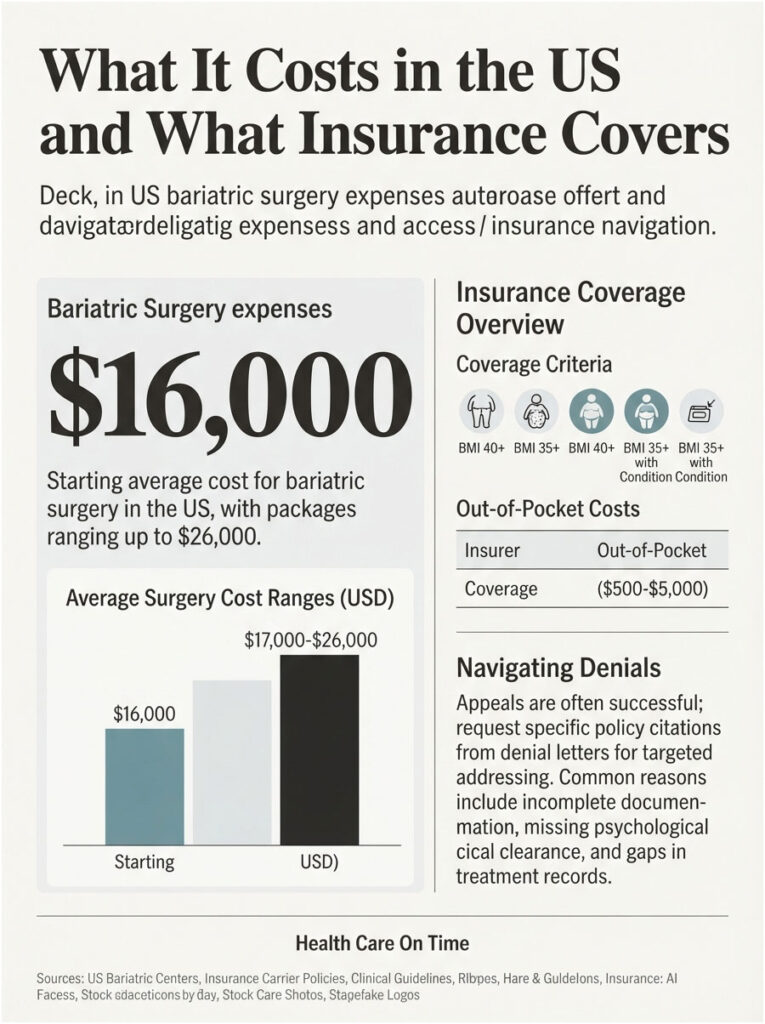
Average bariatric surgery cost in the United States runs roughly $17,000 to $26,000 per ASMBS figures, with some hospital systems estimating a starting point near $16,000.
Self-pay gastric sleeve packages generally run $9,000 to $21,000 and gastric bypass $12,000 to $30,000, with bundled clinic pricing at the lower end. Bundles frequently exclude the initial consultation, psychological evaluation, and pre-op labs.
Costs continue afterward, averaging $1,083 to $1,266 annually for sleeve patients and $1,228 to $1,377 for bypass patients across the first three postoperative years in one large commercial claims analysis.
Typical Insurance Approval Criteria
Most major insurers, Medicare, and many state Medicaid programs cover sleeve, bypass, and duodenal switch when criteria are met, with typical out-of-pocket costs of $500 to $5,000 after deductibles and coinsurance.
Common requirements include a BMI of 40 or higher, or 35 with at least one obesity-related condition, documented failed weight loss attempts, and a physician-supervised program lasting three to six months.
Notice the mismatch. Clinical guidelines moved to a BMI threshold of 35 with no comorbidity requirement, while many policies still apply the older standard.
Why Claims Get Denied and How Appeals Work
The most common denial reasons are incomplete documentation of the supervised weight loss period, missing psychological clearance, and record gaps around comorbidity treatment.
Appeals succeed more often than patients expect. Request the specific policy citation in the denial letter from your surgical coordinator, then have your physician address that exact clause rather than resubmitting the original packet.
Timing Your Deductible
If you have already met most of your deductible earlier in the year, scheduling within the same calendar year lowers what you owe. Coordinators know this and will help you plan around it if you ask.
Mistakes That Turn a Good Candidate Into a Bad Outcome
Surgical technique rarely separates a great result from a disappointing one. What happens after discharge does.
Skipping Follow-Up
People who have bariatric surgery should expect physician checkups several times a year for the rest of their lives. Attendance drops sharply after year two, which is precisely when deficiencies and regain begin appearing.
Stopping Supplements
Bariatric-specific multivitamins differ from drugstore versions, with higher and more absorbable forms of iron, B12, and fat-soluble vitamins. Patients who switch to a cheaper generic often show deficiencies within eighteen months.
Choosing a Non-Accredited Center
Severe complication rates varied from 0.4% to 8.0% across 52 centers in one large registry study, a twentyfold spread. Where you have surgery matters more than which surgery you have.
Ask whether the center holds MBSAQIP accreditation and how many of your specific procedure the surgeon performs each year. Volume correlates strongly with outcomes.
Treating Surgery as the Finish Line
Gastric bypass is not a quick fix, and patients who do not follow dietary guidance, portion control, and exercise can experience complications, poor weight loss, or continued weight gain.
The operation buys a window of roughly 12 to 18 months where hunger is suppressed and weight falls quickly. What you build during that window determines year five.
Hiding a Problem From Your Team
Patients frequently delay reporting reflux, vomiting, or a return of old eating patterns out of embarrassment. Every one of those is easier to correct at month four than at year four, and bariatric teams have seen all of it before.
Your Decision Framework
Bring these to your consultation. What is the leak rate and 30-day readmission rate at this center? How many of this procedure do you personally perform each year? What does follow-up look like at year three? Who monitors my nutrition, and what happens if I relocate?
Table 3: What to Do Based on Your Situation
| Your Situation | What the Evidence Suggests | Recommended Next Step |
| BMI 35+ with type 2 diabetes not controlled on medication | Strongest case for surgery; life expectancy gain near 9.3 years | Request referral to an MBSAQIP-accredited center now |
| BMI 30 to 34.9 with type 2 diabetes | Surgery should be considered under 2022 guidelines, but insurance likely denies | Try GLP-1 therapy first and document the response for a future appeal |
| BMI 40+ with no other diagnosed conditions | Surgery recommended regardless of comorbidities | Get baseline labs and start the insurance documentation clock |
| On a GLP-1, losing steadily, BMI now 32 | Medication is working; surgery adds less marginal benefit | Continue and reassess if weight plateaus or coverage lapses |
| Regained 40 pounds five years after sleeve | Common, not failure; medication and revision are both options | Ask about adding semaglutide or tirzepatide before considering revision |
| Active alcohol use disorder or untreated depression | Elevated risk of postoperative harm; the timing is wrong | Stabilize with behavioral health treatment, then revisit surgery |
| Planning pregnancy within 18 months | Rapid weight loss and nutrient shifts raise pregnancy risk | Delay conception 12 to 18 months after surgery per standard guidance |
Frequently Asked Questions
Is weight loss surgery safe?
By surgical standards, yes. Mortality within 30 days runs 0.03% to 0.2%, comparable to gallbladder removal, and roughly 97% of laparoscopic patients go home without a serious complication. Safety varies considerably by center accreditation and surgeon volume, so those two questions belong at every consultation.
What is the death rate for bariatric surgery?
Stanford researchers analyzing nearly 270,000 procedures found 30-day mortality of 0.08% for sleeve gastrectomy, 0.14% for gastric bypass, and 0.03% for gastric banding. In plain terms, roughly one death per 700 to 1,200 bypass patients and one per 1,250 sleeve patients in the first month.
How much weight will I lose after gastric sleeve versus gastric bypass?
STAMPEDE data showed about 19% total body weight loss with sleeve and 23% with bypass at five years. Starting at 300 pounds, that is roughly 57 pounds versus 69 pounds still gone. Bypass usually delivers slightly more loss with slightly higher complication and deficiency risk.
Can weight loss surgery put type 2 diabetes into remission?
Often, yes. Long-term studies show surgery raises remission nearly sixfold against medical treatment alone, and one multicenter cohort found 46% of sleeve patients still in remission at five years. Patients ask us about this constantly, and the honest caveat is that relapse tracks weight regain.
What are the long-term side effects of gastric bypass?
The main ones are dumping syndrome after sugary or fatty meals, permanent risk of iron, B12, calcium, and vitamin D deficiency, gradual bone density loss, gallstones during rapid weight loss, and heightened alcohol sensitivity. Internal hernias and marginal ulcers occur less often but need prompt evaluation.
Do I have to take vitamins for the rest of my life?
Yes, and this one is not optional. Bariatric-specific multivitamins plus additional B12, iron, calcium citrate, and vitamin D are standard. Skipping them risks anemia, nerve damage, and bone loss that may not reverse. Annual blood work catches problems while correction is still simple.
Is Ozempic or Zepbound better than weight loss surgery?
For pure weight loss, no. A head-to-head study found 58 pounds lost at two years with surgery against 12 pounds with GLP-1 medication in real-world use. Medication avoids surgical risk and suits lower BMI ranges, but weight typically returns after stopping and the monthly cost never ends.
How much does weight loss surgery cost without insurance?
Self-pay gastric sleeve packages generally run $9,000 to $21,000 and gastric bypass $12,000 to $30,000, with the national average near $17,000 to $26,000. Confirm what the bundled price excludes, since consultations, psychological evaluation, labs, and complication care are frequently billed separately.
Does insurance cover bariatric surgery?
Most major insurers, Medicare, and many state Medicaid programs cover it when criteria are met. Typical requirements include a BMI of 40, or 35 with a related condition, documented failed weight loss attempts, and a supervised program of three to six months. Out-of-pocket costs usually land between $500 and $5,000.
Can you regain weight after bariatric surgery?
Yes. Between 15% and 40% of patients experience meaningful regain, generally starting two to five years out. Regain reflects hormonal adaptation rather than personal failure. Adding semaglutide produced about 11% additional weight loss in patients with regain, and tirzepatide about 13.6%.
Who should not have weight loss surgery?
Poor candidates include people with active substance use disorders, untreated severe mental illness, uncontrolled eating disorders, or unwillingness to commit to lifelong follow-up and supplementation. Certain heart and lung conditions push surgical risk past acceptable levels. Pregnancy plans within 18 months are also reason to wait.
How long does recovery from bariatric surgery take?
Most laparoscopic patients leave the hospital within one to two days and return to desk work in two to three weeks. Full physical recovery takes about six weeks. The diet advances through clear liquids, full liquids, purees, and soft foods across roughly eight weeks before regular textures return.
Medical Disclaimer
This article provides general information and does not replace advice from a qualified healthcare professional. Weight loss surgery is a major, permanent procedure, and decisions about eligibility, procedure type, and timing belong with a physician who knows your full medical history. If you are struggling with thoughts of self-harm, before or after surgery, contact the 988 Suicide and Crisis Lifeline by calling or texting 988 in the United States, and tell your bariatric team so your care plan can be adjusted.
References
- ASMBS Estimate of Bariatric Surgery Numbers, 2011 to 2023
- 2022 ASMBS and IFSO Indications for Metabolic and Bariatric Surgery
- ASMBS: Head-to-Head Study Shows Bariatric Surgery Superior to GLP-1 Drugs
- ASMBS: Benefits of Metabolic and Bariatric Surgery
- CDC NCHS Data Brief 508: Obesity and Severe Obesity Prevalence in Adults
- The Lancet: Metabolic-Bariatric Surgery and Long-Term Survival
- NEJM: Bariatric Surgery Versus Intensive Medical Therapy for Diabetes, 5-Year Outcomes
- JAMA Surgery: Obesity Treatment With Bariatric Surgery Versus GLP-1 Receptor Agonists
- Harvard T.H. Chan School of Public Health: Bariatric Surgeries Decline as GLP-1 Use Rises
- Cleveland Clinic: Bariatric Surgery Substantially Lowers Risk of Obesity-Related Cancers
- MedlinePlus: Gastric Bypass Surgery
- NIDDK: Understanding the Health Benefits and Risks of Bariatric Surgery
- Frontiers in Endocrinology: Bariatric Surgery and Mental Health Outcomes, an Umbrella Review