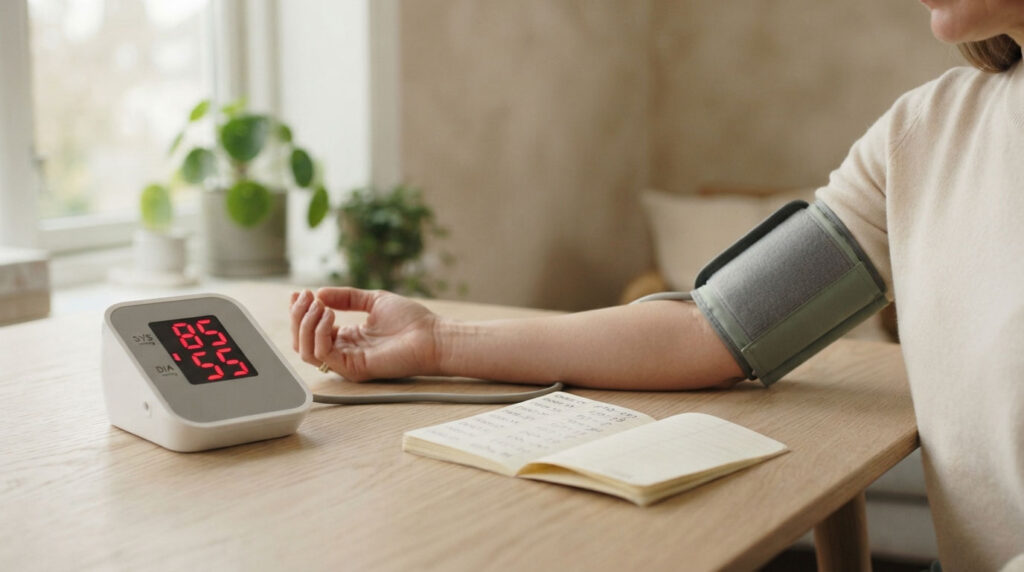
The same reading of 88/58 mmHg can mean two completely different things in two women standing side by side. For one, it is her lifelong normal and she runs 5Ks on it. For the other, it is the number her body posts twenty minutes before she goes down in a grocery store aisle.
Table of Contents
That gap is why searching for a single danger threshold leads nowhere useful. The number on the cuff is half the information. What your body is doing with that number is the other half, and that is the part almost nobody bothers to explain.
Quick Answer
For women, low blood pressure (hypotension) starts below 90/60 mmHg. It becomes dangerous when organs stop getting enough blood. Treat systolic under 80 mmHg, a mean arterial pressure under 65 mmHg, or any reading paired with fainting, confusion, chest pain, or cold clammy skin as a medical emergency. A 20-point systolic drop within three minutes of standing also counts as abnormal.
At a Glance
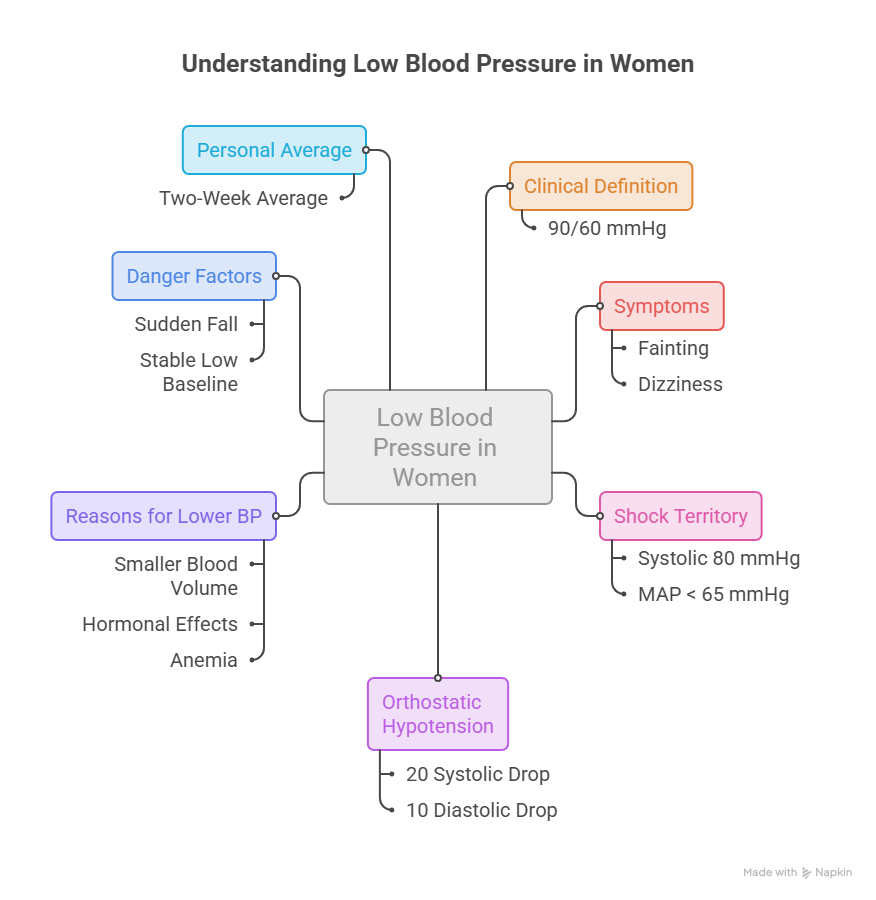
- Below 90/60 mmHg is the clinical definition of low blood pressure in women, not the danger line.
- Symptoms outrank numbers. A woman at 95/65 who is fainting needs help faster than one at 85/55 who feels fine.
- Shock territory starts around systolic 80 mmHg or a mean arterial pressure under 65 mmHg.
- A drop of 20 systolic or 10 diastolic within three minutes of standing is orthostatic hypotension.
- Women run lower than men because of smaller blood volume, hormonal effects on vessel tone, and higher rates of anemia and fainting disorders.
- A sudden fall from a high baseline is more dangerous than a stable low baseline.
- Your own two-week average is a better yardstick than any published cutoff.
What Counts as Low Blood Pressure for a Woman
Blood pressure has two numbers. Systolic is the force in your arteries when the heart squeezes. Diastolic is the pressure that remains while the heart refills between beats.
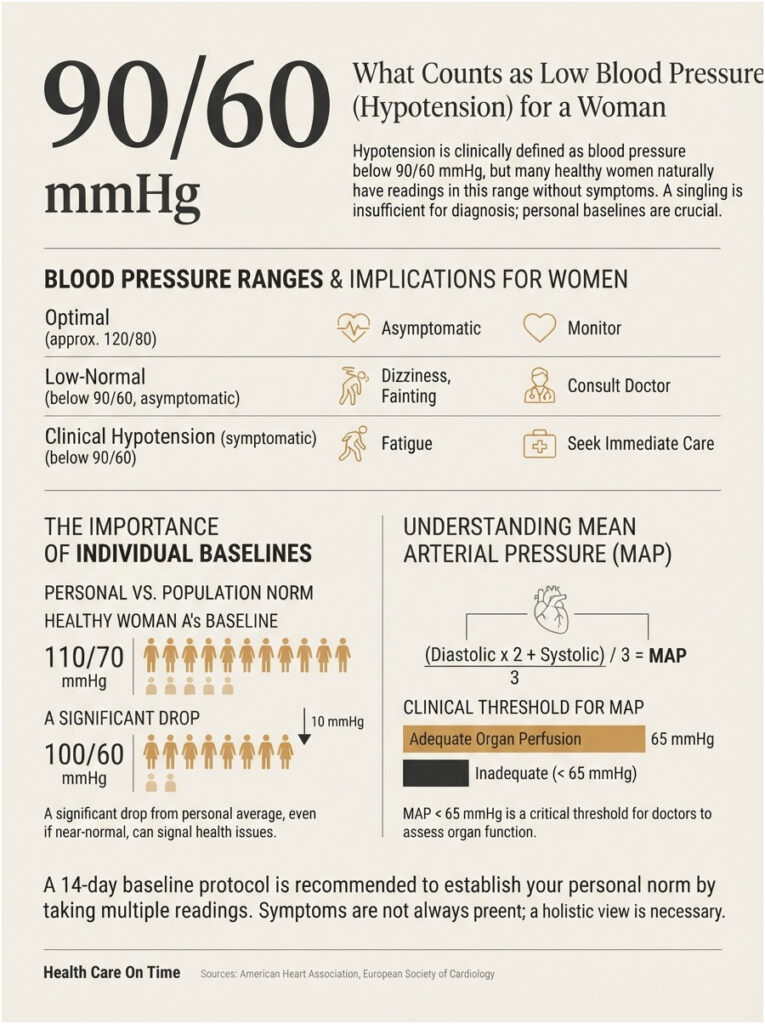
A typical adult reading sits near 120/80 mmHg. Below 90/60 mmHg is the standard clinical threshold for hypotension. Most articles stop at that line, which is exactly where the confusion starts.
The 90/60 Line and Why It Is Only a Starting Point
Plenty of healthy American women live in the 90s over 60s with no symptoms at all. Endurance athletes, thin women, and women in their twenties post those numbers routinely and always have.
Many people with hypotension never develop symptoms and only discover the reading when they happen to measure it. A low number by itself is a data point, not a diagnosis.
Patients booking home-monitoring reviews with us often arrive holding one alarming screenshot from a wrist cuff and nothing to compare it against. That single reading rarely tells the story on its own.
Systolic, Diastolic, and the Number Clinicians Actually Watch
Hospital teams do not argue much about systolic in isolation. They watch mean arterial pressure, or MAP, because MAP is what actually drives blood through your kidneys, your brain, and your heart muscle.
MAP under 65 mmHg is the widely used floor for adequate organ perfusion. Below that line, tissue is running on reserve rather than supply.
How to Calculate Your Mean Arterial Pressure in 10 Seconds
Take your diastolic, double it, add your systolic, then divide by three.
At 90/60 your MAP is 70, which is acceptable. At 85/55 it is 65, right at the edge. At 80/50 it drops to 60, and at 70/40 it falls to 50, which is shock arithmetic rather than a reassuring statistic.
Run that math on your own reading before you decide how worried to be. It reframes the question from “is this number low” to “is this number still delivering blood.”
Your Personal Baseline Beats Any Textbook Cutoff
Consider a woman whose normal is 145/90 mmHg. She reads 105/68 one afternoon and her doctor’s chart flags nothing, because 105/68 looks textbook-healthy.
She has lost 40 systolic points. She is in real trouble, and the published cutoff missed it completely.
Percentage change from your own average predicts symptoms far better than distance from 90/60 does. Our medical reviewers flag baseline drift more often than they flag absolute numbers.
The 14-Day Baseline Protocol
Measure twice each morning before coffee and twice each evening. Sit with your back supported, feet flat, arm resting on a table at heart level.
Wait one minute between readings and discard the first of each pair, since the first is almost always the highest. Average everything that remains across fourteen days.
That figure is your real baseline. Every future reading gets judged against it rather than against a number written for the general population.
Table 1. Blood Pressure Ranges for Women: What Each Band Actually Means
| Reading Range (mmHg) | Category | What Is Happening | Typical Symptoms | Action Level |
| 120/80 to 100/65 | Normal to low-normal | Full organ perfusion, MAP roughly 77 to 93 | None | Routine monitoring |
| 99/64 to 90/60 | Borderline low | Adequate perfusion, MAP roughly 70 to 76 | Occasional lightheadedness on standing | Track for two weeks |
| 89/59 to 80/50 | Hypotension | Reduced reserve, MAP roughly 60 to 69 | Dizziness, fatigue, blurred vision, cold hands | Same-day or next-day call |
| 79/49 to 70/40 | Severe hypotension | Organ perfusion compromised, MAP roughly 50 to 59 | Confusion, near-fainting, nausea, rapid weak pulse | Emergency room now |
| Below 70/40 | Shock range | Organ failure risk, MAP below 50 | Collapse, clammy gray skin, shallow breathing | Call 911 |
| Any reading with red flags | Emergency regardless | Perfusion failure can precede the number | Fainting, chest pain, confusion, blue lips | Call 911 |
The Exact Numbers That Mean Danger
Three separate patterns qualify as dangerously low blood pressure. Most women only know about the first one, and the other two send more people to the emergency room.
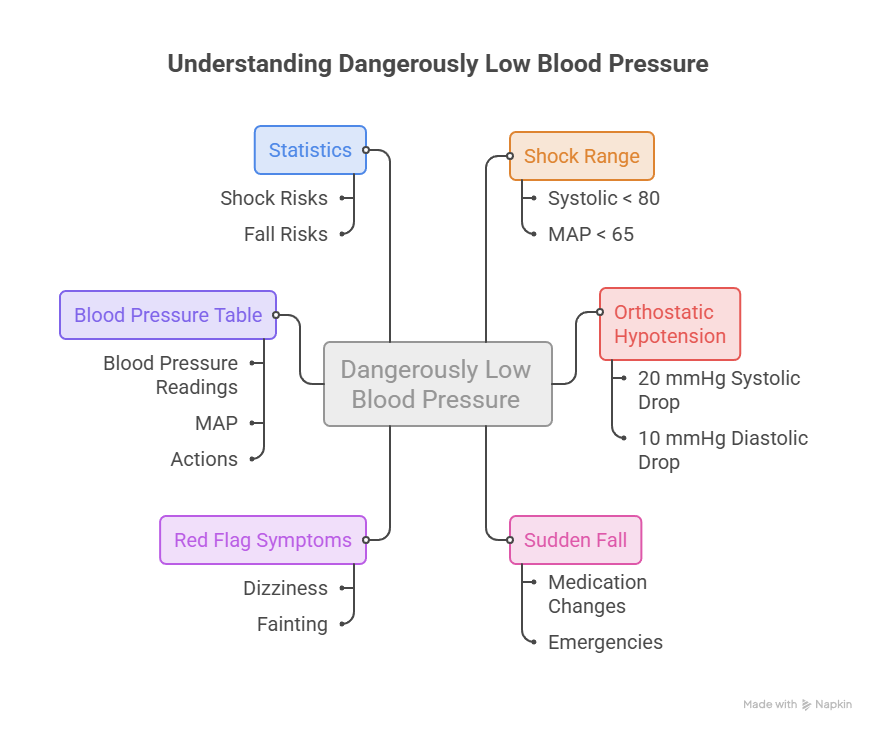
Shock Range: Systolic Under 80 or MAP Under 65
Readings near 70/40 mmHg usually signal poor organ perfusion and call for urgent care. At that level the brain, kidneys, and heart are being underserved in real time, not theoretically.
Kidneys are usually the first to complain, and they complain silently. Urine output falls before anyone notices confusion, which is why “have you urinated in the last eight hours” is a standard triage question.
The Four Types of Shock
Hypovolemic shock comes from bleeding or fluid loss, and it is the most common form in otherwise healthy women. Cardiogenic shock means the heart cannot pump hard enough, usually after a heart attack or in advanced heart failure.
Distributive shock covers sepsis and anaphylaxis, where blood vessels dilate so wide that normal blood volume no longer fills the space. Obstructive shock involves a physical block, such as a large pulmonary embolism.
Sepsis alone kills at least 350,000 US adults each year, and one in three adults who die in a hospital had sepsis during that stay, according to the CDC. There are roughly 1.7 million adult sepsis hospitalizations in the country annually. A falling blood pressure is often the first thing anyone can see.
The Orthostatic Drop: 20 Systolic or 10 Diastolic Within Three Minutes
Orthostatic hypotension is defined as a fall of at least 20 mmHg systolic or 10 mmHg diastolic within three minutes of standing up. This is a formal diagnosis with a formal number, not a personal quirk.
Here is what trips people up. Your standing reading can look perfectly normal and you can still have it, because the diagnosis lives in the size of the drop rather than the endpoint. Falling from 150/90 to 125/78 qualifies.
How to Run a Standing Test at Home
Lie flat for five minutes, then measure without sitting up. Stand, measure again at one minute, then again at three minutes, keeping the cuff level with your heart each time.
Record all three readings plus the pulse beside each one. If systolic falls 20 points or diastolic falls 10 points, or if your pulse jumps 30 beats without a pressure drop, bring that page to your appointment.
In cases reviewed by our medical team, a written three-point standing log changes the conversation faster than any verbal description of dizziness does.
A Sudden Fall From a High Baseline Is Its Own Emergency
Women on blood pressure medication are the textbook scenario. A new prescription, a dose increase, a stomach bug, or one hot week can push a stable patient into symptomatic hypotension inside 48 hours.
In the Cardiovascular Health Study of 5,201 adults aged 65 and older, orthostatic hypotension was significantly associated with frequent falls, with an odds ratio of 1.52. Falls, not the reading itself, cause most of the actual injury in this group.
A hip fracture at 78 changes the rest of a woman’s life. The low reading that caused the fall is often treated as a footnote in the chart.
Nine Red Flag Symptoms That Override Any Number
Call 911 if low blood pressure arrives with any of the following:
- Fainting or collapse
- Confusion or slurred speech
- Chest pain or pressure
- Severe shortness of breath
- Cold clammy or gray skin
- Bluish lips or fingertips
- A rapid weak thready pulse
- No urine output for eight hours or longer
- Vomiting blood
Shock-range readings rarely show up on their own; they usually arrive alongside fainting and other collapse signs. When the symptoms are present, the number is confirmation, not permission to wait and re-measure.
Reading-by-Reading Lookup for Women
| Reading (mmHg) | MAP | Verdict if no symptoms | Verdict with symptoms |
| 100/65 | 77 | Normal, no action | Investigate other causes |
| 95/62 | 73 | Low-normal, monitor | Call within 48 hours |
| 90/60 | 70 | Threshold, monitor | Call within 48 hours |
| 88/58 | 68 | Acceptable if this is your baseline | Same-day call |
| 85/55 | 65 | At the perfusion edge | Same-day call |
| 80/50 | 60 | Recheck, then call the same day | Emergency room |
| 75/45 | 55 | Emergency room | Call 911 |
| 70/40 | 50 | Call 911 | Call 911 |
Why Women Run Lower Than Men
This is not a rounding error or a measurement artifact. It is physiology, and it changes what the word normal means for you.
Smaller Blood Volume, Smaller Stroke Volume
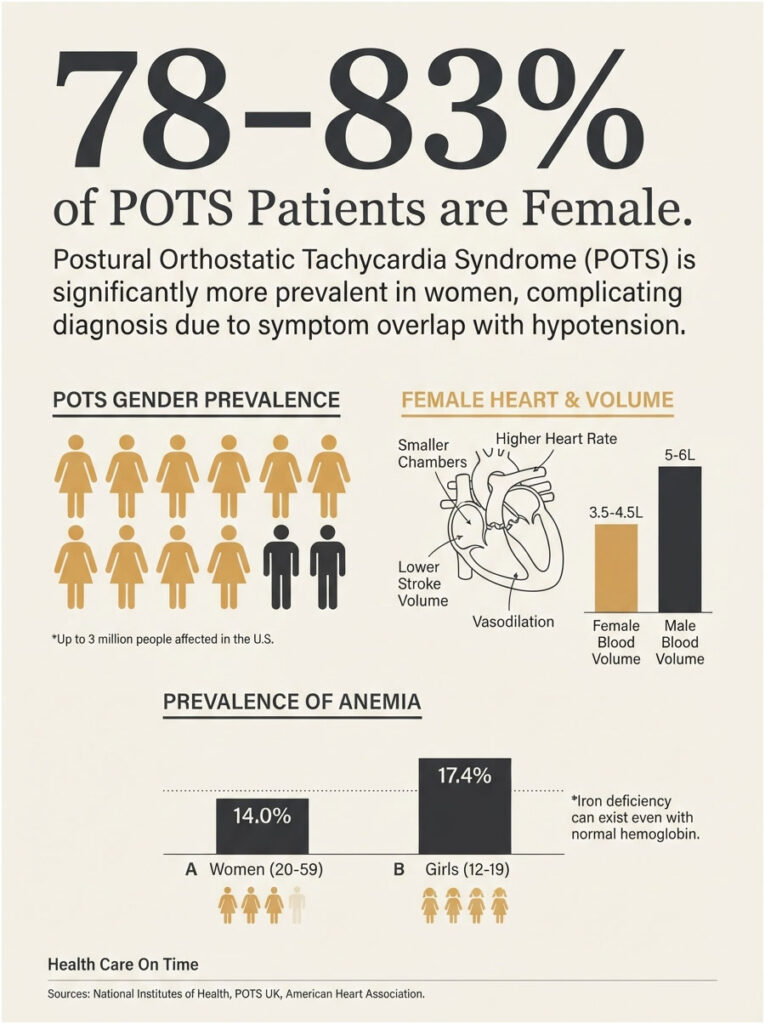
Average female blood volume runs roughly 3.5 to 4.5 liters against 5 to 6 liters in men. Less circulating volume means a thinner buffer when you lose fluid to heat, illness, or a skipped water bottle.
Female hearts also tend to have smaller chambers and eject less blood per beat. The body compensates with a slightly faster resting heart rate, which works beautifully right up until volume drops.
Estrogen, the Menstrual Cycle, and Vessel Tone
Estrogen promotes vasodilation by increasing nitric oxide production. Wider vessels mean lower pressure, and that mechanism is part of why premenopausal women carry a genuine cardiovascular advantage over men their age.
The same mechanism produces cyclical dips. Blood pressure often falls in the luteal phase and during the first days of a period, then recovers.
Patients commonly ask us why they feel wiped out and dizzy in the same week every single month. Cyclical pressure changes, often stacked on top of menstrual blood loss, are frequently a large part of the answer.
Heavy Periods, Iron Loss, and the Anemia Connection
Chronic blood loss lowers both hemoglobin and circulating volume. Both push pressure down, and low hemoglobin amplifies the dizziness that any given reading produces, because each unit of blood carries less oxygen.
CDC NHANES data from August 2021 to August 2023 found anemia in 14.0% of US women aged 20 to 59 and 17.4% of girls aged 12 to 19. In females aged 15 to 49, prevalence rose from 7.8% in 2000 to 11.5% by 2018.
Read those two figures together and the trend is unmistakable. This problem is growing in American women, not shrinking.
The Ferritin Blind Spot
Iron stores empty long before hemoglobin falls. A woman can be deeply iron-deficient while her complete blood count comes back with a reassuring “normal” note in the portal.
In a NHANES analysis of US pregnant participants, iron deficiency prevalence reached 52.9%, and 86.9% of those iron-deficient individuals had hemoglobin above 11 g/dL, meaning hemoglobin screening alone would have missed them entirely.
Our lab partners report the same pattern outside pregnancy: unremarkable CBC, floor-level ferritin, and a woman who has been exhausted for two years. Ask for ferritin by name.
Fainting and POTS Skew Heavily Female
Vasovagal syncope, the ordinary faint triggered by pain, heat, prolonged standing, or a blood draw, is more common in young women. Orthostatic dizziness has been shown to be significantly more prevalent in women across population studies, along with people taking sedatives or hypnotics.
Postural orthostatic tachycardia syndrome is the sharper version of the same problem. POTS affects up to 3 million people in the United States, and 78% to 83% of patients are female. Most cases occur in women aged 15 to 45.
POTS is defined by a heart rate rise of 30 bpm or more within ten minutes of standing, without a matching pressure drop. The symptoms overlap with hypotension almost perfectly, which is a large part of why it goes unrecognized for years at a time.
Low Blood Pressure by Life Stage
The same reading means three different things at 25, at 32 weeks pregnant, and at 72.
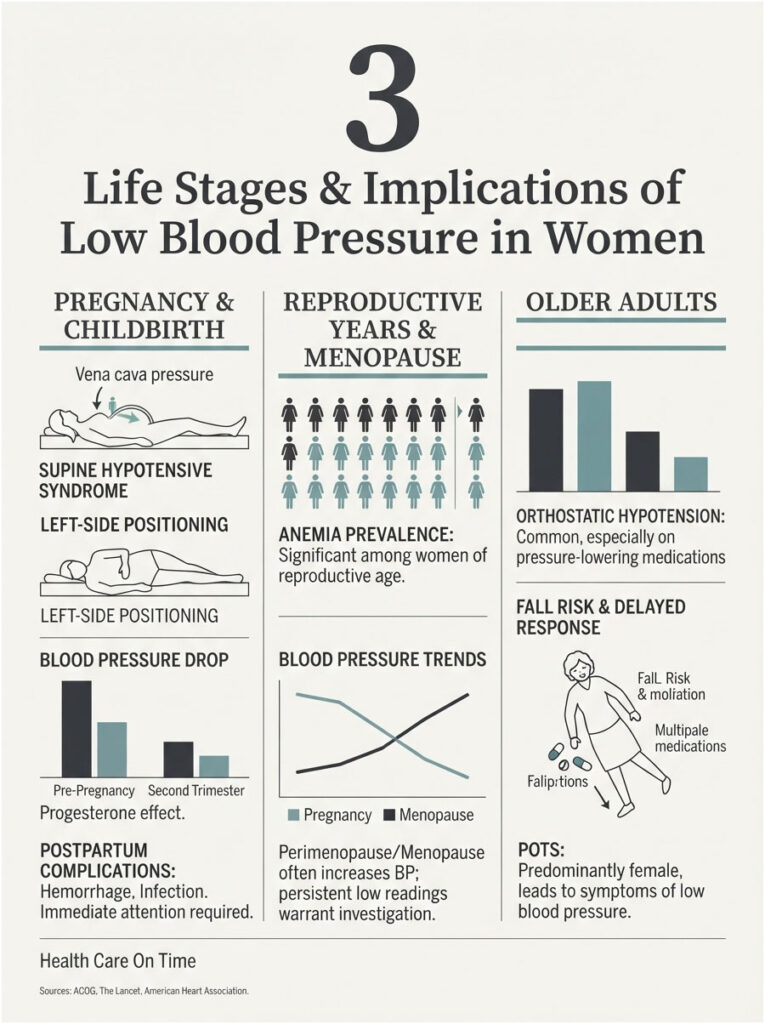
Pregnancy and the Second-Trimester Dip
Blood pressure is supposed to fall during pregnancy. Progesterone relaxes vessel walls and the placenta creates a low-resistance circuit that pulls total pressure down.
The low point typically arrives around weeks 20 to 24, with systolic down roughly 5 to 10 points and diastolic down 10 to 15 from pre-pregnancy values. Pressure then climbs back toward baseline as delivery approaches.
Across the pregnancy panels processed through our lab partners, readings in the low 90s over high 50s during the second trimester show up constantly and are rarely the actual concern. Fainting, bleeding, and persistent dizziness are the things worth a same-day call.
Supine Hypotensive Syndrome After Week 20
After roughly twenty weeks, lying flat on your back lets the uterus compress the inferior vena cava, the large vein returning blood to the heart. Return volume drops and pressure can fall sharply within a couple of minutes.
The fix is mechanical rather than medical. Roll onto your left side and symptoms usually clear within a minute or two. This is also why left-side sleeping gets recommended in the third trimester.
Postpartum: The First Six Weeks
Postpartum hemorrhage remains one of the leading causes of maternal death in the United States, and a falling blood pressure is a late sign of it rather than an early one. A young healthy woman compensates for significant blood loss with vasoconstriction and a faster pulse, holding her pressure steady until she cannot.
By the time the cuff shows a drop, meaningful volume is already gone. That is why soaking more than one pad an hour, passing clots larger than a golf ball, or feeling faint while nursing all warrant an immediate call regardless of what the monitor says.
Infection is the second postpartum pathway. Endometritis, mastitis progressing to abscess, and wound infections can all drive pressure down as sepsis develops.
Fever above 100.4 degrees Fahrenheit combined with a low reading in the six weeks after delivery is an emergency room trip, not a message to the patient portal. Anemia from delivery blood loss compounds all of it, which is why postpartum ferritin and CBC testing is worth requesting even when you feel reasonably functional.
Perimenopause and Menopause
Most women move the opposite direction here. As estrogen declines, vessel walls stiffen, nitric oxide production falls, and blood pressure trends upward until hypertension becomes the more likely diagnosis.
That makes a persistently low reading in this window worth investigating rather than celebrating. Thyroid disease, adrenal problems, and medication side effects all cluster in the same age range and all can pull pressure down.
Perimenopausal symptom overlap muddies the picture badly. Fatigue, palpitations, brain fog, and dizziness get filed under hormones when anemia from heavy perimenopausal bleeding is doing the work.
Heavy and unpredictable cycles are common in the years before menopause, and iron loss follows them. Our medical reviewers see this pattern often enough that ferritin belongs in any perimenopausal fatigue workup.
Women Over 65 on Blood Pressure Medication
This group carries the highest risk of real harm from low readings, and the harm arrives through falls rather than organ failure. Asymptomatic orthostatic hypotension was present in 16.2% of adults 65 and older in the Cardiovascular Health Study, rising to 18.2% when participants too dizzy to complete the standing test were counted.
Older vessels stiffen and baroreceptor reflexes slow down, so the automatic correction that protects a 30-year-old simply arrives late. She stands, the pressure drops, and the fix comes several seconds after she needed it.
Polypharmacy makes it worse. A woman on a diuretic, a beta blocker, and an antidepressant has three separate pressure-lowering mechanisms running at once, and the interaction is rarely reviewed until something goes wrong.
Table 2. Low Blood Pressure Risk Markers in US Women
| Risk Marker | US Figure | Population | Source |
| Anemia prevalence | 14.0% | Women aged 20 to 59, 2021 to 2023 | CDC NCHS Data Brief 519 |
| Anemia prevalence | 17.4% | Girls aged 12 to 19, 2021 to 2023 | CDC NCHS Data Brief 519 |
| Anemia trend | 7.8% to 11.5% | Females 15 to 49, 2000 to 2018 | CDC NCHS |
| Iron deficiency in pregnancy | 52.9% | US pregnant participants, NHANES | American Journal of Hematology |
| Iron deficiency missed by hemoglobin alone | 86.9% | Iron-deficient pregnant participants | American Journal of Hematology |
| Orthostatic hypotension | 16.2% | Adults 65 and older | Cardiovascular Health Study |
| Fall risk with orthostatic hypotension | Odds ratio 1.52 | Adults 65 and older | Cardiovascular Health Study |
| POTS female share | 78% to 83% | Up to 3 million Americans affected | NIH PMC |
| Adult sepsis hospitalizations | 1.7 million per year | US adults | CDC |
What Is Actually Causing It
Low blood pressure is a signal, not a disease. The work is finding what is generating the signal.
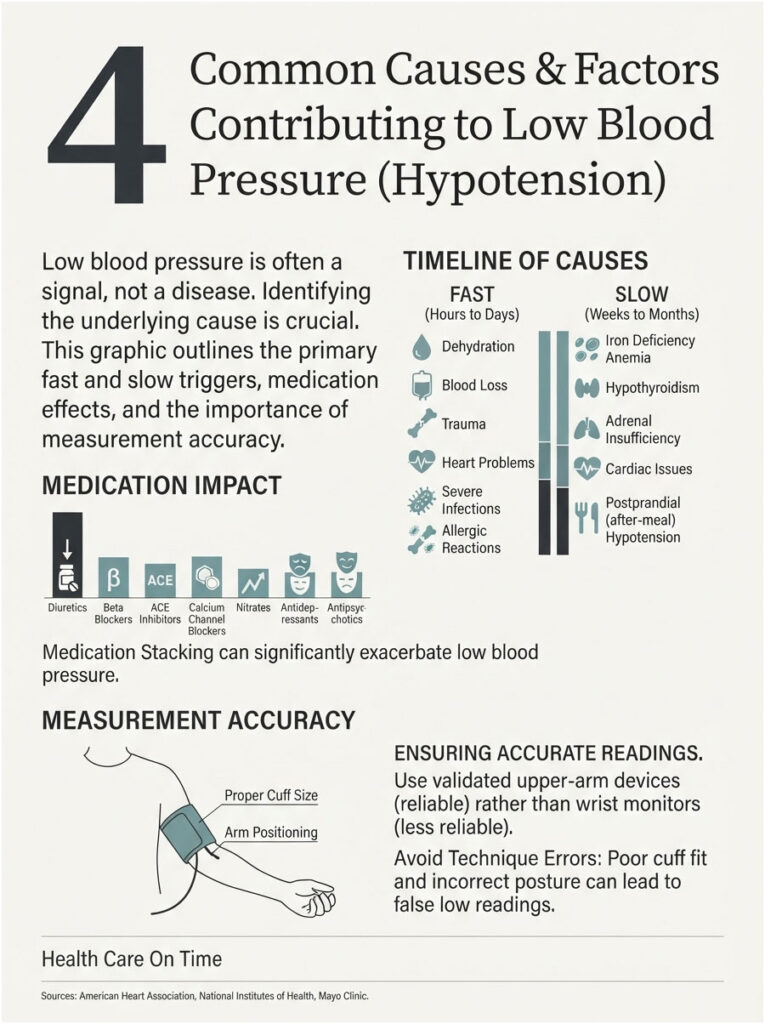
Fast Causes: Hours to Days
Dehydration is the most common and the most fixable. Vomiting, diarrhea, heavy sweating, a fever, or simply not drinking enough during a July heat wave all shrink circulating volume within hours.
Blood loss counts too, whether obvious or hidden. Gastrointestinal bleeding from an ulcer or from long-term ibuprofen use can proceed for weeks with no visible blood at all, showing up only as fatigue and a sliding pressure.
The standard cause list also includes prolonged bed rest, major trauma, heart problems, endocrine disorders, severe infection such as septic shock, and severe allergic reaction, as summarized by the NHLBI.
Anaphylaxis drops pressure within minutes and needs epinephrine rather than fluids. Septic shock does the same thing over hours and needs antibiotics plus aggressive resuscitation, which is why the fever-plus-low-reading combination gets treated as a genuine emergency.
Slow Causes: Weeks to Months
Iron deficiency anemia tops the list in women of reproductive age. Fatigue, breathlessness on stairs, and afternoon dizziness build so gradually that most women adapt and never mention it.
Hypothyroidism slows heart rate and reduces cardiac output, and it disproportionately affects women. Adrenal insufficiency, including Addison’s disease, produces low pressure alongside salt craving, darkening skin creases, and unexplained weight loss.
Cardiac causes include bradycardia, valve disease, and heart failure, all of which reduce output directly. Autonomic nerve damage from long-standing diabetes, Parkinson’s disease, or autoimmune disease breaks the reflex arc that corrects pressure when you stand.
Then there is postprandial hypotension, which almost nobody names out loud. Blood diverts to the gut after a large carbohydrate-heavy meal, and pressure can stay depressed for up to two hours afterward, which explains the 2 p.m. crash a lot of women describe.
Medications That Push Pressure Down
| Drug class | Common examples | Mechanism |
| Diuretics | Furosemide, hydrochlorothiazide | Volume loss |
| Beta blockers | Metoprolol, atenolol | Lower heart rate and cardiac output |
| ACE inhibitors and ARBs | Lisinopril, losartan | Vasodilation |
| Calcium channel blockers | Amlodipine, nifedipine | Vasodilation |
| Nitrates | Nitroglycerin, isosorbide | Strong vasodilation |
| Antidepressants | Tricyclics, trazodone | Alpha blockade |
| Antipsychotics | Quetiapine, risperidone | Alpha blockade |
| Parkinson’s drugs | Levodopa, pramipexole | Autonomic effect |
| GLP-1 agonists | Semaglutide, tirzepatide | Nausea, vomiting, reduced intake |
The Combination Problem
Any one of these drugs is usually manageable. The trouble comes from stacking.
A diuretic plus a hot afternoon plus a skipped lunch will produce a reading that none of the three would produce alone. Add a first dose of an antidepressant on the same day and the arithmetic gets worse.
Bring an actual list of everything you take, including over-the-counter items and supplements, to any appointment about low readings. Guessing from memory hides the exact interaction the clinician is looking for.
When the Reading Is Wrong, Not Your Pressure
Before treating a number, confirm the number is real. In cases reviewed by our medical team, technique errors explain a meaningful share of alarming home readings that turn out to be fine on repeat.
Cuff Size, Arm Position, and Validated Monitors
A cuff that is too large for your arm reads falsely low, and small upper arms are common in women. Measure your arm circumference with a tape and match it against the manufacturer’s chart instead of assuming the cuff in the box fits you.
Holding your arm above heart level also reads low, sometimes by 8 to 10 points. Rest the arm on a table so the cuff sits level with the middle of your chest, feet flat, back supported, legs uncrossed.
Wrist monitors are the least reliable choice for this particular question. Pick an upper-arm device that appears on the American Medical Association’s US Blood Pressure Validated Device Listing, then take a confirming reading on the opposite arm before making any decisions.
Tests Worth Asking Your Doctor For
Symptomatic low blood pressure deserves a workup, not reassurance. Here is what a thorough evaluation usually covers.
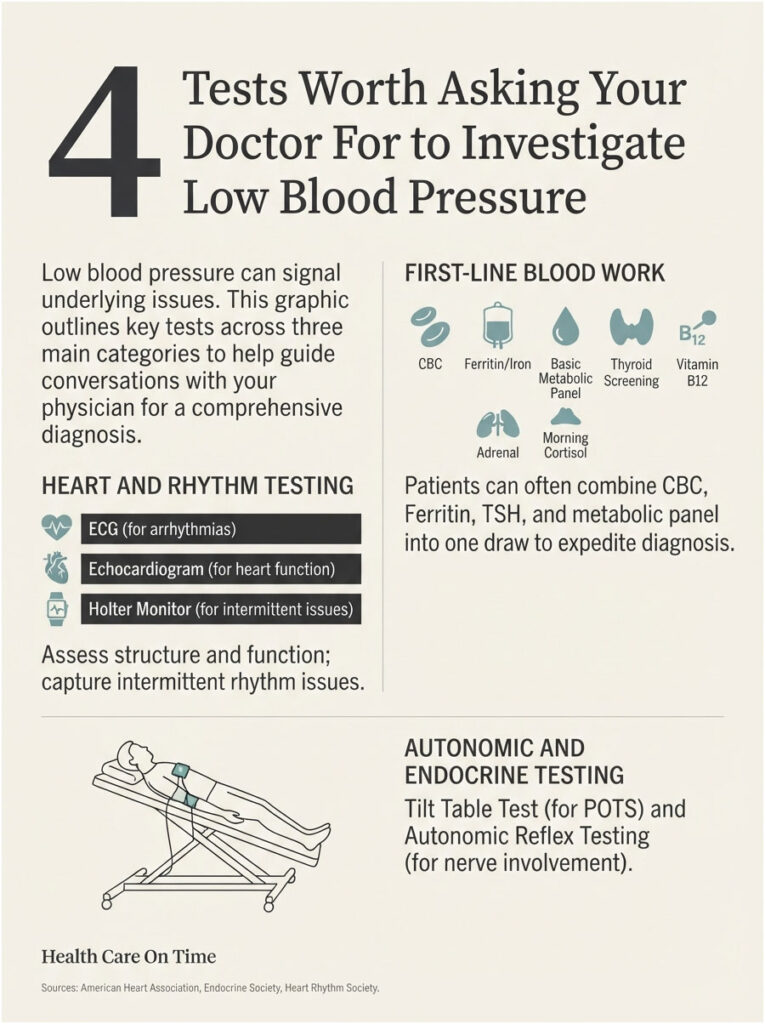
First-Line Blood Work
A complete blood count checks for anemia and gives red cell indices that hint at the cause. Ferritin and iron studies catch depleted stores that a normal CBC hides completely.
A basic metabolic panel shows sodium, potassium, and kidney function, all of which shift in dehydration and adrenal disease. TSH with free T4 screens the thyroid.
A morning cortisol screens for adrenal insufficiency, and an ACTH stimulation test confirms it when suspicion runs high. Vitamin B12 is worth adding whenever fatigue and tingling travel together.
Patients booking these panels through HealthCareOnTime frequently bundle CBC, ferritin, TSH, and a metabolic panel into a single draw. Doing it in one visit shortens the diagnostic loop from months to about a week.
Heart and Rhythm Testing
An ECG catches bradycardia, arrhythmia, and conduction abnormalities in about ten minutes. An echocardiogram evaluates pumping strength, chamber size, and valve function.
A Holter or extended event monitor captures intermittent rhythm problems that a single office ECG will miss entirely. If your episodes are unpredictable, ask about the longer recording rather than accepting a normal snapshot.
Autonomic and Endocrine Testing
A tilt table test reproduces the standing response under controlled conditions. It is the cleanest way to separate orthostatic hypotension from POTS from ordinary vasovagal syncope, three conditions that look identical from the outside.
Autonomic reflex testing measures sweat response and heart rate variability when nerve involvement is suspected. Neurology or a dedicated autonomic center usually handles this rather than primary care.
What to Do Right Now
If You Feel Faint This Minute
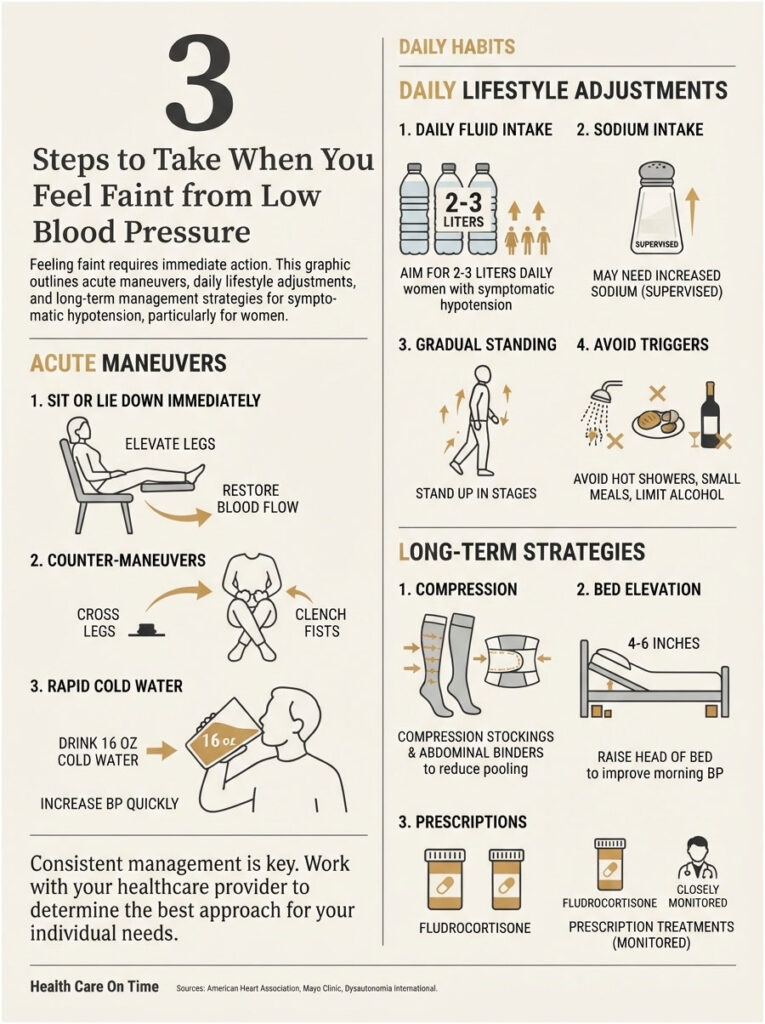
Sit or lie down before you fall, because the fall does the damage. Lying flat with legs elevated above heart level restores brain blood flow fastest.
Cross your legs and squeeze your thigh and buttock muscles hard, or clench your fists and tense both arms. These counter-maneuvers can buy 10 to 15 mmHg within seconds and often abort a faint entirely.
Drink 16 ounces of cold water quickly. In people with autonomic problems, a rapid water bolus raises pressure measurably within 15 to 20 minutes.
Fluids, Sodium, and Compression
Most women with symptomatic hypotension need 2 to 3 liters of fluid daily, more in heat or with exercise. Plain water covers most of it; electrolyte drinks help when losses have been heavy.
Sodium intake of 6 to 10 grams daily is sometimes recommended for chronic hypotension, but only under medical supervision. Cutting salt is correct advice for high blood pressure and exactly wrong for some women with low readings, which is how well-meaning dietary changes backfire.
Graduated compression stockings rated 30 to 40 mmHg reduce venous pooling in the legs. Abdominal binders add real benefit for autonomic failure, since the abdomen holds more pooled blood than the legs do.
Raising the head of your bed by 4 to 6 inches reduces overnight fluid loss through the kidneys. Morning readings, usually the worst of the day, often improve within a week of that single change.
When Prescription Treatment Enters the Picture
Fludrocortisone expands blood volume by promoting sodium retention. Midodrine constricts vessels and gets taken before periods of upright activity rather than on a fixed schedule.
Droxidopa is approved for neurogenic orthostatic hypotension. Pyridostigmine helps some patients with milder autonomic dysfunction and tends to cause fewer supine hypertension problems.
Every one of these requires monitoring, and several can drive pressure too high overnight while you sleep. None of them belongs in a self-directed plan.
Habits That Prevent the Next Episode
Stand up in stages. Sit on the edge of the bed, wait 30 seconds, then rise, and give yourself another few seconds before walking.
Skip long hot showers and hot tubs, which dilate vessels and make standing up afterward the riskiest moment of the day. Eat smaller meals more often to blunt the postprandial dip.
Limit alcohol, which acts as both a vasodilator and a diuretic. Keep a water bottle within reach on hot days rather than relying on thirst, which lags behind actual need.
Table 3. Scenario to Action Matrix
| Your Situation | Reading (mmHg) | Likely Meaning | Do This Now | Timeframe |
| Collapsed, confused, cold clammy skin | Below 80/50 or unreadable | Shock | Call 911, lie flat, elevate legs | Immediately |
| Chest pain or breathlessness with low reading | Below 90/60 | Cardiac or pulmonary cause | Call 911 | Immediately |
| Fever above 100.4 F plus low reading | Below 90/60 | Possible sepsis | Go to the emergency room | Within the hour |
| Pregnant or postpartum, fainted or bleeding | Any low reading | Obstetric emergency | Call your OB, go to labor and delivery | Immediately |
| Dizzy on standing, no other symptoms | 85/55 to 95/65 | Orthostatic hypotension | Log a three-point standing test, hydrate, call your doctor | Within 48 hours |
| Started or increased a BP medication | Any drop of 20+ systolic | Medication effect | Call the prescriber, do not stop on your own | Within 24 hours |
| Chronic low reading, zero symptoms | 90/60 to 100/65 | Likely your normal | Establish a 14-day baseline, mention at next visit | Routine visit |
Five Mistakes That Make Low Blood Pressure Worse
Cutting Salt You Never Needed to Cut
Public health messaging pushes sodium restriction hard, because most Americans genuinely have the opposite problem. A woman with symptomatic hypotension who follows that advice can make herself measurably worse in a week.
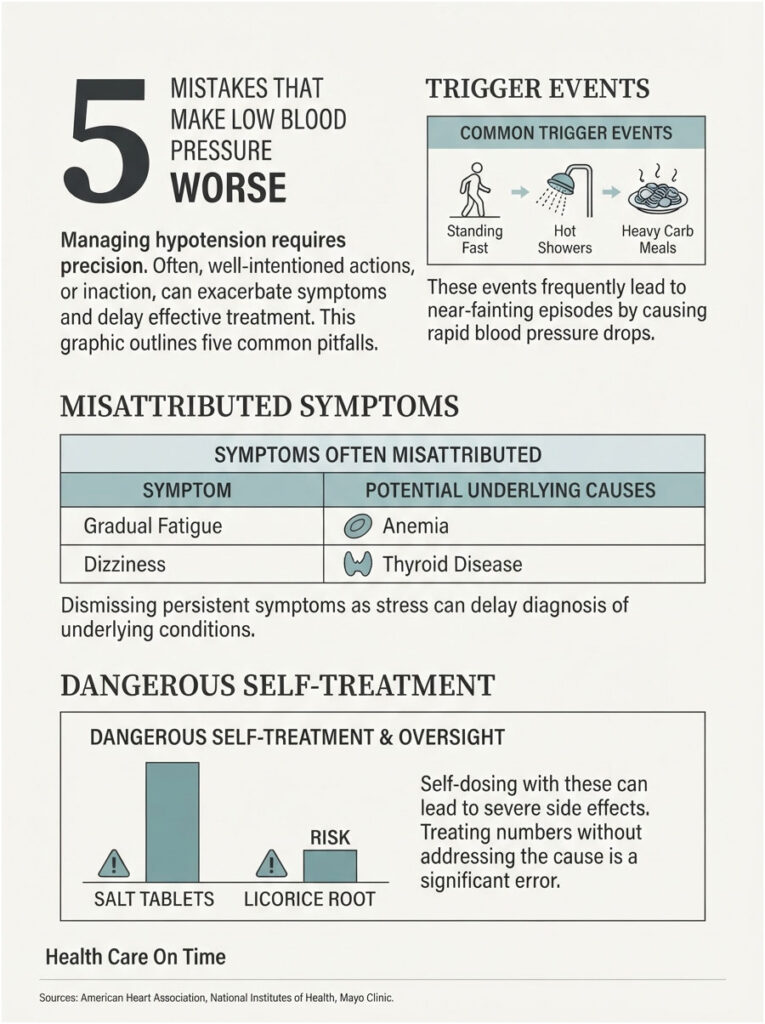
Standing Fast, Hot Showers, and Heavy Carb Meals
These three account for a large share of near-fainting episodes reported to us. Each one is small, specific, and completely fixable without a prescription.
Writing Off a Slow Decline as Stress
Gradual fatigue, breathlessness on stairs, and afternoon dizziness get blamed on work, parenting, and bad sleep for months at a stretch. Anemia, thyroid disease, and adrenal insufficiency all hide comfortably behind that explanation.
Self-Dosing Salt Tablets or Licorice Root
Licorice root raises blood pressure by mimicking aldosterone, and it also strips potassium and can trigger dangerous arrhythmias. Salt tablets overshoot easily in anyone with kidney or heart disease.
Treating the Number Instead of the Cause
Propping up a reading with fluids and compression while an untreated bleed, infection, or endocrine failure continues underneath is a delay dressed up as a treatment. The number is the smoke, not the fire.
Frequently Asked Questions
Is 90/60 blood pressure dangerous for a woman?
Not by itself. 90/60 mmHg sits exactly on the clinical threshold for hypotension, and many healthy women live there permanently with no problems. It becomes concerning only if you feel dizzy, faint, confused, or unusually tired, or if it represents a sharp drop from your usual baseline.
Is 85/55 too low for a woman?
It can be fine or it can be a problem, depending entirely on symptoms. Mean arterial pressure at 85/55 is 65 mmHg, right at the perfusion floor. If you feel well and this matches your normal, keep monitoring. If it is new or symptomatic, call your doctor within 48 hours.
What should I do if my blood pressure is 80/50?
Sit or lie down, elevate your legs, and drink 16 ounces of water. Retake the reading after five minutes with the cuff at heart level and your arm supported. If it stays there or you feel dizzy, confused, or weak, go to the emergency room instead of waiting.
What is the lowest blood pressure before death?
There is no fixed number. Systolic pressures below 70 mmHg with a mean arterial pressure under 50 mmHg represent profound shock, and organ failure follows quickly without treatment. Survival depends far more on how fast the underlying cause is corrected than on the specific figure on the monitor.
Should I go to the ER for low blood pressure?
Go if the reading comes with fainting, confusion, chest pain, severe breathlessness, cold clammy skin, bluish lips, or no urination for eight hours. Go if you are pregnant or postpartum and bleeding or fainting. Fever plus a low reading also warrants an ER visit, since that pairing suggests sepsis.
Can low blood pressure cause a stroke?
Severe or prolonged hypotension can reduce brain blood flow enough to cause ischemic injury, though it happens far less often than stroke from high blood pressure. The larger everyday risk from low readings is head injury and fracture from fainting and falling.
Why do I feel dizzy every time I stand up?
That pattern points to orthostatic hypotension or POTS. Run a home standing test: lie flat five minutes, then measure at one and three minutes upright, recording pulse each time. A 20-point systolic drop suggests orthostatic hypotension, while a 30 bpm heart rate jump without a pressure drop suggests POTS.
Is low blood pressure normal during pregnancy?
Yes, particularly in the second trimester. Progesterone relaxes blood vessels and readings usually bottom out around weeks 20 to 24 before recovering by delivery. Report fainting, persistent dizziness, bleeding, or any reading below 80/50 mmHg to your obstetrician the same day.
Can heavy periods cause low blood pressure?
They can, through two routes. Acute loss reduces circulating volume on the heaviest days, and chronic iron loss produces anemia over months. Request ferritin alongside a complete blood count, since iron stores empty long before hemoglobin drops below the reference range.
Does low blood pressure get worse after menopause?
Usually the opposite happens. As estrogen falls, vessels stiffen and blood pressure tends to rise, making hypertension the more likely diagnosis. Persistently low readings after menopause deserve investigation for thyroid disease, adrenal insufficiency, cardiac problems, or medication effects.
How can I raise my blood pressure quickly at home?
Lie down with legs elevated, drink 16 ounces of cold water fast, and use counter-maneuvers such as crossing your legs and tensing your thigh muscles. A salty snack helps if you do not have hypertension or kidney disease. These are stopgaps, not a treatment plan.
Is low blood pressure better than high blood pressure?
Chronic asymptomatic low readings generally carry less long-term cardiovascular risk than hypertension does. That advantage disappears once low pressure causes fainting, falls, or organ underperfusion, and a sudden drop is always more dangerous than a stable low baseline.
Medical Disclaimer
This article is for general information and does not replace evaluation by a licensed clinician. Blood pressure targets and treatment decisions vary by individual medical history, pregnancy status, and current medications. Never start, stop, or adjust a prescription based on information found online. If you are experiencing fainting, confusion, chest pain, severe shortness of breath, or signs of shock, call 911 or go to the nearest emergency department immediately.
References
- CDC: About Sepsis
- CDC: Hospital Sepsis Program Core Elements
- CDC NCHS Data Brief 519: Anemia Prevalence, United States, August 2021 to August 2023
- Mayo Clinic: Low Blood Pressure (Hypotension), Symptoms and Causes
- Cleveland Clinic: Low Blood Pressure (Hypotension)
- NHLBI: Low Blood Pressure
- American Heart Association: Low Blood Pressure, When Blood Pressure Is Too Low
- Cardiovascular Health Study: Orthostatic Hypotension in Older Adults
- JACC Focus Seminar: Postural Orthostatic Tachycardia Syndrome
- NIH PMC: Long-Term POTS Outcomes Survey, Gynecologic Findings
- American Journal of Hematology: Prevalence of Iron Deficiency in US Pregnant Individuals, 2003 to 2023
- JAMA Network Open: Prevalence of Iron Deficiency Among Women in the US and Canada