Quick Answer
Prostate ablation uses targeted energy (heat, cold, laser light, or electrical pulses) to destroy prostate tissue without removing the gland. Doctors use it for localized prostate cancer and for an enlarged prostate. Most versions are outpatient, take one to four hours under anesthesia, and send you home the same day with a urinary catheter.
Table of Contents
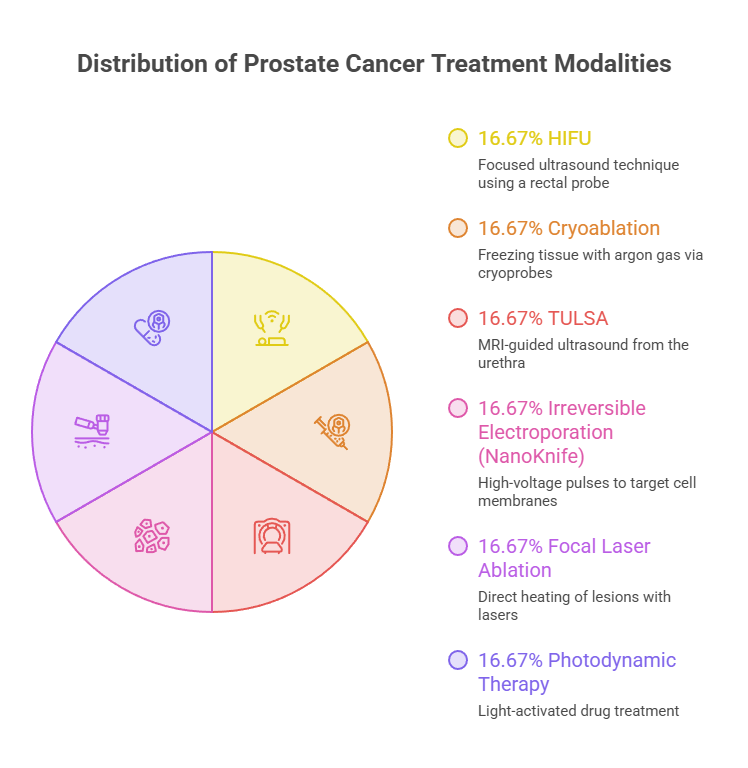
The main ablation types used in the United States:
- HIFU, focused ultrasound heat delivered through a rectal probe
- Cryoablation, argon gas freezing through needles
- TULSA, MRI-guided ultrasound delivered from inside the urethra
- Irreversible electroporation (NanoKnife), non-thermal electrical pulses
- Focal laser ablation, interstitial laser fibers placed into the lesion
- Rezum and Aquablation, steam and waterjet systems used for enlarged prostate only
Two men can sit in the same waiting room, both scheduled for “prostate ablation” on Tuesday, and have almost nothing in common. One has Grade Group 2 cancer in the left half of his gland and will spend three hours inside an MRI scanner. The other has no cancer at all, just a prostate squeezing his urethra shut, and he will be back in his car within ninety minutes.
Same two words on the surgery schedule. Different procedures entirely. Sorting out which one applies to you is the first job.
At a Glance
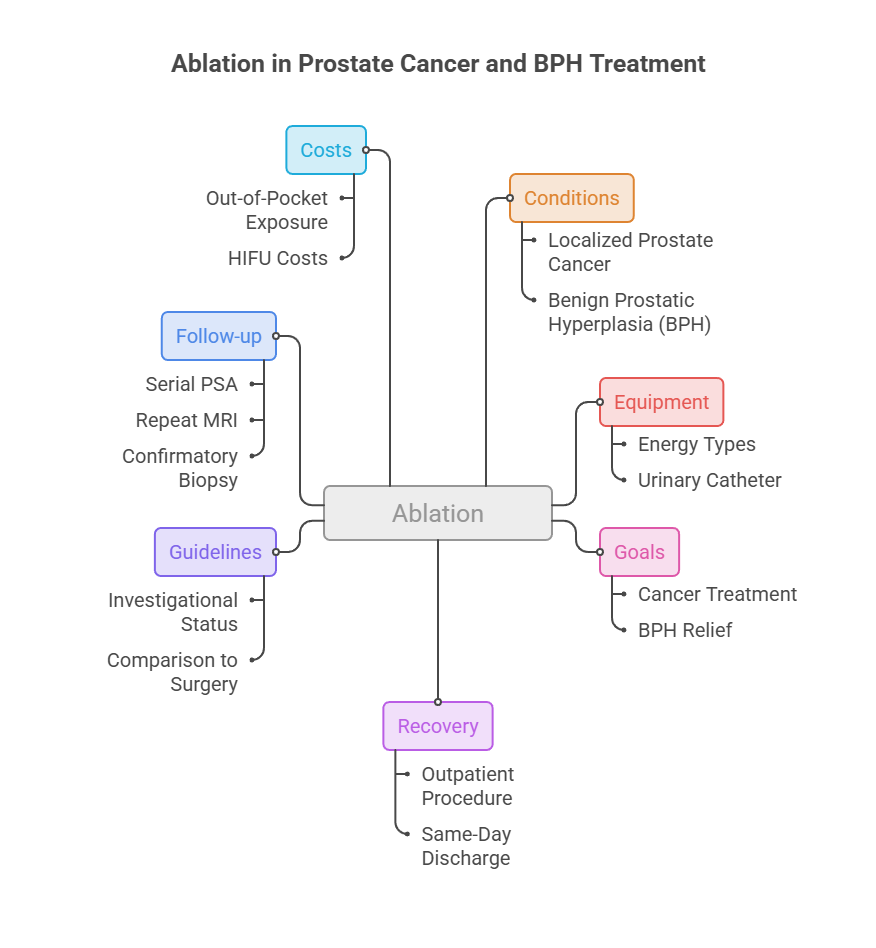
• Ablation treats two separate conditions: localized prostate cancer and benign prostatic hyperplasia (BPH). Equipment, goals, and recovery all differ.
• Six energy types are in routine US clinical use.
• Nearly all are outpatient, with same-day discharge standard.
• A urinary catheter is close to universal afterward, lasting 24 hours to two weeks.
• For cancer, US guidelines still classify ablation as investigational next to surgery, radiation, and active surveillance.
• Follow-up is lifelong: serial PSA, repeat MRI, and often a confirmatory biopsy at 12 months.
• Out-of-pocket exposure for HIFU can reach $25,000 or more.
What Prostate Ablation Actually Is (and What It Is Not)
Ablation destroys tissue in place instead of cutting it out. A probe or needle delivers energy into the gland, treated cells die, and your body clears the debris over the following weeks.
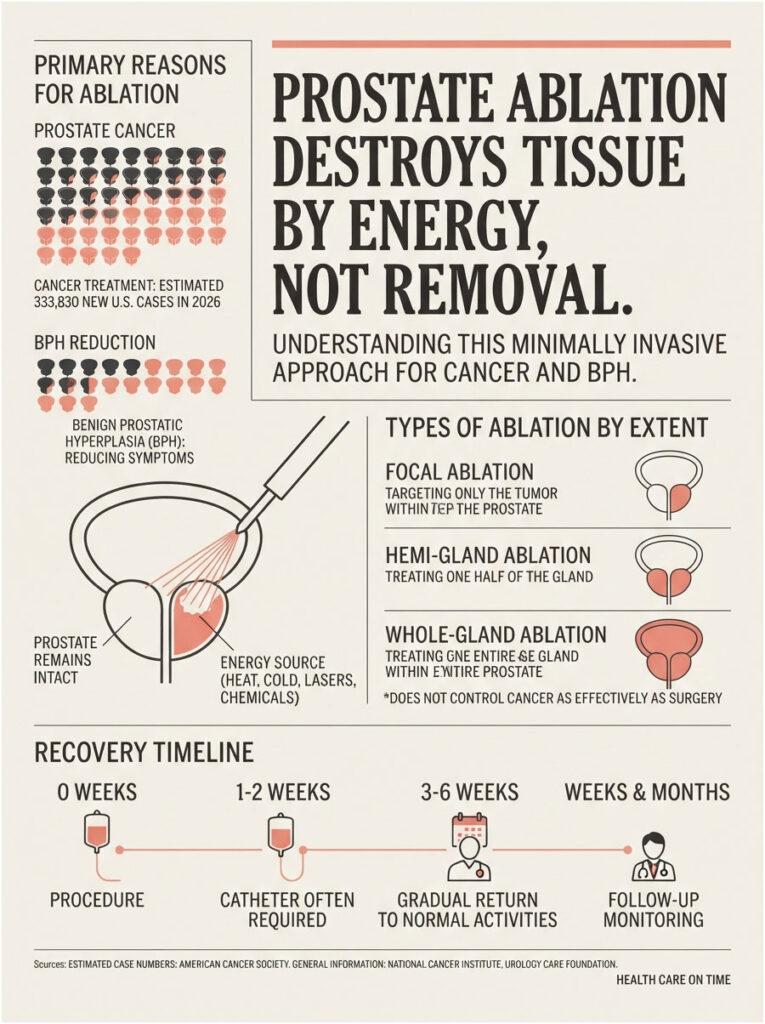
Memorial Sloan Kettering describes the energy sources plainly: heat, cold, lasers, or chemicals used to kill cancer cells, with some surrounding normal prostate tissue destroyed alongside them. Nothing gets removed. The prostate stays where it is.
Two Very Different Reasons Men Get It
When the target is cancer, the goal is killing tumor cells while sparing the nerves, sphincter, and rectum that sit millimeters away. When the target is BPH, the goal is bulk reduction so urine can move again.
Patients booking PSA panels through HealthCareOnTime ask us constantly whether ablation means losing the prostate. It does not, and that single fact reshapes the whole recovery conversation.
The cancer numbers explain the surge of interest. The American Cancer Society estimates about 333,830 new prostate cancer diagnoses and roughly 36,320 deaths in the United States in 2026, with about 1 in 8 men diagnosed in their lifetime and an average age at diagnosis near 67. That makes prostate cancer the most commonly diagnosed cancer in the country this year.
Most of those men will die of something else. That is precisely why gentler options keep gaining ground.
Focal, Hemi-Gland, and Whole-Gland
How much tissue gets treated is a separate decision from which energy gets used, and it matters more than most men realize.
Focal ablation targets the index lesion plus a safety margin. Hemi-ablation treats one full side. Whole-gland ablation treats everything, which is closer in spirit to surgery minus the incision.
NYU Langone notes that whole-gland ablation does not control cancer as reliably as surgery, so its specialists mostly reserve it for men whose radiation failed, or as a surgical alternative when the tumor is confined to the gland.
How It Differs From Surgery and Radiation
Surgery removes the gland and hands pathologists the whole specimen. Radiation treats the prostate across weeks of appointments. Ablation is one session that leaves most of your prostate behind.
“Minimally Invasive” Does Not Mean “Minor”
You still get general anesthesia, a breathing tube, and a catheter. Patient guidance is blunt about the arc: recovery can run several weeks, and you will wear a catheter through part of it.
The Six Energy Types, Compared
HIFU (High-Intensity Focused Ultrasound)
A rectal probe focuses sound waves to a point inside the gland, heating that spot past the temperature cells survive. Real-time imaging guides placement.
HIFU is the most-studied focal option in the United States and the one most men have already heard about by name before their consult.
Cryoablation
Thin cryoprobes go into the prostate and release argon gas to freeze tissue, with ultrasound guiding placement and tracking temperature around the rectum, bladder, sphincter, and nerves.
NYU reports the procedure runs about two hours under general anesthesia with same-day discharge, and that incontinence afterward is extremely rare while sexual function is often preserved.
TULSA (MRI-Guided Transurethral Ultrasound Ablation)
TULSA works from the inside out. A device passes through the urethra and directs ultrasound energy outward while the entire procedure happens inside an MRI scanner.
The system received FDA 510(k) clearance in 2019 and has been in commercial use since 2020. Johns Hopkins served as a site for the TACT trial, which enrolled 115 men with low- and intermediate-risk disease for whole-gland ablation and supported that clearance.
Irreversible Electroporation (NanoKnife)
IRE uses short, high-voltage electrical pulses rather than temperature extremes. The pulses punch permanent holes in cell membranes while leaving collagen scaffolding, vessels, and nerves relatively intact.
That tissue-sparing behavior is the entire argument for using it next to the neurovascular bundles.
Focal Laser Ablation and Photodynamic Therapy
Laser fibers placed into the lesion heat it directly, often under live MRI guidance. Photodynamic therapy uses a light-activated drug delivered through the bloodstream, then triggers it with fiber optics inside the gland.
The AUA lists HIFU, cryoablation, focal laser, IRE, and photodynamic therapy as the current ablative modalities, all FDA-approved for treating prostate tissue rather than for treating prostate cancer specifically. That regulatory distinction turns up again when the bills arrive.
| Modality | Energy used | Setting and anesthesia | Catheter duration | Best-suited candidate | Notable limitation |
| HIFU | Focused ultrasound heat, transrectal probe | Outpatient OR, general or spinal | About 3 to 14 days | Localized cancer, PSA 20 or below, gland 70 cc or below | Persistent erectile dysfunction reported highest among focal modalities |
| Cryoablation | Argon gas freezing via cryoprobes | Outpatient OR, general, about 2 hours | Typically a few days | Radiation-recurrent cancer; localized tumors | Whole-gland version less reliable for cancer control than surgery |
| TULSA-PRO | Directional ultrasound heat from inside urethra | MRI suite, general, about 3 hours of ablation | Commonly 2 weeks | Gleason 7 confined disease, no gland calcifications | Requires MRI compatibility; limited US center count |
| IRE (NanoKnife) | High-voltage electrical pulses, non-thermal | Outpatient OR, general with muscle relaxant | Roughly 3 to 7 days | Lesions abutting nerves or sphincter | Smallest long-term evidence base among the alternatives |
| Focal laser ablation | Interstitial laser heat via fiber | MRI or ultrasound suite, general | About 3 days in published protocols | Single small MRI-visible lesion | Widest reported range of in-field recurrence |
| Rezum / Aquablation | Water vapor / heat-free waterjet | Office (Rezum) or OR (Aquablation) | Rezum: several days; Aquablation: about 1 day | BPH with bothersome urinary symptoms, no cancer | Treats flow only; does nothing for cancer |
Prostate Ablation for an Enlarged Prostate
This section exists because a large share of men typing “prostate ablation” into Google do not have cancer. They have a prostate pressing on the urethra, and the search results keep handing them oncology pages.
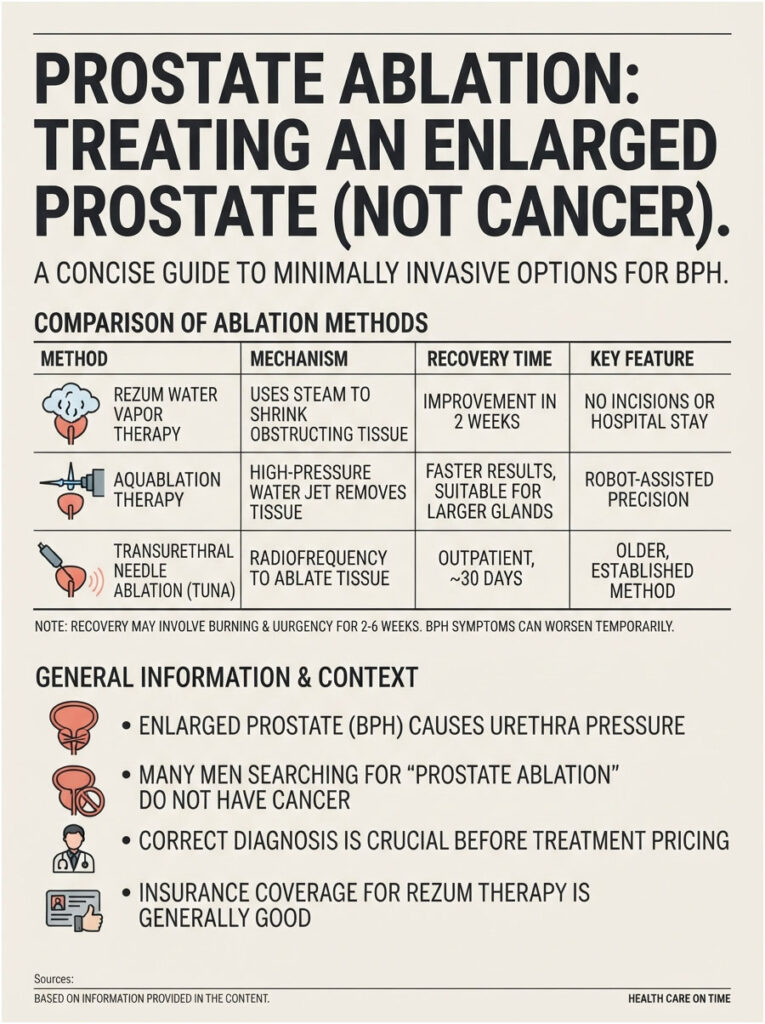
Rezum Water Vapor Therapy
Steam gets injected into the obstructing tissue through a small scope. The damaged tissue then shrinks over the following weeks as your body absorbs it.
Stanford Health Care describes it as requiring no incisions, no general anesthesia, and no hospital stay, with treatment taking just minutes under oral sedation or local anesthesia. Most men need only one treatment, may need a catheter for a few days, and typically resume normal activities within a few days.
Timing matters here. Symptom improvement often shows up around two weeks, but full results usually take three months.
Aquablation Therapy
Aquablation removes tissue rather than shrinking it. Cleveland Clinic draws the contrast directly: Rezum uses steam and can be done in an office, while Aquablation uses a high-pressure, heat-free water jet and requires an operating room, with the tissue removed immediately rather than absorbed over months. That is why Aquablation usually produces faster and more dramatic improvement in urination.
Prostate size steers the choice. Aquablation handles larger glands that fall outside the size window for office-based steam.
Transurethral Needle Ablation
The older radiofrequency option still shows up in some practices. TUNA delivers low-energy radio frequency through two needles to ablate excess prostate tissue, can be done under local anesthetic on an outpatient basis, takes about an hour, and the treated tissue takes roughly 30 days to be reabsorbed.
What Recovery Looks Like on This Side
Expect burning, urgency, and frequency for two to six weeks while tissue clears. Boston Scientific safety information lists painful or frequent urination, blood in urine or semen, reduced ejaculatory volume, urinary tract infection, and temporary inability to empty the bladder among the possible effects, and notes that BPH symptoms can briefly worsen during healing.
The coverage picture is also friendlier. Cleveland Clinic notes that insurance coverage for Rezum therapy is excellent. Our medical reviewers flag this as the practical reason to nail down which diagnosis you are actually treating before anyone quotes you a price.
Before the Procedure: Workup, Eligibility, and Prep
The Tests That Decide Whether You Qualify
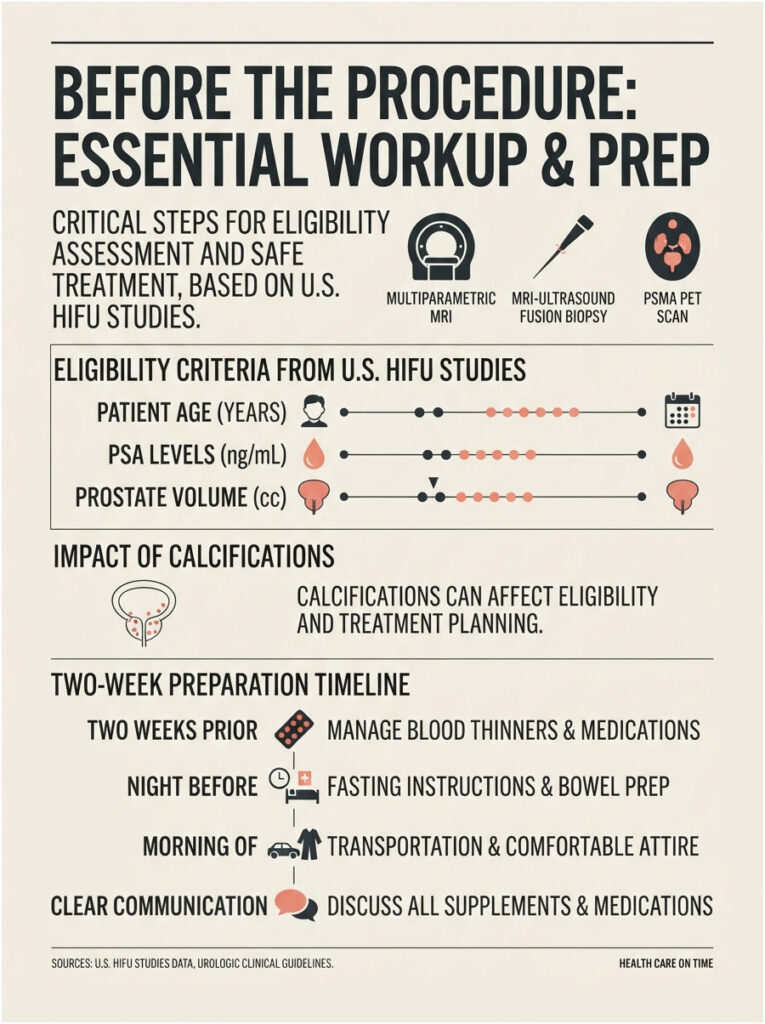
Nobody gets focal ablation on a PSA number alone. The standard path runs multiparametric MRI first, then an MRI-ultrasound fusion biopsy that samples the visible lesion directly instead of sampling blindly across the gland.
Grade Group from that biopsy drives everything downstream. PSMA PET gets added when there is any question about spread beyond the prostate.
Our lab partners report a recurring bottleneck: men show up to consults without a recent PSA on file, which stalls scheduling by weeks. Bring your last two or three values with their dates.
The Hard Numbers That Gate Eligibility
Published trial criteria give you a realistic read on the bar.
One US HIFU study set inclusion at ages 40 to 85, PSA no higher than 20 ng/mL, and prostate volume no greater than 70 cc. The CAPTAIN randomized trial enrolled men with primary localized ISUP Grade Group 2 or 3 disease and PSA at or below 20, excluding anyone with an MRI contraindication or with calcifications 3 mm or larger blocking the ultrasound beam.
Calcifications Are an Underrated Dealbreaker
Prostate stones scatter ultrasound and can shut down an otherwise reasonable plan. Johns Hopkins lists good TULSA candidates as men with a Gleason score of 7, cancer confined to the prostate, and no calcium deposits in the gland.
If imaging shows them, the plan may change before you have had time to get attached to it. Ask about this at the first consult, not the third.
The Two Weeks Before
Blood thinners come first in the conversation. Published focal laser protocols stop anticoagulants five days out, start an oral fluoroquinolone one day before and run it for seven days, and add a urinary analgesic for five days.
Your team will also start or continue tamsulosin, an alpha-blocker that relaxes the bladder neck and smooths the post-catheter transition. Do not skip doses in the run-up.
Disclose everything, supplements included. Fish oil, vitamin E, and several herbal products affect bleeding whether or not anyone calls them medication.
The Night Before and the Morning Of
Plan on an eight-hour fast and a bowel prep. The same laser protocol calls for an enema the morning of the procedure.
Line up a driver. Anesthesia rules mean nobody is letting you drive home, and many centers will not discharge you to a rideshare.
Pack loose pants. You are leaving with a catheter and a leg bag, and jeans are a poor choice for that trip.
During the Procedure: Hour by Hour
Check-In Through Anesthesia
Arrive about two hours before the scheduled start. IV placement, antibiotics, and the anesthesia consult consume most of that window.
Once you are under, a breathing tube goes in. Most men are asleep the entire time and remember none of it.
Positioning, Cystoscopy, and Imaging Setup
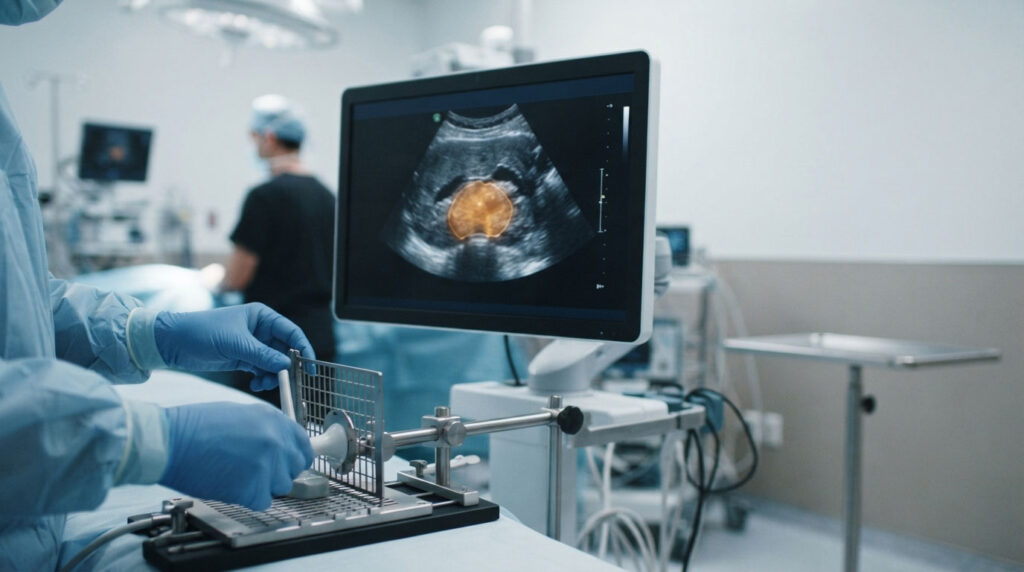
Your team may pass a cystoscope through the urethra to check the prostate and bladder before ablation starts. For needle-based ablation, a small ultrasound probe goes into the rectum to display the prostate on a screen, and needles are guided in through a template, a small square grid that holds them in position.
MRI-guided procedures swap that setup for a scanner, with imaging repeated as the treatment plan gets refined mid-procedure.
The Ablation Itself
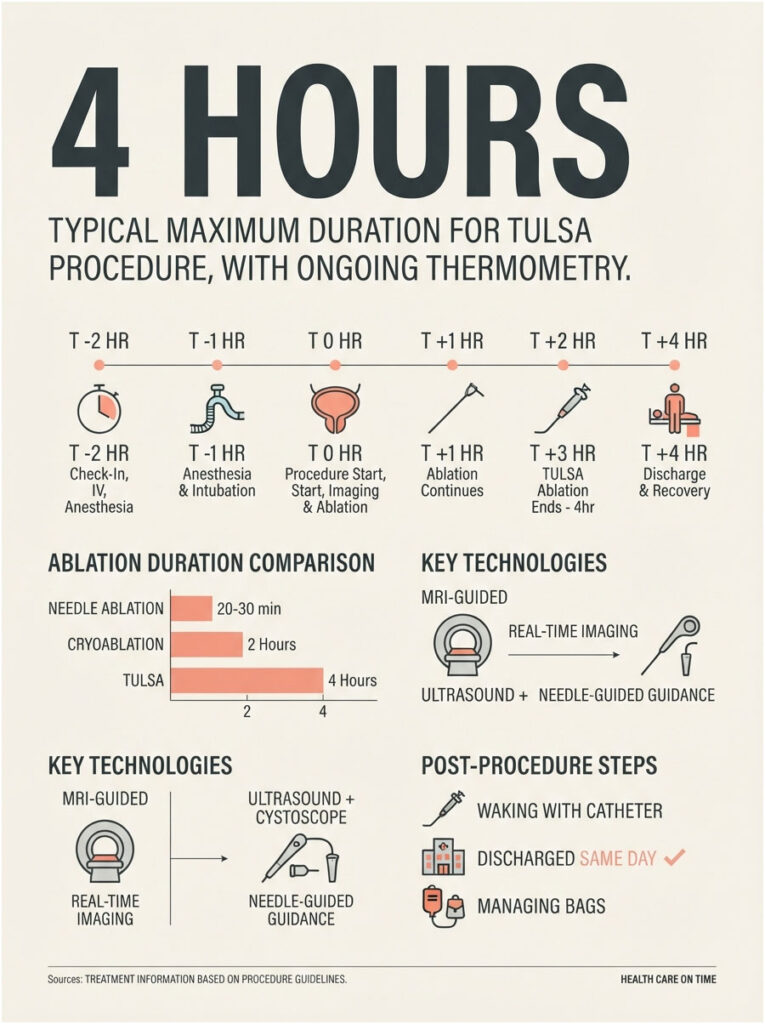
Duration varies more than men expect. A needle ablation session runs roughly 20 to 30 minutes. Cryoablation typically takes about two hours. TULSA is the long one: patients spend around four hours at the surgery center, roughly three hours of ablation plus an hour of recovery.
Why TULSA Runs Longer
The system sweeps energy around the gland in slices while thermometry updates continuously and water cooling protects the urethra and rectum. Precision costs time.
In cases reviewed by our medical team, the setup and anesthesia window surprises men far more than the ablation does. Energy delivery is often the shortest part of the day.
Waking Up and Going Home
You will wake in recovery with a catheter draining your bladder, and most men go home the same day.
A nurse will demonstrate leg-bag and night-bag swaps before discharge. Ask for that demonstration twice if the anesthesia fog has not lifted.
After the Procedure: The Real Recovery Timeline
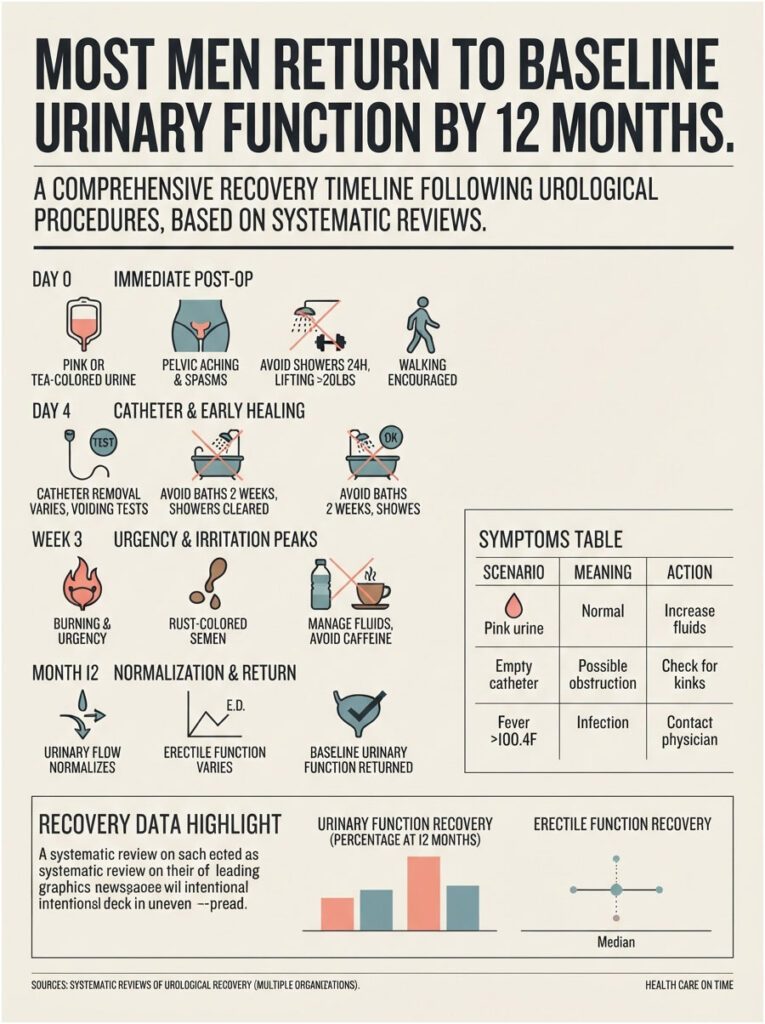
Day 0 to Day 3
Expect pink or tea-colored urine, pelvic aching, and bladder spasms that feel like sudden urgency even though the catheter is handling the work.
Standard guidance is no showering for the first 24 hours, and no lifting anything over 20 pounds for at least the first couple of days.
Walk. Short, frequent walks cut clot risk and help spasms settle faster than lying still does.
Day 4 to Day 14: Catheter Removal and the Void Trial
This is the milestone everyone fixates on, and timing depends entirely on which procedure you had.
After cryoablation, the catheter often comes out a few days later, and men resume normal activities including sex once it is gone. After whole-gland TULSA, the Foley commonly stays in for two weeks, and removal is paired with a voiding test in which the bladder is filled with saline to confirm you can urinate on your own. If you cannot, the catheter goes back in for a few more days.
That is a delay, not a failure. Clinics see it often enough to plan around it.
Avoid baths and any submerging of your lower body for about two weeks. Showers are fine once you are cleared.
Week 3 to Week 8
Burning with urination, frequency, and urgency usually peak here as treated tissue sloughs. Passing small pieces of debris is normal and genuinely alarming if nobody warned you first.
Patients commonly ask us why semen turns rust-colored for weeks or months. Old blood clearing from the seminal vesicles is the usual answer, and it resolves without intervention.
Alpha-blockers often stay on board through this stretch. Push fluids and drop caffeine and alcohol, both of which irritate an already angry bladder.
Month 3 to Month 12
When Urinary Flow Normalizes
A systematic review of partial gland ablation found the treatment well tolerated overall, with nearly all patients back to baseline urinary function by 12 months.
When Erections Return
Data presented at AUA 2025 on partial gland cryoablation showed erectile function tends to dip initially and then recover in most men over time, while urinary function not only recovers but frequently improves. The same systematic review found most modalities caused temporary declines in erectile function, with persistent erectile dysfunction highest after HIFU.
Six to twelve months is the honest horizon. Six weeks is not.
| Symptom or scenario | How common | What it usually means | What to do |
| Pink or tea-colored urine, days 1 to 7 | Very common | Expected healing bleed | Self-manage; increase fluids |
| Catheter stops draining, bag stays empty | Uncommon | Clot or kink blocking flow | Call the office immediately; go to the ER if nobody responds within an hour |
| Fever above 101 degrees F | Uncommon | Possible urinary tract infection | Call the same day; this threshold is a standard call-your-provider sign |
| Burning with urination, weeks 2 to 6 | Very common | Tissue sloughing and irritation | Self-manage; ask about a urinary analgesic |
| Unable to urinate after catheter removal | Fairly common | Swelling has not settled yet | Return same day; expect the catheter back for a few days |
| Rust-colored semen for weeks | Very common | Old blood clearing | Self-manage; no action needed |
| Scrotal swelling with pain | Less common | Possible epididymitis or fluid collection | Call within 24 hours |
| Leaking urine at 3 months | Less common | Sphincter irritation or, rarely, injury | Book urology follow-up; ask for a pelvic floor therapy referral |
Follow-Up: What Surveillance Looks Like After Ablation
Ablation is not a procedure you walk away from. Because most of your prostate remains, monitoring continues indefinitely.
PSA Testing
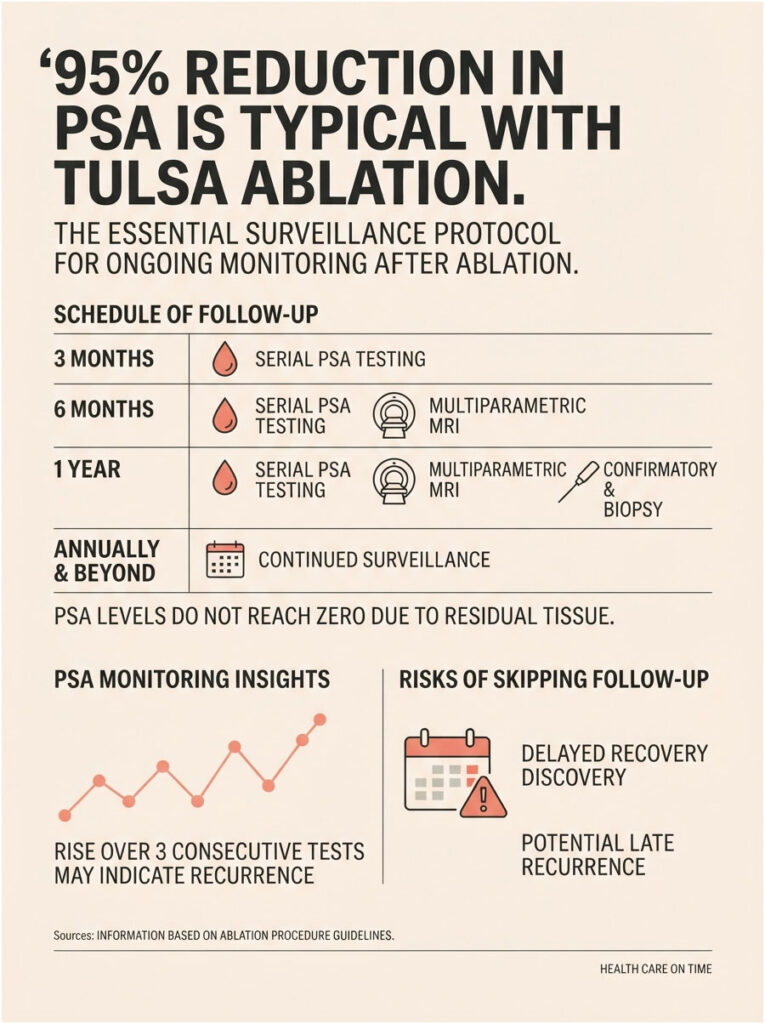
Serial PSA becomes the running signal. Draws are typically scheduled at 3, 6, and 12 months, then every six months for several years.
Your number will not hit zero and should not be expected to. Whole-gland TULSA has been reported to produce roughly a 95% PSA reduction with about 92% volume reduction while sparing the urethra and sphincter. Focal treatment produces a smaller drop and a new personal baseline.
The trend is what your urologist reads, not any single value. A rise across three consecutive draws prompts imaging.
Repeat MRI and Biopsy
Most protocols schedule multiparametric MRI around 6 to 12 months, then periodically after that. In the CAPTAIN trial, TULSA histology and imaging results were tied to a 12-month MRI plus biopsy.
A confirmatory biopsy at roughly one year is common practice even when PSA looks fine, because cancer can persist in the treated zone without moving the PSA needle. Untreated parts of the gland need sampling too.
Why Skipping Follow-Up Defeats the Point
Across patients we serve, the men who treat surveillance as optional are the ones who discover recurrence late. Focal therapy trades certainty for function preservation, and the price of that trade is showing up for appointments for years.
Risks, Side Effects, and Honest Success Rates
What the Randomized Evidence Now Shows
For two decades the honest answer to “how does ablation compare to surgery?” was that nobody had run the head-to-head trial. That has changed.
CAPTAIN: TULSA Versus Robotic Prostatectomy
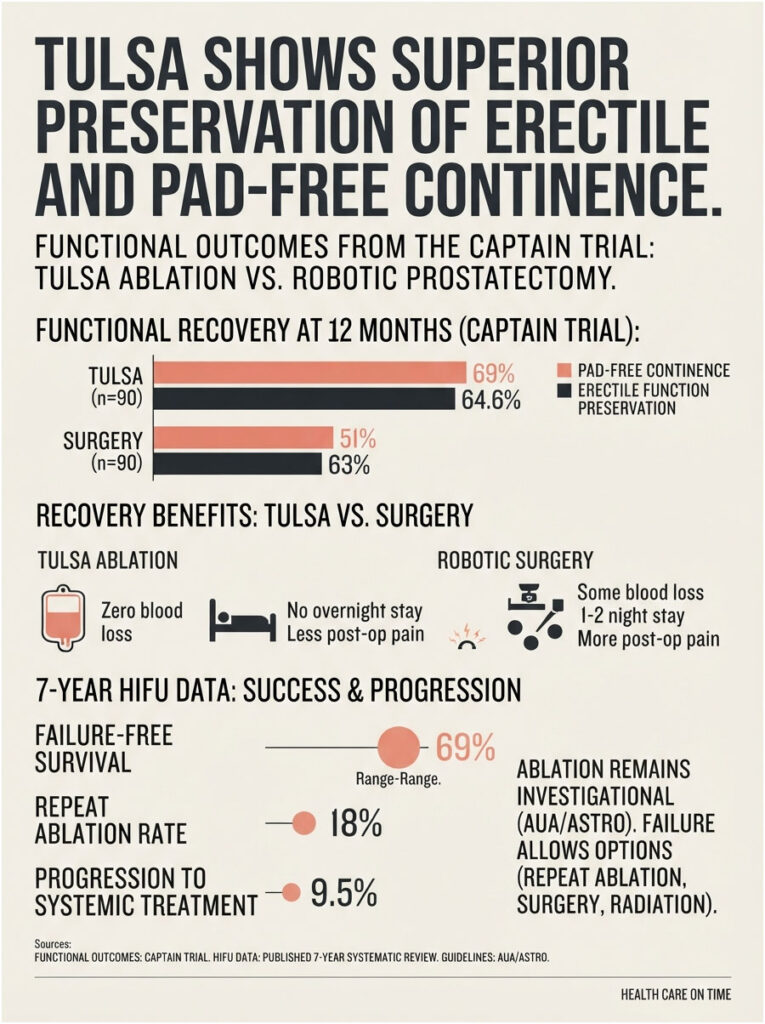
CAPTAIN is the first fully enrolled phase 3 multicenter randomized trial directly comparing ablation with prostatectomy on functional and oncologic outcomes, run across 18 sites in four countries. The primary safety endpoint combined preservation of erectile function and pad-free continence, and TULSA showed statistical superiority over robotic prostatectomy on that composite. On recovery measures, TULSA delivered zero blood loss, no overnight stay, and less post-procedure pain.
A later analysis found no median change in penile length one month after TULSA, against a 0.65 cm median reduction after robotic prostatectomy.
The caveat matters as much as the headline. The primary efficacy endpoint, freedom from additional prostate cancer treatment, metastases, or prostate cancer death, is measured at three years and has not reported yet.
Safety superiority is not cancer-control superiority. Anyone presenting it as both is getting ahead of the data.
Longer-Term Ablation Outcomes
Seven-year HIFU data from a 1,379-man cohort showed 69% failure-free survival, with 18% undergoing at least one repeat ablation, 9.5% eventually needing whole-gland or systemic treatment, and 0.2% developing metastatic disease. Cryotherapy and IRE have reported overall failure-free survival around 90% at two years and 86% at three years.
A phase II MRI-guided HIFU trial found that at 24 months, 20% of men had any cancer in the treated area and 9% had Grade Group 2 or higher there, while across the whole prostate 60% had some cancer and 40% had Grade Group 2 or higher, with 40% developing erectile dysfunction by two years.
Read that last set twice. Treating the index lesion does not treat the rest of the gland.
| Metric | Figure | Population and follow-up | Source |
| New US prostate cancer cases, 2026 | 333,830 | United States, full-year estimate | American Cancer Society, Cancer Facts & Figures 2026 |
| US prostate cancer deaths, 2026 | 36,320 | United States, full-year estimate | American Cancer Society, Cancer Facts & Figures 2026 |
| Lifetime diagnosis risk | About 1 in 8 men | US male population | American Cancer Society Key Statistics |
| HIFU failure-free survival | 69% at 7 years | 1,379 men, 93% intermediate or high risk | AUA 2025 State-of-the-Art Lecture, via UroToday |
| Repeat ablation rate after HIFU | 18% (252 of 1,379) | Same cohort, 7-year follow-up | AUA 2025 State-of-the-Art Lecture, via UroToday |
| Progression to radical or systemic treatment | 9.5% (132 of 1,379) | Same cohort, 7-year follow-up | AUA 2025 State-of-the-Art Lecture, via UroToday |
| In-field recurrence range by modality | HIFU 0 to 36%; cryotherapy 6 to 24%; focal laser 4 to 50% | Systematic review of partial gland ablation | Investigative and Clinical Urology |
What the AUA/ASTRO Guideline Actually Says
Marketing pages rarely quote this part. The guideline directs clinicians to tell men with low- and intermediate-risk prostate cancer that whole gland or focal ablation remains investigational, without high-quality data comparing it to surgery, radiation therapy, or active surveillance, and it holds that active surveillance is still preferred for low-risk disease.
Our medical reviewers flag the distance between promotional language and that sentence as the most useful thing a newly diagnosed man can absorb before signing consent forms.
A Johns Hopkins investigator on the TACT trial framed the trade-off similarly: TULSA cannot quite match radiation or surgery on cancer control, but very few patients experienced significant long-term side effects.
If Ablation Fails
Failure is not the end of the road, which is part of the appeal. Repeat ablation, surgery, radiation, and systemic therapy all remain available, though salvage surgery after prior ablation is technically harder than a first operation because of scarring.
Salvage cryotherapy has also become an established option for localized recurrence after radiation, with MRI and PSMA PET imaging guiding case selection.
What It Costs and Whether Insurance Pays
The Medicare Situation
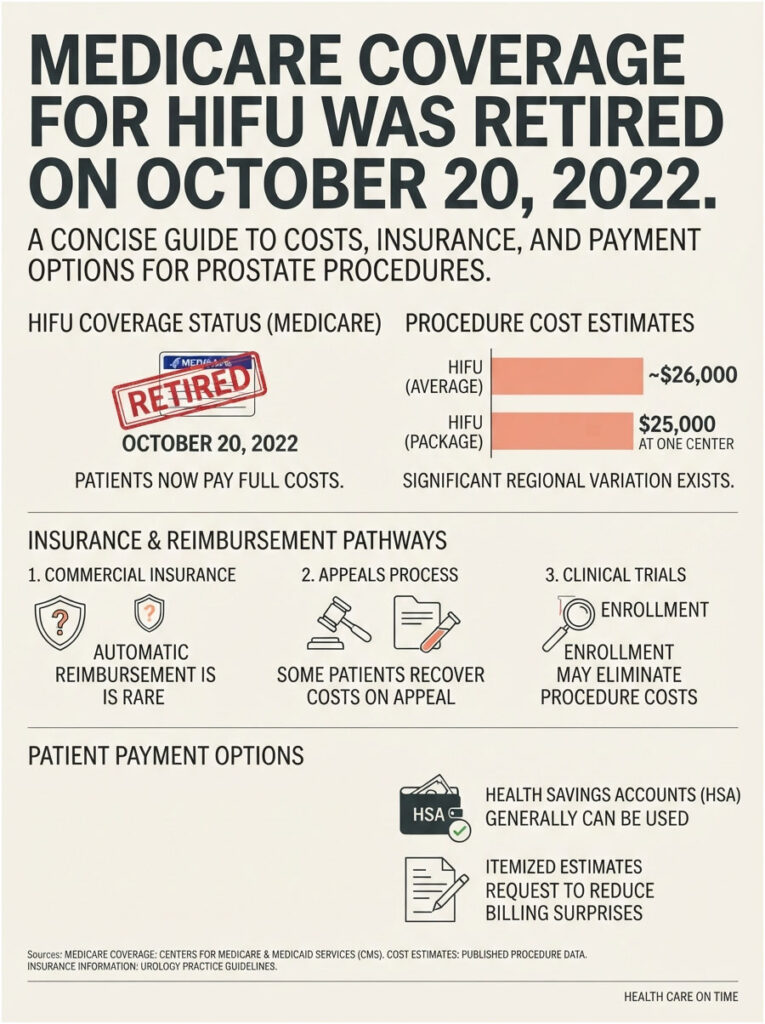
Coverage has moved against patients here. The Medicare code used for HIFU was retired starting October 20, 2022, and one US center reports that patients now pay the full cost of the procedure themselves.
BPH ablation sits in a different position entirely, which is one more reason to be precise about which procedure you are pricing.
Typical Out-of-Pocket Packages
One center advertises a $25,000 package for men proceeding without Medicare coverage. Another reports average HIFU out-of-pocket costs around $26,000, covering physician fees, anesthesia, the treatment facility, and outpatient hospital fees.
Regional variation is significant. Two centers 200 miles apart can quote very different numbers for the same procedure.
Commercial Insurance and the Appeals Route
Automatic reimbursement from commercial carriers remains uncommon, though centers report that some patients have recovered partial or occasionally full payment on appeal after treatment.
Other Cost Paths Worth Asking About
Clinical trial enrollment can erase the procedure cost. Health savings account funds generally apply. Most high-volume centers offer medical financing.
Across the men we serve, the ones who request an itemized written estimate before scheduling report far fewer billing surprises later.
Questions to Ask Your Urologist Before You Say Yes
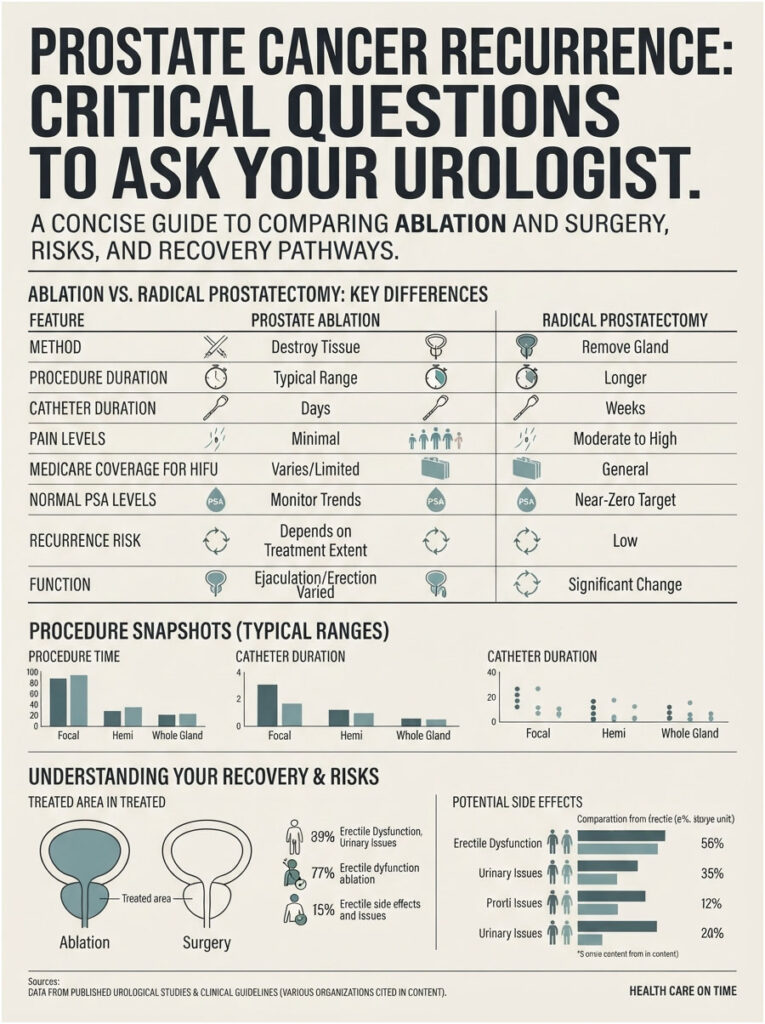
- Is my problem cancer, BPH, or both, and which is this procedure treating?
- How many of these exact procedures have you personally performed?
- What percentage of my gland do you plan to ablate?
- Am I a candidate for active surveillance instead, and why or why not?
- Do I have prostate calcifications that could interfere?
- What is my prostate volume and my Grade Group?
- How long will the catheter stay in, and what happens if I cannot void when it comes out?
- What is your center’s repeat ablation rate?
- If this fails, what options remain, and does this procedure make any of them harder?
- What is the PSA, MRI, and biopsy schedule afterward?
- Who do I call at 2 a.m. if the catheter stops draining?
- Can I have a written, itemized cost estimate including anesthesia and facility fees?
Frequently Asked Questions
Is prostate ablation the same as having your prostate removed?
No. Ablation destroys tissue in place using heat, cold, laser, or electrical energy, and the gland stays in your body. Radical prostatectomy removes the entire prostate surgically. That difference drives most of the variation in recovery time, catheter duration, and side effect profiles between the two.
How long does prostate ablation take?
It depends on the technique. Needle-based ablation runs about 20 to 30 minutes. Cryoablation takes roughly two hours. TULSA involves around three hours of ablation plus an hour of recovery, so budget four hours at the center. Add two more for check-in and anesthesia prep.
How long do you wear a catheter after prostate ablation?
Anywhere from 24 hours to two weeks. After cryoablation it often comes out within a few days. After whole-gland TULSA, two weeks is common, and removal is paired with a voiding test. If you cannot urinate on your own, the catheter goes back in temporarily.
Is prostate ablation painful?
The procedure itself is not, because you are under general anesthesia with a breathing tube. Afterward, most men describe pelvic aching, bladder spasms, and burning with urination rather than sharp pain. Oral medication usually handles it. Patients tell us the catheter bothered them more than the ablation.
Does Medicare cover HIFU for prostate cancer?
Coverage has tightened considerably. The Medicare code used for HIFU was retired starting in October 2022, and centers report patients often paying the full cost themselves. Coverage varies by plan and location, so confirm in writing with both your carrier and the treating facility before scheduling.
What is a normal PSA after prostate ablation?
There is no single target, because part of your prostate still produces PSA. Whole-gland TULSA has been reported to produce roughly a 95% PSA reduction. Focal treatment produces a partial drop and a new personal baseline. Your urologist reads the trend across serial tests, not one reading.
Can prostate cancer come back after ablation?
Yes. Seven-year HIFU data showed 69% failure-free survival, with 18% of men needing at least one repeat ablation and 9.5% eventually requiring whole-gland or systemic treatment. Cancer can also surface in untreated parts of the gland, which is why follow-up MRI and biopsy schedules are not optional.
Can you still ejaculate after prostate ablation?
Usually yes, though volume often decreases and rust-colored semen is common for weeks or months. Focal approaches preserve ejaculation better than whole-gland treatment. Erectile function commonly dips first and recovers across six to twelve months, with persistent problems reported most often after HIFU.
Can you have surgery or radiation if ablation fails?
Yes. Repeat ablation, radical prostatectomy, radiation, and systemic therapy all remain available. Salvage surgery after prior ablation is technically more demanding because of scarring, so ask your surgeon directly how this procedure would affect that option before you commit to it.
Who is a candidate for focal therapy?
Published criteria cluster around localized disease, PSA at or below 20 ng/mL, prostate volume at or below 70 cc, and an MRI-visible lesion confirmed by targeted biopsy. Large prostate calcifications can disqualify you from ultrasound-based approaches. Grade Group 2 or 3 disease is the most commonly treated range.
Is prostate ablation used for an enlarged prostate too?
Yes, and this is where most confusion starts. Rezum uses steam in an office setting, Aquablation uses a heat-free water jet in an operating room, and TUNA uses radiofrequency needles. All three improve urine flow in BPH. None treats cancer, and insurance coverage for them is generally much better.
Medical Disclaimer
This article is for general education and does not replace advice from a licensed physician. Prostate ablation decisions depend on your biopsy results, imaging, prostate volume, PSA history, and other health conditions. Ablation for prostate cancer is still classified as investigational in current US guidelines. Talk with a board-certified urologist before making any treatment decision.
References
- American Cancer Society: Key Statistics for Prostate Cancer
- NCI SEER: Common Cancer Sites, Cancer Stat Facts
- AUA/ASTRO: Clinically Localized Prostate Cancer Guideline
- Memorial Sloan Kettering: About Your Prostate Ablation Procedure
- NYU Langone Health: Ablation Treatment for Prostate Cancer
- Johns Hopkins Medicine: TULSA Gives New Options for Intermediate-Risk Prostate Cancer
- Cleveland Clinic: Rezum Water Vapor Therapy
- Stanford Health Care: Rezum Water Vapor Therapy
- UroToday: EAU 2026 CAPTAIN Randomized Controlled Trial Perioperative Outcomes
- UroToday: AUA 2025 State-of-the-Art Lecture on Focal Therapy in Prostate Cancer
- Urology Times: TULSA Preserves Penile Length vs Robotic Prostatectomy in CAPTAIN Trial
- TULSA Procedure: Benefits and Risks
- ClinicalTrials.gov: HIFU for Focal Ablation of Prostate Tissue (NCT03620786)
- Investigative and Clinical Urology: Systematic Review of Outcomes After Partial Prostate Ablation
- PMC: Whole-Gland and Focal Cryotherapy in Recurrent Prostate Cancer
- Boston Scientific: Rezum Water Vapor Therapy Safety Information
- Wikipedia: Transurethral Needle Ablation of the Prostate
- Medical News Today: Prostate Ablation for Cancer, Overview and How to Prepare
- Scionti Prostate Center: Medicare, Insurance and Financial Information for HIFU