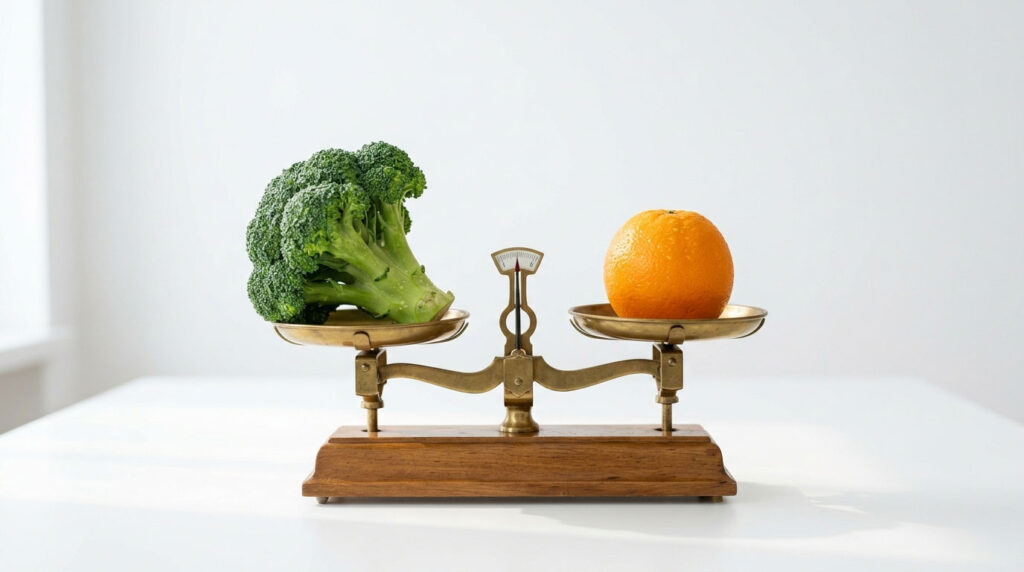
Ask almost anyone which food means vitamin C, and they will say an orange. It is one of nutrition’s most stubborn assumptions. Yet the fruit with all the marketing is not the winner on your plate. Cup for cup, a humble green vegetable quietly outperforms it, and most people have walked past it in the produce aisle their whole lives.
Table of Contents
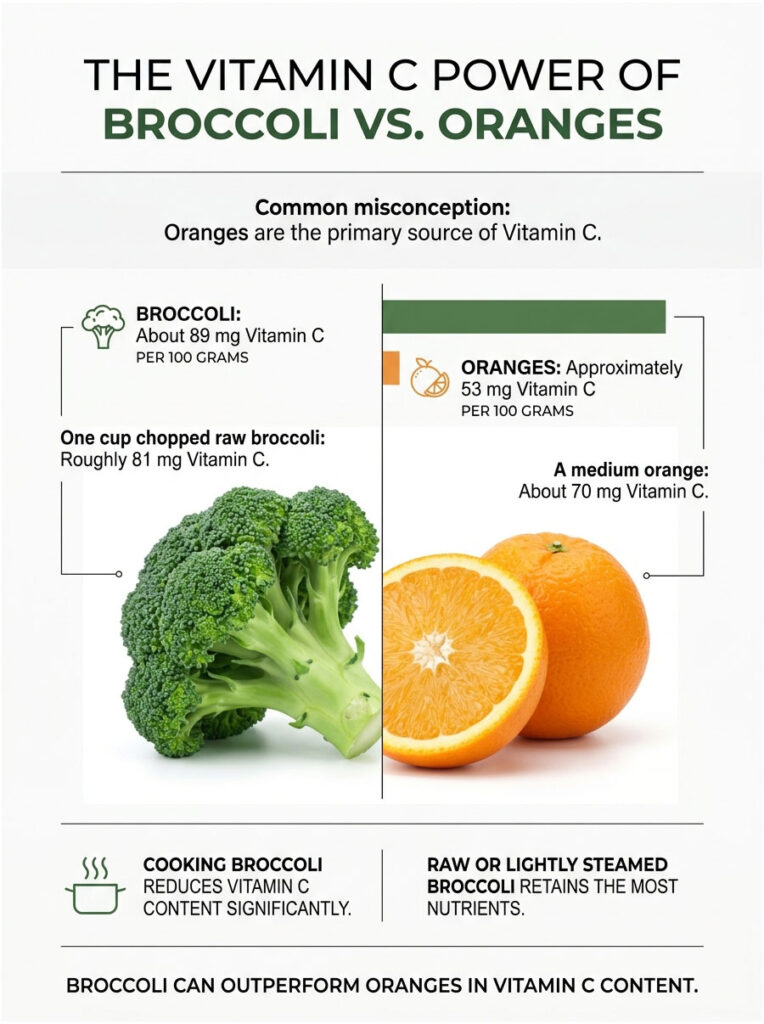
Quick Answer: Yes, broccoli has plenty of vitamin C, and it actually beats oranges. Raw broccoli contains about 89 mg of vitamin C per 100 grams, compared with about 53 mg in an orange. One cup of chopped raw broccoli provides roughly 81 mg, near a full day’s worth for an adult, while a medium orange offers about 70 mg. Cooking lowers broccoli’s vitamin C, so raw or lightly steamed keeps the most.
At a Glance
- Raw broccoli holds more vitamin C per 100 grams than an orange does.
- One cup of chopped raw broccoli delivers about 81 mg of vitamin C, close to a full daily target.
- Vitamin C is water-soluble and heat-sensitive, so boiling can cut the amount roughly in half.
- The daily target is 90 mg for men and 75 mg for women, with the FDA Daily Value set at 90 mg.
- Steaming, microwaving, or eating broccoli raw protects far more vitamin C than boiling.
- Broccoli also brings fiber, vitamin K, folate, and plant compounds that an orange cannot match.
Does Broccoli Have Vitamin C? The Short Answer
The short answer is a clear yes, and the amount surprises most people. Broccoli is not a minor source of vitamin C. It is one of the better everyday sources you can put on a plate.
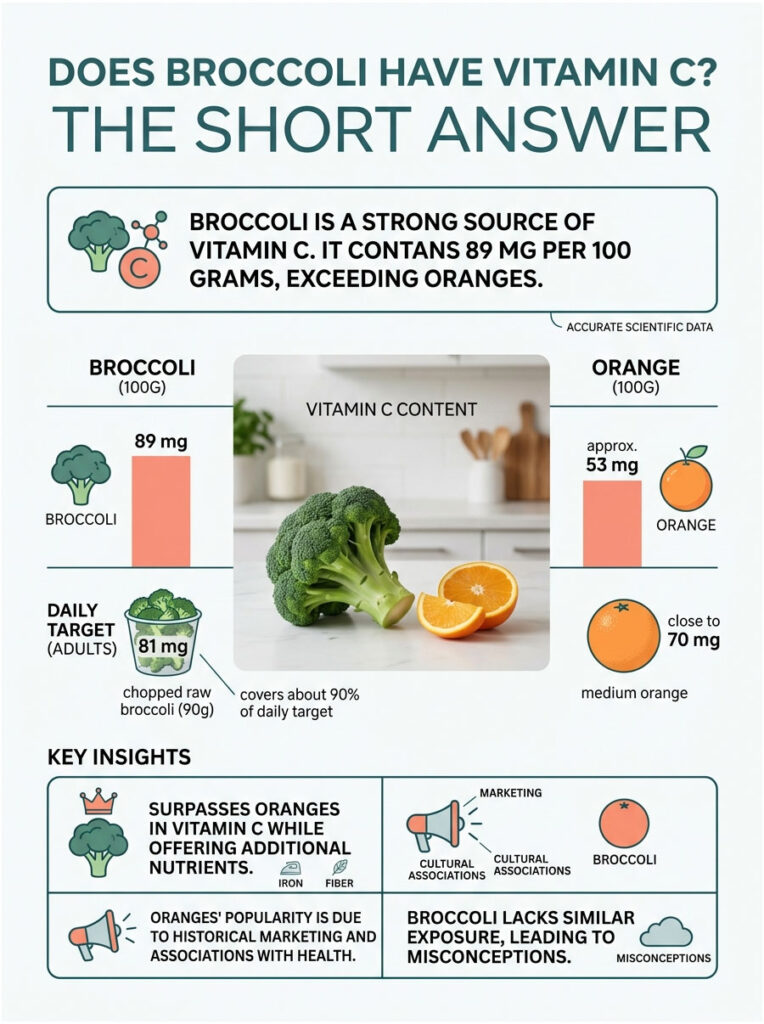
According to the USDA, raw broccoli contains roughly 89 mg of vitamin C per 100 grams. An orange, by comparison, holds about 53 mg per 100 grams. Gram for gram, broccoli is the stronger source.
Patients asking our team about immune-friendly foods are often startled by this. The assumption that citrus is the only real path to vitamin C runs deep, and it simply is not accurate.
How Much Vitamin C Broccoli Really Contains
The per-100-gram figure is useful, but most people do not eat broccoli by the 100 grams. They eat it by the cup, so that is the number that matters in real life.
One cup of chopped raw broccoli, around 90 grams, supplies roughly 81 mg of vitamin C. The Cleveland Clinic notes this covers about 90 percent of the daily target for an adult. A medium orange, for reference, provides close to 70 mg.
So a single cup of broccoli edges out a whole orange, and it does so while bringing far more to the table nutritionally. That is the heart of the comparison this guide unpacks.
Why Oranges Got All the Credit
If broccoli is the stronger source, why do oranges own the reputation? The answer is more about history and marketing than nutrition.
Orange juice became a breakfast staple in the twentieth century, backed by decades of advertising that tied citrus to health and vitamin C in the public mind. The link stuck, and it has been hard to shake ever since.
Broccoli, meanwhile, never had a marketing campaign. It simply sat in the vegetable aisle doing its job. Our medical reviewers note that this gap between reputation and reality shapes a lot of food beliefs, not just this one.
Broccoli vs Orange: The Vitamin C Showdown
A fair comparison needs the numbers laid side by side. When you do that, the picture becomes clear, though the details depend on how you measure.
Per 100 Grams, and Per Real Serving
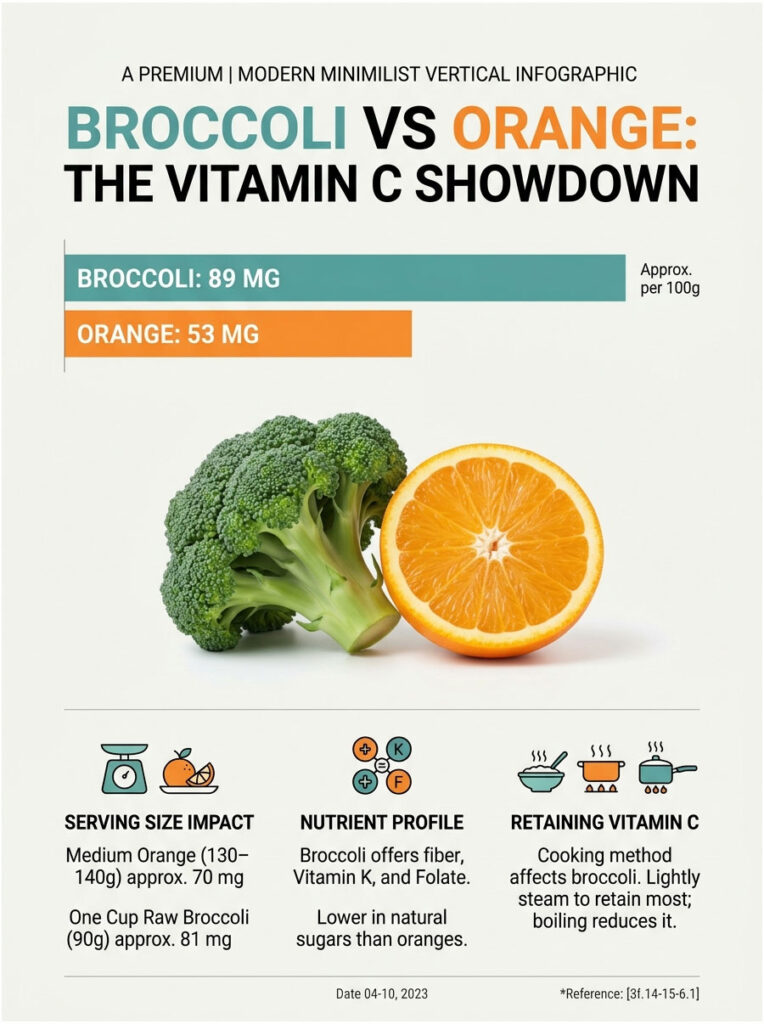
Measured per 100 grams, raw broccoli wins comfortably, about 89 mg against roughly 53 mg for an orange. That is the cleanest apples-to-apples comparison nutritionists use.
But serving sizes differ in everyday eating. A medium orange weighs around 130 to 140 grams, while a typical cup of chopped broccoli is closer to 90 grams. Accounting for that, a medium orange lands near 70 mg and a cup of raw broccoli around 81 mg.
Either way you slice it, broccoli comes out ahead. The vegetable wins on concentration, and it still wins at a realistic serving.
One Cup of Broccoli vs One Orange
Here is the comparison most readers actually want. One cup of raw broccoli versus one orange, head to head.
The broccoli delivers roughly 81 mg of vitamin C; the orange roughly 70 mg. Broccoli takes it. And the gap widens once you count everything else in the broccoli, the fiber, vitamin K, folate, and plant compounds an orange largely lacks.
The table below sets broccoli and oranges against a few other strong vitamin C foods so you can see where each one stands.
| Food (Raw) | Vitamin C per 100 g | Vitamin C per Typical Serving | % Daily Value per Serving |
| Broccoli | About 89 mg | About 81 mg (1 cup chopped, ~90 g) | About 90% |
| Orange | About 53 mg | About 70 mg (1 medium, ~131 g) | About 78% |
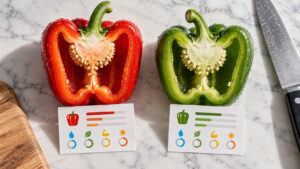
| Red bell pepper | About 127 mg | About 190 mg (1 cup chopped, ~149 g) | About 211% |
| Kiwi | About 93 mg | About 64 mg (1 medium, ~69 g) | About 71% |
| Strawberries | About 59 mg | About 85 mg (1 cup halved, ~152 g) | About 94% |
What the Numbers Do Not Show
Raw figures tell only part of the story. The way you eat each food shapes what you actually absorb, and the two compare differently in practice.
An orange is almost always eaten raw and whole, so its vitamin C reaches you intact. Broccoli is often cooked, which can trim its advantage if you boil it hard. Eaten raw or lightly steamed, though, broccoli holds its lead comfortably.
There is also the sugar question. An orange brings natural sugars that broccoli does not, which matters for anyone watching blood sugar or overall calories. For nutrient density per calorie, broccoli is hard to beat.
Cooked Broccoli vs an Orange
It is fair to ask whether broccoli still wins once it is cooked, since that is how many people eat it. The answer depends entirely on the method you choose.
Lightly steamed broccoli keeps most of its vitamin C, so a cooked cup still lands close to or above a medium orange. Hard-boiled broccoli is the exception, where heavy losses can pull it below the orange.
The takeaway is simple. Cook broccoli gently and it holds its edge; boil it for a long time and the orange catches up. Preparation, not the vegetable itself, decides the contest.
Why Vitamin C Matters for Your Body
Knowing broccoli wins the contest is only useful if you know why vitamin C is worth chasing in the first place. It does more than fight colds.
Immune Support and Collagen
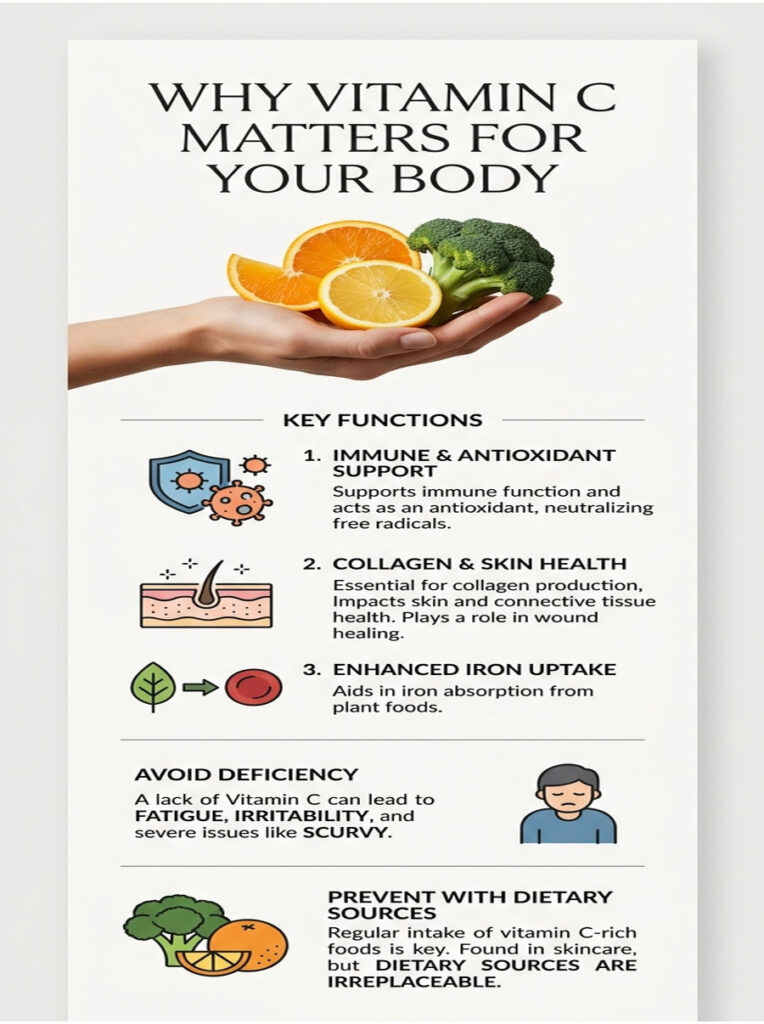
Vitamin C is widely known for supporting the immune system, and that reputation is earned. It helps various immune cells function and acts as an antioxidant that protects them from damage.
It is also essential for making collagen, the protein that holds together your skin, blood vessels, bones, and connective tissue. Without enough vitamin C, the body cannot build collagen properly, which is why severe deficiency causes the old sailor’s disease, scurvy.
Patients commonly ask us whether vitamin C “cures” colds. The honest answer is no, though adequate intake supports normal immune function, which is a more modest but real benefit.
Iron Absorption and Antioxidant Defense
One of vitamin C’s quieter jobs is helping your body absorb iron from plant foods. The iron in beans, spinach, and lentils is harder to absorb than the iron in meat, and vitamin C improves that uptake significantly.
This is why pairing iron-rich plant foods with a vitamin C source is a practical habit. A meal that combines broccoli with lentils, for instance, helps you get more from both.
As an antioxidant, vitamin C also helps neutralize unstable molecules called free radicals. Across patients we serve, those eating a varied, produce-heavy diet tend to take in vitamin C steadily without much effort.
What Happens When You Run Low
Vitamin C deficiency is uncommon in the United States, but it is not unheard of. People with very limited diets, heavy alcohol use, or certain medical conditions can fall short over time.
Early signs of low vitamin C can include fatigue, irritability, and easy bruising. Prolonged, severe deficiency leads to scurvy, with bleeding gums, joint pain, and poor wound healing, since the body can no longer build collagen.
The reassuring part is how little it takes to prevent this. A steady habit of vitamin C rich foods like broccoli keeps most people well clear of any shortfall.
Vitamin C and Healthy Skin
Because vitamin C is needed to build collagen, it plays a real part in skin health. Collagen gives skin its structure and firmness, and the body cannot make it without enough vitamin C.
Vitamin C also supports wound healing, since repairing tissue depends on producing new collagen. Its antioxidant activity adds a further layer of protection against everyday oxidative stress.
This is one reason vitamin C appears in so many skincare products. Still, a steady dietary supply from foods like broccoli supports skin from the inside, which no cream can fully replace.
| US Vitamin C Fact | Figure | Source |
| RDA for adult men | 90 mg per day | NIH Office of Dietary Supplements |
| RDA for adult women | 75 mg per day | NIH Office of Dietary Supplements |
| Extra needed by people who smoke | 35 mg per day more | NIH Office of Dietary Supplements |
| FDA Daily Value used on food labels | 90 mg | FDA |
| Average intake, US adult men (NHANES) | About 105 mg per day | NIH Office of Dietary Supplements |
How Cooking Changes Broccoli’s Vitamin C
Here is the catch worth knowing. The 89 mg figure is for raw broccoli, and how you cook it changes the final number on your plate.
Why Vitamin C Is Fragile
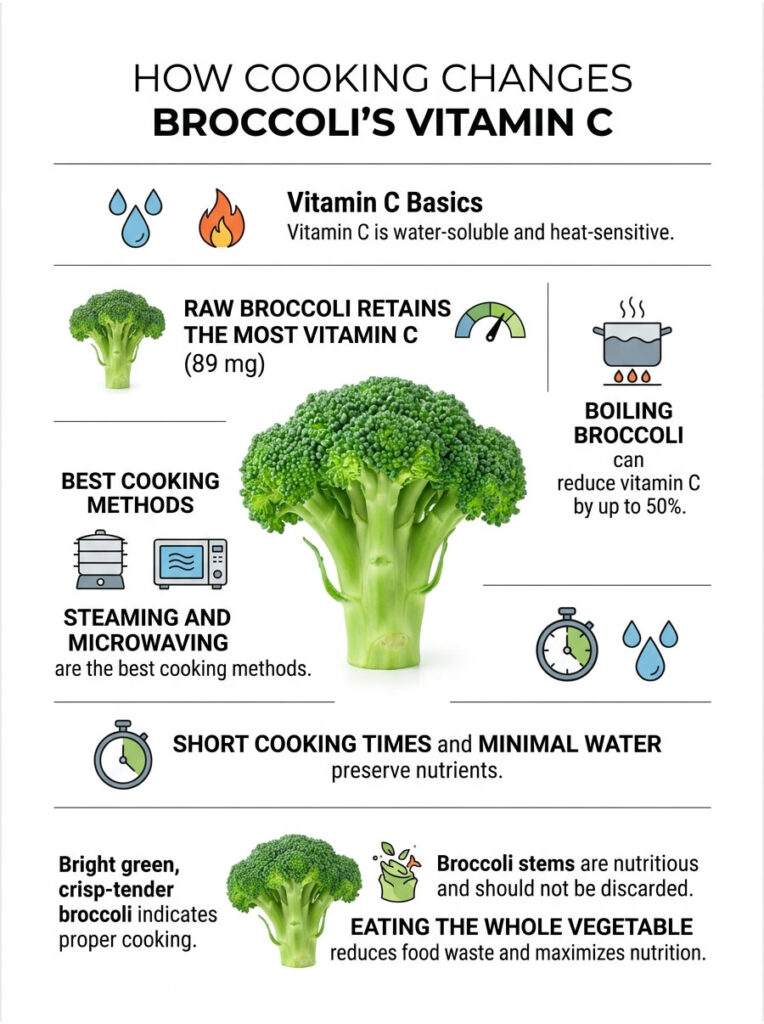
Vitamin C has two weaknesses. It is water-soluble, meaning it leaches out into cooking water, and it is heat-sensitive, meaning high temperatures break it down.
Put those two traits together and you can see the problem. Boiling broccoli exposes it to both heat and a large volume of water, which is the worst-case scenario for vitamin C retention.
This does not mean cooked broccoli is worthless. It still delivers vitamin C, fiber, and other nutrients. It simply means the cooking method matters more than most people realize.
Raw, Steamed, Boiled, and Microwaved Compared
Raw broccoli keeps the most vitamin C, since nothing is heated or rinsed away. If you enjoy it raw in salads or with a dip, that is the highest-retention option.
Steaming is the best cooked choice. The broccoli is not sitting in water, so far less vitamin C leaches out, and cooking times are short. Microwaving with little or no water performs similarly well.
Boiling is the method to limit. Studies show boiling can cut broccoli’s vitamin C by up to about half, as the vitamin escapes into water that usually goes down the drain. Our lab partners note that simple swaps in cooking habits often make a bigger difference than people expect.
A Simple Rule for the Kitchen
If you remember nothing else, remember this: keep the heat short and the water minimal. Those two habits protect most of what broccoli offers.
Cook broccoli only until it turns bright green and is just tender to a fork, then stop. Overcooked, drab, soft broccoli has lost both texture and a good share of its vitamin C. Bright and crisp-tender is the visual cue that you have done it right.
Do Not Toss the Stems
One common habit quietly throws vitamin C away: tossing the broccoli stems. The stalks are fully edible, and they carry vitamin C and fiber much like the florets do.
Peeled and sliced, broccoli stems are crisp and mild. They work well in stir-fries, slaws, and soups, and using them stretches both the nutrition and your grocery budget.
Our lab partners often point out that food waste is also nutrient waste. Eating the whole vegetable, stems included, simply gets you more of what you already paid for.
How Much Vitamin C Do You Actually Need
Beating an orange is satisfying, but the practical question is whether broccoli helps you hit your daily target. For most people, it does so easily.
The RDA and the FDA Daily Value
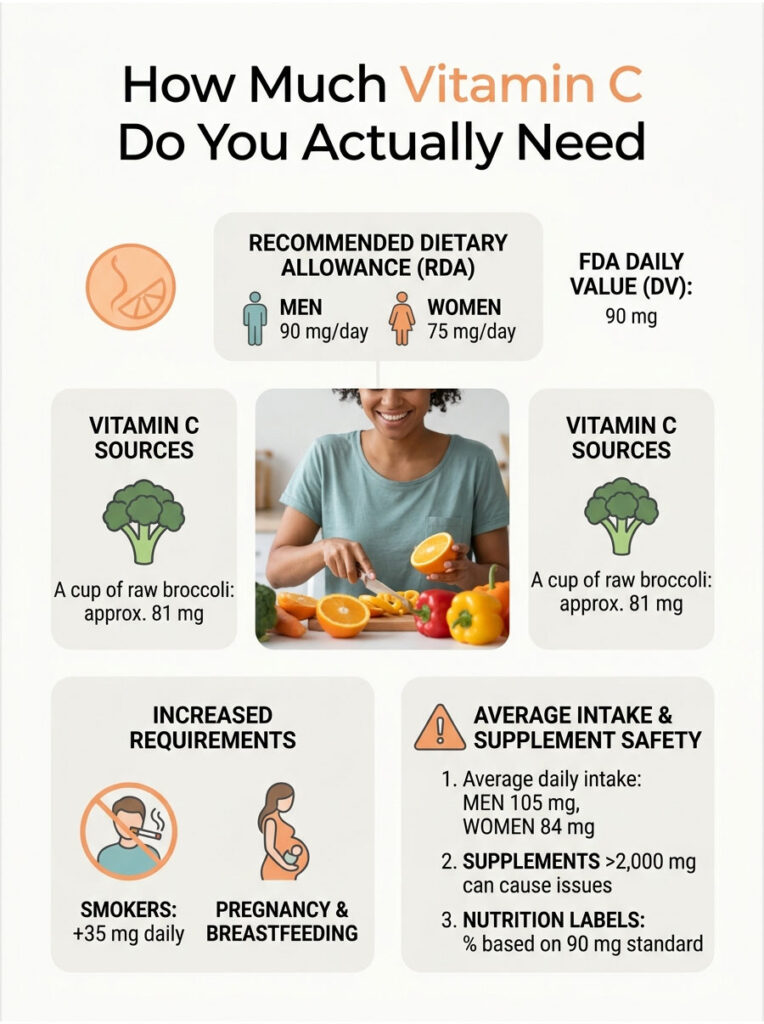
The NIH Office of Dietary Supplements sets the Recommended Dietary Allowance for vitamin C at 90 mg per day for adult men and 75 mg per day for adult women.
The FDA uses a Daily Value of 90 mg on Nutrition Facts labels, which is the percentage you see listed on packaged foods. A single cup of raw broccoli, at about 81 mg, gets you most of the way there in one serving.
Encouragingly, most Americans already meet the basic target. NHANES survey data put average intake near 105 mg per day for adult men and around 84 mg for women.
Smokers, Pregnancy, and Other Higher-Need Groups
Some people need more. The NIH advises that people who smoke take in an extra 35 mg of vitamin C per day, because smoking increases oxidative stress and depletes the vitamin faster.
Pregnancy and breastfeeding also raise the requirement modestly. While broccoli alone can help cover these higher needs, anyone with specific health concerns should talk with a healthcare provider rather than guess. Vitamin C from a varied diet is generally the safest, steadiest approach.
Can You Get Too Much?
For food, the answer is essentially no. The body absorbs what it needs and excretes the rest, so eating vitamin C rich foods does not put you at risk.
Supplements are a different story. Very high supplemental doses, generally above 2,000 mg per day for adults, can cause digestive upset and other issues. This is one more reason food sources like broccoli are the sensible default for most people.
Reading a Nutrition Label for Vitamin C
Packaged foods make vitamin C easy to track once you know where to look. The Nutrition Facts label lists vitamin C with a percent Daily Value based on the FDA’s 90 mg standard.
A food showing 20 percent Daily Value for vitamin C provides about 18 mg per serving. Reading these numbers helps you see how close your daily choices bring you to the target without any guesswork.
Fresh broccoli does not carry a label, of course. But knowing that one cup delivers roughly 90 percent of the Daily Value gives you the same quick mental math at the produce aisle.
Getting the Most Vitamin C from Broccoli
Owning the vitamin C crown means little if it drains away before you eat it. A few simple habits protect what broccoli offers.
Buying and Storing for Freshness
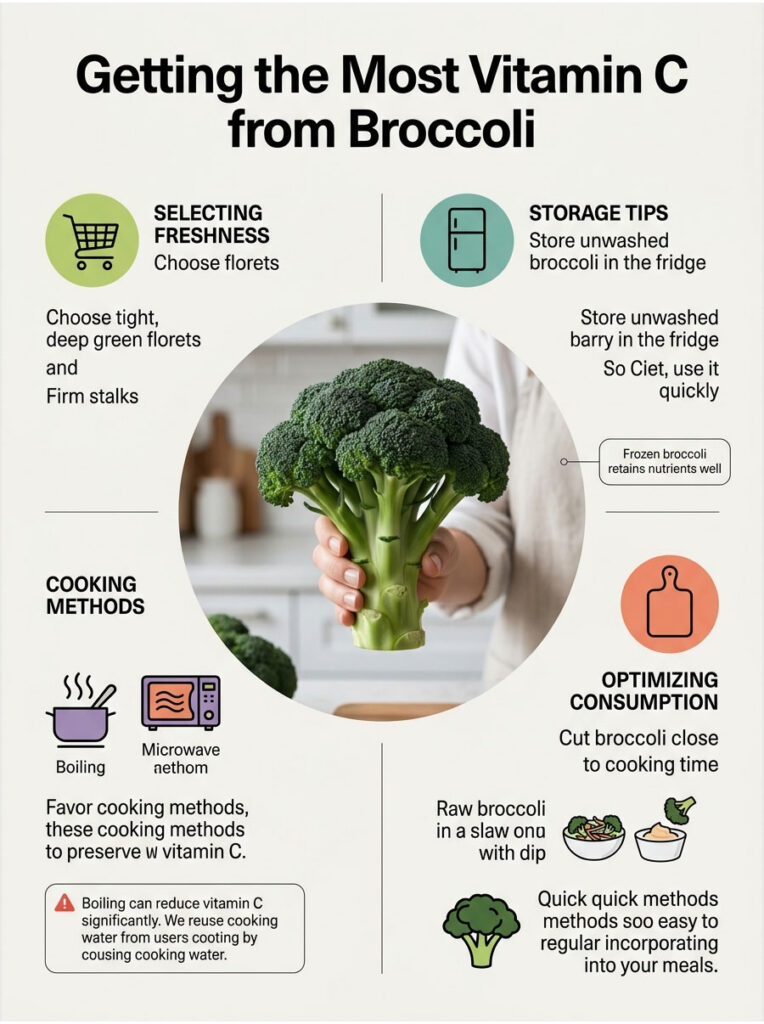
Vitamin C declines slowly after harvest, so freshness counts. Look for broccoli with tight, deep green florets and firm stalks, and skip heads that are yellowing or limp.
Store broccoli unwashed in the refrigerator and use it within a few days for the best vitamin C content. Frozen broccoli is a strong option too, since it is usually frozen soon after harvest, locking in nutrients.
Prep and Cooking That Protect the Vitamin
When you do cook broccoli, favor short, gentle methods. Steam it until just tender and still bright green, microwave it with a splash of water, or stir-fry it quickly over higher heat.
Cut broccoli closer to cooking time rather than hours ahead, since more cut surface exposed to air and water means more vitamin loss. And if you do boil it, consider using the cooking water in a soup or sauce so the leached vitamin C is not wasted.
Easy Ways to Eat More Broccoli
The best preparation is the one you will actually repeat. Broccoli is flexible enough to fit almost any meal without much fuss.
Raw florets work well with hummus or a yogurt dip, and shredded raw broccoli makes a crunchy slaw. For cooked options, a quick steam alongside dinner, a fast stir-fry, or roasted florets all keep things simple.
Patients commonly ask us how to make vegetables a habit rather than a chore. The honest answer is to keep it easy, since a method you enjoy beats a perfect one you avoid.
| Your Goal | Best Choice | Why It Works |
| Maximum vitamin C retention | Eat broccoli raw | No heat or water to break down or wash away the vitamin |
| Best cooked option | Steam or microwave briefly | Little water contact and short cook time preserve most vitamin C |
| Convenient year-round supply | Use frozen broccoli | Frozen soon after harvest, so vitamin C is well preserved |
| Avoiding the biggest loss | Skip long boiling | Boiling can remove up to about half the vitamin C |
| Saving leached nutrients | Reuse the cooking liquid | Vitamin C lost to water stays in soups, stocks, or sauces |
Broccoli’s Other Nutritional Wins
Vitamin C is only one reason broccoli earns its place. The full package is what makes it stand out next to an orange.
Fiber, Vitamin K, and Folate
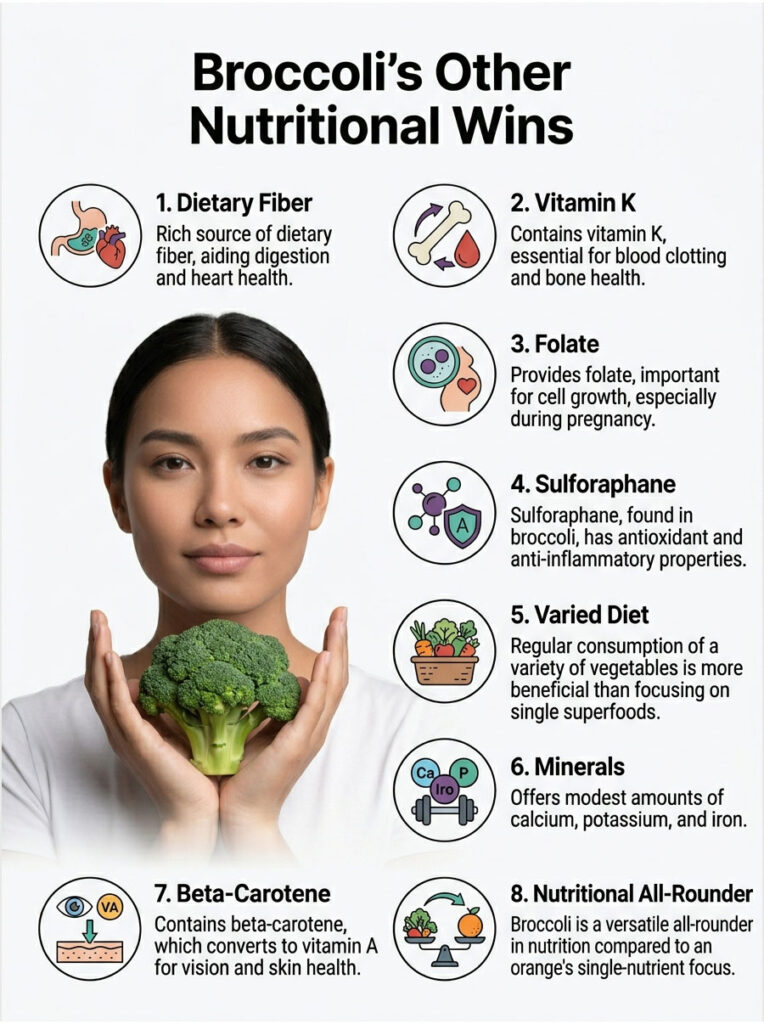
Broccoli is a solid source of dietary fiber, which supports digestion, steady blood sugar, and heart health. An orange has fiber too, but broccoli pairs it with a different mix of nutrients.
It is also rich in vitamin K, important for blood clotting and bone health, and folate, a B vitamin essential for cell growth that is especially important during pregnancy. Few single vegetables cover this much ground at once.
Sulforaphane and Plant Compounds
Broccoli belongs to the cruciferous family, alongside cabbage, kale, and Brussels sprouts. These vegetables contain sulforaphane, a plant compound studied for its antioxidant and anti-inflammatory activity.
Research on cruciferous vegetables and long-term health is promising, though still developing, and not every finding is settled. In cases reviewed by our medical team, the steady message is consistency: regular servings of a variety of vegetables matter more than any single superfood claim.
Calcium, Potassium, and Beyond
Broccoli’s nutrient list runs longer than most people expect. Beyond vitamin C, fiber, vitamin K, and folate, it offers modest amounts of calcium, potassium, and iron.
It also provides beta-carotene, which the body converts to vitamin A, supporting vision and skin health. Few vegetables pack this range of nutrients into so few calories.
This breadth is what sets broccoli apart from an orange. The orange is a fine single-nutrient star, while broccoli plays the role of an all-rounder on the plate.
Other Everyday Foods That Beat Oranges for Vitamin C
Broccoli is not alone in outscoring oranges. Several common foods do, and knowing them makes hitting your target easy.
Red Bell Peppers, Kiwi, and Strawberries
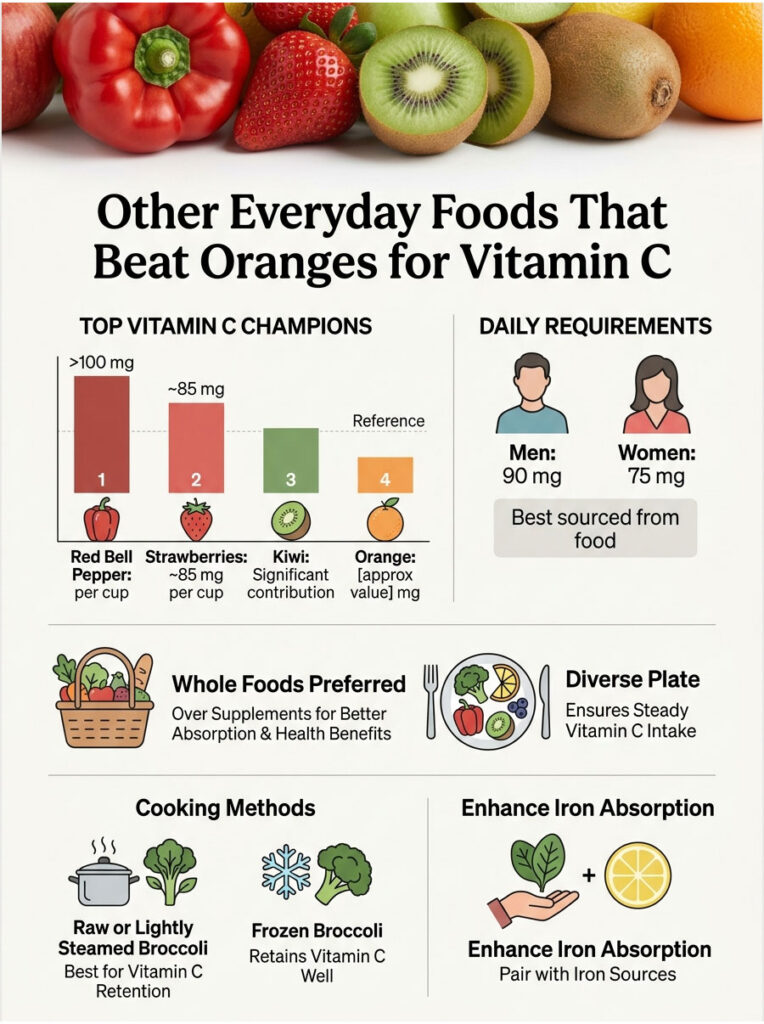
Red bell peppers are the standout. A single cup of chopped raw red pepper can deliver well over 100 mg of vitamin C, comfortably above both broccoli and oranges.
Kiwi and strawberries also perform well. A cup of strawberries provides roughly 85 mg, and a kiwi offers a healthy dose in a small package. Each of these is easy to add to everyday meals and snacks.
Building a Vitamin C Rich Plate
The practical takeaway is not to crown one food and ignore the rest. Variety is what keeps vitamin C intake steady and reliable.
A plate that rotates broccoli, peppers, citrus, kiwi, and berries through the week covers your needs without effort. Patients commonly ask us for the single best vitamin C food, and the honest answer is that the best one is the mix you will actually eat.
Whole Foods vs Vitamin C Supplements
With vitamin C supplements widely sold, it is reasonable to ask whether food sources still matter. For most healthy people, food is the better starting point.
Whole foods like broccoli deliver vitamin C alongside fiber, other vitamins, and plant compounds that a supplement cannot replicate. The nutrients work together in ways a single pill does not capture.
Supplements do have their place, especially when a doctor recommends one for a specific reason. But for everyday vitamin C, a varied diet built on foods like broccoli is the simpler, more complete choice.
Frequently Asked Questions
Does broccoli have more vitamin C than an orange?
Yes. Raw broccoli contains about 89 mg of vitamin C per 100 grams, while an orange has about 53 mg. Even at realistic servings, a cup of raw broccoli (around 81 mg) beats a medium orange (around 70 mg), and broccoli also brings more fiber and other nutrients.
How much vitamin C is in one cup of broccoli?
One cup of chopped raw broccoli, about 90 grams, contains roughly 81 mg of vitamin C. That covers close to 90 percent of the daily target for an adult. Cooking can lower this amount, so raw or lightly steamed broccoli retains the most vitamin C.
Does cooking broccoli destroy its vitamin C?
Cooking reduces it but does not eliminate it. Vitamin C is water-soluble and heat-sensitive, so boiling can cut the amount by up to about half. Steaming, microwaving with little water, or quick stir-frying preserves far more than boiling does.
Is raw or cooked broccoli better for vitamin C?
Raw broccoli retains the most vitamin C, since no heat or water is involved. Among cooked methods, steaming and microwaving preserve the most. Boiling causes the largest losses. That said, cooked broccoli still provides meaningful vitamin C along with fiber and other nutrients.
How much vitamin C do you need each day?
The NIH recommends 90 mg per day for adult men and 75 mg per day for adult women. People who smoke need an extra 35 mg daily. The FDA Daily Value on food labels is 90 mg. One cup of raw broccoli supplies most of that target.
Can broccoli replace oranges for vitamin C?
Yes, broccoli can fully cover your vitamin C needs, and a cup provides more than a medium orange. That said, variety is healthiest. Rotating broccoli with peppers, citrus, kiwi, and berries gives you steady vitamin C plus a wider range of other nutrients.
What is the best way to cook broccoli to keep vitamin C?
Steaming is the best cooked method, since the broccoli is not submerged in water. Microwaving with a small splash of water and quick stir-frying also preserve a lot. Keep cooking times short and the broccoli bright green to retain the most vitamin C.
Does frozen broccoli still have vitamin C?
Yes. Frozen broccoli is usually frozen shortly after harvest, which locks in much of its vitamin C. It can be a reliable, convenient source year-round. Cook it gently, using steaming or microwaving rather than long boiling, to preserve the most vitamin C.
What vegetable has the most vitamin C?
Red and yellow bell peppers are among the highest, often topping 100 mg of vitamin C per cup. Broccoli, Brussels sprouts, and kale are also strong sources. Among vegetables, peppers usually lead, with broccoli a close and very accessible runner-up.
Can you get too much vitamin C from food?
Getting too much vitamin C from food alone is very unlikely, since the body excretes the excess. Very high doses from supplements can cause digestive upset. For most people, eating vitamin C rich foods like broccoli carries no risk of overdoing it.
Does broccoli help with iron absorption?
Yes. The vitamin C in broccoli helps your body absorb iron from plant foods, which is otherwise harder to absorb than iron from meat. Pairing broccoli with iron-rich foods like lentils or spinach is a simple way to get more from both.
How long does broccoli keep its vitamin C in the fridge?
Vitamin C declines gradually after harvest. For the best content, store broccoli unwashed in the refrigerator and use it within three to five days. The fresher the broccoli, the more vitamin C it retains, so buying it close to when you will eat it helps.
Disclaimer: This article is for general educational purposes and is not medical or dietary advice. Nutrient values are approximate and vary with variety, freshness, growing conditions, and preparation. It does not replace guidance from a licensed healthcare professional or registered dietitian. If you have specific nutritional concerns or a health condition, consult a qualified provider.
References
- USDA FoodData Central: Nutrient Data for Broccoli and Oranges
- NIH Office of Dietary Supplements: Vitamin C Fact Sheet
- U.S. Food and Drug Administration: Nutrition Facts Label and Daily Values
- Cleveland Clinic: Health Benefits of Broccoli
- National Academies of Sciences: Dietary Reference Intakes for Vitamin C