Americans eat more onions than any other fresh vegetable, about 21 pounds per person a year. Spread across 365 days, that’s under an ounce a day, roughly a quarter of a medium onion.
Table of Contents
Here’s the twist. The blood pressure studies behind most “onions are heart food” headlines used quercetin doses equal to about 3 pounds of red onion a day. The gap between what research tested and what you actually eat is the whole story.
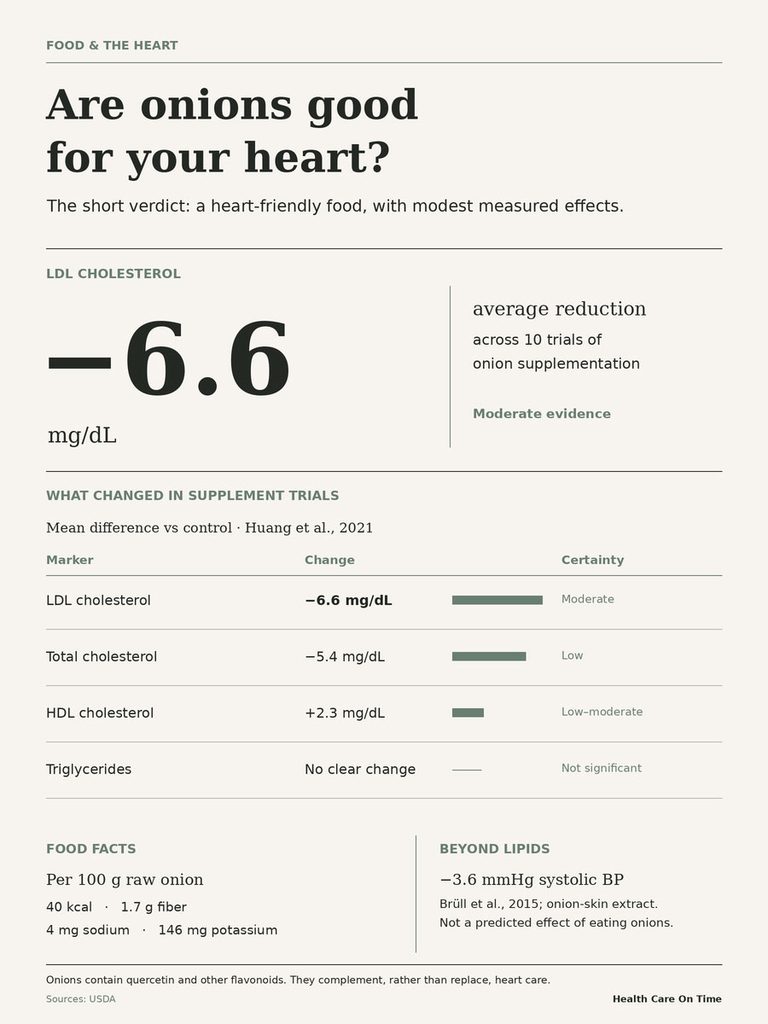
Quick Answer: Yes, onions are modestly good for heart health and cholesterol. Across 10 randomized trials, onion products lowered LDL (“bad”) cholesterol by about 6.6 mg/dL and raised HDL by about 2.3 mg/dL, while triglycerides didn’t change. Most trials used onion extracts, not whole onions. Onions work best as one part of a heart-healthy diet, not as a treatment.
At a Glance
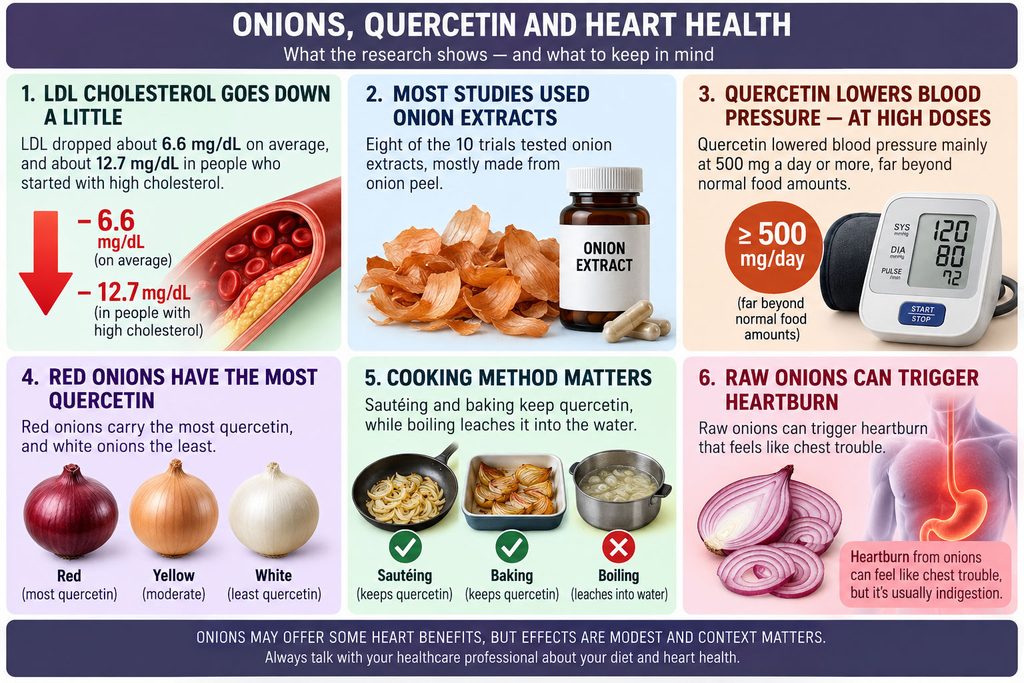
- LDL dropped about 6.6 mg/dL on average, and about 12.7 mg/dL in people who started with high cholesterol.
- Eight of the 10 trials tested onion extracts, mostly made from onion peel.
- Quercetin lowered blood pressure mainly at 500 mg a day or more, far beyond normal food amounts.
- Red onions carry the most quercetin, and white onions the least.
- Sautéing and baking keep quercetin, while boiling leaches it into the water.
- Raw onions can trigger heartburn that feels like chest trouble.
What onions can and can’t do for your heart:
- They can lower LDL cholesterol slightly, especially if yours is already high.
- They can nudge HDL cholesterol up a little.
- They can’t lower triglycerides in any reliable way.
- They can’t lower blood pressure at normal food amounts.
- They can’t replace statins or blood pressure medicine.
Are Onions Good for Your Heart? The Short Verdict
Onions are a heart-friendly food. The honest answer to “how much do they help?” is “a little.” That still counts when an onion costs less than a dollar and flavors almost everything you cook.
Patients who get lipid panels through HealthCareOnTime often ask whether one food can fix their numbers. Onions can’t. But they can be one of several small, steady changes that add up over months.
What’s Inside an Onion That Matters for Your Heart
Three groups of compounds do the work:
- Quercetin: a flavonoid that relaxes blood vessels and calms platelets in lab and human studies.
- Organosulfur compounds: the sulfur chemicals that make you cry. They may slow cholesterol production and blood clotting.
- Fructan fiber: feeds gut bacteria and may help your body clear cholesterol.
The basic nutrition helps too. According to USDA FoodData Central, raw onion has 40 calories, 1.7 g of fiber, and just 4 mg of sodium per 100 g. Potassium is also modest, at about 146 mg per 100 g. That low-sodium, low-potassium combination matters for some heart and kidney patients.
What Onions Can Do, and What They Can’t
Our medical team reviewed the human trials marker by marker. The effects are real but small, and the strongest data comes from extracts.
| Heart Marker | What Trials Found | Size of Effect | Form Tested | Evidence Strength |
| LDL cholesterol | Lowered | −6.6 mg/dL average; −12.7 mg/dL with high cholesterol | Mostly onion peel extract | Moderate (10 small RCTs) |
| HDL cholesterol | Raised slightly | +2.3 mg/dL | Mostly extract | Low to moderate (shifted when one trial was removed) |
| Total cholesterol | Lowered | −5.4 mg/dL; −17.2 mg/dL with high cholesterol | Mostly extract | Low (not stable in sensitivity checks) |
| Triglycerides | No clear change | −6.6 mg/dL, not significant | Mostly extract | Low |
| Systolic blood pressure | Lowered, mainly in hypertension | −3.6 mmHg (24-hour) with 162 mg quercetin | Onion skin extract | Moderate for quercetin; none for whole onions |
| Platelet clumping | Reduced in lab tests after eating | Measurable after one high-quercetin soup | Onion soup (69 mg quercetin) | Very low (small pilot) |
| Heart disease deaths | Lower in high-flavonoid eaters | RR 0.32 for flavonoids overall | Diet surveys | Low (observational only) |
Why This Question Matters for Americans Now
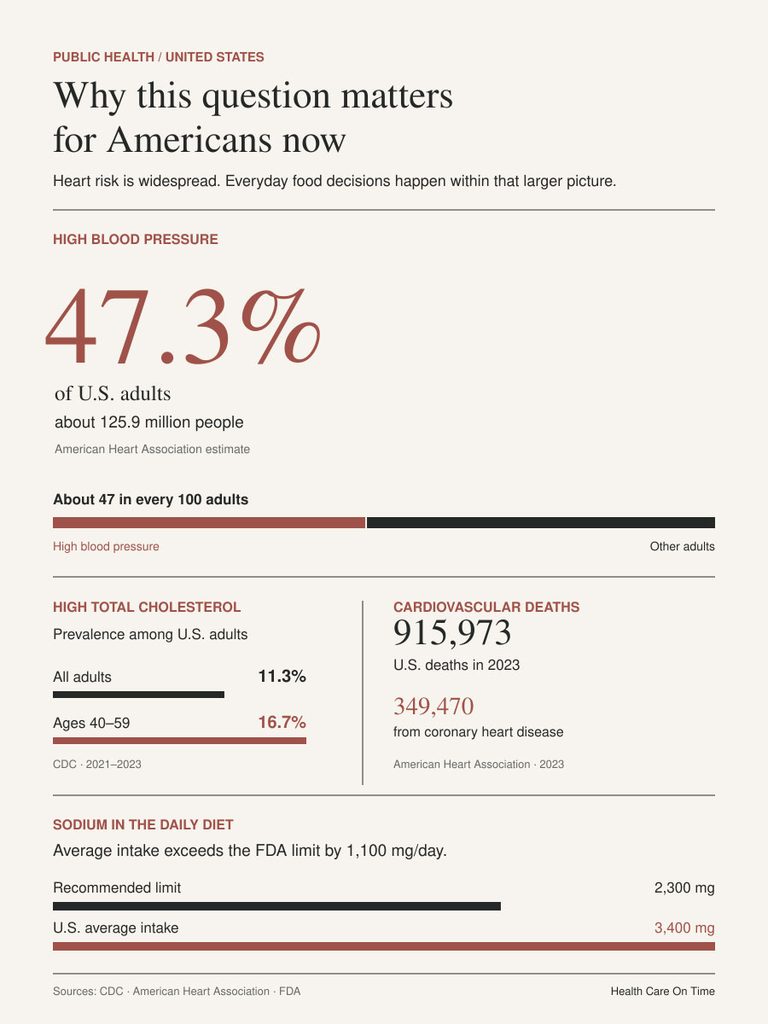
Cholesterol problems are common, and heart disease is still the country’s top killer. Meanwhile, onions already sit in most American kitchens. The real question isn’t whether to eat them. It’s whether the way you eat them helps.
| Statistic | Number | Source |
| US adults with high total cholesterol (240+ mg/dL) | 11.3% | CDC/NCHS Data Brief 515 |
| Adults ages 40 to 59 with high total cholesterol | 16.7% | CDC/NCHS Data Brief 515 |
| Adults with low HDL (under 40 mg/dL) | 13.8% (men 21.5%, women 6.6%) | CDC/NCHS Data Brief 515 |
| Cardiovascular disease deaths, 2023 | 915,973 | AHA 2026 Statistics |
| Coronary heart disease deaths, 2023 | 349,470 | AHA 2026 Statistics |
| US adults with high blood pressure | 125.9 million (47.3%) | AHA 2026 Statistics |
| Fresh onions eaten per person, 2024 | About 21 lb | USDA ERS |
| Average US sodium intake | About 3,400 mg/day vs 2,300 mg limit | FDA |
Two numbers stand out. High total cholesterol peaks in midlife, at 16.7% of adults aged 40 to 59. And about half of US adults, 130.6 million people, had some form of cardiovascular disease between 2021 and 2023. Small daily food choices matter at that scale.
Do Onions Lower Cholesterol? What 10 Clinical Trials Found
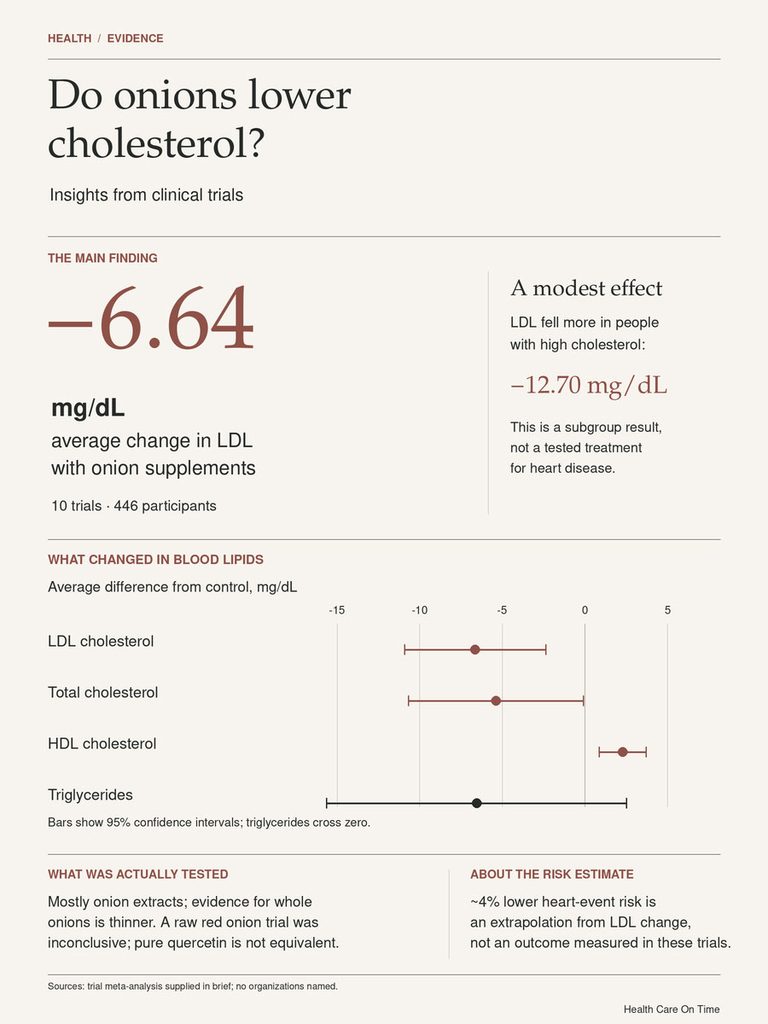
Yes, a little. The best evidence on onions and cholesterol comes from a 2021 meta-analysis in Food Science & Nutrition. It pooled every placebo-controlled onion trial the authors could find.
The Pooled Numbers: LDL, HDL, and Total Cholesterol
Across 10 trials and 446 people, onion supplementation raised HDL by 2.29 mg/dL and lowered LDL by 6.64 mg/dL, with no significant drop in triglycerides. Across nine trials, total cholesterol fell by 5.39 mg/dL compared with placebo.
A newer review points the same way. A 2023 meta-analysis in Clinical Nutrition ESPEN pooled 14 randomized trials and reported improvements in body fat percentage, LDL cholesterol, and total cholesterol with onion supplementation.
The Catch: Most “Onion” Trials Used Onion Extract
This is the detail most articles skip. In the 2021 review, eight of the 10 studies used onion extract, one used steamed onion powder, and one used onion juice. Eight trials took place in Korea, and none lasted longer than 12 weeks.
Most of those extracts came from onion peel, the papery skin you throw away. So “onions lowered cholesterol” really means “concentrated onion peel products lowered cholesterol in small, short trials.”
The authors were cautious too. The total cholesterol result lost significance when certain single trials were dropped, and the HDL result changed when one trial was excluded. They called for longer, larger, higher-quality studies.
People With High Cholesterol Saw Bigger Drops
The effect grew when people started with high numbers. In people with dyslipidemia, onion intake cut total cholesterol by 17.23 mg/dL and LDL by 12.70 mg/dL.
When patients bring us a lipid panel with LDL in the 130s or 140s, this is usually the group they fall into. It’s also where diet changes of any kind tend to show up most clearly.
Triglycerides: No Real Change
If high triglycerides are your main problem, onions won’t fix them. The review found no significant effect, with or without high cholesterol. Cutting added sugar, refined carbs, and alcohol does far more.
The Whole-Onion Trial
One trial tested plain raw red onion. Women with polycystic ovary syndrome ate either a high or a low amount for 8 weeks. Total cholesterol fell in both groups, and LDL dropped 5.13 mg/dL in the high-onion group.
The catch: that LDL drop of about 5 mg/dL was not significantly different from the group that ate fewer onions. Whole onions probably help, but the proof is thinner than headlines suggest.
Why Onions May Beat Pure Quercetin for Cholesterol
Here’s a finding no competing article mentions. Pure quercetin pills don’t seem to lower cholesterol. A 2020 Nutrition Reviews meta-analysis of 17 studies and 886 participants found quercetin lowered systolic pressure by 3.09 mmHg and diastolic by 2.86 mmHg. Neither blood lipids nor glucose changed significantly.
An earlier review of five trials with 442 people also found no significant effect of quercetin on LDL, HDL, or triglycerides. Yet onion products did lower LDL. That suggests the link between onions and cholesterol comes from more than quercetin, likely the fiber and sulfur compounds working together.
What a 6.6 mg/dL LDL Drop Means in Real Life
Large statin trials pooled by the Cholesterol Treatment Trialists’ Collaboration found about 22% fewer major heart events for every 38.7 mg/dL (1 mmol/L) drop in LDL. By that math, a 6.6 mg/dL drop sustained for years might cut risk by roughly 4%. That’s an estimate, not a tested result.
For comparison, moderate-intensity statins lower LDL by 30% to 49%. If your LDL is 160 mg/dL, that’s a drop of about 48 to 78 mg/dL. Onions help around the edges; medicine does the heavy lifting when it’s needed.
Can Onions Lower Blood Pressure? The Quercetin Dose Problem
Some popular health sites still say the blood pressure evidence comes only from test tubes and animals. That’s out of date. Human trials exist. The problem is the dose.
What the Quercetin Trials Show
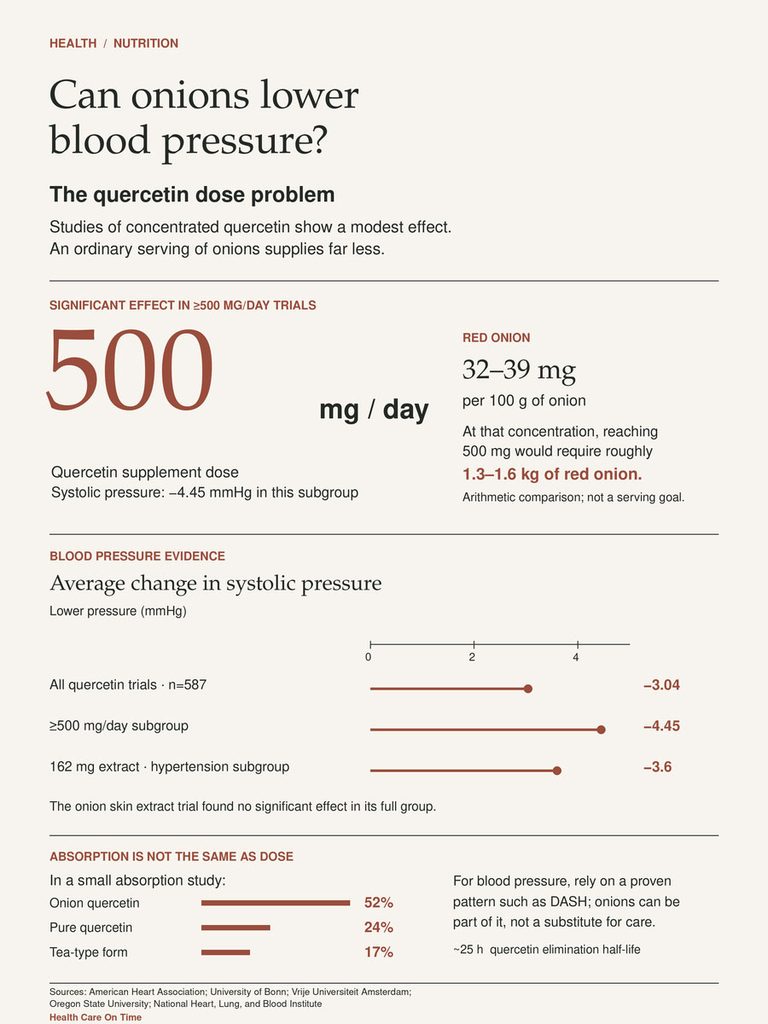
A 2016 meta-analysis in the Journal of the American Heart Association found quercetin lowered systolic pressure by 3.04 mmHg and diastolic by 2.63 mmHg across 7 trials and 587 patients.
The dose detail is what matters. The drop was significant at 500 mg a day or more (systolic −4.45 mmHg), but not below 500 mg a day.
The Onion Skin Trial
A German trial gave 70 overweight-to-obese adults with pre-hypertension or stage 1 hypertension 162 mg of quercetin a day from onion skin extract. It used a crossover design, so each person took both the extract and a placebo for 6 weeks each and served as their own comparison.
Only people with hypertension benefited: their 24-hour systolic pressure fell 3.6 mmHg versus placebo. People with borderline readings saw no meaningful change.
How Many Onions Would It Take?
Our medical reviewers ran the numbers using red onion’s quercetin content of about 32 to 39 mg per 100 g:
- 162 mg (the onion skin trial): about 1 pound of red onion a day.
- 500 mg (the meta-analysis threshold): about 2.8 to 3.4 pounds of red onion a day.
- Typical US intake: about 26 g of onion a day, supplying roughly 5 to 8 mg of quercetin.
No one eats 3 pounds of onion daily. For blood pressure, onions belong inside a good eating pattern like the DASH diet. They aren’t a stand-alone fix.
Why Onion Quercetin Absorbs Better Than Most
There’s good news on quality. In a Dutch study of nine volunteers with ileostomies, people absorbed 52% of quercetin from fried onions, versus 17% from the form found in tea and 24% from pure quercetin.
Quercetin also lingers. After onion meals, blood levels fell slowly, with a half-life of about 25 hours, so daily intake builds up over time. Steady daily onions beat an occasional big serving.
Blood Clots, Arteries, and Heart Attack Risk
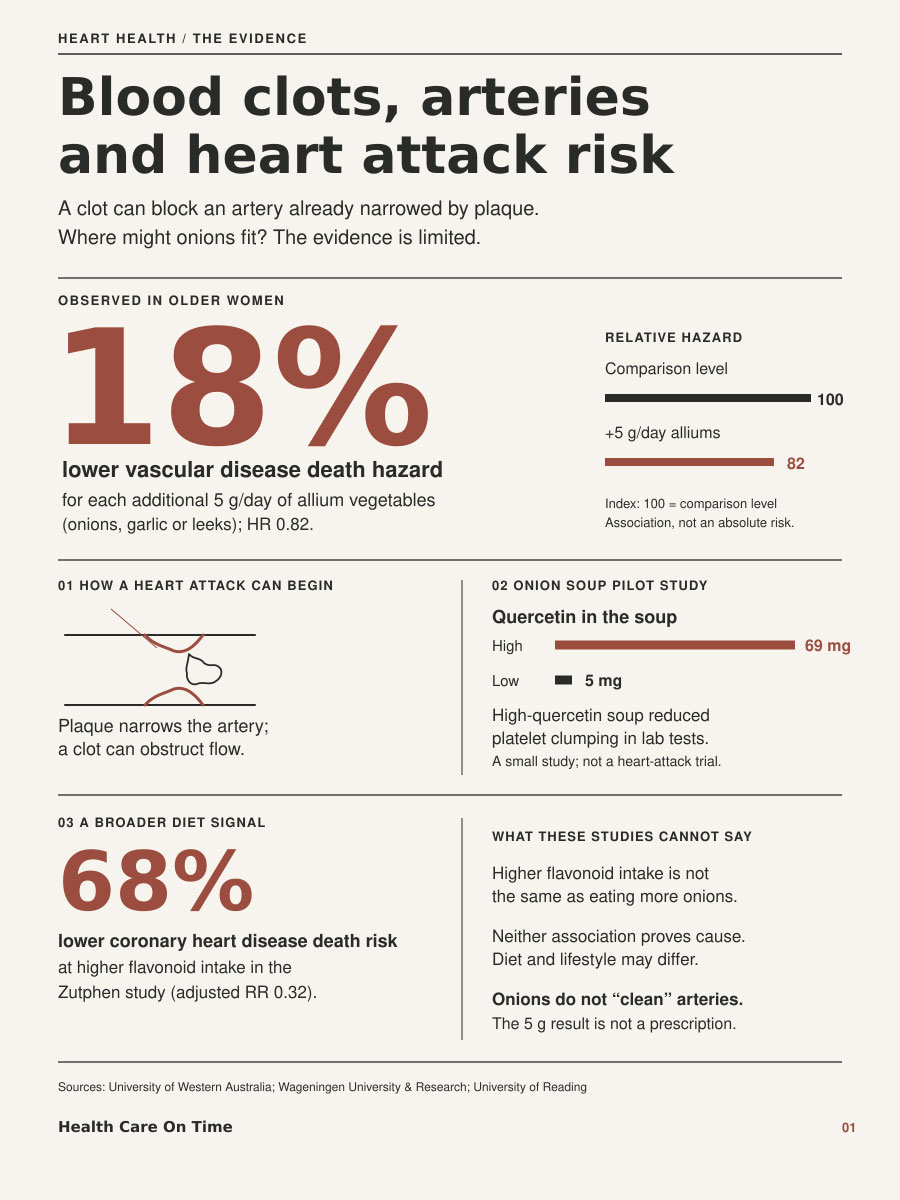
Most heart attacks happen when a clot forms on a narrowed artery. Onions may play a small role here, though the evidence is older and thin.
Onions and Platelets
Platelets are the blood cells that clump to form clots. In a small crossover pilot study, volunteers ate a soup with either 69 mg or 5 mg of quercetin. After the high-quercetin soup, platelet clumping triggered by collagen dropped over time.
That’s a lab measurement after one meal in a handful of people. It’s interesting, but it doesn’t show that onions prevent heart attacks.
What Long-Term Studies Show
Two long-running studies get quoted often. In the Dutch Zutphen Elderly Study, 805 men aged 65 to 84 were followed for 5 years. Tea supplied 61% of their flavonoids and onions 13%. After adjustment, men with the highest flavonoid intake had a 68% lower risk of dying from coronary heart disease (RR 0.32).
The researchers noted that the links for tea, onions, and apples individually were weaker.
In a Western Australia cohort, researchers followed 1,226 women aged 70 and older for 15 years and recorded 238 deaths from vascular disease. Each extra 5 g a day of allium vegetables was tied to an 18% lower risk (HR 0.82).
Why These Studies Can’t Prove Onions Did It
Five grams is about half a tablespoon of chopped onion. An amount that small is unlikely to cut risk by 18% on its own. More likely, people who cook with onions also cook more meals at home and eat more vegetables overall.
These studies show a link, not a cause. Both come from outside the US, and one dates to 1993. Our clinical team treats them as supporting evidence, not proof.
Do Onions “Clean Your Arteries”?
No. No human study shows onions remove plaque from arteries. At most, onions slightly improve things that build plaque over decades: LDL, blood pressure, and platelet stickiness. “Artery cleansing” is marketing language, not medicine.
Which Onions and Cooking Methods Help Your Heart Most
Small kitchen choices change how much quercetin reaches your plate.
Red vs Yellow vs White vs Sweet Onions
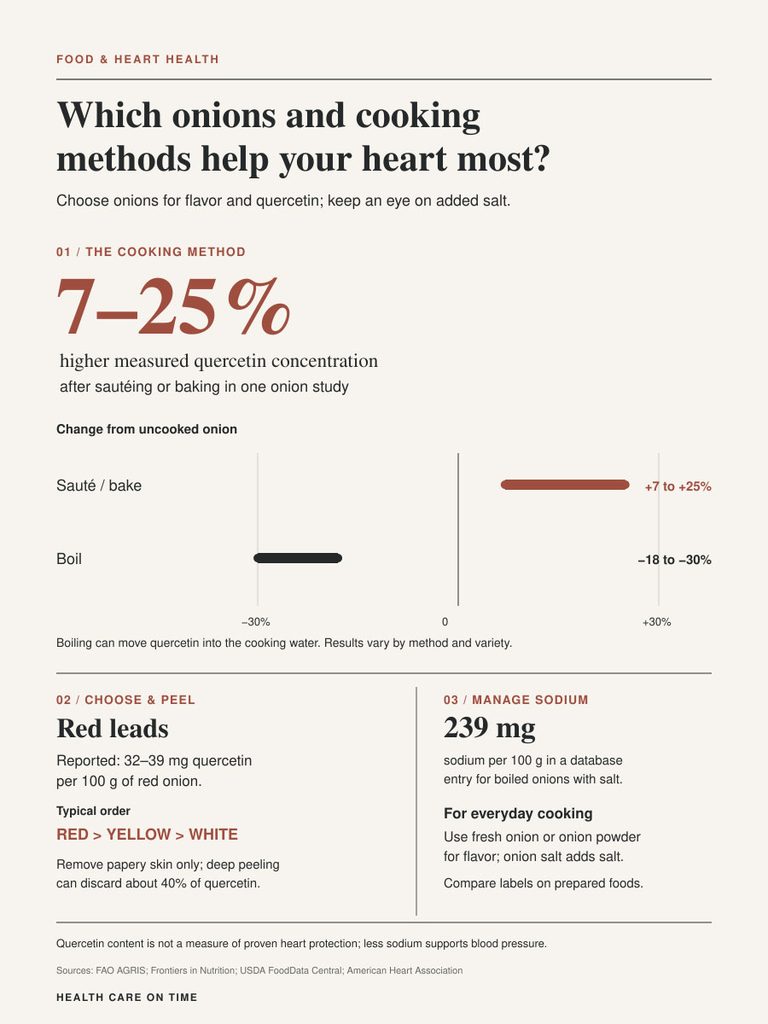
Based on the USDA flavonoid database, red onions have the most flavonoids, followed by yellow and then white. Estimates for red onions run from about 32 to 39 mg of quercetin per 100 g. White onions vary widely, averaging 13 mg per 100 g with a standard deviation of 18.2.
Growing conditions matter too. A Swedish study of yellow onions found sunlight near harvest was the main driver of quercetin, and year-to-year differences outweighed any farming method. Sweet onions like Vidalias are milder and generally lower in these compounds.
Raw, Sautéed, Roasted, or Boiled
Good news for cooks. A Texas study of five onion varieties found baking and sautéing raised quercetin concentration by 7% to 25%, while boiling cut it by 18%.
Boiling doesn’t destroy quercetin. It moves it into the water. A Japanese study found boiling caused about a 30% loss into the cooking water, while frying didn’t change flavonoid levels and microwaving without water kept them best. If you make soup, eat the broth.
Peel lightly, too. Researchers estimate about 40% of an onion’s total quercetin is lost through peeling and trimming. Remove only the papery skin, not the first fleshy layer.
Where Onions Stop Being Heart-Healthy
Salt is the first trap. USDA data lists boiled onions cooked with salt at 239 mg of sodium per 100 g. That’s about 60 times the sodium in raw onion.
Deep frying is the bigger one. Published nutrition figures for restaurant blooming onions vary by chain and year, and one analysis lists a single appetizer at 1,950 calories and 3,840 mg of sodium. Even the lower estimates put a fried onion appetizer near or past a full day’s 2,300 mg sodium limit.
Onions as a Salt-Cutting Tool
This may be the most useful heart benefit onions offer. They add deep, savory flavor with almost no sodium. Sautéed onions, garlic, and herbs can replace much of the salt in soups, beans, rice, and sauces.
More than 70% of US sodium comes from salt added during food manufacturing and restaurant cooking, the FDA says. Cooking at home with onions instead of seasoning packets and bottled sauces helps your blood pressure more than any quercetin math.
Watch the spice aisle, too. Onion salt is mostly salt with some dried onion mixed in, while plain onion powder is not. Read the label and pick onion powder, granulated onion, or dried minced onion when you want flavor without the sodium.
| Onion Type or Prep | Quercetin Clue | Best Heart Use | Watch Out For |
| Red onion, raw | About 32 to 39 mg per 100 g | Salads, salsa, sandwiches | Reflux in sensitive people |
| Yellow onion | Between red and white | Sautéing, roasting, soups | Varies with season and sunlight |
| White onion | Averages 13 mg per 100 g, wide range | Mild dishes, tacos | Lowest flavonoid levels |
| Sweet onion (Vidalia) | Lower than pungent types | Better tolerated with heartburn | Less quercetin per bite |
| Sautéed or baked | Concentration up 7% to 25% | Everyday cooking | Oil adds calories |
| Boiled | Down 18% to 30% (moves into water) | Soups where you eat the broth | Salted water adds sodium |
| Deep-fried (rings, blooming onion) | Benefit buried under fat and salt | Occasional treat only | Can exceed a day’s sodium in one appetizer |
Onions vs Garlic, Oats, and Statins: Where Onions Rank
Onions help, but they aren’t the strongest cholesterol food. Knowing where they rank helps you build a plan that works.
Garlic Has Stronger Cholesterol Data
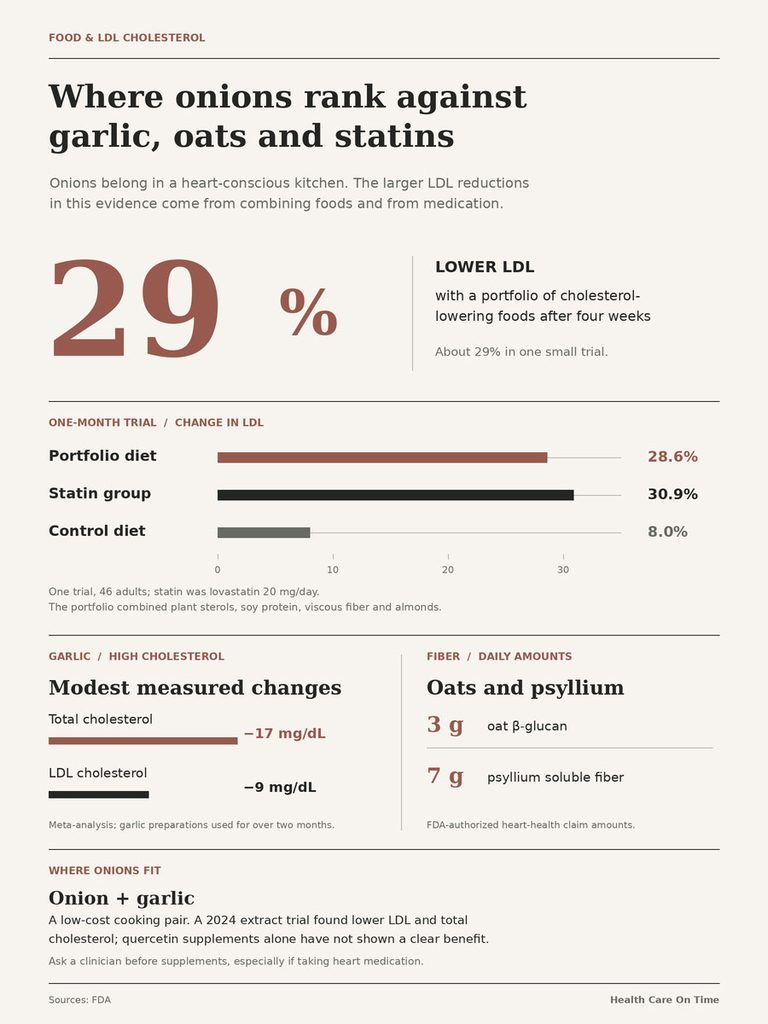
Garlic, onion’s cousin, has more research behind it. A meta-analysis of 39 trials found garlic lowered total cholesterol by 17 mg/dL and LDL by 9 mg/dL in people with total cholesterol above 200 mg/dL, when used for more than 2 months.
HDL barely moved, and triglycerides didn’t change significantly. Onions and garlic used together in daily cooking make a sensible, low-cost pair.
Foods With Bigger LDL Effects
Several foods beat onions for LDL. The FDA allows heart-health claims for oat beta-glucan (3 g a day) and psyllium fiber (7 g a day). Plant sterols at about 2 g a day are another proven option.
Combining foods is where real gains show up. In a well-known 2003 Toronto trial, a “portfolio” diet of nuts, soy, plant sterols, and soluble fiber lowered LDL about 29% in 4 weeks. Mayo Clinic notes each food may lower cholesterol only a little on its own, but using several together over time can have a much greater effect.
Onion Extract and Quercetin Pills: Worth It?
Supplements are a different question from food. A 2024 randomized trial found a combined garlic-and-onion extract lowered LDL and total cholesterol over 8 weeks in people with mildly high cholesterol.
But as noted above, pure quercetin pills haven’t lowered cholesterol in pooled trials. Supplements also aren’t reviewed by the FDA for effectiveness before they’re sold. Ask your doctor or pharmacist before starting one, especially if you take heart medicines.
Who Should Be Careful With Onions
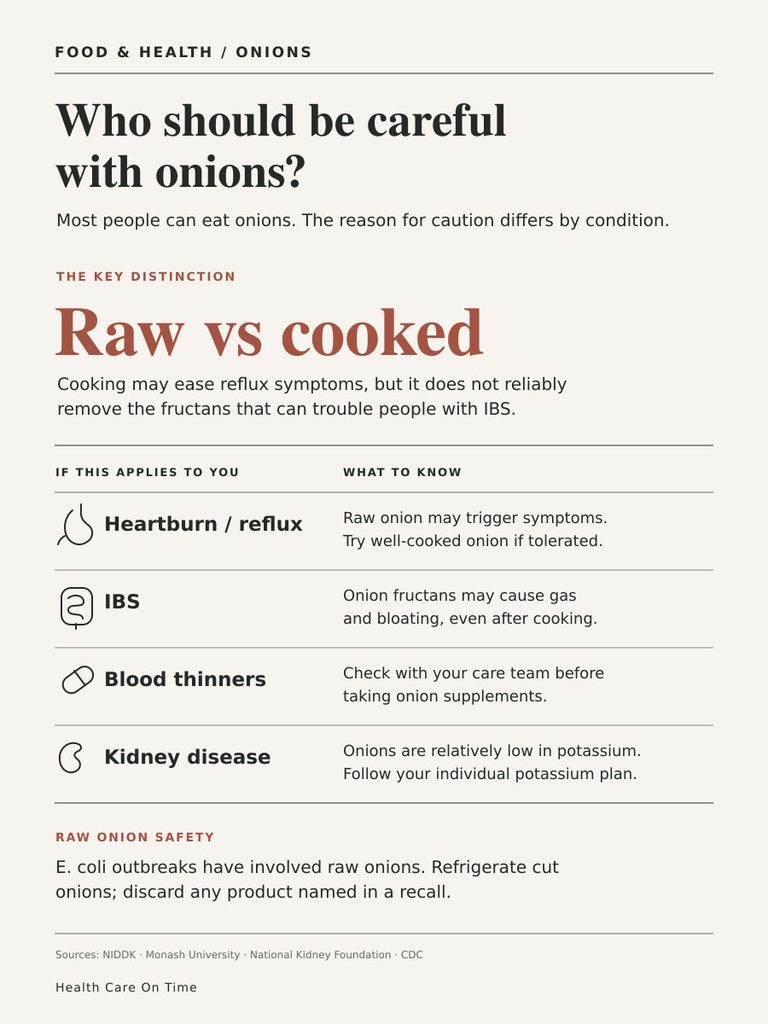
Onions are safe for most people. A few groups need a smarter approach.
Heartburn That Feels Like Heart Trouble
Raw onions are a classic reflux trigger. In a 1990 study of 16 healthy adults and 16 people with heartburn, a slice of onion on a plain hamburger caused no extra reflux in the healthy group. In the heartburn group, it significantly raised every reflux measure.
Sweet onions and well-cooked onions are often easier to tolerate than sharp raw ones. Patients booking lab tests with us sometimes describe chest burning after onion-heavy meals. That pattern usually points to reflux, but only a clinician can rule out the heart. Call 911 for chest pressure, pain spreading to your arm, jaw, or back, shortness of breath, cold sweats, or nausea.
IBS and Fructans
Onions are high in fructans, a FODMAP that can cause gas, bloating, and cramping with irritable bowel syndrome. The green tops of scallions and onion-infused oil keep the flavor with less trouble. If you’re not sure onions are your trigger, a short elimination trial guided by a dietitian can tell you.
Blood Thinners
Onions contain very little vitamin K, so they won’t throw off warfarin the way leafy greens can. The platelet effect at food amounts is small. Concentrated onion or quercetin supplements are different. Check with your care team before using them with warfarin, apixaban, clopidogrel, or aspirin.
Kidney Disease and Heart Failure
Here onions beat many vegetables. At about 146 mg of potassium per 100 g, they’re a low-potassium flavor base. That matters if you take drugs that raise potassium, like spironolactone, ACE inhibitors, or ARBs, or if you have chronic kidney disease. Tomatoes and potatoes carry much more potassium.
Raw Onion Food Safety
Raw onions have caused serious outbreaks. In 2024, E. coli O157:H7 linked to slivered onions on McDonald’s Quarter Pounders sickened 104 people in 14 states, hospitalized 34, and killed one person. The onions came from Taylor Farms. That strain of E. coli causes an estimated 74,000 US infections a year, according to the CDC, and can damage the kidneys, especially in young children.
Buy whole onions when you can, refrigerate cut onions, and throw out any onion products named in a recall.
How to Eat Onions for a Healthier Heart: A Realistic Daily Plan
Across the patients we serve, the plans that last are the simple ones. Aim for ½ to 1 cup of onions a day, about 80 to 160 g. Mix raw red onion with gently cooked yellow onion.
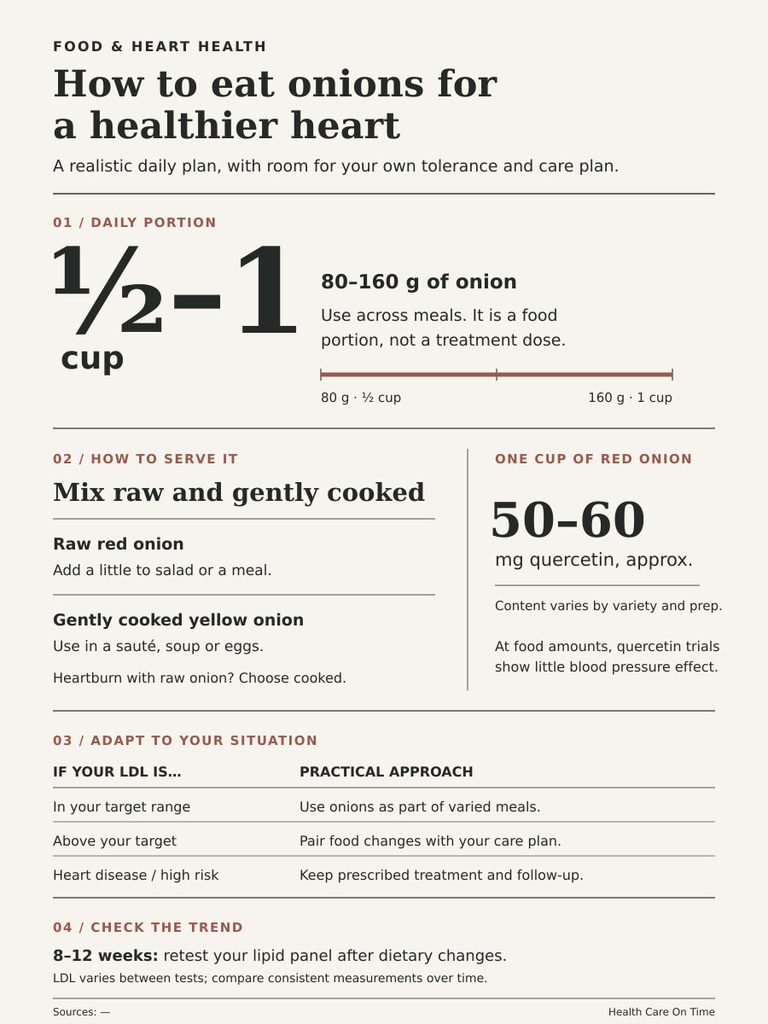
A cup of chopped red onion supplies roughly 50 to 60 mg of quercetin. That’s close to the platelet soup study, though far from blood pressure trial doses. The goal is a steady habit inside a heart-healthy pattern like DASH or Mediterranean eating.
After 8 to 12 weeks of real diet changes, recheck your lipid panel. In lipid panels processed through our lab partners, the biggest changes usually come from people who changed several habits at once, not just one food.
How to Read Your Lipid Panel Before and After
Knowing your starting numbers tells you how much room diet has to work. These are the ranges most US labs and doctors use:
- LDL cholesterol: under 100 mg/dL is optimal, 130 to 159 is borderline high, 160 to 189 is high, and 190 or above is very high.
- Total cholesterol: under 200 mg/dL is desirable, and 240 or above is high.
- HDL cholesterol: under 40 mg/dL is low.
- Triglycerides: under 150 mg/dL is normal.
LDL can shift a few points from one test to the next on its own. For a fair comparison, retest at the same lab, at a similar time of day, and under the same fasting or non-fasting conditions as your first test. Your doctor may set a lower LDL goal if you have diabetes, heart disease, or other risk factors.
A Sample Heart-Healthy Onion Day
Here’s what ½ to ¾ cup of onions looks like spread across a normal day:
- Breakfast: a vegetable scramble with sautéed onions and peppers, plus a bowl of oatmeal for beta-glucan fiber.
- Lunch: a black bean and corn salad with ¼ cup of chopped raw red onion, lime juice, and olive oil.
- Dinner: lentil soup started with a sautéed yellow onion and garlic, no added salt. Eat the broth, since that’s where boiled-out quercetin ends up.
- Snack: hummus with sliced cucumber and a few thin rings of red onion.
This kind of day stacks onions with oats, beans, and olive oil, the foods that move LDL together.
| Your Situation | What to Do | Why |
| LDL 130 to 159 mg/dL, no medication | Add ½ to 1 cup of onions daily plus oats, beans, and nuts; recheck in 12 weeks | Food combinations add up; onions alone move LDL about 7 to 13 mg/dL at best |
| Already on a statin | Keep taking it; use onions as flavor, not as a swap | Statins lower LDL 30% to 50%; onions don’t come close |
| Want lower blood pressure | Use onions to replace salt; follow DASH | Food supplies far less than 500 mg of quercetin |
| Taking warfarin | Eat onions normally and consistently | Onions carry very little vitamin K |
| Frequent heartburn | Choose cooked or sweet onions; skip raw at night | Raw onion triggers reflux in heartburn-prone people |
| Irritable bowel syndrome | Use scallion greens or onion-infused oil | Onion bulbs are high in fructans |
| Kidney disease or heart failure with potassium limits | Use onions freely as a flavor base | Onions are low in potassium |
| Eat fried onion rings weekly | Switch to roasted or sautéed onions | One fried appetizer can exceed a day’s sodium |
| Thinking about quercetin pills | Ask your doctor or pharmacist first | Pure quercetin hasn’t lowered cholesterol in pooled trials |
Frequently Asked Questions
How many onions a day should you eat to lower cholesterol?
No study sets an exact amount. A practical target is ½ to 1 cup of chopped onion daily, about 80 to 160 g. Most trials used concentrated extracts, so whole onions work best alongside oats, beans, nuts, and less saturated fat. Recheck your lipid panel after about 12 weeks.
Are red onions better than white onions for your heart?
Yes, for quercetin. Red onions carry the most, yellow onions come next, and white onions have the least, based on USDA flavonoid data. Any onion adds flavor without sodium, though. If red onions give you heartburn, cooked yellow onions are a solid second choice.
Are raw onions better than cooked onions for heart health?
Both work. Sautéing and baking actually concentrate quercetin by 7% to 25%. Boiling moves about 18% to 30% of it into the water, so eat the broth. Raw onions keep their sulfur compounds best, but they’re more likely to trigger heartburn.
Can onions lower blood pressure?
Not much at normal food amounts. Quercetin trials lowered blood pressure mainly at 500 mg a day or more, roughly 3 pounds of red onion. The best way onions help blood pressure is by replacing salt in your cooking. Keep taking any prescribed blood pressure medicine.
Do onions thin your blood?
Slightly, in lab tests. After a high-quercetin onion soup, platelets clumped less in a small pilot study. The effect at food amounts is small and short-lived. Onions don’t replace aspirin or blood thinners, and they aren’t known to cause bleeding problems when eaten as food.
Is it safe to eat onions if you take warfarin?
Yes. Onions contain very little vitamin K, so they don’t disturb warfarin the way spinach or kale can. Keep your intake steady from week to week. Avoid concentrated onion or quercetin supplements unless your doctor approves them, since pills deliver far higher doses than food.
Do onions lower triglycerides?
No reliable effect has been found. In the 2021 review of 10 trials, onions didn’t significantly lower triglycerides, even in people with high cholesterol. To bring triglycerides down, cut added sugar, refined carbs, and alcohol, move more, and ask your doctor about treatment if levels stay high.
Is garlic or onion better for cholesterol?
Garlic has stronger data. A 39-trial review found garlic lowered LDL by about 9 mg/dL and total cholesterol by about 17 mg/dL in people with high cholesterol. Onion products lowered LDL by about 6.6 mg/dL. Using both daily in cooking is a reasonable, low-cost approach.
Are onion rings bad for your heart?
Eaten often, yes. Deep frying adds large amounts of fat, calories, and sodium. Published figures for restaurant fried onion appetizers vary, but many land near or past the full 2,300 mg daily sodium limit. Roasted or sautéed onions keep the flavor and the benefits without the damage.
Can onions replace cholesterol medication?
No. Statins lower LDL by 30% to 50% and are proven to prevent heart attacks and strokes. Onions lowered LDL by about 6.6 mg/dL in small, short trials. Never stop a prescribed medication without talking to your doctor. Onions are a helpful addition, not a replacement.
Do onion extract or quercetin supplements work?
Onion extracts lowered LDL slightly in small trials. Pure quercetin lowered blood pressure a little but didn’t change cholesterol in a 17-study review. Supplements aren’t reviewed by the FDA for effectiveness and can interact with medications. Talk with your doctor or pharmacist before starting one.
Can onions cause chest pain?
Raw onions can trigger acid reflux, which causes burning chest pain in people prone to heartburn. That pain can feel like a heart problem. Never assume chest pain is just heartburn. Call 911 for chest pressure, pain spreading to your arm or jaw, shortness of breath, or cold sweats.
Disclaimer: This article is for general education and isn’t a substitute for professional medical advice, diagnosis, or treatment. Don’t change or stop any medication based on this information. If you have high cholesterol, high blood pressure, heart disease, or take blood thinners, talk with your doctor before making major diet changes or starting supplements. Call 911 for chest pain or other signs of a heart attack or stroke.
References
- Huang W, et al. Effect of onion on blood lipid profile: a meta-analysis of randomized controlled trials. Food Science & Nutrition, 2021
- Onion supplementation and health metabolic parameters: a systematic review and meta-analysis. Clinical Nutrition ESPEN, 2023
- Serban MC, et al. Effects of quercetin on blood pressure: a systematic review and meta-analysis. Journal of the American Heart Association, 2016
- Huang H, et al. Effect of quercetin supplementation on plasma lipid profiles, blood pressure, and glucose levels. Nutrition Reviews, 2020 (summary)
- Sahebkar A. Effects of quercetin supplementation on lipid profile: a systematic review and meta-analysis. Critical Reviews in Food Science and Nutrition, 2017
- Brüll V, et al. Effects of a quercetin-rich onion skin extract on 24 h ambulatory blood pressure. British Journal of Nutrition, 2015
- Ebrahimi-Mamaghani M, et al. Effects of raw red onion consumption on metabolic features in women with PCOS, 2014
- Hertog MG, et al. Dietary antioxidant flavonoids and risk of coronary heart disease: the Zutphen Elderly Study. Lancet, 1993
- Blekkenhorst LC, et al. Cruciferous and allium vegetable intakes and atherosclerotic vascular disease deaths in older women. JAHA, 2017
- Hubbard GP, et al. Ingestion of onion soup high in quercetin inhibits platelet aggregation. British Journal of Nutrition, 2006
- Hollman PC, et al. Bioavailability of the dietary antioxidant flavonol quercetin in man
- Lombard K, et al. Quercetin in onion after heat-treatment simulating home preparation, 2005
- Ioku K, et al. Effect of cooking procedures on onion flavonoids. Journal of Nutritional Science and Vitaminology, 2001
- Nemeth K, et al. Effect of boiling on yellow onion quercetin glucosides. Czech Journal of Food Sciences, 2004
- Allen ML, et al. The effect of raw onions on acid reflux and reflux symptoms. American Journal of Gastroenterology, 1990
- Ried K, et al. Effect of garlic on serum lipids: an updated meta-analysis. Nutrition Reviews, 2013
- CDC/NCHS Data Brief No. 515: Total and HDL cholesterol in adults, August 2021 to August 2023
- American Heart Association: 2026 Heart Disease and Stroke Statistics At-a-Glance
- USDA Economic Research Service: Vegetables and Pulses Outlook, VGS-375
- USDA FoodData Central: Onions, raw (FDC 170000)
- FDA: Voluntary sodium reduction goals guidance
- Mayo Clinic: Cholesterol, top foods to improve your numbers
- AP via KAIT: E. coli cases climb to 104 in outbreak tied to slivered onions, 2024