You lost 30 pounds. Your face changed, your arms changed, your jeans changed two sizes. And the soft mound sitting directly above your pubic bone did not move.
Table of Contents
If anything, it looks more obvious now than it did before you started. That is not a discipline problem. It is a predictable outcome of anatomy, receptor biology, and skin mechanics, and once the mechanism makes sense, most of the frustration goes with it.
Quick Answer
FUPA stands for “fat upper pubic area,” the pad of subcutaneous fat sitting over the mons pubis, just above the pubic bone. Some fat there is normal anatomy that cushions the pubic joint. It becomes more visible from genetics, weight gain, rapid weight loss, pregnancy, aging, or hormonal shifts. It resists reduction because this depot carries a high share of fat-storage-favoring receptors and often holds stretched skin that will not retract.
At a Glance
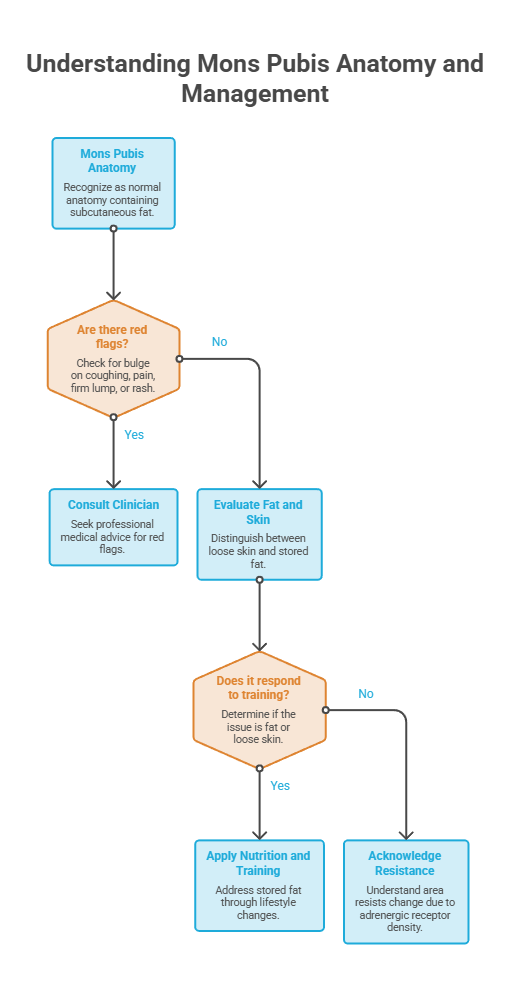
The mons pubis is normal anatomy, not a defect. Every adult body has fat there.
This is subcutaneous fat, which carries far less metabolic risk than the visceral fat packed around your organs.
The area resists change largely because of adrenergic receptor density, not effort.
Spot reduction has been tested in controlled trials repeatedly and does not work.
Loose skin and stored fat are separate problems, and only one responds to nutrition and training.
A short list of red flags (a bulge on coughing, pain, a firm lump, a recurring rash) needs a clinician rather than a workout plan.
Change here is usually the last visible result, not the first.
What FUPA Actually Means
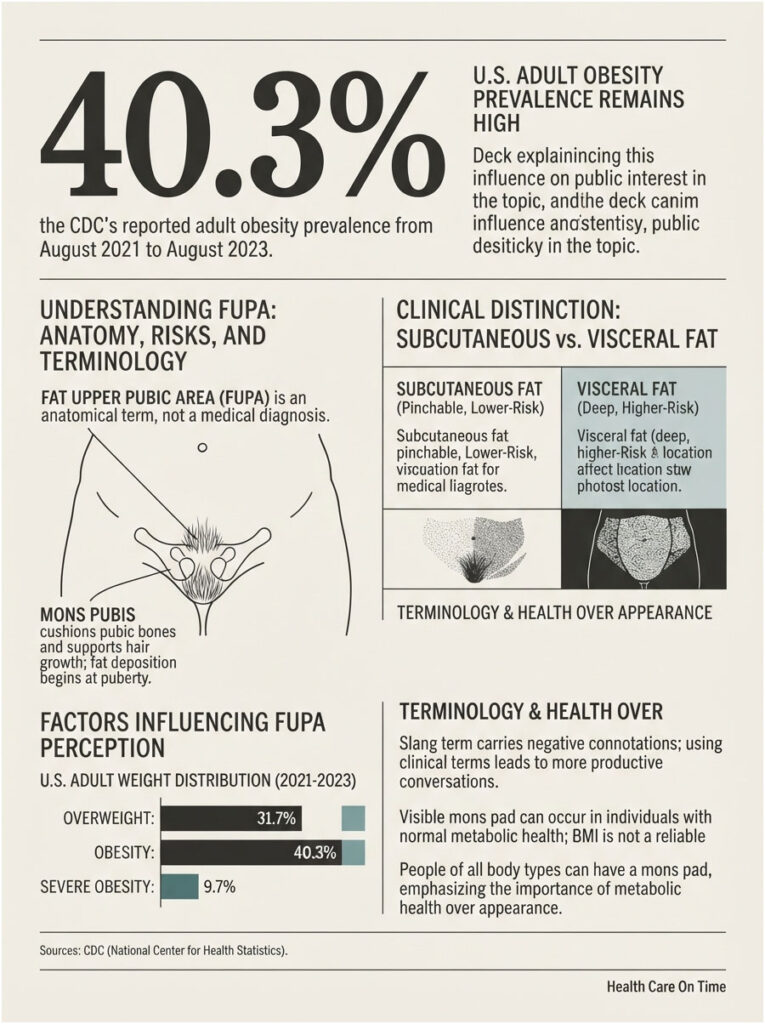
FUPA is internet slang, not a medical diagnosis. The acronym expands to “fat upper pubic area,” and it points to a genuine anatomical structure with a proper clinical name.
Our medical reviewers field this question more often than almost any other body-composition topic, and the confusion nearly always starts with vocabulary. Learning the clinical terms is the fastest way to get a useful answer from a doctor.
The Anatomy Behind the Acronym
The mons pubis (also called the pubic mound or mons veneris) is the rounded pad of fatty tissue lying over the pubic symphysis, the cartilage joint where the two halves of the pelvis meet at the front.
That padding has a job. It cushions the pubic bones against pressure and impact, and it supports pubic hair growth. Clinical references describe the mons pubis as a prominent cushion that protects the pubic bones and produces pubic hair.
Fat here is not abnormal. Deposition usually begins at puberty as part of normal development and persists across the lifespan in people of every size and every body type.
Beneath the skin, this region has two fat layers separated by connective tissue sheets (Camper’s fascia above, Scarpa’s fascia below). That layered structure is part of why the area holds its shape so stubbornly compared with softer depots elsewhere.
Subcutaneous Fat Versus Visceral Fat
This distinction matters more than anything else in the conversation, and almost no popular article makes it clearly.
Subcutaneous fat sits between skin and abdominal wall. You can pinch it. Visceral fat sits deeper, wrapped around the liver, intestines, and other organs, and no amount of pinching will reach it.
Pubic fat is subcutaneous, which places it in the lower-risk category. Visceral fat is the depot tied most strongly to insulin resistance, elevated triglycerides, and cardiovascular disease.
Someone can carry a visible mons pad with completely normal metabolic labs. Someone else can look flat through the lower abdomen while carrying a concerning visceral load. Appearance and internal risk track each other loosely at best, which is why our medical team points readers toward blood work rather than mirror checks. If you have never had a metabolic panel, a fasting glucose, HbA1c test, and lipid profile give you far more useful information than any measurement of this area.
Why the Slang Term Works Against You
The acronym spread through talk shows and social feeds, and it arrived carrying a mocking tone that has never fully left. Search the term today and you will still find clinic pages calling it an “embarrassing mound.”
That framing is inaccurate and it does not help anyone. When you talk to a clinician, “mons pubis fullness,” “suprapubic fat pad,” or “panniculus” will get you a far more precise conversation than the slang will.
How Common Is This Concern
Weight distribution questions reach an enormous American audience. CDC data from the National Health and Nutrition Examination Survey covering August 2021 through August 2023 put adult obesity prevalence at 40.3%, with 39.2% in men and 41.3% in women. Another 31.7% of adults fell in the overweight range, and 9.7% met criteria for severe obesity.
Those figures explain the search volume. They do not define who develops a noticeable mons pad. Plenty of people at an average weight have one, and plenty of people at a high BMI do not, which is one more reason BMI alone is a poor guide to body composition.
FUPA Is Not the Same as an Apron Belly, a Hernia, or Diastasis Recti
This is where most online content leaves readers stranded, and where a wrong self-diagnosis can delay real care. Several distinct conditions produce a lower-abdominal bulge, and the implications differ sharply.
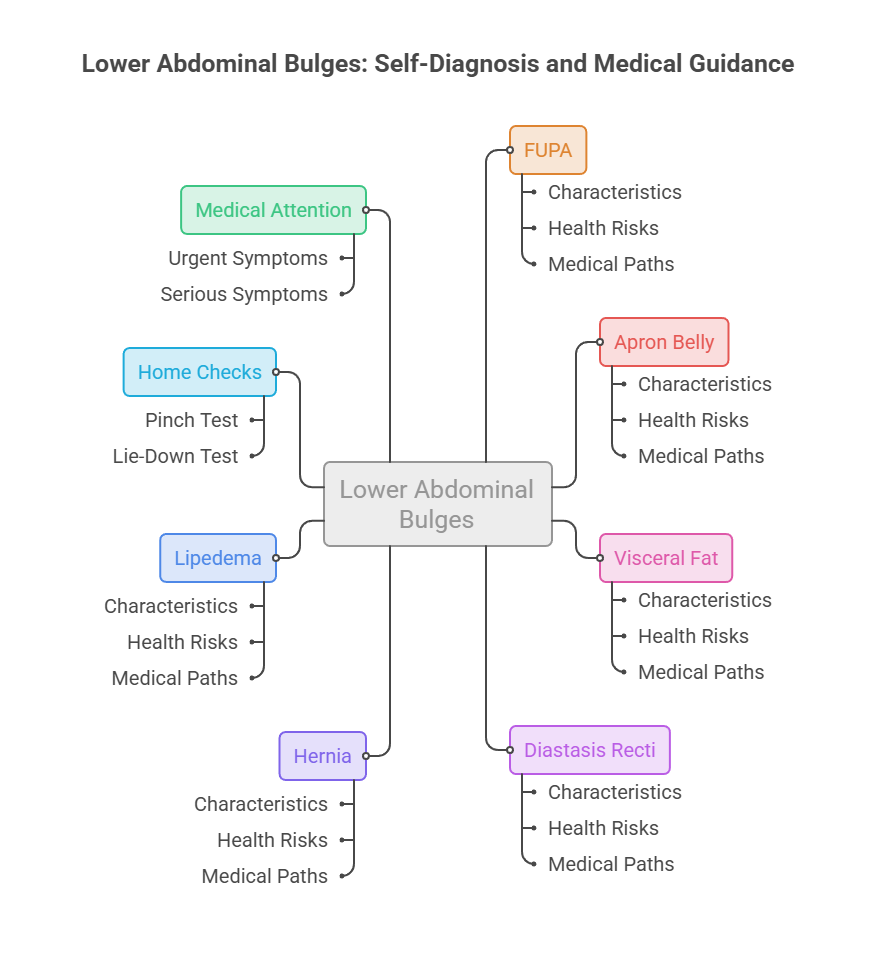
Table 1: Lower Abdominal Bulges Compared
| Condition | What it actually is | Where you notice it | Health risk | Responds to diet and exercise? | Usual medical path |
| FUPA (mons pubis fullness) | Subcutaneous fat pad over the pubic bone | Directly above the pubic bone, below the bikini line | Low, cosmetic in most cases | Partially, as part of whole-body fat loss | Nutrition, training, or elective monsplasty |
| Panniculus (apron belly) | Hanging fold of skin and fat overhanging the pubis or thighs | Drapes downward, sometimes past the pubic bone | Moderate, chafing, intertrigo, mobility limits | Fat volume yes, the skin fold no | Dermatology plus surgical panniculectomy |
| Visceral abdominal fat | Deep fat surrounding internal organs | Firm, upper and mid-belly, cannot be pinched | High, linked to type 2 diabetes and heart disease | Yes, usually the first depot to shrink | Metabolic labs, lifestyle care, medication |
| Diastasis recti | Separation of the two vertical abdominal muscles | Midline ridge or doming when you sit up | Low to moderate, core weakness and back pain | Muscle function yes, the gap only partially | Pelvic floor physical therapy, sometimes repair |
| Ventral or inguinal hernia | Tissue pushing through a weak spot in the abdominal wall | Firm bulge appearing with coughing or straining | Can be serious, strangulation risk | No | Surgical evaluation, often prompt |
| Lipedema | Disproportionate, painful, usually symmetrical fat accumulation | Hips, thighs, sometimes lower abdomen | Moderate, pain, bruising, progression | Poorly, resistant to calorie deficit | Vascular or lymphedema specialist |
Two Home Checks That Narrow It Down
Neither replaces an examination, but both sharpen the questions you bring to one.
The pinch. Standing, gather the tissue between thumb and fingers. Fat feels thick and full through the entire pinch. Loose skin feels thin and pliable, folding over on itself with little substance behind it.
The lie-down. Lie flat on your back. Stored fat flattens and spreads out. Loose skin drapes to the sides and stays as a distinct fold. A hernia usually becomes less obvious lying down and more obvious when you stand or strain.
Patients booking imaging and lab work through HealthCareOnTime often arrive having already done both checks, and it consistently shortens the appointment.
The One Pattern That Needs Prompt Care
If a bulge in this region appears or enlarges when you cough, laugh, lift, or strain, and particularly if it feels firm, tender, or fails to reduce when you lie down, that pattern points toward a hernia rather than a fat pad.
Sudden pain, redness, nausea, or vomiting alongside a bulge is a medical emergency and needs same-day attention.
What Causes FUPA
There is no single cause. In cases reviewed by our medical team, most people carry two or three overlapping drivers at once, which is exactly why single-tactic fixes disappoint.
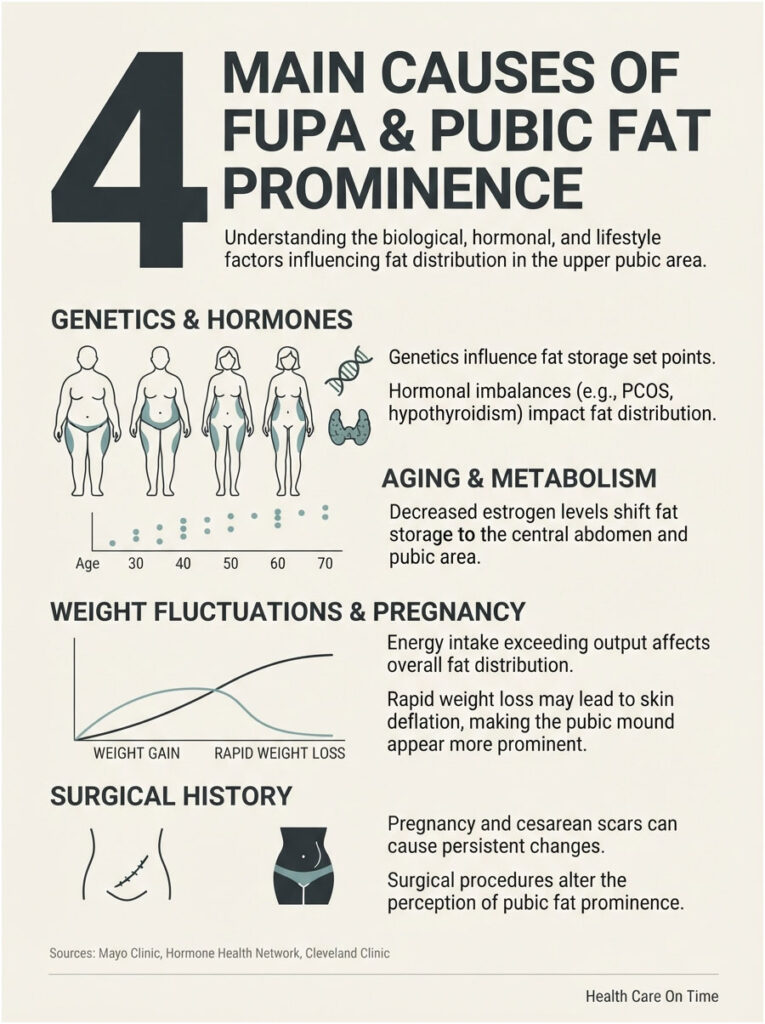
The main contributors are:
- Genetic fat distribution patterns
- Weight gain
- Rapid weight loss leaving stretched skin behind
- Pregnancy and cesarean scar tethering
- Aging and falling estrogen through menopause
- Hormonal conditions such as PCOS, thyroid dysfunction, and elevated cortisol
- Certain medications
- Prior abdominal surgery that flattened the surrounding area
Genetics and Fat Distribution Set Points
Where your body stores fat is heavily inherited. You did not choose your distribution pattern any more than you chose your height.
Research on fat-cell receptor genes supports this directly. Analysis from the HERITAGE Family Study concluded that variation in the ADRA2A gene, which codes for a receptor that inhibits fat mobilization, appears to influence the tendency to store fat in the abdominal area independently of total body fatness.
The practical translation is simple. Two people can lose identical amounts of weight and see completely different regional results. That is biology, not effort.
Weight Gain and Storage Preference
When energy intake exceeds output over time, fat cells across the body expand. The mons pubis participates like every other subcutaneous depot.
Clinical sources consistently name weight gain as the most common single driver, with the distribution pattern shaped by diet, lifestyle, and genetics.
This area often shows change earlier than people expect. The skin there is thin and the pubic bone provides a hard backdrop, so even modest fullness becomes visible.
Rapid Weight Loss and the Deflation Effect
This one surprises people the most. Substantial weight loss can make the pubic mound look worse rather than better, at least for a while.
Skin has finite elasticity. When it has been stretched for months or years and the volume underneath disappears quickly, it does not always retract. What remains is a soft, deflated fold sitting exactly where the fat used to be.
Relative prominence compounds the effect. When the upper abdomen flattens and the mons does not, the mons becomes the most projecting point on your silhouette even though it never grew.
This has become a far bigger topic in the GLP-1 era. The American Society of Plastic Surgeons has noted that body contouring stayed popular partly because more people were using weight loss medications that can cause loose, sagging skin. Readers who contact us after significant medication-assisted weight loss describe this exact sequence over and over.
Pregnancy, Cesarean Scars, and the Postpartum Shelf
Pregnancy stretches abdominal skin, separates the abdominal muscles, and shifts hormones toward lower-body fat storage. All three effects can persist well past delivery.
Cesarean delivery adds a specific mechanical problem. The incision heals with scar tissue that tethers skin down to deeper layers, producing a distinct ledge with tissue bulging above the scar line.
The affected population is very large. CDC data show the cesarean delivery rate reached 32.4% of US births in 2024. Roughly one in three deliveries carries the anatomy for a visible shelf.
That shelf is not a complication and not a sign that anything went wrong. It is scar mechanics behaving exactly as scar tissue behaves.
Aging, Menopause, and Falling Estrogen
Estrogen encourages fat storage in the hips, thighs, and pubic region. As estrogen declines through perimenopause and menopause, distribution shifts toward the central abdomen.
At the same time, collagen and elastin production falls, so skin loses the ability to snap back. Many women in their forties and fifties see a mons that looks both fuller and softer than it did a decade earlier at the same body weight.
Patients booking hormone and thyroid panels with us raise this timing constantly. The overlap between menopausal transition and body-shape change is real and deserves a conversation with a clinician rather than quiet self-blame.
Hormonal and Medical Drivers Worth Testing
A minority of cases have an identifiable medical contributor. These are the ones where testing changes the plan.
Polycystic ovary syndrome shifts fat toward the central and lower abdomen and typically brings irregular cycles, acne, and hair changes with it. Hypothyroidism slows metabolic rate and can drive generalized weight gain. Elevated cortisol, whether from chronic stress or an endocrine disorder, favors central deposition specifically.
Medications matter too, including some antidepressants, antipsychotics, corticosteroids, and insulin. Our lab partners regularly process thyroid function panels ordered because a patient noticed a body-shape change that did not match their habits.
Prominence After Abdominal Surgery
A tummy tuck flattens the abdomen above the pubic area. When the surgeon does not address the mons in the same operation, the newly flat surroundings make the untouched mound look larger by contrast.
The same happens after liposuction of the upper and mid abdomen. Nothing was added. The reference points around it simply changed.
What Causes FUPA in Men
Male pubic fat gets almost no serious coverage online, and men searching for answers deserve better than a footnote.
Weight gain and aging dominate, with falling testosterone shifting body composition toward more fat and less lean mass. Men also tend to store a mixed subcutaneous and visceral pattern in the central region, so a growing lower belly carries higher metabolic stakes than the equivalent change in most women.
Aging skin behaves the same way in men, so post-weight-loss laxity in this region is just as common. Men who lose large amounts of weight often report the same deflation effect and the same relative prominence.
At the severe end, a large suprapubic fat pad can partially envelop the penis, a condition clinicians call buried penis. That version causes hygiene difficulty, urinary spraying, and recurrent skin infections, and it needs urologic evaluation rather than a training program.
Why Pubic Fat Is So Hard to Lose
Here is the part almost no top-ranking page explains, and the part most likely to change how you interpret your own results.
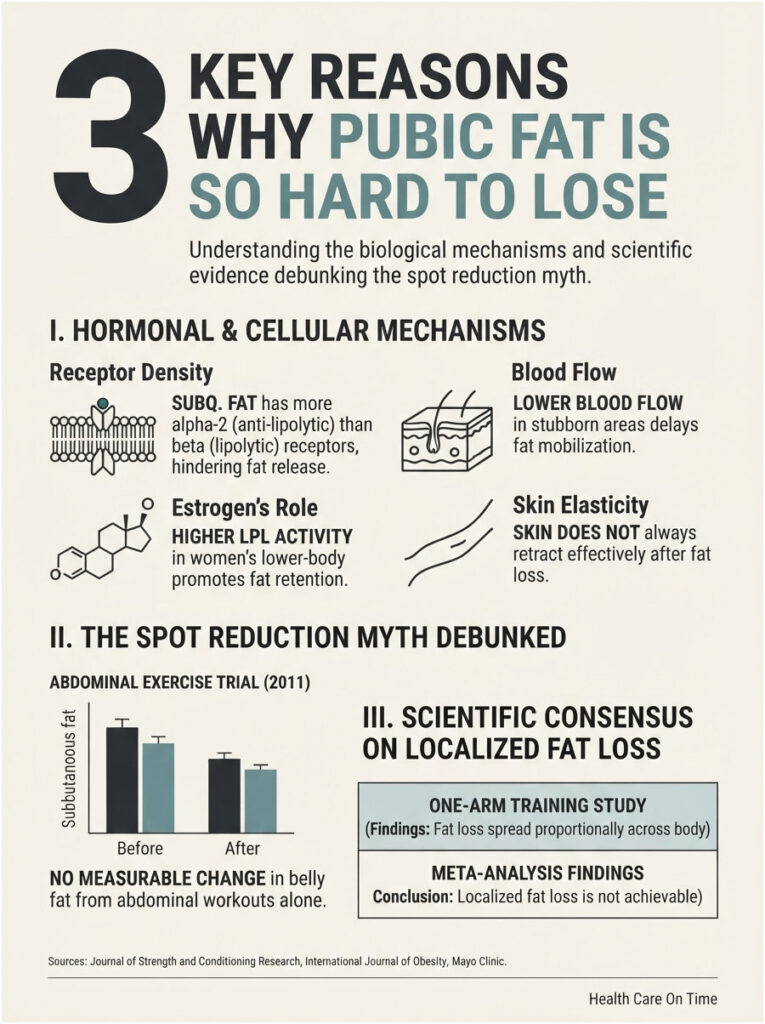
Receptor Density: The Alpha-2 Problem
Fat cells carry two families of adrenergic receptors that respond to adrenaline and noradrenaline. Beta receptors trigger fat release. Alpha-2 receptors block it.
The ratio varies by body region, and subcutaneous depots are stacked against you. Research measuring receptor binding sites in human fat cells found that beta sites are less numerous than alpha-2 sites in subcutaneous fat, at a ratio of roughly three alpha-2 to two beta, and that adrenaline binds alpha-2 sites with higher affinity than beta sites.
In plain terms: when your body sends fat-release signals, this depot has more “hold on” switches than “let go” switches, and the signal hits the “hold on” switches first at lower concentrations.
That is why the area responds late. Not because you skipped workouts, but because the receptor arithmetic is unfavorable before you do anything at all.
Blood Flow and the Last-In, First-Out Pattern
Fat mobilization needs circulation to carry released fatty acids away for use. Stubborn depots generally have lower blood flow than depots that shed easily.
There is also a rough sequencing pattern. Regions that filled first and most readily tend to empty last. For a great many people, the mons and lower abdomen sit at the very end of that queue.
Estrogen, Lipoprotein Lipase, and Storage Bias
Lipoprotein lipase is the enzyme that pulls circulating fat into storage. Its activity runs higher in lower-body subcutaneous fat in women, and estrogen supports that pattern.
High storage-enzyme activity paired with high storage-favoring receptor density is a combination built for retention. It also explains why the pattern differs between men and women, and why it shifts after menopause.
Skin Does Not Shrink the Way Fat Does
Even when the fat leaves, the envelope may not follow. Skin retraction depends on age, genetics, sun exposure, smoking history, how long the skin stayed stretched, and how fast the volume came off.
No amount of training builds muscle inside the mons pubis, because there is no muscle there. Core work strengthens the abdominal wall above it, which improves posture and overall contour, but it cannot tighten skin lying over bone.
The Spot Reduction Evidence
The belief that you can burn fat off one area by exercising that area is the most durable myth in fitness. It has been tested carefully, more than once, and the results line up.
The Abdominal Exercise Trial
In a 2011 study by Vispute and colleagues, participants performed seven abdominal exercises five days a week for six weeks while holding diet constant. There was no change in belly fat, abdominal circumference, or body fat.
Six weeks of dedicated, consistent abdominal work moved nothing measurable in the target region.
The One-Arm Training Study
A smarter design came from Kostek and colleagues in 2007, who had 104 people train only one arm for 12 weeks. If spot reduction worked, the trained arm should have lost more fat. MRI scans showed the opposite, with fat loss spread across the body rather than concentrated in the worked limb.
Using each participant as their own control removes nearly every confounding variable. The result still came back negative.
The Pooled Meta-Analysis
A systematic review and meta-analysis by Ramirez-Campillo and colleagues pooled 13 studies covering 1,158 people training one limb against the other. The pooled effect size landed at essentially zero, around -0.03, indicating no localized fat loss.
Medical News Today states the practical implication accurately: it is not possible to lose fat in only one area, and as a person reduces fat, it comes off fairly proportionally across the body.
What Targeted Training Does Deliver
Plenty, just not what the marketing claims. Core and lower-abdominal work builds strength, improves posture, stabilizes the spine, reduces back pain for many people, and firms the overall midsection.
Those outcomes change how the area looks and feels. They do not remove fat from one chosen square of skin, and any source promising otherwise is contradicting three separate lines of controlled evidence.
When It Is Just Anatomy, and When to Call a Doctor
Most of the time, this is anatomy. Occasionally it is a signal. Sorting the two is the single most valuable thing this article can do for you.
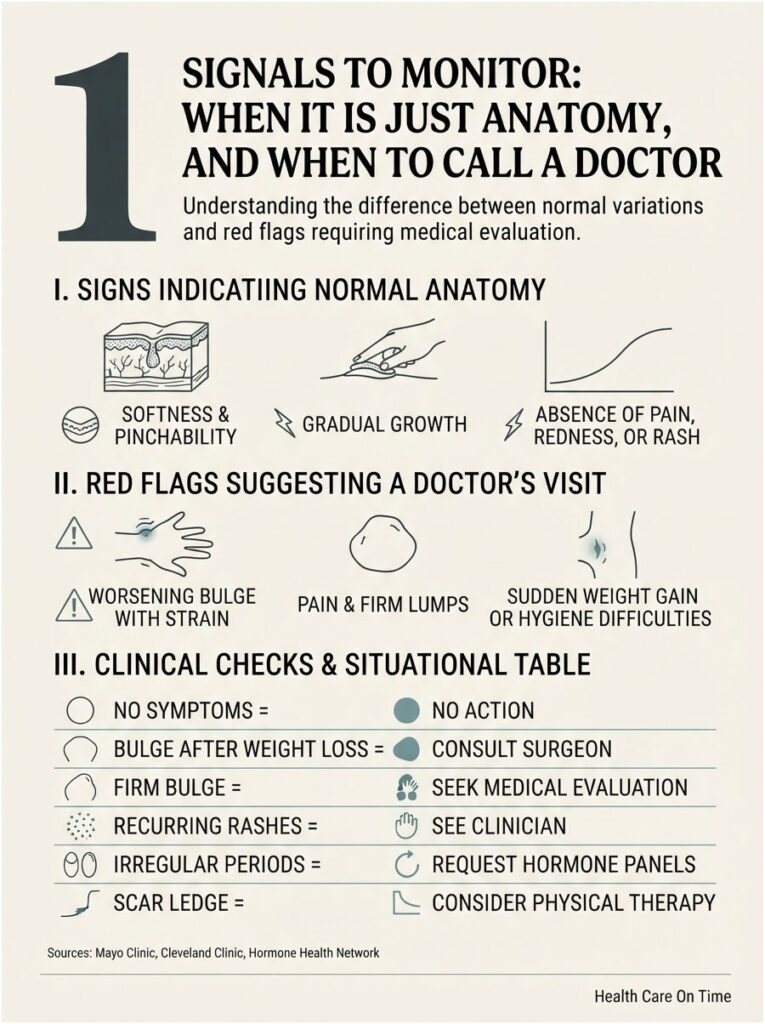
Signs It Is Ordinary
It feels soft and pinchable. It flattens somewhat when you lie down. It has been present for years without much change, or it grew gradually alongside overall weight change. There is no pain, no redness, no discharge, and no rash that keeps returning.
That description covers the large majority of cases. Nothing about it requires treatment, and nothing about it indicates disease.
Red Flags Worth an Appointment
A bulge appearing or worsening with coughing, straining, or lifting. Pain, tenderness, or a firm lump you can feel distinctly. A rash, chafing, or infection under a fold that returns after treatment.
Also worth attention: sudden central weight gain with fatigue, easy bruising, purple stretch marks, or new blood pressure elevation. And any difficulty with hygiene, urination, or intimacy.
What a Clinician Checks
Expect a physical examination first, including a hernia check with you standing and bearing down. Waist circumference may be measured alongside weight and BMI, though our medical reviewers note BMI alone says almost nothing about where fat is stored.
Depending on your history, labs may include thyroid function, HbA1c or fasting glucose, a lipid panel, and hormone testing when PCOS or a cortisol disorder is suspected. Imaging is uncommon unless a hernia or mass is in question.
Table 3: Your Situation and What to Do Next
| Your situation | What it most likely means | What to do next |
| Soft pad present for years, no other symptoms | Normal mons pubis anatomy | No medical action needed, address only if it bothers you |
| Bulge appeared after losing 40-plus pounds, feels thin and folds over | Loose skin rather than stored fat | Nutrition and training will not fix skin, consult a board-certified plastic surgeon |
| Firm bulge that appears when you cough or strain | Possible ventral or inguinal hernia | Get a medical evaluation promptly, hold off on heavy lifting |
| Recurring rash, chafing, or infection under a hanging fold | Intertrigo with a panniculus | See a clinician and document every episode and treatment, since records affect insurance coverage |
| Irregular periods, new acne, hair changes, central weight gain | Possible PCOS or thyroid dysfunction | Request hormone and thyroid panels before pursuing any cosmetic route |
| Distinct ledge sitting above a cesarean scar | Scar tethering plus fat and skin change | Start with pelvic floor or postpartum physical therapy, consider revision later |
| Pubic mound looks larger after a tummy tuck | Relative prominence, not new fat | Return to your operating surgeon to discuss treating the mons |
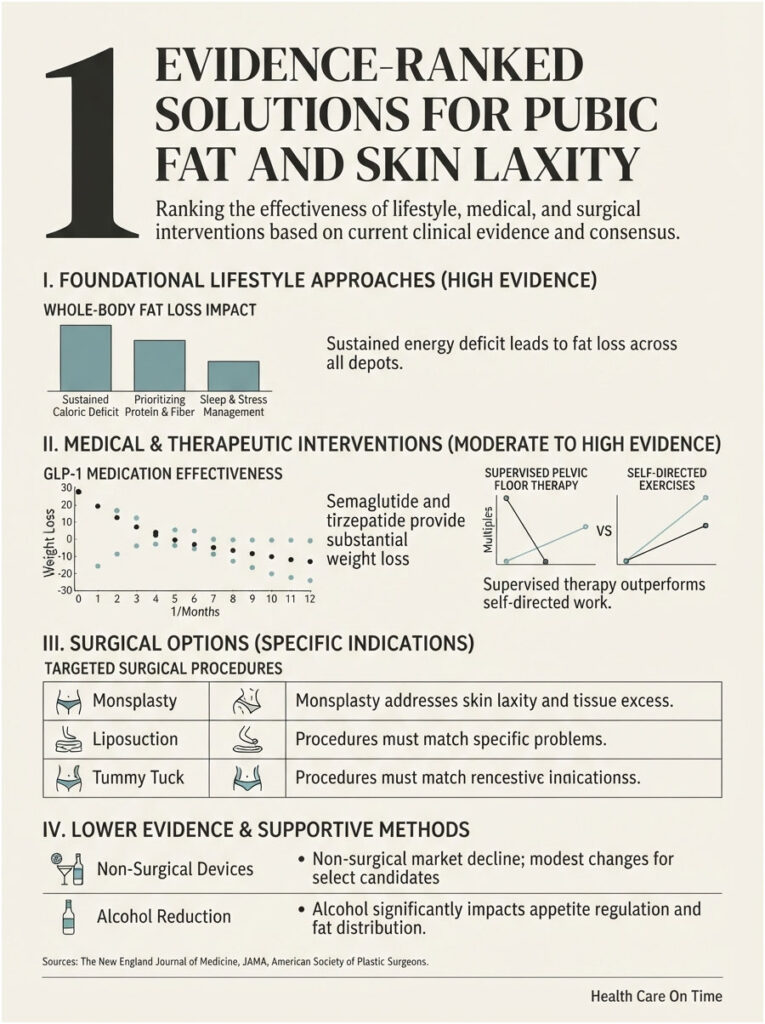
What Actually Works, Ranked by Evidence
These are ordered by strength of evidence, not by how appealing they sound.
Whole-Body Fat Loss
This is the only route that reduces the fat itself. A sustained energy deficit produces fat loss across all depots, and the pubic region participates even though it participates last.
Pattern matters more than speed. Slower, steadier loss gives skin more opportunity to adapt, which reduces the deflation problem described earlier.
Build around protein adequacy, fiber, whole foods, and an approach you could maintain for a year rather than a month. Extreme restriction tends to backfire through muscle loss and rebound, and it does nothing to change where your body stores fat. Readers who want a framework can start with our guide to structured weight loss programs that pair nutrition with exercise.
Strength and Core Training
Resistance training preserves lean mass during weight loss, which protects metabolic rate and improves body composition at any given weight.
Core work such as planks, dead bugs, pelvic tilts, and bird dogs strengthens the abdominal wall and improves how the midsection holds itself. It changes how you carry the area without removing fat from it.
Postpartum Recovery Work
For readers with diastasis recti, supervised pelvic floor physical therapy generally outperforms self-directed crunches, which can worsen midline doming and make the lower belly protrude more.
A therapist can also address scar mobility around a cesarean incision. Softening tethered scar tissue sometimes reduces the ledge effect noticeably without any surgery at all.
Sleep, Stress, and Alcohol
Underrated and free. Short sleep disrupts appetite regulation and impairs glucose handling. Chronic stress raises cortisol, which favors central deposition specifically. Alcohol adds energy while suppressing fat oxidation.
None of these three removes a mons pad alone. All three make every other effort work better.
GLP-1 Medications
Semaglutide and tirzepatide produce substantial weight loss for many people, and that includes fat in the pubic region. They also frequently produce the deflation effect, because the loss often happens quickly.
Anyone considering this route should discuss both the benefit and the skin outcome with a prescribing physician upfront. Hearing about possible laxity in advance is very different from discovering it in month eight.
Non-Surgical Devices
Cryolipolysis, radiofrequency, and similar treatments are marketed heavily for this exact area. The market has issued its own verdict. Non-invasive fat reduction volume fell roughly 40% in 2024 compared with 2023, a drop attributed to these treatments overpromising and underdelivering.
These devices can produce modest changes in localized subcutaneous fat for carefully selected candidates. They do not tighten meaningful skin laxity, and results vary enough that expectations should stay low.
Surgical Options
When the problem is skin rather than fat, surgery is the only approach that addresses it. Monsplasty is the surgical option for removing excess fat or sagging skin in the pubic area, and the mons is usually one of the last parts of the body to lose excess fat.
Which Procedure Matches Which Problem
Liposuction alone suits people with good skin elasticity whose issue is mostly volume. In people who already have loose skin, liposuction can leave the area looking looser once volume is removed, because of the deflation effect.
Monsplasty, sometimes called a pubic lift, removes both fat and skin and tightens what remains. Panniculectomy removes a hanging apron of skin and fat. Abdominoplasty addresses the wider abdominal wall including muscle repair, and is often combined with mons treatment when both are needed.
Cost, Recovery, and Insurance
Monsplasty typically runs $3,000 to $8,000, averaging around $5,500, with mild discomfort, bruising, and swelling usually settling in two to three weeks. Because it is generally classified as cosmetic, insurance usually does not cover it.
Panniculectomy is the exception, and the criteria are specific. Coverage guidelines commonly require that the panniculus hangs below the level of the pubis, documented in photographs, along with recurrent or chronic rashes, infections, cellulitis, or non-healing ulcers. Medicare contractor guidance similarly asks for documentation of chronic intertrigo, a description of functional impairment such as difficulty walking or exercising, a record of conservative treatment attempted, and preoperative photographs.
The American Society of Plastic Surgeons position is that abdominoplasty performed solely to improve appearance, absent any signs or symptoms of functional abnormality, should be considered cosmetic.
If you think you might qualify, start documenting now. Dated photographs, dermatology visit notes, prescriptions for topical treatments, and a record of failed conservative care carry more weight with an insurer than any description you give at the consultation.
Table 2: The Numbers Behind Lower Belly and Pubic Fat in America
| Metric | Figure | Source and year |
| US adult obesity prevalence | 40.3% | CDC NCHS, NHANES Aug 2021 to Aug 2023 |
| US adults with severe obesity | 9.7% | CDC NCHS, NHANES Aug 2021 to Aug 2023 |
| US adults in the overweight range | 31.7% | CDC NCHS Health E-Stat, 2023 data |
| Cesarean delivery rate | 32.4% of all births | CDC NCHS, 2024 |
| Liposuction procedures performed | 349,728 | ASPS Plastic Surgery Statistics, 2024 |
| Tummy tuck (abdominoplasty) procedures | 171,064 | ASPS Plastic Surgery Statistics, 2024 |
| Change in non-invasive fat reduction volume | Down about 40% | ASPS Plastic Surgery Statistics, 2024 |
| Average monsplasty cost | About $5,500 (range $3,000 to $8,000) | Healthline, current pricing data |
A Realistic Timeline
Expectations cause more distress here than the anatomy does. Setting them accurately is part of the treatment.
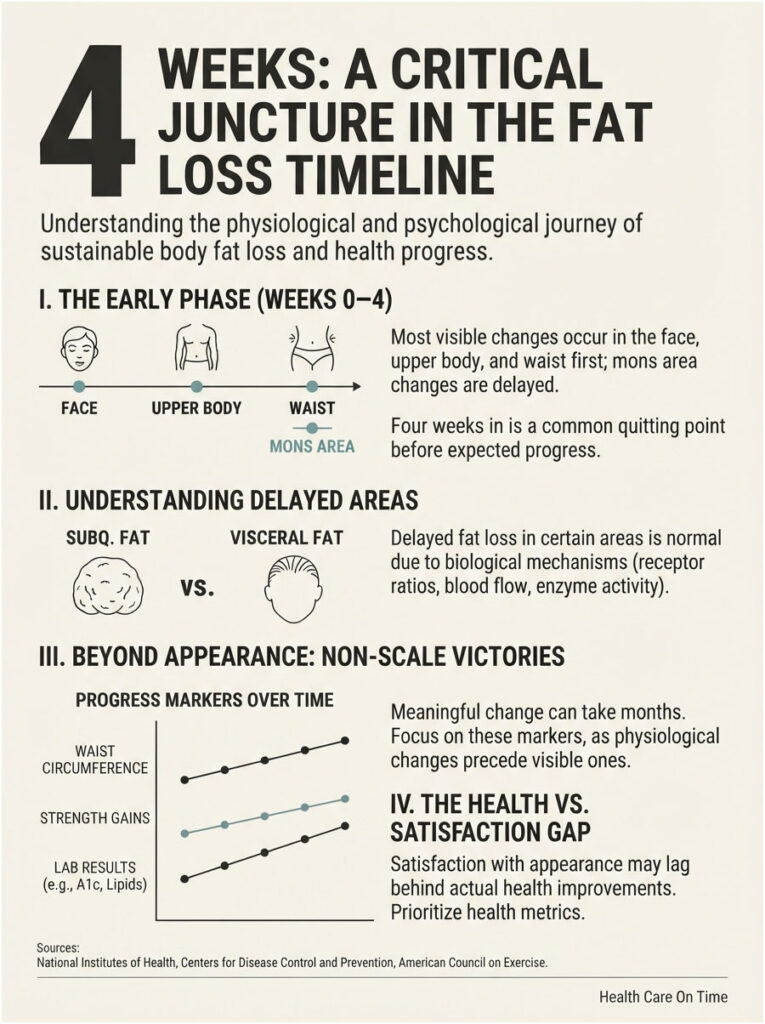
The First Eight to Twelve Weeks
With a consistent moderate energy deficit and regular resistance training, most people notice change in the face, upper body, and waist measurement first. The mons area frequently shows little visible difference in this window.
That is normal sequencing, not evidence that your approach is broken. Across the readers we hear from, this is the point where people quit, usually about four weeks before the area would have started responding.
Why This Area Empties Last
Every mechanism described earlier stacks in the same direction. Unfavorable receptor ratio, lower blood flow, higher storage enzyme activity, and skin that lags behind fat loss.
A depot carrying all four features empties late by design. For people with substantial total fat to lose, meaningful change here can take many months of steady work.
Progress Markers That Matter More Than the Mirror
Waist circumference falling. Strength numbers climbing. Clothes fitting differently through the ribs and hips. Blood pressure, HbA1c, and lipids improving on repeat testing.
Those markers reflect real physiological change and matter far more to your long-term health than the profile of one square inch of skin. In cases tracked across our diagnostic network, lab improvements routinely show up well before people report satisfaction with how they look.
Comfort, Clothing, and the Part Nobody Writes About
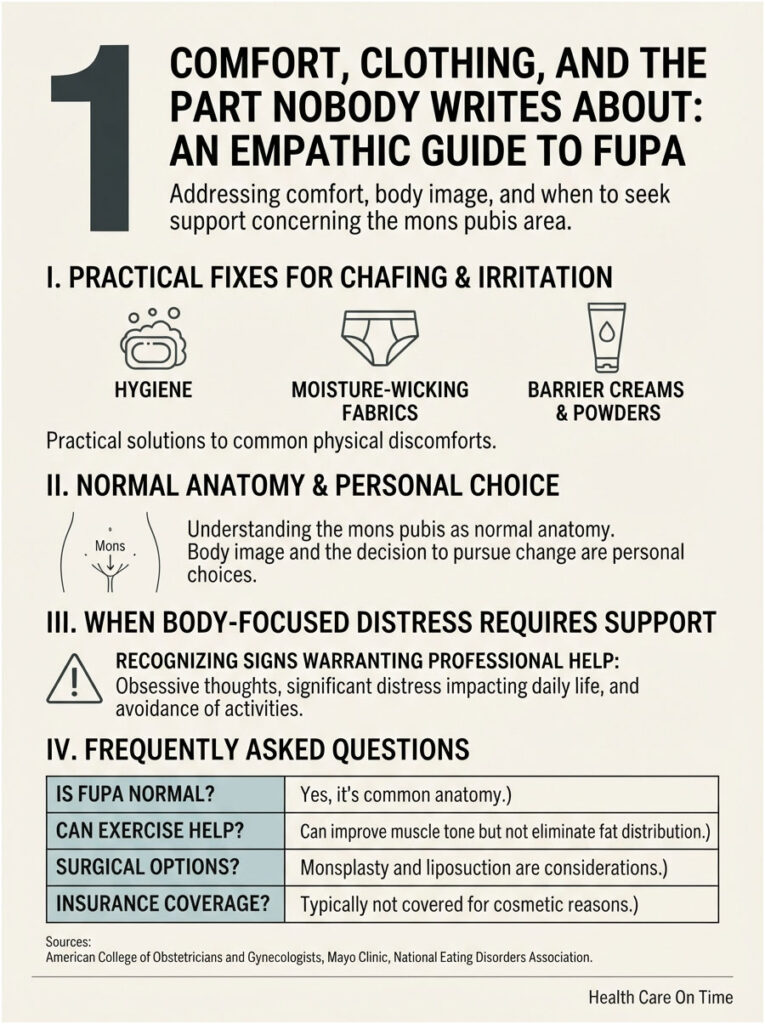
Practical Fixes for Chafing and Irritation
Skin folds trap heat and moisture, which invites chafing and fungal overgrowth. Keep the area clean and fully dry, especially after exercise.
Moisture-wicking underwear, breathable cotton, barrier creams, and absorbent powders all reduce friction. High-waisted, seamless styles tend to sit more comfortably than low-rise cuts that press directly into the fold.
If redness, itching, odor, or a rash keeps recurring despite good hygiene, that is a dermatology question and usually an easily treated one.
Normal Anatomy Versus a Problem to Solve
Worth saying plainly: a visible mons pubis is not a medical condition, a hygiene failure, or evidence of anything about your character. It is a normal anatomical structure that varies between people the way noses and hands vary.
Choosing to change it is a legitimate personal decision. Choosing not to is equally legitimate. Both decisions work out better when they come from accurate information rather than a comment section.
When Body-Focused Distress Deserves Support
There is a real difference between wanting to change something and being unable to stop thinking about it.
If checking, hiding, avoiding intimacy, skipping activities you used to enjoy, or restrictive eating patterns have entered the picture, that deserves attention on its own terms. Talking to a primary care physician or a licensed mental health professional about body image distress is an ordinary, reasonable step, and our medical reviewers encourage readers to take it without embarrassment.
Frequently Asked Questions
Is FUPA fat or loose skin?
It can be either, and often both together. Fat feels thick and full when pinched and flattens somewhat when you lie down. Loose skin feels thin, folds over easily, and drapes sideways when you are supine. The distinction matters because nutrition and training address fat, while only surgery addresses excess skin.
Is having a FUPA normal?
Completely normal. The mons pubis is a standard anatomical structure that cushions the pubic joint, and everyone has fat there. Its prominence varies with genetics, weight, hormones, age, and pregnancy history. A visible one carries no inherent health risk and signals nothing wrong with your body.
Why did my FUPA look bigger after I lost weight?
Two things happen at once. Skin stretched for a long time may not retract, leaving a deflated fold behind. Meanwhile, as the upper abdomen flattens and the mons does not, the mons becomes the most projecting point on your profile. It did not grow, its surroundings changed.
Can exercise alone get rid of a FUPA?
Not by itself. Controlled trials of targeted abdominal training show no reduction in local fat, and pooled analysis across 13 studies found essentially no localized effect. Exercise supports whole-body fat loss and improves core strength and posture, which changes overall contour, but it cannot strip fat from one chosen spot.
What is the difference between FUPA and an apron belly?
FUPA describes fat over the mons pubis, sitting above the pubic bone. An apron belly, or panniculus, is a larger hanging fold of skin and fat that drapes downward, sometimes past the pubic bone or onto the thighs. Apron bellies more often cause chafing, infections, and mobility problems, and may qualify for insurance coverage.
Does a FUPA mean I have a hormonal problem?
Usually not. Most cases reflect genetics, weight change, pregnancy, or aging. That said, PCOS, hypothyroidism, and elevated cortisol can all shift fat toward the lower abdomen. If you also have irregular cycles, unexplained fatigue, hair changes, or rapid central weight gain, testing is worth requesting.
How long does it take to lose pubic fat?
Longer than most other areas. This depot carries a high ratio of fat-storage-favoring receptors, lower blood flow, and higher storage enzyme activity, so it empties late. Expect measurable change in waist circumference and lab markers well before visible change here, often across many months rather than weeks.
Will a tummy tuck fix a FUPA?
Not automatically. A standard abdominoplasty addresses the abdomen above the pubic area and may leave the mons untouched, which can make it look more prominent afterward by contrast. Raise this area specifically during your consultation so the surgical plan includes it.
Do men get FUPA?
Yes. Weight gain, aging, and declining testosterone all contribute. Men more often carry a mixed subcutaneous and visceral pattern, which raises the metabolic stakes. In severe cases, a large suprapubic fat pad can partially envelop the penis, causing hygiene and urinary problems that warrant urologic evaluation.
Does insurance cover FUPA surgery?
Monsplasty done for appearance is classified as cosmetic and is generally not covered. Panniculectomy may be covered when the hanging fold reaches below the pubis and there is documented chronic intertrigo, recurrent infection, ulceration, or functional impairment, supported by records of failed conservative treatment and preoperative photographs.
Can a FUPA cause physical problems?
Sometimes. Larger fat pads and skin folds trap moisture, producing chafing, fungal infections, and recurrent rashes. Some people report discomfort during exercise or intimacy, or difficulty with hygiene. These functional issues, rather than appearance alone, are what open the door to insurance-covered treatment.
Will GLP-1 medications like Ozempic get rid of a FUPA?
They reduce fat throughout the body, including this region, but they cannot direct where loss occurs and they do not tighten skin. Rapid loss frequently leaves residual laxity in the lower abdomen and pubic area. Discuss both the expected benefit and the skin outcome with your prescriber before starting.
Medical Disclaimer
This article is for general education and does not replace individualized medical advice, diagnosis, or treatment. Body composition, hormonal status, and surgical candidacy vary considerably between individuals. Consult a licensed physician before making changes to your diet, exercise, or medication routine, and speak with a board-certified plastic surgeon before pursuing any procedure. If you notice a bulge that appears with straining, a firm or painful lump, or a skin infection that keeps returning, seek medical evaluation promptly.
References
- CDC NCHS Data Brief No. 508: Obesity and Severe Obesity Prevalence in Adults, United States, August 2021 to August 2023
- CDC NCHS: Prevalence of Overweight, Obesity, and Severe Obesity Among Adults Age 20 and Older
- CDC NCHS: Births, Provisional Data for 2024, including cesarean delivery rate
- American Society of Plastic Surgeons: 2024 Plastic Surgery Statistics Report
- American Society of Plastic Surgeons: Plastic Surgery Statistics Overview
- Mauriege P, et al. Heterogeneous distribution of beta and alpha-2 adrenoceptor binding sites in human fat cells from various fat deposits
- Garenc C, et al. The alpha-2 adrenergic receptor gene and body fat content and distribution: the HERITAGE Family Study
- Vispute SS, et al. The Effect of Abdominal Exercise on Abdominal Fat
- Kostek MA, et al. Subcutaneous Fat Alterations Resulting from an Upper-Body Resistance Training Program
- Medical News Today: How to get rid of FUPA (upper pubic fat)
- Healthline: Monsplasty, cost, recovery, and what to expect
- WebMD: What Is FUPA?
- CMS Billing and Coding Article A56587: Cosmetic and Reconstructive Surgery
- Anthem Clinical Guideline CG-SURG-99: Panniculectomy and Abdominoplasty
- Cigna Medical Coverage Policy 0027: Abdominoplasty and Panniculectomy