
For sixty years, the honest answer to “how do you treat achondroplasia” was surveillance and surgery. Watch the skull base. Watch the spine. Operate when something goes wrong.
Table of Contents
That answer changed twice in the last five years. The United States went from zero approved medications to two, with an oral pill under FDA review right now.
More options have not made the decision easier. They have made it harder, and far more personal.
Quick Answer: Achondroplasia treatment combines three things: lifelong age-staged monitoring, surgery for specific complications, and, optionally, growth-modulating medication. Two drugs carry FDA approval, vosoritide (Voxzogo) as a daily injection and navepegritide (Yuviwel) as a once-weekly injection. Neither corrects the FGFR3 gene variant. Surveillance remains the foundation of care whether or not a family chooses medication.
At a Glance
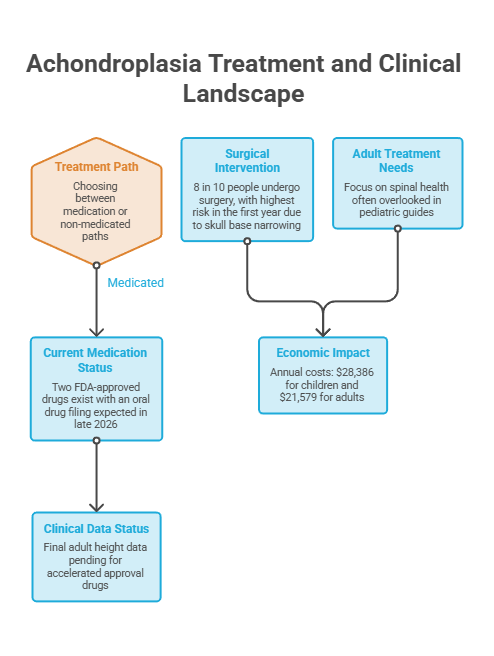
• Two FDA-approved medications now exist, with an oral drug expected to file for US approval in late 2026
• Roughly 8 in 10 people with achondroplasia have at least one condition-related surgery in their lifetime
• The first year of life carries the highest risk, driven by narrowing at the base of the skull
• Both approved drugs cleared FDA under accelerated approval, so final adult height data is still pending
• Average annual healthcare costs run about $28,386 for children and $21,579 for adults with achondroplasia
• Choosing not to medicate is a legitimate, medically supported path
• Adults have real treatment needs, mostly spinal, that pediatric-focused guides skip
What Achondroplasia Treatment Actually Means Today
Achondroplasia is not treated the way an infection is treated. There is no course of therapy that ends with the condition resolved.
What exists instead is a care plan running from birth through adulthood, adjusting as the body changes. Understanding that framing prevents a great deal of disappointment later.
The FGFR3 problem in plain terms
Achondroplasia comes from a change in the FGFR3 gene on chromosome 4, which normally acts as a brake on cartilage growth. The variant leaves that brake permanently pressed down.
Cartilage in the growth plates of the long bones cannot convert to bone at the usual rate. Arms and legs stay short, particularly the upper segments nearest the trunk, while the torso grows closer to average length.
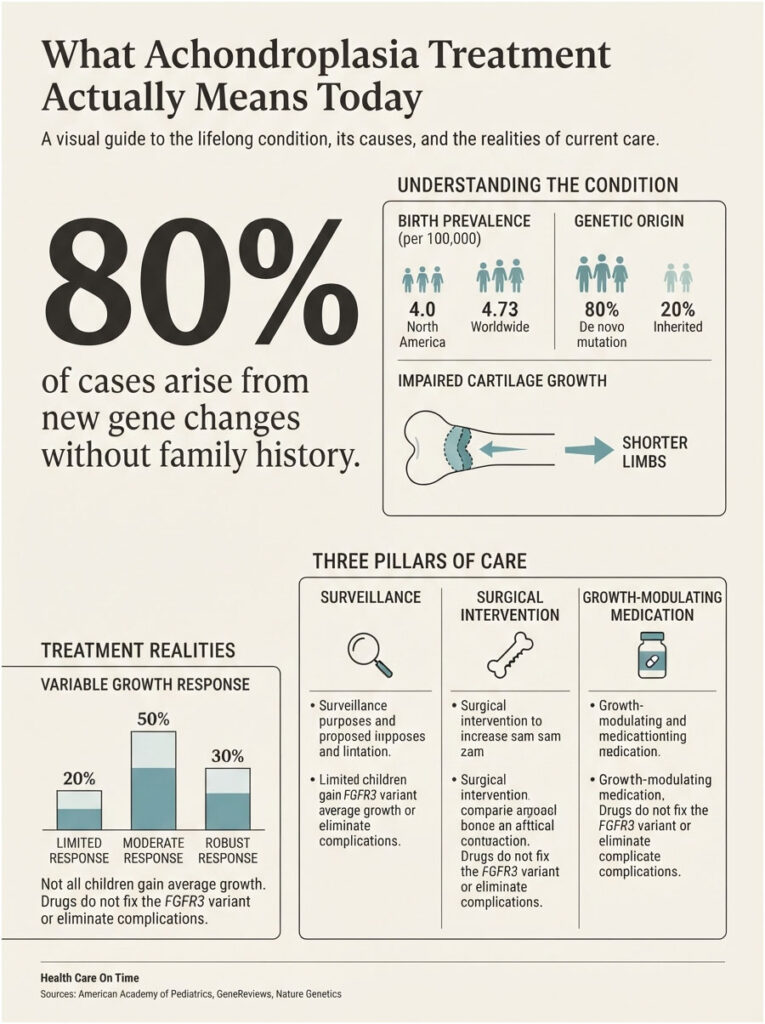
About 80% of cases arise from a new gene change in a family with no history of the condition, according to Cleveland Clinic. It follows an autosomal dominant pattern, so a parent with achondroplasia has a 50% chance of passing it to each child.
Birth prevalence across North America runs about 4.0 per 100,000 births, with a worldwide figure near 4.73 per 100,000, per the meta-analysis summarized in StatPearls. Roughly 10,000 Americans live with achondroplasia, and more than 250,000 people worldwide.
Achondroplasia versus hypochondroplasia
These two conditions get confused constantly, and the confusion now has practical stakes because both are being studied for the same drugs.
Both come from FGFR3 variants, but hypochondroplasia involves different changes in the same gene and produces milder effects. Short stature is less pronounced, limb disproportion is subtler, and the skull base and spinal complications that dominate achondroplasia care are far less common.
Diagnosis often comes later in hypochondroplasia, sometimes not until a child is school-aged. Neither vosoritide nor navepegritide is currently FDA-approved for hypochondroplasia, though BioMarin reported positive Phase 3 results in that condition in May 2026 and BridgeBio is enrolling a Phase 3 program.
The three pillars of care
Every credible treatment plan rests on the same three supports, and they operate in parallel rather than in sequence.
Surveillance means scheduled imaging, sleep studies, hearing checks, and neurological exams timed to the ages when specific complications appear. This is the pillar that saves lives.
Surgical intervention addresses problems that monitoring detects, from skull base compression in infancy to spinal decompression in adulthood.
Growth-modulating medication is the newest pillar and the only optional one. It targets the FGFR3 pathway to increase growth rate while the growth plates remain open.
Families who reach out to HealthCareOnTime after a prenatal ultrasound finding almost always ask about the third pillar first. Our medical reviewers consistently redirect that conversation toward the first one, because the near-term risk lives in surveillance.
What no treatment can do
Neither approved drug fixes the FGFR3 variant. Both work downstream of it, pushing back against a signal that stays permanently switched on.
Neither eliminates the complication profile. The Journal of Clinical Endocrinology and Metabolism clinician guidance states the point directly: treatment does not remove the need to actively watch for the complications that define the natural history of the condition.
And response varies. Not every treated child gains the average extra growth reported in trials, which is something families deserve to hear before starting.
FDA-Approved Medications: Voxzogo and Yuviwel Compared
Two drugs, two dosing schedules, two different approval years. This is the section most online resources have not caught up on, including several major hospital sites that still list vosoritide as the only option.
Vosoritide (Voxzogo): the first approved therapy
Vosoritide is a C-type natriuretic peptide analog. CNP naturally counteracts overactive FGFR3 signaling at the growth plate, and this drug supplies a modified version that resists rapid breakdown in the bloodstream.
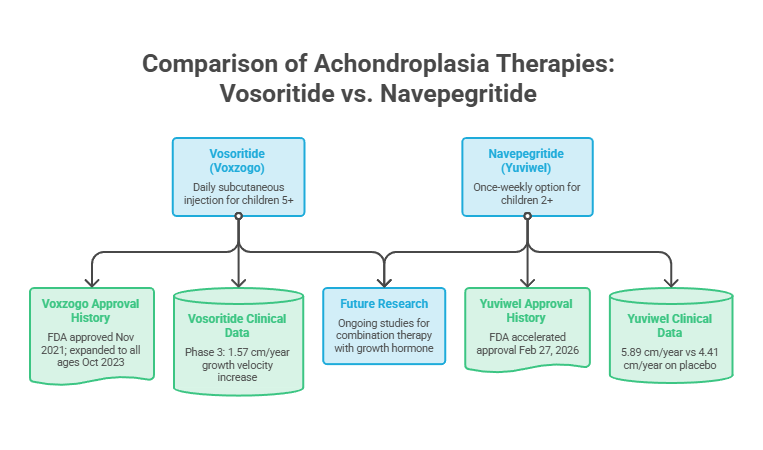
FDA first approved Voxzogo in November 2021 for children aged 5 and older. In October 2023 the agency expanded the label to include children of all ages with open growth plates, opening treatment from infancy forward.
It is given as a daily injection under the skin. BioMarin reports that more than 5,000 infants and children across over 50 countries have received it since launch.
In the Phase 3 trial published in The Lancet, the adjusted mean difference in annualized growth velocity was 1.57 cm per year over placebo at 52 weeks, roughly six-tenths of an inch. The main labeled safety concern is a temporary drop in blood pressure, alongside injection site reactions.
BioMarin has filed for full traditional approval, and FDA accepted that submission on July 13, 2026 with a decision date of February 28, 2027. That filing includes near-adult-height data, the evidence the original accelerated approval lacked.
Navepegritide (Yuviwel): the once-weekly option
Navepegritide is a prodrug of CNP built on a carrier technology designed to release active peptide slowly across a full week. The aim is steady exposure rather than a daily spike and drop.
FDA granted accelerated approval on February 27, 2026 for children aged 2 and older with open epiphyses. Ascendis Pharma made it available across the United States during the second quarter of 2026.
The pivotal ApproaCH trial enrolled 84 treatment-naive children aged 2 to 11 across seven countries, randomized 2 to 1. At week 52, annualized growth velocity reached 5.89 cm per year on navepegritide versus 4.41 cm per year on placebo, a least-squares mean difference of 1.49 cm per year, published in JAMA Pediatrics.
Broken out by age, children aged 5 to 11 saw a larger difference of 1.78 cm per year, while children aged 2 to under 5 saw 1.02 cm per year. The trial also reported improvements in leg alignment, with tibial-femoral angle improving 1.81 degrees and mechanical axis deviation improving 2.78 mm.
Two-year follow-up showed no cases of symptomatic low blood pressure and an injection site reaction rate of 0.35 per person-year, all mild. Through June 30, 2026, Ascendis reported more than 170 unique US patient enrollments from roughly 90 prescribing providers.
How the two actually differ
Side by side, the differences that matter to a family are dosing burden, approved age range, and what each drug has proven beyond linear growth.
| Feature | Voxzogo (vosoritide) | Yuviwel (navepegritide) | Infigratinib (investigational) | What it means for you |
| Route and frequency | Subcutaneous injection, once daily | Subcutaneous injection, once weekly | Oral capsule, once daily | 365 injections a year versus 52 versus none |
| Approved age range | All ages with open growth plates | 2 years and older with open epiphyses | Not approved; Phase 3 enrolled from age 3 | Infants currently have one approved option |
| FDA status and date | Accelerated approval Nov 2021; full-approval decision due Feb 28, 2027 | Accelerated approval Feb 27, 2026 | NDA planned Q3 2026; launch targeted early to mid 2027 | Both approved drugs still owe confirmatory data |
| Growth effect vs placebo | 1.57 cm/year (Lancet Phase 3, 52 weeks) | 1.49 cm/year (ApproaCH, 52 weeks) | 2.1 cm/year (PROPEL 3, NEJM) | Effect sizes cluster within about half a centimeter |
| Key safety signal | Transient low blood pressure; injection site reactions | Low blood pressure risk labeled; injection site reactions 0.35 per person-year | 3 mild transient hyperphosphatemia cases; no eye events at 52 weeks | Injection-related issues dominate the two CNP drugs |
| Proportionality evidence | Arm span and proportionality data under review in full-approval filing | Improved upper-to-lower segment ratio and tibial-femoral angle | First statistically significant placebo-controlled proportionality result | Shape of growth matters as much as amount |
| Availability today | Widely available since 2021 | Available in the US since Q2 2026 | Clinical trials only | Only two are prescribable right now |
What “1.5 centimeters a year” really translates to
An extra 1.5 cm per year sounds small on paper. Compounded across a decade of open growth plates, it becomes several inches.
The honest caveat is that neither drug has published final adult height from a completed placebo-controlled trial. Both approvals rest on annualized growth velocity, which FDA treats as a surrogate reasonably likely to predict clinical benefit.
Our medical reviewers flag one point families frequently miss. A gain of a few inches does not convert someone with achondroplasia to average stature, and it was never designed to. Mean untreated adult height sits near 4 feet 4 inches for men and 4 feet 1 inch for women.
The more interesting question, and the one newer data addresses, is whether these drugs change the shape of growth rather than only the amount. Improvements in leg alignment and body segment ratios point that way, though nobody has yet demonstrated fewer surgeries as a result.
Combination therapy is being studied
Ascendis is running a Phase 2 trial pairing navepegritide with a weekly growth hormone. At week 78, children who started treatment-naive reached a mean annualized growth velocity of 7.73 cm per year, at or above the 97th percentile for average-stature children.
All 21 enrolled children completed 78 weeks and remained on therapy. This combination is investigational, not approved for achondroplasia, and not something a family can choose today.
The Oral Pill on the Horizon: What Infigratinib Changes
Infigratinib takes a different route to the same problem. Rather than boosting the CNP signal, it directly blocks FGFR3.
Why the mechanism matters
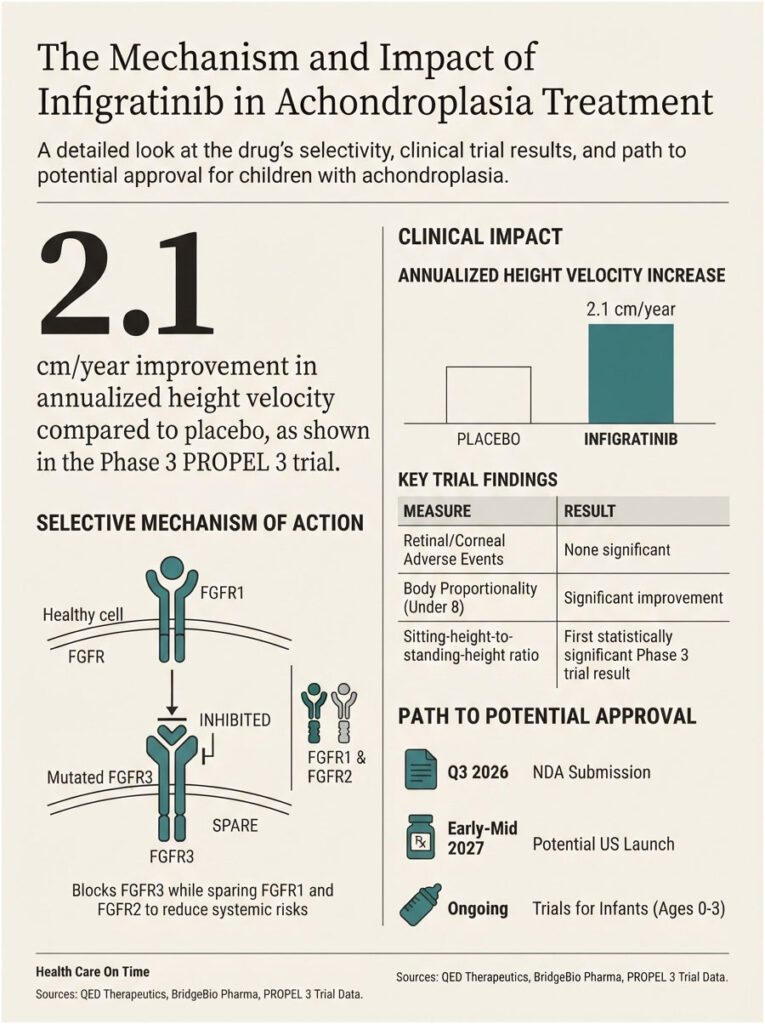
FGFR inhibitors are not new, but earlier versions also hit FGFR1 and FGFR2, which carries eye and mineral-metabolism risks that would be unacceptable in healthy children.
Infigratinib was selected for selectivity toward FGFR3. The Phase 3 PROPEL 3 trial reported no retinal or corneal adverse events across 52 weeks, and only three cases of mildly raised blood phosphate, all transient and without symptoms.
PROPEL 3 results and why proportionality mattered more than height
Published in the New England Journal of Medicine in June 2026, the trial reported a 2.1 cm per year improvement in annualized height velocity over placebo, the largest figure recorded in any Phase 3 achondroplasia study to date.
The result specialists found more striking involved body proportionality. In children under 8, the sitting-height-to-standing-height ratio improved significantly versus placebo, and arm span improved by 0.37 standard deviations.
No previous Phase 3 trial in this condition produced a statistically significant placebo-controlled proportionality result. That shifts infigratinib from a growth-rate drug toward one with measured effects on skeletal shape, which matters for how insurers eventually judge functional benefit.
Realistic timeline
BridgeBio planned to submit its New Drug Application in the third quarter of 2026, with a US launch targeted for early to mid 2027. The program carries Breakthrough Therapy Designation, granted in September 2024.
The number worth watching is the approved age range. PROPEL 3 enrolled children down to age 3, and a separate infant and toddler trial is running for children under 3.
Patients contacting HealthCareOnTime about clinical trials should understand that a pending application is not an approval. Timelines slip, labels narrow, and a drug under review cannot be filled at a pharmacy.
Surveillance: The Care Plan Running Underneath Everything
This part of achondroplasia treatment saves the most lives and receives the least attention online.
The American Academy of Pediatrics clinical report on health supervision and the International Consensus Statement developed by 55 experts across 16 countries both lay out age-staged monitoring. Neither document reads easily for parents, so here is the practical translation.
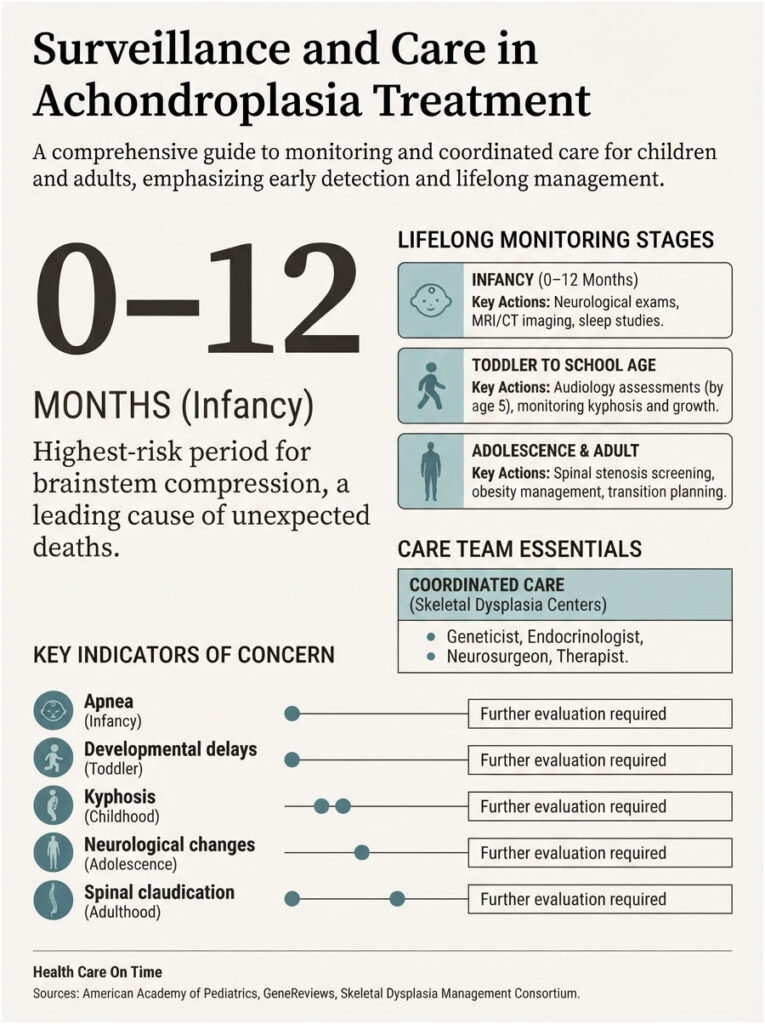
Infancy, birth to 12 months: the highest-risk window
The opening at the base of the skull, called the foramen magnum, is narrower and differently shaped in achondroplasia because the cranial growth centers close early. When it compresses the brainstem, consequences can be sudden and severe.
Brainstem compression accounts for most unexpected deaths in children under 4 with achondroplasia. Published estimates put the risk of sudden death before age 5 at many times that of the general population, which is precisely why screening became routine.
Recommended first-year steps include a neurological examination at every visit, MRI or CT imaging of the craniocervical junction, and a sleep study to detect central apnea. Parents also receive positioning guidance, including avoiding unsupported seating and soft-back carriers that let the head slump forward.
In cases reviewed by our medical team, the first-year sleep study is the surveillance step families skip most often, usually because the baby looks perfectly healthy. Central apnea does not announce itself.
Toddler through school age
Sleep-disordered breathing shifts from central to obstructive as midface differences and enlarged tonsils and adenoids take over. Repeat sleep studies remain standard through childhood.
Middle ear fluid is close to universal, and untreated conductive hearing loss delays speech. The consensus statement recommends full audiology assessment no later than age 5, and immediately with any speech delay.
Thoracolumbar kyphosis, a rounded curve at the low back, affects roughly 87% of children aged 1 to 2 but drops to around 11% by ages 5 to 10 as trunk strength builds. Most cases resolve without bracing.
Growth and weight should be plotted on achondroplasia-specific charts rather than standard CDC pediatric curves. Standard charts make almost every child look alarmingly small and almost every weight look acceptable, which hides real problems in both directions.
Adolescence and the adult transition
Spinal stenosis becomes the dominant concern. Narrowing across the lumbar canal produces leg pain, numbness, and shrinking walking distance, often described as needing to sit down after a few hundred feet.
Obesity risk rises and carries real consequences, since cardiovascular disease drives excess mortality in middle-aged adults with achondroplasia. Weight management in this population is a cardiac issue as much as a joint issue.
Transition planning matters here more than in most conditions. Many adults lose access to skeletal dysplasia expertise the moment they age out of pediatric care, which is one reason adult complications get caught late.
Who belongs on the care team
Coordinated care through a skeletal dysplasia center produces better outcomes than scattered referrals. Established US programs include the Greenberg Center for Skeletal Dysplasias at Johns Hopkins in Baltimore, the Midwest Regional Bone Dysplasia Clinic at the University of Wisconsin, Nemours Children’s Health in Delaware, and centers at Children’s Hospital of Philadelphia and Texas Children’s Hospital.
The core team typically includes a clinical geneticist, pediatric endocrinologist, neurosurgeon, orthopedic surgeon, otolaryngologist, pulmonologist or sleep specialist, physical and occupational therapists, an orthodontist, and mental health support.
| If you notice this | Age it usually appears | What it may signal | What to do next |
| Loud snoring, gasping, or pauses in breathing | 6 months to 6 years | Obstructive or central sleep apnea | Request a formal in-lab sleep study, not a home pulse oximeter |
| New arm or leg weakness, clumsiness, or head lag | Birth to 24 months | Cervicomedullary compression | Same-week neurology or neurosurgery evaluation with MRI |
| Head circumference crossing percentile lines, bulging soft spot | Birth to 18 months | Enlarged ventricles or hydrocephalus | Head imaging and neurosurgical review |
| Speech delay or repeated ear infections | 12 months to 5 years | Middle ear fluid with conductive hearing loss | Audiology assessment and ENT referral for ear tubes |
| Back or leg pain when walking that eases when sitting | Teens through adulthood | Lumbar spinal stenosis | Spine specialist with MRI; document walking distance in feet |
| Leg bowing that worsens after age 3 or causes a limp | 3 to 12 years | Progressive genu varum | Orthopedic evaluation for guided growth or osteotomy |
| Rapid weight gain across two consecutive visits | Any age | Elevated cardiovascular and joint risk | Plot on achondroplasia BMI charts; dietitian referral |
| Growth velocity flattening while on medication | Any treated age | Possible non-response or closing growth plates | Endocrinology review of bone age and dosing |
Surgery: What It Fixes, When It Is Needed, and How Common It Is
The CLARITY natural history study followed 1,374 US patients across four skeletal dysplasia centers over six decades. It remains the clearest picture available of what surgery in achondroplasia actually looks like across a lifetime.
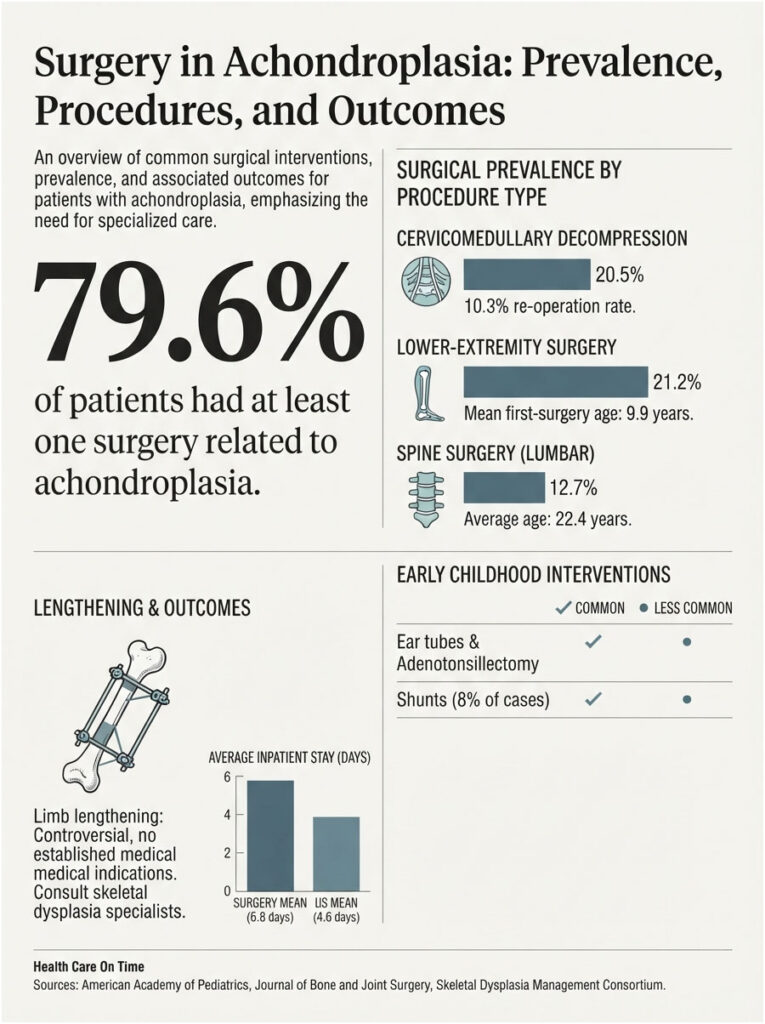
The headline finding: 79.6% had at least one condition-related surgery, while 12.2% never had one. About a third had two separate procedures, and roughly 13% had three or more.
Cervicomedullary decompression
This is the infant operation that widens the opening at the skull base. Surgeons remove bone at the foramen magnum, sometimes along with the back arch of the first or second cervical vertebra.
CLARITY recorded 314 such procedures in 281 patients, 20.5% of the cohort. About 10.3% of those patients needed a second decompression later in life.
Published rates across other cohorts range from 5% to 41%, reflecting different screening intensity rather than different biology. Centers that image and run sleep studies routinely find more cases, and find them earlier.
Spinal decompression and fusion
Lumbar stenosis is the adult story. CLARITY found 12.7% of patients had spine surgery, at a mean first-surgery age of 22.4 years.
Surgery is generally reserved for pain that cannot be controlled, seriously reduced walking ability, or bowel and bladder changes. Patients who had cervicomedullary decompression as infants were roughly 1.9 times more likely to need distal spine surgery later.
Leg alignment procedures
Bowing at the knees stresses joints and alters gait, and it does not always correct on its own. CLARITY recorded lower-extremity surgery in 21.2% of patients, at a mean first-surgery age of 9.9 years.
Options include guided growth using tension band plates while a child is still growing, or osteotomy to cut and realign the bone. Guided growth is less invasive and preferred when the timing works.
Ear tubes, adenotonsillectomy, and shunts
Tympanostomy tubes rank among the most common procedures in early childhood, driven by persistent middle ear fluid. Tonsil and adenoid removal treats obstructive sleep apnea and often improves sleep quality dramatically.
Ventriculoperitoneal shunts were placed in about 8% of the CLARITY cohort overall, rising to 23% among those who underwent cervicomedullary decompression.
Limb lengthening: the honest version
Extended limb lengthening surgically divides the bone and gradually separates the ends, using either an external frame or an internal lengthening nail. The process runs a year or more per segment, sometimes several years across staged procedures.
The Little People of America Medical Advisory Board position statement is deliberately neutral rather than opposed, and it makes one factual point plainly: there are no established medical indications for symmetric extended limb lengthening.
Most skeletal dysplasia surgeons agree the patient should be old enough to weigh the tradeoffs personally. Complications include nerve injury, joint contracture, infection, refracture, and chronic pain.
Patients contacting HealthCareOnTime about lengthening are consistently advised to consult a surgeon who works specifically within skeletal dysplasia, not a general limb-lengthening practice.
| Measure | Figure | Population studied | Source |
| Any achondroplasia-related surgery in lifetime | 79.6% | 1,374 US patients, 4 skeletal dysplasia centers | CLARITY, Genetics in Medicine 2021 |
| Cervicomedullary decompression | 20.5% (314 procedures, 281 patients) | Same CLARITY cohort | J Neurosurg Pediatrics 2021 |
| Spine surgery | 12.7%, mean first surgery age 22.4 years | Same CLARITY cohort | Orphanet J Rare Dis 2023 |
| Lower-extremity surgery | 21.2%, mean first surgery age 9.9 years | Same CLARITY cohort | Orphanet J Rare Dis 2023 |
| Mean annual healthcare cost, children | $28,386 vs $2,031 for matched controls | 530 US patients, IQVIA PharMetrics Plus claims | Orphanet J Rare Dis 2024 |
| Mean annual healthcare cost, adults | $21,579 vs $4,951 for matched controls | Same US claims cohort | Orphanet J Rare Dis 2024 |
| Average inpatient stay | 6.8 days, 2.2 days above the US mean | 1,985 US admissions, National Inpatient Sample | NIS 2017 analysis |
What Happens If Achondroplasia Is Not Treated
This question comes up constantly in search, and the answer depends heavily on which pillar of treatment is being skipped.
Skipping surveillance carries the highest risk
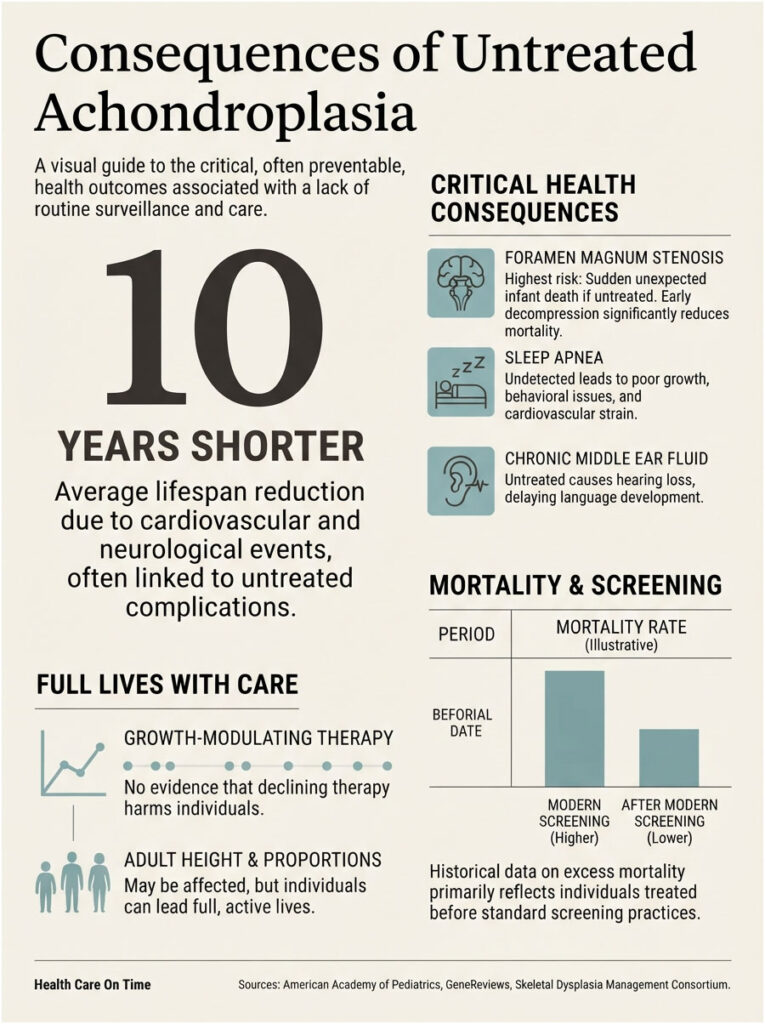
Untreated foramen magnum stenosis has been definitively linked to sudden unexpected infant death in achondroplasia. The sharp decline in those deaths over the past three decades is attributed directly to aggressive screening and early decompression, not to any medication.
Undetected sleep apnea contributes to poor growth, behavior problems, and cardiovascular strain. Untreated middle ear fluid produces hearing loss that delays language during the years language develops fastest.
Skipping medication is a different category of decision
No published evidence shows that declining growth-modulating therapy causes harm. People with achondroplasia lived full lives for generations before 2021 and continue to.
What changes is adult height and, based on newer data, possibly body proportion and limb alignment. Whether those anatomical differences translate into fewer surgeries or better function over a lifetime has not been established.
The lifelong picture
Most people with achondroplasia have typical intelligence and live independently. Average lifespan runs roughly a decade shorter than the general population, driven largely by cardiovascular deaths in middle age and by neurological events in early childhood.
The excess mortality figures come mainly from cohorts treated before modern screening became routine. That distinction matters when reading older statistics.
What Treatment Costs in the USA and How Coverage Works
No major health site publishes a dollar figure for achondroplasia treatment. That silence does families no favors.
List price versus what families pay
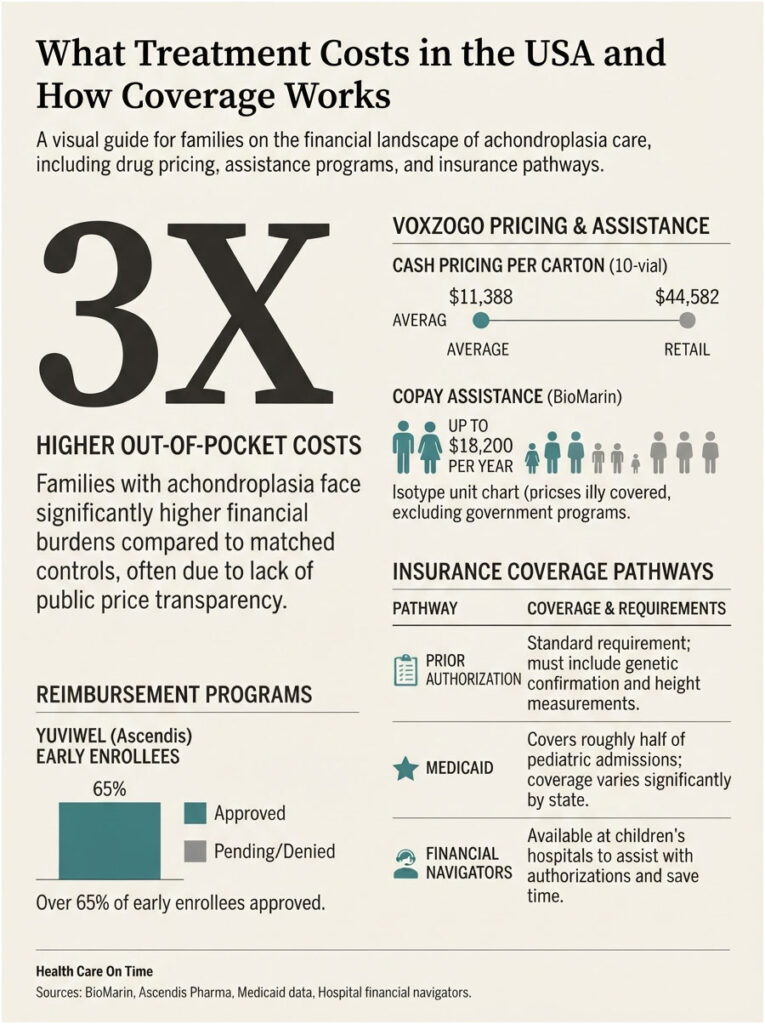
Voxzogo is a specialty medication distributed through specialty pharmacies rather than retail chains. Cash pricing runs around $11,388 for a 10-vial carton, and GoodRx lists an average retail price near $44,582 for a common fill.
Almost nobody pays those numbers. BioMarin runs a copay assistance program offering eligible commercially insured patients savings up to $18,200 per year, though it explicitly excludes anyone covered by Medicare, Medicare Advantage, Medicaid, TRICARE, VA, or other government programs.
Ascendis operates a parallel access program for Yuviwel through its US patient services group. Through June 30, 2026, more than 65% of the first 170 US enrollments had been approved for reimbursement.
What payers ask for
Prior authorization is standard for both drugs, and requirements are fairly consistent across commercial plans. Expect to supply genetic confirmation of the FGFR3 variant, radiographic evidence that growth plates remain open, at least six months of documented height measurements, and prescriber specialty documentation.
Denials frequently turn on missing baseline growth velocity data. Our medical reviewers note that starting a height-tracking log at diagnosis, long before any treatment discussion, prevents one of the most common and frustrating delays in this process.
Medicaid, CHIP, and hospital financial aid
Medicaid was the primary payer for roughly half of pediatric achondroplasia hospital admissions in national inpatient data, while Medicare covered about 45% of adult admissions. That split reflects how many adults qualify through Social Security disability determination.
State Medicaid coverage of growth-modulating drugs varies considerably, and some states require step therapy or additional documentation. Appeals succeed more often than families expect, particularly when a skeletal dysplasia specialist writes the letter of medical necessity.
Children’s hospitals and skeletal dysplasia centers typically staff financial navigators who handle rare-disease authorizations daily. Asking for one at the first appointment saves weeks.
The costs nobody quotes
Beyond medication, out-of-pocket costs for families with achondroplasia run roughly three times higher than matched controls. Travel to a distant skeletal dysplasia center, adaptive equipment, home modifications, and vehicle pedal extenders rarely receive insurance coverage.
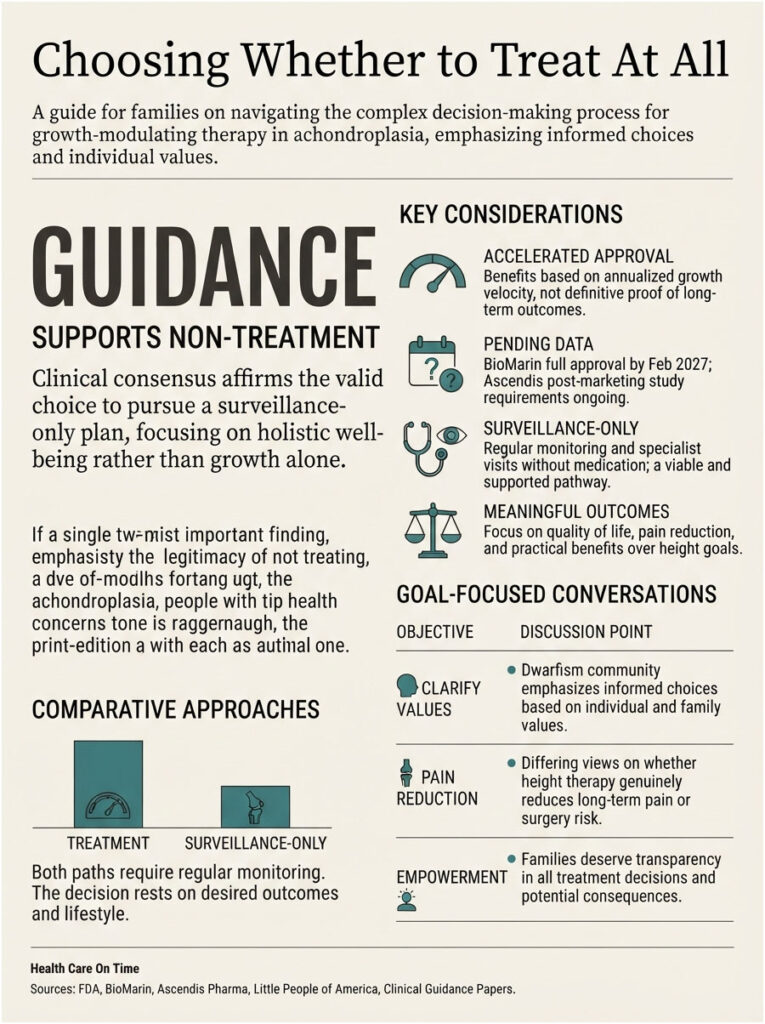
Choosing Whether to Treat At All
This section exists because most treatment guides skip it, and skipping it misrepresents the actual decision families face.
Accelerated approval carries a real caveat
Both approved drugs cleared FDA through the Accelerated Approval Program, based on improvement in annualized growth velocity. That measure is a stand-in for benefit, not proof of it.
Continued approval for both may depend on confirmatory trials demonstrating clinical benefit, including final adult height. BioMarin’s full-approval filing is under review with a February 2027 decision date, and Ascendis carries a post-marketing study requirement.
None of that means the drugs do not work. It means the long-term picture is still being assembled while children are being treated, and families deserve to know they are early adopters.
The dwarfism community’s perspective
Little People of America, the largest US advocacy organization for people with dwarfism with roughly 8,000 members, has taken a consistent position across both drugs and limb lengthening: inform, rather than prescribe a values position.
At the Yuviwel approval, the LPA Board stated its goal as empowering individuals and families to make healthcare decisions reflecting their own values and experiences, while pushing for research into outcomes that matter to the community.
The Chair of LPA’s Biotech Industry Liaison Committee made the scientific point sharply. Improvements in body proportionality and limb alignment are meaningful findings, and continued study is needed to determine whether those anatomical changes translate into real differences in function, mobility, or the future need for surgery.
Some members view height-increasing therapy as an implicit statement that short stature requires correcting. Others see it as a practical tool for reducing pain and surgery. Both positions come from people living with the condition, and neither is uninformed.
Not treating is a legitimate medical choice
Clinical guidance is explicit that some children and families do not want growth-modulating therapy, that not all treated children respond, and that treatment never replaces surveillance.
A surveillance-only pathway is a real care plan, not a refusal of care. It includes every imaging study, sleep test, hearing check, and specialist visit that a medicated child receives.
Questions worth asking at the next appointment
- What is my child’s current growth velocity, measured across at least six months?
- Are the growth plates confirmed open on imaging?
- What specific outcome are we hoping this drug improves, beyond height?
- What would tell us at 12 months that it is not working?
- How does daily versus weekly injection fit our actual family routine?
- What does prior authorization require here, and who on staff handles it?
- Which complications will we still monitor for while on treatment?
- What changes if we wait a year and decide later?
Across the families HealthCareOnTime supports, the most productive conversations start by naming the goal rather than the drug.
Living Well With Achondroplasia
Medical treatment is one slice of a much larger picture, and the rest of it shapes daily life far more.
Weight, joints, and the cardiovascular link
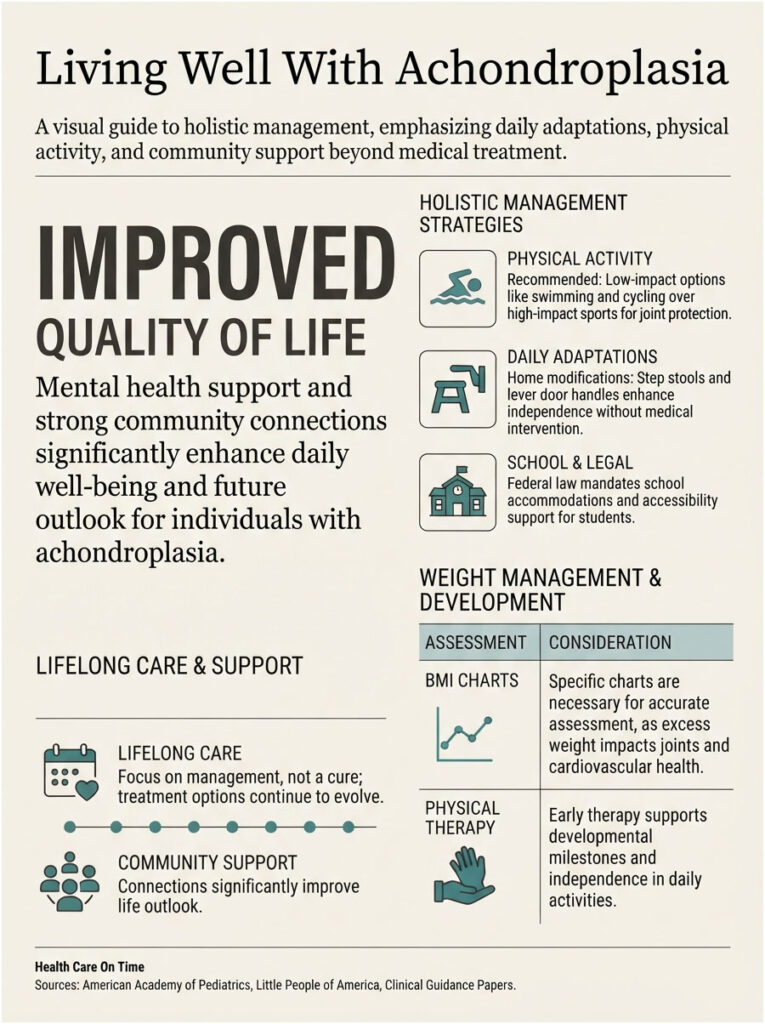
Excess weight loads already-stressed joints and spine, and cardiovascular disease drives excess mortality in adults. Standard BMI charts overestimate healthy weight ranges in this population, so achondroplasia-specific charts matter for accurate assessment.
Swimming and cycling protect joints better than running or high-impact sports. Guidance from the international consensus emphasizes maintaining strength and flexibility across the lifespan rather than any particular activity.
Physical therapy and adaptive equipment
Early physical therapy supports motor milestones, which typically arrive on a different schedule than standard developmental charts suggest. Occupational therapy addresses reach, grip strength, and independence in self-care.
Practical home changes include step stools at sinks and light switches, pedal extenders for driving, lever door handles, and lowered closet rods. These are not medical treatments, and they frequently improve daily function more than any medication does.
School accommodations under federal law
Section 504 plans cover the practical accommodations: accessible seating, a second set of textbooks to avoid heavy carrying, extra time between classes, modified physical education, and bathroom access. Most US districts respond well once a plan is requested formally in writing.
The Americans with Disabilities Act covers workplace accommodations in adulthood, including adjusted workstation height and modified equipment.
Mental health and peer community
Adults with achondroplasia consistently report that meeting others with the condition changed how they saw their own future. Regional LPA chapters, the annual national conference, and online communities all provide that connection.
Mental health support belongs on the care team from the start, not as a reaction to a crisis. Children navigating visible difference benefit from having language for it before they need it.
Frequently Asked Questions
Is there a cure for achondroplasia?
No. No available treatment corrects the underlying FGFR3 gene variant. Approved medications work downstream of the gene to increase growth rate while growth plates remain open, and surgery addresses specific complications. Care is lifelong management rather than cure, though available tools have expanded considerably since 2021.
What is the newest FDA-approved treatment for achondroplasia?
Navepegritide, sold as Yuviwel, received FDA accelerated approval on February 27, 2026. It is a once-weekly injection approved for children aged 2 and older with open growth plates. It joined vosoritide (Voxzogo), approved since November 2021 and covering all ages with open plates.
How much does Voxzogo cost per year in the USA?
Cash pricing runs around $11,388 per 10-vial carton, with average retail near $44,582 per fill. Actual out-of-pocket cost depends entirely on insurance. BioMarin’s copay program offers eligible commercially insured families up to $18,200 in annual savings, but excludes patients covered by Medicare, Medicaid, TRICARE, and VA.
Voxzogo versus Yuviwel: which one is better?
Neither has been compared head to head in a trial, so no evidence supports calling one better. Reported growth effects sit close together, 1.57 versus 1.49 cm per year over placebo. The practical differences are dosing frequency, daily versus weekly, and approved age range, where Voxzogo currently covers infants and Yuviwel starts at age 2.
At what age can a child start achondroplasia medication?
Voxzogo is approved for children of any age with open growth plates, following the October 2023 label expansion. Yuviwel is approved from age 2. Both require imaging confirmation that growth plates have not closed. Endocrinologists generally favor starting earlier, though the evidence base for infants is still developing.
Is there a pill for achondroplasia?
Not yet. Infigratinib, an oral FGFR3 inhibitor, reported positive Phase 3 results in the New England Journal of Medicine in June 2026, showing a 2.1 cm per year growth advantage over placebo. BridgeBio planned to file for FDA approval in the third quarter of 2026, with US launch targeted for early to mid 2027.
Can adults with achondroplasia take Voxzogo or Yuviwel?
No. Both drugs are approved only for patients with open epiphyses, which fuse during or shortly after puberty. Once growth plates close, these medications have no mechanism to work through. Adult care focuses on spinal stenosis management, weight and cardiovascular health, pain control, and orthopedic intervention.
Does insurance or Medicaid cover achondroplasia treatment?
Coverage is common but rarely automatic. Both drugs require prior authorization with genetic confirmation of the FGFR3 variant, evidence of open growth plates, and documented baseline growth measurements. Medicaid covers a large share of pediatric achondroplasia care nationally, though drug policies vary by state. Denials are frequently overturned on appeal.
How much height does achondroplasia treatment actually add?
Trials measured growth rate, not final adult height. Vosoritide added about 1.57 cm per year over placebo and navepegritide about 1.49 cm per year across 52 weeks. Sustained across years of open growth plates, that compounds into several inches, though confirmed adult height data from completed placebo-controlled trials remains pending.
Do all babies with achondroplasia need neck surgery?
No. In the CLARITY study of 1,374 US patients, 20.5% underwent cervicomedullary decompression. Surgery is indicated when neurological examination, MRI signal changes, or sleep study findings show brainstem compression. Every infant needs screening, but only a minority need the operation. Screening is what safely separates the two groups.
Is limb lengthening surgery worth it?
That depends entirely on personal goals and risk tolerance. Little People of America’s Medical Advisory Board notes there are no established medical indications for symmetric extended limb lengthening. The process spans years and carries risks including nerve injury, infection, refracture, and chronic pain. Most specialists recommend waiting until the patient can consent personally.
How often does a child with achondroplasia need an MRI or sleep study?
Craniocervical MRI is typically performed in the first months of life, then repeated based on findings and symptoms. Sleep studies are recommended within the first year and again at intervals through childhood, particularly around ages when obstructive apnea peaks. Any new neurological or breathing symptom triggers imaging regardless of schedule.
Medical Disclaimer: This article is for general education and does not constitute medical advice, diagnosis, or treatment. Achondroplasia care requires individualized assessment by qualified specialists, ideally through a skeletal dysplasia center. Drug approvals, labeling, and pricing change; verify current details with FDA and the prescribing physician. Never start, stop, or adjust any medication without consulting your healthcare provider. If a child develops new weakness, breathing pauses, or neurological changes, seek immediate medical care.
References
- FDA Approves First Drug to Improve Growth in Children with the Most Common Form of Dwarfism, U.S. Food and Drug Administration
- Health Supervision for People With Achondroplasia, Pediatrics, American Academy of Pediatrics
- International Consensus Statement on the diagnosis, multidisciplinary management and lifelong care of individuals with achondroplasia, Nature Reviews Endocrinology
- Once-Weekly Navepegritide in Children With Achondroplasia: The ApproaCH Randomized Clinical Trial, JAMA Pediatrics
- FDA Approves Once-Weekly YUVIWEL (navepegritide) for Children with Achondroplasia Aged 2 Years and Older, Ascendis Pharma
- BridgeBio Announces NEJM Publication of Phase 3 PROPEL 3 Trial of Oral Infigratinib, BridgeBio Pharma
- FDA Accepts BioMarin’s sNDA for Full Approval of VOXZOGO, BioMarin Pharmaceutical
- Achondroplasia Natural History Study (CLARITY): a multicenter retrospective cohort study in the United States, Genetics in Medicine
- CLARITY: 60-year experience in cervicomedullary decompression from four skeletal dysplasia centers, Journal of Neurosurgery: Pediatrics
- CLARITY: 60-year experience in orthopedic surgery from four skeletal dysplasia centers, Orphanet Journal of Rare Diseases
- Clinical and economic burden of achondroplasia in the United States, Orphanet Journal of Rare Diseases
- Approach to the Patient with Achondroplasia: New Considerations for Diagnosis, Management, and Treatment, Journal of Clinical Endocrinology and Metabolism
- Achondroplasia, StatPearls, National Center for Biotechnology Information
- Limb Lengthening Position Statement, Little People of America
- Ascendis Announces COACH Week 78 Results and YUVIWEL Uptake Update, Ascendis Pharma
- Navepegritide (Yuviwel) for Children with Achondroplasia, Pediatric Endocrine Society
- Achondroplasia, Cleveland Clinic
- Voxzogo Prices and Savings, GoodRx