
Roughly 35 million Americans get their Medicare through a private Advantage plan. Fewer than 821,000 of them are in a plan Medicare actually rates five stars.
Table of Contents
That is about one member in forty-three.
The gap between how often five stars gets advertised and how rarely it gets earned tells you most of what you need to know about this system.
Quick Answer: A 5-star Medicare Advantage plan is one that earned the top score on Medicare’s 1-to-5 quality scale. The Centers for Medicare & Medicaid Services (CMS) grades every plan contract each fall on measures covering preventive care, chronic disease management, member experience, complaints, and customer service. Five stars is the highest rating available, it is rare, and it gives you the right to switch into that plan outside normal open enrollment.
At a Glance
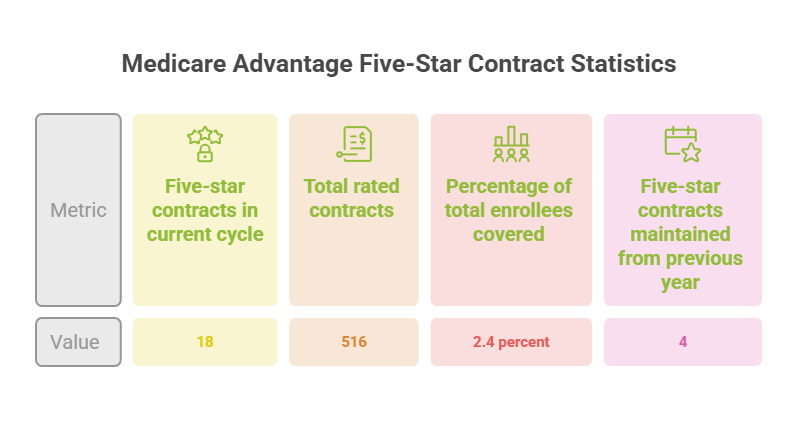
- Just 18 Medicare Advantage prescription drug contracts earned five stars in the current cycle, out of 516 rated contracts.
- Those contracts cover about 2.4 percent of all Medicare Advantage prescription drug enrollees.
- CMS rates contracts, not the individual plan brochure in your mailbox. One contract can hold several plans.
- A five-star plan in your service area gives you a Special Enrollment Period, usable once between December 8 and November 30.
- Five stars does not mean a higher premium. Cost and quality are scored separately.
- Only four of the current 18 held five stars the year before. Turnover is high.
- MedPAC, the AARP Public Policy Institute, and researchers publishing in JAMA question how well the ratings predict the care any individual member receives.
What a 5-Star Medicare Advantage Plan Actually Is
Every fall, CMS publishes a quality score for each Medicare Advantage contract in the country. The scale runs from one star to five, in half-star steps.
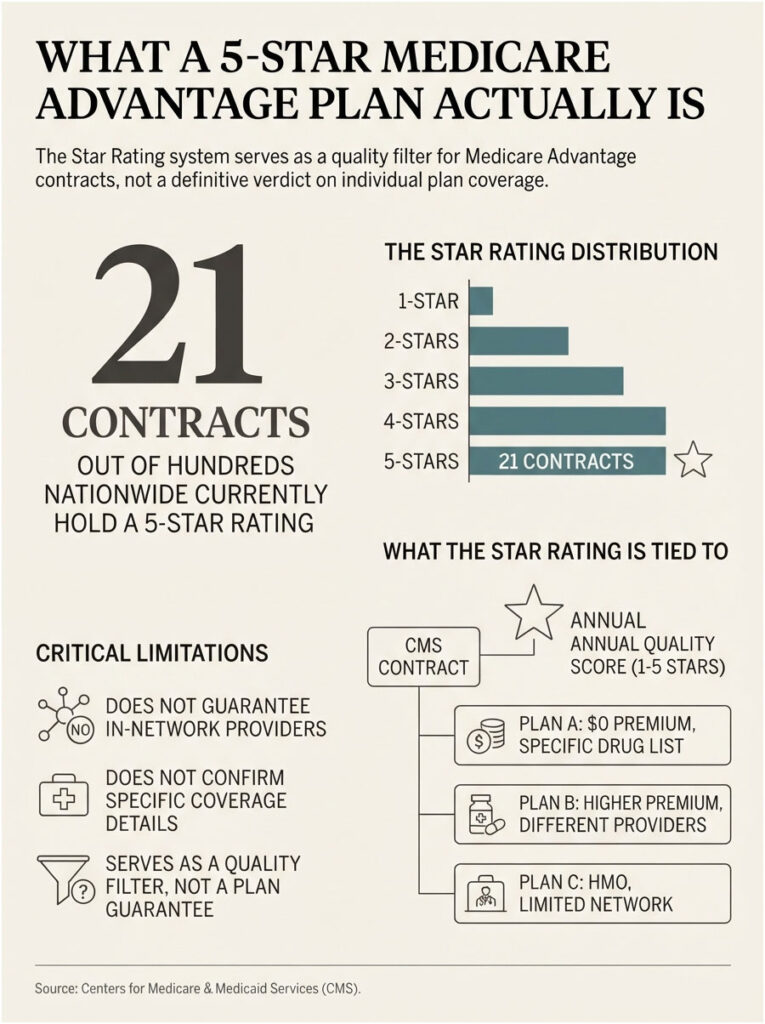
One star means poor. Five stars means excellent. The score sits next to each plan inside the Medicare Plan Finder when you shop.
The rating is a composite. It rolls dozens of separate measurements into one number, then rounds to the nearest half star.
CMS Rates Contracts, Not the Brochure in Your Mailbox
This is the most misunderstood part of the whole system, and getting it wrong costs people money.
An insurance company signs a contract with Medicare, identified by a code beginning with H for Medicare Advantage or S for stand-alone drug plans. Under that single contract, the insurer can sell several distinct plans.
The star rating attaches to the contract. Every plan underneath it inherits the same score, even when those plans carry different premiums, different provider networks, and different benefit packages.
Two plans can both advertise five stars while offering coverage that barely resembles each other. Our editorial team fields this question from readers constantly, and the fix takes thirty seconds: find the contract ID printed on the plan documents, then check that ID against the official CMS list.
The High Performing Icon Is the Real Signal
When a contract reaches five stars, CMS marks it on Medicare Plan Finder with a high performing icon. That icon is the government’s confirmation, not the insurer’s.
In the current cycle, 21 contracts carry it: 18 are Medicare Advantage prescription drug contracts, one is a Section 1876 Cost contract, and two are stand-alone Part D plans.
If a mailer claims five stars but the icon is missing from Plan Finder, treat the claim as advertising copy and move on.
What Five Stars Does Not Tell You
The rating says nothing about whether your cardiologist is in-network. Nothing about whether your hospital participates. Nothing about how aggressively the plan denies prior authorization requests in your county.
Keep that framing from the start. The star is a filter, not a verdict.
Why This Shopping Season Carries More Risk
The star system has not changed dramatically. The market around it has.
Plan Counts Are Shrinking
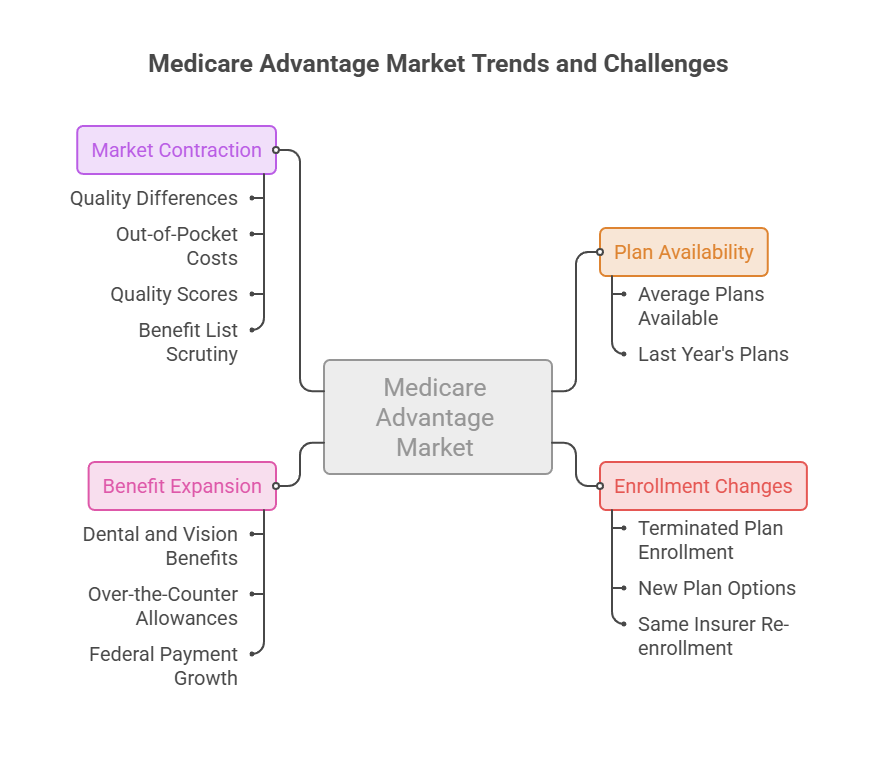
The average Medicare beneficiary now has a choice of 32 Medicare Advantage prescription drug plans, down from 34 the year before. That sounds minor until you learn where the cuts landed.
About 2.6 million people were enrolled in Medicare Advantage plans that terminated coverage at the end of last year. Nearly all of them, 98.9 percent, have at least one prescription drug plan available for the current year, and 68.7 percent can enroll with the same insurer.
Those readers were forced into a decision they did not ask to make. If your plan terminated, the five-star question became more relevant, not less.
Extra Benefits Have Stopped Expanding
For years, the dental, vision, hearing, and over-the-counter allowances grew every cycle. That expansion has stalled, with a smaller share of plans now offering over-the-counter allowances and meals after hospital stays.
Insurers point to slower federal payment growth as the cause. Whatever the reason, the practical effect is that the glossy benefit list on page one of a plan brochure deserves more scrutiny than it did three years ago.
What This Means for Your Comparison
When the market was expanding, a mediocre plan still felt generous. When it contracts, the differences between a well-run plan and a poorly run one show up faster in your out-of-pocket costs.
That is the case for paying attention to quality scores this year, even knowing their limits.
How CMS Builds the Score
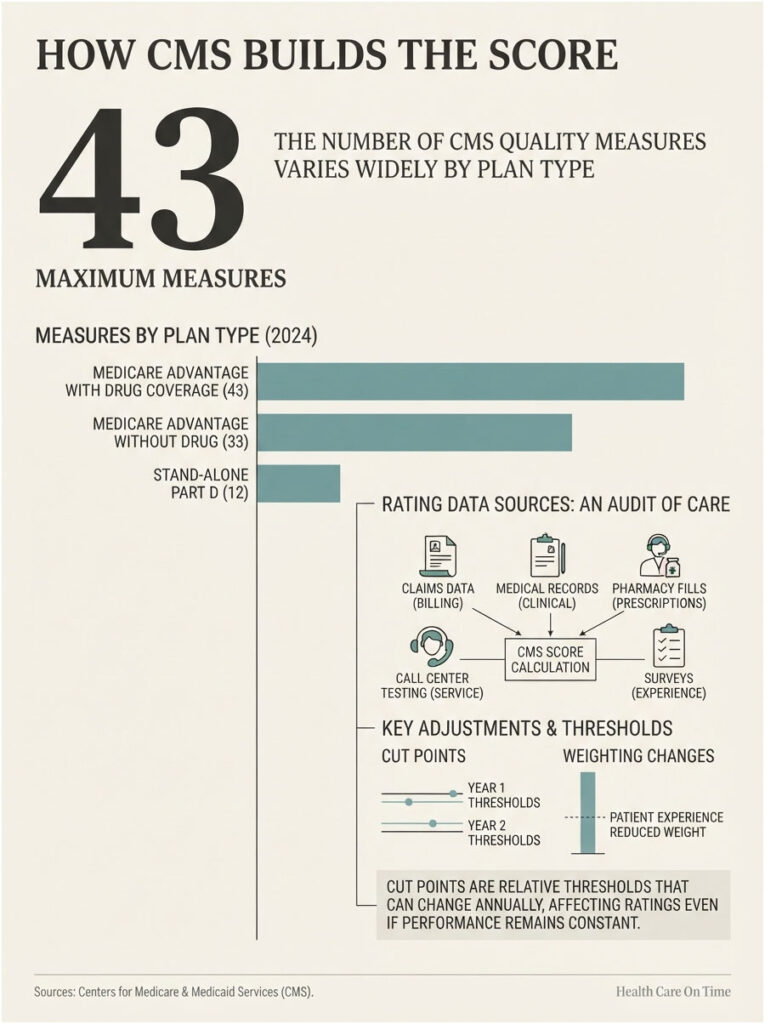
The rating is not a satisfaction poll. It is an audit assembled from claims data, medical records, pharmacy fills, secret-shopper call center testing, and standardized member surveys.
The Five Domains CMS Grades
CMS sorts its measures into five groups:
- Outcomes: whether members’ physical and mental health improved or held steady
- Intermediate outcomes: clinical markers like blood pressure control and blood sugar control
- Patient experience: what members report about their care and their plan
- Access: how easily members get appointments, referrals, and appeals decisions
- Process: screenings, vaccinations, medication reviews, and care coordination
How Many Measures Apply to Your Plan
The count depends on your plan type. According to the CMS 2026 Star Ratings Fact Sheet, Medicare Advantage contracts that include drug coverage are rated on up to 43 measures, contracts without drug coverage on up to 33, and stand-alone Part D contracts on up to 12.
That spread explains something odd in the data. A stand-alone drug plan has only a dozen chances to score well, which is a large part of why five-star drug plans are almost nonexistent.
Cut Points, and Why a Plan Slips Without Getting Worse
For every measure, CMS sets thresholds called cut points. Clear the threshold and the contract earns that star level for the measure.
Here is what almost no article explains: cut points are recalculated each year based on how contracts performed during the measurement period. They are relative, not fixed.
A plan can deliver identical performance two years running and still drop half a star because competitors improved. That mechanic alone accounts for a large share of the rating swings members find baffling.
What Changed in the Current Cycle
CMS made three notable adjustments through public rulemaking.
The weight assigned to patient experience, complaints, and access measures dropped from four to two. That shifted the balance toward clinical results and away from how members feel about their plan.
CMS also added one new measure, Kidney Health Evaluation for Patients with Diabetes, and brought back two measures after specification changes: Improving or Maintaining Physical Health, and Improving or Maintaining Mental Health.
The Lab-Based Measures Behind Your Fourth-Quarter Mail
Several scored measures depend directly on test results, not on paperwork. Kidney health evaluation for diabetes patients, blood sugar control, controlling blood pressure, statin therapy for cardiovascular disease, statin use in diabetes, breast cancer screening, colorectal cancer screening, and the diabetes eye exam all fall into this group.
Patients booking preventive panels through HealthCareOnTime often ask why their plan started calling in October about tests they had already scheduled. This is why. When a measure counts, plans chase the results that feed it.
The care itself is real and usually worth completing. The timing is strategic.
How Rare Is a Five-Star Rating?
Rare enough that most Americans will never see one on their county’s plan list.
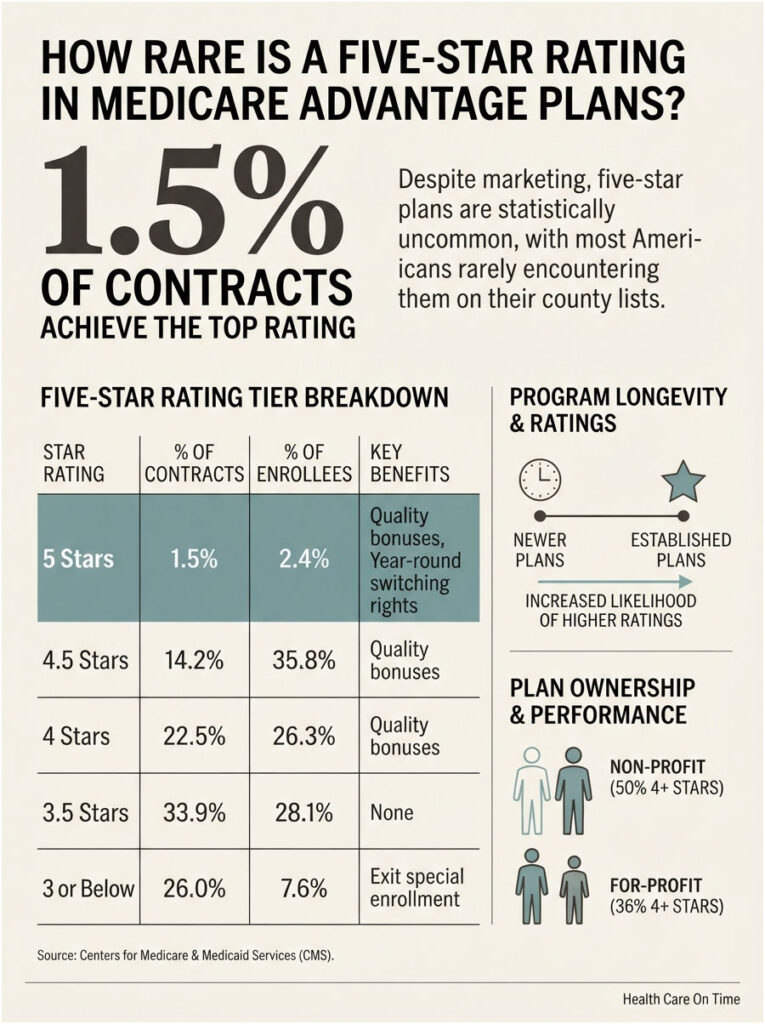
Table 1: Star Rating Tiers and What Each One Means for You
| Star Tier | MA-PD Contracts | Share of Contracts | Share of Enrollees | What It Means For You |
| 5 stars | 18 | 3.5% | 2.4% | Quality bonus payments, high performing icon, year-round switching right |
| 4.5 stars | 73 | 14.2% | 35.8% | Quality bonus payments, no special switching right |
| 4 stars | 116 | 22.5% | 26.3% | Quality bonus payments, no special switching right |
| 3.5 stars | 175 | 33.9% | 28.1% | No bonus payments, no special switching right |
| 3 stars or below | 134 | 26.0% | 7.6% | No bonus payments; three straight years under 3 stars opens an exit SEP |
Source: CMS 2026 Medicare Advantage and Part D Star Ratings Fact Sheet, covering 516 rated MA-PD contracts.
Look hard at the fourth column. More than a third of all Medicare Advantage prescription drug members sit in 4.5-star contracts, which is where the realistic competition happens for nearly everyone.
The Four-Year Trend Line
The number of five-star contracts has swung sharply:
- Four cycles ago: 57 contracts
- Three cycles ago: 38 contracts
- Two cycles ago: 9 contracts
- Current cycle: 18 contracts
The enrollment-weighted average rating tells a steadier story, sliding from 4.14 four cycles ago to 3.95 two cycles ago, then recovering slightly to 3.98.
That is not a collapse in care quality. It mostly reflects CMS tightening the system to reduce rating inflation.
Non-Profit Plans Score Better
CMS breaks results out by tax status, and the split is consistent. About 50 percent of non-profit contracts reached four or more stars, against 36 percent of for-profit contracts.
The same pattern shows up in drug plans, where roughly 28 percent of non-profit contracts hit four or more stars compared with 14 percent of for-profit ones.
This is not a reason to rule out for-profit plans. It is a reason to check the specific contract rather than the brand reputation.
Longevity in the Program Helps, But Not Always
Contracts with ten or more years in Medicare Advantage are more likely to reach four or more stars than contracts under five years old.
The relationship is loose. Six of the current five-star contracts have been in the program less than five years, and several belong to newer insurers built around tighter care coordination.
The Complete List of Five-Star Contracts
Here is the full roster of Medicare Advantage prescription drug contracts carrying the high performing icon, taken directly from the CMS appendix.
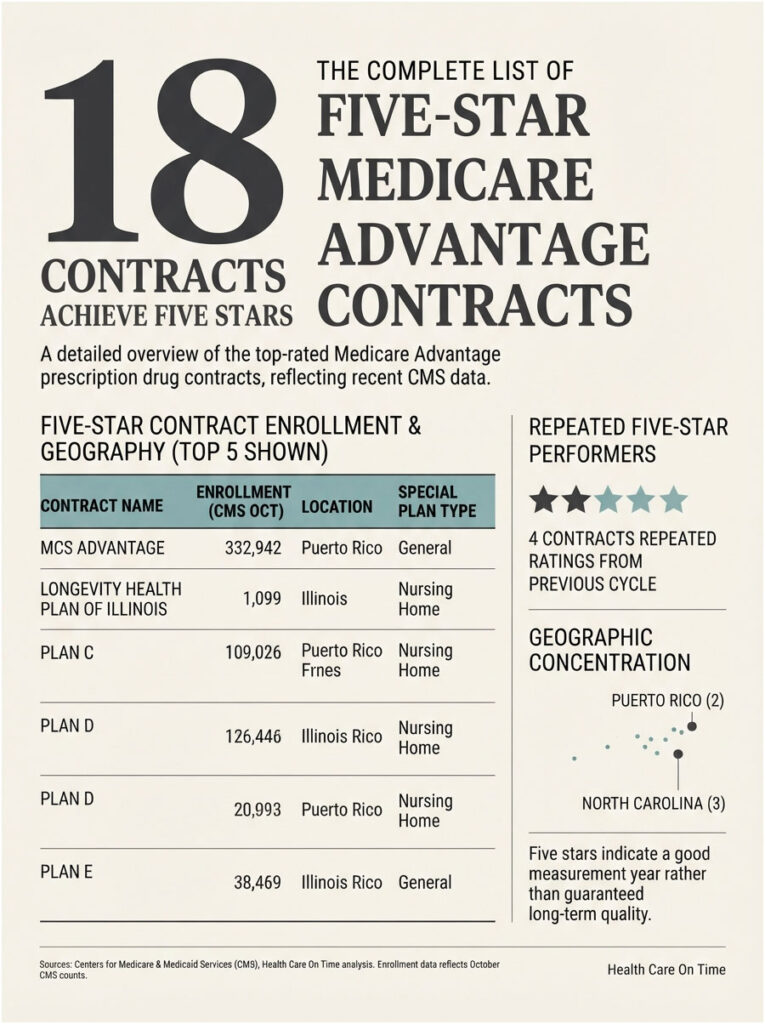
Every Five-Star MA-PD Contract
| Contract ID | Contract Name | Parent Organization | Enrollment | 5 Stars Last Year |
| H1290 | Devoted Health Plan of Florida | Devoted Health | 30,164 | No |
| H3256 | Care Improvement Plus South-Central Insurance Co. | UnitedHealth Group | 69,229 | No |
| H3362 | Independent Health Association | Independent Health Association | 64,624 | No |
| H4003 | MMM Healthcare, LLC | Elevance Health | 101,252 | No |
| H4004 | MMM Healthcare, LLC | Elevance Health | 113,406 | No |
| H4172 | NHC Advantage, LLC | Missouri Healthcare Advisors | 1,302 | No |
| H4286 | Leon Health, Inc. | LMC Family Holdings | 39,450 | Yes |
| H5015 | Texas Independence Health Plan | Regency ISNP Holdings | 2,586 | No |
| H5296 | Alignment Health Plan of North Carolina | Alignment Healthcare USA | 21,389 | Yes |
| H5299 | Devoted Health Plan of North Carolina | Devoted Health | 3,812 | No |
| H5374 | Longevity Health Plan of North Carolina | Longevity Health Founders | 1,164 | No |
| H5577 | MCS Advantage, Inc. | MHH Healthcare | 332,942 | Yes |
| H5652 | Sierra Health and Life Insurance Company | UnitedHealth Group | 6,942 | Yes |
| H6988 | Anthem HP, LLC | Elevance Health | 2,984 | No |
| H7993 | Devoted Health Plan of Texas | Devoted Health | 24,613 | No |
| H8093 | Georgia Assurance, Inc. | Mitchell Family Office | 1,855 | No |
| H9590 | Longevity Health Plan of Illinois | Longevity Health Founders | 1,099 | No |
| H9686 | Alignment Health Plan of Nevada | Alignment Healthcare USA | 2,020 | No |
Enrollment reflects CMS October counts. Source: CMS 2026 Star Ratings Fact Sheet, Appendix Table A1.
The Cost Plan and the Two Drug Plans
Three more contracts hold the icon. Medical Associated Health Plan, contract H1651 under Medical Associates Clinic, is a Section 1876 Cost contract with 14,759 members.
On the drug side, Independent Health Benefits Corporation (S4501) and Avalon Insurance Company (S8067, under Capital Blue Cross) both earned five stars. Between them they cover fewer than 9,000 people nationwide.
Why the List Skews Regional
Scan the parent organizations and the geography jumps out. Two contracts serve Puerto Rico. Three serve North Carolina. Two serve Texas. One serves western New York.
The largest contract on the list, MCS Advantage, holds 332,942 members, roughly 40 percent of all five-star enrollment by itself. The smallest, Longevity Health Plan of Illinois, holds 1,099.
Several of these are institutional or specialized plans designed for nursing home residents or people with defined chronic conditions. They are not open to the general Medicare population even inside their own states.
Only Four Repeated
Of the 18 Medicare Advantage prescription drug contracts, four held five stars the previous cycle: Leon Health, Alignment Health Plan of North Carolina, MCS Advantage, and Sierra Health and Life.
Counting all icon holders including the drug plans, five repeated from the prior year.
That turnover should cool any assumption that five stars signals durable, structural excellence. In many cases it signals a good measurement year.
The 5-Star Special Enrollment Period
This is the concrete benefit most readers came looking for, and the rules are tighter than the advertising implies.
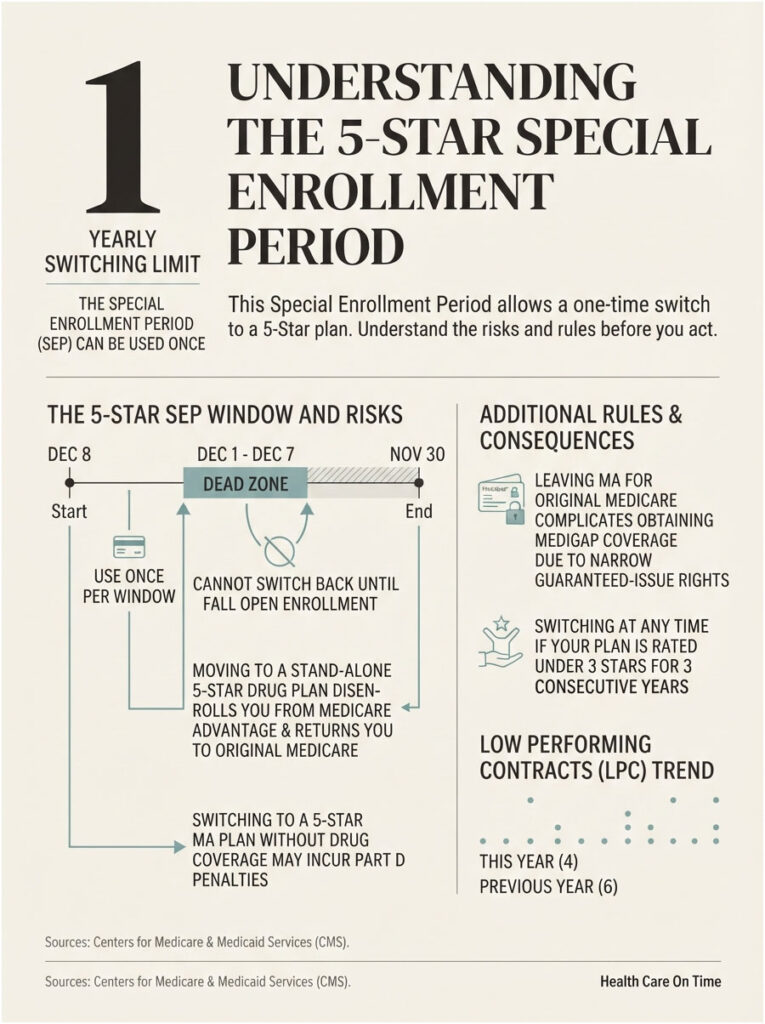
The Window Runs December 8 Through November 30
If a five-star Medicare Advantage plan, Medicare Cost plan, or Medicare drug plan serves your area, you can join it outside the normal fall enrollment period.
Medicare.gov states the Special Enrollment Period runs one time between December 8 of the year before the plan year and November 30 of the plan year.
That covers nearly the full calendar. The dead zone is December 1 through December 7.
One Use, Not Unlimited Switching
The right is single-use per window. Move into a five-star plan in March and you cannot use the same Special Enrollment Period again in August.
If you change your mind, you wait for fall open enrollment, October 15 through December 7, like everyone else.
The Prescription Drug Trap
Two versions of this catch people, and one question prevents both.
Moving from a Medicare Advantage plan with drug coverage into a stand-alone five-star drug plan disenrolls you from Medicare Advantage entirely, including the health benefit, and returns you to Original Medicare.
Moving from a Medicare Advantage plan with drug coverage into a five-star Medicare Advantage plan that lacks drug coverage can leave you without Part D until your next enrollment opportunity, along with a possible late enrollment penalty.
Before you sign anything, get written confirmation of whether the five-star plan includes Part D.
The Medigap Problem Nobody Warns You About
Leaving Medicare Advantage for Original Medicare sounds simple. Buying a Medigap supplement afterward may not be.
Guaranteed-issue rights for Medigap are narrow. Outside your initial six-month Medigap open enrollment window or a qualifying trial period, insurers in most states may use medical underwriting, charge more, or decline you outright.
One protection does exist: if you joined a Medicare Advantage plan when first eligible at 65 and switch back to Original Medicare within twelve months, you get special rights to buy a Medigap policy.
Across the readers HealthCareOnTime serves, this is the costliest mistake in the entire process, and people usually find out after the switch is final.
The Mirror Rule for Low Performers
There is an opposite provision worth knowing. If your plan has been rated under three stars for three consecutive years, you can switch at any time while you remain enrolled in it.
CMS flags these contracts on Plan Finder with a low performing icon. Four contracts carry that flag currently, down from six the prior year.
How to Check and Switch, Step by Step
- Find your contract ID. Look on your member ID card or your Evidence of Coverage document for a code starting with H or S.
- Open Medicare Plan Finder. Go to Medicare.gov, enter your ZIP code, and select whether you want Medicare Advantage, drug plans, or both.
- Filter by star rating. Set the filter to five stars. If nothing appears, set it to 4.5 and work down.
- Confirm the high performing icon. The icon should appear on the plan card. Match the contract ID against the CMS list above.
- Check your doctors individually. Search each physician in the plan’s own directory, then call the office to confirm participation for the coming plan year.
- Price your prescriptions. Enter every medication by name into Plan Finder to see tier placement, quantity limits, and step therapy rules.
- Confirm drug coverage is included. Ask directly whether the plan is an MA-PD. Get the answer in writing.
- Call your SHIP counselor before enrolling. Free, unbiased, no commission.
- Enroll through Medicare.gov or 1-800-MEDICARE. Keep the confirmation number and the effective date.
Do Five Stars Actually Mean Better Care?
Most articles on this topic stop before this question. They should not.
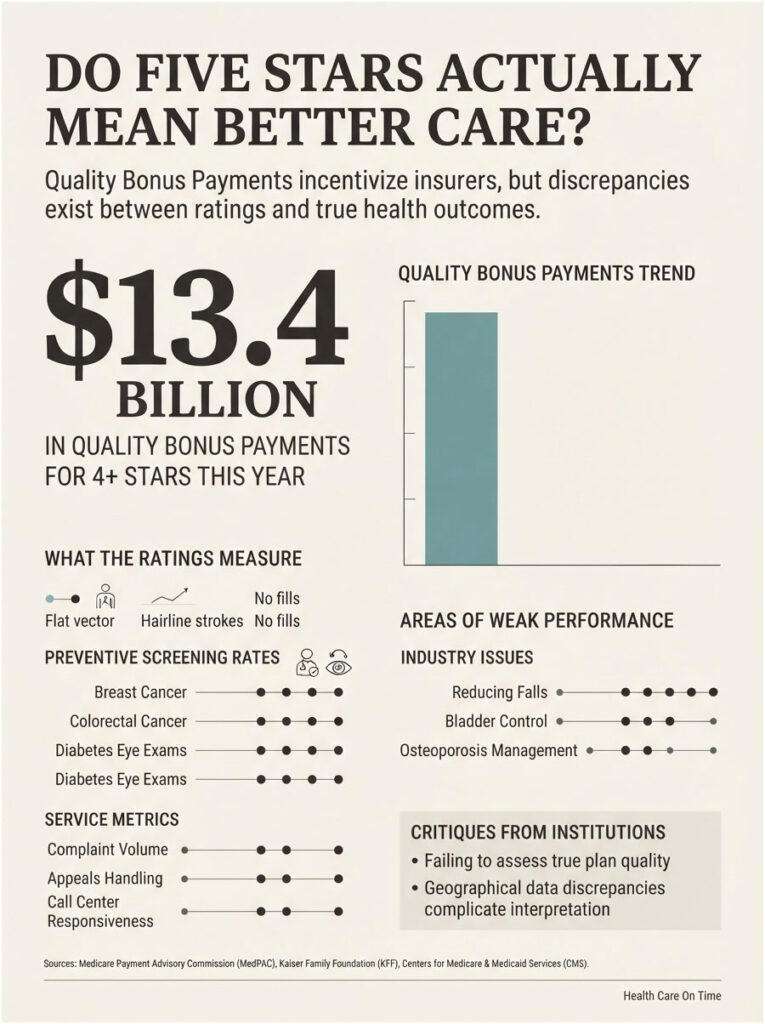
What the Ratings Capture Well
The system does several things honestly. Complaint volume, appeals handling, call center responsiveness, and the share of members who voluntarily leave the plan are all measured directly and reported without spin.
Preventive screening rates are real too. A contract scoring well on breast cancer screening, colorectal cancer screening, and the diabetes eye exam almost certainly has members getting those tests.
The measure-level data also exposes weak points across the entire industry. Reducing the Risk of Falling averaged 2.7 stars nationally. Improving Bladder Control averaged 2.7. Osteoporosis Management in Women Who Had a Fracture averaged 2.8.
Those three sit near the bottom for every insurer, five-star contracts included. If any of them matter to you, the overall star will not help you choose.
What the Researchers Say
The critiques come from established institutions, not advocacy groups with an axe to grind.
The AARP Public Policy Institute reports that accumulating evidence indicates the Star Ratings and the quality bonus program have not met their original goals, and that MedPAC and other analysts trace the shortfall to the ratings not accurately measuring plan quality.
A JAMA Health Forum viewpoint set out the limitations of the star rating system as a tool for identifying plans that deliver high-quality care.
A separate JAMA Health Forum study examined contracts that repeatedly crossed the bonus-eligible threshold. It found those repeated crossings were associated with a higher share of bonus-eligible years, raising the question of whether the ratings capture sustained excellence or reward performance volatility.
Writing in Health Affairs Forefront, policy analysts grouped the recurring objections: the program may not measure what matters most to beneficiaries, may not drive improved quality, and may not deliver strong value for its cost to Medicare or taxpayers.
The Geography Problem
A single rating can be built from data spanning many plans and a wide area, which makes it hard for the score to convey the quality of one specific plan or one local market.
A contract rated five stars overall can contain counties where the network is thin, wait times are long, and specialists are booked out for months. The star does not tell you which county you live in.
This is the strongest argument for treating the rating as a screening filter and nothing more.
The Money Behind the Stars
Contracts at four stars and above earn quality bonus payments. Federal spending on the Medicare Advantage quality bonus program reached $13.4 billion this year, up from $12.7 billion the year before, according to KFF.
For scale, MedPAC estimates Medicare pays private plans about 14 percent more per person than it would spend on comparable beneficiaries in traditional Medicare, an added $76 billion in federal spending this year.
That financial stake explains why insurers invest so heavily in measured performance. It also explains why critics keep pushing for measures that are harder to influence at the margin.
How to Compare Plans When Stars Are Not Enough
Treat the rating as one input out of six.
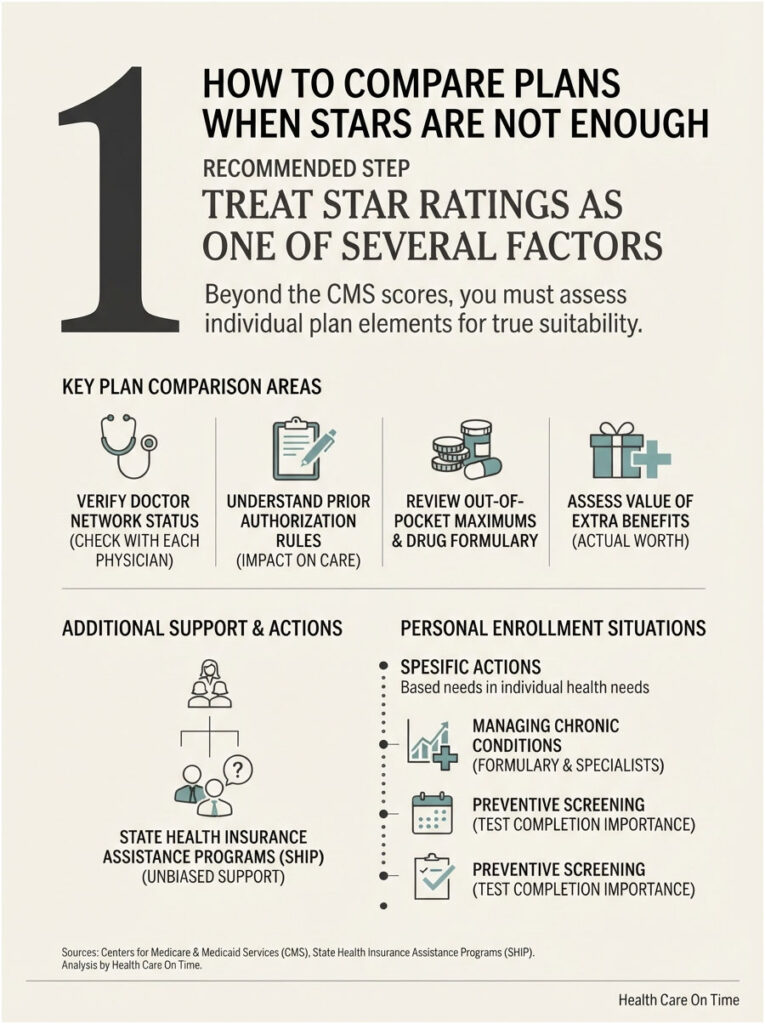
Check the Network Before the Rating
A five-star contract with none of your doctors in-network is worse for you than a 3.5-star plan that covers your cardiologist, your endocrinologist, and the hospital ten minutes from your house.
Verify each physician individually, then call the office directly. Plan directories run out of date constantly, and an inaccurate listing is not a coverage guarantee.
Read the Prior Authorization Rules
Prior authorization is the mechanism most likely to affect your actual care, and it barely registers in the star score.
Ask specifically about advanced imaging, skilled nursing facility stays, home health, and specialty drugs. Those four categories generate most of the denials that end up in appeals.
Out-of-Pocket Maximum and Drug Formulary
Every Medicare Advantage plan caps your annual out-of-pocket spending on Part A and Part B services. The caps vary widely between plans, and the difference can run into thousands of dollars in a bad year.
Then work the formulary. Search each medication by name, note the tier, and check for quantity limits and step therapy requirements.
Extra Benefits Reality Check
Dental, vision, hearing, and over-the-counter allowances headline nearly every advertisement. Read the actual annual dollar limits before they influence your decision.
A dental benefit capped at a few hundred dollars does not cover a crown. Patients booking routine panels with us regularly discover the gap only after a procedure is already scheduled.
The Tests Your Plan Will Push
Since several scored measures depend on lab results, a well-run plan will contact you about them. Blood sugar control, kidney health evaluation for diabetes patients, lipid and statin adherence measures, and blood pressure control all appear in the score.
Completing those tests is genuinely good for you and good for the plan’s rating at the same time. Our medical reviewers see no conflict there, provided the testing is clinically appropriate rather than volume-driven.
Get Free, Unbiased Help
Every state runs a State Health Insurance Assistance Program (SHIP) offering free counseling with no sales commission attached. You can also call 1-800-MEDICARE, or use the Medicare contact page to find local help.
An insurance agent earns a commission when you enroll. A SHIP counselor does not. Talk to both if you like, and weigh the advice accordingly.
Table 3: What to Do in Your Situation
| Your Situation | Recommended Action | Timing Window |
| A five-star plan serves your county and covers your doctors | Compare it line by line against your current plan, then use the 5-star SEP | Once, December 8 through November 30 |
| A five-star plan exists nearby but drops your specialist | Stay put and shortlist 4.5-star contracts that keep your network intact | Open enrollment, October 15 to December 7 |
| No five-star plan in your service area | Filter Plan Finder to 4 and 4.5 stars, then rank by network and drug cost | Open enrollment, October 15 to December 7 |
| Your plan has been under 3 stars for three straight years | Switch now using the low-performing SEP | Any time you remain in that plan |
| Your plan’s rating fell but your care has not changed | Do nothing on the rating alone; recheck network and formulary instead | Review each October when ratings post |
| Your plan is terminating at year end | Compare all available options, including the same insurer’s replacement plan | As soon as you receive the notice |
| You joined Medicare Advantage for the first time under 12 months ago | Consider the trial-period right to return to Original Medicare with Medigap protection | Within 12 months of first joining |
| You take multiple prescriptions and are eyeing a five-star switch | Confirm in writing the plan includes Part D before enrolling | Before signing any enrollment form |
What Changes in the Next Ratings Cycle
Two adjustments are already locked in, and both will move scores.
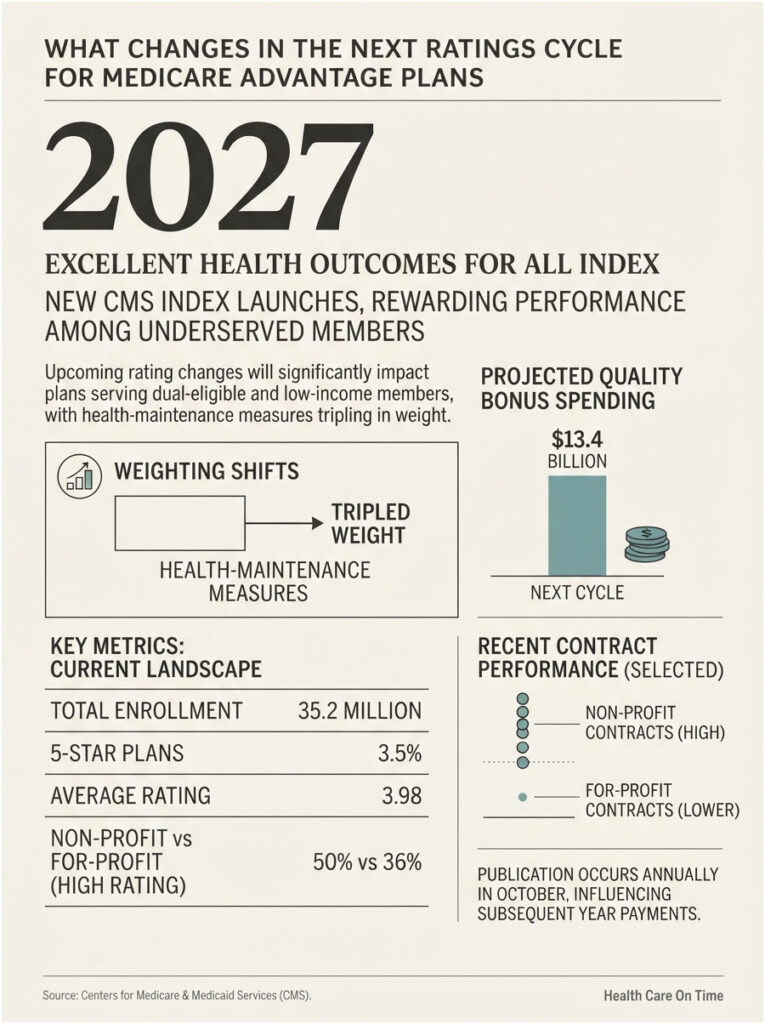
The Health Equity Index Arrives
CMS is introducing the Excellent Health Outcomes for All index beginning with the 2027 ratings. It is designed to reward plans that deliver strong results for underserved members, replacing the older reward factor.
Plans serving high shares of dual-eligible and low-income members stand to gain. That matters, because nearly a quarter of Medicare Advantage enrollees are now in special needs plans, and 78 percent of that enrollment sits in plans built for people eligible for both Medicare and Medicaid.
Health-Maintenance Measures Triple in Weight
Improving or Maintaining Physical Health and Improving or Maintaining Mental Health carry a weight of one in the current ratings, then move to a weight of three beginning with the 2027 Star Ratings. Both averaged 3.2 stars nationally in their return year.
Tripling their weight will reshuffle the leaderboard, and some current five-star contracts will not survive it.
When the Next Ratings Publish
CMS posts new star ratings to Medicare Plan Finder each October, before open enrollment opens on October 15. The current ratings went live on October 9 and determine quality bonus payments for the following year.
Our team pulls the CMS files the week they publish and rechecks the contract list. If you do one Medicare task a year beyond paying your premium, make it that.
Table 2: Key Medicare Advantage Numbers
| Metric | Current Figure | Source |
| Americans enrolled in Medicare Advantage | 35.2 million of 64.2 million eligible (55%) | KFF, Medicare Advantage in 2026 |
| MA-PD contracts rated five stars | 18 of 516 (3.5%) | CMS 2026 Star Ratings Fact Sheet |
| Total enrollment in five-star MA-PD contracts | Approximately 821,000 | CMS Fact Sheet, Appendix Table A1 |
| MA-PD contracts at four stars or higher | 207 contracts (40%), covering 64% of enrollees | CMS 2026 Star Ratings Fact Sheet |
| Enrollment-weighted average MA-PD rating | 3.98, up from 3.95 the prior cycle | CMS 2026 Star Ratings Fact Sheet |
| Non-profit contracts at four or more stars | 50%, versus 36% of for-profit contracts | CMS 2026 Star Ratings Fact Sheet |
| Federal quality bonus spending | $13.4 billion, up from $12.7 billion | KFF |
| Average MA-PD plan choices per beneficiary | 32 plans, down from 34 | KFF, Medicare Advantage 2026 Spotlight |
| Share of MA enrollees in special needs plans | 23%, up from 21% | KFF, Medicare Advantage in 2026 |
| Projected MA share of all Medicare beneficiaries by 2034 | 63% | Congressional Budget Office, via KFF |
Frequently Asked Questions
How many 5-star Medicare Advantage plans are there?
Eighteen Medicare Advantage prescription drug contracts earned five stars in the current cycle, out of 516 rated contracts. Adding one Cost plan and two stand-alone drug plans brings the total to 21 contracts carrying the high performing icon. Since each contract can hold several plans, the count of individual plan options runs higher.
Can I switch to a 5-star plan at any time of year?
Almost. If a five-star plan serves your area, the Special Enrollment Period runs from December 8 of the year before the plan year through November 30 of the plan year. That covers nearly the whole calendar. December 1 through December 7 falls outside the window.
How many times can I use the 5-star special enrollment period?
Once per window. You get a single use between December 8 and November 30, not unlimited switching. If you enroll in April and regret it by July, you wait until fall open enrollment, October 15 through December 7, to change again.
Do 5-star Medicare Advantage plans cost more?
No. Premiums track benefit design, network size, and extra features, not quality scores. Independent analysis by ValuePenguin put the average five-star plan with drug coverage near $21 per month. Quality bonus payments actually give highly rated plans more room to fund benefits or cut cost sharing.
Is a 4.5-star plan good enough?
For most people, yes. More than a third of Medicare Advantage prescription drug members are already in 4.5-star contracts, and those plans earn the same quality bonus payments as five-star contracts. The main thing you give up is the year-round switching right, which most enrollees never use.
Why did my plan’s star rating drop even though nothing changed?
Cut points are recalculated annually based on how every contract performed. They are relative thresholds, not fixed targets. If competitors improved while your plan held steady, the rating can fall. Measure weight changes, like the recent cut to patient experience weighting, also shift scores without any change to your care.
Does the star rating apply to my exact plan or the whole company?
The whole contract. CMS rates contracts, identified by codes beginning with H or S, and every plan under that contract shares one rating. A single insurer can hold multiple contracts with different scores. Find your contract ID on your plan documents before comparing against any published list.
Will I lose my prescription drug coverage if I switch?
You might. Moving from a Medicare Advantage plan with drug coverage into a stand-alone five-star drug plan disenrolls you from Medicare Advantage completely. Moving into a five-star Medicare Advantage plan without Part D can leave you uncovered and facing a late enrollment penalty. Confirm drug coverage in writing first.
When are Medicare star ratings released each year?
CMS publishes new ratings on Medicare Plan Finder each October, ahead of open enrollment starting October 15. The current ratings posted on October 9 and set quality bonus payments for the following year. A detailed fact sheet with full contract tables typically follows within several weeks.
What happens if my plan has under 3 stars for three years running?
CMS flags the contract with a low performing icon on Plan Finder, and you may leave at any time while enrolled. Four contracts carry that flag currently, down from six last year. CMS can also apply increased oversight or move to terminate a persistently low-rated contract.
Can I get a Medigap policy if I leave Medicare Advantage?
Not automatically. Guaranteed-issue rights are limited outside your initial six-month Medigap open enrollment period. One key exception applies if you joined Medicare Advantage when first eligible at 65 and switch back within twelve months. Otherwise, insurers in most states may apply medical underwriting.
Where can I check my own plan’s star rating for free?
Use Medicare Plan Finder at Medicare.gov, enter your ZIP code, and look for the star display and high performing icon on each plan card. You can also call 1-800-MEDICARE, or contact your State Health Insurance Assistance Program for free counseling with no commission attached.
Disclaimer: This article is educational content and is not insurance, legal, financial, or medical advice. Medicare rules, plan availability, and star ratings change every year and vary by ZIP code. Verify all details with Medicare.gov, 1-800-MEDICARE, or a State Health Insurance Assistance Program counselor before making any enrollment decision. HealthCareOnTime does not sell or broker Medicare plans and receives no commission from any insurer named here.
References
- CMS 2026 Medicare Advantage and Part D Star Ratings Fact Sheet
- CMS Part C and Part D Star Ratings Technical Notes
- Medicare.gov: Special Enrollment Periods
- Medicare Plan Finder
- Medicare.gov: Talk to Someone
- KFF: Medicare Advantage in 2026, Enrollment Update and Key Trends
- KFF: Medicare Advantage 2026 Spotlight, A First Look at Plan Offerings
- KFF: Most Beneficiaries Affected by Plan Terminations Have Options
- AARP Public Policy Institute: Medicare Advantage Star Ratings and Quality Bonus Payments
- JAMA Health Forum: Flaws in the Medicare Advantage Star Ratings
- JAMA Health Forum: Fluctuating Star Ratings and Medicare Advantage Bonuses
- Health Affairs Forefront: Aligning the Stars, Modernizing Quality Incentives in Medicare Advantage