
Most people treat watermelon as little more than sugar water with seeds, a sweet way to cool off in July. New US research flips that assumption on its head: the people who eat watermelon regularly tend to have measurably healthier diets and better blood-vessel function than those who skip it.
Table of Contents
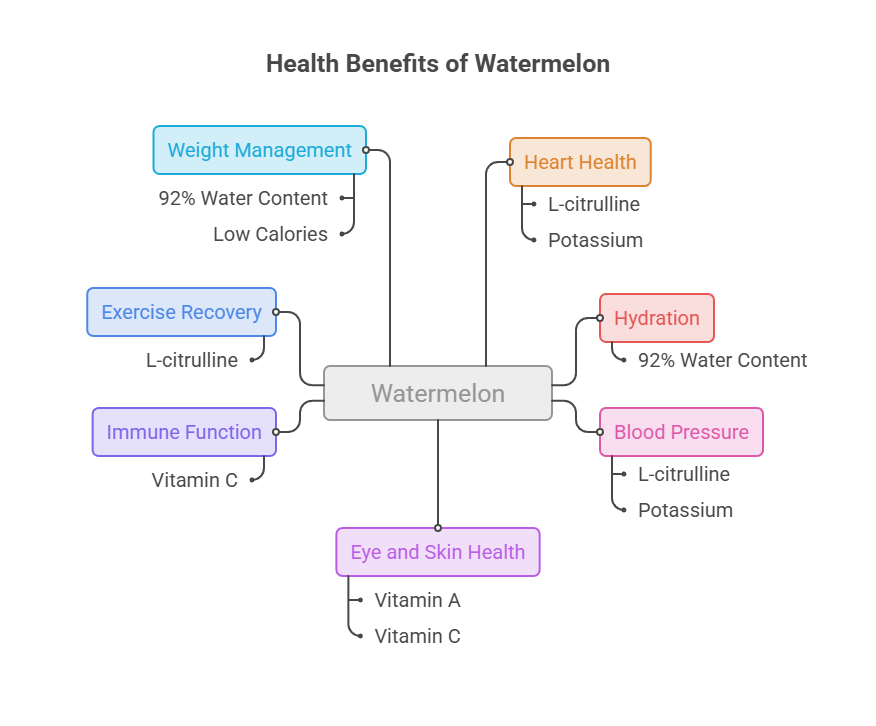
Quick Answer: Eating watermelon supports heart health, hydration, healthy blood pressure, eye and skin health, immune function, exercise recovery, and weight management. These benefits trace to its lycopene, the amino acid L-citrulline, vitamins A and C, potassium, and its 92% water content. Most adults can enjoy these perks with about one cup at a time as part of a balanced diet.
At a Glance
- Watermelon is the richest natural food source of L-citrulline, linked to blood flow and blood pressure
- It holds more lycopene than any other fresh fruit or vegetable
- At 92% water, it is one of the most hydrating foods you can eat
- One serving delivers meaningful vitamin C, vitamin A, and potassium
- Recent US research links watermelon eaters to higher overall diet quality
- Best enjoyed in sensible portions, roughly one to two cups at a time
Watermelon shows up at nearly every American cookout, yet its reputation as junk-food-adjacent sugar is undeserved. Patients booking tests with us often assume the sweetness cancels out any benefit. The science says the opposite, and this guide walks through nine reasons watermelon earns a regular spot on your plate, each backed by what the research actually shows.
What Makes Watermelon So Healthy (The Nutrition Behind the Benefits)
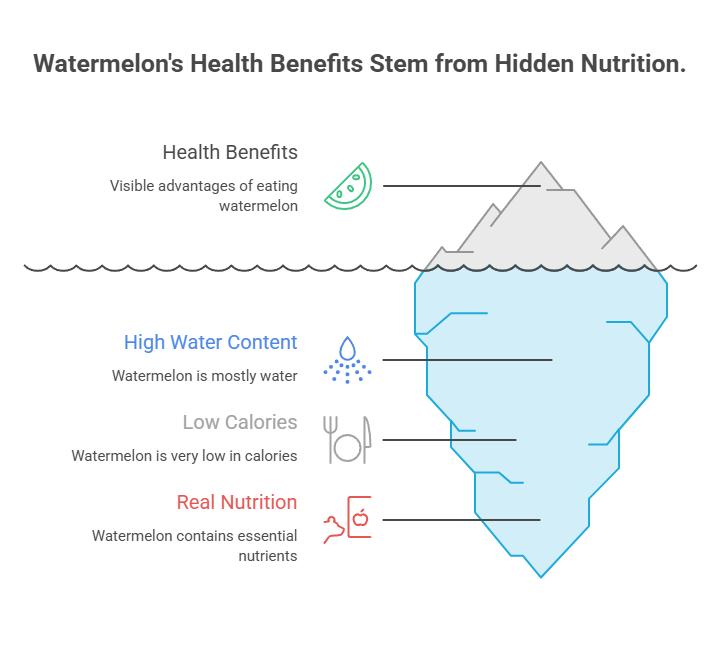
Before the benefits, it helps to see what you are working with. Watermelon manages something unusual: it packs real nutrition into a food that is mostly water and very low in calories.
A Nutrient Snapshot Per Cup
A single cup of diced watermelon is light but not empty. It provides roughly 46 calories, 0.9 grams of protein, 11.5 grams of carbohydrates, and almost no fat, along with vitamin C, vitamin A, and potassium.
That low calorie count next to a useful nutrient load is the foundation of nearly every benefit below. Our nutrition team points out that few sweet foods give you this much for so little energy. For a full serving-by-serving look at the numbers, our guide on how many calories are in watermelon breaks it down in detail.
The Star Compounds: Lycopene and L-Citrulline
Two standout compounds set watermelon apart from most fruit. Watermelon is a greater source of lycopene than any other fruit or vegetable, the carotenoid that gives it and tomatoes their red color and acts as an antioxidant.
The second is an amino acid. Watermelon is one of the richest natural food sources of L-citrulline, which the body uses to support nitric oxide production and healthy blood flow. Together these two compounds drive much of watermelon’s heart and antioxidant story.
The table below shows what one serving contributes and why each nutrient matters, so you can connect the food to the function.
| Nutrient | Per 1 cup (152g) | %DV | Why it matters |
| Calories | 46 | 2% | Low energy density aids weight control |
| Water | ~139g (92%) | n/a | Hydration and fullness |
| Vitamin C | 12.3mg | 14% | Immune function, collagen, iron absorption |
| Vitamin A | 865 IU | 11% | Eye and skin health |
| Potassium | 170mg | 4% | Blood pressure and nerve function |
| Magnesium | 15mg | 4% | Steady heartbeat, muscle function |
| Lycopene | high | n/a | Antioxidant, heart and cell protection |
| L-citrulline | 286-1,266 mg per 2 cups | n/a | Blood flow, blood pressure support |
Source: USDA via Northwestern Health Sciences University and the National Watermelon Promotion Board. Daily values based on a 2,000-calorie diet.
9 Surprising Health Benefits of Eating Watermelon
Here is the core of it. Each benefit pairs a compound with what the evidence shows and how to actually get the effect. Across cases reviewed by our medical team, these are the points readers find most useful.
1. Supports Heart Health and Healthy Blood Pressure
This is watermelon’s strongest claim. Citrulline in watermelon can raise nitric oxide levels, which helps dilate blood vessels and promote a reduction in blood pressure, while its potassium helps eliminate excess sodium.
The body converts citrulline into arginine, and both feed nitric oxide production that relaxes blood vessels. Watermelon’s lycopene also benefits the heart, with studies suggesting it may lower the risk of heart attacks.
That heart profile is no accident of marketing. Watermelon is American Heart Association Heart-Check Certified, and it is cholesterol-free, fat-free, and sodium-free. Our medical reviewers note that no single food replaces a heart-healthy lifestyle, but watermelon fits one neatly.
2. Keeps You Hydrated
The simplest benefit is also one of the most useful. Watermelon is 92% water, which makes it a delicious way to stay hydrated, an important part of overall health.
Hydration drives body-temperature regulation, organ function, and nutrient delivery to cells. Even a little fluid loss can cause fatigue, muscle cramps, and headaches, so a little watermelon after activity helps replenish fluids.
This matters most in summer heat, when you lose water quickly through sweat. Patients commonly ask us for easy hydration sources, and water-rich foods like watermelon make the job pleasant rather than a chore.
3. Delivers Powerful Antioxidants
Watermelon is more than its water. It boasts antioxidants including vitamin C, carotenoids, lycopene, and cucurbitacin E, which help combat free radicals, the unstable molecules that may damage cells over time.
That cellular damage is linked to conditions like diabetes, heart disease, and cancer. Lycopene paired with the antioxidant cucurbitacin E can help fight inflammation and oxidative stress.
The antioxidant angle is why watermelon keeps appearing on dietitian lists. Our nutrition team treats it as a tasty, low-effort way to add antioxidant variety to a week of meals.
4. May Help Protect Against Certain Cancers
The evidence here is promising but still developing. Several plant compounds in watermelon, including lycopene and cucurbitacin E, may have possible anticancer effects, with lycopene intake associated with a lower risk of some cancers, partly by lowering insulin-like growth factor, a hormone that promotes cell division.
Study results remain mixed, and watermelon is not a treatment or a cure. What it offers is a regular, food-based source of compounds that research keeps connecting to lower risk.
Our medical reviewers stress reading this as one piece of a protective diet, not a guarantee. The honest framing is potential benefit, not proven prevention.
5. Supports Eye Health
Your eyes benefit from watermelon’s vitamin A and carotenoids. The antioxidants in watermelon may help prevent or delay cataracts and may reduce the odds of age-related macular degeneration, while its vitamin A supports the health of the corneas.
It does not take much to contribute. Just one medium slice of watermelon contains up to 11% of the vitamin A you need each day.
Eye health is an easy benefit to overlook because the payoff is long term. Across the readers HealthCareOnTime serves, this is one people are glad to learn about before problems start.
6. Boosts Immune Function
Watermelon’s vitamin content does quiet daily work for your defenses. Watermelon’s generous dose of vitamin C supports the immune system, which fights infections and promotes wound healing.
It brings more than vitamin C to the table. Watermelon is also rich in vitamin B6, which helps the body break down protein and supports immune and nerve function.
Steady intake of these nutrients matters more than any single big dose. Our nutrition team frames watermelon as one reliable contributor to the vitamin C and A your immune system uses every day.
7. Eases Muscle Soreness and Aids Recovery
Athletes have a specific reason to reach for watermelon. Watermelon is an excellent source of citrulline, which studies suggest may assist with muscle protein synthesis, improve muscle mass, and boost exercise performance, with benefits most notable in older adults who supplement.
The same citrulline that supports blood pressure also supports oxygen delivery to working muscles. Watermelon may help support recovery after exercise, and not just because it is hydrating.
A little watermelon after a hard session does double duty. Our medical reviewers note it works like a gentle, natural recovery snack rather than a heavily engineered sports product.
8. Promotes Healthy Skin
Your skin draws on two of watermelon’s vitamins. Watermelon is rich in vitamin C, which plays an integral role in forming collagen, the protein that keeps skin firm and supports wound healing.
The lycopene adds another layer of support. Lycopene is important for heart health and may help protect the skin from UV damage.
Vitamin A rounds out the picture by supporting skin maintenance and repair. For a food this hydrating, the skin benefits are a welcome bonus that costs you very little.
9. Supports Weight Management and Better Diet Quality
Watermelon’s lightness makes it a smart choice for anyone watching their weight. Its high water content gives it a low calorie density, meaning very few calories for its weight, which may help with weight management by keeping you feeling full for longer.
The bigger surprise is how it tracks with overall eating habits. Research links watermelon consumption to healthier diets packed with more vitamins, fiber, and antioxidants, while consuming less added sugar and saturated fat.
That pattern shows up at the population level, not just in theory. Our nutrition team sees watermelon as a low-friction way to crowd a bit of junk out of the day.
This table maps each benefit to its key compound, the evidence, and the best way to capture it.
| Benefit | Key compound | What the evidence shows | Best way to get it |
| Heart and blood pressure | L-citrulline, potassium, lycopene | May relax vessels and support healthy blood pressure | 1-2 cups, including white rind |
| Hydration | Water (92%) | Replenishes fluids and electrolytes | Eat chilled after heat or activity |
| Antioxidants | Lycopene, cucurbitacin E, vitamin C | Help fight free radicals and inflammation | Choose fully ripe, deep-red flesh |
| Cancer protection | Lycopene, cucurbitacin E | Possible lower risk of some cancers (mixed data) | Regular, varied fruit intake |
| Eye health | Vitamin A, carotenoids | May lower cataract and macular degeneration risk | One medium slice covers ~11% vitamin A |
| Immune support | Vitamin C, vitamin B6 | Support infection defense and healing | Steady weekly servings |
| Muscle recovery | L-citrulline | May ease soreness, aid recovery and performance | A serving before or after exercise |
| Skin health | Vitamin C, lycopene, vitamin A | Support collagen and UV defense | Pair with a balanced diet |
| Weight and diet quality | Water, low energy density | Aids fullness; linked to healthier diets | Swap for higher-calorie snacks |
What the Latest Research Really Says
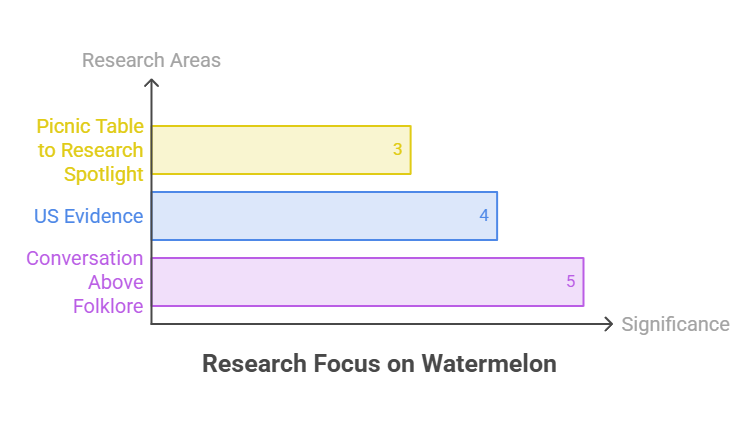
Watermelon has moved from picnic table to research spotlight. Several recent lines of US evidence are worth knowing before you decide how much to eat, because they raise the conversation above folklore.
The Diet-Quality Connection
The first comes from a large national dataset. A study in Nutrients analyzed NHANES data from 2003 to 2018 and found total diet quality was higher in watermelon consumers than non-consumers, with greater than 5% higher intake of dietary fiber, magnesium, potassium, and vitamin A, plus more than 5% lower intake of added sugars and saturated fat.
That is a nationally representative sample of American children and adults, not a small lab group. Watermelon consumers also took in more lycopene and other carotenoids, reinforcing the antioxidant picture.
The takeaway is not that watermelon magically fixes a diet. It is that the fruit tends to travel with better eating patterns, and adding it is an easy nudge in that direction.
The Blood-Vessel Trial
The second line of evidence is a controlled trial. A randomized, double-blind, placebo-controlled crossover study at Louisiana State University had 18 healthy young adults consume watermelon juice daily for two weeks to explore whether it could help protect blood-vessel function during periods of elevated blood sugar.
Early results pointed toward protected vascular function. The sample was small, so this is a signal worth following, not a final verdict.
This kind of design matters for trust. A placebo-controlled crossover is a stronger test than a survey, which is why researchers and dietitians have paid attention to it.
Why So Many Americans Miss Out
The research backdrop is a country that under-eats fruit. The Dietary Guidelines for Americans recommend between 1.5 and 2.5 cups of fruit daily, yet most adults and children consume only about half that amount.
Watermelon is one of the simplest ways to close that gap because it is sweet, cheap in season, and needs no cooking. Our nutrition team often suggests it precisely because people will actually eat it.
Where the Science Is Still Cautious
It pays to stay grounded. Recent reviews highlight watermelon’s potential role in supporting nitric oxide production, healthy blood flow, and cardiovascular function, although experts stress that larger long-term studies are still needed.
Our medical reviewers read this honestly: the direction is encouraging, the certainty is not absolute. Watermelon is a healthy habit, not a prescription, and the strongest claims still belong to long-term diet patterns rather than any single fruit.
How Watermelon Stacks Up Against Other Fruits
Context turns a benefit into a decision. People rarely ask about watermelon alone; they want to know whether it beats the apple or the orange in the fruit bowl. On hydration and lycopene, watermelon is hard to top.
Its strength is the combination of very high water content, standout lycopene, and L-citrulline that most other fruits simply lack. Where it lags is fiber, so it works best alongside higher-fiber fruits rather than replacing them entirely.
| Fruit (1 cup) | Calories | Water content | Standout benefit |
| Watermelon | 46 | ~92% | Highest lycopene and citrulline; very hydrating |
| Strawberries | 49 | ~91% | High vitamin C, more fiber |
| Orange | 85 | ~87% | Very high vitamin C, good fiber |
| Apple | 65 | ~86% | Fiber and polyphenols |
| Banana | 134 | ~75% | Potassium, but higher calories |
| Cantaloupe | 53 | ~90% | High vitamin A, hydrating |
Sources: USDA nutrient data via Cleveland Clinic and the National Watermelon Promotion Board. Figures rounded; values vary by ripeness and size.
Watermelon Benefits for Men, Women, and Active People
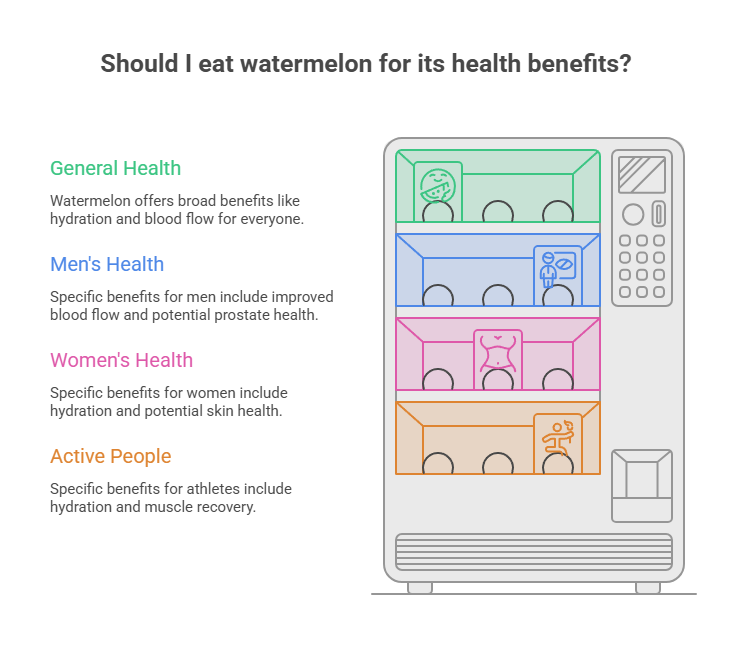
The benefits apply broadly, but a few groups have specific reasons to pay attention. The common thread is blood flow, hydration, and recovery.
For Men
Men interested in circulation often ask about watermelon specifically. The citrulline-to-arginine pathway that supports nitric oxide and relaxes blood vessels is the same mechanism behind its general blood-flow benefits, and it is why watermelon shows up in conversations about vascular health.
Watermelon is not a medication and should not be treated as one. As a whole food that supports healthy circulation, though, it is a reasonable, low-risk addition for men focused on heart and vascular health.
For Women
Hydration and skin support make watermelon an easy daily pick for many women. Its vitamin C aids collagen, its high water content helps overall hydration, and it delivers all of that with very little sugar per cup.
Anyone who is pregnant should treat general nutrition advice as a starting point, not a rule. Our medical reviewers recommend confirming any notable dietary changes during pregnancy with your own provider, since individual needs differ.
For Athletes and Older Adults
Active people get the clearest recovery payoff. Citrulline’s link to reduced muscle soreness and better oxygen delivery makes watermelon a natural pre- or post-workout option, and its water and natural sugars help refuel after a sweaty session.
Older adults may benefit too, since citrulline research shows stronger effects in that group. A serving alongside training supports both hydration and recovery without the heavy added sugar of many sports products.
How Much Watermelon Should You Eat?
More is not automatically better. The right amount depends on your goal, and a little restraint keeps the benefits without the downsides.
A Sensible Daily Serving
Dietitians favor moderation over piling on. While it can be tempting to eat half a watermelon in one sitting, experts recommend eating one cup at a time as a general guideline rather than an entire fruit.
That fits national guidance well. A cup or two folds easily into the daily fruit target while leaving room for variety. Our nutrition team frames one cup as a satisfying baseline you can build on.
Eating It at Different Times of Day
Timing matters less than total intake. A cup in the morning, as an afternoon snack, or after a workout all deliver the same nutrients, so you can fit watermelon where it suits your routine.
If blood sugar is a concern, smaller portions paired with protein or fat work best. The quick-reference table below matches common goals to a serving and a smart tip.
| If you want to… | How much watermelon | Smart tip |
| Support heart health | 1-2 cups daily | Include the nutrient-dense white rind |
| Stay hydrated | 1 cup, chilled | Eat after heat or exercise |
| Recover from a workout | 1 to 1.5 cups | Have it within an hour of training |
| Manage weight | 1 cup before meals | Use it to replace higher-calorie snacks |
| Support skin | 1 cup daily | Pair with a balanced, protein-rich diet |
| Watch blood sugar | 3/4 to 1 cup | Pair with nuts or cheese to slow the rise |
Possible Downsides and Who Should Be Careful
Watermelon is healthy for most people, but balance means naming the limits. A few situations call for extra care.
Sugar and Blood Sugar
The natural sugar adds up if you overdo it. Although watermelon has many important vitamins, it is also high in sugar, which can make it a problematic choice for those with diabetes or anyone controlling blood sugar levels.
The fix is portion control plus pairing. A modest serving with a source of protein or fat keeps the blood-sugar effect gentle, which is why the pairing tip appears throughout this guide.
Eating Too Much
Even healthy foods have a ceiling. It is possible to eat too much of anything, including watermelon, and large amounts of its fructose can cause digestive discomfort in sensitive people.
Spreading intake across the day, rather than one giant serving, avoids most of that. Our medical reviewers see far fewer complaints from a cup at a time than from half a melon at once.
The Alcohol and Lycopene Note
One lesser-known caution involves drinking. The high lycopene content in watermelon may be troublesome when combined with alcohol, since consumed together they can cause liver inflammation.
This is a niche concern for most people, but worth knowing. Keeping large watermelon servings separate from heavy drinking is a simple precaution that costs you nothing.
Kidney Considerations
Watermelon’s potassium is usually a plus, but not for everyone. People with kidney disease are often advised to watch potassium intake, so large servings may not suit them.
Anyone managing a kidney condition should confirm safe amounts with their care team. The general benefit does not override individual medical guidance.
Common Myths About Watermelon
A few stubborn beliefs make people eat less watermelon than they could, or feel guilty when they do. It helps to clear them up.
Myth: Watermelon Is Just Sugar and Water
The sweetness fools people. While watermelon does contain natural sugar, it also delivers lycopene, citrulline, vitamins A and C, and potassium, which is exactly why research links it to higher diet quality rather than lower.
Myth: The Seeds Are Dangerous
Swallowing a black watermelon seed will not harm you, and it certainly will not grow a melon in your stomach. The seeds are edible and, when roasted, supply protein and minerals that most people throw away.
Myth: It Has No Real Health Value
This is the assumption the newest research most directly contradicts. A nationally representative analysis and a controlled vascular trial both point to meaningful benefits, placing watermelon well above the empty-calorie label some people pin on it.
Easy Ways to Add More Watermelon to Your Diet
Getting these benefits is simple, because watermelon needs almost no preparation. A few habits make it a regular part of the week.
Simple Swaps and Snacks
Use watermelon to replace heavier choices. Cubes instead of chips, a wedge instead of dessert, or watermelon blended into a smoothie all add nutrients while trimming added sugar.
A sprinkle of salt after a workout helps replace electrolytes. Pairing cubes with feta, mint, or a handful of nuts turns a snack into a more balanced mini-meal that holds you longer.
Don’t Waste the Rind or Seeds
The parts most people toss carry real value. The white rind holds the highest concentration of citrulline and can be grated into salads or blended into juice.
The seeds are edible and nutritious too. Roasted watermelon seeds make a protein-bearing snack, and they are a cheap way to get more from a fruit you already bought.
Frequently Asked Questions
What happens if you eat watermelon every day?
In sensible portions, daily watermelon supports hydration, antioxidant intake, and heart health, and regular eaters tend to have higher overall diet quality. Keep it to roughly one to two cups at a time. Going far beyond that can add excess sugar or cause digestive discomfort in sensitive people.
Is watermelon good for your heart?
It earns the heart-health label honestly, carrying American Heart Association Heart-Check Certification while being free of cholesterol, fat, and sodium. Its L-citrulline supports nitric oxide and circulation, and lycopene adds protection. Think of it as one supportive piece of a broader heart-healthy lifestyle rather than a cure.
Does watermelon lower blood pressure?
It may nudge blood pressure in the right direction. Citrulline becomes arginine, fueling nitric oxide that relaxes blood vessels, while potassium helps clear excess sodium. The research is encouraging but not conclusive, so keep taking any prescribed blood-pressure care and treat watermelon as a helpful addition.
Is watermelon good for your skin?
Skin draws real benefit from it. Vitamin C drives collagen production for firmness and repair, lycopene may help defend against UV damage, and vitamin A supports skin maintenance. Add its strong hydration, and watermelon becomes a low-sugar, skin-friendly snack that fits easily into most diets.
What are the benefits of watermelon for men?
For men focused on circulation, the draw is citrulline, which feeds the nitric oxide pathway that relaxes blood vessels and supports blood flow. That is the same mechanism behind watermelon’s general heart benefits. It is a healthy, low-risk food choice, not a substitute for medical treatment.
Is watermelon good for weight loss?
It fits weight goals well. Because watermelon has a low calorie density, it fills you up for very few calories, and using it to replace richer snacks trims your daily total. It works best inside a balanced, calorie-aware routine rather than as a standalone weight-loss trick.
How much watermelon should you eat a day?
Most dietitians suggest about one cup at a time instead of half a melon, which fits the national target of 1.5 to 2.5 cups of fruit daily. One to two cups gives you the benefits while keeping sugar and digestive load reasonable for the average healthy adult.
Is watermelon anti-inflammatory?
It does have anti-inflammatory properties. Lycopene and cucurbitacin E help counter oxidative stress, and beta-cryptoxanthin has been linked in some studies to reduced joint inflammation. These effects support general health, but watermelon is not a replacement for medical treatment of an inflammatory condition.
Is watermelon good for your kidneys?
For healthy people, its water content and mild diuretic effect can support normal kidney function and hydration. The catch is potassium: those with kidney disease are often told to limit it. If you have a kidney condition, check safe portions with your provider before eating large amounts.
Can diabetics still get watermelon’s benefits?
Often yes, with care. Because it is high in natural sugar, people with diabetes should keep servings small, around three-quarters to one cup, and pair them with protein or fat to slow the blood-sugar rise. Tracking your own response and consulting your provider is the safest path.
Is watermelon good for your eyes?
Yes, thanks to its vitamin A and carotenoids, which support eye health and may help lower the risk of cataracts and age-related macular degeneration. One medium slice supplies up to 11% of your daily vitamin A, making watermelon an easy long-term contributor within a varied diet.
What are the side effects of eating too much watermelon?
Large amounts can trigger digestive upset from fructose and may unsettle blood-sugar control in sensitive people. The potassium can be a problem for those with kidney disease, and very large servings alongside heavy drinking may stress the liver. For nearly everyone, moderation prevents these issues.
Disclaimer: This article is for general education and is not a substitute for personalized medical advice. Watermelon’s effect on blood sugar, kidney function, or other conditions can vary by individual. If you have diabetes, kidney disease, are pregnant, or take medication, consult a licensed healthcare provider before making significant changes to your diet.
References
- ScienceDaily, Scientists Uncover Surprising Health Benefits of Watermelon
- Nutrients (2022), Watermelon Intake Is Associated with Increased Nutrient Intake and Higher Diet Quality, NHANES 2003-2018
- Cleveland Clinic, Watermelon: Nutrition and Health Benefits
- Healthline, Top Health Benefits of Watermelon
- WebMD, Health Benefits of Watermelon
- Northwestern Health Sciences University, 11 Top Watermelon Health Benefits
- National Watermelon Promotion Board, Watermelon’s Benefits