
The thing that finally sends most adults to a doctor is almost never inattention. It is the insomnia, the anxiety, the third job lost in four years. By the time someone books that appointment, ADHD has usually spent a decade quietly generating problems, and it is the problems that get treated first.
Table of Contents
Quick Answer
ADHD complications are the downstream problems created by untreated or under-managed symptoms, plus the conditions that commonly occur alongside ADHD. They fall into four groups: mental health, physical health, functional, and safety. Most are preventable or reversible with proper treatment. Seek medical advice when any complication affects sleep, mood, work, or driving for more than two weeks.
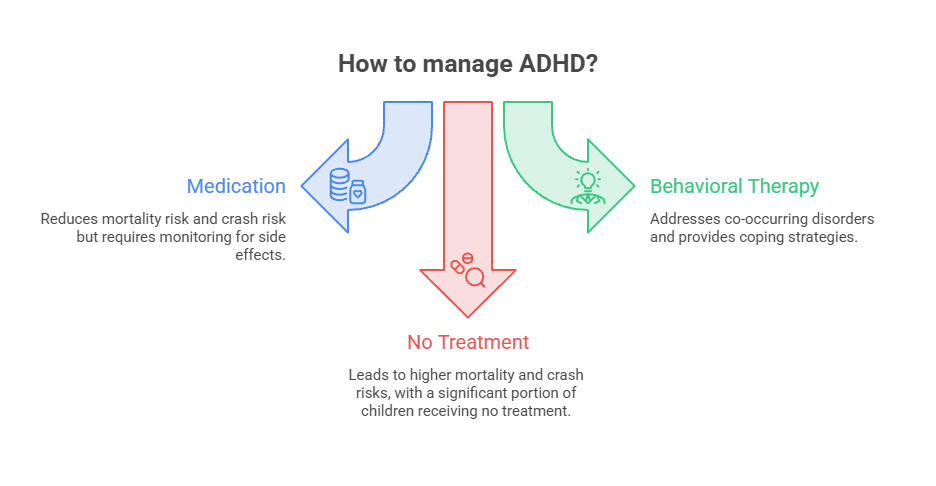
The complications reported most often are:
- Anxiety, depression, and difficulty regulating emotion
- Chronic sleep disruption and delayed sleep onset
- Weight gain and other cardiometabolic changes
- Academic, employment, and financial decline
- Elevated rates of injuries and motor vehicle crashes
- Alcohol, cannabis, or stimulant use that stops being recreational
At a Glance
About 15.5 million US adults had an ADHD diagnosis in 2023, and 55.9% were first diagnosed in adulthood.
Among US children with current ADHD, 77.9% have at least one co-occurring disorder and 30.1% receive neither medication nor behavioral treatment.
A 2025 UK study found an apparent life expectancy reduction of 6.78 years in men and 8.64 years in women with diagnosed ADHD, a figure its own authors say probably overstates the real gap.
Starting ADHD medication was associated with a 2-year all-cause mortality hazard ratio of 0.79, or 39.1 deaths per 10,000 compared with 48.1.
In 2.3 million US adults, crash risk was 38% lower in men and 42% lower in women during medicated months.
Long-term stimulant use carries a modest blood pressure signal that needs monitoring, not avoidance.
The triage rule: anything lasting two weeks that touches sleep, safety, or mood belongs in front of a clinician.
What ADHD Complications Actually Means
Three words get used interchangeably across ADHD coverage, and mixing them up is the main reason readers leave these articles more confused than they arrived.
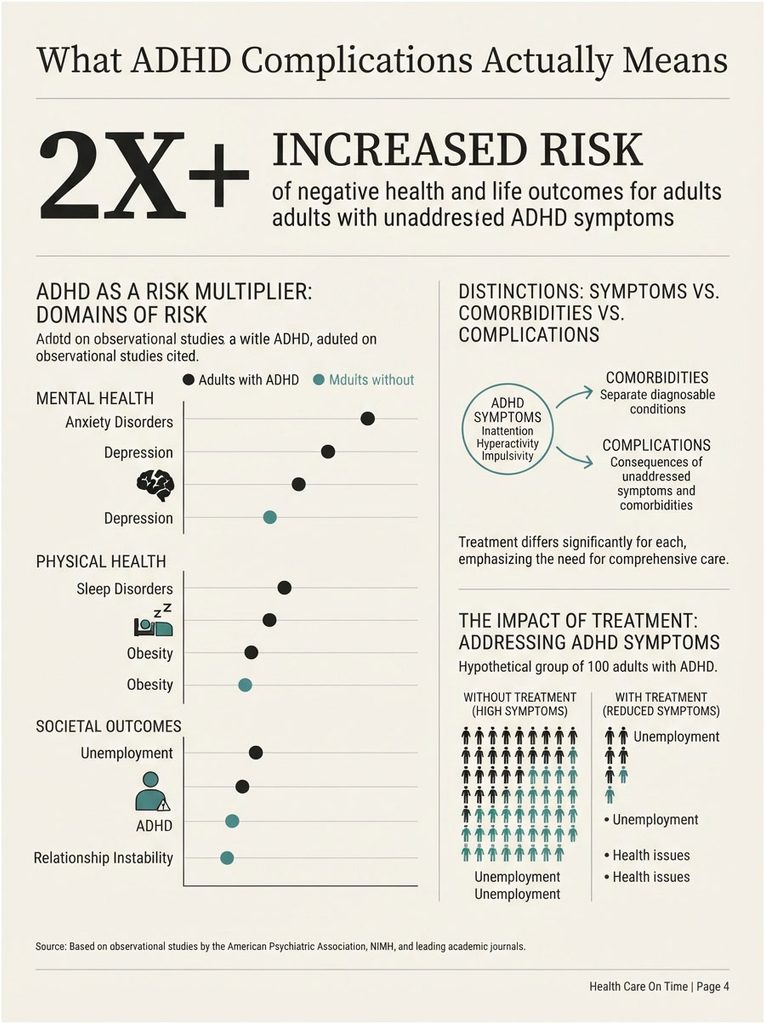
Symptoms are the diagnostic criteria themselves: inattention, hyperactivity, impulsivity. Comorbidities are separate diagnosable conditions that occur alongside ADHD at higher-than-expected rates. Complications are the consequences that accumulate when symptoms and comorbidities go unaddressed.
The distinction has practical consequences. A symptom gets managed with treatment. A comorbidity needs its own plan. A complication is a signal that something upstream is not being handled well enough, which means the answer is rarely a new prescription for the complication itself.
ADHD Works as a Risk Multiplier
ADHD does not directly cause high blood pressure or a collision at an intersection. What it does is raise the probability of the behaviors, exposures, and conditions that lead there.
An umbrella review of 125 reviews published in Frontiers in Psychiatry sorted the documented risks into three domains: mental health, physical health, and societal outcomes. That framing explains something a simple cause-and-effect story cannot, which is why treating attention often improves outcomes that appear to have nothing to do with attention.
Patients booking evaluations through HealthCareOnTime frequently arrive convinced they are dealing with two unrelated problems, an attention problem and a mood problem. In a large share of those cases, our medical reviewers note, the second grew directly out of the first.
Complications Are Not Inevitable
Nothing in this article describes a fixed outcome. Large observational studies report population-level probabilities, not personal forecasts, and the strongest signal running through all of them is that these risks respond to treatment.
How Common Is ADHD in the United States, and Who Is Being Missed
ADHD stopped being a childhood-only conversation in American medicine several years ago. The adult numbers have moved sharply, and so has the profile of who gets diagnosed and when.
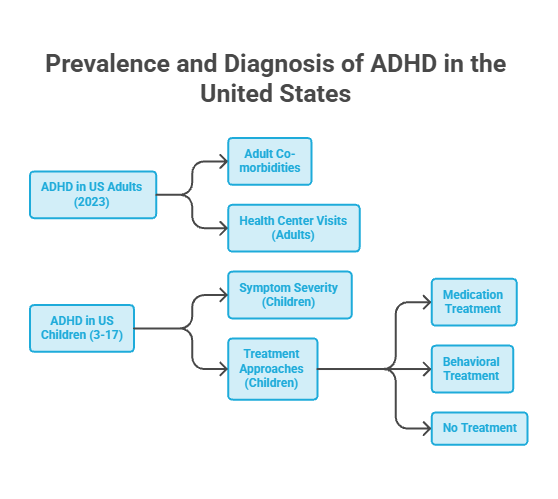
The National Center for Health Statistics reported that roughly 15.5 million US adults had an ADHD diagnosis in 2023, with more than half first diagnosed in adulthood. That single statistic reframes the entire complication question. Someone diagnosed at 41 has had three decades of untreated symptoms accumulating consequences before anyone named the cause.
On the pediatric side, 11.4% of US children aged 3 to 17 have ever received an ADHD diagnosis, 10.5% currently have it, and 58.1% of those with current ADHD fall into the moderate or severe range.
The Treatment Gap Drives the Risk
Prevalence alone does not predict complications. Untreated prevalence does.
Among US children with current ADHD, 53.6% take medication and 44.4% received behavioral treatment in the past year, while 30.1% received neither. That is roughly 1.9 million American children with an active diagnosis and no active treatment, up from about 1.2 million in 2016.
ADHD in the United States by the Numbers
| Metric | Figure | Population | Source and year |
| Adults with an ADHD diagnosis | 15.5 million | US adults 18 and older | NCHS Data Brief No. 543, Dec 2025 |
| First diagnosed in adulthood | 55.9% | US adults with ADHD | NCHS Data Brief No. 543, Dec 2025 |
| Children ever diagnosed | 11.4% (7.1 million) | US children 3 to 17 | Danielson et al., JCCAP 2024 (2022 NSCH) |
| Children with current ADHD | 10.5% (6.5 million) | US children 3 to 17 | Danielson et al., JCCAP 2024 |
| Moderate or severe presentation | 58.1% | US children with current ADHD | Danielson et al., JCCAP 2024 |
| At least one co-occurring disorder | 77.9% | US children with current ADHD | Danielson et al., JCCAP 2024 |
| Receiving no ADHD treatment | 30.1% (1.9 million) | US children with current ADHD | Danielson et al., JCCAP 2024 |
| Adult visits with a chronic physical co-diagnosis | 40.1% | Health center visits, 2023 | NCHS Data Brief No. 543, Dec 2025 |
| Visits including overweight or obesity | 24.2% | Health center visits, 2023 | NCHS Data Brief No. 543, Dec 2025 |
| Health center visit rate | 52.6 per 10,000 | US adults with ADHD, 2023 | NCHS Data Brief No. 543, Dec 2025 |
That visit rate fell steadily with age, from 92.6 per 10,000 among adults 18 to 24 down to 6.5 among adults 65 and older. Older Americans with ADHD are close to invisible in national health data, which is itself a complication risk.
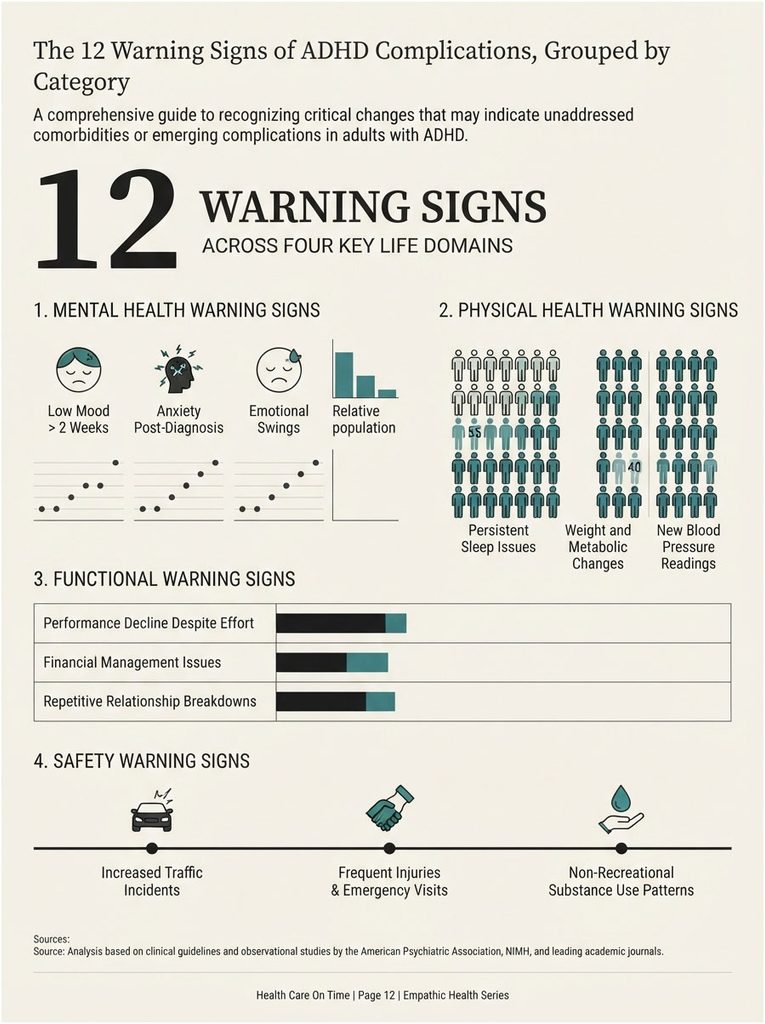
The 12 Warning Signs, Grouped by Category
These are the twelve complications that most often bring people back to a clinician. Not everyone with ADHD develops them, and none of them indicate something permanently broken.
Mental Health Warning Signs
1. Low Mood That Outlasts the Frustrating Week
Everyone with ADHD has demoralizing stretches. The warning sign is a low mood that persists past two weeks, flattens interest in activities you normally enjoy, and shows up on days when nothing has actually gone wrong.
Depression and ADHD share several surface features, including poor concentration, low motivation, and disrupted sleep. That overlap is exactly why the two get confused in both directions, and why a clinician needs the timeline rather than a snapshot.
2. Anxiety That Arrived After the ADHD, Not Before
Chronological order is one of the most useful clues available to a non-specialist. Anxiety that emerged in your twenties, after years of missed deadlines and close calls, tends to behave like a consequence rather than an independent condition.
Among health center visits by US adults with ADHD, most included a co-diagnosis of a mental health disorder, with anxiety and mood disorders leading the list. Treating the anxiety alone, while ADHD keeps producing the situations that trigger it, usually generates partial improvement that then stalls.
3. Emotional Swings That Damage Relationships
Rapid shifts from calm to overwhelmed, outsized reactions to perceived criticism, and difficulty returning to baseline are widely reported in adults with ADHD, though they are not part of the formal diagnostic criteria.
When those swings start costing friendships, marriages, or working relationships, that is a complication rather than a personality trait. Readers dealing with this alongside a bereavement may find our companion piece on ADHD and grief useful.
Physical Health Warning Signs
4. Sleep That Never Resets
Difficulty falling asleep, a body clock that runs late, and waking unrefreshed are among the most commonly reported physical complications in adults with ADHD. Sleep loss then degrades attention, which worsens the ADHD picture, which further degrades sleep.
The loop is self-reinforcing, and it rarely breaks on its own. Sleep is one of the highest-yield items to raise at any appointment because fixing it often improves three other complications at once.
5. Weight and Metabolic Changes
Overweight or obesity appeared in 24.2% of health center visits by US adults with ADHD, and 40.1% of those visits included some chronic condition unrelated to mental health, with hyperlipidemia, hypertension, and asthma also represented.
Impulsive eating, irregular meal timing, disrupted sleep, and reduced capacity for meal planning all contribute. Our related guide on childhood obesity covers the same pattern on the pediatric side.
Across the diagnostic panels our lab partners process, this cluster shows up often enough that our medical team recommends a fasting lipid panel and an A1c for adults who have been managing ADHD symptoms without treatment for years.
6. New Blood Pressure or Heart Rate Readings
Stimulant medications raise heart rate and blood pressure by design. For most people the change is small and clinically unimportant, but it is not nothing, and the only way to know your own numbers is to measure them.
Any reading consistently above your usual range, along with palpitations, chest discomfort, or fainting, warrants a call to your prescriber rather than a wait-and-see approach.
Functional Warning Signs
7. Performance Falling Despite Genuine Effort
The signature pattern is effort going up while output goes down. Deadlines slip, familiar tasks take longer than they used to, and the distance between intention and completion keeps widening.
Students hit this at transition points, moving from high school into college, or from structured coursework into an independent thesis. Adults usually hit it after a promotion into a role with less external scaffolding.
8. Finances and Paperwork Collapsing
Unopened mail, missed payments on money that is actually in the account, unfiled taxes, and lapsed insurance are classic executive-function complications rather than evidence of carelessness.
They are also among the most consequential, because financial damage compounds silently for years before anybody connects it back to ADHD.
9. Relationships Breaking the Same Way Each Time
Forgotten commitments, interrupting, half-listening, and an unequal share of household load appear repeatedly in adult ADHD relationship research. Practical systems help more than resolve does, and our guide to ADHD cleaning hacks that actually work addresses one of the most common flashpoints.
Safety Warning Signs
10. Traffic Incidents and Near Misses
This is the best-quantified complication in the entire literature. In a US cohort of 2,319,450 adults with ADHD, patients had significantly higher crash risk than matched controls, with odds ratios of 1.49 for men and 1.44 for women.
Two or more near misses in a month, or any at-fault collision, is worth reporting to your doctor. Timing matters here as well, since medication coverage that ends at 4 p.m. leaves the evening commute unprotected.
11. Injuries, Emergency Visits, and Accidental Poisonings
Children and teenagers with ADHD are more prone to frequent and severe injuries than their peers, according to CDC, including head injuries, injuries to more than one body region, hospitalization for unintentional poisoning, and intensive care admission.
For parents, the signal is the pattern rather than any single event. Three emergency visits in a year each looked like bad luck at the time.
12. Substance Use That Has Stopped Being Recreational
Experts estimate roughly 15% of adolescents and young adults with ADHD have a concurrent substance use disorder, and a large meta-analysis found nearly one in four people seeking substance use treatment also have ADHD, in most cases undiagnosed.
Alcohol, nicotine, and cannabis are the most common. The specific pattern clinicians want to hear about is using a substance to slow racing thoughts or to fall asleep, because that is self-medication rather than recreation.
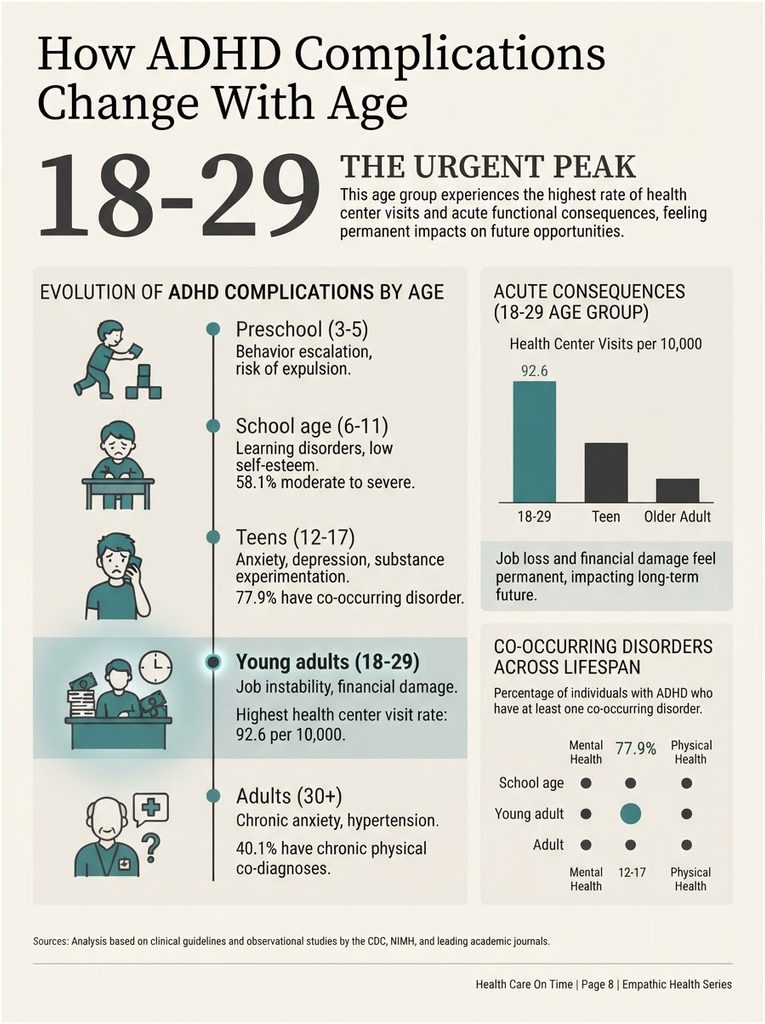
How ADHD Complications Change With Age
The complication profile shifts substantially across a lifespan. A parent watching a seven-year-old and a 45-year-old reassessing their own history are looking at two genuinely different risk pictures.
ADHD Complications by Life Stage
| Life stage | Most common complications | Key US data point | Day-to-day appearance | Clinician trigger |
| Preschool, 3 to 5 | Behavior escalation, preschool expulsion, injury risk | Behavior therapy is recommended first line under age 6 | Aggression, cannot stay seated, frequent falls | Expulsion warning or repeat injuries |
| School age, 6 to 11 | Learning disorders, conduct problems, low self-esteem, injuries | 58.1% of children with current ADHD are moderate or severe (JCCAP 2024) | Homework battles, notes home, few stable friendships | Grades dropping two terms running |
| Teens, 12 to 17 | Anxiety, depression, substance experimentation, first-year crashes | 77.9% have at least one co-occurring disorder (JCCAP 2024) | Withdrawal, school avoidance, first citation or crash | Any crash, or mood change over two weeks |
| Young adults, 18 to 29 | Job instability, substance use disorder, financial damage, peak crash exposure | 92.6 health center visits per 10,000, highest of any adult band (NCHS 2025) | Dropped classes, job churn, unopened bills | Second job loss, or any substance use sign |
| Adults 30 and older | Anxiety, depression, hypertension, obesity, marital strain, burnout | 40.1% of adult ADHD visits carry a chronic physical co-diagnosis (NCHS 2025) | Persistent exhaustion, medical appointments missed | New blood pressure readings, or persistent low mood |
Across patients we serve, the 18 to 29 window produces the most urgent presentations. It is the point at which external structure disappears and consequences start feeling permanent, because transcripts, employment records, and credit scores do not reset.
What the Serious Outcome Research Actually Shows
This is where careful reading matters most, because headline figures in this area have been widely stripped of their caveats in secondary coverage.
The Life Expectancy Study, Read Properly
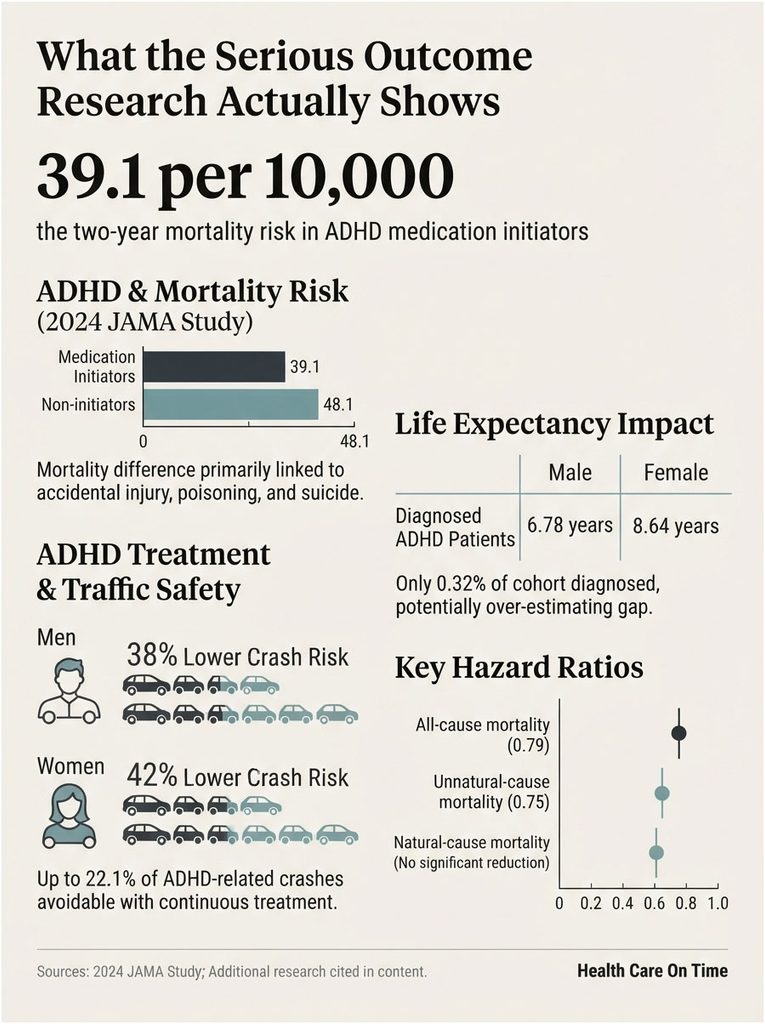
A 2025 matched cohort study in the British Journal of Psychiatry analyzed primary care records covering 9,561,450 people, identifying 30,039 adults with diagnosed ADHD matched one to ten against 300,390 comparison participants. The apparent reduction in life expectancy was 6.78 years for males and 8.64 years for females.
The research team was direct about the limitation. Only about 0.32% of adults in the cohort carried a diagnosis, roughly one in nine of all adults with ADHD, and lead author Liz O’Nions stated the research may over-estimate the life expectancy gap for people with ADHD overall, because those who are diagnosed may have more additional health problems than the average person with the condition.
Read the number as a measure of unmet need rather than a personal prognosis. The dataset also contained no cause-of-death information, so no individual complication can be assigned responsibility for the gap.
The Mortality Signal Points Toward Treatment
A 2024 JAMA study used a target trial emulation design on 148,578 people aged 6 to 64 diagnosed with ADHD in Sweden, of whom 84,204 (56.7%) initiated medication within three months.
Two-year mortality risk was 39.1 per 10,000 in the initiation group against 48.1 per 10,000 among those who did not initiate. All-cause mortality carried a hazard ratio of 0.79 and unnatural-cause mortality 0.75, while natural-cause mortality showed no significant reduction.
The entire difference sat in accidental injury, accidental poisoning, and suicide. That pattern is consistent with medication improving impulse control and decision-making rather than treating any physical disease.
Driving and Injury
Within-individual analysis of that 2.3 million-patient US cohort found men had 38% lower crash risk and women 42% lower crash risk during months when they received medication compared with months when they did not, and estimated that up to 22.1% of crashes among patients with ADHD could have been avoided with continuous treatment.
The within-individual design is what makes this convincing. Each person acts as their own control, so the result cannot be explained away as conscientious people simply being both better at taking medication and better at driving.
Where These Findings Stop
All three are observational, and none establish causation. Two of the three draw on Swedish or UK registry populations rather than American ones, which matters because US prescribing patterns, insurance access, and driving exposure all differ.
Our medical reviewers flag this deliberately, because several widely circulated summaries of these studies dropped the limitations entirely and turned population statistics into personal predictions.
Complications That Come From Treatment Rather Than From ADHD
An honest article on this topic has to run in both directions. Medication solves problems and creates a smaller set of its own.
The Cardiovascular Signal
A 2024 JAMA Psychiatry nested case-control study examined 278,027 individuals in Sweden aged 6 to 64 with an incident ADHD diagnosis or medication dispensation.
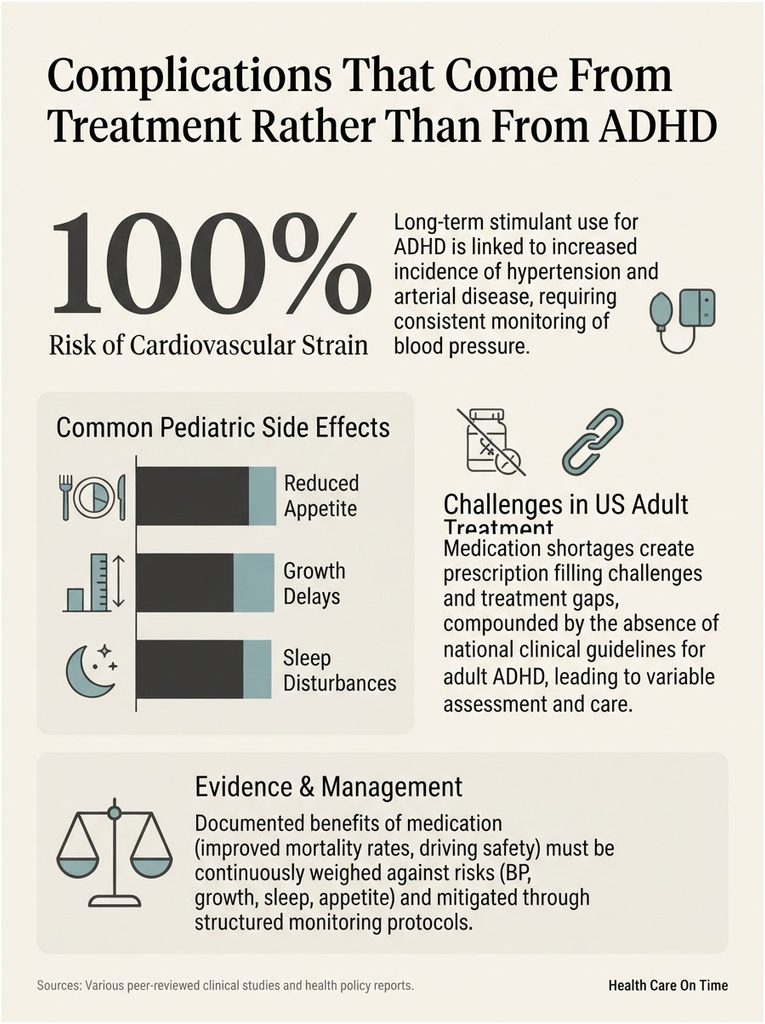
People taking ADHD medication for three to five years and for more than five years had 72% and 80% higher risk of hypertension respectively, and 65% and 49% higher risk of arterial disease. No increased risk appeared for arrhythmias, cerebrovascular disease, heart failure, ischemic heart disease, or thromboembolic disease.
Context changes how that reads. The Karolinska team reported the overall cardiovascular risk rose by roughly 4% per year of use, was greatest during the first few years before leveling off, and reached statistical significance only at doses above 1.5 times the defined daily dose, adding that a long list of other medications carries a comparable long-term hypertension association and patients should not be alarmed.
Appetite, Growth, and Sleep
Reduced appetite, delayed sleep onset, and slowed growth velocity in children are the routine effects clinicians track. Most respond to changes in dose timing, a switch in formulation, or restructuring meals around the medication window.
Medication Benefits Against Monitoring Needs
| Area | Documented benefit | Documented risk or side effect | What monitoring looks like |
| Mortality | All-cause HR 0.79, unnatural-cause HR 0.75 | No mortality increase found | Annual medication review |
| Driving | 38% and 42% lower crash risk in medicated months | Coverage gaps late in the day | Check symptom return time against commute |
| Blood pressure | Improved adherence to other care | 72% to 80% higher hypertension risk at 3 or more years | Cuff reading at every visit |
| Growth in children | Improved school function | Slowed growth velocity | Height and weight plotted each visit |
| Sleep | Better daytime function | Delayed sleep onset | Dose timing review |
| Appetite | Fewer impulsive eating episodes | Appetite suppression | Weight tracked, meals repositioned |
The Shortage Problem Is a US-Specific Complication
CDC data from 2024 showed 71.5% of US adults taking stimulant medication had difficulty filling their prescriptions in the previous year because of availability issues.
Involuntary treatment gaps are a real driver of complications right now. Patients commonly ask us how to handle it, and the practical answer is to request refills earlier than you need them, keep a written record of every gap, and ask your prescriber about alternative formulations before the bottle is empty.
Why Your Clinician May Sound Uncertain
The United States still has no published national clinical guideline for adult ADHD. APSARD expects to publish its guidelines as an open-access document, though no specific release date has been set, and CHADD has partnered with APSARD to distribute them in 2027.
That gap is not your doctor’s fault, and it explains genuine variation in how adult ADHD is assessed and treated from one American practice to the next.
Why ADHD Complications Get Misread as Something Else
The Anxiety-First and Depression-First Pattern
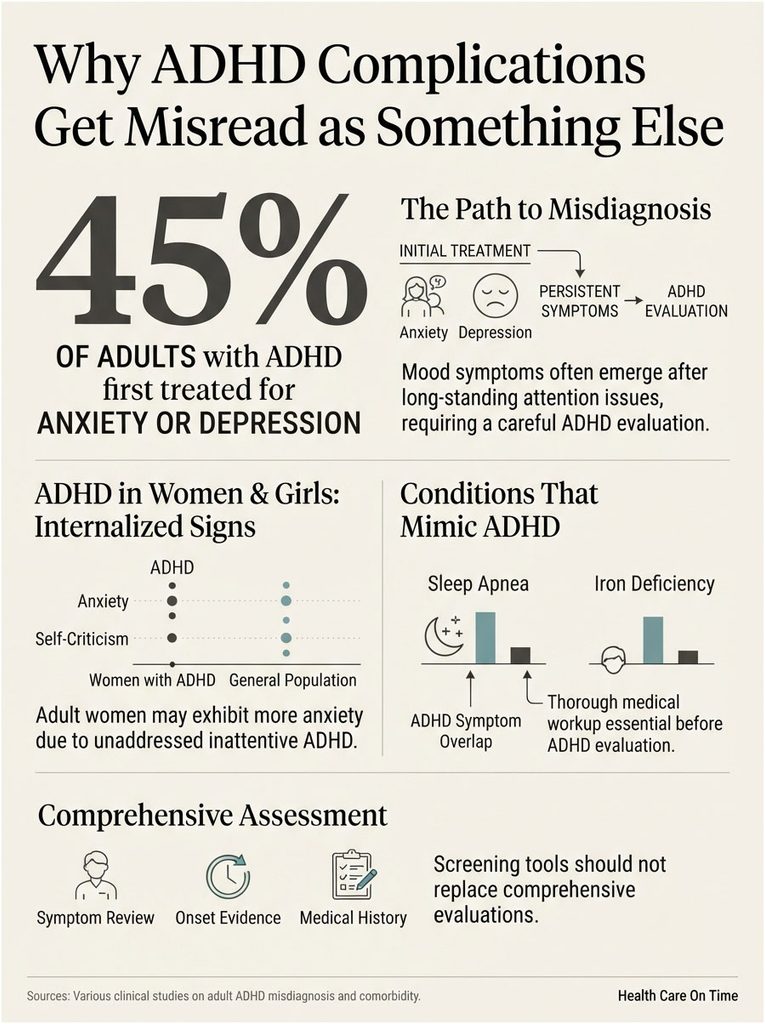
A large share of adults reach an ADHD diagnosis only after years of treatment for anxiety or depression. The secondary condition is real and deserves care, but treating it alone tends to produce improvement that plateaus and then reverses.
The clue is sequence. Mood symptoms that appeared years after attention problems, and that worsen predictably during high-demand periods, deserve an ADHD conversation rather than a fourth antidepressant trial.
Women and Girls
Inattentive presentation without visible hyperactivity is under-recognized throughout childhood. The diagnosis frequently arrives in adulthood, often when a woman’s own child is being evaluated and the family history questions land uncomfortably close to home.
By that point the functional complications have had two or three decades to accumulate, which is one reason the adult female picture is often heavier on anxiety, exhaustion, and self-criticism than on classic restlessness.
Conditions That Look Like ADHD
Obstructive sleep apnea, thyroid dysfunction, iron deficiency, chronic sleep restriction, and certain medication effects can all produce attention problems that resemble ADHD closely.
In cases reviewed by our medical team, a basic workup ordered before or alongside an ADHD evaluation changes the picture often enough to be worth doing every time. A reasonable baseline includes thyroid function testing, a complete blood count with ferritin, and a direct conversation about snoring and daytime sleepiness.
What a Proper Evaluation Includes
A credible adult assessment covers symptoms in at least two settings, evidence of onset before age 12, functional impairment, a review of other conditions that could explain the picture, and a medical history. A ten-minute questionnaire is a screening tool, not a diagnosis.
When to Seek Medical Advice, and How Quickly
Not every complication needs an urgent call, and not every complication can wait for next year’s physical. Use the timeframe column rather than guessing.
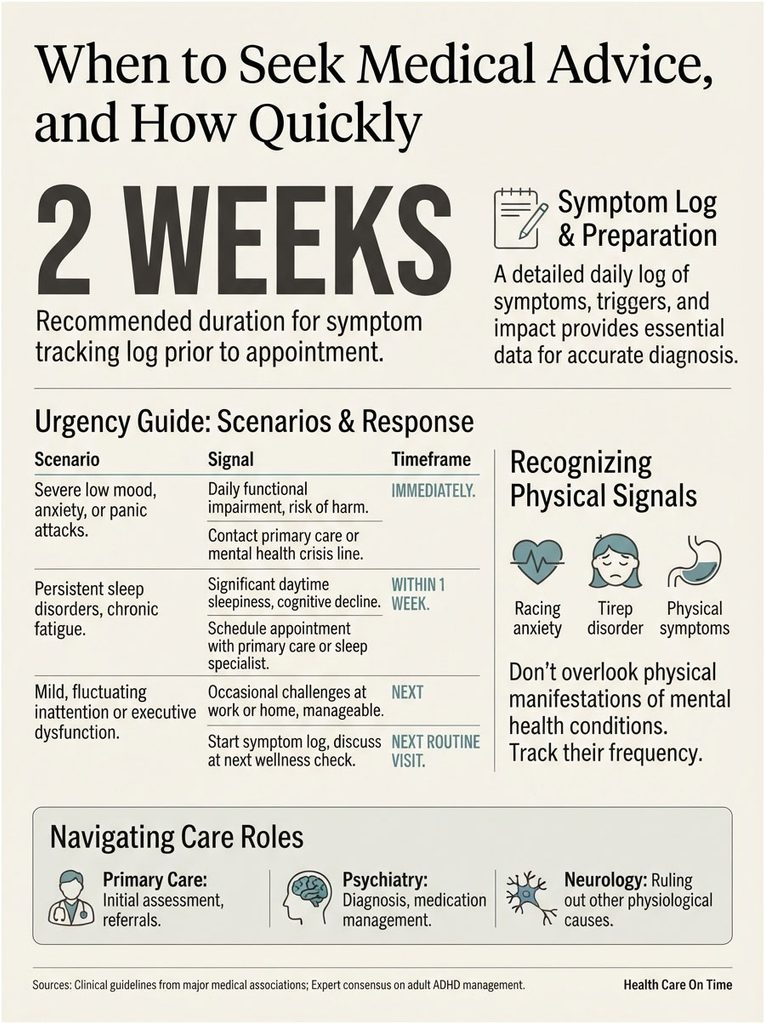
Scenario, Signal, and Recommended Action
| What you are noticing | What it may signal | Recommended action | Timeframe |
| Low mood or loss of interest lasting over two weeks | Co-occurring depression | Book primary care or psychiatry; ask for depression screening | Within 1 week |
| Anxiety that began after ADHD symptoms | Secondary anxiety from untreated ADHD | Request that both conditions be evaluated together | Within 2 to 3 weeks |
| Falling asleep after 2 a.m. most nights | Sleep disorder or medication timing problem | Ask about dose timing and a sleep assessment | Within 2 to 3 weeks |
| New elevated blood pressure on stimulants | Medication cardiovascular effect | Contact prescriber; do not stop medication on your own | Within 1 week |
| Chest pain, palpitations, or fainting on medication | Possible cardiac event | Seek urgent or emergency care | Same day |
| Two or more near misses, or an at-fault crash | Driving safety complication | Ask prescriber to review coverage across driving hours | Within 1 week |
| Using alcohol or cannabis to sleep or slow thoughts | Emerging substance use disorder | Request integrated ADHD and substance use assessment | Within 1 week |
| Second job loss or a failing academic term | Functional decline, treatment inadequate | Full treatment review plus accommodations request | Within 2 to 3 weeks |
| Thoughts of self-harm | Psychiatric emergency | Call or text 988, or go to the nearest emergency department | Immediately |
What to Bring to the Appointment
Bring a two-week log rather than a summary. Record sleep and wake times, missed obligations, mood on a simple scale of 1 to 10, current medication and dose, and any blood pressure readings you have taken at home.
Patients who arrive with written records consistently get more from a fifteen-minute visit than patients trying to reconstruct six months of decline from memory.
Primary Care, Psychiatry, or Neurology
Primary care handles a large share of adult ADHD management in the United States and is the correct starting point for most people. Psychiatry fits better when there is a co-occurring mood disorder, a substance use disorder, a complex medication history, or previous non-response.
Neurology is rarely needed unless there is a seizure history or another specific neurological question on the table.
What Actually Reduces Complication Risk
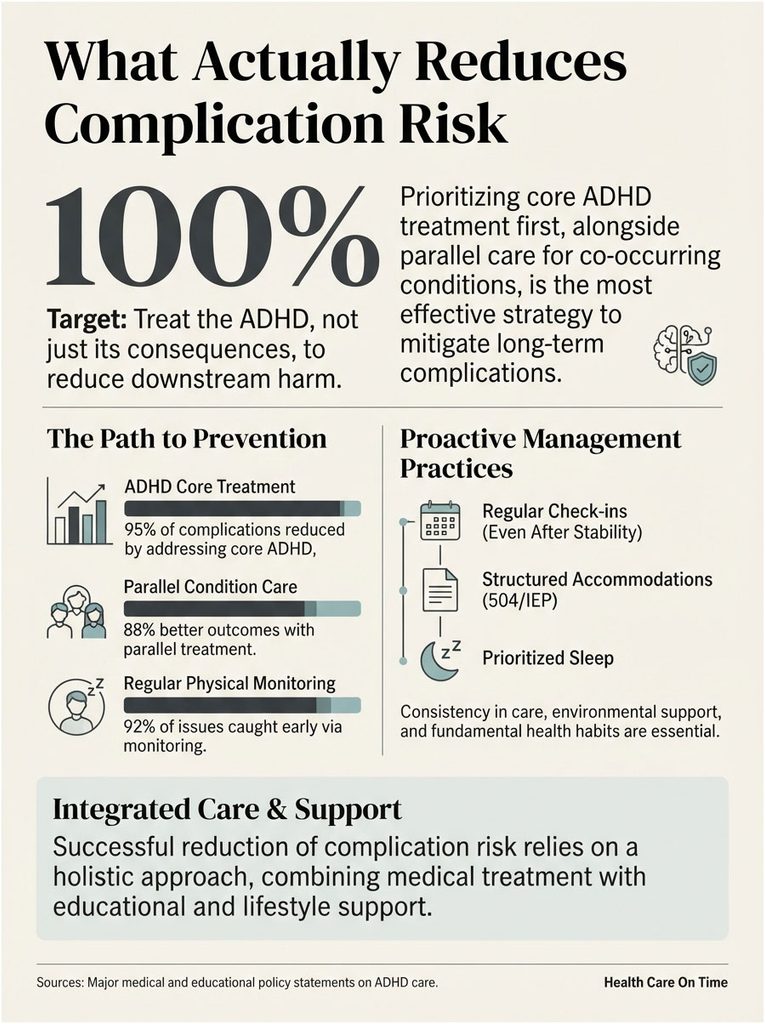
Treat the ADHD, Not Only Its Consequences
The mortality, crash, and injury data all point the same direction. Treating the core condition reduces downstream harm more reliably than treating each complication as a separate problem.
Treat Co-occurring Conditions in Parallel
Sequential treatment, where ADHD waits until the anxiety resolves, often means neither improves. Integrated plans generally perform better, particularly where substance use is part of the picture.
Monitor the Physical Numbers on a Schedule
Blood pressure and heart rate at every medication review, height and weight in children, and a periodic metabolic panel are low-effort checks that address most of the documented medication risk.
Patients booking lab panels with us often ask which tests matter here. For adults on long-term stimulants, a lipid panel, fasting glucose or A1c, and thyroid function cover the ground most efficiently.
Use the Accommodations That Already Exist
Section 504 plans and IEPs in schools, and reasonable accommodations under the Americans with Disabilities Act at work, remain substantially underused. Written accommodations reduce functional complications far more effectively than personal resolve does.
Protect Sleep First
Because sleep sits upstream of mood, weight, attention, and driving safety, it produces the largest return of any single change. Consistent wake times, a fixed medication schedule, and a screen cutoff outperform most other interventions people try on their own.
Keep the Check-ins Even When Things Feel Stable
The steep decline in health center visit rates with age suggests many adults simply stop attending once the crisis passes. Complications tend to develop during exactly those quiet stretches.
Medical Disclaimer
This article is for general education and does not replace diagnosis, treatment, or advice from a qualified healthcare provider. Do not start, stop, or adjust any ADHD medication without speaking to your prescriber. If you are experiencing thoughts of self-harm or a mental health crisis, call or text 988 to reach the Suicide and Crisis Lifeline, available 24 hours a day across the United States.
References
- CDC: Other Concerns and Conditions with ADHD
- CDC: Data and Statistics on ADHD
- NCHS Data Brief No. 543: Visits to Health Centers by Adults With ADHD, United States, 2023
- Danielson et al., ADHD Prevalence Among U.S. Children and Adolescents in 2022, Journal of Clinical Child and Adolescent Psychology
- O’Nions et al., Life expectancy and years of life lost for adults with diagnosed ADHD in the UK, British Journal of Psychiatry, 2025
- Li et al., ADHD Pharmacotherapy and Mortality in Individuals With ADHD, JAMA, 2024
- Zhang et al., ADHD Medications and Long-Term Risk of Cardiovascular Diseases, JAMA Psychiatry, 2024
- Chang et al., Medication Use for ADHD and Risk of Motor Vehicle Crashes, JAMA Psychiatry, 2017
- French et al., The impacts associated with having ADHD: an umbrella review, Frontiers in Psychiatry, 2024
- NIMH: Attention-Deficit/Hyperactivity Disorder
- Mayo Clinic: Adult ADHD Symptoms and Causes
- CHADD: When ADHD and Substance Use Disorders Coexist
- APSARD: US Guidelines for Adults with ADHD