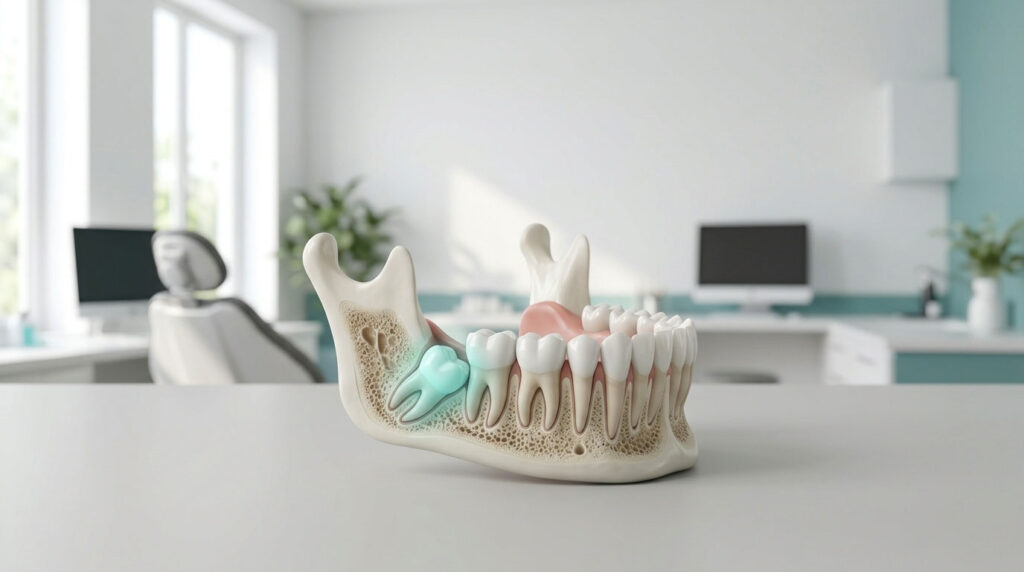
A dull throb at the back of your jaw at 2 a.m. has a way of making you rethink your whole week. If a wisdom tooth is behind it, that ache is rarely random, and it rarely fixes itself.
Table of Contents
Quick Answer
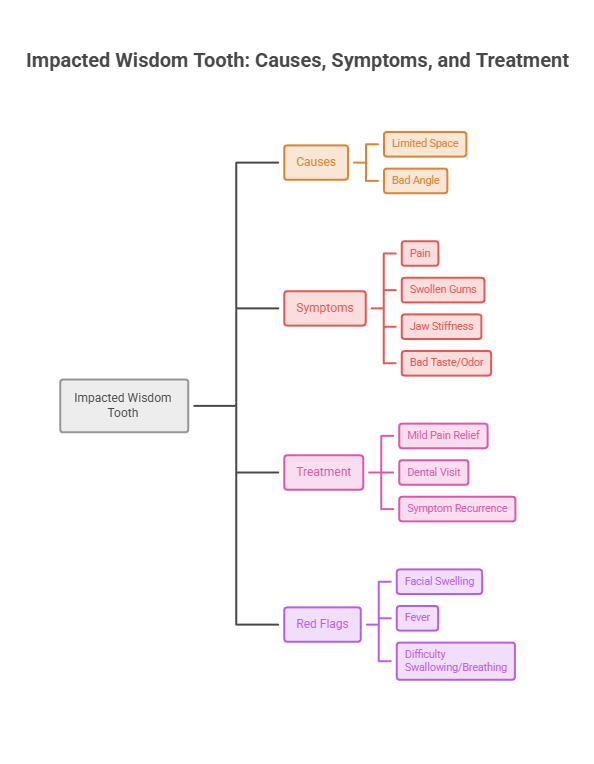
An impacted wisdom tooth is a third molar that lacks the room to erupt, so it stays trapped under the gum or bone or grows at an angle. It commonly causes pain, swelling, bad taste, and infection. You can ease mild pain with over-the-counter pain relievers, warm salt-water rinses, and a cold compress, but see a dentist promptly for spreading facial swelling, fever, or trouble swallowing.
At a Glance
- An impacted wisdom tooth is a third molar that cannot fully break through because of limited space or a bad angle.
- The most common signs are pain at the back of the mouth, swollen or bleeding gums, jaw stiffness, and a bad taste or odor.
- About 10 million wisdom teeth are removed from roughly 5 million Americans every year.
- Mild pain often responds to ibuprofen, salt-water rinses, and a cold compress while you wait for a dental visit.
- Red flags that need urgent care: facial swelling that spreads, fever, or difficulty swallowing or breathing.
- An impacted tooth will not straighten out on its own, so the symptoms tend to return until it is treated.
What Is an Impacted Wisdom Tooth?
Wisdom teeth are the last molars to arrive, and they often show up to a mouth that has no seat left at the table. When that happens, they get stuck.
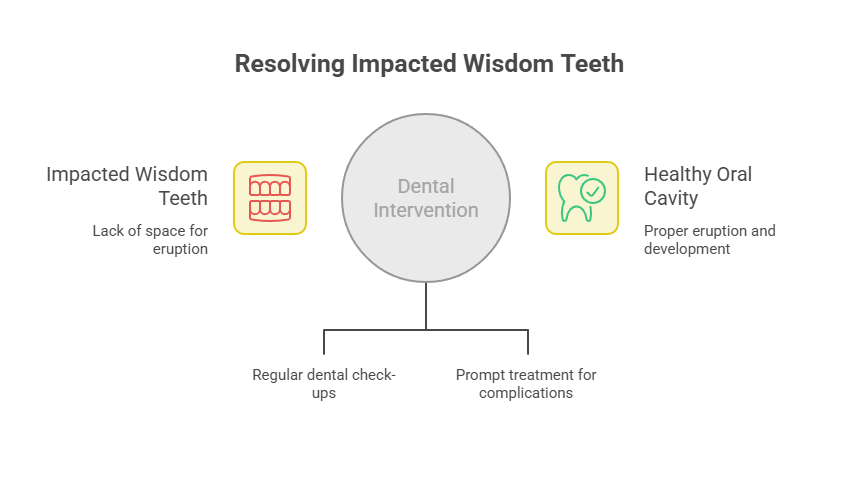
Our dental reviewers note that most people first feel trouble in their late teens or early twenties, right when these third molars try to come in.
What “Impacted” Actually Means
Your wisdom teeth, also called third molars, are the four teeth at the very back corners of your mouth. They typically try to erupt between ages 17 and 25.
An impacted tooth is simply one that cannot fully emerge. According to Mayo Clinic, these teeth lack enough room to come in or develop properly, which leads to pain, damage to other teeth, and other dental problems.
Why Wisdom Teeth Get Stuck
The modern human jaw is often too small to hold a third set of molars. So the tooth pushes against whatever is in its way.
It may stay buried under the gum, lodge in the jawbone, or tilt sideways into the neighboring molar. Each of these positions can trigger pain, pressure, or infection.
Types of Impaction
Not all impactions are equal, and the type shapes both the symptoms and the treatment. Dentists describe them by depth and by angle.
By depth, the tooth may be a soft tissue impaction (covered by gum), a partial bony impaction (partly in the jawbone), or a full bony impaction (fully encased in bone). By angle, it may tilt toward the front molar (mesial), grow straight but trapped (vertical), lie sideways (horizontal), or point backward (distal).
In cases our clinical team reviews, partial impactions tend to cause the most nagging pain because they open a gap where bacteria collect. The table below breaks down the types so you can picture what is happening.
| Impaction Type | What It Looks Like | Typical Pain & Risk | Common Treatment | Typical US Cost per Tooth |
| Soft tissue impaction | Tooth breaks gum but a flap covers it | Moderate; high infection risk from trapped food | Removal, sometimes flap removal | $225 to $400 |
| Partial bony impaction | Partly through bone and gum | Often the most painful; frequent flare-ups | Surgical extraction | $275 to $500 |
| Full bony impaction | Fully encased in jawbone | May be painless or cause deep ache and pressure | Surgical extraction, more complex | $325 to $600 |
| Mesial angled (toward front) | Tilts into the second molar | Pressure pain, risk to neighboring tooth | Extraction, the most common angle | $275 to $500 |
| Erupted, not impacted | Fully through, in normal position | Usually none unless decayed | Simple extraction if needed | $75 to $200 |
Who Is Most Likely to Have Problems?
Wisdom teeth do not bother everyone equally. A few factors raise the odds that yours will cause pain.
A smaller jaw with little room behind the second molar is the biggest driver, since it forces the tooth to grow at an angle. Age matters too, as eruption peaks in the late teens and early twenties when symptoms most often begin.
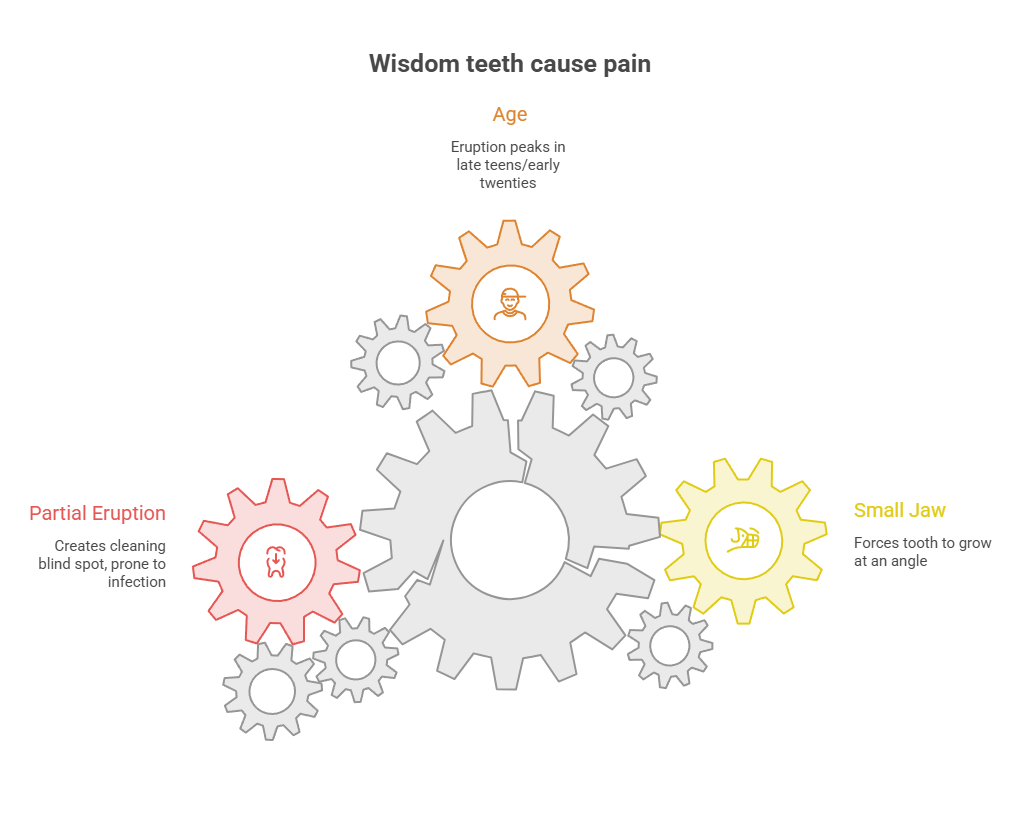
Partial eruption is another strong predictor, because a half-emerged tooth creates a cleaning blind spot. Patients who consult us often have exactly this pattern, a tooth that is neither fully out nor fully buried, which is the setup most prone to repeated infection.
Signs and Symptoms of an Impacted Wisdom Tooth
The clues are not always obvious, and some people mistake them for an earache or a headache. Knowing the full range helps you connect the dots.
Common Symptoms
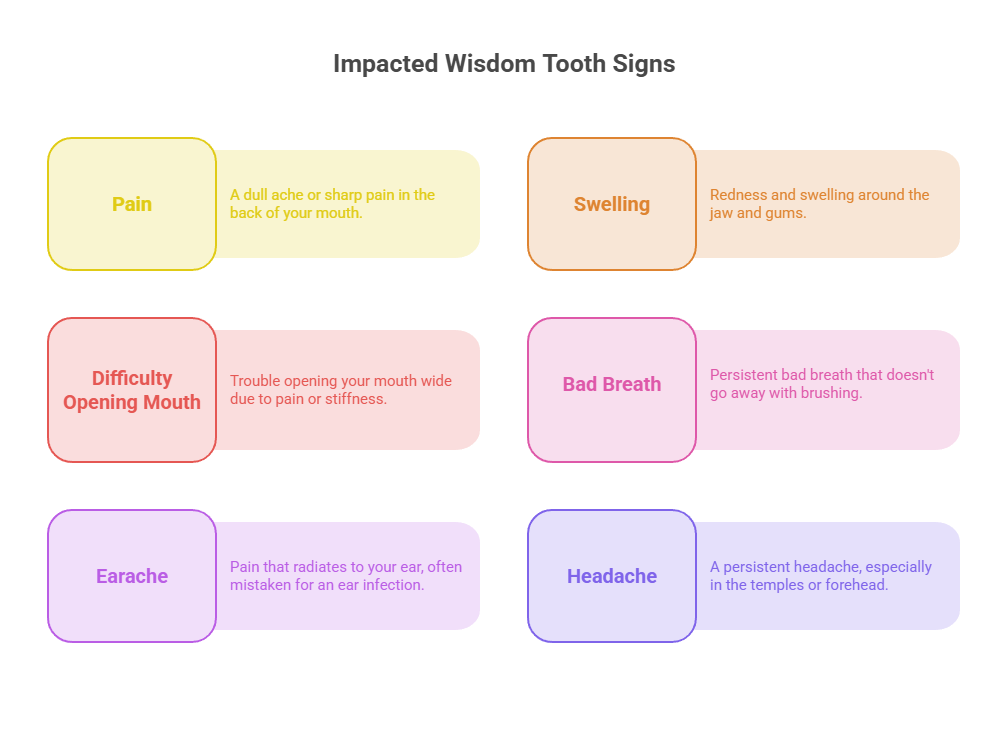
The classic signs cluster at the back of the mouth. Cleveland Clinic lists pain or swelling of the jaw or face, red, swollen, or bleeding gums, and a bad taste in the mouth among the signs of impacted wisdom teeth.
You may also notice tender gums around the back molar, difficulty opening your mouth fully, and bad breath that brushing does not fix. The pain can be constant or come and go.
Pain That Spreads to the Ear, Jaw, and Head
Wisdom tooth pain rarely stays put. Because the nerves in your jaw, ears, and head are closely linked, discomfort can radiate well beyond the tooth.
Patients who consult us often ask why their ear or temple hurts when the problem is a tooth. The answer is shared nerve pathways, which is why an impacted molar can mimic an earache, a headache, or jaw joint pain.
A trapped tooth can also strain the jaw joint over time. If it changes how you bite and chew, the surrounding muscles and the TMJ must adapt, which can add a layer of jaw soreness on top of the tooth pain.
Pericoronitis, the Gum-Flap Infection
When a wisdom tooth only partly erupts, the gum can form a flap over it called an operculum. Food and bacteria slip underneath and get stuck.
According to Aspen Dental, this flap traps food and bacteria, which can lead to infection, and inflammation around an emerging or partially impacted wisdom tooth is called pericoronitis, causing swelling, pain, and difficulty opening the mouth.
Why Partial Impaction Hurts Most
A fully buried tooth often stays sealed off from the mouth, while a fully erupted one is easy to clean. The partly erupted tooth is the worst of both worlds.
It creates a pocket that cannot be cleaned but stays open to bacteria, so it flares again and again until treated.
When There Are No Symptoms
Some impacted teeth stay silent for years. You might not know one is there until a routine X-ray reveals it.
Quiet does not always mean harmless, though. Even asymptomatic teeth can slowly damage a neighboring molar or harbor bacteria, which is why dentists keep an eye on them.
What Causes the Pain
The pain has a few distinct sources, and often more than one is at play. Sorting them out explains why the ache behaves the way it does.
Pressure on Neighboring Teeth
A trapped tooth keeps trying to move. As it pushes against the second molar, it creates steady pressure that registers as a deep ache.
This pressure can also crowd or shift nearby teeth, which is especially frustrating for anyone who has had braces.
Trapped Food and Bacteria
Wisdom teeth sit at the very back, where a toothbrush barely reaches. As Medical News Today notes, food and bacteria can get trapped in the gums around them, leading to pain and tenderness that removal can resolve.
That trapped debris feeds infection, which brings swelling, throbbing, and a foul taste. This is the most common reason an impacted tooth suddenly flares.
Cysts and Adjacent-Tooth Damage
In less common cases, a fluid-filled sac (cyst) can form around the crown of a buried tooth. Over time it can damage bone or nearby teeth.
Our dental reviewers note that these cases are uncommon but matter, which is why a dentist evaluates any impacted tooth rather than ignoring it.
How Common Is This, and What Does Treatment Cost?
If you are facing this, you have plenty of company. Wisdom tooth trouble is close to a rite of passage in the United States.
Per the American Journal of Public Health, about 10 million third molars are extracted from roughly 5 million people in the United States each year, at an annual cost of over $3 billion. That same analysis estimates more than 11,000 people suffer permanent paresthesia, or numbness of the lip, tongue, and cheek, from nerve injury during surgery each year.
Impaction itself is widespread. According to a wisdom teeth statistics review, about 37% of individuals globally have at least one impacted wisdom tooth, and roughly half of privately insured young adults have had at least one wisdom tooth removed by age 25.
Most procedures happen in a narrow age window, with the majority of people getting their wisdom teeth out between the ages of 17 and 25.
| Metric | US Figure | Source |
| Wisdom teeth removed per year | ~10 million | American Journal of Public Health |
| Americans having removal yearly | ~5 million | American Journal of Public Health |
| Annual national cost | Over $3 billion | American Journal of Public Health |
| People with at least one impacted tooth | ~37% | Wisdom teeth statistics review |
| Permanent paresthesia cases per year | ~11,000 | American Journal of Public Health |
| Peak age for removal | 17 to 25 | Zocdoc dental guide |
| Cost to remove four impacted teeth (IV sedation) | $1,500 to $3,000 | Specialty dental cost guide |
For budgeting, a 2026 cost guide reports that simple erupted extractions run $75 to $200 per tooth, while surgical removal of impacted teeth ranges from $225 to $600 per tooth, and dental insurance typically covers 50% to 80% when the procedure is medically necessary.
How to Relieve Impacted Wisdom Tooth Pain
While you arrange a dental visit, a few proven steps can take the edge off. None of these fix the tooth, but they buy comfortable time.
At-Home Relief That Works
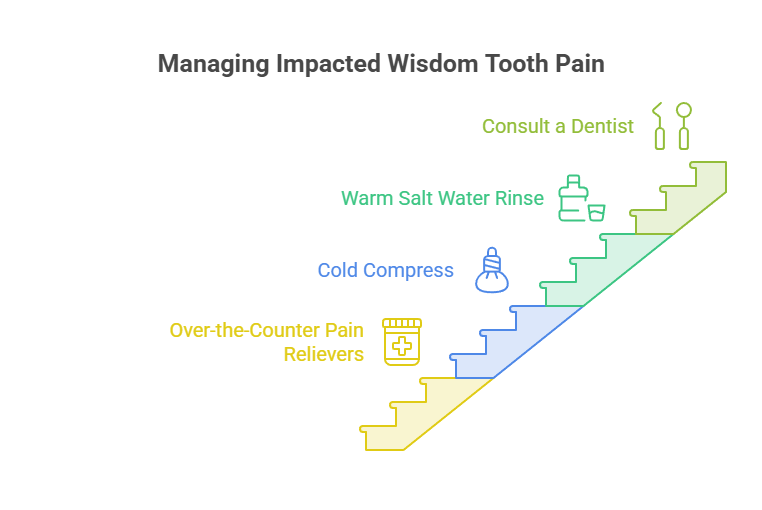
Start with what is in most medicine cabinets. An over-the-counter pain reliever like ibuprofen (Advil) reduces both pain and the inflammation driving it, and acetaminophen (Tylenol) is an option if you cannot take NSAIDs.
A warm salt-water rinse, about half a teaspoon of salt in a cup of warm water, cleans the area and calms inflamed gums. A cold compress held against the cheek for 15 minutes at a time numbs the ache and limits swelling.
Patients commonly ask us about gels and oils. As Medical News Today explains, over-the-counter dental gels containing benzocaine can dull the gums, and ibuprofen taken at the recommended dose may relieve discomfort. A dab of clove oil is a traditional option, since clove has natural numbing properties.
Keeping the area clean is half the battle. Gently brushing the back molar and rinsing after meals stops fresh food from packing into the gum flap and restarting the cycle.
What to Avoid
A few common moves backfire. Do not place an aspirin tablet directly on the gum, since it can chemically burn the tissue, and skip heat on the face, which can worsen an infection.
Avoid smoking and chewy or crunchy foods on that side, and do not poke the area with toothpicks. These habits irritate the gum flap and can spark a fresh flare.
Why It Often Hurts More at Night
Many people find the pain peaks after they lie down. Lying flat can increase blood flow to the head, which intensifies throbbing, and the quiet of nighttime removes the daytime distractions that mask a mild ache.
Taking an OTC pain reliever before bed and propping your head up with an extra pillow can make the difference between a restless night and real sleep.
How Long the Pain Usually Lasts
Pain from an erupting or irritated wisdom tooth often eases within a few days, especially with rinses and OTC relief. Pain from a true impaction tends to recur because the underlying problem remains.
If your pain lasts more than three to four days, keeps returning, or steadily worsens, treat that as a signal to see a dentist rather than wait it out.
| Your Situation | What It May Mean | What to Do Now |
| Mild ache, no swelling, eases with OTC relief | Minor irritation or early eruption | Salt-water rinses, ibuprofen, monitor a few days |
| Pain that keeps returning over weeks | Likely impaction or recurring pericoronitis | Book a dental exam and X-ray |
| Swollen gum flap, bad taste, tender to chew | Pericoronitis (local infection) | See a dentist within days; rinse meanwhile |
| Facial or cheek swelling that is spreading | Spreading infection | Same-day dental or urgent care |
| Fever with mouth or jaw swelling | Infection spreading beyond the tooth | Urgent or emergency care |
| Trouble swallowing or breathing | Serious spreading infection | Go to the ER or call 911 |
| Severe pain a few days after extraction | Possible dry socket | Call your oral surgeon promptly |
When to See a Dentist or Go to the ER
Most wisdom tooth pain is handled in a dental chair, not an emergency room. A small set of symptoms, though, means do not wait.
Red Flags That Need Urgent Care
Some signs point to an infection moving beyond the tooth. Seek same-day or emergency care for facial or neck swelling that is spreading, a fever alongside mouth swelling, or any difficulty swallowing or breathing.
Severe, unrelenting pain that OTC relief barely touches also warrants prompt attention. Across the cases our clinical team reviews, spreading swelling is the symptom that should never be left overnight.
When a Routine Dental Visit Is Enough
If the pain is moderate, comes and goes, or keeps returning without those danger signs, a regular dental appointment is the right step. Book it within a few days rather than weeks.
Bring a short history of when the pain started and what triggers it, since that speeds up diagnosis.
Diagnosis and Treatment Options
A dentist confirms an impaction quickly, usually in a single visit. From there, the path depends on whether the tooth is causing problems.
Exam and Panoramic X-Ray
The dentist examines the back of your mouth for swelling, a gum flap, and tenderness. A panoramic X-ray then shows the tooth’s angle, depth, and closeness to nerves.
That image is what separates a simple case from a complex one, and it guides whether removal is straightforward or needs an oral surgeon.
Watchful Waiting vs Removal
Not every impacted tooth has to come out. As the statistics review notes, a recent Cochrane review concluded that evidence is insufficient to justify routine removal of disease-free impacted wisdom teeth, so asymptomatic teeth are often monitored with periodic exams every 6 to 12 months.
When a tooth causes pain, repeated infection, decay, or threatens a neighbor, removal is the standard fix. Our dental reviewers note that the decision should weigh your symptoms, the X-ray, and your dentist’s judgment together.
What to Expect During Extraction
Removal is among the most common procedures performed on young adults. Depending on complexity, it is done under local anesthesia, nitrous oxide (laughing gas), IV sedation, or general anesthesia.
For an impacted tooth, the surgeon numbs the area, opens the gum, and may section the tooth into pieces to remove it gently. The visit itself is usually short, and you should feel pressure rather than sharp pain during the procedure.
A complex or deeply bony impaction, or one close to the nerve, is more often handled by an oral surgeon. Asking about anesthesia options ahead of time helps you plan both comfort and cost.
Recovery and Avoiding Dry Socket
Most people bounce back fast. According to Cleveland Clinic, most people fully recover from wisdom teeth removal in one to two weeks and can return to work or school in just a few days.
Swelling and soreness usually peak in the first two to three days, then fade. Stick to soft foods, keep your head elevated, and follow your surgeon’s rinse instructions.
The main complication to watch for is dry socket, which happens when the protective blood clot dislodges and exposes bone. To lower the risk, avoid straws, smoking, and vigorous spitting for several days, and call your surgeon if severe pain hits a few days after surgery.
How to Prevent Wisdom Tooth Problems
You cannot change your jaw size, but you can lower the odds of a painful flare. Good habits and monitoring do the heavy lifting.
Brush and floss the back molars carefully, and rinse after meals if a tooth is partly erupted to keep food out of the flap. Keep regular dental check-ups so any impacted tooth is tracked with X-rays before it becomes an emergency.
If your dentist is monitoring an asymptomatic tooth, keep those follow-up visits. Catching a change early is far easier than treating a full-blown infection.
Frequently Asked Questions
How do I know if my wisdom tooth is impacted?
Common signs include pain or pressure at the back of the mouth, swollen or bleeding gums, jaw stiffness, bad breath, and difficulty opening fully. Some impacted teeth cause no symptoms at all. Only a dental exam and X-ray can confirm impaction, since the tooth may be hidden beneath the gum or bone.
How can I relieve impacted wisdom tooth pain at home?
Take an over-the-counter pain reliever such as ibuprofen, rinse with warm salt water several times a day, and hold a cold compress against your cheek for 15 minutes at a time. An OTC benzocaine gel or a dab of clove oil can numb the gum. These steps ease pain but do not cure the impaction.
How long does impacted wisdom tooth pain last?
Pain from a simply irritated or erupting tooth often settles within a few days. Pain from a true impaction tends to recur because the underlying problem remains. If discomfort lasts more than three to four days, keeps returning, or worsens, see a dentist rather than waiting for it to pass.
Can an impacted wisdom tooth fix itself?
No. An impacted wisdom tooth does not straighten or free itself over time. The tooth stays trapped, and symptoms usually return in cycles as pressure and inflammation build. While pain may ease temporarily, the impaction remains until a dentist treats it, often with monitoring or removal.
What happens if you leave an impacted wisdom tooth in?
If it causes no problems, a dentist may monitor it safely. If it causes symptoms, leaving it untreated can lead to repeated infections, decay, gum disease around the tooth, damage to the neighboring molar, and rarely cysts. Regular dental check-ups help catch trouble before it becomes serious.
Why does my impacted wisdom tooth hurt at night?
Pain often feels worse at night because there are fewer distractions and because lying down can increase blood flow to the head, intensifying throbbing. Daytime activity also masks mild aches. Taking an OTC pain reliever before bed and keeping your head slightly elevated can help you sleep more comfortably.
Can an impacted wisdom tooth cause ear or jaw pain?
Yes. The nerves of the jaw, ears, and head are interconnected, so pain from an impacted tooth can radiate to the ear, temple, or jaw joint. This referred pain can feel like an earache or headache even though the source is the tooth. A dentist can identify the true origin.
Is impacted wisdom tooth pain a dental emergency?
Usually it is not, and a routine dental visit is appropriate. It becomes urgent when facial or neck swelling spreads, when you have a fever with mouth swelling, or when you have trouble swallowing or breathing. Those signs suggest a spreading infection and need same-day or emergency care.
Does an impacted wisdom tooth always need to be removed?
No. Disease-free, symptom-free impacted teeth are often monitored rather than removed, since evidence does not support routine extraction of healthy ones. Removal is standard when a tooth causes pain, repeated infection, decay, or threatens nearby teeth. Your dentist weighs your symptoms and X-ray to decide.
How much does it cost to remove an impacted wisdom tooth?
In the US, surgical removal of an impacted tooth typically runs $225 to $600 per tooth, depending on impaction depth and anesthesia. Removing all four under IV sedation often totals $1,500 to $3,000. Dental insurance usually covers 50% to 80% when the procedure is medically necessary.
What is pericoronitis?
Pericoronitis is inflammation and infection of the gum flap (operculum) covering a partly erupted wisdom tooth. Food and bacteria get trapped beneath the flap, causing swelling, pain, bad taste, and difficulty opening the mouth. Salt-water rinses help temporarily, but a dentist should treat it, sometimes by removing the flap or the tooth.
How long does recovery from wisdom tooth removal take?
Most people return to normal routines within a few days and fully recover in one to two weeks. Swelling and discomfort peak in the first two to three days. Following your surgeon’s aftercare, including soft foods and avoiding straws, lowers the risk of dry socket and speeds healing.
Disclaimer
This article is for general informational purposes only and is not a substitute for professional dental or medical advice, diagnosis, or treatment. Always consult a qualified dentist or oral surgeon about your symptoms. If you have spreading facial swelling, a high fever, or difficulty swallowing or breathing, seek emergency care immediately.
References
- Cleveland Clinic: Impacted Wisdom Teeth, Symptoms, Signs, Removal & Recovery
- Mayo Clinic: Impacted Wisdom Teeth, Symptoms and Causes
- Medical News Today: Wisdom Tooth Pain, Causes, Home Treatment, and Prevention
- American Journal of Public Health: The Prophylactic Extraction of Third Molars
- Aspen Dental: Wisdom Tooth Pain, Causes, Symptoms and Treatment
- Wisdom Teeth Removal Statistics, U.S. Trends
- Wisdom Tooth Extraction Cost Guide 2026