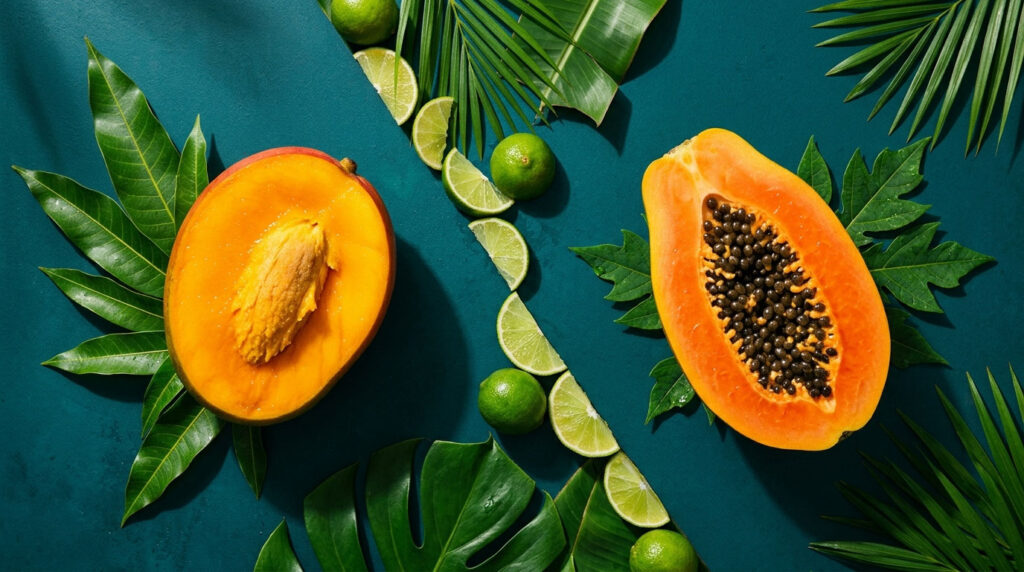
Slice them side by side and mango and papaya look like cousins, both sunset-orange, sweet, and soft. But their nutrition labels tell two very different stories. One is a sugar-rich antioxidant powerhouse; the other is a lighter, enzyme-packed vitamin C champion.
Table of Contents
So when you stand at the grocery store deciding which to toss in your cart, which tropical fruit actually wins? The answer depends less on the fruit and more on what your body needs that week.
Quick Answer: Both mango and papaya are healthy, nutrient-dense fruits, so neither is a wrong choice. Papaya is the lighter pick, with roughly 40% fewer calories, about half the sugar, and nearly a full day’s vitamin C per cup, plus the digestive enzyme papain. Mango offers more vitamin A, more antioxidants, and a lower glycemic index. For weight loss and immunity, choose papaya. For eye health and steadier blood sugar, choose mango.
At a Glance
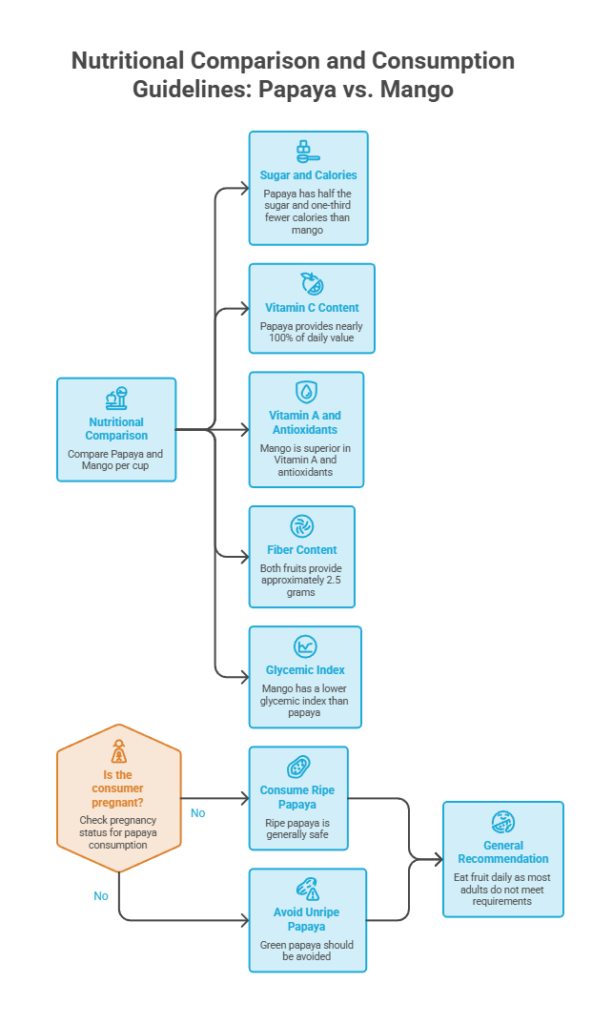
- A cup of papaya has about half the sugar and a third fewer calories than a cup of mango.
- Papaya wins on vitamin C (nearly 100% of your daily value per cup); mango wins on vitamin A and antioxidants.
- Fiber is essentially a tie, with both giving you around 2.5 grams per cup.
- Mango has a lower glycemic index than papaya, despite containing more sugar.
- Ripe papaya is generally fine in pregnancy, but unripe (green) papaya should be avoided.
- Either fruit beats no fruit, since only about 1 in 8 American adults eats enough fruit daily.
Meet the Two Tropical Fruits
Before comparing numbers, it helps to know what sets these fruits apart in the kitchen and on the tree. Patients booking nutrition-related tests with us often ask which everyday fruits give the most value per calorie, and these two come up constantly. Knowing how they differ also makes it easier to pick the right one for a recipe or a specific health goal.
Mango: The Sweet Stone Fruit
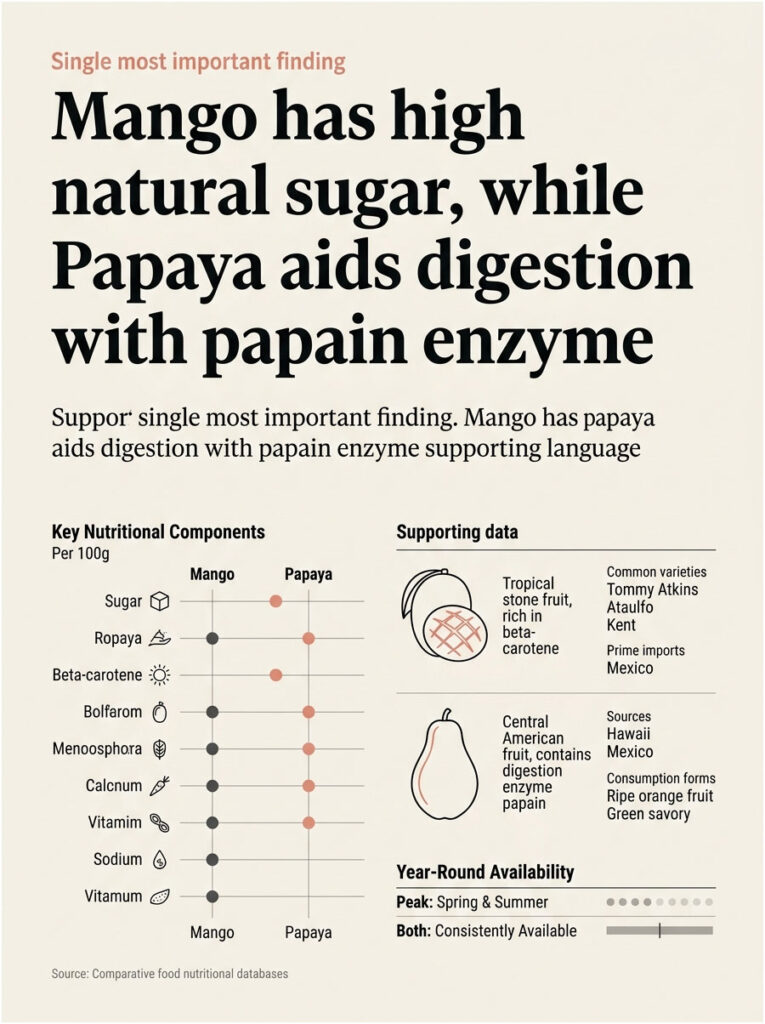
Mango (Mangifera indica) is a tropical stone fruit with a single large pit and dense, fibrous flesh. Native to South Asia, it now reaches American shelves mostly through imports from Mexico, with a smaller harvest grown in Florida and California.
Ripe mango is intensely sweet with floral, almost peachy notes, which is exactly why it packs more natural sugar. Its deep orange color signals a rich load of beta-carotene, the pigment your body converts into vitamin A.
Mangoes are sold year-round in US stores, peaking in spring and summer. Common varieties like Tommy Atkins, Ataulfo (honey), and Kent differ in sweetness and fiber, but all share the same broad nutrition profile. They show up in smoothies, salsas, and salads, and their soft sweetness makes them an easy snack straight off the cutting board.
Papaya: The Enzyme-Rich Tropical
Papaya (Carica papaya) is a pear-shaped fruit native to Central America, with smooth orange-to-salmon flesh and a central cavity full of black seeds. In the US, Hawaii is the main domestic source, alongside imports from Mexico and Central America that keep it available all year.
Ripe papaya is softer and creamier than mango, with a mild, slightly musky sweetness that some people love and others find unusual. Its standout feature is papain, a natural enzyme that breaks down protein and gives the fruit its reputation as a digestive aid.
Papaya comes in two functional forms. The ripe, sweet, orange fruit is eaten like any other fruit, while the green, unripe version behaves more like a vegetable and shows up in dishes like Thai green papaya salad. As you will see later, that ripeness difference matters far beyond flavor.
Mango vs Papaya: Nutrition Compared
Here is where the two fruits separate. The table below uses standard one-cup servings, the same measure most dietitians use for a fair comparison.
| Nutrient (per 1 cup) | Mango (165 g) | Papaya (145 g) | Winner |
| Calories | 99 | 62 | Papaya |
| Total carbohydrates | 25 g | 16 g | Papaya |
| Sugar | 22 g | 11 g | Papaya |
| Fiber | 2.6 g | 2.5 g | Tie |
| Protein | 1.4 g | 0.7 g | Mango |
| Vitamin C | 60 mg (67% DV) | 88 mg (98% DV) | Papaya |
| Vitamin A | 89 mcg RAE (10% DV) | 68 mcg RAE (8% DV) | Mango |
| Potassium | 277 mg | 264 mg | Mango |
| Folate | 70 mcg | 54 mcg | Mango |
| Glycemic index | 51 (low) | 59 (medium) | Mango |
Nutrition values are based on USDA FoodData Central data for raw mango and raw papaya.
Calories, Carbs, and Sugar
This is papaya’s strongest category. A cup of mango contains 25 grams of carbohydrates, 22 of which come from sugar, while a cup of papaya has 16 grams of carbs, 11 from sugar, making papaya a bit lower-carb with about half the sugar.
The calorie gap follows the same pattern. A cup of papaya lands around 62 calories, while the same volume of mango is closer to 99. For anyone counting calories or carbs, papaya simply gives you more food for less.
Our medical reviewers note that this does not make mango unhealthy. Its sugars arrive bundled with fiber, antioxidants, and vitamins, which is a completely different thing from the added sugar in processed snacks and sodas.
Fiber and Protein
Fiber is where both fruits shine equally. When it comes to fiber, mango and papaya are essentially tied, with a cup of each providing about 2.5 grams.
That fiber matters more than the small number suggests. The soluble fiber in both fruits slows digestion, helps you feel full longer, and can help keep blood sugar levels balanced. It also feeds the beneficial bacteria in your gut, which supports overall digestive health.
Protein is negligible in both, as it is in most fruit. A cup of mango has about 1.3 grams of protein versus just under a gram in papaya, so mango technically wins, though neither delivers a meaningful dose. If protein is your goal, pair the fruit with Greek yogurt or nuts.
Vitamins and Minerals
The vitamin story is a clean split. A cup of papaya provides about 88 mg of vitamin C, nearly the entire daily value, along with vitamin A and folate. A cup of mango gives roughly 60 mg of vitamin C, still a strong 67% of the daily value.
For context, the National Institutes of Health sets the vitamin C RDA at 90 mg for men and 75 mg for women, so a single cup of papaya nearly covers a full day. Mango pulls ahead on vitamin A, thanks to its beta-carotene, which supports vision, skin, and immune defense.
Both fruits also deliver potassium for healthy blood pressure and folate for cell growth, with mango holding a slight edge in each. Across the patients we serve, this kind of nutrient overlap is why the better fruit usually comes down to a specific goal rather than one overall champion.
Which Fruit Wins for Your Health Goal?
Since both fruits are nutritious, the smarter question is which one fits what you are trying to achieve. The table below sums it up, and the sections that follow explain each pick.
| Your Goal | Better Pick | Why |
| Weight loss or lower sugar | Papaya | About 40% fewer calories and half the sugar per cup |
| Immune support | Papaya | One cup covers nearly your full daily vitamin C |
| Eye and skin health | Mango | More vitamin A (beta-carotene) per serving |
| Digestion and regularity | Papaya | Papain enzyme plus soluble fiber |
| Steadier blood sugar | Mango | Lower glycemic index (51 vs 59) and soluble fiber |
| Hydration on hot days | Papaya | Higher water content (about 88%) |
For Weight Loss and Lower Sugar
If you are managing your weight, papaya is the easy winner. Fewer calories and roughly half the sugar mean you can enjoy a satisfying portion without spending much of your daily budget.
That said, mango still fits a weight-loss plan in sensible portions. The soluble fiber in both fruits helps curb hunger, which makes either one a far better choice than cookies or candy when a sweet craving hits. The trick with mango is simply portion size. At about 62 calories a cup, papaya also makes a filling, low-calorie dessert swap.
For Immune Support
Vitamin C is central to immune function, and papaya delivers it in spades. One cup nearly meets your entire daily requirement, which very few fruits manage to do.
Mango is no slouch here either, covering about two-thirds of your daily vitamin C per cup, plus immune-supporting vitamin A. Patients commonly ask us whether they need supplements for immunity, and a daily serving of either fruit goes a long way on its own, food first. Smokers need about 35 mg more vitamin C per day, so a daily papaya is an easy way to close that gap.
For Eye and Skin Health
Mango takes this round on the strength of its vitamin A. The beta-carotene that gives mango its golden color converts into vitamin A, which supports healthy vision, skin cell turnover, and a strong immune barrier.
Papaya contributes here too, with its own mix of carotenoids including beta-cryptoxanthin, but mango provides more vitamin A per serving. The vitamin C in both fruits also helps your body build collagen, the protein that keeps skin firm, so the two work well together for skin health. If dry eyes or dull skin are your main concern, mango is the more targeted everyday pick.
For Digestion and Gut Health
Papaya owns the digestion category, largely because of papain. Papaya is famous for its enzyme content, especially papain, which helps break down proteins into smaller peptides and amino acids.
That enzyme, combined with soluble fiber, is why papaya has a long reputation for easing digestion and supporting regularity. Mango’s soluble fiber helps too, but papaya’s enzyme gives it a unique edge after a heavy, protein-rich meal like a steak dinner. If bloating after big meals is a recurring issue, a few bites of ripe papaya afterward is a gentle, food-first option to try.
For Steadier Blood Sugar
This is the counterintuitive twist. Even though mango has more sugar, it has the lower glycemic index. Mango has a glycemic index around 51, slightly lower than papaya’s 59, though both are considered low-to-medium GI fruits.
For people watching blood sugar, that means mango may cause a gentler rise when eaten in a reasonable portion, helped by its soluble fiber. Pairing either fruit with a protein or healthy fat slows the response further. In cases reviewed by our medical team, portion size matters more than the choice of fruit for most people managing blood sugar, so a measured cup is the real lever. Whole fruit also beats juice here, since the fiber that blunts the sugar spike stays intact.
Fresh, Dried, Frozen, or Juice: Form Matters
How you buy these fruits can change the nutrition math more than which fruit you pick. This is a detail most comparisons skip, and it trips people up.
Dried Mango and Papaya
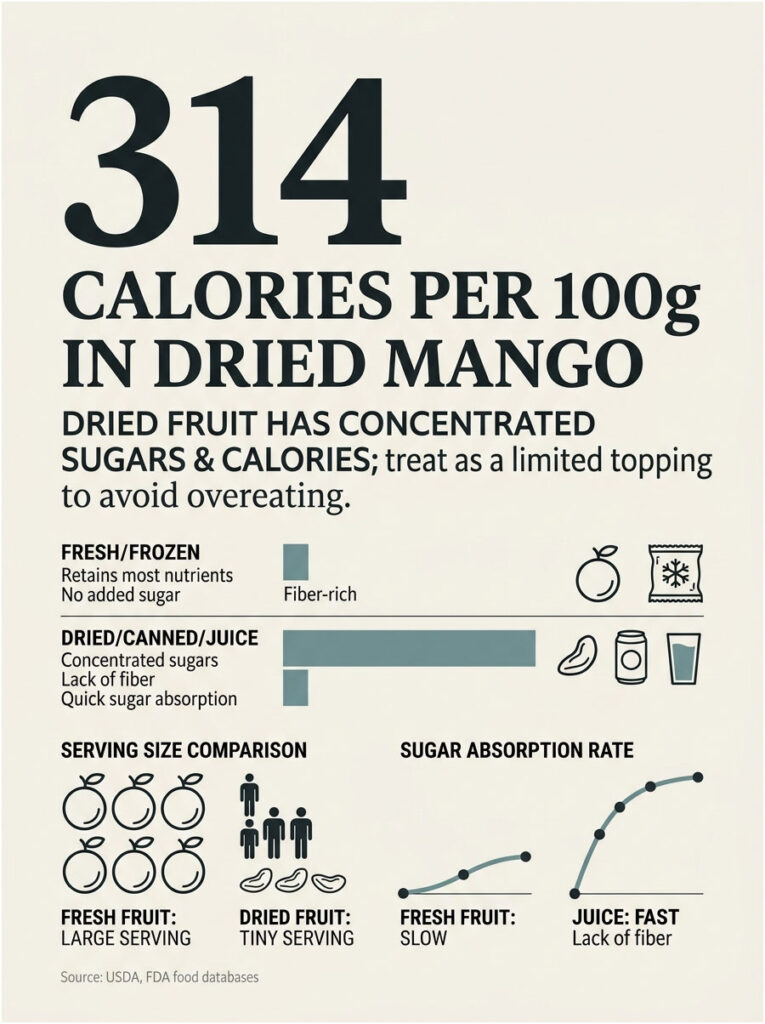
Drying removes water and concentrates everything left behind, including sugar. USDA data put dried mango at about 314 calories per 100 grams, because removing the water concentrates the sugars and minerals by roughly five to six times compared with fresh.
That makes dried fruit easy to overeat. Our nutrition-focused team suggests treating dried mango or papaya as a small topping, around five to six pieces, and choosing unsweetened versions without added sugar or sulfur. A small handful satisfies a sweet tooth, but it is easy to eat the sugar of three or four fresh servings without noticing.
Frozen and Juiced
Frozen mango and papaya keep most of their nutrients and are a smart year-round option for smoothies. The fruit is usually picked ripe and frozen quickly, so the vitamin loss is modest. Keep a bag in the freezer and you have a vitamin-rich smoothie base any month of the year.
Juice is the form to watch. Straining the fruit strips out the fiber that slows sugar absorption, leaving a concentrated sugar hit. Whole or blended fruit, which keeps the fiber, is the better everyday choice for blood sugar and fullness.
Canned and Packaged Options
Canned mango and papaya are convenient, but the syrup they sit in can add a lot of sugar. Choose fruit packed in water or its own juice rather than heavy syrup, and drain it before eating.
Pre-cut fruit cups are handy for lunchboxes and travel. Just check the label for added sugar, and rinse the fruit if the syrup is sweetened, so you keep the benefit without the extra sugar load.
Health Benefits Backed by Nutrients
Beyond the head-to-head numbers, each fruit brings specific compounds worth knowing about.
Mango’s Antioxidants and Beta-Carotene
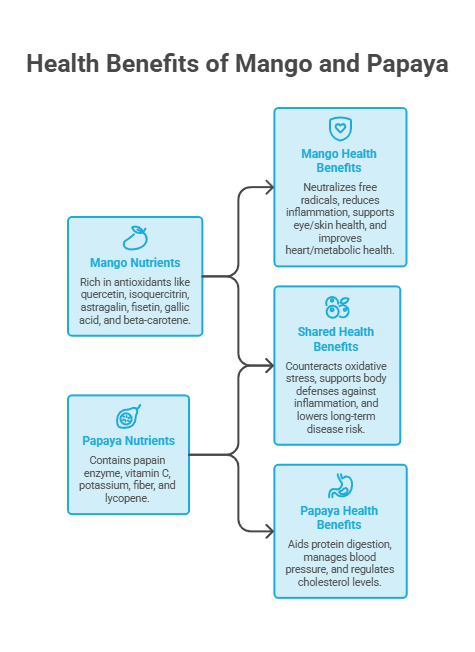
Mango is rich in plant antioxidants. Mangoes contain antioxidants like quercetin, isoquercitrin, astragalin, fisetin, and gallic acid, which help neutralize free radicals and may reduce inflammation and the risk of chronic disease.
Its beta-carotene does double duty, acting as an antioxidant and as a source of vitamin A for your eyes and skin. Our nutrition-focused team points out that the deeper the orange of a ripe mango, the richer this carotenoid content tends to be. Diets rich in these plant compounds are tied to better long-term heart and metabolic health.
Papaya’s Papain and Heart-Friendly Profile
Papaya’s signature compound, papain, is the same enzyme used commercially as a meat tenderizer. Papain is a proteolytic enzyme concentrated in the latex of unripe papaya that diminishes as the fruit ripens.
In the body, papain helps break down protein, which is part of why papaya is linked with smoother digestion. The fruit also pairs a high vitamin C content with potassium and fiber, a combination that supports heart health by helping manage blood pressure and cholesterol when eaten as part of a balanced diet.
Antioxidants, Inflammation, and Disease Risk
Both fruits supply antioxidants that help counter oxidative stress, the cellular wear linked to aging and chronic disease. Mango leans on carotenoids and polyphenols, while papaya adds lycopene, the same red-orange pigment found in tomatoes.
These compounds, paired with vitamin C, support the body’s defenses against inflammation over time. No single fruit is a cure, but a steady habit of colorful produce is one of the simplest ways to lower long-term disease risk, our medical reviewers note.
Safety, Side Effects, and Special Cases
Both fruits are safe for most people, but a few situations call for extra care. This is also where the most common worries about papaya come into play.
Papaya and Pregnancy: Ripe vs Unripe
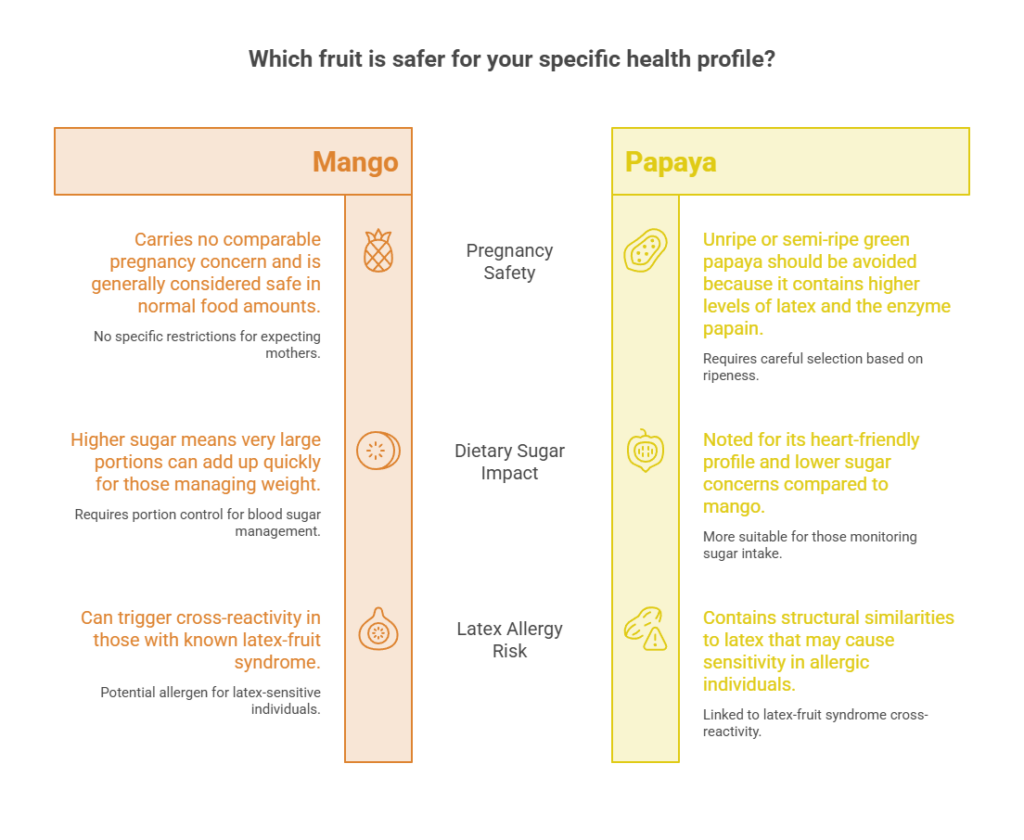
This is the single most important distinction for expecting mothers, and most online warnings get it wrong by lumping all papaya together. Ripe papaya in moderate amounts is generally considered safe during pregnancy, while raw, unripe, or semi-ripe green papaya should be avoided because it contains higher levels of latex and the enzyme papain, which can act as a uterine stimulant.
The reason comes down to ripeness. Unripe papaya has green skin and contains latex and papain, both of which can cause problems such as uterine contractions during pregnancy.
The reassuring part is that ripening solves the problem. As papaya ripens, both latex and papain drop sharply, so a fully ripe, soft, orange-red papaya has only trace amounts, which is why obstetric guidance treats ripe and unripe papaya completely differently.
Mango carries no comparable pregnancy concern and is generally considered safe in normal food amounts. Patients booking maternity-related panels with us are often relieved to learn that a sweet, fully ripe papaya is not the danger that rumor suggests, though anyone pregnant should confirm with their own obstetrician.
Allergies and Latex-Fruit Syndrome
A smaller group should be cautious with both fruits. Papaya is not a common allergen, but people with a latex allergy may be sensitive to it because of its similar structure.
This cross-reactivity, sometimes called latex-fruit syndrome, can also involve other tropical fruits. If you have a known latex allergy and notice itching, tingling, or swelling after eating papaya or mango, stop and speak with an allergist.
How Much Is Too Much?
For healthy adults, the main caution is sugar load rather than any toxicity. Mango’s higher sugar means very large portions can add up quickly, especially for anyone managing weight or blood sugar.
A practical approach is one to two cups of fruit per day from a mix of sources. Our medical reviewers note that variety beats fixating on a single fruit, since different fruits supply different vitamins, minerals, and antioxidants. Spreading fruit across the day, rather than eating several cups at once, also helps keep blood sugar steadier.
Mango and Papaya in the American Diet
Zoom out, and the bigger issue is not which fruit you pick but whether you eat enough fruit at all. Most Americans fall short.
| Metric | Figure | Source |
| US adults meeting fruit intake recommendation | 12.3% | CDC (2019 BRFSS) |
| US per capita fruit intake (2021) | 0.817 cup-eq/day | USDA ERS |
| Recommended daily fruit (Dietary Guidelines) | 1.5 to 2 cups | USDA/HHS |
| Vitamin C RDA (adults) | 90 mg M / 75 mg W | NIH ODS |
| Vitamin C in 1 cup papaya | 88 mg (98% DV) | USDA |
| Vitamin A in 1 cup mango | 89 mcg RAE (10% DV) | USDA |
The gap is striking. Overall, only 12.3% of US adults meet fruit intake recommendations, and the Dietary Guidelines advise 1.5 to 2 cup-equivalents of fruit daily.
The trend is also heading the wrong way. US per capita fruit intake fell almost 20% to about 0.817 cup-equivalents per day by 2021, roughly the amount of fruit in 18 seedless grapes.
Seen that way, the mango-versus-papaya debate has a freeing answer. Whichever one you enjoy enough to eat regularly is the one that helps, because the real win is simply getting more fruit on your plate.
How to Enjoy Both Fruits
You do not have to choose only one. The fruits pair beautifully, and rotating between them covers more nutritional ground than either alone.
Easy Ways to Eat More
For mango, blend it into smoothies, dice it into salsa for fish or tacos, or add it to a spinach salad for a sweet contrast. Its sturdy flesh holds its shape, so it travels well in lunch containers too. Frozen mango chunks also blend into a thick, ice-cream-like treat with no added sugar.
Papaya works as a breakfast bowl with a squeeze of lime, which also boosts the vitamin C and flavor. Green papaya can be shredded into savory salads, where its firm texture and papain make it a natural meat tenderizer in marinades. A mixed tropical bowl of both fruits gives you mango’s vitamin A and papaya’s vitamin C in one sitting.
Picking and Storing
Choose a mango that yields slightly to gentle pressure and smells fragrant at the stem. Firm mangoes will ripen on the counter over a few days, then keep in the refrigerator.
For papaya, look for skin that is mostly yellow-orange with a little give, and use ripe papaya within a few days. If you are pregnant, this ripeness check matters, since a fully ripe papaya is the one to keep and a green one is the one to skip. Once cut, store either fruit covered in the refrigerator and eat within a couple of days for the best flavor and nutrients.
Can Kids and Babies Eat Mango and Papaya?
Both fruits are popular first foods, and for good reason. Their soft, sweet flesh is easy to mash and gentle on developing tummies.
Babies can usually try ripe mango and ripe papaya from around six months, once solids begin. Offer soft, ripe fruit in safe shapes, mashed or in finger-sized strips, and always skip unripe fruit, which is harder to digest. Introduce one new fruit at a time so any reaction is easy to spot.
For older kids, both fruits are a naturally sweet way to build a fruit habit early. Patients commonly ask us how to get children eating more produce, and a colorful tropical bowl is an easy, no-pressure start. Check with your pediatrician before introducing any new food. Mango’s natural sweetness can also be a gentle way to ease a picky eater toward more fruit.
The Bottom Line: Which Should You Choose?
There is no universal winner in the mango vs papaya debate, because each fruit is built for a different need. Reach for papaya when you want fewer calories, less sugar, a big vitamin C boost, or help with digestion. Both are genuinely good for you, so you cannot really lose.
Reach for mango when you want more vitamin A for your eyes and skin, more antioxidants, or a gentler effect on blood sugar. Better yet, rotate both through your week, since the healthiest choice is the fruit you will actually eat often. Either way, you are choosing a nutrient-dense fruit over a processed snack, and that is the win that counts most.
Frequently Asked Questions
Which is healthier, mango or papaya?
Both are healthy, so there is no single loser. Papaya is lighter, with fewer calories, about half the sugar, and more vitamin C, while mango offers more vitamin A, more antioxidants, and a lower glycemic index. The healthier pick depends on your specific goal.
Which has more sugar, mango or papaya?
Mango has roughly twice the sugar. A cup of mango contains about 22 grams of sugar, while a cup of papaya has around 11 grams. Both sugars are natural and come packaged with fiber and nutrients, which is very different from added sugar.
Is papaya or mango better for weight loss?
Papaya has the edge for weight loss. With about 40% fewer calories and half the sugar per cup, it lets you eat a generous portion for less. Mango still fits a weight-loss plan in moderate servings, helped by its filling soluble fiber.
Which fruit has more vitamin C?
Papaya wins clearly. One cup provides about 88 mg of vitamin C, nearly your full daily value, compared with roughly 60 mg in a cup of mango. Both are excellent sources, but papaya nearly covers a full day in a single serving.
Can diabetics eat mango or papaya?
Yes, in measured portions. Mango has a slightly lower glycemic index (51 versus 59), so it may cause a gentler blood-sugar rise despite more sugar. Pair either fruit with protein or healthy fat, and talk with your doctor about portion sizes for your situation.
Is it safe to eat papaya during pregnancy?
Ripe papaya is generally safe in moderation and provides folate, vitamin C, and fiber. Unripe or green papaya should be avoided, because its latex and papain may trigger uterine contractions. When unsure about ripeness, skip it or ask your obstetrician.
Which is better for digestion?
Papaya is the stronger choice for digestion. It contains papain, a natural enzyme that breaks down protein, plus soluble fiber that supports regularity. Mango’s fiber helps too, but papaya’s enzyme gives it a unique advantage after protein-heavy meals.
Does mango have too much sugar?
Not for most healthy people in normal portions. Mango’s sugar comes with fiber, antioxidants, and vitamins, unlike added sugar in processed foods. Very large servings can add up, so anyone managing weight or blood sugar should stick to a cup or so.
Which has more fiber, mango or papaya?
They are essentially tied. A cup of each provides about 2.5 grams of fiber. Mango contains slightly more soluble fiber, the type that helps slow digestion, keep you full, and support steadier blood sugar and cholesterol levels.
Is mango or papaya better for skin?
Mango has a slight edge for skin, thanks to more vitamin A from beta-carotene, which supports skin cell turnover, along with vitamin C for collagen. Papaya also helps, supplying vitamin C and carotenoids, so both contribute to healthy skin.
How much mango or papaya can I eat a day?
A reasonable target is one to two cups of fruit per day from a variety of sources. Either fruit fits comfortably within that range. If you are watching sugar or calories, lean toward papaya or keep mango to about one cup.
Can I eat mango and papaya together?
Absolutely. The two fruits complement each other in flavor and nutrition, and combining them gives you mango’s vitamin A and antioxidants alongside papaya’s vitamin C and digestive enzymes. A mixed tropical bowl is an easy way to get the best of both.
Disclaimer: This article is for general educational purposes only and is not a substitute for professional medical advice, diagnosis, or treatment. Nutritional needs vary by individual, and anyone who is pregnant, managing diabetes, or living with a chronic condition should consult a doctor or registered dietitian before making significant dietary changes. If you have a known latex or food allergy, speak with your healthcare provider before adding these fruits to your diet.
References
- Mango, raw, USDA FoodData Central
- Papaya, raw, USDA FoodData Central
- Adults Meeting Fruit and Vegetable Intake Recommendations, CDC MMWR
- Trends in US Fruit Consumption, USDA Economic Research Service
- Vitamin C Fact Sheet for Health Professionals, NIH Office of Dietary Supplements
- Mango vs. Papaya: Which Has More Fiber, Protein and Vitamin C?, TODAY
- Papaya vs Mango, National Mango Board
- Is Papaya Safe During Pregnancy?, Happiest Baby