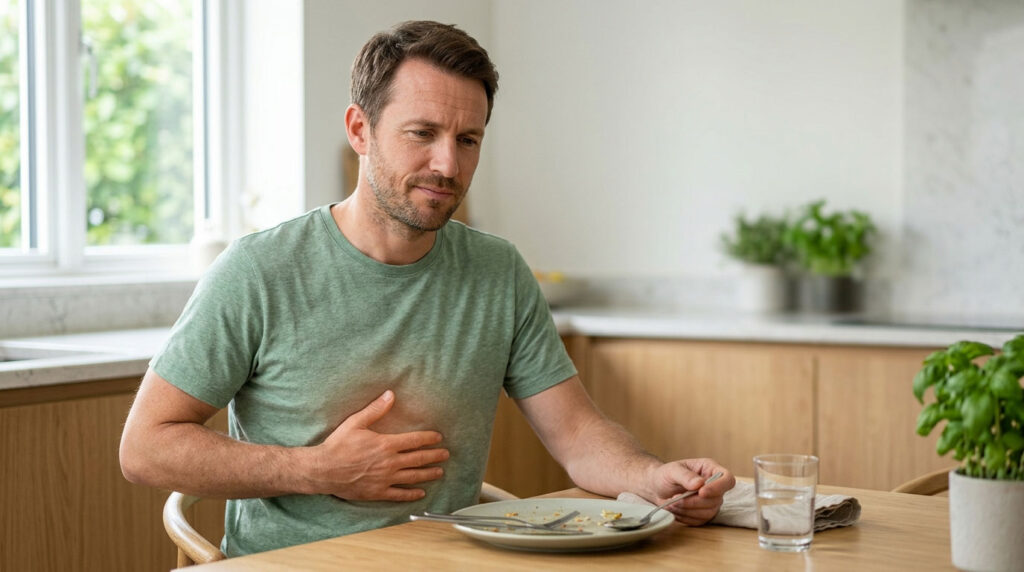
That jab below your left ribs after dinner is far more likely a bend in your colon than a failing organ. The crowded space under your left rib cage holds your stomach, spleen, the tail of your pancreas, and a sharp turn in your bowel, so a single meal can stir up discomfort in several ways at once.
Table of Contents
The good news is that most of it is routine and fixable. The trick is knowing which signs point to a nuisance and which ones mean you should stop reading and call a doctor.
Quick Answer: Pain under the left rib after eating is most often caused by trapped gas, gastritis, a stomach ulcer, or acid reflux, all of which are treatable. Less often it points to pancreatitis or a spleen problem, which can be urgent. Track your symptoms and try gentle diet changes, but seek care right away for severe pain, black stools, vomiting blood, fever, chest pressure, or pain after an injury.
The five most common causes, from most to least frequent, are:
- Trapped gas at the splenic flexure
- Gastritis (inflamed stomach lining)
- Peptic (stomach) ulcer
- GERD / acid reflux
- Pancreatitis (the one to take seriously)
At a Glance
- A bend in the colon called the splenic flexure traps gas and causes more left-rib pain after eating than any organ disease.
- Gastritis, ulcers, and reflux all flare when food hits an irritated stomach lining.
- Pancreatitis is the one common cause that needs urgent attention.
- Timing is a clue: reflux burns within the hour, gas builds over 30 minutes to 2 hours, ulcer pain often comes 1 to 3 hours later.
- Red flags include black stools, vomiting blood, fever, and pain spreading to the back.
- A simple blood test plus an ultrasound usually pinpoints the cause.
What’s Happening Under Your Left Ribs
Your left upper abdomen is one of the busiest neighborhoods in the body. Several organs sit stacked close together there, which is exactly why one symptom can have so many possible sources.
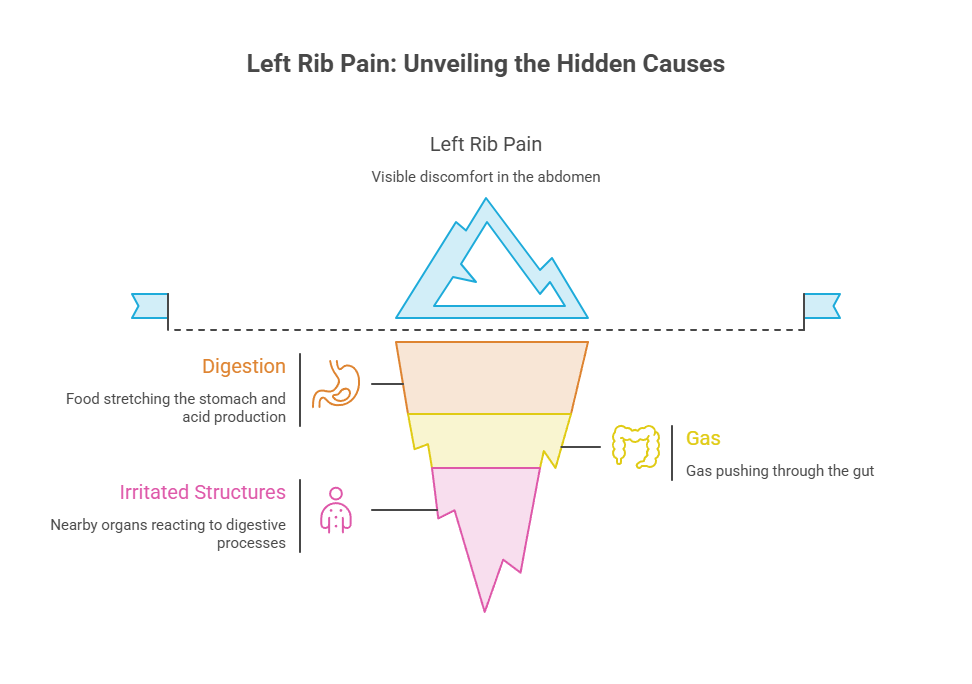
When pain arrives after eating, the trigger is almost always digestion itself. Food stretches the stomach, ramps up acid, and pushes gas through the gut, and any irritated structure nearby will complain.
The Organs Crowded Into Your Left Upper Abdomen
Tucked under those lower left ribs you’ll find the stomach, the tail of the pancreas, the spleen, the splenic flexure (a tight bend where the colon turns downward), the upper part of the left kidney, the lower lobe of the left lung, and the left side of the diaphragm.
Because these structures overlap, pain in one can feel like pain in another. Our medical reviewers note that patients often point to the very same spot for problems as different as harmless gas and gallstone pancreatitis.
That overlap is why guessing rarely works well. The same dull ache can mean a stretched bowel one week and an inflamed stomach the next, so the pattern around the pain matters more than the location alone.
Why Eating Specifically Sets It Off
Eating kicks off a chain reaction. Your stomach releases acid, the pancreas secretes digestive enzymes, and the colon contracts to move things along, all within an hour of a meal.
If your stomach lining is inflamed, that acid burns. If gas pools at the splenic flexure, the bowel wall stretches and aches. A full stomach can even press up on the diaphragm, which explains the dull discomfort some people feel that fades roughly half an hour after eating.
Acid reflux is part of the picture too. According to NIH-published research, up to 40% of the US general population reports symptoms of gastroesophageal reflux disease, and North America carries one of the highest regional rates worldwide. That alone makes reflux a leading reason food brings on left-sided pain.
The 5 Most Common Causes of Left Rib Pain After Eating
Most cases trace back to five culprits. Four are digestive and usually settle with home care or a quick clinic visit. The fifth, pancreatitis, is the one that earns your full attention.
1. Trapped Gas (Splenic Flexure Syndrome)
This is the single most common reason for pain under the left rib after eating, and the most harmless. Gas forms naturally as your gut breaks down food, then collects at the splenic flexure tucked right under the left ribs.
The pain can feel surprisingly sharp, like a cramp or a pressure that builds and then releases. The giveaway is relief: once you burp or pass gas, the discomfort usually eases within a few hours.
Carbonated drinks, beans, fried food, dairy (if you’re sensitive), and eating too fast all pump extra gas into the system. Swallowing air while gulping food or chewing gum adds to it.
Patients booking tests with HealthCareOnTime often describe this exact pattern, sharp pain with bloating that vanishes after a trip to the bathroom, before any serious cause is ever ruled out. It’s annoying, but it’s not dangerous.
One reason gas lands so often on the left is geography. The splenic flexure sits higher than the rest of the colon, so gas rises and collects there, then presses outward against the rib cage until it moves on.
2. Gastritis
Gastritis means the stomach lining has become inflamed. Eating, especially spicy, fatty, or acidic food, irritates that raw lining and brings on a burning or gnawing ache high on the left side.
Common drivers include heavy alcohol use, regular NSAID painkillers like ibuprofen and naproxen, ongoing stress, and bacterial infection. Nausea, bloating, and a feeling of fullness often come along for the ride.
Some people notice the burn eases for a while right after eating, then returns as the stomach empties. Others find food makes it worse from the first bite, depending on how inflamed the lining is.
Left untreated, ongoing gastritis can progress to an ulcer, so symptoms that drag past a week deserve a look. Our team frequently sees gastritis calm down quickly once the trigger is removed and stomach acid is brought under control.
Acute gastritis can flare after a single rough night of alcohol or a course of painkillers, then fade. Chronic gastritis builds quietly over months, so the after-meal burn becomes a regular visitor rather than a one-off.
3. Peptic (Stomach) Ulcer
A stomach ulcer is an open sore in the lining, and it can produce a sharp or burning pain under the left ribs, particularly when the ulcer sits in the stomach itself rather than the small intestine.
Two causes dominate: the bacterium Helicobacter pylori and long-term NSAID use. According to the American Academy of Family Physicians, peptic ulcer disease affects roughly 1 in 12 people in the United States. The infection behind many of them is widespread; research in Scientific Reports reports that about 36% of the US population is infected with H. pylori.
Gastric ulcer pain often shows up one to three hours after eating, which is a useful clue. The pain may ease briefly with food or antacids, then build again.
Dark, tarry stools or vomiting that looks like coffee grounds signal bleeding and mean you need care without delay. Those are not symptoms to monitor at home.
4. GERD / Acid Reflux
GERD happens when stomach acid flows backward into the esophagus. The burning usually rises toward the chest, but it can settle under the left ribs, especially after a large or fatty meal.
Lying down soon after eating makes it worse, since gravity no longer keeps acid where it belongs. Spicy food, citrus, chocolate, mint, coffee, carbonated drinks, and alcohol are frequent triggers.
A sour taste in the mouth, a chronic cough, or a hoarse voice can accompany the rib discomfort, which sometimes throws people off the scent. Reflux is also linked to extra weight and to eating late at night.
Across patients we serve, reflux is one of the most under-recognized reasons for after-meal rib pain, often mistaken for a heart or muscle problem when it’s really the esophagus protesting.
Portion size matters as much as the food itself. A large meal pushes the stomach up against the valve that’s supposed to keep acid down, which is why the same dinner split into two smaller servings often causes no trouble at all.
5. Pancreatitis
Pancreatitis is inflammation of the pancreas, which sits behind the stomach and reaches toward the left side. It produces a deep, severe pain that often bores straight through to the back and worsens after eating, especially fatty meals.
This is the serious one. Acute pancreatitis is a leading reason Americans land in the hospital for digestive illness; NIH StatPearls reports an estimated 200,000 to 275,000 US hospital admissions per year, making it the leading cause of hospitalization for gastrointestinal disease. Gallstones and heavy alcohol use cause most cases.
The pain tends to be constant rather than coming and going, and it commonly travels with nausea, vomiting, and sometimes fever. Sitting up and leaning forward may ease it slightly, while lying flat makes it worse.
Pain that’s intense, steady, and paired with vomiting or fever is your cue to head to the emergency room. In cases reviewed across our diagnostic network, early lab testing is what separates a routine flare from a dangerous one.
Pancreatitis isn’t something to ride out at home. Even a mild attack usually needs fluids, rest for the gut, and monitoring, and the enzyme that confirms it (lipase) is a simple blood draw that doctors can run quickly.
| Cause | What the Pain Feels Like | Timing After Eating | Common Trigger Foods | Urgency Level |
| Trapped gas | Cramping, pressure, sharp twinges that ease on passing gas | 30 min to 2 hrs | Beans, carbonated drinks, fried food, dairy | Low (self-care) |
| Gastritis | Burning or gnawing high on the left | Within 1 hr | Spicy, acidic foods, coffee, alcohol | Low to Medium |
| Stomach ulcer | Burning that may fade then return | 1 to 3 hrs (gastric ulcer) | Spicy food, alcohol, NSAIDs | Medium |
| GERD / reflux | Burning rising toward the chest | 30 to 60 min, worse lying down | Fatty, citrus, chocolate, mint | Low to Medium |
| Pancreatitis | Severe, deep, boring; radiates to back | Within hours, worse after fatty meals | Fatty foods, alcohol | High (urgent) |
Less Common but Important Causes
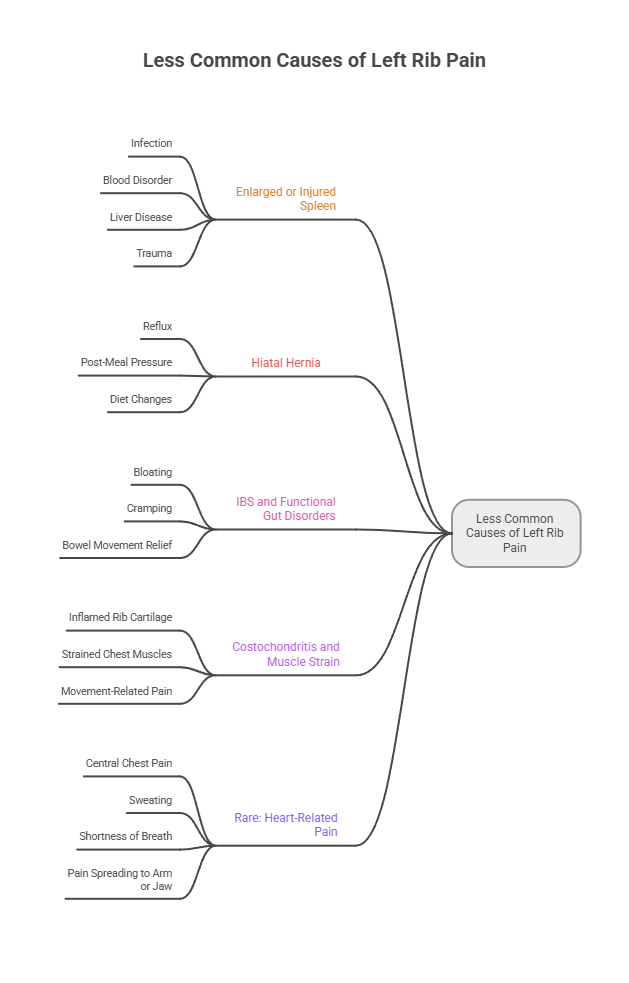
Beyond the main five, a handful of other conditions can mimic the same pain. Knowing them helps you and your doctor rule things in or out faster.
Enlarged or Injured Spleen
The spleen sits high in the left upper abdomen. When it swells from an infection like mononucleosis, a blood disorder, or liver disease, it can stretch its outer capsule and cause aching or a sense of fullness, sometimes after only a small meal.
A blow to the left side followed by sudden, severe pain is a medical emergency, since a ruptured spleen causes dangerous internal bleeding. That situation calls for 911, not a wait-and-see approach.
Most people with a mildly enlarged spleen feel little or nothing. It’s the sudden, severe version, especially after trauma, that demands immediate care.
Hiatal Hernia
A hiatal hernia lets part of the stomach push up through an opening in the diaphragm. This worsens reflux and creates post-meal pressure and burning under the left ribs and into the chest.
Large meals and lying down soon after eating tend to aggravate it. Many cases are mild and respond well to the same diet changes that calm GERD, though larger hernias sometimes need treatment.
IBS and Functional Gut Disorders
Irritable bowel syndrome causes the colon to spasm, often after eating, with bloating, cramping, and pain that can land on the left side. Relief frequently follows a bowel movement.
IBS doesn’t damage the bowel structure, but it’s real and disruptive. Patients commonly ask us whether their meal-linked cramping is something dangerous; in IBS, the pattern of relief after passing stool is reassuring rather than alarming.
Costochondritis and Muscle Strain
Not all left-rib pain comes from inside. Costochondritis (inflamed rib cartilage) and strained chest muscles cause pain that worsens when you press the area, twist, or breathe deeply.
The clue here is movement, not meals. If poking the spot reproduces the pain and food has no effect on it, the source is likely the chest wall, not the gut.
Rare: Heart-Related Pain
Heart problems usually cause central chest pain, but they can occasionally feel like upper-left or rib discomfort, especially in women and older adults. This matters because the symptoms overlap with reflux.
Pain with chest tightness, sweating, shortness of breath, or pain spreading to the arm or jaw should never be dismissed as indigestion. When there’s any doubt, treat it as an emergency and call 911.
Use Timing to Narrow It Down
One of the most useful things you can do is notice when the pain starts in relation to your meal. The clock often points toward the cause faster than the location does.
Within 30 to 60 minutes: Acid reflux and gastritis lead this window, since stomach acid peaks soon after eating. Reflux usually burns upward toward the chest; gastritis sits higher and burns or gnaws.
Around 30 minutes, then fading: A full stomach pressing on the diaphragm can cause a referred ache that eases on its own. This pattern is common and usually harmless.
One to three hours later: Gastric ulcers often surface here, with a gnawing pain that may briefly improve with food or antacids before returning.
Building slowly over 1 to 2 hours with bloating: That’s the gas signature, especially after beans, fried food, or carbonated drinks, and it typically clears after passing gas.
Severe and worsening within hours of a fatty meal: This is the pattern that should worry you, since it fits pancreatitis. Steady, intense pain radiating to the back belongs in an emergency room.
No single clue is proof on its own. Pair the timing with what the pain feels like and what relieves it, and you’ll usually land in the right ballpark before you ever pick up the phone.
Gas or Something Serious? How to Self-Triage
You can do a lot of useful sorting on your own before deciding what to do next. The goal isn’t to diagnose yourself; it’s to recognize whether you’re facing a nuisance or a warning.
The Reassuring Signs
These patterns point toward a mild, digestive cause:
- The pain comes and goes rather than staying constant.
- Burping or passing gas brings noticeable relief.
- Bloating or fullness eases over a few hours.
- There’s no fever, no vomiting blood, and no trouble breathing.
- The discomfort tracks with specific foods or large meals.
The Red Flags That Mean Get Help Now
Treat any of the following as a signal to seek prompt or emergency care:
- Severe, worsening, or sudden sharp pain.
- Black, tarry stools or vomit that looks like coffee grounds.
- Vomiting blood, high fever, or chills.
- Pain spreading to the back along with nausea (a pancreatitis pattern).
- Chest pressure, sweating, or shortness of breath.
- Pain right after a fall, crash, or blow to the left side.
| Your Scenario | What It Might Be | Recommended Action |
| Pain eases after burping or passing gas, no fever | Trapped gas | Self-care; track trigger foods |
| Burning that worsens with spicy food, eases on an empty stomach | Gastritis or reflux | Try OTC antacid; see a doctor if it lasts over a week |
| Gnawing pain 1 to 3 hrs after meals plus dark stools | Possible bleeding ulcer | See a doctor promptly; black stools mean go now |
| Severe pain radiating to the back with vomiting | Possible pancreatitis | Go to the ER right away |
| Sudden severe pain after a blow to the left side | Possible spleen injury | Call 911 immediately |
| Pain with chest pressure, sweating, breathlessness | Possible cardiac event | Call 911 immediately |
What the US Numbers Say
These conditions are common, and that’s reassuring. The overwhelming majority of people with left-rib pain after eating have something routine and treatable.
| Condition | US Prevalence / Statistic | Source |
| GERD (acid reflux) | Up to 40% of adults report symptoms; about 31% in a given week | NIH National GI Survey |
| H. pylori infection | Roughly 36% of the US population carries it | Scientific Reports |
| Peptic ulcer disease | Affects about 1 in 12 Americans | AAFP |
| Acute pancreatitis | 200,000 to 275,000 US hospital admissions per year | NIH StatPearls |
| Gallstones | About 7% symptomatic US prevalence; cause ~40% of pancreatitis | Gastroenterology (AGA) |
| Chronic pancreatitis | About 50 per 100,000 people | NIH StatPearls |
The pattern is clear. Digestive irritation drives the vast share of cases, while the dangerous causes, though real, are far less frequent. Our lab partners report that most after-meal rib complaints resolve once the trigger is identified and addressed.
Your Step-by-Step Action Plan
Here’s how to move from worry to answers without overreacting or ignoring something real.
Step 1: Track Your Symptoms
For a week, write down what you eat, when the pain starts, how it feels, and what makes it better or worse. This simple diary often reveals the trigger faster than any test.
Pay special attention to timing. Pain within an hour suggests reflux or gastritis; pain that builds slowly with bloating suggests gas; pain that radiates to the back suggests the pancreas.
Step 2: Try Safe At-Home Measures
For mild, digestion-linked pain, start with smaller and slower meals, and cut back on the usual triggers: spicy, fatty, and acidic foods, carbonated drinks, alcohol, and caffeine.
A short trial of an over-the-counter antacid, or simethicone for gas, is reasonable. Stay upright for an hour after eating, and take a gentle walk to help gas move through.
Skip the NSAID painkillers if you suspect a stomach issue, since they can worsen gastritis and ulcers. If a few days of these steps help, you’re likely dealing with something minor.
Step 3: Know Which Tests to Ask For
If symptoms persist, the right tests turn guesswork into a diagnosis. Blood tests can check pancreatic enzymes (lipase and amylase) along with signs of infection or inflammation.
A breath or stool test detects H. pylori, the bacterium behind many ulcers. An abdominal ultrasound looks at the spleen, pancreas, and gallbladder, while an upper endoscopy inspects the stomach lining directly.
In tests booked through HealthCareOnTime, this combination of bloodwork plus imaging is what most often delivers a clear answer. Asking for the right panel up front saves time and avoids repeat visits.
Step 4: Doctor Visit vs ER
See a doctor within a few days for pain lasting more than a week, repeated episodes, or symptoms that interfere with eating or sleep. This is the routine path for gastritis, reflux, and suspected ulcers.
Go to the ER now for severe or sudden pain, black stools, vomiting blood, high fever, pain radiating to the back with vomiting, chest pressure, or any pain after an injury. When your body sends a loud signal, answer it quickly.
How to Prevent Left Rib Pain After Eating
A few habits sharply lower the odds of a repeat episode. Most are simple, and they target the digestive causes behind the bulk of cases.
Eat smaller, slower meals so your stomach isn’t overstretched, and finish eating two to three hours before lying down. This single change calms both reflux and gas.
Trim the frequent offenders: spicy, fried, and acidic foods, carbonated and alcoholic drinks, and excess caffeine. If certain foods reliably set you off, keep them occasional rather than daily.
Maintaining a healthy weight takes pressure off the stomach and lowers reflux, while limiting NSAID use protects the stomach lining. If you need regular pain relief, ask a doctor about gentler options.
Posture helps more than people expect. Sitting upright during and after meals, plus a short post-meal walk, keeps gas moving and eases pressure on the diaphragm and ribs.
Hydration and fiber round things out. Drinking water with meals and eating enough fiber keep the colon moving, which cuts down on the gas buildup that so often lands under the left ribs in the first place.
Frequently Asked Questions
Why does my left side hurt under my ribs after I eat?
Most often it’s trapped gas at the splenic flexure, gastritis, acid reflux, or a stomach ulcer. Eating raises acid and gas production, which irritates these structures. The pain is usually digestive and manageable, but back-radiating or severe pain warrants prompt medical attention.
Can trapped gas cause sharp pain under the left rib cage?
Yes. Gas collecting at the splenic flexure, a bend in the colon under the left ribs, stretches the bowel wall and can cause surprisingly sharp, cramp-like pain. The telltale sign is relief after burping or passing gas, usually within a few hours.
Is left rib pain after eating a sign of pancreatitis?
It can be, though pancreatitis is far less common than gas or reflux. Pancreatitis pain is severe, deep, and tends to radiate to the back, often with nausea or vomiting after fatty meals. Pain like that needs emergency evaluation right away.
How do I know if it’s my spleen?
Spleen-related pain often feels like fullness or aching high on the left, sometimes after only a small meal. It usually links to infections like mono or blood disorders rather than food itself. Sudden severe pain after a blow to the left side is an emergency.
What foods trigger pain under the left ribs?
Common triggers include spicy, fatty, and acidic foods, carbonated drinks, beans, coffee, chocolate, and alcohol. These raise gas, acid, or pancreatic activity. Keeping a food and symptom diary for a week usually reveals which specific items set off your discomfort.
When should I go to the ER for left rib pain?
Seek emergency care for severe or sudden pain, black or tarry stools, vomiting blood, high fever, pain spreading to the back with vomiting, chest pressure, shortness of breath, or pain following an injury to the left side. These can signal a serious problem.
Can acid reflux cause pain under the left ribs?
Yes. While reflux usually burns in the chest, the discomfort can settle under the left ribs, especially after large or fatty meals and when lying down. Acid reflux is extremely common among US adults and responds well to diet and lifestyle changes.
Why does the pain come about 30 minutes after eating?
A full stomach can press upward on the diaphragm and trigger referred discomfort that eases roughly half an hour later. Reflux and gastritis also flare in that window as acid peaks. The timing itself is a useful clue your doctor will want to know.
Can stress cause left rib pain after meals?
Indirectly, yes. Stress increases stomach acid and can worsen gastritis, reflux, and IBS, all of which flare after eating. Stress also heightens gut sensitivity, so meals feel more uncomfortable. Managing stress often reduces how often these episodes happen.
What test checks for the cause of left rib pain?
It depends on the suspected cause. Blood tests measure pancreatic enzymes and inflammation, a breath or stool test detects H. pylori, an ultrasound examines the spleen and pancreas, and an upper endoscopy views the stomach lining. A doctor picks the right combination based on your symptoms.
Does left rib pain after eating always mean an ulcer?
No. An ulcer is only one possibility, and gas, gastritis, and reflux are more common. Ulcer pain tends to be a gnawing ache one to three hours after meals. Dark stools or coffee-ground vomit suggest a bleeding ulcer and need urgent care.
Can a heart problem feel like rib pain after eating?
Rarely, but it can, particularly in women and older adults, where heart symptoms may mimic indigestion. Pain with chest tightness, sweating, breathlessness, or pain spreading to the arm or jaw should be treated as a possible cardiac emergency. Call 911 if those appear.
Disclaimer: This article is for general information and education only. It isn’t a substitute for professional medical advice, diagnosis, or treatment. Always consult a qualified healthcare provider about any symptoms or health concerns, and seek emergency care for severe or worsening pain.
References
- GERD symptom prevalence in the US general population, NIH National GI Survey (PMC)
- H. pylori diagnosis and treatment patterns in the US, Scientific Reports
- Peptic Ulcer Disease and H. pylori, American Academy of Family Physicians
- Acute Pancreatitis, NIH StatPearls (NCBI Bookshelf)
- Diagnosis and Management of Acute Pancreatitis, Gastroenterology (AGA)