Here’s something most people get backward. When a blood test comes back showing a low red blood cell count, the first instinct is to pile on more iron. Yet plenty of people eating iron-rich meals every day still run low, because they’re drinking coffee with dinner and washing most of that iron right out of their system.
Table of Contents
Your red blood cell count isn’t only about how much iron you eat. It’s about what you eat it with, when you eat it, and whether your body has the other building blocks it needs. Get those pieces right and your numbers can climb, often without a single supplement.
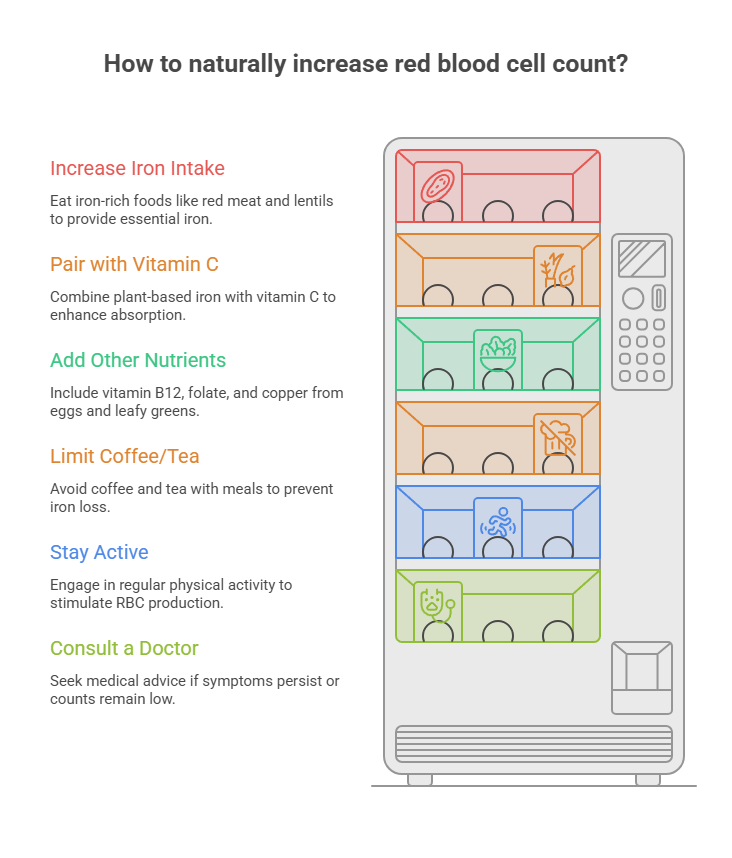
This guide walks through the foods, nutrients, and daily habits that actually move the needle, plus the absorption tricks the typical article leaves out. You’ll also learn the realistic timeline for results and the warning signs that mean it’s time to call a doctor.
Quick answer: To increase your red blood cell count naturally, eat more iron-rich foods like red meat, oysters, lentils, spinach, and fortified cereals, and pair plant-based iron with vitamin C to boost absorption. Add vitamin B12, folate, and copper from eggs, dairy, leafy greens, and nuts. Limit coffee and tea with meals, stay active, and see a doctor if symptoms or low counts persist.
At a glance
- Anemia affects 13.0% of US females and 5.5% of males, with the highest rates in teen girls and women of reproductive age.
- Iron, vitamin B12, and folate are the three nutrients that directly build red blood cells.
- Vitamin C can multiply how much plant-based (non-heme) iron your body absorbs.
- Tea, coffee, and calcium-rich foods can block iron absorption when taken with meals.
- New red cells rise within days, but rebuilding iron stores can take a few months.
- High-dose iron without testing can be harmful, so confirm a deficiency first.
Understanding Red Blood Cells and What “Low” Actually Means
Red blood cells, also called erythrocytes, are the most common cells in your blood. Each one is packed with hemoglobin, the iron-rich protein that grabs oxygen in your lungs and carries it to every tissue in your body.
Your bone marrow produces millions of these cells every single day. They circulate for about 120 days before your spleen and liver retire them and recycle their parts. That constant turnover is exactly why steady nutrition matters so much; you’re never done building red cells.
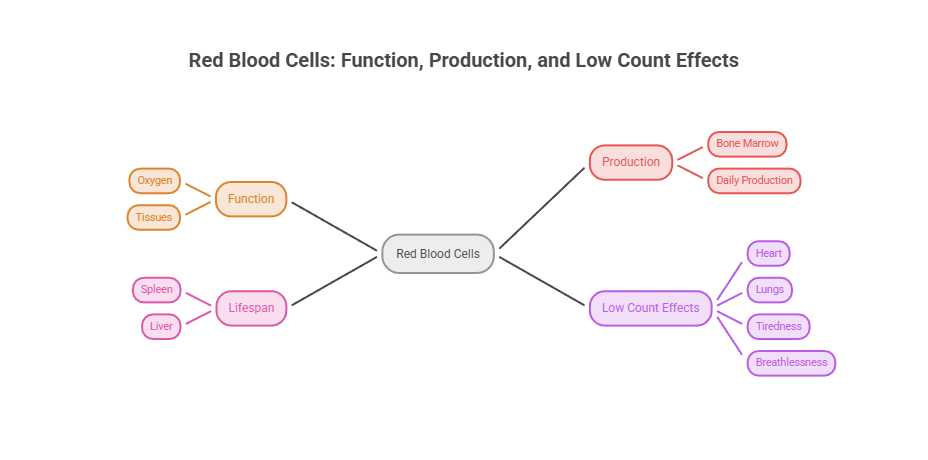
When your count drops, your heart and lungs work harder to move the same amount of oxygen. That extra effort is what produces the tired, breathless feeling so many people describe.
What red blood cells actually do
Think of hemoglobin as a fleet of delivery trucks and oxygen as the cargo. Iron is the part of each truck that locks onto the cargo, which is why an iron shortage hits oxygen delivery so directly.
These cells also carry carbon dioxide back to your lungs so you can breathe it out. When the fleet runs short, every organ feels the slowdown, from your muscles to your brain.
Normal red blood cell ranges for US adults
Lab ranges vary slightly, but most US labs use similar reference values. According to Mayo Clinic, a typical red blood cell count runs roughly 4.7 to 6.1 million cells per microliter for men and 4.2 to 5.4 million for women.
Children usually fall between 4.0 and 5.5 million cells per microliter. Your report will list its own reference range in the column next to your result, so always read your number against that, not against a friend’s lab printout.
Low red blood cells versus anemia
These two terms get mixed up constantly. A low red blood cell count is one finding on a blood test. Anemia is the broader condition where you don’t have enough healthy red cells or hemoglobin to carry adequate oxygen.
Patients booking a CBC through HealthCareOnTime often ask whether a number just below the range means they’re anemic. Usually it doesn’t. A slightly low value can reflect hydration, timing of the draw, or normal variation, which is why doctors look at the full picture rather than a single cell line.
The Signs That Your Red Blood Cells May Be Low
Many people land on this topic right after a blood test, but plenty arrive because something feels off. Low red blood cells starve your tissues of oxygen, and the symptoms tend to creep in slowly enough that you write them off as stress or poor sleep.
Common early symptoms
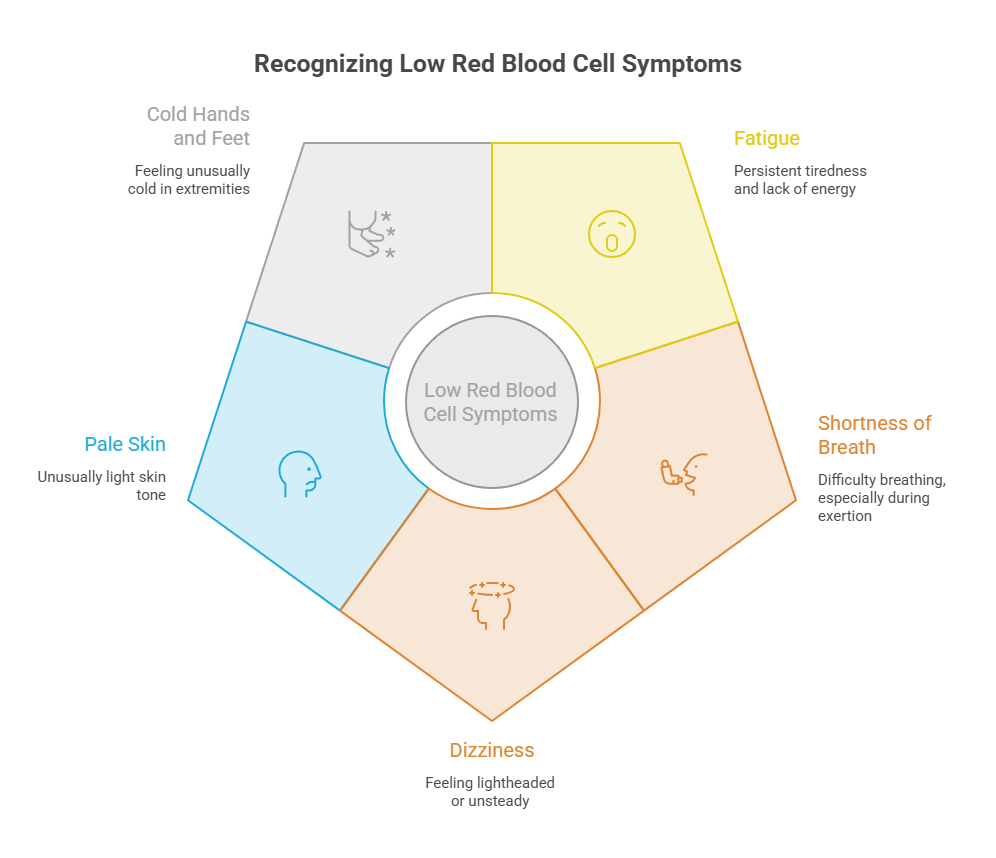
The most frequent sign is persistent fatigue that rest doesn’t fix. You might feel winded climbing stairs you used to take easily, or notice your heart racing during light activity.
Other early clues include pale skin, cold hands and feet, frequent headaches, dizziness, and trouble concentrating. Some people develop brittle nails or unusual cravings for ice, a pattern often tied to iron deficiency.
In cases reviewed by our medical team, the symptom people overlook most is breathlessness during ordinary tasks. They assume they’re simply out of shape when their oxygen-carrying capacity has actually dropped.
Symptoms that need prompt attention
Some signs point to a more significant problem and shouldn’t wait. Chest pain, a rapid or irregular heartbeat, fainting, or severe shortness of breath all warrant prompt medical care.
If fatigue becomes disabling or comes alongside unexplained bruising, that combination deserves a doctor’s evaluation. These symptoms can mean the anemia is severe or that something beyond diet is driving it.
Why Low Red Blood Cell Counts Are So Common in the US
Low counts are far more widespread than most people assume, and they cluster in predictable groups. The reason usually comes down to a mismatch between how much iron leaves the body and how much gets absorbed from food.
Who faces the highest risk
Women of reproductive age top the list, largely because of monthly menstrual blood loss. Pregnancy raises iron and folate needs sharply, and rapid growth puts teenagers at risk too.
Endurance athletes can run low from a mix of higher turnover and foot-strike stress on red cells. Older adults, people with digestive conditions like celiac disease, and those on strict plant-based diets round out the high-risk groups.
Why absorption matters as much as intake
You can eat plenty of iron and still come up short if your body absorbs little of it. Heme iron from animal foods absorbs readily, while non-heme iron from plants is far pickier about the company it keeps.
That single fact explains why two people eating similar amounts of iron can have very different blood results. The one pairing iron with vitamin C and spacing out coffee simply keeps more of it.
Here’s where the US numbers land today.
| Population group | Anemia or iron-deficiency rate | Source |
| All people age 2 and older | 9.3% (anemia) | CDC NCHS Data Brief No. 519, 2024 |
| Females age 2 and older | 13.0% (anemia) | CDC NCHS Data Brief No. 519, 2024 |
| Males age 2 and older | 5.5% (anemia) | CDC NCHS Data Brief No. 519, 2024 |
| Adolescent girls 12–19 | 17.4% (anemia) | CDC NHANES, 2021–2023 |
| Women 20–59 | 14.0% (anemia) | CDC NHANES, 2021–2023 |
| Females 12–49 | 22.6% (iron deficiency) | CDC FastStats / Healthy People 2030 |
| Physician office visits, anemia as primary diagnosis | 2.8 million | CDC NAMCS |
Those figures come from the CDC’s December 2024 anemia data brief and CDC FastStats. The pattern is hard to miss: anemia prevalence runs higher in females (13.0%) than males (5.5%), and it reaches 17.4% for adolescent girls 12–19 and 14.0% for women 20–59.
Across the patients we serve, this lines up with what shows up on lab reports. The people most surprised by a low result are often young, active women who assumed their diet already had it covered.
The Nutrients That Build Red Blood Cells
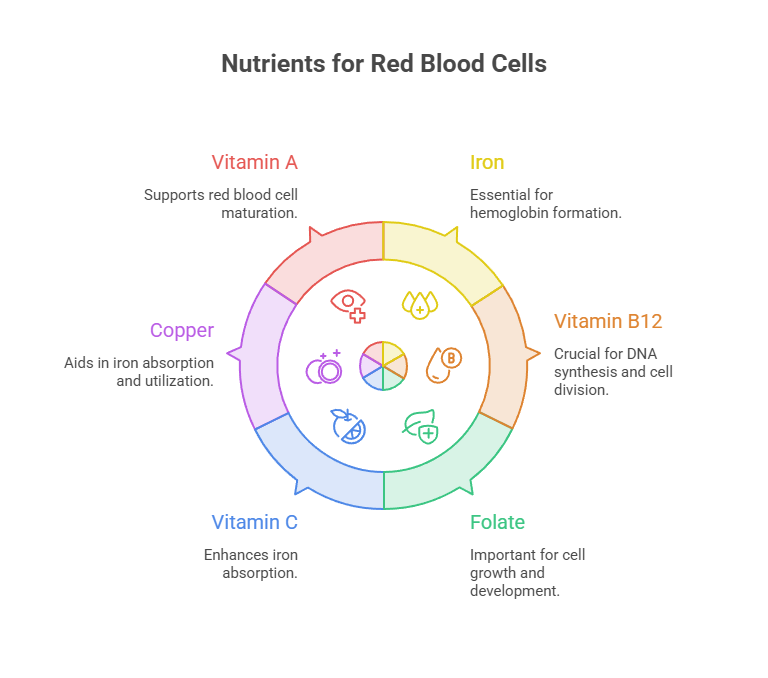
Three nutrients do the heavy lifting: iron, vitamin B12, and folate. A few others, namely vitamin C, copper, and vitamin A, work behind the scenes to help your body absorb and use them. Miss any of these and production can stall.
Iron, the headliner
Iron sits at the center of every hemoglobin molecule. Without enough of it, your marrow can’t build cells that carry oxygen well, and iron-deficiency anemia is the most common form of the condition worldwide.
Food gives you iron in two forms. Heme iron, from animal foods like meat, poultry, and fish, absorbs easily. Non-heme iron, from plants and fortified foods, absorbs less readily, which matters a lot if you eat little or no meat.
The NIH Office of Dietary Supplements notes that people on a vegetarian or vegan diet may need up to 1.8 times more iron, because non-heme iron is harder to take up. Pairing it with vitamin C helps close that gap considerably.
Vitamin B12
Vitamin B12 helps your red cells mature properly. When it runs short, the marrow churns out oversized, fragile cells in a pattern doctors call megaloblastic anemia, per the NIH.
B12 occurs naturally in meat, fish, shellfish, eggs, and dairy. Because plants don’t reliably supply it, vegans and many vegetarians need fortified foods or a supplement to keep levels steady over time.
Folate, also called vitamin B9
Folate helps your body create new cells, including red blood cells. Low folate is a recognized cause of anemia, and the need rises sharply during pregnancy, which is why prenatal care emphasizes it so heavily.
Leafy greens, lentils, asparagus, oranges, and fortified grains all deliver folate. The NIH lists beef liver and legumes among the richest sources you can find.
Vitamin C, the absorption multiplier
Vitamin C doesn’t build red cells itself, but it greatly improves how much non-heme iron you absorb. A squeeze of lemon on lentils or a glass of orange juice with a fortified cereal can make a real difference in what your body keeps.
Bell peppers, citrus fruit, strawberries, broccoli, and kiwi are all strong sources, according to the NIH. The trick is eating them in the same meal as your iron, not hours apart.
Copper and vitamin A, the supporting cast
Copper helps your body move and use iron. A shortfall can leave you with plenty of iron that your body still can’t put to work, the NIH explains. Cashews, sunflower seeds, shellfish, and beef liver supply it well.
Vitamin A appears to help shuttle iron into developing red cells. Sweet potatoes, carrots, leafy greens, and liver are reliable sources that cover this base easily.
Here’s how the key nutrients compare side by side.
| Nutrient | Best US food sources | Approx. amount per serving | US RDA (adults) | Role in red blood cells |
| Iron | Oysters, beef liver, lentils, spinach, white beans | Oysters (3 oz) ~8 mg; lentils (1 cup) ~6.6 mg | Men 8 mg; women 18 mg; pregnancy 27 mg | Forms hemoglobin; carries oxygen |
| Vitamin B12 | Clams, salmon, beef liver, eggs, dairy, fortified cereal | Clams (3 oz) ~84 mcg; salmon (3 oz) ~2.6 mcg | 2.4 mcg (2.6 in pregnancy) | Matures red cells; prevents megaloblastic anemia |
| Folate (B9) | Beef liver, lentils, spinach, asparagus, fortified grains | Lentils (1 cup) ~358 mcg; spinach (1/2 cup cooked) ~131 mcg | 400 mcg DFE (600 in pregnancy) | Builds new red cells |
| Vitamin C | Red bell pepper, oranges, strawberries, broccoli, kiwi | Red pepper (1/2 cup) ~95 mg; orange ~70 mg | Men 90 mg; women 75 mg | Boosts non-heme iron absorption |
| Copper | Beef liver, oysters, cashews, sunflower seeds | Cashews (1 oz) ~0.6 mg; oysters and liver very rich | 900 mcg | Helps the body use iron |
| Vitamin A | Beef liver, sweet potato, carrots, spinach | Sweet potato (1 medium) ~1,400 mcg RAE | Men 900 mcg; women 700 mcg | Helps move iron into red cells |
Serving amounts are approximate and based on NIH Office of Dietary Supplements data; actual values vary by brand and preparation.
Best Foods to Increase Red Blood Cells
Knowing the nutrients is one thing. Putting them on your plate is what moves the number. The good news is that most red-cell-friendly foods are everyday groceries, not exotic finds.
Top animal-based sources
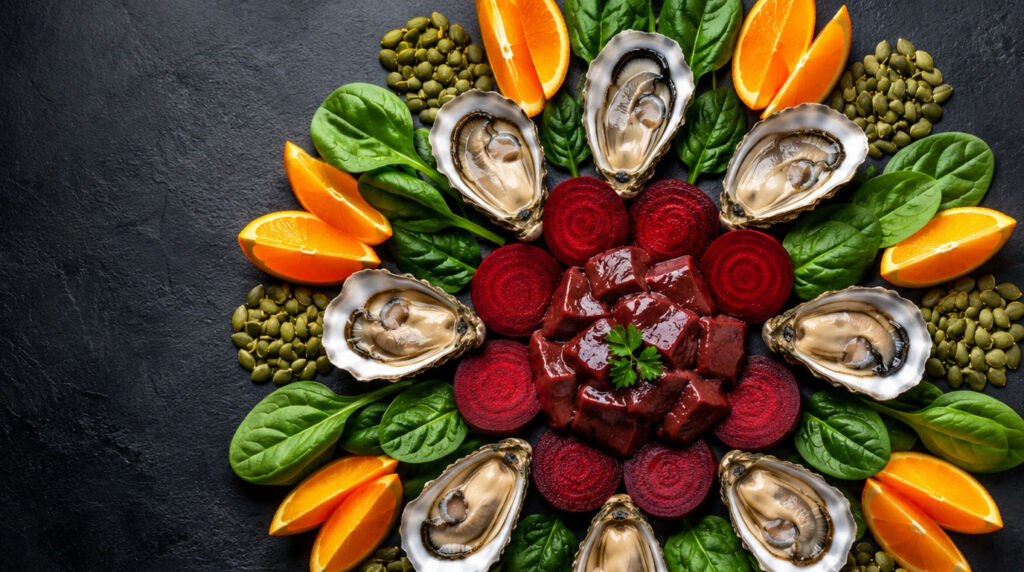
If you eat meat and seafood, you have access to the most easily absorbed iron and B12. Oysters and clams are standouts, delivering both iron and large amounts of B12 in a single serving.
Beef liver is arguably the single richest food here, loaded with iron, B12, folate, copper, and vitamin A all at once. Red meat, sardines, salmon, eggs, and dairy round out a strong weekly rotation without much effort.
Top plant-based sources for vegetarians and vegans
A plant-based eater can absolutely keep red cells healthy; it just takes a little strategy. Lentils, white beans, chickpeas, and tofu bring solid non-heme iron, while spinach and other leafy greens add iron and folate together.
Pumpkin seeds, cashews, fortified breakfast cereals, and blackstrap molasses are useful additions. Because plants supply little to no B12, a fortified food or supplement is the safety net most vegans need to stay out of trouble.
Our medical reviewers note that the vegetarians who avoid problems are usually the ones treating vitamin C as a fixed part of every iron-containing meal, not an afterthought tacked on later.
A simple one-day meal plan to rebuild your count
Here’s what a red-cell-friendly day can look like, with the iron-plus-vitamin-C pairings built right in. Breakfast: fortified oatmeal topped with strawberries and pumpkin seeds, plus a small glass of orange juice.
Lunch: a lentil and spinach salad with red bell pepper and a lemon vinaigrette. Snack: a handful of cashews and a kiwi.
Dinner: lean beef or tofu stir-fry with broccoli and tomatoes. The citrus, peppers, strawberries, and broccoli all push iron absorption higher across the whole day, doing quiet work in the background.
In cases seen across our diagnostic network, the people who recover fastest usually aren’t taking the most iron. They’re the ones pairing it well and staying consistent for weeks, not just a few motivated days.
How to Maximize Iron Absorption (and What Quietly Blocks It)
This is the section the typical article skips, and it’s where the biggest, fastest gains hide. You can eat all the right foods and still absorb only a fraction if the timing is off.
Pair iron with vitamin C
Vitamin C converts non-heme iron into a form your gut absorbs more readily. On a plate, that means lemon on your lentils, peppers in your stir-fry, or fruit alongside a fortified cereal.
This single habit can meaningfully raise the iron you actually keep from a plant-based meal. It costs nothing, takes no extra time, and works at every meal you apply it to.
The absorption blockers
Several everyday items quietly cut iron absorption when taken with meals. Tea and coffee contain tannins and polyphenols that bind iron; calcium-rich foods and supplements compete with it; and phytates in some whole grains and legumes reduce uptake.
None of these foods are bad for you. The fix is timing, not elimination. Keep your coffee, tea, and large calcium doses an hour or two away from your most iron-heavy meals, and you sidestep most of the loss.
Kitchen tactics that help
A few simple habits stack up nicely. Cooking acidic foods in a cast-iron pan can add measurable iron to the dish, especially with tomato-based sauces.
Soaking, sprouting, or fermenting legumes and grains lowers their phytate content and frees up more iron. Patients commonly ask whether they need special products for any of this. They don’t; a lemon, a cast-iron skillet, and better timing do most of the work.
Lifestyle Habits That Support RBC Production
Food builds the raw materials, but your daily habits tell your body how many red cells to make. A few adjustments support the whole process and protect the gains you make through diet.
Exercise and the oxygen-demand signal
When you exercise hard enough to breathe deeply and raise your heart rate, your body senses a greater need for oxygen. That signal nudges the marrow to produce more hemoglobin over time.
The American Heart Association recommends about 150 minutes of moderate to intense activity each week. Walking, cycling, swimming, and jogging all qualify, and even taking the stairs adds up over a day.
Hydration and blood volume
Good hydration keeps your blood volume steady, which supports healthy circulation and oxygen delivery. Dehydration can also skew a blood test, sometimes making counts look artificially high and masking a real problem underneath.
Aim for steady water intake through the day rather than large amounts all at once. Your kidneys and your blood both prefer a consistent supply.
Limiting alcohol
Drinking too much alcohol can lower your red blood cell count and interfere with how your body absorbs key nutrients. The Dietary Guidelines for Americans define moderate drinking as up to one drink a day for women and up to two for men.
Heavy or regular drinking also strains the liver, which plays a role in processing the nutrients your red cells depend on. Cutting back supports the whole system.
Sleep, smoking, and stress
Your marrow does much of its repair and production work while you rest, so consistent, quality sleep matters more than people expect. Skimping on it works against everything else you’re doing.
Smoking and chronic stress both undermine healthy blood in their own ways. Reducing them gives your body a cleaner runway to rebuild red cells efficiently.
Supplements: When Food Isn’t Enough
Sometimes diet alone won’t fill the gap, especially with heavy menstrual losses, pregnancy, or a confirmed deficiency. That’s when supplements earn their place, ideally with a clinician’s input rather than guesswork.
Iron supplements
Ferrous sulfate is the common, low-cost option, though some people tolerate gentler forms better. Recent research suggests taking iron every other day can improve absorption and ease the constipation and stomach upset that high daily doses often cause.
Take iron with water or a vitamin C source, and keep it away from coffee, tea, and calcium for the best results. Consistency over weeks matters more than any single perfect dose.
B12 and folate supplements
Vegans, older adults, and people with absorption problems are the most likely to need B12. Folate supplements matter especially before and during pregnancy, which is why prenatal vitamins include both nutrients as standard.
A doctor can confirm which, if any, you actually need through a simple blood panel. That step prevents both undertreating and overdoing it.
Safety first: more is not better
This is the part worth slowing down for. Your body has no easy way to clear excess iron, so loading up without a real deficiency can cause harm, including a condition of iron overload that damages organs over time.
Our medical reviewers flag this often: self-prescribing high-dose iron without a ferritin test can do more harm than good. A simple blood test settles whether you need it, and it spares people from months of needless side effects.
How Long Does It Take to Raise Your Red Blood Cell Count?
This is the question patients ask first, and honest expectations prevent a lot of frustration. The answer comes in stages, not overnight.
New young red cells, called reticulocytes, can start rising within a few days to a week once you correct a deficiency. Hemoglobin typically improves over several weeks of consistent intake.
Rebuilding your iron stores, measured as ferritin, is the slowest part and can take a few months. In tests booked through HealthCareOnTime, follow-up panels are commonly scheduled around the 8 to 12 week mark for exactly this reason.
The takeaway is simple: stay consistent. A week of perfect eating won’t fix a real deficiency, but a couple of months of steady habits usually shows up clearly on a repeat test.
When to See a Doctor
Natural strategies help most mild cases, but some situations need professional care promptly. Knowing the difference protects you and saves time.
Red-flag symptoms
Contact a doctor right away if you have chest pain, a rapid or irregular heartbeat, severe or worsening fatigue, shortness of breath, dizziness, or unexplained bruising. These can signal anemia serious enough to need treatment beyond diet.
What the workup looks like
A doctor will usually start with a complete blood count, then add ferritin, B12, and folate tests to find the cause. Treatment targets whatever is driving the low count, and the right diet supports that treatment.
Use this quick reference to match your situation to a sensible next step.
| Your scenario | What it may point to | Recommended action |
| Slightly low RBC, no symptoms | Minor dietary gap or normal variation | Improve iron, B12, and folate intake; recheck CBC in 8–12 weeks |
| Low RBC plus heavy periods | Iron loss from menstruation | See a doctor about iron status and menstrual causes |
| Low RBC on a vegan or vegetarian diet | B12 or iron shortfall | Add fortified foods; ask about B12 testing or a supplement |
| Pregnant with a low count | Higher iron and folate demand | Talk to your OB before changing any supplement |
| Low RBC with fatigue, breathlessness, or rapid heartbeat | Possibly significant anemia | Contact a doctor promptly for evaluation |
| Low RBC despite good diet for 3+ months | Possible absorption issue or hidden cause | Get a full workup (ferritin, B12, folate, GI review) |
Frequently Asked Questions
What is the most common cause of a low red blood cell count?
The most common cause is iron deficiency, often from blood loss or inadequate iron intake. Heavy menstrual periods, pregnancy, a low-iron diet, and digestive conditions that limit absorption are frequent drivers. Kidney disease, chronic illness, and certain inherited disorders can also lower your count.
How can you raise red blood cells fast?
Focus on easily absorbed heme iron from red meat, oysters, and liver, and pair plant iron with vitamin C. Add B12 and folate sources, limit coffee and tea at meals, and stay active. A confirmed deficiency may need supplements, so check with a doctor for the quickest safe route.
How long does it take to increase red blood cells naturally?
New red cells begin rising within days, while hemoglobin usually improves over several weeks of steady nutrition. Rebuilding iron stores can take a few months. Most people recheck their counts about 8 to 12 weeks after making changes, which is enough time to show real progress.
Which foods increase red blood cells the fastest?
Animal foods with heme iron act fastest because your body absorbs them most easily. Oysters, clams, beef liver, and red meat lead the list, supplying iron and B12 together. For plant eaters, lentils and spinach paired with a vitamin C source are the strongest everyday options.
Can you increase your RBC count without supplements?
Yes, many mild cases improve through food and lifestyle alone. Build meals around iron, B12, folate, and vitamin C, time coffee and tea away from meals, exercise regularly, and limit alcohol. Supplements become useful when a deficiency is confirmed or losses are high, such as during pregnancy.
What should vegetarians and vegans eat to raise red blood cells?
Lean on lentils, beans, tofu, spinach, pumpkin seeds, and fortified cereals, and always add a vitamin C source to boost absorption. Because plants lack reliable B12, a fortified food or supplement is important. Spacing tea and coffee away from meals helps you keep more of the iron you eat.
How can you increase red blood cells during pregnancy?
Iron and folate needs rise sharply in pregnancy, which is why prenatal vitamins include both. Eat iron-rich foods with vitamin C, and follow your prenatal supplement plan. Always talk with your OB before adjusting any supplement, since they tailor iron to your specific blood work.
Does drinking water increase red blood cell count?
Water doesn’t directly create more red cells, but good hydration keeps blood volume and circulation healthy. Dehydration can distort a blood test, sometimes making counts look higher than they truly are. Staying hydrated supports the overall process while your nutrition does the real building.
Does exercise increase red blood cell count?
Yes, regular aerobic exercise signals your body to produce more hemoglobin to meet higher oxygen demand. Activities like brisk walking, cycling, jogging, and swimming all help. The American Heart Association suggests about 150 minutes of moderate to intense activity each week for general health.
Which fruits help increase red blood cells?
Fruits high in vitamin C, including oranges, strawberries, kiwi, and grapefruit, help your body absorb more iron from other foods. Dried fruits like raisins and apricots also add a modest amount of iron. Pair them with iron-rich meals for the best effect.
Can low red blood cells go back to normal on their own?
Mild dips tied to diet or a passing cause often normalize once you correct the gap and give your marrow time. Counts driven by ongoing blood loss, pregnancy, or an underlying illness usually need targeted care. A repeat blood test confirms whether things are trending back to normal.
What drinks should you avoid with iron-rich meals?
Coffee, black and green tea, and large servings of milk or other calcium-rich drinks can reduce iron absorption when taken with meals. You don’t have to give them up. Just enjoy them an hour or two before or after your most iron-heavy meals instead.
Disclaimer: This article is for general educational purposes and isn’t a substitute for professional medical advice, diagnosis, or treatment. Always consult a qualified healthcare provider before starting supplements or making changes if you have symptoms or a diagnosed condition. Never disregard medical advice because of something you read here.
References
- CDC, NCHS Data Brief No. 519: Anemia Prevalence, United States, August 2021–August 2023 (December 2024)
- CDC FastStats: Anemia or Iron Deficiency
- NIH Office of Dietary Supplements: Iron
- NIH Office of Dietary Supplements: Vitamin B12
- NIH Office of Dietary Supplements: Folate
- NIH Office of Dietary Supplements: Vitamin C
- NIH Office of Dietary Supplements: Copper
- NIH Office of Dietary Supplements: Vitamin A
- Mayo Clinic: Complete Blood Count (CBC)
- American Heart Association: Recommendations for Physical Activity in Adults
- Dietary Guidelines for Americans 2020–2025