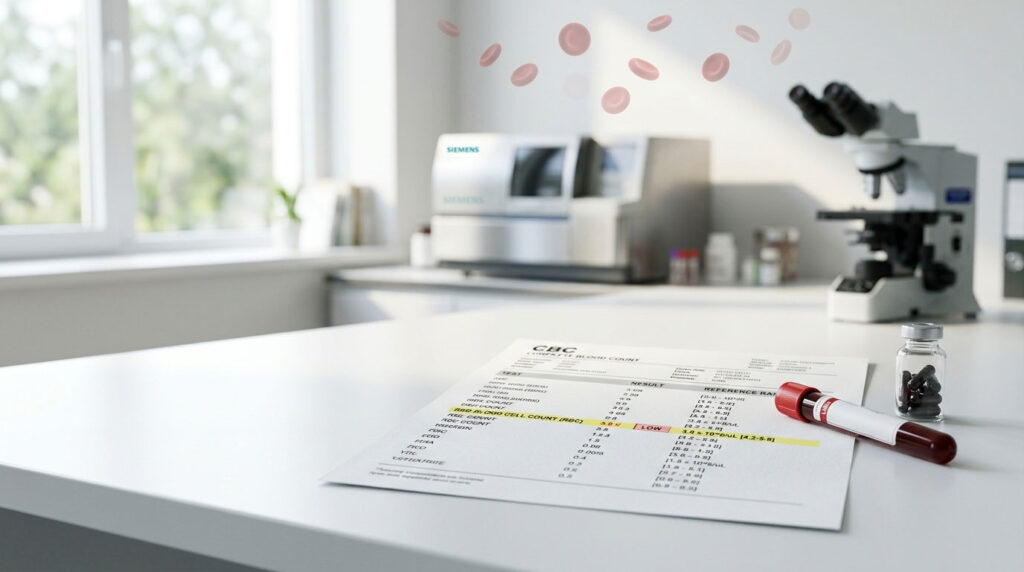
You feel wiped out by mid-afternoon, you’re paler than usual, and a single flight of stairs leaves you winded. Then a routine blood test comes back flagging a low RBC count. That number is your body quietly signaling that your tissues may not be getting all the oxygen they need.
Table of Contents
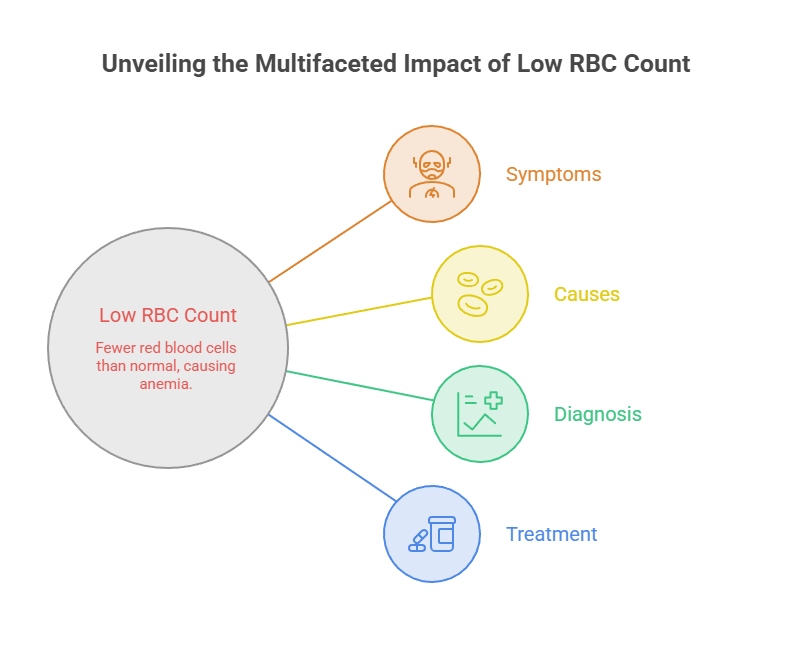
Quick Answer: A low RBC count means your blood holds fewer red blood cells than normal, which is the medical basis of anemia. Because red cells carry oxygen, a shortage leaves you tired, pale, and short of breath. Iron deficiency is the most common cause, though blood loss, low production, and red cell destruction all play roles. It’s detected on a complete blood count (CBC), and the right fix depends entirely on the cause.
At a Glance
- A low RBC count is the foundation of anemia and signals reduced oxygen delivery throughout your body.
- Three root mechanisms drive it: blood loss, reduced red cell production, and faster red cell destruction.
- Iron deficiency is the single most common cause, especially in women of reproductive age.
- Fatigue is the hallmark symptom, often with pale skin, breathlessness, and a racing heartbeat.
- Most cases are mild and treatable, but severe anemia can strain the heart and needs prompt care.
- The cause guides everything, so treatment ranges from diet and iron to specialist therapy.
What Is a Low RBC Count?
A low RBC count means a blood sample holds fewer red blood cells than the normal reference range for your age and sex. Red blood cells, or erythrocytes, are the oxygen couriers of your bloodstream.
Each one is packed with hemoglobin, the iron-rich protein that binds oxygen in your lungs and releases it to your tissues. Your bone marrow makes millions of red cells daily, and each one circulates for about 120 days before the liver and spleen recycle it.
When that supply falls short, oxygen delivery dips and your organs work harder to keep up. Patients booking a CBC through HealthCareOnTime often see RBC flagged with an L and want to know what a low RBC count actually means for them.
Low RBC Count vs Anemia
The terms overlap but are not identical. A low RBC count is one lab value, while anemia is the clinical condition of having too few healthy red cells or too little hemoglobin to carry adequate oxygen.
Anemia happens when you have low levels of healthy red blood cells, and symptoms can be mild or severe and occasionally life-threatening. In practice, doctors diagnose anemia using hemoglobin and the full red cell picture, not the RBC count alone.
That distinction matters because you can have a borderline count with normal hemoglobin, or a normal count with low hemoglobin. Our medical reviewers stress reading the values together rather than reacting to one flagged line.
How Low Is Too Low? Normal vs Low Ranges
Reference ranges vary slightly by lab, so always compare your result to the range printed on your own report. As a general guide, adult men typically run 4.7 to 6.1 million cells per microliter and women 4.2 to 5.4 million.
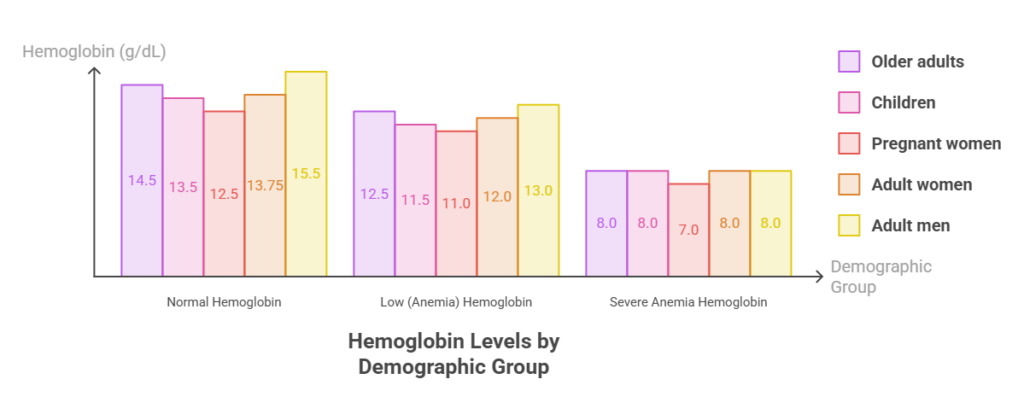
Doctors often lean on hemoglobin to define anemia. The World Health Organization standard treats hemoglobin below 13 g/dL in men and below 12 g/dL in nonpregnant women as anemia, with lower numbers marking greater severity.
The table below shows where normal ends and a low RBC count begins, plus the rough zone where anemia turns severe and demands urgent attention.
| Group | Normal RBC (million cells/uL) | Normal Hemoglobin (g/dL) | Low (Anemia) Hemoglobin | Severe Anemia Hemoglobin |
| Adult men | 4.7 to 6.1 | 13.5 to 17.5 | Below 13.0 | Below 8.0 |
| Adult women | 4.2 to 5.4 | 12.0 to 15.5 | Below 12.0 | Below 8.0 |
| Pregnant women | 3.9 to 5.0 | 11.0 to 14.0 | Below 11.0 | Below 7.0 |
| Children (school age) | 4.0 to 5.5 | 11.5 to 15.5 | Below 11.5 | Below 8.0 |
| Adults 65 and older | 4.2 to 5.8 | 12.0 to 17.0 | Below 12.0 to 13.0 | Below 8.0 |
What a Low RBC Count Means for Your Body
A low RBC count is less a diagnosis than a clue. It tells you oxygen transport is compromised, then points your doctor toward why.
The effects you feel depend on how low the count is and how fast it dropped. A slow decline gives your body time to adapt, while a sudden drop from bleeding can hit hard and fast.
The Oxygen Connection
Every working red cell is a tiny oxygen shuttle. With fewer of them, your heart and lungs compensate by pumping and breathing harder to move the same oxygen with less cargo.
That is why fatigue and tiredness are the signature symptoms of a low red cell count, alongside reduced stamina for everyday tasks. The shortfall reaches your brain too, which is why concentration can slip.
Across patients we serve, the earliest complaint is usually unexplained tiredness that rest doesn’t fix. Many assume it’s stress or poor sleep before a CBC reveals the real story.
Why It Ranges From Mild to Serious
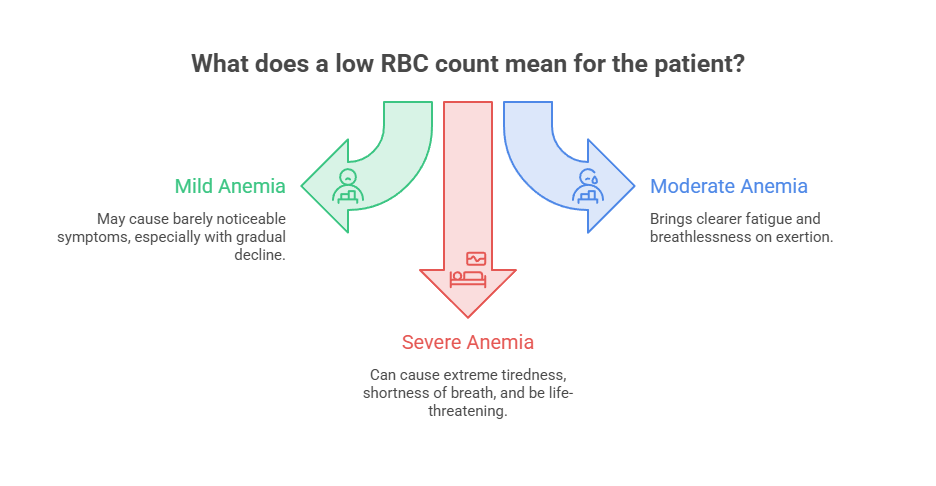
Mild anemia may cause barely noticeable symptoms, especially when it develops gradually. Moderate cases bring clearer fatigue and breathlessness on exertion. The body adapts to a slow decline by raising heart rate and shifting blood flow toward vital organs, which masks symptoms until the count drops further.
Severe anemia is a different matter. When anemia becomes severe, the lack of oxygen can cause symptoms like extreme tiredness or shortness of breath, and severe anemia can become life-threatening, particularly for people with existing heart or lung conditions.
A low RBC count is common enough to take seriously. A 2024 analysis estimated that about 7 percent of US adults have anemia, and the broader CDC anemia data put overall prevalence near 9.3 percent across people age 2 and older.
Common Causes of a Low RBC Count
Nearly every cause of a low RBC count traces back to one of three problems. Either you’re losing red cells, not making enough, or destroying them too quickly.
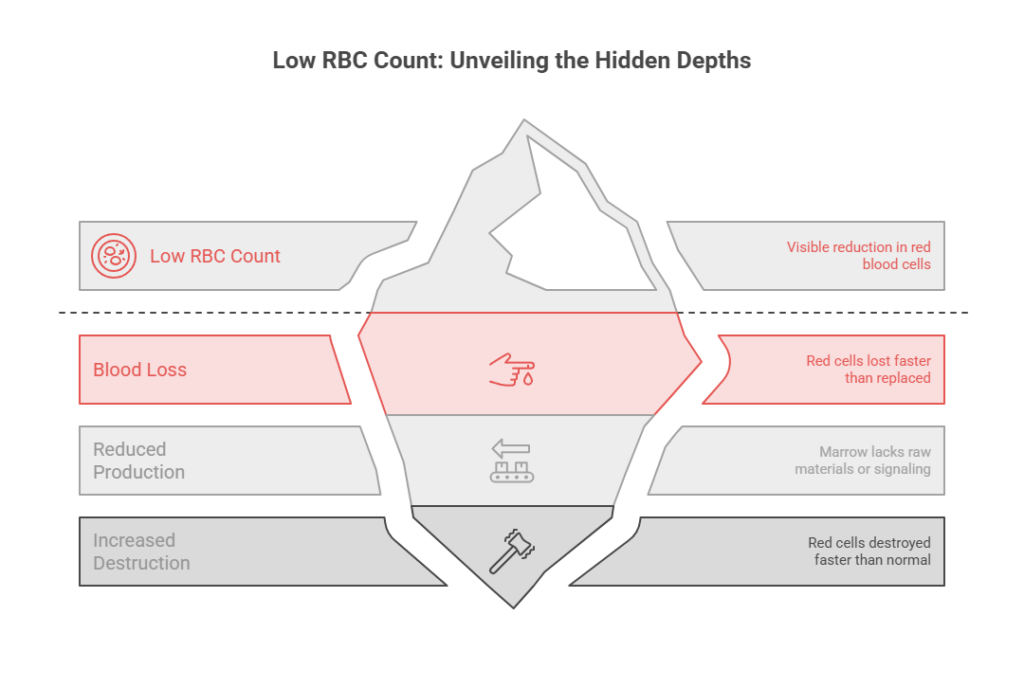
Pinning down which mechanism is at work is how doctors move from your count is low to a treatment that actually helps. Our medical team approaches the cause first, never the number in isolation.
Blood Loss
Losing blood drains red cells faster than the marrow can replace them. The loss can be obvious, like trauma or surgery, or hidden and slow.
Heavy menstrual periods are a leading cause in women, while slow gastrointestinal bleeding from ulcers, polyps, or regular use of certain pain relievers is a frequent culprit in others. Excess blood loss from GI bleeding and heavy menstrual periods can cause iron-deficiency anemia, since you lose iron along with the blood.
Slow bleeds are sneaky because you may never see the blood. That’s why doctors sometimes test stool for hidden blood when a low RBC count has no clear explanation.
Reduced Red Blood Cell Production
Your marrow needs raw materials and healthy signaling to build red cells. Shortfalls in iron, vitamin B12, or folate stall the assembly line.
Chronic kidney disease lowers erythropoietin, the hormone that tells marrow to produce, while ongoing inflammation from chronic illness blunts red cell output. A health care professional may diagnose anemia of inflammation when blood tests show anemia, a low level of iron in the blood, and a normal level of stored iron, a pattern typical of chronic disease.
Bone marrow disorders sit at the more serious end. Conditions like aplastic anemia and myelodysplastic syndromes reduce production directly, which is why a persistent, unexplained low count warrants deeper testing.
Increased Red Blood Cell Destruction (Hemolysis)
Sometimes the marrow works fine, but red cells are destroyed faster than their normal 120-day lifespan. This is called hemolysis.
Inherited conditions such as sickle cell disease and certain enzyme or membrane defects shorten red cell survival. Autoimmune reactions, some infections, and certain medications can also trigger destruction.
Hemolytic anemias often show a high reticulocyte count, since the marrow ramps up production to keep pace. Our lab partners report that pairing the RBC count with reticulocytes quickly separates a production problem from a destruction problem.
The table below maps the main causes of a low RBC count to how they lower it and the clues doctors look for.
| Cause | How It Lowers RBC | Common Clues |
| Iron deficiency | Marrow lacks iron for hemoglobin | Small pale cells, low ferritin, fatigue |
| B12 or folate deficiency | Faulty cell maturation | Large cells, high MCV, tingling (B12) |
| Blood loss | Red cells lost faster than made | Heavy periods, GI bleeding, low iron |
| Chronic kidney disease | Low erythropoietin signal | Known CKD, normal-sized cells |
| Chronic inflammation | Suppressed production | Underlying illness, normal iron stores |
| Hemolysis | Red cells destroyed early | High reticulocytes, jaundice, dark urine |
When a Low Count Signals Something Serious
Most low RBC counts have ordinary explanations, and that’s worth holding onto. Still, a balanced answer means acknowledging the serious causes too.
Certain cancers affect the bone marrow where blood cells are made, which can cause low blood counts and anemia, including some leukemias and lymphomas. Other cancers cause anemia indirectly through chronic inflammation, blood loss, or poor nutrient absorption.
The reassuring context: anemia can be a symptom of cancer, but many types of anemia are not caused by cancer. The takeaway from our medical reviewers is simple, a low count earns a workup, not a panic.
Iron shortfall, by contrast, is strikingly common and usually benign. A widely covered 2024 JAMA Network Open study found that an estimated 14 percent of US adults have absolute iron deficiency and another 15 percent have functional iron deficiency, nearly one in three adults combined.
Symptoms of a Low RBC Count
Symptoms track the oxygen shortfall, so they often build slowly and get blamed on busy life. Recognizing the pattern is what nudges people to get tested.
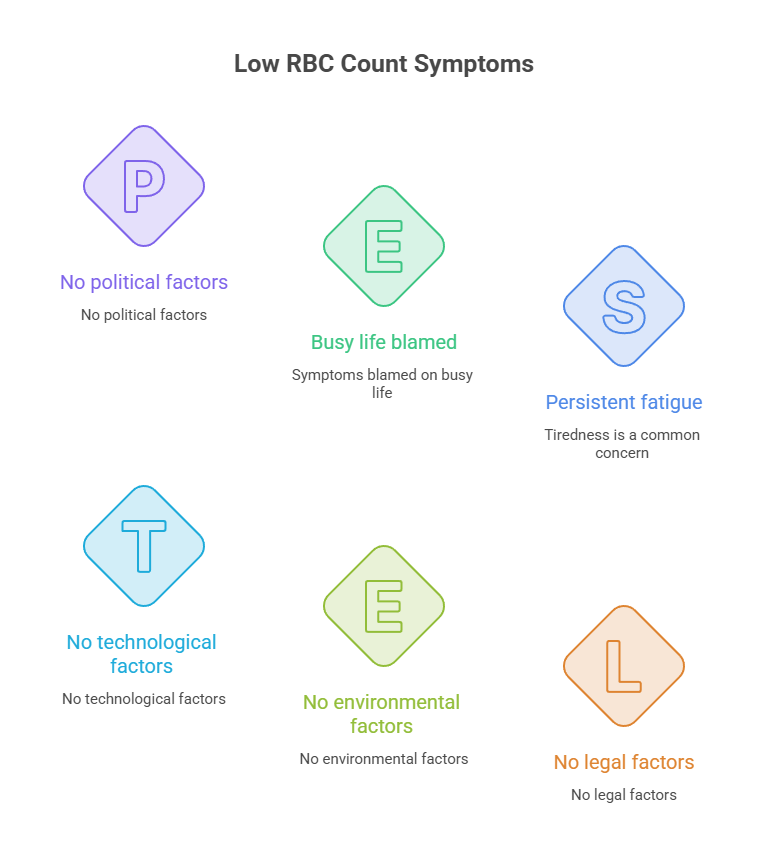
The signs of a low RBC count cluster into everyday symptoms, urgent red flags, and a few odd clues that are easy to miss. Patients commonly ask us whether their tiredness is normal, and the honest answer is that persistent fatigue deserves a look.
Early and Common Symptoms
The most frequent symptoms are fatigue and weakness that don’t improve with rest. Pale skin, especially in the face, inner eyelids, and nail beds, is a classic giveaway.
With a low red cell count you may feel a little or very tired, feel less alert or unable to concentrate, lose your appetite, look paler than normal, have trouble breathing, have a rapid heartbeat, or struggle to exercise or climb stairs. Cold hands and feet and frequent headaches round out the early list.
These symptoms overlap with many conditions, which is why a CBC matters. The pattern of several occurring together is more telling than any single one.
Signs of Severe Anemia (Urgent)
When anemia deepens, symptoms sharpen and the heart strains to compensate. These are signals to seek care promptly rather than wait.
Watch for chest pain, breathlessness while sitting still, fainting or near-fainting, a pounding or irregular heartbeat, and confusion. Symptoms like fatigue, heart palpitations, pale skin, or shortness of breath that don’t go away within two weeks warrant medical attention.
People with existing heart or lung disease can feel severe anemia sooner and harder. In cases reviewed by our medical team, those patients are advised to treat new breathlessness as urgent.
Unusual Symptoms People Miss
Some signs rarely get connected to a low RBC count. Pica, a craving for non-food items like ice, clay, or starch, is strongly linked to iron deficiency.
Restless legs syndrome, brittle or spoon-shaped nails, a sore or smooth tongue, hair shedding, and unusual irritability can all accompany low iron. Iron deficiency is linked to restless legs syndrome, mental and thinking difficulties, reduced physical ability, and heart failure, sometimes before full anemia appears.
Tinnitus or a whooshing sound in the ears occasionally shows up too. These quieter clues are why our reviewers encourage testing rather than guessing.
How a Low RBC Count Is Diagnosed
Diagnosis starts with the same CBC that flagged the problem, then layers on targeted tests to find the cause. The goal is to classify the anemia and trace its source.
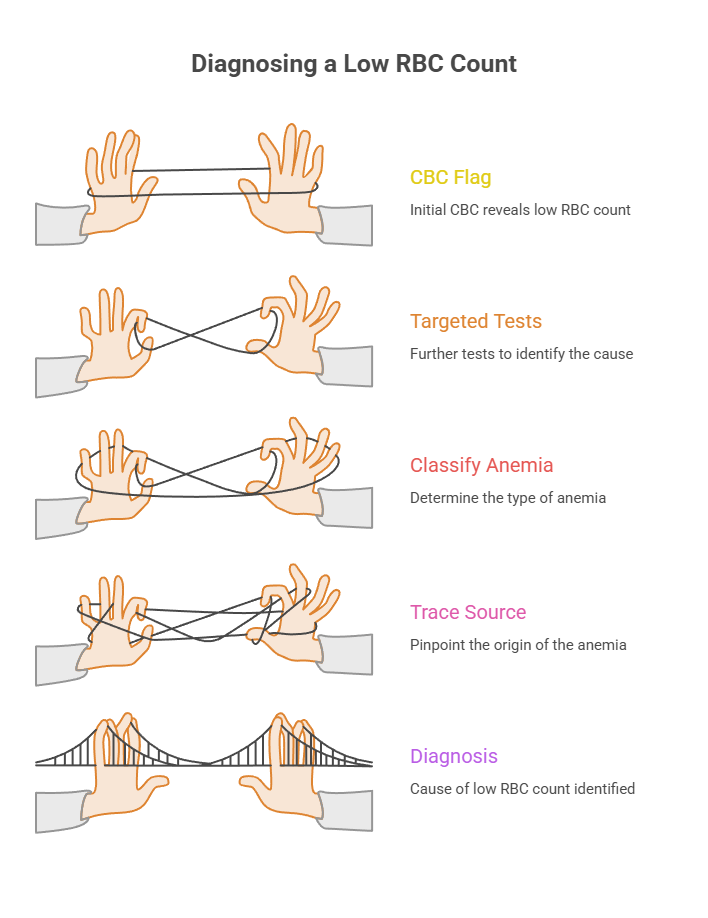
No fasting is needed for a basic CBC, and results are usually available the same or the next day. Most independent labs price a CBC modestly, often around $29, so confirming a low RBC count is rarely a barrier. The real interpretive power comes from the red cell indices.
The CBC and RBC Indices (MCV, MCHC, RDW)
The indices describe the size, hemoglobin content, and uniformity of your red cells, which narrows the cause fast. Mean corpuscular volume (MCV) is the most useful single value.
A low MCV (microcytic) points toward iron deficiency or thalassemia, while a high MCV (macrocytic) suggests B12 or folate deficiency. A normal MCV (normocytic) fits blood loss, kidney disease, or chronic illness.
Red cell distribution width (RDW) measures size variation and often rises early in iron deficiency. Reading MCV and RDW together usually tells the story before further tests return.
Tests Beyond the CBC
Once the indices suggest a direction, follow-up labs confirm it. Ferritin and serum iron assess iron stores, while B12 and folate levels check those nutrients.
A blood smear may examine the size, shape, and number of red cells, and blood tests can check the iron in your blood and stored in your body. A reticulocyte count shows whether the marrow is responding, and a stool test can hunt for hidden bleeding.
For stubborn or severe cases, a doctor may order kidney and thyroid tests or, rarely, a bone marrow exam. Genetic testing such as hemoglobin electrophoresis can confirm inherited causes like thalassemia or sickle cell trait. Our lab partners note that most low RBC mysteries resolve with this tiered approach.
The statistics below show how common a low RBC count and iron problems are across the US, with sources noted in the table.
| US Statistic | Figure | Source |
| Adults with anemia | About 7% | JAMA Network Open, 2024 |
| Overall anemia prevalence (age 2+) | 9.3% | CDC NCHS, NHANES 2021 to 2023 |
| Women with anemia | 13.0% | CDC NCHS, NHANES 2021 to 2023 |
| Adults with absolute iron deficiency | 14% | JAMA Network Open, 2024 |
| Adults with functional iron deficiency | 15% | JAMA Network Open, 2024 |
| Black non-Hispanic females with anemia | 31.4% | CDC NCHS, NHANES 2021 to 2023 |
How to Raise a Low RBC Count
Raising a low RBC count is not about chasing the number upward, it’s about fixing what caused it. The right move depends on whether the issue is iron, a vitamin, blood loss, or something deeper.
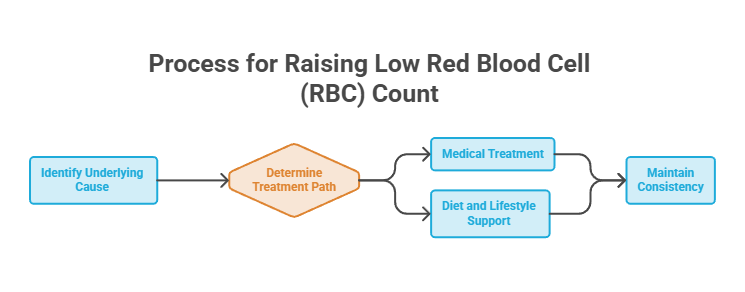
That said, several proven steps support red cell production once your doctor knows the cause. Diet and lifestyle help, but they work best alongside the correct medical treatment. Consistency matters more than intensity here, since rebuilding a healthy red cell supply takes weeks, not days.
Treat the Underlying Cause First
If a slow GI bleed is draining your red cells, no amount of spinach fixes it until the bleed is found and stopped. If kidney disease is the driver, treatment targets erythropoietin, not the dinner plate.
Treatment may help the RBC count improve on its own, and diet and lifestyle choices can also support specific treatments. This is why our medical team insists on a diagnosis before a plan.
Getting the cause right also prevents over-treatment. Loading up on iron when the real issue is B12 deficiency simply delays the help you actually need.
Iron, B12, Folate, and Supporting Nutrients
Your marrow needs specific building blocks to make red cells. Ways to boost a low RBC count include eating foods rich in iron, copper, and vitamins B12, B9 (folate), C, and A, along with more exercise and less alcohol.
Iron comes in two forms, heme iron from animal foods, which absorbs more easily, and non-heme iron from plants. Pairing plant iron with vitamin C improves absorption noticeably.
Vitamin B12 and folate drive healthy cell maturation, while copper and vitamin A play supporting roles. A doctor or registered dietitian can match the nutrients to your specific deficiency.
Foods That Support Red Blood Cell Production
A red-cell-friendly plate leans on iron-rich staples. Think lean red meat, poultry, fish, eggs, beans, lentils, tofu, spinach and other leafy greens, and iron-fortified cereals. Organ meats like liver are especially iron-dense, while shellfish such as oysters and clams rank among the richest natural sources.
Add vitamin C sources like citrus, bell peppers, strawberries, and tomatoes to meals to help absorb non-heme iron. B12 comes from animal foods and fortified products, while folate fills leafy greens, legumes, and fortified grains.
Limiting alcohol and spacing coffee or tea away from iron-rich meals helps too, since they hinder iron uptake. Patients we serve often report steadier energy once iron-rich meals become routine, though food alone rarely corrects significant anemia.
Medical Treatments
When diet isn’t enough, medical options step in based on the cause. Oral iron supplements are first-line for iron deficiency, sometimes followed by intravenous iron when pills aren’t tolerated or absorbed.
Depending on the cause and severity, a doctor may instruct you to take daily iron pills, order blood transfusions, or order injections of a growth factor such as darbepoetin or epoetin that stimulate red blood cell production. Those erythropoiesis-stimulating agents are typical in kidney disease and chemotherapy-related anemia.
A doctor may rarely recommend a red blood cell transfusion if levels do not respond to medications and lifestyle changes, or when anemia is severe. The table below maps common scenarios to sensible next steps.
| Scenario | What It May Mean | Recommended Action |
| Mildly low RBC, no symptoms | Early or nutritional anemia | Recheck CBC, test ferritin, B12, folate |
| Low RBC with heavy periods | Iron-deficiency anemia | See your doctor; discuss iron and bleeding |
| Low RBC plus tingling or numbness | Possible B12 deficiency | Request B12 testing before iron loading |
| Low RBC and known kidney disease | Low erythropoietin | Ask about ESA therapy and iron support |
| Low RBC with black or bloody stools | Possible GI bleeding | Seek prompt evaluation and stool testing |
| Severe symptoms, very low hemoglobin | Severe anemia | Seek urgent or emergency care now |
When to See a Doctor
A flagged low RBC count on routine labs is a reason to follow up, not to spiral. The timing of that visit depends on your symptoms and how low the number is.
Booking a CBC with iron studies is a sensible first step when fatigue lingers. Our medical reviewers encourage testing early rather than waiting for symptoms to worsen.
Red-Flag Symptoms That Need Urgent Care
Some situations call for same-day or emergency attention. Don’t wait for a scheduled appointment if these appear.
Seek urgent care for chest pain, shortness of breath at rest, fainting, a racing or irregular heartbeat, or signs of active bleeding like vomiting blood or black, tarry stools. Sudden severe weakness or confusion belongs in this group too.
People with heart disease, lung disease, or pregnancy should treat new or worsening symptoms more cautiously. In cases reviewed by our medical team, prompt action in these groups prevents complications.
Questions to Ask Your Doctor
A few focused questions turn a confusing result into a clear plan. Bring them to your visit.
Ask what your MCV and RDW suggest about the cause, whether you need ferritin, B12, or folate testing, and whether any bleeding source should be ruled out. Then ask which treatment fits your specific cause and when to recheck your count.
It’s also fair to ask whether medications, diet, or a recent illness could be contributing. Writing your symptoms and their timeline down beforehand helps your doctor spot patterns faster. Patients who arrive with these questions tend to leave with a much clearer path forward.
Frequently Asked Questions
What is considered a low RBC count?
A low RBC count falls below your lab’s reference range, generally under about 4.7 million cells per microliter for men and 4.2 million for women. Because labs differ, compare your result to the range on your report, and remember doctors weigh hemoglobin and red cell indices alongside the count.
What is the most common cause of a low RBC count?
Iron deficiency is the most common cause, often from inadequate intake, poor absorption, or blood loss like heavy periods or slow gastrointestinal bleeding. A recent US study estimated nearly one in three adults are iron deficient, so it’s a frequent, usually treatable explanation behind a low count.
What are the symptoms of a low red blood cell count?
The hallmark symptoms are fatigue and weakness that rest doesn’t fix, plus pale skin, shortness of breath, dizziness, cold hands and feet, headaches, and a rapid heartbeat. Some people develop unusual signs like ice cravings, restless legs, or brittle nails, especially with iron deficiency.
Is a low RBC count dangerous?
Often it’s mild and easily treated, but it can be dangerous when severe or sudden. Severe anemia strains the heart and can become life-threatening, particularly with existing heart or lung disease. Chest pain, breathlessness at rest, or fainting are urgent signs that need immediate medical care.
What RBC level is dangerously low?
There’s no single universal cutoff, since it depends on hemoglobin, symptoms, how fast it dropped, and your health. Doctors often flag hemoglobin below 8 g/dL as severe. Any low count paired with chest pain, fainting, or breathlessness warrants urgent attention regardless of the exact number.
Can a low RBC count mean cancer?
It can, since some cancers affect the bone marrow or cause chronic blood loss and inflammation, but most low counts are not cancer. Iron deficiency and other benign causes are far more common. A persistent or unexplained low count deserves a proper workup rather than assumption.
How can I raise my RBC count naturally?
Treat the underlying cause first, then support production with iron-rich foods, vitamin B12, folate, and vitamin C to aid absorption. Limiting alcohol and regular exercise help too. Food alone rarely corrects significant anemia, so pair dietary changes with your doctor’s recommended treatment.
What foods increase red blood cells?
Iron-rich foods like lean red meat, poultry, fish, beans, lentils, tofu, spinach, and fortified cereals support red cell production. Add vitamin C sources such as citrus and bell peppers to boost iron absorption, and include B12 and folate from eggs, dairy, and leafy greens.
Why is my RBC low but my hemoglobin normal?
The two usually move together, but small mismatches happen. A low RBC with adequate hemoglobin can occur in conditions like thalassemia trait, where cells are fewer or smaller yet still carry enough hemoglobin. Your red cell indices help clarify, so discuss the pattern with your doctor.
How long does it take to raise a low RBC count?
It varies by cause and treatment. With oral iron for iron-deficiency anemia, many people see hemoglobin begin rising within a few weeks, though replenishing iron stores can take three to six months. Your doctor will recheck your CBC to confirm the trend.
Does a low RBC count always mean anemia?
Usually yes, since a low red cell count is the basis of anemia. Occasionally a value sits just below range without true anemia, or reflects lab variation or overhydration that dilutes the blood. Doctors confirm anemia using hemoglobin and the broader red cell picture.
Can stress or overexercise lower my RBC count?
Intense endurance training can modestly lower readings through plasma volume expansion and, in some athletes, red cell loss, sometimes called athlete’s anemia. Chronic stress isn’t a direct cause but can worsen contributing habits. A persistent low count still deserves evaluation rather than being dismissed.
Medical Disclaimer: This article is for general educational purposes and does not replace professional medical advice, diagnosis, or treatment. Reference ranges and thresholds vary between laboratories, and only a qualified healthcare provider can interpret your results in context. Always consult your doctor about a low RBC count or symptoms, and seek urgent care for chest pain, fainting, or shortness of breath at rest.
References
- CDC NCHS Data Brief No. 519: Anemia Prevalence in the United States, August 2021 to August 2023
- NHLBI: About 1 in 4 Americans May Have Inadequate Iron Intake or Absorption (JAMA Network Open, 2024)
- Cleveland Clinic: Anemia Symptoms, Causes and Treatment
- NIDDK: Anemia of Inflammation or Chronic Disease
- American Society of Hematology: Iron-Deficiency Anemia
- American Cancer Society: Anemia and Cancer