
In 2012, the New England Journal of Medicine published a photograph of a 69-year-old man’s face. The left side looked roughly two decades older than the right.
He had driven a delivery truck for 28 years. His left cheek spent all of it beside a window.
Same man. Same genes. Same birthday. One variable.
| Quick Answer More than 80% of visible facial aging comes from ultraviolet exposure, not the calendar. Time itself thins the epidermis about 6% per decade, cuts collagen production roughly 1% a year from the mid-20s, reduces oil and sweat output, and leaves blood vessels fragile enough to bruise from light contact. Gradual, symmetric change is expected. Sudden, rapid, or one-sided change is not. |
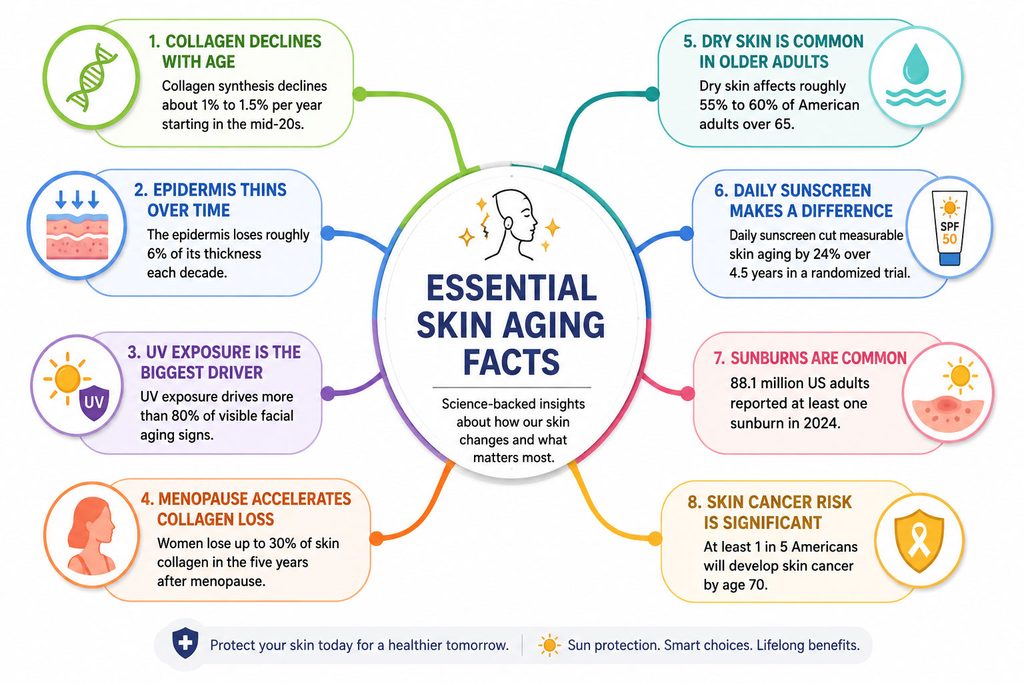
| At a Glance Collagen synthesis declines about 1% to 1.5% per year starting in the mid-20sThe epidermis loses roughly 6% of its thickness each decadeUV exposure drives more than 80% of visible facial aging signsWomen lose up to 30% of skin collagen in the five years after menopauseDry skin affects roughly 55% to 60% of American adults over 65Daily sunscreen cut measurable skin aging by 24% over 4.5 years in a randomized trial88.1 million US adults reported at least one sunburn in 2024At least 1 in 5 Americans will develop skin cancer by age 70 |
What Actually Happens Inside Aging Skin
Most people picture skin aging as a surface event. It mostly happens two layers down.
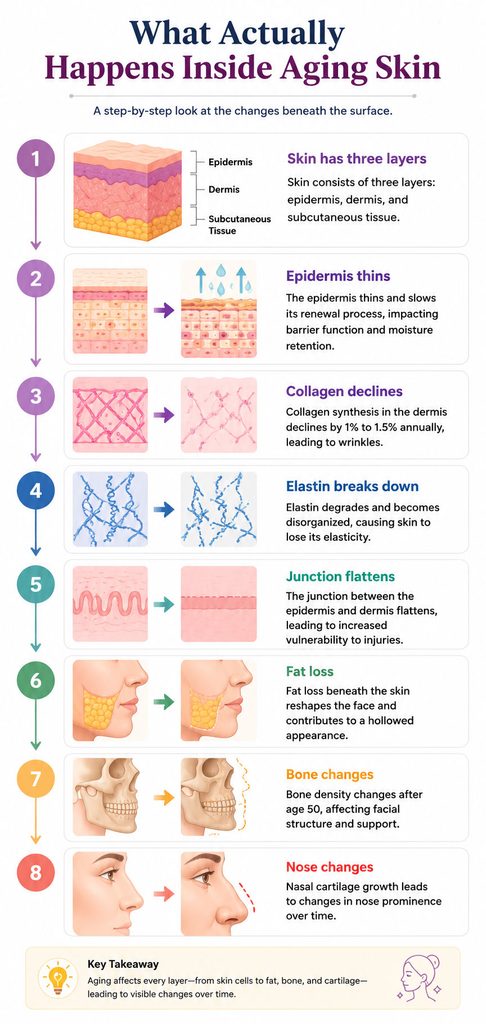
Your skin has three working layers, and each changes on its own schedule. Knowing which layer is doing what explains why a moisturizer fixes some problems and does nothing at all for others.
Patients who book preventive health panels with us frequently describe skin complaints as cosmetic and mention them last. Our medical reviewers treat them differently, because several of the changes below are the first visible sign of something systemic.
The Epidermis: Thinner, Slower, Less Protected
The epidermis is the outer sheet you can see and touch. It holds moisture in, keeps irritants out, and replaces itself continuously.
That replacement cycle slows. In a young adult, a new cell takes roughly 20 days to travel from the basal layer to the surface. In an older adult it can take 30 days or more, with a sharper drop after age 50.
Thickness falls alongside it. Research summarized by the University of Florida’s medical physiology program puts epidermal thinning at about 6% per decade.
The number of cell layers stays roughly constant. According to MedlinePlus, what changes is the quality of those layers, not the count.
Pigment cells shift too. Melanocyte numbers drop while the survivors enlarge, which is why older skin often looks paler overall yet develops distinct dark patches.
Why This Matters Beyond Appearance
A thinner epidermis with slower turnover is a weaker barrier. Water escapes faster, irritants penetrate more easily, and small injuries take longer to seal.
Dryness in older skin is not a product problem. It is a structural one, which is why the fix is barrier repair rather than fragrance and hydration marketing.
The Dermis: Where Collagen and Elastin Go
The dermis sits underneath and does the structural work. Collagen supplies tensile strength; elastin supplies recoil.
Collagen makes up most of skin’s dry weight. A 2025 systematic review in the American Journal of Medicine reports that collagen synthesis declines by roughly 1% to 1.5% annually with aging, deepening wrinkles and facial lines.
At the same time, enzymes called matrix metalloproteinases break down existing collagen faster than fibroblasts rebuild it. Production falls while demolition accelerates.
Elastin takes a different route. It does not simply vanish; it degrades and clumps into disorganized material, a process called elastosis. That is why aged skin hangs instead of snapping back.
The Junction That Comes Unglued
There is a change almost nobody mentions, and it explains more real-world problems than wrinkles do.
The border where epidermis meets dermis is normally corrugated, with interlocking ridges that anchor the two layers together. With age, that border flattens.
Flatten the connection and the layers shear apart under pressure. This one change explains skin tears, blisters from adhesive tape, and why an older forearm can split open from a bump against a doorframe.
Below the Dermis: Fat, Bone, and Cartilage
Fat loss under the skin reshapes the face independently of the skin itself. Cleveland Clinic dermatologists describe volume loss in the cheeks, temples, chin, nose, and eye area producing loose skin and a hollowed look.
Bone contributes as well. Facial bone density changes become visible after roughly age 50, adding to puckering around the mouth and reduced midface support.
Nasal cartilage keeps growing and eventually droops, making the bony structures of the nose more prominent. None of this is skin damage, and all of it reads as aged skin.
Intrinsic Aging vs Photoaging: Two Different Clocks
Dermatologists split skin aging into two processes running at the same time.
Intrinsic aging, also called chronological aging, happens everywhere on your body regardless of exposure. It is genetically programmed, gradual, and produces fine lines, thinning, and general laxity.
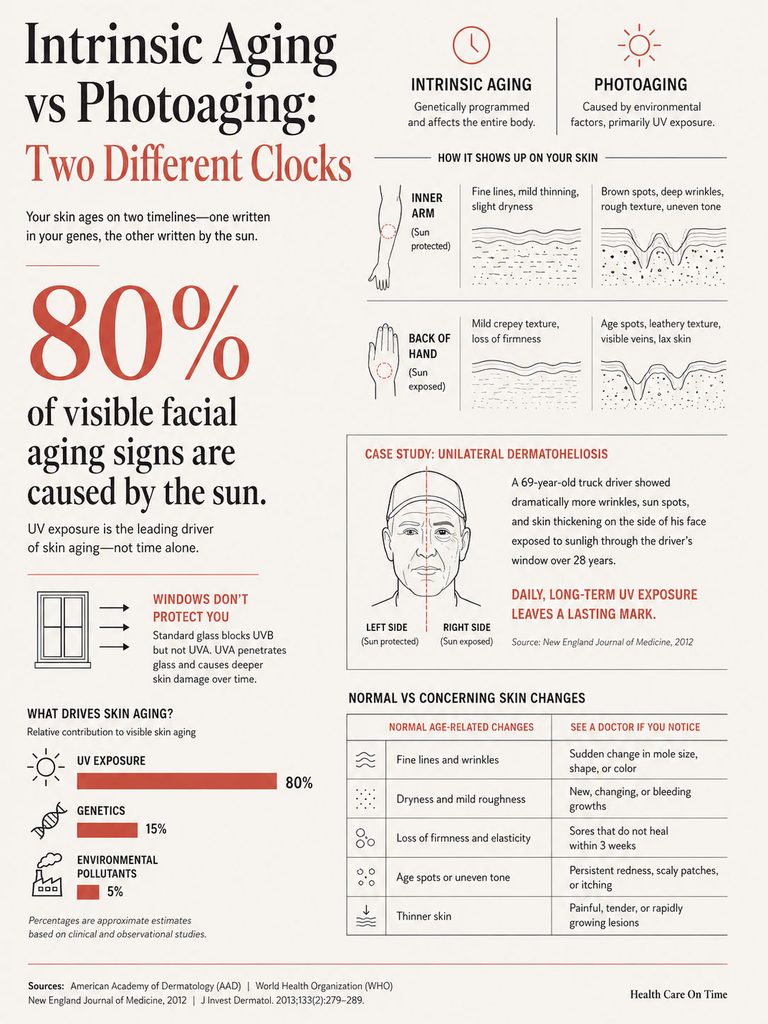
Extrinsic aging is driven by the outside world: ultraviolet radiation, tobacco smoke, and pollution. When UV is the driver, it earns its own name, photoaging.
The Control Group You Already Have
You carry a comparison built into your own body. Look at the skin on your inner upper arm, then look at the back of your hand.
Same age. Same genes. Same diet. Radically different texture, tone, and thickness.
That gap is photoaging, and it is why the Merck Manual states plainly that sun damage causes most of what people call aging skin.
The Face That Proved It
Back to the truck driver. His condition was published as unilateral dermatoheliosis by physicians at Northwestern University in the New England Journal of Medicine.
The exposed side showed thickened, deeply furrowed skin with open comedones and nodular elastosis. Biopsy confirmed elastolytic material accumulating in the dermis.
The protected side looked like an ordinary 69-year-old man. The image did more for sunscreen compliance in the United States than a decade of public health campaigns.
Why Window Glass Is Not Protection
Standard automotive side glass and most building glass block UVB reasonably well. UVA passes straight through.
UVA penetrates deeper, reaching the dermis where collagen and elastin live. It is the wavelength most responsible for the structural breakdown behind wrinkling and sagging.
That is the mechanism behind the driver’s face. It is also why commuters, window-seat office workers, and anyone who drives for a living accumulate lopsided damage.
A 2013 study in Clinical, Cosmetic and Investigational Dermatology compared sun-seeking and sun-avoiding women and concluded that UV exposure accounts for roughly 80% of visible facial aging signs. Pigment changes tracked most closely with sun habits, while sagging tracked more with chronological age.
Table 1: Normal Age-Related Change vs What Needs a Doctor
| Skin Change | What Normal Aging Looks Like | Why It Happens | Not Normal If | Typical Onset |
| Fine lines and wrinkles | Gradual, symmetric, deepest in expression lines and sun-exposed areas | Collagen down about 1% per year, elastin degradation, repeated facial movement | One side only, or appearing suddenly over weeks | Late 20s to 30s |
| Dryness and itch | Seasonal, worse on shins and forearms, responds to emollients | Altered lipid content of the stratum corneum, less sebum | Itching all over with no visible rash, or itch that wakes you at night | 40s onward, sharper after 65 |
| Age spots (solar lentigines) | Flat, uniformly tan to brown, stable borders, on hands, face, shoulders | Enlarged melanocytes plus cumulative UV | A spot changes size, shape, or color, or has ragged borders | 40s to 50s |
| Easy bruising | Flat purple patches on forearms and hands after minor contact | Fragile vessel walls, less perivascular collagen support | Bruising on the trunk, with bleeding gums, or with fatigue | 60s onward |
| Thin, fragile, tearing skin | Translucent skin that tears from tape or a light bump | Dermal-epidermal junction flattening, dermal thinning | Recurrent tears in someone under 60, or on long-term steroids | 65 onward |
| Sagging and volume loss | Even, gradual loss in cheeks, jawline, neck | Fat pad atrophy, bone resorption, elastosis | Rapid facial hollowing with unexplained weight loss | 50s onward |
| New growths | Waxy brown seborrheic keratoses, small red cherry angiomas | Benign age-related proliferation | A growth that bleeds, crusts, or fails to heal in 3 weeks | 40s onward |
| Slow-healing sores | A minor cut takes 2 to 3 weeks instead of 1 | Epidermal turnover down about 50%, reduced angiogenesis | Any sore open past 3 weeks, or one that keeps returning in the same spot | 60s onward |
Your Skin, Decade by Decade
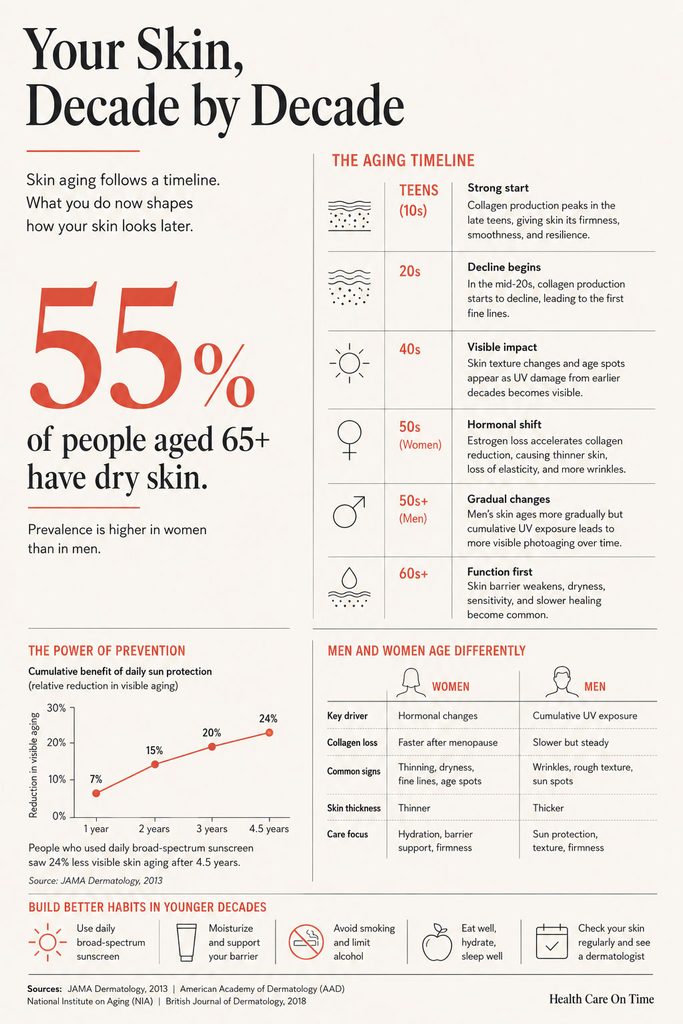
Skin aging is not linear, and the decade you are in changes which advice is worth your attention.
Your 20s and 30s: The Quiet Deficit
Collagen production peaks in the late teens to early 20s, then tips into net loss around the mid-20s. Nothing is visible yet because the dermis has structural surplus to spend.
Fine lines start showing between the brows and at the outer corners of the eyes, usually late in this window. Skin still bounces back fast from a bad week.
This is the highest-leverage decade for prevention and the one most people skip entirely. Damage accumulating now is being written into tissue you will be looking at in 2045.
Your 40s: The First Visible Turn
Cell turnover has slowed enough to change texture. Skin looks duller because dead cells linger on the surface.
Pigment irregularity becomes obvious. Age spots on the hands, forearms, and upper chest reflect UV exposure from decades earlier, not from last summer.
Under-eye hollowing begins as fat pads shift and thin. Lines that used to disappear when your face relaxed now stay put.
Your 50s: Menopause Changes the Math
For women, this decade is not a slope. It is a step.
Estrogen regulates collagen synthesis, dermal elasticity, and water retention. When it falls, all three fall with it.
The figure most cited in dermatology traces to Brincat’s work in Obstetrics & Gynecology, reproduced in the Journal of Integrative Dermatology: up to 30% of dermal collagen is lost in the first five postmenopausal years, then roughly 2% per year after that.
Set that against the 1% baseline and the phrase “my skin changed overnight” stops sounding like exaggeration. It is arithmetic.
Sebum production drops sharply in the same window. Skin that was oily for 40 years can turn dry within two, and barrier function declines alongside it.
Across patients we serve, questions about sudden skin change cluster tightly in the 48-to-56 age range, which maps almost exactly onto what the collagen data predicts. Readers tracking other signs of the menopausal transition will find the pattern familiar.
Systemic estrogen therapy does measurably increase dermal collagen and skin thickness in postmenopausal women. It is prescribed for menopausal symptoms and bone protection, not for skin, and the decision belongs with your physician after a full risk discussion.
Men’s Skin Ages on a Different Curve
Male skin is roughly 20% to 25% thicker than female skin at the same age and carries more collagen density at baseline. That head start is real, and it is why men often look unchanged into their late 30s.
The tradeoff arrives later. Men lose collagen on a steadier linear slope without the cliff at menopause, so the decline is slower but never pauses.
Men also accumulate far more cumulative UV. American men report lower sunscreen use than women across every age bracket, and outdoor occupations skew male, which shows up as heavier photoaging on the neck, ears, and scalp.
Ear and scalp lesions matter here. These are common sites for actinic keratosis and non-melanoma skin cancer in men, and they are the two places nobody checks in the mirror.
Your 60s, 70s, and Beyond: Function Over Appearance
The conversation changes here, and most articles fail to make the turn.
The problems that matter are no longer cosmetic. They are barrier failure, delayed healing, temperature regulation, reduced sensation, and cancer risk.
Dry skin becomes near-universal. A multicenter primary care study published in Dermatology found xerosis in 55.6% of patients aged 65 and older, with women affected more often than men.
The Rotterdam Study, examining 5,547 middle-aged and older adults, found dry skin in 60% of participants. This is not a minority complaint.
The Numbers Behind US Skin Aging
Most of what ages American skin is preventable, and most Americans are not preventing it.
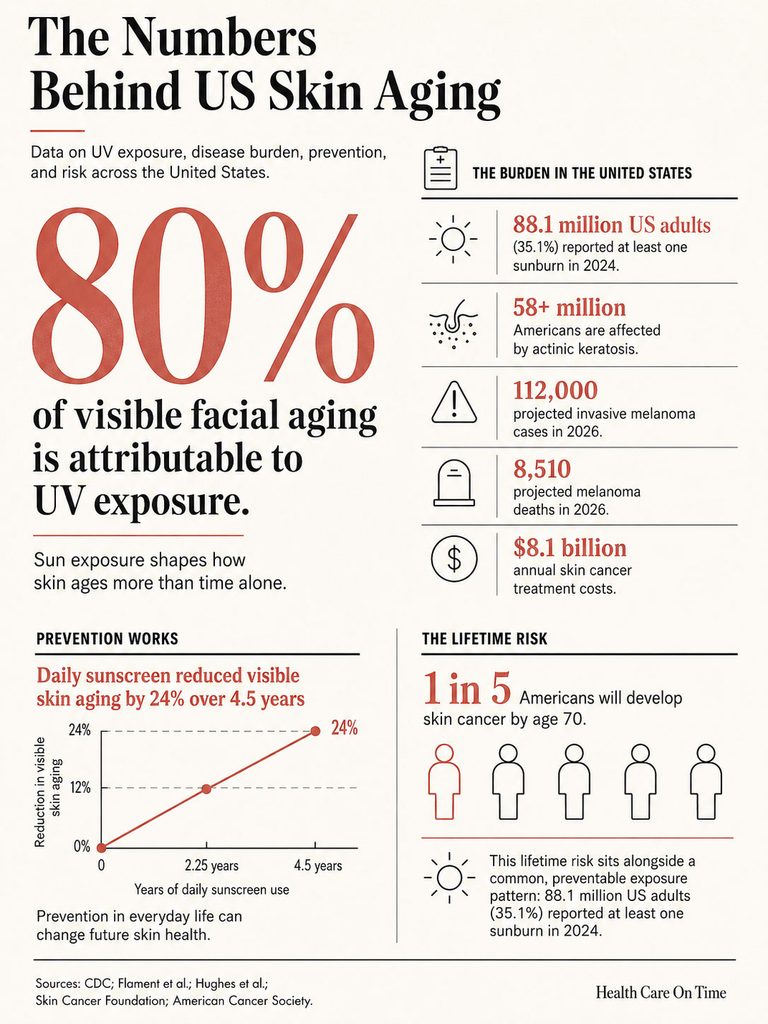
The Centers for Disease Control and Prevention reported in May 2026 that 88.1 million US adults, or 35.1%, had at least one sunburn during 2024. A sunburn is not a cosmetic event. It is a documented DNA damage event.
Table 2: US Skin Aging and Sun Damage by the Numbers
| Metric | Figure | Population / Setting | Source |
| Visible facial aging attributable to UV | More than 80% | 298 women, sun-seeking vs sun-avoiding, clinical grading | Flament et al., Clin Cosmet Investig Dermatol, 2013 |
| Skin aging reduction with daily sunscreen | 24% less over 4.5 years | 903 adults under 55, randomized controlled trial | Hughes et al., Annals of Internal Medicine, 2013 |
| US adults with at least one sunburn in 2024 | 88.1 million (35.1%) | National Health Interview Survey | CDC MMWR, May 21, 2026 |
| Americans affected by actinic keratosis | More than 58 million | US population estimate | Skin Cancer Foundation |
| Projected invasive melanoma cases, 2026 | 112,000 (65,400 men, 46,600 women) | United States | American Cancer Society, Cancer Facts & Figures 2026 |
| Projected melanoma deaths, 2026 | 8,510 | United States | American Cancer Society, 2026 |
| Annual US skin cancer treatment cost | About $8.1 billion | US healthcare spending | Skin Cancer Foundation |
| Lifetime skin cancer risk by age 70 | At least 1 in 5 Americans | US population | Skin Cancer Foundation |
| Dry skin prevalence, adults 65+ | 55.6% | 756 primary care patients | Paul et al., Dermatology, 2011 |
What Americans Are Actually Doing About It
Melanoma incidence tells its own story about cumulative exposure. The American Cancer Society reports that rates in adults under 50 have stabilized or declined slightly, while rates in adults 50 and older keep climbing.
Roughly 90% of melanoma diagnoses are attributed to UV exposure, which makes most of that burden avoidable.
Sunscreen habits are the weak link. National survey data has shown consistent use of any sun-protective behavior hovering around 30% of US adults for decades, and daily sunscreen use sits well below that.
One labeling detail matters for American shoppers. The FDA requires the phrase “broad spectrum” on products tested to protect against UVA as well as UVB, and only broad-spectrum SPF 15 or higher may claim to reduce skin aging and cancer risk.
An SPF number alone tells you about sunburn protection, which is UVB. If the label does not say broad spectrum, it is not addressing the wavelength that drives most photoaging.
The Changes Nobody Warns You About
Ask most people what aging does to skin and you get wrinkles. The changes that actually send people to a clinic are different.
Why Bruises Appear From Nothing
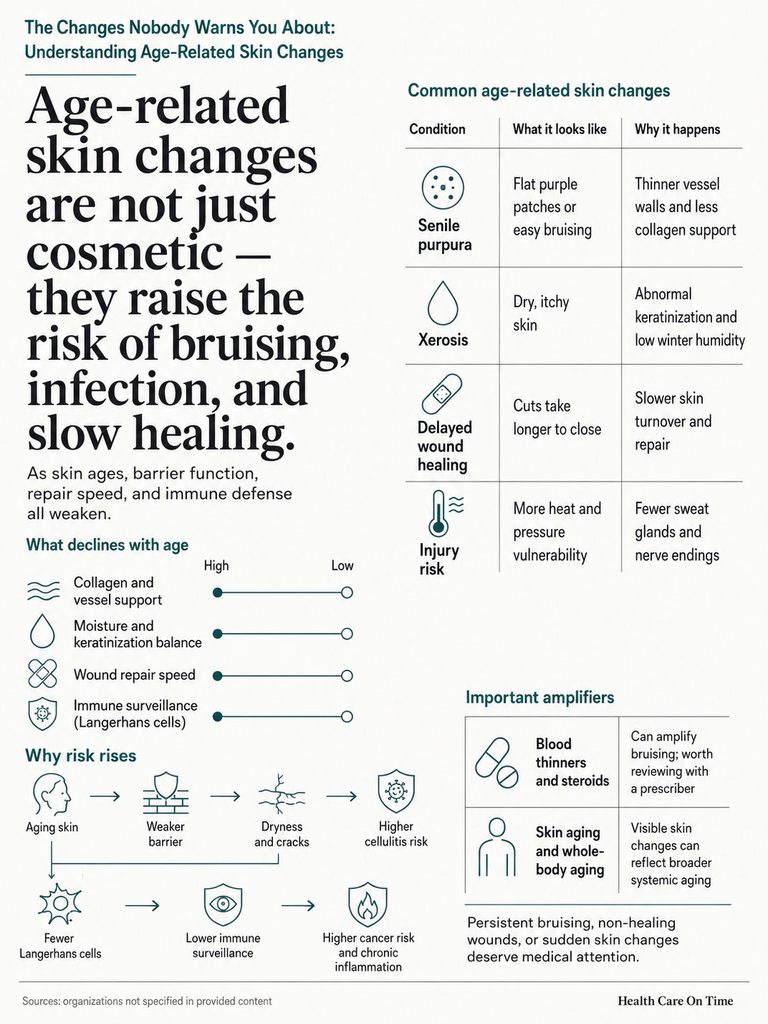
Senile purpura shows up as flat purple patches on the forearms and backs of the hands, often with no remembered injury.
Two things cause it. Vessel walls thin, and the collagen scaffolding that normally cushions those vessels thins with them. The National Institute on Aging notes these bruises also take longer to clear.
Blood thinners, aspirin, and long-term steroids amplify the effect considerably. That combination is worth reviewing with your prescriber, particularly if bruises are appearing on your trunk rather than just your limbs.
Dry, Itchy Skin Is Not Just Cosmetic
Xerosis is not simply skin holding less water. Research points to abnormal keratinization and altered lipid composition in the stratum corneum as the underlying problem.
American winters make it worse in a specific, fixable way. Forced-air heating drops indoor relative humidity into the teens or twenties, and skin loses water to dry air faster than a compromised barrier can replace it.
Once skin cracks, the barrier is breached. Scratching widens the breach, and that opens a route for bacteria at exactly the age when immune surveillance in skin is weakest.
Cellulitis risk climbs steeply in older adults with swelling, obesity, or any break in the skin. Treating dryness early is infection prevention, not vanity.
Wounds That Take Twice as Long
Epidermal turnover in aged skin runs roughly 50% slower. Alongside that, vascularization, granulation tissue formation, collagen deposition, and fibroblast activity all decline.
The practical result is that a cut closing in a week at 30 may take two to three weeks at 70. Healing is delayed rather than blocked, and the end result is usually similar, but the window of vulnerability is far longer.
Our medical reviewers note that delayed healing plus unexplained bruising is one of the most common combinations that turns a skin complaint into a full workup, because both can also signal diabetes, thyroid disease, or nutritional deficiency.
Temperature, Sensation, and Injury Risk
Sweat gland numbers fall, dermal blood vessels decrease, and the skin’s ability to shed heat drops with them. This is a genuine contributor to heat illness risk in older Americans during summer.
Nerve endings in the skin also decrease, so pain and pressure register later and less intensely. Someone can sustain a burn or a pressure injury without feeling it early enough to react.
Skin surface temperature runs lower in older adults because of reduced blood supply, which is why feeling cold in a room everyone else finds comfortable is common after 70.
Immune Surveillance and Cancer Risk
Langerhans cells, the immune sentinels of the epidermis, decline with age. Cumulative DNA damage builds up in tissue that is less able to detect and clear abnormal cells.
Senescent cells, which have stopped dividing but refuse to die, accumulate in both epidermis and dermis. A 2026 review in The EMBO Journal describes these cells releasing inflammatory signals that degrade surrounding tissue.
That low-grade inflammatory state connects skin aging to the same chronic inflammation markers tracked in cardiovascular and metabolic screening. The same review points to experimental work in which senescent fibroblasts transplanted into young skin propagated aging signals to distant organs.
Skin may be an active participant in whole-body aging, not merely a record of it.
What Speeds It Up, and How Much You Control
Smoking: The Twin Study
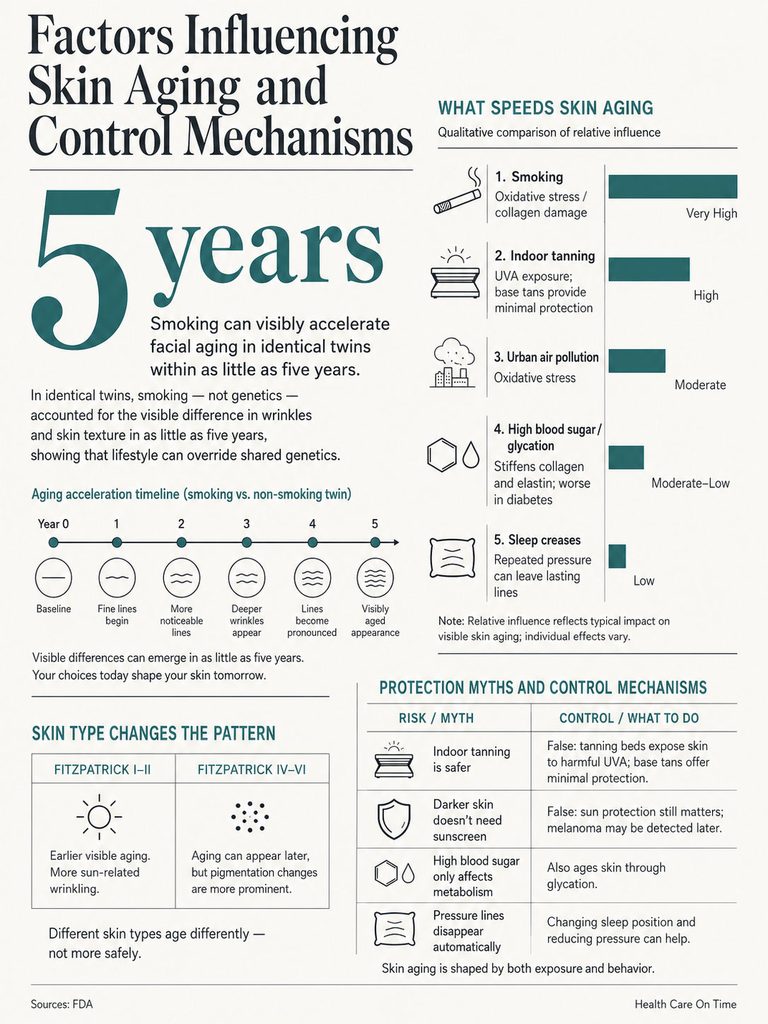
Plastic surgeons from Case Western Reserve University ran an experiment that is hard to argue with. At the Twins Days Festival in Twinsburg, Ohio, they photographed 79 pairs of identical twins in which one twin smoked, or had smoked at least five years longer.
Blinded judges graded the faces. The heavier-smoking twin scored worse on upper eyelid redundancy, lower lid bags, malar bags, nasolabial folds, upper lip wrinkles, and jowls.
Five years of difference was enough to see. Identical genetics, different faces, with damage concentrated in the middle and lower thirds.
Tanning Beds
Indoor tanning delivers concentrated UVA to skin that has no natural defense against it, and it does so on purpose.
The FDA classifies sunlamp products as moderate-risk medical devices and requires a black-box warning against use by anyone under 18. Multiple US states have banned minors from indoor tanning outright.
There is no protective preparation happening. A base tan is skin damage that offers roughly the equivalent of SPF 3.
Pollution, Sleep, and Indoor Heating
Airborne particulates generate oxidative stress and activate the same collagen-degrading enzymes UV activates. Urban skin ages faster than rural skin at matched sun exposure.
Sleep position leaves marks. Creases pressed into the same spot for decades eventually stop rebounding, which is why long-term side sleepers develop vertical cheek and chest lines.
Blood Sugar and Glycation
Excess glucose binds to collagen and elastin fibers and stiffens them through cross-linking. The stiffened protein loses flexibility and resists normal turnover.
This is one reason poorly controlled diabetes shows up in skin quality. It is also the most legitimate mechanism behind the claim that sugar ages your face.
Skin Tone and the Fitzpatrick Scale
Dermatologists classify skin using the Fitzpatrick scale, running from Type I (always burns, never tans) through Type VI (deeply pigmented, rarely burns). Aging patterns differ measurably across that range.
Higher melanin content provides real UV protection. As MedlinePlus notes, fair-skinned people show more aging change than people with darker, more heavily pigmented skin.
Types I and II show wrinkling and elastosis earliest, often visibly by the 40s. Types IV through VI wrinkle later and less severely but develop more pigment irregularity, including melasma and post-inflammatory hyperpigmentation that can persist for months.
Volume loss and sagging follow roughly the same timeline for everyone, because fat and bone do not care about melanin.
The dangerous misreading is that darker skin needs neither sun protection nor skin checks. Melanoma in patients with darker skin is diagnosed later and at worse stages, and it appears more often on palms, soles, and under nails, which are the sites people never think to examine.
What the Evidence Actually Supports
The anti-aging market sells hundreds of ingredients. A short list has controlled trial evidence.
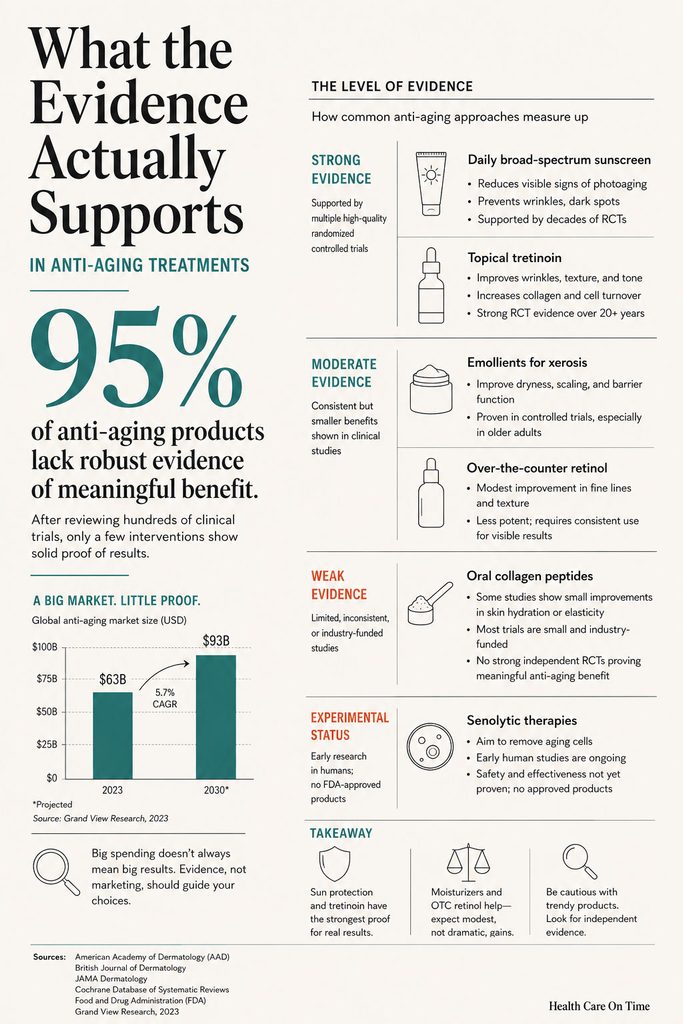
Table 3: Interventions Graded by Evidence Strength
| Intervention | Evidence Grade | Best Available Study | Measured Effect |
| Daily broad-spectrum sunscreen | Strong | Nambour RCT, 903 adults, 4.5 years | 24% less skin aging vs discretionary use |
| Topical tretinoin (prescription) | Strong | Meta-analysis, 8 RCTs, 1,361 patients, 2025 | Significant improvement in fine and coarse wrinkles vs vehicle |
| Emollients for xerosis | Moderate | Multiple controlled trials in older adults | Reliable reduction in dryness and itch |
| Over-the-counter retinol | Moderate | Head-to-head trials vs tretinoin | Real but smaller wrinkle improvement |
| Systemic estrogen (postmenopausal) | Moderate | Multiple controlled studies | Increased dermal collagen and skin thickness |
| Oral collagen peptides | Weak | Meta-analyses of small, short, industry-funded trials | Reported improvement, mechanism contested |
| Beta-carotene supplements | None for aging | Nambour RCT arm | No overall effect on skin aging |
| Senolytic therapies | Experimental | Preclinical and early human work | No FDA-approved product for skin aging |
Strong Evidence
Daily broad-spectrum sunscreen has randomized trial support. In the Nambour trial published in Annals of Internal Medicine, 903 adults were randomized to daily versus discretionary sunscreen use.
After four and a half years, the daily-use group showed no detectable increase in skin aging, and 24% less aging than the discretionary group. The same trial tested beta-carotene supplements and found no overall effect.
Topical tretinoin is the second item with real backing. A 2025 meta-analysis in Dermatology Practical & Conceptual pooled eight randomized trials covering 1,361 patients and found significant improvement in both fine and coarse wrinkles versus vehicle.
Tretinoin works two ways. It suppresses the enzymes that degrade collagen, and it upregulates new type I procollagen production.
It is prescription-only in the United States and it irritates skin, which is why every dermatologist starts patients at twice weekly.
Moderate Evidence
Emollients and barrier-repair moisturizers reliably improve xerosis and reduce itch. Ointments and creams outperform thin lotions, and applying within a few minutes of bathing matters more than the brand on the jar.
Over-the-counter retinol works through the same receptor pathway as tretinoin at lower potency. Head-to-head trials show genuine but smaller improvement.
Weak or Unsettled
Oral collagen peptide supplements have produced positive meta-analyses, but the underlying trials are small, short, and heavily industry-funded. The premise that eating collagen builds skin collagen remains contested.
Most cosmeceutical peptides sold at premium prices have no independent randomized evidence. Vitamin C serums have plausible mechanism and thin clinical data.
Our medical reviewers apply the same standard here that applies to any lab result: what does the controlled trial show, not what does the packaging claim.
Emerging
Senolytics and senomorphics, compounds designed to clear or quiet senescent cells, are the most active area in skin aging research. Human results are early and nothing is FDA-approved for this purpose.
Treat anything marketed today as a senolytic skincare product as unproven.
When to Stop Watching and Start Acting
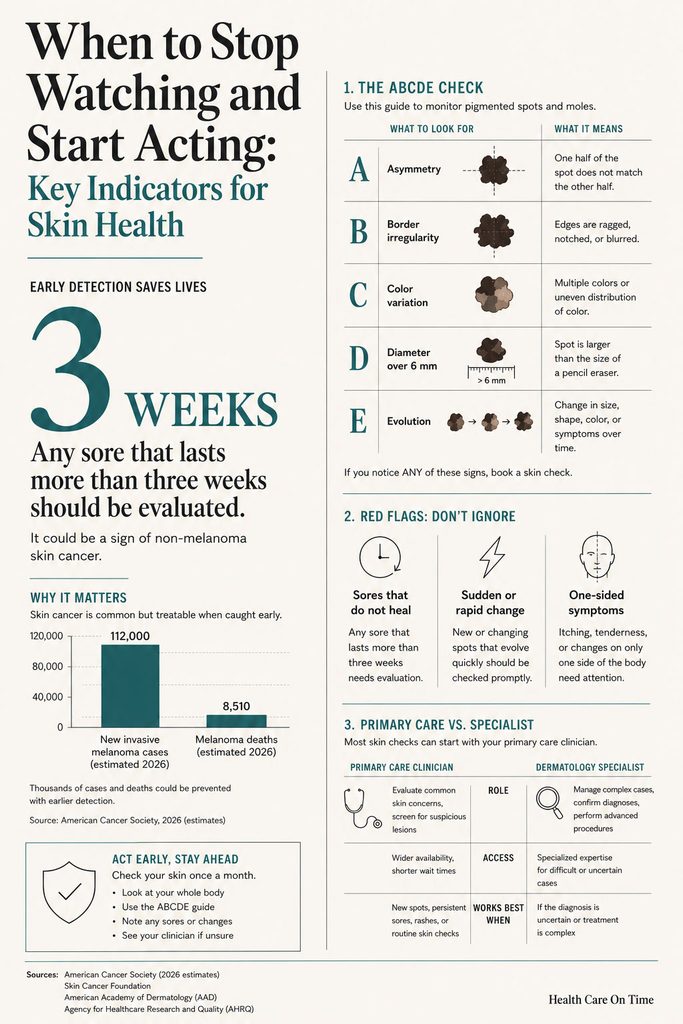
The ABCDE Check
Run this on any pigmented spot, monthly, in good light. Asymmetry, Border irregularity, Color variation, Diameter over 6 millimeters (about a pencil eraser), Evolving over time.
Evolving matters most. A spot that is changing outranks a spot that merely looks unusual.
Check the places you cannot see easily. Scalp, ears, back, backs of the legs, soles, and under the nails all need a mirror or another person.
Sores That Do Not Heal
Any open sore, scab, or crusted patch that has not resolved in three weeks needs evaluation. Non-melanoma skin cancers frequently present exactly this way and are frequently dismissed as slow healing.
Sudden, Rapid, or One-Sided Change
Aging is slow and symmetric. Anything fast or one-sided deserves attention.
That includes sudden generalized itching without a rash, which can reflect thyroid, liver, kidney, or iron problems rather than anything dermatologic.
A Routine That Compounds
- Apply broad-spectrum SPF 30 or higher every morning, including indoors near windows and on cloudy days
- Cleanse gently with mild soap and lukewarm water, never hot
- Apply an emollient cream or ointment within three minutes of bathing
- Run a humidifier during heating season
- Add a retinoid at night if your skin tolerates it, starting two nights a week
- Get a full skin check annually, or more often with a personal or family history of skin cancer
Patients often ask us whether a skin check needs a specialist referral. In most cases a primary care clinician can perform the initial examination and refer onward if anything looks suspicious, which is worth knowing if dermatology wait times in your area run long.
Table 4: What You’re Noticing and What to Do About It
| What You’re Noticing | Most Likely Explanation | Recommended Action | Timeframe |
| Fine lines appearing in your 30s | Early intrinsic aging plus accumulated UV | Start daily SPF; add a retinoid | This month |
| Winter itching on shins and forearms | Xerosis from barrier lipid changes and dry indoor air | Emollient after bathing, humidifier, shorter warm showers | This week |
| Flat purple patches on forearms | Senile purpura from vessel fragility | Review medications with your clinician | Next appointment |
| A dark spot changing shape or color | Possible melanoma | Dermatologist evaluation | Within 2 weeks |
| Rough scaly patch that keeps returning | Possible actinic keratosis | Dermatologist evaluation | Within 4 weeks |
| A sore open longer than 3 weeks | Possible skin cancer or impaired healing | Clinical evaluation | Within 1 week |
| Generalized itching with no rash | May be systemic (thyroid, liver, kidney, iron) | Clinician visit plus lab workup | Within 2 weeks |
| Rapid facial hollowing with fatigue or weight loss | Likely not dermatologic | Primary care evaluation | Within 2 weeks |
Frequently Asked Questions
At what age does skin actually start aging?
Collagen production peaks in the late teens to early 20s and tips into net decline around the mid-20s at roughly 1% to 1.5% per year. Nothing shows for years because the dermis has structural surplus. Most people notice the first changes in their mid-to-late 30s.
What is the single biggest cause of skin aging?
Ultraviolet exposure. Research comparing sun-seeking and sun-avoiding women attributed more than 80% of visible facial aging signs to UV. Compare the skin on your inner arm to the back of your hand for a personal demonstration of the difference.
Can sun damage be reversed, or only slowed?
Partially reversed. Topical tretinoin has randomized trial evidence for improving fine and coarse wrinkles and pigment irregularity in photodamaged skin. Deep structural elastosis does not fully reverse, but texture, tone, and fine lines respond measurably.
Why does older skin bruise so easily?
Blood vessel walls thin with age, and the collagen cushioning those vessels thins alongside them. Minor contact ruptures capillaries that would have survived at 30. Blood thinners, aspirin, and long-term steroids amplify this substantially.
Is dry, itchy skin a normal part of getting older?
Common, yes. Normal, not exactly. Xerosis affects roughly 55% to 60% of adults over 65 and responds well to emollients and humidification. Itching without any rash, or itching severe enough to disturb sleep, deserves a medical workup.
Does menopause really speed up skin aging?
Substantially. Estrogen regulates collagen synthesis and water retention, and its decline drives up to 30% dermal collagen loss in the first five postmenopausal years, then roughly 2% annually. That is why the change feels abrupt rather than gradual.
At what age does skin start to sag the most?
Sagging accelerates through the 50s and 60s as fat pads atrophy, facial bone resorbs after roughly age 50, and degraded elastin loses recoil. Unlike wrinkles, sagging tracks more closely with chronological age than with sun exposure.
Do collagen supplements actually work for skin?
The evidence is weak. Published meta-analyses report positive results, but the underlying trials are small, short, and largely industry-funded. Nothing approaching the evidence quality behind sunscreen or tretinoin currently supports oral collagen for skin aging.
Does darker skin age more slowly?
Visibly, yes. Higher melanin provides real UV protection, so wrinkling appears later and less severely. Pigment irregularity is more common, volume loss follows the same timeline for everyone, and skin cancer screening remains equally necessary.
Is it too late to start sunscreen at 50 or 60?
No. In the Nambour randomized trial, participants who began daily sunscreen in their 40s and 50s showed measurably less skin aging after four and a half years than discretionary users. Prevention still works on skin that already carries damage.
Why do wounds take so much longer to heal now?
Epidermal turnover in aged skin runs roughly 50% slower, and vascularization, collagen deposition, and fibroblast activity all decline. Healing is delayed rather than blocked. Any wound still open past three weeks should be evaluated.
When should I see a dermatologist about aging skin?
Book an appointment for any spot that changes size, shape, or color, any sore open beyond three weeks, recurring scaly patches, or new growths that bleed or crust. Adults with fair skin, heavy sun history, or family history of skin cancer benefit from annual full-body checks regardless of symptoms.
| Medical Disclaimer This article is educational and does not replace evaluation by a licensed physician or dermatologist. Skin changes can reflect systemic conditions, and skin cancers can closely resemble benign age-related growths. Any changing, bleeding, or non-healing lesion should be examined in person by a qualified clinician. Do not start or stop any prescription treatment, including hormone therapy or topical retinoids, without medical guidance. |
References
- MedlinePlus (NIH): Aging changes in skin
- National Institute on Aging: Skin Care and Aging
- Merck Manual Consumer Version: Effects of Aging on the Skin
- CDC MMWR: Prevalence and Context of Sunburn Among U.S. Adults, United States, 2024
- American Cancer Society: Key Statistics for Melanoma Skin Cancer
- NCI SEER: Melanoma of the Skin Cancer Stat Facts
- Skin Cancer Foundation: Skin Cancer Facts and Statistics
- American Academy of Dermatology: Skin Cancer Statistics
- Gordon JRS, Brieva JC. Unilateral Dermatoheliosis. New England Journal of Medicine, 2012
- Hughes MCB et al. Sunscreen and Prevention of Skin Aging: A Randomized Trial. Annals of Internal Medicine, 2013
- Flament F et al. Effect of the sun on visible clinical signs of aging in Caucasian skin. Clinical, Cosmetic and Investigational Dermatology, 2013
- Okada HC et al. Facial Changes Caused by Smoking: Smoking vs Nonsmoking Identical Twins. Plastic and Reconstructive Surgery, 2013
- Tretinoin for Photodamaged Facial Skin: Systematic Review and Meta-Analysis. Dermatology Practical & Conceptual, 2025
- Paul C et al. Prevalence and Risk Factors for Xerosis in the Elderly. Dermatology, 2011
- Prevalence and determinants for xerosis cutis in the middle-aged and elderly population (Rotterdam Study)
- Skin aging: mechanisms, evaluation, and rejuvenation. The EMBO Journal, 2026
- Effects of Collagen Supplements on Skin Aging: Systematic Review and Meta-Analysis. American Journal of Medicine, 2025
- Beyond Hot Flashes: Menopause-Associated Skin Changes. Journal of Integrative Dermatology
- Cleveland Clinic: What You Need to Know About Aging Skin