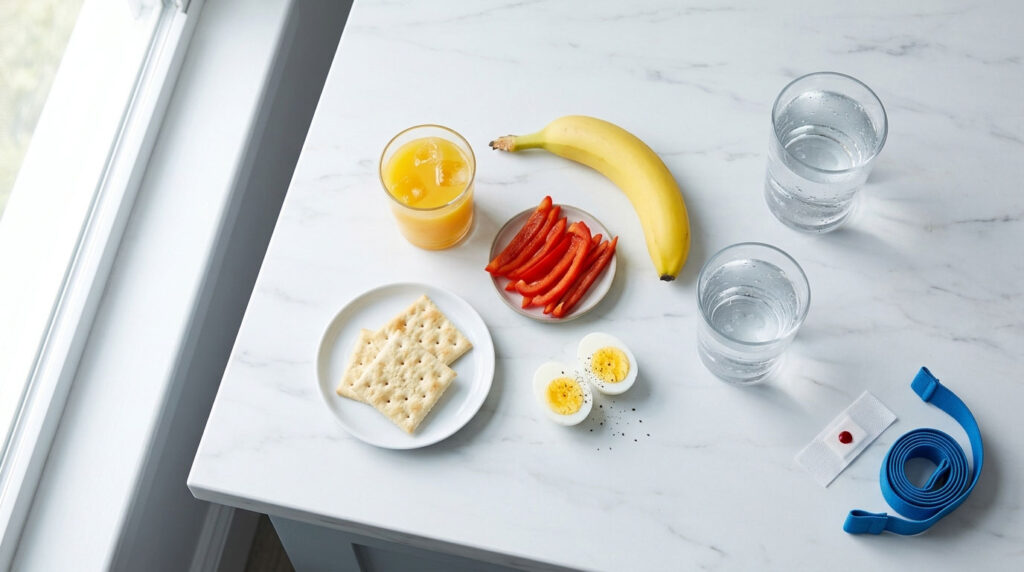
Roughly 11.5 million Americans give blood each year, and millions more sit through routine diagnostic draws every week. Most leave without a second thought. A small slice walk three steps into the parking lot, feel the world tilt sideways, and learn the hard way that the bandage is only half the recovery plan. The right snack within 15 minutes can stop that wobble before it starts.
Table of Contents
Quick Answer: Right after a blood draw, eat a small carb-and-protein snack like juice with crackers, a banana with peanut butter, or a granola bar with water. Within the next hour, follow up with a balanced meal that includes iron-rich food (spinach, lean beef, beans), a vitamin C source (orange, bell pepper, strawberries), and at least 16 ounces of water. Skip alcohol, coffee, and heavy fried food for the first 24 hours.
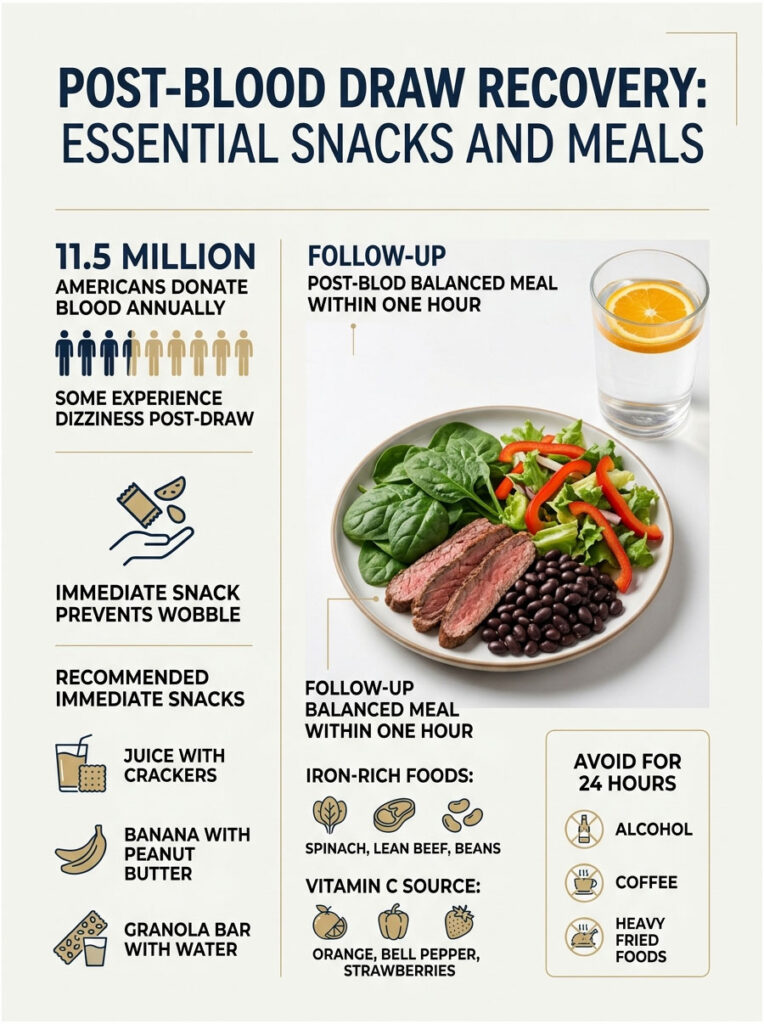
At a Glance
- Eat within 15 minutes; the first snack matters more than the meal
- Iron plus vitamin C is the gold-standard pairing for recovery
- Drink at least 32 extra ounces of water in the next 24 hours
- Avoid alcohol for 24 hours; delay coffee for at least 2 hours
- Donating a full pint? Plan iron-focused meals for 4 weeks
- If lightheadedness lasts beyond an hour, call your provider
Why What You Eat After a Blood Draw Actually Matters
A routine diagnostic blood draw pulls 10 to 30 mL out of you. That sounds tiny, and it is, but your body still treats it like a small fluid event. Glucose dips, plasma drops a notch, and a few milligrams of iron go with it. Stack that on top of an 8 to 12 hour fast for a lipid panel, and your blood sugar is already running on fumes by the time the needle comes out.
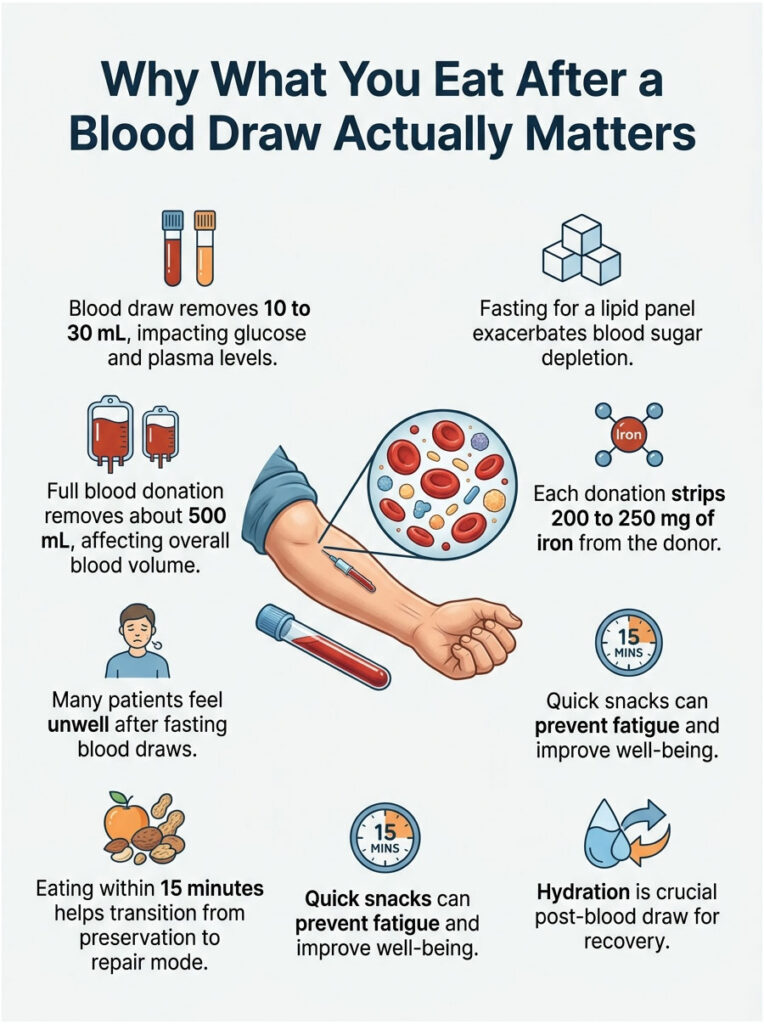
A full whole-blood donation is a different animal. The American Red Cross collects about 500 mL per donation, which is roughly 10% of your total blood volume. According to the CDC’s 2021 National Blood Collection and Utilization Survey, there were 11,507,000 successful US blood donations that year, and each one strips about 200 to 250 mg of iron from the donor.
I’ve watched plenty of patients shrug off a fasting draw, head to their car, and circle back to the lab door 10 minutes later looking gray. The fix is almost always boring: snack fast, hydrate fast. Eating within 15 minutes signals your body to switch from preservation mode into repair mode, and the difference shows up in how you feel an hour later.
The First 15 Minutes: Your Immediate Post-Draw Snack Plan
Every reputable lab and donation center hands you something sweet and salty after the needle comes out. That juice box and packet of pretzels is not a thank-you gift; it is a clinical tool. Simple sugars hit the bloodstream within minutes and head off the vasovagal response that drives most fainting episodes. GoodRx notes most vasovagal recoveries take only 20 to 30 seconds, but only if you stay seated and refuel.
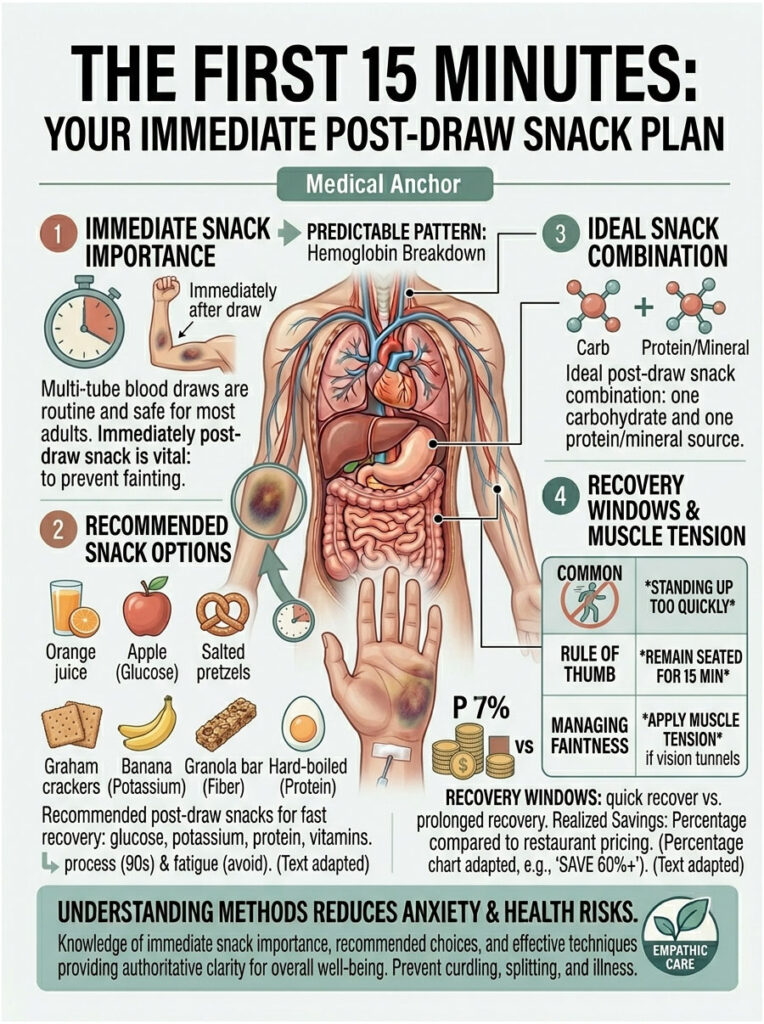
Best grab-and-go options for the first 15 minutes include orange juice, apple juice, salted pretzels, graham crackers, a banana, a granola bar, or a hard-boiled egg. Pick one carb plus one mineral or protein source. You are not building a meal here; you are buying time for your circulation to stabilize.
In my work prepping patients for fasting panels, the single most common mistake is springing up the second the bandage goes on. People do it because they feel “fine,” then slump against the front desk a minute later. The rule I tell every first-timer: stay seated for the full 15 minutes, finish the snack and the water, then stand slowly. If your vision tunnels, sit back down and try the Red Cross’s “applied muscle tension” trick of squeezing your thigh and calf muscles to push blood up to your brain.
Table 1: Smart Snack Choices by Recovery Window
| Time Window | Best Snack/Meal | Portion Size | Why It Works |
| 0 to 15 minutes | Orange juice + 4 saltine crackers | 4 oz juice + 4 crackers | Fast glucose lift, sodium for blood pressure |
| 0 to 15 minutes | Banana + 1 tbsp peanut butter | 1 medium banana | Potassium, slow-release carbs, protein |
| 15 to 60 minutes | Greek yogurt + handful of strawberries | 6 oz yogurt + 1/2 cup berries | Protein, vitamin C, light on the stomach |
| 1 to 4 hours | Turkey sandwich on whole-wheat + bell pepper slices | 1 sandwich + 1/2 cup peppers | Iron, complex carbs, vitamin C boost |
| 4 to 12 hours | Grilled chicken + spinach salad + orange wedges | 4 oz chicken + 2 cups greens | Heme iron, non-heme iron, vitamin C pairing |
| 12 to 24 hours | Lentil soup + tomato + whole-grain roll | 1.5 cups soup + 1 roll | Plant iron, lycopene, sustained energy |
Best Foods to Eat After a Blood Draw (the Full Recovery Plate)
Once the immediate snack is in your system and you feel steady, your first real meal does the heavier work. Build the plate around four pillars: iron, vitamin C, lean protein, and complex carbs. Each one solves a specific recovery problem.
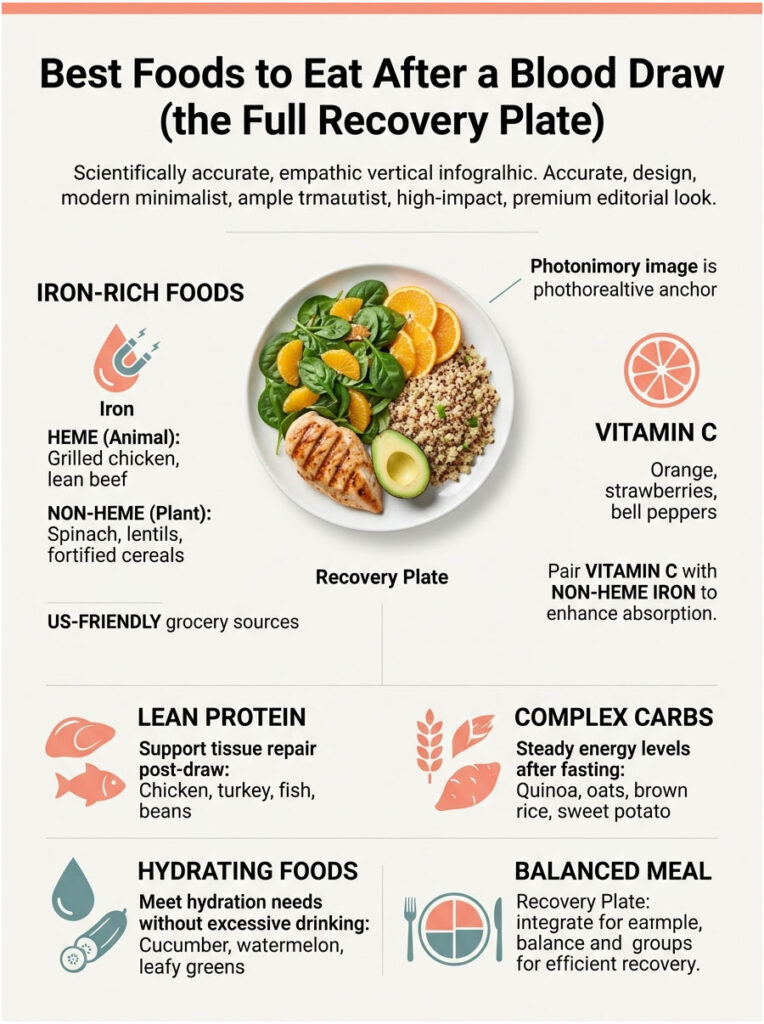
Iron-Rich Foods (Heme and Non-Heme)
Iron rebuilds the hemoglobin that carries oxygen to every cell. If you donated a full pint, you lost roughly the iron equivalent of a 100 mg supplement. Heme iron from animal sources absorbs at about 15 to 35%, while non-heme iron from plants absorbs at 2 to 20% according to the NIH Office of Dietary Supplements.
Top US-friendly iron sources by milligrams per typical serving:
- 3 oz lean beef sirloin: 2.0 mg heme iron
- 3 oz dark-meat chicken: 1.1 mg heme iron
- 3 oz canned light tuna: 0.8 mg heme iron
- 1 cup cooked spinach: 6.4 mg non-heme iron
- 1 cup cooked lentils: 6.6 mg non-heme iron
- 1 cup fortified cereal (Total, Special K Iron): up to 18 mg
- 1/4 cup pumpkin seeds: 2.5 mg
- 1/4 cup raisins: 1.0 mg
Vitamin C: The Iron Multiplier
Vitamin C can boost non-heme iron absorption by up to three times when eaten in the same meal. This is the single most under-used trick I see at lab follow-ups. Pairing spinach with orange slices, or lentils with diced bell peppers, makes the iron work harder than the milligrams alone suggest.
Strong US grocery-store vitamin C sources include red bell peppers (95 mg per half cup), oranges (70 mg each), strawberries (85 mg per cup), kiwi (64 mg each), broccoli (51 mg per half cup), and tomato juice (35 mg per cup). Even a glass of fortified OJ with breakfast hits the target.
Lean Protein for Tissue Repair
The puncture site needs collagen and amino acids to seal up cleanly. Eggs, chicken, turkey, fish, Greek yogurt, cottage cheese, tofu, and beans all qualify. Aim for 20 to 30 grams of protein in your first full meal, which is roughly 3 oz of meat or one cup of legumes plus a dairy or egg side.
Complex Carbs for Steady Glucose
After a fasting draw, your liver glycogen is depleted. Refined carbs spike and crash. Complex carbs like oatmeal, whole-grain bread, brown rice, sweet potatoes, and quinoa give you four to six hours of steady energy, which is exactly what your nervous system needs while it recalibrates blood pressure.
Hydrating Foods and Electrolytes
Watermelon, cucumber, oranges, strawberries, celery, lettuce, and tomatoes are all over 90% water. Stacking a few of these onto your plate covers part of your hydration target without forcing you to chug water you don’t feel like drinking. A pinch of sea salt or a low-sugar sports drink can help if you sweated a lot or fasted long.
What to Drink After a Blood Draw
Water is the headline act, but a few other drinks earn a spot on the recovery menu. The goal is to replace plasma volume quickly without adding diuretics that pull water back out.
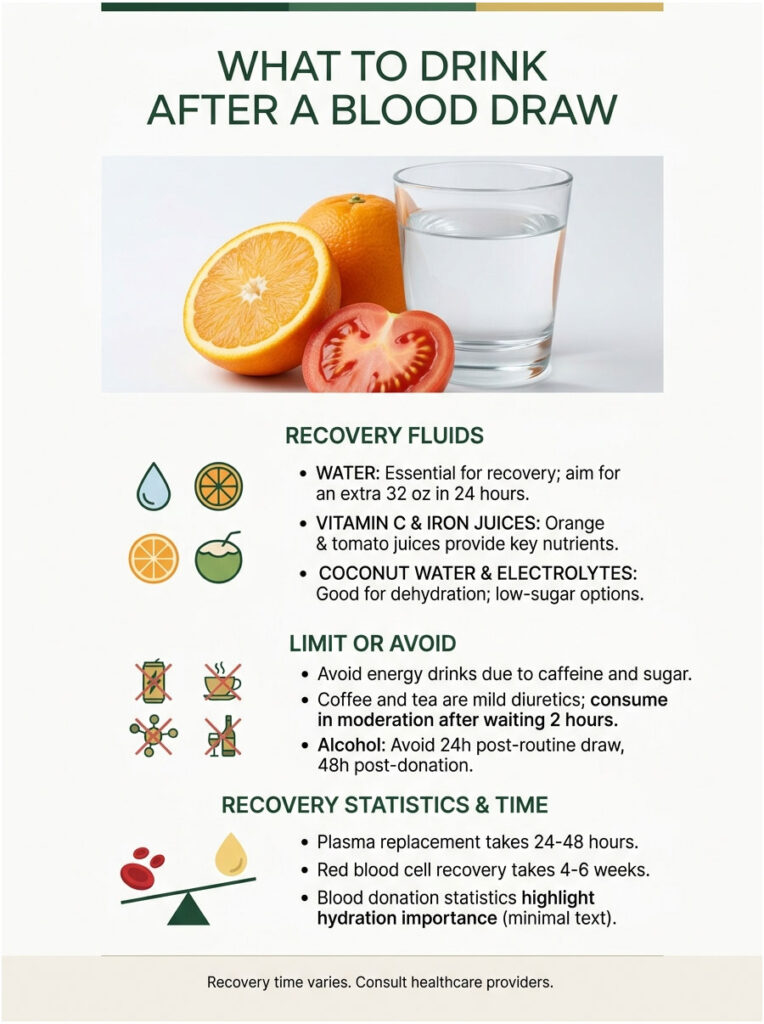
The American Red Cross recommends an extra 16 oz of fluid before donation and an extra 32 oz across the 24 hours after. For a routine diagnostic draw, half that target is plenty unless you fasted overnight.
Orange juice and tomato juice pull double duty because they add vitamin C plus a small dose of iron (tomato juice especially). Coconut water and low-sugar electrolyte drinks like Pedialyte or Liquid I.V. work well if you feel salty-sweat dehydrated. Skip energy drinks; the caffeine-plus-sugar combo can backfire fast.
Coffee and tea are not banned, but they are mild diuretics. I’ve seen patients chug a 16 oz cold brew on the way out of a fasting test and feel jittery and lightheaded by lunch. Wait at least 2 hours, then keep the cup small. Alcohol is a stricter no. It dehydrates you, lowers blood pressure further, and according to GoodRx, can hit you harder than usual because your body is already volume-depleted. Wait 24 hours for a routine draw and 48 hours after a full pint donation.
Table 2: Recent USA Statistics on Blood Draws, Donations, and Recovery Nutrition
| Statistic | Figure | Source |
| Successful US blood donations (2021) | 11,507,000 | CDC NBCUS 2021 |
| Eligible US adults who donate annually | About 3% | America’s Blood Centers Public Messaging Guide |
| Recent US adult blood donation rate (2021 poll) | 15% in past 12 months | Statista, U.S. adult survey |
| Iron lost per whole-blood donation | 200 to 250 mg | American Red Cross / Medical News Today |
| Average total blood volume in US adult | About 10.5 pints | America’s Blood Centers |
| Recommended fluid increase after donation | 32 oz extra in 24 hours | American Red Cross |
| Time to fully replace plasma volume | 24 to 48 hours | NHLBI / Red Cross |
| Time to replace red blood cells | 4 to 6 weeks | American Red Cross |
Foods and Habits to Avoid for the First 24 Hours
What you skip after a blood draw matters almost as much as what you eat. Five things consistently slow recovery in the patients I follow.
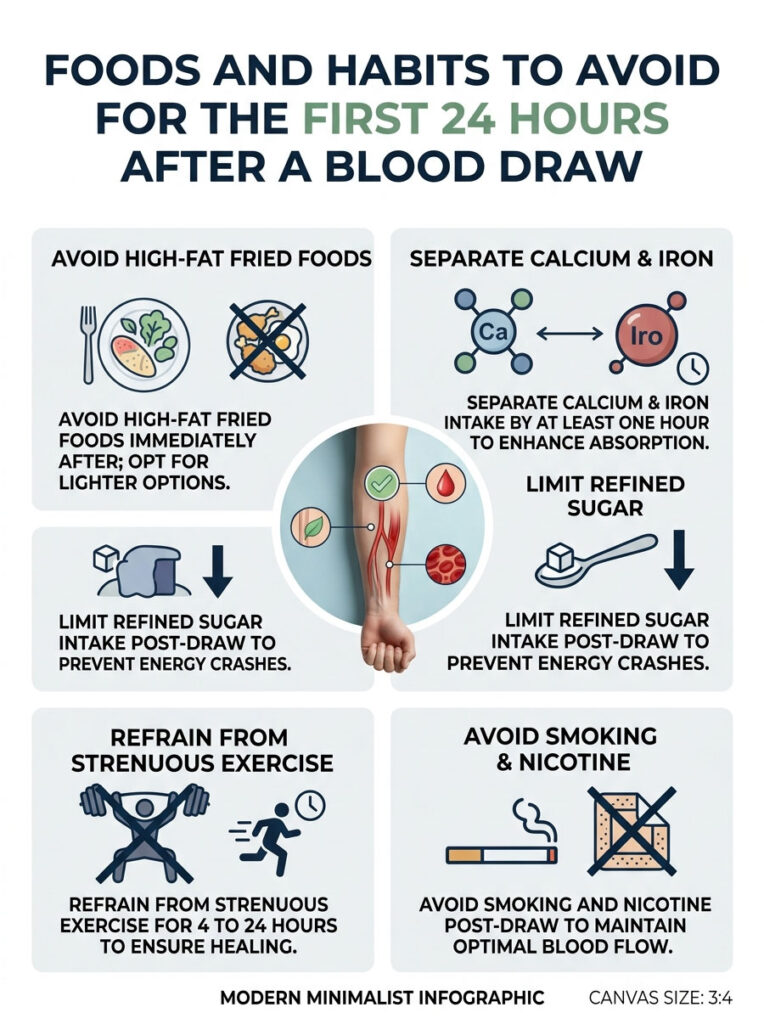
High-fat fried food sits heavy and pulls blood flow toward your gut. A double cheeseburger and fries the hour after a draw is a recipe for queasiness. The same applies to greasy breakfast plates after a fasting test; choose poached or scrambled eggs over fried bacon and hash browns if you can.
Calcium and iron at the same meal is the most overlooked rule. According to GoodRx, calcium can block iron absorption in the gut. You don’t have to skip dairy entirely; just space your milk, cheese, or calcium-fortified juice at least an hour away from your iron-focused meal.
Refined sugar beyond your initial recovery snack will spike your glucose and drop it just as fast. The result is fatigue, brain fog, and sometimes a recurrence of the lightheaded feeling you fixed an hour earlier. Pastries, soda, and candy bars belong on tomorrow’s menu, not today’s.
Strenuous exercise and heavy lifting for the first 4 to 24 hours can reopen the puncture site, deepen any bruise, and trigger dizziness. A short walk is fine; a CrossFit workout or a heavy deadlift session is not. Wait until the next morning.
Smoking and nicotine narrow your blood vessels right when your body needs maximum circulation to the puncture site and the rest of your tissues. If you vape or smoke, hold off for at least an hour after your draw and consider it a cue to stretch the gap further if you can.
After a Fasting Blood Test: How to Break the Fast Right
Fasting blood tests (lipid panels, fasting glucose, comprehensive metabolic panels, A1c in some cases) usually require 8 to 12 hours of nothing but water. By the time you hit the chair, your liver glycogen is largely spent and your stomach has been resting for the better part of half a day.
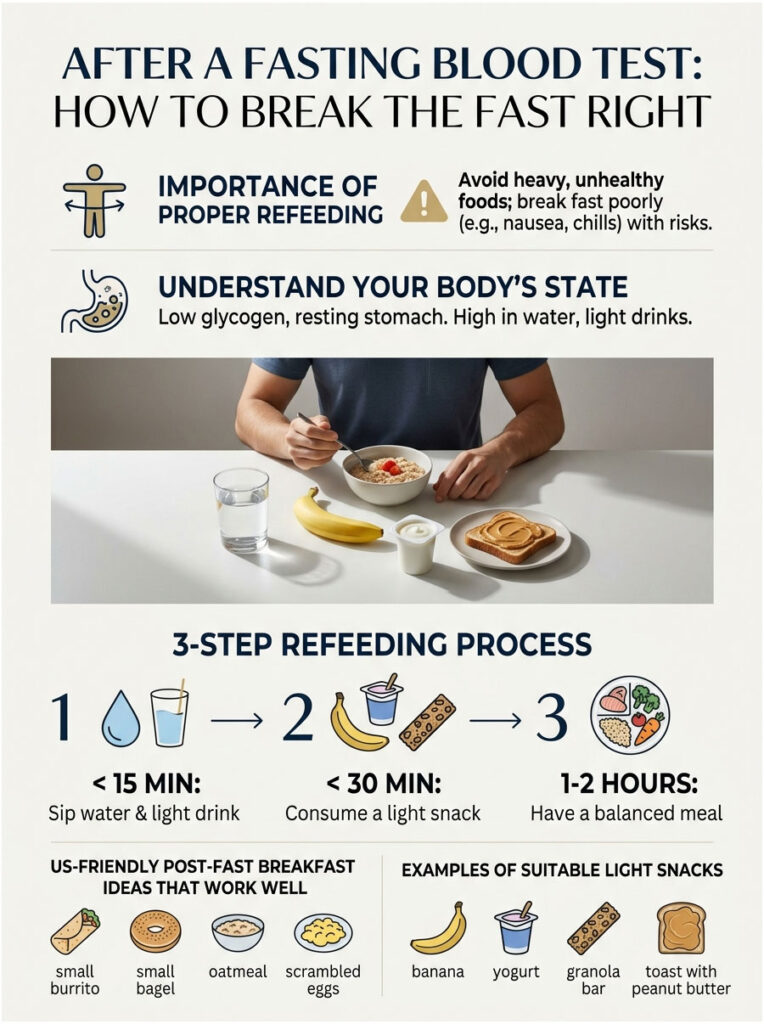
Breaking a fast badly causes more problems than the test itself. One of my patients last spring drove straight from a 7 a.m. fasting lipid panel to a fast-food drive-through, slammed a sausage biscuit and hash browns, and called the office by 10 a.m. complaining of nausea and chills. The system is not built to absorb a heavy fat-and-salt load from a standstill.
A safer 3-step refeed looks like this. First, sip 8 to 12 oz of water plus a small juice or sports drink within 15 minutes. Second, eat a light snack within 30 minutes (banana, yogurt cup, granola bar, slice of toast with peanut butter). Third, sit down to a balanced meal within 1 to 2 hours.
US-friendly post-fasting breakfast ideas that work well:
- Old-fashioned oatmeal cooked with milk, topped with strawberries and a tablespoon of almonds
- Two scrambled eggs, whole-grain toast, half a grapefruit, and 8 oz water
- Greek yogurt parfait with granola, blueberries, and a handful of walnuts
- Avocado toast on whole-grain bread, sliced tomato, and a glass of fortified OJ
- Veggie omelet (spinach, bell pepper, mushroom) with a slice of whole-wheat sourdough
Special Situations: Donors, Diabetics, Seniors, Pregnant Readers, Kids
Generic advice helps most people, but five groups need extra attention.
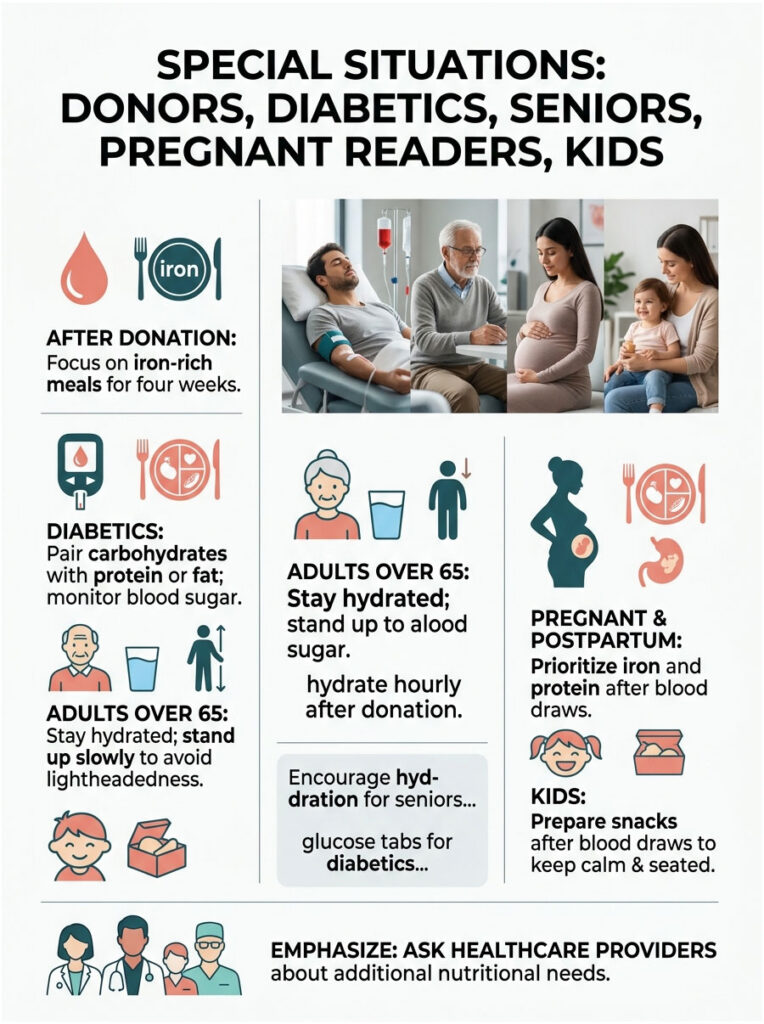
After Donating a Full Pint
If you visited a Red Cross, Vitalant, or OneBlood center and gave whole blood, you lost about 10% of your blood volume. Plan iron-focused meals for the next 4 weeks; that is how long red cell replacement actually takes. The Red Cross specifically recommends red meat, fish, poultry, beans, spinach, iron-fortified cereals, and raisins, plus a multivitamin with iron if you donate frequently.
If You Have Diabetes
Coming off a fasting test with diabetes means your glucose has been low for hours, but you also can’t spike it carelessly. Pair every carb with protein or fat: an apple with peanut butter, oatmeal with eggs on the side, or whole-grain toast with avocado and a hard-boiled egg. Check your blood sugar 30 minutes after eating, and call your endocrinologist if you feel hypoglycemic. I’ve worked with diabetic patients who learned to keep a small glucose tab in the car for the drive home; it’s a smart habit.
Adults Over 65
Older adults rehydrate more slowly and feel thirst less acutely. If you are over 65, set a phone timer to drink 8 oz of water every hour for the first 4 hours after your draw. Mayo Clinic has documented that orthostatic hypotension (the lightheaded feeling when you stand up) is more common in this group, so stand up slowly and grab a railing or chair back if one is near.
Pregnancy and Postpartum
Iron demand is already higher during pregnancy. After a blood draw or any iron-related test, lean into the same iron-plus-vitamin-C strategy and ask your OB whether you need supplemental iron. Postpartum readers who recently delivered, especially those with significant blood loss, should treat any draw as a meaningful event and prioritize protein-rich meals plus extra fluids.
Pediatric Blood Draws
Kids handle small draws well but get bored and squirmy in the recovery chair. Pack juice, animal crackers, or cheese cubes in your bag before the appointment. Keep them seated for the full 15 minutes (a phone or tablet helps), then offer a real lunch within an hour. If your child has any history of fainting at the doctor, ask the phlebotomist to do the draw lying down. I’ve seen this one tip alone prevent a lot of head-bump emergency room visits.
When to Call Your Doctor (Red Flags)
Most blood draws end with a small bruise and zero drama. A few signals deserve a phone call.
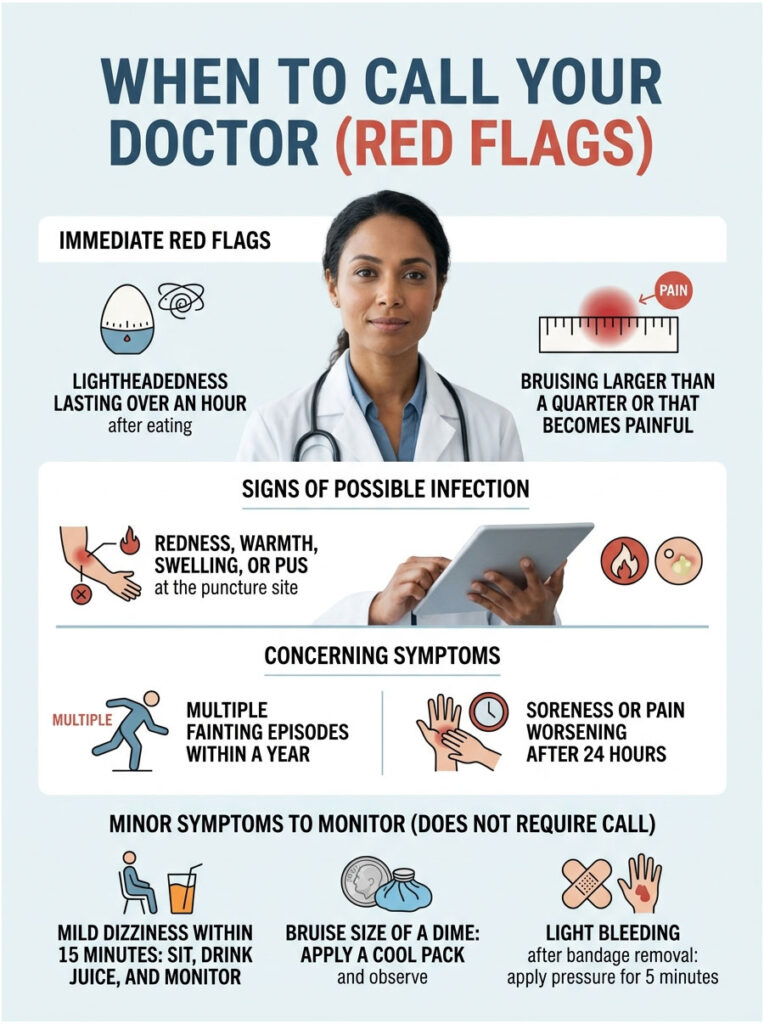
Lightheadedness lasting more than an hour after eating and rehydrating is unusual. Sit down, drink another glass of water, eat a real meal, and if it persists, contact the lab or your provider. Bruising that grows past the size of a quarter, becomes increasingly painful, or spreads down the arm warrants a call. Any redness, warmth, swelling, or pus at the puncture site can signal an infection and needs same-day evaluation.
If you have had more than one fainting episode at a blood draw within a year, talk to your primary care provider about strategies like lying down for future draws or applied muscle tension. Repeated vasovagal episodes can sometimes signal an underlying cardiac or autonomic issue worth ruling out.
Table 3: Decision Table for Symptoms After a Blood Draw
| Scenario | Recommended Action | Call Doctor If |
| Mild dizziness within 15 min | Sit, drink juice, eat snack, wait 10 more min | Persists past 1 hour despite snack and water |
| Bruise size of a dime, no pain | Apply cool pack 10 min, monitor | Bruise spreads or becomes painful within 48 hours |
| Light bleeding when bandage off | Press firmly for 5 min, raise arm | Bleeding does not stop after 10 min of pressure |
| Soreness in arm | Avoid lifting heavy items 24 hr, ice if needed | Pain worsens or spreads after 24 hours |
| Tired feeling next day | Hydrate, eat iron-rich meals, sleep 8 hr | Fatigue lasts more than 3 days |
| Fainting at the chair | Lie down with feet up, sip juice | More than one fainting episode in past year |
A Sample 24-Hour Recovery Eating Plan
Here is what a smooth, complete recovery day looks like for an adult who finished a routine fasting blood draw at 8 a.m.
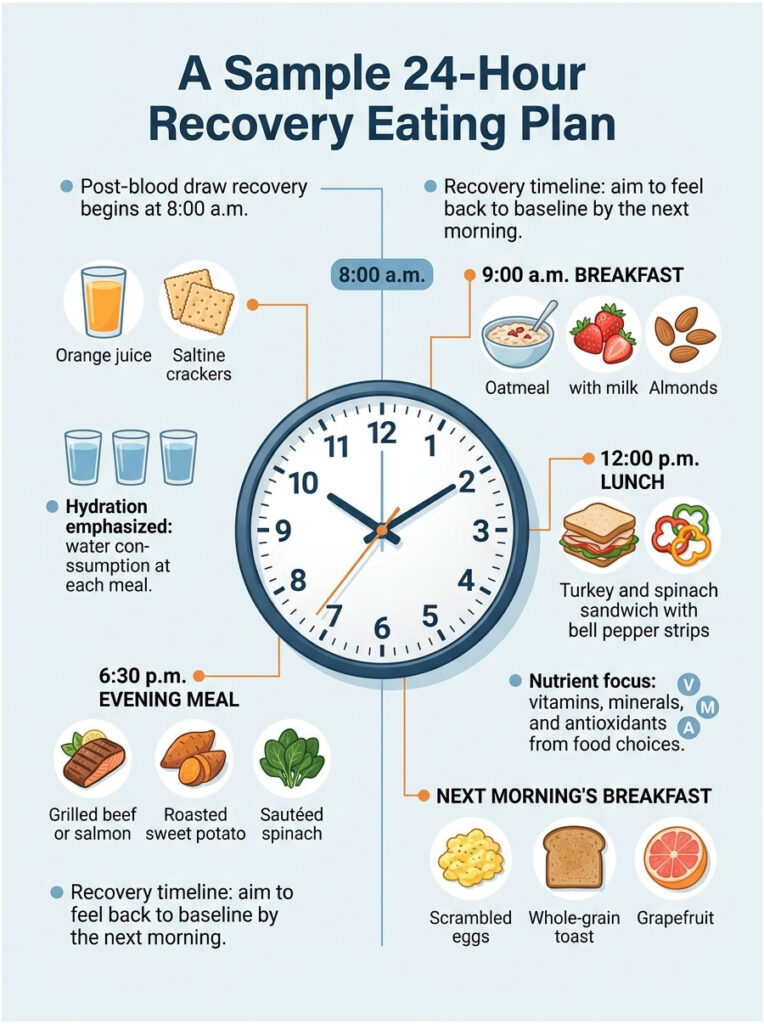
0 to 15 minutes (8:00 to 8:15 a.m.): 4 oz orange juice plus 4 saltine crackers in the lab waiting area.
1 hour (9:00 a.m.): Old-fashioned oatmeal cooked with 1 cup milk, topped with 1/2 cup strawberries and 1 tablespoon chopped almonds. 12 oz water on the side.
3 to 4 hours (12:00 p.m.): Turkey and spinach sandwich on whole-grain bread with mustard and tomato slices, side of bell pepper strips, and 12 oz water. Skip the mayo if you want a lighter feel.
Evening meal (6:30 p.m.): Grilled lean beef or salmon (4 oz), 1 cup roasted sweet potato, sautéed spinach with garlic and lemon, and 16 oz water. Add a small bowl of mixed berries for vitamin C and antioxidants.
Next morning: Two scrambled eggs, whole-grain toast, 1/2 grapefruit, and a glass of water or coffee (small). You should feel completely back to baseline by now if you followed the plan.
Pro Tips From Phlebotomy Experience
In my work with patients prepping for fasting panels and routine draws, the same handful of mistakes show up again and again. Fixing them takes less effort than people expect.
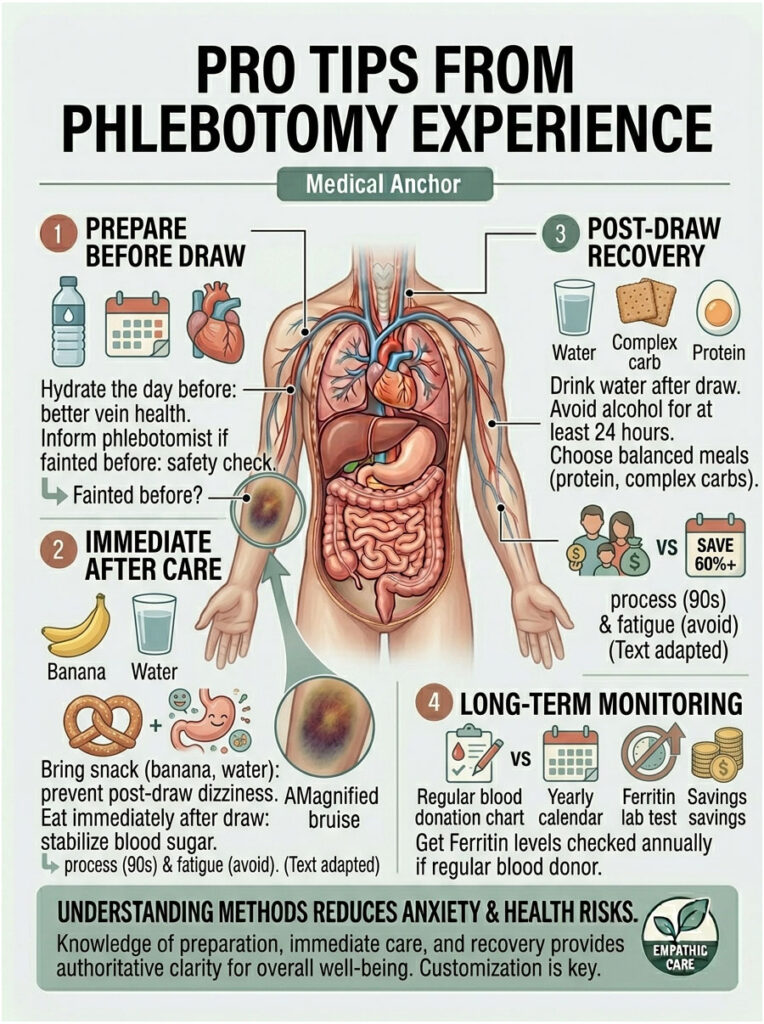
Bring your own snack. Lab snack bowls run out, and the convenience-store muffin you grab on the way to the car is almost always the wrong choice. A banana and a small bottle of water in your bag costs nothing and solves 90% of post-draw dizziness.
Hydrate the day before, not just the day of. Plasma volume responds to fluids over 18 to 24 hours, not 5 minutes. Drinking 64 oz of water the day before makes the draw easier on your veins and the recovery faster on your body.
Tell the phlebotomist if you have ever fainted. They will recline your chair, slow the draw, and watch you closely. Embarrassment is not worth a head injury from a parking-lot fall.
Skip the post-draw caffeine “treat.” A latte feels celebratory but works against your hydration. Save it for after lunch.
If you donate regularly, get your ferritin checked once a year. The Red Cross flags hemoglobin but not iron stores, and frequent donors can develop low ferritin without anemia showing up on the standard screen.
Frequently Asked Questions
How soon after a blood draw can I eat?
Immediately. There is no required waiting period. Most labs encourage you to eat the snack they provide within 5 minutes of finishing. If you fasted, the sooner food hits your stomach, the sooner your blood sugar stabilizes. Stay seated for 15 minutes, then move on with your day.
Can I drink coffee after a fasting blood test?
Technically yes, but it is not the smartest first choice. Coffee is a mild diuretic that can pull fluids out right when you need to rehydrate. Wait at least 2 hours, drink water and eat real breakfast first, then enjoy a smaller cup. Skip coffee entirely if you donated a full pint.
Is orange juice better than water after a blood draw?
For the first 15 minutes, juice has a slight edge because it adds glucose and vitamin C while still hydrating. Plain water is fine if that is what is offered. Across the rest of the day, water should be your main drink, with juice and electrolyte drinks in a supporting role.
Can I exercise the same day as a blood draw?
Light walking is fine within the hour. Skip strenuous workouts, heavy lifting, and high-intensity cardio for the rest of the day, especially if you donated. The Red Cross recommends avoiding vigorous activity for 24 hours after donation to lower the risk of bruising, dizziness, and reopening of the puncture site.
How long does it take to feel normal after a blood draw?
Most people feel back to baseline within 15 to 30 minutes once they have eaten and rehydrated. After a full whole-blood donation, mild fatigue can linger a day or two. Plasma volume restores within 24 to 48 hours, while red blood cells take 4 to 6 weeks to fully replace.
What should I eat for breakfast after a fasting blood test?
A balanced plate works best. Try oatmeal with berries and almonds, scrambled eggs with whole-grain toast and fruit, or a Greek yogurt parfait with granola and walnuts. Include protein, complex carbs, and a vitamin C source. Skip greasy breakfast meats and pastries on the first plate.
Can I drink alcohol after a blood test?
Wait at least 24 hours, longer if you donated a full pint. Alcohol dehydrates you and can hit harder than usual because your blood volume is already lower. Beer, wine, and cocktails all carry the same caution. Save the happy hour for tomorrow.
Are bananas good after a blood draw?
Yes, bananas are one of the best grab-and-go options. They deliver potassium, fast-acting carbs, and a small amount of vitamin B6 that supports recovery. Pair a banana with a tablespoon of peanut butter for a more balanced energy boost.
Why do I feel weak hours after my blood draw?
Two likely reasons: low blood sugar from skipping a real meal, or mild dehydration. Drink 12 oz of water and eat a balanced meal with protein, complex carbs, and iron. If weakness lasts longer than a day, especially after donation, contact your doctor about checking your iron levels.
Should I avoid dairy after a blood draw?
You don’t have to skip it, but space it out. Calcium can block iron absorption when eaten at the same time. If your meal is iron-focused, save the milk, cheese, or yogurt for a snack 1 to 2 hours later. Greek yogurt as a stand-alone protein snack is still a smart choice.
How much water should I drink after a blood draw?
For a routine diagnostic draw, an extra 16 oz over the next few hours is enough. After a full blood donation, the Red Cross recommends drinking an extra 32 oz in the 24 hours following your appointment, on top of your normal daily intake.
Can kids eat normally after a blood draw?
Yes, kids can resume their usual foods right after a draw. Offer juice and a snack like animal crackers or cheese cubes within 15 minutes, then a regular meal within an hour. Watch for unusual paleness or wobbliness; if it lasts more than 30 minutes, contact your pediatrician.
Disclaimer: This article is for general educational purposes and does not replace personalized medical advice. If you experience prolonged dizziness, heavy bruising, signs of infection at the puncture site, or any symptom that worries you after a blood draw, contact your healthcare provider promptly. Readers with diabetes, kidney disease, pregnancy, or chronic conditions should follow their physician’s specific dietary guidance.
References
- CDC National Blood Collection and Utilization Survey, 2021
- American Red Cross: Tips for a Successful Blood Donation
- NIH Office of Dietary Supplements: Iron Fact Sheet for Health Professionals
- GoodRx: 6 Foods to Eat After Donating Blood and What to Avoid
- GoodRx: Why Do I Pass Out From Giving Blood? Vasovagal Syncope
- Inspira Health: Best Snacks After Donating Blood
- America’s Blood Centers: U.S. Blood Donation Statistics and Public Messaging Guide
- Statista: Share of US Adults Who Donated Blood, 2001 to 2021
- Medical News Today: What to Do After Donating Blood
- USDA FoodData Central
- Mercy Health: What to Eat Before and After Donating Blood
- American Hospital Association: Updated Statistics on US Blood Donation