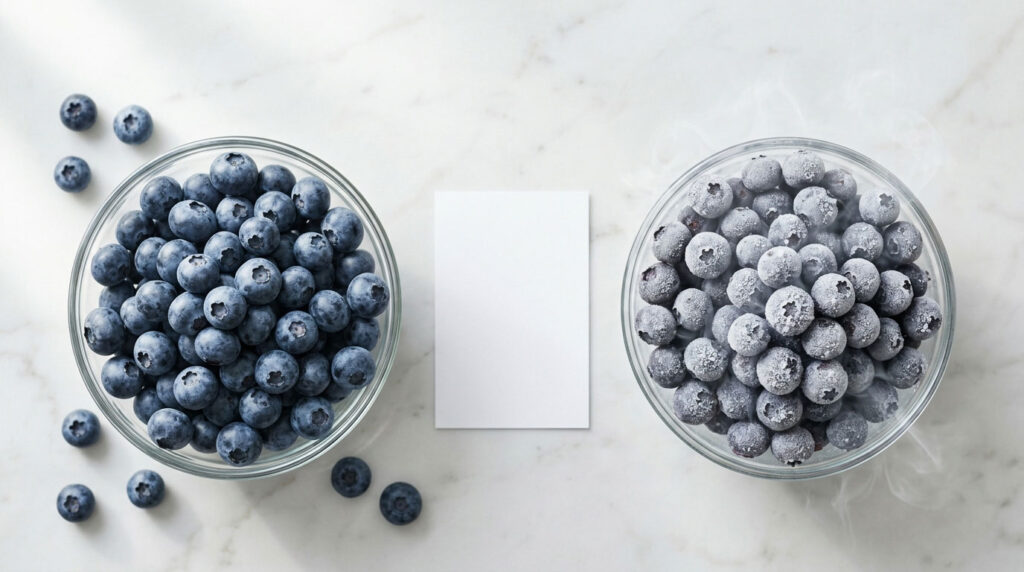
Picture two pints of blueberries side by side in January. The fresh one likely flew in from Peru or Chile over one to two weeks, quietly losing nutrients the whole way. The frozen bag beside it was picked ripe and locked in within a day of harvest. The word on the label and the truth in the berry do not always match.
Table of Contents
Quick Answer: Frozen blueberries are nutritionally equal to fresh, and sometimes better. Freezing locks in fiber, manganese, vitamin K, and anthocyanin antioxidants at peak ripeness, and ice crystals can make those antioxidants easier to absorb. The one real trade-off is vitamin C, which dips slightly in storage. For everyday value, frozen wins; fresh wins on texture.
At a Glance
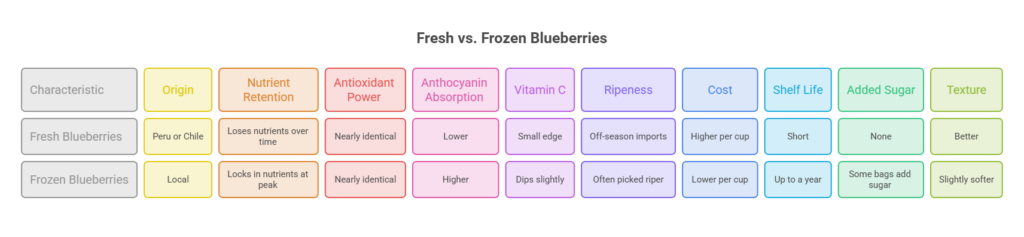
- Fresh and frozen blueberries carry nearly identical antioxidant power.
- Ice crystals rupture cell walls, releasing more usable anthocyanins.
- Vitamin C is the only nutrient where fresh holds a small edge.
- Frozen berries are often picked riper than off-season fresh imports.
- Frozen costs less per cup and keeps for up to a year.
- Some frozen bags add sugar, so the ingredient list matters.
- The best blueberry is the one you eat every day.
The Quick Verdict: Fresh vs Frozen, Head to Head
For the nutrients that make blueberries worth eating, fresh and frozen run nearly even, with frozen edging ahead on antioxidant availability and fresh holding a slim lead on vitamin C. That is the conclusion our medical reviewers reached after weighing the research.
The confusion comes from mixing up two separate ideas. Nutrient density is how much sits inside the berry at harvest. Nutrient retention is how much survives the road from field to your bowl.
Fresh and frozen begin identical, because they grow on the same bushes. Time is what splits them apart. Freezing stops the clock at harvest, while a fresh berry keeps aging through shipping, store shelves, and the days it waits in your fridge.
The table below shows the head-to-head on the nutrients people actually care about, using per-cup values from USDA FoodData Central.
| Nutrient or Factor | Fresh (1 cup) | Frozen (1 cup) | Winner | Why |
| Anthocyanin antioxidants | High | Equal or higher | Frozen (slight) | Ice crystals boost availability |
| Vitamin C | ~14 mg (16% DV) | ~4 mg | Fresh | Water-soluble, fades in storage |
| Dietary fiber | ~3.6 g | ~3.6 g | Tie | Unaffected by freezing |
| Manganese | ~0.5 mg (25% DV) | ~0.5 mg | Tie | Stable mineral |
| Vitamin K | ~29 mcg (24% DV) | ~28 mcg | Tie | Fat-soluble, stable |
| Cost per cup (US retail) | $1.50 to $2.50 | $0.80 to $1.50 | Frozen | Stable year-round pricing |
Four of six lines are a tie or a frozen win, with fresh claiming only vitamin C. Patients who book tests through HealthCareOnTime often walk in certain that fresh means healthier, and this table is usually where that belief starts to wobble.
What’s Actually Inside a Blueberry
Knowing what you are trying to protect makes the whole comparison click. A blueberry is mostly water and carbohydrate, carrying a small but meaningful load of vitamins, minerals, and pigment compounds.
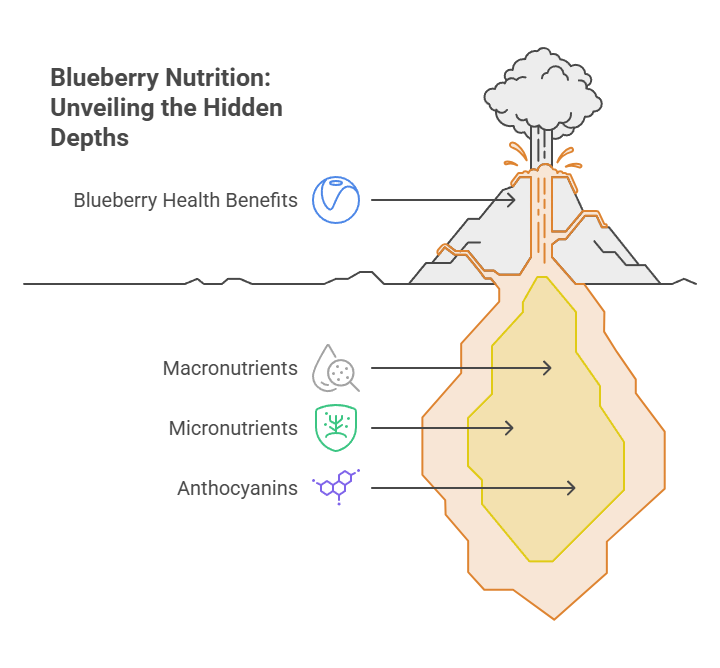
The Macronutrient Picture
A cup of raw blueberries (about 148 grams) carries roughly 84 calories, 21 grams of carbohydrate, and 3.6 grams of fiber, with about 15 grams of natural sugar, per USDA FoodData Central. Fat and protein are barely a rounding error.
That fiber matters. At nearly 4 grams a cup, blueberries cover around 13 percent of the daily target, and freezing leaves fiber completely untouched. Fresh and frozen deliver it gram for gram.
The sugar is modest and arrives wrapped in fiber and water, which slows its absorption. That is why blueberries sit lower on the glycemic scale than their sweetness suggests.
The Standout Micronutrients
Blueberries are not a broad vitamin bomb, but they shine in three places: vitamin C, vitamin K, and manganese. One cup supplies about 24 percent of the Daily Value for vitamin K and roughly 25 percent for manganese.
Vitamin K supports clotting and bone health, while manganese aids metabolism and bone formation. Both are stable through freezing, so frozen loses essentially none of either.
Vitamin C is the fragile member of the group. A cup of fresh blueberries offers around 14 milligrams, about 16 percent of the Daily Value, and this is the one nutrient that hands fresh a genuine, if small, advantage.
Anthocyanins: The Real Reason Blueberries Matter
Set the vitamins aside and the true star is anthocyanin, the deep blue-purple pigment packed into the skin. These compounds drive nearly every blueberry health headline you have read.
Anthocyanins help neutralize free radicals, the reactive molecules tied to cell damage, aging, and chronic disease. The American Heart Association links these pigments to heart benefits and notes that wild blueberries pack more of them into a smaller berry than cultivated types.
Since most of the color lives in the skin, anything that affects the skin affects the antioxidant payoff. That one fact unlocks the entire fresh-versus-frozen story.
Why Freezing Doesn’t Wreck Nutrition
Most people imagine freezing as a slow drain that strips food of its goodness. For blueberries, the evidence runs the other way, and the reason is more interesting than a flat assurance that frozen is fine.
The Ice-Crystal Effect
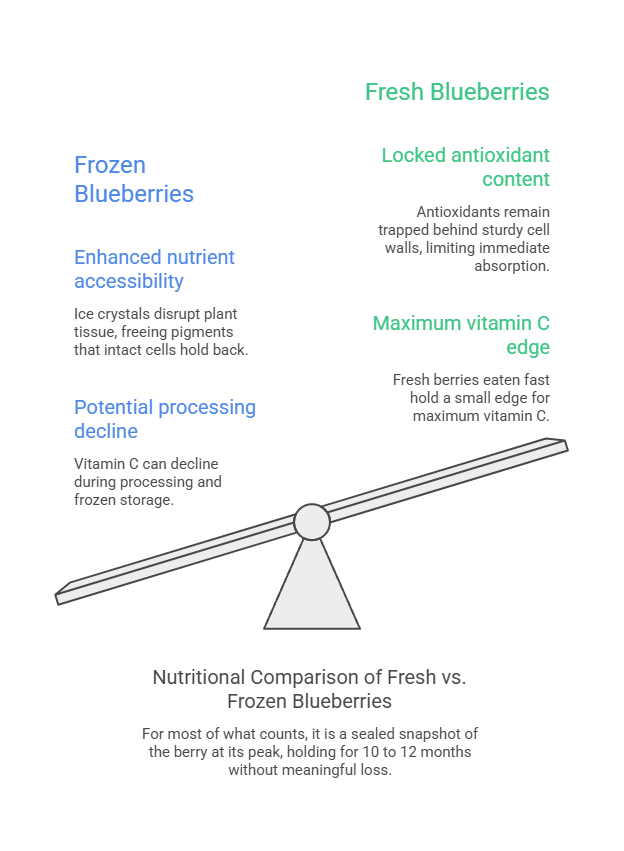
As a blueberry freezes, the water inside its cells expands into ice crystals. Those crystals push against and rupture the cell walls in the skin, the same skin holding the anthocyanins.
Research from South Dakota State University, reported through ScienceDaily, found that this rupturing actually raises the anthocyanins your body can reach. Food science researcher Marin Plumb described how ice crystals disrupt the plant tissue and free pigments that intact cells would otherwise hold back.
In plain terms, a fresh berry keeps some antioxidants locked behind sturdy cell walls, while a frozen berry surrenders them more readily. Our medical team reviewed the work and found the mechanism both simple and well supported, even though the study itself dates back about a decade.
What Freezing Protects
That same research analyzed berries frozen for one, three, and five months and found no drop in antioxidant content versus fresh. Anthocyanin concentration held steady and even trended upward over storage time.
Fiber, manganese, and vitamin K ride through freezing intact, because they are either structural or chemically stable. None of them depend on a recently picked berry or an unbroken cell.
So the bag in your freezer is not a faded copy of fresh. For most of what counts, it is a sealed snapshot of the berry at its peak, holding for 10 to 12 months without meaningful loss.
What Freezing Actually Costs
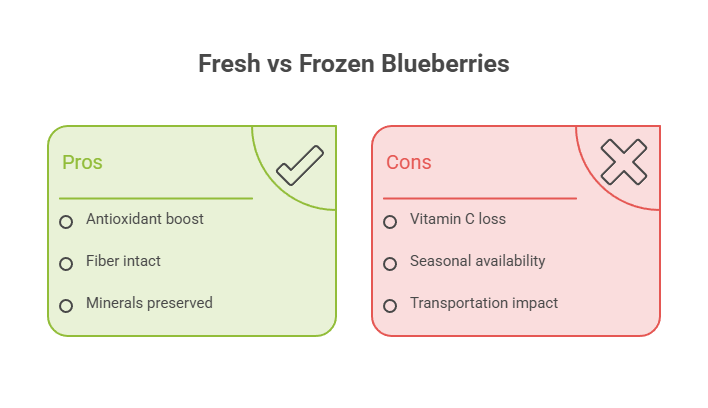
Honesty matters here, and this is where our team breaks from the pro-frozen marketing. Vitamin C is water-soluble and sensitive, and it can decline during processing and frozen storage. USDA database values often list frozen blueberries with notably less vitamin C than fresh, sometimes closer to 4 milligrams per cup against fresh’s 14.
The wider research is genuinely mixed. A University of Georgia study in the Journal of Food Composition and Analysis, summarized by the Wild Blueberries industry group, found no significant vitamin C difference among fresh, frozen, and refrigerated berries, while measuring slightly lower beta-carotene in frozen samples.
The practical read: if your single goal is maximum vitamin C, in-season fresh berries eaten fast hold a small edge. For everything else, freezing costs almost nothing, and blueberries were never your main vitamin C source to begin with. One orange or bell pepper dwarfs a cup of berries on that front.
Fresh vs Frozen, Nutrient by Nutrient
Walking through the major nutrients one at a time shows why the contest ends in a near draw, and why the old fresh-is-always-best rule gets it backward.
Antioxidant Capacity Compared
This is the category that decides the match, and frozen holds its own or wins. The SDSU data showed anthocyanin concentration around 8.89 milligrams per gram in berries frozen for 133 days, with no decline versus fresh and a measurable rise in antioxidant activity against free radicals over storage.
A separate study in the Journal of Biomedicine and Biotechnology reported no significant difference in the antioxidant capacity of anthocyanin extracts from fresh versus frozen blueberries. Two independent lines of evidence point the same way.
In nutrition questions our team fields, this is the line worth repeating: freezing does not diminish blueberry antioxidants, and the ice-crystal effect may modestly improve how much your body absorbs.
The Vitamin C Question
Vitamin C is the lone asterisk on frozen’s record. It degrades with heat, light, oxygen, and time, and frozen storage is not fully immune to that slow erosion. Berries eaten within days of harvest test highest.
The trap is the word fresh. Out-of-season fresh blueberries shipped thousands of miles have also been bleeding vitamin C the entire journey. By the time a January import reaches your fridge, its vitamin C lead over frozen may already be gone.
Our lab partners and dietitian network make the point that the fair comparison for vitamin C is local in-season fresh against frozen, not winter imports against frozen. Against imports, frozen often finishes even or ahead.
Fiber and Minerals Hold Steady
Fiber is identical between fresh and frozen, no exceptions. The same holds for manganese, potassium, and vitamin K, which all survive freezing untouched. There is no realistic scenario where fresh delivers more of these.
This is the quiet engine behind frozen’s strong showing. The nutrients people most associate with blueberries, antioxidants and fiber, are precisely the ones freezing guards best.
The numbers below set the US blueberry picture in context and show why frozen has become such a large share of what Americans eat.
| Metric | Figure | Source |
| US per capita fresh blueberry consumption | 2.54 lbs in 2021 (up from 0.26 lbs in 2000) | USDA ERS / U.S. Highbush Blueberry Council |
| US blueberry production (2024) | 789.5 million lbs, $1.15 billion | USDA ERS Fruit and Tree Nuts Outlook |
| US fresh blueberry imports (2024) | 684 million lbs, $2.18 billion (+22%) | U.S. Highbush Blueberry Council / USDA ERS |
| Share of processed US blueberries sold frozen | ~95% | North American Blueberry Council |
| Anthocyanins, berries frozen 133 days | ~8.89 mg/g (no drop vs fresh) | SDSU via ScienceDaily |
| Frozen blueberry freezer storage life | 10 to 12 months | USDA storage guidance |
The Catch: Time, Storage, and Handling
Both forms have weak points. Knowing them is how you actually capture the nutrition you paid for, instead of trusting the label to do the work.
How Fast Fresh Loses Its Edge in Transit
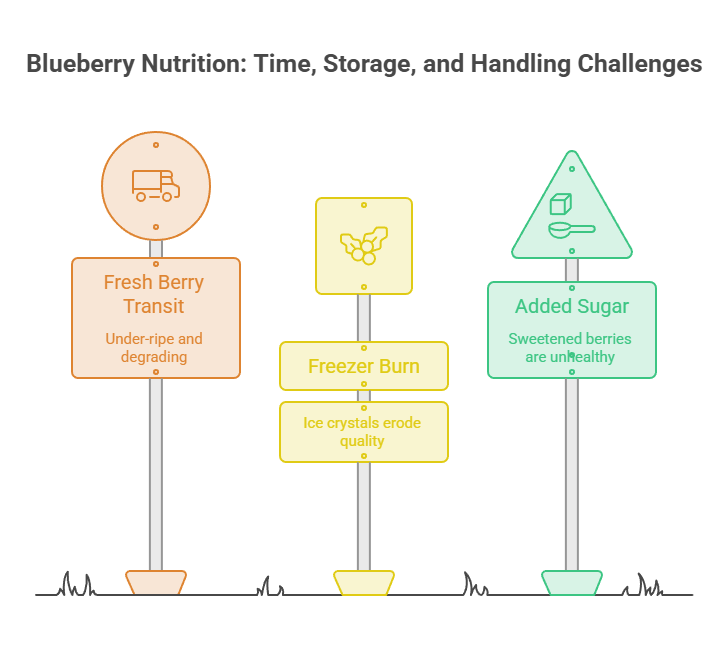
The US now imports enormous volumes of fresh blueberries, with 684 million pounds arriving in 2024, much of it from Peru and Chile during the American off-season. To survive that trip, those berries get picked slightly under-ripe.
Picked early and shipped far stacks two strikes against nutrition: the berry never fully ripened, and it spends days to weeks degrading. Vitamin C and the delicate compounds fade across every mile.
Across the readers we serve, the most common error is treating a winter import as fresher than a frozen bag. By harvest timing alone, the frozen berry was frequently the riper, better-preserved fruit.
Freezer Burn and the Two-Month Window
Frozen is not bulletproof. The SDSU research noted that larger ice crystals, which form when freezing is slow or storage temperatures swing, can start causing freezer burn around the two-month mark.
Freezer burn does not make berries unsafe, but it dulls texture and can erode quality over very long storage. A freezer that holds a steady temperature protects berries far better than a fridge-top compartment that thaws a little each time the door opens.
The fix is easy: buy commercially flash-frozen berries, keep your freezer cold and stable, and use the bag within a few months rather than letting it sit for a full year.
The Added-Sugar Trap in Some Frozen Bags
The real nutrition risk with frozen is not the freezing, it is what some brands stir in. Sweetened frozen blueberries and berries packed in syrup carry added sugar that nudges a healthy fruit toward dessert.
The label settles it. A clean bag lists one ingredient: blueberries. If you spot sugar, syrup, or juice concentrate, you are buying a sweetened product, not plain fruit.
Our medical reviewers note that this single label check matters more than the fresh-versus-frozen decision itself. Plain frozen beats sweetened frozen on nutrition every time.
How to Choose and Use Each One
The sharpest shoppers refuse to pick a permanent side. They match the form to the task, and the table below turns that into a quick reference for the store.
When Fresh Is the Better Pick
Reach for fresh when texture is the whole point. Snacking by the handful, topping yogurt or oatmeal, and scattering berries across a salad all want the firm, distinct bite that thawed fruit gives up.
Fresh also wins in peak summer, especially from a local farm or stand. In-season domestic berries are picked riper and travel less, which protects flavor and that small vitamin C lead.
When Frozen Is the Smarter Buy
Choose frozen for anything blended, baked, or simmered. Smoothies, muffins, pancakes, oatmeal, and sauces do not care about a soft berry, and frozen blends thicker and bakes well off-season.
Frozen also wins on budget and waste. It costs less per cup, never rots in the back of the fridge, and lets you eat blueberries daily all year without watching the calendar or the spoilage clock.
Smart-Shopping Checklist
Read the ingredient list and choose bags where blueberries are the only item. Favor products labeled flash frozen or individually quick frozen, which form smaller ice crystals and hold quality longer.
For fresh, buy in season when you can, look for firm, deep-colored berries with a silvery bloom, and eat them within a few days. Patients commonly ask us how to do blueberries right, and these two habits cover most of the answer.
| Scenario | Recommended Action | Why |
| Making daily smoothies | Buy frozen | Cheaper, no spoilage, blends thick, antioxidants intact |
| Snacking raw or topping yogurt | Buy fresh | Firmer texture, no thawing, better bite |
| Baking muffins or pancakes | Frozen, do not thaw | Holds shape, bleeds less, year-round price |
| Tight grocery budget | Frozen | Lower cost per cup, zero waste |
| Peak summer, local source | Fresh | Riper fruit, top flavor, supports local growers |
| Maximizing antioxidant value | Either, lean frozen | Equal or higher anthocyanin availability |
Beyond Nutrition: Cost, Convenience, and Taste
Nutrition is only half the decision. For most US households, cost and convenience quietly decide what lands in the cart week after week.
Frozen wins on both. A bag keeps for months, costs less per cup, and stays available every day of the year, regardless of growing season or a cold snap in Florida that sends fresh prices climbing.
Fresh wins on experience. Nothing matches a ripe summer blueberry eaten raw, and the firmer texture suits any recipe where the berry stays whole and visible.
Taste is personal, but the behavior data tells a story. US blueberry demand has surged, with per capita consumption rising nearly tenfold since 2000 according to USDA ERS, and frozen makes up the large majority of processed berries Americans buy. People have quietly voted for convenience.
The bottom line our team keeps returning to: the healthiest blueberry is the one you eat consistently. If frozen keeps berries on hand all year, frozen is the better choice for your health, a few milligrams of vitamin C notwithstanding.
Frequently Asked Questions
Are frozen blueberries as nutritious as fresh?
Yes. Frozen blueberries match fresh on fiber, manganese, and vitamin K, and they hold equal or higher anthocyanin antioxidants because freezing captures the berry at peak ripeness. The only meaningful gap is a slight dip in vitamin C, a nutrient blueberries were never a leading source of anyway.
Do frozen blueberries have less vitamin C?
Often, but modestly. Vitamin C is water-soluble and fades with time and storage, so frozen berries can test lower than just-picked fresh ones, sometimes near 4 milligrams a cup against fresh’s 14. Against off-season fresh imports that traveled for weeks, the gap frequently shrinks to nothing.
Why are frozen blueberries often cheaper than fresh?
Frozen berries are processed in bulk at harvest, skip fast refrigerated shipping and display, and never spoil on the shelf. Those savings reach you. Frozen pricing also stays stable year-round, while fresh prices spike during the US off-season when supply leans on imports.
Do frozen blueberries have added sugar?
Plain frozen blueberries do not, but sweetened versions and berries in syrup do. The ingredient list decides it. A clean product lists only blueberries, so if you see sugar, syrup, or juice concentrate, you are buying a sweetened item with extra calories and less nutritional value.
Are frozen blueberries washed before freezing?
Commercially frozen blueberries are typically cleaned during processing, so many go straight from bag to blender. A quick rinse never hurts if you prefer. Check the package either way, since handling standards vary by brand and by country of origin.
Is it OK to eat frozen blueberries every day?
For most people, yes, and our dietitian network encourages the daily habit. A cup delivers fiber and antioxidants with little sugar or calories. Choose plain unsweetened berries, and if a medical condition affects your blood sugar or vitamin K, check with your clinician first.
Do you lose nutrients cooking frozen blueberries?
Some, mainly heat-sensitive vitamin C and a portion of anthocyanins that leach into the cooking liquid. The loss is similar whether you start with fresh or frozen. Keeping the juices in your dish, rather than draining them, recaptures much of what cooks out of the berries.
Are wild frozen blueberries healthier than cultivated?
Wild blueberries are smaller and carry more anthocyanins per cup than cultivated highbush types, so ounce for ounce they pack a higher antioxidant load. Nearly all wild blueberries are sold frozen, so if maximum antioxidants are the goal, frozen wild berries are an excellent pick.
How long do frozen blueberries keep their nutrients?
Studies show no meaningful antioxidant loss across one to five months of freezing. Quality holds well for 10 to 12 months in a stable, cold freezer, though texture can slip and freezer burn may begin around two months if temperatures fluctuate. Use within a few months for best results.
Can you eat frozen blueberries without thawing?
Yes. Frozen blueberries are safe and pleasant straight from the freezer and make a cooling snack. They blend directly into smoothies and bake into muffins without thawing. Thawing only matters when a recipe needs soft berries or you want them at room temperature.
Do frozen blueberries give the same health benefits as fresh?
For the benefits tied to anthocyanins and fiber, including heart and antioxidant support, yes. Both forms deliver the same core compounds, and frozen may even improve antioxidant absorption. The marginal vitamin C difference is far too small to change the real-world health value of either choice.
Should you thaw frozen blueberries before a smoothie?
No, adding them frozen is better. They chill the drink, thicken the texture, and remove any need for ice, which only waters down flavor. Tossing frozen berries straight into the blender is the simplest way to use them and preserves the most nutrition.
Disclaimer: This article is for general informational purposes and does not replace personalized medical or nutritional advice. Individual needs vary, especially for people managing blood sugar, taking blood thinners affected by vitamin K, or living with specific dietary conditions. Consult a qualified healthcare provider or registered dietitian before making significant changes to your diet.
References
- USDA FoodData Central, Blueberries raw nutrient values
- USDA Economic Research Service, US blueberry consumption and trade data
- South Dakota State University via ScienceDaily, freezing and anthocyanin availability
- American Heart Association, fresh or frozen blueberries and health
- Wild Blueberries, University of Georgia fresh vs frozen nutrient study summary
- U.S. Highbush Blueberry Council and North American Blueberry Council, production and frozen-market statistics