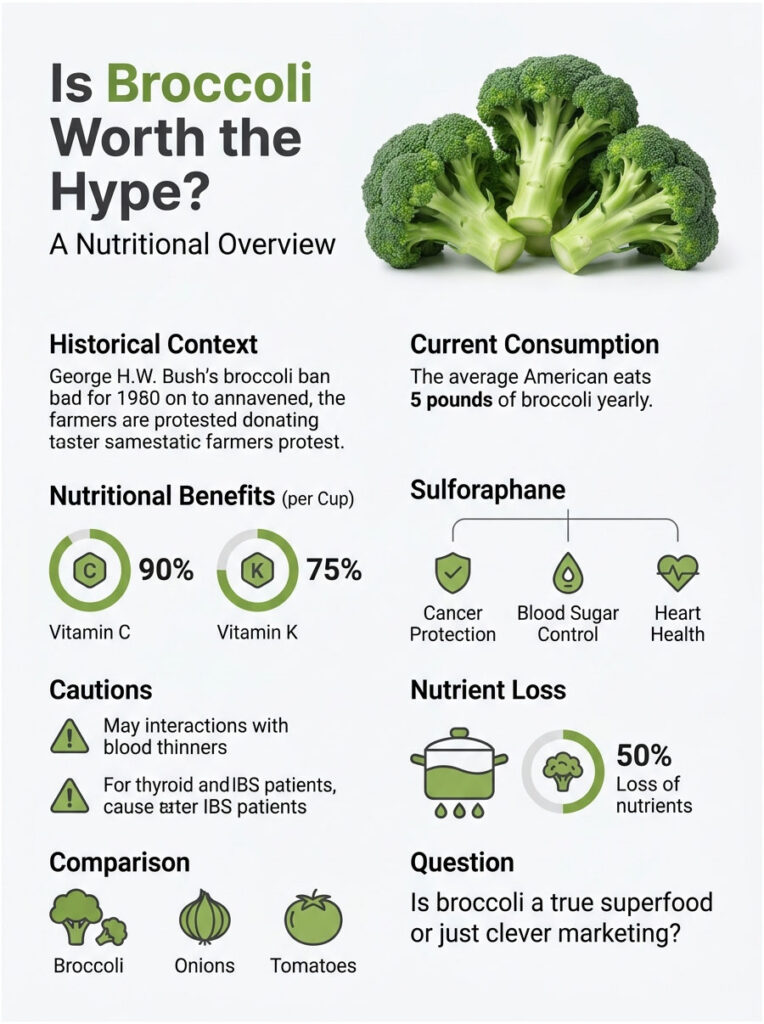
When President George H.W. Bush banned broccoli from Air Force One in 1990, sympathetic American farmers shipped 10 tons of it to the White House in protest. Three decades later, the average American eats about 5 pounds of fresh broccoli a year, less than a quarter of what we eat in onions or tomatoes. So the question is fair: is this little green tree actually worth the praise, or is it just nutrition’s most stubborn marketing story?
Table of Contents
Quick Answer: Yes, broccoli is genuinely healthy. One cup delivers 90% of daily vitamin C, 75% of vitamin K, and a sulfur compound called sulforaphane that researchers link to cancer protection, blood sugar control, and heart health. The catch: it interacts with blood thinners, can bother thyroid and IBS patients, and loses 50% of its nutrients when boiled.
At a Glance
- Broccoli is a verified nutrient-dense vegetable, not just marketing
- Sulforaphane is the most studied anti-cancer compound in any common American vegetable
- One cup of raw broccoli provides 90% of daily vitamin C and 75% of daily vitamin K
- Boiling destroys over half the flavonoids; microwaving preserves the most
- Patients on warfarin need consistent intake, not avoidance
- Frozen broccoli retains around 80% of nutrients at half the cost
- USDA reports US per capita fresh broccoli consumption was 5.2 pounds in 2022
The Verdict Up Front: What Science Actually Says About Broccoli
Broccoli earned its superfood reputation honestly. Decades of research from Johns Hopkins, the National Cancer Institute, and Harvard tie cruciferous vegetable intake to reduced risk of several cancers, lower LDL cholesterol, and better blood sugar control in people with type 2 diabetes.
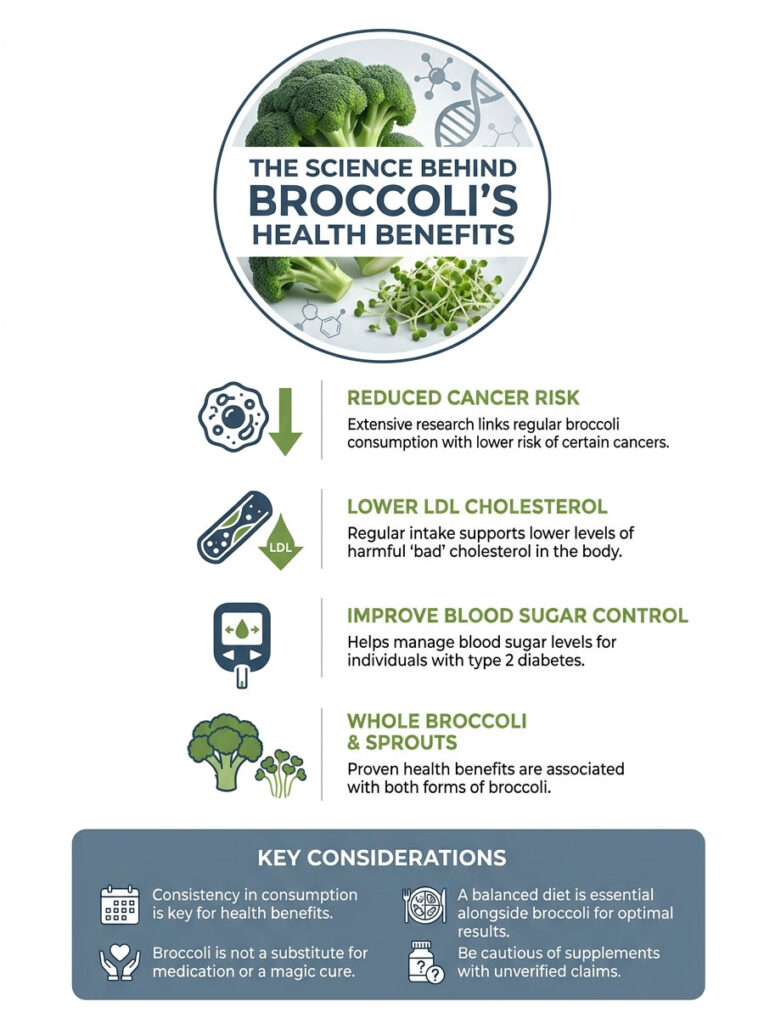
Broccoli is not magic, though. It will not cure disease, and eating a stir-fry once a week with takeout pizza will not undo a poor diet. The benefits show up with consistent intake over years, paired with the rest of a balanced plate.
Patients booking nutrition panels through HealthCareOnTime often ask whether broccoli alone can replace medication for high cholesterol or pre-diabetes. The honest answer is no, but it can meaningfully help when combined with the right protocol and lifestyle adjustments.
The hype outruns the science in two specific places: cancer-cure claims and broccoli supplement pills. Whole broccoli and broccoli sprouts have human evidence behind them. Capsules with mystery dosages and “detox” promises do not.
What’s Actually Inside Broccoli? The Nutritional Breakdown
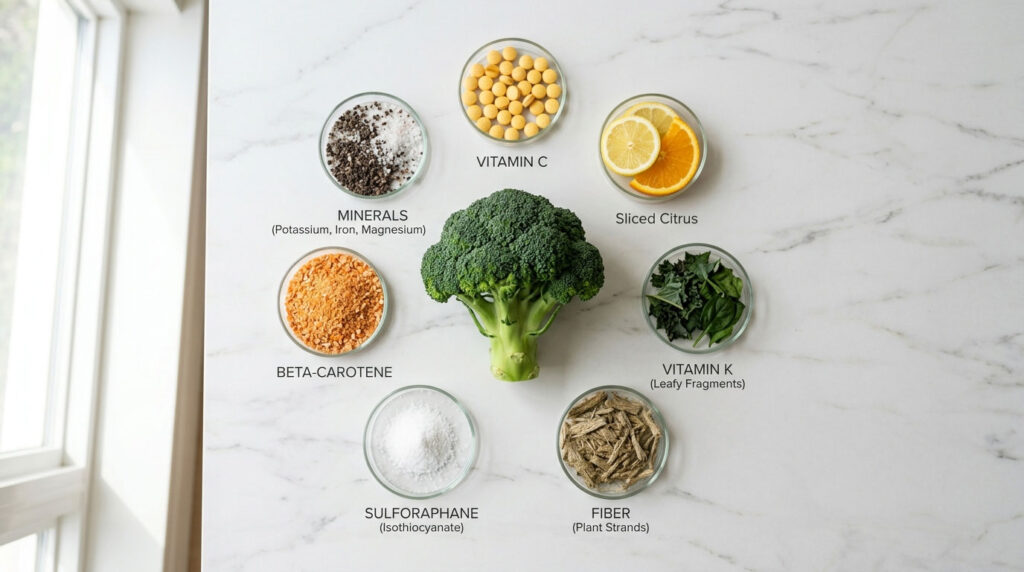
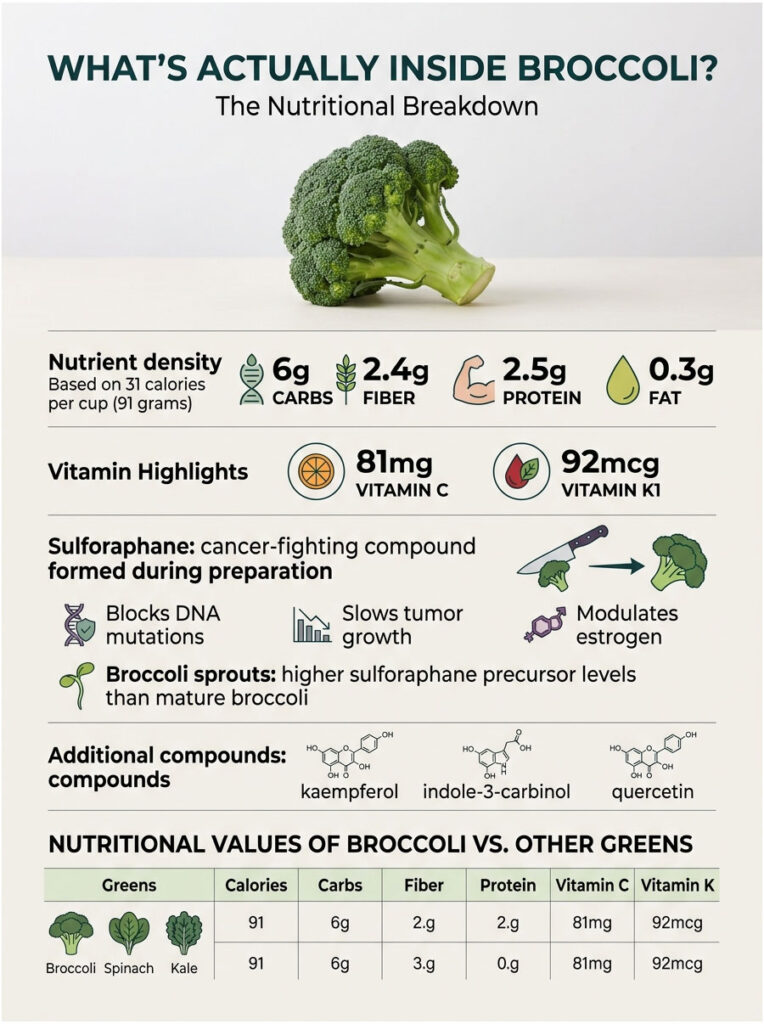
Broccoli punches well above its weight on nutrient density per calorie. According to USDA FoodData Central, one cup of raw chopped broccoli contains just 31 calories but covers a meaningful share of several daily targets.
One Cup of Raw Broccoli, By the Numbers
A standard 91-gram serving gives you 31 calories, 6 grams of carbs, 2.4 grams of fiber, 2.5 grams of protein, and only 0.3 grams of fat. The vitamin profile is where it shines: roughly 81 mg of vitamin C and around 92 mcg of vitamin K1.
You also get folate, potassium, manganese, small amounts of iron and calcium, plus carotenoids like lutein and zeaxanthin that protect the retina from oxidative damage.
The Star Compound: Sulforaphane
Sulforaphane is what makes broccoli more than just another green vegetable. It forms when you chop, chew, or briefly heat broccoli, releasing an enzyme called myrosinase that converts a precursor (glucoraphanin) into active sulforaphane.
Researchers at MD Anderson Cancer Center note that sulforaphane has been shown to block DNA mutations linked to cancer, slow tumor cell multiplication, and may modulate estrogen levels in ways that affect breast cancer risk. Most evidence comes from cell and animal models, with growing human trial data including a Johns Hopkins randomized study on broccoli sprout extract and breast tissue (NCT00982319).
Three-day-old broccoli sprouts contain 10 to 100 times more sulforaphane precursor than mature broccoli per gram. Most modern clinical trials use sprouts or sprout extract for this reason.
Vitamins, Minerals, and Phytonutrients
Beyond sulforaphane, broccoli carries kaempferol (a flavonoid with anti-inflammatory action), indole-3-carbinol (under study for breast and cervical cancer), and quercetin. These compounds work together with the vitamins, which is one reason whole broccoli outperforms isolated supplement pills in studies.
Our medical reviewers note that patients tracking inflammatory markers like CRP often see modest improvements when they add cruciferous vegetables 4 to 5 times per week alongside other diet and exercise changes.
Table 1: Broccoli vs. Other Popular Greens (per 1 cup raw, USDA FoodData Central)
| Nutrient | Broccoli | Spinach | Kale | Brussels Sprouts | Cauliflower |
| Calories | 31 | 7 | 7 | 38 | 27 |
| Vitamin C (mg) | 81 | 8 | 19 | 75 | 51 |
| Vitamin K (mcg) | 92 | 145 | 113 | 156 | 16 |
| Fiber (g) | 2.4 | 0.7 | 0.6 | 3.3 | 2.1 |
| Sulforaphane precursors | High | None | Low | High | Medium |
| Folate (mcg) | 57 | 58 | 19 | 54 | 57 |
Spinach beats broccoli on vitamin K and iron. Brussels sprouts edge it on fiber. But broccoli takes the cancer-fighting category and the all-around balance, which is why dietitians keep coming back to it.
8 Health Benefits Backed by Real Research
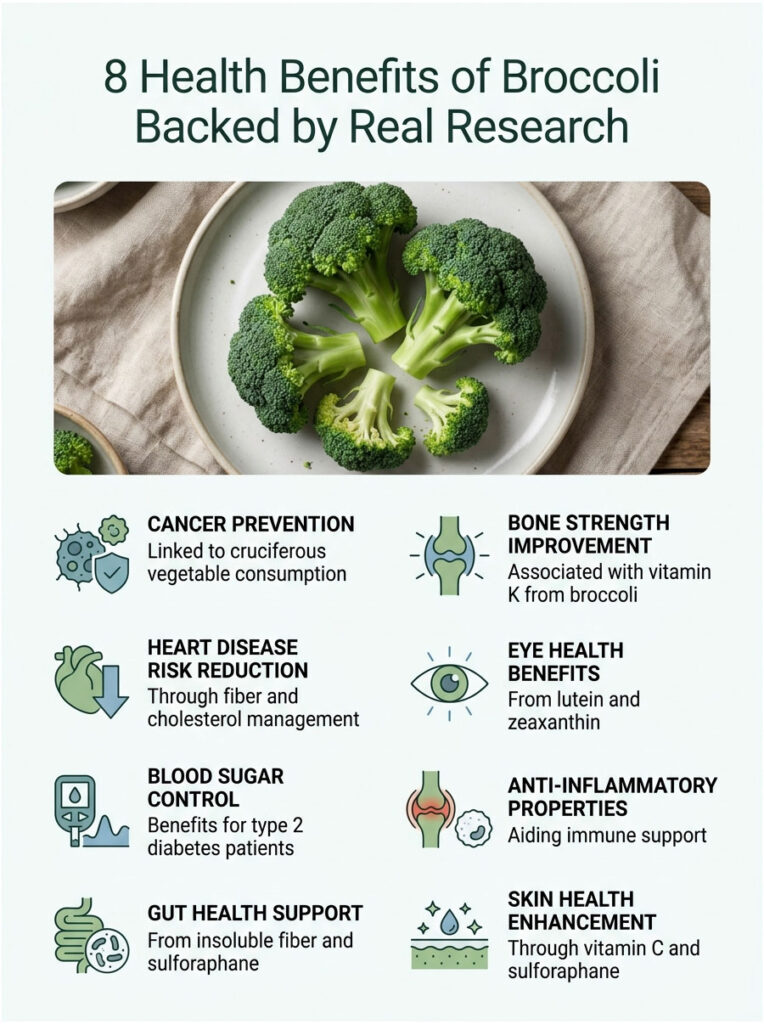
Cancer Prevention: The Sulforaphane Story
Population studies consistently show people who eat the most cruciferous vegetables have lower rates of lung, colorectal, breast, prostate, and stomach cancers. The American Institute for Cancer Research lists non-starchy vegetables, including broccoli, as protective against multiple cancer types.
The mechanism is well-documented in lab studies. Sulforaphane activates Phase 2 detoxifying enzymes, helps clear carcinogens before they damage DNA, and induces apoptosis (programmed cell death) in damaged cells. Human trials at Johns Hopkins, the University of Pittsburgh, and several NCI-funded sites report promising biomarker changes, though we are still years from prescription-level claims.
The honest caveat: epidemiological evidence is strong, but no single food prevents cancer on its own. Broccoli is one piece of a larger pattern that includes weight, exercise, alcohol, and tobacco status.
Heart Disease and Cholesterol Support
A 2017 review in Critical Reviews in Food Science and Nutrition found cruciferous vegetables, including broccoli, were among the foods most consistently linked to reduced cardiovascular disease risk. Broccoli’s fiber binds bile acids in the gut, prompting the liver to pull cholesterol from the blood to make new ones, which can lower LDL.
One older clinical study using powdered broccoli sprout supplements showed reduced triglycerides and LDL alongside higher HDL. The effects are real but modest, in the range of 5 to 10% improvement when combined with other dietary changes.
Blood Sugar Control and Type 2 Diabetes
A 2017 study in Science Translational Medicine found that concentrated broccoli sprout extract reduced fasting blood glucose by about 10% in obese patients with type 2 diabetes over 12 weeks. The same effect did not show up in lean diabetics, suggesting the benefit is most pronounced for those with insulin resistance.
The 2.4 grams of fiber per cup also slows glucose absorption, which is why broccoli has a glycemic index near zero. In cases reviewed by our diagnostic network, patients managing pre-diabetes often respond well when they swap mashed potatoes or rice for roasted broccoli several nights a week.
Gut Health and Digestion
Insoluble fiber in broccoli feeds beneficial gut bacteria and supports regular bowel movements. The same sulforaphane that helps fight cancer also appears to suppress Helicobacter pylori, a bacterium tied to stomach ulcers and gastric cancer.
A small Japanese clinical study showed broccoli sprout consumption reduced H. pylori colonization in infected patients, though it did not replace standard antibiotic therapy.
Bone Strength and Vitamin K
Vitamin K1 from broccoli activates osteocalcin, the protein that binds calcium into bone. The Harvard Nurses’ Health Study linked higher vitamin K intake with lower hip fracture rates in postmenopausal women, who account for the bulk of US osteoporosis cases.
For American women over 50, two to three servings of broccoli per week makes a measurable contribution to vitamin K targets without needing a supplement.
Eye Health: Lutein and Zeaxanthin
Both carotenoids accumulate in the macula of the eye, where they filter blue light and protect against oxidative stress. Long-term studies link higher dietary lutein with reduced age-related macular degeneration, the leading cause of vision loss in Americans over 65.
Inflammation and Immune Support
Kaempferol, sulforaphane, and vitamin C work together to lower oxidative stress markers. People with chronic inflammatory conditions like rheumatoid arthritis sometimes report symptom improvement when they add cruciferous vegetables consistently, though individual results vary.
Skin and Anti-Aging
Vitamin C drives collagen synthesis, and sulforaphane has been shown in early studies to reduce UV-induced skin damage at the cellular level. Broccoli does not replace sunscreen, but it adds an internal antioxidant layer that supports skin repair after sun exposure.
The Side That Nobody Talks About: Real Risks of Broccoli
For most healthy adults, broccoli ranks among the safest foods on earth. Specific groups need to be careful, and the standard health press rarely covers these clearly.
Vitamin K and Blood Thinners
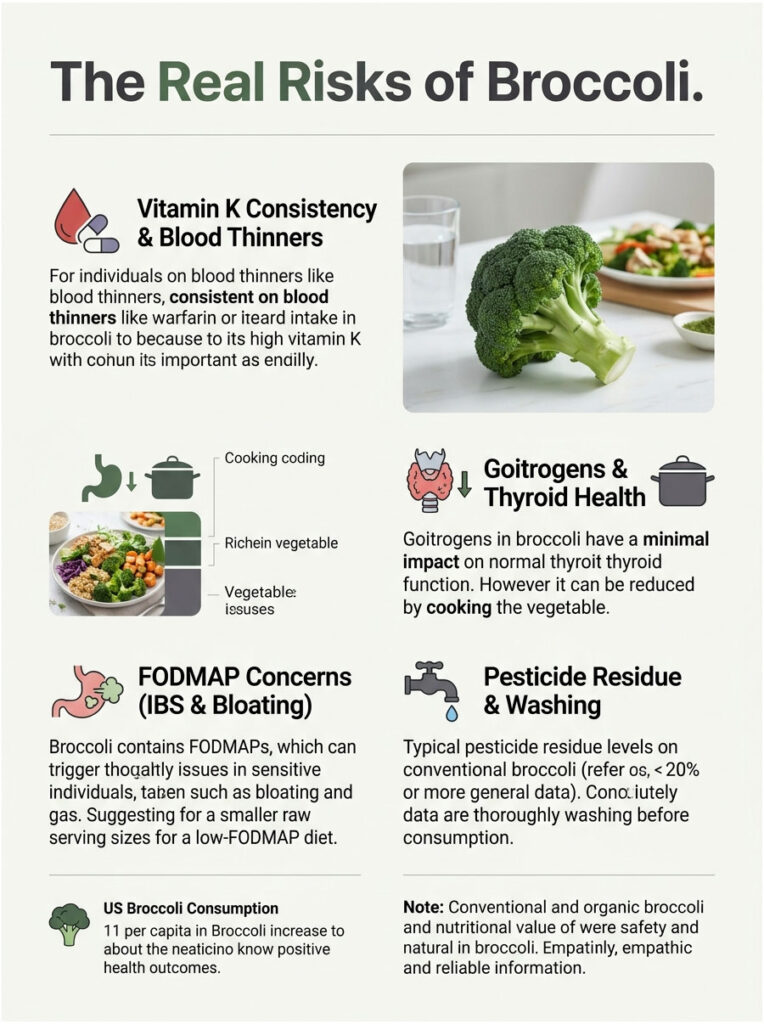
This is the big one. About 2.7 million Americans take warfarin (Coumadin), and several million more take other anticoagulants. Mayo Clinic guidance is clear: patients on warfarin should keep vitamin K intake consistent day to day, not eliminate it.
A sudden jump from no broccoli to a daily cup can shift the INR (the blood-clotting test) and reduce warfarin’s effectiveness, raising stroke risk. The fix is consistency, not avoidance. Talk to your prescribing doctor or anticoagulation clinic before changing your pattern.
Goitrogens and Thyroid Function
Broccoli contains goitrogens, plant compounds that can theoretically interfere with thyroid hormone production by reducing iodine uptake. The good news: the effect is small at normal eating amounts, and cooking inactivates most of the responsible enzyme.
Our lab partners flag that patients with diagnosed hypothyroidism do not need to avoid broccoli. They should favor cooked over raw and skip mega-doses of broccoli juice or concentrated sprout supplements without medical supervision.
IBS, Bloating, and the FODMAP Issue
Broccoli contains raffinose, a complex sugar humans cannot fully break down. Gut bacteria ferment it instead, producing the gas that causes bloating. People with irritable bowel syndrome on a low-FODMAP diet often need to limit raw broccoli to about half a cup at a time.
Cooking softens cell walls and reduces, though does not eliminate, the bloating effect. Florets are easier to tolerate than stems, which carry more FODMAPs.
Pesticide Residue Concerns
The Environmental Working Group’s annual produce ranking has historically placed broccoli in its “Clean Fifteen” list, meaning conventional broccoli tests low for pesticide residue compared with strawberries or spinach. Washing under running water for 15 to 20 seconds removes most surface contamination. Organic is fine if the budget allows but not nutritionally necessary.
Table 2: USA Broccoli Consumption and Health Data
| Metric | Figure | Source |
| US per capita fresh broccoli consumption (2022) | 5.2 pounds | USDA Economic Research Service |
| All-time peak per capita (2016) | 7.5 pounds | USDA ERS Yearbook |
| Share of US broccoli grown in California | 92% | USDA Agricultural Marketing Resource Center |
| Adults meeting daily vegetable intake recommendations | About 1 in 10 | CDC, 2022 |
| Americans on warfarin who must monitor vitamin K | About 2.7 million | American Heart Association |
| Drop in US fresh vegetable availability in 2024 | 3% | USDA ERS, May 2025 |
Raw vs. Cooked vs. Frozen: Which Is Actually Healthiest?
This is the most useful question in this article and the one most blogs get wrong.
What Boiling Does to Nutrients
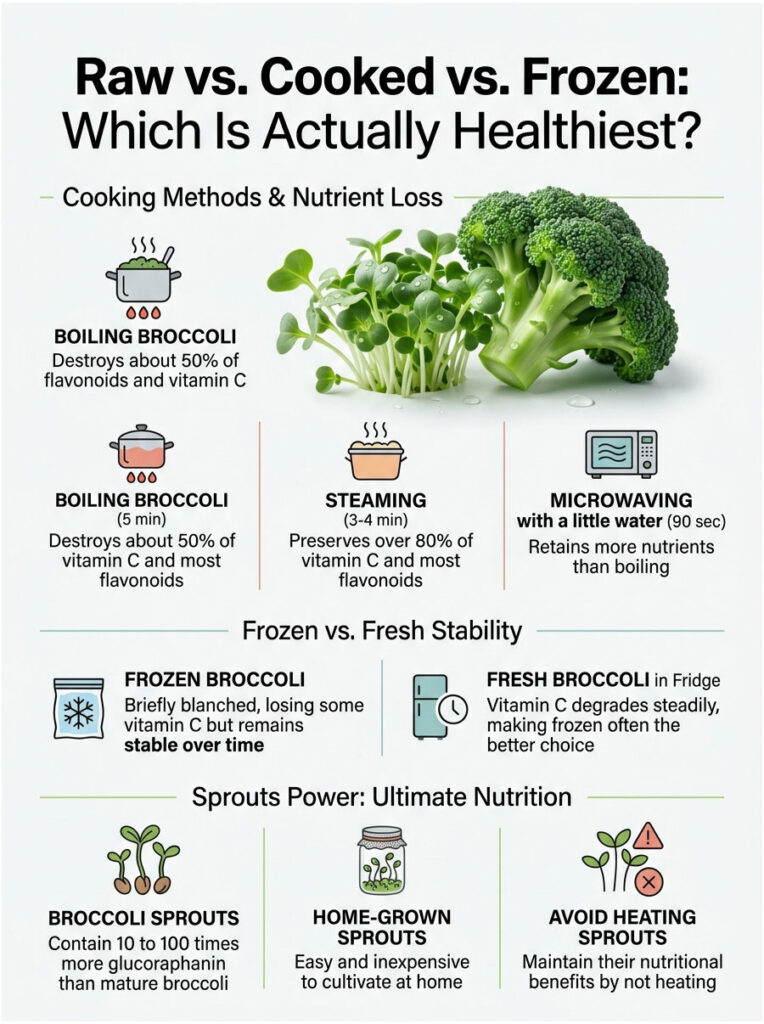
A 2019 study in the Journal of Agricultural and Food Chemistry found that boiling broccoli for 5 minutes destroyed roughly 50% of flavonoids like kaempferol and quercetin, plus a meaningful share of vitamin C, which is water-soluble. The nutrients leach into the cooking water you then pour down the drain.
The verdict: skip boiling. If you must boil, drink the water as broth or repurpose it as soup base.
Why Steaming and Microwaving Win
Steaming for 3 to 4 minutes preserves over 80% of vitamin C and most flavonoids. Surprisingly, microwaving with a small amount of water for 90 seconds to 2 minutes performs even better in some studies, retaining more sulforaphane than any other common method.
A 2020 study found microwaving actually increased available sulforaphane levels, likely because brief heat damages cell walls without inactivating the myrosinase enzyme that produces sulforaphane.
The rule of thumb: if your broccoli is bright green and slightly crunchy, you preserved the nutrients. If it is olive-drab and mushy, you cooked the goodness out.
Frozen Broccoli: The Surprising Truth
Frozen broccoli is briefly blanched before freezing, which knocks out a small share of vitamin C. After that, the nutrients stay remarkably stable. Studies comparing fresh-and-stored broccoli with frozen often find frozen wins after a few days in the fridge, because vitamin C in fresh broccoli degrades steadily during refrigeration.
For a household trying to eat broccoli 4 nights a week without waste, frozen is the smarter buy. It costs roughly half as much per pound and keeps for months.
Broccoli Sprouts: The Concentrated Version
Three-day-old broccoli sprouts carry 10 to 100 times the glucoraphanin (sulforaphane precursor) of mature broccoli, gram for gram. This is why most clinical trials use sprouts or sprout extract.
You can grow them at home in a mason jar with seeds and water for under $10 a week. Add a small handful to salads, sandwiches, or smoothies. Avoid heating them, which kills the active enzyme and shrinks the benefit.
How Much Broccoli Should You Eat? The USA Guideline Reality
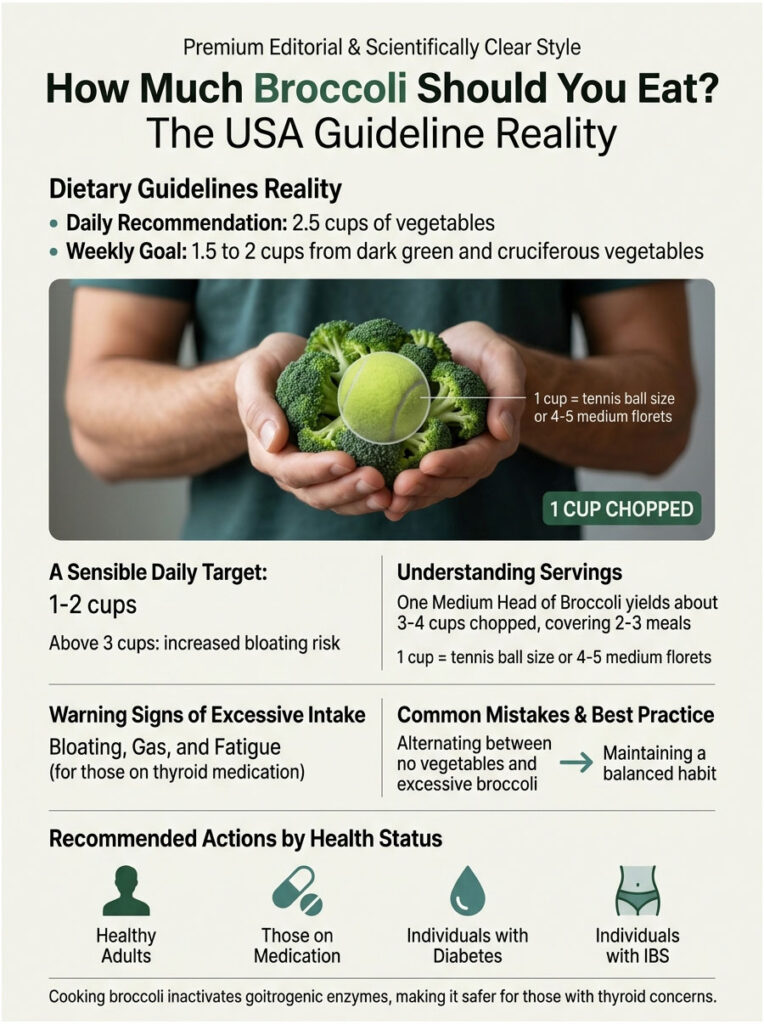
The Dietary Guidelines for Americans 2020-2025 recommend 2.5 cups of vegetables per day for most adults, with a weekly goal of 1.5 to 2 cups specifically from the dark green and cruciferous category.
Daily and Weekly Targets
For broccoli specifically, a sensible target is:
- Healthy adults: 1 to 2 cups, 4 to 5 days per week
- Adults targeting heart, blood sugar, or cancer-prevention benefits: 1 to 2 cups, 5 to 7 days per week
- Children ages 4 to 8: about half a cup per serving, 3 to 4 times per week
Going above 3 cups daily, while not dangerous for most, offers diminishing returns and increases bloating risk.
What “1 Serving” Actually Looks Like
One cup of chopped broccoli is about the size of a tennis ball. In florets, that is roughly 4 to 5 medium pieces. A full medium head of broccoli yields about 3 to 4 cups chopped, so one head covers two to three meals for one person.
Signs You’re Eating Too Much
Most warning signs are gastrointestinal: persistent bloating, gas, loose stools, or feeling overly full. People on thyroid medication who suddenly load up on raw broccoli or broccoli juice should watch for fatigue or cold sensitivity, though those effects typically require unusually large daily intakes.
Across consultations on our platform, the most common mistake is people swinging between “no vegetables for weeks” and “two heads of broccoli today” instead of building a steady, manageable habit.
Table 3: If You’re In This Situation, Do This
| Your Situation | Recommended Action | Why |
| Healthy adult, no medications | 1 to 2 cups, 4 to 5 days/week, steamed or microwaved | Hits sulforaphane and vitamin K targets without bloating |
| On warfarin or other vitamin K antagonist | Keep intake CONSISTENT day to day; talk to your anticoagulation clinic | Stability matters more than amount; INR can shift with sudden changes |
| Hypothyroidism on levothyroxine | Cooked broccoli only; avoid raw juice and sprout megadoses | Cooking inactivates the goitrogenic enzyme |
| Type 2 diabetes or pre-diabetes | 1 to 2 cups daily, swap for starchy sides | Fiber and sulforaphane support blood sugar control |
| IBS or low-FODMAP diet | Limit to 1/2 cup of florets at a time, well-cooked | Reduces raffinose-driven bloating |
| Pregnant or breastfeeding | 1 cup, 3 to 4 days/week, well-washed | Folate supports fetal development |
| Child age 4 to 12 | 1/2 cup, 3 to 4 days/week, roasted with olive oil and salt | Roasting reduces bitterness, improves uptake |
Broccoli vs. The Other Superfoods: Where Does It Rank?
Beating Spinach and Kale on These Metrics
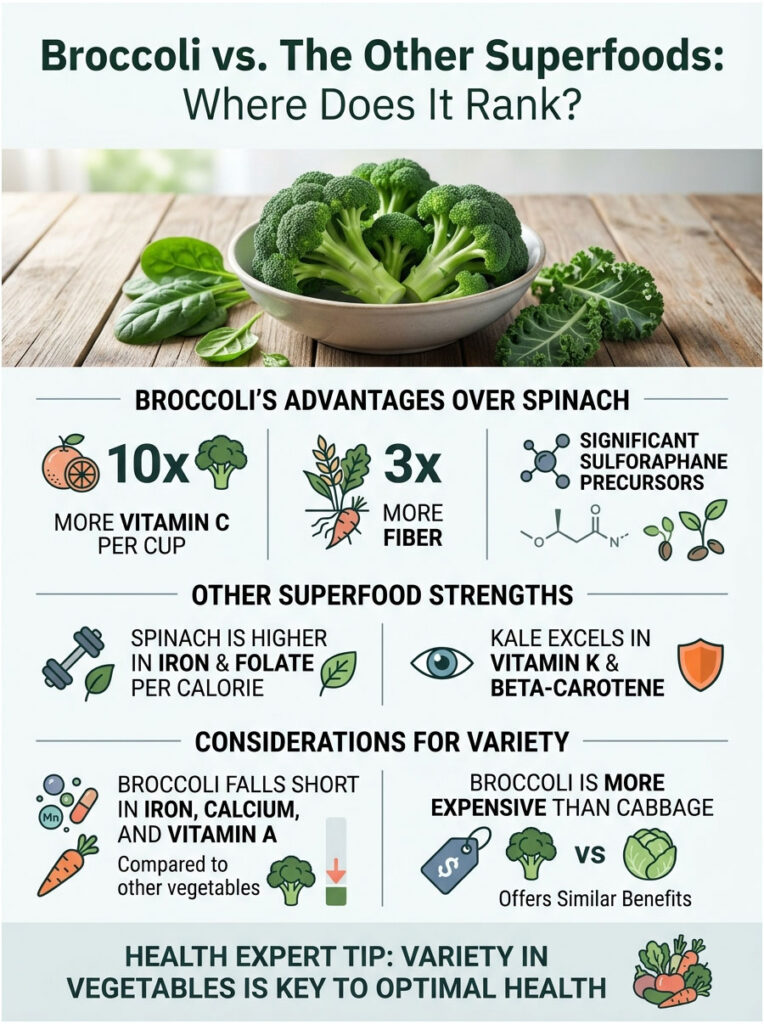
Per cup, broccoli delivers more vitamin C than spinach by a factor of 10, more fiber than spinach by a factor of 3, and is the only one of the three with meaningful sulforaphane precursors. Spinach wins on iron and folate per calorie. Kale wins on vitamin K and beta-carotene.
If you had to pick one green to eat consistently, broccoli offers the most balanced nutrient package across the most outcomes.
Where Broccoli Falls Short
Broccoli has less iron than spinach, less calcium than kale, and less vitamin A than carrots or sweet potatoes. It also costs more per pound than cabbage, which delivers similar cruciferous benefits at a budget price point.
The “Best Vegetable” Question
There is no single best vegetable. The American Heart Association and Harvard’s Nutrition Source both stress variety. A weekly rotation of broccoli, leafy greens, peppers, tomatoes, and orange vegetables outperforms any single “superfood” eaten in isolation.
Practical Buying, Storing, and Cooking in the USA
What to Look For at the Grocery Store
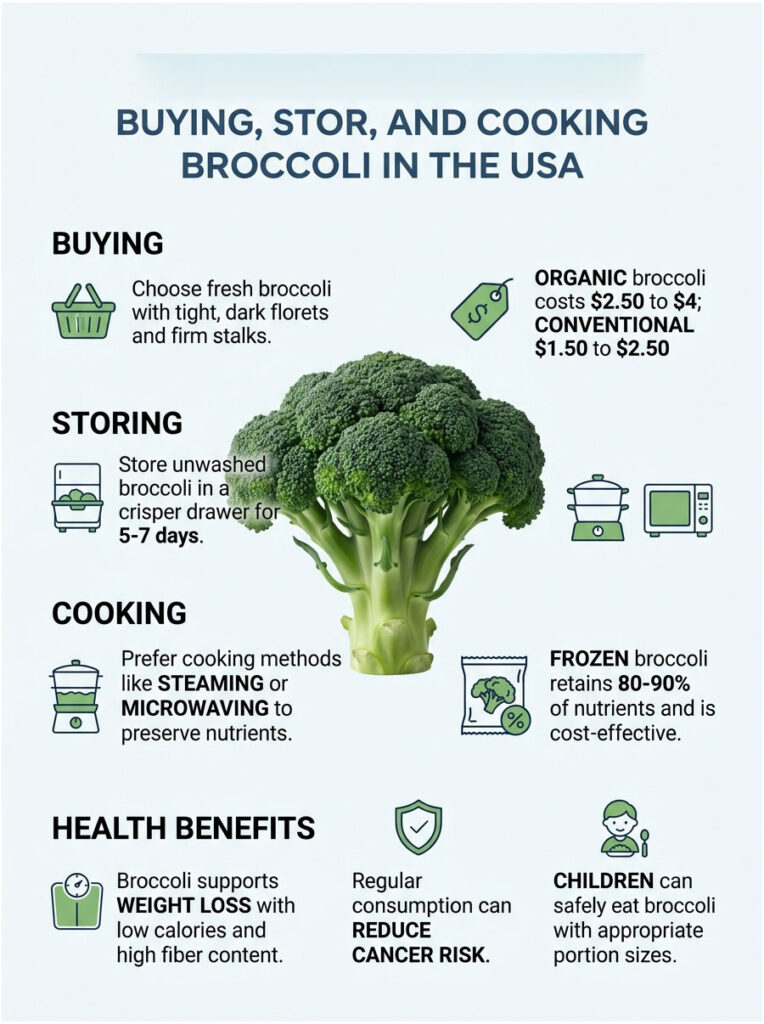
Choose heads with tight, dark green to slightly purple florets. Yellowing florets mean the broccoli is past peak. The stalk should feel firm, not bendy. Smell matters too: fresh broccoli has a faint earthy aroma, never sulfurous or sour.
In the US, organic broccoli typically runs $2.50 to $4 per head, conventional $1.50 to $2.50. Frozen averages around $2.50 per pound at major chains like Walmart, Kroger, Costco, and Aldi.
Storage That Preserves Sulforaphane
Store unwashed broccoli loosely wrapped in the crisper drawer, ideally in a perforated produce bag. Wash it only just before cooking. Whole heads keep 5 to 7 days; pre-cut florets last 3 to 4. For longer storage, blanch and freeze in portion-sized bags.
Patients we serve consistently report that buying a head on Sunday and keeping a frozen bag for backup beats any meal-prep system that requires daily shopping.
5 Easy Ways Americans Actually Eat Broccoli
The way you actually use broccoli day to day matters more than buying organic versus conventional. Practical options that work in real American kitchens include roasting with olive oil, salt, and garlic at 425°F for 20 minutes; stir-frying with chicken or tofu; chopping raw into salads with ranch or lemon vinaigrette; pureeing into a creamy soup with potato; and steaming briefly and topping with parmesan or hot sauce.
The trick is to find 2 or 3 preparations you genuinely like, not 20 you will never make twice.
Frequently Asked Questions
Is it OK to eat broccoli every day?
Yes, for most healthy adults, 1 to 2 cups daily is safe and beneficial. People on blood thinners need consistent, not avoidant, intake under medical guidance. Those with hypothyroidism should favor cooked over raw. If you experience persistent bloating, scale back to every other day or switch to better-cooked preparations.
How much broccoli is too much in one day?
Going beyond 3 cups daily provides diminishing nutritional returns and significantly raises bloating, gas, and digestive discomfort risk. Extreme intake of 5 or more cups daily for weeks could theoretically affect thyroid function in susceptible people. For most adults, 1 to 2 cups hits the sweet spot.
Is broccoli healthier raw or cooked?
Both are healthy, but lightly cooked usually wins. Microwaving for 90 seconds or steaming for 3 to 4 minutes preserves the most sulforaphane and vitamin C while making nutrients more bioavailable. Raw broccoli retains the most enzyme activity but is harder to digest. Boiling is the worst method, destroying up to half the flavonoids.
Can broccoli help you lose weight?
Broccoli supports weight loss indirectly through low calorie density (31 calories per cup) and high fiber (2.4 grams per cup), which promotes fullness. Replacing 200-calorie starchy sides with roasted broccoli is a proven strategy. It is not a fat burner on its own, but it makes calorie-controlled eating easier to sustain.
Does broccoli really fight cancer?
Population studies link cruciferous vegetable intake with reduced risk of lung, colorectal, breast, and stomach cancers. Sulforaphane has documented anti-cancer mechanisms in cell and animal studies, with growing human trial evidence. Broccoli is not a cancer cure or treatment, but it ranks among the most consistently protective foods in nutrition research.
Is frozen broccoli as nutritious as fresh?
Frozen broccoli retains roughly 80 to 90% of the nutrients of fresh, and after a few days of refrigeration, frozen often beats fresh because vitamin C degrades during storage. Frozen costs about half as much per pound and keeps for months. For busy households, frozen is honestly the smarter choice.
Who should avoid eating broccoli?
Almost nobody should avoid it entirely. People on warfarin need consistent intake under medical supervision. Those with severe IBS may need to limit portion size and favor cooked florets. Anyone with a documented broccoli allergy (rare) should avoid it. Hypothyroid patients should favor cooked preparations but do not need to eliminate it.
Does broccoli help with belly fat?
No food specifically targets belly fat, but broccoli supports overall fat loss through fiber, low calorie load, and stable blood sugar. The sulforaphane in broccoli sprouts has shown modest benefits in metabolic markers in obese patients with type 2 diabetes. Pair broccoli with adequate protein, sleep, and movement for actual results.
Can children eat broccoli daily?
Yes, with appropriate portions. Children ages 4 to 8 do well with about 1/2 cup, 3 to 4 times weekly. Roasting reduces bitterness and is the most kid-accepted preparation. Steamed broccoli with a little cheese also works. Avoid raw broccoli for toddlers under age 3 due to choking risk.
Are broccoli sprouts better than regular broccoli?
For sulforaphane content, yes. Three-day sprouts contain 10 to 100 times more glucoraphanin than mature broccoli per gram. They are not a replacement, just a concentrated boost. A small handful of sprouts on a salad alongside regular broccoli gives you the best of both.
Does cooking broccoli kill sulforaphane?
Heavy cooking can deactivate myrosinase, the enzyme that produces sulforaphane. Light cooking (steaming 3 to 4 minutes or microwaving 90 seconds) preserves most of the activity. Boiling for 10 minutes or more destroys most of it. A useful workaround is to chop broccoli, then let it sit 30 to 40 minutes before cooking so sulforaphane forms before heat is applied.
Is broccoli good for high blood pressure?
Yes. Broccoli is a good source of potassium (about 230 mg per cup) and provides nitrates and antioxidants that support healthy blood vessel function. The American Heart Association includes cruciferous vegetables in its DASH diet recommendations for blood pressure management. Effects are modest but real when broccoli is part of a low-sodium, high-vegetable pattern.
Disclaimer: This article is for general educational purposes and is not a substitute for personalized medical advice. If you take prescription medication, especially blood thinners or thyroid medication, talk to your doctor or registered dietitian before making meaningful changes to your broccoli intake. The information here reflects current research as of publication and may evolve as new studies are released.
References
- USDA Economic Research Service: Per capita consumption of fresh broccoli, 2000-2022
- USDA FoodData Central: Broccoli, raw nutrition data
- National Cancer Institute / PubMed Central: Sulforaphane: A Broccoli Bioactive Phytocompound with Cancer Preventive Potential
- Mayo Clinic: Warfarin diet: Foods to avoid
- MD Anderson Cancer Center: Sulforaphane benefits and cancer risk
- Cleveland Clinic: 5 Ways Broccoli Is a Health Superstar
- Johns Hopkins Sidney Kimmel Comprehensive Cancer Center: Broccoli sprout extract clinical trial NCT00982319
- Dietary Guidelines for Americans 2020-2025: Vegetable intake recommendations
- USDA Agricultural Marketing Resource Center: Broccoli production and market data
- Environmental Working Group: Clean Fifteen produce list