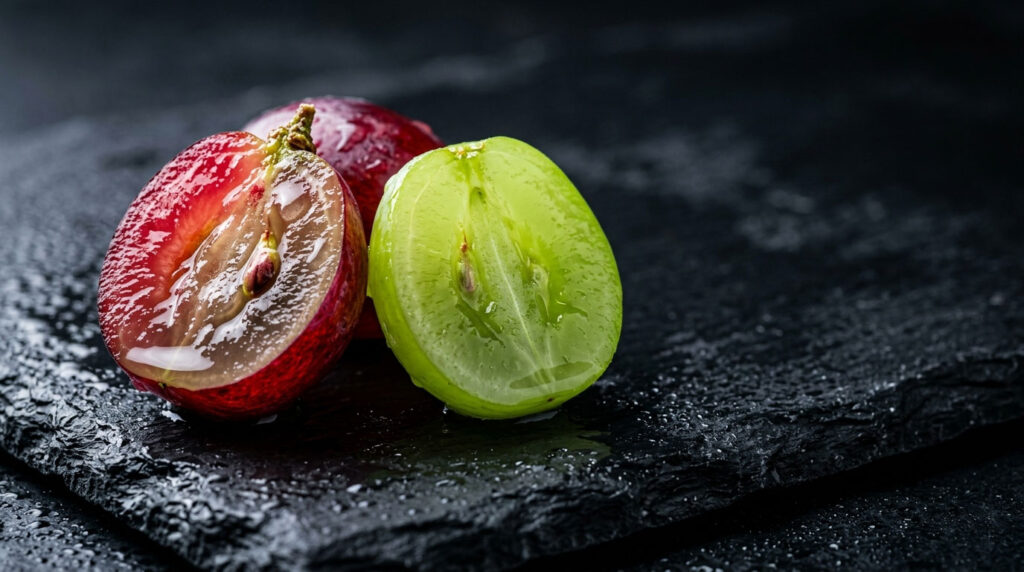
You can spot the difference between red and green grapes from across the produce aisle. What you can’t see is that the same pigment giving red grapes their color is also writing a real difference in antioxidants, one molecule at a time.
Table of Contents
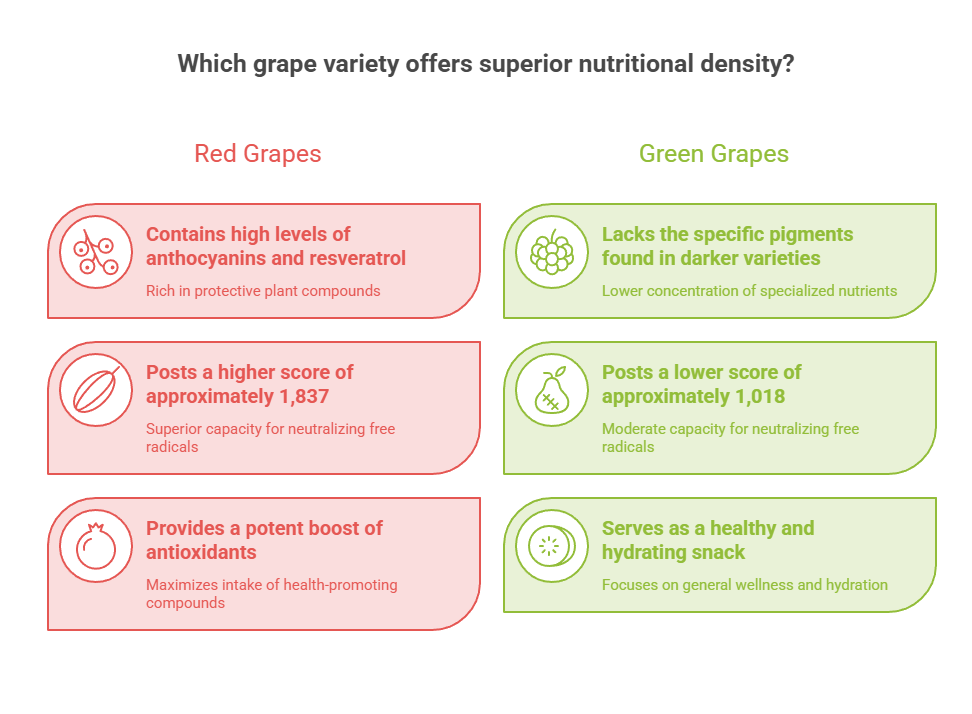
Quick Answer: Red grapes have more antioxidants than green grapes. The deciding factor is anthocyanins, the deep red and purple pigments packed into red grape skins that green grapes simply don’t make. Red grapes also tend to carry more resveratrol and post higher antioxidant scores, with commonly cited ORAC values near 1,837 versus 1,018 for green. Green grapes are still a healthy, hydrating choice, just lighter on these specific compounds.
At a Glance
- Red grapes win on antioxidants, mostly because of anthocyanins green grapes lack.
- Red grapes also tend to hold more resveratrol, the famous skin compound.
- Commonly cited ORAC scores put red near 1,837 and green near 1,018 per 100 grams.
- Green grapes are far from empty; they bring hydration, fiber, vitamin C, and vitamin K.
- Purple and black grapes often beat both for total antioxidant content.
- The skin is where most grape antioxidants live, so never peel them.
The Short Answer: Do Red Grapes Have More Antioxidants?
Yes. If you line up red and green grapes and measure their antioxidant content, red grapes come out ahead in nearly every study. The gap isn’t dramatic for every compound, but the trend is consistent.
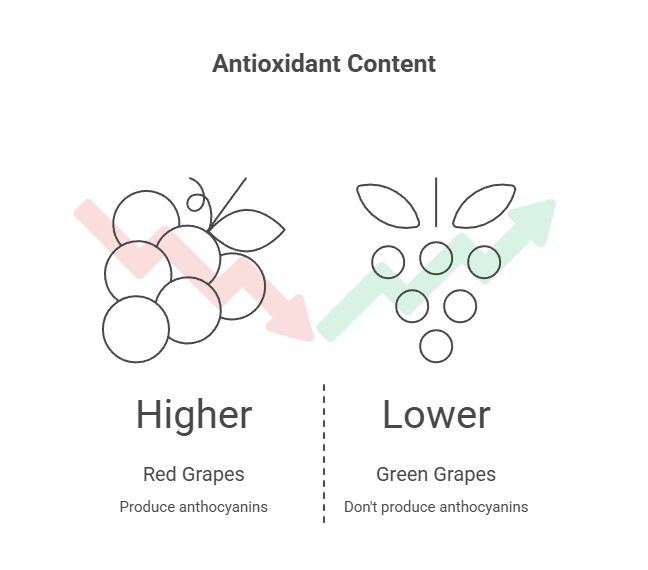
The reason sits right on the surface. Red and purple grapes produce anthocyanins, a class of pigment antioxidants that green grapes don’t make at all.
That single difference drives most of the antioxidant advantage. Everything else, the resveratrol, the flavonoids, the overall scores, tends to follow the same color line.
What the Color Actually Tells You
Grape color isn’t just cosmetic. The deep red, blue, and purple shades come from anthocyanins concentrated in the skin, and those pigments double as powerful antioxidants.
Green grapes are essentially red grapes with the color switched off. A genetic mutation turns off anthocyanin production, which is why they stay pale green instead of deepening to red or purple.
So a richer color is a rough visual signal of higher anthocyanin content. Darker usually means more of these particular antioxidants.
Why Green Grapes Still Earn a Spot
The “red wins” headlines tend to skip the next part. Green grapes are still a genuinely healthy food, and the nutrition labels for red and green are nearly identical.
Both deliver about the same calories, carbohydrates, fiber, vitamin C, vitamin K, and potassium per serving. Green grapes are hydrating, naturally sweet, and easy on the stomach.
Patients comparing fruits with us often ask whether green grapes are a waste of time next to red ones. They aren’t. The honest framing is that red grapes carry a bonus layer of specific antioxidants, not that green grapes are nutritionally hollow.
What Makes a Grape an Antioxidant Powerhouse
Before crowning a winner, it helps to know what’s actually being counted. Grapes hold several different antioxidant compounds, and they don’t all behave the same way.
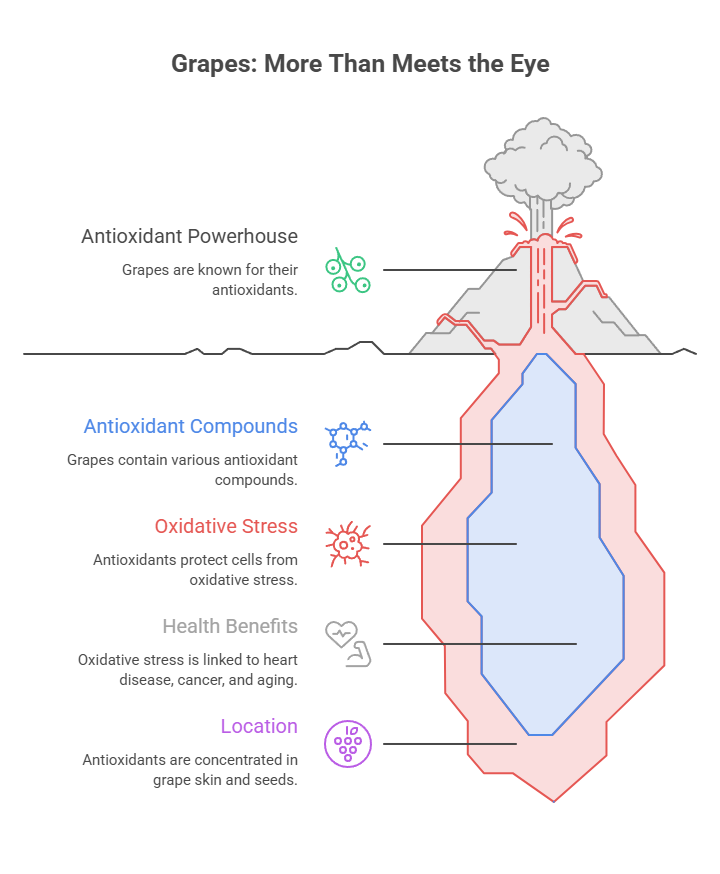
Antioxidants are molecules that help protect your cells from oxidative stress, the cellular wear-and-tear linked to heart disease, certain cancers, and aging. Grapes pack them mostly into the skin and seeds.
Anthocyanins: The Red and Purple Pigment
Anthocyanins are the headline difference between red and green grapes. They’re flavonoid pigments that paint grapes red, blue, and purple, and they’re potent antioxidants in their own right.
Because green grapes don’t produce anthocyanins, this entire category belongs almost exclusively to red, purple, and black grapes. Research links anthocyanins to better blood pressure, heart health, and even brain function.
This is the compound that tips the scale. When studies report higher antioxidant activity in red grapes, anthocyanins are usually doing the heavy lifting.
Resveratrol: The Famous Skin Compound
Resveratrol is the grape antioxidant that made headlines through the so-called French Paradox and red wine research. It’s a stilbenoid the grape plant produces to defend itself against stress and pathogens.
It lives in the skin, and darker grapes generally hold more of it. According to figures compiled by the Linus Pauling Institute and dietitian sources, red grapes contain roughly 150 to 781 micrograms of resveratrol per 100 grams, while green and white grapes carry noticeably less.
To put that in food terms, one VA research chemist estimates a gram of red grapes holds about 50 to 100 micrograms, so a single grape can carry up to 500 micrograms. Our medical reviewers note that whole grapes deliver this alongside fiber and other compounds, which matters more than any one number.
Flavonoids, Catechins, and Polyphenols
Beyond anthocyanins and resveratrol, grapes supply a broader family of polyphenols: flavonoids, catechins, and proanthocyanidins. These cluster in the skin and seeds of both colors.
Red grapes still tend to edge out green here too, partly because deeply pigmented skins are richer in these compounds overall. Green grapes contribute meaningful amounts, just at a slightly lower level.
The takeaway is that grape antioxidants are a team, not a solo act. Color shifts the totals, but both red and green bring polyphenols to the plate.
Grape Seeds and Grape Seed Extract
The seeds deserve a mention too. Grape seeds are unusually rich in proanthocyanidins, a group of antioxidants potent enough that grape seed extract is sold as its own supplement.
Most table grapes in the US are seedless, so the fruit bowl won’t give you much. If you do eat seeded grapes, the seeds are safe to chew, just slightly bitter. As with resveratrol, our medical reviewers note that whole food beats isolated extracts for most people.
Red vs Green Grapes, Compound by Compound
This is where the comparison gets concrete. The table below lines up the antioxidants and key nutrients side by side so you can see exactly where red pulls ahead and where the two tie.
The ORAC Score Gap
ORAC, short for Oxygen Radical Absorbance Capacity, is a lab measure of how well a food neutralizes free radicals. The metric was originally developed by the National Institute on Aging at the NIH.
By the most commonly cited ORAC figures, red grapes score around 1,837 micromol TE per 100 grams, while green grapes come in near 1,018. That puts green grapes at roughly half to 55 percent of red’s score.
It’s a clear gap, and it lines up with the anthocyanin story. More pigment, more measured antioxidant activity.
A Fair Word About ORAC (and Why USDA Dropped It)
Most articles leave out the honest caveat. ORAC is an in-vitro number, measured in a test tube, not in your body, and it doesn’t perfectly predict real-world benefit.
The USDA actually withdrew its official ORAC database back in 2012, citing concerns that the values were being misused in marketing. So treat ORAC as a useful rough signal, not gospel.
In fact, at least one lab study using a different method (the CUPRAC assay) found that red and green grapes had roughly similar total antioxidant capacity, with the difference being mostly about where the antioxidants sit, skin versus pulp. The real-world picture is best judged by human studies, which come next.
| Antioxidant / Nutrient (per 100 g) | Red Grapes | Green Grapes | What It Does |
| Anthocyanins | Present (skin pigment) | Essentially none | Pigment antioxidant, heart and brain support |
| Resveratrol | ~150 to 781 mcg | Noticeably lower | Anti-inflammatory, cardioprotective |
| Commonly cited ORAC | ~1,837 micromol TE | ~1,018 micromol TE | Lab measure of free-radical scavenging |
| Flavonoids / polyphenols | Higher | Slightly lower | Broad antioxidant and vascular support |
| Vitamin C | ~3.2 mg | ~3.2 mg | Immune support, antioxidant |
| Vitamin K | ~14.6 mcg | ~14.6 mcg | Bone and vascular health |
The pattern is easy to read. Red and green tie on basic vitamins, but red grapes win clearly on the pigment-linked antioxidants.
What the Research Actually Shows
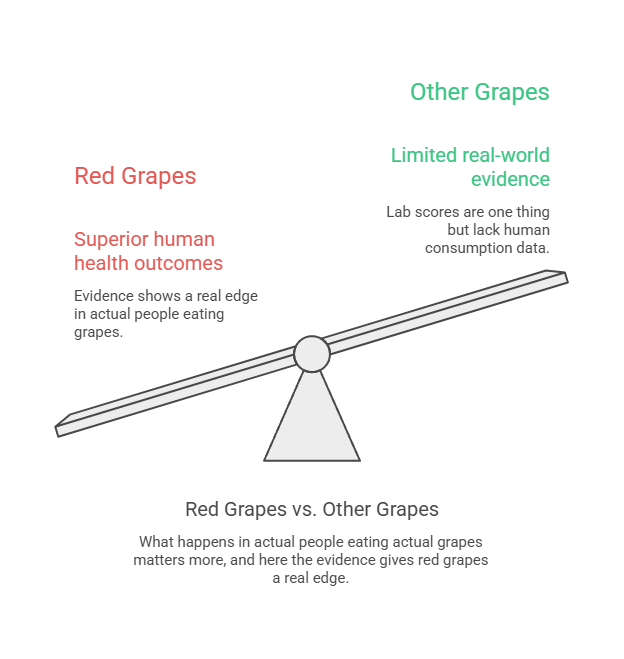
Lab scores are one thing. What happens in actual people eating actual grapes matters more, and here the evidence gives red grapes a real edge.
The Human Trial: Red vs White Grapes Head to Head
A randomized controlled trial published in Food and Function put this question to the test directly. Researchers split 69 adults with high cholesterol into three groups.
Two groups ate 500 grams a day of either red grapes or white (green) grapes for eight weeks, while the third group ate neither. The team measured antioxidant capacity, oxidative stress markers, and blood lipids before and after.
This is the kind of head-to-head, whole-fruit comparison that’s genuinely useful, and it’s exactly what most competing articles fail to cite.
What Changed, and What Didn’t
Both grape groups raised their total antioxidant capacity compared with the control group, so green grapes did pull their weight. But red grapes went further.
The red grape group saw a bigger drop in TBARS, a marker of oxidative stress, and they also lowered total cholesterol and LDL (“bad”) cholesterol versus control. The white grape group didn’t show those same cholesterol improvements.
The researchers concluded that whole red grapes had more potent antioxidant and cholesterol-lowering effects than white grapes in these adults. Fasting blood sugar, triglycerides, and HDL didn’t shift meaningfully in either group, which is a fair limitation to name.
Antioxidants and Oxidative Stress, in Plain Terms
Why does any of this matter day to day? Oxidative stress is the cellular damage caused by unstable molecules called free radicals, and it’s tied to heart disease, diabetes, and aging.
Antioxidants help neutralize those free radicals. Eating a colorful range of antioxidant-rich foods, grapes included, is one small, pleasant way to support that defense, as groups like the Harvard T.H. Chan School of Public Health describe.
Your body makes some antioxidants on its own, but diet fills important gaps, especially as you age. No single fruit carries the whole load, which is why nutrition experts favor a varied, produce-rich plate over chasing one so-called superfood. Grapes, red or green, are a tasty and low-effort contributor to that mix, and the color you pick simply fine-tunes how much of certain compounds you get.
The table below collects the key numbers in one place, with sources, so you can see the evidence at a glance.
| Data Point | Figure | Source |
| Red grape ORAC (commonly cited) | ~1,837 micromol TE / 100 g | ORAC database (NIH-developed metric) |
| Green grape ORAC (commonly cited) | ~1,018 micromol TE / 100 g | ORAC database (NIH-developed metric) |
| Resveratrol in red grapes | ~150 to 781 mcg / 100 g | Linus Pauling Institute |
| Anthocyanins in green grapes | Essentially none | USDA FoodData Central |
| Human trial size (red vs white grapes) | 69 adults, 8 weeks, 500 g/day | Food and Function, 2015 |
| US adults meeting fruit intake goals | 12.3% | CDC, MMWR |
The Health Benefits Behind the Antioxidants
Antioxidant scores only matter because of what they may do for your body. Here’s where the red grape advantage shows up in real health terms.
Heart and Blood Vessel Support
This is the strongest area. The anthocyanins and resveratrol concentrated in red grapes are linked to lower blood pressure, healthier blood vessels, and improved cholesterol, which is exactly what the human trial above demonstrated.
Diabetes and heart disease often travel together, so heart-friendly foods do double duty. A handful of red grapes won’t replace medication, but it’s a smart addition to a heart-conscious plate.
Brain and Cognitive Health
Anthocyanins don’t just help the heart. Research on pigment-rich fruits suggests these compounds may support memory and cognition as the brain ages.
Red and purple grapes, with their higher anthocyanin load, are part of the same colorful-produce pattern tied to better brain aging in population studies. Green grapes contribute, just with less of this specific pigment.
Inflammation and Cellular Aging
Resveratrol is studied for anti-inflammatory effects, and chronic inflammation underlies many long-term diseases. By helping curb oxidative stress, grape antioxidants may slow some of the cellular wear linked to aging.
The honest framing matters here. These are supportive effects within a whole diet, not a cure, and isolated grape supplements don’t reliably reproduce them.
Eye Health and Immune Support
The benefits stretch further. Antioxidants in grapes, including lutein and zeaxanthin alongside the polyphenols, are tied to eye health and some protection against age-related vision decline.
Vitamin C in both red and green grapes also lends a hand to immune function. None of this makes grapes a medicine, but it rounds out why a regular handful is a smart habit for overall health.
Don’t Forget Purple and Black Grapes
The red-vs-green debate often misses a twist. If you’re chasing the absolute most antioxidants, the real winners may be the darkest grapes of all.
Often the Real Antioxidant Champions
Purple and black grapes carry even more anthocyanins than standard red grapes, because they have the deepest pigment concentration. More color, more of these antioxidants.
Across patients we serve, people fixating on “red vs green” sometimes overlook the dark purple and black varieties sitting right beside them, which can deliver an even bigger antioxidant punch for the same handful.
Concord Grapes and Total Capacity
Concord grapes, those intensely dark blue-purple grapes used in juice and jelly, rank among the highest in total antioxidant capacity in lab testing. Their thick, pigment-rich skins are the reason.
So the practical hierarchy looks roughly like this: black and Concord at the top, red in the strong middle, green at the lighter end. All of them are still healthy fruit.
Red Wine vs Grapes: Where the Antioxidants Really Come From
The red grape’s antioxidant fame is tangled up with red wine, so it’s worth separating the two. Red wine does contain resveratrol and anthocyanins, pulled from grape skins during fermentation.
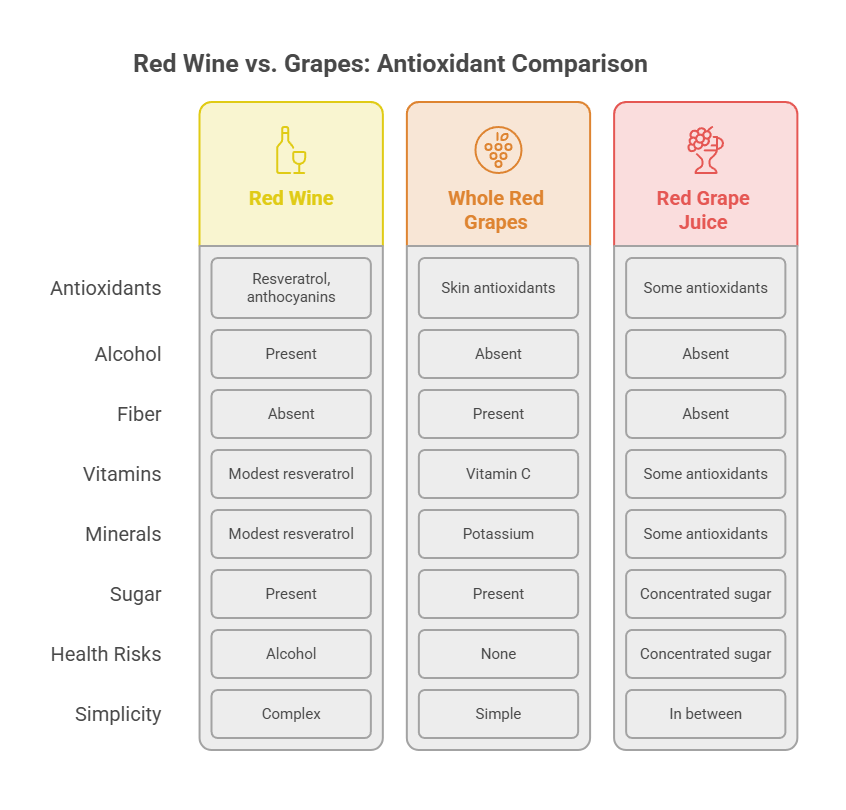
But wine also brings alcohol, which carries its own health risks, and the resveratrol dose in a single glass is modest. Major health bodies don’t recommend starting to drink for the antioxidants.
Whole red grapes, by contrast, give you the same family of skin antioxidants plus fiber, vitamin C, and potassium, with no alcohol at all. For antioxidant value without the downsides, the fruit is the simpler choice.
Red grape juice sits in between: some antioxidants, no alcohol, but concentrated sugar and no fiber. Our lab partners report that people often overrate juice and wine while underrating the plain fruit sitting in the bowl.
How Grapes Stack Up Against Other Antioxidant Fruits
Grapes are a strong antioxidant source, but they’re not the only player in the produce aisle. Putting them in context helps you build a more colorful, protective diet.
Berries generally top the antioxidant charts. Blueberries, blackberries, and raspberries tend to out-score even red grapes on ORAC, thanks to their dense anthocyanin content. Pomegranates and plums are strong contenders too.
That doesn’t knock grapes off the list. They’re affordable, available year-round, kid-friendly, and easy to eat by the handful, which makes them one of the more practical antioxidant sources for everyday life. Patients tell us the fruit they actually keep eating beats the theoretical superfruit they buy once and forget.
A simple rule of thumb: the deeper and darker the fruit, the more anthocyanins it usually carries. Building a bowl that mixes grapes with berries and other richly colored produce covers far more antioxidant ground than leaning on any single fruit.
Which Grape Should You Choose?
The “winner” depends on what you’re after. Maximizing antioxidants points one way; hydration, taste, or budget might point another. Both colors fit a healthy diet.
Match the Grape to Your Goal
Use the quick-reference table below to pick based on what matters most to you. There’s no wrong choice between two healthy fruits, just a better fit for a specific goal.
| Your Goal | Best Pick | Why |
| Maximum antioxidants | Black, purple, or red | Highest anthocyanin and polyphenol content |
| Heart and cholesterol support | Red grapes | Human trial showed lower LDL and oxidative stress |
| Most resveratrol | Red, purple, or black | Concentrated in darker skins |
| Vitamin C and hydration | Either color | Nearly identical; green is crisp and refreshing |
| Lower oxidative stress | Red grapes | Bigger drop in oxidative markers in studies |
| Kid-friendly, taste, or budget | Either color | Both are healthy; pick what gets eaten |
The smartest move for most people is variety. Rotating colors covers a wider spread of antioxidants than loyalty to any single type.
How to Get the Most Antioxidants From Grapes
Picking red over green is only half the game. How you handle and eat your grapes changes how many antioxidants you actually get.
Eat the Skin
The skin is antioxidant headquarters. Anthocyanins, resveratrol, and most of the polyphenols live there, not in the watery pulp.
That means seedless, thin-skinned grapes eaten whole are doing you a favor. Our lab partners report that the pigment-rich skin is exactly where the compounds people care about are concentrated, so leaving it on matters.
Don’t Peel, Don’t Overcook
Peeling grapes throws away the best part. Cooking them down into heavily processed sauces or jams can also degrade some antioxidants and usually adds sugar.
Fresh and raw is the antioxidant-friendly default. If you do cook with grapes, keep it light.
Whole Grapes Over Juice
Juice loses the fiber and concentrates the sugar, and much of the skin benefit gets diluted or filtered. White grape juice, in particular, carries far less resveratrol than the whole fruit or red varieties.
Whole grapes give you the antioxidants, the fiber, and natural portion control all at once. Reach for the fruit bowl, not the juice carton.
Choose Deep Color and Store Them Right
At the store, let color guide you. Deeply pigmented red, purple, and black grapes signal more anthocyanins than pale ones, so pick the richest hue that looks fresh and firm.
Store grapes unwashed in the fridge and rinse just before eating, since moisture speeds spoilage. Eating them within a week or so keeps both flavor and antioxidant content at their best.
Try Them Frozen or in Meals
Antioxidants survive freezing well, so frozen grapes are a legitimate option, not a compromise. They make a cool summer treat and slow you down so you eat a sensible portion.
Grapes also work well beyond the snack bowl. Toss halved red grapes into salads, roast them alongside vegetables, or pair them with cheese and nuts. Folding them into meals is an easy way to lift your daily antioxidant intake without much thought.
The Bigger Picture: Americans and Fruit
Step back from the red-vs-green question and a larger issue shows up. Most Americans simply aren’t eating enough fruit of any color.
According to the CDC, only about 12.3 percent of US adults meet the recommended fruit intake, which is roughly 1.5 to 2 cups a day. Intake is lowest among men and younger adults.
In cases reviewed by our medical team, the gap between “which grape is best” and “am I eating fruit at all” is the one that actually moves health outcomes. The best grape is the one you’ll eat regularly.
So while red grapes edge out green on antioxidants, the bigger win is simply making grapes, any grapes, a routine snack instead of chips or candy.
Common Myths About Grape Color and Health
A few stubborn misconceptions cloud this topic. Here’s what the evidence says.
Myth: Green Grapes Have No Antioxidants
False. Green grapes do contain antioxidants, including flavonoids, vitamin C, and polyphenols. They just lack anthocyanins and run lower on the antioxidant scoreboard than red.
Myth: One Color Has Way More Sugar
Largely false. Red and green grapes have very similar sugar and carbohydrate content. Perceived sweetness varies by variety and ripeness, not strictly by color.
Myth: Grape Supplements Beat Whole Fruit
Not so fast. Resveratrol and grape-extract pills are poorly absorbed in isolation, and research suggests the whole-food package, fiber and all, works better than isolated compounds. Food first is the safer bet.
Myth: You Need Wine to Get Resveratrol
Untrue, and a bit of a relief. Whole red and purple grapes deliver resveratrol with no alcohol, and red grape juice carries some too. You don’t have to drink wine to get the benefit, and the whole fruit brings fiber the glass never will.
Frequently Asked Questions
Do red grapes have more antioxidants than green grapes?
Yes. Red grapes generally contain more antioxidants than green grapes, mainly because of anthocyanins, the red and purple pigments in their skin that green grapes don’t produce. Red grapes also tend to carry more resveratrol and score higher on antioxidant tests, though green grapes remain a healthy choice.
Why do red grapes have more antioxidants?
The color is the clue. Red and purple grapes make anthocyanins, pigment compounds that are also potent antioxidants, while green grapes have a genetic mutation that switches off anthocyanin production. That extra layer of pigment antioxidants, concentrated in the skin, gives red grapes their edge.
What antioxidants are in red grapes but not green?
Anthocyanins are the main antioxidants found in red and purple grapes but essentially absent from green ones. Red grapes also tend to have higher resveratrol and polyphenol levels. Green grapes still contain flavonoids, vitamin C, and other antioxidants, just without the pigment-based anthocyanins.
Are green grapes still healthy?
Absolutely. Green grapes offer hydration, fiber, vitamin C, vitamin K, potassium, and polyphenol antioxidants, with nearly the same calorie and nutrient profile as red grapes. They’re a smart, low-calorie snack. Red grapes simply add a bonus of anthocyanins and a bit more resveratrol on top.
Which grape is best for heart health?
Red grapes have the strongest heart-health evidence. In a human trial, adults eating red grapes lowered LDL cholesterol and oxidative stress more than those eating white grapes. The anthocyanins and resveratrol in red and purple grapes are linked to better blood pressure and vascular function.
Do black or purple grapes have the most antioxidants?
Often, yes. Black and purple grapes usually contain even more anthocyanins than standard red grapes because of their deeper pigment. Concord grapes rank especially high in total antioxidant capacity. If maximizing antioxidants is your goal, the darkest grapes are typically your best bet.
Does grape color affect resveratrol content?
It does. Resveratrol is concentrated in grape skin, and darker grapes generally hold more of it. Red, purple, and black grapes carry more resveratrol than green or white grapes, which is also why red wine contains far more resveratrol than white wine.
Are red grapes better than green grapes for weight loss?
For weight management, the two are nearly equal. Red and green grapes have similar calories, sugar, and fiber, so neither has a clear edge for weight loss. Both make a satisfying, naturally sweet snack. Portion size matters far more than color here.
Do red and green grapes have the same sugar?
Roughly, yes. Red and green grapes contain similar amounts of natural sugar and carbohydrate per serving. Sweetness can vary by grape variety and ripeness, but color alone doesn’t reliably signal more or less sugar. Both should be enjoyed in sensible portions.
Should you eat grape skins for antioxidants?
Definitely. The skin holds most of a grape’s antioxidants, including anthocyanins, resveratrol, and polyphenols. Eating grapes whole, skin on, delivers far more of these compounds than peeled grapes or strained juice. There’s no antioxidant reason to ever peel a grape.
Are red grapes good for blood pressure?
They can help. The anthocyanins and resveratrol in red and purple grapes are linked in research to improved blood pressure and blood vessel function. Grapes also supply potassium, which supports healthy blood pressure. They work best as part of an overall balanced, produce-rich diet.
Do organic grapes have more antioxidants?
Possibly a little. Some research on berries suggests organically grown fruit can carry slightly higher antioxidant levels, but the difference is usually small and varies by crop and conditions. Choosing red or purple over green affects antioxidant content more than organic versus conventional does.
Disclaimer: This article is for general educational purposes and isn’t a substitute for personalized medical advice. Antioxidant content in grapes varies with variety, ripeness, and growing conditions, so exact numbers differ batch to batch. Talk with your doctor or a registered dietitian about your individual nutrition needs, especially if you manage a health condition.
References
- USDA FoodData Central
- Centers for Disease Control and Prevention, Adults Meeting Fruit and Vegetable Intake Recommendations (MMWR)
- Food and Function, Comparative Effects of Red and White Grapes on Oxidative and Lipidemic Markers
- Linus Pauling Institute, Oregon State University, Resveratrol
- Harvard T.H. Chan School of Public Health, Antioxidants
- National Library of Medicine (PMC), Total Antioxidant Capacity of Grapes