In the 1970s, the average American ate less than a pound of pineapple a year. Today that number is more than eight times higher, and the fruit has gone from a special-occasion garnish to a weekly staple in millions of US kitchens.
Table of Contents
That shift matters, because pineapple turns out to be more than a sweet tropical treat. It packs a serious dose of vitamin C, the bone-building mineral manganese, and a protein-digesting enzyme called bromelain that you won’t find in most other fruits.
Patients booking tests through HealthCareOnTime often ask whether a fruit this sweet can really be good for them. The short answer is yes, with a couple of sensible caveats this guide walks through in plain language.
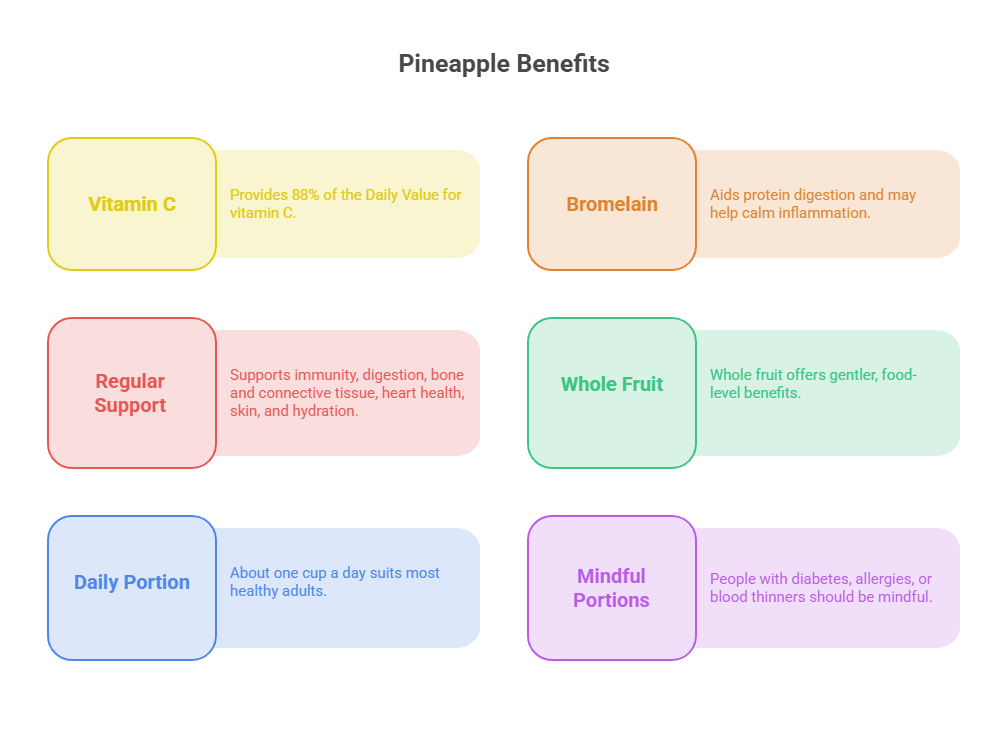
Quick Answer: Eating pineapple regularly delivers vitamin C for immune support, manganese for bone health, fiber for digestion, and bromelain, an enzyme with anti-inflammatory and protein-digesting effects. A single cup covers about 88% of your daily vitamin C. Most healthy adults can enjoy a cup or so a day as part of a balanced diet, though people with diabetes or those on blood thinners should watch their portions and check with a provider.
At a Glance
- One cup of pineapple chunks provides roughly 88% of the Daily Value for vitamin C and a healthy dose of manganese.
- Bromelain, an enzyme concentrated in pineapple, aids protein digestion and may help calm inflammation.
- Regular pineapple supports immunity, digestion, bone and connective tissue, heart health, skin, and hydration.
- Most strong bromelain research uses concentrated supplements, so whole fruit offers gentler, food-level benefits.
- About one cup a day suits most healthy adults; fresh beats canned or juice for sugar and fiber.
- People with diabetes, a pineapple allergy, or those taking blood thinners should be mindful of portions.
What’s Actually in a Pineapple
Pineapple (Ananas comosus) earns its reputation on nutrition density, not just flavor. It’s low in calories yet carries a strong lineup of vitamins, minerals, and plant compounds that work together.
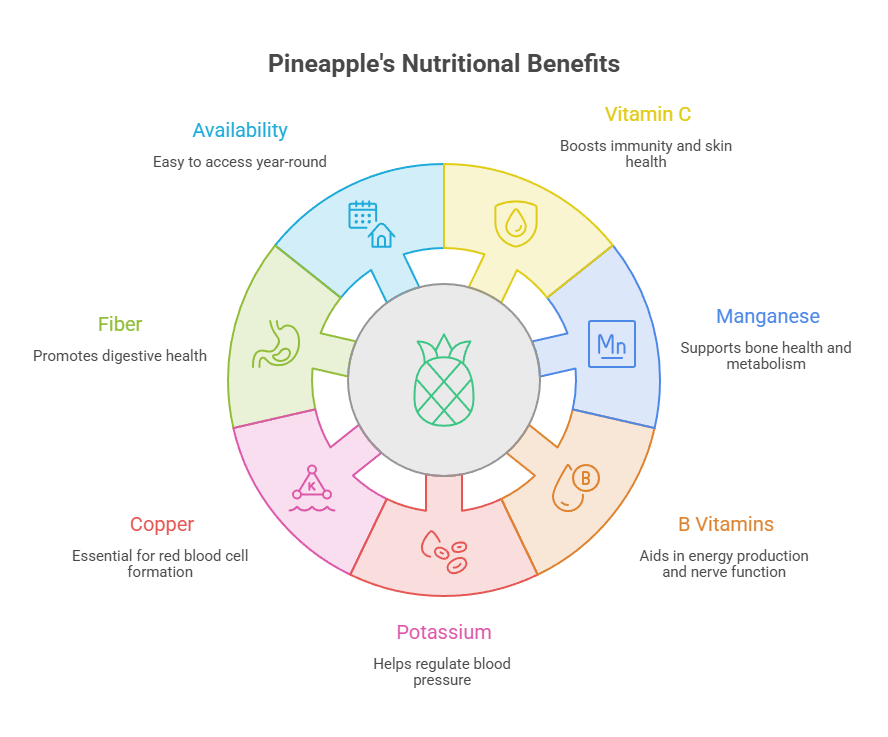
The headline nutrients are vitamin C and manganese, with smaller but meaningful amounts of B vitamins, copper, potassium, and fiber. Our medical reviewers note that this combination is what gives pineapple benefits beyond simple energy.
It also has a practical advantage over many fruits: availability. Pineapple is easy to find fresh, frozen, or canned nearly year-round, which makes regular eating realistic rather than seasonal.
The Nutrition Profile (Per Cup)
The numbers make the case quickly. One cup (165 grams) of pineapple chunks delivers 78.9 milligrams of vitamin C, about 88% of the Daily Value, plus 11% of the DV for vitamin B6, 20% for copper, and 180 milligrams of potassium.
Manganese is the other standout. Pineapples contain high amounts of vitamin C and manganese, the latter being important for antioxidant defenses, along with thiamin, a B vitamin involved in energy production.
It does carry natural sugar, so context helps. A cup has about 14.1 grams of sugar, which is actually less than the same amount of ripe banana. Pair that with fiber and water, and pineapple reads as a smart whole-food choice rather than a sugar bomb.
Bromelain: Pineapple’s Standout Enzyme
Here’s what sets pineapple apart from apples or oranges. Unlike most fruits, pineapple contains significant amounts of bromelain, an enzyme that breaks down protein, which may help with digestion according to the American Cancer Society.
Bromelain has a long history as a folk remedy. It has traditionally been used as a potent anti-inflammatory and anti-swelling agent, with research showing fibrinolytic, antiedematous, and antithrombotic properties, meaning it may help prevent blood clots, edema, and swelling.
One honesty note our lab partners stress: most clinical bromelain studies use concentrated extracts from the stem and core, not the amount you get from eating the fruit. So expect food-level benefits from pineapple, not supplement-strength effects. That distinction is what keeps expectations realistic.
8 Health Benefits of Eating Pineapple Regularly
The benefits below come from pineapple’s nutrients and compounds working as a team. None is a cure, and the strongest claims rest on broader research about vitamin C, fiber, and antioxidants. Taken together, they make a solid case for keeping pineapple in your rotation.
1. Stronger Immune Defense
Vitamin C is pineapple’s calling card for immunity, and a single cup nearly covers your daily target. That matters because the body doesn’t store vitamin C, so a regular supply helps keep immune cells working.
The enzyme adds a second layer. Bromelain may support the body’s natural response to inflammation as well as support healthy immune function. Patients commonly ask us about natural immune support, and few fruits pack this much vitamin C per bite.
There’s even a traditional use for congestion. In combination with honey, pineapple’s bromelain may help reduce mucus in the throat and nose, so pineapple chunks are a reasonable comfort food when a cold has you coughing.
2. Easier Digestion
This is where bromelain genuinely shines. It breaks down proteins in the gut, which can make a heavy, protein-rich meal sit easier.
Bromelain can break down and digest proteins, the same way it softens meat, making it easier for your body to absorb the nutrients it needs from the protein you eat. Fiber pulls its weight too. A cup of pineapple delivers roughly 6 to 11% of the daily recommended fiber, most of it insoluble, which helps move waste through your digestive system.
Across patients we serve, people who add fruit like pineapple to a low-fiber diet often notice more regularity within days. The water content helps that process along.
3. Lower Inflammation and Faster Recovery
Bromelain’s anti-inflammatory reputation is the reason athletes and post-surgical patients hear about pineapple. The evidence is promising, with a caveat about dose.
Several studies have shown that bromelain may reduce the inflammation, swelling, bruising, and pain that often occur after surgery, including dental and skin procedures, though these studies used supplements containing high amounts of bromelain, so it’s unclear whether eating pineapple would have the same effects.
For everyday recovery, the signal is encouraging. A 2021 study in the Journal of Sports Science and Medicine reported that bromelain supplementation may help reduce post-exercise discomfort and inflammation markers. Pairing pineapple with protein after a workout is a reasonable, food-first habit.
4. Bone and Connective-Tissue Support
Manganese rarely gets attention, but pineapple is one of the better fruit sources of it, and it plays a direct role in your skeleton.
The Harvard T.H. Chan School of Public Health explains that manganese works with calcium and vitamin D to help build and maintain healthy bones. The benefits extend to joints and skin. Pineapple also provides copper and vitamin C, key nutrients that help produce collagen, the protein matrix that supports joint flexibility and connective tissue.
This makes pineapple a quietly useful fruit for anyone focused on long-term bone and joint health, especially alongside weight-bearing exercise.
5. Heart-Friendly Nutrients
Pineapple’s antioxidants and potassium line up with several markers of heart health, though the human research is still developing.
Pineapple is rich in antioxidants, and bromelain’s antioxidant power is enhanced when paired with vitamin C, which pineapple naturally contains. Early studies are intriguing. Research has found that daily pineapple intake can reduce cardiac oxidative stress and inflammation in animals, though more research is needed to define how much daily pineapple could improve heart health in humans.
Potassium adds a blood-pressure angle, since it helps the body balance sodium. Our medical reviewers note that no single fruit protects your heart on its own; pineapple fits best as one part of an overall pattern rich in produce.
6. Skin and Eye Health
The vitamin C that helps your immune system also helps your skin, by feeding collagen production. That’s the protein that keeps skin firm.
Vitamin C in pineapple supports collagen synthesis, helping maintain firm skin, and according to Cleveland Clinic, antioxidant-rich fruits like pineapple may help combat the free radical damage that contributes to skin aging.
Your eyes may benefit too. Pineapple can help reduce the risk of macular degeneration, an age-related eye disease, due in part to its high vitamin C and antioxidant content. These are food-level perks that build with steady intake, not overnight changes.
7. Hydration and Weight Management
Pineapple is mostly water, which makes it a refreshing way to stay hydrated while satisfying a sweet craving without many calories.
The fruit’s low calorie and high water content make it an excellent choice for hydration and weight management. Fiber and water together help you feel full, so a bowl of pineapple can curb the urge to reach for less healthy snacks between meals.
It’s not a weight-loss shortcut, and portion still counts. As a swap for cookies or chips, though, pineapple is a clear upgrade that many patients find genuinely satisfying.
8. Antioxidant Protection
Beyond vitamin C, pineapple carries a mix of plant antioxidants that help defend your cells against everyday damage.
Antioxidants neutralize free radicals that cause cellular damage, contributing to aging and disease, and regular antioxidant consumption is linked to reduced heart disease risk and protection against chronic inflammation.
The realistic framing matters here. Eating pineapple won’t automatically erase your risk of disease, but over time, it can help. Consistency, not any single serving, is where the value lives.
| Benefit | Key Nutrient or Compound | What Research Suggests | Realistic Takeaway |
| Immune defense | Vitamin C, bromelain | Vitamin C supports immune cell function | One cup nearly covers daily vitamin C |
| Digestion | Bromelain, fiber | Bromelain breaks down protein; fiber aids regularity | Helpful after protein-rich meals |
| Inflammation and recovery | Bromelain | May reduce post-surgery and post-exercise swelling | Strongest at supplement doses, not fruit alone |
| Bone and joint | Manganese, copper, vitamin C | Manganese aids bone; vitamin C and copper aid collagen | A good fruit source of manganese |
| Heart health | Antioxidants, potassium | Animal studies show less cardiac inflammation | Part of a produce-rich pattern, not a fix |
| Skin and eyes | Vitamin C, antioxidants | Supports collagen; may lower macular degeneration risk | Food-level skin and eye support |
| Hydration and weight | Water, fiber | Promotes fullness and hydration, low calorie | A smart swap for sugary snacks |
| Antioxidant protection | Vitamin C, polyphenols | Neutralizes free radicals over time | Benefits build with regular eating |
Why Eating It Regularly Beats One Big Serving
The word regularly in the title is doing real work, and it points to how nutrition actually functions. Your body handles a steady, moderate supply of nutrients far better than an occasional flood.
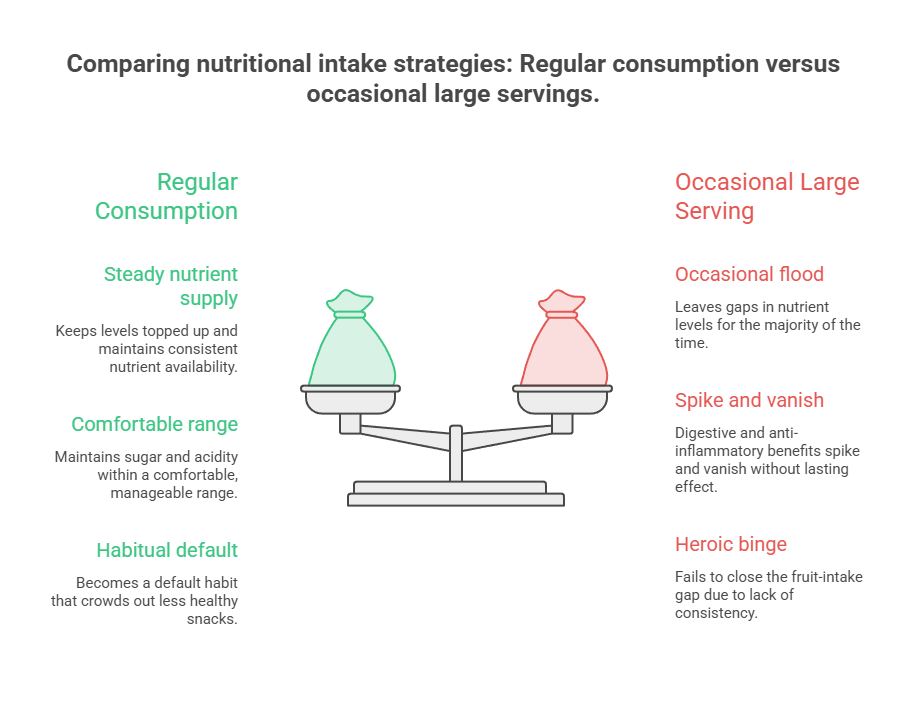
Vitamin C is the clearest example. The body doesn’t store it, so a cup of pineapple a few times a week keeps levels topped up, while one giant serving once a month leaves gaps the rest of the time. Smaller, consistent portions also keep sugar and acidity in a comfortable range.
Bromelain works the same way. Its digestive and anti-inflammatory effects are modest from food, so a regular habit gives those gentle benefits a chance to add up rather than spike and vanish. Patients commonly ask us whether a single superfood binge helps; the honest answer is that rhythm matters more than any one bowl.
There’s a behavioral payoff too. A fruit you eat often becomes a default, crowding out less healthy snacks and helping close the fruit-intake gap that affects most Americans. Regular beats heroic almost every time.
How Much Pineapple Should You Eat?
Regular does not mean unlimited. Because pineapple carries natural sugar and acidity, a sensible daily amount delivers the upside without the downsides.
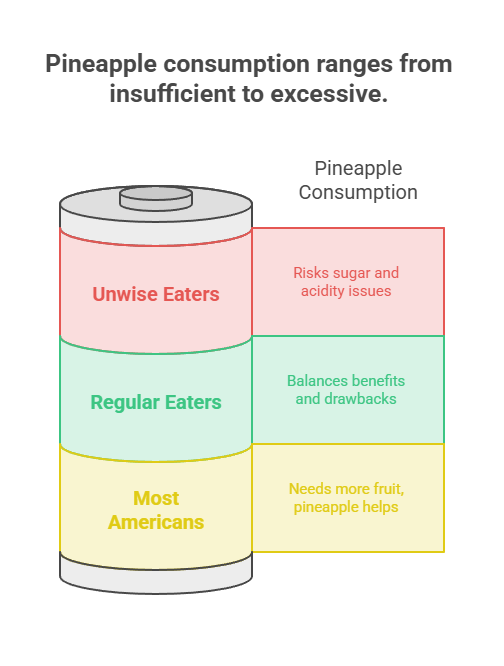
The fruit-intake gap also frames this nicely. Most Americans fall short on fruit, so adding pineapple is a step in the right direction for the majority of people reading this.
A Realistic Daily Serving
For most healthy adults, about one cup of fresh pineapple chunks a day is a reasonable, beneficial amount. That covers nearly all your vitamin C while keeping sugar in a moderate range.
If you’re eating pineapple daily, vary your fruit across the week so you get a broader nutrient spread. Patients commonly ask us whether daily pineapple is too much, and for healthy people without diabetes, a single cup generally is not.
Listen to your body. If pineapple irritates your mouth or stomach, scale back the portion or spread it across the day rather than eating a large amount at once.
The Best Time to Eat Pineapple
There’s no single right time, so fit pineapple to your goal. It can be eaten anytime, but many people prefer it after meals for its digestive enzymes or after a workout for recovery support.
A few slices after a protein-heavy dinner put bromelain to work when it’s most useful. Post-exercise, pairing pineapple with a protein source supports recovery and replenishes carbohydrates. As a mid-morning or afternoon snack, its water and fiber help bridge the gap between meals without a heavy sugar crash.
If pineapple’s acidity bothers you on an empty stomach, eat it with a meal or alongside yogurt rather than first thing in the morning. The flexibility is part of what makes it easy to eat regularly.
Picking and Storing for the Best Fruit
A little know-how keeps fresh pineapple on hand and at its best. Choose a fruit that smells faintly sweet at the base, feels heavy for its size, and has firm, green leaves.
Once cut, store pineapple in an airtight container in the fridge and eat it within about five days. Cutting it yourself and refrigerating chunks makes the fruit grab-and-go, which is half the battle in eating it regularly.
Fresh vs Canned vs Juice vs Dried
Not all pineapple is equal once it’s processed. Fresh fruit is the gold standard because it keeps its fiber, water, and active bromelain.
Juice and dried versions concentrate the sugar. Juice provides vitamins and enzymes but lacks fiber, which is key for gut health and blood sugar balance, so choose small portions of fresh juice, not from concentrate. Dried pineapple is less healthy because it is high in sugar compared with fresh pineapple.
When fresh isn’t available, canned works in a pinch. When choosing canned or dried pineapple, it’s best to go for options with no added sugar.
| Your Goal | How to Use Pineapple | Tip |
| Boost daily vitamin C | One cup fresh chunks as a snack | Eat soon after cutting to preserve vitamin C |
| Ease digestion after meals | A few fresh slices after a protein-heavy dinner | Fresh fruit keeps active bromelain intact |
| Support post-workout recovery | Pineapple with Greek yogurt or a smoothie | Pair with protein for better recovery |
| Manage weight or cravings | Swap a sugary dessert for fresh pineapple | Water and fiber help you feel full |
| Watch blood sugar | Smaller portion paired with nuts or yogurt | Avoid juice and dried; choose fresh |
| Stock up year-round | Frozen or no-sugar-added canned | Skip syrup-packed canned varieties |
Pineapple by the Numbers: US Trends
Americans have embraced pineapple in a big way, and the data shows just how far the fruit has come. It’s now a mainstream choice, not a novelty.
The growth is steep. By 2024, fresh pineapple availability reached a record high of 8.5 pounds per person, accounting for two-thirds of the 12.9 pounds of pineapple available per person on a fresh-weight basis. Consumption has more than doubled since 2000, when it was only about 3.2 pounds per person.
Yet there’s a bigger problem pineapple can help address. Only 12% of US adults eat the recommended amount of fruit and just 9% eat enough vegetables, according to a CDC analysis. Adding a fruit people genuinely enjoy is one practical way to close that gap.
| Metric | US Figure | Source |
| Fresh pineapple per capita (record high) | ~8.5 pounds per person | USDA Economic Research Service (2024) |
| Total pineapple per capita (fresh-weight) | ~12.9 pounds per person | USDA ERS (2024) |
| Per capita in 2000 | ~3.2 pounds per person | USDA ERS / Statista |
| Adults meeting daily fruit recommendation | ~12% | CDC (BRFSS) |
| Adults eating any fruit on a given day | ~67.3% | CDC (NHANES, 2015 to 2018) |
| Vitamin C in one cup of chunks | 78.9 mg (88% Daily Value) | USDA / Healthline |
These figures carry a simple message. Pineapple is popular, affordable, and nutrient-dense, which makes it an easy win for the many Americans who aren’t eating enough fruit.
Who Should Be Cautious (Risks and Side Effects)
Pineapple is safe for most people, but a balanced view means naming the exceptions. A few groups should pay closer attention to how much they eat.
The good news is that side effects are usually mild and tied to portion size or specific health conditions, not the fruit itself.
Blood Sugar and Diabetes
Pineapple is sweeter than many fruits, so blood sugar is the main consideration for people with diabetes. The fix is portion control, not avoidance.
Pineapple can raise blood sugar levels, so people with diabetes should eat it in moderation or pair it with low-glycemic-load foods to help minimize blood sugar spikes. A smaller serving alongside nuts, yogurt, or another protein helps blunt the rise.
Our medical reviewers note that whole fresh fruit affects blood sugar more gently than juice. If you have diabetes, fresh pineapple in a measured portion is the better choice.
Blood Thinners and Bromelain
Because bromelain can affect clotting, it’s worth a flag for anyone on blood-thinning medication. This is a real interaction, not a theoretical one.
Pineapple and bromelain can affect how certain medications work, especially blood thinners, which could pose risks. If you take warfarin or a similar drug, talk with your provider before making pineapple a daily habit or using bromelain supplements.
Allergies and Mouth Irritation
That tingling feeling pineapple sometimes causes is usually harmless and comes from the enzyme itself. A true allergy is different and less common.
Due to bromelain, your tongue and mouth may have a mild burning sensation after eating pineapple, and you can sip water or rinse your mouth to help it pass; however, itching may signal a pineapple allergy, which can become severe with symptoms like difficulty breathing or swelling.
If you ever notice swelling or breathing trouble, treat it as a medical emergency and seek care. For ordinary tingling, a smaller portion or pairing with yogurt usually helps. Eating very ripe pineapple can also reduce the sting.
Easy Ways to Eat More Pineapple
Getting the benefits of eating pineapple regularly comes down to making it convenient. The fruit is versatile enough to fit nearly any meal.
A little planning keeps fresh pineapple on hand so it becomes a default snack rather than an occasional buy.
Simple Daily Swaps
Start with the easy wins. Add fresh chunks to your morning yogurt or oatmeal, blend it into a smoothie, or keep pre-cut pineapple in the fridge for an afternoon snack.
For savory meals, grilled pineapple pairs well with chicken, fish, or tacos, and it brings the bromelain along for digestion. Patients commonly ask us for painless ways to eat more fruit, and swapping a sugary dessert for a bowl of pineapple is one of the simplest.
Keep it whole-food first. Fresh or frozen pineapple beats juice and syrup-packed canned versions for everyday eating, and frozen chunks are perfect for smoothies year-round.
What to Avoid
A few habits quietly cancel out the benefits. Syrup-packed canned pineapple and sweetened dried rings add a lot of sugar, so check labels and pick no-sugar-added options.
Go easy on juice as a daily drink, since it concentrates sugar and drops the fiber that makes whole pineapple so filling. And resist the urge to overdo it; more pineapple is not automatically better, especially if it irritates your mouth or spikes your blood sugar.
Frequently Asked Questions
Is it OK to eat pineapple every day?
For most healthy adults, yes. About one cup of fresh pineapple a day fits comfortably into a balanced diet and nearly covers your daily vitamin C. Vary your fruit across the week for broader nutrition. People with diabetes or those on blood thinners should keep portions modest and check with a provider.
How much pineapple is too much in a day?
There’s no strict limit for healthy people, but eating large amounts can cause mouth irritation, stomach upset, or a blood sugar spike because of the natural sugar and acidity. About one to two cups of fresh pineapple a day is a sensible ceiling for most adults. Scale back if you notice tingling or discomfort.
What does pineapple do for your body?
Pineapple supplies vitamin C for immunity and skin, manganese for bones, fiber for digestion, and bromelain, an enzyme that helps break down protein and may calm inflammation. Its antioxidants help protect cells over time. Eaten regularly as part of a varied diet, it supports several systems rather than targeting any one condition.
Does pineapple really help digestion?
Yes, in two ways. Bromelain breaks down proteins, which can make protein-heavy meals easier on your stomach, and the fruit’s fiber helps move waste through your digestive system. Fresh pineapple keeps the most active bromelain. The effect is gentle and food-level, not a substitute for treatment of a digestive condition.
Is pineapple good for inflammation?
Pineapple’s bromelain has anti-inflammatory properties, and studies suggest it may reduce swelling and soreness, including after surgery or exercise. The catch is that most strong studies used concentrated bromelain supplements, not the amount in fruit. Eating pineapple offers mild, food-level support rather than the effect seen in supplement research.
Can people with diabetes eat pineapple?
Yes, in controlled portions. Pineapple can raise blood sugar, so a smaller serving paired with protein or healthy fat, like nuts or Greek yogurt, helps stabilize the response. Choose fresh fruit over juice or dried pineapple, which concentrate sugar. Anyone managing diabetes should fit pineapple into their overall carbohydrate plan.
Is fresh pineapple better than canned or juice?
Fresh is best. It keeps the fiber, water, and active bromelain that make pineapple filling and useful for digestion. Juice lacks fiber and concentrates sugar, and dried pineapple is high in sugar. If you use canned, choose a no-sugar-added variety packed in juice rather than heavy syrup.
Why does pineapple make my mouth tingle or burn?
That sensation comes from bromelain, the enzyme that breaks down protein, briefly acting on the soft tissue of your mouth. It’s usually harmless and fades quickly. Sipping water, rinsing, or pairing pineapple with yogurt helps. Persistent itching, swelling, or trouble breathing is different and could signal an allergy needing medical care.
Is pineapple good for weight loss?
It can support weight goals as a smart snack, not as a magic fix. Pineapple is low in calories with high water and fiber content, which helps you feel full and satisfies a sweet craving. Swapping a sugary dessert for fresh pineapple cuts calories while adding nutrients. Portion and overall diet still matter most.
Does pineapple interact with any medications?
It can. Bromelain may affect how blood thinners work and can increase the risk of bleeding, so people on these drugs should be cautious. Pineapple may also interact with certain antibiotics. If you take prescription medication, especially blood thinners, talk with your provider before eating large amounts or using bromelain supplements.
Is pineapple good for your skin?
Yes, in a supporting role. The vitamin C in pineapple helps your body produce collagen, the protein that keeps skin firm, and its antioxidants help defend against the free radical damage tied to skin aging. Eaten regularly alongside a varied diet, pineapple offers food-level skin support, not a replacement for skincare.
Can you eat the core of a pineapple?
Yes, the core is edible and actually higher in bromelain than the softer flesh. It’s tougher and less sweet, so many people slice it thin, blend it into smoothies, or chop it small. If you want the most bromelain from your pineapple, the core is the part to keep rather than toss.
Medical Disclaimer: This article is for general educational purposes and reflects current US nutrition guidance. It is not a substitute for professional medical advice, diagnosis, or treatment. Pineapple affects people differently, and those with diabetes, a pineapple allergy, or anyone taking blood thinners or other medications should consult a qualified healthcare provider before making significant changes to their diet.
References
- USDA Economic Research Service, Pineapple Availability Pivots From Processed to Fresh
- Healthline, Pineapple: Nutrition, Benefits, and Risks
- CDC, Only 1 in 10 Adults Get Enough Fruits or Vegetables
- CDC, Fruit and Vegetable Consumption Among Adults in the United States (NHANES)
- SingleCare, 8 Health Benefits of Pineapple
- Live Science, Pineapple: Health Benefits, Risks and Nutrition Facts
- Statista / USDA ERS, Per Capita Consumption of Fresh Pineapples in the U.S.