If you’ve started Jardiance or Farxiga and the scale has dropped a few pounds, that fits what the drugs usually do. In the FDA label trials, the extra loss over placebo was about 2 to 3 percent of body weight, and the side effects people notice most are genital yeast infections and more trips to the bathroom.
Table of Contents
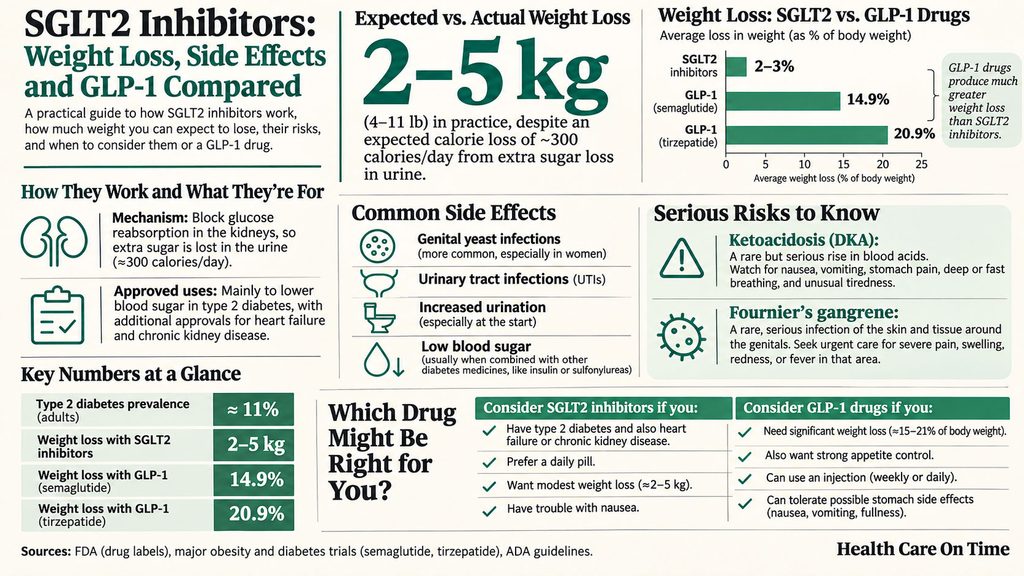
Quick Answer: SGLT2 inhibitors (empagliflozin, dapagliflozin, canagliflozin, ertugliflozin, bexagliflozin) make the kidneys pass sugar into urine, which removes roughly 300 calories a day. Real-world weight loss usually lands around 2 to 5 kg (about 4 to 11 pounds). Common side effects are genital yeast infections, urinary tract infections and frequent urination. Rare but serious risks include ketoacidosis, Fournier’s gangrene and dehydration. GLP-1 drugs like semaglutide cause much larger weight loss.
How SGLT2 Inhibitors Take Weight Off
Your kidneys filter sugar out of the blood all day and then pull almost all of it back in through a protein called sodium-glucose cotransporter 2. SGLT2 inhibitors block that protein. The sugar stays in the urine and leaves the body, which lowers blood sugar without pushing the pancreas to make more insulin.
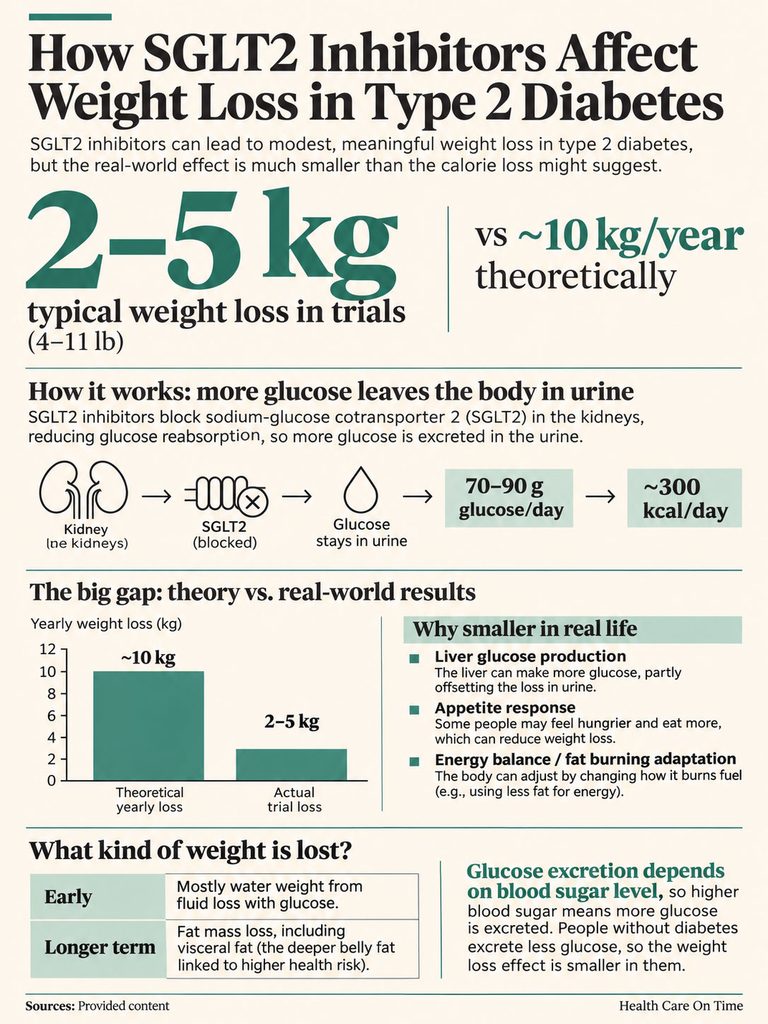
That lost sugar carries calories with it. At standard doses, people with type 2 diabetes pass about 70 to 90 grams of glucose a day in urine, roughly 2.5 to 3 ounces. That adds up to around 300 calories a day, plus about 400 mL (about 13.5 fluid ounces) of extra urine. On paper, losing 300 calories every day for a year should take off about 10 kg, or 22 pounds.
On the scale, people lose far less, roughly 2 to 5 kg (about 4 to 11 pounds) in trials and everyday practice. Several things probably close the gap. The liver makes more glucose to replace what’s lost, the body shifts toward burning fat, and hormone signals such as glucagon change; some people may also eat a little more without noticing. Evidence on appetite is mixed. One 12-week dapagliflozin trial found no significant rise in food intake, so extra eating can’t explain the whole gap.
The first few pounds that come off in the early weeks are mostly water, much like the quick drop people see when they start a water pill such as furosemide, because sugar in the urine pulls fluid along with it. After that, weight drifts down more slowly as fat mass shrinks, including some visceral fat around the organs.
How much sugar reaches the urine depends on how much is in the blood to begin with. In a small study published in Diabetes in 2016, people without diabetes passed about one-third less glucose in their urine than people with type 2 diabetes on the same drug, which helps explain why these drugs produce only modest weight change in people whose blood sugar is already normal.
What SGLT2 Inhibitors Are Approved For
Weight loss isn’t on any of the labels. Every SGLT2 inhibitor sold in the US is approved, along with diet and exercise, to improve blood sugar in adults with type 2 diabetes, and Jardiance, Farxiga and Invokana are also approved for children 10 and older with type 2 diabetes. Several of them now have approvals that have nothing to do with blood sugar at all.
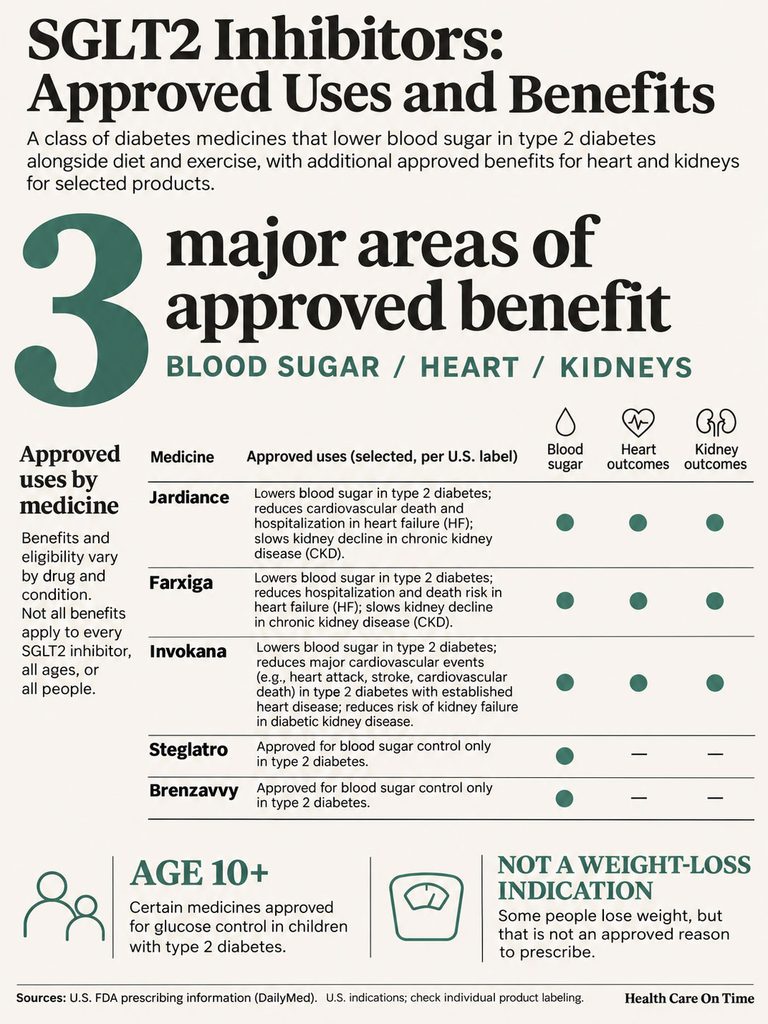
Jardiance is approved to lower the risk of cardiovascular death and hospital stays in adults with heart failure, where it’s often added to a beta-blocker such as carvedilol, and to slow kidney decline in adults with chronic kidney disease. Farxiga carries similar heart failure and kidney approvals. Invokana is approved to cut the risk of heart attack, stroke and cardiovascular death in adults with type 2 diabetes and heart disease, and to lower the risk of kidney failure in people with diabetic kidney disease. Steglatro and Brenzavvy are approved only for blood sugar control.
Plenty of people on these drugs never had them prescribed for weight, or even for diabetes, and still notice the scale move. In someone without diabetes, the weight change from the SGLT2 inhibitor is usually smaller than in someone whose blood sugar runs high.
How Much Weight Each Drug Takes Off
Five SGLT2 inhibitors are sold in the US. The numbers below come from each drug’s FDA prescribing information, which reports weight change in the trials used for approval. The labels don’t all report weight the same way: some use percent of body weight and others use kilograms, so the table keeps each label’s own unit.
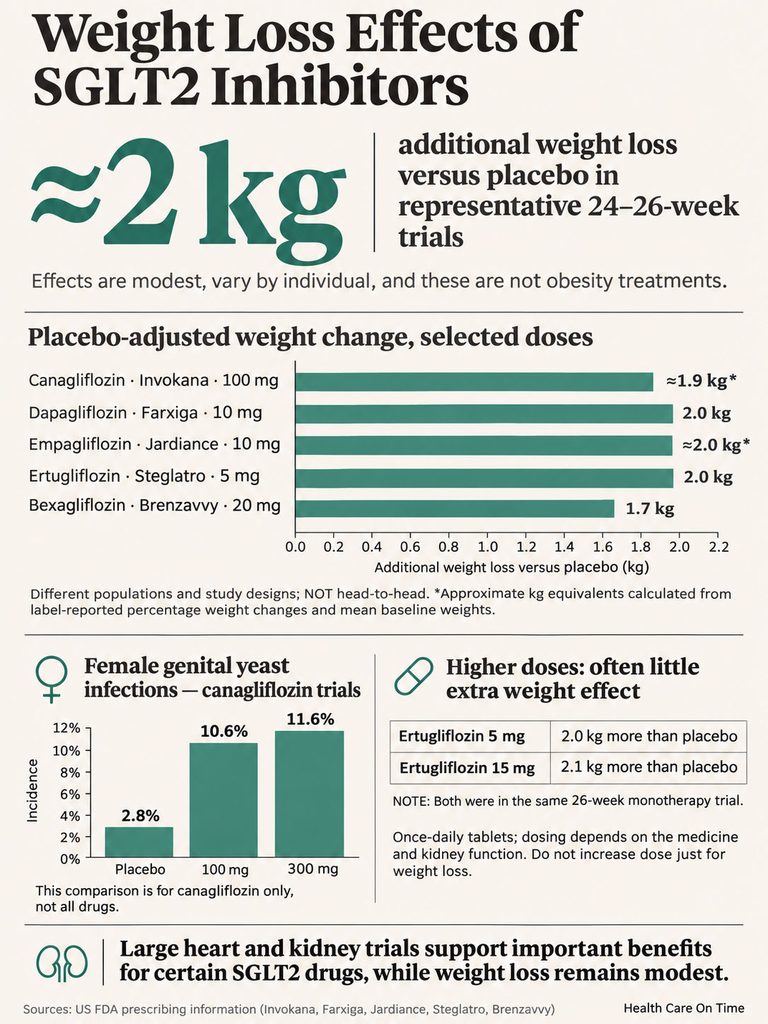
| Drug (brand) | Doses | Weight change vs placebo in label trials | Female genital yeast infections (drug vs placebo) | Other label point worth knowing |
| Empagliflozin (Jardiance) | 10 mg, 25 mg | 2.5% to 2.8% more loss than placebo at 24 weeks (alone) | 5.4% (10 mg), 6.4% (25 mg) vs 1.5% | Approved for heart failure and chronic kidney disease too |
| Dapagliflozin (Farxiga) | 5 mg, 10 mg | 2.0 to 2.2 kg (about 4.4 to 4.9 lb) more than placebo at 24 weeks with metformin | 8.4% (5 mg), 6.9% (10 mg) vs 1.5% | Not recommended for blood sugar control if eGFR is below 45 |
| Canagliflozin (Invokana) | 100 mg, 300 mg | 2.2% to 3.3% more than placebo at 26 weeks (alone) | 10.6% (100 mg), 11.6% (300 mg) vs 2.8% | Amputation and bone fracture warnings |
| Ertugliflozin (Steglatro) | 5 mg, 15 mg | 2.0 to 2.1 kg (about 4.4 to 4.6 lb) more than placebo at 26 weeks (alone) | 9.1% (5 mg), 12.2% (15 mg) vs 3.0% | Blood sugar control only; no heart or kidney indication |
| Bexagliflozin (Brenzavvy) | 20 mg | 1.7 to 2.3 kg (about 3.7 to 5.1 lb) more than placebo at 24 weeks in people with BMI 25 or higher | 6% vs 0% | Not recommended if eGFR is below 30 |
Jardiance (empagliflozin)
In the 24-week trial where Jardiance was used alone, people on 10 mg lost 2.8% of their body weight and people on 25 mg lost 3.2%, compared with 0.4% on placebo. Added to metformin, the numbers were 2.5% and 2.9% against 0.5% for placebo. For a 220-pound adult, a 3% drop is about 6.6 pounds. Many people take Jardiance for heart failure or chronic kidney disease and only notice the weight change as a side effect.
Farxiga (dapagliflozin)
In a 24-week trial of Farxiga added to metformin, people on 10 mg lost 2.9 kg and people on 5 mg lost 3.0 kg, while the placebo group lost 0.9 kg, so the two doses performed about the same for weight. The doses did differ a little on side effects, with genital yeast infections in women at 8.4% on 5 mg and 6.9% on 10 mg.
Invokana (canagliflozin)
Canagliflozin shows the clearest dose effect. In the 26-week trial with no other diabetes drug, people lost 2.8% of body weight on 100 mg and 3.9% on 300 mg, compared with 0.6% on placebo. A bigger gap showed up in a 52-week comparison with glimepiride, a sulfonylurea that tends to add weight: people on glimepiride gained 1.0% while people on canagliflozin lost 4.2% to 4.7%, a gap of more than 5 percentage points. If you’re switching from a sulfonylurea, part of the change you see may come from stopping the old drug.
Steglatro and Brenzavvy
Steglatro and Brenzavvy land in the same range as the others. People on Steglatro lost 3.0 to 3.1 kg at 26 weeks against 1.0 kg on placebo. For Brenzavvy, the weight results come from people with a BMI of 25 or higher, where it took off 1.7 to 2.3 kg more than placebo in two 24-week trials.
Does a higher dose mean more weight loss?
Only a little, and not for every drug. Going from Jardiance 10 mg to 25 mg moved the 24-week loss from 2.8% to 3.2%, and Invokana 300 mg beat 100 mg by about one percentage point. Steglatro 15 mg and 5 mg were almost identical (3.1 kg versus 3.0 kg), and the two Farxiga doses matched as well. Meanwhile the higher dose sometimes carried more side effects: on Steglatro, genital yeast infections in women rose from 9.1% on 5 mg to 12.2% on 15 mg. Doctors raise the dose to control blood sugar, and asking for a bigger dose just to lose weight usually buys very little.
Who tends to lose more
Weight loss on these drugs is uneven from person to person. In a 2024 study of 289 adults with type 2 diabetes who started an SGLT2 inhibitor, published in Frontiers in Endocrinology, 45.6% lost more than 3% of their weight at 12 months, while the median change for the whole group was 2 kg (about 4.4 pounds). People over 70 were more likely to lose at least 3%, and so were people who also took a sulfonylurea, while those taking the water pill hydrochlorothiazide were less likely. The study came from a single center in Thailand and looked back at records, and most of its patients were Asian, which limits how well the numbers carry over to other groups.
Large heart and kidney outcome trials, which run for years and include sicker patients, tend to show smaller numbers. In CREDENCE, canagliflozin took off 0.8 kg more than placebo, and in DECLARE-TIMI 58 the difference for dapagliflozin was about 2%.
Common SGLT2 Side Effects and How Often They Happen
Most side effects of SGLT2 inhibitors come from the same thing that causes the weight loss: sugar sitting in the urine. Sugar feeds yeast and bacteria, and it pulls water out with it.
Genital yeast infections
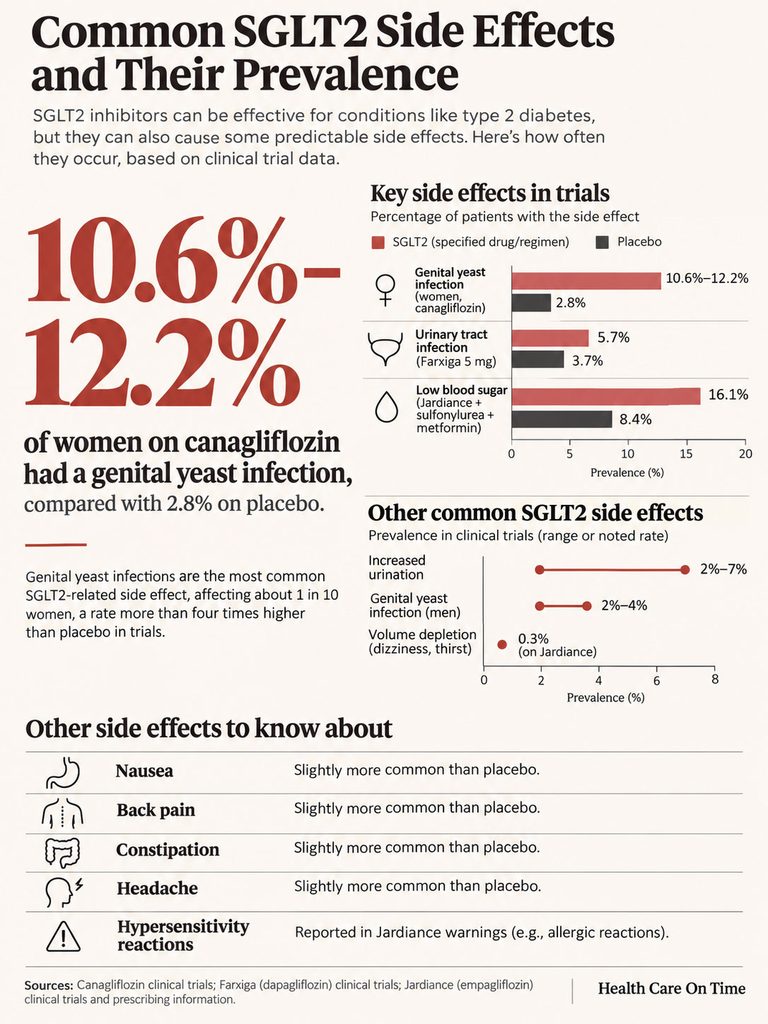
These are the most common problem by a wide margin, and women get them more often than men. On canagliflozin, 10.6% to 11.6% of women had a genital yeast infection in label trials, compared with 2.8% on placebo. Ertugliflozin was similar at 9.1% to 12.2%. Jardiance came in lower, at 5.4% to 6.4%, against 1.5% on placebo. Men get them too. Their rates ran about 2% to 4%, compared with about 1% or less on placebo. Itching, redness, soreness and discharge are the usual signs. Keeping the genital area clean and dry helps, and most infections respond to standard antifungal treatment, though repeated infections are a common reason people ask to switch drugs. Invokana’s trials also counted vaginal itching on its own, at 1.6% on 100 mg and 3.2% on 300 mg, with none on placebo.
Urinary tract infections
UTI rates rose less than many people expect. On Farxiga, 5.7% (5 mg) and 4.3% (10 mg) had a UTI versus 3.7% on placebo; on Jardiance 10 mg it was 9.3% versus 7.6%. Rarely, a simple bladder infection can spread to the kidneys or bloodstream, and the labels list urosepsis and pyelonephritis among their warnings. Fever, back or side pain, shaking chills or feeling very unwell along with urinary symptoms need same-day care.
More urination, thirst and dizziness
Increased urination showed up in about 2% to 7% of people across the label trials, and thirst in about 1% to 3% on canagliflozin and ertugliflozin. Losing extra fluid can lower blood pressure, which is part of the benefit, but it can also cause lightheadedness when you stand up quickly. The labels group these effects under volume depletion, and the risk is higher if you’re older, have reduced kidney function (eGFR below 60), have low blood pressure, or take a loop diuretic. On Jardiance, volume depletion events were uncommon, at 0.3% to 0.5% in trials.
Hot weather, a stomach bug, heavy exercise or simply not drinking much can turn a mild fluid loss into dehydration. If you also take blood pressure pills or a water pill, ask whether any dose needs adjusting during sick days, since these drugs all pull fluid in the same direction.
Low blood sugar
On their own, SGLT2 inhibitors rarely cause low blood sugar. In the Jardiance monotherapy trial, hypoglycemia was 0.4% in every group. Combinations are different. Insulin or a sulfonylurea such as glipizide or glimepiride raises the risk a lot. With a sulfonylurea plus metformin, 16.1% on Jardiance 10 mg had low blood sugar versus 8.4% on placebo, and with multiple daily insulin injections the rates ran from 37.2% to 41.3% across groups. Doctors often lower the insulin or sulfonylurea dose when starting an SGLT2 inhibitor for this reason.
The risk ran higher in Jardiance trials in patients 10 to 17 years old, where blood sugar below 54 mg/dL occurred in 19.2% on the drug compared with 7.5% on placebo.
Other effects
Nausea, back pain, constipation and headache appeared in label tables at rates only slightly above placebo, usually within a percentage point or two. The Jardiance label also lists hypersensitivity (allergic) reactions under its warnings.
Living With the Side Effects Day to Day
Jardiance and Brenzavvy are both meant to be taken once a day in the morning. Drinking water through the day helps replace the fluid that leaves with the sugar, and it matters most in summer heat, during exercise, and when you’re older or on a water pill. Wiping front to back, changing out of wet workout clothes or swimsuits quickly, and wearing breathable underwear all give yeast less of a foothold.
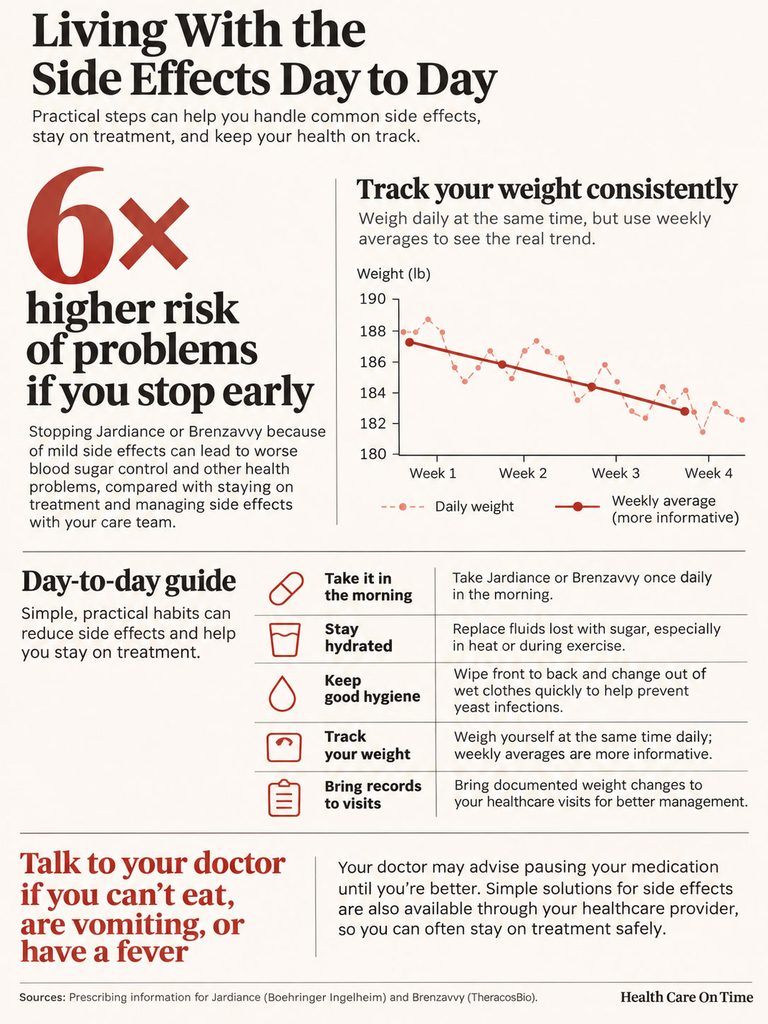
If you’re tracking weight, step on the scale at the same time of day, ideally in the morning after using the bathroom, because fluid swings on these drugs can make day-to-day readings jump around. Weekly numbers tell you more. Write them down and bring them to your visit.
If you can’t eat, are vomiting, or have a fever, call your prescriber or pharmacist and ask whether to pause the pill until you’re eating and drinking normally again, since reduced food intake, dehydration and acute illness all appear on the label’s list of ketoacidosis triggers.
Outside of sick days, stopping on your own because of a mild yeast infection or a few extra bathroom trips can leave blood sugar, heart failure or kidney disease less controlled, and most of those problems have simple fixes your doctor can offer first.
Serious Side Effects That Need Fast Action
Ketoacidosis and Fournier’s gangrene are rare, and both can start with symptoms that seem minor.
Ketoacidosis, sometimes with normal blood sugar
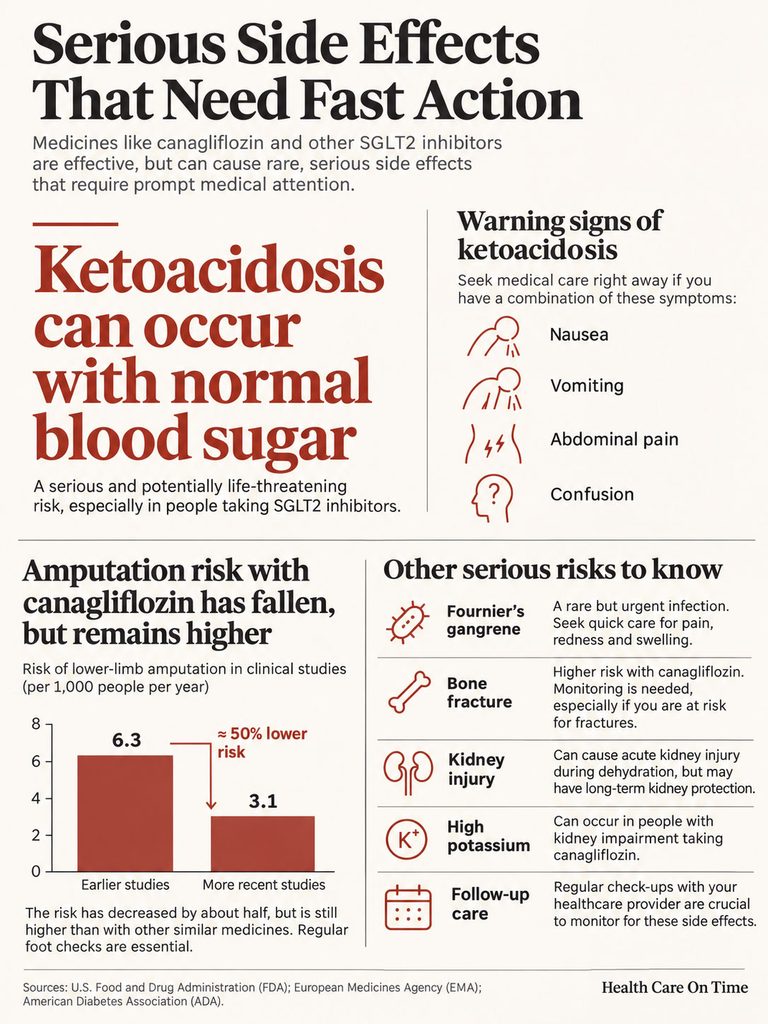
Diabetic ketoacidosis (DKA) happens when the body runs short of insulin and burns fat so fast that acids called ketones build up in the blood. With SGLT2 inhibitors, DKA can happen even when blood sugar is below 250 mg/dL (13.9 mmol/L), which is why it gets missed in emergency rooms. The Jardiance label lists the situations that raise the risk: cutting insulin doses, an illness with fever, eating much less than usual, a ketogenic diet, surgery, dehydration, heavy alcohol use, and a history of pancreatitis or pancreatic surgery.
Warning signs, first spelled out in a May 2015 FDA safety communication, include nausea, vomiting, belly pain, trouble breathing, confusion and unusual tiredness or sleepiness. Anyone on an SGLT2 inhibitor with those symptoms should get medical care right away and tell the staff which drug they take, even if a fingerstick reading looks fine. In the VERTIS CV trial, ketoacidosis occurred in 0.3% of people on ertugliflozin versus 0.1% on placebo.
Current labels tell doctors to hold the drug for at least 3 days before planned surgery or a procedure that needs long fasting, if possible, and to restart once you’re eating and drinking normally. If you’re trying a very low-carb or keto diet to speed up weight loss, talk with your prescriber first, because that combination is one of the listed DKA triggers.
Fournier’s gangrene
Fournier’s gangrene is a fast-moving infection of the skin and tissue between the genitals and the anus. It’s also very rare. In August 2018 the FDA identified 12 cases in people taking SGLT2 inhibitors between March 2013 and May 2018, seven men and five women, and all of them needed hospital care and surgery. The labels advise urgent evaluation for pain, tenderness, redness or swelling in the genital or perineal area, especially with fever or feeling generally unwell. The infection can require several operations and can be fatal, so treat those symptoms as an emergency.
Amputation and bone fractures
Canagliflozin once carried a boxed warning, the FDA’s strongest, about leg and foot amputations. In August 2020 the FDA removed that boxed warning after newer trials suggested the risk was lower than first thought and the heart and kidney benefits were larger; the risk still appears in the label’s warnings section. In the CANVAS trial, amputations happened at 5.9 events per 1,000 patient-years on canagliflozin versus 2.8 on placebo, while in CREDENCE the rates were 12.3 versus 11.2. Amputation is now listed in the warnings for Jardiance and Brenzavvy as well, and across four Jardiance outcome trials the rates were 5.0 versus 4.3 per 1,000 patient-years. Most were toe or mid-foot amputations, often after a foot infection or with peripheral artery disease.
Check your feet every day for new pain, tenderness, sores, ulcers or signs of infection, and look at your lower legs too; report anything new early, and keep up regular foot exams with your doctor or a podiatrist.
Canagliflozin also carries a fracture warning: in CANVAS, fractures ran at 1.59 and 1.79 events per 100 patient-years on the two doses versus 1.09 on placebo.
Kidney injury and high potassium
Fluid loss can cause a short-term rise in creatinine or acute kidney injury, especially during dehydration. On canagliflozin 300 mg, 8.8% of people with moderate kidney impairment had high potassium, compared with 5.3% on placebo. Over the long run these drugs protect the kidneys, which is why Farxiga and Jardiance are approved for chronic kidney disease, so a small early bump in creatinine usually settles. Expect your doctor to recheck kidney function and potassium with routine blood work after you start.
Who Shouldn’t Take Them
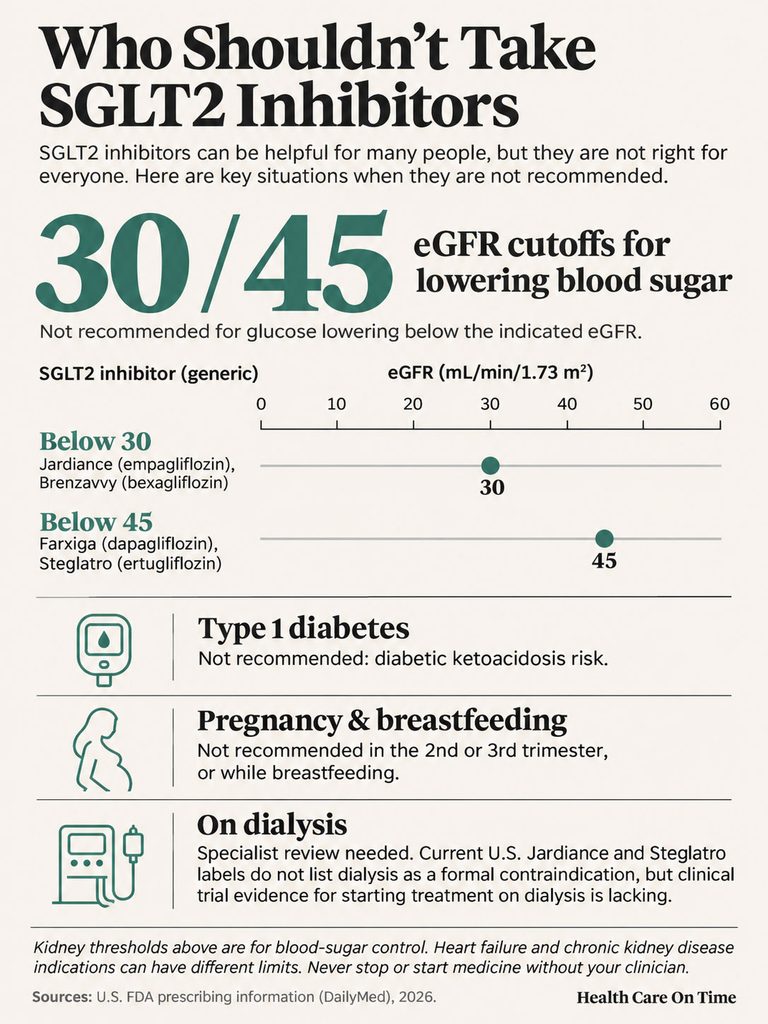
None of the US SGLT2 inhibitors are recommended for type 1 diabetes, mainly because of the ketoacidosis risk. Use isn’t recommended in the second and third trimesters of pregnancy or while breastfeeding, and Jardiance and Steglatro are contraindicated on dialysis. Kidney limits differ by drug. Jardiance and Brenzavvy aren’t recommended for blood sugar control below an eGFR of 30, and Farxiga and Steglatro aren’t recommended for that purpose below 45.
SGLT2 vs GLP-1 for Weight Loss
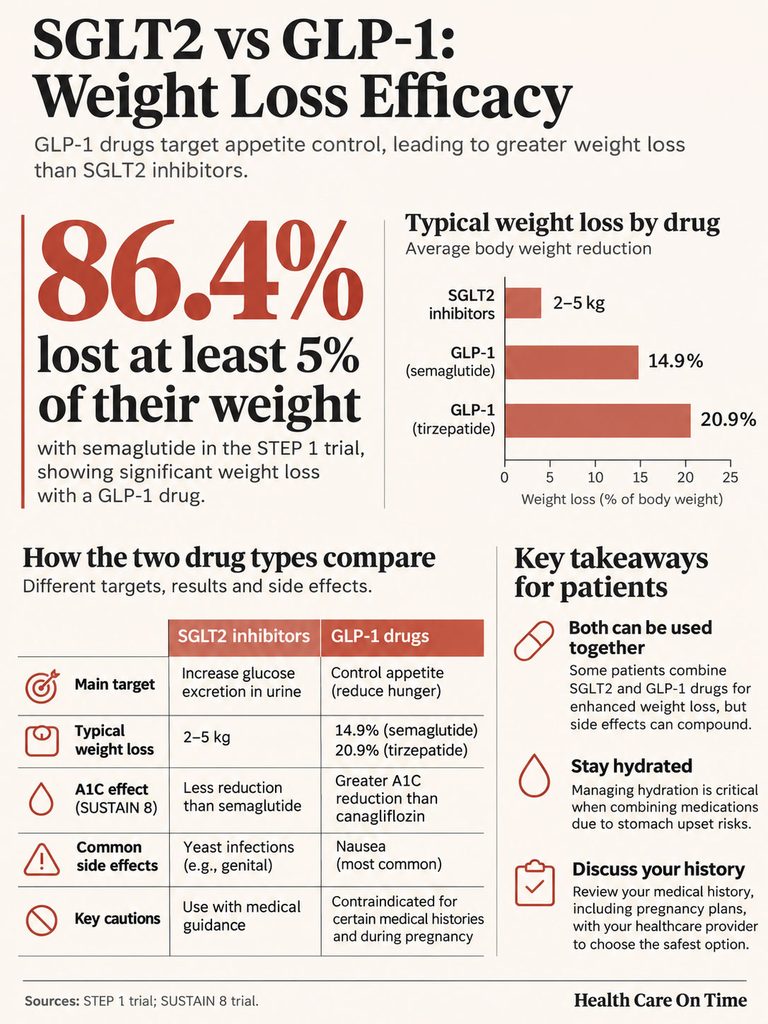
GLP-1 drugs work on appetite. They slow stomach emptying and dull hunger, so people simply eat less, and the weight loss is several times larger than with SGLT2 inhibitors. Among diabetes drugs, tirzepatide and semaglutide produce the most weight loss, and SGLT2 inhibitors generally take off less than any GLP-1 agonist.
| Feature | SGLT2 inhibitors | GLP-1 and GLP-1/GIP drugs | Source of numbers |
| How weight comes off | Sugar and about 300 calories a day lost in urine | Less hunger, slower stomach emptying | Diabetes Therapy 2021 review; Mayo Clinic |
| Typical weight loss | About 2 to 5 kg (4 to 11 lb) | 14.9% (semaglutide 2.4 mg, 68 weeks); 20.9% (tirzepatide 15 mg, 72 weeks) | STEP 1; SURMOUNT-1 |
| Head-to-head result | Canagliflozin 300 mg daily | Semaglutide 1.0 mg weekly lost 1.06 kg (about 2.3 lb) more over 52 weeks | SUSTAIN 8 |
| How it’s taken | Daily pill | Once-weekly injection (semaglutide, tirzepatide) | FDA labels; trial names |
| Most common side effects | Genital yeast infections, UTIs, frequent urination | Nausea, diarrhea, vomiting | Labels; Mayo Clinic; SUSTAIN 8 (47% GI events on semaglutide) |
| Who the weight trials enrolled | Adults with type 2 diabetes | Adults with overweight or obesity; both STEP 1 and SURMOUNT-1 excluded diabetes | Labels; ACC trial summary |
In STEP 1, which enrolled 1,961 adults, 86.4% on semaglutide lost at least 5% of their weight and 50.5% lost at least 15%, compared with 31.5% and 4.9% on placebo. The tirzepatide trial enrolled 2,539 adults without diabetes, and the 15 mg dose produced a 20.9% average loss at 72 weeks versus 3.1% on placebo.
The most direct comparison is SUSTAIN 8, where 788 adults with type 2 diabetes on metformin took either weekly semaglutide 1.0 mg or daily canagliflozin 300 mg for 52 weeks. Semaglutide lowered A1C by 0.49 percentage points more and took off 1.06 kg more. The gap at that dose is smaller than the obesity trials suggest, because the semaglutide dose used for diabetes is lower than the 2.4 mg dose used for weight loss. Nausea and other stomach problems were common on semaglutide, at 47%.
GLP-1 drugs aren’t recommended for people with a history of medullary thyroid cancer, multiple endocrine neoplasia or pancreatitis, or during pregnancy and breastfeeding, and some people can’t tolerate the nausea long enough to reach a full dose. For them, an SGLT2 inhibitor’s smaller weight effect may be the more realistic option.
Some people end up taking both kinds of drug. In the DURATION-8 trial, dapagliflozin plus weekly exenatide produced more weight loss than either drug alone, and similar results came from trials adding other GLP-1 drugs to an SGLT2 inhibitor. Adding a GLP-1 drug trades the yeast-infection problem for a different set of side effects, mostly nausea and other stomach trouble, and stomach upset on both drugs together can raise the dehydration risk, so sick-day rules matter even more.
Diabetes and SGLT2 Safety by the Numbers
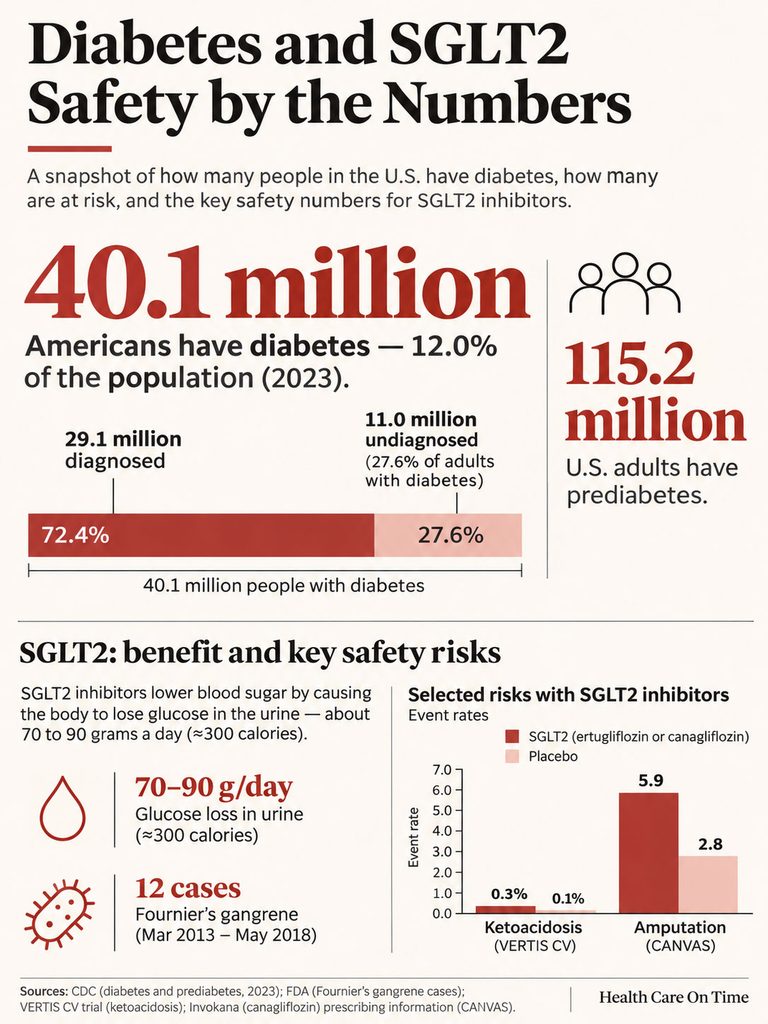
Of the 40.1 million Americans with diabetes counted by the CDC, 29.1 million have a diagnosis, and the rest don’t know yet. The rare-risk figures below come from FDA reviews and the drug labels.
| Measure | Number | Source |
| People in the US with diabetes | 40.1 million (12.0% of the population), 2023 data | CDC, page reviewed Sep 2026 |
| Adults with diabetes who don’t know it | 11.0 million (27.6% of adults with diabetes) | CDC |
| US adults with prediabetes | 115.2 million | CDC |
| Glucose lost in urine on an SGLT2 inhibitor | About 70 to 90 grams a day (about 300 calories) | Diabetes Therapy 2021 review |
| Fournier’s gangrene cases first identified by FDA | 12 cases, March 2013 to May 2018 | FDA, August 2018 |
| Ketoacidosis in VERTIS CV | 0.3% on ertugliflozin vs 0.1% on placebo | Steglatro label |
| Amputations in CANVAS | 5.9 vs 2.8 per 1,000 patient-years | Invokana label |
When Weight Loss Becomes a Warning Sign
Losing a few pounds slowly over the first months on an SGLT2 inhibitor is expected. Losing weight fast, or losing it while feeling worse, is different. High blood sugar itself causes weight loss, because cells can’t use the sugar and the body breaks down fat and muscle instead, so unexplained weight loss can mean your diabetes isn’t controlled. A reasonable rule is to see a doctor for unplanned weight loss of about 5 to 10 pounds or more, especially with thirst, frequent urination or fatigue, and getting immediate care for vomiting, fruity-smelling breath or confusion. If you can’t tell whether a drop is normal for you, a call to your doctor’s office is a sensible first step, and bringing your written weight log makes that call more useful.
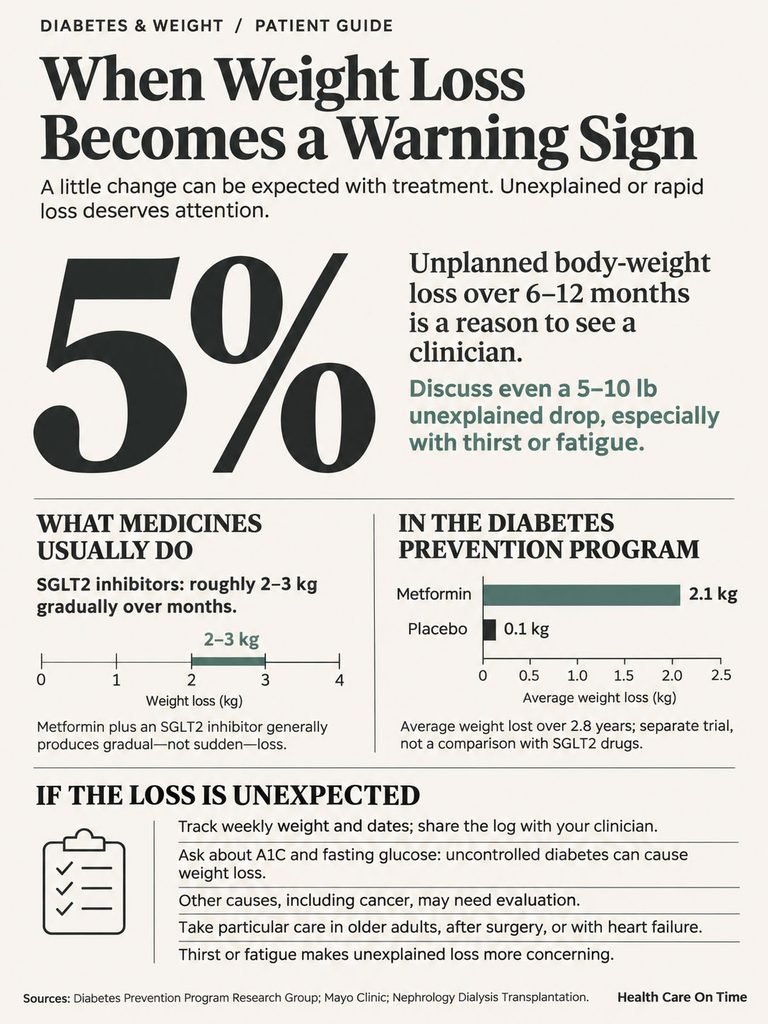
An older adult who is already thin, someone recovering from surgery, or a person with heart failure who is losing muscle may not want extra pounds coming off. Tell your doctor if your clothes are getting loose and you weren’t trying to lose weight. Expect blood work, usually an A1C and a fasting glucose, and possibly checks for other causes, because unexplained weight loss can sometimes point to something unrelated to diabetes, including cancer, and cancer screenings may need to be brought up to date.
If you also take metformin, the usual first diabetes drug, some of the loss may come from it. In the Diabetes Prevention Program, 28.5% of people on metformin lost at least 5% of their weight in the first year, compared with 13.4% on placebo, and the 2019 long-term follow-up found the metformin group had kept off an average of 6.2% over years 6 to 15. Taking metformin with an SGLT2 inhibitor can add a little to the total, though weight loss on the combination still tends to be gradual.
What to Do in Common Situations
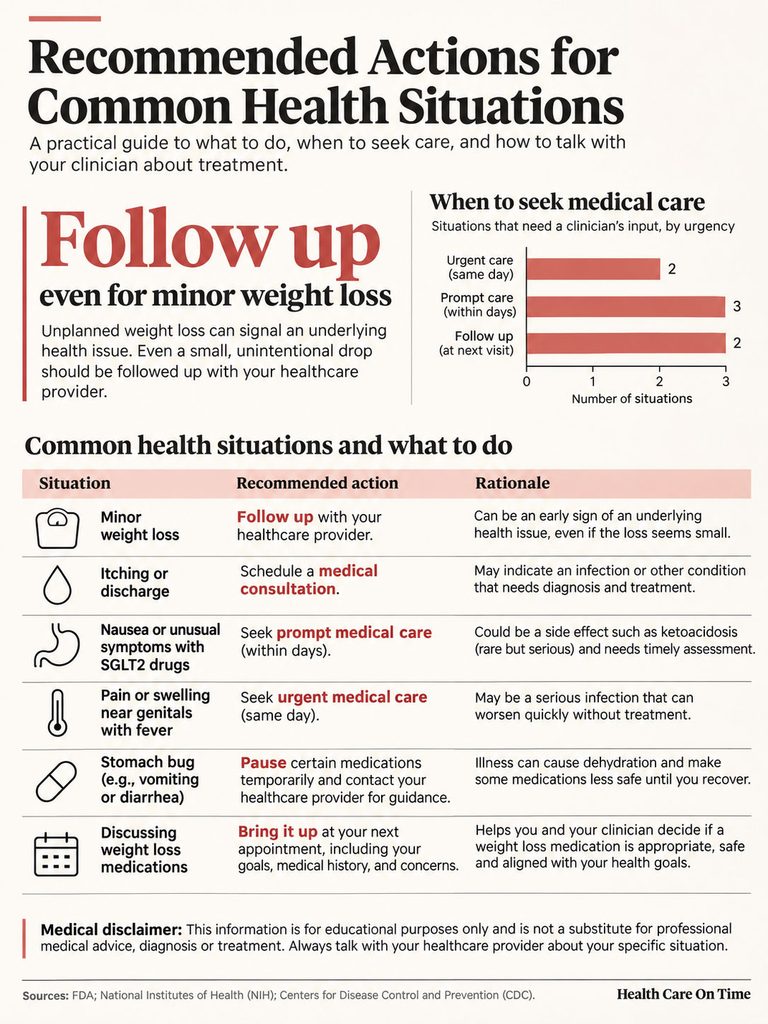
| Situation | Recommended action | Why |
| You’ve lost 3 to 6 pounds in the first month and feel fine | Keep taking it and keep your usual follow-up | Early loss is mostly water and fits label trial results |
| Vaginal or penile itching, discharge or redness | Call your doctor or pharmacist about antifungal treatment | Yeast infections hit up to about 12% of women in trials |
| Nausea, vomiting, belly pain or unusual sleepiness, even with normal sugar | Go to urgent care or the ER and name your SGLT2 drug | Ketoacidosis can occur with glucose below 250 mg/dL |
| Pain, redness or swelling between the genitals and anus with fever | Get emergency care | Possible Fournier’s gangrene, which needs surgery |
| Surgery or a long fast scheduled | Ask your prescriber about stopping at least 3 days before | Labels advise holding the drug to cut ketoacidosis risk |
| Stomach bug, can’t keep fluids down | Ask about pausing the drug until you’re eating and drinking | Fluid loss raises the risk of dehydration and kidney injury |
| You want much more weight loss | Ask whether a GLP-1 drug fits your situation | Semaglutide and tirzepatide produced 14.9% and 20.9% loss in trials |
Bring a short list to your next appointment, for example:
- How much weight is normal on this dose, and how much loss would worry you?
- Should we lower the insulin or glipizide dose now that Jardiance is part of the plan?
- What should happen with this pill on a sick day, or on a day without food?
- Is checking ketones at home worth doing, and when?
- How many days before the procedure should the pill stop, and when does it restart?
- Which symptoms mean going straight to the ER instead of calling the office?
- If yeast infections keep coming back, is a different drug worth trying?
- Would adding or switching to a GLP-1 drug make sense for weight?
Frequently Asked Questions
Does SGLT2 make you lose weight?
Yes, though usually only a few pounds. Most people lose about 2 to 5 kg (4 to 11 pounds), water first and then mostly fat.
Which is better for weight loss, GLP-1 or SGLT2?
GLP-1 drugs produce much more weight loss. In obesity trials, semaglutide 2.4 mg led to a 14.9% average loss and tirzepatide 15 mg led to 20.9%, while SGLT2 inhibitors usually take off only 2% to 3% more than placebo. In a direct comparison in people with type 2 diabetes, weekly semaglutide 1.0 mg beat daily canagliflozin 300 mg by about 1.06 kg over a year. SGLT2 inhibitors still have heart failure and kidney approvals, come as a daily pill, and cause less nausea, so if your heart or kidneys are the main concern, or nausea is hard for you to handle, an SGLT2 inhibitor can still be the better pick. A combination of the two is also common.
Can metformin make you lose too much weight?
Metformin usually causes modest weight loss. In the Diabetes Prevention Program, the metformin group kept off an average of 6.2% of body weight over years 6 to 15. Large or fast loss on metformin isn’t typical and should be checked.
How do you stop weight loss in diabetes?
First find out why it’s happening. Unplanned weight loss often means blood sugar is running high, so your doctor may check your A1C, adjust your medicines, or look for other causes. If you’re on an SGLT2 inhibitor and your weight is dropping more than you want, your doctor may change the dose or switch drugs. Eating regular meals with enough protein and calories helps, and a registered dietitian can build a plan around your blood sugar targets. Get care right away if weight loss comes with vomiting, fruity breath or confusion.
How fast does weight loss happen on Jardiance or Farxiga?
The first few pounds often go in the first few weeks, mostly as water. Fat loss follows more slowly, and the label trials measured their results at 24 weeks.
Is weight lost on SGLT2 inhibitors fat or water?
The early drop is mostly fluid pulled out with sugar in the urine, and later loss comes mainly from fat, including some visceral fat around the organs.
Do SGLT2 inhibitors make you pee more?
A little. Increased urination showed up in about 2% to 7% of people in label trials. Jardiance and Brenzavvy are labeled for a morning dose, which helps keep bathroom trips away from bedtime.
Why did my weight loss stop on an SGLT2 inhibitor?
The body adjusts to the calories lost in urine. It makes more glucose in the liver, changes hormone signals, and in some people appetite rises a bit, so weight loss usually levels off well short of the 22 pounds a year that simple math predicts. A plateau after a few months is expected and doesn’t mean the drug has stopped working on blood sugar, heart or kidneys.
Will you gain the weight back if you stop?
Some regain is likely, because the extra 300 calories a day stop leaving in urine once the drug is gone. Fat regain depends on what you eat and how active you are. Nobody can predict the exact amount.
Can you take an SGLT2 inhibitor just for weight loss?
No SGLT2 inhibitor is FDA-approved for weight loss. They’re approved for type 2 diabetes, and Jardiance and Farxiga also for heart failure and chronic kidney disease. People without diabetes pass less sugar in their urine, so weight loss would be smaller still.
Medical disclaimer: This article is for general information only and isn’t a substitute for advice from your doctor or pharmacist. Don’t start, stop or change any diabetes, heart or kidney medicine without talking to the clinician who prescribes it. If you have symptoms of ketoacidosis, a severe genital infection or dehydration, seek emergency care.
References
- Cleveland Clinic. SGLT2 Inhibitors: What They Are, Uses and Side Effects. Reviewed July 31, 2025. https://my.clevelandclinic.org/health/treatments/sglt2-inhibitors
- Mayo Clinic Staff. Diabetes drugs and weight loss. November 14, 2024. https://www.mayoclinic.org/diseases-conditions/type-2-diabetes/expert-answers/byetta/faq-20057955
- Boehringer Ingelheim. JARDIANCE (empagliflozin) prescribing information, revised 9/2023. https://www.accessdata.fda.gov/drugsatfda_docs/label/2023/204629s041lbl.pdf
- JARDIANCE (empagliflozin) label, revised 1/2026, DailyMed. https://dailymed.nlm.nih.gov/dailymed/drugInfo.cfm?setid=5777b8a8-ada6-4950-8548-43a1de11f075
- AstraZeneca. FARXIGA (dapagliflozin) prescribing information, revised 06/2026. https://www.accessdata.fda.gov/drugsatfda_docs/label/2026/202293s035lbl.pdf
- Janssen. INVOKANA (canagliflozin) prescribing information, revised 06/2026. https://www.accessdata.fda.gov/drugsatfda_docs/label/2026/204042s044lbl.pdf
- Merck. STEGLATRO (ertugliflozin) prescribing information, revised 10/2022. https://www.accessdata.fda.gov/drugsatfda_docs/label/2022/209803s006lbl.pdf
- BRENZAVVY (bexagliflozin) prescribing information, revised 06/2026. https://www.accessdata.fda.gov/drugsatfda_docs/label/2026/214373s002lbl.pdf
- US Food and Drug Administration. FDA removes Boxed Warning about risk of leg and foot amputations for the diabetes medicine canagliflozin. August 26, 2020. https://www.fda.gov/drugs/drug-safety-and-availability/fda-removes-boxed-warning-about-risk-leg-and-foot-amputations-diabetes-medicine-canagliflozin
- US Food and Drug Administration. Drug Safety Podcast: FDA warns about rare occurrences of a serious infection of the genital area with SGLT2 inhibitors. August 29, 2018. https://www.fda.gov/drugs/fda-drug-safety-podcasts/fda-drug-safety-podcast-fda-warns-about-rare-occurrences-serious-infection-genital-area-sglt2
- FDA Drug Safety Communication: FDA warns that SGLT2 inhibitors for diabetes may result in a serious condition of too much acid in the blood. May 15, 2015 (via Drugs.com). https://www.drugs.com/fda/sglt2-inhibitors-safety-communication-fda-warns-medicines-may-result-serious-condition-much-acid-13717.html
- Janež A, Fioretto P. SGLT2 Inhibitors and the Clinical Implications of Associated Weight Loss in Type 2 Diabetes: A Narrative Review. Diabetes Therapy. 2021. https://link.springer.com/article/10.1007/s13300-021-01104-z
- Ferrannini E, et al. Shift to Fatty Substrate Utilization in Response to Sodium-Glucose Cotransporter 2 Inhibition in Subjects Without Diabetes and Patients With Type 2 Diabetes. Diabetes. 2016;65:1190-1195. https://iris.cnr.it/retrieve/f9643ae0-19ad-4bb9-956f-033ddac2bc9c/prod_356777-doc_172301.pdf
- Danpanichkul P, et al. Predictors of weight reduction effectiveness of SGLT2 inhibitors in diabetes mellitus type 2 patients. Frontiers in Endocrinology. 2024. https://www.frontiersin.org/articles/10.3389/fendo.2023.1251798/full
- Centers for Disease Control and Prevention. Diabetes data and research: At a glance. Reviewed September 16, 2026. https://www.cdc.gov/diabetes/php/data-research/index.html
- Wilding JPH, et al. Once-Weekly Semaglutide in Adults with Overweight or Obesity. N Engl J Med. 2021;384:989-1002. https://figshare.le.ac.uk/articles/journal_contribution/Once-Weekly_Semaglutide_in_Adults_with_Overweight_or_Obesity/14510646
- American College of Cardiology. SURMOUNT-1: Tirzepatide Once Weekly for the Treatment of Obesity (Jastreboff AM, et al. N Engl J Med. 2022;387:205-216). https://www.acc.org/Latest-in-Cardiology/Clinical-Trials/2022/08/04/15/32/SURMOUNT-1
- Lingvay I, et al. Efficacy and safety of once-weekly semaglutide versus daily canagliflozin as add-on to metformin in patients with type 2 diabetes (SUSTAIN 8). Lancet Diabetes Endocrinol. 2019;7(11):834-844. https://pubmed.ncbi.nlm.nih.gov/31540867/
- Apolzan JW, et al. Long-term Weight Loss With Metformin or Lifestyle Intervention in the Diabetes Prevention Program Outcomes Study. Ann Intern Med. 2019;170(10). https://hsrc.himmelfarb.gwu.edu/smhs_medicine_facpubs/4185
- Banner Health. When healthy weight loss could be a sign of high blood sugar. https://www.bannerhealth.com/healthcareblog/teach-me/when-healthy-weight-loss-could-be-a-sign-of-high-blood-sugar