The early signs of Crohn’s disease in women are mostly the same gut signs men get: belly pain, diarrhea that won’t settle, fatigue and weight loss you didn’t plan. What differs is how often those signs get blamed on periods, stress or IBS, and how long it takes to get a diagnosis.
Table of Contents
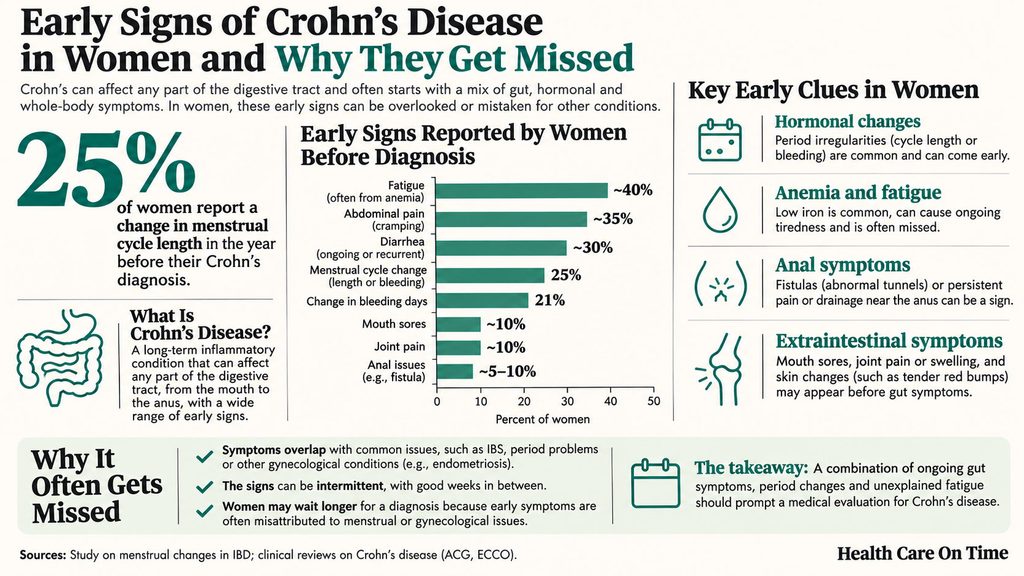
Quick Answer: Early Crohn’s in women usually starts with belly pain or cramping, diarrhea lasting more than one to two weeks, tiredness, low appetite and unplanned weight loss. Women may also notice period changes, worse cramps, symptoms that flare around their period, iron-deficiency anemia, mouth sores or pain and drainage near the anus. Blood in the stool, fever with gut symptoms, or weight loss without trying should be checked by a doctor soon.
What Early Crohn’s Usually Feels Like
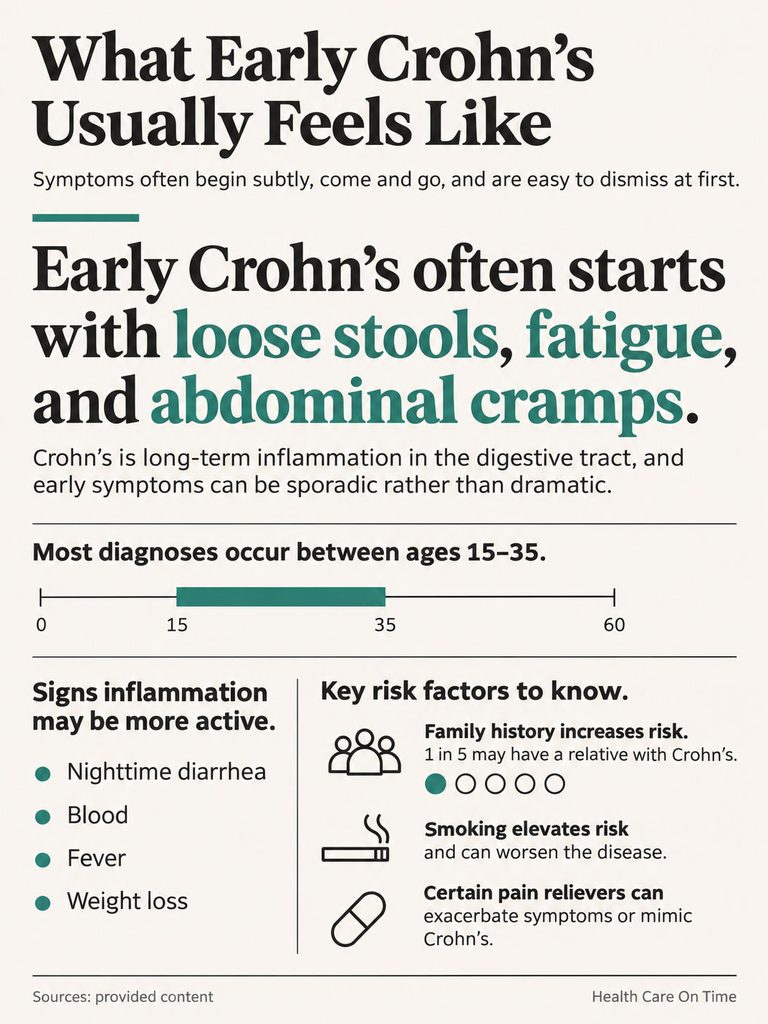
Crohn’s disease is a long-term inflammation that can hit any part of the digestive tract, from the mouth to the anus, though it most often involves the end of the small intestine and the colon. Because it can sit in different places, the first signs vary a lot from person to person. Some people have a sudden, obvious start. Many have something slower and vaguer that comes and goes for months.
The core signs are:
- Diarrhea, often loose and frequent, sometimes waking you at night
- Abdominal pain and cramping, commonly in the lower right belly
- Fatigue that sleep doesn’t fix
- Fever, usually low-grade
- Blood in the stool
- Mouth sores
- A smaller appetite and weight loss you weren’t trying for
- Pain or drainage near the anus, which can come from a fistula (a small tunnel from the bowel to the skin)
In the beginning, it rarely looks like that whole list at once. It’s more often two or three things that seem unrelated: a few weeks of loose stools after meals, a stretch of being exhausted, a cramp that shows up after eating and fades, then a quiet month where everything seems fine. That on-and-off pattern is typical, and it’s one reason people wait.
Symptoms can build slowly or arrive suddenly. Diagnosis usually comes between ages 15 and 35, often before 30, though it can start at any age.
A few features make ordinary gut trouble look more like inflammation. Diarrhea that wakes you up at night is one. Blood, fever or weight loss alongside gut symptoms is another. So is a family history: as many as 1 in 5 people with Crohn’s have a relative with the disease, and a parent, sibling or child with Crohn’s raises your risk. Smoking raises the risk too, and smokers who develop Crohn’s tend to have more serious disease.
Pain relievers such as ibuprofen, naproxen and diclofenac don’t cause Crohn’s, but they can inflame the bowel, make Crohn’s worse or produce symptoms that look like it. Many women take these drugs every month for period cramps, which means a flare of gut pain around your period can have more than one cause.
Early Signs That Look Different in Women
Crohn’s itself affects men and women at about the same rate. The gap is in which signs overlap with ordinary parts of a woman’s life, and how often those signs get explained away.
Period changes before the diagnosis
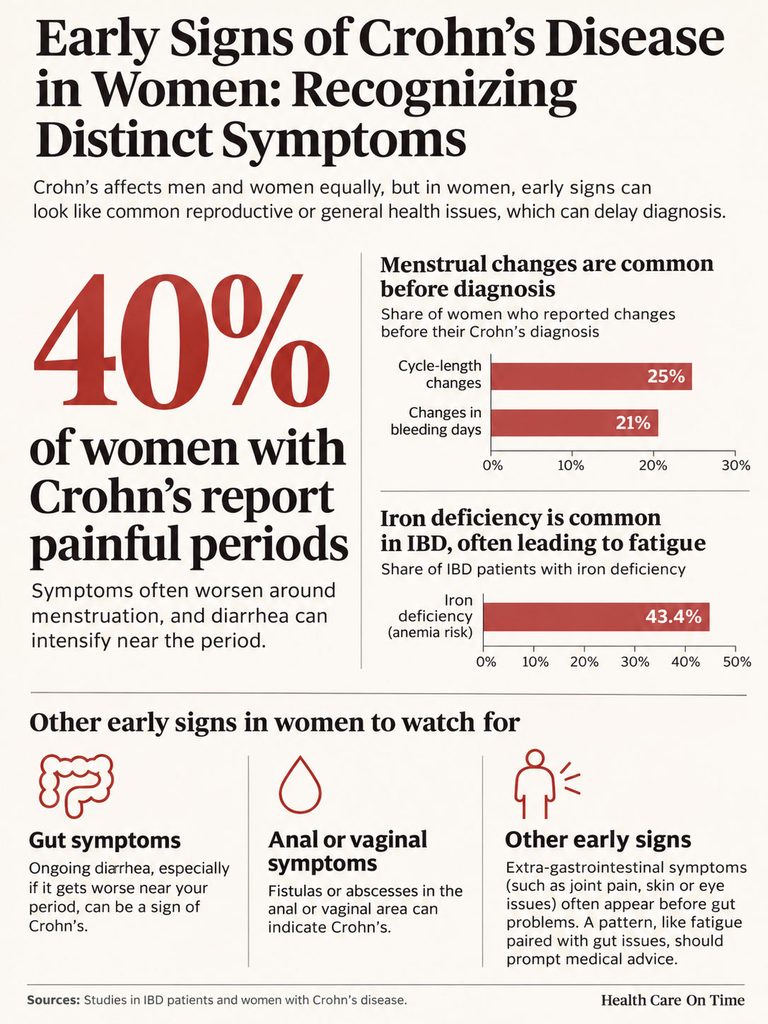
A cycle that suddenly runs longer or shorter, or periods that last a different number of days, can show up months before Crohn’s is named. In one registry study of 121 women, 25% had a cycle-length change in the year before diagnosis and 21% a change in bleeding days. Among women who already had painful periods, 40% noticed a change in how intense the pain was. Cycles tended to become more regular again over time, once the disease was diagnosed and treated.
Painful periods stay common after diagnosis, too. About 40% of women with Crohn’s have them, and more than 70% of women with inflammatory bowel disease (IBD) find their gut symptoms get worse around their period.
Many women already have looser stools or more cramping just before and during their period, so a little extra diarrhea that week doesn’t feel strange. What’s worth noticing is a pattern that keeps building: gut symptoms that used to come only around your period now hang around between periods, or bleeding, pain and cycle length all change in the same few months as your bowel habits.
Missed or irregular periods during a flare can happen too, since inflammation, weight loss and poor nutrition all disrupt the cycle. Heavy menstrual bleeding deserves a mention at the same visit, because heavy periods and gut blood loss together raise the odds of anemia.
Anemia and tiredness that don’t add up
Tiredness is one of the earliest and most ignored signs. Women often explain it away with work, kids, poor sleep or a heavy period. Sometimes the tiredness is anemia, and in Crohn’s the cause is usually iron.
Monthly blood loss already puts women at higher risk. Crohn’s then adds slow bleeding from the gut and inflammation that keeps the body from absorbing and using iron well, so the two problems feed each other.
Iron deficiency turned up in 43.4% of 2,197 Dutch adults being treated for IBD at 16 hospitals, and 18.0% were anemic. With active inflammation the iron figure climbed to 70.8%, against 23.9% when the disease was quiet, and only 59.3% of those patients had even had their iron checked.
Signs that tiredness may be low iron include getting out of breath on stairs, a fast heartbeat, pale skin and headaches. If iron pills seem to do nothing, tell your doctor, since that can point to poor absorption. Iron itself can also cause diarrhea in some people, which makes it harder to tell what’s driving loose stools. Crohn’s can also lower vitamin B12, especially when the end of the small intestine is inflamed.
Pain and drainage near the anus or vagina
Few people want to bring this up, yet it points toward Crohn’s more clearly than most signs. The disease can cause small tears (fissures), swollen skin tags, painful abscesses and fistulas near the anus. In women, a fistula can also run from the rectum to the vagina.
Over the years, roughly a fifth of people with Crohn’s get one. In a long-running Minnesota study, the odds of a perianal or rectovaginal fistula reached 18% within 10 years of diagnosis and 23% within 20, and they were lower for people diagnosed since 1998.
A rectovaginal fistula can show up as gas or stool passing from the vagina, a foul-smelling discharge, or vaginal irritation and infections that keep coming back. It can also make sex painful, though painful sex is common with IBD even without a fistula: more than half of women with IBD have sexual problems of some kind, compared with about 28% of women without it. Many women see a gynecologist first for these symptoms, so mention any bowel changes at that visit, even if they seem unrelated.
Mouth, joints, skin and eyes
Inflammation from Crohn’s can show up away from the bowel, sometimes before the gut symptoms are obvious, and these outside-the-gut problems are more common in women than in men.
Signs to connect with gut symptoms include:
- Mouth sores that keep coming back
- Joint pain or swelling
- Tender red bumps on the shins (erythema nodosum) or painful skin ulcers
- Red, painful eyes or sensitivity to light
- Kidney stones, which are more common with Crohn’s
Any one of these on its own is usually something else. Two or three of them alongside diarrhea or belly pain is a pattern worth showing a doctor.
| Sign | How it often shows up in women | What makes Crohn’s more likely | When to see a doctor |
| Diarrhea | Looser stools that start around the period, then stay between periods | Lasts over 1 to 2 weeks, wakes you at night, comes with blood | Diarrhea past 1 to 2 weeks, or any blood |
| Belly pain and cramps | Blamed on period cramps, ovulation or endometriosis | Pain after meals, often lower right, not tied to cycle days | Ongoing belly pain, or pain with fever or vomiting |
| Period changes | Cycle length or bleeding days shift in the year before diagnosis | Changes happen in the same months as bowel changes | New irregular periods with gut symptoms or weight loss |
| Fatigue | Put down to busy life, poor sleep or heavy periods | Low iron or anemia on blood work; iron pills don’t help | Tiredness with breathlessness, fast heartbeat or pale skin |
| Weight loss | Mistaken for stress or eating less | Weight drops without trying, appetite is low | Any weight loss you can’t explain |
| Anal or vaginal symptoms | Seen as hemorrhoids or repeat vaginal infections | Drainage, abscess, gas or stool from the vagina | Same week; sooner with fever or swelling |
| Mouth, joint, skin, eye | Treated as separate problems by different doctors | Appear together with gut symptoms | When two or more show up alongside gut symptoms |
Why Women Wait Longer for a Diagnosis
Women with Crohn’s waited a median of 12.6 months from first symptoms to diagnosis, compared with 4.5 months for men, in a 2023 study of 190 newly diagnosed patients across several Spanish hospitals. For ulcerative colitis the delay was 6.1 months for women and 2.7 for men. Women were also more likely to be misdiagnosed first, and that happened in every setting the researchers looked at: emergency rooms, primary care, gastroenterology clinics and hospital wards.
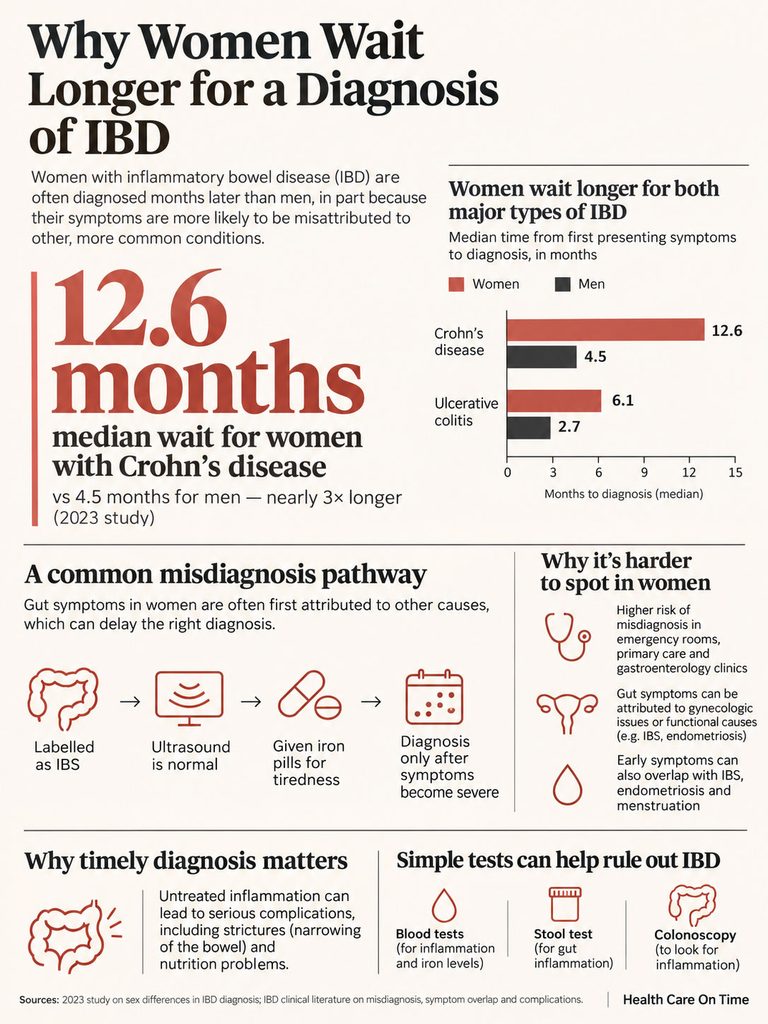
The study was done in Spain, but Massachusetts General Hospital gastroenterologists describe the same delay in US care, and the usual reason is that women’s gut symptoms get put down to gynecologic or functional causes first. In practice that usually means IBS, period problems, endometriosis, anxiety or “a sensitive stomach.”
Those conditions are common and do overlap with early Crohn’s, so a first guess of IBS is often reasonable. The trouble starts when that first guess sticks for a year, because untreated inflammation can lead to scarring and narrowing of the bowel (strictures), fistulas and nutrition problems, and treatment choices like biologics for Crohn’s disease work best when doctors know what they’re treating.
A common path goes something like this. Cramps and loose stools get labeled IBS. Pelvic pain leads to an ultrasound that comes back normal. Iron pills get prescribed for the tiredness. Each answer makes sense on its own, and each one comes from a different appointment. Nobody connects them until blood shows up in the stool or the weight starts dropping.
When symptoms keep getting brushed off, it’s fair to ask straight out whether IBD has been ruled out, and by which test.
IBS, endometriosis or your period?
These three can look almost identical in the early months, and plenty of women have more than one of them at the same time.
IBS causes cramping, bloating and diarrhea or constipation, often worse around the period. It doesn’t cause bleeding, fever, weight loss, anemia or inflammation on tests. For people with IBS-type symptoms and diarrhea, the American College of Gastroenterology’s 2021 IBS guideline suggests a stool test called fecal calprotectin to rule out IBD, plus a blood test for celiac disease.
Endometriosis causes pelvic pain, painful periods and painful sex, and when it grows on the bowel it can cause pain with bowel movements, bloating and cycle-linked diarrhea. Danish registry data on 37,661 women hospitalized with endometriosis showed Crohn’s at 1.6 times the expected rate, still raised two decades on, so having one doesn’t rule out the other.
Normal period symptoms can include looser stools, cramping and fatigue for a day or two. They shouldn’t include blood mixed in the stool, a fever, weight loss or diarrhea that lasts for weeks.
Other conditions can sit in this space too, including celiac disease, infections, thyroid problems and, in some women, ovarian causes of lower abdominal pain. Sorting them out usually takes a few simple tests.
Who Gets Crohn’s: The Numbers
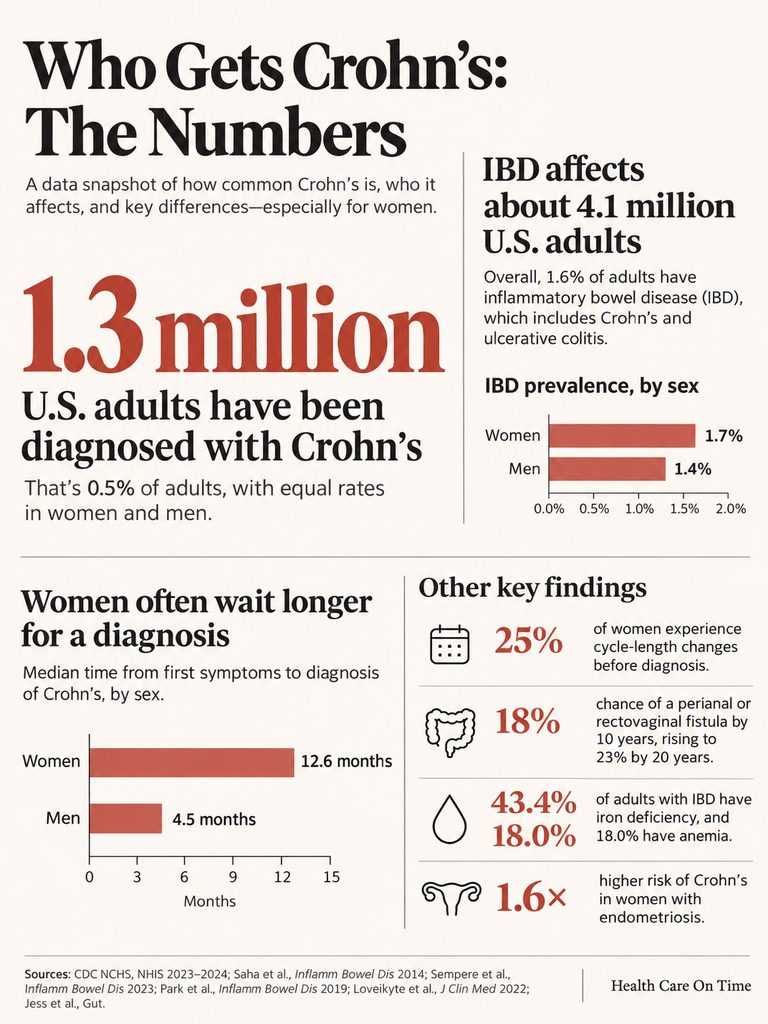
About 1.3 million US adults, or 0.5%, have been diagnosed with Crohn’s, and the rate is the same in women and men. Counting ulcerative colitis too, IBD reaches 1.6% of adults, roughly 4.1 million people, in 2023 to 2024 national survey data.
| Figure | Number | Source |
| US adults ever diagnosed with Crohn’s | 0.5% (about 1.3 million), same in women and men | CDC NCHS, NHIS 2023-2024 |
| US women with any IBD | 1.7% vs 1.4% of men | CDC NCHS, NHIS 2023-2024 |
| Women with a cycle-length change in the year before diagnosis | 25% (121 women) | Saha et al., Inflamm Bowel Dis 2014 |
| Median wait from first symptoms to Crohn’s diagnosis | 12.6 months for women vs 4.5 for men (190 patients) | Sempere et al., Inflamm Bowel Dis 2023 |
| Chance of a perianal or rectovaginal fistula | 18% by 10 years, 23% by 20 years (414 patients) | Park et al., Inflamm Bowel Dis 2019 |
| Iron deficiency in adults with IBD | 43.4%; anemia 18.0% (2,197 patients) | Loveikyte et al., J Clin Med 2022 |
| Crohn’s risk in women with endometriosis | 1.6 times expected (37,661 women) | Jess et al., Gut |
Most people are diagnosed young. White adults have the highest rates, especially people of Ashkenazi Jewish descent, but cases are rising among Black Americans and people of Middle Eastern background, so race shouldn’t be used to rule it out.
What Happens if Early Crohn’s Isn’t Treated
Crohn’s tends to come and go, which can make waiting feel harmless. Over time, though, ongoing inflammation can do lasting damage, and some of it can’t be reversed.
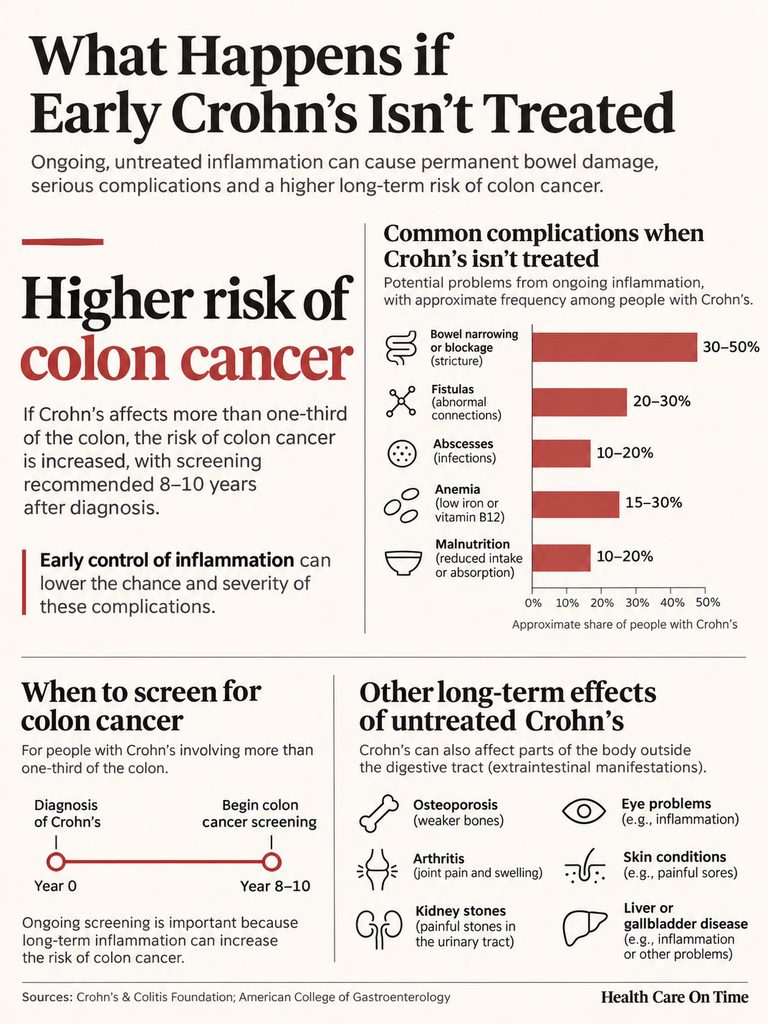
Ongoing inflammation can scar and narrow the bowel until it blocks, which sometimes needs surgery. It can also leave ulcers anywhere from the mouth to the anus and genital area, cause fistulas and abscesses, and lead to malnutrition from eating less and absorbing less. Anemia from low iron or vitamin B12 is common. Colon cancer risk also rises when Crohn’s affects more than a third of the colon, which is why screening colonoscopies usually start 8 to 10 years after diagnosis.
Outside the gut, the list includes osteoporosis, arthritis, kidney stones, eye problems, skin conditions and gallbladder or liver disease. Most of these are less likely, or easier to manage, when the inflammation is controlled early.
How Doctors Check for Crohn’s
Doctors can’t confirm Crohn’s with any single test. They put together your symptoms, an exam and several results, and they rule out other causes along the way.
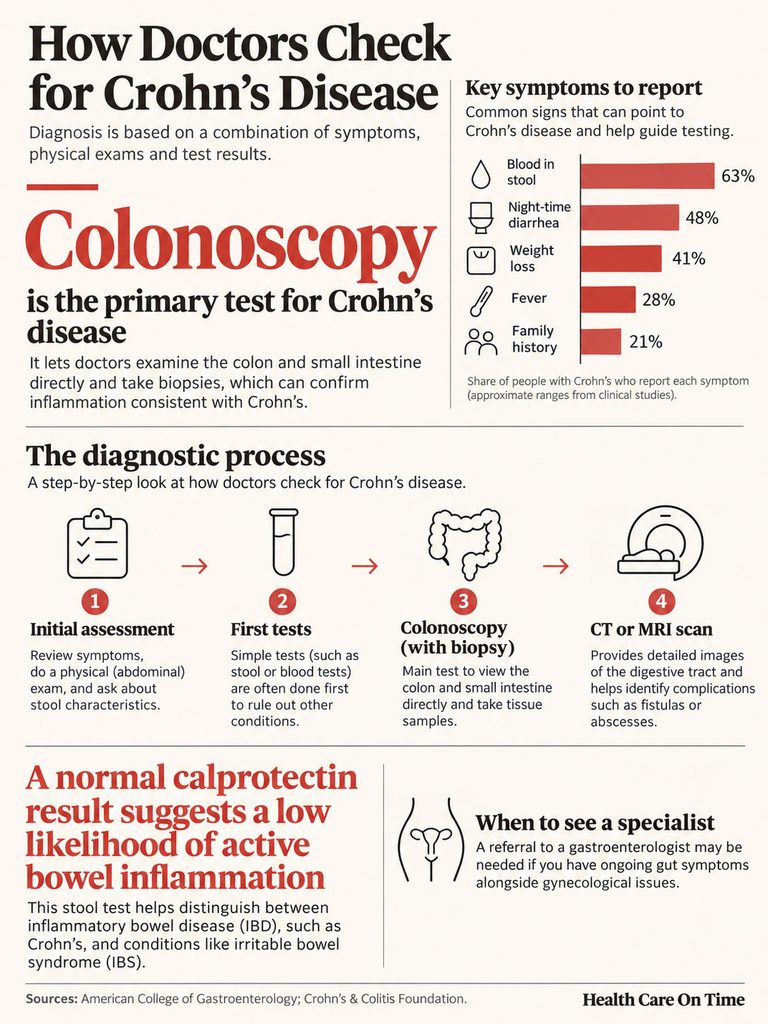
A first visit usually includes a symptom history (bring dates if you can, including your period dates), an abdominal exam and sometimes a look at the anal area. Expect questions about blood in the stool, night-time diarrhea, weight, fever, medicines like NSAIDs and family history.
The first round of tests is often simple:
- Blood tests for anemia, iron levels, inflammation and signs of infection
- Stool tests, including fecal calprotectin, a marker of gut inflammation, and tests for infection
- Celiac blood test, since celiac disease causes many of the same symptoms
If those point toward inflammation, the main test is a colonoscopy, which looks at the colon and the end of the small intestine and takes small tissue samples (biopsies). CT or MRI scans give detailed pictures of the digestive tract, including stretches of small intestine a colonoscope can’t reach, and they can help find fistulas or abscesses.
A normal calprotectin result makes active bowel inflammation less likely, which is why it’s useful for telling IBS from IBD. It isn’t perfect, and doctors read it alongside the rest of the picture.
If you’re seeing a gynecologist for pelvic pain or repeat infections and you also have gut symptoms, ask whether a stool calprotectin test or a referral to a gastroenterologist makes sense.
When to Call a Doctor, and When to Go Now
See a doctor for ongoing changes in bowel habits or any of these: belly pain, blood in the stool, nausea and vomiting, diarrhea lasting more than one to two weeks, weight loss without trying, or fever along with any of them.
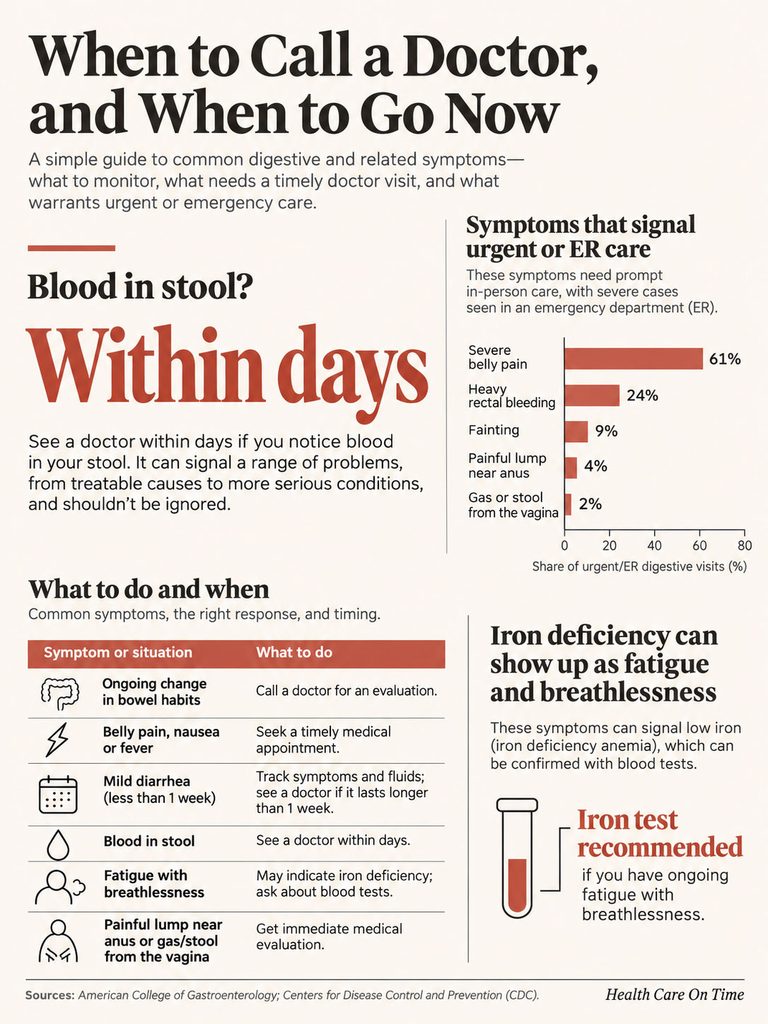
Some situations can’t wait for a routine appointment. Severe belly pain with a swollen, hard belly, repeated vomiting or no bowel movements or gas can mean a blockage. Heavy rectal bleeding, fainting or a racing heart needs emergency care. A painful, swollen lump near the anus with fever can be an abscess.
| Situation | What to do | Why |
| Diarrhea or cramps for under a week, no blood, no fever | Track symptoms and period dates; stop NSAIDs if you can | Many short bouts are infections or food-related |
| Diarrhea past 1 to 2 weeks, or night-time diarrhea | Book a primary care visit; ask about calprotectin | Ongoing diarrhea needs a cause |
| Any blood in the stool | See a doctor within days | Blood is a key sign of inflammation or other bowel disease |
| Tiredness with breathlessness or pale skin | Ask for a blood count and iron tests | Iron deficiency is common in IBD |
| Painful lump, drainage or fever near the anus | Same-day or urgent care | Possible abscess or fistula |
| Gas or stool from the vagina | Prompt gynecology or GI visit | Possible rectovaginal fistula |
| Severe pain, swollen belly, vomiting, heavy bleeding or fainting | Go to the ER or call 911 | Possible blockage, perforation or major bleeding |
What Women Ask After a Diagnosis
Pregnancy, birth control and long-term health usually come up within the first few visits.
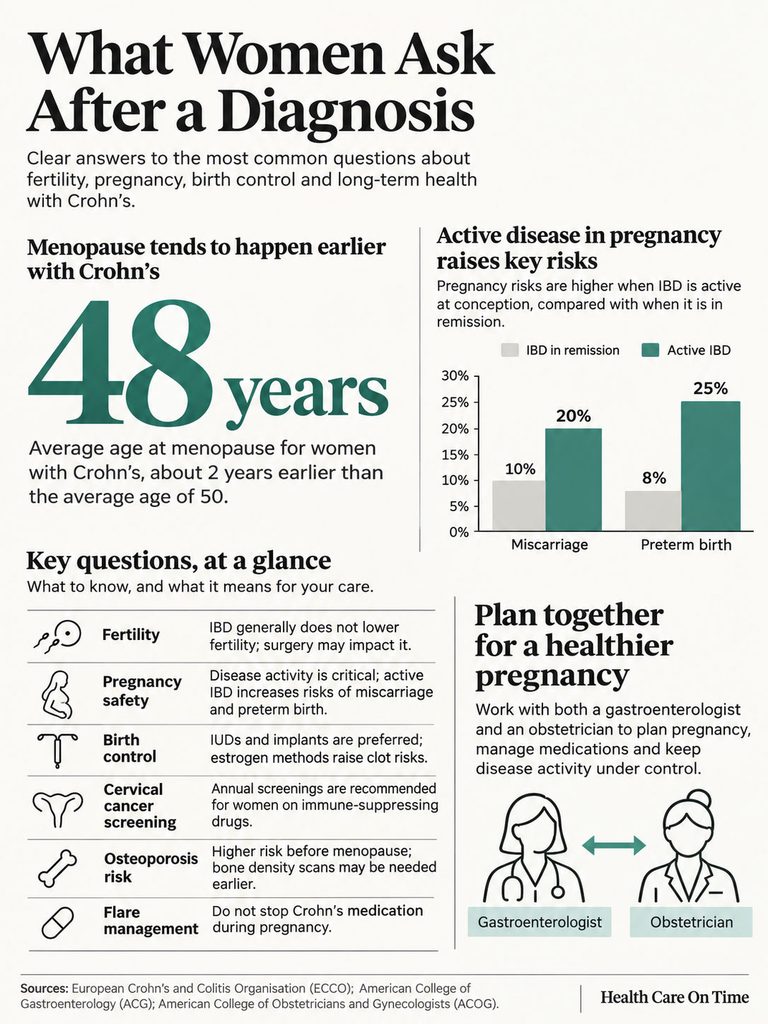
Does Crohn’s affect fertility?
In most cases IBD doesn’t lower fertility, though surgery that removes the rectum can.
Is pregnancy safe with Crohn’s?
Disease activity matters more than the diagnosis. Active IBD carries up to three times the risk of miscarriage, preterm birth and low birth weight compared with disease in remission, and about one-third of women flare in the months after delivery. Stopping Crohn’s medicine during pregnancy isn’t recommended, because a flare is often the bigger risk, so the aim is to get the disease quiet first and plan with both your gastroenterologist and your obstetrician.
Which birth control works best?
Estrogen-containing methods raise the risk of blood clots, though there’s no evidence they make the disease itself worse. IUDs and implants are generally the first choices.
What about Pap tests, bones and menopause?
Women with IBD who take immune-suppressing drugs should have cervical cancer screening every year under the American College of Gastroenterology’s 2017 preventive care guideline, and get vaccines such as HPV on the usual national schedule. Osteoporosis risk is higher even before menopause, especially with steroid use, low vitamin D or poor nutrition, so a bone density scan may come earlier than usual. Menopause tends to come a little sooner with Crohn’s as well, at 48 on average versus 50.
Keeping a Symptom Log Before Your Visit
Doctors see a lot of patients with vague gut complaints, and a clear record of what’s been happening often moves things along faster than any description you can give from memory. Two or three weeks of notes is enough to show a pattern.
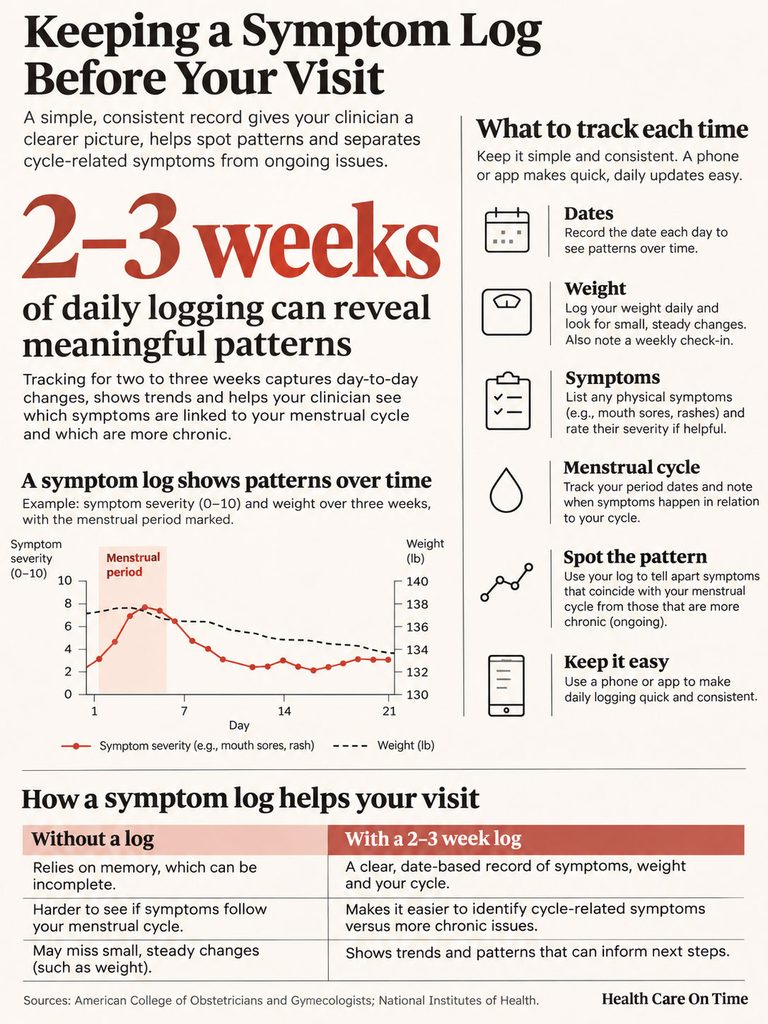
A simple log on your phone works. Each day, jot down:
- Number of bowel movements, and whether any woke you at night
- Any blood or mucus you saw
- Where the pain was, roughly how bad (0 to 10), and whether it came after eating
- Your period days, flow and cramps
- Energy level, appetite and any fever
- Pain relievers you took, with the dose and time
Weigh yourself once a week on the same scale. Small, steady drops count. If you’ve had mouth sores, a rash, red eyes or sore joints, add those too, even if they feel like a separate issue.
The period column matters more than people expect. If the diarrhea and cramps show up only on the first two days of your cycle every month, that points one way. If they started around your period and have now spread across the whole month, that points another. Without dates, both stories sound the same in an exam room.
Questions to Bring to Your Appointment
Bring these written down, along with the symptom log and a list of every medicine and supplement you take, including over-the-counter pain relievers.
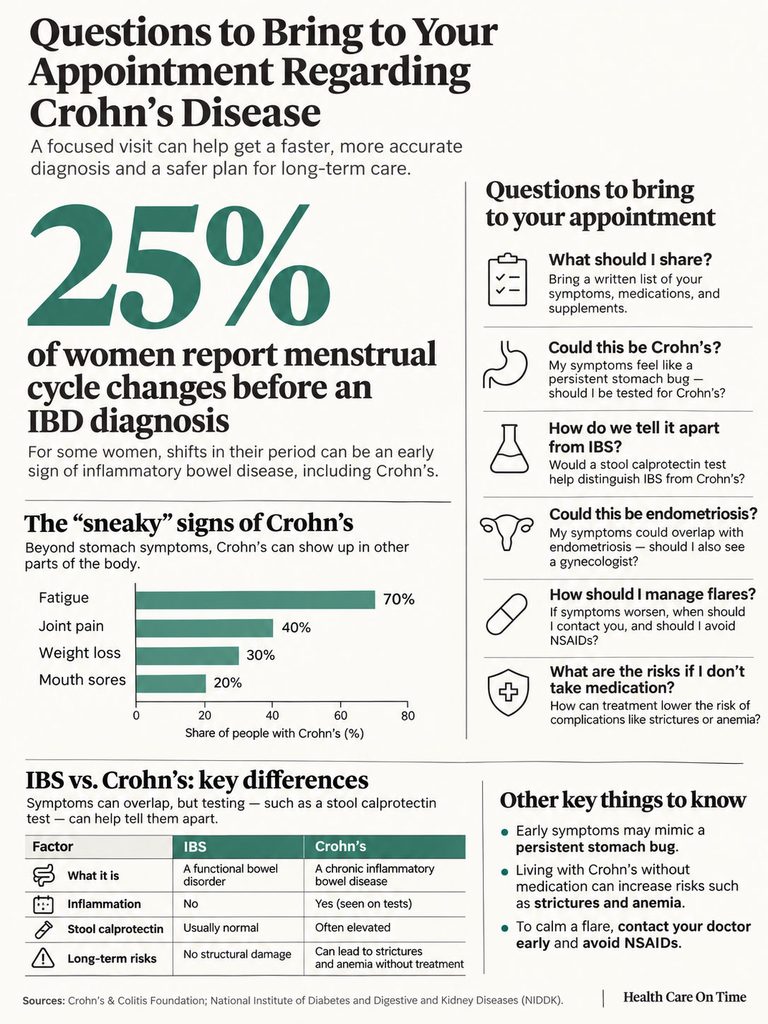
- “Could this be Crohn’s and not just bad periods?”
- “Has IBD been ruled out, and which test showed that?”
- “Would a stool calprotectin test help?”
- “Are iron and B12 worth checking, even if the blood count looks normal?”
- “Is it OK to keep taking ibuprofen for cramps while we sort this out?”
- “Could the painful sex and the infections that keep coming back be connected to the bowel?”
- “Who should see this next, a gastroenterologist or a gynecologist, and how soon?”
Frequently Asked Questions
What are sneaky signs of Crohn’s disease?
The easy-to-miss ones are tiredness from low iron, mouth sores that keep coming back, joint pain, red eyes, tender bumps on the shins, weight loss without trying, and pain or drainage near the anus. In women, period changes and gut symptoms that flare around the period are also common early clues. Any one of them can have another cause; it’s the combination with ongoing gut trouble that should get you an appointment.
What does Crohn’s feel like in the beginning?
For many people it feels like a stomach bug that never fully leaves: cramping after meals, loose stools, low energy and less appetite, with good weeks in between.
Can Crohn’s disease change your period?
Yes. In one study, 25% of women had a change in cycle length and 21% a change in bleeding days in the year before their IBD diagnosis. Painful periods are common too, and gut symptoms often get worse around the period. Cycles tend to become more regular once the disease is treated.
Can you live with Crohn’s disease without medication?
There’s no single answer, because the plan depends on where the inflammation is and how active it is. Leaving active inflammation untreated, though, raises the risk of strictures, fistulas, anemia and malnutrition. Women who are pregnant or planning a pregnancy are generally advised not to stop medicine, because flares carry more risk than most Crohn’s drugs. Any change should be made with your gastroenterologist.
How do you calm a Crohn’s flare?
Call your doctor early instead of waiting it out, since flares are usually treated with medicine. While you wait, avoid NSAIDs like ibuprofen and naproxen, drink enough fluids if you have diarrhea, and don’t smoke. Fever, severe pain, blood or vomiting needs same-day care.
Is it IBS or Crohn’s?
IBS doesn’t cause bleeding, fever, weight loss, anemia or night-time diarrhea, and it doesn’t show inflammation on tests. A stool calprotectin test is often used to help tell them apart.
Can Crohn’s be mistaken for endometriosis?
Yes, and the reverse happens too. Both can cause pelvic pain, painful bowel movements and symptoms that track with your cycle. Women with endometriosis also develop Crohn’s more often than other women, and that extra risk lasts for decades, so having one is no protection against the other. If you have both pelvic pain and ongoing gut symptoms, ask whether both conditions have been checked, and whether you need both a gynecologist and a gastroenterologist involved.
Is Crohn’s genetic?
Partly. More than 200 genes have been linked to it, and as many as 1 in 5 people with Crohn’s have a family member with the disease. Genes raise the risk but don’t decide it.
Medical disclaimer: This article is for general information only and isn’t a substitute for advice from a doctor who knows your history. Symptoms of Crohn’s disease overlap with many other conditions, and only a clinician can diagnose them. If you have severe belly pain, heavy bleeding, fainting or a high fever, call 911 or go to the nearest emergency room.
References
- Mayo Clinic. Crohn’s disease: Symptoms and causes. https://www.mayoclinic.org/diseases-conditions/crohns-disease/symptoms-causes/syc-20353304
- Cleveland Clinic. Crohn’s disease. https://my.clevelandclinic.org/health/diseases/9357-crohns-disease
- Dahlhamer JM, Terlizzi EP. Inflammatory Bowel Disease Among Adults Age 18 and Older: United States, 2023-2024. NCHS Health E-Stat 122, August 2026. https://cdc.gov/nchs/data/hestat/hestat122.htm
- Saha S, Zhao YQ, Shah SA, et al. Menstrual cycle changes in women with inflammatory bowel disease: a study from the Ocean State Crohn’s and Colitis Area Registry. Inflamm Bowel Dis. 2014;20(3):534-540. https://pubmed.ncbi.nlm.nih.gov/24451220/
- Ghoneim S, Kochar B. Understanding Inflammatory Bowel Disease in Women From Puberty to Menopause. Gastroenterol Hepatol. 2025;21(11). https://www.gastroenterologyandhepatology.net/archives/november-2025/understanding-inflammatory-bowel-disease-in-women-from-puberty-to-menopause/
- Sempere L, Bernabeu P, Cameo J, et al. Gender biases and diagnostic delay in inflammatory bowel disease: multicenter observational study. Inflamm Bowel Dis. 2023;29(12):1886-1894. https://pubmed.ncbi.nlm.nih.gov/36719111/
- Park SH, Aniwan S, Harmsen WS, et al. Update on the natural course of fistulizing perianal Crohn’s disease in a population-based cohort. Inflamm Bowel Dis. 2019;25(6):1054-1060. https://mayoclinic.elsevierpure.com/en/publications/update-on-the-natural-course-of-fistulizing-perianal-crohns-disea/
- Loveikyte R, Boer M, van der Meulen CN, et al. Anemia and iron deficiency in outpatients with inflammatory bowel disease: ubiquitous yet suboptimally managed. J Clin Med. 2022;11(22):6843. https://cris.maastrichtuniversity.nl/en/publications/anemia-and-iron-deficiency-in-outpatients-with-inflammatory-bowel
- Jess T, Frisch M, Jørgensen KT, et al. Increased risk of inflammatory bowel disease in women with endometriosis: a nationwide Danish cohort study. Gut. 61(9):1279. https://gut.bmj.com/content/61/9/1279
- Severs M, Spekhorst LM, Mangen MJJ, et al. Sex-related differences in patients with inflammatory bowel disease: results of 2 prospective cohort studies. Inflamm Bowel Dis. 2018;24(6):1298-1306. https://researchinformation.umcutrecht.nl/en/publications/sex-related-differences-in-patients-with-inflammatory-bowel-disea/
- Lacy BE, Pimentel M, Brenner DM, et al. ACG Clinical Guideline: Management of Irritable Bowel Syndrome. Am J Gastroenterol. 2021;116(1):17-44. https://pubmed.ncbi.nlm.nih.gov/33315591/
- Farraye FA, et al. ACG Clinical Guideline: Preventive Care in Inflammatory Bowel Disease. Am J Gastroenterol. 2017 (summary). https://www.healio.com/news/gastroenterology/20170216/acg-issues-new-guidelines-for-preventive-care-in-ibd-patients
- Johns Hopkins Medicine. Crohn’s and Ulcerative Colitis Pose Special Concerns for Women. https://www.hopkinsmedicine.org/news/articles/2020/05/crohns-and-ulcerative-colitis-pose-special-concerns-for-women