Abdominal pain sends more American adults to the emergency room than any other symptom. CDC health data shows chest and abdominal pain are the most common reasons people aged 15 and older visit the ED. Most left side abdominal pain turns out to be something manageable like gas or constipation. Now and then it signals a problem that needs same-day care, and knowing the difference matters.
Table of Contents
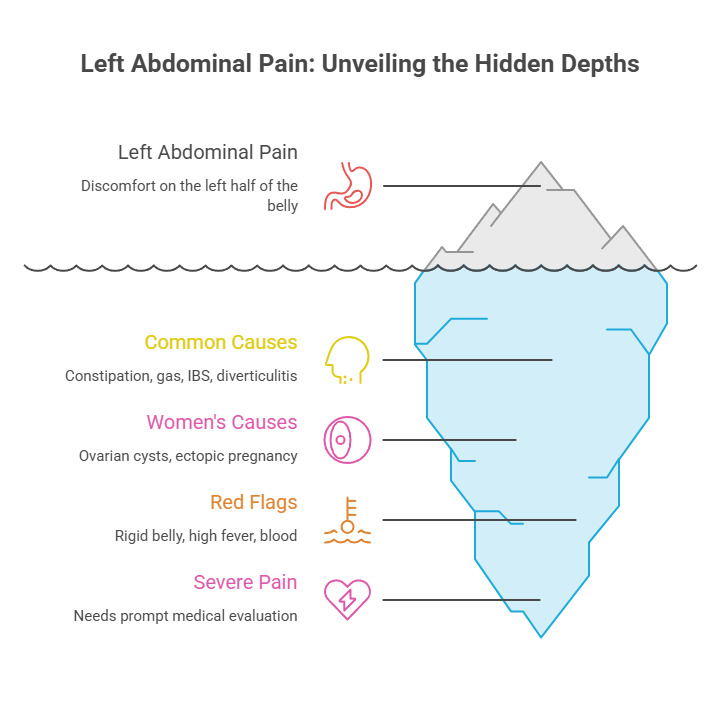
Quick answer: Left side abdominal pain has nine common causes. In the lower left, the usual culprits are diverticulitis, constipation, trapped gas, IBS, and inflammatory bowel disease. In the upper left, think gastritis, spleen problems, or pancreatitis. Kidney stones can hit either area. Sudden, severe pain with fever, vomiting, or blood is a red flag that means go to the ER.
At a glance
- Your left abdomen splits into an upper left region (spleen, stomach, pancreas tail, left kidney) and a lower left region (colon, left ureter, left ovary in women).
- Diverticulitis is the top cause of lower left pain in adults over 40.
- Constipation, gas, and IBS cause most mild, on-and-off left side stomach pain.
- Women have extra possible causes, including ovarian cysts and ectopic pregnancy.
- Red flags include a rigid belly, high fever, blood in stool or urine, fainting, and pain after an injury.
- Any severe pain that will not ease deserves prompt medical evaluation.
Pain in the left side of your abdomen means discomfort anywhere on the left half of your belly, from the bottom of your ribs down to your pelvis. It can feel like a dull ache, a sharp stab, cramping in waves, or a burning that will not quit.
The most common causes, in short, are:
- Constipation and trapped gas
- Diverticulitis
- Irritable bowel syndrome (IBS)
- Kidney stones or a kidney infection
- Gastritis or a peptic ulcer
- Spleen enlargement or injury
- Inflammatory bowel disease (Crohn’s or ulcerative colitis)
- Pancreatitis
- Reproductive causes in women, such as ovarian cysts
Where the pain sits, how fast it started, and what comes with it all help point to the cause. This guide covers the anatomy, the nine leading causes, what changes for women and men, the warning signs that mean emergency care, and the tests doctors use.
Where Left Side Abdominal Pain Comes From
Doctors often divide the belly into four quadrants to zero in on a cause. Cleveland Clinic groups the abdomen into four parts, since pain in a given quadrant hints at which organ is involved. The left half splits into an upper left and a lower left region, each packed with different organs.
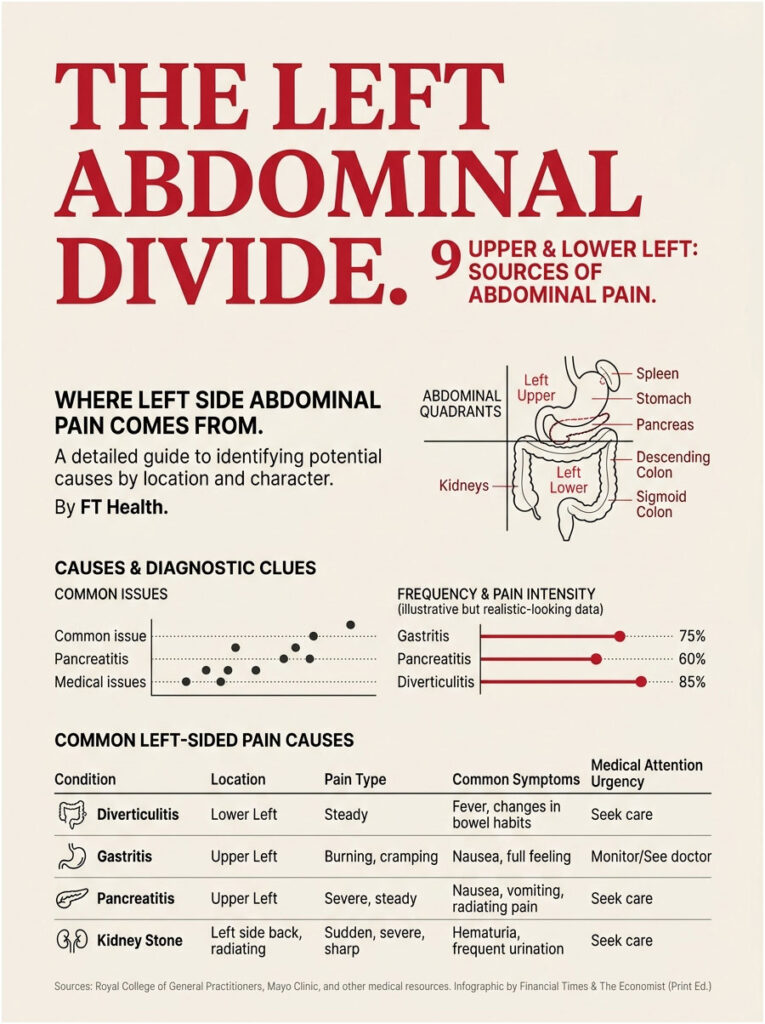
Knowing what lives where turns a vague ache into a shorter list of suspects. Our medical reviewers note that pinpointing the exact spot and character of the pain is usually the first thing a clinician does at the bedside.
What Is in Your Upper Left Abdomen
The upper left holds the spleen, the top of the stomach, the tail of the pancreas, the upper part of the left kidney, and the bend of the colon called the splenic flexure. The base of the left lung sits just above the diaphragm here.
Upper left abdominal pain often traces back to the stomach (gastritis, ulcers), the pancreas (pancreatitis), or the spleen (enlargement or injury). Sharp pain under the left ribs that spikes with a deep breath can even be referred from the chest.
What Is in Your Lower Left Abdomen
The lower left is mostly bowel. It holds the descending and sigmoid colon, the left ureter (the tube from the left kidney to the bladder), and in women the left ovary and fallopian tube. The left groin sits at the bottom edge.
Because the sigmoid colon lives here, digestive trouble drives most lower left pain. Cleveland Clinic notes that lower left pain is most often linked to diverticulosis and diverticulitis, since those pouches usually form in the lower left colon.
What the Type of Pain Tells You
The character of the pain is a clue in itself. Cramping that comes and goes and eases after you pass gas or stool usually points to gas, constipation, or IBS.
Steady, sharp pain that builds and stays put leans toward inflammation like diverticulitis. Sudden, severe, wave-like pain that makes it hard to sit still suggests a kidney stone. A burning, gnawing ache high on the left often means the stomach.
A dull ache under the left ribs can signal the spleen, while pain that bores through to the back raises the question of the pancreas. Across the patients we serve, describing the pain accurately speeds up the right diagnosis.
The table below maps the nine most common causes to their location, feel, and urgency, so you can match your symptoms to a likely cause fast.
| Cause | Where it hurts | Typical pain character | Common companion symptoms | Urgency |
| Diverticulitis | Lower left | Steady, sharp, worsening | Fever, nausea, change in bowel habits | See a doctor promptly; ER if severe or high fever |
| Constipation and trapped gas | Lower left, can shift | Cramping, bloating, comes and goes | Hard stools, relief after passing gas or stool | Home care |
| Irritable bowel syndrome (IBS) | Lower left, variable | Cramping that eases after a bowel movement | Bloating, alternating diarrhea and constipation | Doctor, non-urgent |
| Kidney stone or infection | Left flank to lower left | Sudden, severe, wave-like | Blood in urine, painful urination, fever | ER if severe pain, fever, or vomiting |
| Gastritis or peptic ulcer | Upper left to mid-upper | Burning, gnawing | Nausea, fullness, changes with eating | Doctor; ER for black stools or vomiting blood |
| Enlarged or injured spleen | Upper left, under ribs | Dull ache; sudden severe if ruptured | Early fullness, left shoulder pain | ER for sudden severe pain, especially after injury |
| Inflammatory bowel disease | Lower left, variable | Cramping, chronic, flares | Bloody diarrhea, weight loss, fatigue | Doctor; ER for a severe flare |
| Pancreatitis | Upper middle to upper left, radiates to back | Severe, steady, boring | Nausea, vomiting, worse after eating or alcohol | ER |
| Left-sided appendicitis (rare) or hernia | Lower left | Sharp and localized; hernia shows a bulge | Fever and nausea (appendix); visible lump (hernia) | ER if severe, with fever, or a stuck hernia |
Left Side Abdominal Pain in the US: By the Numbers
Real numbers put your symptoms in context. Several of these conditions are far more common than people expect, which is one reason a quick internet search rarely settles the question. Patients booking tests with us often ask how likely a given cause really is.
| Condition or metric | US figure | Source |
| Abdominal pain as an ER reason | Most common reason adults visit the ER | CDC / NCHS |
| Diverticulosis in adults over 60 | About 50% of adults | NIDDK |
| Progression to diverticulitis | About 10% to 25% of people with diverticulosis | NIDDK |
| Kidney stones | About 1 in 10 US adults | NIDDK |
| Irritable bowel syndrome | About 12% of US adults | NIDDK |
| Inflammatory bowel disease | About 3 million US adults | CDC |
Diverticulosis grows more common with age, rising from about 10% in people under 40 to roughly 50% in those over 60, and about 10% to 25% of those with it develop diverticulitis. Kidney stones affect roughly one in ten people in the US. Figures like these explain why lower left pain in an older adult so often traces back to the colon.
9 Common Causes of Left Side Abdominal Pain
Here are the nine causes clinicians see most, ordered roughly from common and mild toward serious. Your pattern of symptoms matters more than any single sign.
Diverticulitis
Diverticula are small pouches that bulge from the colon wall, most often in the lower left. When one becomes inflamed or infected, you get diverticulitis: steady lower left pain that builds over a day or two.
Fever, nausea, and a shift in bowel habits often ride along. Diverticulitis commonly affects the lower left abdomen and causes steady, often severe pain. Picture a 55-year-old with two days of worsening lower left pain and a low fever; that is a textbook presentation. Severe cases can form an abscess or perforate, so pain plus fever warrants same-day care. See Mayo Clinic for more.
Constipation and Trapped Gas
The most common reason your lower left aches is simple: stool and gas backing up in the sigmoid colon. Constipation brings cramping, bloating, and a full feeling that eases once things move along.
Trapped gas can stretch the bowel enough to cause a surprisingly sharp jab. Patients commonly ask us whether gas can really hurt that much, and the answer is yes. Relief after passing gas or having a bowel movement is a reassuring sign that nothing serious is going on.
Irritable Bowel Syndrome (IBS)
IBS is a long-term gut disorder that brings cramping, bloating, and bowel habits that swing between diarrhea and constipation, with pain that often eases after you go. One physician calls IBS the most common and fairly harmless kind of left side pain, tied to normal gas produced during digestion in a sensitive gut.
IBS affects about 12% of US adults. Stress and trigger foods can spark flares, so a symptom diary helps. It is a diagnosis your doctor reaches after ruling out other conditions.
Kidney Stones and Kidney Infection
A stone forming in the left kidney or lodging in the left ureter can cause sudden, severe pain that starts in the flank and radiates toward the lower left and groin. The pain often rolls in waves as the stone moves.
Blood in the urine, painful urination, and nausea are common. A kidney infection adds fever and chills. Any severe, wave-like flank pain with fever or vomiting is an ER visit. A urine test plus a kidney function panel helps confirm the cause quickly.
Gastritis and Peptic Ulcers
Gastritis is inflammation of the stomach lining, and it usually causes burning or gnawing pain in the upper left or mid-upper belly. A peptic ulcer can feel much the same. Gastritis causes pain, cramping, and tightness in the upper abdomen that can arrive before or after a meal.
Nausea, fullness, and pain that changes with eating are typical. Warning signs of a bleeding ulcer include black, tarry stools or vomit that looks like coffee grounds, both of which need emergency care right away.
Enlarged or Injured Spleen
The spleen sits high on the left under your ribs. When it enlarges from infection, liver disease, or a blood condition, you may feel a dull upper left ache and fill up quickly at meals. An enlarged spleen can result from infections, liver disease, and certain cancers.
A ruptured spleen is a true emergency, often after a blow to the abdomen from a crash or contact sport. Sudden severe upper left pain, especially with pain spreading to the left shoulder, means call 911. Our medical team has seen how easily an injury like this gets shrugged off until it turns dangerous.
Inflammatory Bowel Disease (Crohn’s and Ulcerative Colitis)
IBD is a chronic condition where the gut lining becomes inflamed, producing cramping lower left pain that flares and settles over time. Ulcerative colitis and Crohn’s disease can cause lower left pain along with fatigue, bloody diarrhea, and unintended weight loss.
About 3 million US adults live with IBD. Because it can look like IBS early on, blood tests for inflammation and a stool test are common first steps. Persistent symptoms with blood or weight loss deserve a workup.
Pancreatitis
The tail of the pancreas reaches into the upper left, so inflammation there can cause severe, steady pain that bores straight through to the back. Pancreatitis can cause severe left upper abdominal pain that radiates to the back.
Nausea, vomiting, and pain that worsens after eating or drinking alcohol are classic. Pancreatitis can escalate fast and usually means a hospital visit. More detail is at Mayo Clinic.
Left-Sided Appendicitis and Hernia
Your appendix normally sits on the right, so appendicitis usually causes right-sided pain. A small number of people are born with mirrored organs, so it can strike the left. Left-sided appendicitis is an uncommon cause worth considering, since some people are born with the appendix on the left.
A hernia in the left groin can also cause lower left pain, often with a visible bulge that grows when you cough or lift. A hernia that becomes trapped and tender is an emergency. Sharp, localized lower left pain with fever should be checked without delay.
Less Common but Important Causes
A few causes are easy to overlook, yet they change the plan. Shingles can cause burning left side pain a day or two before a rash appears. Shingles comes from the same virus that causes chickenpox and can cause pain and a rash that wraps around one side of the body.
Muscle strain or a rib injury can mimic organ pain. Pain that worsens with movement or pressing on the spot, and that has no fever or bowel changes, often points here.
Referred pain matters too. Several conditions in the chest can refer pain to the left abdomen. In older adults, clinicians also weigh serious vascular causes such as mesenteric ischemia and abdominal aortic aneurysm. Sudden, severe belly or back pain in an older adult is never something to wait out.
Left Side Pain in Women
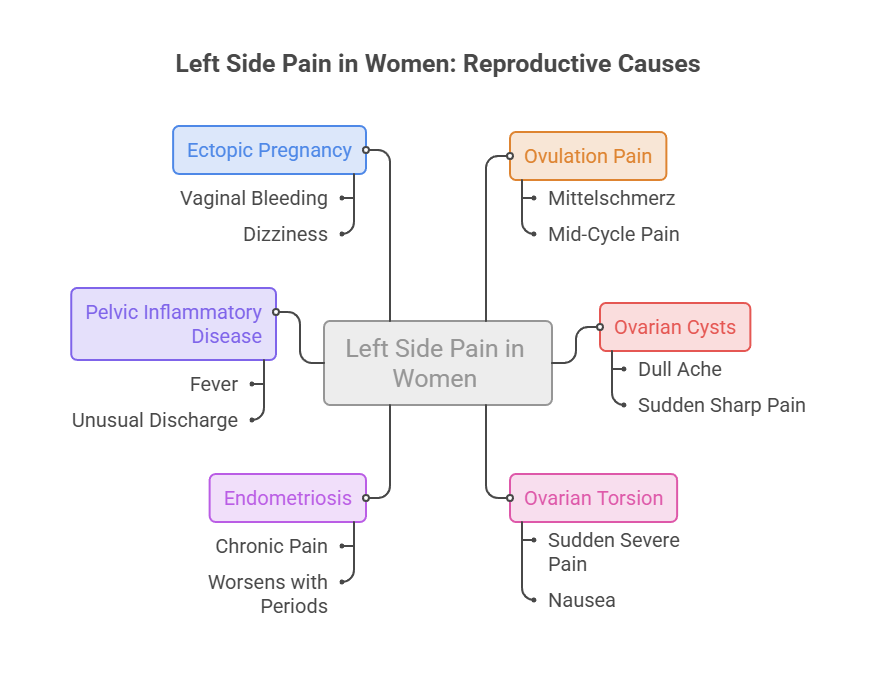
Women have extra possible sources because the left ovary and fallopian tube sit in the lower left. In cases reviewed by our medical team, reproductive causes are easy to miss when the pain gets blamed on the gut.
Ovulation Pain, Ovarian Cysts, and Torsion
Some women feel a sharp, one-sided twinge around mid-cycle called mittelschmerz. When the left ovary releases an egg, the pain lands on the left and usually fades within a day.
Ovarian cysts can cause a dull ache or a sudden sharp pain if they rupture. Ovarian torsion, where the ovary twists and loses its blood supply, causes sudden severe pain with nausea. Ovarian torsion is a medical emergency that twists the ovary on its support tissue and causes severe pain on the affected side.
Endometriosis and Pelvic Inflammatory Disease
Endometriosis, where uterine-type tissue grows outside the uterus, can cause chronic lower left pain that worsens with periods. Pelvic inflammatory disease (PID), an infection of the reproductive organs, brings pain with fever, unusual discharge, and pain during sex.
Both need a gynecologist’s evaluation. Untreated PID can harm fertility, so ongoing pelvic pain with fever should not wait for a routine appointment.
Ectopic Pregnancy
An ectopic pregnancy grows outside the uterus, usually in a fallopian tube, and it is a medical emergency. If you are or could be pregnant and have one-sided lower pain with vaginal bleeding, dizziness, or shoulder-tip pain, seek care at once.
An ectopic pregnancy occurs outside the uterus, most often in the fallopian tubes. A pregnancy blood test and an ultrasound confirm it. More detail is at Mayo Clinic.
Left Side Pain in Men
Men share most of the digestive and kidney causes above, plus a couple of their own. A left inguinal hernia is more common in men and can cause lower left and groin pain, sometimes with a bulge.
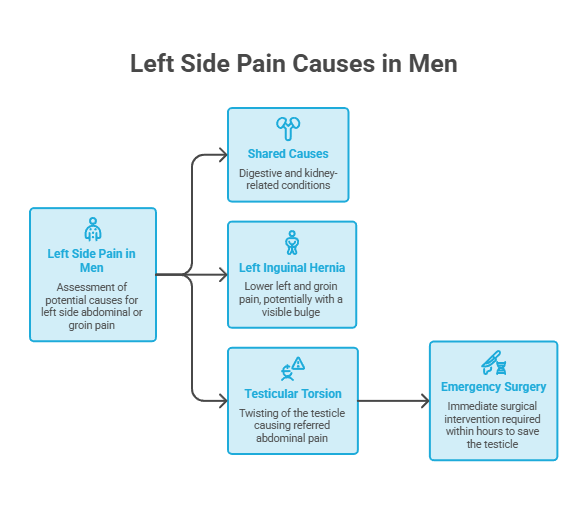
Testicular torsion, a twisting of the testicle, can refer sharp pain up into the lower left abdomen along with severe scrotal pain and swelling. Testicular torsion is a medical emergency that needs surgery within hours to save the testicle.
When Is Left Side Pain an Emergency?
Most left side abdominal pain is not dangerous, but some patterns mean you should stop and get help. Our lab partners report that early evaluation of severe pain often changes the outcome.
Treat these as red flags and seek emergency care:
- Sudden, severe pain that will not let you get comfortable
- A hard, rigid, or extremely tender belly
- High fever alongside the pain
- Vomiting that will not stop, or vomiting blood
- Black, tarry stools or blood in your stool
- Blood in your urine with severe flank pain
- Fainting, dizziness, or a racing heart
- Pain after a fall, crash, or blow to the abdomen
- One-sided pain with bleeding when pregnant or possibly pregnant
The table below turns symptoms into a clear next step. When you are unsure, err toward being seen.
| Your situation | What it could mean | What to do |
| Mild cramp and bloating that eases after passing gas or stool | Gas or constipation | Home care: fluids, fiber, gentle movement |
| Recurring cramps tied to bowel changes, no red flags | IBS or mild diverticular disease | See your doctor within a week |
| Lower left pain with fever and nausea | Possible diverticulitis or infection | Call your doctor today; ER if pain is severe |
| Sudden severe pain, blood in urine, cannot get comfortable | Possible kidney stone | Go to the ER |
| Rigid belly, high fever, fainting, vomiting blood, or black stools | Possible perforation, bleed, or serious infection | Call 911 or go to the ER now |
| Possible pregnancy plus one-sided pain and bleeding or dizziness | Possible ectopic pregnancy | Emergency: go to the ER immediately |
How Doctors Diagnose the Cause
A clinician starts with your story: where it hurts, when it started, what makes it better or worse, and what else you feel. A physical exam checks for tenderness, guarding, and a bulge. From there, targeted tests fill in the picture.
Blood and urine tests sort inflammation, infection, and organ stress. A complete blood count can flag infection or a spleen problem, while inflammatory markers such as CRP point toward IBD or diverticulitis.
For suspected pancreatitis, doctors measure pancreatic enzymes like lipase and amylase. A urine test and kidney function panel help catch stones and infection, and if pregnancy is possible, a blood pregnancy test rules out an ectopic. A stool test can reveal bleeding or infection in the gut.
Imaging seals the diagnosis when it is needed. A CT scan is the workhorse for diverticulitis, stones, and unclear severe pain, showing inflammation and blockages in detail. An ultrasound is often first for ovarian, gallbladder, and pregnancy-related causes because it avoids radiation. Booking the right labs early saves time, and HealthCareOnTime offers many of these tests so your doctor gets answers faster.
What You Can Safely Do at Home
If your pain is mild, carries no red flags, and matches gas, constipation, or a known IBS pattern, home care is reasonable for a day or two. Rest your stomach and go easy on heavy, greasy, or spicy meals.
Gentle steps that often help:
- Drink plenty of water and warm fluids
- Add fiber slowly (fruit, vegetables, whole grains) for constipation
- Use a heating pad on low for cramping
- Take a short walk to help move gas along
- Try over-the-counter gas relief or a stool softener if it fits your situation
A few things to avoid matter just as much. Skip strong painkillers that can hide a worsening problem, and avoid aspirin or ibuprofen if you suspect a stomach ulcer. Do not put heat on a belly that might be appendicitis. If pain climbs, a fever appears, or symptoms last beyond two days, stop home care and see a doctor.
How to Lower Your Risk
You cannot prevent every cause, but daily habits shift the odds on the most common ones. A fiber-rich diet supports the colon and helps head off both constipation and diverticular flares.
Small changes add up:
- Aim for 25 to 35 grams of fiber a day from whole foods
- Stay well hydrated, which also helps prevent kidney stones
- Move most days to keep the bowel regular
- Go easy on alcohol, which stresses the pancreas and stomach
- Keep up with recommended screenings, including colon cancer screening starting at age 45
Across the patients we serve, the people who track their symptoms and keep routine checkups tend to catch problems earlier. Prevention will not replace medical care, but it cuts how often left side abdominal pain shows up at all.
Frequently Asked Questions
What organ is on your lower left side?
The lower left abdomen mainly holds the descending and sigmoid colon, the left ureter, and, in women, the left ovary and fallopian tube. Because the sigmoid colon sits here, most lower left pain is digestive, with diverticulitis and constipation topping the list.
When should you worry about left side abdominal pain?
Worry when pain is sudden and severe, when your belly turns rigid, or when you have a high fever, blood in stool or urine, nonstop vomiting, fainting, or pain after an injury. One-sided pain with bleeding in a pregnant woman is an emergency. Any of these means seek care now.
Can gas cause severe left side pain?
Yes. Trapped gas can stretch the sigmoid colon enough to cause a sharp, cramping pain in the lower left that feels alarming. The telltale sign is relief after passing gas or having a bowel movement. If the pain keeps building or comes with fever, it is probably not just gas.
What does diverticulitis pain feel like?
Diverticulitis usually brings steady, sharp pain in the lower left that builds over a day or two, unlike the come-and-go cramping of gas. It often pairs with fever, nausea, and a change in bowel habits. This pattern deserves prompt medical care, since it can get worse.
Is left side abdominal pain a sign of appendicitis?
Rarely. The appendix normally sits on the right, so appendicitis usually causes right-sided pain. A small number of people are born with mirrored organs, so left-sided appendicitis is possible. Sharp, worsening lower left pain with fever and nausea should be evaluated to rule it out.
Can kidney stones cause left side abdominal pain?
Yes. A stone in the left kidney or ureter can cause sudden, severe, wave-like pain that starts in the flank and travels toward the lower left and groin. Blood in the urine and painful urination are common. Severe stone pain with fever or vomiting is an ER visit.
What causes left side abdominal pain in females?
Women share every digestive and kidney cause, plus reproductive ones on the left: ovulation pain, ovarian cysts, ovarian torsion, endometriosis, pelvic inflammatory disease, and ectopic pregnancy. One-sided pain with bleeding, fever, or dizziness, especially if pregnancy is possible, needs urgent evaluation.
How long should abdominal pain last before you see a doctor?
Mild pain that eases within a day or two is often fine to watch at home. See a doctor if pain lasts more than two days, keeps returning, or worsens. Severe pain, fever, or any red-flag symptom means you should be seen right away, not later.
Can stress or anxiety cause left side stomach pain?
Yes. Stress and anxiety can trigger or worsen gut symptoms, especially in people with IBS, leading to cramping and bloating on the left. The gut and brain are closely linked. Even so, do not assume stress is the cause until red flags and other conditions are ruled out.
What relieves left side abdominal pain fast?
For mild gas or constipation, warm fluids, a low heating pad, gentle walking, and passing gas or stool often help within an hour or two. Over-the-counter gas relief may ease pressure. If pain is severe or comes with fever, vomiting, or blood, skip home remedies and get care.
Is left side abdominal pain ever a sign of cancer?
It can be, though this is far from the most common cause. Colon, pancreatic, and ovarian cancers can produce left side pain, often with weight loss, changes in bowel habits, or bleeding. Persistent pain with these signs, or a strong family history, is a reason to get checked promptly.
Should you go to the ER for left side abdominal pain?
Go to the ER for sudden severe pain, a rigid belly, high fever, blood in stool or urine, nonstop vomiting, fainting, pain after an injury, or one-sided pain with bleeding in pregnancy. When pain is mild and eases with home care, urgent care or a doctor visit is usually enough.
Disclaimer: This article is for general education and is not a substitute for professional medical advice, diagnosis, or treatment. Always talk with a qualified healthcare provider about symptoms that concern you. If you think you have a medical emergency, call 911 or go to the nearest emergency room.
References
- Cleveland Clinic – Left Side Abdominal Pain
- NIDDK – Diverticular Disease (Diverticulosis and Diverticulitis)
- NIDDK – Kidney Stones
- NIDDK – Irritable Bowel Syndrome (IBS)
- CDC / NCHS – Emergency Department Visits for Chest Pain and Abdominal Pain
- CDC – Inflammatory Bowel Disease (IBD)
- Mayo Clinic – Diverticulitis
- Mayo Clinic – Pancreatitis
- Mayo Clinic – Ectopic Pregnancy