More than one in five American children now has obesity. That is not a projection or a modeling estimate. It comes from measured heights and weights collected by federal researchers, and it is the highest figure recorded since the survey began in the early 1970s. The American Academy of Pediatrics calls obesity a chronic disease. Federal agencies call it a crisis. Yet fewer than two in a hundred eligible teenagers receive the medication that guidelines say they qualify for. Something in that arithmetic does not add up.
Table of Contents
Quick Answer: Childhood obesity is taken seriously in language and guidelines, and not seriously in funding, screening, or access. About 21.1% of US children ages 2 to 19 have obesity, a record high, yet fewer than 2% of eligible adolescents receive medication treatment and most families never reach the 26-hour behavioral program listed as first-line care. The gap sits between what pediatricians recommend and what the system delivers.
At a Glance
• Obesity affects 21.1% of US children and adolescents ages 2 to 19, including 7.0% with severe obesity, up from 5.2% in the early 1970s.
• Another 15.1% fall in the overweight range, meaning more than a third of American children carry weight above the healthy band for their age.
• Roughly one in three US teens ages 12 to 17 already has prediabetes, about 8.4 million adolescents.
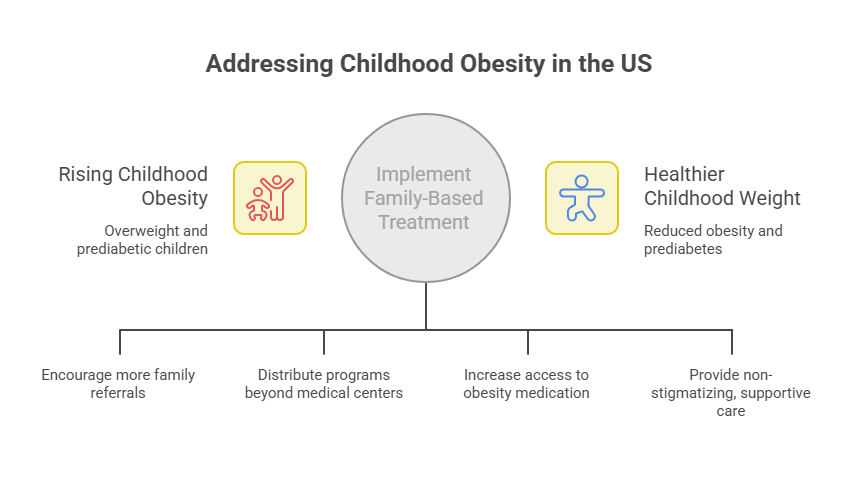
• Guidelines call for at least 26 hours of family-based treatment, yet referrals stay infrequent and programs cluster in academic medical centers.
• Under 2% of eligible adolescents receive obesity medication, despite two FDA-approved options for ages 12 and older.
• Weight stigma and eating disorder risk are documented harms. Serious treatment means non-stigmatizing care, never pressure or restriction.
• Family-based behavioral treatment remains the evidence-backed foundation, with medication and surgery reserved for specific clinical situations.
What Childhood Obesity Actually Is, and Why the Label Matters
Most parents assume obesity in children is something you can see across a dinner table. It usually isn’t, at least not reliably, and that single misconception delays more families than any other factor.
How Pediatricians Measure It
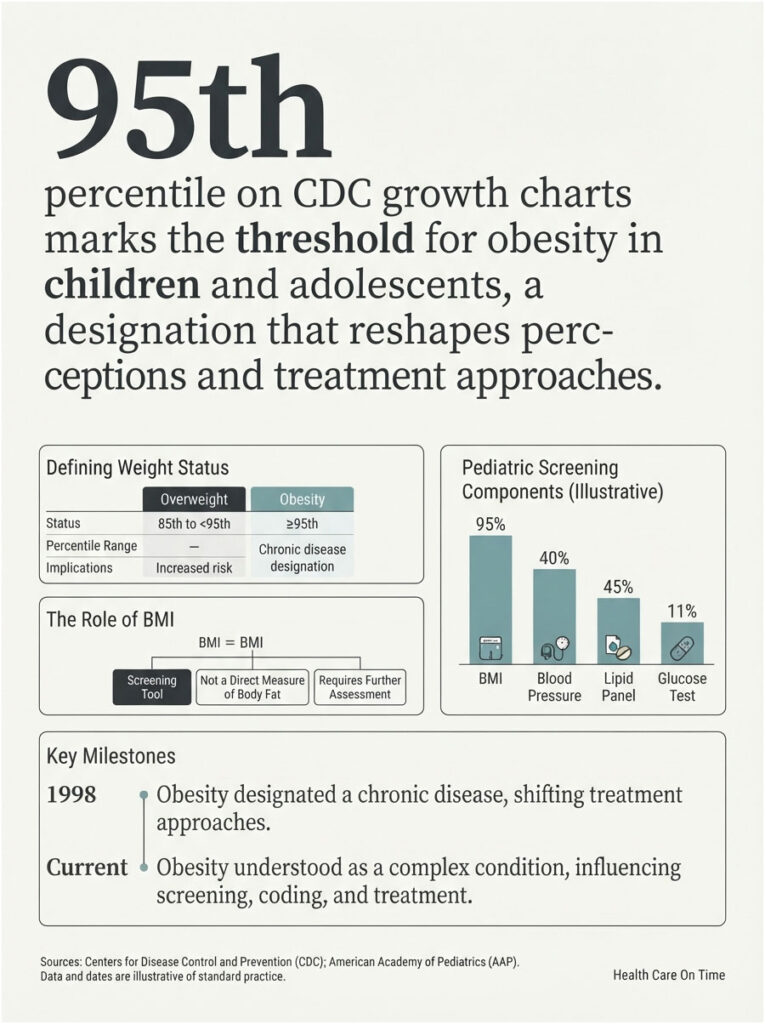
Weight status in children isn’t judged the way adult BMI works. Pediatricians plot body mass index against age and sex on CDC growth charts, then read the resulting percentile.
A child at or above the 85th percentile but below the 95th sits in the overweight range. At or above the 95th percentile, the classification is obesity. Severe obesity begins at 120% of the 95th percentile value.
Our medical reviewers note this percentile system confuses families constantly. A BMI number that would alarm an adult can be perfectly ordinary for a growing nine-year-old.
Why the Chronic Disease Label Changed Everything
The National Institutes of Health designated obesity a chronic disease in 1998. The American Academy of Pediatrics carried that framing into its 2023 clinical practice guideline, which describes obesity as a condition with complex genetic, physiologic, socioeconomic, and environmental contributors rather than a reversible consequence of personal choices.
That reframing has a practical consequence. Diseases get screened, coded, treated, and reimbursed. Character flaws do not.
The same guideline retired the older watchful waiting posture. Early evaluation and treatment replaced the hope that a child would simply grow into their weight.
Where BMI Falls Short
BMI is a screening tool, not a diagnosis. It doesn’t measure body fat directly, and the relationship between BMI and adiposity shifts with age, sex, and body composition.
Clinicians increasingly pair it with waist circumference, blood pressure, and metabolic labs. Some providers also assess visceral fat and family history to identify what is actually driving a child’s weight rather than treating the number alone.
A single measurement means far less than a trend line plotted across several visits.
The Warning Signs Families Overlook
Obesity itself produces few direct symptoms. What families notice are the complications:
- Snoring, gasping, or breathing that stops and restarts during sleep
- Persistent headaches that don’t resolve
- Dark, velvety patches of skin on the neck or underarms, a marker of insulin resistance
- Excessive thirst with frequent urination
- Joint or knee pain during ordinary activity
- Fatigue that outlasts a normal school week
- Withdrawal from sports, swimming, or gym class
Any of these warrants a pediatric appointment regardless of what the scale reads.
The Numbers Say This Is Getting Worse, Not Better
Public messaging for most of the past decade suggested childhood obesity had plateaued. The newest measured data does not support that story.
The Newest National Measurement
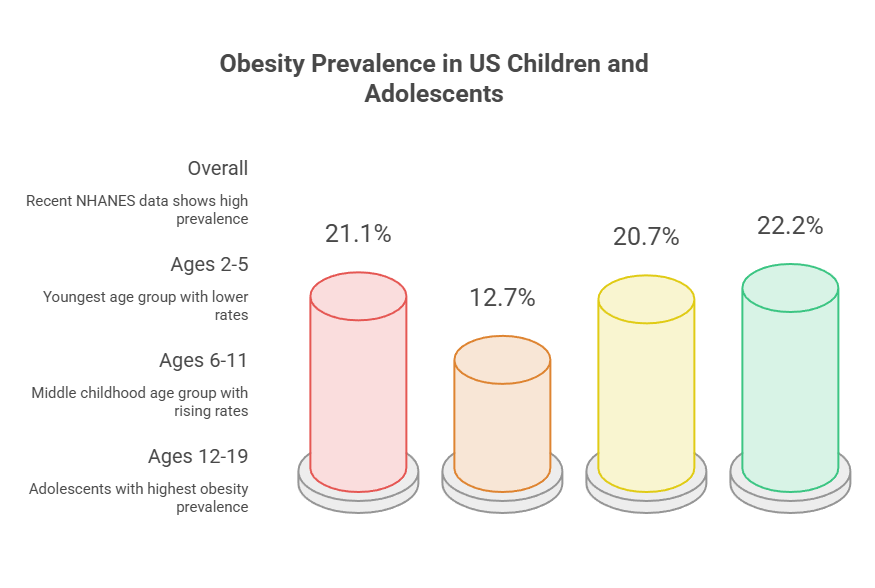
Results from the National Health and Nutrition Examination Survey covering August 2021 through August 2023, published by the National Center for Health Statistics, show an estimated 21.1% of US children and adolescents ages 2 to 19 have obesity, including 7.0% with severe obesity, with a further 15.1% classified as overweight.
For historical scale, the same survey series recorded 5.2% obesity prevalence in the 1971 to 1974 cycle. The rate has roughly quadrupled across two generations.
Worth knowing: the CDC’s own facts page still leads with the earlier cycle, showing 19.7% prevalence and about 14.7 million affected youths from 2017 to March 2020. Both figures are accurate for their periods. The newer one describes today.
Who Carries the Heaviest Burden
Prevalence climbs with age. In the 2017 to March 2020 data, obesity affected 12.7% of children ages 2 to 5, 20.7% of those 6 to 11, and 22.2% of adolescents 12 to 19.
Disparities run deep. Prevalence was highest among Hispanic children at 26.2% and non-Hispanic Black children at 24.8%, compared with 16.6% among non-Hispanic white children and 9.0% among non-Hispanic Asian children.
Income tracks just as sharply. National Survey of Children’s Health data shows 24.1% obesity among children below the poverty line versus 10.4% among those at or above 400% of the federal poverty level.
The State Map Tells Its Own Story
State rates for ages 6 to 17 spread across a remarkably wide band. The State of Childhood Obesity project reports a national rate of 16.1%, with Colorado at 10.1%, Massachusetts at 10.8%, Utah at 11.7%, Minnesota at 12.0%, and North Dakota at 12.9% sitting significantly below it.
At the other end, Mississippi, West Virginia, Louisiana, Alabama, Arkansas, Texas, and Tennessee all run significantly above the national figure. A child in the highest-prevalence state is roughly two and a half times as likely to have obesity as a child in the lowest.
Geography, in other words, is doing work that biology cannot explain.
The Global Backdrop
UNICEF’s 2025 Child Nutrition Report documented a threshold crossing. Obesity among 5 to 19 year olds reached 9.4% worldwide, passing underweight at 9.2% for the first time, with underweight prevalence falling from nearly 13% since 2000 while obesity climbed from 3%.
US Childhood Obesity by the Numbers
| Metric | Current Figure | Prior Figure or Comparison | Source (Survey Period) |
| Obesity, ages 2 to 19 | 21.1% | 5.2% in 1971 to 1974 | NCHS Health E-Stat, NHANES Aug 2021 to Aug 2023 |
| Severe obesity, ages 2 to 19 | 7.0% | Counted within the 21.1% total | NCHS Health E-Stat, same cycle |
| Overweight range, ages 2 to 19 | 15.1% | Additional to those with obesity | NCHS Health E-Stat, same cycle |
| Obesity, ages 12 to 19 | 22.2% | 12.7% among ages 2 to 5 | CDC Childhood Obesity Facts, NHANES 2017 to Mar 2020 |
| Prediabetes, ages 12 to 17 | 32.7%, about 8.4 million teens | Not previously tracked at this scale | CDC analysis of NHANES, 2023 |
| Obesity by household income, ages 6 to 17 | 24.1% below poverty vs 10.4% at 400%+ FPL | Gap of 13.7 percentage points | National Survey of Children’s Health |
| Annual pediatric medical cost | $1.3 billion; $116 more per child per year | $310 more per child with severe obesity | CDC, 2019 dollars |
Patients booking pediatric health checkups with us often ask which of these numbers applies to their own child. None of them do. Population data describes the shape of a problem, never the state of one kid’s metabolism.
Why the Seriousness Question Is Being Asked Now
The debate has sharpened because federal and state policy has moved more in two years than in the previous ten. Whether that movement matches the scale of the problem is precisely what’s in dispute.
A Federal Push Aimed at the Food Supply
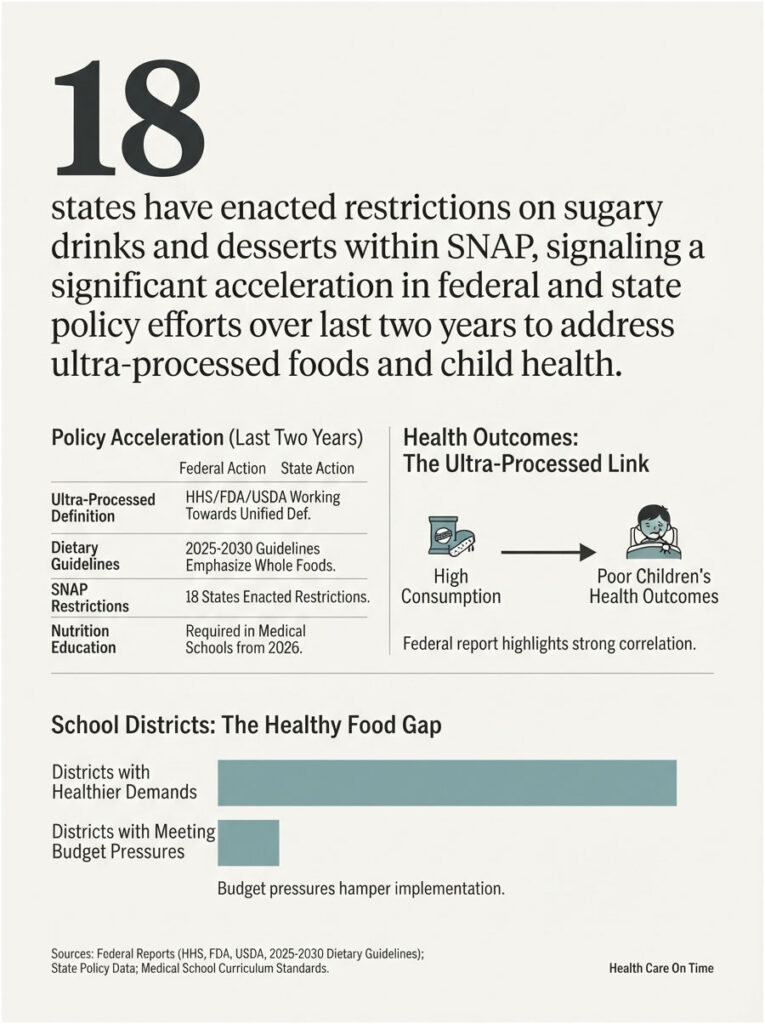
A federal commission report on children’s chronic disease identified ultra-processed foods high in added sugars, chemical additives, and saturated fats as a driver of poor health outcomes in children. The same report criticized the School Breakfast Program and National School Lunch Program for contributing to excessive intake of sugar, processed carbohydrates, processed fats, and sodium.
HHS, the FDA, and USDA subsequently opened work toward a single federal definition of ultra-processed foods. Any adopted definition could feed into dietary guidelines, new FDA labeling rules, and eligibility standards for federally funded programs including school lunch and SNAP.
The 2025 to 2030 Dietary Guidelines shifted emphasis toward whole and minimally processed foods, a departure from the calorie-and-food-group framing of earlier editions.
States Moving First
Eighteen states have received USDA waivers making items such as sugary drinks, candy, and prepared desserts ineligible for purchase with SNAP funds, with five states beginning implementation on January 1 and others phasing in later in the year.
Execution has proven messy. Florida, for example, restricts ultra-processed prepared desserts while allowing freshly baked ones, a line retailers must draw at the register.
What Tightened at the Same Time
School nutrition directors face a squeeze from the opposite direction. Changes to SNAP eligibility reduced the number of automatically qualifying children, which lowers the identified student percentage districts use to claim meal reimbursements.
Districts are being asked to serve less processed food while the funding base narrows. Both pressures are real, and they pull against each other.
The Workforce Change Few Noticed
Multiple leading medical schools agreed to require 40 hours of nutrition education for all students starting in fall 2026, with the stated aim that more than 30,000 physicians a year graduate with formal nutrition training.
That’s a genuine structural change. It also takes roughly a decade to reach exam rooms at scale.
Serious on Paper, Thin in Practice
Here’s where the answer to the question in the title gets uncomfortable. American pediatric medicine has written excellent guidance on childhood obesity. Delivery is a different story.
The Screening Gap
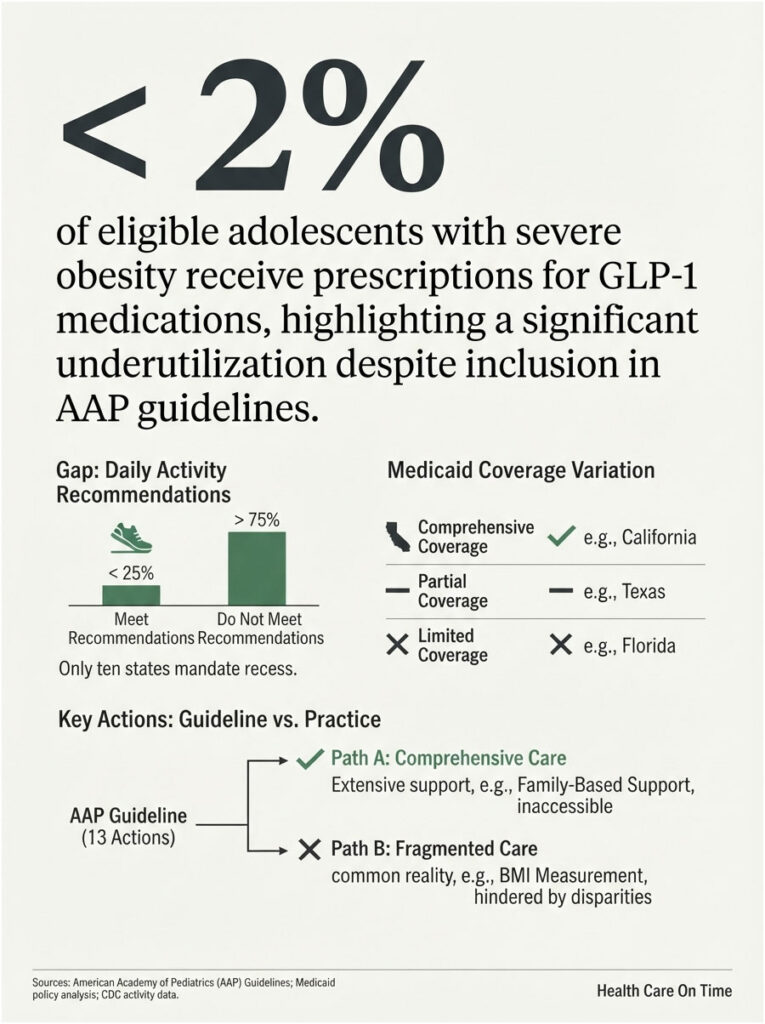
The AAP guideline sets out 13 key action statements covering screening, evaluation, and treatment. A review of guideline concordance found uptake varies widely across all of them.
Even BMI measurement is limited by missed well-child visits and insurance disparities, while screening for related conditions such as dyslipidemia, abnormal glucose, and fatty liver disease remains low despite long-standing recommendations.
The Referral Gap
First-line treatment isn’t a diet handout. It is a minimum of 26 hours of face-to-face, family-based, multicomponent treatment over at least three to twelve months, covering nutrition, physical activity, and behavior change support.
The American Academy of Family Physicians observed that the gap between need and accessibility for this intervention is significant, citing scarcity and distribution of programs, transportation barriers, and missed school and work time.
Most of these programs sit inside specialty clinics attached to academic medical centers or children’s hospitals, and in many places pediatric obesity treatment isn’t covered by Medicaid or private insurance at all. For a family two hours from the nearest program, the recommended treatment functionally doesn’t exist.
The Medication Gap
Two GLP-1 receptor agonists carry approval for weight management in adolescents. The FDA approved liraglutide (Saxenda) in December 2020 and semaglutide (Wegovy) in December 2022, both for patients aged 12 and older with obesity.
Uptake sits near the floor. The concordance review put pharmacotherapy use below 2% among eligible adolescents, with bariatric surgery referrals rarer still.
A national electronic health record analysis of more than two million adolescents with obesity found 0.9% had received at least one GLP-1 prescription, with 87.4% of those treated having severe obesity, and the prevalent prescription rate rising from 0.12% at approval to 1.38% by mid-2025.
The School Day Gap
Children need 60 minutes of moderate to vigorous activity daily. The CDC reports that fewer than one in four youth get enough aerobic physical activity, and fewer than one in ten children and adults eat the recommended daily amount of vegetables.
Only ten states have laws with strong recess mandates, and there is no federal mandate at all.
The Coverage Gap
Medicaid’s Early and Periodic Screening, Diagnostic and Treatment benefit covers medically necessary services for enrolled children, which can include obesity prevention and treatment aligned with the USPSTF recommendation to refer children 6 and older with high BMI to intensive behavioral intervention.
In practice, what a family receives depends heavily on their state and their plan.
Promise Versus Practice in US Pediatric Obesity Care
| Care Step | What the Guidelines Call For | What Actually Happens | Size of the Gap | Source |
| Annual BMI screening | BMI measured and plotted at every well-child visit from age 2 | Constrained by missed visits and insurance disparities | Many children never get a plotted growth trend | AAP Clinical Practice Guideline |
| Metabolic lab workup | Lipid, glucose, and liver screening for children with obesity | Screening rates remain low despite long-standing advice | Undiagnosed prediabetes and fatty liver | AAP guideline; concordance review |
| Behavioral treatment referral | At least 26 face-to-face hours, family-based, over 3 to 12 months | Referrals infrequent; programs concentrated in academic centers | Most families never reach first-line care | USPSTF Grade B; AAP guideline |
| Medication for eligible teens 12+ | Considered alongside behavioral treatment when criteria are met | Under 2% of eligible adolescents receive it | Roughly 98 of every 100 eligible teens go without | Concordance review; national EHR analysis |
| Surgical evaluation, age 13+ with severe obesity | Referral to a specialty center for evaluation | Referrals remain rare | An approved option goes largely unused | AAP guideline |
| Daily school physical activity | 60 minutes moderate to vigorous per day | Fewer than 1 in 4 youth meet it; 10 states mandate recess | No federal floor for daily movement | CDC; state policy tracking |
Across the families we serve, the common thread isn’t indifference. It’s parents who asked for help and were handed a photocopied sheet on portion sizes.
The Health Bill Already Coming Due
Childhood obesity gets discussed as a risk factor for adult disease. That framing is now out of date. The consequences are arriving during childhood.
What Is Showing Up in Bloodwork
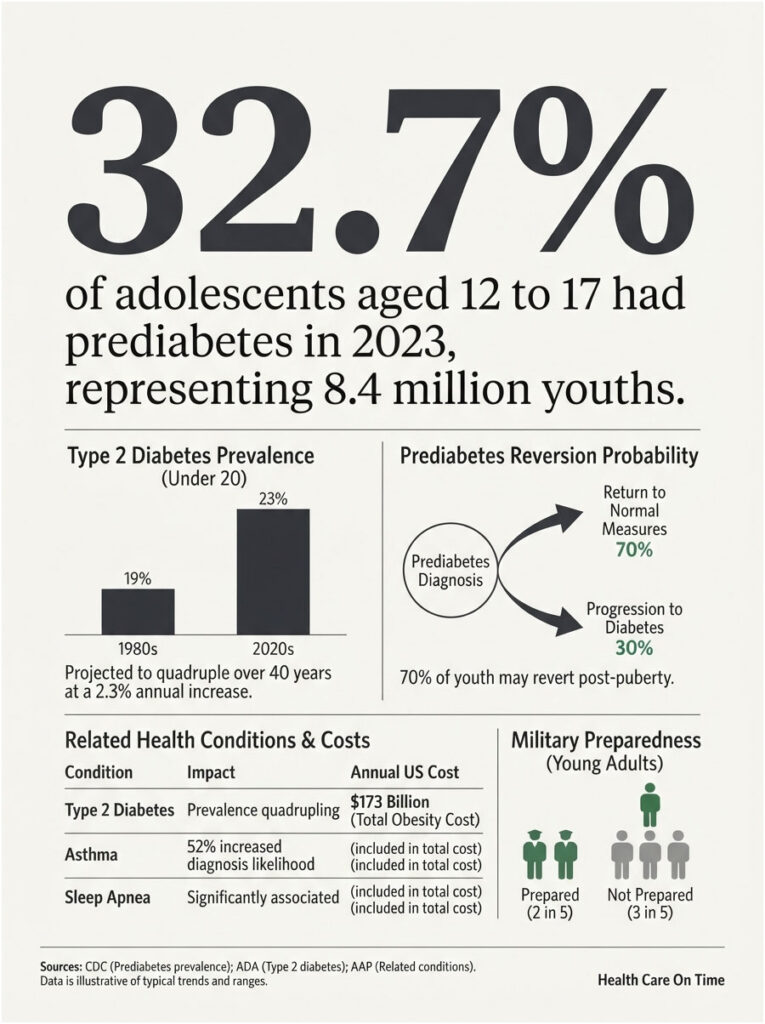
CDC analysis of survey data estimated that in 2023, 8.4 million adolescents, or 32.7% of 12 to 17 year olds, had prediabetes, as reported by STAT.
Not every teen with prediabetes progresses. Previous analyses suggested roughly 70% of youth with prediabetes return to normal glycemic measures after puberty, though other studies put the reversion range between 45% and 75%, and clinicians openly acknowledge they cannot yet predict who will progress.
The direction still concerns endocrinologists. The American Diabetes Association’s Standards of Care cites CDC projections that, assuming a 2.3% annual increase, type 2 diabetes prevalence in those under 20 will quadruple over 40 years.
Ask your pediatrician whether an HbA1c test or fasting glucose panel is appropriate. For many families it’s the first objective signal they receive.
Organ-Level Consequences
Excess adiposity in childhood touches nearly every system. Hypertension, dyslipidemia, insulin resistance, and metabolic dysfunction-associated steatotic liver disease now appear in pediatric practice at rates that would have startled a physician in 1990. A lipid profile and liver function test are standard parts of that workup.
Sleep works in both directions. Children’s Hospital Los Angeles notes that obesity in childhood is strongly linked to sleep apnea, and that disrupted sleep affects leptin and ghrelin, the hormones regulating appetite, which can increase hunger and drive further weight gain in a self-reinforcing cycle.
The same source reports that obesity increases the likelihood of an asthma diagnosis by 52%, with excess weight worsening symptoms by placing additional pressure on the chest and lungs.
What Doesn’t Show on a Lab Report
Children with overweight and obesity experience weight-based teasing, victimization, and bullying, which contribute to binge eating, social isolation, avoidance of health care services, and decreased physical activity.
Internalized weight bias carries its own mental health burden, independent of body composition.
In cases reviewed by our medical team, a routine metabolic panel ordered alongside a standard checkup is frequently the first hard evidence a family gets that something needs attention. Numbers on a lab report tend to move conversations that numbers on a bathroom scale never do.
The Adult Math
Childhood obesity often carries into adulthood through both physiological and behavioral pathways, which is why prevention in this age group represents a distinct opportunity to change a life trajectory.
The national context is sobering. Obesity costs the US healthcare system almost $173 billion a year, and only 2 in 5 young adults are weight-eligible and physically prepared for basic military training.
What the Evidence Says Actually Works
The treatment picture is better than most parents assume. It just demands more structure and time than a fifteen-minute appointment allows.
Family-Based Behavioral Treatment
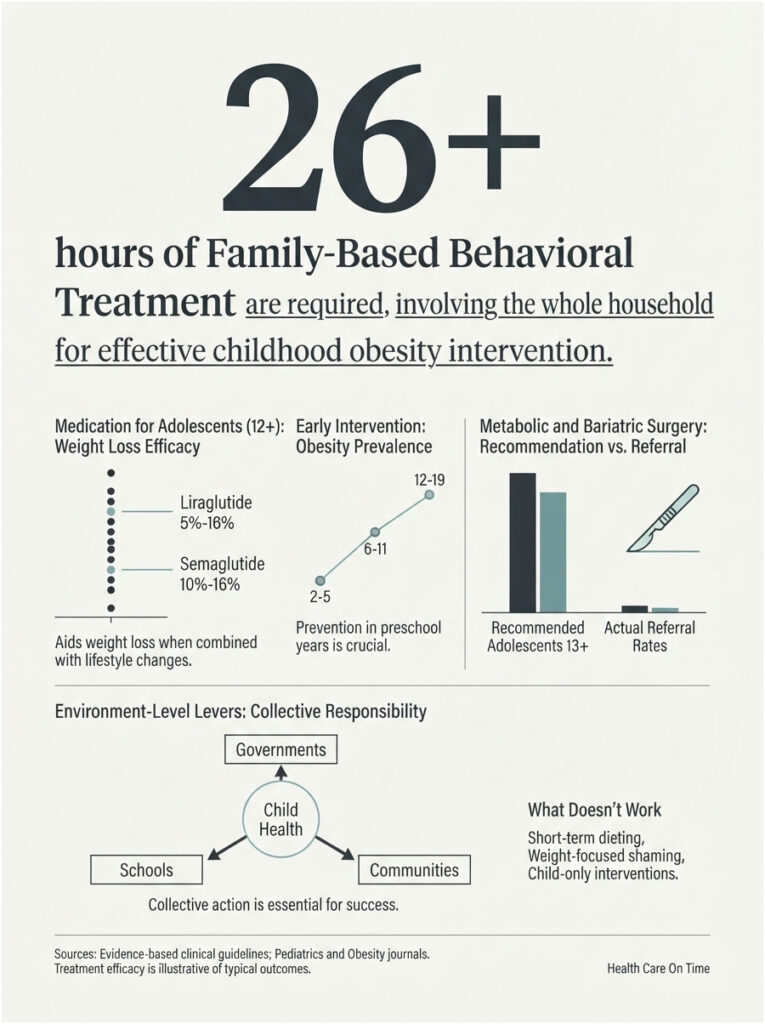
The first-line intervention involves the whole household, happens face to face, and runs a minimum of 26 contact hours across nutrition, physical activity, and behavior change.
The CDC maintains a registry of recognized Family Healthy Weight Programs built on this model. Beyond reducing or stabilizing a child’s weight or BMI, some studies reported these programs also reduced parent or caregiver weight, which tells you how much of the intervention is environmental rather than individual.
Dose is the catch. Programs delivering fewer than 26 hours show weaker results, and 26 hours is a serious ask for a working family.
Medication for Adolescents 12 and Older
Two GLP-1 medications carry pediatric approval. Lurie Children’s Hospital explains that studies found liraglutide and semaglutide help adolescents lose 5% to 16% of body weight alongside lifestyle changes, while improving blood sugar control.
On safety, a study published in JAMA Pediatrics found children taking these drugs showed no differences in depression or suicidal behaviors compared with placebo, despite the class carrying a label warning about suicidal behavior and ideation.
Common side effects include nausea and abdominal discomfort, and the initiation phase requires frequent visits for dose titration, side-effect monitoring, and behavioral counseling. These medications aren’t approved for younger children and aren’t intended for cosmetic or short-term weight loss.
Metabolic and Bariatric Surgery
The AAP guideline supports considering surgery for adolescents 13 and older with severe obesity, a departure from earlier watchful waiting approaches.
Referral rates remain very low. Long-term outcome data in adolescents continues to accumulate, which is part of why clinicians move carefully.
Prevention in the Preschool Years
The strongest returns come earliest, and this is the age band most articles skip. Obesity prevalence is lowest among children 2 to 5, which makes those years the widest open window.
Practical levers with evidence behind them:
- Protect sleep duration. Short sleep in early childhood predicts later weight gain.
- Serve water and plain milk as defaults. Sugary drinks are the leading source of added sugars in American children’s diets.
- Keep screens out of mealtimes and out of bedrooms.
- Offer new foods repeatedly without pressure. Coercive feeding backfires.
- Build daily active play into the routine rather than treating exercise as a scheduled event.
Children who carry excess weight are more likely to develop obesity as they grow, and they tend to struggle more with physical activity, which makes early routine-building more valuable than later correction.
Environment-Level Levers
Individual treatment can’t outrun the environment a child lives in. Cleveland Clinic states this plainly, noting that preventing childhood obesity isn’t just a family’s responsibility but a collective responsibility of federal and local governments, schools, communities, and corporations.
School meal standards, beverage availability, safe walking routes, and protected recess shift the baseline for entire populations at once.
What Doesn’t Work
Short-term restrictive dieting imposed without clinical supervision. Weight-focused shaming from a parent, coach, or physician. Child-only interventions that leave the household food environment untouched.
Our lab partners report a steady stream of adolescent panels ordered after a family attempted an aggressive at-home approach and something went wrong. Supervision isn’t bureaucratic caution. It’s the difference between treatment and improvisation.
The Serious Case for Caution
Taking childhood obesity seriously does not mean pushing harder on children. Credible organizations argue that aggressive weight-focused care carries risks of its own, and any honest treatment of this subject has to include them.
Weight Stigma Carries Its Own Risk
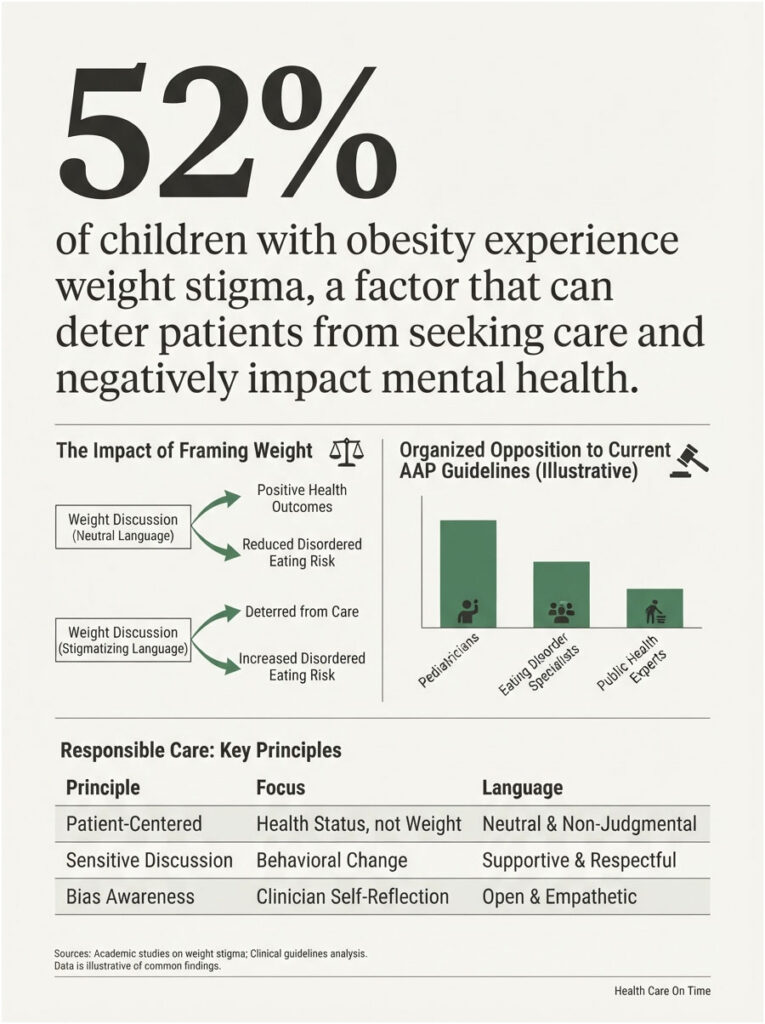
The AAP guideline acknowledges directly that pediatricians and other primary health care providers have been and remain a source of weight bias, and need to uncover and address their own attitudes before productive discussions become possible.
Internalized weight bias has been associated with negative mental health impact, and these factors can prevent patients with obesity from seeking medical care at all.
The Eating Disorder Objection
The 2023 guideline drew organized opposition. The Eating Recovery Center launched a petition calling on the AAP to rewrite it, arguing that the guideline includes minimal guidance on screening for or treating disordered eating and perpetuates harmful weight stigma. The Academy for Eating Disorders echoed those concerns.
Writing in the Journal of Adolescent Health, adolescent medicine clinicians noted that the guideline recognizes weight stigma as a barrier to care yet offers little practical direction for clinicians on avoiding it, and doesn’t sufficiently describe stigma as a risk factor for maladaptive eating, further weight gain, depressive symptoms, and substance use.
Supporters counter that leaving obesity untreated carries documented harms too, and that the guideline does recommend evaluating higher weight adolescents for eating disorders before, during, and after weight management interventions.
What Responsible Care Looks Like
Recommended practice includes using neutral terminology such as weight and body mass index rather than obese or weight problem, correcting misconceptions, eliminating blame, and focusing on a child’s health status rather than a numerical target.
Parents commonly ask us whether raising the subject could trigger an eating disorder. The evidence points toward how it’s raised mattering far more than whether it’s raised.
A Practical Plan for Families and Schools
Policy debates move slowly. Your next pediatric appointment doesn’t have to.
What to Ask For at the Next Appointment
- The plotted BMI-for-age trend across previous visits, not a single reading
- A blood pressure measurement taken with an appropriately sized cuff
- Whether metabolic labs are indicated, specifically glucose or HbA1c, lipids, and liver enzymes
- A written referral to a family-based program, plus the actual wait time
- What the plan covers, in writing, before you leave
Vague reassurance is not a plan. Neither is being told to come back in a year.
Home Changes With the Strongest Evidence
- Protect sleep first. Insufficient sleep alters appetite hormones and undermines every other change.
- Displace sugary drinks rather than banning them by decree. Water and milk in the fridge, sweetened beverages out of routine circulation.
- Eat together when schedules allow. Family meals correlate with better dietary quality at every age.
- Pick activity the child would choose independently. Adherence beats intensity in children, every time.
- Change the household environment, not one child’s plate. Singling out a kid rarely ends well.
What Schools Can Change
Protect recess from being used as a disciplinary lever. Make drinking water accessible and appealing. Review à la carte lines, which often sit outside federal nutrition standards. Support safe walking and biking routes to campus.
When to Escalate
Elevated blood pressure, abnormal glucose, or raised liver enzymes justify a specialist referral now rather than at the next annual visit. So does snoring with witnessed pauses in breathing.
If This Describes Your Child, Do This Next
| Your Situation | What It Usually Means | Recommended Next Step | Reasonable Timeline |
| BMI 85th to 94th percentile, no symptoms | Overweight range for age and sex | Request the plotted BMI trend and a household-level plan | At the next well-child visit |
| BMI at or above the 95th percentile | Obesity range; qualifies for treatment referral | Ask for a family-based program referral and baseline labs | Within 4 to 8 weeks |
| BMI at or above 95th plus high blood pressure or elevated glucose | Metabolic complications already present | Request repeat testing and a pediatric specialist referral | Within 2 to 4 weeks |
| BMI at or above 120% of the 95th percentile, age 12 or older | Severe obesity; medication or surgical evaluation may apply | Ask directly about pharmacotherapy criteria and specialty referral | Within 4 weeks |
| Child is being teased, skipping meals, or hiding food | Possible disordered eating or mental health impact | Raise this with the pediatrician before any weight plan begins | Same week |
| No 26-hour program within reasonable distance | An access gap, not a motivation problem | Ask about telehealth-delivered and CDC-recognized program options | Within 4 weeks |
Frequently Asked Questions
At what BMI is a child considered obese?
A child is classified as having obesity when BMI reaches or exceeds the 95th percentile for their age and sex on CDC growth charts. The overweight range runs from the 85th to the 94th percentile. Severe obesity begins at 120% of the 95th percentile value. Adult BMI cutoffs don’t apply to children.
What percentage of American children have obesity right now?
The most recent measured national data, covering August 2021 through August 2023, puts obesity at 21.1% of children and adolescents ages 2 to 19. That includes 7.0% with severe obesity. Another 15.1% fall in the overweight range, meaning more than a third sit above the healthy weight band for their age.
Is childhood obesity getting worse, or has it leveled off?
It’s getting worse. The 21.1% figure is a record high in a survey series that has used measured heights and weights since the early 1970s, when prevalence stood at 5.2%. Adult obesity trends showed signs of slowing in the same reporting period. The youth trend did not.
Will my child simply grow out of it?
Sometimes, but relying on it is risky. Childhood obesity frequently persists into adulthood through both physiological and behavioral pathways. The 2023 pediatric guideline specifically replaced watchful waiting with early evaluation and treatment, because delay tends to make the condition considerably harder to address later.
Can a 12 year old be prescribed Wegovy?
Yes, under specific conditions. The FDA approved semaglutide (Wegovy) in December 2022 and liraglutide (Saxenda) in December 2020 for weight management in adolescents 12 and older who meet BMI criteria. Both are prescribed alongside lifestyle changes under supervision from clinicians experienced in pediatric obesity or metabolic care.
Are weight loss injections safe for teenagers?
Trial evidence in adolescents shows body weight reductions of roughly 5% to 16% with improved blood sugar control. A JAMA Pediatrics study found no difference in depression or suicidal behaviors versus placebo. Nausea and abdominal discomfort are common. Long-term effects in younger children remain unstudied, so pediatric supervision is required throughout.
Does insurance cover childhood obesity treatment?
Coverage varies significantly. Medicaid’s EPSDT benefit covers medically necessary services including obesity treatment, but implementation differs by state. Commercial plans frequently exclude behavioral weight management programs, and medication coverage for adolescents is inconsistent. Ask your plan specifically about intensive behavioral treatment and pharmacotherapy rather than assuming denial.
What blood tests should a child with obesity have?
Screening typically includes fasting glucose or HbA1c, a lipid profile, and liver enzymes to check for fatty liver disease. Risk-based diabetes screening is generally considered from age ten or the onset of puberty for children with overweight or obesity plus additional risk factors. Your pediatrician determines the specific panel.
Do school lunches cause childhood obesity?
School meals are one factor among many, never the sole cause. Federal assessments have criticized school breakfast and lunch programs for insufficient limits on ultra-processed foods. Districts now face pressure to serve fewer processed items while meal funding tightens, which creates practical difficulty implementing the recommended changes at scale.
Should I put my child on a diet?
Not on your own. Restrictive dieting imposed without clinical supervision carries real risk of disordered eating in children and adolescents. The evidence-backed approach is family-based behavioral treatment that changes the household environment rather than singling out one child, delivered under pediatric oversight from the start.
Will talking about weight give my child an eating disorder?
How the conversation happens matters more than whether it happens. Weight-focused shaming, appearance comments, and food restriction raise risk. Neutral language centered on health markers, energy, and sleep lowers it. Guidelines recommend screening for disordered eating before, during, and after any weight-related intervention.
Which US states have the highest childhood obesity rates?
For ages 6 to 17, states significantly above the 16.1% national rate include Mississippi, West Virginia, Louisiana, Alabama, Arkansas, Texas, and Tennessee. The lowest appear in Colorado at 10.1%, Massachusetts at 10.8%, Utah at 11.7%, Minnesota at 12.0%, and North Dakota at 12.9%.
Medical Disclaimer: This article is for general information only and does not constitute medical advice, diagnosis, or treatment. No weight management plan should be started for a child or adolescent without supervision from a licensed pediatrician. If weight, food, or body image is causing distress for your child, speak with a pediatric provider or a qualified mental health professional before taking any action.
References
- Childhood Obesity Facts, Centers for Disease Control and Prevention
- Prevalence of Overweight, Obesity, and Severe Obesity Among Children and Adolescents Ages 2 to 19 Years, NCHS Health E-Stats
- Clinical Practice Guideline for the Evaluation and Treatment of Children and Adolescents With Obesity, American Academy of Pediatrics
- Overweight and Obesity Statistics, National Institute of Diabetes and Digestive and Kidney Diseases
- About Obesity, Centers for Disease Control and Prevention
- CDC-Recognized Family Healthy Weight Programs
- Children and Adolescents: Standards of Care in Diabetes, American Diabetes Association
- Addressing Childhood Obesity, Medicaid.gov
- Prevalence and Predictors of Guideline Concordant Pediatric Obesity Care, National Library of Medicine
- Breaking Down the AAP Guideline on Childhood Obesity, American Academy of Family Physicians
- Prescribing of GLP-1 Receptor Agonists for Adolescents With Obesity, medRxiv
- The American Academy of Pediatrics Guideline for Obesity: An Adolescent Health Perspective, Journal of Adolescent Health
- Obesity Exceeds Underweight for the First Time Among School-Age Children and Adolescents Globally, UNICEF
- Ages 6 to 17 Obesity Data, State of Childhood Obesity
- Obesity in Children, Cleveland Clinic
- GLP-1 Medications for Obesity: A Parent’s Guide, Lurie Children’s Hospital
- Childhood Obesity Symptoms, Causes and Treatments, Children’s Hospital Los Angeles