
A 74-year-old man visits his cardiologist four times in six months for chest tightness. Every test comes back clean. Nobody asks whether he has been afraid to leave the house since his wife died.
Table of Contents
That story repeats itself thousands of times a year in American clinics. Late-life anxiety rarely announces itself. It arrives dressed as a heart problem, a stomach problem, or a sleep problem, and it gets treated as all three before anyone names it.
Quick Answer
Anxiety in older adults is excessive, persistent worry or fear that interferes with daily life. It is not a normal part of aging. It often appears as physical complaints (racing heart, stomach upset, dizziness) rather than expressed worry, which is why it is frequently missed. Talk therapy and antidepressants both work, and therapy shows the higher remission rate in adults over 60.
The nine signs most often missed:
- Repeated physical complaints with normal test results
- New or worsening trouble falling asleep
- Quietly dropping activities, outings, or driving
- Asking the same questions over and over for reassurance
- New fear of falling, even without a fall
- Irritability or a short fuse that seems out of character
- Memory and concentration complaints that come and go
- Describing the feeling as “stressed” or “tense,” never “anxious”
- A jump in doctor visits, phone calls, or urgent care trips
At a Glance
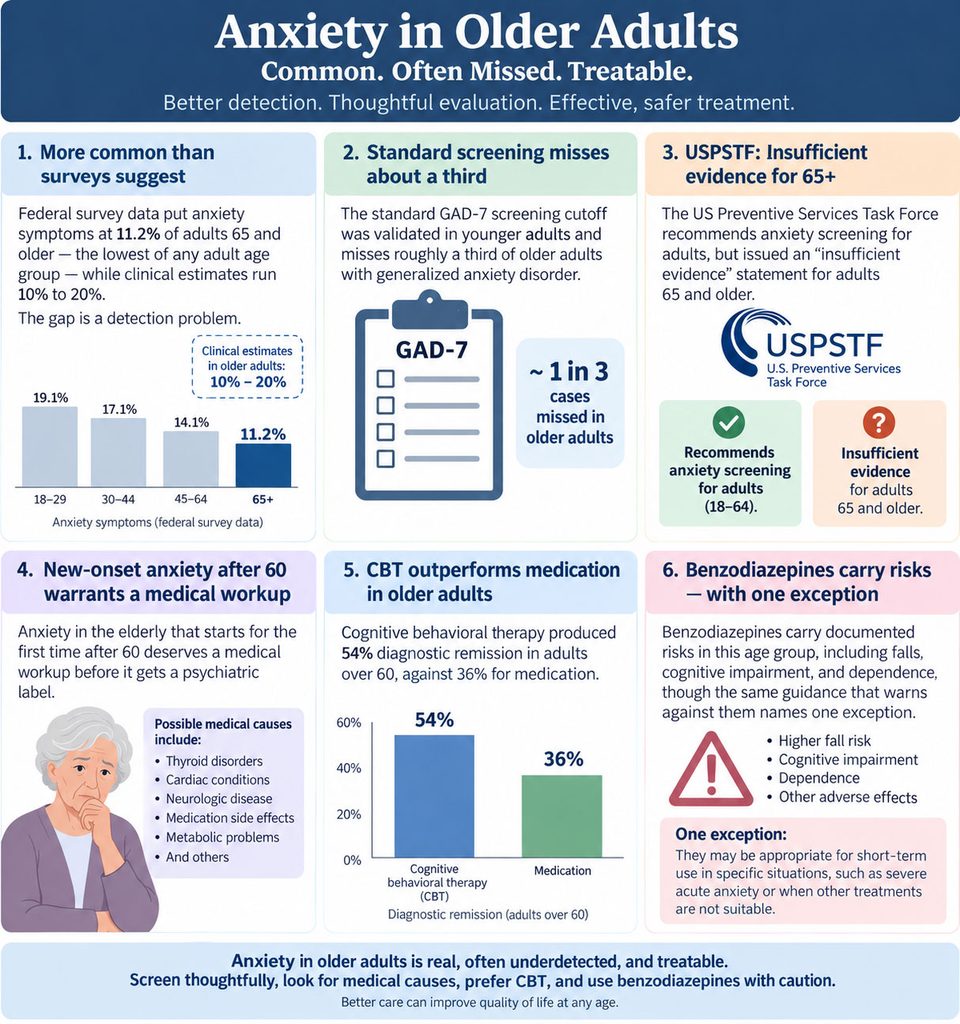
• Federal survey data put anxiety symptoms at 11.2% of adults 65 and older, the lowest of any adult age group, while clinical estimates run 10% to 20%. The gap is a detection problem.
• The standard GAD-7 screening cutoff was validated in younger adults and misses roughly a third of older adults with generalized anxiety disorder.
• The US Preventive Services Task Force recommends anxiety screening for adults but issued an “insufficient evidence” statement for adults 65 and older.
• Anxiety in the elderly that starts for the first time after 60 deserves a medical workup before it gets a psychiatric label.
• Cognitive behavioral therapy produced 54% diagnostic remission in adults over 60, against 36% for medication.
• Benzodiazepines carry documented risks in this age group, though the same guidance that warns against them names one exception.
Telling Late-Life Anxiety Apart From Three Look-Alikes
Most families arrive at this question before any other. Something has changed, and the change could be worry, low mood, ordinary stress, or the start of something neurological.
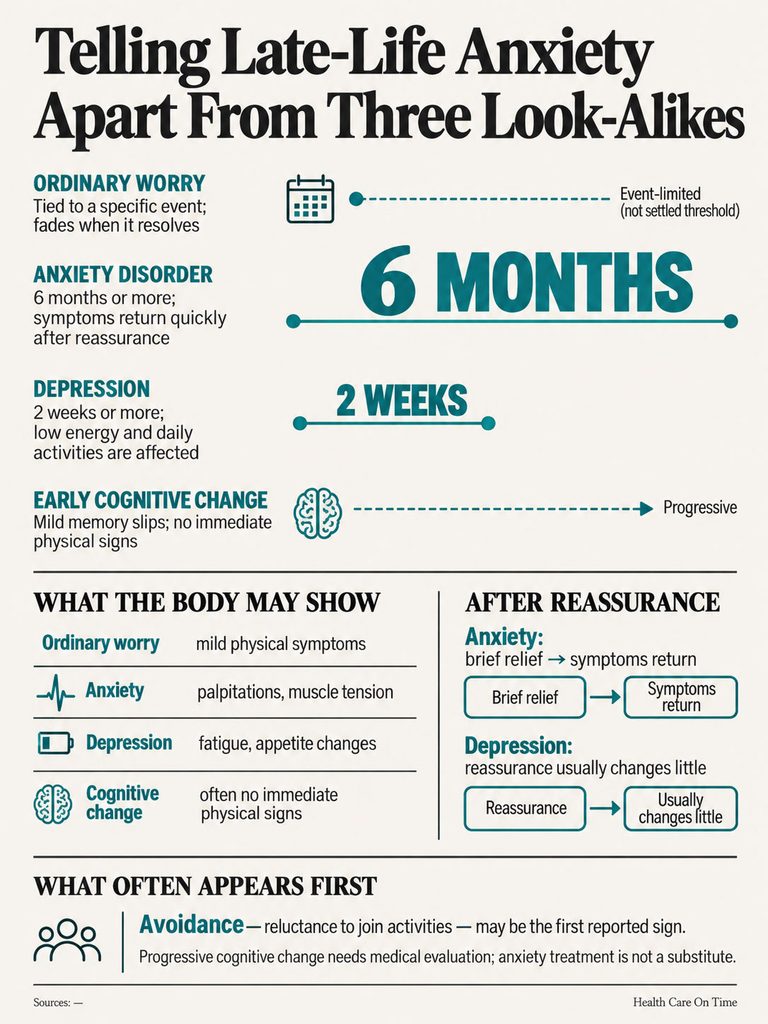
| Ordinary worry | Anxiety disorder | Depression in later life | Early cognitive change | |
| Onset | Tied to a specific event | Gradual, or follows a health scare | Often gradual, sometimes after a loss | Slow, across many months |
| Duration | Fades when the situation resolves | Six months or more under DSM-5-TR criteria | Two weeks or more of most days | Progressive, does not fade |
| Physical signs | Brief, mild | Palpitations, stomach upset, muscle tension, trouble falling asleep | Fatigue, appetite change, early waking | Usually absent early on |
| Response to reassurance | Settles and stays settled | Settles briefly, returns within hours | Reassurance has little effect | Reassurance forgotten, not rejected |
| Effect on daily activity | Minimal | Avoidance: activities dropped to prevent the feeling | Withdrawal: activities dropped from low energy | Errors and confusion during activities |
| What it responds to | Time and problem solving | CBT, antidepressants, exercise | Antidepressants, behavioral activation, therapy | Medical evaluation, not anxiety treatment |
The row that separates anxiety from depression most reliably is response to reassurance. Anxiety accepts reassurance and then loses it within the hour, which is why the same question comes back three times before dinner.
Our medical reviewers note that families almost always describe the avoidance row before they describe any emotion. The church group stopped, the evening drive stopped, and nobody said why.
Anxiety in Later Life Is Common, and Also Commonly Missed
Here is the paradox that no page currently ranking for this topic explains. Ask a national survey, and older adults look like the calmest people in America. Ask a geriatric psychiatrist, and anxiety is the most common mental health condition seen after 65.
Both are describing something real. The difference lies in what gets measured, and how.
What the national numbers actually say
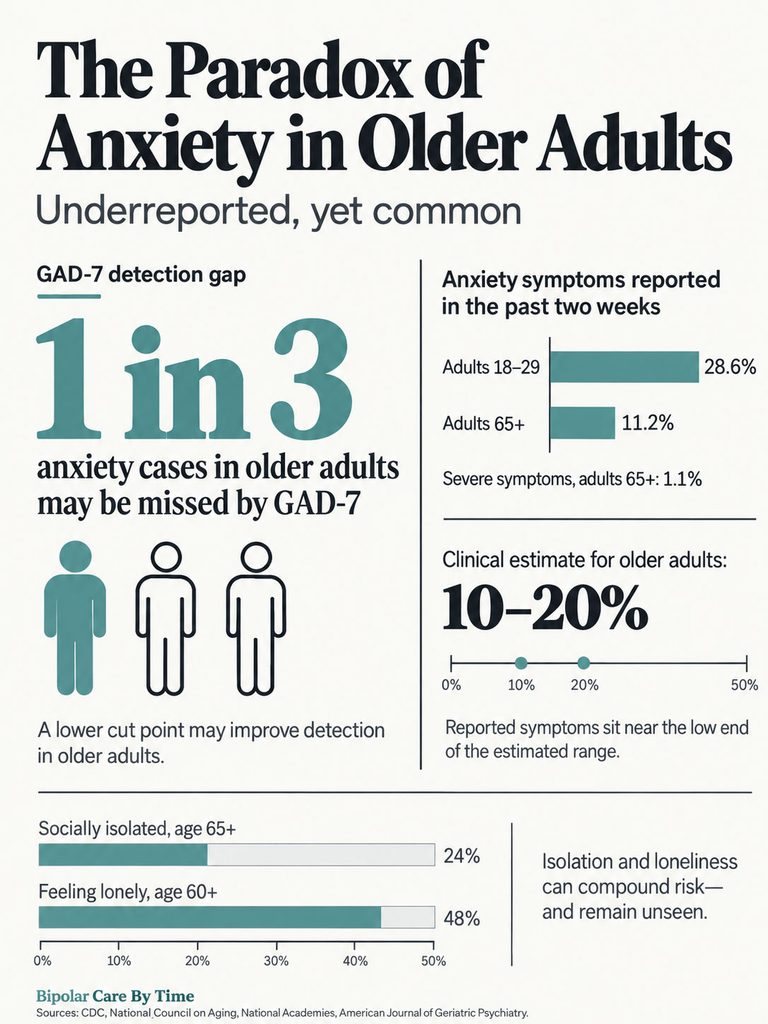
The Centers for Disease Control and Prevention tracks anxiety symptoms through the National Health Interview Survey. In 2022, 11.2% of adults age 65 and older reported any anxiety symptoms in the past two weeks, made up of 7.7% mild, 2.4% moderate, and 1.1% severe.
Compare that with younger adults. Among adults 18 to 29 the figure was 26.6%, more than double, and symptoms declined steadily across each older age band.
The trend line is stranger still. Between 2019 and 2022, anxiety symptoms among adults 18 to 29 climbed from 19.5% to 26.6%, while the figure for adults 65 and older did not move at all, holding at exactly 11.2%.
Why clinical estimates say 10% to 20% instead
Aging organizations put the number far higher. The National Council on Aging describes anxiety as affecting as many as 10% to 20% of the older population, often undiagnosed. Cedars-Sinai cites a 14% to 17% diagnosis rate among adults 65 and older and adds that many experts consider that a significant undercount.
Two forces drive the gap. Older adults are less likely to label distress as anxiety, and the tools used to measure it were calibrated on younger people.
Patients who book thyroid and cardiac panels through HealthCareOnTime show this pattern in how their requests arrive. The order form lists two physical tests, and “feeling shaky lately” turns up as an afterthought in the notes, with the word anxiety nowhere in the conversation.
The measurement problem nobody mentions
The GAD-7 is the seven-question screener used across American primary care, and it is the instrument behind the CDC figures above. The standard positive threshold is a score of 10 or higher.
That threshold was set in general adult samples. When researchers tested it specifically in older people, the picture shifted. In a study of 438 adults aged 58 to 82 measured against a structured clinical interview, the optimal GAD-7 cut point for detecting generalized anxiety disorder was 5 or greater, and at that point sensitivity was 0.63 and specificity 0.90. The authors concluded that the recommended cut points for both the GAD-7 and the GAD-2 should be lowered for the older general population.
A score that flags a 40-year-old sits too high for a 75-year-old.
Why a “normal” screening score does not settle it
If a parent scores 7 on the GAD-7, a clinician following the standard cutoff records a negative screen. That score sits comfortably inside the range a validation study in older adults would have flagged.
A negative screen is information, not a verdict. It should not end a conversation that started because something at home genuinely changed.
Anxiety in Older Adults by the Numbers
| Measure | Figure | Population | Source |
| Any anxiety symptoms, past 2 weeks | 11.2% | US adults 65+ | CDC/NCHS, NHIS 2022 |
| Severe anxiety symptoms | 1.1% | US adults 65+ | CDC/NCHS, NHIS 2022 |
| Any anxiety symptoms, same period | 26.6% | US adults 18-29 | CDC/NCHS, NHIS 2022 |
| Change in symptoms, 2019 to 2022 | 11.2% to 11.2%, no change | US adults 65+ | CDC/NCHS, NHIS 2022 |
| Clinical estimate of anxiety disorders | 10% to 20% | Older adults | National Council on Aging |
| Socially isolated | 24%, about 7.7 million people | Community-dwelling US adults 65+ | National Academies, 2020 |
| Report feeling lonely | 43% | US adults 60+ | National Academies, 2020 |
| GAD-7 sensitivity at the usual cutoff | Misses roughly 1 in 3 cases | Adults aged 58 to 82 | Am J Geriatr Psychiatry validation study |
What Anxiety Actually Looks Like After 65
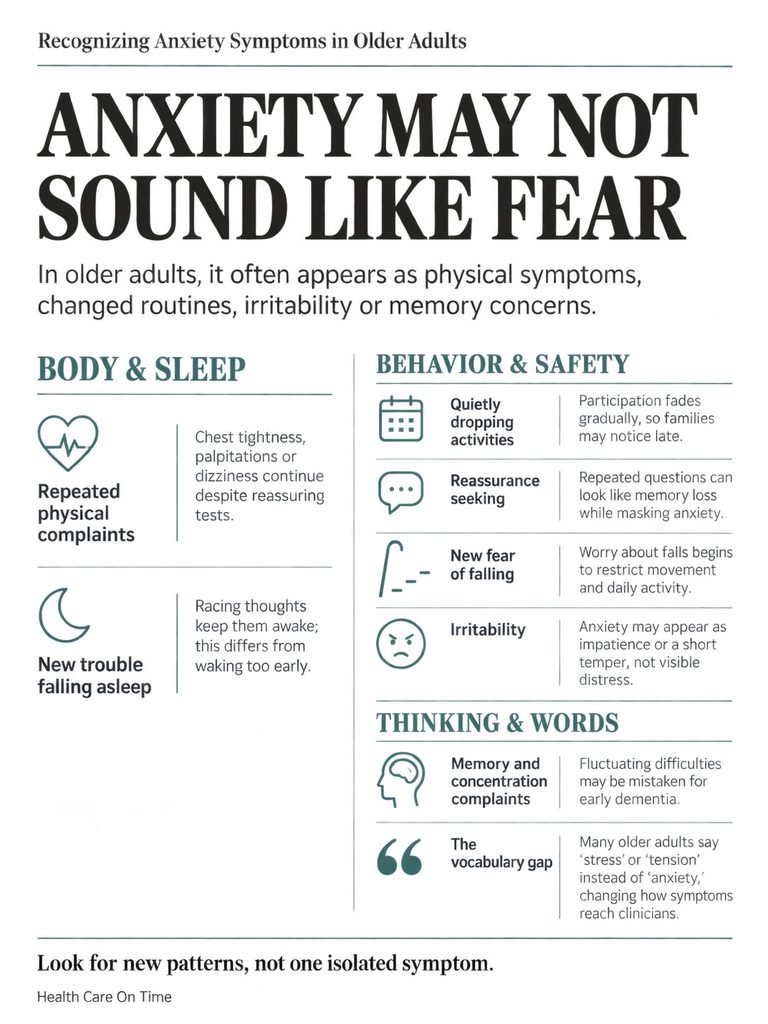
Symptom lists on most health sites were written for a general adult audience and then relabeled for seniors. They describe racing thoughts and catastrophic thinking. Those occur in older adults too, and they are rarely what brings someone through the door.
The nine signs, expanded
Repeated physical complaints with clean results. Chest tightness, palpitations, stomach trouble, breathlessness, dizziness. The workup is negative, the symptom persists, the visits continue.
New trouble falling asleep. Not early waking, which points more toward depression, but lying awake with the mind running. Sleep disturbance appears repeatedly among documented anxiety risk factors in this age group.
Quietly dropping activities. No announcement accompanies the change, and families often notice months late.
Reassurance seeking. The same question three times in an afternoon, which relatives frequently read as memory loss when it is worry that reassurance will not settle.
New fear of falling. Sometimes after a fall, often without one, and a well-documented driver of anxiety and activity restriction.
Irritability. Late-life anxiety is often expressed as impatience or a short temper rather than visible distress.
Memory and concentration complaints. Anxiety consumes working memory. The complaint is real, and it fluctuates in a way early dementia usually does not.
The vocabulary gap. Older adults commonly describe the same internal state as feeling stressed or tense rather than anxious, which changes what a clinician hears.
Rising healthcare use. More visits, more calls, more urgent care trips. This is often the first measurable signal anywhere in a chart.
Why it shows up in the body first
Several forces push symptoms downward into the body. Somatic complaints carry social permission that psychological ones did not for the generation now in their seventies and eighties.
There is genuine clinical overlap as well. Anxiety symptoms in older persons often overlap with medical conditions such as hyperthyroidism, and geriatric patients tend to express anxiety as medical or somatic problems such as pain rather than as psychological distress.
Across the older adults our diagnostic network serves, one question follows normal results more often than any other: if nothing is wrong, why does the feeling continue? That deserves a better answer than “nothing is wrong.”
Hearing loss, vision loss, and the withdrawal that follows
Straining to follow a conversation for two hours is exhausting, and people stop attending long before they admit why. The same applies to vision changes that make night driving frightening.
Sensory impairments appear among the recurrent risk factors identified for anxiety in older adults. A hearing test belongs in the same conversation as a mood screen, not in a separate one.
PTSD after a long quiet period
Post-traumatic stress deserves a mention that most articles skip. Symptoms can resurface decades later, triggered by retirement, bereavement, a hospital stay, or cognitive change that weakens long-standing coping strategies.
For American men now in their seventies and eighties, military service history is a relevant question. The Department of Veterans Affairs runs specific programs for this, and eligibility surprises many families who assumed it had lapsed.
New Anxiety After 60 Deserves a Medical Workup First
This section separates useful guidance from a generic symptom list, and it is missing from every article currently ranking for this query.
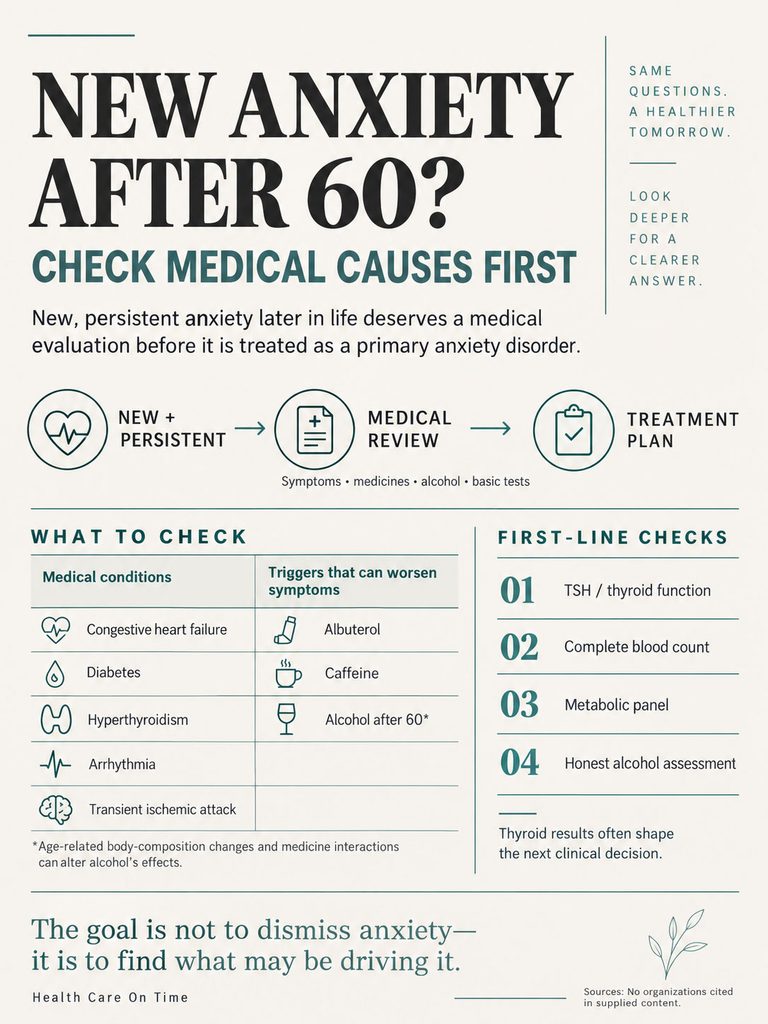
Most anxiety disorders begin earlier in life. When genuinely new, persistent anxiety appears for the first time in someone’s sixties or seventies, the first question is not which therapy to try. It is what changed.
Psychiatric guidance on anxiety in later life states the rule plainly: any new anxiety symptoms in later life should prompt an investigation for medical causes.
Medical conditions that produce anxiety symptoms
Cardiopulmonary illnesses associated with anxiety include congestive heart failure and arrhythmias, and endocrine illnesses include diabetes and thyroid disease.
Broader reviews extend the list. Conditions with similar symptoms that should be ruled out include hyperthyroidism, pheochromocytoma, hyperparathyroidism, arrhythmia, obstructive pulmonary disease, temporal lobe epilepsy, and transient ischemic attacks.
Atrial fibrillation deserves a specific line. It produces exactly the cluster that reads as a panic attack, palpitations with breathlessness and a sense of dread, and it becomes far more common with age.
Medications and substances that can do it
Medications including asthma treatments such as albuterol and steroids often precipitate anxiety, and caffeine, present in some medications as well as in tea, coffee, and soft drinks, can also cause anxiety at higher doses.
Add thyroid replacement at too high a dose, decongestants, several over-the-counter cold preparations, and withdrawal states of various kinds.
The alcohol question specifically
Alcohol lands differently after 60 for reasons unrelated to willpower. Body composition, liver enzyme activity, and medication interactions all shift, and the rebound anxiety that follows a few drinks tends to be sharper than it was at 40.
Anyone reviewing new anxiety should count drinks honestly before anything gets prescribed.
What tests a clinician typically orders
There is no blood test for anxiety. There are blood tests that exclude conditions imitating it, which is the actual purpose of ordering them.
A reasonable first round usually includes a TSH with free T4 for thyroid function, a complete blood count, a basic or comprehensive metabolic panel covering electrolytes and glucose, and vitamin B12. An ECG is common when palpitations feature prominently.
In cases reviewed across our lab partners, the thyroid panel is the single most frequently ordered test for adults over 65 who describe new nervousness, and it is the one most likely to change the plan when a result comes back abnormal.
The Screening Tools, and What Each One Misses
GAD-7 and GAD-2
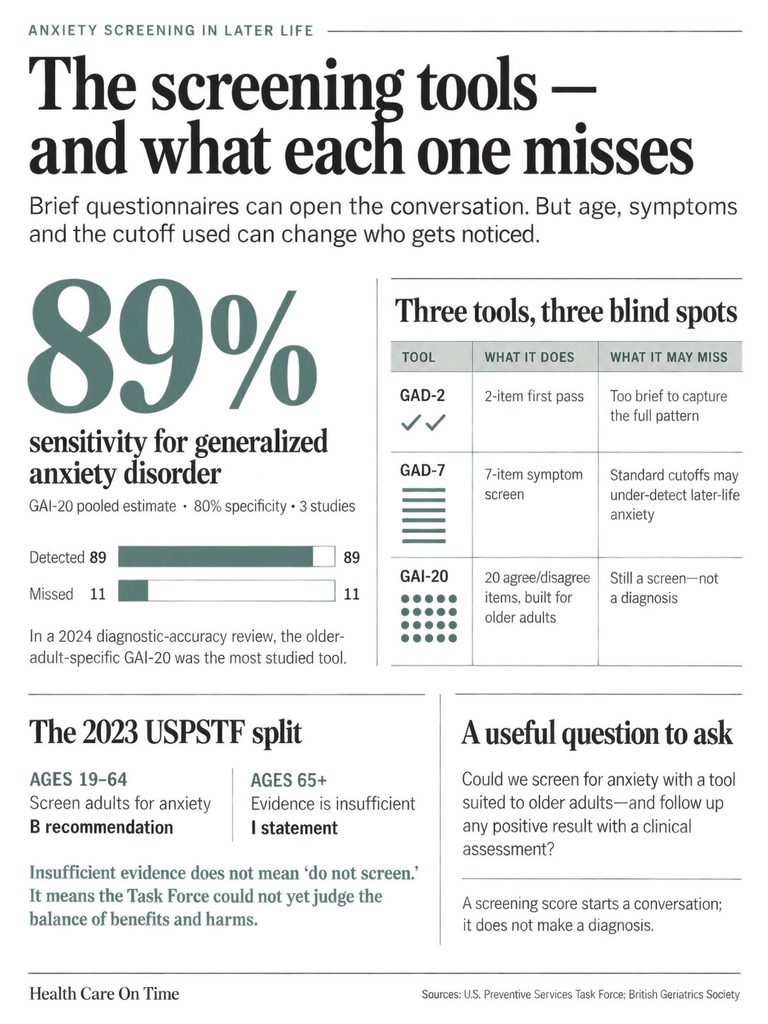
These are the workhorses: short, free, validated, and widely used. Their main weakness in this population is the threshold problem described above.
Used with a lower cut point, alongside a real conversation about daily function, they still earn their place in a first appointment.
The Geriatric Anxiety Inventory
Built specifically for older adults, this tool avoids somatic items that overlap with medical illness. That design choice explains its better performance here.
A 2024 systematic review pooled evidence across 32 studies and 23 different tools. For detecting generalized anxiety disorder, the 20-item Geriatric Anxiety Inventory showed pooled sensitivity of 0.89 (95% CI 0.70 to 0.97) and specificity of 0.80 (95% CI 0.67 to 0.89).
The review concluded that the GAI-20, the GAI Short Form, and the anxiety subscale of the Hospital Anxiety and Depression Scale are supported for detecting anxiety in community-dwelling older adults, and that brief, self-rated, easy-to-use tools may be the best options given resource limitations.
Where US screening guidance stands
In 2023 the US Preventive Services Task Force issued its first recommendation on anxiety screening in adults. The split inside that recommendation is the most important fact on this page.
The Task Force recommends screening for anxiety disorders in adults, including pregnant and postpartum persons, a B recommendation, and concludes that the current evidence is insufficient to assess the balance of benefits and harms of screening for anxiety disorders in older adults, defined as those 65 years or older, an I statement.
The Task Force also noted that it extrapolated GAD-2 accuracy evidence from younger adults to pregnant and postpartum persons, while the evidence on older adults is lacking.
Its instruction to clinicians is direct. In the absence of evidence, health care professionals should use their judgment based on individual patient circumstances when determining whether to screen for anxiety disorders in older adults.
What “insufficient evidence” does and does not mean
It does not mean anxiety in the elderly is unimportant or untreatable. It means nobody has run the trials showing whether routinely screening everyone over 65 improves outcomes.
The practical translation for an American patient or family is simple. Nobody is required to raise this on your behalf, so raise it yourself.
What Actually Works: The Treatment Evidence, Ranked
Talk therapy first, and the numbers behind that
A 2025 systematic review did something earlier reviews had muddled. It separated diagnostic remission from treatment response, two different outcomes that often get reported as one.
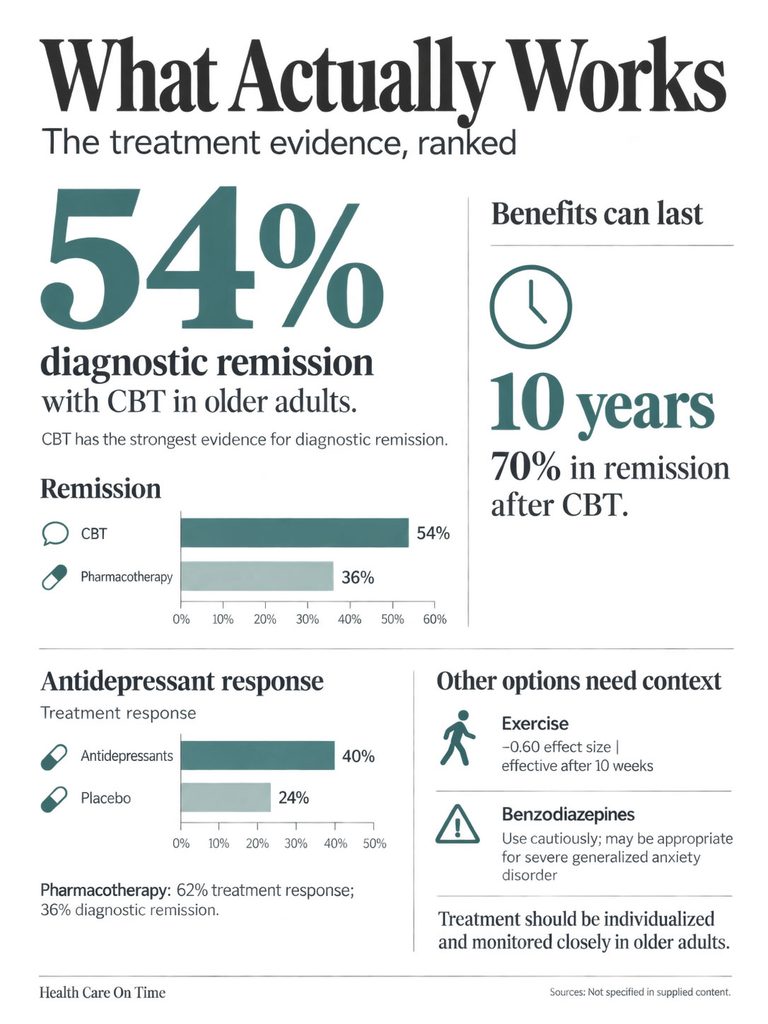
The analysis covered 22 trials and more than 2,320 people aged over 60. There was 54% diagnostic remission after CBT and 36% after pharmacotherapy, 53% treatment response from CBT and 62% from pharmacotherapy, though definitions of treatment response varied widely, along with 33% relapse after CBT and 18% attrition from both CBT and pharmacotherapy.
Remission was significantly higher following CBT than inactive control, at an odds ratio of 7.14, or 59% versus 18%.
Read those figures honestly. CBT wins on remission, loses slightly on response, and a third of people relapse. That is a real treatment with real limits, not a cure.
Durability looks reasonable over the long run. In a 10-year follow-up of a randomized trial, 70% of those treated with CBT were in remission of their primary diagnosis and 60% were in remission of all diagnoses.
The authors’ own conclusion was that the results suggest potential superiority of CBT as a first-line treatment for late-life anxiety.
One caveat on applicability. The strongest CBT evidence comes from Australian and European trial programs, and American readers should expect the same techniques delivered under a different payment structure, which the Medicare section below covers.
Medication, by evidence strength
A 2025 Lancet Psychiatry meta-analysis was the first since 2012 to synthesize drug evidence for anxiety in older adults across multiple classes with a formal grading of evidence certainty.
It compiled 19 randomized trials in adults aged 60 and older, with a combined sample of 2,336 participants, 68% of them female, primarily with generalized anxiety but also some with panic disorder or agoraphobia.
Overall, 40% of participants taking antidepressants achieved a response, meaning a 50% or greater reduction in symptoms, or remission, compared with 24% of those on placebo or waitlist. SSRIs produced greater anxiety symptom improvements over control groups than SNRIs did, though both classes showed similar rates of response and remission.
The rest of the field looked thin. Findings from other drug classes indicated low certainty evidence for quetiapine and buspirone, and very low certainty evidence for pregabalin and benzodiazepines. The review’s summary was that antidepressants demonstrate the strongest evidence in this population for effectiveness, safety, and tolerability.
That review fed the Canadian Coalition for Seniors’ Mental Health guidelines on anxiety in older adults, released in January 2024. No equivalent dedicated American guideline currently exists, which is part of why US primary care practice varies so widely.
The benzodiazepine question, answered completely
Most consumer articles either list benzodiazepines as a normal option without comment or condemn them outright. Both versions mislead, and the real guidance is more useful than either.
The American Geriatrics Society Beers Criteria is the reference American clinicians actually use. The 2023 update recommends avoiding benzodiazepines, in all short-, intermediate-, and long-acting forms, for all older adults because of raised risk of cognitive impairment, delirium, falls, fractures, and motor vehicle crashes.
Now the part that gets left out. The same criteria state that benzodiazepines may be appropriate for seizure disorders, rapid eye movement sleep behavior disorder, benzodiazepine withdrawal, ethanol withdrawal, severe generalized anxiety disorder, and periprocedural anesthesia.
Severe generalized anxiety disorder is named on that exception list. The honest position is that these medicines are not banned, they are a deliberate decision made at the lowest effective dose with a written plan.
The sleep medications often proposed as substitutes, the non-benzodiazepine Z-drugs eszopiclone, zaleplon, and zolpidem, carry adverse events similar to benzodiazepines in older adults, including delirium, falls, fractures, and motor vehicle crashes, with minimal improvement in sleep. Trading one for the other solves nothing.
In July 2025 the American Geriatrics Society released a companion Alternatives List to help clinicians identify safer treatment options for medications flagged in the Beers Criteria.
What to ask before starting or stopping anything
Nobody should stop a benzodiazepine abruptly on the strength of an article. Withdrawal from these medicines can be dangerous, and tapering is a supervised process.
Four questions for the appointment: what is this specific drug treating, how long is it meant to continue, what would we try instead, and how would a taper work if we chose one.
Exercise, with a real effect size
Exercise advice usually appears in these articles as a throwaway line. Numbers sit behind it.
A meta-analysis of 11 randomized controlled trials involving 770 older participants found a significant overall effect of physical activity on reducing anxiety symptoms, with a standardized mean difference of -0.60 (95% CI -0.88 to -0.32). All exercise types, including resistance training, cardio, and combinations of both, showed independent efficacy, and longer duration produced larger effects.
One detail matters more than the headline. Studies with follow-up shorter than 10 weeks did not show a statistically significant reduction. Two weeks of walking will not answer the question. Ten weeks might.
A separate review conducted for the Canadian guidelines reached a similar conclusion, that physical activity reduces anxiety symptoms in older adults and is an acceptable and promising intervention to build into care planning.
Treatment Options by Evidence Strength
| Option | Evidence strength | What the numbers show | Main caution |
| Cognitive behavioral therapy | Strongest for remission | 54% diagnostic remission; OR 7.14 against inactive control | 33% relapse; needs a trained provider |
| SSRIs | Strong, first-line drug class | 40% response or remission vs 24% control; better symptom improvement than SNRIs | Start low, go slow; monitor sodium and fall risk |
| SNRIs | Strong | Response and remission similar to SSRIs | Blood pressure effects; same start-low rule |
| Exercise, 10 weeks or more | Moderate, very low risk | SMD -0.60 across 11 RCTs and 770 participants | Under 10 weeks showed no significant effect |
| Buspirone | Low certainty | Limited trial data in adults 60 and over | Slow onset; thin evidence base |
| Quetiapine | Low certainty | Effective in general adult trials, poorly tolerated | Antipsychotic risks in older adults |
| Pregabalin | Very low certainty | Sparse data in this age group | Sedation, falls, dose change in kidney disease |
| Benzodiazepines | Very low certainty | Efficacy data weak in adults 60 and over | Beers: avoid, with a named exception for severe GAD |
Anxiety, Falls, Isolation, and Memory
Fear of falling and activity restriction
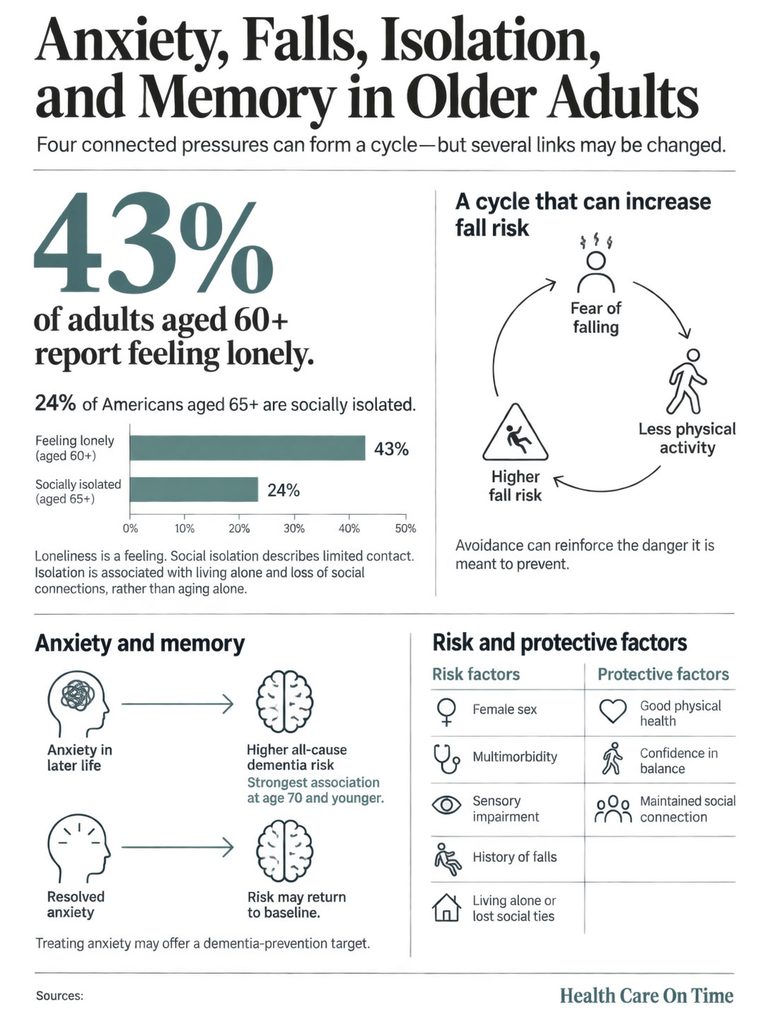
Fear of falling is not a footnote here. It is one of the most common forms late-life anxiety takes, and it produces a loop. Fear leads to less walking, less walking weakens balance, weaker balance raises genuine fall risk.
A systematic review of reviews identified 77 risk and protective factors for anxiety in older adults, with recurrent risk factors including female sex, multimorbidity, sensory impairments, impaired balance, a history of falls, fear of falling, depression, social isolation, and sleep disturbances, while good physical health and balance confidence were protective.
Balance confidence appearing as a protective factor is worth sitting with, because it suggests strength and balance work does double duty for both the fear and the risk.
Social isolation and loneliness
Roughly one quarter, 24%, of community-dwelling Americans aged 65 and older are considered socially isolated, and 43% of adults aged 60 and older report feeling lonely. The National Academies report behind those figures cautioned against assuming aging itself causes isolation; older adults face higher risk because they more often live alone and encounter loss of family and friends, chronic illness, and sensory impairments.
The dementia question, answered carefully
This connection gets oversold in headlines, so here is the finding with its limits attached.
In a longitudinal analysis from the Hunter Community Study, chronic and new anxiety were associated with increased risk of all-cause dementia, with the association significant in those aged 70 and younger, while anxiety that had resolved at follow-up carried risk similar to the non-exposed group.
The corresponding author’s interpretation was that anxiety may be a risk factor to target in dementia prevention, and that treating anxiety may reduce that risk.
Now the caveat most coverage skipped. The study authors noted that anxiety is common both in older adults and in people with dementia, so anxiety could be a prodromal symptom, meaning early or subclinical dementia could be producing the anxiety rather than the reverse.
The finding that resolved anxiety returned risk toward baseline is genuinely encouraging. It is not proof that treating anxiety prevents dementia, and it should not be sold that way.
For Families: How to Help Without a Fight
This is the part page one leaves out, and it is where most readers of this article actually sit.
Start with the body, not the mind
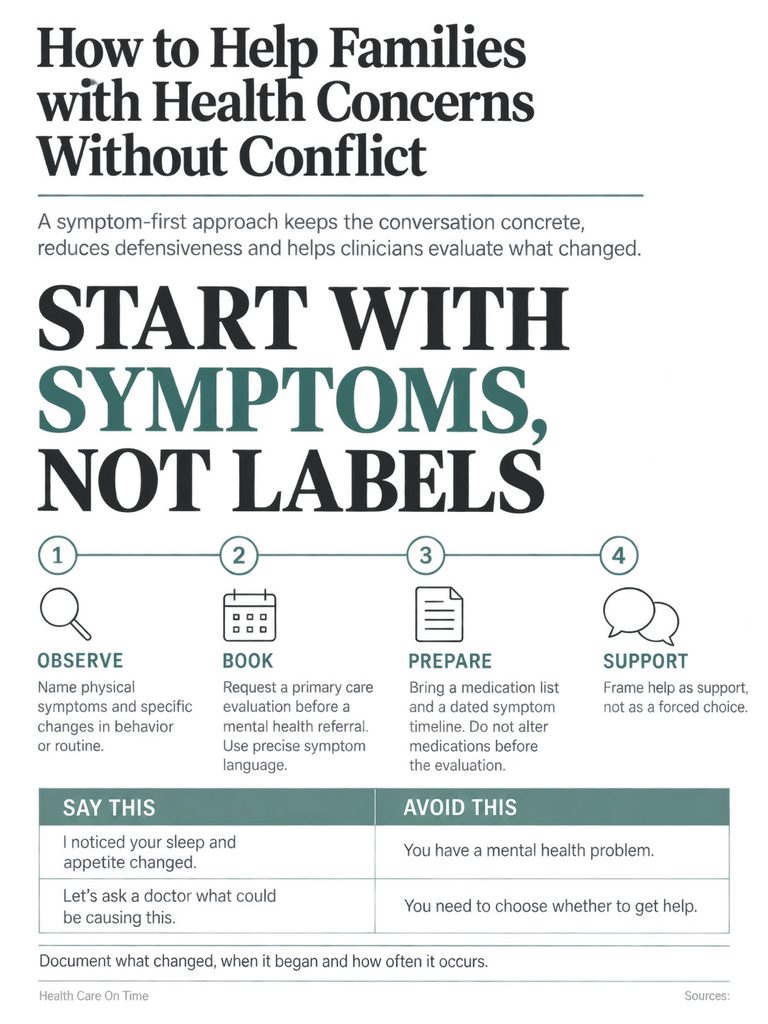
“You’ve mentioned your stomach a lot lately” lands where “I think you have anxiety” does not. The physical complaint is real, the person already raised it, and it opens the door without a diagnosis attached.
Tie the concern to something concrete that changed. Skipped church, a canceled trip, a phone that rings four times a day.
Offer the medical route first
Suggesting a doctor rule out thyroid and heart causes is far easier to accept than suggesting a therapist, and it happens to be the correct clinical first step. Starting with the test is not a trick, it is the right order.
Readers write to us most often with exactly this problem, a parent who will accept a blood test and refuses the word therapist. The test buys a conversation that the word closes down.
What to do in the first two weeks
Week one. Write down what changed and when, including the first activity that got dropped. Photograph every medication bottle and supplement in the house, prescription and over-the-counter both. Count caffeine and alcohol honestly for seven days.
Week one, second half. Book a primary care appointment and say on the phone that the visit concerns new physical symptoms plus a change in daily activity. That phrasing gets a longer slot than the word anxiety.
Week two. Attend the appointment if invited. Ask for the blood panel listed earlier, ask directly whether a GAD-7 or Geriatric Anxiety Inventory was administered, and ask what the score was rather than whether it was normal.
What not to do. Do not stop or reduce any prescription medicine before that appointment, and do not frame the conversation as a choice between being fine and needing help.
What to bring
A written medication list including supplements. A rough timeline of symptom onset. Two specific examples of activities that stopped. A note of any recent falls, hospital stays, or bereavements.
Getting Help: Cost, Coverage, and Access in the US
Cost is the barrier most articles skip. The American numbers are better than most people assume.
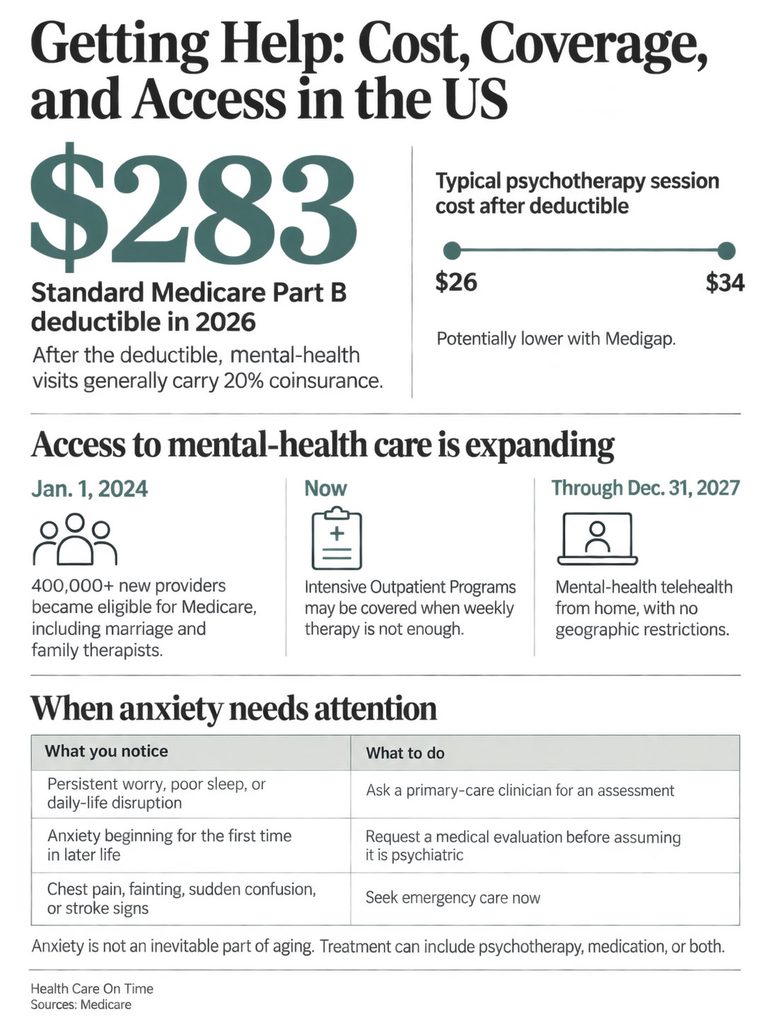
In 2026 the standard Part B deductible is $283, after which you generally pay 20% of the Medicare-approved amount for covered visits to diagnose or treat a mental health condition when the provider accepts assignment. For a session billed at a Medicare-approved rate of roughly $130 to $170, that 20% works out to about $26 to $34 after the deductible, and a Medigap plan covering the coinsurance can bring out-of-pocket cost close to zero.
Medicare also covers Intensive Outpatient Programs, which suit people needing more than weekly therapy but not a hospital stay, typically requiring at least nine hours of treatment per week.
The provider list got longer
For decades two of the largest therapy professions could not bill Medicare at all. That changed on January 1, 2024, when licensed marriage and family therapists and mental health counselors became eligible to enroll, adding more than 400,000 additional providers.
Anyone who searched for a Medicare therapist before 2024 and gave up should search again. The supply picture is different now.
Telehealth from home
Medicare patients can permanently receive telehealth services for behavioral and mental health care in their home, with no geographic restrictions on the originating site. The in-person visit requirement, normally required within six months of an initial behavioral telehealth service and annually after that, is not required through December 31, 2027.
For someone who has stopped driving, or whose anxiety is partly about leaving the house, this removes the exact obstacle blocking treatment. Audio-only sessions are covered for established patients when video is not workable.
What to Do, Based on What You Are Seeing
| If this is happening | It may point to | Do this |
| New chest pain, breathlessness, or fainting | A cardiac or respiratory cause, not anxiety | Seek emergency care now; anxiety is a diagnosis of exclusion here |
| New worry within weeks of a medication change | A medication effect | Call the prescriber before the next dose; do not stop on your own |
| Long-standing worry that recently worsened | An anxiety disorder that has escalated | Primary care visit; request thyroid, CBC, metabolic panel, B12, and a GAD-7 |
| Worry plus new memory complaints | Anxiety, early cognitive change, or both | Primary care visit; ask for cognitive screening alongside anxiety screening |
| Fear of falling, with or without a fall | Fear-driven activity restriction | Ask for a falls risk assessment and a referral for balance and strength work |
| Withdrawal from groups and conversation | Possible hearing or vision loss, not only mood | Book a hearing test and an eye exam before assuming anxiety is the whole story |
| Already taking a benzodiazepine and worried | A Beers Criteria medication needing review | Book a medication review; ask about a supervised taper, never stop abruptly |
| Cannot leave the house to get help | Avoidance that blocks treatment | Ask about Medicare-covered telehealth therapy delivered at home |
Frequently Asked Questions
Is anxiety a normal part of aging?
No. Worry about real problems is normal at any age, but persistent anxiety that interferes with sleep, activities, or relationships is a treatable condition rather than a stage of life. Federal survey data actually show older adults reporting fewer anxiety symptoms than younger adults, which makes a real change worth investigating.
Can anxiety start for the first time in your 70s?
It can, though genuinely new anxiety in later life should prompt a search for a medical or medication cause before it is treated as a primary psychiatric condition. Thyroid disease, heart rhythm problems, lung disease, and several common medications all produce the same symptoms.
What is the most common anxiety disorder in older adults?
Generalized anxiety disorder is the most commonly diagnosed type, marked by persistent, hard-to-control worry across many areas of life. Specific phobias are also frequent. One correction to a claim that circulates widely: obsessive-compulsive disorder is no longer classified as an anxiety disorder under DSM-5 criteria.
Can anxiety be mistaken for dementia?
Yes, and the confusion runs both ways. Anxiety consumes attention and working memory, producing real recall complaints that fluctuate day to day. Early cognitive change can also produce anxiety. When memory complaints and worry appear together, both deserve evaluation at the same appointment.
What is the safest anxiety medication for an older adult?
Antidepressants carry the strongest evidence for both effectiveness and tolerability in this age group, with SSRIs showing greater symptom improvement than SNRIs in pooled trial data. The right choice depends on kidney function, other medications, and personal history, making this a prescriber conversation rather than a fixed answer.
Should an older adult take Xanax or a similar medicine?
The Beers Criteria recommend avoiding benzodiazepines for most older adults because of raised risk of cognitive impairment, delirium, falls, fractures, and motor vehicle crashes. The same guidance names severe generalized anxiety disorder as one situation where they may be appropriate. It is a deliberate decision, not a routine one.
Does therapy really work for people over 70?
Yes. Pooled trial data in adults over 60 show 54% diagnostic remission after cognitive behavioral therapy, higher than the 36% seen with medication. A 10-year follow-up of one randomized trial found 70% still in remission of their primary diagnosis. Age is not a barrier to benefit.
Which blood tests help rule out other causes?
There is no blood test for anxiety, only tests that exclude conditions imitating it. A reasonable first round includes TSH with free T4, a complete blood count, a metabolic panel covering electrolytes and glucose, and vitamin B12. An ECG is often added when palpitations are prominent.
Does Medicare cover therapy for anxiety?
Yes. Part B covers outpatient psychotherapy and psychiatric care. In 2026 you pay the $283 deductible, then 20% coinsurance, which typically works out to roughly $26 to $34 per session. Medigap plans commonly cover that coinsurance in full.
Can anxiety raise blood pressure in older adults?
Anxiety raises blood pressure temporarily during episodes, which is one reason readings taken during a stressful clinic visit mislead. Whether chronic anxiety causes sustained hypertension is less settled. Home monitoring with a validated cuff gives a more accurate picture than any single office reading.
How do I talk to my parent about getting help?
Start with a physical symptom they already mention, name one specific activity they have stopped, and propose a medical visit to rule out thyroid and heart causes. That framing is easier to accept and happens to be the correct first clinical step. Offer to go along.
Could hearing loss be causing this?
It can contribute. Straining to follow conversation is exhausting, and people withdraw from social settings long before they explain why. Sensory impairment appears among documented anxiety risk factors in older adults. A hearing test belongs in the same conversation as a mood screen, not a separate one.
Medical Disclaimer
This article provides general education and does not replace evaluation, diagnosis, or treatment by a qualified clinician. Anxiety and depression frequently occur together in later life, and the symptoms described here overlap with several medical conditions that require testing to distinguish.
Never start, stop, or change a prescription medication without speaking to the prescriber, since some anxiety medications can be dangerous to discontinue abruptly.
If you or someone you care about is in emotional distress or crisis, the 988 Suicide and Crisis Lifeline is available 24 hours a day by call or text at 988. For help finding local aging services, the Eldercare Locator can be reached at 1-800-677-1116.
References
- Symptoms of Anxiety and Depression Among Adults: United States, 2019 and 2022, CDC/NCHS National Health Statistics Reports No. 213
- Screening for Anxiety Disorders in Adults: US Preventive Services Task Force Recommendation Statement
- Detection of anxiety symptoms and disorders in older adults: a diagnostic accuracy systematic review, Age and Ageing
- Assessing Generalized Anxiety Disorder in Elderly People Using the GAD-7 and GAD-2 Scales, American Journal of Geriatric Psychiatry
- Systematic Review and Meta-analysis of Remission, Response, Attrition and Relapse Following CBT and Pharmacological Treatments for Anxiety Disorders in Older Adults
- Pharmacological treatment of anxiety in older adults: a systematic review and meta-analysis, The Lancet Psychiatry
- American Geriatrics Society 2023 Updated AGS Beers Criteria for Potentially Inappropriate Medication Use in Older Adults
- AGS Releases New Beers Criteria Alternatives List to Support Safer Prescribing for Older Adults
- The effect of anxiety on all-cause dementia: a longitudinal analysis from the Hunter Community Study
- Social Isolation and Loneliness in Older Adults, National Academies of Sciences, Engineering, and Medicine
- Factors associated with anxiety and fear of falling in older adults: a rapid systematic review of reviews
- Effect of physical activity for reducing anxiety symptoms in older adults: a meta-analysis of randomized controlled trials
- Anxiety in Later Life, Focus, American Psychiatric Association
- Medicare Payment Policies for Telehealth, Telehealth.HHS.gov
- Canadian Guidelines for the Assessment and Treatment of Anxiety in Older Adults, Canadian Coalition for Seniors’ Mental Health