Researchers once intercepted 95 women who had just bought an over-the-counter antifungal cream and were carrying it home to use. Each woman agreed to an exam and lab testing first.
Table of Contents
Only about one in three actually had a yeast infection. The rest had bacterial vaginosis, a mixed infection, trichomoniasis, or nothing wrong at all (Ferris et al., Obstetrics & Gynecology).
That single finding explains why so much home remedy advice fails. Nearly all of it assumes you already know what you have. Most women do not, and the women in that study did not either.
Quick Answer
Cool compresses, colloidal oatmeal soaks, plain petrolatum, cotton underwear, and stopping whatever product started the itch are the home measures with a reasonable safety record. None of them cures an infection. Skip douches, tea tree oil, vinegar rinses, garlic, and homemade boric acid capsules. Itching that lasts more than a week, or comes with sores, bleeding, or white skin patches, needs a clinical exam.
The 8 Safest Things to Try Tonight
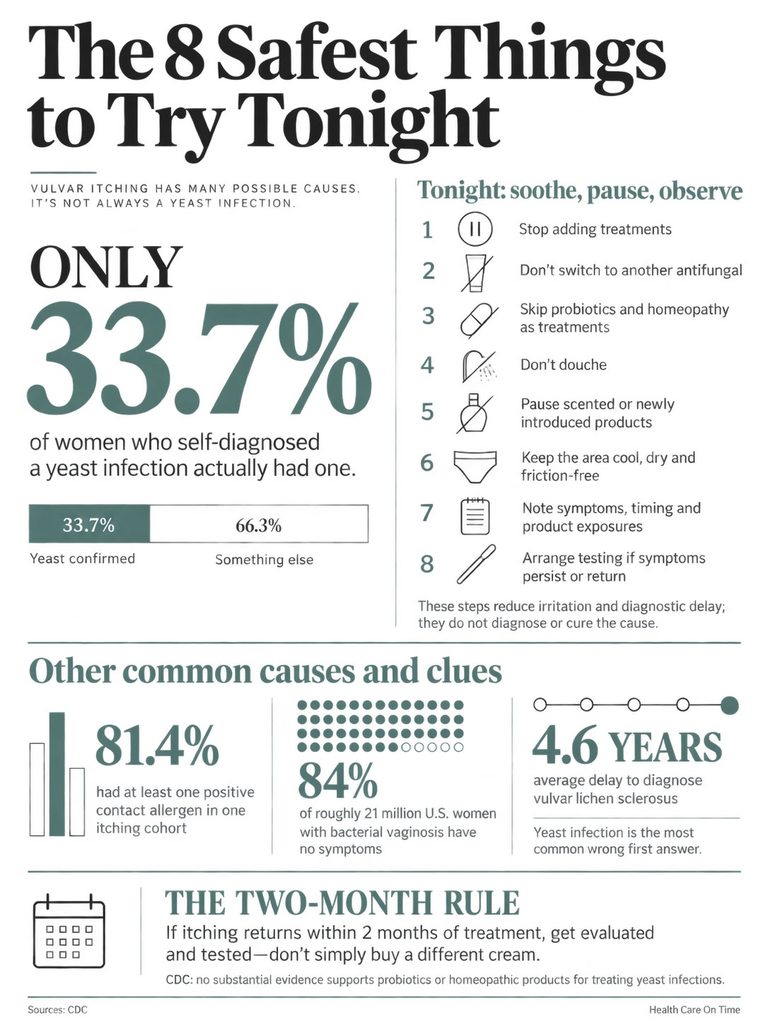
- Stop all scented products immediately
- Apply a cool damp cloth, 10 minutes
- Soak in plain lukewarm water
- Add colloidal oatmeal to the bath
- Apply a thin layer of petrolatum
- Switch to 100% cotton underwear
- Rinse with water only, no soap
- Sleep without underwear
At a Glance
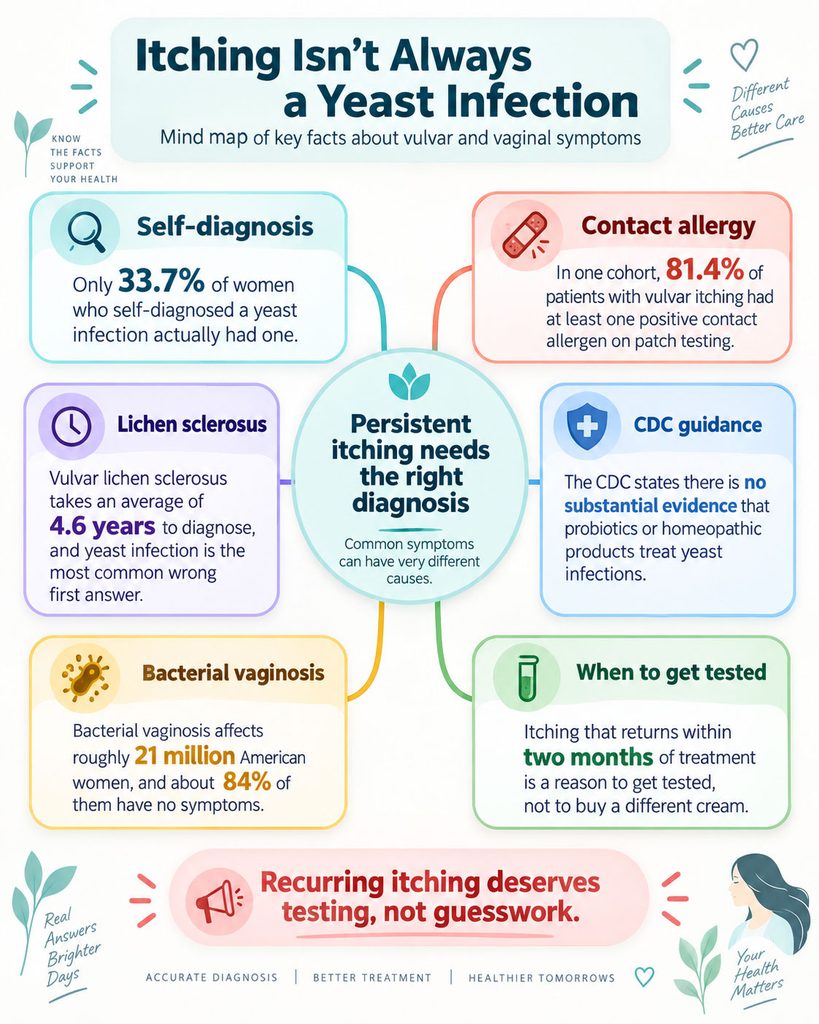
• Only 33.7% of women who self-diagnosed a yeast infection actually had one
• In one cohort, 81.4% of patients with vulvar itching had at least one positive contact allergen on patch testing
• The CDC states there is no substantial evidence that probiotics or homeopathic products treat yeast infections
• Bacterial vaginosis affects roughly 21 million American women, and about 84% of them have no symptoms
• Vulvar lichen sclerosus takes an average of 4.6 years to diagnose, and yeast infection is the most common wrong first answer
• Itching that returns within two months of treatment is a reason to get tested, not to buy a different cream
Start Here: Is It the Vagina or the Vulva?
These are two different body parts with two different problem lists, and almost every failed home remedy begins by confusing them.
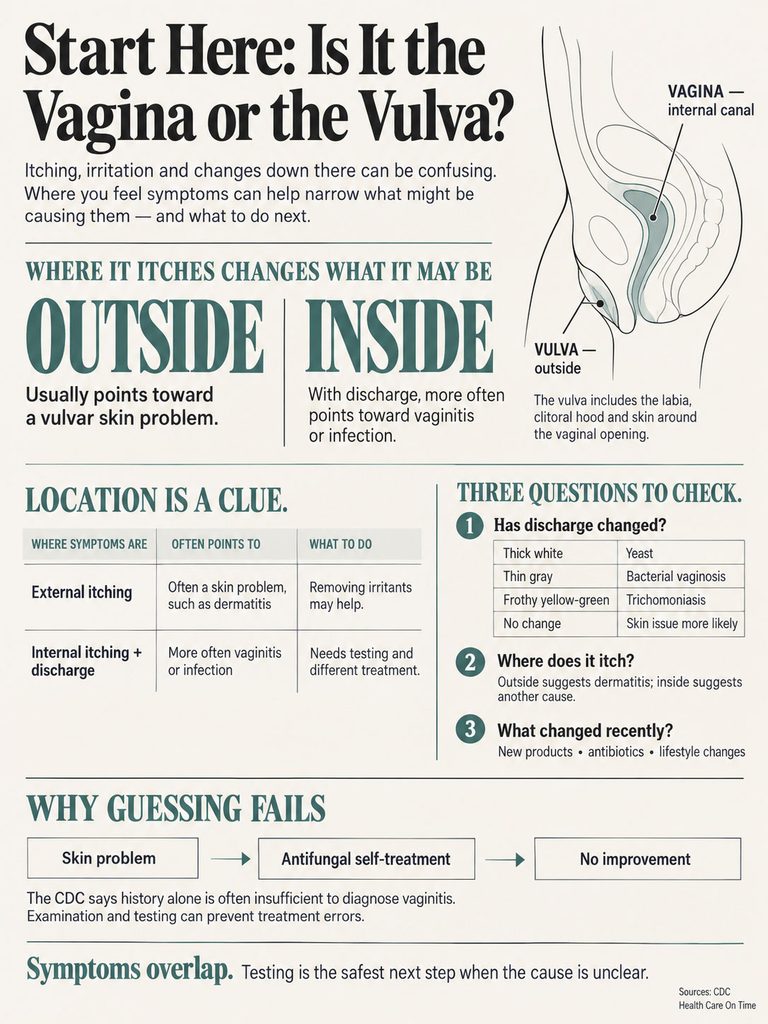
The vulva is everything visible from outside: the labia, the clitoral hood, the skin around the vaginal opening. The vagina is the internal canal. Clinicians call external itching pruritus vulvae, and it behaves like a skin problem, because that is what it is.
Internal itching paired with a change in discharge usually points toward infection. External itching with normal discharge usually points toward the skin itself.
Why the distinction changes your next move
Skin problems respond to removing irritants and rebuilding the barrier. Infections do not. You can settle an irritated vulva in a few days by taking things away, but no amount of coconut oil clears trichomoniasis.
Our medical reviewers see this reversed constantly. Readers treat a skin problem with an antifungal, get nothing, then reach for a second antifungal instead of questioning the diagnosis.
The three-question self-check
Answer these before you apply anything.
Is there discharge, and has it changed? Thick, white, and clumpy leans yeast. Thin, gray, and odorous leans bacterial vaginosis. Frothy and yellow-green leans trichomoniasis. No change at all leans skin.
Where exactly does it itch? Point to it. Strictly external itching with normal discharge shifts the odds heavily toward dermatitis or a vulvar skin condition.
What changed in the past two weeks? New detergent, new pad or liner, new soap, new partner, a course of antibiotics, a steroid prescription, or a swing in blood sugar control.
The CDC vaginal discharge guidance is blunt about the ceiling here. Taking a history alone has been shown to be insufficient for diagnosing vaginitis, which is exactly why self-treatment goes wrong so often.
The Home Remedies Worth Trying
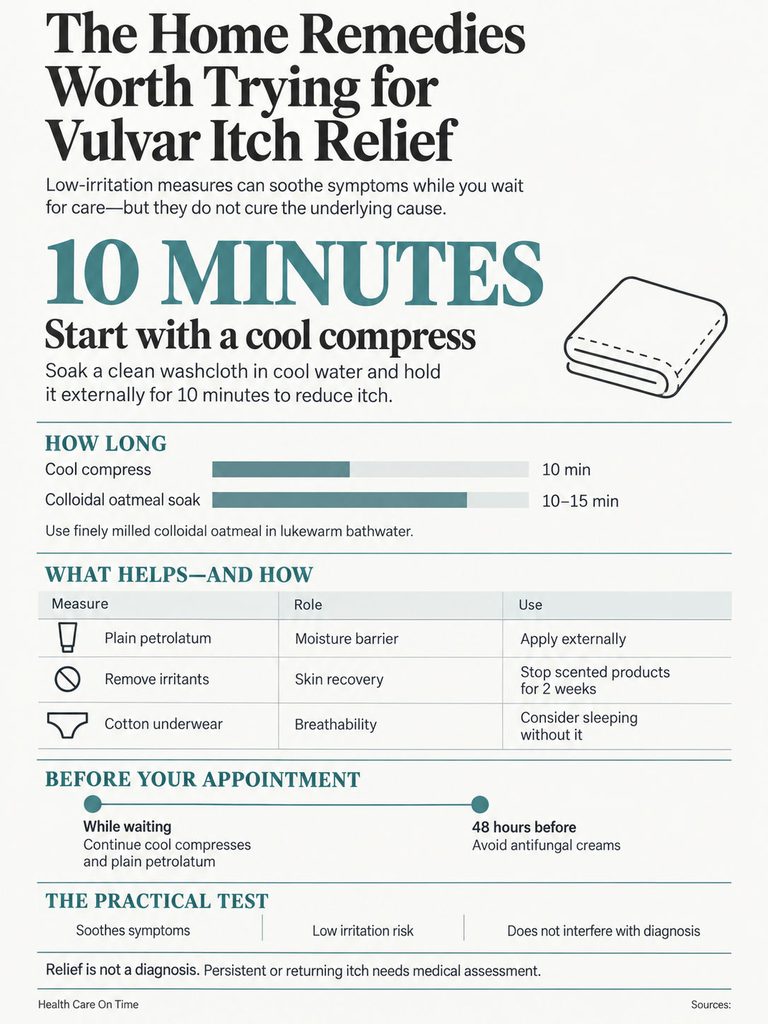
These share three traits. They soothe rather than claim to cure, they carry low irritation risk, and they do not interfere with a diagnosis later.
Cool compresses and cool water
A clean washcloth soaked in cool water, held against the vulva for about 10 minutes, reduces itch through temperature rather than chemistry. It is the fastest relief available at home and carries essentially no risk.
Repeat as often as you need. Pat dry afterward instead of rubbing, since friction is itself a documented vulvar irritant.
Colloidal oatmeal soaks
Finely milled oatmeal suspended in lukewarm bathwater has real anti-inflammatory data behind it in eczema, and vulvar dermatitis behaves much like eczema elsewhere on the body.
Use a plain, fragrance-free product. Soak 10 to 15 minutes, rinse with clear water, pat dry. Skip anything sold as oatmeal and lavender or oatmeal and honey, because the additive is the risk.
Plain petrolatum as a barrier
Ordinary white petroleum jelly is the single most useful item in a vulvar itch kit. It seals moisture in, blocks urine and sweat from reaching broken skin, and carries one of the lowest allergen profiles in dermatology.
Apply a thin layer to external skin only, after bathing and before bed. Keep it out of the vagina, and do not pair it with latex condoms, since petroleum degrades latex.
Removing the irritant
This is the highest-yield step on this page, and no competing remedy list leads with it.
Stop scented wipes, bubble bath, bath bombs, scented pads and liners, feminine sprays, scented body wash, fabric softener, dryer sheets, and any product marketed as an intimate wash. Clean the vulva with warm water and nothing else for two weeks.
Patients booking tests with HealthCareOnTime often report the itch fading within days of a laundry detergent switch alone, before any appointment happens.
Cotton underwear and the leave-it-alone principle
Cotton breathes. Nylon and spandex trap heat and moisture against skin already under strain. Sleeping without underwear gives that skin several hours of air exposure it otherwise never gets.
The broader rule is restraint. Vulvar skin recovers when you stop doing things to it, not when you layer another product on top.
What to do while you wait for an appointment
Booking three days out does not mean three days of suffering. Keep the cool compress, the water-only washing, and the petrolatum going, since none of them will interfere with testing.
Two things matter for the visit itself. Do not apply an antifungal or steroid cream in the 48 hours beforehand, because both change how the skin and the wet mount look. And write down what you have already tried, including product names, so the clinician can spot an irritant instead of guessing at an organism.
Remedy by Remedy: What the Evidence Actually Supports
| Remedy | What it actually does | Evidence grade | Safe on outer vulva | Safe inside vagina |
| Cool compress | Reduces itch signal by temperature | Low formal evidence, very low risk | Yes | Not applicable |
| Colloidal oatmeal soak | Anti-inflammatory, barrier support | Moderate, from eczema trials | Yes | No |
| Plain petrolatum | Seals and protects damaged skin | Moderate, minimal allergen risk | Yes | No |
| Removing scented products | Removes the cause in irritant cases | Strong, from patch-test literature | Yes | Yes |
| Coconut oil | Emollient only; antifungal claim is in-vitro | Weak, no human vaginitis trials | Usually, if unscented | No |
| Plain Greek yogurt | Adds Lactobacillus; does not clear Candida | Weak; CDC finds no substantial support | Messy, low risk | Not advised |
| Tea tree oil | Antimicrobial in the lab; a known sensitizer | Weak benefit, documented harm | No | No |
| Apple cider vinegar | Acidifies skin; can chemically burn | No supporting human data | No | No |
| Baking soda bath | Alkalinizes; opposite of vaginal pH | In-vitro only, wrong direction | Diluted, occasionally | No |
| Boric acid capsules | Real activity against non-albicans yeast | Moderate, prescription-guided only | No | Only under a clinician |
| Garlic, inserted | No demonstrated antifungal effect in vivo | None; burn and abrasion risk | No | No |
Table 1. Evidence grading and site-specific safety for 11 commonly recommended home remedies.
The Remedies That Make It Worse
Here is what page-one advice leaves out. Several of the most-recommended home remedies for vaginal itching appear in the dermatology literature as causes of vulvar itching.
Natural is not the same as safe on vulvar skin
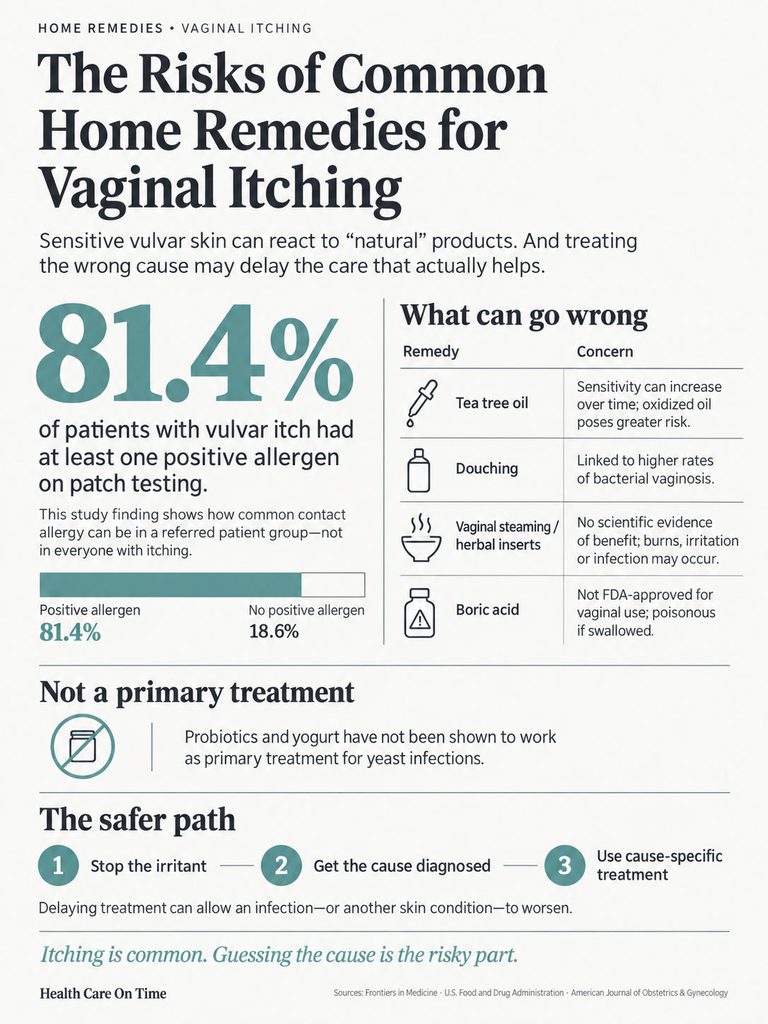
Vulvar skin is thinner, warmer, more occluded, and more permeable than skin on your forearm. Substances tolerated elsewhere penetrate and sensitize here.
In one prospective cohort, 81.4% of patients presenting with vulvar itch had at least one positive contact allergen on patch testing, and atopic, irritant, and allergic contact dermatitis together are described as the leading causes of vulvar itch in women (Frontiers in Medicine).
Fragrances, preservatives, botanical extracts, and topical medicaments dominate the relevant-allergen lists. Those are the exact four categories most home remedies belong to.
A European patch-test series in patients with chronic vulvar complaints found roughly two thirds were applying natural topical products to the vulva, and among the small group reporting adverse effects from botanicals, a meaningful share showed genuine sensitization on testing.
Tea tree oil and the bottle you already opened
Tea tree oil is the most frequently recommended natural antifungal online and one of the most frequently reported essential-oil allergens in dermatology clinics.
The problem compounds over time. Oxidation, which happens through ordinary exposure to air and light, can increase the oil sensitizing capacity roughly threefold (Actas Dermo-Sifiliograficas). The bottle you opened a year ago is more dangerous than a fresh one, not less.
In routine patch testing, positive reactions to oxidized tea tree oil have run around 1.8% of those tested. Applied undiluted to already-inflamed vulvar skin, that risk is not theoretical.
Douching, steaming, and detox pearls
Douching has been tied repeatedly to higher rates of bacterial vaginosis, and increasing douching frequency stayed associated with BV even after statistical adjustment in national US survey data (Koumans et al.).
Vaginal steaming and herbal insert products sit in a worse category, because there is no efficacy evidence at all. Cleveland Clinic notes these unregulated herbal pellets have no scientific backing and can cause harm, including infection.
Mayo Clinic gynecologists put the mechanism plainly: inserting things changes vaginal pH, and changing vaginal pH is how you get the infection you were trying to avoid (Mayo Clinic Press).
Homemade boric acid capsules
At least one page currently ranking for this query instructs readers to buy size 0 gelatin capsules, fill them with 600 mg of boric acid, and insert one nightly for a week. That instruction carries three problems.
Boric acid is not FDA-approved for yeast infections or any other vaginal infection. It has a legitimate clinical role, mostly against non-albicans species that shrug off standard azoles, but that role begins after a culture names the organism.
It is also a household poison. Poison Control notes that swallowing large amounts can cause gastrointestinal distress, kidney problems, or death. Loose powder and unlabeled capsules stored in a bathroom sit within reach of children.
Boric acid is also avoided in pregnancy. If someone has recommended it to you, that recommendation should arrive with a diagnosis attached.
Yogurt, garlic, and the probiotic question
The CDC vulvovaginal candidiasis guidance is unambiguous. No substantial evidence exists to support using probiotics or homeopathic products to treat yeast infections.
Newer evidence has not overturned that position. A meta-analysis of 14 randomized trials, with literature searched through October 2025, found probiotics used alone were no better than antifungal drugs short term, while antifungal therapy delivered higher long-term mycological cure (RR 0.52, 95% CI 0.32 to 0.85), on very low certainty evidence (American Journal of Obstetrics & Gynecology).
Eating yogurt is harmless. Relying on it while an untreated infection runs for six weeks is not. Across the readers our team serves, that six-week gap is the most common story behind a complicated case.
What Is Actually Causing It
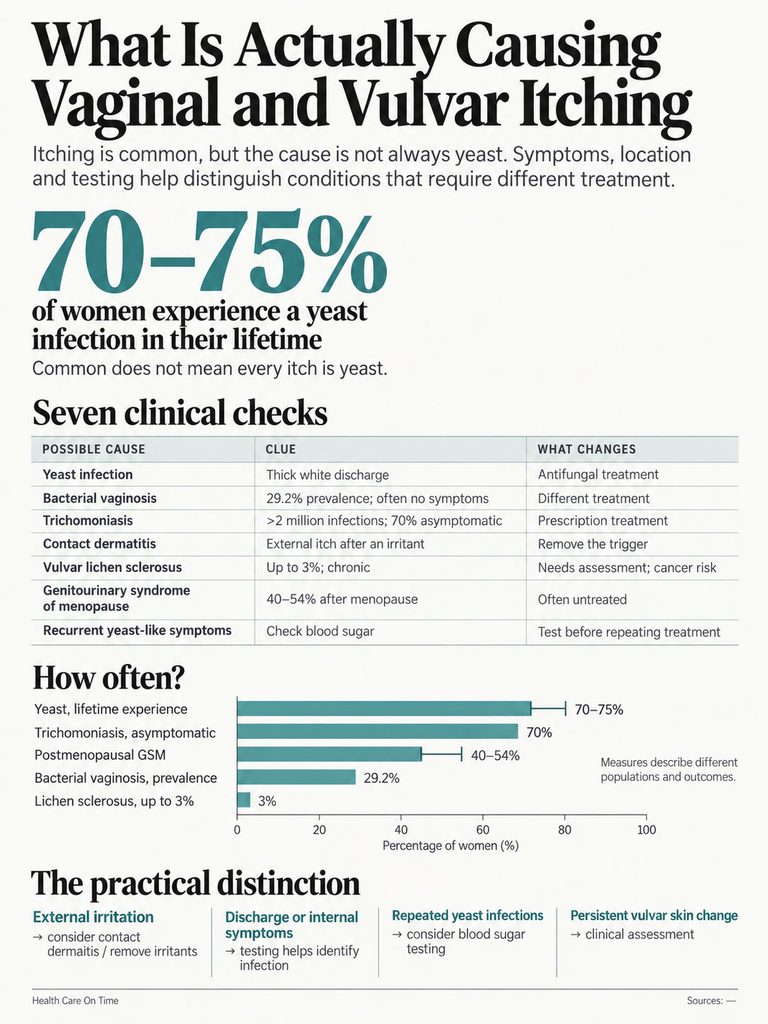
Seven conditions account for the overwhelming majority of vaginal and vulvar itching in American women. They need different treatments, and three of them are not infections.
Yeast infection (vulvovaginal candidiasis)
Thick white discharge with a cottage-cheese texture, external burning, redness and swelling, and vaginal pH below 4.5. Between 70% and 75% of American women have at least one episode in their lifetime, generating an estimated 1.4 million outpatient visits per year (Clinical Infectious Diseases).
Recent antibiotics, pregnancy, poorly controlled diabetes, and immunosuppression all raise the odds.
Bacterial vaginosis
Thin gray or white discharge, a fishy odor that sharpens after sex, pH above 4.5, and often less itching than people expect.
BV prevalence in US survey data ran 29.2%, which translates to roughly 21 million women, yet only about 16% of those women reported any vaginal symptom at all. Prevalence varied sharply by group, from 23.2% among non-Hispanic white women to 51.4% among non-Hispanic Black women.
Antifungal creams do nothing for BV. This is the most common single reason a drugstore purchase fails.
Trichomoniasis
A sexually transmitted parasite producing frothy yellow-green discharge, itching, and irritation when it produces symptoms at all. The CDC estimates more than two million US infections, with roughly 70% of infected people showing no signs whatsoever.
It requires oral prescription treatment plus partner treatment. No home measure reaches it.
Contact and irritant dermatitis
The most common cause of chronic vulvar itch, and the one least likely to be named in a home remedy article. Triggers include fragranced products, preservatives such as methylisothiazolinone, dyed or scented pads, laundry additives, and topical medicaments, including the antifungal creams bought to stop the itch.
Discharge stays normal. Itching is external, often worse at night, and improves within days once the trigger goes.
Vulvar lichen sclerosus
A chronic inflammatory skin condition affecting up to 3% of women, peaking after menopause and again in prepubertal girls. It causes persistent itching, whitened and thinned skin, easy splitting, and over years, changes to vulvar architecture.
It also carries a raised risk of vulvar cancer, which is why catching it early matters beyond comfort.
Genitourinary syndrome of menopause
Falling estrogen thins vaginal and vulvar tissue, producing dryness, burning, itching, and pain with sex. Roughly 40% to 54% of postmenopausal women report bothersome symptoms, and more than half of affected patients use no treatment at all (StatPearls).
Moisturizers improve the surface. They do not replace the tissue effect of low-dose vaginal estrogen, which is the treatment that addresses the cause.
Blood sugar and the itch that keeps coming back
Recurrent yeast infections are one of the more common reasons an undiagnosed blood sugar problem first surfaces. Elevated glucose raises the glycogen available in vaginal tissue, which favors Candida growth, and it also blunts the immune response that normally keeps colonization in check.
If you have had four or more episodes in twelve months, an HbA1c or fasting glucose test is a reasonable thing to request alongside the vaginal workup. Patients commonly ask us why the creams stopped working, and in this group, the answer is often not the cream.
Itching in children
Genital itching in a prepubertal girl is never an adult problem scaled down, and adult over-the-counter products should not be used.
The usual causes are pinworms, irritant dermatitis from bubble bath or scented soap, and lichen sclerosus, which has a genuine childhood peak. Nighttime-predominant itching raises the odds of pinworms specifically. Any persistent case belongs with a pediatrician rather than a pharmacy aisle.
The Numbers Behind Each Cause
| Cause | US frequency | Discharge and pH pattern | Source |
| Vulvovaginal candidiasis | 70% to 75% lifetime; about 1.4M visits per year | Thick, white, clumpy; pH under 4.5 | CDC / Clinical Infectious Diseases |
| Bacterial vaginosis | 29.2% prevalence, about 21M women; 84% symptom-free | Thin, gray, fishy odor; pH over 4.5 | NHANES 2001-2004 |
| Trichomoniasis | Over 2 million US infections; about 70% asymptomatic | Frothy, yellow-green; pH over 4.5 | CDC, 2026 |
| Contact and irritant dermatitis | 81.4% of vulvar-itch patients had a positive patch test | Normal discharge; normal pH | Frontiers in Medicine, 2021 |
| Vulvar lichen sclerosus | Up to 3% of women; 4.6-year average diagnostic delay | Normal discharge; white, thinned skin | Clin Exp Dermatol, 2025 |
| Genitourinary syndrome of menopause | 40% to 54% of postmenopausal women; over 50% untreated | Scant discharge; dryness; pH often over 5 | StatPearls, 2026 |
| Vulvar intraepithelial neoplasia | About 0.7% of cancers in women are vulvar; 1 in 333 lifetime risk | Normal discharge; persistent itch, skin change | American Cancer Society |
Table 2. US prevalence, clinical pattern, and source for the seven leading causes of vaginal and vulvar itching.
Why Guessing Costs You
The self-diagnosis data nobody quotes
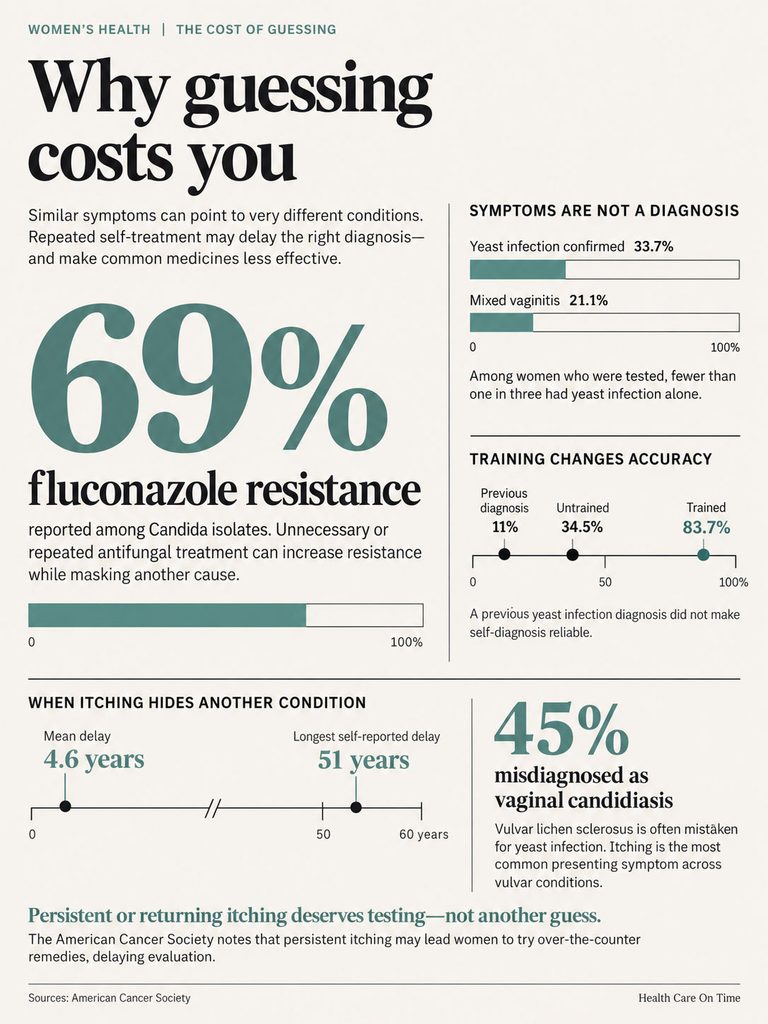
Return to those 95 women. Testing showed 33.7% had a yeast infection, 21.1% had mixed vaginitis, 18.9% had bacterial vaginosis, 13.7% were normal, 10.5% had something else, and 2.1% had trichomoniasis.
The uncomfortable detail is what failed to help. Women who had previously received a clinician-confirmed yeast infection diagnosis were no more accurate than women who never had one. Reading the package insert did not improve accuracy either.
An earlier study from the same group found 11.0% accuracy among women without a prior diagnosis, 34.5% among those with one, and 83.7% among medically trained participants. Both studies are now more than two decades old, but no larger dataset has contradicted them, and the products on the shelf have not changed.
What repeated wrong treatment does
Every unnecessary azole exposure applies selection pressure to yeast already living in your body.
The CDC notes that Candida glabrata is more often fluconazole-resistant than most other species. A 2026 review in Frontiers in Microbiology reports fluconazole resistance among Candida isolates from vaginal infections reaching roughly 69% in some series, with cross-resistance across other azoles.
Because miconazole and clotrimazole in drugstore products belong to the same drug family, creams bought without a diagnosis contribute to the problem you will face later.
The delayed diagnosis cost
Vulvar lichen sclerosus carries a mean diagnostic delay of 4.6 years in women and 2.2 years in girls, with one self-reported delay reaching 51 years (Clinical and Experimental Dermatology, 2025).
In a patient survey of women with confirmed lichen sclerosus, itching was the presenting symptom in 86.6%, and the most frequent initial misdiagnosis was vaginal candidiasis, given to nearly 45% of them.
The American Cancer Society makes a parallel observation about precancerous vulvar change. When it produces a symptom at all, that symptom is usually itching that does not go away, and ACS notes that some women try to treat it themselves with over-the-counter remedies instead.
In cases reviewed by our medical team, the pattern that raises concern is not the woman trying a cool compress. It is the woman on her fifth antifungal in eight months.
When to Stop Treating at Home
The duration ladder
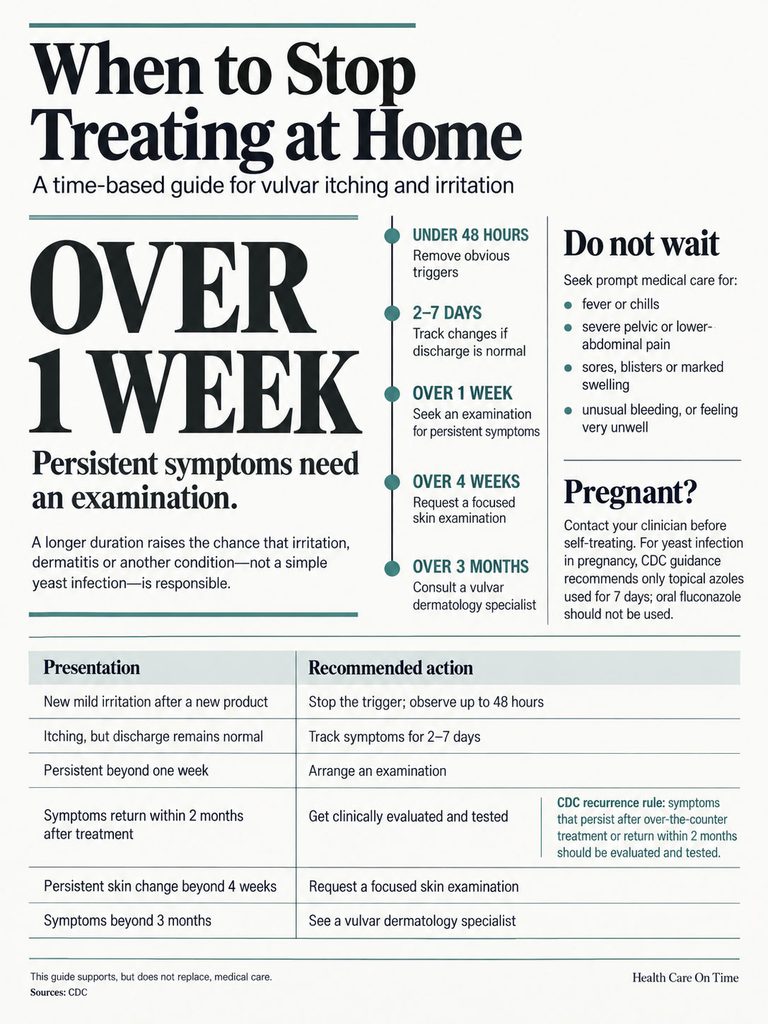
Under 48 hours with an obvious trigger. New soap, new pad, a long afternoon in wet swimwear. Remove the trigger and use the safe measures above.
Two to seven days. A reasonable window for home care if discharge is normal and nothing else is wrong. Track what you changed.
Over one week. Time for an exam, regardless of how mild it feels. This is the threshold most people blow past.
Over four weeks. Assume it is not a simple infection. Ask specifically for a skin examination, not only a swab.
Over three months. Chronic vulvar itch warrants a clinician comfortable with vulvar dermatology, and often a biopsy or patch testing.
Red flags that skip the ladder
Go in promptly, not eventually, for any of the following:
- Open sores or ulcers on the vulva
- Bleeding unrelated to a period
- White or thickened skin patches
- A new lump or raised area
- A mole on the vulva that has changed
- Fever with pelvic pain
- Itching that began after a new sexual partner
- Any persistent genital itching in a child
Pregnancy changes the calculation
Vaginal itching during pregnancy is common, and self-treatment is where it gets risky. Oral fluconazole is generally avoided, boric acid is off the table entirely, and untreated bacterial vaginosis and trichomoniasis both carry obstetric consequences worth avoiding.
Call your obstetric provider rather than working through a home remedy list. The cool compress and water-only washing remain fine in the meantime.
The recurrence rule
The CDC guidance is specific and easy to follow. If symptoms persist after using an over-the-counter product, or return within two months of treatment, get evaluated and tested rather than repeating the purchase.
Scenario to Action
| Your situation | Most likely explanation | Do this now | Avoid this |
| Itch started after new soap, detergent, or liner | Irritant contact dermatitis | Stop the product, water-only washing, petrolatum | Buying an antifungal cream |
| Thick white discharge, external burning | Yeast infection | An OTC antifungal is reasonable for a first episode | Adding tea tree oil or vinegar |
| Thin gray discharge, fishy odor | Bacterial vaginosis | Book a visit; this needs prescription antibiotics | Antifungal cream or douching |
| Itch over 2 weeks, normal discharge | Dermatitis or a vulvar skin condition | Request a skin exam, not just a swab | Cycling through more creams |
| White, thin, or splitting skin patches | Possible lichen sclerosus | Ask directly about biopsy and steroid ointment | Waiting to see if it settles |
| Itch with dryness after menopause | Genitourinary syndrome of menopause | Discuss low-dose vaginal estrogen | Assuming moisturizer is enough |
| Itch returned within 2 months of treatment | Wrong diagnosis or resistant organism | Get a culture or vaginitis panel | Repeating the same product |
| Four or more episodes in 12 months | Possible blood sugar or species issue | Ask for HbA1c plus a fungal culture | Long-term self-prescribed antifungals |
| Any genital itching in a child | Pinworms, dermatitis, or lichen sclerosus | Pediatric evaluation | Any adult OTC product |
Table 3. Scenario-to-action triage for the nine most common presentations.
Getting a Real Answer: Tests, Costs, and Access
What a workup actually involves
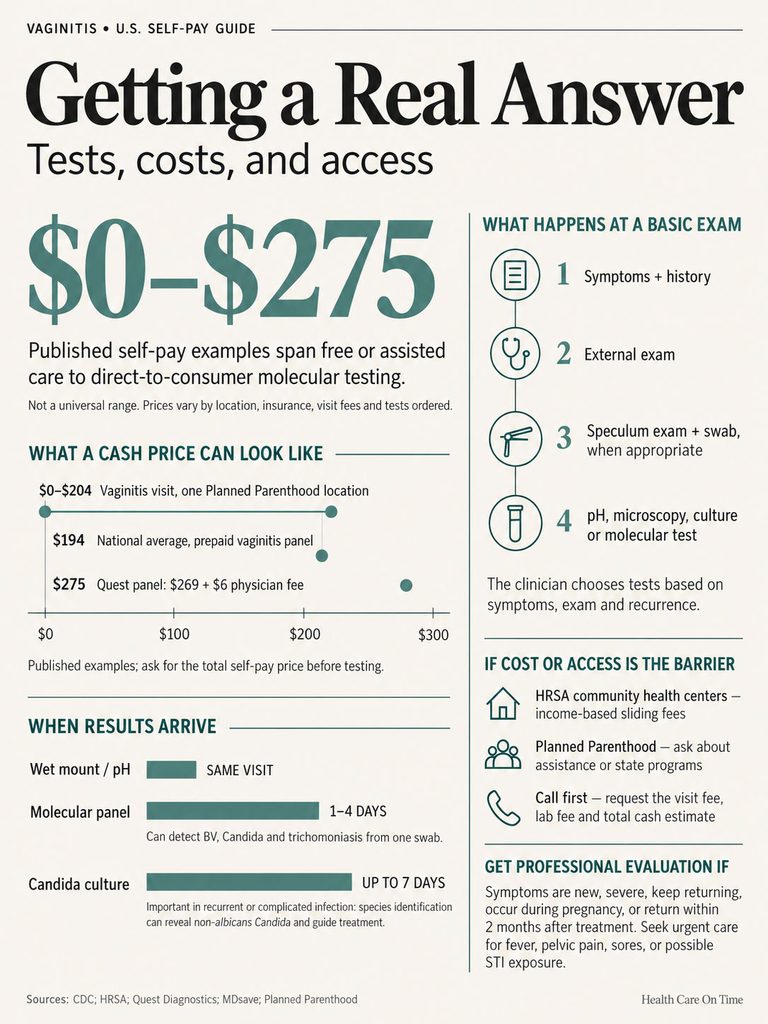
A basic visit takes minutes. A clinician examines the vulva, checks vaginal pH, and runs a wet mount under the microscope looking for yeast, clue cells, and motile trichomonads.
Molecular vaginitis panels test all three organisms at once with higher sensitivity. A fungal culture identifies the specific species, which is the step that changes treatment when infections keep returning, since non-albicans yeast usually needs something other than a standard azole.
Our lab partners report that species identification is the test most often skipped and most often needed in recurrent cases.
What it costs in the United States
| Option | Typical US cost | Turnaround | Best for |
| Home vaginal pH strips | $8 to $20 | Minutes | Separating yeast from BV or trichomoniasis |
| OTC antifungal, 1 to 7 day | $12 to $25 | 1 to 7 days | A clear, first-time yeast episode |
| Telehealth visit | $0 to $75 | Same day | Straightforward, non-recurrent cases |
| Retail or urgent care clinic | $75 to $150 | Same day | Evening and weekend access |
| Office visit with wet mount | $100 to $250 uninsured | Same visit | Any itch lasting over a week |
| Vaginitis NAAT panel or fungal culture | $50 to $200 | 1 to 3 days | Recurrence or treatment failure |
Table 4. Ranges reflect typical uninsured self-pay pricing and vary widely by state and facility.
If you are uninsured
Title X family planning clinics, federally qualified community health centers, and county health departments provide sliding-scale vaginitis evaluation, often for less than the cost of two boxes of antifungal cream.
Preventing the Next Episode
Run an irritant audit
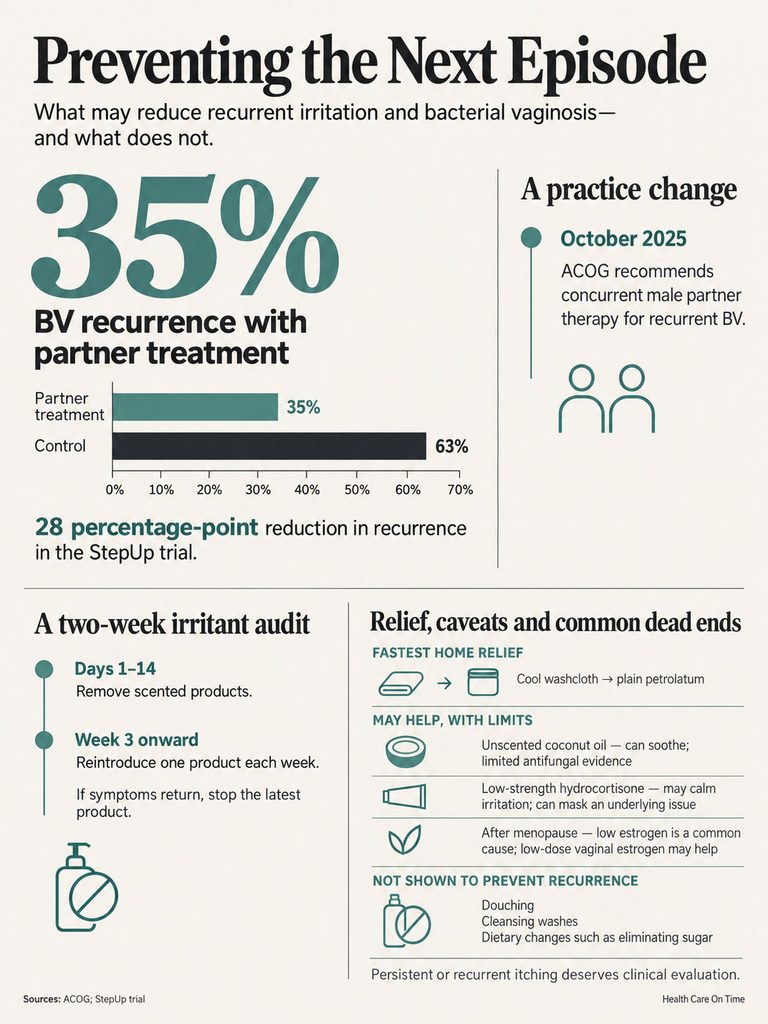
For two weeks, remove every scented or medicated product that touches the area, laundry additives included. Then reintroduce one item per week.
Most irritant dermatitis identifies itself this way without a single test, and it costs nothing.
What the 2025 partner data changed
For recurrent bacterial vaginosis, one trial reset the field. In the StepUp trial, 164 monogamous heterosexual couples were randomized so that either the woman alone or both partners received treatment.
The study stopped early. BV recurred within 12 weeks in 35% of the partner-treatment group against 63% of controls.
In October 2025, ACOG issued a clinical practice update recommending concurrent male partner therapy for recurrent symptomatic BV, the first time it has done so. If BV keeps returning, that conversation is now backed by guidelines rather than theory.
What does not prevent recurrence
Douching, cleansing washes, tightening or detox products, sugar elimination used as a standalone strategy, and yogurt as a substitute for treatment. None has evidence behind it, and the first three raise risk rather than lowering it.
Frequently Asked Questions
What is the fastest way to stop vaginal itching at home?
A cool, damp washcloth held against the vulva for about 10 minutes gives the quickest relief with the least risk. Follow it with a thin layer of plain petrolatum and stop any scented product you have been using. Fast relief is not a cure, so track how long the symptoms last.
Is coconut oil safe to use for vaginal itching?
Plain, unscented coconut oil is generally well tolerated as an external emollient and may soothe dry, irritated vulvar skin. Its antifungal activity has been shown in laboratory conditions, not in women with actual infections. Avoid scented or infused versions, and do not combine it with latex condoms.
Is it safe to put hydrocortisone cream on the vulva?
Low-strength hydrocortisone can calm mild external irritation for a few days, but it worsens an untreated yeast infection and can mask lichen sclerosus, delaying diagnosis. Steroid ointments do have a legitimate role on the vulva when a clinician directs them. Extended self-treatment is where problems begin.
What causes vaginal itching with no discharge and no smell?
Normal discharge with external-only itching points away from infection and toward the skin. Contact dermatitis, irritant dermatitis, eczema, psoriasis, lichen sclerosus, and low estrogen all fit this pattern. An antifungal cream will not help and may add a fresh irritant to already inflamed skin.
Does eating yogurt prevent or treat yeast infections?
Eating yogurt is safe but has not been shown to treat an active infection. The CDC states there is no substantial evidence supporting probiotics for treating vulvovaginal candidiasis, and a 2026 meta-analysis found antifungal drugs outperformed probiotics for long-term cure. Enjoy the yogurt, but do not rely on it.
Is apple cider vinegar safe for vaginal itching?
No. There is no human evidence that it relieves vaginal or vulvar itching, and applying acid to inflamed, thinned skin risks chemical irritation or burns. Vinegar rinses and vinegar-based douches also disturb the bacterial balance that protects against bacterial vaginosis.
How long should vaginal itching last before seeing a doctor?
One week is the practical cutoff for uncomplicated itching with no other symptoms. Go sooner for sores, bleeding, white skin patches, fever, pelvic pain, pregnancy, or a recent new partner. Go regardless of duration if symptoms returned within two months of previous treatment.
Why does vaginal itching get worse at night?
Skin temperature rises and distraction falls at night, which amplifies itch perception across all skin conditions. Warm bedding and occlusive underwear add to it. In young girls, intense nighttime vulvar itching specifically raises the possibility of pinworms, which migrate at night.
How do you tell a yeast infection from bacterial vaginosis?
Yeast typically produces thick white clumpy discharge, marked itching, and vaginal pH below 4.5. Bacterial vaginosis produces thin gray discharge, a fishy odor that sharpens after sex, less itching, and pH above 4.5. Home pH strips help sort the two, but only testing confirms it.
Can menopause cause vaginal itching, and do home remedies help?
Yes. Falling estrogen thins the tissue and produces dryness, burning, and itching in roughly 40% to 54% of postmenopausal women. Moisturizers and lubricants improve comfort but do not restore the tissue. Low-dose vaginal estrogen, prescribed by a clinician, addresses the underlying cause.
Are boric acid suppositories safe to use without a doctor?
Boric acid has a legitimate role in recurrent or non-albicans yeast infections, but it is not FDA-approved for this use and works best once a culture identifies the organism. Never make your own capsules, never use it in pregnancy, and keep it away from children, since swallowing it can be fatal.
Medical Disclaimer
This article provides general health information and does not replace evaluation by a licensed clinician. Vaginal and vulvar itching has many causes, several of which require prescription treatment or biopsy to diagnose correctly. Do not start, stop, or change any treatment based on this content. If you are pregnant, immunocompromised, or have symptoms lasting more than a week, contact a healthcare professional.
References
- CDC STI Treatment Guidelines: Vulvovaginal Candidiasis
- CDC STI Treatment Guidelines: Vaginal Discharge
- CDC: About Trichomoniasis
- CDC: Drug-Resistant Candidiasis
- Ferris DG et al. Over-the-counter antifungal drug misuse associated with patient-diagnosed vulvovaginal candidiasis. Obstetrics & Gynecology
- Ferris DG et al. Women’s use of over-the-counter antifungal medications for gynecologic symptoms
- Koumans EH et al. The prevalence of bacterial vaginosis in the United States, 2001-2004
- Vulvar Pruritus: A Review of Clinical Associations, Pathophysiology and Therapeutic Management. Frontiers in Medicine
- Allergic Contact Dermatitis of the Vulva: patch testing with baseline and botanical series
- Allergic Contact Dermatitis Due to Tea Tree Oil. Actas Dermo-Sifiliograficas
- Barriers to diagnosis of vulval lichen sclerosus in primary care. Clinical and Experimental Dermatology
- Genitourinary Syndrome of Menopause. StatPearls, NCBI Bookshelf
- Vulvovaginal Candidiasis: Evidence Review for the CDC STI Treatment Guidelines. Clinical Infectious Diseases
- Probiotics for the treatment of vulvovaginal candidiasis in nonpregnant women. American Journal of Obstetrics & Gynecology
- Vodstrcil LA et al. Male-Partner Treatment to Prevent Recurrence of Bacterial Vaginosis. New England Journal of Medicine
- ACOG Recommends Concurrent Sexual Partner Treatment for Recurrent Bacterial Vaginosis
- Advances in vulvovaginal candidiasis research. Frontiers in Microbiology, 2026
- American Cancer Society: Vulvar Cancer Signs and Symptoms
- National Capital Poison Center: Does boric acid treat vaginal yeast infections?
- Cleveland Clinic: What Are Vaginal Detox Pearls?
- Mayo Clinic Press: Feminine hygiene and vaginal health products