For most adults, sugar does more measurable harm at the amounts Americans actually eat, while aspartame’s risks are smaller, less certain and tied to heavy use. Neither belongs in a daily habit, and for people with the genetic condition PKU, aspartame is the one to avoid completely.
Table of Contents
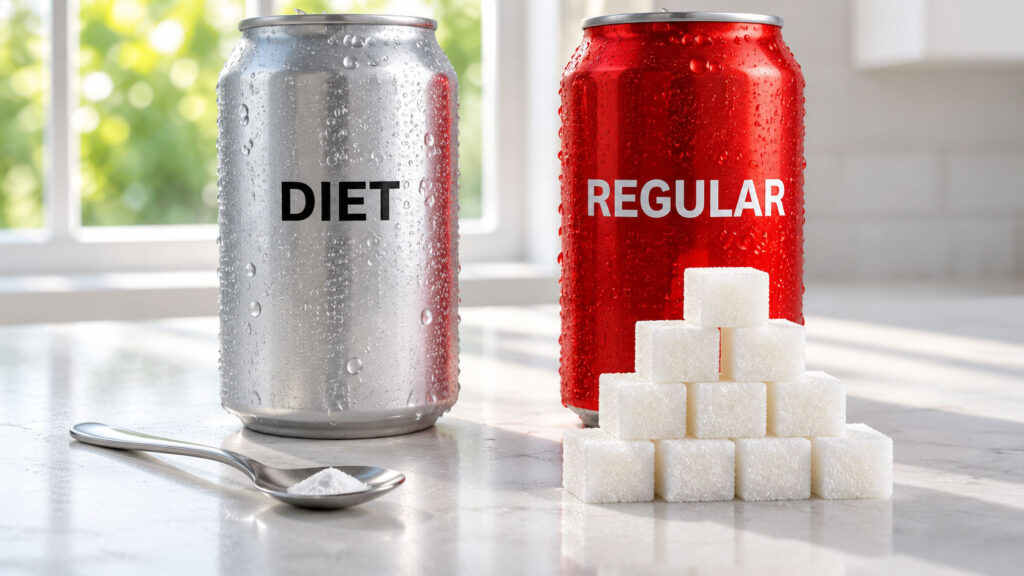
Quick Answer: Sugar is usually worse in real life. A single 12-ounce regular soda carries about 42 grams of added sugar, more than the American Heart Association’s full daily limit for women (25 grams) or men (36 grams). Aspartame adds almost no calories and doesn’t raise blood sugar, but its 2023 “possibly carcinogenic” label and mixed weight data mean it works best as a short-term swap. Water beats both.
Why sugar usually comes out worse
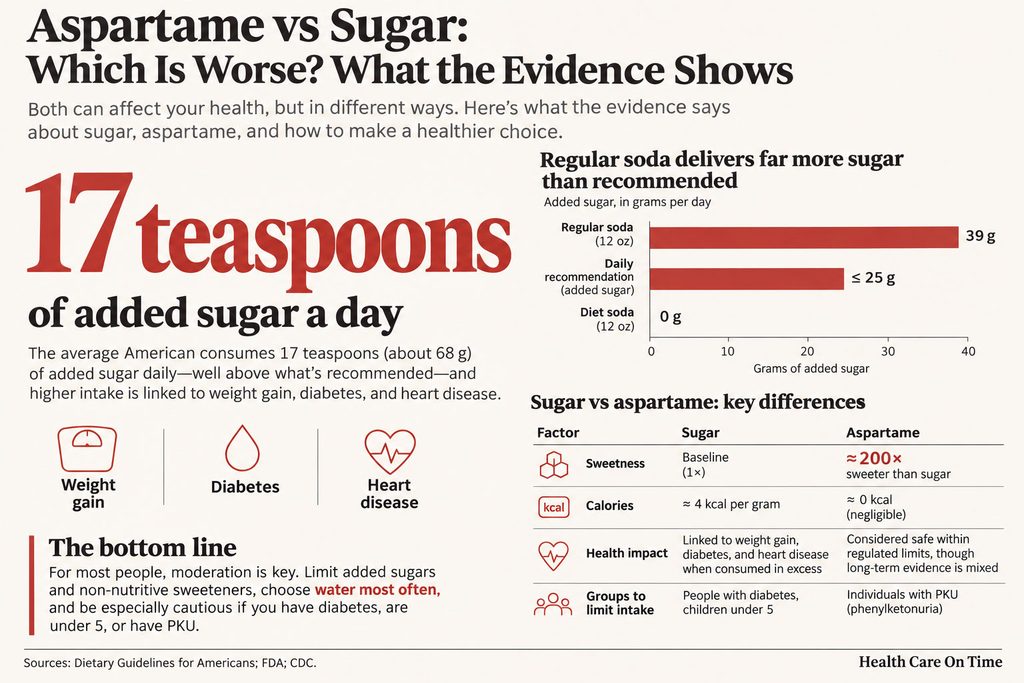
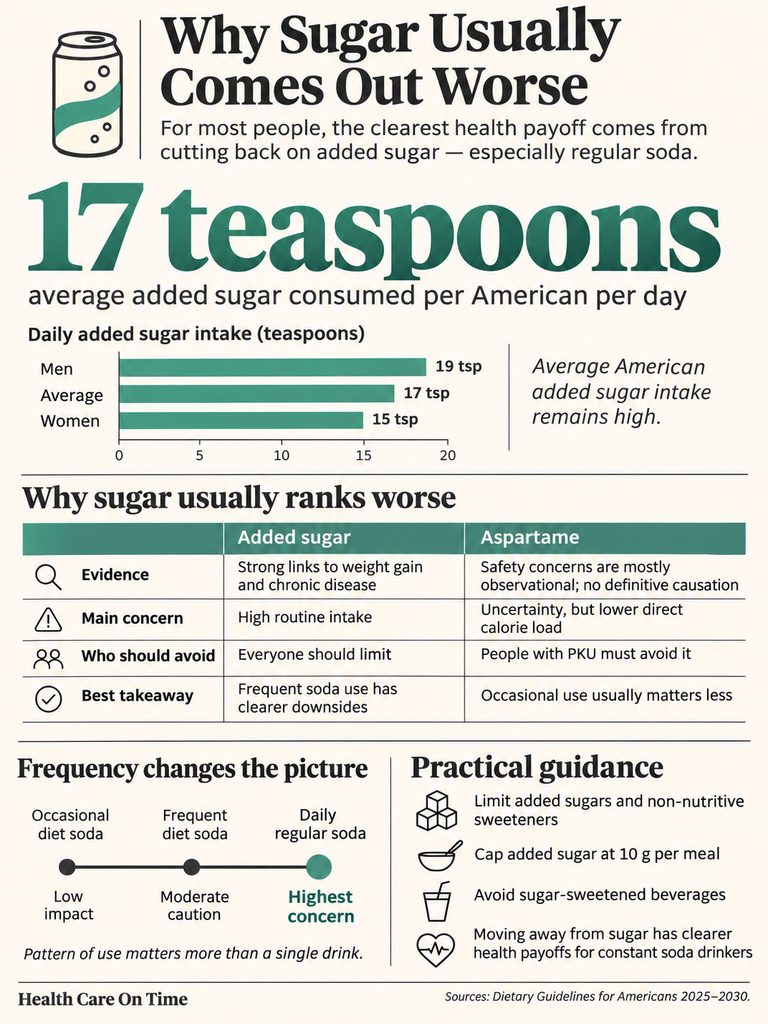
If the question is a regular soda with lunch every workday versus the diet version, the regular can is the worse habit by a wide margin. Added sugar is tied to weight gain, type 2 diabetes and heart disease, and the average American adult already eats about 17 teaspoons of added sugar a day (men average 19, women 15), so one soda pushes most people past a sensible limit before the afternoon even starts.
The worries about aspartame come mostly from observational studies, which can show that two things travel together without proving one causes the other, and US and European regulators still treat it as safe below a set daily amount that most diet soda drinkers never get near.
PKU reverses the whole comparison. People with this inherited condition can’t clear phenylalanine, one of the pieces aspartame breaks into, so for them the sweetener is the worse choice and sugar the lesser problem.
How often you drink either matters as much as which one. An occasional diet soda at a ballgame and a big bottle of regular soda sipped across a long workday sit at opposite ends of the scale, and most of the harm on either side comes from the daily, all-day version. If you only have one now and then, the choice between them matters less than the debate suggests. If soda is a constant companion, moving away from sugar is the change with the clearest payoff.
Federal advice has moved toward cutting both. The Dietary Guidelines for Americans 2025-2030, released in January 2026, say no amount of added sugars or non-nutritive sweeteners is recommended as part of a healthy diet, cap added sugar at 10 grams per meal and ask Americans to limit foods and drinks made with low-calorie sweeteners such as aspartame. Sugar-sweetened drinks get the harder line: avoid them.
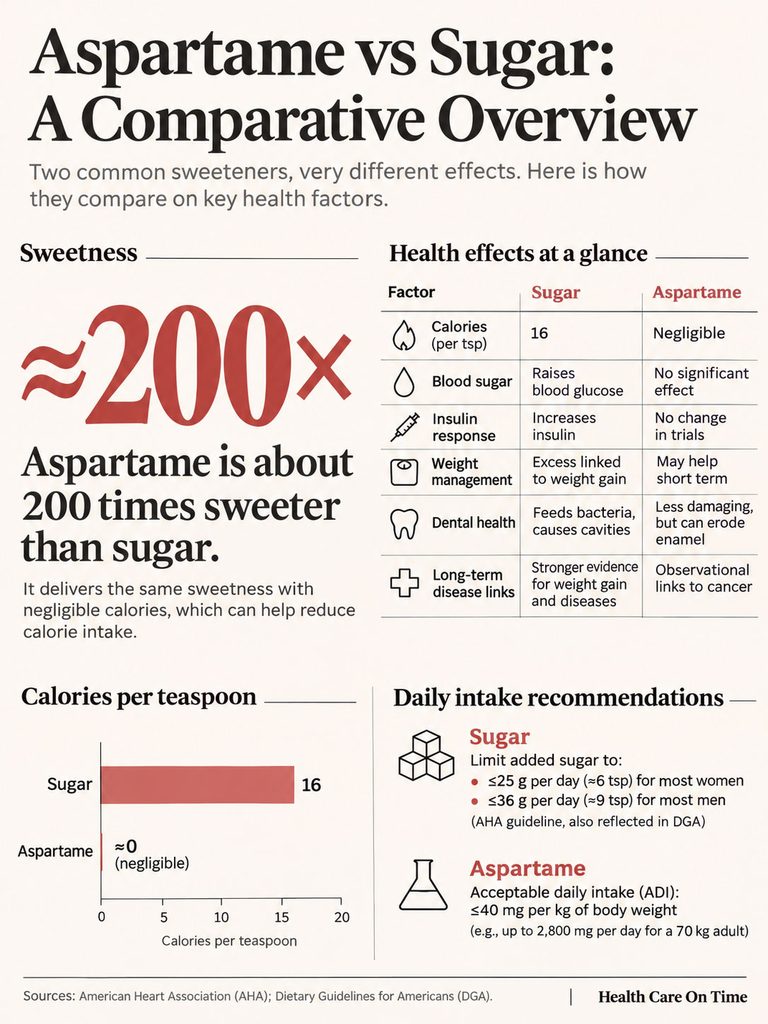
Aspartame vs sugar, side by side
“Edge” in the last column marks which one comes out ahead on that point for a healthy adult.
| Factor | Table sugar (sucrose) | Aspartame | Edge |
| Calories | 16 per teaspoon; about 155 in a 12-oz regular soda | Has calories, but used in such tiny amounts that a diet soda is close to zero | Aspartame |
| Sweetness | Baseline (1x) | About 200 times sweeter than sugar | Aspartame (less needed) |
| Blood sugar | Raises blood glucose | No significant effect on glycemic management (ADA 2026) | Aspartame |
| Insulin | Rises along with blood glucose | No change in a 12-week human trial at up to 1,050 mg/day; higher insulin in a 2025 mouse study | Aspartame, with a caveat |
| Weight | Excess added sugar linked to weight gain | May help short term when it replaces sugar; WHO finds no long-term body-fat benefit | Aspartame, short term only |
| Teeth | Feeds mouth bacteria that make cavity-causing acid | No sugar for bacteria, but diet sodas are acidic and can erode enamel | Aspartame, slightly |
| Long-term disease links | Weight gain, type 2 diabetes, heart disease | Observational links to cancer (aspartame HR 1.15), type 2 diabetes and heart disease; cause not proven | Sugar’s evidence is stronger |
| Daily ceiling | AHA: 25 g (women), 36 g (men); DGA: 10 g per meal | FDA acceptable daily intake: 50 mg per kg of body weight | Depends on intake |
| Who should avoid | Limit for diabetes and prediabetes; avoid in children under 5 | People with PKU must avoid; bowel disease may flare; not for children under 2 | Depends on the person |
Inside your body after a soda
Sugar’s quick glucose rise
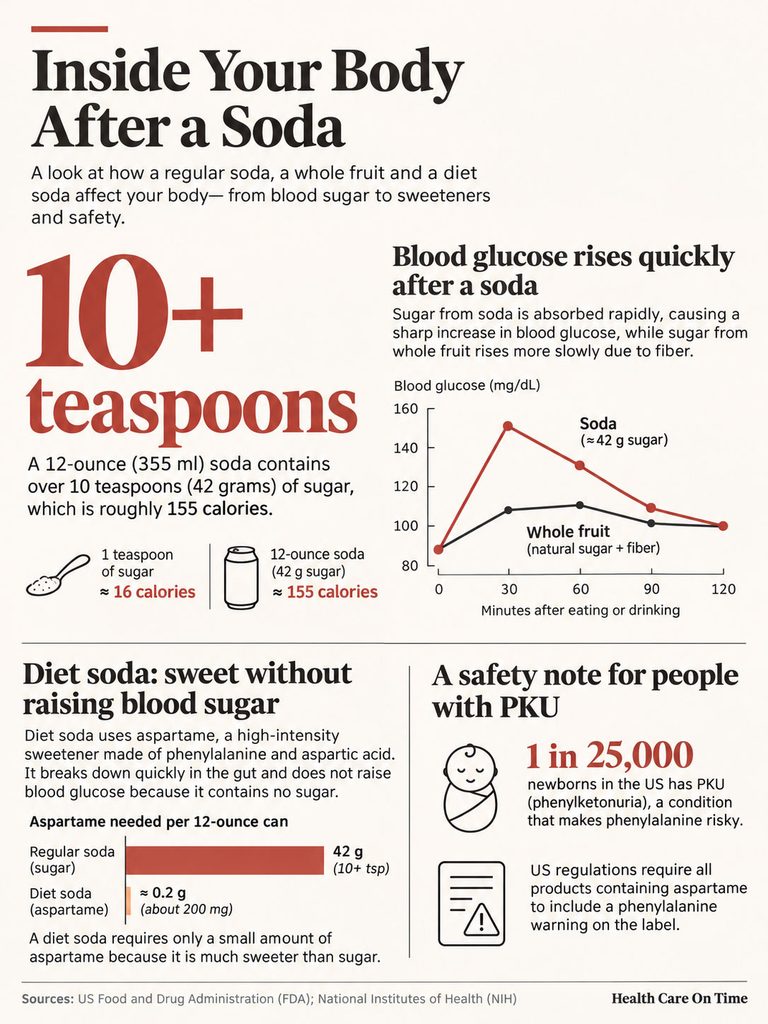
Table sugar is sucrose, a molecule of glucose and fructose joined together. Your gut splits it fast, glucose enters the bloodstream, and the pancreas releases insulin to move it into cells. Each teaspoon brings about 16 calories, and a 12-ounce regular soda holds more than 10 teaspoons, about 42 grams, and roughly 155 calories, usually gulped alongside a meal that has sugar of its own in the sauce, the bun or the dessert.
Sugar eaten inside whole fruit behaves differently, because fiber and water slow it down, so a bowl of strawberries can fit a diabetes eating plan where the same sugar dissolved in soda can’t.
How aspartame breaks down
Aspartame is built from two amino acids, phenylalanine and aspartic acid, and the gut breaks it down rapidly and completely into those two plus a small amount of methanol. None of the pieces is sugar, so blood glucose has nothing to respond to. Because the sweetener is about 200 times sweeter than table sugar, a can of diet soda needs only a few hundred milligrams, and although aspartame technically has calories, the count in a can rounds to nearly zero.
Phenylalanine is the part that matters for PKU, which affects about 1 in 25,000 US newborns and is usually caught by newborn screening. Without a working enzyme to clear it, phenylalanine builds up and can damage the brain. That’s why every US product containing aspartame has to carry a phenylalanine statement on its ingredient list.
Blood sugar and insulin
Sugar raises blood glucose and aspartame doesn’t. The 2026 Standards of Care in Diabetes find no significant effect of non-nutritive sweeteners on glycemic management.
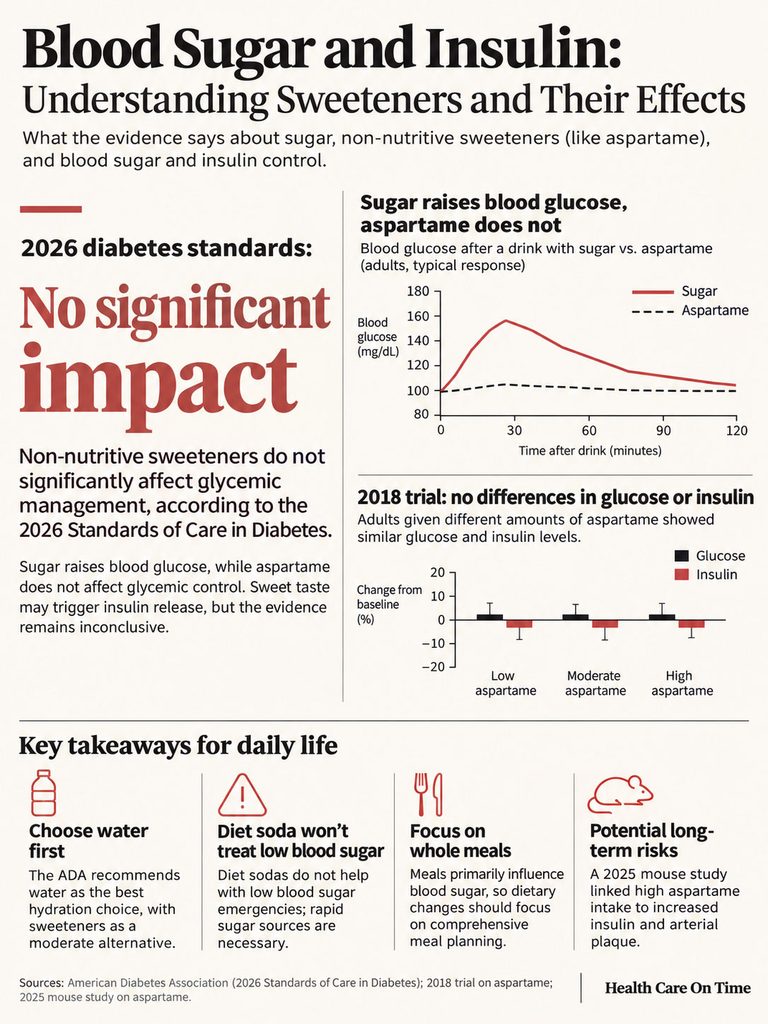
The insulin argument is murkier. A popular claim holds that sweet taste alone makes the body release insulin, and that over years this wears down insulin sensitivity. A 2018 randomized trial put that to the test in 100 lean, healthy adults given no aspartame, 350 milligrams a day or 1,050 milligrams a day (roughly three and a half to five cans of diet soda) for 12 weeks. Their glucose tolerance tests showed no differences in glucose or insulin, and appetite, weight and body composition held steady.
A 2025 mouse experiment pointed the other way. Mice genetically prone to artery disease that ate relatively high levels of aspartame for 12 weeks developed higher insulin and more arterial plaque than mice given sugar or nothing, even though the sugar-fed mice were the ones that gained fat. Whether people respond the same way is unknown, and those mice were picked because they form plaque easily.
With diabetes or prediabetes
The ADA’s 2026 guidance ranks the options. Water comes first, a Grade A recommendation, the strongest it gives. Sweeteners like aspartame can stand in for sugar-sweetened products in moderation and for the short term to cut calories and carbohydrates (Grade B), and sugary drinks, juices included, should be replaced with water or low- or no-calorie drinks. The savings only count if they aren’t eaten back somewhere else, so a diet soda next to a slice of cake doesn’t buy much. The same standards ask clinicians to reassure patients that sweeteners have been through extensive safety review, partly so fear of aspartame doesn’t send anyone back to regular soda, while still calling water the healthiest drink.
Low blood sugar is the exception. If you use insulin or another glucose-lowering medicine and your blood sugar drops too low, a diet soda won’t help at all, because there’s no sugar in it for your body to absorb. That moment calls for the fast-acting sugar source your care plan names, and knowing what level of blood sugar is dangerous tells you when to act.
Meals still move blood sugar far more than drinks do, and when people build a 7-day blood sugar meal plan, the soda swap usually turns out to be one of the smaller changes on the list.
Does diet soda help with weight?
In May 2023 the World Health Organization advised against using non-sugar sweeteners to control body weight. Its review found no long-term drop in body fat in adults or children and linked long-term use with more type 2 diabetes, cardiovascular disease and death in adults (the guideline excludes people who already have diabetes), yet WHO itself rated the advice conditional, because people who are already gaining weight or heading toward diabetes are the ones most likely to switch to diet drinks, and that alone can make a sweetener look guilty.
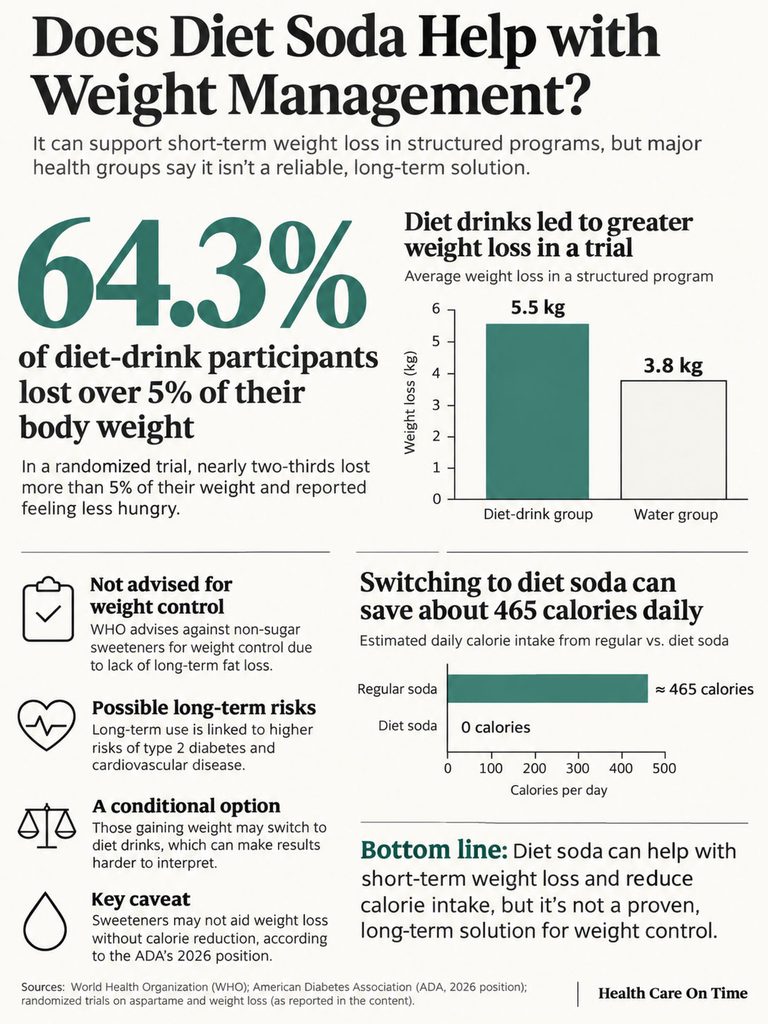
Randomized trials, where nobody chooses their own drink, tell a more favorable story for aspartame as a swap. In a 12-week weight-loss program reported in Obesity in 2014, 279 adults with overweight or obesity were assigned to water or diet beverages, and the diet-drink group lost 5.5 kilograms, about 12 pounds, versus 3.8 kilograms, about 8; 64.3% of them lost more than 5% of body weight, compared with 43% on water, and they felt less hungry. The American Beverage Association paid for the whole trial, and twelve weeks is a short window.
Swapping sugar for aspartame inside a structured plan seems to help a little in the short run, while adding diet drinks to an unchanged diet doesn’t help over years, which matches the ADA’s 2026 position that sweeteners bring no weight benefit without an actual cut in calories. Researchers call the leak compensation: the drink was diet, so the brownie feels earned, and the calories saved at lunch come back by evening.
For someone drinking three regular sodas a day, switching to diet removes about 465 calories and roughly 126 grams of added sugar every day.
Is aspartame linked to cancer?
In July 2023, two World Health Organization groups published separate verdicts on aspartame on the same day, and the headlines blurred them together. The International Agency for Research on Cancer (IARC) placed aspartame in Group 2B, “possibly carcinogenic to humans”, the third of four levels, based on limited human evidence for hepatocellular carcinoma, a type of liver cancer. That kind of rating measures how strong the evidence is that something can cause cancer at all. It says nothing about how likely cancer is at the amount in your fridge.
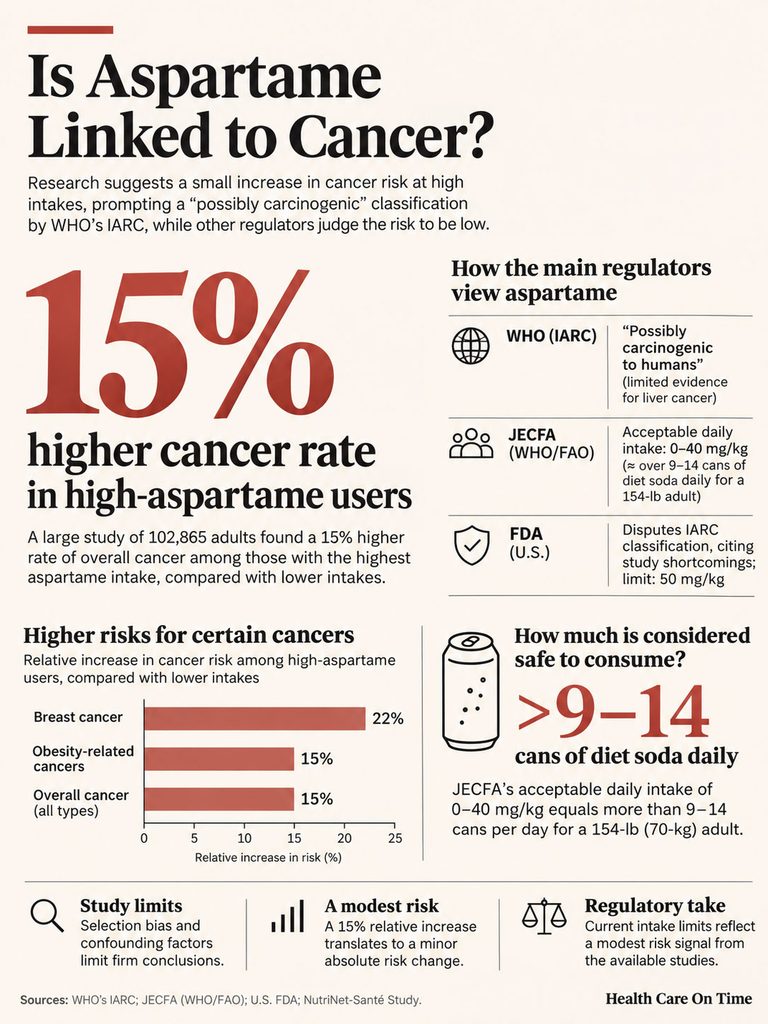
Risk at real doses was the job of the other group, the Joint FAO/WHO Expert Committee on Food Additives (JECFA). It kept the acceptable daily intake at 0 to 40 milligrams per kilogram of body weight, a level a 70-kilogram (about 154-pound) adult would pass only by drinking more than 9 to 14 cans of diet soda a day with no other aspartame. The FDA disagrees with the IARC classification outright, citing significant shortcomings in the studies IARC relied on, and keeps a higher US limit of 50 milligrams per kilogram.
The human study cited most often is France’s NutriNet-Santé cohort, published in PLOS Medicine in 2022. It followed 102,865 adults for a median of 7.8 years, long enough to log 3,358 cancers. Those in the higher-intake group for aspartame, meaning above the median among sweetener users, had a 15% higher cancer rate than people who used no artificial sweeteners (hazard ratio 1.15), with links of 22% for breast cancer and 15% for obesity-related cancers.
A 15% relative increase from one observational study is a modest signal. The investigators flagged selection bias, residual confounding and reverse causation, the last meaning people with early health problems may have been more likely to switch to sweeteners in the first place, and their volunteers weren’t representative of French adults overall.
A hazard ratio also compares rates between groups instead of predicting anyone’s personal odds. When a cancer is uncommon to begin with, a 15% relative rise shifts the absolute chance only slightly, which is part of why regulators kept their limits where they were.
| Source | Evidence type | Key number or finding |
| CDC, NHANES 2017-2018 | US intake survey | Adults average 17 tsp of added sugar a day (men 19, women 15) |
| IARC, 2023 | Cancer hazard review | Group 2B; limited human evidence, liver cancer only |
| WHO JECFA, 2023 | Dietary risk assessment | ADI kept at 0 to 40 mg/kg/day |
| FDA, updated 2025 | US regulatory review | ADI 50 mg/kg/day; about 75 packets a day at 132 lb |
| PLOS Medicine 2022, France | Cohort of 102,865 adults | Aspartame HR 1.15 (1.03-1.28) for overall cancer |
| Journal of Nutrition 2018 | 12-week randomized trial | No glucose or insulin change at 350 or 1,050 mg/day |
| Obesity 2014 | 12-week randomized trial, industry-funded | 5.5 kg vs 3.8 kg lost (diet drinks vs water) |
| WHO guideline, 2023 | Systematic review | No long-term body-fat benefit; advice rated conditional |
How much aspartame is too much?
An acceptable daily intake (ADI) is the amount regulators consider safe every day for a lifetime, with a wide safety margin built in. The FDA uses 50 milligrams per kilogram of body weight, while JECFA and European regulators use 40, and a 12-ounce diet soda usually contains 200 to 300 milligrams. Using the stricter limit:
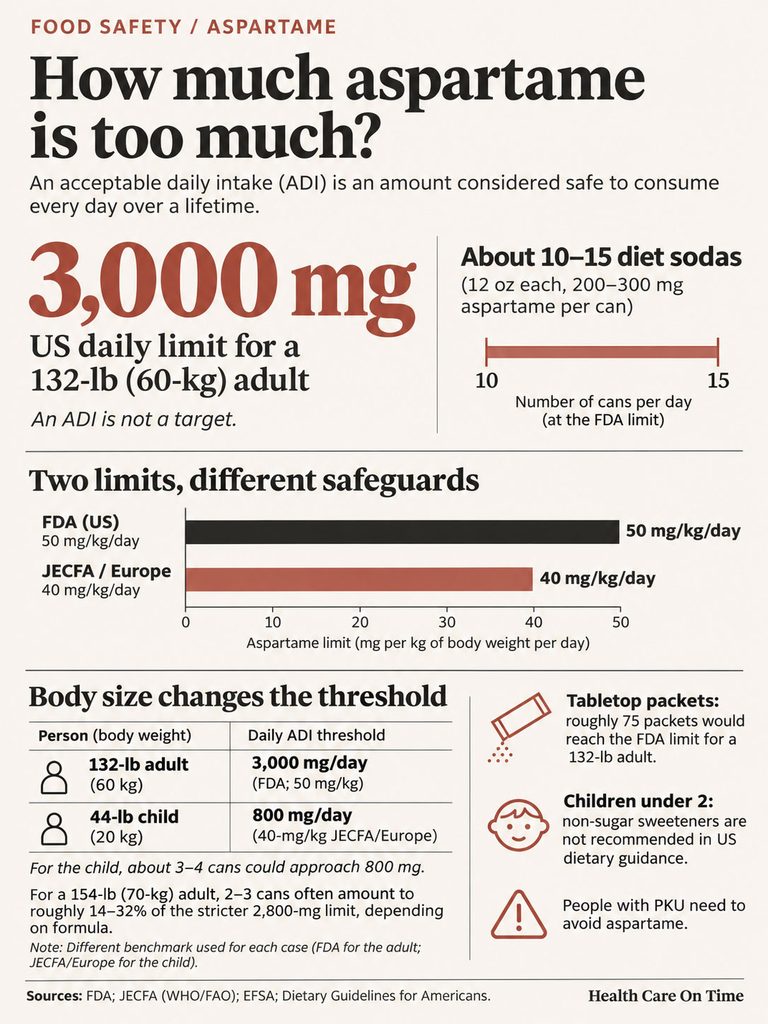
- 132 pounds (60 kg): 2,400 mg a day, about 8 to 12 cans
- 154 pounds (70 kg): 2,800 mg a day, about 9 to 14 cans
- 200 pounds (91 kg): about 3,640 mg a day, roughly 12 to 18 cans
The FDA’s looser figure stretches the 132-pound limit to 3,000 mg, or 10 to 15 cans. Tabletop packets hold far less, and the FDA estimates a 132-pound person would need about 75 packets a day to reach the US limit.
Few adults get close. A 154-pound person having two or three diet sodas sits at roughly a third of the stricter limit or less, though light yogurt and sugar-free desserts add to the total for heavy users.
A 44-pound (20-kilogram) child hits the 40 mg/kg limit at 800 milligrams, somewhere around three or four cans, and Mayo Clinic’s guidance is that children under 2 shouldn’t have sugar substitutes at all, while the new Dietary Guidelines advise against added sugars through age 4. For small children, water or milk is the drink.
Reading the label
Added sugar has its own line on the Nutrition Facts panel, in grams and as a percent Daily Value. The Daily Value for added sugars is 50 grams on a 2,000-calorie diet. That labeling benchmark sits well above the American Heart Association’s limits, so treat 20% or more as high and 5% or less as low, and hold the grams figure up against the 10-gram-per-meal cap. Sweetened drinks, baked goods, desserts and sweets supply most added sugar, and so do breakfast foods that only look wholesome, flavored instant oatmeal among them.
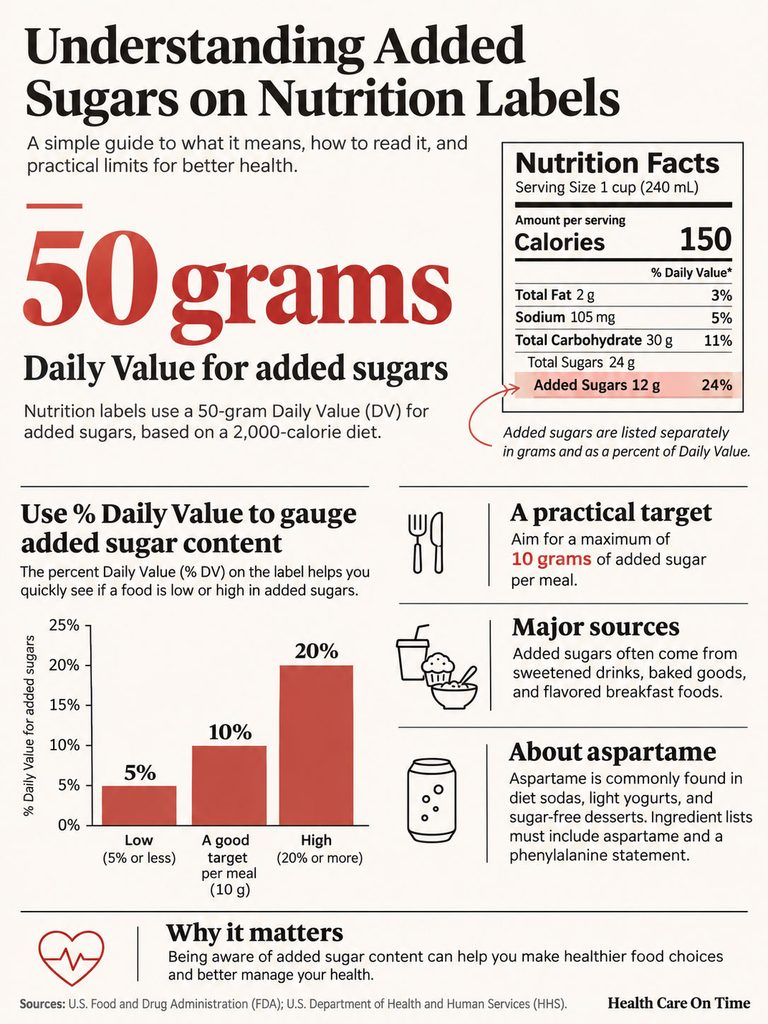
Aspartame shows up in the ingredient list by name, next to the required phenylalanine statement. Diet soda, light yogurt and sugar-free desserts are where it most often turns up.
When “sugar-free” means something else
A sugar-free label can point to several different sweeteners, and they don’t act alike. Sugar alcohols such as xylitol, erythritol, sorbitol and maltitol turn up in sugar-free candy, gum and some protein bars. They aren’t high-intensity sweeteners in the way aspartame is. They carry somewhat fewer calories than sugar, and bacteria in the colon ferment them, which is why they’re the usual cause of gas, bloating, cramps and diarrhea after a handful of sugar-free sweets. The amount that causes trouble varies a lot between people.
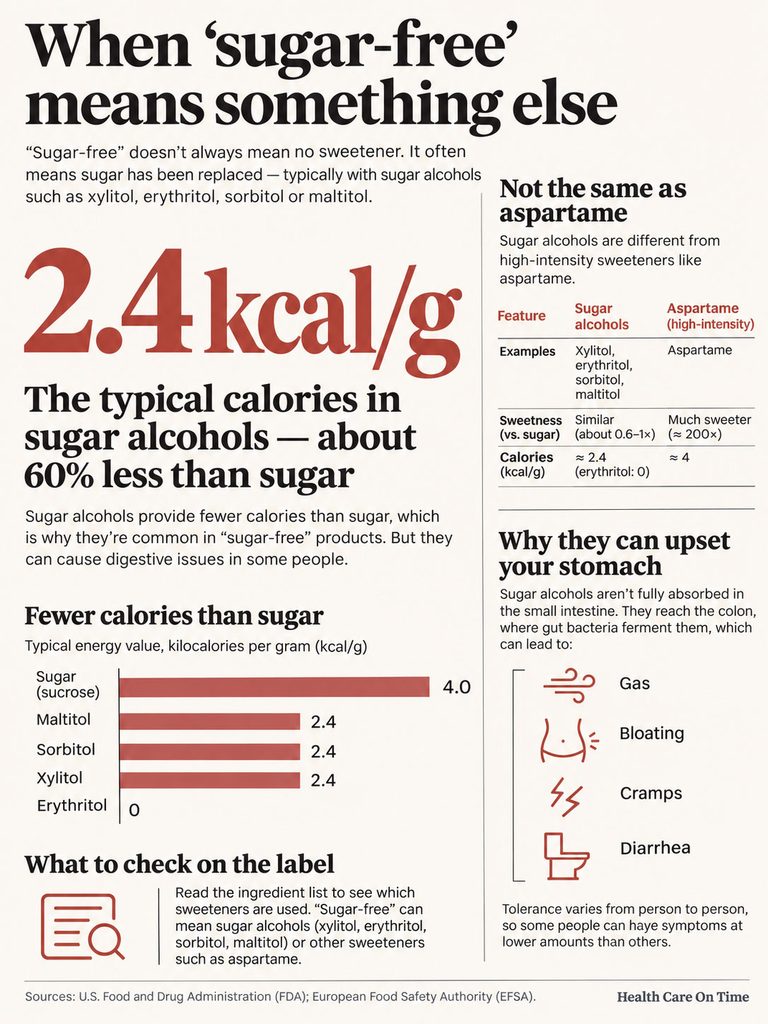
If sugar-free products upset your stomach, read the ingredient list before blaming aspartame.
Cavities, enamel and diet soda
Cavities are mainly a sugar problem. Mouth bacteria feed on sugar and make acids that damage teeth, and sipping a sweet drink over an hour keeps that attack going the whole time, so taking the sugar out lowers tooth decay risk, which is the one dental point in aspartame’s favor.
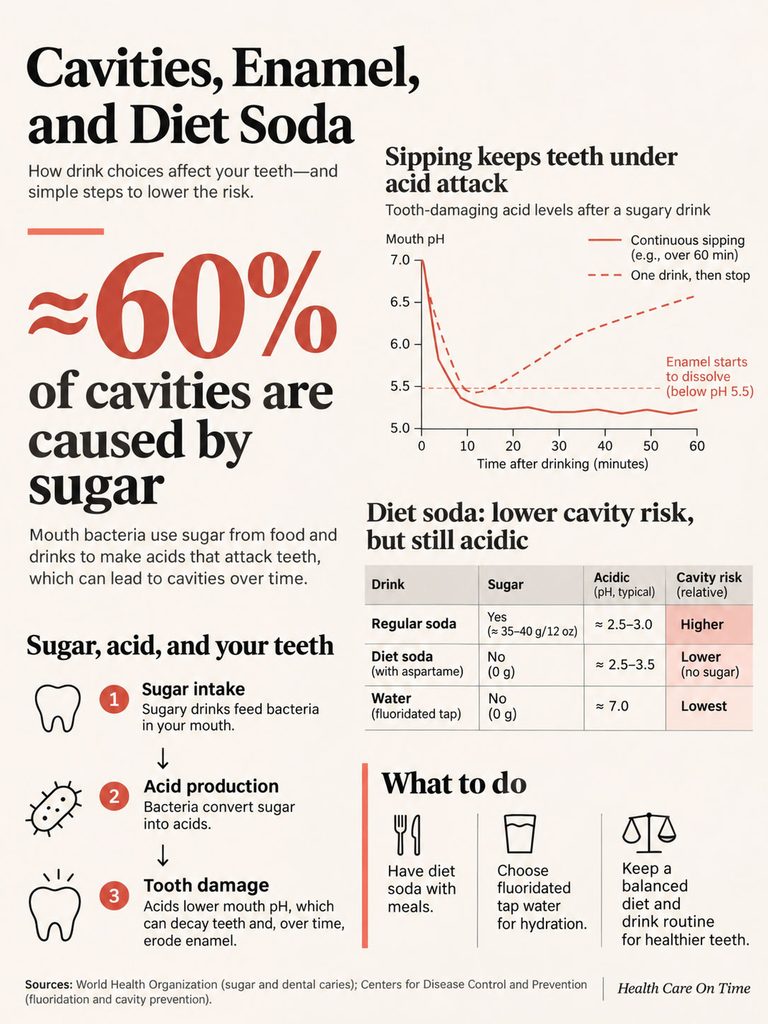
Diet soda’s acidity still wears at enamel on its own, even with no sugar in the can. If you drink it, have it with a meal instead of nursing it all afternoon, and let fluoridated tap water handle most of your thirst.
Who should avoid or limit each one
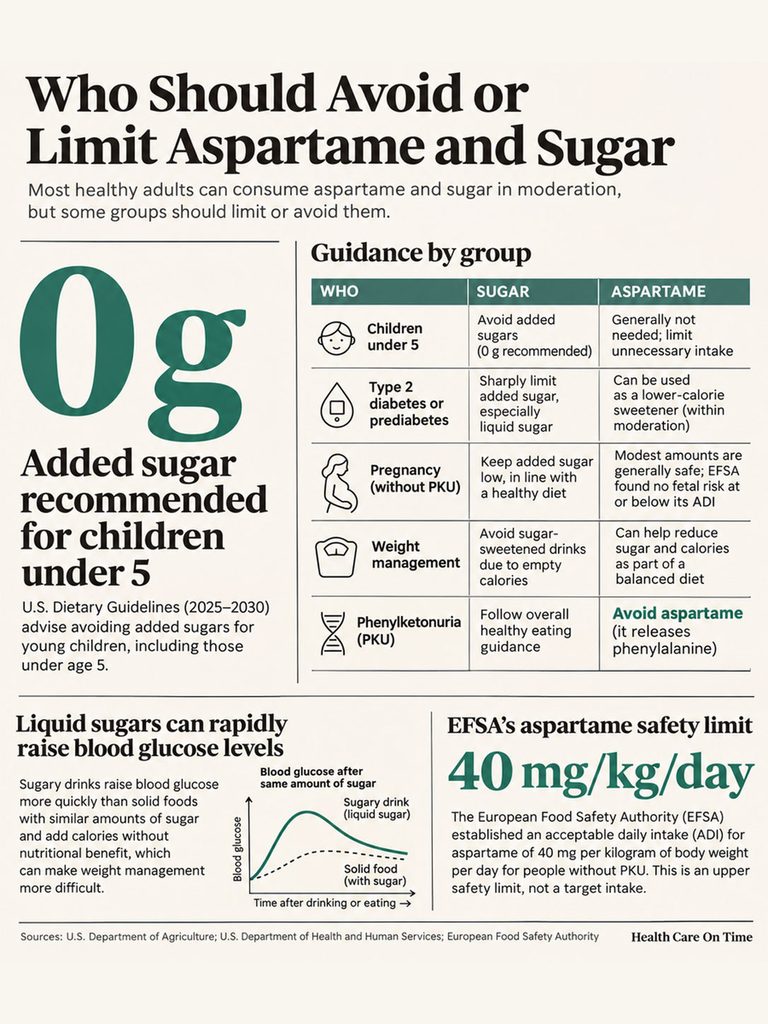
Most healthy adults can have a little of either. A few groups need firmer rules.
For aspartame:
- People with PKU should avoid it completely; the phenylalanine statement on US labels exists for them.
- People with bowel disease may find sugar substitutes make symptoms flare, so cutting back and watching for a pattern makes sense.
- Children under 2 shouldn’t have sugar substitutes at all.
Pregnancy sits in between. Limited amounts are considered safe for healthy pregnant people, and Europe’s food safety review found that intake up to the ADI wouldn’t raise phenylalanine past the level set to protect a fetus in people without PKU.
For sugar, the people who need the hardest limit are those with type 2 diabetes or prediabetes, since sugar raises blood glucose directly and sweet drinks are among the fastest ways to spike it. People trying to lose weight have a strong reason to cut liquid sugar, because it adds calories without filling you up. Children under 5 shouldn’t get added sugars at all under the Dietary Guidelines.
Choosing between them day to day
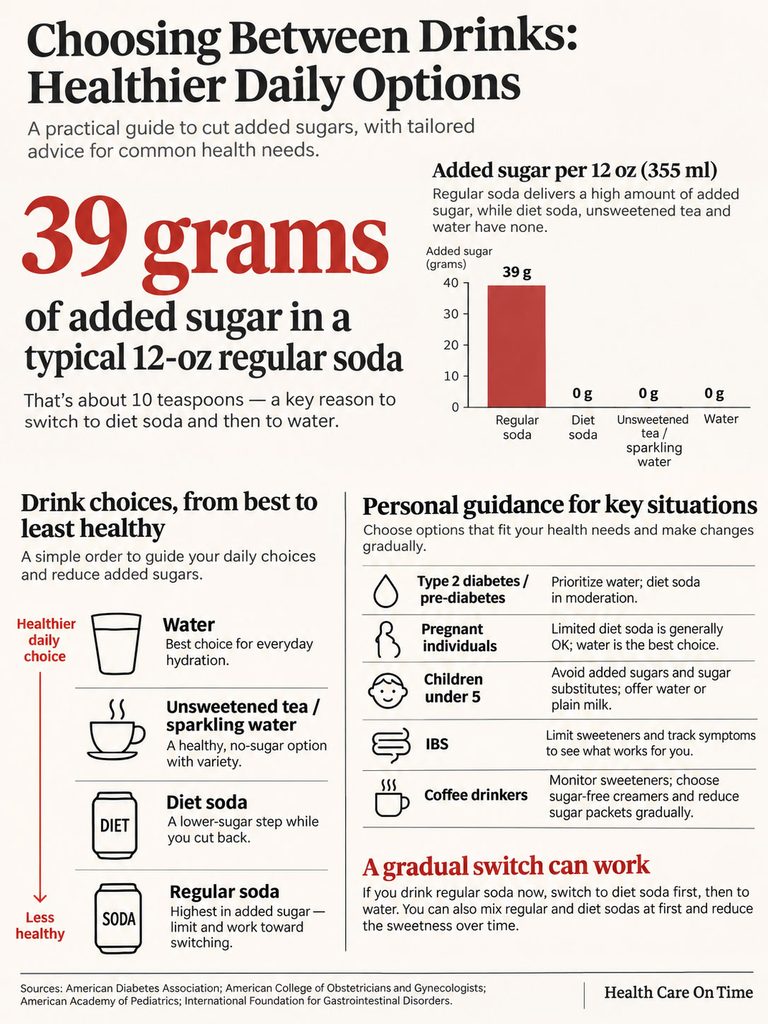
For drinks, the order runs from water to unsweetened tea or sparkling water, then diet soda as a stepping stone, with regular soda last.
| Your situation | Better choice | Why |
| You drink 2 or more regular sodas a day | Switch to diet soda now, then move toward water | Each can swapped removes about 42 g of added sugar |
| You have type 2 diabetes or prediabetes | Water first; diet soda in moderation, short term | ADA 2026: water over other drinks (Grade A); sweeteners as a short-term swap (Grade B) |
| You have PKU | No aspartame; choose water or unsweetened drinks | Phenylalanine from aspartame can build up and harm the brain |
| You’re pregnant and healthy | Limited diet soda is acceptable; water is better | Intake below the ADI is considered safe |
| Your child is under 5 | Neither; offer water or plain milk | No added sugars before age 5; no sugar substitutes under 2 |
| You have IBS or bowel disease | Limit sweeteners and track symptoms | Sugar substitutes may cause flares |
| You have 1 diet soda a day and no health issues | Fine to keep; drink it with a meal | Far below the ADI; acidity matters more for teeth than aspartame |
Look at the whole day, too. A sweet coffee in the morning, a regular soda at lunch and a sports drink at the gym add up fast, and swapping only the soda leaves the other two in place. Plenty of people make the soda swap and stop there. The bigger gain comes from slowly needing less sweetness, and unsweetened sparkling water, iced tea with lemon or water with sliced fruit can help while your taste adjusts. Some people step down gradually, mixing regular and diet, then going all diet, then trading every other can for sparkling water. Others quit soda outright for a stretch so the habit breaks. Watch the coffee cup too, where sugar packets and a sweet creamer can quietly replace the sugar you just cut from soda; trading the creamer for a sugar-free creamer and cutting the packets one at a time closes that gap.
Questions to ask your doctor
Bring these up at your next visit, especially if sodas are a daily thing or you have a metabolic condition.
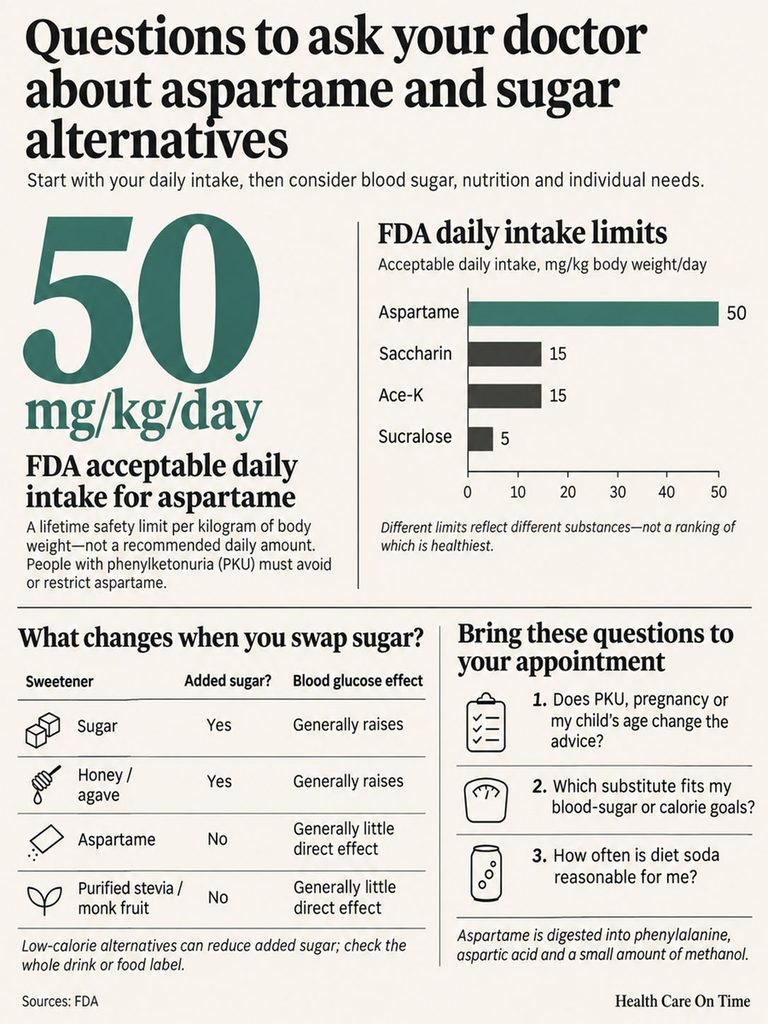
- Is diet soda okay for a few months while cutting back with prediabetes, or is it better to go straight to water?
- Is there a reason the scale hasn’t moved since switching to diet drinks?
- Should someone with liver disease, or with a parent who had liver cancer, avoid aspartame?
- How many diet drinks a day are reasonable during pregnancy?
Frequently Asked Questions
Is aspartame worse for you than sugar?
Not for most adults. Sugar’s links to weight gain, diabetes, heart disease and cavities are firmly established at everyday intakes, and one regular soda already tops the daily added-sugar limit. The case against aspartame rests on observational data and a limited-evidence cancer label, while regulators still consider it safe below the acceptable daily intake. People with PKU are the exception and should avoid it.
What are the most unhealthy artificial sweeteners?
None of the FDA-approved sweeteners is considered unsafe at normal intake, and each has its own limit; sucralose’s ADI is 5 mg/kg, for example, against aspartame’s 50 mg/kg. Aspartame gets the most scrutiny because of the 2023 IARC label and its phenylalanine. Sugar alcohols, which aren’t high-intensity sweeteners, are the ones most likely to cause gas, bloating or diarrhea.
Why use aspartame instead of sugar?
It sweetens with almost no calories and no blood sugar rise, so people managing diabetes or cutting calories can keep a sweet drink without the sugar load. Food makers like it because a tiny amount replaces a lot of sugar.
What is the healthiest substitute for sugar?
For drinks, water, which is the ADA’s Grade A choice for anyone with or at risk of diabetes. For food, whole fruit wins over any added sweetener because it brings fiber and water with its sugar; even watermelon can work for people with diabetes in sensible portions. Stevia and monk fruit are popular plant-based options, but WHO’s advice against relying on non-sugar sweeteners for weight control covers them too, and the 2025-2030 Dietary Guidelines don’t recommend any amount of non-nutritive sweeteners.
Is honey or agave better than aspartame?
Not really. Honey counts as added sugar on the Nutrition Facts label, exactly like table sugar, and it’s dense in calories. Agave is higher in fructose and may be more likely than sugar to contribute to metabolic disease. For fewer calories and steadier blood sugar, aspartame comes out ahead of both, but if the goal is less sweetness overall, all three should shrink.
Does aspartame turn into methanol?
Yes, a small amount. The gut breaks aspartame into phenylalanine, aspartic acid and methanol, and Europe’s food safety authority reviewed all three before concluding that aspartame is not a safety concern at current intake levels.
Does diet soda raise blood sugar?
No. Aspartame isn’t a sugar, and the ADA finds no significant effect on blood glucose control.
Is aspartame safe during pregnancy?
For healthy pregnant people, limited amounts are considered safe. Pregnant people with PKU are different and need tight control of phenylalanine.
How many diet sodas a day is too many?
The safety limit is far above what most people drink, but limit and target aren’t the same thing. Acidity still wears on enamel, and the 2026 Dietary Guidelines ask Americans to limit drinks made with low-calorie sweeteners, so one or two a day, with meals, is a more sensible ceiling than the regulatory maximum.
Can kids drink diet soda?
An occasional one for an older child is fine. It shouldn’t be a daily drink, and children under 2 shouldn’t have sugar substitutes at all.
Medical disclaimer: This article is for general information only and is not a substitute for advice from your doctor, a registered dietitian or another qualified health professional. If you have diabetes, PKU, a bowel condition or are pregnant, talk with your care team before making changes to your diet.
References
- US Food and Drug Administration. Aspartame and Other Sweeteners in Food. Updated February 27, 2025. https://www.fda.gov/food/food-additives-petitions/aspartame-and-other-sweeteners-food
- US Food and Drug Administration. Added Sugars on the Nutrition Facts Label. Updated March 4, 2026. https://www.fda.gov/food/nutrition-facts-label/added-sugars-nutrition-facts-label
- World Health Organization. Aspartame hazard and risk assessment results released. July 14, 2023. https://www.who.int/news/item/14-07-2023-aspartame-hazard-and-risk-assessment-results-released?hl=en-US
- World Health Organization. WHO advises not to use non-sugar sweeteners for weight control in newly released guideline. May 15, 2023. https://www.who.int/news/item/15-05-2023-who-advises-not-to-use-non-sugar-sweeteners-for-weight-control-in-newly-released-guideline
- EFSA Panel on Food Additives and Nutrient Sources. Scientific Opinion on the re-evaluation of aspartame (E 951) as a food additive. EFSA Journal 2013. https://efsa.europa.eu/en/efsajournal/pub/3496
- Debras C, et al. Artificial sweeteners and cancer risk: Results from the NutriNet-Santé population-based cohort study. PLOS Medicine. 2022. https://journals.plos.org/plosmedicine/article?id=10.1371%2Fjournal.pmed.1003950
- Higgins KA, Considine RV, Mattes RD. Aspartame consumption for 12 weeks does not affect glycemia, appetite, or body weight of healthy, lean adults in a randomized controlled trial. Journal of Nutrition. 2018;148(4):650-657. https://nutrition.org/aspartame-consumption-for-12-weeks-does-not-affect-glycemia-appetite-or-body-weight-of-healthy-lean-adults-in-a-randomized-controlled-trial/
- Healio. Non-nutritive sweetened beverages do not undermine weight loss efforts (Peters JC, et al. Obesity. 2014). https://www.healio.com/news/endocrinology/20140528/non-nutritive-sweetened-beverages-do-not-undermine-weight-loss-efforts
- Cardiovascular Business. Aspartame linked to surging insulin levels, fatty plaques and inflammation (Cell Metabolism, 2025). https://cardiovascularbusiness.com/topics/clinical/heart-health/aspartame-linked-surging-insulin-levels-fatty-plaques-and-inflammation
- American Diabetes Association Professional Practice Committee. 5. Facilitating Positive Health Behaviors and Well-being to Improve Health Outcomes: Standards of Care in Diabetes 2026. Diabetes Care. 2026;49(Suppl 1):S89-S131. https://education.weitzmaninstitute.org/sites/default/files/course/2025-12/Facilitating%20Positive%20Health%20Behaviors%20and%20Well-being%20to%20Improve%20Health%20Outcomes%20-%20Standards%20of%20Care%20in%20Diabetes-2026.pdf
- US Department of Health and Human Services and US Department of Agriculture. Dietary Guidelines for Americans, 2025-2030. January 2026. https://cdn.realfood.gov/DGA.pdf
- Centers for Disease Control and Prevention. Get the Facts: Added Sugars. Reviewed April 29, 2026. https://www.cdc.gov/nutrition/php/data-research/added-sugars.html
- Centers for Disease Control and Prevention. Rethink Your Drink. Updated March 2026. https://www.cdc.gov/healthy-weight-growth/rethink-your-drink
- American Heart Association (Go Red for Women). Cut Out Added Sugars infographic. https://goredforwomen.org/en/healthy-living/healthy-eating/eat-smart/sugar/cut-out-added-sugars-infographic
- Mayo Clinic. Artificial sweeteners and other sugar substitutes. January 21, 2026. https://www.mayoclinic.org/healthy-lifestyle/nutrition-and-healthy-eating/in-depth/artificial-sweeteners/art-20046936
- Cleveland Clinic. Are Artificial Sweeteners Bad for You? April 20, 2023. https://health.clevelandclinic.org/whats-worse-sugar-or-artificial-sweetener
- NewYork-Presbyterian Health Matters. Is Sugar Better For You Than Artificial Sweeteners? August 4, 2023. https://www.nyp.org/healthmatters/is-sugar-better-for-you-than-artificial-sweeteners
- MedlinePlus Genetics. Phenylketonuria. https://medlineplus.gov/genetics/condition/phenylketonuria
- MouthHealthy (American Dental Association). Sugar, Drinks and Dental Health. https://www.mouthhealthy.org/nutrition/sugary-drinks
- ADA News. How diet soda can harm teeth. https://adanews.ada.org/huddles/how-diet-soda-can-harm-teeth/