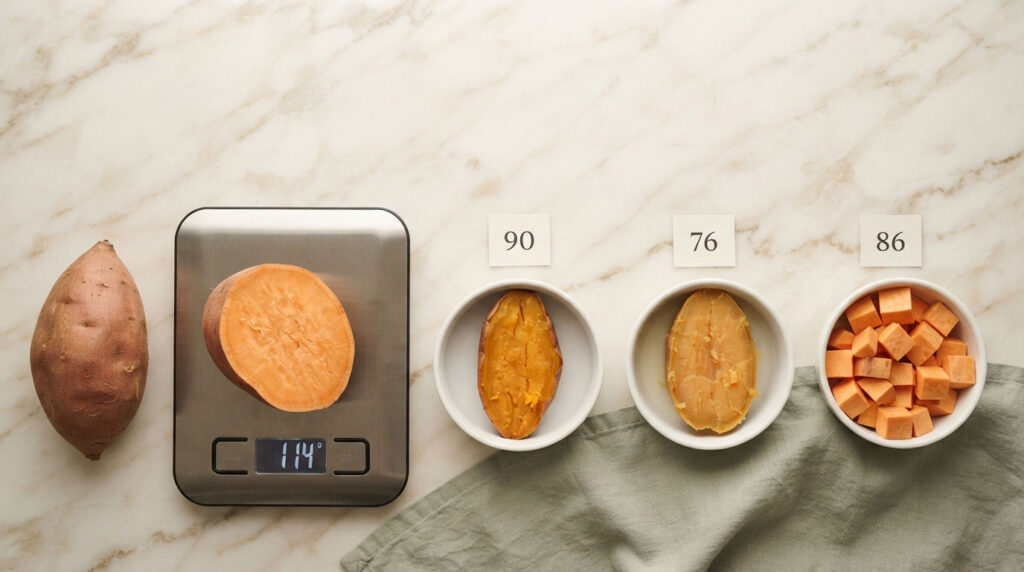
A single sweet potato can swing from 76 calories per 100 grams to 164 calories per 100 grams before a pat of butter ever touches it. The vegetable never changed. The pot, the pan, or the oven did.
Table of Contents
That gap explains why calorie charts contradict each other, and why your tracking app rarely matches the sticker at the supermarket. This breakdown works straight from USDA FoodData Central, serving by serving, so you can stop guessing and start weighing.
Quick Answer
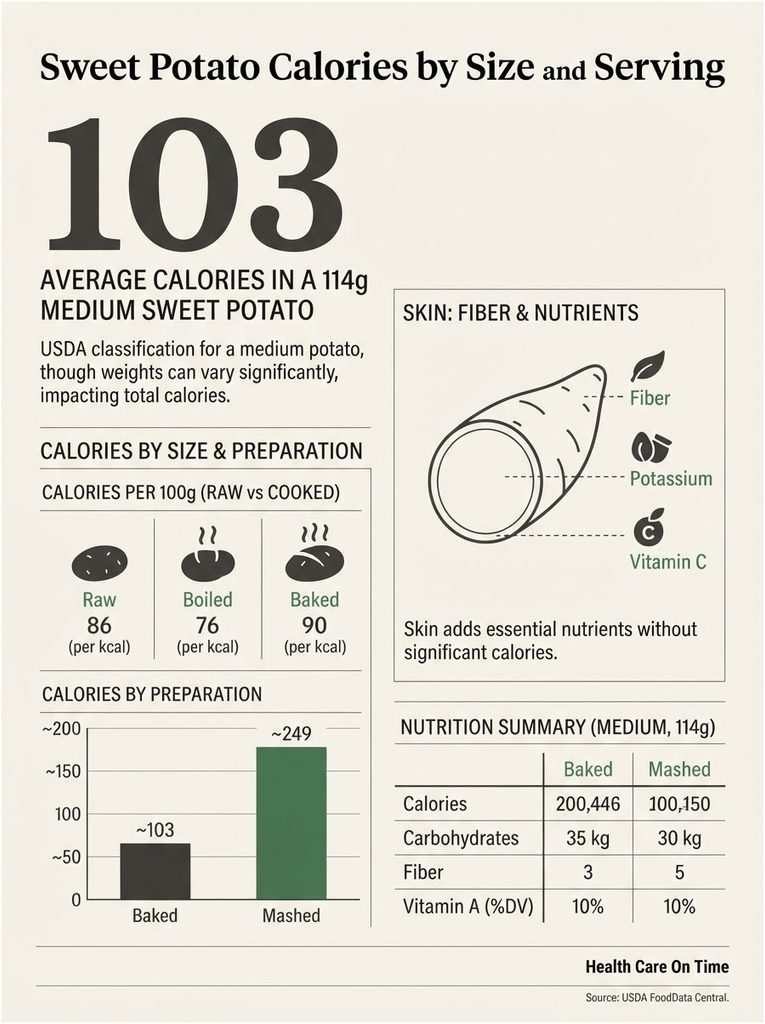
A medium baked sweet potato with skin (about 114 g) has roughly 103 calories. One cup of baked sweet potato cubes (200 g) has 180 calories. Per 100 grams, USDA lists raw sweet potato at 86 calories, boiled without skin at 76 calories, and baked in skin at 90 calories. Cooking method, not size alone, drives most of the difference between published figures.
At a Glance
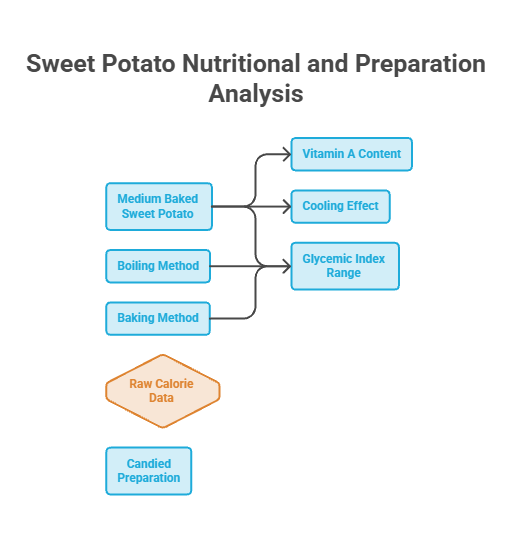
- A medium baked sweet potato runs about 103 calories, 23.6 g carbs, 3.8 g fiber, and 2.3 g protein.
- Boiling lowers calories per 100 g (76) because the flesh takes on water. Baking raises it (90) because water evaporates.
- One cup of baked sweet potato delivers 1,922 mcg RAE of vitamin A, which is 214% of the Daily Value.
- USDA carries two different raw sweet potato entries, at 86 and 79 calories per 100 g. Both are valid, and the reason matters for tracking.
- Candied sweet potato jumps to 164 calories per 100 g in USDA own data, roughly double the boiled figure.
- Glycemic index for the same vegetable ranges from 32 raw to 94 baked, depending heavily on cultivar and cooking time.
- Cooling cooked sweet potato before eating raises resistant starch and lowers the blood sugar response.
Sweet Potato Calories by Size and Serving
Most people want one number. USDA does not publish one number, because a sweet potato is not a standardized unit. It is a root that ranges from about 2 ounces to well over 12 ounces at American supermarkets.
Our medical reviewers field this confusion constantly in diet-tracking questions, and the correction is always the same. Weigh it once, then work in grams instead of adjectives.
Small, Medium, and Large Whole Sweet Potatoes
USDA assigns standard gram weights to each size class for sweet potato baked in the skin. A small carries 60 grams of edible flesh, a medium 114 grams, and a large 180 grams.
Those translate to roughly 54, 103, and 162 calories. A large is three times a small, which is exactly why “one sweet potato” tells you almost nothing on its own.
The size drift is not theoretical. Patients tracking macros with us often log a “medium” from a warehouse-club bag that actually weighs closer to 8 ounces, quietly adding 70 or more calories to a meal they believe they have counted.
Cup Measurements
Cups behave differently depending on whether the flesh is cubed or mashed, because mashing compacts it. One cup of raw cubes weighs 133 grams, one cup of baked cubes weighs 200 grams, and one cup of boiled mashed sweet potato weighs 328 grams.
That last figure catches almost everyone. A cup of mashed sweet potato holds nearly two and a half times the food of a cup of raw cubes, and USDA prices it at 249 calories.
If you serve mashed sweet potato at a family dinner, assume the scoop is heavier than it looks. Half a cup is a more realistic starting portion for most plates.
Per Ounce and Per 100 Grams
For recipe building, the per-100-gram figure is the only stable anchor. Raw sits at 86 calories, boiled without skin at 76, and baked in skin at 90, per USDA FoodData Central.
By ounce, baked sweet potato works out to roughly 25 calories. That lands within a calorie or two of a baked russet potato, a comparison worth remembering the next time someone frames sweet potato as the obviously lighter choice.
Does the Skin Change the Number?
Barely, in calories. Meaningfully, in fiber and minerals.
Sweet potato skin is largely insoluble fiber and water, so it contributes almost nothing energetically. Our lab partners report the same pattern seen with white potatoes, where peeling costs measurable potassium and vitamin C without saving calories worth counting.
Scrub the skin well, leave it on for baking and roasting, and you gain fiber for free. Boiling is the one method where peeling is common, and USDA reflects that with a separate skinless entry.
Table 1: Sweet Potato Calories by Serving and Preparation (USDA)
| Serving | Weight | Calories | Carbs | Fiber | Vitamin A (%DV) |
| Small, baked in skin | 60 g | 54 | 12.4 g | 2.0 g | 64% |
| Medium, baked in skin | 114 g | 103 | 23.6 g | 3.8 g | 122% |
| Large, baked in skin | 180 g | 162 | 37.3 g | 5.9 g | 192% |
| 1 cup, baked cubes | 200 g | 180 | 41.4 g | 6.6 g | 214% |
| 1 medium, boiled, no skin | 151 g | 115 | 26.7 g | 3.8 g | 132% |
| 1 cup, boiled and mashed | 328 g | 249 | 58.1 g | 8.2 g | 287% |
| 1 cup, raw cubes | 133 g | 114 | 26.8 g | 4.0 g | 105% |
| 100 g, raw | 100 g | 86 | 20.1 g | 3.0 g | 79% |
Source: USDA FoodData Central, SR Legacy entries 168482 (raw), 168483 (baked in skin), and 168484 (boiled without skin). Daily Value for vitamin A is 900 mcg RAE.
Why Cooking Method Moves the Calorie Count
Here is the part most calorie pages skip entirely. Cooking neither creates nor destroys calories in a sweet potato, but it absolutely changes the calories per gram, because it changes water content.
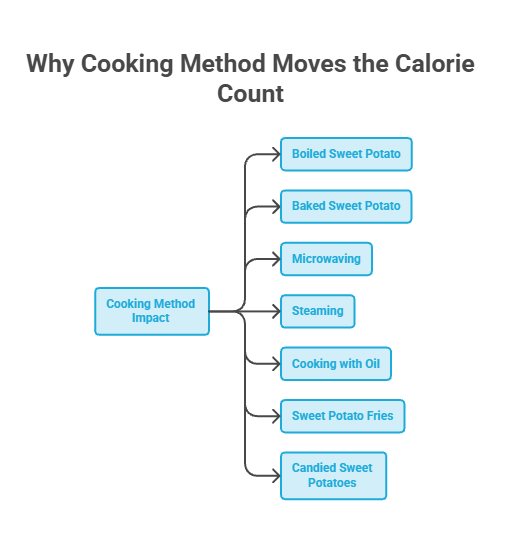
That distinction matters enormously, because most people weigh food after cooking rather than before.
Boiled Comes In Lower Than Raw
USDA lists boiled sweet potato without skin at 76 calories per 100 grams, which sits below the raw figure of 86. The flesh absorbs water during boiling, so each gram carries proportionally less starch.
Nothing was lost. The same potato simply weighs more after boiling, and per-gram density dropped accordingly.
Practical effect: if you boil sweet potatoes and weigh the cooked result, you will log fewer calories per 100 grams than someone weighing the same potato raw.
Baked Comes In Higher Than Raw
Baking runs the process backward. Dry oven heat drives moisture out, the root shrinks, and the remaining flesh concentrates. USDA puts baked sweet potato at 90 calories per 100 grams.
So a scale-measured 200 grams of baked sweet potato carries roughly 18% more calories than 200 grams of boiled. Same vegetable, different water content.
Baking also converts more starch into maltose, which is why a baked sweet potato tastes noticeably sweeter than a boiled one with nothing added.
Microwaving, Steaming, and the Middle Ground
Microwaving sits between the two. It cooks fast enough to limit moisture loss, so the calorie density stays closer to raw than to oven-baked.
Steaming behaves similarly to boiling on calorie density, without leaching water-soluble nutrients into discarded cooking water. For anyone who wants boiled-style numbers with better nutrient retention, steaming is the practical middle path.
Roasting, Air Frying, and Added Oil
The moment oil enters the pan, the vegetable stops being the main variable. One tablespoon of oil adds roughly 120 calories, and a single large sweet potato cut into wedges easily absorbs one to two tablespoons.
Air frying uses less. A typical home batch uses about a tablespoon and a half spread across an entire tray, which is why air-fried wedges land closer to plain baked than to deep fried.
Across the readers HealthCareOnTime serves, forgotten cooking oil is the single most common reason a logged meal underestimates real intake.
Sweet Potato Fries, Counted Honestly
The health halo on sweet potato fries does not survive contact with the numbers. A 3-ounce oven-baked portion made with light oil lands around 130 to 160 calories, while deep-fried versions of the same weight climb toward 275 to 350.
Restaurant servings compound the problem. Many plated portions run 150 to 300 grams, so a shared appetizer can carry more calories than the entree beside it.
Frozen retail fries deserve their own caution. Many carry added starches and sometimes added sugar for crispness, which means the bag is not simply sliced sweet potato in a freezer.
The Thanksgiving Problem
USDA maintains a separate entry for home-prepared candied sweet potato, and it lands at 164 calories per 100 grams with 32.1 g carbohydrate and 3.5 g fat.
That is roughly double boiled sweet potato, and it does not include marshmallow topping, pecan streusel, or the extra butter most family recipes assume.
Patients commonly ask us whether the vegetable itself is the holiday problem. In cases reviewed by our medical team, the answer is almost always the brown sugar and butter, not the root underneath.
The Full USDA Nutrient Profile Behind Those Calories
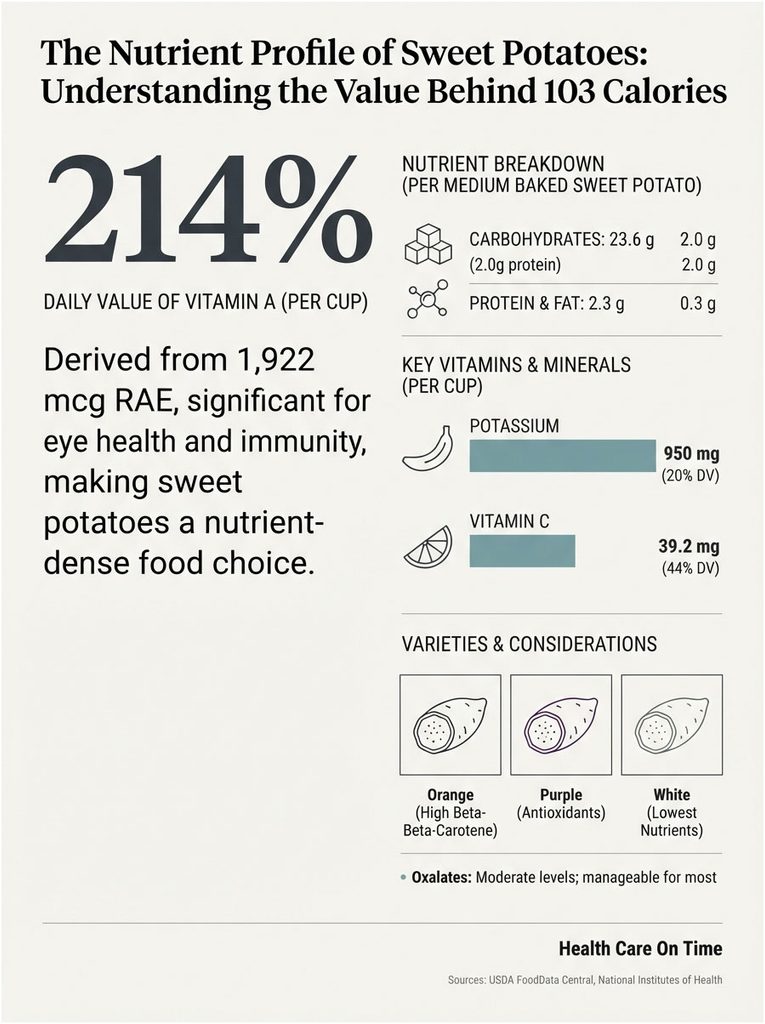
Calories describe energy and nothing else. What makes a sweet potato worth its 103 calories is everything that arrives with them.
Carbohydrates, Sugars, and Starch
A medium baked sweet potato carries about 23.6 grams of total carbohydrate. Roughly 6.5 grams per 100 g are sugars, mostly sucrose with smaller contributions from glucose, fructose, and maltose.
Baking raises the sugar figure measurably against raw. Heat converts part of the starch into maltose, which is the chemistry behind that caramelized flavor.
Starch itself runs around 7 grams per 100 g baked. The balance between starch and sugar shifts with cooking time, which is one more reason two identical-looking potatoes can behave differently.
Fiber
One cup of baked sweet potato provides 6.6 grams of fiber, about 24% of the 28-gram Daily Value. A medium potato delivers close to 3.8 grams.
For a food this modest in calories, that is a strong return. Fiber is also the main reason sweet potato holds up well in satiety comparisons against refined carbohydrates like white bread and instant rice.
Protein and Fat
Protein sits at 2.0 grams per 100 grams baked, or roughly 4 grams per cup. Fat is effectively absent at 0.3 grams per cup.
Nobody eats sweet potato for protein. Pairing it with eggs, chicken, fish, tofu, or beans is what converts it from a standalone carbohydrate into a balanced plate.
Vitamin A and Beta-Carotene
This is the number that earns the food its reputation. One cup of baked sweet potato supplies 1,922 mcg RAE of vitamin A, which is 214% of the Daily Value, alongside 23,018 mcg of beta-carotene.
A single medium potato clears roughly 120% of a day of vitamin A by itself. Very few whole foods reach that at this calorie cost.
The form matters. Beta-carotene is provitamin A, converted by the body as needed, so the toxicity concern attached to high-dose preformed vitamin A supplements does not transfer here, as the NIH Office of Dietary Supplements explains.
Absorption improves with a little dietary fat. A teaspoon of olive oil or a few slices of avocado alongside the potato does more for carotenoid uptake than eating it plain.
Potassium, Vitamin C, and Trace Minerals
One cup of baked sweet potato provides 950 mg of potassium, about 20% of the Daily Value. Vitamin C reaches 39.2 mg, roughly 44% of the DV.
Manganese lands near 43% of the DV per cup, copper around 36%, vitamin B6 about 34%, and pantothenic acid about 35%. Magnesium contributes 54 mg.
Patients booking metabolic panels through HealthCareOnTime often ask which everyday foods actually move potassium intake without a supplement. Sweet potato is one of the short list that does.
Purple, White, and Orange Varieties
Calorie content across varieties sits close enough that it rarely changes a tracking log. Pigment is where they diverge.
Orange-flesh cultivars carry the beta-carotene load. Purple varieties trade most of that for anthocyanins, the same class of compound found in blueberries, and provide far less vitamin A. White-flesh varieties fall lowest on both.
If vitamin A is the goal, orange flesh is the choice. If antioxidant variety is the goal, rotating in purple has merit.
A Note on Oxalates
Sweet potatoes are moderately high in oxalates, compounds linked to calcium oxalate kidney stones in susceptible people. Most adults handle them without issue.
Anyone with a history of kidney stones should discuss intake with their physician rather than eliminating the food outright. Pairing sweet potato with a calcium source at the same meal is a commonly used strategy.
Why USDA Gives Two Different Calorie Numbers
This is the discrepancy no competing page explains. USDA SR Legacy entry for raw sweet potato lists 86 calories per 100 grams. The newer Foundation Foods entry for orange-flesh sweet potato without skin lists 79 calories, with 17.3 g carbohydrate and 14.8 mg vitamin C.
Both are correct. They come from different sampling programs, different collection years, and different cultivar mixes, and the newer entry excludes the skin.
The vitamin C gap is wider still. SR Legacy lists raw sweet potato at 2.4 mg per 100 g, while the Foundation entry lists 14.8 mg and the baked SR entry lists 19.6 mg. Sample age, storage time, and analytical method account for most of that spread.
The practical rule: pick one database, stay inside it, and never mix entries within a single tracking log. Our medical reviewers see database-mixing behind most “my numbers do not add up” questions.
How Sweet Potatoes Fit the American Plate Right Now
Sweet potato moved from a November side dish to a year-round staple in about two decades, and federal data tracks the shift precisely.
The Consumption Trend
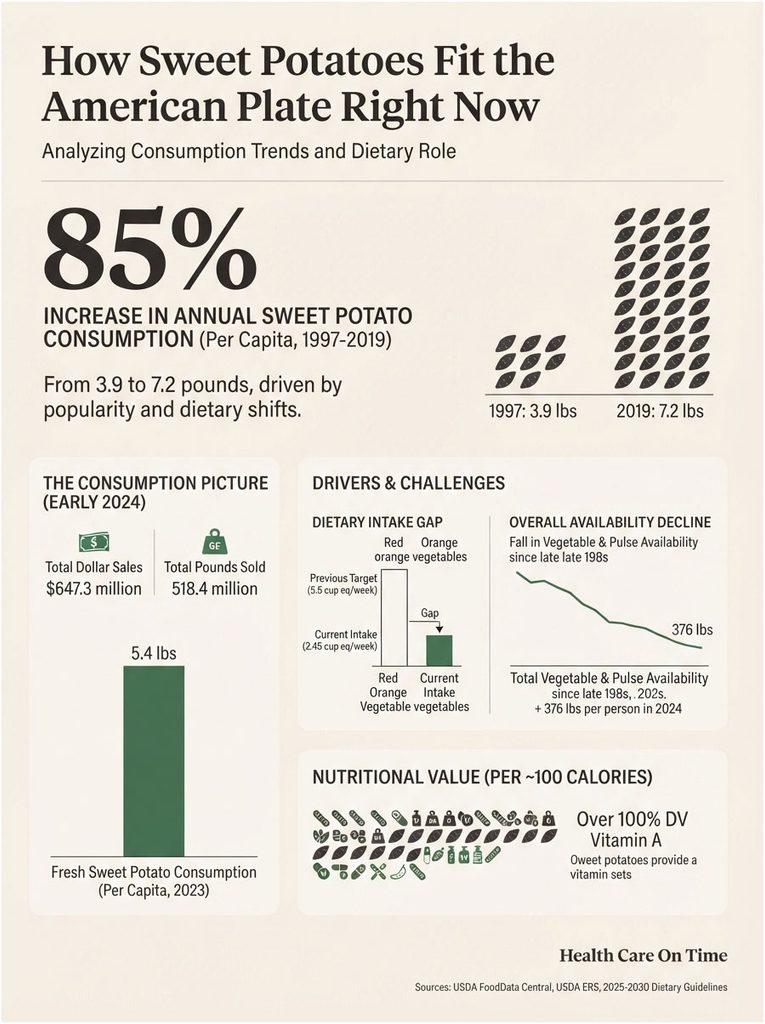
USDA Economic Research Service data shows sweet potato availability averaged 7.2 pounds per person per year across 2017 to 2019, up from 3.9 pounds in 1997 to 1999. Fresh sweet potato consumption specifically registered about 5.4 pounds per person in 2023.
Retail scan data confirms the direction. Total sweetpotato dollar sales reached $647.3 million on 518.4 million pounds, at an average price of $1.25 per pound.
Restaurant menus pushed much of that growth. Sweet potato fries appearing as a standard side upgrade did more for national consumption than any nutrition campaign.
What the 2025 to 2030 Dietary Guidelines Changed
The Dietary Guidelines for Americans, 2025 to 2030 were released on January 7, 2026, and they made a structural change worth understanding.
Previous editions set weekly targets by vegetable subgroup, including 5.5 cups per week of red and orange vegetables, the group sweet potato belongs to. The new edition removes those distinct subgroup targets in favor of a simpler daily vegetable count.
That simplification is easier to follow. It also no longer nudges Americans specifically toward the orange vegetables that carry the vitamin A load.
The Shortfall That Did Not Go Away
Federal advisory analysis put usual red and orange vegetable intake at 2.45 cup equivalents per week against the previous 5.5-cup target. Americans were consuming under half the recommendation.
The broader picture is no better. Total vegetable and pulse availability fell to 376 pounds per person in 2024, the lowest level in more than 35 years.
Against that backdrop, a food that delivers over 100% of daily vitamin A for roughly 100 calories is doing real work.
Table 2: US Sweet Potato and Vegetable Intake Data
| Metric | Figure | Period | Source |
| Fresh sweet potato, per capita consumption | 5.4 lb | 2023 | USDA Economic Research Service |
| Sweet potato availability, per capita | 7.2 lb | 2017 to 2019 | USDA ERS Food Availability Data |
| Sweet potato availability, per capita | 3.9 lb | 1997 to 1999 | USDA ERS Food Availability Data |
| Usual red and orange vegetable intake | 2.45 cup eq/week | 2025 DGAC analysis | Dietary Guidelines Advisory Committee |
| Total vegetable and pulse availability | 376 lb (lowest since 1988) | 2024 | USDA ERS, Vegetables and Pulses Outlook |
| Sweetpotato retail sales | $647.3M on 518.4M lb | 52 weeks ending Jan 2024 | Circana retail scan data |
Sources: USDA ERS Food Availability Data System and the ERS Vegetables and Pulses Outlook.
Calories, Blood Sugar, and Glycemic Load
A calorie count says nothing about blood sugar response, and sweet potato is the textbook case for why those questions need separate answers.
Glycemic Index Swings Enormously by Cooking Method
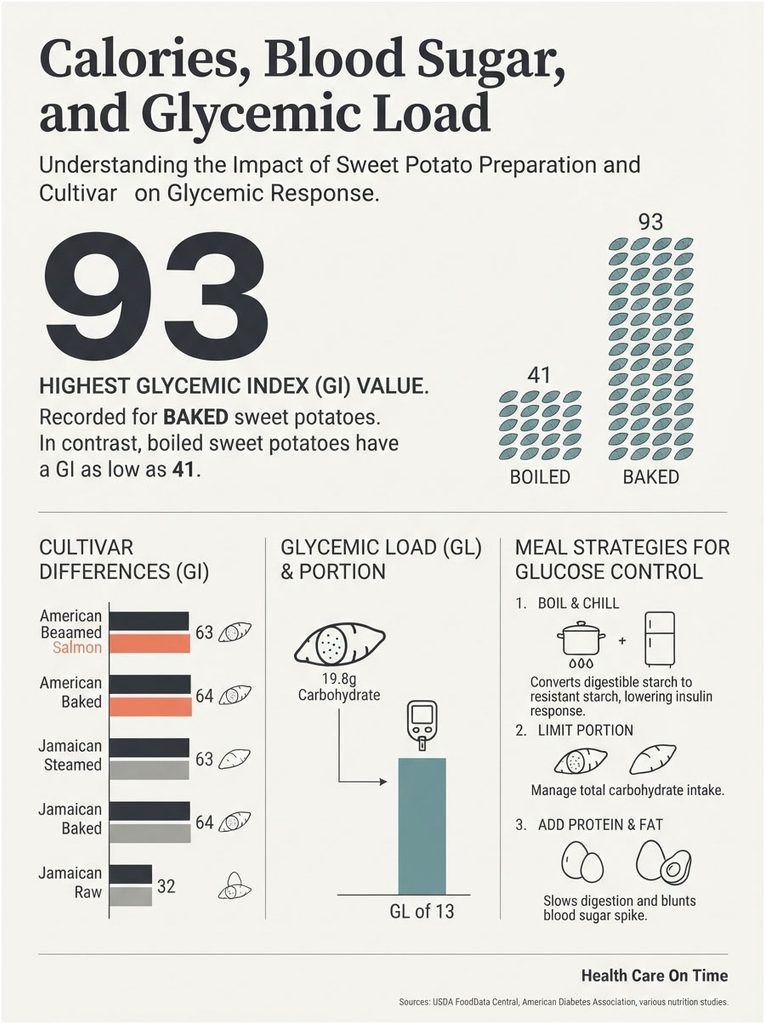
Research on ten sweet potato cultivars found glycemic index values ranging from 41 to 93, with boiling producing the lowest results at 41 to 50, baking the highest at 82 to 94, and roasting close behind at 79 to 93. That work appears in the Journal of Nutrition and Metabolism.
A 50-point spread for one vegetable, driven by heat and time rather than variety. Very few foods show that range.
Why American Numbers Look Different
Here is the nuance that gets copied incorrectly across the internet. The widely circulated figure of 94 for baked sweet potato comes from Jamaican cultivars, not American ones.
Researchers at North Carolina State University tested Beauregard, the dominant US commercial cultivar, and reported substantially lower values: 63 steamed, 64 baked, and 66 microwaved for the flesh, with raw at 32 and dehydrated at 41.
Baked Beauregard at GI 64 is a moderate-GI food, not a high-GI one. If your sweet potato came from an American supermarket, that is very likely the more relevant number.
Cooling Changes the Math Again
Cooking and then chilling starchy vegetables converts part of the digestible starch into resistant starch, which behaves more like fiber than sugar.
The same effect is well documented in white potatoes, where refrigerated portions produce a lower insulin response than freshly cooked ones. Sweet potato follows the same principle.
Meal preppers get this benefit without trying. Boiling on Sunday and eating through the week is a lower-glycemic pattern than baking fresh each night.
Glycemic Load Is the Practical Number
Glycemic index describes a fixed 50-gram carbohydrate dose, which nobody actually eats. Glycemic load adjusts for the portion on your plate.
A medium baked sweet potato carries about 19.8 grams of available carbohydrate once fiber is subtracted. At GI 64, that produces a glycemic load near 13, which sits in the moderate band.
Readers booking HbA1c testing through HealthCareOnTime frequently ask whether sweet potato has to go. In cases reviewed by our medical team, portion size and cooking method usually matter far more than removing the food.
If You Are Managing Blood Sugar
Boil or steam rather than bake when glucose control is the priority. Hold the portion to one small or medium potato rather than a cup of mash.
Pair it with protein and fat, which slows gastric emptying and blunts the curve. Then test your own response, because individual variation is wide enough that population averages only take you partway.
Sweet Potato vs White Potato vs Rice vs Bread
The belief that sweet potato is dramatically lighter than white potato does not survive the data.
Head to Head on Calorie Density
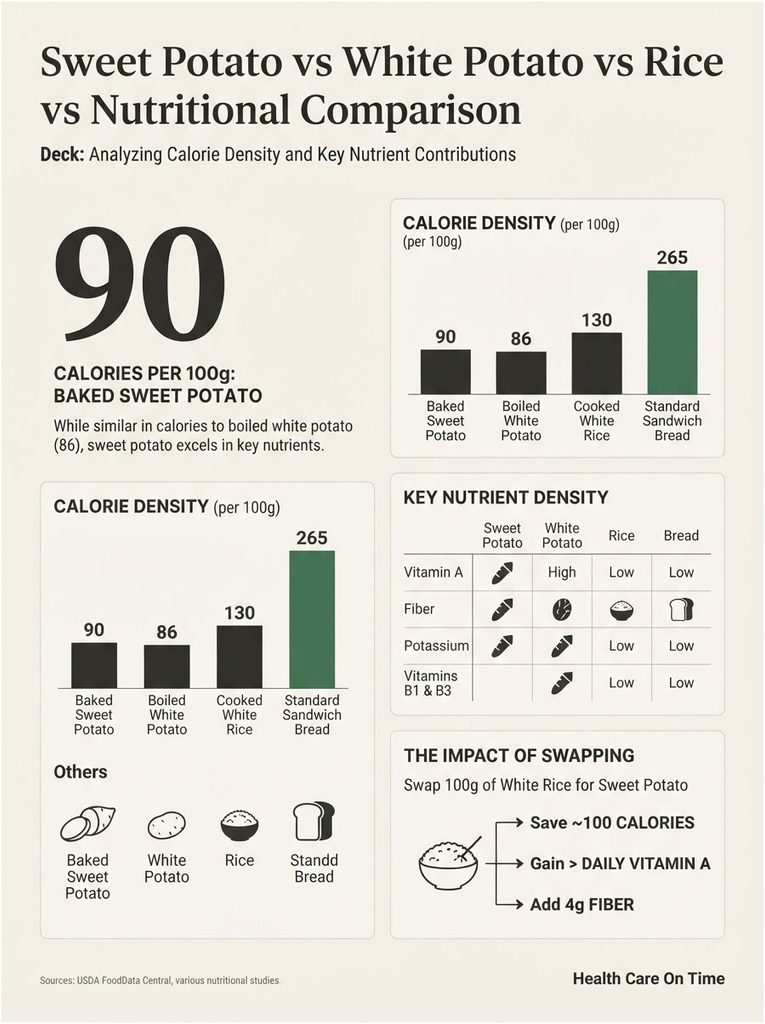
Baked sweet potato sits at 90 calories per 100 grams. Boiled peeled white potato sits at 86. Cooked white rice runs about 130 calories per 100 grams, and standard sandwich bread lands near 265.
By ounce, baked sweet potato and baked russet are effectively tied. The difference between them is not energy. It is the micronutrient profile.
What You Gain and What You Give Up
Sweet potato wins decisively on vitamin A, where white potato contributes essentially none. It also carries more fiber per gram in most preparations, plus more manganese.
White potato returns the favor on vitamin B1 and B3, and competes closely on potassium depending on preparation. Both are legitimate vegetables, and how you cook them does more damage or good than which one you pick.
Against rice and pasta, both potatoes come out ahead on calories per gram and on fullness per calorie. Swapping a potato for an equal weight of rice usually cuts calories while filling more of the plate.
The Substitution That Actually Works
Replacing a cup of white rice with a medium sweet potato saves roughly 100 calories and adds close to 4 grams of fiber plus a full day of vitamin A.
That single swap, repeated four nights a week, is a more durable change than most people manage with restriction alone.
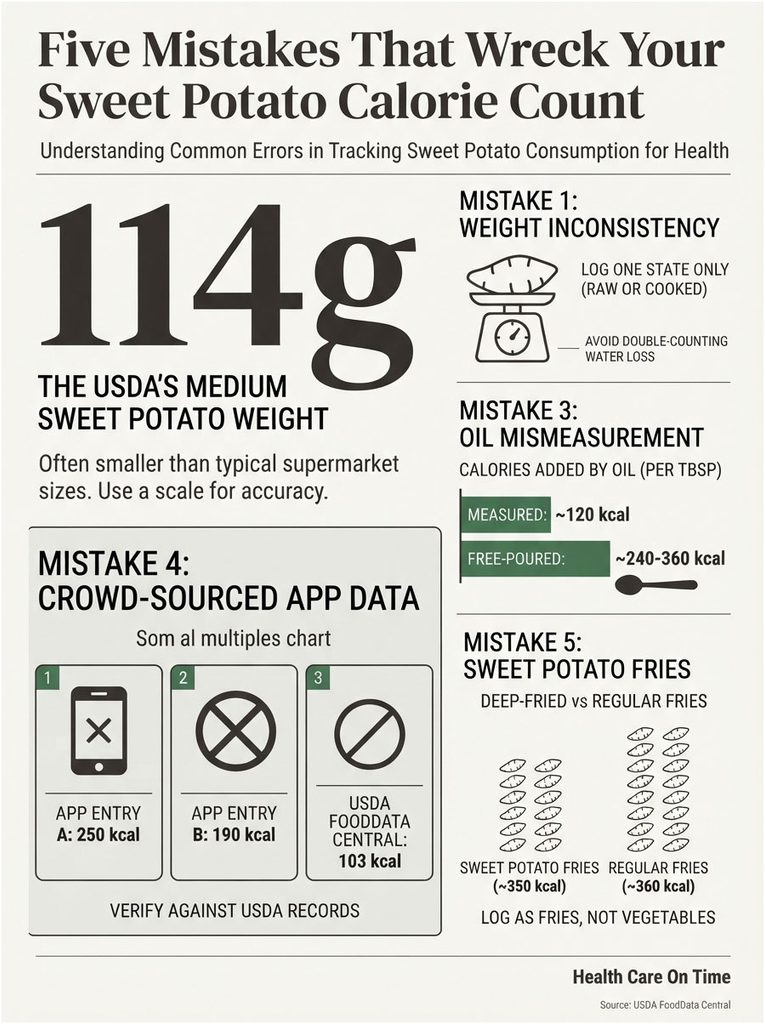
Five Mistakes That Wreck Your Sweet Potato Calorie Count
Weighing Raw and Logging Cooked
If you weigh 200 grams raw and then log 200 grams of baked sweet potato, you have double-counted the water loss. Pick one state, raw or cooked, and stay consistent across every entry.
Eyeballing Medium
USDA medium is 114 grams of flesh. Supermarket sweet potatoes routinely run double that, turning a 103-calorie entry into a 200-calorie reality.
A $12 kitchen scale eliminates this entire category of error permanently. Our medical reviewers rate it as the highest-return purchase for anyone starting to track food.
Forgetting the Oil
Two tablespoons of olive oil across a tray of wedges adds roughly 240 calories, which often exceeds what the sweet potatoes themselves contribute.
Measure the oil with a spoon rather than pouring. The difference between a measured teaspoon and a free pour is frequently 100 calories or more.
Trusting Crowd-Sourced App Entries
Many popular tracking apps allow user-created entries, and those entries are often wrong. Our medical reviewers regularly see logs where a sweet potato entry carries values matching no USDA record at all.
Search for the verified or USDA-flagged entry, or type the gram values manually from FoodData Central.
Treating Sweet Potato Fries as a Health Food
Deep-fried sweet potato fries carry calories comparable to or above deep-fried white potato fries at equal serving weight. The vitamin A survives the fryer. The calorie advantage was never there.
Enjoy them as a treat if you like them. Just log them as fries rather than as a vegetable serving.
Choose Your Cooking Method by Goal
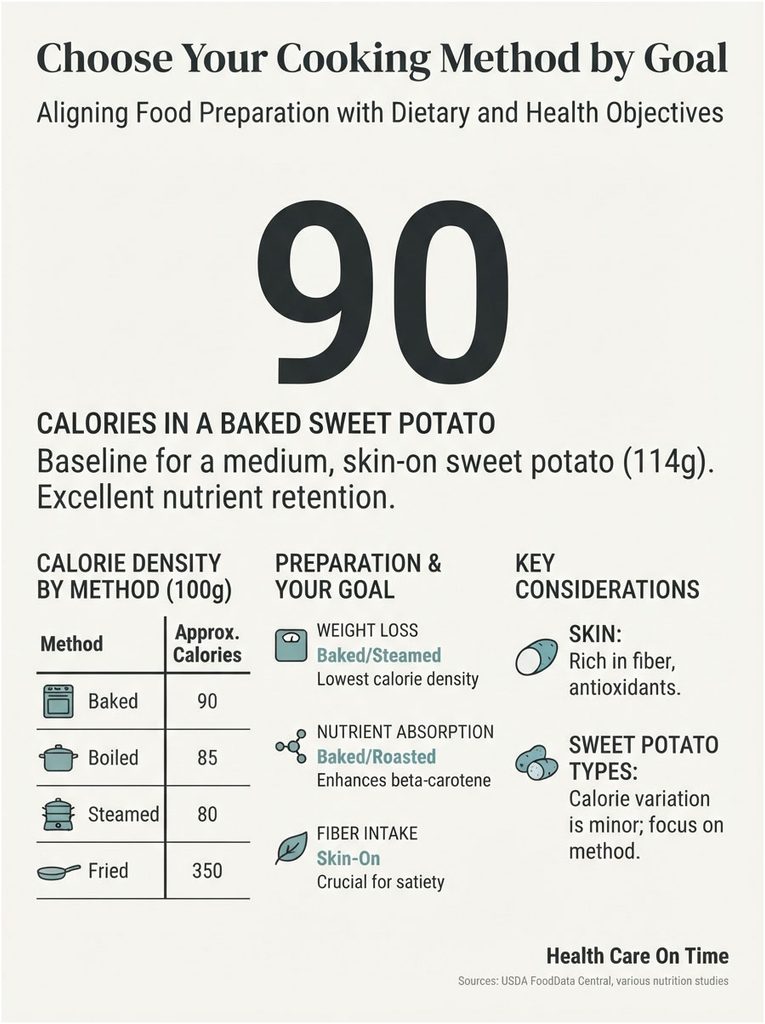
Table 3: Scenario and Recommended Action
| Your situation | Best preparation | Typical calories | What to watch |
| Calorie deficit, want volume | Boiled or steamed, skin on | 115 per medium | Skip butter; use cinnamon or hot sauce |
| Managing blood sugar | Boiled 25 to 30 minutes | 115 per medium | Pair with protein; keep to one medium |
| Post-workout carbohydrate | Baked in skin | 103 per medium | Time near training; skin adds fiber |
| Maximizing vitamin A | Baked or boiled, either works | 122% to 132% DV per medium | Add a little fat to aid absorption |
| Family holiday meal | Roasted with light oil, no sugar | 130 to 160 per serving | Candied versions hit 164 per 100 g |
| Meal prep for the week | Boil, cool, refrigerate | 76 per 100 g | Cooling raises resistant starch |
| Craving fries | Oven-baked with 1 tsp oil | 130 to 160 per 3 oz | Deep frying roughly doubles it |
Frequently Asked Questions
How many calories are in a medium baked sweet potato?
About 103 calories for USDA standard medium of 114 grams of flesh, baked in the skin. That serving also delivers roughly 23.6 grams of carbohydrate, 3.8 grams of fiber, 2.3 grams of protein, and more than 120% of the Daily Value for vitamin A.
How many calories are in one cup of mashed sweet potato?
One cup of boiled and mashed sweet potato weighs 328 grams and carries 249 calories, according to USDA. That single cup also supplies 8.2 grams of fiber and 287% of the Daily Value for vitamin A, the highest return of any common serving size.
Does boiling a sweet potato reduce its calories?
Per 100 grams, yes. USDA lists boiled sweet potato without skin at 76 calories against 86 raw, because the flesh absorbs water during cooking. The whole potato retains the same total energy. It simply weighs more, so each gram is less calorie-dense.
Should I eat the skin?
Yes, in most cases. The skin adds almost no calories but contributes useful insoluble fiber along with some potassium and minerals. Scrub it thoroughly and leave it on when baking or roasting. Peeling costs nutrients without saving anything meaningful in calories.
How many calories are in sweet potato fries?
Oven-baked at home with a light coating of oil, a 3-ounce serving runs roughly 130 to 160 calories. Deep-fried versions of the same weight climb to 275 to 350 calories. Restaurant portions frequently triple the serving size printed on nutrition panels, so check the stated weight.
Are sweet potatoes good for weight loss?
They can be. The combination of about 3.8 grams of fiber and roughly 103 calories per medium potato gives useful food volume for the energy cost, which supports fullness. The variable that decides the outcome is preparation, not the vegetable itself.
Do sweet potatoes have more calories than white potatoes?
Barely, and only in certain preparations. Baked sweet potato is 90 calories per 100 grams and boiled peeled white potato is 86. The meaningful difference is vitamin A, where sweet potato provides over 100% of the Daily Value and white potato provides essentially none.
How many carbs are in a sweet potato?
A medium baked sweet potato has about 23.6 grams of total carbohydrate, of which 3.8 grams are fiber, leaving roughly 19.8 grams of available carbohydrate. One cup of baked cubes carries 41.4 grams total with 6.6 grams of fiber.
How much vitamin A does one sweet potato provide?
A medium baked sweet potato supplies around 1,096 mcg RAE, about 122% of the Daily Value. One cup reaches 1,922 mcg RAE, or 214%. The form is beta-carotene, which the body converts as needed rather than accumulating to harmful levels.
Can people with diabetes eat sweet potatoes?
Many can, with attention to portion and cooking method. Boiled sweet potato tests at a glycemic index of 41 to 50, while baked runs considerably higher. A medium boiled potato paired with protein is a sensible starting point. Individual response varies, so work with your care team.
Why does my app show a different calorie count than USDA?
Usually because the app pulled a user-created entry, or because it mixes USDA SR Legacy and Foundation Foods records, which list raw sweet potato at 86 and 79 calories per 100 grams respectively. Both figures are legitimate. Combining them inside one log is what breaks the math.
Are purple or white sweet potatoes lower in calories?
Calorie content across varieties is close enough that it rarely affects tracking. Pigment is the real difference. Orange-flesh varieties carry the beta-carotene and the vitamin A. Purple varieties carry anthocyanins instead and deliver far less vitamin A per serving.
Medical Disclaimer
This article provides general information and is not a substitute for personalized medical or nutrition advice. Calorie and nutrient values come from USDA FoodData Central and represent averages that vary by cultivar, size, growing conditions, storage, and preparation. If you are managing diabetes, kidney disease, kidney stones, or any condition affected by potassium, carbohydrate, or vitamin A intake, speak with your physician or a registered dietitian before making dietary changes.
References
- USDA FoodData Central, Sweet potato, raw, unprepared (FDC 168482)
- USDA FoodData Central, Sweet potato, cooked, baked in skin, flesh, without salt (FDC 168483)
- USDA FoodData Central, Sweet potato, cooked, boiled, without skin (FDC 168484)
- USDA FoodData Central, Sweet potatoes, orange flesh, without skin, raw (FDC 2346404)
- USDA Economic Research Service, Food Availability (Per Capita) Data System
- USDA Economic Research Service, Vegetables and Pulses Outlook (VGS-375)
- Dietary Guidelines for Americans, 2025 to 2030
- Allen JC et al. Glycemic Index of Sweet Potato as Affected by Cooking Methods. The Open Nutrition Journal, 2012
- Bahado-Singh PS et al. Relationship Between Processing Method and the Glycemic Indices of Ten Sweet Potato Cultivars. Journal of Nutrition and Metabolism, 2011
- NIH Office of Dietary Supplements, Vitamin A and Carotenoids Fact Sheet