
On November 23, 2026, the FDA approved Wilserdly (giredestrant), a once-daily pill taken after surgery for estrogen receptor-positive, HER2-negative breast cancer at stage 1, 2 or 3. It is the first new hormone therapy for early-stage breast cancer in more than 20 years, and it competes directly with tamoxifen and the aromatase inhibitors.
Table of Contents
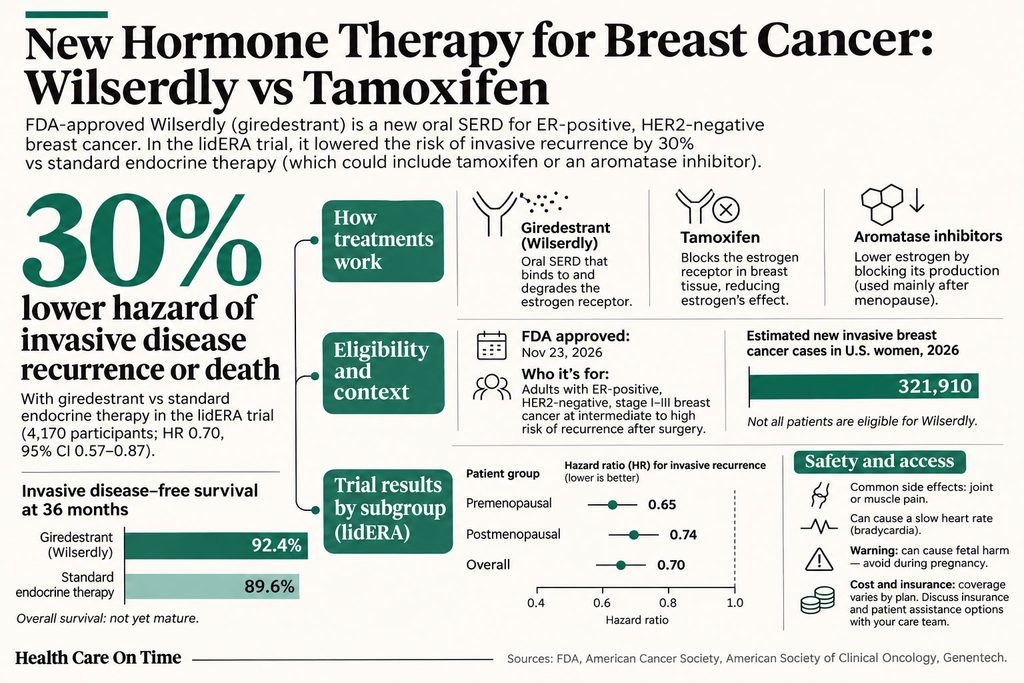
Quick Answer: Wilserdly (giredestrant) is a new oral hormone therapy that blocks the estrogen receptor and breaks it down. It is approved for adults with ER-positive, HER2-negative stage 1 to 3 breast cancer at intermediate to high risk of coming back. In the lidERA trial, it cut the risk of invasive recurrence or death by 30% compared with tamoxifen or an aromatase inhibitor. The dose is one 30 mg capsule daily for 5 years.
What the FDA Approved
As a new hormone therapy for breast cancer, Wilserdly is approved as a single agent, so it’s taken on its own rather than paired with another cancer drug, and it belongs to the adjuvant stage of care: the years after surgery (and after chemotherapy or radiation, if those were needed) when the whole point is to keep the cancer from returning. Genentech, part of the Roche Group, makes it. The FDA approval came through Priority Review and rests on a single large trial, lidERA Breast Cancer (NCT04961996).
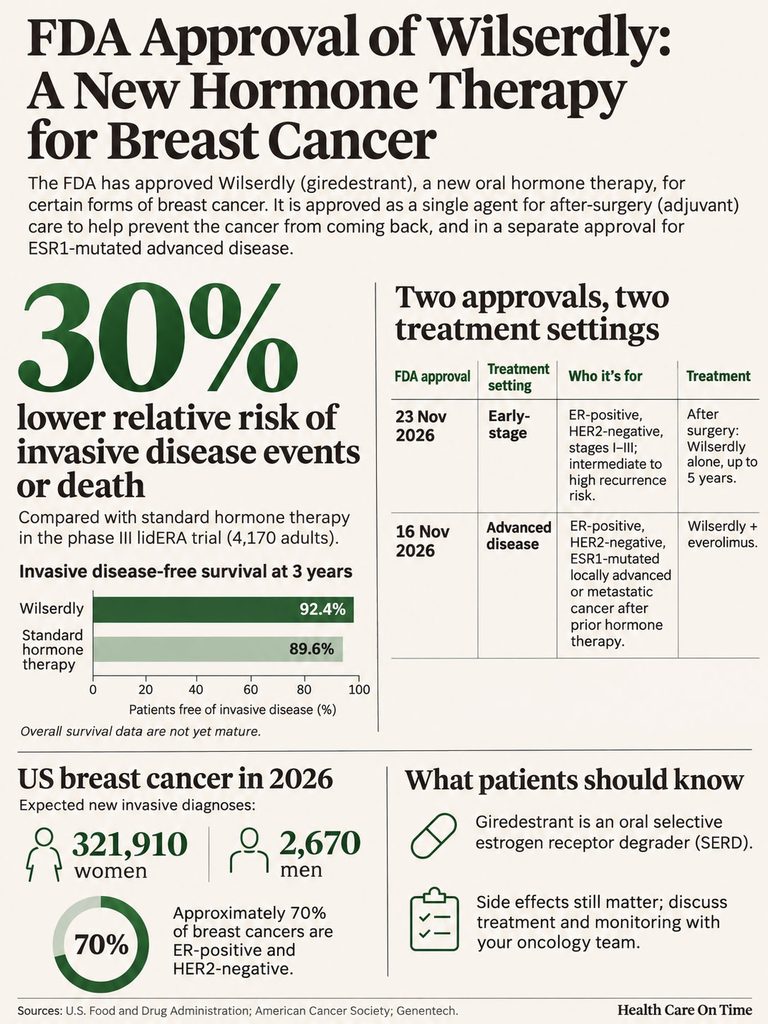
The pool of people this could apply to is large. About 321,910 women and 2,670 men in the US are expected to be diagnosed with breast cancer in 2026, and roughly 70% of those cancers are ER-positive and HER2-negative; most are found early, and the hormone therapy that follows surgery usually runs 5 to 10 years.
The drug is an oral SERD (selective estrogen receptor degrader). Older drugs either block the receptor (tamoxifen) or starve it of estrogen (aromatase inhibitors), while a SERD blocks the receptor and also breaks it down, leaving the cancer cell with less of the machinery it uses to grow. Giredestrant works on both normal and mutated forms of the receptor and never switches it on.
Why Doctors Wanted Something New
Tamoxifen and aromatase inhibitors do their job well. Taken for 5 years or more, they greatly lower the risk of the cancer coming back and of dying from it. Yet up to a third of people on standard therapy still have a recurrence, and up to half never start their pills or stop early, very often because of joint pain or hot flashes. lidERA tested whether a new drug could lower the first number without making the second one worse.
A Second Approval in One Week
On November 16, 2026, seven days before the early-stage decision, the FDA had already cleared Wilserdly with everolimus for adults whose ER-positive, HER2-negative cancer is locally advanced or metastatic and carries an ESR1 mutation. That approval was based on a separate trial, evERA, in people whose cancer had spread and had already grown on earlier hormone therapy.
In early-stage disease the capsule is taken alone for up to 5 years. In ESR1-mutated advanced disease it is taken with everolimus until the cancer grows or side effects become too much. The two uses are easy to mix up. News stories about Wilserdly often blur them, and the results, side effects and rules for who qualifies differ between them.
Who Can Take Wilserdly
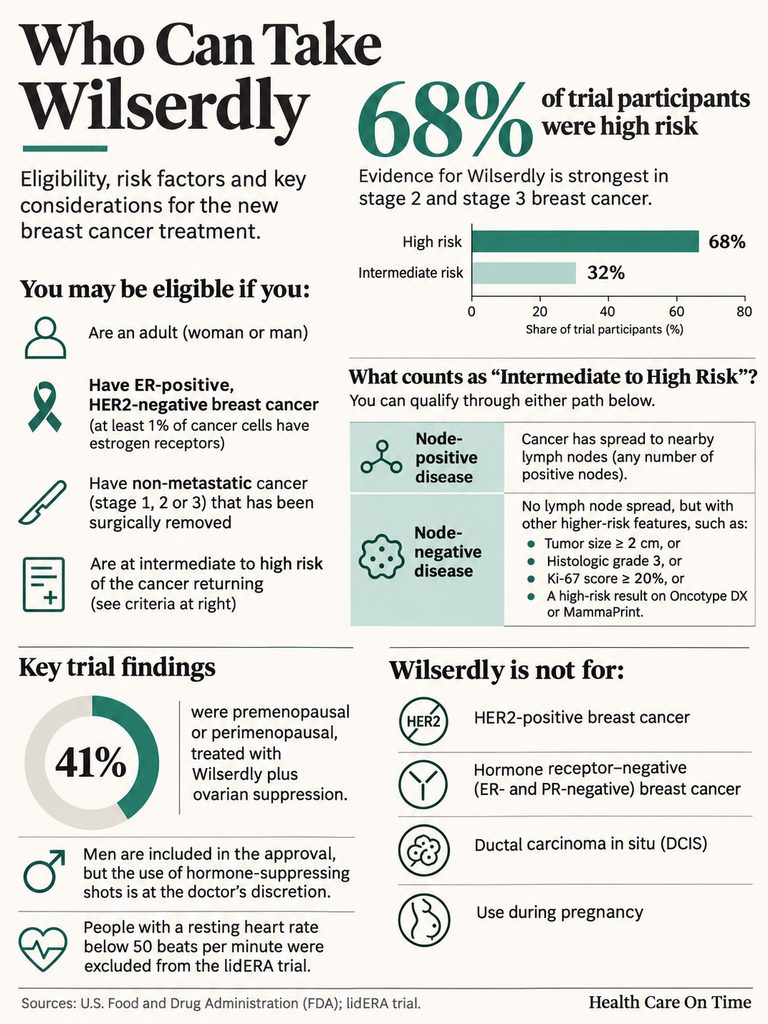
You’re a candidate only if you’re an adult whose cancer is ER-positive and HER2-negative, was stage 1, 2 or 3 rather than metastatic, has been removed with surgery, and carries an intermediate or high risk of recurrence in your oncologist’s judgment. ER and HER2 status are printed on your pathology report. Ask for a copy if you don’t have one. A cancer counts as ER-positive when even a small share of its cells, as little as one percent, carry estrogen receptors, so a report showing a low but positive percentage still qualifies on that point, even though some oncologists treat weakly positive tumors with more caution. Risk is harder to read off the page, and it usually takes up most of the appointment.
What “Intermediate to High Risk” Meant in the Trial
The FDA didn’t publish a risk formula, so the trial’s entry rules are the best guide. People qualified in one of two ways.
The first route was node-positive disease, meaning cancer was found in the lymph nodes. The second was node-negative disease with a tumor larger than 1 cm plus at least one higher-risk feature: histologic grade 3, a Ki-67 score of 20% or more, an Oncotype DX recurrence score of 26 or higher or a high-risk MammaPrint result (when those tests were available), or a pT4 tumor that had grown into the skin or chest wall.
Ki-67 is a stain that shows how fast cancer cells are dividing. Oncotype DX and MammaPrint look at the activity of a panel of genes in the tumor and sort it into lower or higher risk of coming back; if one of them was run, your report will show a score or a risk category.
Of the people enrolled, 68% were classed as high risk and 31% as intermediate risk, with about 13% at stage 1, 47% at stage 2 and 39% at stage 3. The evidence is strongest for stage 2 and 3 cancers, and a small, low-grade, node-negative tumor with a low Oncotype score would not have met the trial’s rules at all.
Premenopausal Women and Men
About 41% of the people in lidERA were premenopausal or perimenopausal, a bigger share than in many hormone therapy trials. Younger women have mostly relied on tamoxifen when they want to avoid ovarian suppression, because aromatase inhibitors can’t be used alone while the ovaries are still active.
For this group Wilserdly is paired with a GnRH agonist, a shot such as goserelin or leuprolide that switches off the ovaries’ estrogen production, given the way it usually is in current practice. A premenopausal woman would take Wilserdly plus ovarian suppression, much as she might take an aromatase inhibitor plus ovarian suppression today. Expect the shots themselves to bring on menopause-type symptoms, which is part of the trade-off whichever pill you pair them with.
Results held up regardless of menopausal status. In data shown at the 2026 ASCO meeting, the premenopausal subgroup (1,687 people) had a hazard ratio of 0.65 and the postmenopausal subgroup (2,456 people) had a hazard ratio of 0.74. Joint pain ran a few points higher on Wilserdly among premenopausal women (53.1% versus 47.8%) and slightly lower among postmenopausal women (44.5% versus 46.8%).
Men are covered by the approval, though 99.5% of the people in lidERA were female. For a man, whether and how the hormone-suppressing shot is used is up to the treating doctor.
Who It Isn’t For
Wilserdly is not approved for HER2-positive cancer, for hormone receptor-negative cancer such as triple-negative breast cancer, for ductal carcinoma in situ (DCIS), or for preventing breast cancer in people who have never had it. HER2-positive cancers are treated with HER2-targeted drugs, and hormone receptor-negative cancers don’t respond to estrogen blockers at all, so neither group would gain anything from this pill. People with a resting heart rate below 50 beats per minute were kept out of lidERA, so a naturally slow pulse is something your care team will want to look at first. It also can’t be used during pregnancy.
How Well It Worked: The lidERA Numbers
lidERA enrolled 4,170 adults after surgery and split them evenly at random. Half (2,084) took giredestrant 30 mg a day; the other half (2,086) took the standard therapy their doctor chose, either tamoxifen, anastrozole, letrozole or exemestane. About 84% of the standard group were on an aromatase inhibitor and 16% on tamoxifen, so in practice the comparison is mostly Wilserdly versus aromatase inhibitors. The median age was 54, and median follow-up at the time of the analysis was about 32 months.
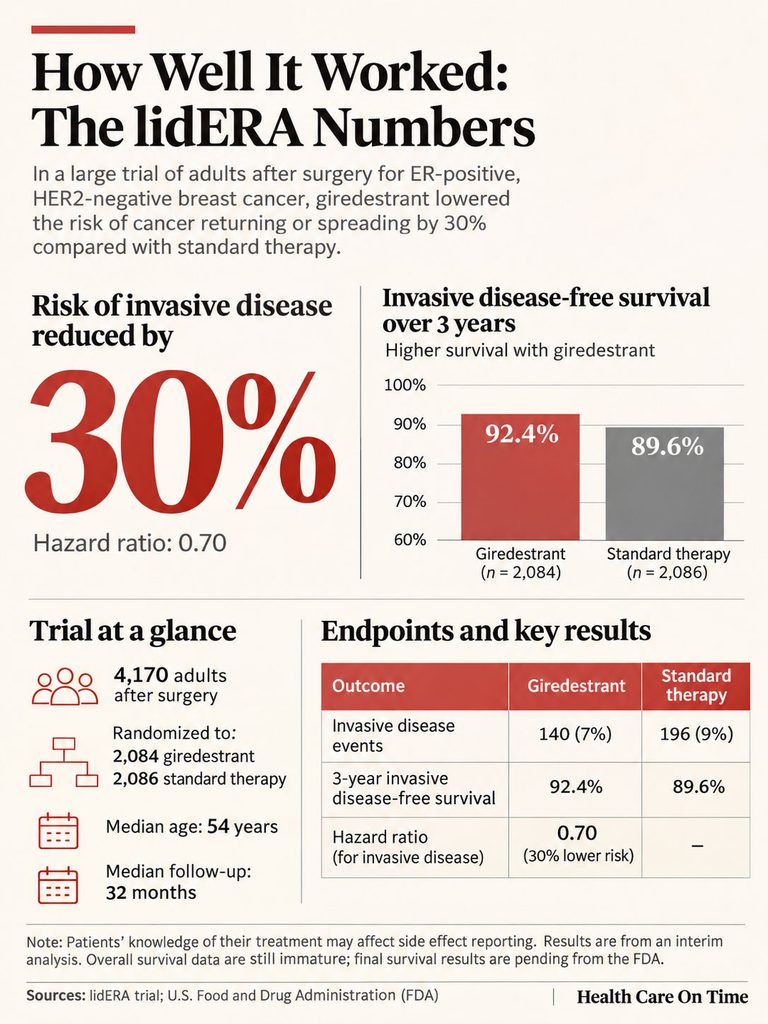
The main measure was invasive disease-free survival: how long someone stays alive without the cancer coming back in the breast, the nearby lymph nodes or elsewhere in the body, and without a new invasive cancer in the other breast. There were 140 such events on Wilserdly and 196 on standard therapy.
| Measure | Result | Source |
| People in the trial | 4,170 (2,084 Wilserdly, 2,086 standard therapy) | FDA |
| Invasive recurrence or death | 140 (7%) vs 196 (9%) | FDA label |
| Hazard ratio, invasive disease-free survival | 0.70 (95% CI 0.57 to 0.87), a 30% lower risk | FDA |
| Alive and free of invasive cancer at 3 years | 92.4% vs 89.6% | FDA |
| Distant recurrence (spread elsewhere in the body) | Hazard ratio 0.69, a 31% lower risk | lidERA, San Antonio Breast Cancer Symposium 2025 |
| Premenopausal women (1,687 people) | Hazard ratio 0.65; 94.0% vs 91.5% at 3 years | lidERA subgroup, ASCO 2026 meeting |
| Postmenopausal women (2,456 people) | Hazard ratio 0.74; 91.3% vs 88.3% at 3 years | lidERA subgroup, ASCO 2026 meeting |
| Overall survival | Immature; 128 deaths (3.1%) at analysis | FDA label |
| US women alive 5 years after HR-positive, HER2-negative diagnosis | 95.8% overall; 100% localized, 91.1% regional | NCI SEER |
A hazard ratio compares the rate of bad events between two groups over the whole follow-up period. Lower is better. At 0.70, people on Wilserdly were having recurrences at roughly seven-tenths the pace of people on standard therapy, and the confidence interval (0.57 to 0.87) stays below 1, which is why the result counts as statistically solid.
The benefit appeared across region, prior chemotherapy and tumor stage too, with a hazard ratio of 0.58 for stage 2 and 0.74 for stage 3 in the trial presentation.
What 30% Means in Real Numbers
A relative drop of 30% is real, but the absolute difference is easier to plan around: the FDA puts it at about 28 more people per 1,000 who were alive and free of invasive cancer at the 3-year mark, a gap of a little under 3 percentage points between two groups who mostly did well. Whether that gap widens over 5 or 10 years, as it often does with effective hormone therapy, only longer follow-up will show.
Deaths are rare this early in HR-positive, HER2-negative disease. Women whose cancer hadn’t spread beyond the breast have a 5-year relative survival of 100%, so trials like this one measure recurrence first and wait years for survival answers.
Limits of the Evidence
Patients and doctors in lidERA knew who was taking what (an open-label design), which can color how side effects get reported, though it matters less for an outcome like a recurrence found on a scan or biopsy. The results come from a planned interim analysis at about 32 months, short for a cancer that can come back 10 or 15 years later.
Overall survival data are immature: an early hazard ratio of 0.79 leaned toward Wilserdly, and the company has agreed to send final survival results to the FDA as a postmarketing commitment.
Nobody in the trial took a placebo. The comparison was against proven drugs, which makes the advantage more meaningful than a win over no treatment would be.
High-risk patients today sometimes get abemaciclib or ribociclib alongside their hormone therapy, and lidERA didn’t test Wilserdly with those drugs. Because most participants were high risk, the data for stage 1 and intermediate-risk cancers are also thinner than the headline suggests.
Wilserdly vs Tamoxifen vs Aromatase Inhibitors
Each of the three is a daily pill that cuts off estrogen’s effect on cancer cells, but the route is different, and so is the list of people each one suits. Ovarian suppression sits alongside them as a separate tool for premenopausal women.
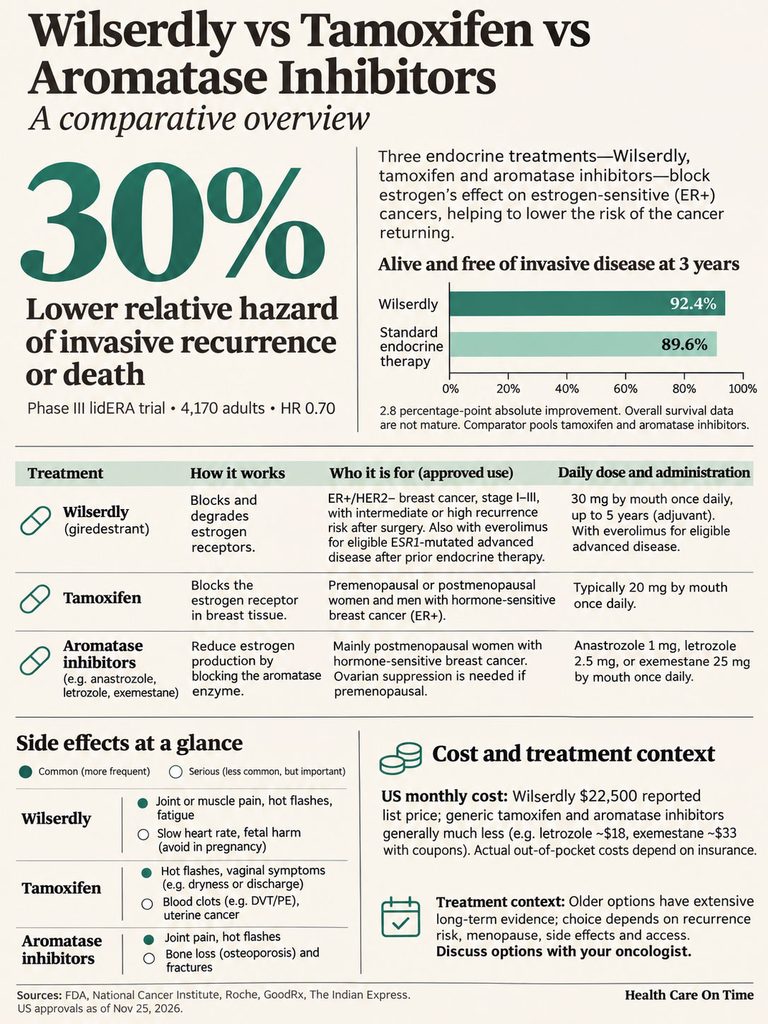
| Feature | Wilserdly (giredestrant) | Tamoxifen | Aromatase inhibitors (anastrozole, letrozole, exemestane) |
| How it works | Blocks the estrogen receptor and breaks it down (oral SERD) | Blocks the estrogen receptor on cancer cells (SERM) | Lowers how much estrogen the body makes |
| Approved for early-stage use in | Adults with ER-positive, HER2-negative stage 1 to 3 cancer at intermediate to high risk | Premenopausal and postmenopausal women; usually the first choice for men | Postmenopausal women; premenopausal women only with ovarian suppression |
| How it’s taken | One 30 mg capsule daily for 5 years, plus a GnRH agonist if premenopausal or male | Daily pill, usually 5 to 10 years | Daily pill, usually at least 5 years, sometimes 7 to 10 |
| Trial result vs standard therapy | 30% lower risk of invasive recurrence or death (hazard ratio 0.70) vs tamoxifen or an AI | The long-standing comparator | The long-standing comparator; 84% of the lidERA control group |
| Main side effects | Musculoskeletal pain (60%), hot flashes (27%), fatigue (24%), slow heart rate (11%) | Hot flashes; less often blood clots, uterine cancer, stroke, cataracts | Joint and muscle pain, bone thinning, hot flashes, vaginal dryness |
| Key safety warning | Slow heart rate; harm to a developing baby | Blood clots and uterine cancer | Bone loss and fracture risk |
| Approximate monthly cost | $22,500 list price | Under $1,000 (wholesale, standard therapies) | Under $1,000 (wholesale, standard therapies) |
Read the side-effect row with the standard arm in mind. Musculoskeletal pain hit 60% of both groups in lidERA, and hot flashes were 29% on standard therapy against 27% on Wilserdly, so most of the day-to-day experience was similar. The rarer risks are what set the older drugs apart: tamoxifen carries blood clots, uterine cancer, stroke and cataracts, while aromatase inhibitors thin the bones but don’t cause uterine cancer and very rarely cause clots.
Some antidepressants weaken tamoxifen, and people who need one during treatment are usually steered to sertraline, citalopram or venlafaxine instead.
People on aromatase inhibitors often get bone density testing, calcium and vitamin D, and sometimes a bisphosphonate or denosumab to protect the skeleton. Bone loss isn’t among Wilserdly’s main problems, although fractures showed up as a less common side effect and made up 0.9% of the serious ones.
When an Older Pill Still Makes Sense
Plenty of people will still do better on an older pill. Someone with a naturally slow pulse, or who takes a heart medicine that slows it, has a reason to think twice about Wilserdly. Cost matters too. Someone whose insurance won’t cover the new drug has good options, since tamoxifen and the aromatase inhibitors have been generic for years and cost under $1,000 a month at wholesale. A person with a small, low-risk tumor falls outside the evidence altogether.
The case is different for a postmenopausal woman with node-positive stage 2 cancer who is just finishing radiation; she looks a lot like the typical lidERA participant, and for her the question of Wilserdly versus an aromatase inhibitor is a live one. Someone already two or three years into letrozole or tamoxifen with manageable side effects can reasonably stay the course while the switching question goes unstudied.
How It Compares With Other SERDs
Fulvestrant, the oldest SERD, is an injection into the buttocks used for advanced cancer in postmenopausal women. The newer oral SERDs, elacestrant (Orserdu), imlunestrant (Inluriyo) and vepdegestrant (Veppanu), are each approved only for advanced cancer with an ESR1 change. None of them has been tested after surgery, which leaves Wilserdly as the only oral SERD with proof of benefit in early-stage care.
Often Confused With It: HRT, ESR1 Pills and CDK4/6 Drugs
Three other treatments often get mixed up with breast cancer hormone therapy:
- Menopause hormone therapy (HRT) supplies estrogen, sometimes with a progestogen, to ease hot flashes; breast cancer hormone therapy lowers estrogen or blocks it. After ER-positive breast cancer, HRT is generally off the list, even though for women without cancer its risks shift with age and its value has been argued over for decades.
- ESR1 pills treat cancer that has already spread and need a mutation test first; Wilserdly with everolimus sits in that group alongside elacestrant and imlunestrant. Picking among the ESR1-mutated metastatic breast cancer options depends on prior treatment and side effects.
- CDK4/6 inhibitors such as abemaciclib and ribociclib are targeted drugs, not hormone therapy. Some high-risk early cancers get one on top of hormone therapy, abemaciclib for 2 years or ribociclib for 3.
Side Effects and Warnings
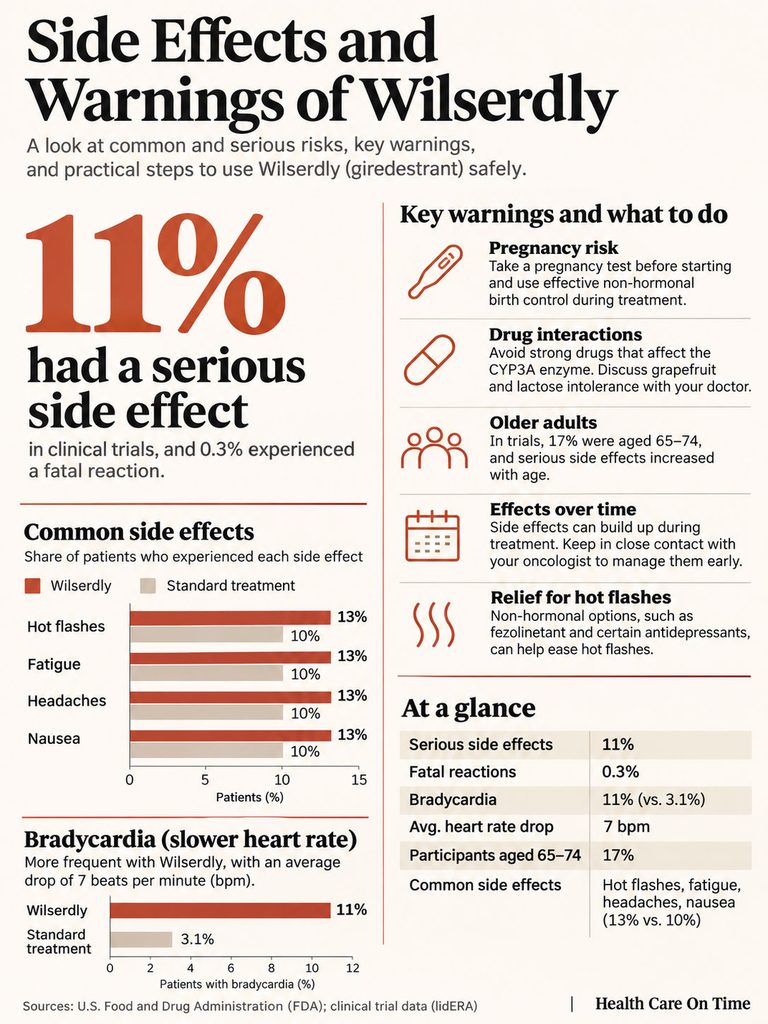
Most of what people felt on Wilserdly looked like what people feel on standard hormone therapy. Hot flashes, fatigue and headache landed within a couple of points of the standard arm, nausea was a little more common (13% versus 10%), and serious side effects affected 11% of people on Wilserdly. Six people (0.3%) died of adverse reactions, two of them from gastrointestinal bleeding. Less common problems, each under 10%, include dizziness and numbness or tingling in the hands and feet.
Joint pain is what drives many people off aromatase inhibitors. In lidERA it led to stopping in 1.6% of the Wilserdly group compared with 3.7% of the standard group, and stopping for any side effect happened in 5.3% versus 8.2%. One trial can’t settle whether Wilserdly is easier to stay on for 5 years, and the open-label design may have nudged some of those decisions.
Vaginal dryness and changes in sex drive are common with hormone therapy in general, even though they didn’t make the label’s main list for Wilserdly. Moisturizers, lubricants and pelvic health care can help, and none of them interfere with the cancer treatment.
Routine blood tests shifted in both groups at almost identical rates, mainly lower lymphocyte counts and higher liver enzymes, triglycerides and cholesterol, so periodic blood counts, liver tests and lipid checks are part of the plan.
Slow Heart Rate
Bradycardia, a heart rate slower than normal, is the one side effect clearly more common with Wilserdly. It showed up in 11% of people on the drug compared with 3.1% on standard therapy, and the average drop was about 7 beats per minute. Most cases caused no symptoms. Symptoms appeared in 0.7%, one person had a serious event, and only 0.3% stopped the drug because of it.
Expect closer pulse checks if you already have a slow heart rate or take a drug that slows it: beta-blockers like metoprolol, calcium channel blockers like diltiazem, alpha agonists like clonidine, or digoxin. The pulse checks at your visits are what catch the silent slowdowns. Between visits, dizziness or lightheadedness, fainting, shortness of breath, chest pain or unusual tiredness are the signs to report, and fainting or chest pain needs same-day care.
If symptomatic bradycardia happens, the drug is held until the heart rate recovers to above 50 beats per minute.
Pregnancy and Fertility
Wilserdly can harm a developing baby, and a pregnancy test is required before starting. Women who could become pregnant need effective non-hormonal birth control during treatment and for 2 weeks after the last dose, and men with partners who could become pregnant need birth control for the same period. Breastfeeding is off during treatment and for 2 weeks after.
Because the drug may also affect fertility, anyone hoping to have children later should raise it before the first dose and ask whether a fertility referral makes sense.
Drug and Food Interactions
An enzyme called CYP3A clears giredestrant from the body, so strong drugs that block or speed up that enzyme, such as the antifungal itraconazole or the seizure drug carbamazepine, should be avoided. So should grapefruit and grapefruit juice. Give your oncologist and pharmacist a full list of prescriptions, over-the-counter drugs, vitamins and herbal products.
If you have severe lactose intolerance, ask about it; the capsules contain lactose.
Older Adults
In lidERA, 17% of participants were 65 to 74 and 3.9% were 75 or older. Serious side effects became somewhat more frequent with age (14% and 15% in those two groups, against 10% under 65), and the trial didn’t include enough older adults to tell whether the drug works differently for them.
Sticking With It for 5 Years
Side effects that feel minor in the first month can wear people down by the second year, and that is often when doses start getting skipped. Tell your oncologist early. Many side effects of hormone therapy ease with a dose change or a switch to a different drug, and in lidERA people on standard therapy could move to another aromatase inhibitor if one didn’t agree with them. Quietly skipping pills is riskier than asking for a change, because missed doses and early stopping are linked to a higher chance of the cancer coming back.
Easing Hot Flashes Without Estrogen
More than a quarter of people in both arms had hot flashes, and estrogen isn’t an option after ER-positive cancer. Non-hormonal medicines that can help include fezolinetant (Veozah) and elinzanetant (Lynkuet), certain antidepressants, gabapentin, clonidine and oxybutynin.
Taking It Day to Day, and What It Costs
The dose doesn’t change over time. You take one 30 mg capsule by mouth once a day, at about the same time, with or without food, and swallow it whole without opening, crushing or chewing it. If you miss a dose, take it as soon as you remember that same day, then go back to your usual time. If you vomit after a dose, don’t take an extra one; just take the next dose as planned. Treatment lasts 5 years unless the cancer returns or side effects become too much first. A weekly pill organizer or a daily phone reminder helps many people keep the habit going through the long middle stretch, when the routine gets easy to forget.
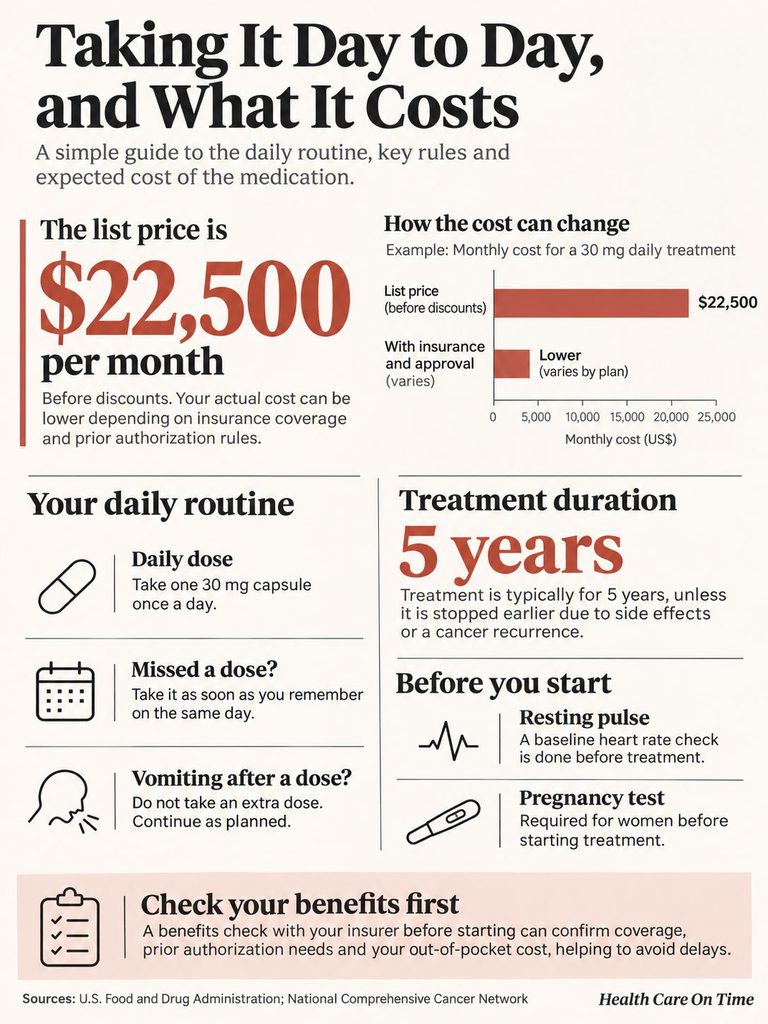
Before the first capsule, your care team will usually check your resting pulse and go through your medicines, and women who could become pregnant will need the pregnancy test and a non-hormonal birth control plan. If you’re premenopausal or male, the GnRH agonist shots run on their own schedule, and your oncologist decides how they line up with the pills.
Roche set a list price of $22,500 per month, before discounts or rebates. What you actually pay depends on whether your plan covers the new use, which tier the drug sits on, and whether you qualify for manufacturer support. Commercial insurers and Medicare Part D plans each set their own prior authorization rules for new drugs, so a benefits check by your oncology office before your start date can save weeks of back and forth. If a plan says no, an appeal backed by your oncologist’s notes on your risk level is often the next step.
Should You Switch? Questions for Your Oncologist
Plenty of people who are a year or two into tamoxifen or an aromatase inhibitor will read about this approval and wonder whether they’re on the wrong pill. lidERA can’t answer that directly, because everyone in the trial started giredestrant at the beginning of their hormone therapy rather than switching partway through. Any change is a decision to make with your oncologist.
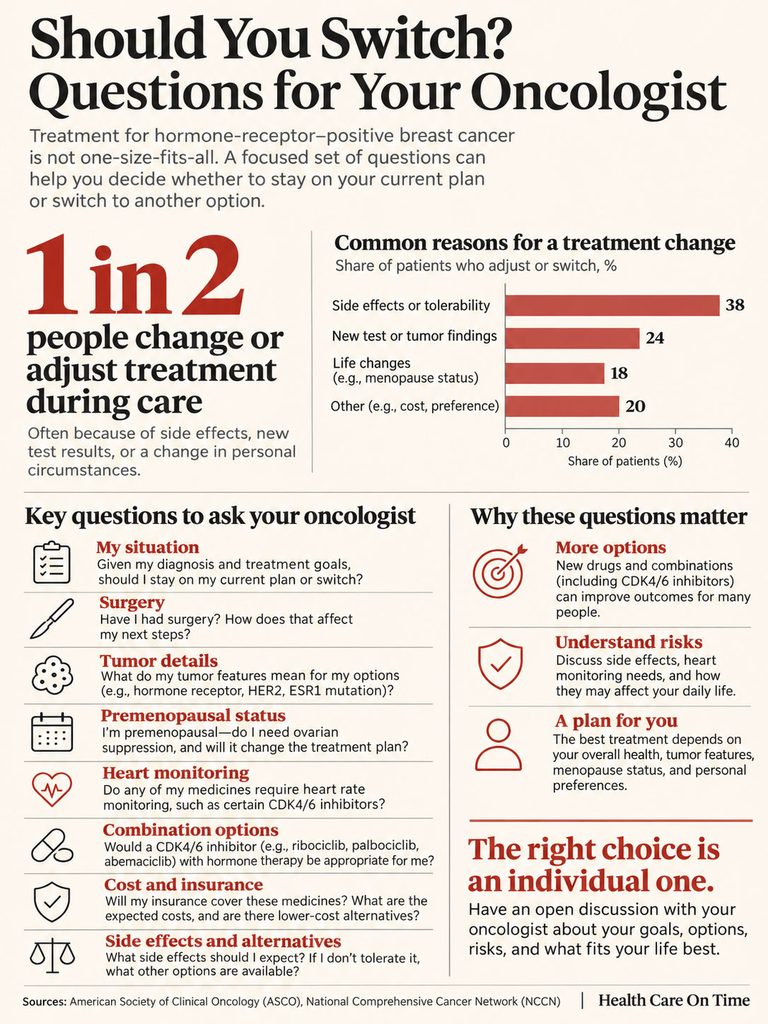
| Your situation | What to ask | Why it matters |
| Just finished surgery, stage 2 or 3, node-positive | “Is Wilserdly an option here instead of an aromatase inhibitor?” | This is the trial’s core group |
| Stage 1, node-negative, small tumor | “Do the grade, Ki-67 or Oncotype results count as intermediate risk?” | Entry required a tumor over 1 cm plus a high-risk feature |
| Premenopausal and planning ovarian suppression | “Would Wilserdly plus a GnRH agonist beat tamoxifen in this case?” | The premenopausal hazard ratio was 0.65 |
| 1 to 3 years into an AI, with bad joint pain | “Is switching an option, or should we try another AI first?” | Fewer people quit over joint pain on Wilserdly, but switching wasn’t tested |
| Taking a beta-blocker or digoxin, or have a slow pulse | “How often will you check the heart rate?” | Slow heart rate is the drug’s main extra risk |
| High risk and offered abemaciclib or ribociclib | “Can Wilserdly be combined with a CDK4/6 inhibitor?” | lidERA didn’t test that combination |
| Insurance denied or high copay | “Can your office file an appeal or check for assistance?” | Generic pills cost a fraction of the new drug |
Other questions people bring to this appointment:
- If you were choosing for a cancer like this one, would you pick Wilserdly or an aromatase inhibitor, and why?
- Would you have enrolled this tumor in the lidERA trial?
- Is there anything in the medicines or heart history you’ve reviewed that worries you?
- If letrozole is going fine so far, would switching now buy anything?
- How long would the ovarian suppression shots continue?
- If the insurance company says no, what’s the backup plan?
What Isn’t Known Yet
Survival is the largest gap. With 128 deaths so far across both groups, it’s too early to tell whether lower recurrence translates into longer life, though early numbers lean that way. Recurrence results beyond 3 years are still coming too, and since ER-positive cancer often comes back late, the 5- and 10-year readouts will matter more than the 3-year numbers do.
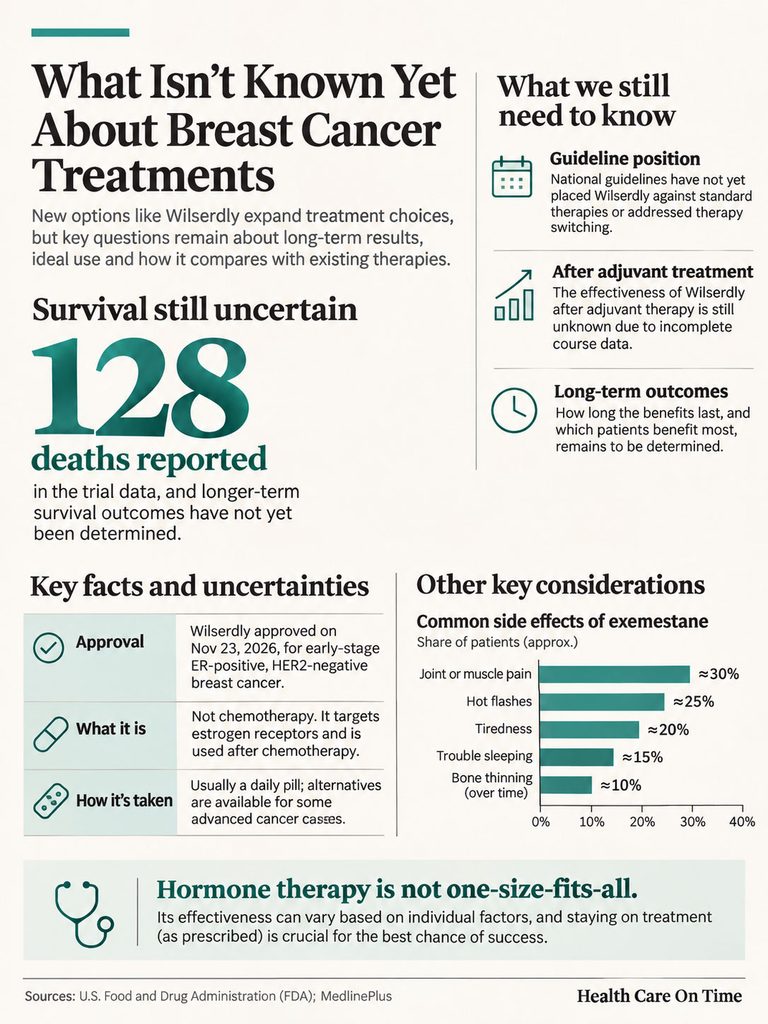
National guidelines from groups such as ASCO and NCCN haven’t yet placed Wilserdly, compared it with an aromatase inhibitor plus a CDK4/6 inhibitor, or ruled on switching partway through standard therapy. Until they do, two oncologists looking at the same pathology report may reasonably make different calls, and a second opinion at a cancer center is a fair request if you’re unsure.
It also isn’t known what works best if cancer comes back after adjuvant Wilserdly, since almost nobody has finished a full course yet, though tumor testing for changes such as ESR1 mutations already guides treatment choices after a recurrence.
Frequently Asked Questions
What is the newest hormone-based drug for treating breast cancer?
Wilserdly (giredestrant), approved by the FDA on November 23, 2026, for early-stage ER-positive, HER2-negative breast cancer. A week earlier it was also approved, with everolimus, for some ESR1-mutated advanced cancers.
What are the worst side effects of exemestane?
Bone thinning is the most serious long-term one. Exemestane, an aromatase inhibitor and one of the comparison drugs in lidERA, can weaken bones over time and raise the chance of a fracture, which is why bone density testing is common during treatment. Hot flashes, sweating, tiredness, joint and muscle pain, headache, trouble sleeping, anxiety, depression and swelling of the hands or feet are among its listed side effects as well. Shortness of breath or chest pain needs a call to your doctor right away, and joint pain is a frequent reason people stop early.
Can breast cancer survivors take HRT?
Usually not after ER-positive cancer, because the risk of recurrence is clearly increased. When moisturizers don’t relieve vaginal dryness, low-dose vaginal estrogen is sometimes considered with the oncologist’s input.
What is the best hormone therapy for breast cancer?
No single drug is best for everyone; the choice depends on menopausal status, stage, recurrence risk, other health problems, side effects and cost. For adults at intermediate to high risk with ER-positive, HER2-negative early cancer, Wilserdly beat tamoxifen and aromatase inhibitors in lidERA. Aromatase inhibitors remain the standard for many postmenopausal women, and tamoxifen remains common for premenopausal women and men, especially when cost or a heart condition rules out the new drug.
What is the 5 year pill for breast cancer?
Usually tamoxifen or an aromatase inhibitor (anastrozole, letrozole or exemestane), taken daily for at least 5 years after surgery. Wilserdly is now a third option, also taken for 5 years.
Is hormone therapy for breast cancer effective?
Yes, for hormone receptor-positive cancer, where years of treatment sharply cut the odds of recurrence and death. It does nothing for hormone receptor-negative tumors, which is why receptor testing on the tumor comes first. How well it works for one person also depends on taking it consistently for the full course, and missed doses or early stopping are linked to more recurrences.
How is hormone therapy for breast cancer administered?
Most of it is a daily pill: tamoxifen, the aromatase inhibitors and now Wilserdly. Fulvestrant, used for advanced cancer, is given as two injections, 2 weeks apart in the first month and monthly after that. Ovarian suppression in premenopausal women is usually a shot of goserelin or leuprolide, and some women choose surgery to remove the ovaries instead.
Can men take Wilserdly?
Yes. The approval covers adults, men included, but almost everyone in lidERA was female, so the direct evidence in men is thin. The label pairs it with a GnRH agonist for men, as it does for premenopausal women. Tamoxifen remains the usual first choice for early-stage male breast cancer, which makes this a decision to talk through carefully with an oncologist who treats men.
Is Wilserdly a type of chemotherapy?
No. It’s a hormone therapy that targets the estrogen receptor, and many people start it after they finish chemotherapy.
Medical disclaimer: This article is for general information only and isn’t a substitute for advice from your oncologist or pharmacist. Treatment choices for breast cancer depend on your pathology, stage, other health conditions and medicines. Don’t start, stop or switch a hormone therapy without talking to your care team. HealthCareOnTime’s editors update this page when the FDA label changes.
References
- U.S. Food and Drug Administration. FDA approves first new hormone therapy for early-stage breast cancer in more than 20 years. November 23, 2026.
- U.S. Food and Drug Administration, Oncology Center of Excellence. FDA approves giredestrant for adjuvant treatment of ER-positive, HER2-negative, Stage I, II, and III breast cancer at intermediate to high risk of recurrence. November 23, 2026.
- Genentech. WILSERDLY (giredestrant) capsules, full prescribing information. Revised November 2026.
- The ASCO Post. Novel endocrine therapy giredestrant improves invasive disease-free survival in ER-positive, HER2-negative early breast cancer. January 2026.
- CancerNetwork. Adjuvant giredestrant improves invasive DFS in ER+, HER2- early breast cancer. May 30, 2026.
- National Cancer Institute. Hormone therapy for breast cancer. Updated September 23, 2026.
- National Cancer Institute SEER Program. Cancer stat facts: female breast cancer subtypes.
- Mayo Clinic. Estrogen blocker therapy for breast cancer.
- American Cancer Society. Hormone therapy for breast cancer.
- American Cancer Society. Menopausal hormone therapy after breast cancer. Revised October 27, 2025.
- Cancer Today (AACR). New hormone therapy extends remission in early-stage hormone receptor-positive breast cancer. December 12, 2025.
- Breastcancer.org. Giredestrant reduces recurrence risk more than tamoxifen, aromatase inhibitors.
- Living Beyond Breast Cancer. Targeted therapy for hormone receptor-positive breast cancer.
- MedlinePlus. Exemestane.
- BioPharma Dive. Roche wins FDA approval for Wilserdly (giredestrant) in breast cancer. November 2026.