
The result posts at 9:47 on a Friday night. One line on the patient portal glows red, the office closed three hours ago, and the next callback slot is Monday afternoon.
Table of Contents
That weekend gap is where most of the fear lives. Here is the part that resolves it fastest for many people: monocytes usually peak while you are recovering, not while you are sick.
So a count flagged two weeks after a cold you barely noticed is doing exactly what it should. Below is how the number works, what pushes it up, and how clinicians decide between a repeat test and a real workup.
Quick Answer
Monocytes are white blood cells that clear infection and cellular debris. A high monocyte count, called monocytosis, means the absolute count exceeds roughly 800 cells per microliter in adults. Infection, chronic inflammation, and recovery from illness explain the large majority of cases. Blood cancers account for a small fraction, and are almost always accompanied by other abnormal blood values.
At a Glance
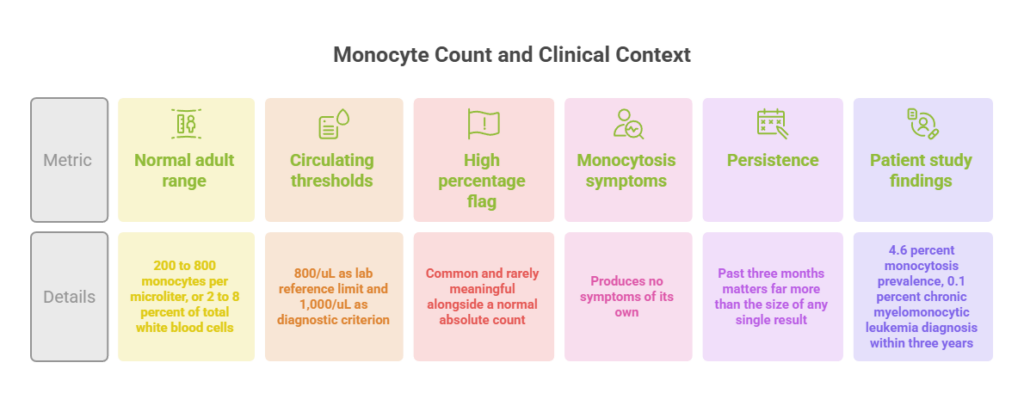
- Normal adult range runs about 200 to 800 monocytes per microliter, or 2 to 8 percent of total white blood cells
- Two thresholds circulate (800/uL and 1,000/uL) because one is a lab reference limit and the other is a diagnostic criterion
- A percentage flagged high alongside a normal absolute count is common and rarely meaningful
- Monocytosis produces no symptoms of its own; whatever you feel comes from the underlying condition
- Persistence past three months matters far more than the size of any single result
- Among 663,184 primary care patients studied, monocytosis appeared in 4.6 percent of blood counts, yet only 0.1 percent received a chronic myelomonocytic leukemia diagnosis within three years
What Monocytes Are and What “High” Actually Means
The job monocytes do in your immune system
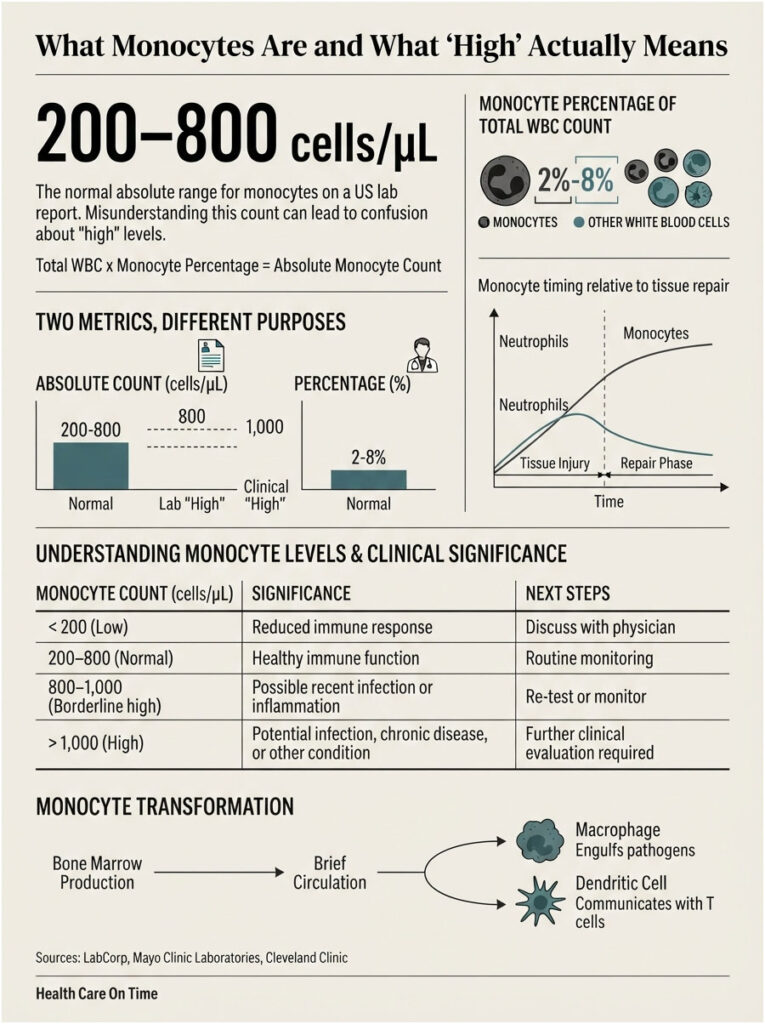
Monocytes are the largest white blood cells your bone marrow produces. They circulate for only a few hours to a couple of days before slipping out of the bloodstream and into tissue.
Once they arrive, they transform into macrophages or dendritic cells. Macrophages engulf bacteria, viruses, dying cells, and debris. Dendritic cells carry fragments of what they found back to T cells so the rest of the immune system knows what to attack.
Think of neutrophils as the first responders who arrive within minutes. Monocytes are the cleanup and forensics crew who show up afterward and stay for weeks.
Why the timing matters more than most people realize
That delayed arrival is the reason so many flagged results confuse people. The monocyte curve does not track the illness curve; it trails it.
Neutrophils spike during acute infection, then fall. Monocytes climb as tissue repair begins and stay elevated while cleanup continues.
Our medical reviewers see this pattern constantly in follow-up bloodwork. Someone tests two to four weeks after a respiratory infection, feels completely recovered, and finds monocytes flagged high. In that context the elevation is a sign the system worked, not a sign something is wrong.
Normal monocyte range on a US lab report
Most American laboratories report two monocyte values on a complete blood count with differential. Absolute count normally falls between 0.2 and 0.8 x 10⁹/L, which prints as 200 to 800 cells per microliter. Percentage normally falls between 2 and 8 percent of total white blood cells.
Children run higher than adults, and infants can sit near 1,000 cells per microliter without anything being wrong. Reference intervals also shift slightly between labs because analyzers and calibration methods differ.
Two people with identical counts can get different flags simply because they used different facilities. Always read the range printed on your own report rather than one pulled from a website.
Absolute count versus percentage, the number most people misread
This is the single largest source of unnecessary panic in the entire topic. Percentage and absolute count measure different things, and only one of them means much on its own.
Percentage tells you what share of your white blood cells are monocytes. Absolute count tells you how many monocytes are actually circulating.
If your total white blood cell count drops, which is normal after a viral illness, monocytes become a larger slice of a smaller pie. Not one additional cell has been produced, yet the percentage climbs into flagged territory.
How to calculate your absolute monocyte count
Multiply your total white blood cell count by your monocyte percentage. That is the whole calculation.
Take a total WBC of 4,200 cells per microliter with monocytes at 13 percent. That works out to 546 monocytes per microliter, comfortably inside the normal range, even though the percentage got flagged.
Patients booking blood work through HealthCareOnTime ask about this more than almost any other CBC question. Run the arithmetic before you worry about a flagged percentage.
Why 800 and 1,000 both appear as cutoffs
Search this topic and you will find both numbers stated confidently, which makes the whole subject feel unreliable. Both are correct. They answer different questions.
The 800 figure is a laboratory reference limit, the upper edge of what healthy adults typically show. Anything above it gets flagged for review.
Cleveland Clinic defines a high monocyte count in adults as 1,000 monocytes per microliter with monocytes accounting for more than 10 percent of white blood cells, a diagnostic threshold used when hematologists evaluate for specific blood disorders. A third number entered the picture in 2022 and applies only in narrow circumstances covered later in this article.
| Absolute Monocyte Count | Monocyte % of WBC | What This Band Usually Reflects | Typical Urgency | Standard Next Step |
| Below 200/uL (0.2 x 10⁹/L) | Under 2% | Monocytopenia; often medication, chemotherapy, or acute infection | Low unless other counts abnormal | Review medications; repeat with next routine CBC |
| 200 to 800/uL (0.2 to 0.8) | 2% to 8% | Normal range for adults | None | Routine monitoring only |
| 800 to 1,000/uL (0.8 to 1.0) | 8% to 12% | Borderline; commonly recent infection, inflammation, or recovery | Low | Repeat CBC in 4 to 12 weeks |
| 1,000 to 2,000/uL (1.0 to 2.0) | 10% to 20% | Definite monocytosis; usually reactive to infection or chronic inflammation | Moderate | Repeat CBC plus targeted infection and inflammation testing |
| 2,000 to 3,000/uL (2.0 to 3.0) | 15% to 30% | Marked monocytosis; reactive causes still likely but marrow evaluation considered | Moderate to high | Peripheral blood smear; hematology consult if persistent |
| Above 3,000/uL (3.0+) | Often above 20% | Uncommon; raises concern for clonal marrow disorder | High | Prompt hematology referral, smear, flow cytometry |
Common Causes of High Monocytes
Infections that drive monocytes up
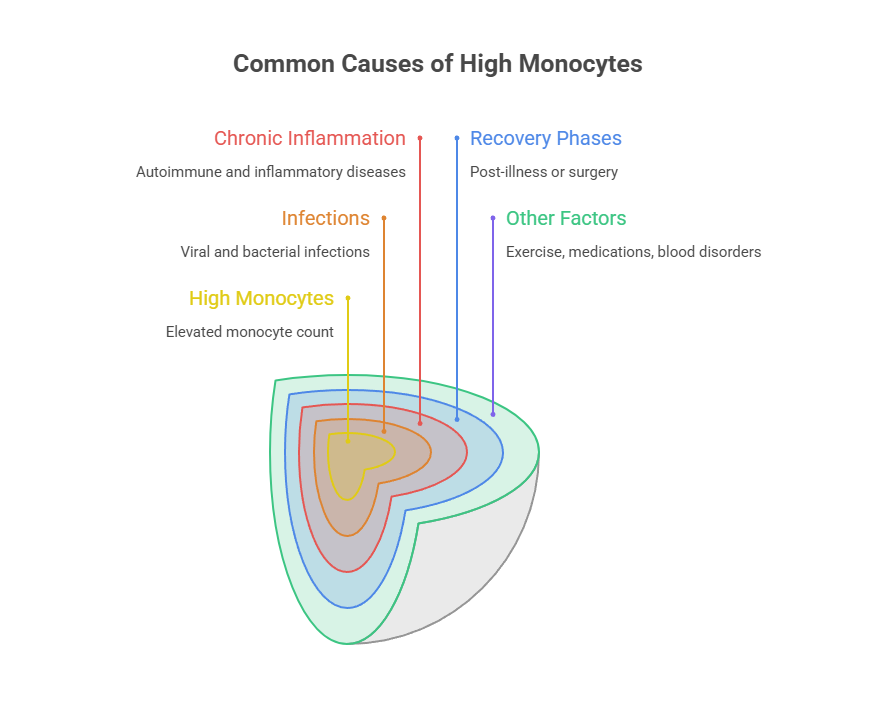
Infection is the single largest category. Monocytes rise because your body needs more cleanup capacity, not because anything has gone wrong with the cells themselves.
Viral infections and the recovery rebound
Infectious mononucleosis, caused most often by Epstein-Barr virus, is the classic viral trigger. Influenza, mumps, measles, and ordinary respiratory viruses all produce the same effect.
In reports reviewed across our diagnostic network, a mildly elevated monocyte count in the weeks following a viral illness is unremarkable. The infection may have been mild enough that you never labeled it as anything more than a bad few days.
Bacterial, mycobacterial, and parasitic infections
Chronic and subacute infections keep monocytes elevated far longer. Tuberculosis is the textbook example, because macrophages are the cells inside which mycobacteria survive.
Infective endocarditis, syphilis, brucellosis, listeriosis, malaria, and visceral leishmaniasis belong to this group. Each sustains monocyte production for weeks or months rather than days.
Tuberculosis deserves specific attention for American readers. The United States recorded 10,388 TB cases in 2024 at a rate of 3.1 per 100,000, a 7.9 percent increase in case count over 2023, with 10,260 cases provisionally reported in 2025. Case counts sit at their highest level in over a decade, which makes TB a live clinical consideration rather than a historical footnote.
Chronic inflammation and autoimmune conditions
When the immune system stays switched on longer than it should, monocyte production stays elevated with it. Rheumatoid arthritis, systemic lupus erythematosus, and inflammatory bowel disease, particularly ulcerative colitis, are the most frequent drivers.
Sarcoidosis and several forms of vasculitis belong here as well. These are granulomatous conditions, meaning they build clusters of immune cells in tissue, and macrophages form the core of those clusters.
Our lab partners report that elevations in this group tend to be modest and stubborn. Counts of 900 to 1,400 that refuse to normalize across several months point toward inflammation more often than infection.
Recovery after illness, surgery, or chemotherapy
Bone marrow that has been suppressed tends to overshoot when it restarts. After chemotherapy, after a serious infection, or after major surgery, monocytes often rebound above baseline before settling.
Splenectomy produces a lasting shift, since the spleen normally removes a portion of circulating cells. Stem cell transplant recipients show similar patterns during engraftment.
Physiologic and lifestyle triggers
Some causes are entirely benign. Strenuous exercise, acute physical stress, pregnancy, and even the timing of a blood draw can nudge counts upward.
Smoking raises white cell counts across the board, monocytes included. Obesity and chronic sleep deprivation both sustain low-grade inflammation that shows up the same way.
These triggers rarely push counts far above the reference limit on their own. They matter most as explanations for borderline results in otherwise healthy people.
Medications and treatments that raise monocytes
Corticosteroids are the most widely prescribed contributor, whether taken as prednisone for a flare, an inhaled formulation, or an injected dose. Effects appear within days and reverse when the course ends.
Granulocyte colony-stimulating factor drugs raise white cell counts by design, so elevation during a course of filgrastim or pegfilgrastim is expected rather than concerning. Certain antipsychotics including ziprasidone have been associated with monocytosis, and radiation therapy can alter counts during and after treatment.
Bring a full medication list to any appointment about abnormal blood work, over-the-counter products and supplements included. Timing the elevation against a recent prescription change resolves a meaningful share of cases without further testing.
Blood and bone marrow disorders, the smallest group
This is the category driving the anxiety, and it is the least common by a wide margin. These conditions involve marrow producing abnormal cells autonomously rather than responding to a signal.
CMML and the 2022 criteria change
Chronic myelomonocytic leukemia is the disorder most directly defined by monocytosis. It sits at the overlap between myelodysplastic syndromes and myeloproliferative neoplasms, and it primarily affects people over 60.
The rules changed meaningfully. Both the 2022 WHO classification and the International Consensus Classification lowered the required absolute monocyte count from 1.0 to 0.5 x 10⁹/L, while retaining the requirement for relative monocytosis of at least 10 percent of circulating leukocytes and mandating evidence of clonality for cases in the 0.5 to under 1.0 x 10⁹/L range.
That clonality requirement is the safeguard, and it matters enormously for anyone whose count sits at 0.6. Without genetic or marrow abnormalities, such a count is not CMML; it is a mildly elevated monocyte count. The revision was designed to catch early disease in people already showing other markers of a marrow disorder.
Other myeloid and lymphoid causes
Acute myeloid leukemia, chronic myeloid leukemia, myelodysplastic syndromes, primary myelofibrosis, polycythemia vera, and some lymphomas can all raise monocyte counts. In nearly every case, other parts of the CBC are abnormal at the same time.
The reassurance most readers want comes from the numbers themselves. In a Copenhagen study following 663,184 adult primary care patients with differential cell counts recorded between 2000 and 2016, monocytosis appeared in 4.6 percent of blood counts, and although the odds ratio for CMML exceeded 100 at counts above 1.0 x 10⁹/L, only 0.1 percent of those patients developed CMML within three years.
A large relative risk applied to a rare outcome remains a rare outcome. That distinction is worth holding onto while you wait for a callback.
When Monocytes Are High and Everything Else Is Normal
The most common scenario, and the least discussed
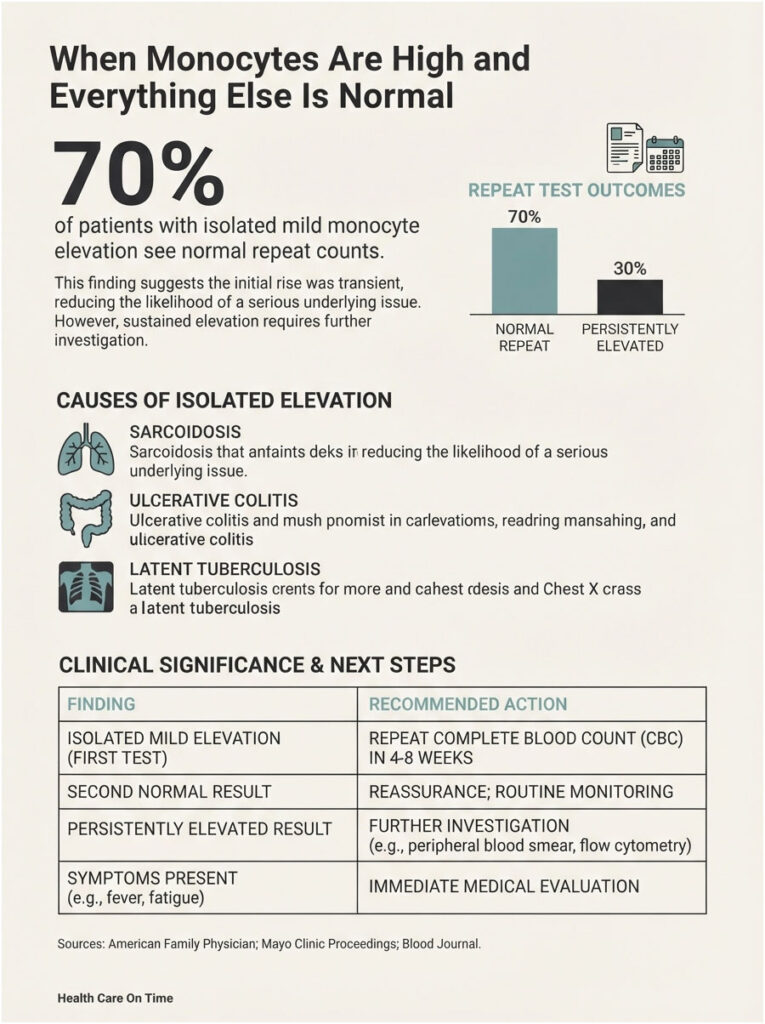
An isolated monocyte elevation with normal hemoglobin, normal platelets, normal neutrophils, and normal lymphocytes describes the majority of flagged results. It also happens to be the version of the finding that worries people most, because nothing else offers an explanation.
Clonal marrow disorders rarely announce themselves through one abnormal line. They tend to disturb red cells or platelets alongside white cells, because a single abnormal stem cell population affects multiple outputs.
Across the patients we serve, an isolated mild elevation in someone who feels well is followed by a normal repeat count far more often than by any diagnosis.
What “isolated” does and does not rule out
Isolated elevation makes marrow disease considerably less likely, though it does not eliminate the need for a repeat test. Early clonal disorders can present with a single abnormality before others appear.
It also does not rule out a quiet infection or a smoldering inflammatory process. Sarcoidosis, ulcerative colitis, and latent tuberculosis have all been discovered this way.
The practical answer is the same either way: recheck it. A second normal result closes the question; a second elevated result opens a proportionate investigation.
Symptoms: What You May and May Not Feel
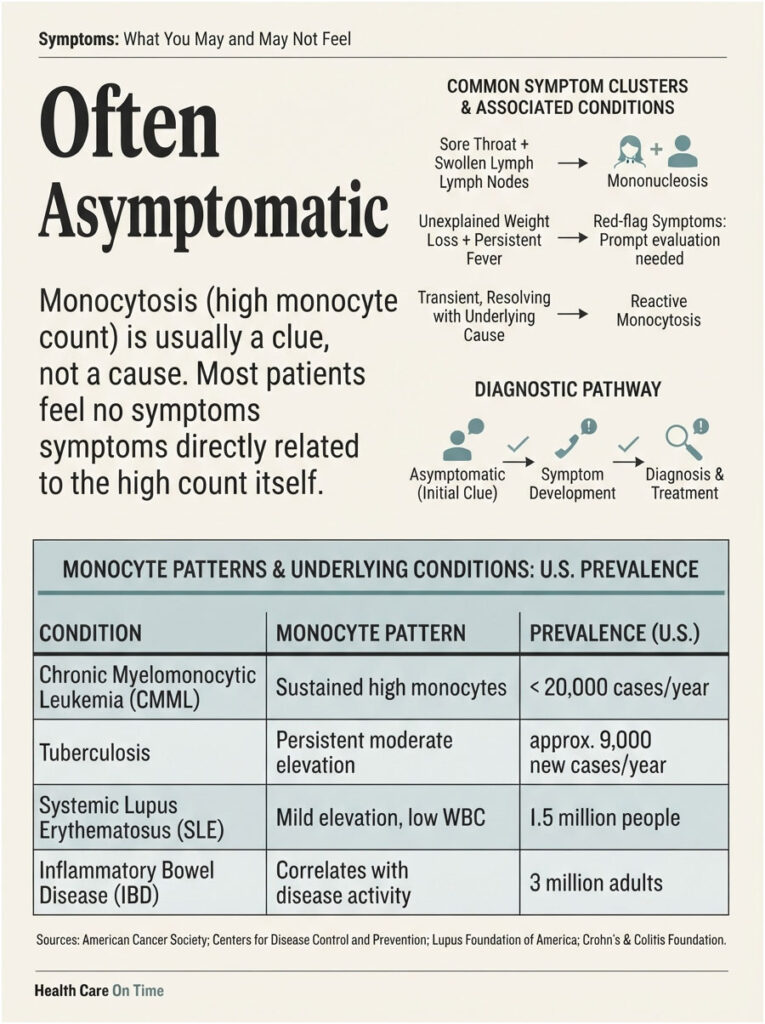
Why monocytosis itself is silent
A high monocyte count produces no sensation. There is no organ being stretched, no nerve being irritated, no chemical released in quantities you would notice.
Low or high numbers of monocytes do not usually cause symptoms; people may instead have symptoms of the disorder that caused the change. The number is a clue, not the problem.
Many people discover monocytosis on a routine physical while feeling entirely well. That combination is common and, on its own, reassuring.
Symptom clusters that point toward a cause
What you feel narrows the differential far faster than the count does. Clinicians read patterns rather than isolated values.
Sore throat, swollen lymph nodes, and heavy fatigue in a young adult point toward mononucleosis. Joint stiffness lasting more than an hour after waking points toward inflammatory arthritis.
A cough lasting weeks alongside night sweats and weight loss raises concern for tuberculosis or another chronic infection. Abdominal pain with diarrhea and blood suggests inflammatory bowel disease.
Red-flag symptoms that shorten the timeline
Certain findings move the workup from routine to prompt regardless of how high the count is. These warrant a same-week call rather than a wait-and-see approach.
Unexplained weight loss, drenching night sweats, and persistent fever without an obvious infection form the classic triad. Easy bruising, unusual bleeding, or bone pain suggest the marrow itself may be involved.
Fullness under the left ribs can indicate an enlarged spleen. New shortness of breath or deep fatigue alongside abnormal red cell or platelet counts also justifies faster evaluation.
| Underlying Condition | US Burden (Latest Figures) | Typical Monocyte Pattern | Source |
| Tuberculosis | 10,388 cases in 2024 (rate 3.1 per 100,000); 10,260 provisional cases in 2025 | Persistent moderate elevation, often 1,000 to 2,000/uL | CDC National Tuberculosis Surveillance System |
| Inflammatory bowel disease | 2.4 to 3.1 million Americans; over 0.7% of the population diagnosed | Mild to moderate, tracks with disease activity | CDC IBD Facts and Stats |
| Systemic lupus erythematosus | About 204,295 adults; 72.8 per 100,000 population | Mild, often alongside low white cell or platelet counts | CDC National Lupus Registry meta-analysis |
| Sarcoidosis | Annual incidence 8 to 11 per 100,000; prevalence 60 to 100 per 100,000 | Mild to moderate, granulomatous pattern | American Family Physician, 2024 review |
| Chronic myelomonocytic leukemia | Age-adjusted incidence 0.63 per 100,000 per year; rose from 0.54 (2001) to 0.71 (2019) | Sustained, often above 1,000/uL for 3+ months | SEER, 12,619-patient national analysis |
| Infectious mononucleosis | Peak incidence in adolescents and young adults aged 15 to 24 | Transient rise with atypical lymphocytes on smear | NIH / StatPearls |
| Reactive monocytosis (all causes) | Present in 4.6% of primary care differential counts | Transient; resolves as the trigger resolves | European Journal of Haematology, 2023 |
How Doctors Work Out What Is Causing It
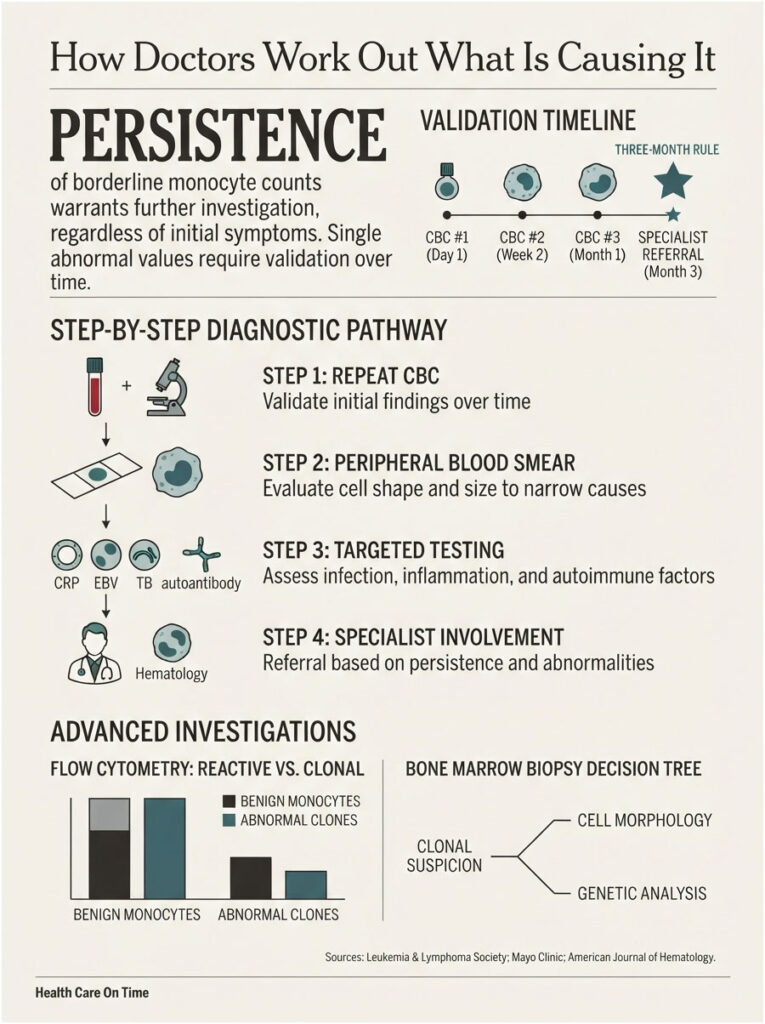
Step one, repeat the CBC with differential
A single abnormal value is a data point, not a diagnosis. Blood counts fluctuate with hydration, time of day, recent illness, and physical stress.
For a mild isolated elevation in someone who feels well, a repeat test in four to twelve weeks is standard practice. Many results normalize without anyone ever identifying the trigger.
This first step resolves the majority of monocytosis questions before any further testing becomes necessary.
Step two, peripheral blood smear
A smear puts your blood under a microscope so a trained eye can assess cell shape, size, and maturity. Automated analyzers count cells; they do not evaluate them.
A peripheral blood smear helps narrow the list of potential causes by letting a provider examine cell size and shape directly. Immature forms, dysplastic changes, or atypical lymphocytes redirect the investigation immediately.
The test is inexpensive, usually needs no additional blood draw, and carries substantial diagnostic weight for its cost.
Step three, targeted infection and inflammation testing
Once a smear looks clean, attention turns to what might be driving the immune response. C-reactive protein and erythrocyte sedimentation rate measure general inflammation.
EBV serology, tuberculosis testing, hepatitis panels, and HIV testing cover infectious possibilities. Antinuclear antibody testing and rheumatoid factor address the autoimmune ones.
Chest imaging enters the picture when respiratory symptoms, weight loss, or suspected sarcoidosis form part of the presentation.
Step four, when hematology gets involved
Referral is triggered by persistence, by accompanying abnormalities, or by red-flag symptoms rather than by any single count. Monocytes consistently above 1,000 cells per microliter for three or more months, combined with other blood count abnormalities, may prompt a hematology referral to rule out myelodysplastic syndromes or CMML.
Flow cytometry and monocyte subsets
Monocytes divide into three populations based on surface markers: classical, intermediate, and non-classical. The proportions differ measurably between reactive and clonal conditions.
In CMML, there is preferential expansion of the classical monocyte fraction above 94 percent, as opposed to the intermediate and non-classical fractions. This test can separate reactive from clonal monocytosis without any marrow procedure.
Bone marrow biopsy and molecular testing
A marrow biopsy is reserved for cases where earlier testing points toward a clonal disorder. It provides cell morphology, blast percentage, and tissue for genetic analysis.
Molecular panels look for recurrent mutations associated with myeloid neoplasms. Current classification systems place growing weight on these findings relative to counts alone.
The three-month rule and what changed in 2022
Historically, monocytosis persisting beyond three months without an alternative explanation triggered suspicion of a clonal disorder. That rule still guides most primary care decisions.
The 2022 revisions shifted emphasis toward molecular evidence. Diagnostic focus moved onto recurrent molecular aberrations, replacing purely clinical criteria such as persisting monocytosis for three or more months in the absence of alternative diagnoses.
For patients, the practical takeaway is unchanged. A borderline count that persists deserves a proper look. A borderline count that resolves does not.
How Worried Should You Be? Reactive Versus Clonal
Features pointing toward reactive monocytosis
Reactive means your marrow is doing its job in response to a signal. This describes the overwhelming majority of elevated monocyte counts.
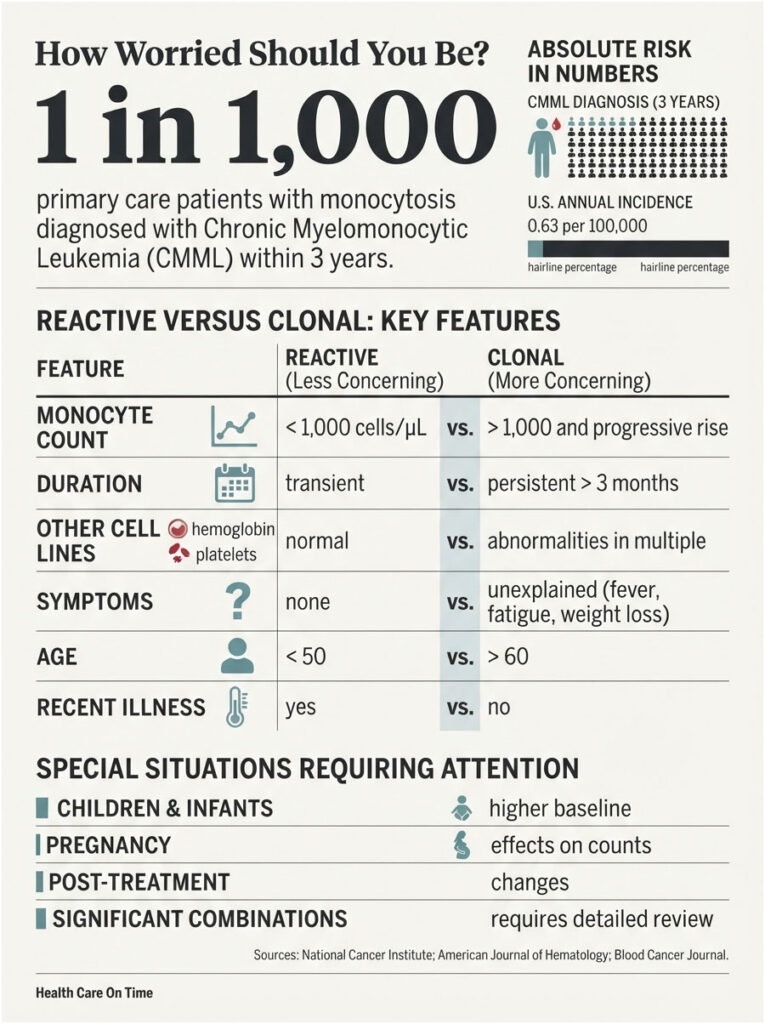
Supportive features include a recent or ongoing illness, a count under 1,000 cells per microliter, normal hemoglobin and platelets, and no constitutional symptoms. Age under 50 tilts the odds further.
The strongest single reassurance is resolution on repeat testing. Counts that return to normal within a few months rarely require anything more.
Features pointing toward a clonal cause
Clonal means the marrow is producing abnormal cells on its own. This is the uncommon scenario that hematology evaluation exists to identify.
Concerning combinations include elevation persisting beyond three months, abnormalities across multiple cell lines, age over 60, a count rising progressively across serial tests, and unexplained constitutional symptoms.
An enlarged spleen found on examination adds weight. So does a smear showing immature or dysplastic cells.
Absolute risk stated in plain numbers
Relative risk statistics frighten people because they sound enormous. Converting them into natural frequencies changes the picture entirely.
Out of 1,000 primary care patients found to have monocytosis, roughly one will be diagnosed with CMML within three years. The other 999 will have something else, most often something reactive and self-limiting.
CMML incidence in the United States runs at 0.63 per 100,000 people per year, roughly 2,000 diagnoses annually across the whole country. About 15 to 20 percent of CMML patients transform to acute myeloid leukemia within three to five years, which is why the diagnosis matters when it does apply.
Special situations
Children run higher baseline monocyte counts than adults, and infants higher still. A pediatric result of 1,000 cells per microliter carries different weight than the same value in a 70-year-old.
Pregnancy shifts white cell counts upward as a normal adaptation. Post-chemotherapy rebound and post-splenectomy states both produce predictable elevations that clinicians expect to see.
Monocytes elevated alongside high lymphocytes usually points toward a viral process. Monocytes elevated alongside anemia or low platelets is the combination that warrants faster attention.
| Your Scenario | What It Most Likely Means | Recommended Action | Reasonable Timeline |
| 850/uL, recent cold, feeling fine | Post-viral recovery rebound | Repeat CBC; no other testing needed | Retest in 8 to 12 weeks |
| Percentage flagged at 13%, absolute count 546/uL | Normal count alongside a low total WBC | Calculate the absolute value; mention at next visit | Routine follow-up |
| 1,200/uL, first abnormal result, no symptoms | Likely reactive to a recent or subclinical trigger | Repeat CBC with differential | Retest in 4 to 8 weeks |
| 1,200/uL on a third test across four months | Persistent monocytosis meeting the 3-month criterion | Peripheral smear, inflammation markers, infection screen | Schedule within 2 to 4 weeks |
| 1,500/uL with anemia or low platelets | Multiple cell lines affected; marrow evaluation indicated | Hematology referral | Within 1 to 2 weeks |
| Above 3,000/uL at any age | Marked monocytosis requiring prompt investigation | Urgent hematology referral, smear, flow cytometry | Within days |
| Any count plus night sweats, weight loss, or bone pain | Red-flag symptoms override the number entirely | Contact your provider directly | Same week |
| Child under 12 at 1,000/uL, otherwise well | Within expected pediatric variation | Discuss with pediatrician; repeat if symptomatic | Next scheduled visit |
What You Can Do While You Wait for Answers
Questions worth asking your doctor
Walking in with specific questions changes the quality of the conversation. These five cover the ground that matters most.
- Is my absolute count high, or only the percentage?
- Are any other values on this CBC abnormal?
- Could any of my current medications explain this?
- When should this be rechecked?
- What finding would make you want to investigate further?
Write the answers down and keep your results together. Serial values tell a story that individual values cannot.
Lifestyle factors that genuinely influence counts
Nothing lowers a monocyte count directly, and any product claiming otherwise deserves suspicion. What you can influence is the inflammation underneath it.
Quitting smoking produces measurable improvement in white cell counts within months. Consistent sleep, regular moderate activity, and an eating pattern built around vegetables, whole grains, fish, and olive oil all reduce inflammatory burden over time.
Our medical reviewers frame it plainly: these habits support treatment of whatever is causing the elevation. They are not a treatment for the number itself.
What not to do
Avoid starting supplements marketed for immune modulation without discussing them with your provider, since several interact with prescription medications.
Avoid ordering repeat blood counts every two weeks out of anxiety. Normal fluctuation will produce results that look like trends and generate worry the data does not support.
Avoid stopping a prescribed medication because it appears on a list of possible causes. And avoid treating any single flagged value as a diagnosis, in either direction.
Testing access and cost in the United States
The complete blood count with differential remains the most frequently ordered test in American laboratories. CPT code 85025, the CBC with automated differential, accounted for 7.26 percent of total lab procedures in 2024.
Insurance almost always covers it when a physician orders it to evaluate an abnormal result. Self-pay pricing for a standalone CBC commonly starts near $29 at independent and direct-to-consumer labs.
Cost is rarely the barrier to getting a repeat test. Ask for one if a flagged result has not been explained to your satisfaction.
Frequently Asked Questions
What is the most common cause of high monocytes?
Infection and the recovery period that follows it account for the largest share. Monocytes rise as your body clears pathogens and repairs tissue, often peaking after symptoms have already improved. Chronic inflammation from autoimmune conditions is the second most frequent category, well ahead of any blood disorder.
Does a high monocyte count always mean cancer?
No. In a study of 663,184 primary care patients, monocytosis appeared in 4.6 percent of blood counts, and only 0.1 percent of those patients received a CMML diagnosis within three years. Blood cancers typically produce sustained high counts alongside other abnormal values, not an isolated mild elevation in someone who feels well.
Is 12 percent monocytes high if the absolute count is normal?
Usually not meaningful. Percentage rises whenever total white blood cells fall, which happens routinely after viral illness. Multiply your total WBC by the percentage to get the absolute count. If that number lands under 800 cells per microliter, the percentage flag reflects arithmetic rather than an actual increase in monocytes.
How long do monocytes stay elevated after an infection?
Typically two to six weeks after symptoms resolve, though chronic infections sustain elevation for months. Monocytes are cleanup cells, so they arrive late and linger while tissue repair continues. A count still slightly high a month after a bad case of flu is expected rather than concerning in someone feeling well.
Can stress or anxiety raise a monocyte count?
Severe physical stress can, including major surgery, heart attack, and significant trauma. Everyday psychological stress produces much smaller effects, usually not enough to push a normal count above the reference range. Strenuous exercise shortly before a blood draw can also nudge values upward temporarily without any underlying problem.
What monocyte level is considered dangerous?
No single value is dangerous by itself, because the count reflects a cause rather than creating harm. Counts above 3,000 cells per microliter warrant prompt evaluation. Persistent counts above 1,000 accompanied by abnormal red cell or platelet values carry considerably more weight than a higher isolated number in an otherwise normal panel.
Which autoimmune diseases cause high monocytes?
Rheumatoid arthritis, systemic lupus erythematosus, inflammatory bowel disease (particularly ulcerative colitis), sarcoidosis, and several forms of vasculitis. These conditions keep the immune system activated, sustaining monocyte production. Elevations tend to be modest and persistent, rising and falling with how active the underlying disease is at the time.
Do monocytes go up after COVID or after a vaccine?
Monocytes commonly rise during recovery from COVID-19, following the same rebound pattern seen with other viral infections. Transient shifts after vaccination reflect normal immune activation and typically settle within weeks. Elevation persisting for months after either should be evaluated on its own merits rather than attributed automatically.
Is a high monocyte count normal during pregnancy?
Mild elevation is a recognized physiologic change of pregnancy, alongside a general rise in total white blood cells. Counts modestly above the non-pregnant reference range are usually expected and need no specific action. Marked elevation, or elevation accompanied by fever or other abnormal values, still deserves evaluation by your obstetric provider.
Can you lower your monocyte count naturally?
Not directly, and supplements claiming to do so lack supporting evidence. Counts normalize when the underlying cause resolves. Quitting smoking, sleeping consistently, exercising regularly, and following an anti-inflammatory eating pattern reduce overall inflammatory burden over months, which supports treatment of the actual cause rather than replacing it.
When should you see a hematologist for high monocytes?
When elevation persists beyond three months without explanation, when other cell lines are abnormal, when the count exceeds 3,000 cells per microliter, or when red-flag symptoms appear. Your primary care physician typically completes infection and inflammation testing first, since reactive causes explain the substantial majority of referrals.
What does it mean if monocytes and lymphocytes are both high?
This combination most often points toward a viral infection or a chronic inflammatory process, since both cell types respond to those triggers. Mononucleosis is a frequent explanation in adolescents and young adults. Persistent elevation of both, particularly alongside atypical cell appearance on a smear, warrants further evaluation.
Medical Disclaimer
This article is provided for informational purposes and does not constitute medical advice, diagnosis, or treatment. Laboratory reference ranges vary between facilities, and blood test results require interpretation by a licensed healthcare professional in the context of your full medical history, symptoms, and medications. Contact your physician about any abnormal result or new symptom.
References
- Cleveland Clinic: Monocytosis
- Merck Manual Consumer Version: Monocyte Disorders
- CDC: Reported Tuberculosis in the United States, 2024
- CDC: 2025 Provisional TB Data Report
- CDC: Inflammatory Bowel Disease Facts and Stats
- CDC: Lupus Data and Research
- Christensen et al., Monocytosis in Primary Care and Risk of Haematological Malignancies, European Journal of Haematology
- Baumgartner et al., Comparing Malignant Monocytosis Across the Updated WHO and ICC Classifications, Blood
- Contemporary CMML Risk Stratification and Management, Current Hematologic Malignancy Reports
- Mangaonkar et al., Differential Diagnosis and Workup of Monocytosis, Current Hematologic Malignancy Reports
- StatPearls: Normal and Abnormal Complete Blood Count With Differential
- StatPearls: Histology, Monocytes
- NHLBI: Blood Tests
- American Family Physician: Sarcoidosis
- SEER Cancer Stat Facts