
The most common cause of vertigo can often be corrected in a five-minute office maneuver, no prescription required. Yet research cited in the American Academy of Otolaryngology-Head and Neck Surgery Foundation guideline found that only 10% to 20% of patients with BPPV seen by a physician will receive appropriate repositioning maneuvers. Most walk out with a prescription instead, then wait for something that was never going to work.
Table of Contents
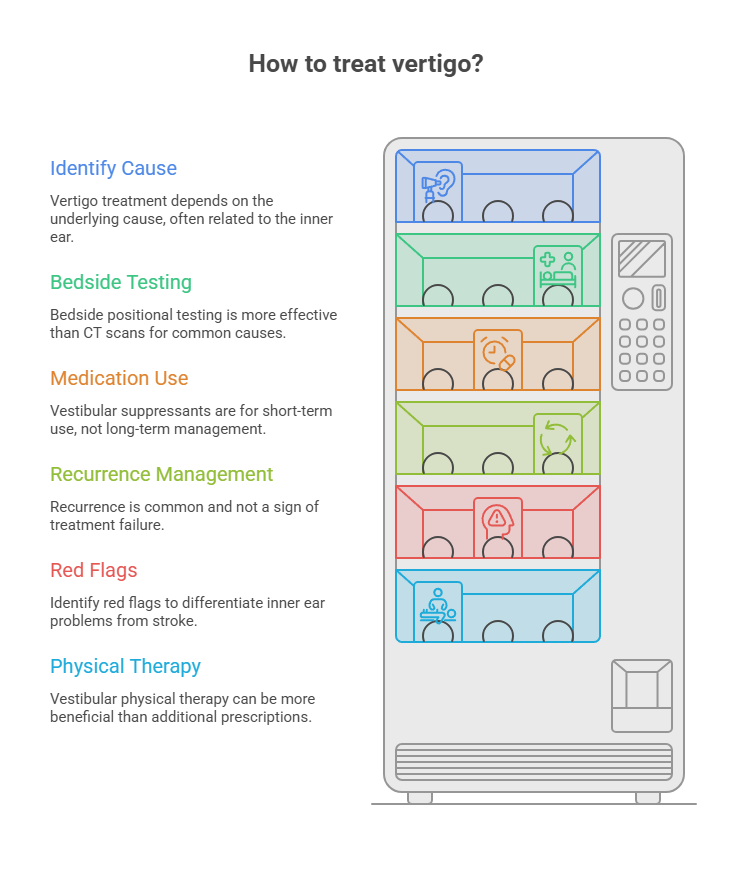
Quick Answer: Vertigo is diagnosed through symptom history plus bedside positional testing, mainly the Dix-Hallpike test, the supine roll test, and the HINTS exam, with imaging reserved for stroke red flags. Vertigo treatment matches the underlying cause: canalith repositioning maneuvers for BPPV, vestibular rehabilitation therapy for vestibular neuritis, sodium restriction and diuretics for Meniere’s disease, and migraine prevention for vestibular migraine. Medication controls symptoms short-term but rarely fixes the problem.
The standard diagnostic sequence looks like this:
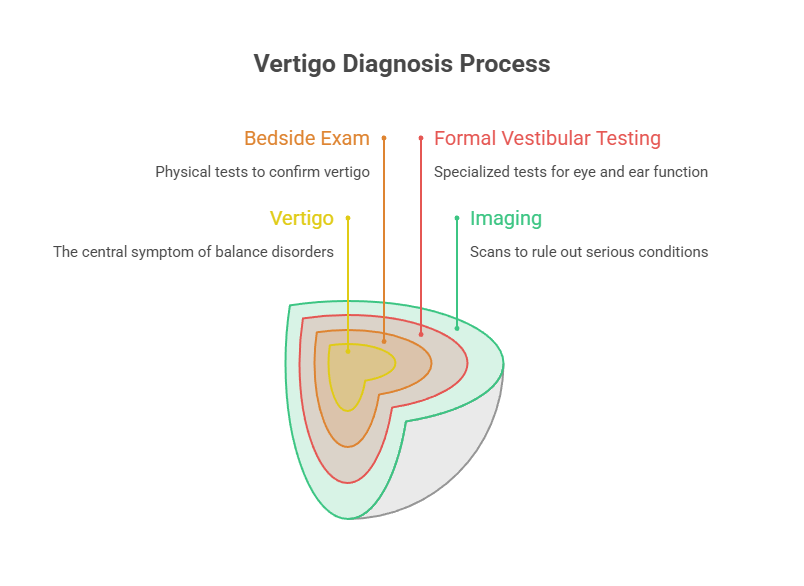
- Symptom history covering episode duration, triggers, and associated hearing or visual changes
- Dix-Hallpike test to confirm posterior canal BPPV
- Supine roll test to check the horizontal canal when Dix-Hallpike is negative
- HINTS exam to separate stroke from vestibular neuritis in continuous vertigo
- Audiogram whenever hearing symptoms are present
- VNG or ENG testing when bedside findings are inconclusive
- MRI only when red flags or a concerning HINTS result appear
At a Glance
• Vertigo is a symptom, not a diagnosis, so vertigo treatment depends entirely on the cause
• Most cases trace to the inner ear, which means they are treatable without drugs
• Bedside positional testing outperforms CT scanning for every common cause
• Vestibular suppressants like meclizine are built for days of use, not months
• Recurrence is common and expected, not a sign that treatment failed
• Four specific red flags separate an inner ear problem from a stroke
• A vestibular physical therapist is often more useful than a second prescription
What Vertigo Actually Is, and What It Isn’t
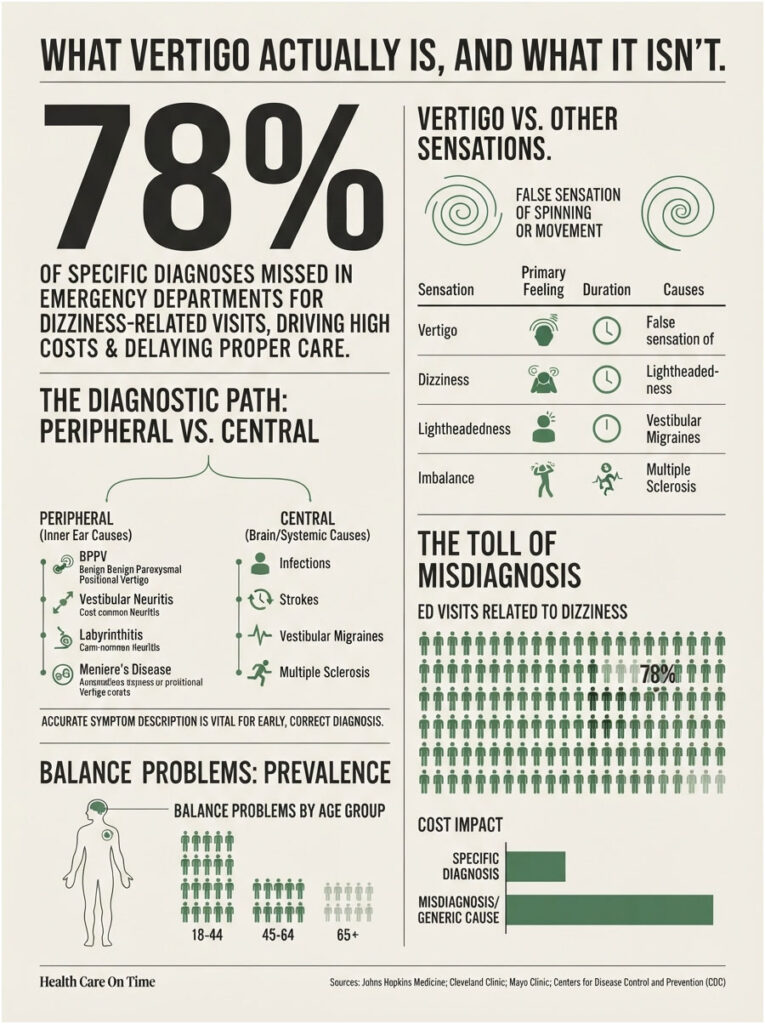
Vertigo is the false sensation that you or the room is spinning, tilting, or moving when nothing is. That differs from feeling faint, woozy, or unsteady, and the distinction reshapes the entire workup.
Patients booking diagnostic panels through HealthCareOnTime routinely describe “dizziness” when they mean one of four different sensations. Sorting that out in the first two minutes of an appointment saves weeks of misdirected testing.
Vertigo vs Dizziness vs Lightheadedness vs Imbalance
Dizziness is the umbrella term covering all of it. Lightheadedness points toward blood pressure, blood sugar, or dehydration. Imbalance without spinning suggests the legs, joints, or peripheral nerves.
True spinning points to the vestibular system. Cleveland Clinic describes vertigo as the feeling of spinning even when you are not moving, with causes in the inner ear or the brain.
Our medical reviewers note that patients who describe the sensation as “the room moving even with my eyes closed” are far more likely to have an inner ear cause than those who say “I feel like I might pass out.”
Peripheral vs Central: The Split That Drives Everything
Every vertigo evaluation sorts into two buckets, and that sorting happens before any treatment decision.
Peripheral Causes
Peripheral vertigo is the most common type and happens when there is an issue with the inner ear or vestibular nerve, covering BPPV, labyrinthitis, vestibular neuritis, and Meniere’s disease. These account for the clear majority of cases and respond well to targeted vertigo treatment.
Central Causes
Central vertigo is less common and occurs with a condition affecting the brain, such as infection, stroke, or traumatic brain injury. Vestibular migraine and multiple sclerosis belong here too. Central causes are rarer but carry the higher stakes, which is why the exam is designed to rule them out first.
Vertigo by the Numbers Across the US
| Metric | US Figure | Source and Year |
| Adults reporting a balance problem in past year | 36.8 million (15.5%) | National Health Interview Survey, OTO Open 2023 |
| Same measure in 2008 | 24.2 million (11.0%) | National Health Interview Survey, OTO Open 2023 |
| Share of all US ED visits from dizziness | 3.4% | Academic Emergency Medicine, 2026 |
| Weighted US ED dizziness visits, 2016 to 2022 | 33.7 million | Academic Emergency Medicine, 2026 |
| Annual US ED cost burden for dizziness | Over $4 billion | Academic Emergency Medicine, 2013 |
| Mean cost per ED dizziness visit | $1,004 (2011 dollars) | Academic Emergency Medicine, 2013 |
| CT utilization during ED dizziness visits | 28.4% | Academic Emergency Medicine, 2026 |
| BPPV coded at ED dizziness visits | 1.4% | Academic Emergency Medicine, 2026 |
| BPPV lifetime prevalence | 2.4% of population | Journal of Clinical Neuroscience, 2024 |
| Cerebrovascular cause among ED dizziness visits | 4% to 6% | Academic Emergency Medicine, 2013 |
That top figure moved for a reason. The nationally representative NHIS analysis found 36.8 million adults reported a balance problem in 2016 versus 24.2 million in 2008, and the increase held after adjusting for age and sex. Anxiety accompanying balance problems rose from 19.4% to 29.4% over the same window.
The BPPV coding figure deserves attention. Specific vestibular diagnoses were rare in US emergency departments, with benign paroxysmal positional vertigo assigned in just 1.4% of unweighted visits, despite BPPV being the single most common cause of vertigo. Most people leave the ED with a symptom code, not an answer.
How Vertigo Is Diagnosed: The Step-by-Step Workup
How is vertigo diagnosed in practice? Through one of the few workups in medicine where a skilled physical exam beats expensive imaging. The sequence runs in four steps, and most cases resolve at step two.
Step 1: The History Your Doctor Is Really Building
Three questions carry most of the diagnostic weight. How long does each episode last? What sets it off? What else happens during it?
Timing, Triggers, and Duration
Seconds to a minute, triggered by rolling over in bed or tilting the head back, points hard at BPPV. StatPearls notes BPPV typically endures 30 to 60 seconds while vertigo from other conditions generally persists longer, with Meniere’s lasting hours and vestibular neuritis continuing for days.
Twenty minutes to several hours, with ear fullness and fluctuating hearing loss, suggests Meniere’s disease. Days of constant spinning with normal hearing suggests vestibular neuritis.
Minutes to hours with light sensitivity, headache, or visual aura points toward vestibular migraine, which remains the most underdiagnosed entry on the list.
Step 2: The Bedside Exam
This is where the diagnosis is usually made, with no equipment beyond an exam table.
Dix-Hallpike Test
The clinician turns your head 45 degrees toward the suspected ear, then lays you back quickly so the head hangs slightly below the table edge, and watches your eyes.
If you have BPPV, the movements will provoke vertigo and nystagmus, the involuntary beating eye movement that confirms the diagnosis. Mayo Clinic describes looking for dizziness that starts with head movement and eases in under one minute, plus nystagmus.
Patients commonly ask us why the test provokes symptoms deliberately. The provocation is the diagnosis. Nothing else confirms BPPV as cleanly, and no blood test or scan substitutes for it.
Supine Roll Test
When Dix-Hallpike returns negative but the history still fits, the supine roll test checks the horizontal canal. You lie flat and the clinician rolls your head side to side. The condition is easily diagnosed with the Dix-Hallpike and supine roll maneuvers, and treatment can be done by a general practitioner or a vestibular specialist.
The HINTS Exam
For someone with continuous vertigo lasting days, the question is not which inner ear problem it is. The question is whether it is a stroke.
HINTS stands for Head Impulse, Nystagmus, and Test of Skew, three eye movement checks completed in under two minutes. Research published in Stroke found that a dangerous HINTS result was 100% sensitive and 96% specific for a central lesion.
A larger follow-up in Academic Emergency Medicine reported HINTS stroke sensitivity of 96.5% and specificity of 84.4%, with performance holding steady across age groups. The same work concluded that HINTS substantially outperforms the ABCD2 score and also outperforms MRI obtained within the first two days after symptom onset.
That last point matters more than most patients realize. Early MRI misses roughly 20% of posterior fossa strokes in the first 24 hours and another 10% in the 24 to 48 hour window, while CT sensitivity in the acute phase is only 7% to 16%. A clean scan on day one does not close the case.
Step 3: When Formal Vestibular Testing Is Ordered
If the bedside exam does not settle it, formal testing follows.
VNG and ENG
Videonystagmography and electronystagmography record eye movements to detect nystagmus invisible to the naked eye. Mayo Clinic describes ENG as electrode-based and VNG as camera-based, with either able to show whether an inner ear condition is causing the dizziness.
Audiogram, vHIT, VEMP, Rotary Chair, and Posturography
An audiogram is mandatory whenever hearing symptoms accompany vertigo. The AAO-HNSF Meniere’s guideline directs clinicians to obtain an audiogram when assessing a patient for the condition, since audiometrically documented fluctuating low-frequency hearing loss is a defining criterion.
Video head impulse testing measures reflex function canal by canal. Vestibular evoked myogenic potentials assess the otolith organs. Rotary chair testing and computerized posturography round out the battery at specialty centers.
Our lab partners report that thyroid, vitamin D, vitamin B12, and blood glucose panels are frequently ordered alongside vestibular testing, since deficiencies and metabolic problems can worsen balance symptoms or mimic them outright.
Step 4: When Imaging Is Actually Warranted
Here the guidelines are blunt. The AAO-HNSF update group recommended against radiographic imaging for patients meeting BPPV criteria without additional signs warranting it, and against vestibular testing in the same situation.
The reason is diagnostic yield. Cleveland Clinic clinicians report that fewer than 1% of head CT scans ordered for dizziness or vertigo produced information leading to improved clinical outcomes, and they advise against CT as a diagnostic tool for it.
Reality has not caught up. CT was used during 28.4% of US emergency department dizziness visits between 2016 and 2022, with MRI at 3.6%. Historical data cited in the guideline is worse: a study found 70% of BPPV patients underwent MRI and 45% had CT scanning.
Vertigo Treatments That Work, Matched to the Cause
Why “Vertigo Treatment” Is the Wrong Question
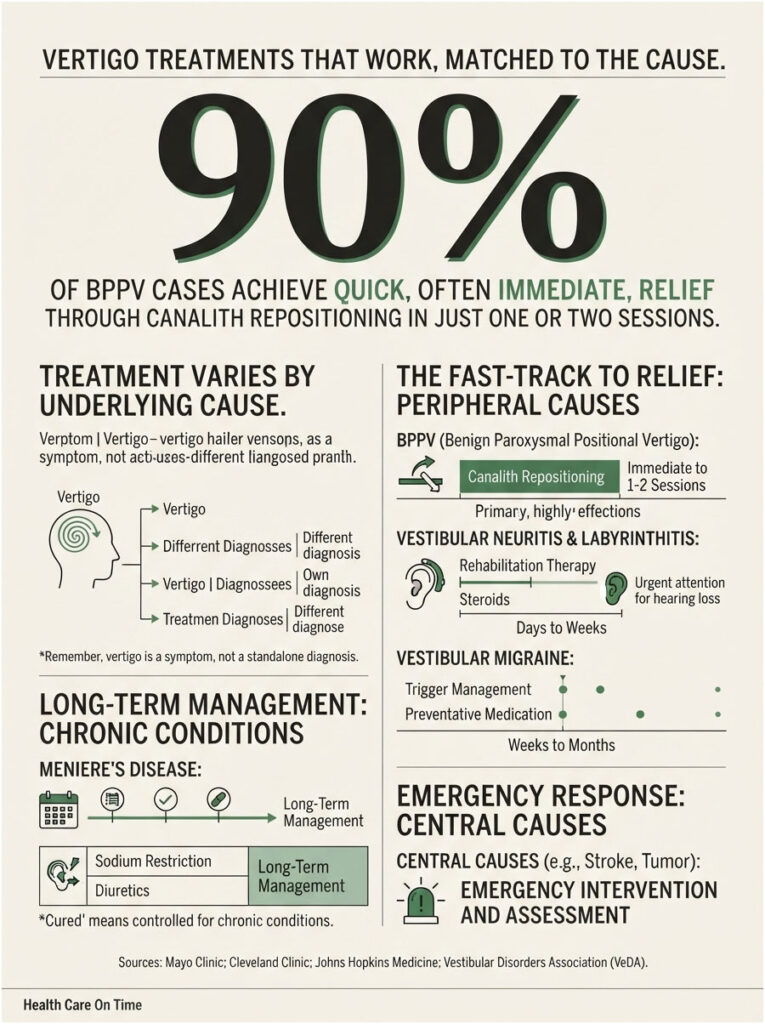
Asking how to treat vertigo is like asking how to treat pain. The answer depends entirely on the source. A repositioning maneuver that clears BPPV in one session does nothing whatsoever for Meniere’s disease.
That mismatch explains most treatment failure. Someone spends six weeks on meclizine for a problem that needed a two-minute head rotation, or repeats Epley maneuvers at home for a vestibular migraine that was never going to respond to them.
Vertigo is a symptom rather than a diagnosis, so treatment depends on the underlying cause, and the most effective treatment is the one matched to that cause.
The Treatment Map
| Condition | How It’s Diagnosed | First-Line Treatment | Time to Relief | Recurrence Risk |
| BPPV | Dix-Hallpike or supine roll test showing nystagmus | Canalith repositioning (Epley, Semont, Lempert roll) | 1 to 2 sessions, often same day | About 50% within 1 year; roughly 15% annually |
| Vestibular neuritis | HINTS exam, normal hearing, days of constant vertigo | Vestibular rehabilitation therapy; short steroid course in select cases | Days for acute phase, 2 to 6 weeks for full compensation | Low, under 10% |
| Labyrinthitis | Same as neuritis plus hearing loss on audiogram | Vestibular rehabilitation, treat infection, urgent audiology | 2 to 6 weeks; hearing recovery is time-sensitive | Low |
| Meniere’s disease | Two-plus episodes lasting 20 min to 12 hrs, audiogram-confirmed hearing loss | Sodium restriction, diuretics, intratympanic steroids if unresponsive | Weeks to months for reduced attack frequency | High; chronic fluctuating course |
| Vestibular migraine | Barany Society criteria, migraine history, exclusion of others | Trigger management, migraine preventive medication | 4 to 12 weeks on preventive therapy | Moderate to high without prevention |
| Central (stroke, tumor) | Concerning HINTS, focal neurological signs, MRI | Emergency stroke protocol or neurosurgical referral | Varies; time-critical | Depends on vascular risk management |
What “Cured” Realistically Means
For BPPV, cured means the crystals are back where they belong and symptoms stop. That is a genuine cure, and it can happen in a single visit.
For Meniere’s disease and vestibular migraine, cured means controlled. Attacks become less frequent and less severe rather than disappearing entirely.
In cases reviewed across our diagnostic network, patients who understand this distinction from day one report substantially less frustration at the six-week mark than those expecting total resolution.
Repositioning Maneuvers: The Gold Standard for BPPV
How the Epley Maneuver Works
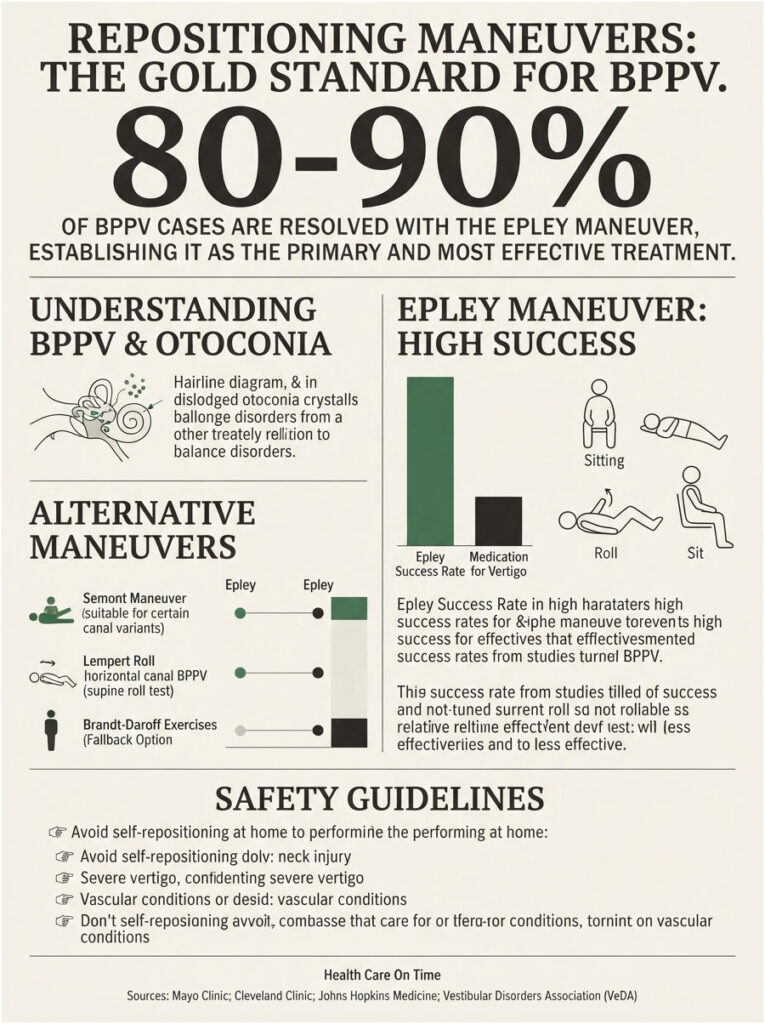
BPPV happens when tiny calcium carbonate crystals called otoconia break loose and drift into a semicircular canal. Mayo Clinic explains that these particles fall into the wrong part of the semicircular canals, and the goal of canalith repositioning is to move them into the utricle where they will not cause vertigo.
The Epley maneuver uses gravity to walk those crystals back out through a sequence of slow head positions. Each position is held about 30 seconds after symptoms or atypical eye movements stop, and the procedure most often works after one or two treatments.
Success Rates and What the Research Shows
Published success rates span a range depending on technique and follow-up window. One prospective study of 50 consecutive patients found 37 of them, or 74%, were treated successfully in a single session.
Broader reviews put the range wider. The Epley maneuver has demonstrated efficacy and safety for posterior canal BPPV with success rates from roughly 64% to 98% after one or more attempts. Self-administered repositioning performed by motivated patients is successful at least 64% of the time.
Compare that to medication. One study comparing canalith repositioning with medication found repositioning more successful at two-week follow-up. That single finding should redirect most vertigo treatment decisions.
The Semont Maneuver
Also called the liberatory maneuver, the Semont uses a rapid side-to-side movement rather than the Epley’s rotational sequence. It suits patients with limited neck extension and produces comparable outcomes in trained hands.
The Lempert Roll for Horizontal Canal BPPV
When crystals settle in the horizontal canal instead of the posterior one, the Epley will not reach them. The Lempert roll, sometimes called the barbecue roll, rotates the patient through 360 degrees in staged increments.
This is a frequent reason home Epley attempts fail. The maneuver was performed correctly; the canal was simply the wrong one. Identifying which canal is involved requires the supine roll test, which is why self-diagnosis stalls so often.
Brandt-Daroff Exercises: The Fallback, Not the First Choice
Brandt-Daroff exercises involve moving repeatedly from sitting to side-lying and back. Research has found them inferior to the Epley maneuver for treating BPPV, though they work as an alternative when a patient cannot perform the Epley or Semont.
The typical protocol runs up to five repetitions per session, three sessions daily, for two weeks. That is a far slower path than one correctly executed Epley.
Doing It at Home Safely
Mayo Clinic notes that a healthcare professional can teach you to perform the procedure yourself for home use if needed. That teaching step is what separates safe self-treatment from guesswork.
Who Should Not Attempt Self-Repositioning
Skip home maneuvers entirely if you have not been formally diagnosed. Also skip them with significant neck disease or recent neck injury, unstable cardiac disease, recent retinal or eye surgery, or high fall risk without another person present.
Anyone whose vertigo arrives with hearing loss, double vision, slurred speech, or new severe imbalance needs medical evaluation before attempting any maneuver.
Medications for Vertigo: What Helps and What Backfires
Vestibular Suppressants
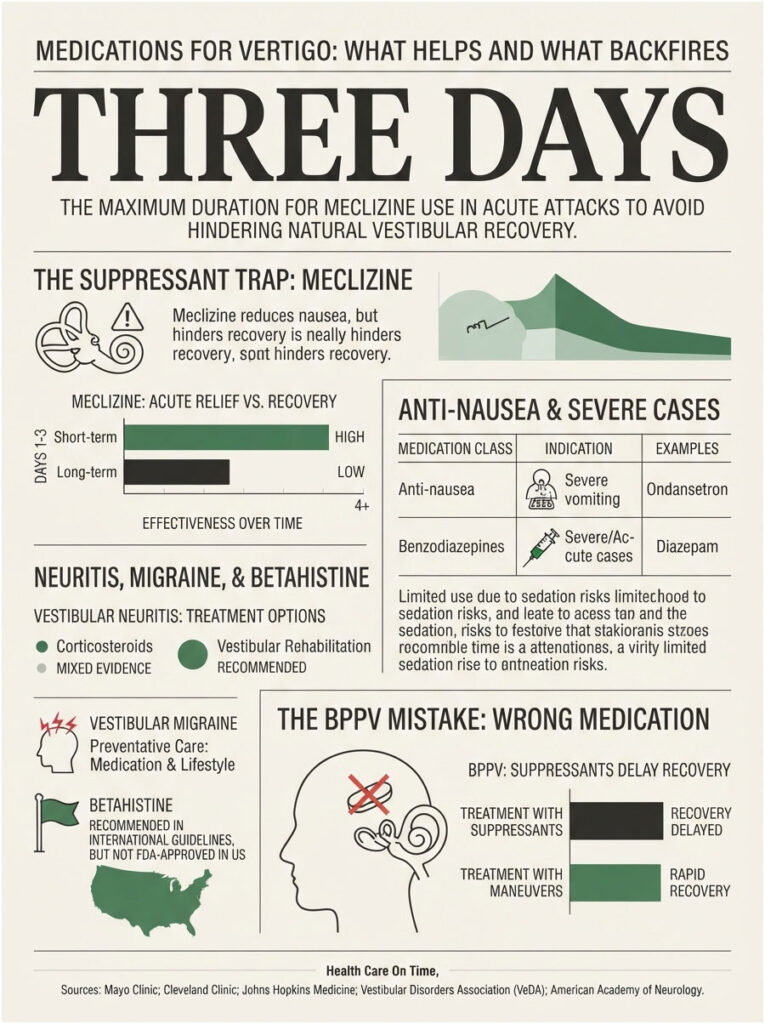
Meclizine (marketed as Antivert and in some Dramamine formulations), dimenhydrinate, and promethazine dampen the vestibular signal. They reduce spinning sensation and the nausea riding alongside it.
They do not treat the cause. They mute the alarm without addressing what triggered it.
The Three-Day Rule
Clinical teaching holds that meclizine is a reasonable choice if limited to three days, and is appropriate for the acute phase of Meniere’s disease, vestibular neuritis, or labyrinthitis.
Longer use actively slows recovery. The brain adapts to a damaged vestibular signal through central compensation, and suppressant drugs blunt the exact input compensation requires.
Antiemetics were the most common medication administered or prescribed at US emergency department dizziness visits at 35.1%, followed by antihistamines at 7.1% and benzodiazepines at 6.2%.
Anti-Nausea Medications
Ondansetron and prochlorperazine handle the vomiting that makes severe vertigo unbearable. They carry less sedation risk than antihistamines and are generally preferred when nausea dominates the picture.
Benzodiazepines: The Narrowest Use Case
Diazepam and lorazepam calm the vestibular system quickly. They also cause sedation, dependence, and falls, which limits their role to severe acute attacks under direct supervision.
Corticosteroids for Vestibular Neuritis
A short steroid course during the first days of vestibular neuritis is common practice in US emergency departments, though the evidence base remains mixed and the decision is individualized by clinician judgment.
Meniere’s Medications and the Betahistine Question in the US
The AAO-HNSF Meniere’s guideline says clinicians may offer diuretics or betahistine for maintenance therapy, may offer intratympanic steroids for patients not responding to noninvasive treatment, and should offer intratympanic gentamicin for those not responding to non-ablative therapy. It recommends against positive pressure therapy.
American patients hit a wrinkle here. Betahistine is not FDA-approved in the US; it was approved in the 1960s but approval was withdrawn in 1971 over insufficient efficacy evidence.
Compounding pharmacies may prepare betahistine with a prescription at an estimated cost around $50 per month, varying by pharmacy. Insurance rarely covers it. Patients researching Meniere’s treatment often find betahistine recommended by international sources without realizing the US access gap.
Migraine Prophylaxis for Vestibular Migraine
Vestibular migraine is treated as migraine, not as an ear condition. Preventive medication, trigger identification, sleep regularity, and hydration form the backbone of care.
This diagnosis is badly underrecognized. Among patients meeting the definition for vestibular migraine, only 10% were told migraine was likely the cause of their dizziness, with many diagnosed with a mimic instead.
The scale is larger than most people expect. Prevalence of dizziness meeting vestibular migraine criteria was 2.7% of the general population, making it the most common cause of spontaneous episodic vertigo, with one-year prevalence 1.7 times higher than BPPV.
The Medication Mistake That Delays Recovery
The guideline language leaves no ambiguity. Clinicians should not routinely treat BPPV with vestibular suppressant medications such as antihistamines or benzodiazepines.
The logic is mechanical. BPPV attacks last under a minute. By the time an oral medication reaches effective blood levels, the episode ended long ago. The drug delivers side effects without benefit.
Our medical reviewers flag this as the single most common error seen in vertigo cases, particularly in adults over 65, where sedating antihistamines raise fall risk in a population the vertigo has already destabilized.
Vestibular Rehabilitation Therapy: The Underused Fix
What a VRT Program Actually Involves
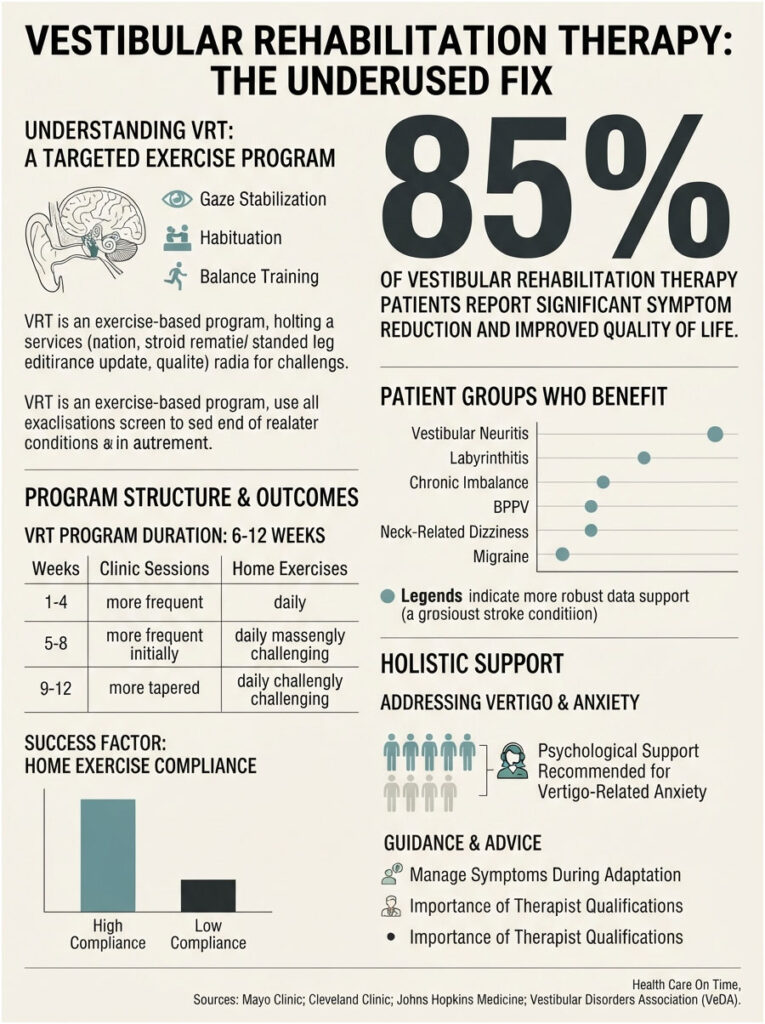
Vestibular rehabilitation is an exercise-based program designed by a specially trained physical therapist to improve balance and reduce dizziness-related problems. The therapist identifies problems with balance, gait, neck motion, and visual stability before building a plan of care aimed at reducing fall risk and improving daily function.
Exercises typically include gaze stabilization drills, habituation work that deliberately provokes mild symptoms to drive adaptation, and progressive balance training on varied surfaces.
Vestibular therapy starts with testing to check specific symptoms, which may include an audiologist running a vestibular test battery and a physical therapist evaluating balance, gait, and limb strength and flexibility.
Who Benefits Most
VRT works best for vestibular neuritis, labyrinthitis, chronic imbalance after any vestibular injury, and persistent postural-perceptual dizziness. Providers also refer patients with BPPV and with neck-related dizziness or migraine.
The Meniere’s guideline draws a useful line. Clinicians should offer vestibular rehabilitation or physical therapy for Meniere’s disease patients with chronic imbalance, but not for acute vertigo attacks. During an active attack, rehabilitation is the wrong tool.
The BPPV guideline lists vestibular rehabilitation, either self-administered or clinician-guided, as a treatment option for BPPV alongside repositioning maneuvers.
Typical Course, Duration, and Insurance Coverage
Most programs run six to twelve weeks with weekly or biweekly sessions plus daily home exercises. Medicare and most commercial plans cover VRT under standard outpatient physical therapy benefits, though many require a physician referral and some limit annual visit counts.
Before booking, ask whether the therapist holds specific vestibular training. General orthopedic physical therapy is not the same service, and the difference shows in outcomes.
Home Exercise Compliance Decides Outcomes
Clinic sessions are the smaller half of the work. Central compensation is driven by repeated daily exposure to the symptoms the brain needs to recalibrate against.
Across the patients we serve, the pattern is consistent. Those who complete home programs report meaningfully faster return to driving and stair use than those relying on appointments alone. Symptoms often worsen slightly in weeks two and three, which is normal adaptation and not a reason to stop.
Addressing the Anxiety That Comes With It
Anxiety compounds vertigo, and the combination is common. Cleveland Clinic notes that vertigo and balance problems create stress, and experts may recommend meeting with a psychologist for breathing exercises, cognitive behavioral therapy, and grounding techniques to orient yourself in physical space.
When Vertigo Is an Emergency
The Four Red Flags
Call 911 rather than scheduling an appointment if vertigo arrives with any of these: sudden severe headache unlike any before, double vision or difficulty speaking, weakness or numbness on one side, or inability to walk without falling.
Sudden hearing loss with vertigo also demands same-day evaluation. Sudden hearing loss with vertigo can be especially important because early treatment may improve outcomes, and some patients need evaluation for sudden sensorineural hearing loss.
Urgent assessment also applies when vertigo comes with new chest pain, fainting, severe dehydration from vomiting, high fever, or head injury.
Why Posterior Circulation Stroke Gets Missed
Strokes in the back of the brain do not always produce the classic drooping face and arm weakness. They can present as isolated spinning, nausea, and unsteadiness that looks exactly like an inner ear problem.
Frontline misdiagnosis of posterior circulation strokes presenting with dizziness appears common, occurring in perhaps 35% of cases. That figure is precisely why the HINTS exam was developed and why it belongs in every acute vertigo evaluation.
What to Say at Triage So You Are Taken Seriously
Lead with onset and duration. “Constant spinning that started suddenly two hours ago and has not stopped” routes differently than “I’ve been dizzy.”
Name any new difficulty walking, new hearing change, or new visual symptom explicitly. Ask directly whether a HINTS exam has been performed.
| If You Have This Scenario | What It Likely Means | What to Do Right Now |
| Spinning under a minute, triggered by rolling over or looking up | Posterior canal BPPV | Book primary care or ENT and request the Dix-Hallpike test by name |
| Constant spinning for days, hearing normal, no other neurological signs | Vestibular neuritis | Same-day urgent care or ED for a HINTS exam, then request a vestibular rehab referral |
| Spinning plus double vision, slurred speech, one-sided weakness, or new severe imbalance | Possible posterior circulation stroke | Call 911 immediately, do not drive yourself |
| Spinning 20 minutes to several hours with ear fullness and fluctuating hearing | Meniere’s disease | Schedule ENT plus audiogram within two weeks; start a symptom and sodium diary now |
| Spinning with headache, light sensitivity, or visual aura | Vestibular migraine | Neurology referral; track triggers, sleep, and cycle timing for four weeks |
| Vertigo beginning after a head injury | Post-traumatic BPPV or concussion | Same-day medical evaluation; no self-maneuvers until cleared |
| Sudden hearing loss in one ear with vertigo | Possible sudden sensorineural hearing loss | Same-day ENT or ED; the treatment window is measured in days |
| Vertigo returning weeks after a successful Epley | BPPV recurrence, common and expected | Repeat repositioning; ask about vitamin D testing if episodes cluster |
Recovery, Recurrence, and What It Costs in the US
Realistic Timelines by Condition
BPPV often resolves the same day with correct repositioning. Mayo Clinic notes it may also clear on its own within a few weeks or months, and the majority of patients attain remission by six months.
Vestibular neuritis follows a different curve. The acute severe phase runs three to five days; full compensation takes two to six weeks with active rehabilitation. Pushing movement early speeds that timeline.
Why Vertigo Comes Back
Recurrence is not treatment failure. Mayo Clinic reports that for about 50% of people successfully treated for BPPV, the vertigo returns within a year.
Longer-term figures track similarly. One study reported a 10-year recurrence rate of 18%, while another found an annual recurrence rate of 15% with 50% recurrence at 40 months following treatment.
Risk factors are identifiable and partly modifiable. Low vitamin D, head trauma, migraine, Meniere’s disease, hypertension, high cholesterol, diabetes, hypothyroidism, osteoporosis, and reduced cervical mobility are all associated with a failed first repositioning maneuver.
Our medical team has reviewed this pattern repeatedly, and the practical takeaway is simple. Learn the maneuver, keep the written instructions, and address the modifiable risk factors rather than treating each episode as a fresh emergency.
What Testing and Treatment Cost
The emergency department is the expensive door. The mean per-ED-dizziness-visit cost was $1,004 in 2011 dollars, with total extrapolated national costs of $3.9 billion. Neuroimaging accounted for about 12% of those costs, with CT scans at $360 million and MRI at $110 million.
Those figures are more than a decade old and have almost certainly risen. An office visit with a Dix-Hallpike and same-visit Epley costs a small fraction of an ED workup and resolves the most common cause outright.
Formal vestibular test batteries typically run several hundred to over a thousand dollars depending on which studies are included and whether the facility bills as hospital outpatient. Ask for an itemized estimate before scheduling, and confirm whether prior authorization is required.
Choosing the Right Provider
Primary care handles the Dix-Hallpike and Epley in many practices, which is the fastest and cheapest route for suspected BPPV. Otolaryngologists and neurotologists manage Meniere’s disease and complex inner ear conditions.
Audiologists run vestibular testing and audiograms. Vestibular physical therapists deliver rehabilitation. Neurologists handle vestibular migraine and suspected central causes.
Some centers now offer shared medical appointments for patients with dizziness or imbalance without a confirmed diagnosis, a model that is often a faster route to care than one-on-one visits.
Reducing Recurrence Risk
Correct vitamin D deficiency if testing shows it, manage blood pressure and blood sugar, treat migraine if you have it, and check thyroid function when episodes cluster without explanation.
Mayo Clinic also advises practical safety steps: sit down immediately when dizzy, use good lighting when getting up at night, avoid movements that trigger symptoms, and use a cane if fall risk is elevated.
Mistakes That Keep People Dizzy Longer
- Staying on meclizine for weeks rather than days, which blocks the central compensation recovery depends on
- Choosing bed rest over movement, which delays recovery in nearly every vestibular condition
- Skipping the audiogram when hearing symptoms are present, which is how Meniere’s disease gets missed for years
- Assuming every case is BPPV and repeating home maneuvers aimed at the wrong canal
- Accepting a CT scan as the first step when guidelines recommend against it for straightforward BPPV
- Abandoning vestibular rehabilitation during the normal symptom spike in weeks two and three
- Treating recurrence as proof that the original treatment failed
- Never recording episode duration, which is the single most useful data point a clinician can receive
Your Action Plan
- Track episodes for seven days. Record time of day, duration in seconds or minutes, what you were doing, and any hearing or visual change.
- Prepare answers to the three questions before your appointment: how long, what triggers it, what else happens.
- Book the right provider. Primary care or ENT for suspected BPPV, ENT plus audiology for hearing symptoms, neurology for suspected vestibular migraine.
- Ask for the Dix-Hallpike test by name if your episodes are brief and position-triggered.
- If imaging is ordered before any bedside testing, ask which specific finding it is meant to rule out.
- Request a vestibular rehabilitation referral if symptoms persist past two weeks.
- Reassess at four weeks. The guideline directs clinicians to reassess patients within one month after an initial period of observation or treatment to document resolution or persistence of symptoms.
Frequently Asked Questions
What is the fastest way to stop a vertigo attack?
For BPPV, a correctly performed Epley maneuver is fastest, often resolving symptoms within one or two sessions. During an active attack, sit or lie still, fix your gaze on a stationary object, and avoid sudden head turns. Oral medication takes 30 to 60 minutes and will not shorten a BPPV episode.
How do doctors confirm you have vertigo?
Confirmation comes from history plus bedside testing rather than any single test. The Dix-Hallpike provokes vertigo and nystagmus to confirm posterior canal BPPV. The HINTS exam separates stroke from vestibular neuritis. Videonystagmography, audiograms, and imaging follow only when bedside findings leave questions open.
Does the Epley maneuver actually work?
Yes, for posterior canal BPPV specifically. Published success rates range from roughly 64% to 98% depending on technique and attempts, with one prospective study reporting 74% cleared in a single session. It does nothing for Meniere’s disease, vestibular migraine, or vestibular neuritis.
Do you need an MRI for vertigo?
Usually not. The AAO-HNSF guideline recommends against radiographic imaging for patients meeting BPPV criteria without additional concerning signs. Imaging becomes appropriate when red flags appear: new neurological symptoms, sudden hearing loss, severe headache, or a concerning HINTS result pointing toward a central cause.
How long does vertigo last after treatment?
BPPV symptoms often stop the same day after successful repositioning, though mild residual unsteadiness can linger several days. Vestibular neuritis takes two to six weeks for full compensation. Meniere’s disease and vestibular migraine are managed rather than cured, with attack frequency declining over weeks to months.
Can vertigo be cured permanently?
BPPV can be genuinely cured, though recurrence affects roughly half of treated patients within a year. Vestibular neuritis typically resolves permanently through central compensation. Meniere’s disease and vestibular migraine are chronic conditions controlled through ongoing management rather than eliminated outright.
Is meclizine good for vertigo?
Meclizine helps during acute attacks of vestibular neuritis or Meniere’s disease, for roughly three days. It is not recommended for routine BPPV treatment because attacks last under a minute, shorter than the drug’s onset time. Extended use slows recovery and raises fall risk in older adults.
What kind of doctor treats vertigo?
Start with primary care, which can often perform the Dix-Hallpike and Epley in one visit. Otolaryngologists and neurotologists handle inner ear conditions and Meniere’s disease. Audiologists run vestibular testing. Vestibular physical therapists deliver rehabilitation. Neurologists manage vestibular migraine and central causes.
When is vertigo a sign of a stroke?
Vertigo suggests stroke when it begins suddenly, remains constant, and comes with double vision, slurred speech, one-sided weakness or numbness, severe headache, or inability to walk unaided. Between 4% and 6% of emergency department dizziness visits have a cerebrovascular cause. Call 911 rather than waiting.
Why does my vertigo keep coming back?
Recurrence is expected with BPPV, running near 15% annually. Crystals can dislodge again, particularly after head movement or minor trauma. Contributing factors identified in research include low vitamin D, migraine history, hypertension, diabetes, and thyroid disorders. Recurrence responds to repeat repositioning.
What vitamin deficiency causes vertigo?
Low vitamin D is the most studied association, linked in reviews to failed repositioning maneuvers and higher BPPV recurrence. Vitamin B12 deficiency and iron deficiency anemia can produce dizziness and imbalance, though not usually true spinning. Testing is reasonable when episodes recur without clear explanation.
How much does vertigo testing cost in the US?
An office visit with Dix-Hallpike testing and same-visit repositioning is the least expensive route. Formal vestibular test batteries run several hundred to over a thousand dollars. Published analysis put the average emergency department dizziness visit at $1,004, largely driven by imaging that rarely changes management.
Medical Disclaimer: This article is for general information only and is not a substitute for evaluation by a qualified healthcare professional. Vertigo has causes ranging from benign to life-threatening, and self-diagnosis is unreliable. Do not attempt repositioning maneuvers without a confirmed diagnosis, particularly with neck disease, recent eye surgery, unstable cardiac conditions, or high fall risk. Seek emergency care immediately for vertigo accompanied by severe headache, double vision, speech difficulty, one-sided weakness, sudden hearing loss, or inability to walk. Medication decisions belong with your prescribing clinician.
References
- Clinical Practice Guideline: Benign Paroxysmal Positional Vertigo (Update), AAO-HNSF
- BPPV Guideline Key Action Statements, AAO-HNS
- Clinical Practice Guideline: Meniere’s Disease, AAO-HNSF
- HINTS to Diagnose Stroke in the Acute Vestibular Syndrome, Stroke
- HINTS Outperforms ABCD2 to Screen for Stroke, Academic Emergency Medicine
- US Emergency Department Visits for Dizziness and Vertigo, 2016 to 2022, Academic Emergency Medicine
- Rising Annual Costs of Dizziness Presentations to US Emergency Departments
- Balance Disorder Trends in US Adults 2008-2016, OTO Open
- Benign Paroxysmal Positional Vertigo, StatPearls, NCBI Bookshelf
- BPPV Diagnosis and Treatment, Mayo Clinic
- Vertigo: Symptoms, Causes and Treatment, Cleveland Clinic
- Vestibular Rehabilitation, Cleveland Clinic
- Managing Vertigo in Adults and Children, Cleveland Clinic Consult QD
- BPPV: Effective Diagnosis and Treatment, Cleveland Clinic Journal of Medicine
- Advances in Diagnosis and Treatment of Vestibular Migraine, Journal of Clinical Neuroscience
- BPPV and Comorbidities Systematic Review, Frontiers in Neurology
- Betahistine Availability and FDA Status, Drugs.com