
Here is what almost nobody tells you: the textbook version of appendicitis, where pain starts near your belly button and slides down to the right, shows up in fewer than half of cases. That classic dull-to-sharp migration is usually the first sign when it happens, but it appears in less than half of appendicitis presentations. So if your pain does not match the diagram, that is not reassurance. It just means you need a better way to sort what you are feeling.
Table of Contents
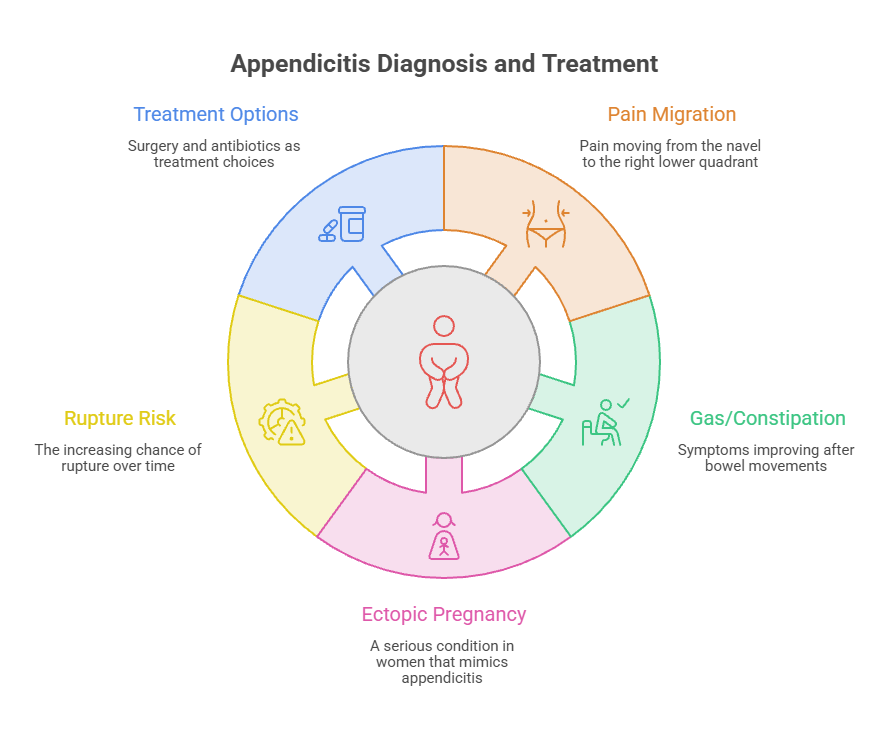
Quick Answer: Appendicitis is the most common surgical cause of lower right abdominal pain, but not the most common cause overall. Three features point toward it: pain that migrated from near your navel, pain that sharpens when you cough or walk, and pain that does not ease after passing gas or having a bowel movement. Pain matching all three, especially alongside nausea and low fever, means going to the emergency room today.
At a Glance
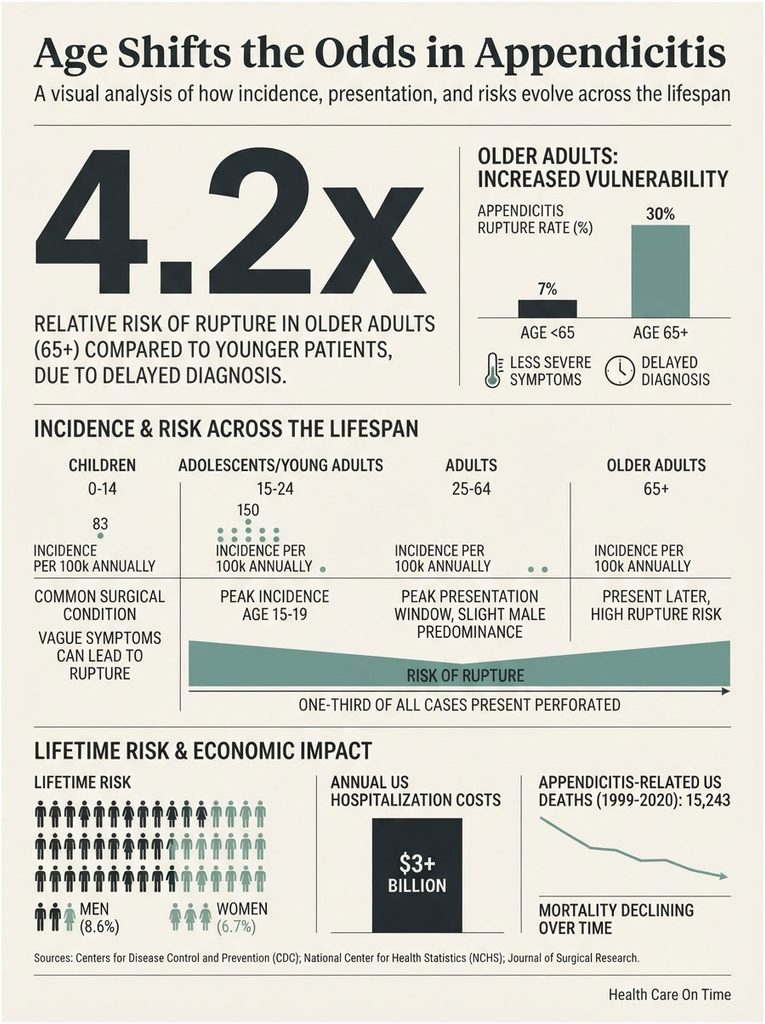
- Lifetime appendicitis risk in the United States runs roughly 8.6% for men and 6.7% for women.
- Migration of pain from navel to right lower quadrant is the strongest single clue, yet it is absent in many real cases.
- Gas, constipation, and stomach flu improve after a bowel movement or vomiting. Appendicitis does not.
- Women have four additional causes in the same quadrant, and ectopic pregnancy is the one nobody can afford to miss.
- Rupture risk stays low through the first 36 hours of symptoms, then climbs about 5% for every 12 hours after that.
- Surgery is no longer the only path. Antibiotics-first is now a recognized option for many uncomplicated cases.
What Is Actually Sitting in Your Lower Right Abdomen
Picture your belly divided into four squares by a cross centered on your navel. The bottom-right square holds more moving parts than most people expect.
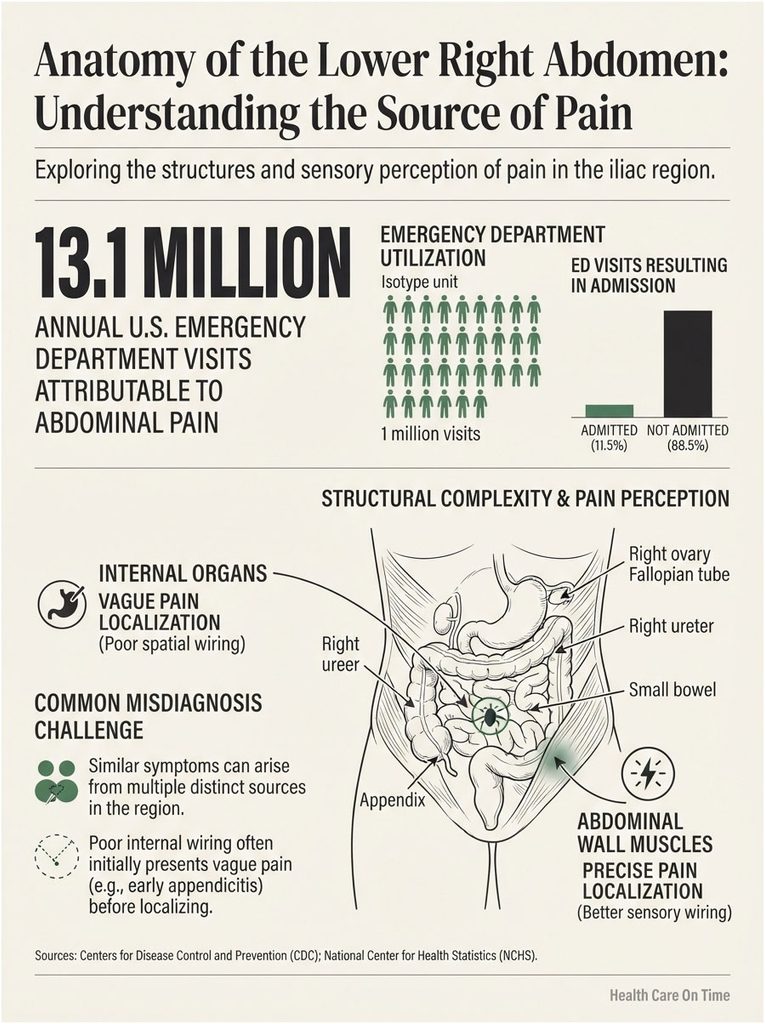
Inside it: the appendix, the cecum (the pouch where your small intestine empties into your colon), the last stretch of small bowel, and the right ureter carrying urine down from the kidney. In women, the right ovary and fallopian tube sit there too.
Layered on top are the abdominal wall muscles, the inguinal canal, and a dense web of lymph nodes in the mesentery. Any one of these can produce pain that feels identical to the others from the outside.
Why one small area produces so many different pains
Your internal organs have poor spatial wiring. They report trouble to a general region rather than a precise point, which is why early appendicitis so often feels like a vague ache around the navel instead of a sharp jab on the right.
The abdominal wall, by contrast, has excellent wiring. Once inflammation from the appendix touches the lining of the abdominal cavity, your brain suddenly knows exactly where the problem sits. That handoff creates the migration.
Across patients booking abdominal ultrasounds and inflammatory blood panels through HealthCareOnTime, our team sees this confusion constantly: people describe two different pains hours apart and assume they had two separate problems.
Some scale for context. Abdominal pain is the single most common reason adults visit an emergency department in the United States, accounting for roughly 13.1 million visits, about 8.4% of the national total, with around 11.5% of all emergency visits ending in hospital admission.
The Appendicitis Pattern: What Actually Sets It Apart
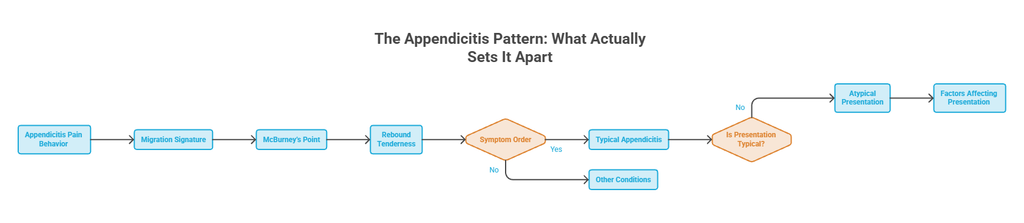
Appendicitis is not defined by how much it hurts. It is defined by how the pain behaves over time.
The migration signature
Classic appendicitis opens as a dull, hard-to-locate ache near the navel or upper stomach. Over the next 6 to 24 hours it drifts down and to the right, sharpens, and stays put.
Appendicitis becomes more likely when pain starts near the belly button, shifts to the right lower abdomen, and steadily worsens alongside nausea, vomiting, low-grade fever, and pain triggered by movement. If your pain arrived already parked in one spot and never moved, that lowers the odds without eliminating them.
McBurney’s point and rebound tenderness in plain language
McBurney’s point sits roughly two-thirds of the way along a line drawn from your navel to the bony bump at the front of your right hip. Concentrated tenderness right there carries real weight.
Rebound tenderness is simpler than it sounds. Press slowly into the area, then release quickly. If letting go hurts more than pressing did, the lining of your abdomen is irritated.
You do not need to run these tests on yourself, and repeated hard pressing is a bad idea. Note the location and report it.
The symptom order that matters
In appendicitis, pain almost always comes first and nausea follows. When vomiting shows up before any pain, gastroenteritis or food poisoning moves considerably up the list.
Appetite loss is a quieter clue. Clinicians often ask whether you would eat your favorite meal right now, because a flat no tracks well with genuine inflammation.
Fever in appendicitis usually stays modest, around 100 to 101 degrees Fahrenheit. A temperature above that paired with a rigid belly suggests the situation has already progressed.
When it does not follow the script
Roughly 40% of people with appendicitis do not present with the typical symptom set at all.
Position of the appendix changes everything
An appendix tucked behind the cecum can produce back or flank pain instead of front-of-belly pain. One hanging down into the pelvis can cause diarrhea, painful urination, or rectal pressure.
Age and pregnancy rewrite the presentation
Young children may show only irritability, refusal to walk, and vomiting. Adults over 65 often report far less pain than the severity of their disease would predict, which is exactly why their outcomes are worse.
Pregnancy shifts organ position as the fetus grows, so pregnant patients with appendicitis may report back pain or upper right abdominal pain rather than lower right pain.
Appendicitis Compared With the Conditions It Gets Confused With
| Condition | Where and how it feels | What makes it better or worse | Companion symptoms | Typical timeline | Urgency |
| Acute appendicitis | Starts near navel, migrates to a fixed point in the lower right, sharp and constant | Worse with coughing, walking, driving over bumps. Not relieved by gas or stool | Nausea after pain, appetite loss, fever 100 to 101°F | Worsens steadily over 12 to 48 hours | ER today |
| Trapped gas | Cramping that shifts location, arrives in waves | Relieved by passing gas or changing position | Bloating, audible gurgling, belching | Minutes to a few hours | Self-care |
| Constipation | Dull, heavy, generalized lower abdominal ache | Relieved by a bowel movement | Hard or infrequent stools, straining, fullness | Days, fluctuating | Self-care, doctor if over 2 weeks |
| Viral gastroenteritis | Diffuse cramping across the whole belly | Eases briefly after vomiting or diarrhea | Vomiting often before pain, watery diarrhea, body aches | 24 to 72 hours, then improves | Self-care unless dehydrated |
| Right ureteral stone | Sudden severe flank pain radiating to groin, comes in waves | No position helps, patient cannot sit still | Blood in urine, urgency, nausea | Waves lasting 20 to 60 minutes | Urgent care or ER |
| Ovarian cyst rupture or torsion | Sudden sharp one-sided pelvic pain | Torsion pain is unrelenting, may follow exercise or sex | Nausea, vomiting, sometimes fainting | Abrupt onset, within minutes | ER now |
| Mesenteric adenitis | Right lower ache, more common in children and teens | No clear relieving factor | Recent sore throat or cold, mild fever, swollen nodes | Days to 2 weeks, self-limited | Same-day evaluation |
| Inguinal hernia | Groin-level bulge and ache in the lower right | Worse lifting or standing, better lying flat | Visible or palpable lump, dragging sensation | Chronic, sometimes sudden | Doctor visit, ER if bulge hardens |
The Something Else List: Every Other Common Cause
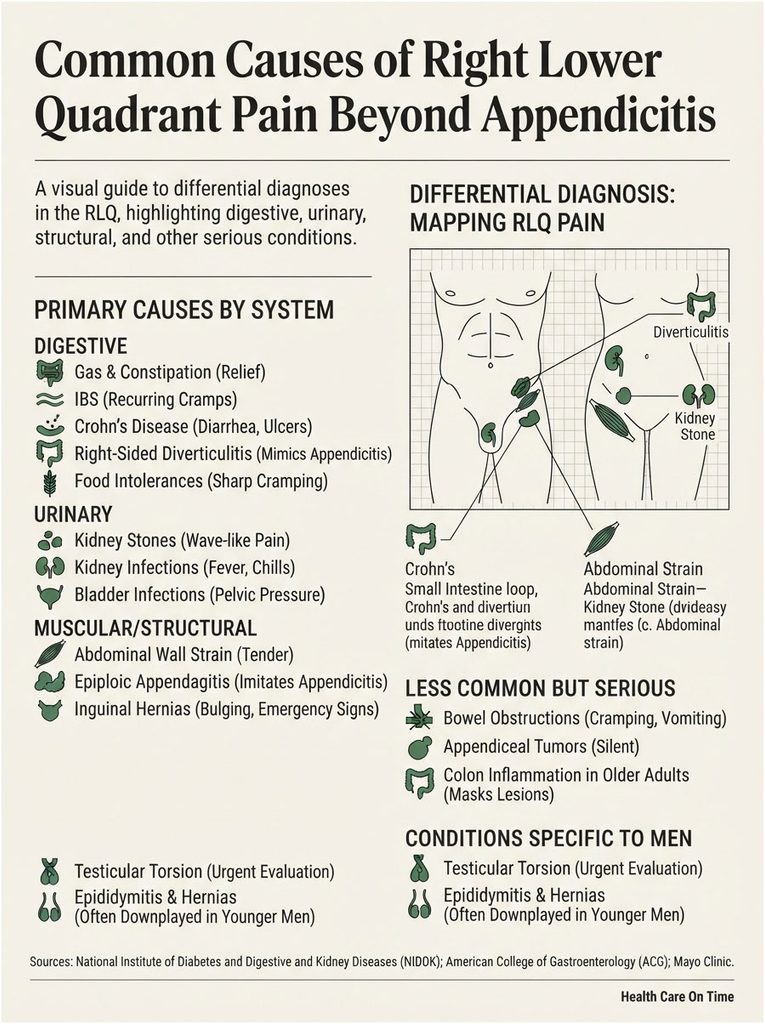
Right lower quadrant pain carries a long differential beyond appendicitis, spanning inflammatory and infectious conditions of the ileocecal region, diverticulitis, malignancies, and conditions affecting the epiploic appendages, omentum, and mesentery.
Digestive causes
Gas and constipation account for an enormous share of lower right pain. The distinguishing feature is relief. If passing gas or having a bowel movement eases the discomfort, appendicitis becomes much less likely, since appendicitis pain does not respond that way.
Irritable bowel syndrome produces recurring right-sided cramps tied to meals, stress, and shifting bowel habits. That pattern repeats over months, which is not how appendicitis behaves.
Crohn’s disease commonly inflames the terminal ileum, the exact stretch of bowel sitting next to the appendix. Suspect it when right-sided pain has come and gone for months alongside diarrhea, weight loss, or mouth ulcers.
Diverticulitis is usually a left-sided problem in American patients, though right-sided diverticulitis does happen and mimics appendicitis closely enough that imaging is often the only way to separate the two.
Food intolerance deserves a mention as well. Lactose or fructose malabsorption can produce sharp, localized cramping that people mistake for something structural, and the timing after specific meals is the giveaway.
Urinary causes
A stone moving down the right ureter creates pain in waves that radiates toward the groin and leaves people pacing rather than lying still. Blood in the urine, even microscopic, is a strong pointer.
Kidney infection tends to bring flank pain, high fever with shaking chills, and burning urination. A simple bladder infection causes lower pelvic pressure instead of sharp one-sided pain.
Muscular and structural causes
An abdominal wall strain from lifting, coughing hard, or starting a new workout produces pain that worsens when you tense your abs and is tender to surface-level touch. Appendicitis tenderness feels deeper.
Epiploic appendagitis is a small, self-limited inflammation of fat tags along the colon. It imitates appendicitis exactly and is usually discovered only on a CT scan, at which point no surgery is needed.
An inguinal hernia produces a bulge that appears when you stand or strain. A hernia that turns hard and painful and cannot be pushed back in is an emergency.
Causes specific to men
Testicular torsion sometimes announces itself as lower abdominal pain before the scrotal pain becomes obvious. Any man with lower right pain plus testicular discomfort needs evaluation within hours, since the window to save a twisted testicle is short.
Epididymitis and inguinal hernias round out the male-specific list. Our medical reviewers note that men in their twenties and thirties frequently downplay groin symptoms and describe only the abdominal component, which delays the right diagnosis.
Less common but serious
Bowel obstruction presents with crampy pain, vomiting, distension, and an inability to pass gas or stool. Appendiceal tumors are rare and often silent until they trigger appendicitis-like inflammation.
In adults over 55, a first episode of right-sided colonic inflammation deserves follow-up colonoscopy, since a small share of these turn out to be masking a colon lesion.
Why the Answer Is Different for Women
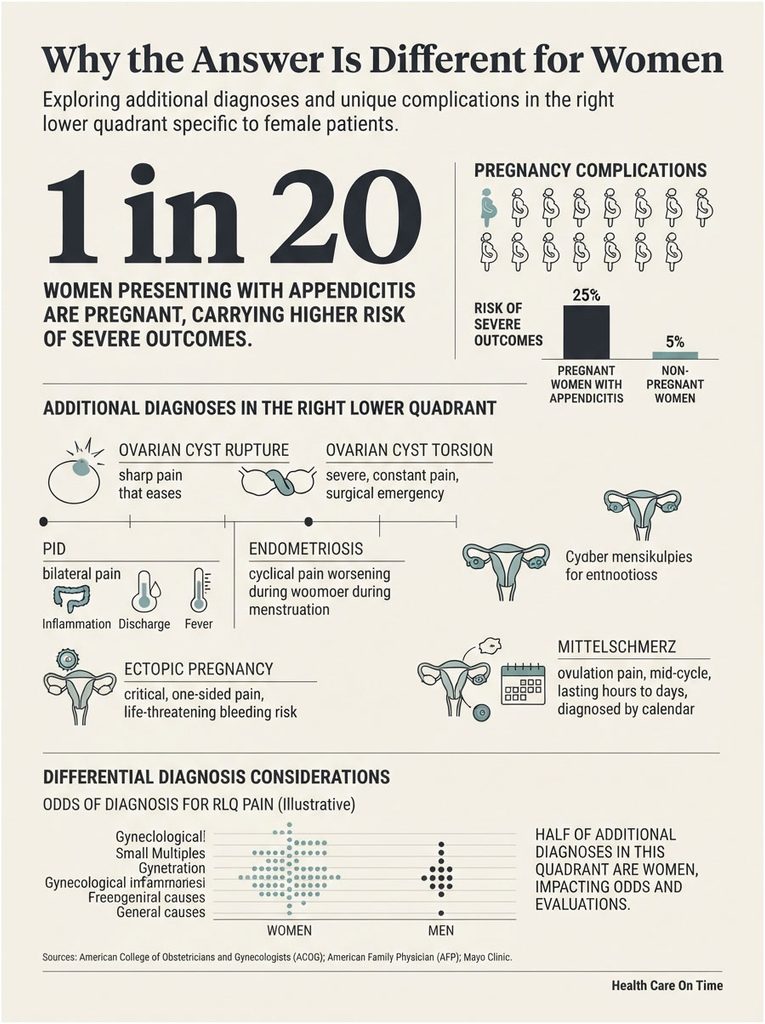
Roughly half the extra diagnoses in this quadrant belong to women, and that changes both the odds and the workup.
Mittelschmerz and the calendar clue
Ovulation pain arrives mid-cycle, about 14 days before the next period, lasts hours to a day or two, and resolves on its own. If your right-sided pain shows up on schedule every month, the calendar is doing the diagnosing for you.
Ovarian cyst rupture and ovarian torsion
A ruptured cyst causes sudden sharp pain that often eases over several hours. Torsion, where the ovary twists on its own blood supply, causes severe unrelenting pain with vomiting and does not let up.
Torsion is a surgical emergency because the ovary loses blood flow. It favors the right side, which is precisely why it gets mistaken for appendicitis.
Ectopic pregnancy, the diagnosis nobody can afford to miss
Any woman of reproductive age with one-sided lower abdominal pain needs a pregnancy test, full stop. An ectopic pregnancy can rupture and cause life-threatening internal bleeding.
Warning signs include a missed or unusual period, spotting, shoulder-tip pain, dizziness, or fainting. Patients booking beta-hCG panels through HealthCareOnTime often ask whether a normal-seeming period rules pregnancy out. It does not.
Pelvic inflammatory disease and endometriosis
PID typically causes pain on both sides along with unusual discharge, fever, and pain during intercourse. Endometriosis produces cyclical pain that intensifies around menstruation and can localize firmly to one side.
Pregnancy raises the stakes
In a multicenter analysis, pregnant women made up 1 in 20 women of childbearing age presenting with appendicitis, were more likely to present with perforated or gangrenous disease, and faced higher risk of fetal loss when perforation occurred.
That combination, atypical pain location plus higher complication risk, is why any new right-sided abdominal pain in pregnancy should be evaluated the same day rather than watched overnight.
Age Shifts the Odds
Children and teens
Appendicitis is the most common surgical condition in children, with an annual United States incidence estimated at 83 cases per 100,000 and peak incidence between ages 15 and 19.
Younger children perforate more often because they cannot describe symptoms precisely and because their appendix wall is thinner. Refusal to jump or walk normally is a useful bedside sign in kids.
Adults 20 to 50
This is the peak window. The mean age at presentation is 28, with a slight male predominance. In this group the classic presentation is most reliable, though still far from universal.
Adults over 65
Older adults present later, with less pain and less fever, and get diagnosed later as a result. Age 65 and over carried a relative risk of 4.2 for rupture in one analysis of appendicitis outcomes.
Our medical reviewers flag this group repeatedly: a 72-year-old with mild persistent right-sided pain and reduced appetite deserves the same urgency as a 25-year-old doubled over on the floor.
Appendicitis by the Numbers in the United States
| Metric | Figure | Source |
| Lifetime risk, men | 8.6% | NIH StatPearls, Addiss life-table model |
| Lifetime risk, women | 6.7% | NIH StatPearls, Addiss life-table model |
| Mean age at presentation | 28 years, peak age 15 to 19 | NIH StatPearls |
| Annual incidence, North America | About 100 per 100,000 person-years, an estimated 378,614 cases in 2015 | Annals of Surgery, global incidence review |
| Share arriving already perforated | About one third | Annals of Surgery |
| Appendectomy mortality rate | 0.09% to 0.24% | NIH StatPearls, Appendectomy |
| Appendicitis-related US deaths, 1999 to 2020 | 15,243, with age-adjusted mortality falling from 0.38 to 0.32 per 100,000 | World Journal of Surgery, CDC WONDER analysis |
| Annual US hospitalization cost | Over $3 billion | World Journal of Surgery |
Red Flags: When Lower Right Abdominal Pain Becomes an Emergency
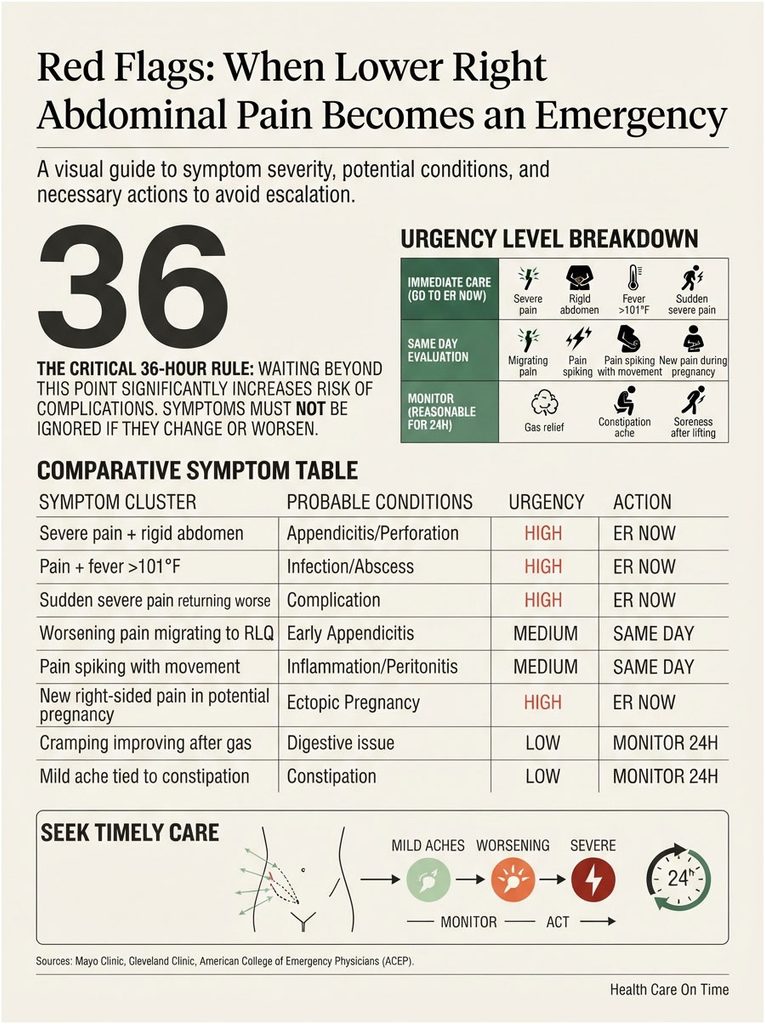
Go to the emergency room now, or call 911
Severe pain with a hard, board-like abdomen. Pain plus fever above 101°F. Pain that suddenly stopped and then came back worse across your whole belly, which can signal rupture.
Add to that list: vomiting with no gas or stool passing, blood in vomit or stool, fainting, confusion, or any severe one-sided pain in someone who could be pregnant.
Get evaluated the same day
Pain that migrated to the lower right and has been worsening for more than six hours. Pain that spikes when you cough or go over a speed bump. Pain with nausea and appetite loss.
Also same day: any new right-sided pain during pregnancy, any pain in an adult over 65, and any pain that stops you standing up straight.
Reasonable to watch for 24 hours
Cramping that comes and goes and improves after passing gas. Mild ache tied to constipation that eases after a bowel movement. Soreness after heavy lifting that hurts when you tense your abs.
Watching means actively monitoring, not ignoring. If the pain localizes, sharpens, or brings a fever, the plan changes immediately.
The 36-hour rule
In a review of 219 appendicitis patients, 16% had ruptured by the time of surgery, and rupture frequency stayed under 2% during the first 36 hours after symptom onset before rising to 5% in each subsequent 12-hour period.
Total elapsed time since symptom onset was the strongest predictor of rupture in that analysis. That is the practical argument against sleeping on it for a second night.
Patients tell our support team the same thing over and over: they waited because the pain was tolerable at 9pm. Tolerable at 9pm is not the metric. Direction of travel is.
Your Symptom Pattern, Your Next Move
| If this is happening | What it most likely points to | What to do, and how fast |
| Pain moved from navel to lower right, worse when you cough or walk | Acute appendicitis | Emergency room now. Do not eat, drink, or take pain medicine |
| Pain fully eased after passing gas or a bowel movement | Gas or constipation | Self-care. Recheck if it returns and localizes |
| Vomiting started before any pain, with watery diarrhea | Gastroenteritis or food poisoning | Fluids and rest. Urgent care if you cannot keep liquids down |
| Pain plus fever above 101°F plus a rigid, tender belly | Possible perforation and peritonitis | Call 911 or go to the ER immediately |
| Sharp waves of pain radiating to the groin, blood in urine | Ureteral stone or kidney infection | Same-day evaluation, ER if fever or vomiting |
| Sudden severe one-sided pain, possible or confirmed pregnancy | Ectopic pregnancy or ovarian torsion | Emergency room immediately, ask for a pregnancy test |
| Dull right-sided ache over 2 weeks, with weight loss or blood in stool | Crohn’s disease, chronic condition, or mass | Book a doctor visit within the week |
| Pain plus vomiting, distended belly, no gas or stool passing | Bowel obstruction | Emergency room now |
Urgent Care or Emergency Room? Choosing Correctly the First Time
This is where a lot of American patients lose time and money. Urgent care centers can order basic labs, urinalysis, and sometimes ultrasound, which covers stones, urinary infections, and muscle strains well.
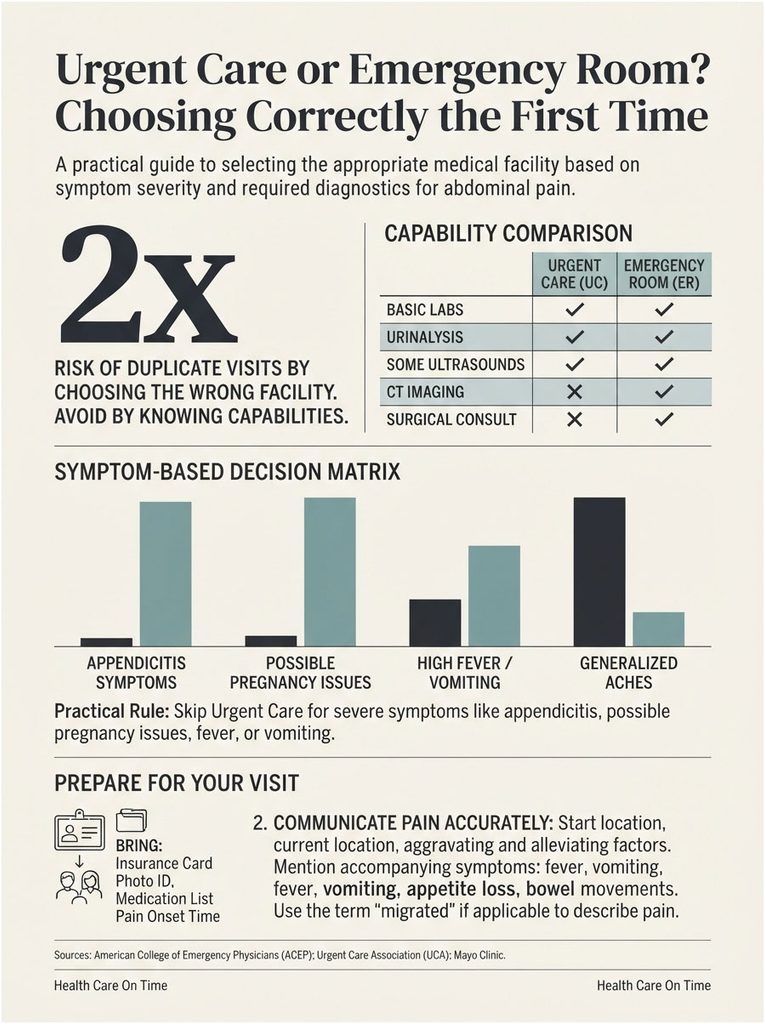
What most urgent care centers cannot do is CT imaging or surgical consultation. If appendicitis, ovarian torsion, ectopic pregnancy, or obstruction is on the table, urgent care will send you to the ER anyway, and you pay for two visits instead of one.
The practical rule: if your pain fits the appendicitis pattern, involves a possible pregnancy, or comes with fever and vomiting, skip straight to the emergency room. Anything milder and clearly digestive can start at urgent care.
What to bring and what to say
Bring your insurance card, a photo ID, a written list of your medications with doses, and the time your pain started. Note the last time you ate or drank anything, because that affects surgical timing.
Describe your pain in this order: where it began, where it is now, what makes it worse, and whether anything makes it better. Add whether you have had a fever, vomiting, or appetite loss, and whether your bowels have moved.
Say the word migrated if it applies. Clinicians hear vague pain descriptions all day, and the specific sequence you report is what separates a routine workup from a fast-tracked one.
What Happens When You Get Checked Out
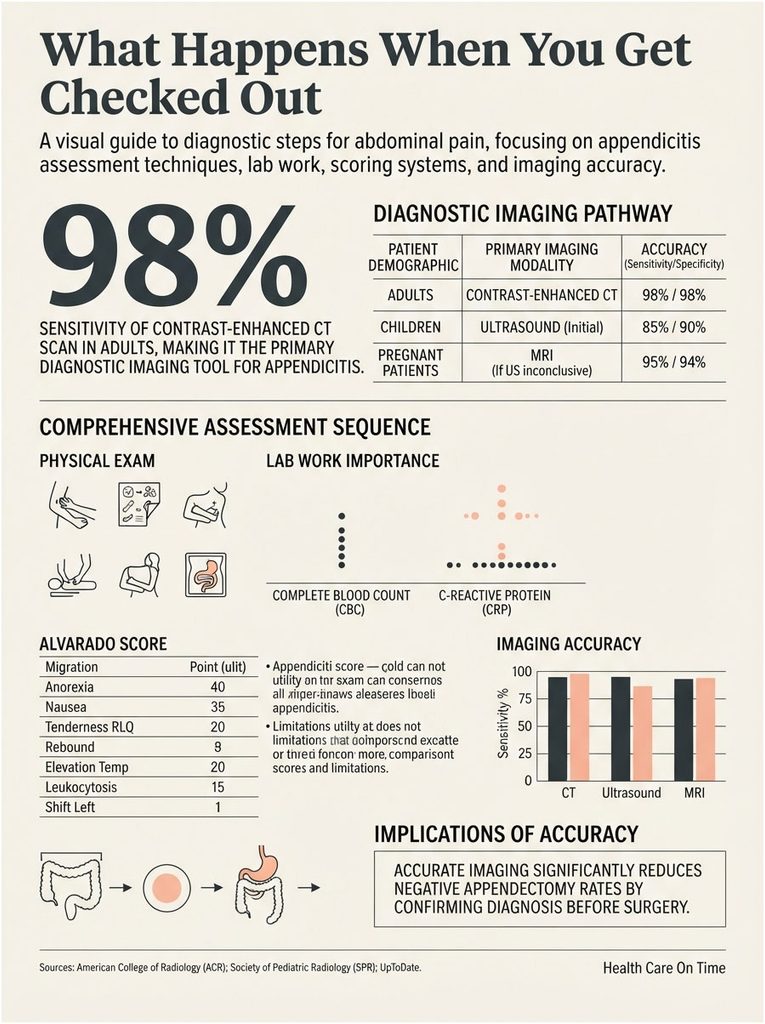
The physical exam
A clinician will press the area, test rebound tenderness, and may check whether pressing the left lower abdomen produces pain on the right. They will also assess whether extending or rotating your right hip reproduces the pain, which suggests an appendix lying against those muscles.
Blood work
Expect a complete blood count and often a C-reactive protein level. A rising white cell count with a neutrophil shift supports inflammation, though a normal count does not clear you.
Patients ordering CBC and CRP panels through HealthCareOnTime frequently ask whether normal labs mean they can go home. Not on their own. Blood work supports the picture rather than settling it.
Scoring tools and their limits
The Alvarado score combines symptoms, signs, and lab values into a single number. A systematic review found the score at a cut-point of 5 performs well for ruling appendicitis out, with sensitivity of 99% overall, 96% in men, and 99% in both women and children.
Its weakness is confirming the diagnosis, particularly in women, where other pelvic conditions inflate the score. Scores guide the next step rather than replace imaging.
Imaging
The American College of Radiology names contrast-enhanced CT the primary and most appropriate imaging test for adults with right lower quadrant pain, credits appropriate imaging with cutting negative appendectomy rates from as high as 25% down to roughly 1% to 3%, and keeps unenhanced MRI and ultrasound as the procedures of choice in pregnancy.
In one institutional series applying formal reporting standards, CT reached 98.9% sensitivity and 97.2% specificity for appendicitis. Ultrasound is radiation-free but far more operator-dependent and frequently inconclusive in adults.
Which test for which patient
Children usually get ultrasound first, with MRI as the backup. Pregnant patients get ultrasound first, then MRI. Meta-analyses put MRI at 90% to 91% sensitivity and 98% to 99% specificity for appendicitis during pregnancy.
Non-pregnant adults typically go straight to CT, because a single scan simultaneously rules stones, diverticulitis, obstruction, and ovarian pathology in or out.
Treatment: Surgery, Antibiotics, or Neither
Laparoscopic appendectomy
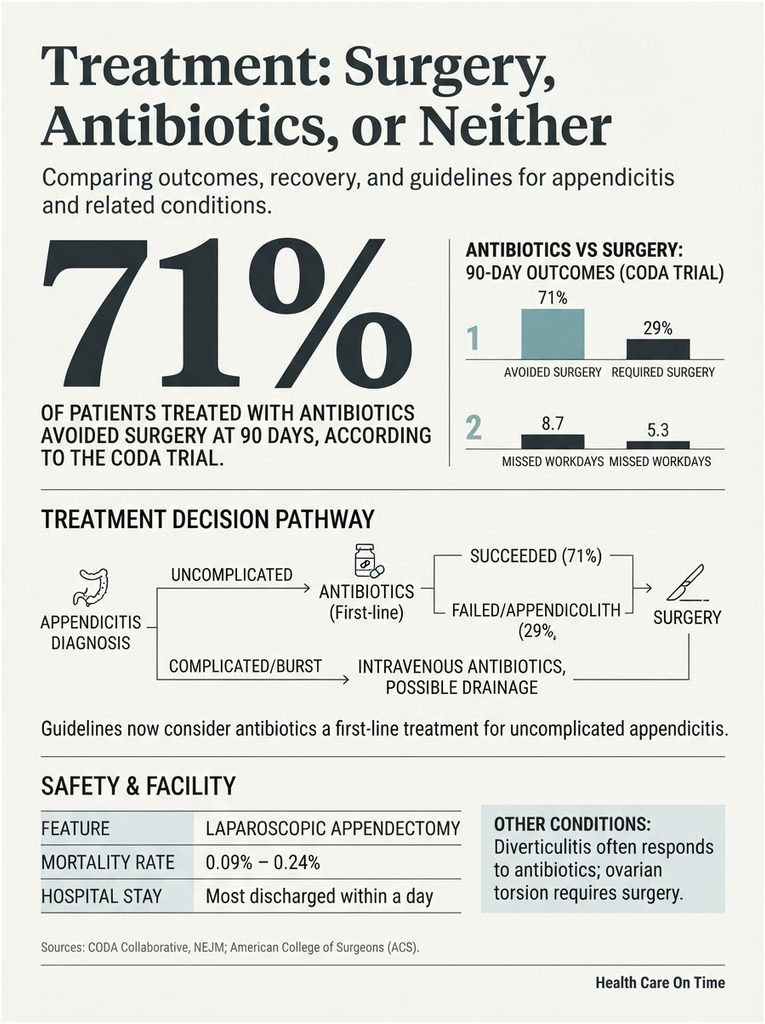
Removal through three small incisions remains the default in the United States. Most people go home within a day and return to desk work inside one to two weeks.
Appendectomy mortality ranges from 0.09% to 0.24%, placing it among the safer emergency operations performed.
The antibiotics-first option
This is the part of the story most health pages have not updated. The CODA trial randomized 1,552 American adults across 25 hospitals in 14 states to antibiotics or surgery.
At 90 days, 71% of the antibiotics group had avoided an appendectomy. That figure was 60% at one year and 51% at three years, and patients on antibiotics missed fewer workdays while having more hospitalizations and emergency visits.
Missed work averaged 5.3 days with antibiotics versus 8.7 days after surgery, and 47% of antibiotic-treated patients were managed in the emergency department without admission.
One factor predicts who does poorly on antibiotics. Among patients treated with antibiotics, 29% had an appendectomy by 90 days, rising to 41% in those with an appendicolith versus 25% in those without.
Following the final CODA results and an updated American College of Surgeons guideline, antibiotics are now considered an accepted first-line treatment for most people with appendicitis. That makes this a real conversation with your surgeon, not a foregone conclusion.
Patients ask us which choice is correct. Neither is universally correct. The honest framing is that one trades a small operation for certainty, and the other trades certainty for a faster return to work.
If the appendix has already burst
Treatment shifts to intravenous antibiotics, sometimes drainage of an abscess, and surgery either immediately or after several weeks of cooling off. Hospital stays run longer and recovery takes more time.
When the answer is something else
A stone may pass with fluids and pain control. Diverticulitis often responds to antibiotics and diet adjustment. Ovarian torsion needs surgery. Mesenteric adenitis needs nothing but time.
What You Can Safely Do Before You Are Seen
Reasonable at home while you decide
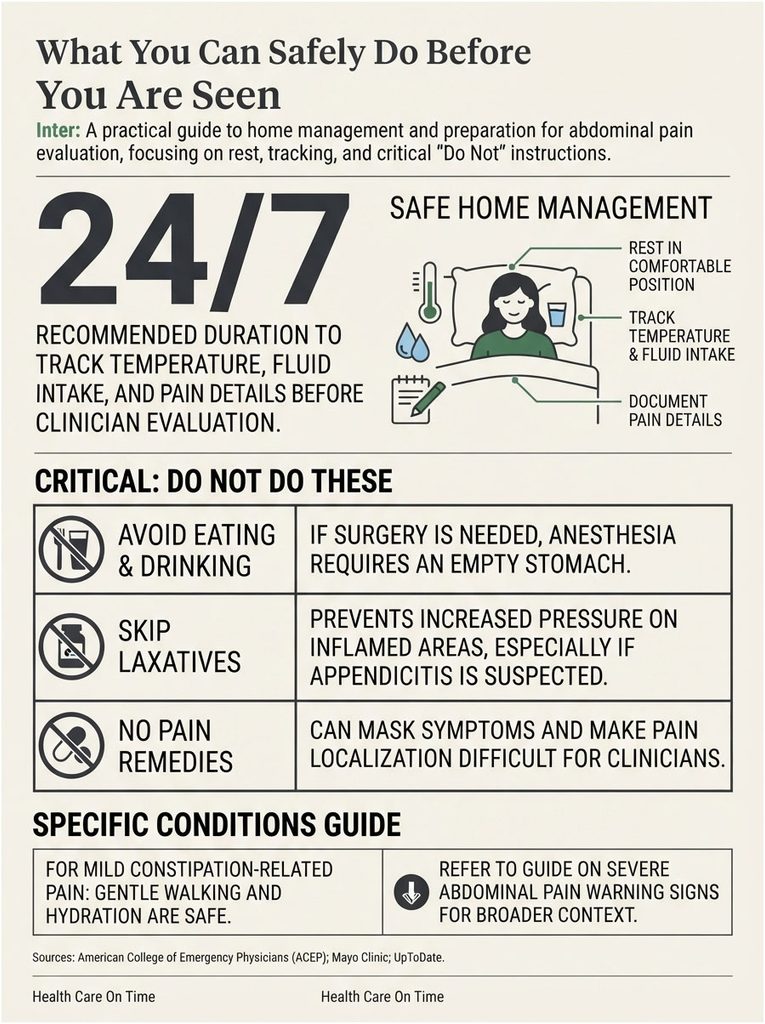
Rest in whatever position eases the pain, commonly knees drawn toward the chest. Write down when your pain started, where it began, and where it sits now. That timeline is the single most useful thing you can hand a clinician.
Track your temperature every few hours and note whether you can keep fluids down. Photograph any visible bulge or swelling before it changes.
If your pain is mild and clearly matches constipation, gentle walking and increased water are safe. Stop both if the pain sharpens or localizes.
What to avoid
Standard guidance is to avoid eating, drinking, or using pain remedies, antacids, laxatives, or heating pads when appendicitis is suspected, since these can contribute to rupture of an inflamed appendix.
Skip the laxative in particular. Pushing stool through an inflamed segment raises pressure exactly where you do not want it.
Skip food and water too if surgery is a possibility, since anesthesia requires an empty stomach and eating can delay your operation by hours.
For the broader picture of which abdominal symptoms cross the emergency threshold, our guide on severe abdominal pain warning signs covers the full triage framework.
Recovery and What Comes Next
After a straightforward laparoscopic appendectomy, most people walk the same day, eat normally within 24 to 48 hours, and return to office work in one to two weeks. Heavy lifting usually waits four to six weeks.
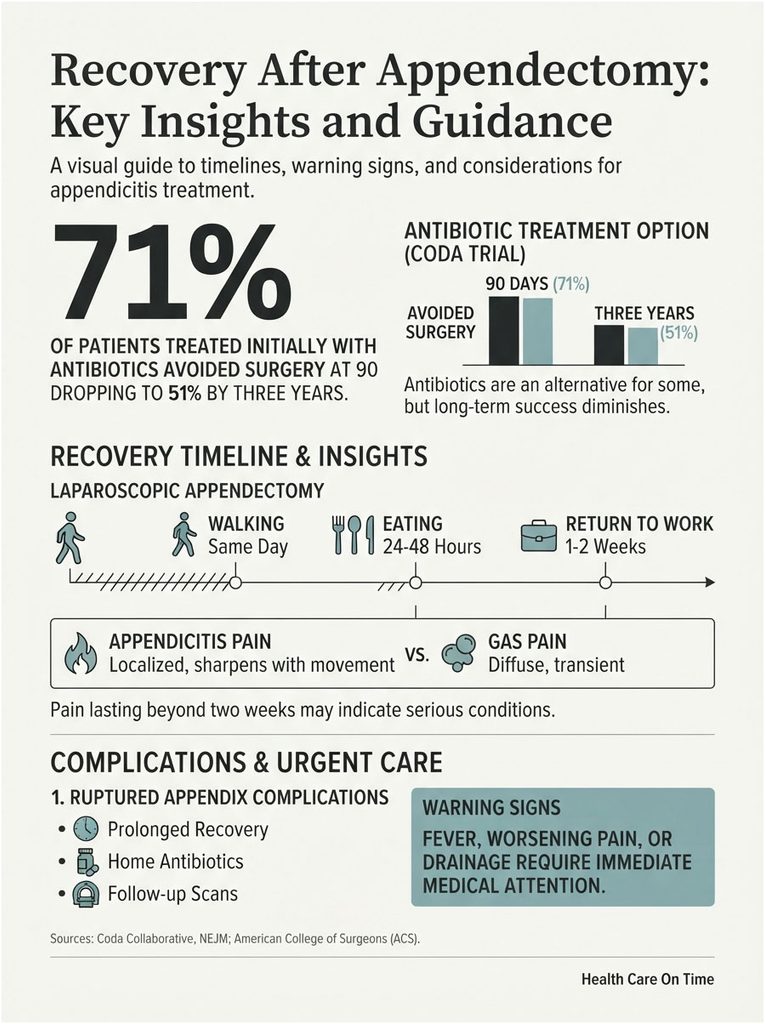
Recovery after a ruptured appendix stretches longer, often with a course of antibiotics at home and a follow-up scan. Fever, worsening pain, or drainage from an incision after discharge warrants a call to your surgeon that day.
If you chose antibiotics instead of surgery, know the recurrence signals. Returning pain in the same spot, especially with fever, means going back in rather than waiting it out.
Patients who complete either path often ask our team about follow-up labs. A repeat CBC and CRP a week or two out is a reasonable way to confirm inflammation has settled, and your surgeon will tell you whether it is needed in your case.
There is no proven way to prevent appendicitis. Higher-fiber eating patterns are associated with lower rates in population data, but no diet reliably protects any individual person.
Frequently Asked Questions
Where exactly does appendicitis hurt?
Pain usually begins as a vague ache near the navel, then settles about two-thirds of the way along a line from your navel to the right hip bone. Once it settles there, it stays put and sharpens with movement rather than wandering around your abdomen.
Can appendicitis pain come and go?
Early appendicitis pain can fluctuate for a few hours, which fools people into waiting. Genuine appendicitis trends worse across 12 to 48 hours. Pain that vanishes completely for a day and returns identically fits gas, IBS, or ovulation far better.
How long before an appendix bursts?
Rupture stayed under 2% during the first 36 hours of untreated symptoms in one detailed review, then rose roughly 5% in each following 12-hour block. There is no safe personal countdown, since some appendixes perforate much earlier than average.
Can you have appendicitis without a fever?
Yes. Fever often appears late or stays mild, commonly in the 100 to 101 degree range. Plenty of people are diagnosed with a completely normal temperature. Absence of fever should never be the reason you talk yourself out of getting checked.
What is the difference between gas pain and appendicitis?
Gas pain moves around, arrives in waves, and eases after passing gas or shifting position. Appendicitis pain fixes itself in one spot, worsens steadily, sharpens when you cough or walk, and does not improve after a bowel movement.
Can constipation cause lower right abdominal pain?
It can, since stool builds up in the ascending colon on the right side. The tell is relief. Constipation pain fades after a bowel movement and feels dull and heavy rather than sharp and pinpointed. Pain persisting after your bowels move needs evaluation.
Does appendicitis hurt more when you press or when you let go?
Letting go usually hurts more. That is rebound tenderness, and it signals that the lining of the abdominal cavity is irritated. Avoid testing this repeatedly on yourself. Simply tell your clinician if coughing, sneezing, or sudden movement spikes the pain.
Can appendicitis be treated without surgery?
For many uncomplicated cases, yes. In the CODA trial, 71% of antibiotic-treated patients avoided surgery at 90 days, dropping to 51% by three years. Patients with an appendicolith do less well on antibiotics and often end up in the operating room regardless.
What causes lower right abdominal pain in women who are not pregnant?
Ovulation pain, ovarian cysts, ovarian torsion, endometriosis, and pelvic inflammatory disease all sit in that quadrant. A pregnancy test is still standard regardless of what you believe, because ectopic pregnancy is the diagnosis that turns dangerous fastest.
Why does my lower right side hurt only when I walk or cough?
Movement-triggered pain points either to an irritated abdominal lining, which suggests appendicitis, or to a strained abdominal wall muscle. Depth separates them. Muscle strain hurts on surface pressure and when you tense your abs; appendicitis hurts deeper and keeps worsening.
Should I go to urgent care or the emergency room?
Urgent care handles suspected stones, urinary infections, and muscle strains well. Go straight to the emergency room for migrating right lower pain, high fever with a rigid belly, possible pregnancy, or an inability to keep fluids down, since those need CT imaging and surgical input.
Can lower right abdominal pain last for weeks and still be serious?
Yes. Weeks-long right-sided pain points away from acute appendicitis and toward Crohn’s disease, chronic pelvic conditions, hernia, or rarely a mass. Pain lasting beyond two weeks, particularly with weight loss or blood in stool, deserves a physician visit and likely imaging.
Medical Disclaimer: This article is for general education and does not replace evaluation by a licensed clinician. It cannot diagnose your pain, and no online guide should be used to decide against seeking care. Appendicitis and several conditions described here are surgical emergencies. If your symptoms match any red flag listed above, contact a healthcare provider or call 911 right away.
References
- Appendicitis, StatPearls, National Center for Biotechnology Information (NIH)
- Pediatric Appendicitis, StatPearls, NIH
- Appendectomy, StatPearls, NIH
- Appendix Imaging, StatPearls, NIH
- The Global Incidence of Appendicitis, Annals of Surgery
- ACR Appropriateness Criteria, Right Lower Quadrant Pain, 2022 Update
- A Randomized Trial Comparing Antibiotics with Appendectomy for Appendicitis, New England Journal of Medicine
- Antibiotics versus Appendectomy for Acute Appendicitis, Longer-Term Outcomes, NEJM
- Comparing Surgery versus Antibiotics for Uncomplicated Appendicitis, PCORI Evidence Update
- CODA Trial Final Results, American College of Surgeons
- How Time Affects the Risk of Rupture in Appendicitis, Journal of the American College of Surgeons
- Trends and Disparities in Appendicitis-Related Mortality, CDC WONDER Analysis, World Journal of Surgery
- The Alvarado Score for Predicting Acute Appendicitis, BMC Medicine
- Ultrasound and CT in the Diagnosis of Appendicitis, American Journal of Roentgenology
- MRI of Right Lower Quadrant Pain in Pregnancy, Applied Radiology
- Beyond Appendicitis, Causes of Right Lower Quadrant Pain at Multidetector CT, PubMed
- National Hospital Ambulatory Medical Care Survey Emergency Department Tables, CDC NCHS
- Lower Abdominal Pain, Cleveland Clinic
- Appendicitis Symptoms, What It Feels Like and Where It Hurts, Cedars-Sinai
- Understanding Appendicitis Symptoms, WebMD