You searched this because something felt off. Maybe a pharmacist mentioned it, maybe a forum post scared you, or maybe your stomach has hurt for two days and you just started Jardiance or Farxiga.
Table of Contents
Here is the part most pages skip: pancreatitis is not even listed as a side effect on the Jardiance or Farxiga labels. Yet U.S. regulators flagged it, hundreds of reports exist, and doctors still write case reports about it. Both things are true, and this guide explains how.
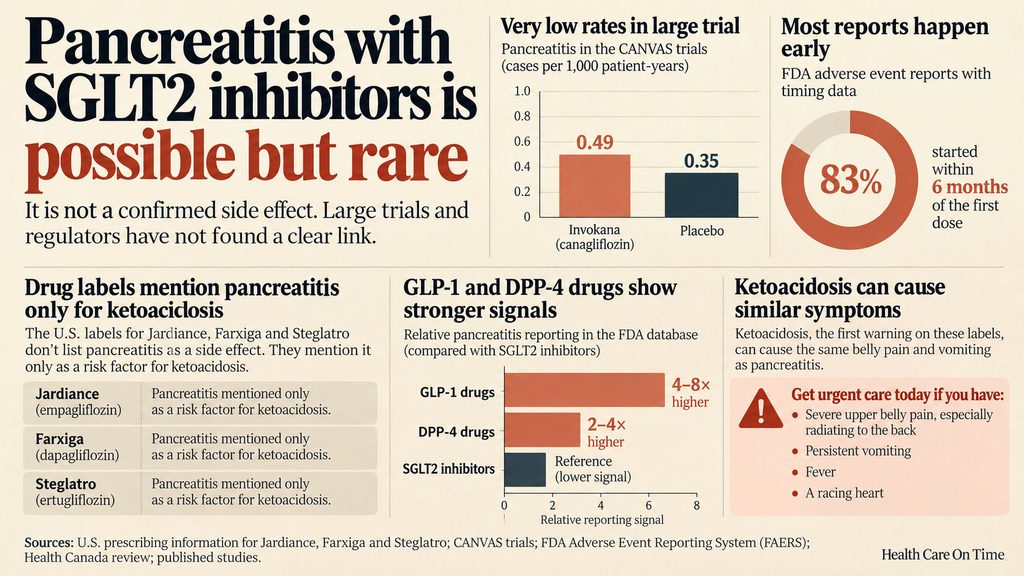
Quick Answer: SGLT2 inhibitors (Jardiance, Farxiga, Invokana, Steglatro) have a possible but unproven link to acute pancreatitis. It is rare. Large trials found very few cases, the FDA reviewed the signal in 2016 and took no action, and some studies show lower risk than with DPP-4 drugs. Reports cluster in the first 6 months. Severe upper belly pain that spreads to your back, with vomiting, needs same-day care.
At a Glance
- Pancreatitis is a possible, rare reaction to SGLT2 inhibitors, not a confirmed side effect.
- The Jardiance, Farxiga and Steglatro labels mention pancreatitis only as a risk factor for ketoacidosis.
- In the CANVAS trials, pancreatitis rates were 0.49 per 1,000 patient-years on Invokana vs 0.35 on placebo.
- About 83% of FDA adverse event reports with timing data started within 6 months of the first dose.
- In the same FDA database, GLP-1 and DPP-4 drugs show stronger pancreatitis signals than SGLT2 inhibitors.
- Ketoacidosis, the first warning on these labels, causes the same belly pain and vomiting.
- Severe pain radiating to the back, vomiting, fever or a racing heart means urgent care today.
What SGLT2 Inhibitors Are and Why This Question Comes Up
SGLT2 inhibitors are pills that make your kidneys pass extra sugar into your urine. That lowers blood sugar, and it also helps the heart and kidneys, which is why the class has grown fast.
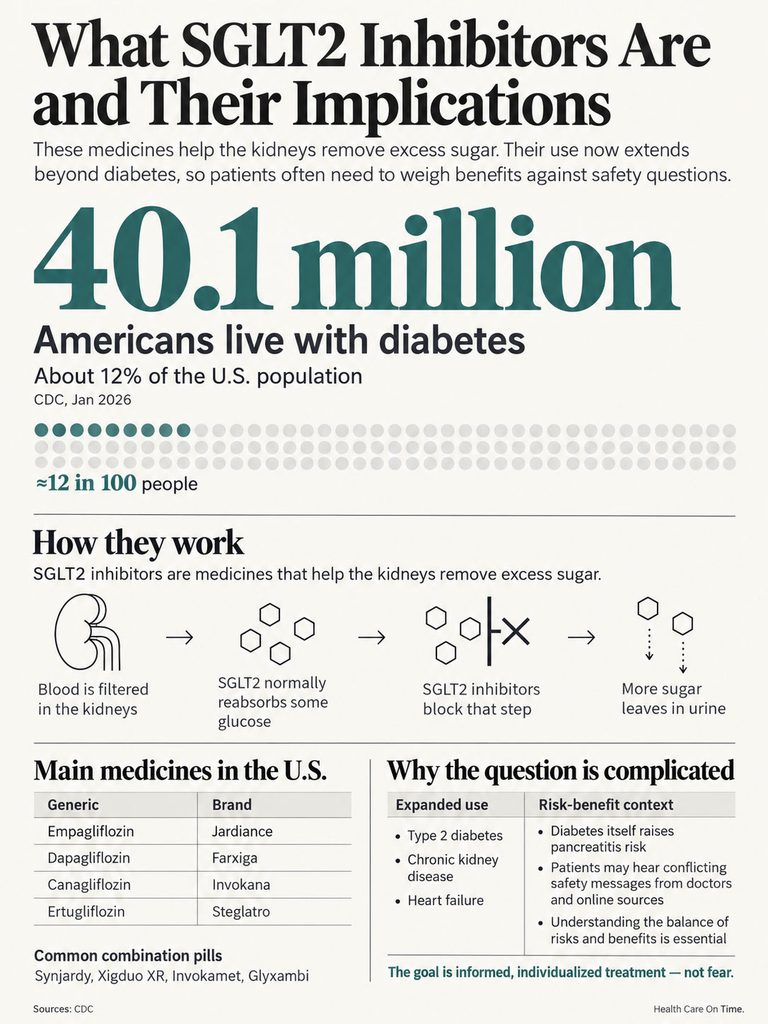
There are four in the U.S.: empagliflozin (Jardiance), dapagliflozin (Farxiga), canagliflozin (Invokana) and ertugliflozin (Steglatro). They also come in combination pills such as Synjardy, Xigduo XR, Invokamet and Glyxambi.
Their use reaches well beyond diabetes now. The Farxiga label on DailyMed covers chronic kidney disease, heart failure and type 2 diabetes in adults and in children 10 and older. The Jardiance label covers heart failure and type 2 diabetes with heart disease.
That matters because the pool of people taking these drugs is huge. The American Diabetes Association, citing the CDC’s January 2026 report, puts the number of Americans with diabetes at 40.1 million, about 12% of the population.
Diabetes itself raises pancreatitis risk. The NIDDK lists diabetes and high triglycerides among the conditions that make pancreatitis more likely. So when millions of people with diabetes take any drug, some will develop pancreatitis by chance. The hard question is whether the drug adds to that baseline.
Readers often ask us the same thing in different words: the doctor says it’s safe, the internet says it isn’t, so who’s right? The honest answer sits in the middle, and the numbers below show where.
The Short Answer: A Possible Link That Is Rare and Unproven
Pancreatitis is inflammation of the pancreas, the gland behind your stomach that makes digestive enzymes and insulin. Acute pancreatitis comes on suddenly and usually settles with hospital care.
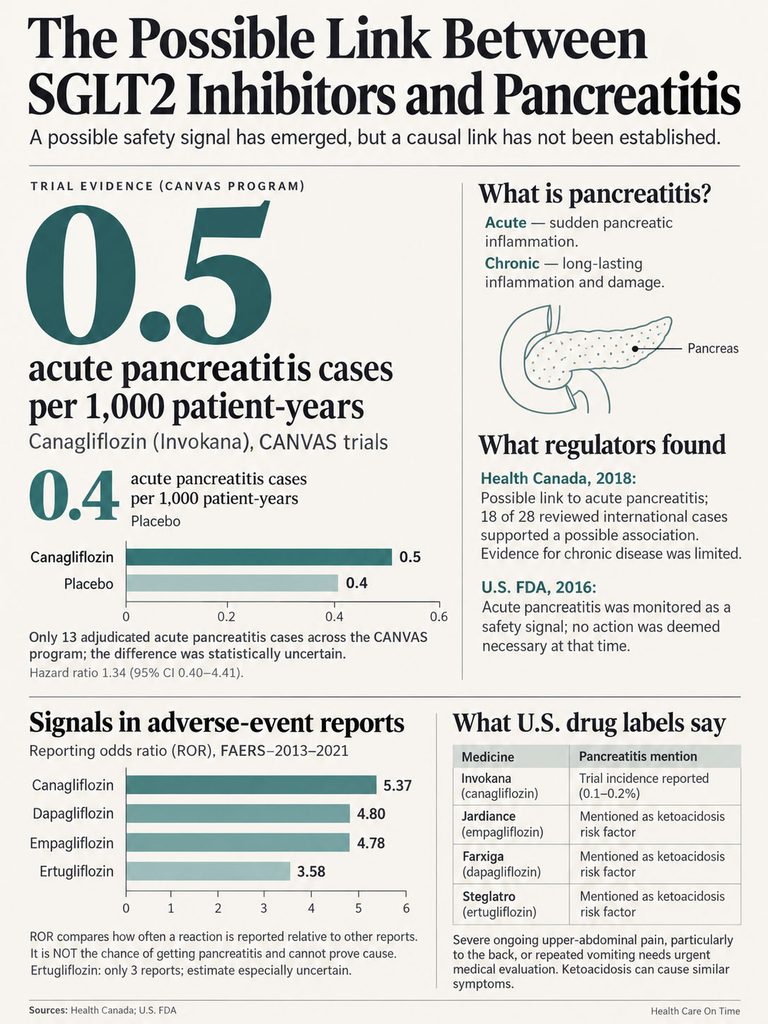
For SGLT2 inhibitors, the evidence is a “possible link.” That phrase is not ours. It comes from Health Canada’s 2018 safety review, which concluded there “may be a link” between the class and acute pancreatitis, with limited evidence for chronic pancreatitis.
The U.S. view is softer. The FDA listed acute pancreatitis with SGLT2 products as a potential signal in its April to June 2016 FAERS report. The later update on that page reads that FDA decided “no action is necessary at this time based on available information.”
What Each U.S. Label Actually Says
Our editors checked each current FDA label on DailyMed and Drugs.com line by line for the word “pancreatitis.” Here is what the drug-by-drug evidence looks like when you put it side by side.
| Drug (generic) | Where “pancreatitis” appears in the U.S. label | FAERS acute pancreatitis reports, 2013 to 2021 | Reporting odds ratio (95% CI) | Stop before surgery |
| Jardiance (empagliflozin) | Only in Section 5.1, as a ketoacidosis risk factor; not in postmarketing list | 287 | 4.78 (4.25 to 5.37) | At least 3 days |
| Farxiga (dapagliflozin) | Only in Section 5.1, as a ketoacidosis risk factor | 150 | 4.80 (4.09 to 5.64) | At least 3 days |
| Invokana (canagliflozin) | Section 5.1 risk factor, plus trial rates of 0.1% comparator, 0.2% on 100 mg, 0.1% on 300 mg | 317 | 5.37 (4.80 to 5.99) | At least 3 days |
| Steglatro (ertugliflozin) | Section 5.1, as a ketoacidosis risk factor | 3 | 3.58 (1.15 to 11.12) | At least 4 days |
| Whole SGLT2 class | No class-wide pancreatitis warning | 757 | 5.03 (4.68 to 5.41) | Varies by drug |
Sources: FAERS counts and odds ratios from Zhang et al., Frontiers in Pharmacology, 2022; label text from the Invokana label and Steglatro label, plus the Jardiance and Farxiga labels linked above.
A reporting odds ratio of about 5 means pancreatitis shows up in reports for these drugs more often than for the average drug in the database. It does not mean your risk is five times higher. That difference trips up a lot of readers, so the next section breaks it down.
Putting the Numbers in Plain English
Rates “per 1,000 patient-years” are hard to picture. One patient-year means one person taking the drug for one year.
So the CANVAS figure of 0.49 per 1,000 patient-years works out to roughly 1 case for every 2,000 people taking Invokana for a year. On placebo, the figure was about 1 in 2,900. Both are very small, and the gap between them is smaller still.
In CREDENCE, 5 of 2,200 people on Invokana had acute pancreatitis, compared with 2 of 2,197 on placebo. Put another way, more than 99.7% of people in both groups never had it during the trial.
What the Evidence Actually Shows
Not all evidence is equal. Here is how the main types stack up, from strongest to weakest:
- Randomized trials compare the drug with a placebo, so they can show whether the drug adds risk. Their weak spot is that pancreatitis is too rare to count well.
- Large cohort and claims studies follow tens of thousands of real patients, but people aren’t assigned drugs at random.
- Voluntary reports (FAERS) catch rare events that trials miss, but they can’t tell you how often something happens.
- Case reports describe one patient in detail. They raise questions; they don’t answer them.
The SGLT2 pancreatitis story rests mostly on the bottom two rungs. Keep that in mind as you read the numbers below.
Clinical Trials: Very Few Cases
Randomized trials are the best test because a placebo group shows the background rate. For canagliflozin, Janssen’s medical information page reports these rates:
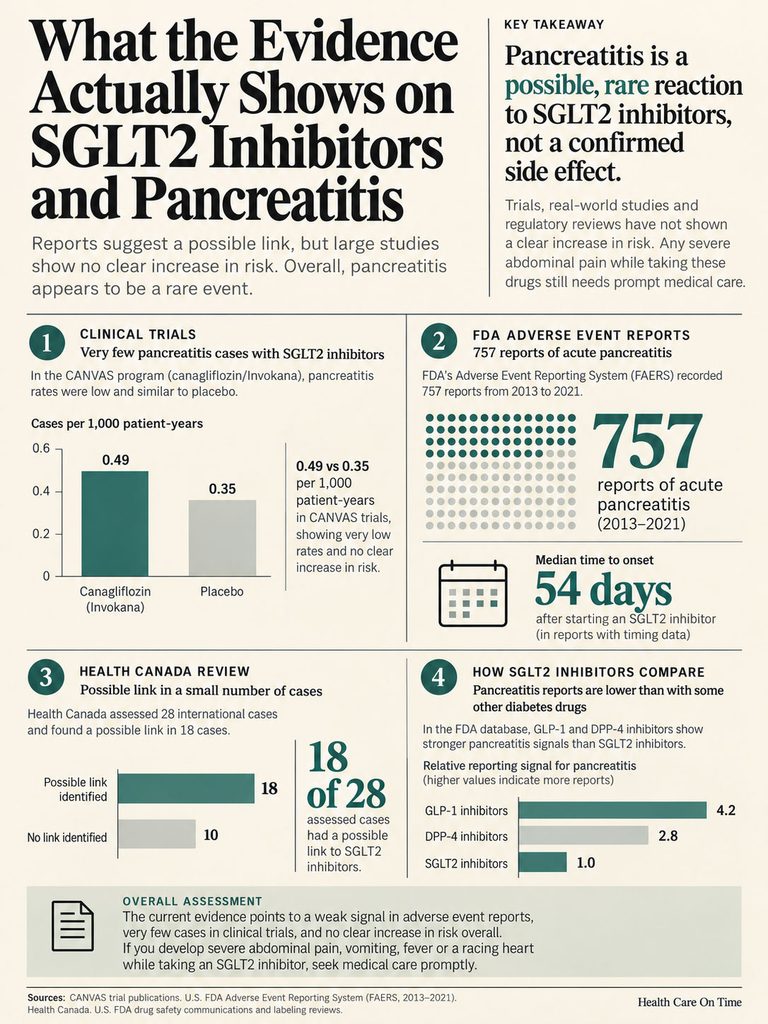
- In the CANVAS program of 10,142 people, adjudicated pancreatitis ran 0.49 per 1,000 patient-years on Invokana vs 0.35 per 1,000 on placebo.
- In CREDENCE, acute pancreatitis was 1.0 per 1,000 patient-years (5 of 2,200 people) vs 0.4 per 1,000 (2 of 2,197) on placebo.
Those are tiny numbers. A gap of 5 cases vs 2 cases cannot prove or disprove anything, and that is the core problem. Pancreatitis is rare enough that even big trials don’t catch enough cases to settle the question.
A 2024 review and meta-analysis by Muhammed and colleagues in Expert Opinion on Drug Safety found the same thing. Across diabetes drugs, the pooled trial results were not statistically significant, and the authors noted that too few events in trials may explain that. The one class that did reach significance was the gliptins (DPP-4 drugs), with an odds ratio of 1.44.
FDA Adverse Event Reports: A Signal, Not a Rate
The largest SGLT2-specific study used the FDA Adverse Event Reporting System (FAERS) from 2013 to 2021. Zhang and colleagues found 757 acute pancreatitis reports linked to SGLT2 inhibitors.
FAERS is a voluntary reporting system. Anyone can file, reports aren’t verified, and there is no count of how many people took the drug without a problem. The authors state this plainly: incidence cannot be calculated from these data.
Still, the reports tell us what cases looked like when they did happen.
| Statistic | Number | Source |
| SGLT2-linked acute pancreatitis reports, 2013 to 2021 | 757 | Zhang et al., FAERS, 2022 |
| Median time from first dose to onset | 54 days (middle half: 14 to 131 days) | Zhang et al., FAERS, 2022 |
| Reports that began within 6 months | About 83% | Zhang et al., FAERS, 2022 |
| Reports involving a hospital stay | 70.0% (530 reports) | Zhang et al., FAERS, 2022 |
| Reports listing death | 4.2% (32 reports) | Zhang et al., FAERS, 2022 |
| U.S. hospital stays for acute pancreatitis from any cause, per year | About 275,000 | NIDDK |
| U.S. acute pancreatitis admissions and yearly cost | About 280,000; $2.6 billion total, median $6,240 each | Cleveland Clinic Journal of Medicine, 2023 |
| Share of all pancreatitis caused by any drug | 0.1% to 2% | Khakhar et al., Cureus, 2024 |
| International SGLT2 cases Health Canada judged a “possible link” | 18 of 28 assessed | Health Canada, 2018 |
The 4.2% death figure sounds alarming, so it needs context. FAERS reports skew toward serious cases, because mild cases often go unreported. The authors also found that taking a statin along with an SGLT2 inhibitor and older age predicted death in these reports, which points to sicker patients, not a deadlier form of the disease.
The timing pattern is the most useful finding for you. With a median onset of 54 days, the window to watch is the first few months after starting.
What Regulators Concluded
Two national regulators looked at the same kind of reports and landed in slightly different places.
Health Canada reviewed 20 Canadian reports and 476 international reports plus 6 published cases. Of 28 international cases it assessed in depth, 18 showed a possible link. It said it was working with makers to update safety information.
The FDA reviewed the 2016 signal and decided no action was needed. That is why U.S. labels for Jardiance and Farxiga don’t list it.
Studies That Point the Other Way
Some real-world studies suggest SGLT2 inhibitors may carry less pancreatitis risk than other diabetes pills, not more.
A Hong Kong study of 31,609 adults with type 2 diabetes, published by Chou and colleagues in 2023, compared SGLT2 users with DPP-4 users. After matching, SGLT2 users had a hazard ratio of 0.11 for new acute pancreatitis, roughly 89% lower. The authors call for randomized trials to confirm it.
A U.S. claims database analysis summarized by Janssen found crude rates of 1.5 to 2.2 per 1,000 person-years on canagliflozin vs 1.1 to 6.6 per 1,000 on other diabetes drugs. The authors judged the risk similar.
Our medical content team weighed all of this together. The fairest summary: there is a weak, possible signal in voluntary reports; trials and large cohorts don’t show a clear increase; and if a link exists, it affects a very small number of people.
Why SGLT2 Inhibitors Might Affect the Pancreas
Nobody knows for sure. A 2024 case report in Cureus summarizes the leading ideas, and the authors admit the mechanisms are poorly understood:
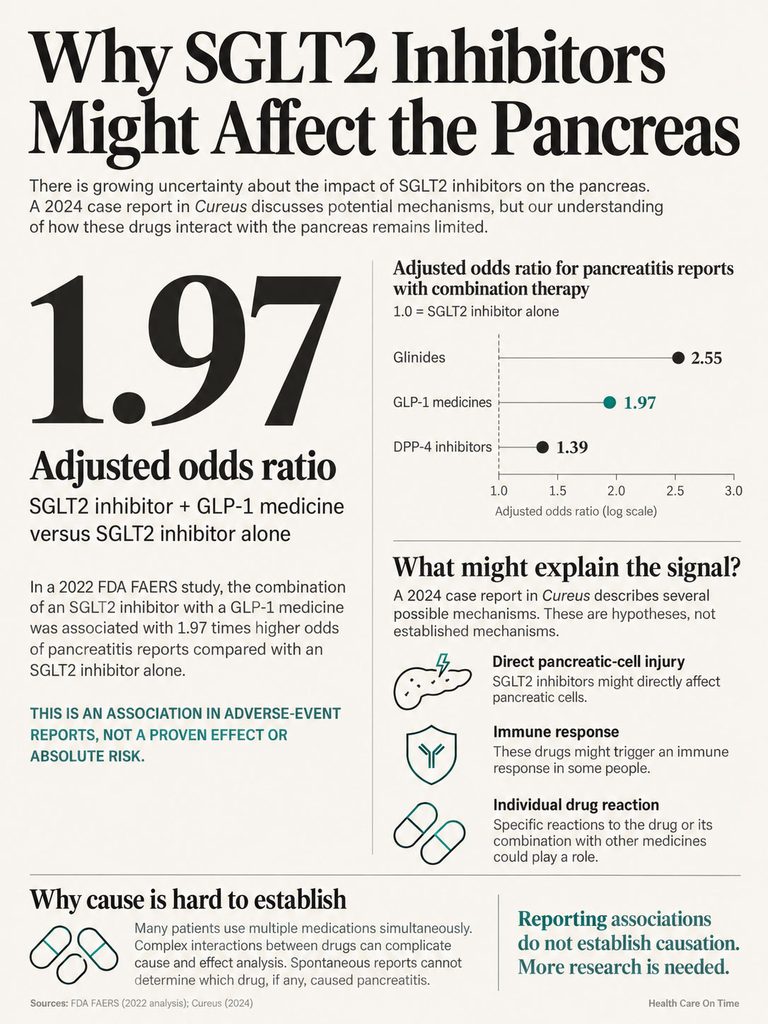
- Direct toxicity: the drug may irritate pancreatic cells directly.
- Immune reaction: the body may mount an inflammatory response to the drug.
- Idiosyncratic reaction: a rare, unpredictable response in certain people.
- Shifts in glucose handling: lower blood sugar and changed metabolism may stress pancreatic tissue.
- Drug combinations: other medicines taken at the same time may add to the effect.
That last point has some data behind it. In the FAERS study, reports were more likely when an SGLT2 inhibitor was combined with a GLP-1 drug (adjusted odds ratio 1.97), a glinide (2.55) or a DPP-4 drug (1.39). Many people take two or three of these at once, which muddies cause and effect.
SGLT2 vs GLP-1 vs DPP-4 Drugs: Which Carries More Pancreatitis Concern?
This is where the SGLT2 story looks better. Pancreatitis is an official warning for the other two newer diabetes drug classes.
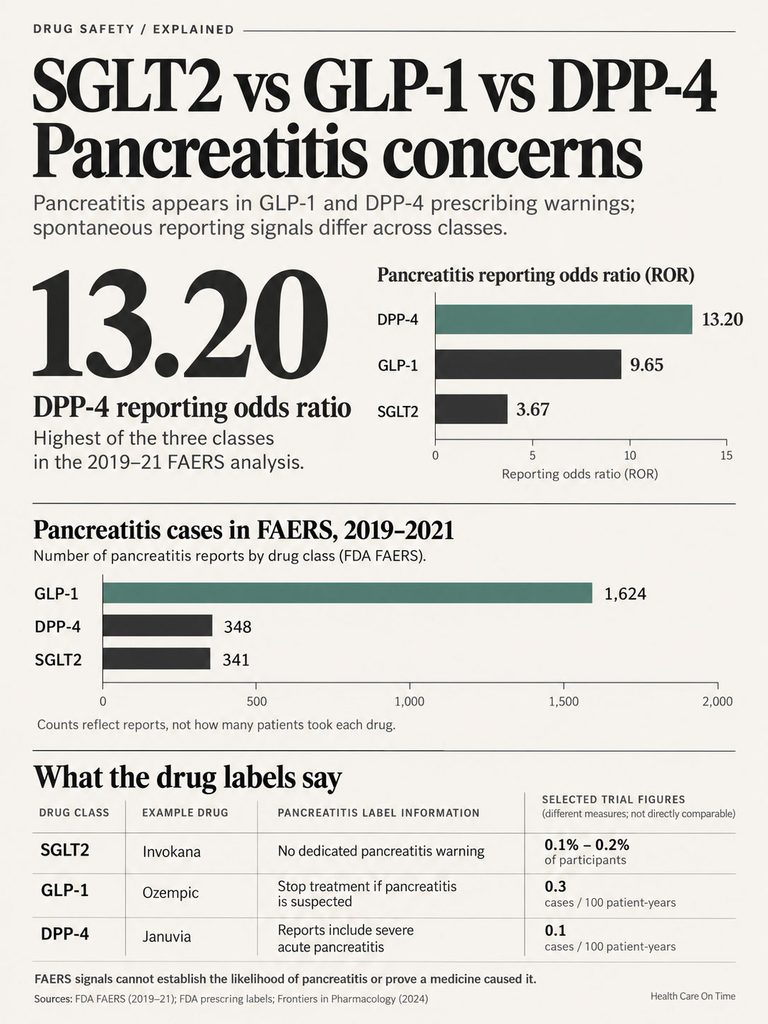
| Feature | SGLT2 inhibitors | GLP-1 drugs | DPP-4 drugs |
| Common brands | Jardiance, Farxiga, Invokana, Steglatro | Ozempic, Wegovy, Mounjaro, Zepbound | Januvia, Tradjenta, Onglyza |
| Pancreatitis as a label warning | No | Yes (Ozempic Section 5.2) | Yes (Januvia Section 5.1) |
| Trial rate shown in the label | Invokana: 0.1% to 0.2% vs 0.1% comparator | Ozempic: 0.3 vs 0.2 cases per 100 patient-years | Januvia: 0.1 per 100 patient-years in both groups |
| FAERS pancreatitis reports, 2019 to 2021 | 341 | 1,624 | 348 |
| Reporting odds ratio, 2019 to 2021 (95% CI) | 3.67 (3.29 to 4.09) | 9.65 (9.17 to 10.16) | 13.20 (11.84 to 14.70) |
Sources: Alenzi et al., Frontiers in Pharmacology, 2024; Ozempic label; Januvia label.
In the same FDA database and the same years, the SGLT2 signal was the weakest of the three. The authors described DPP-4 and GLP-1 drugs as the higher-risk classes.
The Januvia label notes postmarketing reports of acute pancreatitis, including fatal and non-fatal hemorrhagic or necrotizing forms. The Ozempic label tells prescribers to stop the drug if pancreatitis is suspected.
If you take a GLP-1 drug as well, our guides on Zepbound side effects and Wegovy side effects cover that side of the picture.
The Lookalike Most Articles Miss: Ketoacidosis
Here is the warning that really is on every SGLT2 label, and it looks a lot like pancreatitis.
The Jardiance label lists ketoacidosis first among its warnings. Its symptoms include nausea, vomiting, abdominal pain, generalized malaise and shortness of breath. The catch: blood sugar can be under 250 mg/dL (13.9 mmol/L), so people and even clinicians can miss it.
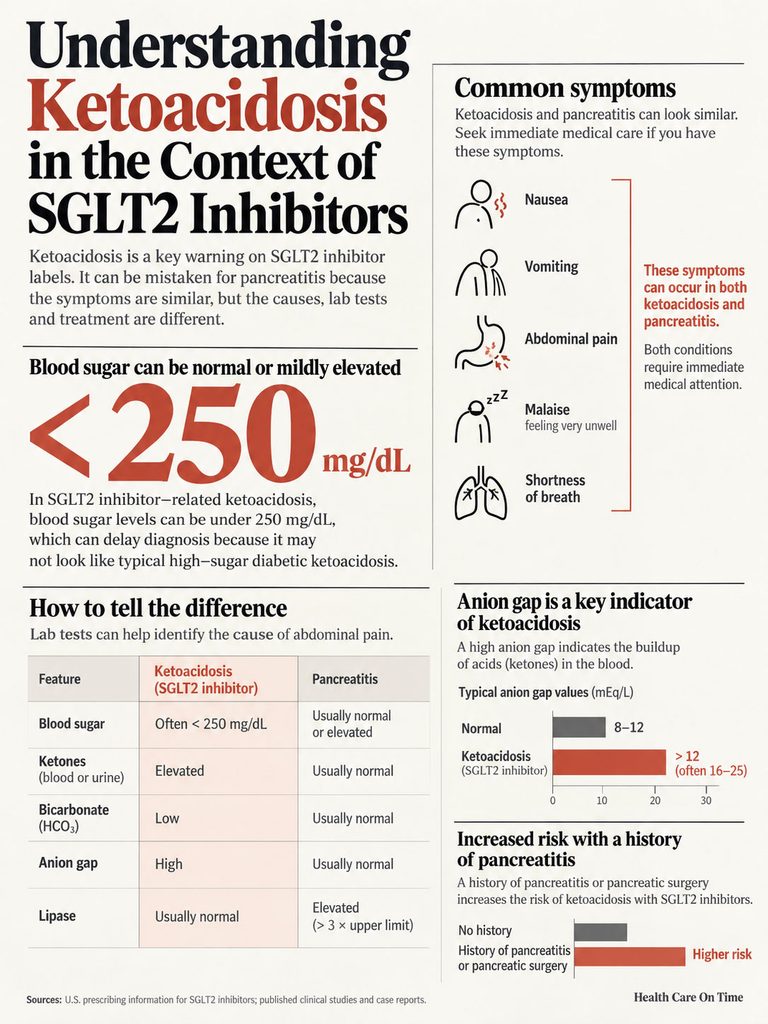
So if you’re on an SGLT2 inhibitor and your belly hurts and you’re vomiting, there are two serious possibilities, not one. Both need a doctor the same day.
The two also connect. Every SGLT2 label we reviewed lists a history of pancreatitis or pancreatic surgery as a risk factor for ketoacidosis.
When our team reviews lab reports, a common question is why the doctor ordered both a lipase test and a “metabolic panel” for belly pain. This is why: lipase points to pancreatitis, while bicarbonate, the anion gap and blood ketones point to ketoacidosis. Our explainer on a high anion gap shows how that number gets flagged.
Warning Signs of Pancreatitis
The NIDDK describes acute pancreatitis as pain that starts slowly or suddenly in the upper abdomen. It sometimes spreads to the back, can be mild or severe, and may last several days.
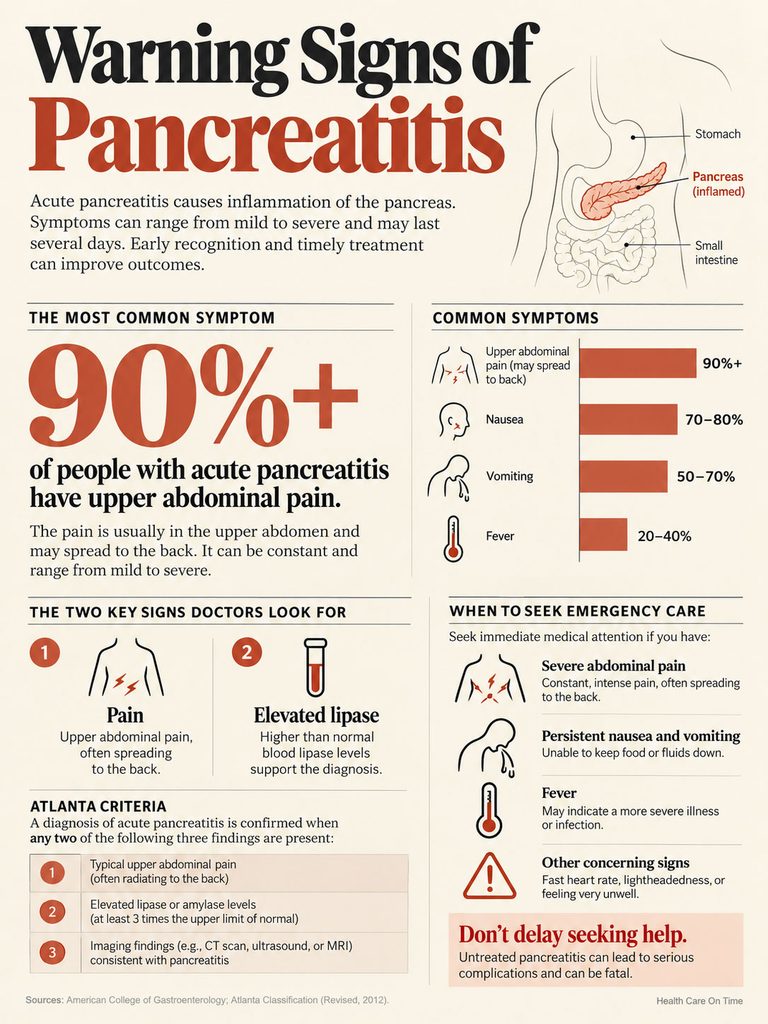
Other symptoms include:
- Fever
- Nausea and vomiting
- Fast heartbeat
- A swollen or tender belly
The “Two Signs” Doctors Look For
People often search for the two signs of pancreatitis. Doctors actually use two of three findings, known as the Atlanta criteria, as summarized in the Cleveland Clinic Journal of Medicine:
- Belly pain typical of pancreatitis
- Blood lipase or amylase at least 3 times the upper limit of normal
- Typical findings on a CT, MRI or ultrasound
Any two of the three make the diagnosis. In practice, the pain plus a high lipase is the most common pair.
When It Is an Emergency
The NIDDK says to get care right away for any of these:
- Severe or worsening belly pain or tenderness
- Nausea and vomiting
- Fever or chills
- Fast heartbeat
- Shortness of breath
- Yellow skin or yellow whites of the eyes (jaundice)
Untreated, these problems can be fatal. Don’t wait to see if it passes.
Who May Be at Higher Risk
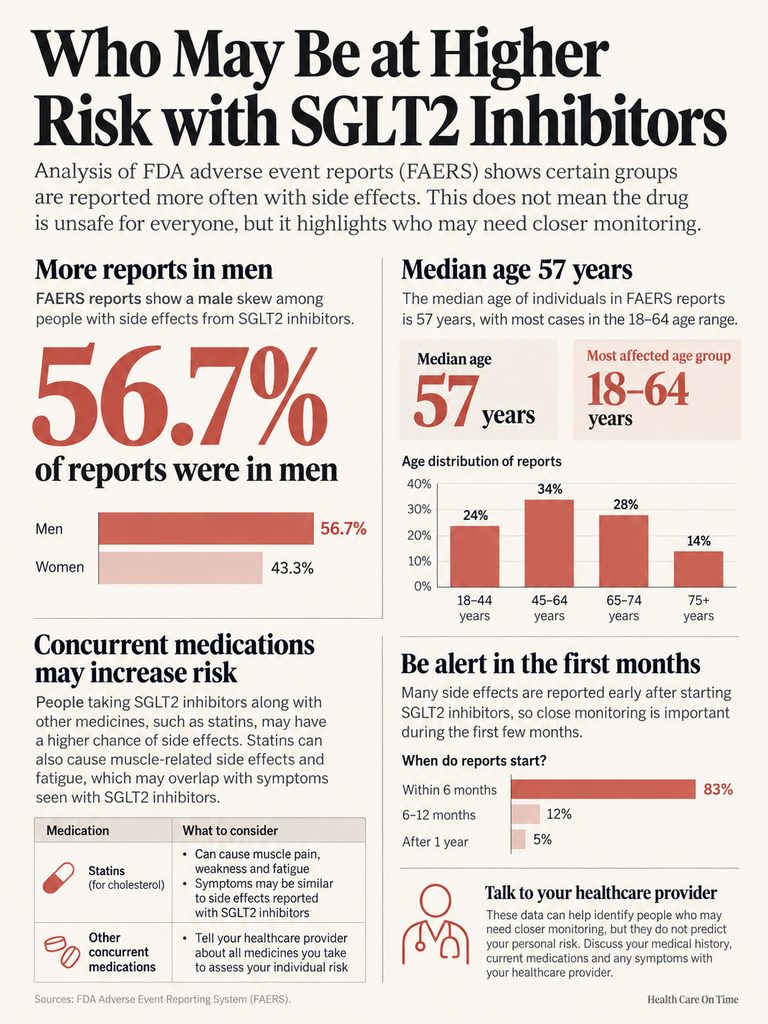
The FAERS data and the NIDDK point to a few groups who should be most alert in the first months on an SGLT2 inhibitor.
- People with a past episode of pancreatitis or pancreatic surgery. This also raises ketoacidosis risk on every SGLT2 label.
- People with very high triglycerides. A 2019 review by Shemesh and Zafrir found risk climbs sharply above 1,000 mg/dL (about 11.3 mmol/L), and type 2 diabetes was present in 62% of severe cases.
- People who drink heavily or have gallstones. These are the top two causes of pancreatitis overall, at 40% to 70% for gallstones and 25% to 35% for alcohol, per the Cureus case report.
- People on several diabetes drugs at once, especially an SGLT2 inhibitor plus a GLP-1 or DPP-4 drug.
- Men and African Americans, who the NIDDK says have higher pancreatitis risk in general.
The FAERS reports skewed slightly male (56.7%), with a median age of 57. Most were between 18 and 64.
If you also take a statin, our guide to statin side effects and fatigue covers what to watch on that medicine.
What to Do If You Suspect Pancreatitis
Don’t stop a heart or kidney medicine on your own when symptoms are mild and unclear, because these drugs protect organs. But severe symptoms change the rules.
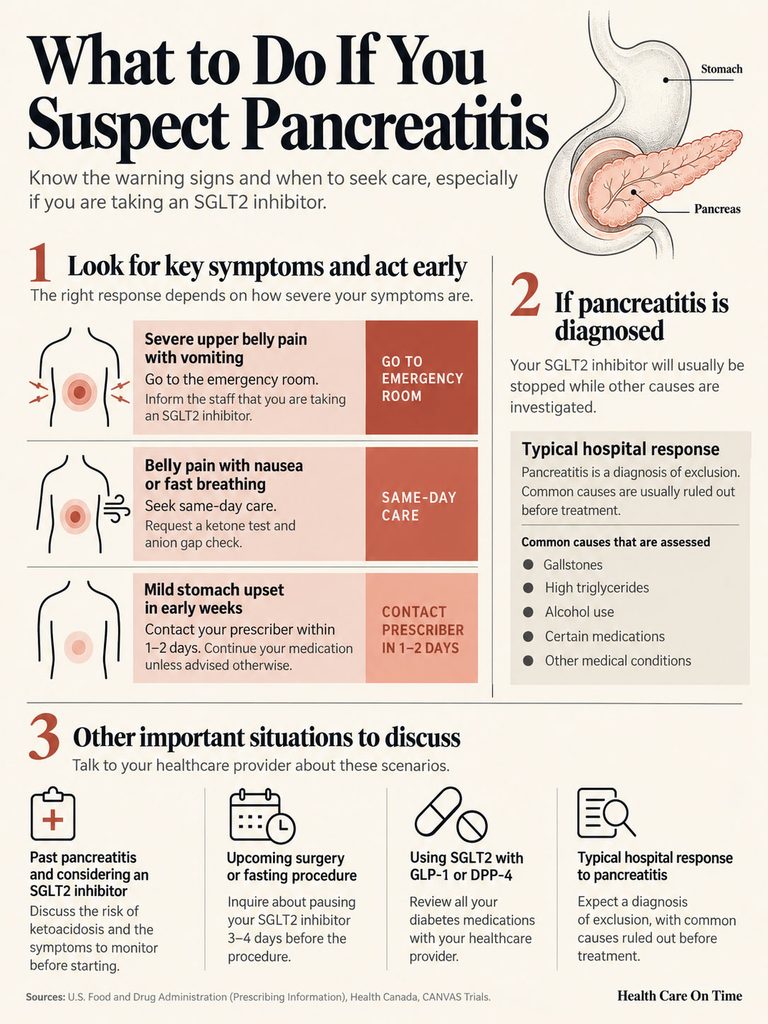
| Your situation | What to do | Why |
| Severe upper belly pain spreading to your back, with vomiting | Go to an emergency room today; tell staff you take an SGLT2 inhibitor | Doctors need to check lipase and rule out ketoacidosis at once |
| Belly pain plus nausea, fast breathing or unusual tiredness, even with blood sugar under 250 mg/dL | Same-day care; ask for a ketone and anion gap check | Ketoacidosis on SGLT2 drugs can occur at near-normal sugar levels |
| Mild, brief stomach upset in the first weeks, no fever, no vomiting | Call your prescriber within 1 to 2 days; keep taking the drug unless told otherwise | Most mild upset is not pancreatitis, and stopping may raise heart or kidney risk |
| Diagnosed with pancreatitis while on an SGLT2 inhibitor | Expect the drug to be stopped while doctors look for gallstones, alcohol and high triglycerides | Drug-induced pancreatitis is a diagnosis made after common causes are excluded |
| Past pancreatitis and your doctor suggests an SGLT2 inhibitor | Ask about your ketoacidosis risk and what symptoms to report | Labels list prior pancreatitis as a ketoacidosis risk factor |
| Surgery or a procedure with fasting coming up | Ask whether to pause the drug 3 days ahead (4 days for Steglatro) | Labels advise this to lower ketoacidosis risk |
| Taking an SGLT2 plus a GLP-1 or DPP-4 drug | Review all your diabetes drugs with your doctor or pharmacist | Combinations showed higher reporting odds in FAERS |
What Happens at the Hospital
In the Boston University case, a 51-year-old woman had five days of pain radiating to her back about two months after starting empagliflozin. Her lipase was above 2,000.
Doctors ruled out gallstones with an ultrasound and MRCP, checked triglycerides and asked about alcohol. With those causes excluded, they stopped her oral diabetes drugs, gave fluids and insulin, and she was pain-free within 24 hours with no return of symptoms.
That pattern is typical. The authors stress that drug-induced pancreatitis is a diagnosis of exclusion, because no single test proves the drug caused it.
Questions to Ask Your Doctor
Our team’s practical advice is to walk into that appointment with a short list. These questions get you clear answers fast:
- Could this be ketoacidosis as well as pancreatitis, and did the tests check for both?
- What was the lipase level, and how far above normal was it?
- Were gallstones, alcohol and high triglycerides ruled out?
- Should the SGLT2 inhibitor stay on hold for now, and what replaces its heart or kidney protection?
- Could another diabetes drug in the plan, such as a GLP-1 or DPP-4 drug, be part of the problem?
- Which symptoms mean coming back right away?
Can You Take an SGLT2 Inhibitor After Pancreatitis?
There is no clear answer, and the labels don’t give one. Researchers have not studied whether these drugs can be safely restarted after a drug-linked episode, as the Boston University authors point out.
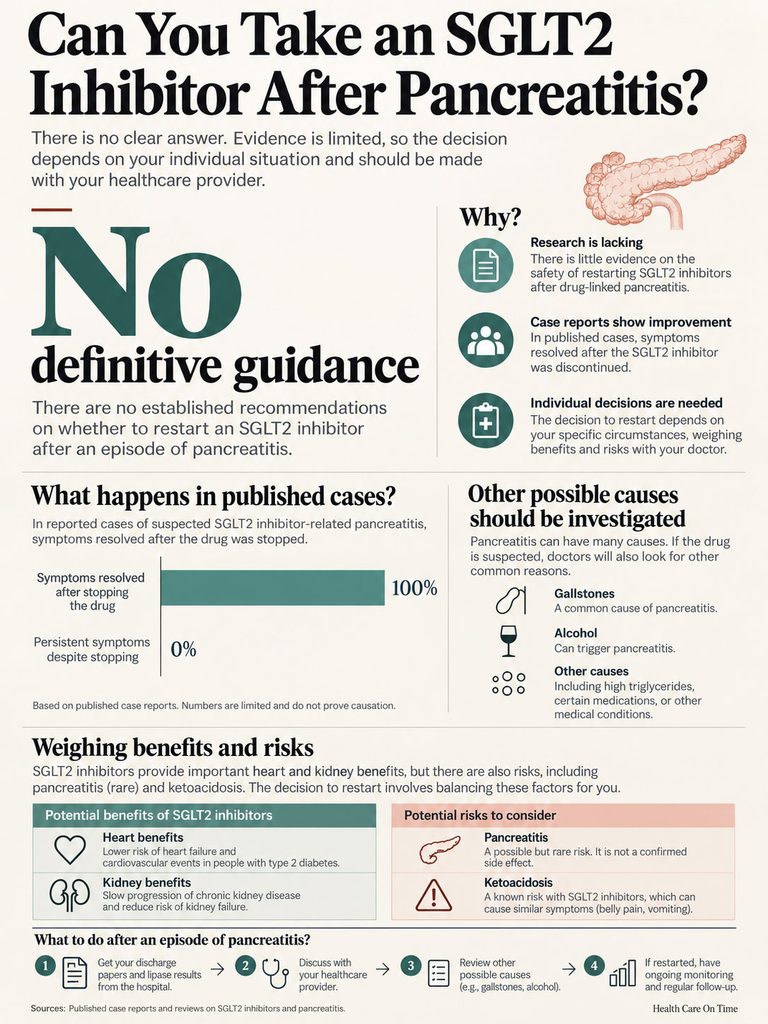
What we do know: in the published cases, including the Boston University patient, the drug was stopped and symptoms did not return. If the drug looks like the cause, ask about other options. If the cause turned out to be gallstones or alcohol and those were treated, the decision is more open.
Your prescriber will weigh the heart and kidney benefit against the small, uncertain pancreatitis risk and the ketoacidosis risk that prior pancreatitis brings. Bring your discharge papers so they can see the lipase result and the cause the hospital found.
Common Mistakes to Avoid
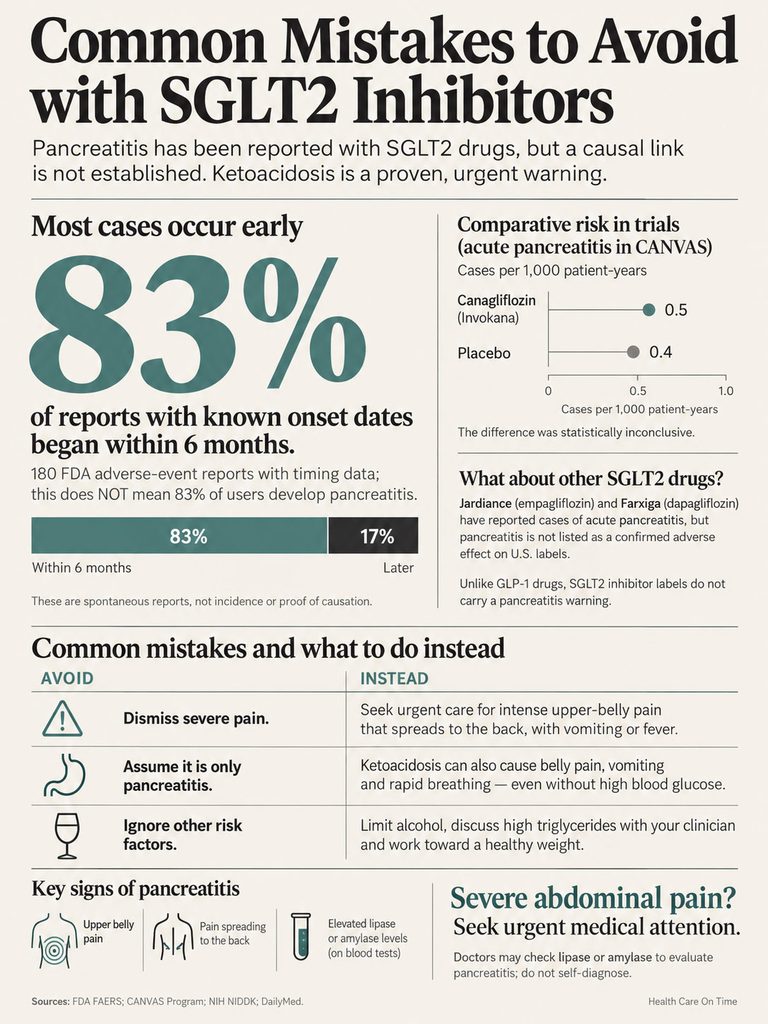
- Reading a reporting odds ratio as personal risk. A ratio of 5 in FAERS does not mean five times the risk for you.
- Assuming normal blood sugar rules out a problem. Ketoacidosis on these drugs can occur under 250 mg/dL.
- Switching to a GLP-1 drug “to be safe.” GLP-1 drugs carry a formal pancreatitis warning, while SGLT2 drugs don’t.
- Stopping without telling anyone. These drugs protect the heart and kidneys, so any change belongs in a conversation with your prescriber.
- Ignoring triglycerides. Very high levels can cause pancreatitis no matter which pill you take.
- Doubling up after a missed dose. It doesn’t help and adds side effect risk; our guide to taking a double dose of Mounjaro shows how dosing errors happen with another diabetes drug.
Frequently Asked Questions
Can SGLT2 inhibitors cause pancreatitis?
Possibly, but it is rare and unproven. FDA adverse event reports show a signal, and Health Canada found a possible link in 18 of 28 international cases it assessed. However, large trials found very few cases, and the FDA decided in 2016 that no action was needed. Severe belly pain on these drugs still needs prompt care.
Can Jardiance trigger pancreatitis?
It may in rare cases. FAERS holds 287 acute pancreatitis reports for empagliflozin from 2013 to 2021, and published case reports exist. Yet the U.S. Jardiance label does not list pancreatitis as a side effect; it appears only as a risk factor for ketoacidosis. Report pain spreading to your back right away.
Can Farxiga cause pancreatitis?
Farxiga (dapagliflozin) had 150 acute pancreatitis reports in FAERS from 2013 to 2021, and doctors have published case reports. Its U.S. label does not list pancreatitis as an adverse reaction. Like the other SGLT2 drugs, its label names past pancreatitis as a ketoacidosis risk factor and advises stopping it 3 days before surgery.
Does Invokana cause pancreatitis?
Invokana is the only SGLT2 drug whose label shows trial rates: 0.1% on comparator, 0.2% on 100 mg and 0.1% on 300 mg. In CANVAS, rates were 0.49 vs 0.35 per 1,000 patient-years. A U.S. claims study judged the risk similar to other diabetes drugs. The numbers are too small for a firm conclusion.
What are two signs of pancreatitis?
Doctors diagnose acute pancreatitis with two of three findings: typical upper belly pain, often spreading to the back, and a lipase or amylase at least 3 times the upper limit of normal. Imaging is the third. Vomiting, fever and a fast heartbeat often come with it.
How soon after starting an SGLT2 inhibitor does pancreatitis appear?
In FDA reports with timing data, the median onset was 54 days after the first dose, and about 83% began within 6 months. That makes the first few months the main window to watch. About 1 in 6 reported cases still began later, so new symptoms at any point deserve attention.
Is pancreatitis more likely with SGLT2 inhibitors or GLP-1 drugs?
The data favor SGLT2 inhibitors. In FDA reports from 2019 to 2021, GLP-1 drugs had a reporting odds ratio of 9.65 and DPP-4 drugs 13.20, vs 3.67 for SGLT2 inhibitors. GLP-1 and DPP-4 labels carry formal pancreatitis warnings; SGLT2 labels do not. Combining classes raised the signal further.
How can you lower your pancreatitis risk on diabetes drugs?
Limit alcohol, ask your doctor to check triglycerides, and treat known gallstones, since these are the top non-drug causes. Don’t smoke, and work toward a healthy weight. Review every diabetes drug you take, because combining an SGLT2 inhibitor with a GLP-1 or DPP-4 drug showed higher reporting odds.
Should you stop Jardiance if your stomach hurts?
Not for mild, brief upset; call your prescriber instead. Stopping can raise heart and kidney risk. But severe pain, pain spreading to your back, vomiting, fast breathing or fever needs same-day care, where doctors can check for both pancreatitis and ketoacidosis before deciding about the drug.
Can you take an SGLT2 inhibitor if you’ve had pancreatitis before?
Sometimes, but it needs a careful talk with your doctor. The labels don’t forbid it, yet every SGLT2 label lists past pancreatitis or pancreatic surgery as a ketoacidosis risk factor. If your episode was blamed on the drug itself, ask about other options, because safe restarting hasn’t been studied.
Why is lipase high on an SGLT2 inhibitor?
A lipase at least 3 times the upper limit of normal, together with typical upper belly pain, meets the standard definition of acute pancreatitis. A smaller rise without pain needs a doctor’s review, not panic. Doctors then look for gallstones, alcohol and high triglycerides before blaming the drug.
Medical Disclaimer: This article is for general information only and is not medical advice. It does not replace a visit with your doctor or pharmacist. Do not start, stop or change any medicine without talking to your healthcare provider. If you have severe abdominal pain, vomiting, trouble breathing or yellowing of the skin or eyes, call 911 or go to the nearest emergency room.
References
- Zhang L, et al. FAERS analysis of acute pancreatitis associated with SGLT-2 inhibitors (Q1 2013 to Q4 2021). Frontiers in Pharmacology. 2022;13:977582. https://www.frontiersin.org/journals/pharmacology/articles/10.3389/fphar.2022.977582/full
- Alenzi KA, et al. Pancreatitis with use of new diabetic medications: a real-world data study using the post-marketing FDA adverse event reporting system (FAERS) database. Frontiers in Pharmacology. 2024;15:1364110. https://www.frontiersin.org/journals/pharmacology/articles/10.3389/fphar.2024.1364110/full
- Chou OHI, et al. Lower risks of new-onset acute pancreatitis and pancreatic cancer in SGLT2 inhibitors compared to DPP4 inhibitors. Diabetes Epidemiology and Management. 2023;9:100115. https://wrap.warwick.ac.uk/179880/
- Muhammed A, et al. Risk of pancreatitis and pancreatic carcinoma for anti-diabetic medications. Expert Opinion on Drug Safety. 2024;23(6):731-742. https://pubmed.ncbi.nlm.nih.gov/37986140/
- Khakhar Z, Manji S, Patel RK, Ali SK. Sodium-Glucose Transport Protein 2 (SGLT2) Inhibitors and the Risk of Pancreatitis: A Case Report. Cureus. 2024;16(6):e62957. https://pmc.ncbi.nlm.nih.gov/articles/PMC11265328/
- U.S. Food and Drug Administration. April to June 2016 Potential Signals of Serious Risks/New Safety Information Identified from FAERS. https://www.fda.gov/drugs/questions-and-answers-fdas-adverse-event-reporting-system-faers/april-june-2016-potential-signals-serious-risksnew-safety-information-identified-fda-adverse-event
- Health Canada. Summary Safety Review: SGLT2 inhibitors and risk of pancreatitis. 2018. https://dhpp.hpfb-dgpsa.ca/review-documents/resource/SSR00204
- Janssen Medical Information. Adverse event of INVOKANA: pancreatitis. Updated November 2024. https://jnjmedicalconnect.com/products/invokana/medical-content/adverse-event-of-invokana-pancreatitis
- JARDIANCE (empagliflozin) prescribing information. DailyMed. https://dailymed.nlm.nih.gov/dailymed/drugInfo.cfm?setid=1782b947-4a72-4feb-a488-1469d9af82bd
- FARXIGA (dapagliflozin) prescribing information. DailyMed. https://dailymed.nlm.nih.gov/dailymed/drugInfo.cfm?setid=72ad22ae-efe6-4cd6-a302-98aaee423d69
- INVOKANA (canagliflozin) prescribing information. DailyMed. https://dailymed.nlm.nih.gov/dailymed/drugInfo.cfm?setid=9679460c-55f7-4826-b55c-fe116f020358
- STEGLATRO (ertugliflozin) prescribing information. Drugs.com. https://drugs.com/pro/steglatro.html
- JANUVIA (sitagliptin) prescribing information. DailyMed. https://dailymed.nlm.nih.gov/dailymed/drugInfo.cfm?setid=194c3718-5eb5-4cf5-85d0-2bb1ed8293b8
- OZEMPIC (semaglutide) prescribing information, Section 5.2. https://medlibrary.org/lib/rx/meds/ozempic/page/2/
- National Institute of Diabetes and Digestive and Kidney Diseases. Symptoms and Causes of Pancreatitis. https://www.niddk.nih.gov/health-information/digestive-diseases/pancreatitis/symptoms-causes
- National Institute of Diabetes and Digestive and Kidney Diseases. Definition and Facts for Pancreatitis. https://www.niddk.nih.gov/health-information/digestive-diseases/pancreatitis/definition-facts
- Serial serum lipase testing after the initial diagnostic workup for inpatients with acute pancreatitis. Cleveland Clinic Journal of Medicine. 2023;90(6):341-343. https://www.ccjm.org/node/11850
- Shemesh E, Zafrir B. Hypertriglyceridemia-Related Pancreatitis in Patients With Type 2 Diabetes: Links and Risks. Diabetes, Metabolic Syndrome and Obesity. 2019;12:2041-2052. https://www.dovepress.com/hypertriglyceridemia-related-pancreatitis-in-patients-with-type-2-diab-peer-reviewed-fulltext-article-DMSO
- Saunders E. Acute Pancreatitis as a Rare Side Effect of Empagliflozin. Boston University Internal Medicine Residency. https://www.bumc.bu.edu/im-residency/acute-pancreatitis-as-a-rare-side-effect-of-empagliflozin/
- American Diabetes Association. Statistics About Diabetes (citing CDC National Diabetes Statistics Report, January 2026). https://diabetes.org/about-diabetes/statistics/about-diabetes