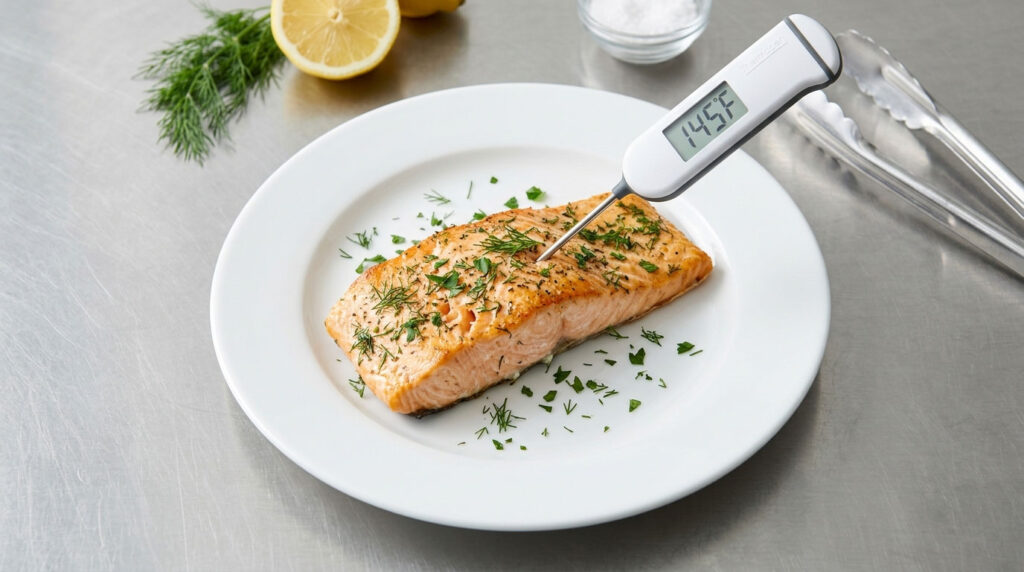
You baked a perfectly seasoned piece of salmon for dinner last night. This morning, your stomach is in full revolt. If you are wondering whether cooked salmon can cause diarrhea, the answer might surprise you.
Table of Contents
As a Registered Dietitian Nutritionist specializing in clinical gut health, I hear this question constantly. Many people assume that cooking fish to the right temperature eliminates every possible digestive threat. That assumption is wrong.
The digestive process is far more complex than simple temperature control. While the American Heart Association praises salmon for its omega-3 fatty acids, those same healthy fats can trigger stomach cramps and loose stools in sensitive individuals. You can get sick after eating cooked fish even when you follow every recipe instruction perfectly.
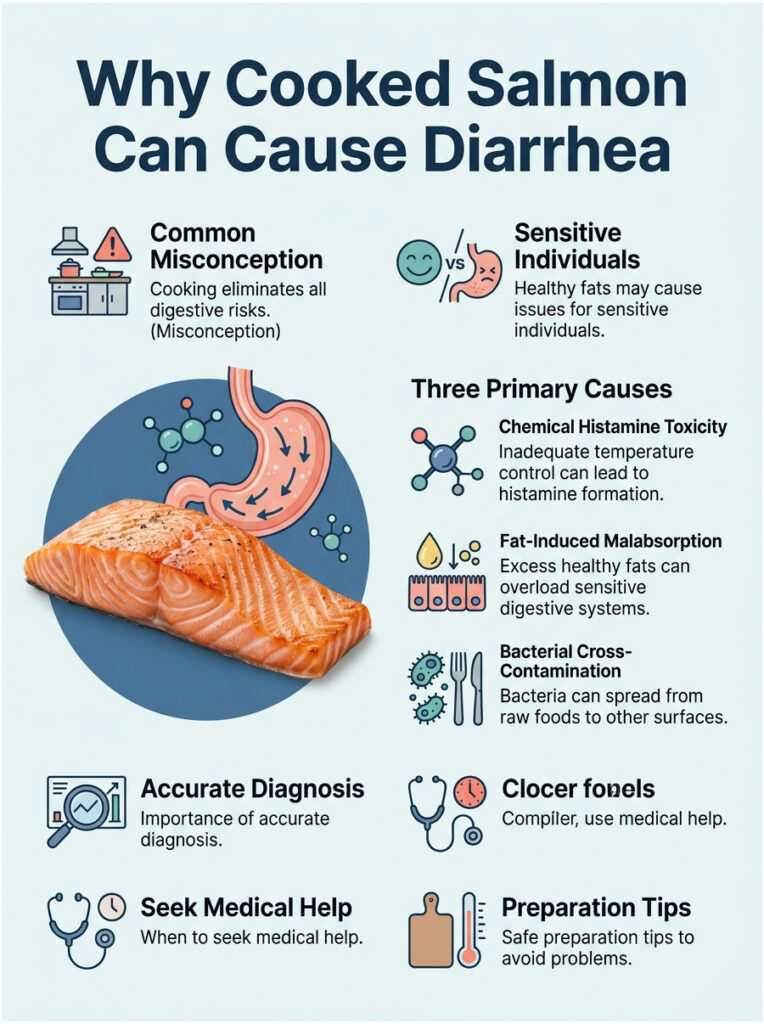
There are three primary reasons your body might react poorly: chemical histamine toxicity, fat-induced malabsorption, and bacterial cross-contamination. This guide will walk you through all three, plus how to diagnose your symptoms, when to seek medical help, and how to prepare salmon safely going forward.
Quick Answer
Yes, cooked salmon can cause diarrhea. Cooking kills live bacteria, but it does not destroy heat-stable chemical toxins like histamine. The naturally high fat content can also trigger rapid digestion and fat malabsorption in sensitive individuals. And improper cooling or reheating of leftovers can lead to secondary bacterial infections that cause severe intestinal distress.
Key Statistics on Seafood and Digestion
- Over 30% of seafood-related foodborne illnesses involve heat-stable toxins rather than live bacteria (CDC, 2023).
- A standard 4-ounce serving of Atlantic salmon contains up to 15 grams of fat, nearly three times more than lean white fish.
- Histamine toxins begin forming rapidly when fish is stored above 40 degrees F for just two hours.
- Bacterial spores can survive cooking temperatures of 145 degrees F and germinate during the cooling process.
- Up to 10% of patients who experience severe GI infections develop long-term gut sensitivities.
- Nearly 40% of home cooks do not use a digital meat thermometer when preparing seafood.
Can Cooked Salmon Cause Diarrhea Even When Prepared Perfectly?
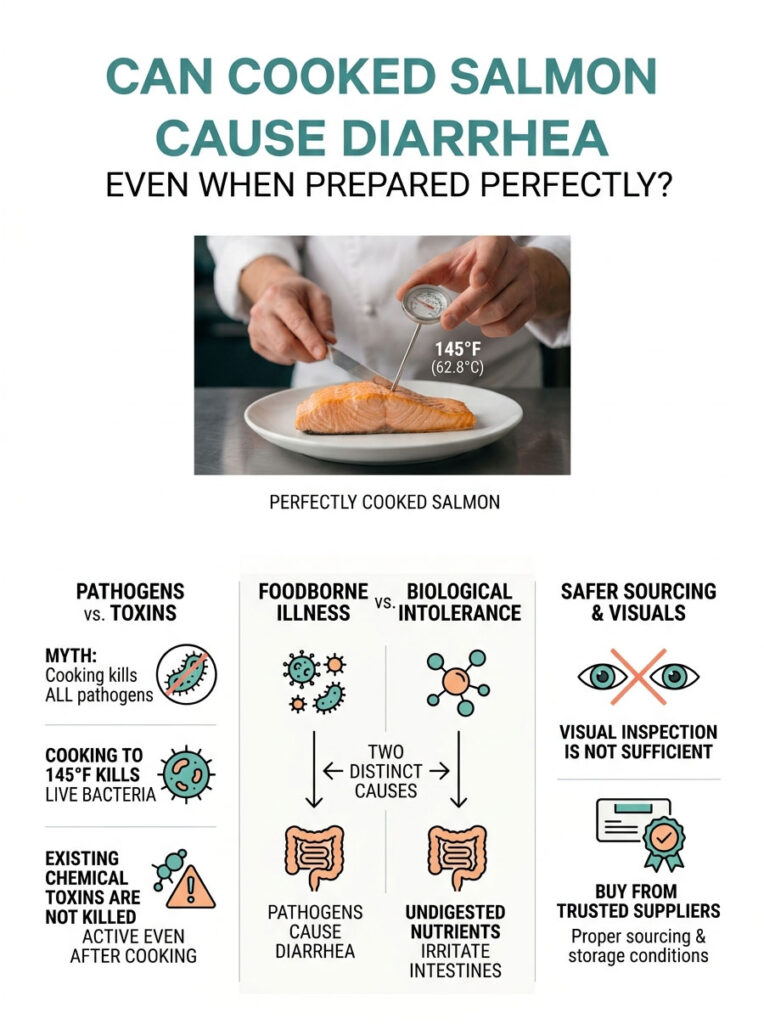
The “Cooking Kills Everything” Myth
Most home cooks believe that reaching the right internal temperature acts as a universal safety net. When it comes to marine proteins, this is not true.
Cooking to the recommended 145 degrees F absolutely kills live pathogenic bacteria like Salmonella and E. coli. However, it does nothing to neutralize pre-existing chemical toxins. If the raw fish was stored improperly before you bought it, bacteria may have already produced toxic byproducts. These chemical byproducts are highly resistant to standard oven temperatures. You can bake, grill, or fry the filet until it is completely dry, but the toxins remain active.
Foodborne Illness vs. Biological Intolerance
It helps to separate these two categories. A foodborne illness happens when a foreign invader, a live bacterium, virus, or chemical toxin, enters your body. Your immune system detects the threat and initiates diarrhea to flush it out. This is a classic case of cooked salmon food poisoning.
A biological intolerance is different. Your body simply cannot process the heavy nutrients in the food. You feel sick after eating, but you do not have an actual infection. Some people lack the optimal amount of digestive enzymes needed to break down heavy fish oils. The undigested food irritates the intestinal lining, causing rapid bowel contractions and sudden diarrhea.
Why Sourcing Matters as Much as Cooking
According to the FDA seafood safety guide, certain marine toxins are entirely unaffected by normal cooking temperatures. The guide specifically warns about temperature abuse during transport. If fish gets too warm on its journey from the ocean to your grocery store, the chemical changes are permanent.
A piece of fish can look perfectly pink and smell completely fresh while hiding invisible, heat-stable toxins. Visual inspection is simply not enough to guarantee safety. Buy from trusted suppliers who maintain a strict cold chain.
Scombroid Poisoning: The Hidden Histamine Threat
Scombroid poisoning is one of the most common reasons patients end up in my office with seafood-related distress. The process begins the moment the fish is pulled from the water.
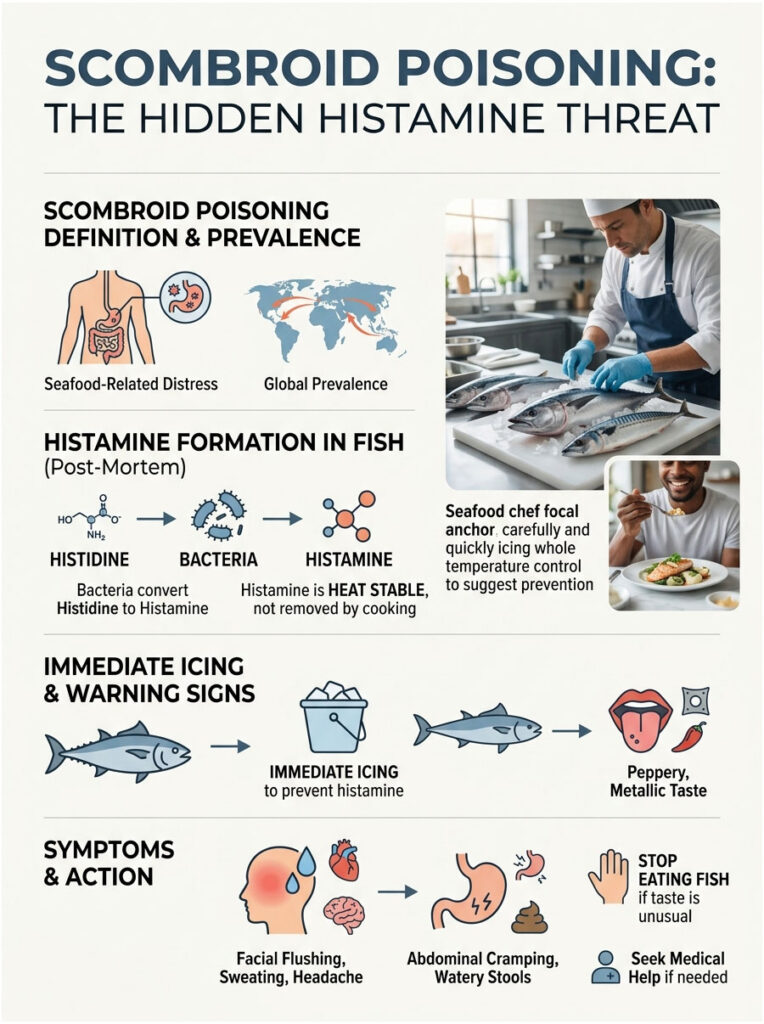
How Histamine Forms in Fish
Salmon naturally contains high levels of an amino acid called histidine. In living fish, histidine is perfectly harmless. Once the fish dies, bacteria on its skin and gills begin multiplying. If the fish is not packed in ice immediately, these bacteria release an enzyme that converts harmless histidine directly into histamine.
Here is the critical point: histamine is incredibly heat-stable and bonds tightly to fish protein. You simply cannot cook it out. The heat locks the histamine inside the protein structure. When you eat this meat, your gut absorbs the chemical instantly and your body reacts as if you are having a massive allergic response.
The Peppery Taste Warning Sign
Many patients report a sharp, peppery, or metallic taste while eating the fish. That is not a seasoning issue. It is the actual taste of concentrated histamine. If your fish tastes peppery but you did not add pepper, stop eating immediately.
Within minutes to a few hours, you will likely experience facial flushing, heavy sweating, a pounding headache, severe abdominal cramping, and explosive, watery stools.
Scombroid Poisoning vs. Bacterial Food Poisoning
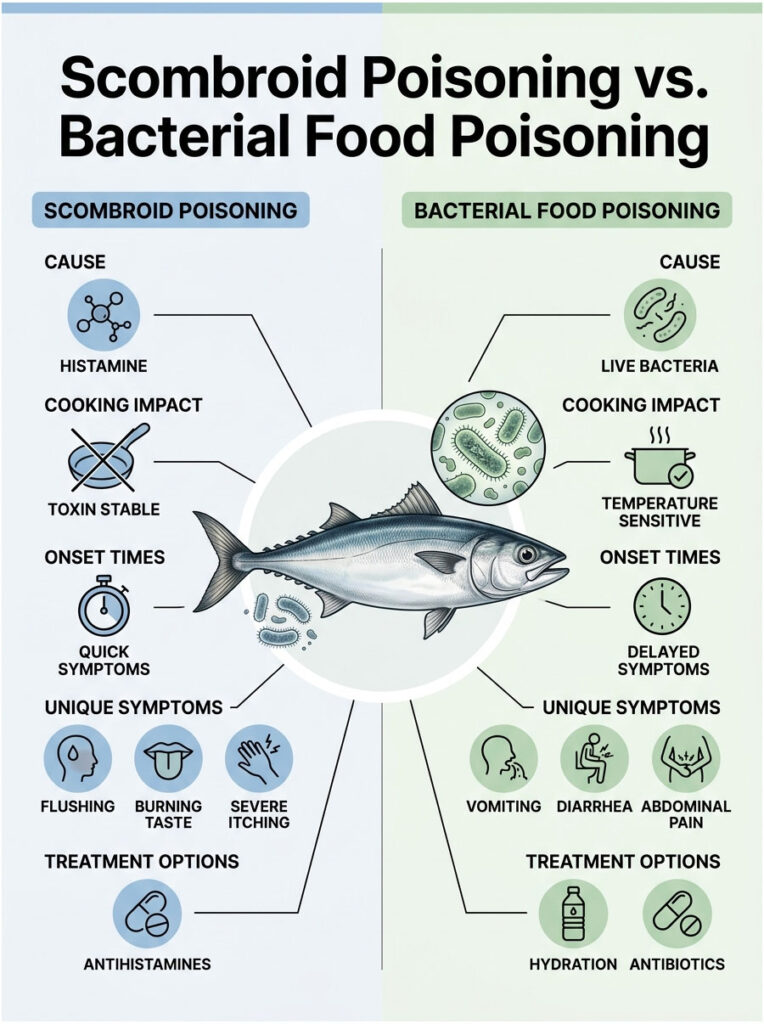
| Feature | Scombroid (Histamine) | Bacterial (e.g., Salmonella) |
| Cause | Heat-stable chemical toxin (histamine) | Live pathogenic bacteria |
| Destroyed by Cooking? | No. Toxins survive high heat. | Yes. Killed at 145 degrees F. |
| Onset | 10 minutes to 2 hours | 6 hours to 48 hours |
| Unique Symptoms | Peppery taste, facial flushing, hives | Fever, chills, bloody stools, body aches |
| Treatment | Antihistamines, hydration, rest | Hydration, sometimes antibiotics |
The Fat Factor: When Salmon Is Simply Too Rich for Your Gut
Sometimes the problem has nothing to do with spoilage or toxins. Sometimes the fish is just too rich for your current digestive capacity.
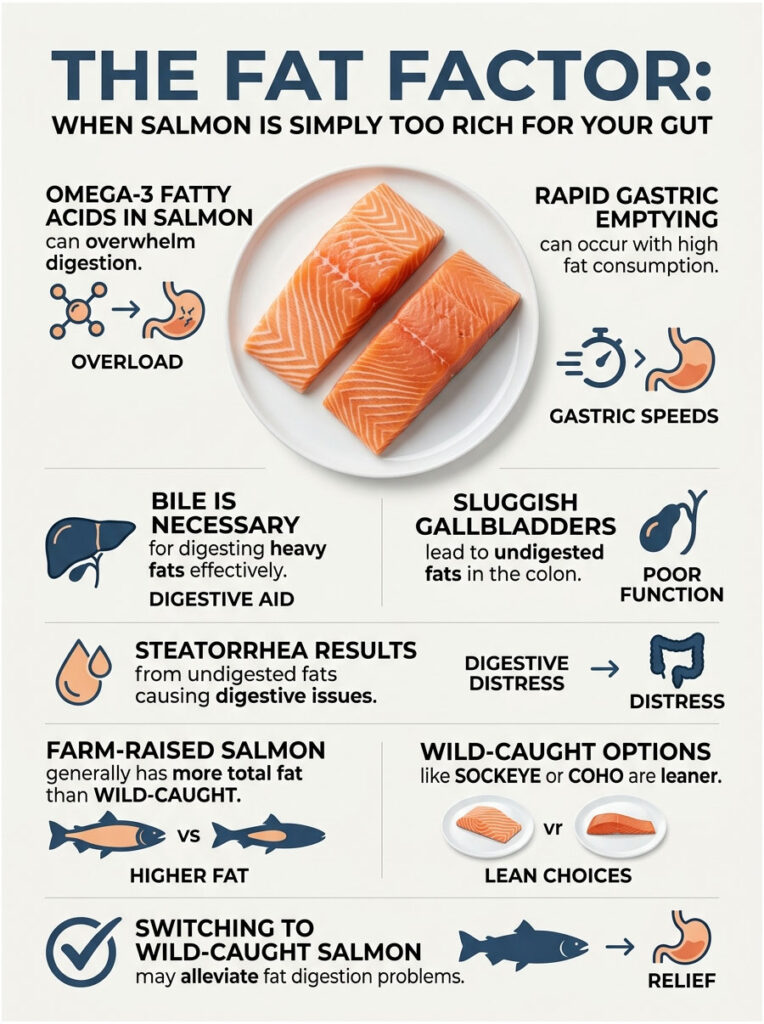
Omega-3s and Rapid Gastric Emptying
Atlantic and King salmon are incredibly dense in omega-3 fatty acids. These lipids are fantastic for heart health, but they are heavy on the gut. Consuming a large amount of fat in one sitting can act as a natural laxative.
High fat loads trigger rapid gastric emptying, meaning your stomach dumps its contents into the small intestine faster than usual. This overwhelms your digestive enzymes before they can do their job.
Bile Acid Malabsorption
To digest heavy fats, your liver must produce adequate bile, and your gallbladder must store and release it on demand. Think of bile as biological dish soap: it breaks fish oils into tiny, digestible droplets your intestines can absorb.
If your gallbladder is sluggish or missing entirely, those heavy omega-3 oils pass undigested through your small intestine and reach your colon. The colon is not designed to handle raw fats, and the result is steatorrhea: greasy, foul-smelling, oily diarrhea that often floats and is difficult to flush.
Farm-Raised vs. Wild-Caught: The Fat Difference
Farm-raised Atlantic salmon generally contains significantly more total fat than wild-caught Pacific varieties. Farmed fish eat high-calorie diets and get less exercise. Wild-caught Sockeye or Coho salmon are much leaner. If you struggle with fat digestion, switching to wild-caught may solve the problem entirely.
Why Salmon Causes Issues When White Fish Does Not
Many patients tell me they eat cod or tilapia without any problems but have explosive reactions to oily pink fish. The nutritional breakdown explains why.
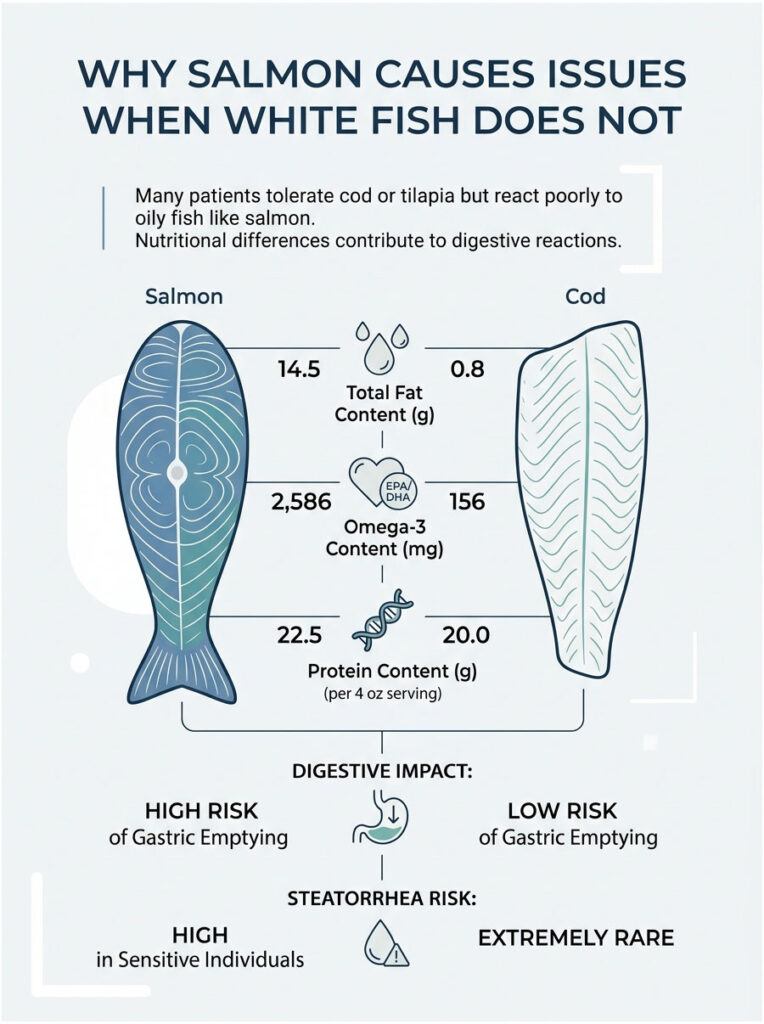
| Per 4 oz Serving | Atlantic Salmon | Atlantic Cod |
| Total Fat | 14.5 grams | 0.8 grams |
| Omega-3s | 2,586 mg | 156 mg |
| Protein | 22.5 grams | 20.0 grams |
| Digestive Impact | High risk of rapid gastric emptying | Low risk, easily digested |
| Steatorrhea Risk | High in sensitive individuals | Extremely rare |
Bacterial Risks: Cross-Contamination and Leftover Dangers
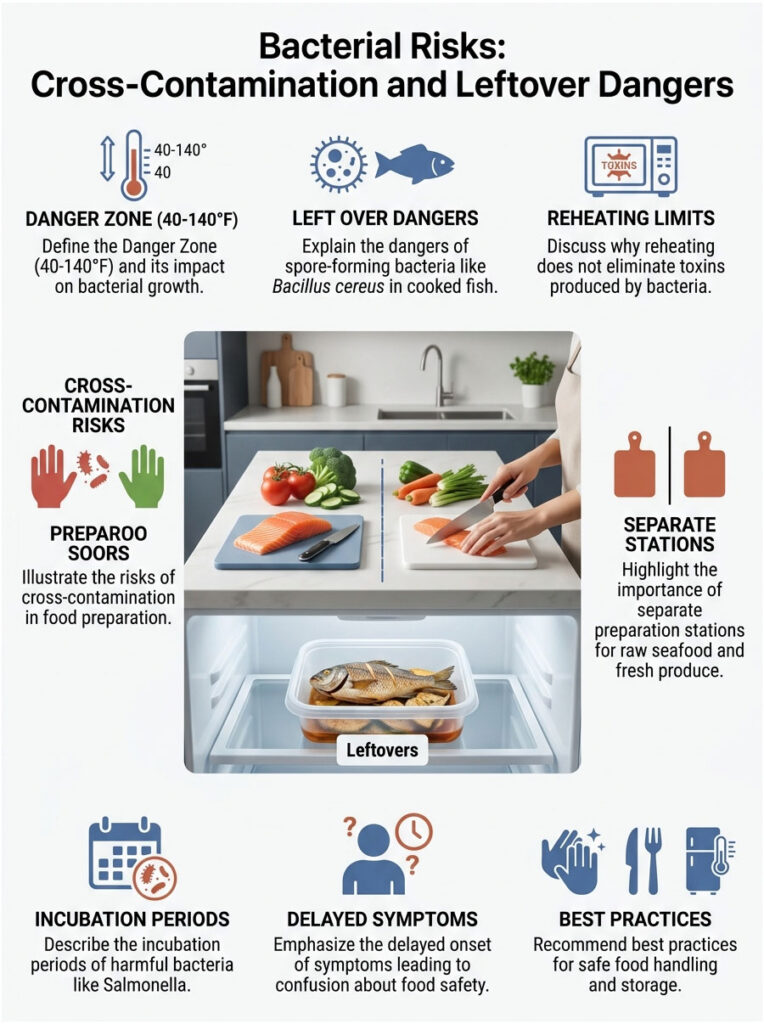
The Danger Zone and Spore-Forming Bacteria
Can cooked salmon cause diarrhea if left on the kitchen counter? Absolutely. The USDA defines the temperature range between 40 and 140 degrees F as the Danger Zone. In this range, bacterial colonies double every twenty minutes.
Even perfectly cooked fish can become dangerous. Bacteria like Bacillus cereus form protective spores that survive cooking. If cooked fish sits at room temperature for more than two hours, these spores germinate, multiply, and release emetic toxins directly into the meat.
Why Reheating Does Not Fix the Problem
Many people assume microwaving leftovers will make them safe. The microwave might kill new bacteria, but it will not destroy the toxins they already produced. Proper cooling is just as important as proper cooking.
Cross-Contamination in the Kitchen
Imagine placing raw fish on a cutting board, seasoning it, transferring it to the oven, then using that same unwashed board to chop salad greens. You have just transferred raw marine pathogens directly onto raw vegetables. The fish gets cooked safely, but the salad remains highly contaminated.
This is how people contract severe infections despite cooking their main course perfectly. Always use completely separate preparation stations for raw seafood and fresh produce.
Understanding Incubation Periods
Different bacteria take different amounts of time to cause illness. Salmonella, for example, has an incubation period of six hours to two full days. You might eat a contaminated meal on Friday night and not feel sick until Sunday morning, leading you to blame the wrong meal entirely.
Diagnosing Your Symptoms by Timing
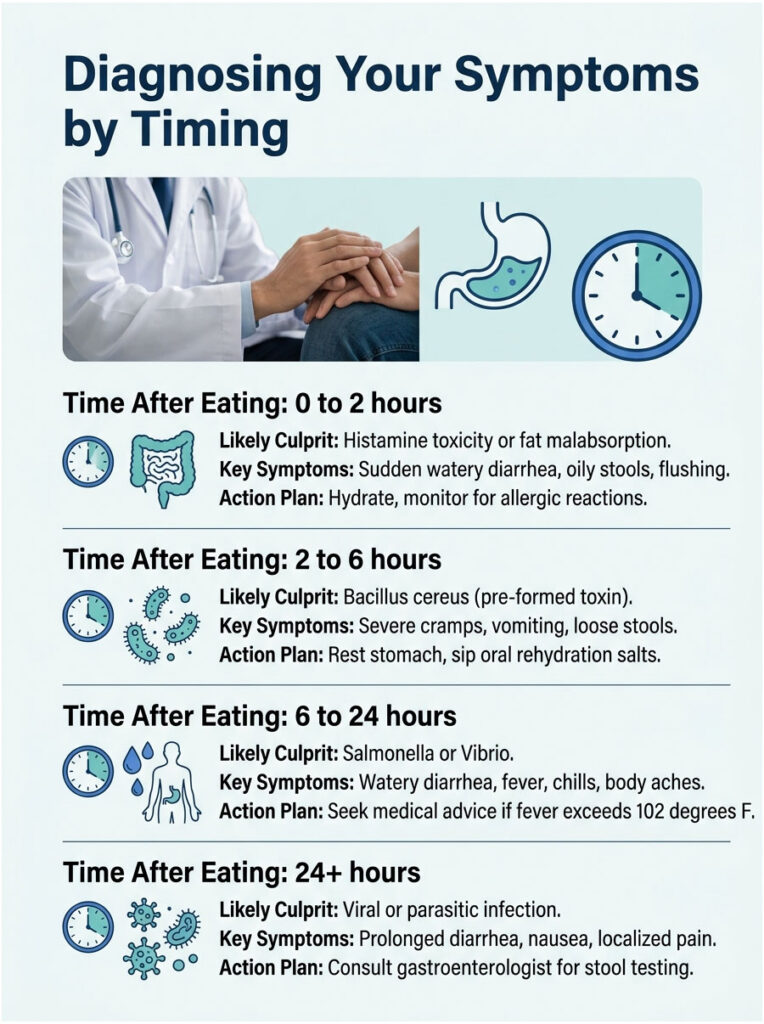
| Time After Eating | Likely Culprit | Key Symptoms | Action Plan |
| 0 to 2 hours | Histamine toxicity or fat malabsorption | Sudden watery diarrhea, oily stools, flushing | Hydrate, monitor for allergic reactions |
| 2 to 6 hours | Bacillus cereus (pre-formed toxin) | Severe cramps, vomiting, loose stools | Rest stomach, sip oral rehydration salts |
| 6 to 24 hours | Salmonella or Vibrio | Watery diarrhea, fever, chills, body aches | Seek medical advice if fever exceeds 102 degrees F |
| 24+ hours | Viral or parasitic infection | Prolonged diarrhea, nausea, localized pain | Consult gastroenterologist for stool testing |
What Recent Research and FDA Guidelines Say
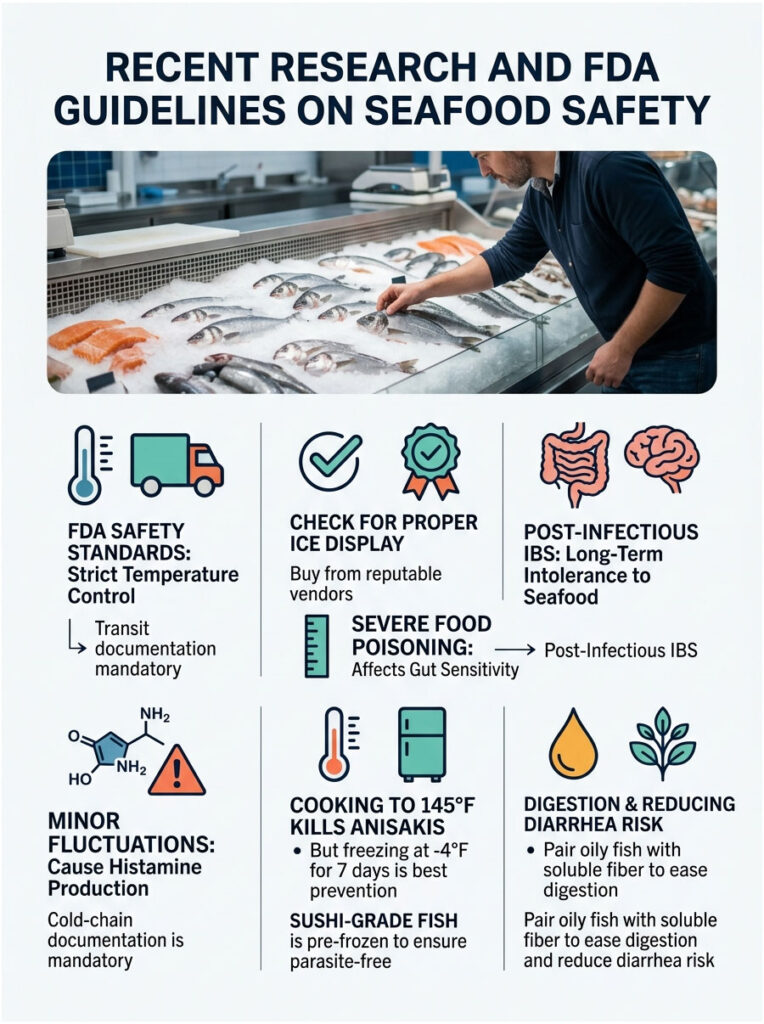
FDA Seafood Safety Standards
The FDA seafood safety guide is regularly updated to reflect new research on pathogen survival rates. Recent studies focus heavily on strict temperature control during commercial transit. Even minor temperature fluctuations during shipping can trigger massive histamine production, which is why the FDA mandates strict cold-chain documentation for all commercial fisheries.
As a consumer, buy seafood from reputable vendors. Look for markets that display fish on thick beds of fresh, draining ice. The fish should never sit in pools of melted water.
Post-Infectious IBS and Long-Term Gut Sensitivity
A single severe bout of cooked salmon food poisoning can have lasting consequences. When aggressive bacteria like Salmonella damage your intestinal lining, they alter your entire gut microbiome. This can lead to Post-Infectious Irritable Bowel Syndrome.
Patients with post-infectious IBS often find they can no longer tolerate seafood at all, even months after the initial infection clears. The infection essentially reprogrammed their enteric nervous system to view heavy marine proteins as a threat. Recovery requires a slow, carefully guided reintroduction diet.
The Anisakis Parasite
Recent parasitology studies show that while cooking to 145 degrees F kills the Anisakis worm, commercial freezing is actually the gold standard for prevention. Fish flash-frozen at -4 degrees F for seven days is virtually guaranteed to be parasite-free. This is exactly why sushi-grade fish is always pre-frozen before being served raw.
Dietitian’s Tip: If you love oily fish but struggle with steatorrhea, pair your meal with a heavy dose of soluble fiber. Serving salmon alongside barley, quinoa, or roasted root vegetables helps bind the heavy oils in your stomach. This slows gastric emptying and gives your liver more time to release bile, drastically reducing the risk of sudden diarrhea.
How to Prepare and Store Salmon Safely
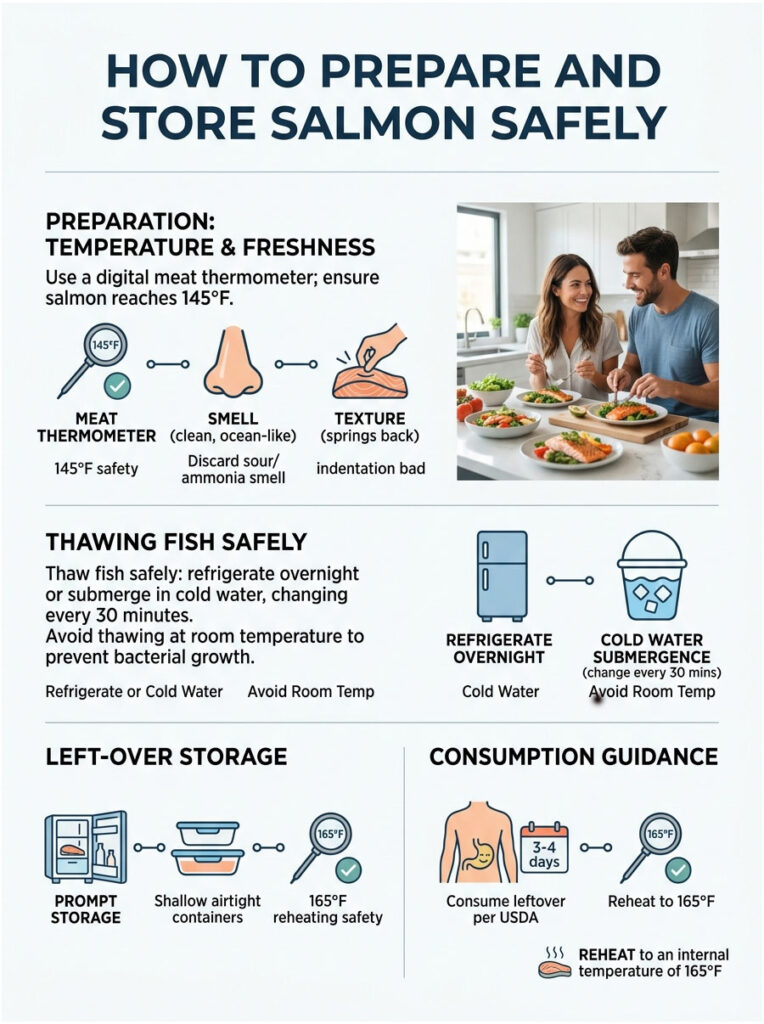
The 145 Degree F Rule
Visual cues are not enough. You must use a digital meat thermometer for every piece of fish. Insert the probe horizontally into the thickest part of the filet and wait for the reading to stabilize. At 145 degrees F, you guarantee destruction of live bacteria and parasites.
The Smell and Touch Test
Before turning on the oven, evaluate the raw fish. Fresh seafood should smell like clean ocean air, never sour, overly fishy, or like ammonia. An ammonia smell means severe bacterial breakdown. Throw it away immediately.
Press your finger gently into the raw flesh. It should spring back, leaving a smooth surface. If your fingerprint leaves a permanent indentation, the cellular structure is breaking down.
Proper Thawing
Never thaw frozen seafood on the counter at room temperature. The outside enters the Danger Zone while the inside stays frozen, allowing surface bacteria to multiply. Instead, thaw in the refrigerator overnight. If you are in a hurry, seal the fish in a leak-proof bag and submerge it in cold tap water, changing the water every 30 minutes.
Safe Leftovers
Move cooked fish to the fridge immediately after dinner. Use shallow, airtight containers so cold air penetrates quickly. According to the USDA, consume leftover seafood within three to four days. When reheating, ensure the internal temperature reaches 165 degrees F to kill any secondary bacteria.
What to Do If You Get Sick After Eating Salmon
Hydration and Electrolytes
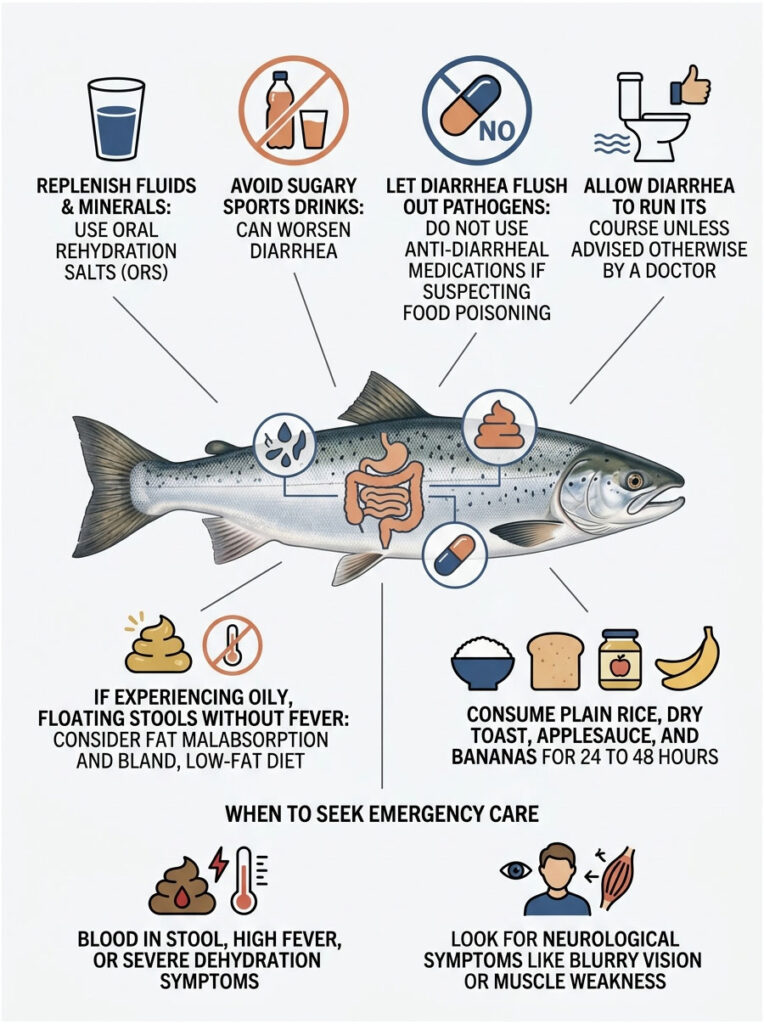
The most critical step is managing hydration. Watery diarrhea strips your body of essential fluids and minerals rapidly. Plain water is not enough. Use clinical Oral Rehydration Salts (ORS) to replace lost sodium, potassium, and chloride. Avoid sugary sports drinks, as excess sugar can worsen osmotic diarrhea.
When to Avoid Anti-Diarrheal Medications
If you suspect food poisoning, do not reach for loperamide (Imodium). Your body is using diarrhea to flush dangerous pathogens. Stopping bowel movements traps bacteria inside the colon, allowing them to multiply and potentially turning a mild illness into a serious systemic infection.
Unless a doctor tells you otherwise, let diarrhea run its course. Focus on electrolyte replenishment and rest.
Managing Fat-Related Symptoms
If your stools are floating and oily without fever, you are likely dealing with fat malabsorption rather than infection. In this case, anti-diarrheal medications are generally safe. Stick to a bland, low-fat diet for 24 to 48 hours: plain rice, dry toast, applesauce, and bananas. Avoid dairy, heavy oils, and complex spices. Give your liver and gallbladder time to reset.
When to Go to the ER
Seek emergency medical attention if you notice blood or black, tarry substances in your stool, a sustained fever above 102 degrees F, inability to keep liquids down for more than 24 hours, signs of severe dehydration (dry mouth, sunken eyes, no urination), or neurological symptoms like blurry vision or muscle weakness. These signs indicate the infection may require IV fluids and targeted antibiotics.
Key Takeaways: Can Cooked Salmon Cause Diarrhea?
Salmon is an undeniable nutritional powerhouse, but it demands respect in both preparation and digestion.
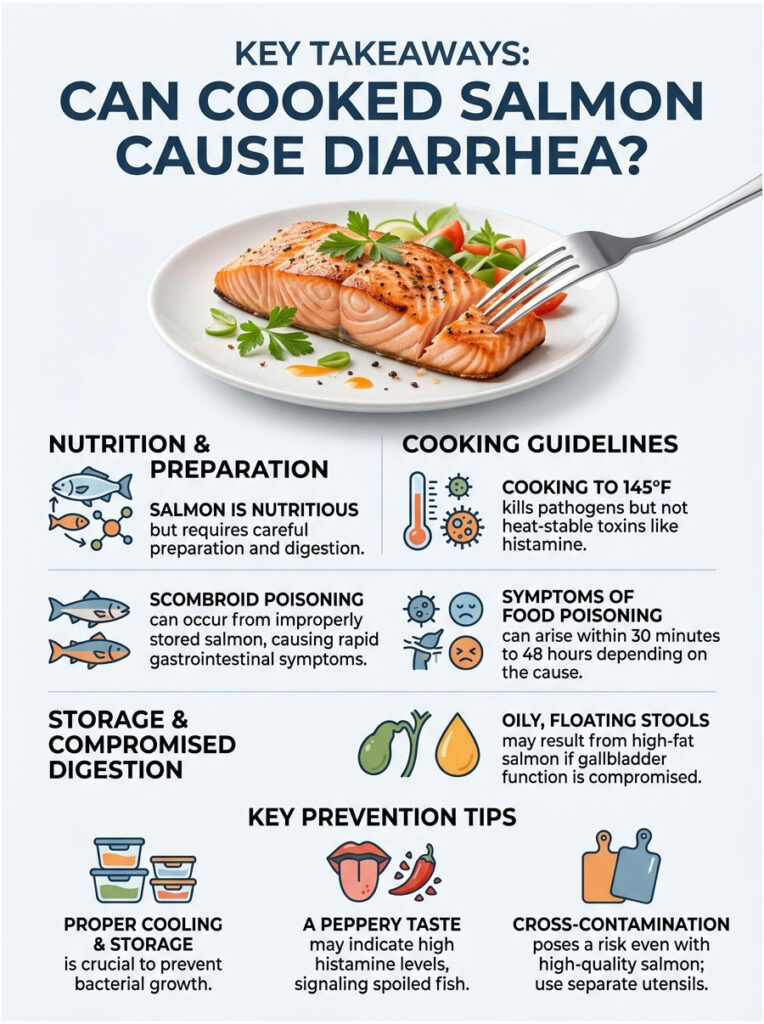
- Cooking to 145 degrees F kills live bacteria, but it does nothing to destroy heat-stable toxins like histamine. If fish was stored improperly before purchase, no amount of cooking makes it safe.
- The heavy omega-3 fat content can trigger rapid gastric emptying and steatorrhea in people with sensitive gallbladders or bile acid malabsorption. Switching to wild-caught, leaner varieties may help.
- Following the USDA storage guidelines and preventing cross-contamination are essential to avoid secondary bacterial infections from leftovers.
- If you get sick, prioritize electrolyte replenishment and avoid anti-diarrheal medications if you suspect a bacterial infection. Let your body flush the pathogens.
I still highly recommend incorporating salmon into your regular diet. The cardiovascular and neurological benefits are too important to ignore. Just buy from reputable sources, store it out of the Danger Zone, and listen to your body’s digestive limits. If you frequently wonder whether cooked salmon can cause diarrhea, try adjusting portion sizes or switching to leaner fish. Your gut health is always worth the extra effort.
Frequently Asked Questions
Can cooked salmon cause diarrhea even if it was prepared to the correct temperature?
Yes. While cooking salmon to an internal temperature of 145°F kills live pathogens like Salmonella, it cannot neutralize heat-stable chemical toxins such as histamine. Additionally, salmon is a high-lipid fish; its dense omega-3 fatty acid content can trigger rapid gastric emptying or fat malabsorption in sensitive individuals, leading to sudden intestinal distress regardless of how well it was cooked.
What is Scombroid poisoning and how does it relate to salmon consumption?
Scombroid poisoning is a form of histamine toxicity that occurs when fish is improperly cooled after being caught. Bacteria on the fish convert the amino acid histidine into histamine. Once this chemical conversion occurs, the toxin becomes heat-stable and cannot be cooked out. Ingesting high levels of histamine causes rapid onset of symptoms including facial flushing, sweating, and explosive, watery diarrhea.
Why do I experience oily, floating stools (steatorrhea) after eating Atlantic salmon?
Atlantic salmon is significantly higher in fat than lean white fish. If your gallbladder is sluggish or you have bile acid malabsorption, your system cannot emulsify these heavy fish oils properly. The undigested lipids pass into the colon, resulting in steatorrhea—foul-smelling, greasy, and oily stools that often float due to their high fat content.
How soon after eating contaminated salmon will digestive symptoms begin?
The timeline depends on the culprit. Histamine toxicity (Scombroid) usually strikes within 30 minutes to 2 hours. Diarrhea caused by pre-formed bacterial toxins typically manifests within 2 to 6 hours. However, a live bacterial infection like Salmonella has an incubation period of 6 to 48 hours, as the bacteria must colonize the intestinal tract before symptoms begin.
Does reheating leftover salmon in the microwave make it safe from food poisoning?
Not necessarily. While reheating to 165°F can kill secondary bacteria that grew during storage, it will not destroy emetic toxins produced by spore-forming bacteria like Bacillus cereus if the fish sat in the ‘Danger Zone’ (40°F–140°F) for too long. Proper cooling and refrigeration are more critical for safety than the reheating process itself.
What is the clinical significance of a peppery taste when eating salmon?
A sharp, peppery, or metallic taste in salmon that has not been seasoned with pepper is a major clinical warning sign of high histamine levels. This sensation indicates that the fish has begun to decompose and contains toxic levels of histamine. If you detect this flavor, stop eating immediately to avoid severe gastrointestinal and allergic reactions.
Can a single instance of salmon food poisoning cause long-term gut issues?
Yes, a severe gastrointestinal infection from seafood can lead to Post-Infectious Irritable Bowel Syndrome (PI-IBS). This occurs when the initial infection damages the intestinal lining and alters the gut microbiome, leaving the enteric nervous system hypersensitive. This can result in chronic cramping and diarrhea whenever rich, oily fish is consumed in the future.
Is wild-caught salmon less likely to cause diarrhea than farm-raised varieties?
From a fat malabsorption perspective, yes. Farm-raised Atlantic salmon often contains up to three times the fat of wild-caught species like Sockeye or Coho. For patients with gallbladder issues or bile acid malabsorption, the lower lipid profile of wild-caught salmon reduces the risk of rapid gastric emptying and oily diarrhea.
How should I manage hydration if I develop diarrhea after eating seafood?
Managing hydration requires more than just plain water; you must focus on clinical electrolyte replenishment. Diarrhea strips the body of sodium, potassium, and chloride. I recommend using Oral Rehydration Salts (ORS) which use a specific glucose-to-sodium ratio to facilitate rapid water absorption in the small intestine.
Why is it risky to take anti-diarrheal medication for suspected salmon food poisoning?
If your diarrhea is caused by a bacterial pathogen like Salmonella or Vibrio, your body is using the bowel movements to flush out the infection. Taking anti-diarrheal medications like loperamide can trap the bacteria and their toxins inside your colon, potentially leading to a more severe, systemic infection or prolonged illness.
Can cross-contamination cause illness even if the salmon itself was high quality?
Absolutely. Many cases of seafood-related illness occur when raw fish juices contaminate ‘ready-to-eat’ foods. If you use the same cutting board for raw salmon and a side salad, you may ingest live marine pathogens from the salad that were never exposed to the heat of the oven, leading to a delayed-onset bacterial infection.
What are the USDA guidelines for safely storing and consuming leftover salmon?
According to the USDA refrigerator storage chart, cooked salmon should be placed in a shallow, airtight container and refrigerated within two hours of cooking. It must be consumed within three to four days. If the fish has been left at room temperature for more than two hours, it should be discarded to prevent the germination of heat-resistant bacterial spores.
Disclaimer
This article is for informational purposes only and does not constitute medical advice. The biological triggers for gastrointestinal distress vary significantly between individuals. If you experience severe symptoms such as high fever, bloody stools, or signs of severe dehydration after consuming seafood, please consult a qualified healthcare professional or seek emergency medical attention immediately.
References
- Centers for Disease Control and Prevention (CDC) – Foodborne Germs and Illnesses – Provides clinical data on heat-stable toxins and bacterial infection rates in seafood.
- U.S. Food and Drug Administration (FDA) – Seafood Safety Guide – Official regulatory guidelines on marine toxins and temperature abuse.
- United States Department of Agriculture (USDA) – Safe Handling and Refrigerator Storage – Standards for internal cooking temperatures and leftover safety.
- Journal of Gastroenterology – Post-Infectious Irritable Bowel Syndrome – Research study on how foodborne infections cause long-term gut sensitivities.
- USDA FoodData Central – Nutritional Profiles – Comparative data on fat and protein content in Atlantic Salmon vs. white fish.