
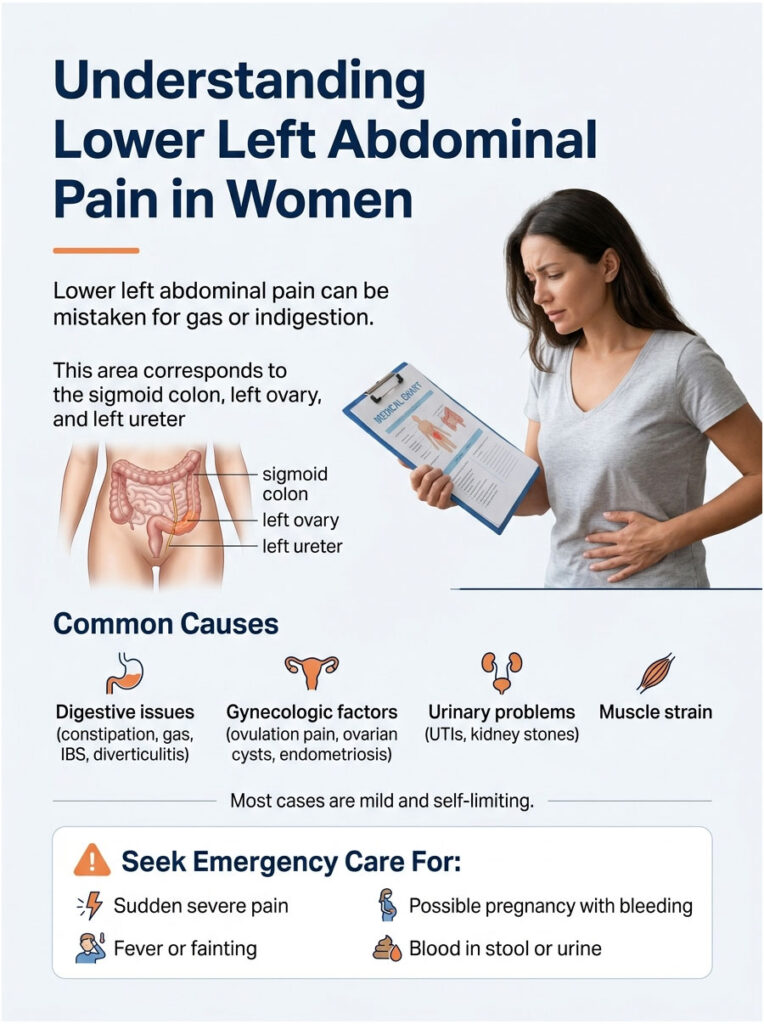
Most women chalk up lower left abdominal pain to gas or a bad meal. A lot of the time, they’re right. But that exact spot sits directly over your sigmoid colon, your left ovary, and your left ureter, so “this will pass” and “get this checked today” can feel almost identical from the outside.
Table of Contents
Quick Answer: Lower left abdominal pain in females usually comes from one of four sources: digestive (constipation, gas, IBS, diverticulitis), gynecologic (ovulation pain, ovarian cysts, endometriosis), urinary (UTI, kidney stones), or muscle strain. Most cases are mild. Seek emergency care for sudden severe pain, fever, fainting, possible pregnancy with bleeding, or blood in stool or urine.
At a Glance
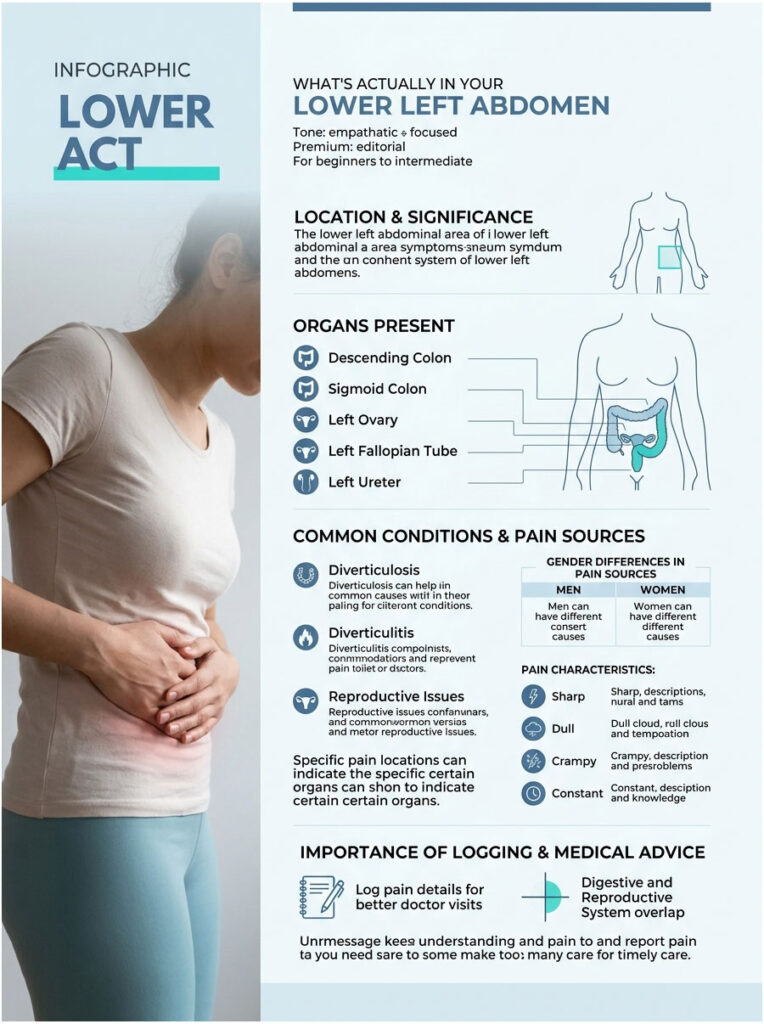
- The lower left abdomen holds your sigmoid and descending colon, left ovary, left fallopian tube, and left ureter.
- Digestive issues cause most lower left abdominal pain in women, with diverticulitis the leading concern after age 40.
- Gynecologic causes are common and often tie directly to your menstrual cycle.
- The pattern of your pain (sharp, dull, crampy, constant) and its companion symptoms are your best clues.
- Sudden, severe pain with fever, fainting, or bleeding is a medical emergency.
- A targeted lab workup (urine, blood, pelvic ultrasound) usually pinpoints the cause quickly.
What’s Actually in Your Lower Left Abdomen
Knowing what sits beneath your skin makes the whole picture easier to read. The lower left abdomen is the area below your belly button and to the left of your midline, running down toward your hip and pelvis.
The Organs on Your Left Side
This region is crowded. It holds the descending and sigmoid portions of your colon, the left ovary and left fallopian tube, the left ureter (the tube draining your left kidney), plus abdominal wall muscles and nerves.
Because reproductive organs sit low in the pelvis, women have more possible pain sources here than men do. According to the Cleveland Clinic, pain specifically in the lower left abdomen is most often linked to the colon, with diverticulosis and diverticulitis topping the list.
Pain can also be referred, meaning the problem lives in one organ but the ache shows up elsewhere. Our medical reviewers note that this is exactly why diagnosing yourself from location alone is unreliable; the body’s wiring crosses signals more often than people expect.
How Pain Location Narrows the Cause
Doctors use a four-quadrant map of the abdomen to think through symptoms. Pain parked firmly in the lower left quadrant points first toward the sigmoid colon, then toward the left ovary and left urinary tract.
Pain that began near your belly button and then settled low and left often suggests a digestive process moving through the gut. Pain that radiates from your back or flank toward the groin leans more toward a kidney or ureter source.
Keep in mind that the lower left abdomen and the left pelvis overlap. Pain a woman calls lower left stomach pain may actually originate in the pelvis, where the ovary and fallopian tube sit. This overlap is why a thorough evaluation often looks at both the digestive and reproductive systems rather than assuming one or the other.
Reading Your Pain: Sharp, Dull, Crampy, or Constant
The character of the pain matters as much as the spot. Sharp, stabbing pain that comes and goes can signal a passing kidney stone or a cyst event. A dull, heavy ache often points to constipation, a slow-growing cyst, or muscle strain.
Crampy pain that eases after a bowel movement is a classic sign of irritable bowel syndrome or constipation. Constant, localized pain that steadily worsens, especially with fever, raises concern for diverticulitis or infection.
Patients booking diagnostic tests with us often describe their pain in vague terms, so a simple habit helps: write down when it started, what it feels like, what makes it better or worse, and any companion symptoms. That short log speeds up every doctor visit that follows.
The Most Common Causes of Lower Left Abdominal Pain in Women
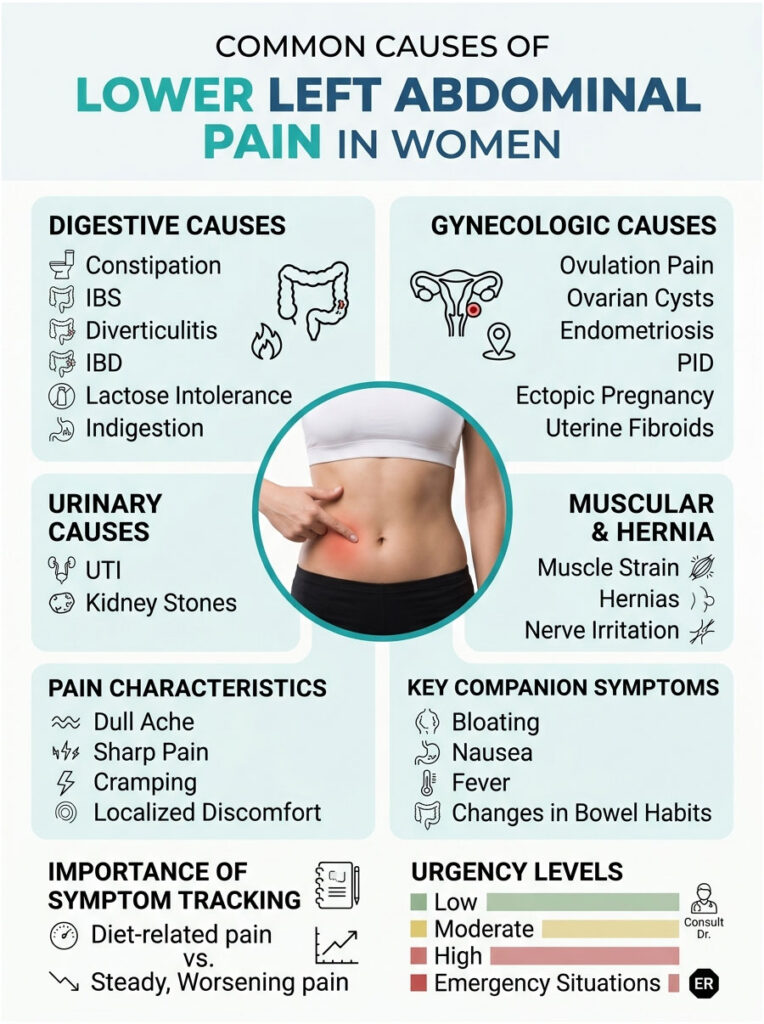
Lower left abdominal pain in females spans four broad categories. Walking through each one helps you match your own symptoms to the most likely culprit.
Digestive Causes
Digestive problems are the single largest source of lower left abdominal pain. They range from minor and self-limited to conditions that need prompt care.
Constipation is the most frequent cause. When hard stool collects in the sigmoid colon, it stretches the bowel wall and creates a dull ache and bloating low on the left side. Trapped gas does something similar, producing sharp, shifting pains as it moves.
Irritable bowel syndrome (IBS) brings cramping, bloating, and alternating constipation and diarrhea, with pain that often improves after a bowel movement. It is a functional disorder, meaning tests look normal even though symptoms are very real.
Diverticulitis is the digestive cause that demands the most respect. Small pouches called diverticula form in the colon wall, and when one becomes inflamed or infected, it produces steady, localized lower left pain, often with fever, nausea, and a change in bowel habits. The American Gastroenterological Association guideline notes that a CT scan is the preferred way to confirm it.
Inflammatory bowel disease (Crohn’s disease and ulcerative colitis) can also localize to the left colon, causing pain with urgent, sometimes bloody diarrhea. In cases reviewed by our medical team, a long history of bowel changes alongside left-side pain is a frequent reason imaging gets ordered.
Two other digestive culprits deserve a mention. Lactose intolerance, the inability to fully digest the sugar in dairy, can trigger bloating, cramping, and diarrhea that settles in the lower colon, including the left side. Indigestion is usually felt higher up, but gas and acid disrupting the digestive process can still produce lower-left discomfort.
A practical clue separates these from something more serious. Digestive pain that tracks specific foods, eases after a bowel movement, and arrives without fever usually points to a benign cause. Pain that ignores your diet and builds steadily is the version worth a closer look.
Gynecologic Causes
Because the left ovary and fallopian tube sit in this region, several causes are specific to women. Many tie closely to the menstrual cycle.
Ovulation pain, known medically as mittelschmerz, happens mid-cycle when an ovary releases an egg. It is usually mild, one-sided, and gone within a day or two. If your left-side pain shows up roughly two weeks before your period, ovulation is a likely explanation.
Ovarian cysts are fluid-filled sacs on the ovary. Many are silent, but a cyst that grows large, ruptures, or twists the ovary (a condition called ovarian torsion) can cause sudden, severe pain that needs urgent evaluation.
Endometriosis occurs when tissue similar to the uterine lining grows outside the uterus, often causing sharp, localized pelvic pain that worsens around your period. It is far from rare; an estimated 1 in 10 American women of reproductive age live with it, based on data summarized by the NIH.
Pelvic inflammatory disease (PID) is an infection of the reproductive organs that can produce lower abdominal pain, fever, and abnormal vaginal discharge. It needs prompt antibiotic treatment, because untreated PID can affect fertility.
Ectopic pregnancy, where a pregnancy implants outside the uterus, is a medical emergency. If pregnancy is possible and you have one-sided lower abdominal pain, especially with bleeding or dizziness, treat it as urgent.
Uterine fibroids, though centered in the uterus, can press on surrounding structures and create a heavy, dragging discomfort that some women feel toward one side. They are extremely common and usually benign, but new or worsening pelvic pain still deserves evaluation, since a fibroid can occasionally outgrow its blood supply.
Why the Left Ovary Matters
Here is a detail most general symptom pages skip. Left-sided ovarian conditions are not random. One analysis of women with unilateral ovarian endometriomas found that 65.6% occurred on the left side, a real skew rather than a coin flip.
That pattern is one reason our lab partners frequently see pelvic ultrasound requests tied specifically to persistent left-side pain. If your pain is one-sided and cycle-linked, the left ovary deserves a genuine look.
Urinary Causes
The left ureter runs straight through the lower left abdomen, so urinary problems land here often.
A urinary tract infection (UTI) can cause lower abdominal discomfort along with burning during urination and a frequent, urgent need to go. Simple UTIs respond well to antibiotics, but ignored infections can climb toward the kidney.
UTIs are strikingly common in women, who have a much shorter urethra than men and therefore an easier path for bacteria to reach the bladder. Many women will have at least one in their lifetime. Catching one early, while symptoms are limited to burning and urgency, keeps a simple infection from turning into a painful kidney problem.
Kidney stones in the left ureter produce intense, colicky pain that often radiates from the flank toward the groin, sometimes with nausea and blood in the urine. A kidney infection (pyelonephritis) adds fever and chills and needs prompt treatment.
Muscular and Hernia Causes
Sometimes the cause is not an internal organ at all. A pulled abdominal muscle from exercise, lifting, or a sudden twist can create sharp, localized pain that worsens with movement and eases with rest.
Hernias, where a loop of intestine pushes through a weak spot in the abdominal wall, may show up as a visible bulge plus discomfort when you lift or strain. Nerve irritation in the abdominal wall can also mimic deeper, organ-based pain.
Musculoskeletal pain has one helpful signature: it usually changes with position and movement. If pressing directly on the spot reproduces the exact pain, or if it eases when you lie still and worsens when you twist or stand, a muscle or the abdominal wall is a likely source rather than an internal organ.
The table below maps the leading causes side by side so you can compare your own pattern at a glance.
| Cause | Typical Pain Type | Key Companion Symptoms | Who It Affects Most | Urgency Level |
| Constipation | Dull, heavy ache | Bloating, infrequent hard stools | All ages; common with low fiber | Low |
| Trapped gas | Sharp, shifting | Bloating, relief after passing gas | All ages | Low |
| IBS | Crampy, eases after BM | Alternating diarrhea/constipation | Women 20s-40s | Low to moderate |
| Diverticulitis | Constant, localized, worsening | Fever, nausea, bowel change | Adults over 40 | Moderate to high |
| Ovulation pain | Brief, one-sided twinge | Occurs mid-cycle | Reproductive-age women | Low |
| Ovarian cyst or torsion | Sudden, sharp, severe | Nausea, vomiting if torsion | Reproductive-age women | Moderate to high |
| Kidney stone (left ureter) | Intense, colicky, radiating | Blood in urine, nausea | Adults 30-60 | Moderate to high |
| Ectopic pregnancy | Sharp, one-sided | Bleeding, dizziness, missed period | Pregnant or possibly pregnant women | Emergency |
Why This Pain Shows Up Now: Timing and Triggers
You and a friend can have identical pain from completely different causes. Timing and triggers are how you tell them apart.
Menstrual Cycle Clues
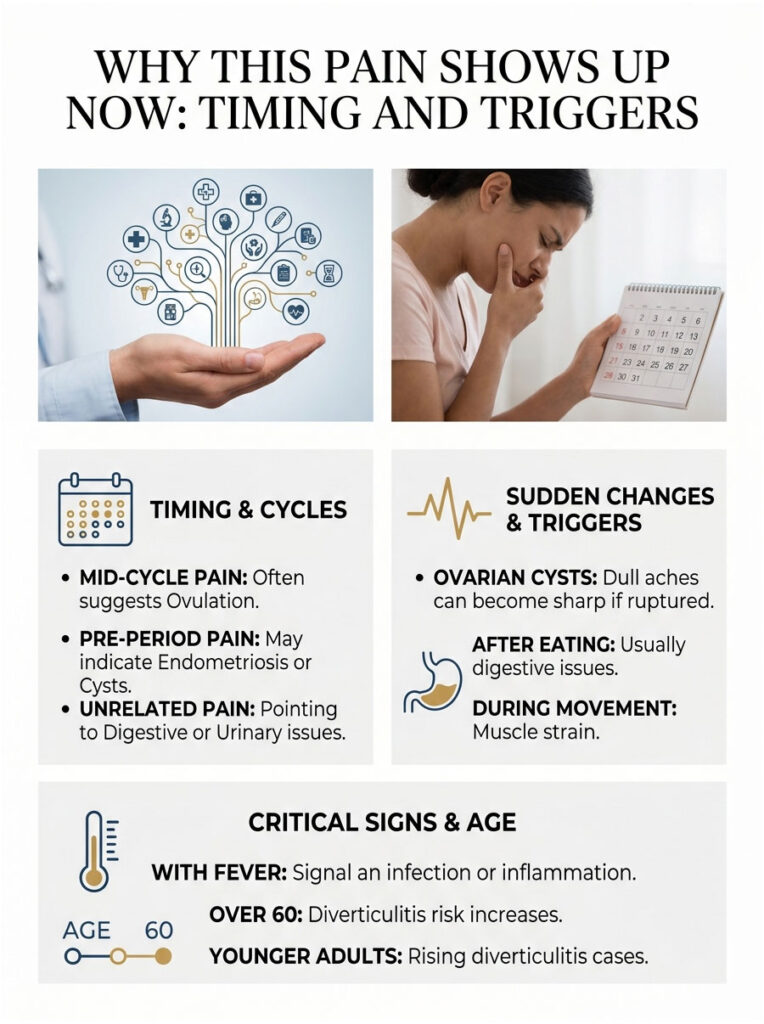
Your cycle is a built-in diagnostic calendar. Pain that arrives mid-cycle, roughly 14 days before your period, points strongly toward ovulation. Pain that peaks in the days right before and during your period leans toward endometriosis, period cramps, or an ovarian cyst.
Pain with no relationship to your cycle at all shifts suspicion toward digestive or urinary causes. Patients commonly ask us whether tracking helps, and the honest answer is yes; even three cycles of notes can change which tests a doctor orders first.
Ovarian cysts add a useful wrinkle here. A cyst can cause a dull ache for days before a sudden sharp episode if it ruptures. If you have noticed recurring one-sided pressure that occasionally spikes, that history is worth mentioning, because it helps a clinician decide whether an ultrasound should happen sooner rather than later.
Pain After Eating, After Exercise, or When Sitting
Triggers narrow things further. Pain that flares shortly after meals often points to a digestive cause such as IBS or diverticulitis. Pain that worsens with movement, twisting, or coughing suggests a muscle strain or hernia.
Pain that builds over hours and ignores everything you do, especially with fever, behaves more like an infection or inflammation that needs evaluation rather than home care.
Age as a Clue: What Changes After 40
Age reshapes the list of likely causes. Diverticulitis is uncommon in young adults and grows more likely with each decade. More than half of Americans over 60 have diverticulosis, the pouches that set the stage for it, according to research published by the NIH.
That said, the picture is shifting. The same body of research shows diverticulitis rising sharply in younger adults, so age lowers but never erases the possibility. In cases seen across our diagnostic network, left-side pain in a woman in her 40s frequently prompts a diverticulitis workup even when she feels otherwise healthy.
The statistics below put the scale of these conditions in a US context.
| Condition | US Prevalence or Incidence | Source |
| Diverticulitis hospital admissions | ~200,000 per year | NIH StatPearls |
| Diverticulitis annual healthcare cost | More than $2 billion per year | NIH StatPearls |
| Diverticulosis in adults over 60 | More than 50% | NIH (PMC) |
| Rise in diverticulitis, ages 40-49 (1980-2007) | 132% increase | NIH (PMC) |
| Endometriosis in US women of reproductive age | About 1 in 10 (~6.7 million) | NIH (PMC) |
| Unilateral ovarian endometriomas on the left side | 65.6% | NIH (PMC) |
When to Worry: Red Flags and Emergency Signs
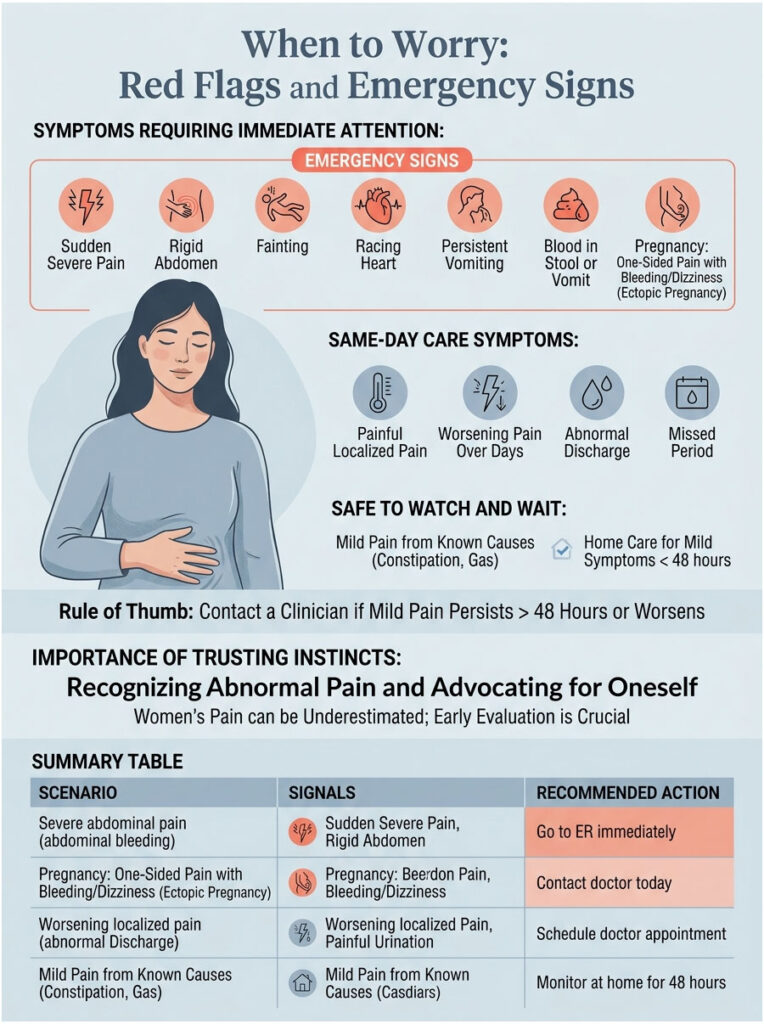
Most lower left abdominal pain in women is mild and passes on its own. A smaller share signals something that needs care today. Telling the difference is the single most useful skill here.
Symptoms That Mean Call 911 or Go to the ER
Some symptoms should never wait. Get emergency care for sudden, severe pain that stops you from sitting still or finding any comfortable position.
Other emergency signs include a rigid or extremely tender abdomen, fainting or near-fainting, a racing heart with cold sweat, vomiting that will not stop, or vomiting blood. Blood in your stool, or black tarry stool, also belongs in this group.
If pregnancy is possible and you have one-sided pain with vaginal bleeding or dizziness, treat it as an emergency for possible ectopic pregnancy. The same urgency applies to sudden, severe one-sided pain with vomiting, which can point to ovarian torsion.
Symptoms That Mean Same-Day Care
A middle tier of symptoms warrants prompt attention, though not necessarily a 911 call. Fever with localized left-side pain, painful urination alongside lower abdominal pain, or pain that has steadily worsened over a day or two all fit here.
New abnormal vaginal discharge with pain, or pain plus a missed period, also calls for a same-day or next-day appointment. Our medical reviewers note that erring toward earlier evaluation rarely causes harm, while waiting out infection or inflammation often does.
When It’s Safe to Watch and Wait
If your pain is mild, you feel otherwise well, and you can trace it to a likely cause such as constipation, gas, or mild period cramps, short-term home care is reasonable.
A practical rule used widely in US primary care: if mild pain lasts more than 48 hours, keeps returning, or worsens at any point, stop watching and call your clinician. The decision table below turns these tiers into clear actions.
Trust Your Instincts About Your Own Body
Women’s pain is sometimes underestimated, both by others and by women who have learned to push through discomfort. Patient experience shows that abdominal and pelvic pain in women can take longer to be taken seriously, which delays the diagnosis of conditions like endometriosis and ovarian torsion.
The takeaway is simple and worth repeating. You know your normal better than anyone. If pain feels different from your usual cramps, lasts longer than it should, or simply feels wrong, that instinct is information. Our medical reviewers consistently encourage patients to describe pain in plain, specific terms and to ask directly what is being ruled out. Being evaluated and reassured costs little; a missed time-sensitive diagnosis costs far more.
| Scenario | What It May Signal | Recommended Action |
| Sudden severe pain, can’t stay still | Ovarian torsion, ruptured cyst, perforation | Go to the ER now |
| One-sided pain + possible pregnancy + bleeding | Ectopic pregnancy | Call 911 or go to the ER immediately |
| Fever + localized left pain + nausea | Diverticulitis or pelvic infection | Same-day medical evaluation |
| Burning urination + lower left pain | UTI, possible kidney involvement | See a doctor within 24 hours |
| Mild crampy pain, eases after bowel movement | Constipation or IBS | Home care; review if it persists past 48 hours |
| Mid-cycle one-sided twinge, otherwise well | Ovulation pain (mittelschmerz) | Monitor; no treatment usually needed |
| Pain lasting more than 48 hours or worsening | Needs a cause identified | Schedule a clinician visit promptly |
How to Get Relief and Find Answers
Once an emergency is ruled out, the goal splits in two: ease the discomfort now, and find the underlying cause so it does not keep returning.
Safe At-Home Steps for Mild Pain
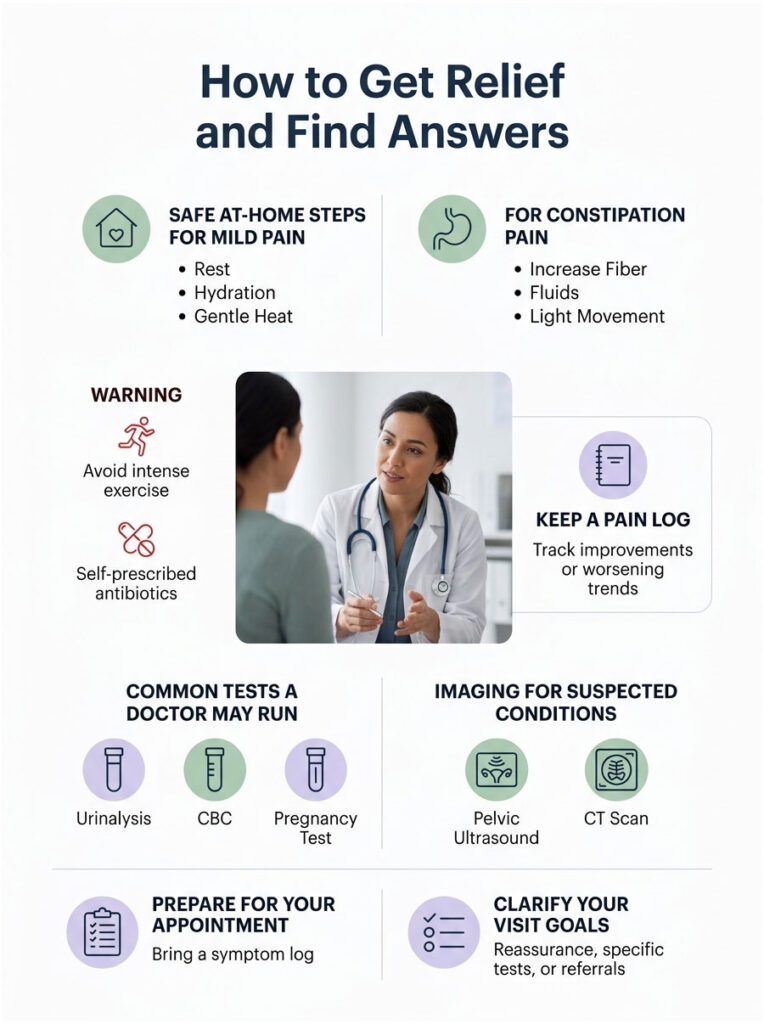
For mild, clearly digestive pain, conservative steps usually help. Rest your stomach, stay well hydrated with water, and apply gentle heat with a warm bath or heating pad to relax cramping muscles.
For constipation-driven pain, gradually adding fiber and fluids and getting light movement, such as a walk, helps stool move through the sigmoid colon. Over-the-counter pain relief can take the edge off, though it should not be used to mask pain that is escalating.
Skip intense exercise while you hurt, and avoid self-prescribed antibiotics, which do nothing for most causes and can hide a worsening picture. If a home approach has not helped within a couple of days, that is your signal to seek care.
One more habit helps during the watch-and-wait window. Keep notes on whether the pain is improving, holding steady, or worsening hour by hour. A pain that is slowly fading supports staying the course, while a pain that is climbing tells you not to wait. That simple trend line is often more useful than any single moment of how bad it feels.
What Tests a Doctor May Run
Pinpointing the cause is usually straightforward with the right workup. A doctor will start with your history and a physical exam, then choose tests based on the suspected category.
Common starting points include a urinalysis to check for infection or blood, a complete blood count (CBC) to look for signs of infection or inflammation, and a pregnancy test for any woman who could be pregnant.
If a gynecologic cause is suspected, a pelvic ultrasound is the usual next step to examine the ovaries and uterus. For suspected diverticulitis or a kidney stone, a CT scan is the preferred imaging study. Booking these tests early, rather than waiting out weeks of uncertainty, is something patients tell us they wish they had done sooner.
Each test answers a specific question. A urinalysis flags infection or hidden blood pointing toward the urinary tract. A complete blood count reveals whether your body is fighting an infection. A pelvic ultrasound shows the size and condition of the ovaries and can catch cysts or signs of torsion. A CT scan maps the colon in detail, which is why it confirms diverticulitis so reliably.
How to Prepare for Your Appointment
A few minutes of preparation makes any visit more productive. Bring your symptom log: when the pain started, its character, its triggers, and its companion symptoms.
Note the date of your last period and your cycle length, list every medication and supplement you take, and write down your top two or three questions. Across patients we serve, the people who arrive organized tend to leave with a clearer plan and fewer repeat visits.
It also helps to think through your goal for the visit before you arrive. Whether you mainly want reassurance, a specific test, or a referral, stating that plainly helps your clinician tailor the appointment. If your pain followed a specific event such as heavy lifting or a new medication, mention that too, since timing often points straight at the cause.
How to Lower Your Risk
You cannot prevent every cause of lower left abdominal pain, but several of the most common ones respond well to everyday habits.
Diet and Fiber
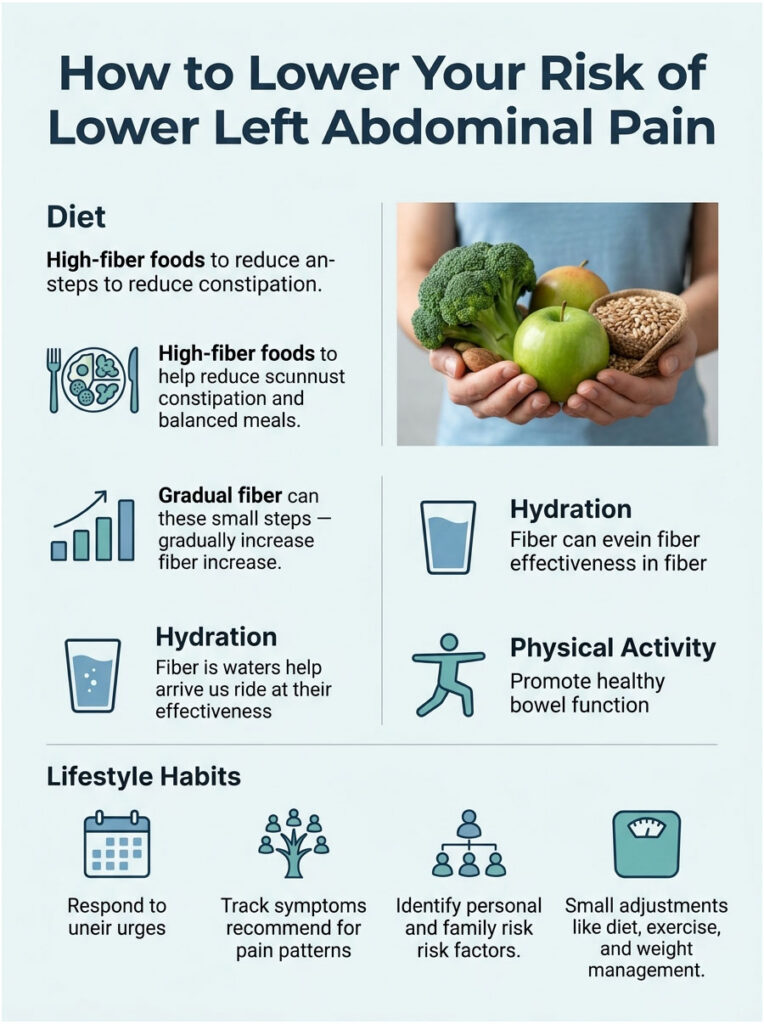
A diet low in fiber is strongly linked to constipation and to the diverticular changes behind diverticulitis. Building meals around vegetables, fruit, whole grains, and legumes keeps stool soft and lowers pressure inside the colon.
Add fiber slowly; a sudden jump can briefly worsen gas and bloating. A steady increase over a couple of weeks is gentler on your system.
Hydration, Movement, and Bowel Habits
Water works alongside fiber. Without enough fluid, even a high-fiber diet can leave stool hard and slow.
Regular physical activity supports healthy bowel function, and research summarized by the NIH links vigorous exercise such as running to a meaningfully lower risk of complicated diverticulitis. Responding to the urge to have a bowel movement, rather than delaying it, also reduces strain on the sigmoid colon.
Tracking Symptoms and Your Cycle
For gynecologic causes, awareness is the strongest tool you have. A simple cycle and symptom tracker helps you see whether pain is ovulation-linked, period-linked, or unrelated.
That pattern recognition turns a vague complaint into specific information your doctor can act on, and it often shortens the path to the right diagnosis.
Know Your Personal Risk Factors
Some risk is within your control and some is not, and knowing which is which helps you focus your effort. A family history of diverticular disease, inflammatory bowel disease, or endometriosis raises your baseline risk, as does age for diverticulitis specifically.
Modifiable factors carry real weight, though. Research links a low-fiber diet, physical inactivity, smoking, and excess body weight to a higher risk of diverticulitis. None of these guarantees a problem, and none is a personal failing, but each one you address tilts the odds in your favor. Patients we work with often find that small, steady changes are easier to sustain than dramatic overhauls.
Frequently Asked Questions
What organs are in the lower left abdomen of a female?
The lower left abdomen contains the descending and sigmoid sections of the colon, the left ovary and left fallopian tube, the left ureter, and abdominal wall muscles and nerves. Because reproductive organs sit here, women have more potential pain sources in this region than men do.
Is lower left abdominal pain serious in women?
Usually not. Most lower left abdominal pain in females comes from constipation, gas, or mild cramps and resolves on its own. It becomes serious when pain is sudden and severe, or arrives with fever, fainting, persistent vomiting, or vaginal bleeding with possible pregnancy.
Can ovulation cause lower left abdominal pain?
Yes. Ovulation pain, called mittelschmerz, happens when the left ovary releases an egg around the middle of your cycle. It is typically a mild, one-sided twinge lasting a few hours to a couple of days and needs no treatment beyond comfort measures.
Why does my lower left abdomen hurt after eating?
Pain that flares after meals usually points to a digestive cause. Irritable bowel syndrome, gas, constipation, and diverticulitis can all produce post-meal discomfort in the lower left abdomen. If pain after eating is steady, worsening, and paired with fever, see a doctor promptly.
Can gas cause sharp pain in the lower left abdomen?
Yes. Trapped gas moving through the descending and sigmoid colon can cause surprisingly sharp, shifting pains, often with bloating. Gas pain typically eases once the gas passes. Pain that stays sharp, localized, and constant deserves evaluation, since other conditions can mimic gas.
Could lower left abdominal pain mean pregnancy?
It can. Early pregnancy sometimes brings mild one-sided cramping. More importantly, one-sided lower abdominal pain with vaginal bleeding, dizziness, or a missed period can signal an ectopic pregnancy, which is a medical emergency. Take a pregnancy test and seek urgent care if those signs appear.
When should I go to the ER for lower left abdominal pain?
Go to the emergency room for sudden, severe pain that prevents you from staying still, or for pain with fever, fainting, a rigid abdomen, nonstop vomiting, blood in stool or urine, or possible pregnancy with bleeding. These can point to torsion, infection, or internal bleeding.
Can stress cause lower left abdominal pain?
Indirectly, yes. Stress can worsen irritable bowel syndrome and increase abdominal muscle tension, both of which produce lower left abdominal pain. Stress does not, on its own, explain fever, bleeding, or severe pain, so those symptoms still need a medical look.
What does diverticulitis pain feel like in women?
Diverticulitis usually causes a constant, localized ache in the lower left abdomen rather than a passing cramp. It often comes with fever, nausea, and a change in bowel habits, and the pain tends to build rather than ease. It is most common after age 40 and needs medical care.
How long is it okay to have mild lower left abdominal pain?
Mild pain tied to an obvious cause like constipation can be watched for a day or two. A widely used guideline in US primary care is to call your clinician if mild pain lasts longer than 48 hours, keeps returning, or worsens at any point.
Can a UTI cause lower left abdominal pain in females?
Yes. A urinary tract infection can cause lower abdominal discomfort along with burning during urination and a frequent, urgent need to go. Because the left ureter runs through this area, infection or a stone on that side can localize pain to the lower left abdomen.
What tests diagnose the cause of lower left abdominal pain?
Doctors commonly start with a urinalysis, a complete blood count, and a pregnancy test. Depending on the suspected cause, a pelvic ultrasound checks the ovaries and uterus, while a CT scan is preferred for diverticulitis or kidney stones. History and exam guide which tests come first.
Medical Disclaimer: This article is for general educational purposes only and does not replace professional medical advice, diagnosis, or treatment. HealthCareOnTime.com does not diagnose conditions or recommend specific treatments. Always consult a qualified healthcare provider about any symptom, and seek emergency care immediately for severe or worsening pain.
References
- Cleveland Clinic – Left Side Abdominal Pain: Causes & How To Treat
- Cleveland Clinic – Lower Abdominal Pain: Common Causes & Treatment
- NIH StatPearls – Diverticulitis
- NIH (PMC) – Epidemiology, Pathophysiology, and Treatment of Diverticulitis
- NIH (PMC) – Co-Existence of Endometriosis with Ovarian Cysts
- NIH (PMC) – Co-existence of Benign Gynecological Tumors with Endometriosis