A 34-year-old shows up exhausted, sure it is nothing more than stress and short nights. Her routine blood count looks almost normal, except the red cells run slightly large. That quiet flag, not the fatigue, is what sends folate to the lab.
Table of Contents
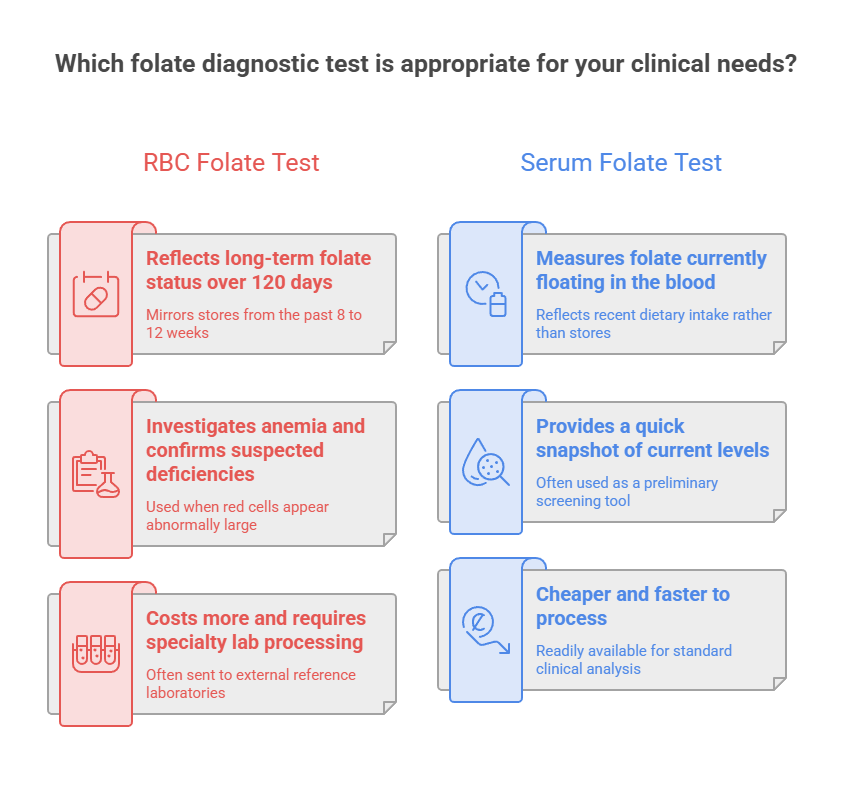
Quick Answer: An RBC folate test measures the amount of folate (vitamin B9) stored inside your red blood cells. Because folate stays locked inside those cells for their full lifespan of about 120 days, the result reflects your long-term folate status, not just what you ate this week. Doctors order it to investigate anemia, confirm a suspected deficiency, and check tissue stores when a serum folate result looks borderline.
At a Glance
- The red blood cell folate test reports folate held inside red cells, not the amount floating in serum.
- It mirrors your folate stores over the past 8 to 12 weeks, so recent meals barely move it.
- Doctors usually order it after a CBC shows large red cells (high MCV) or unexplained anemia.
- Normal ranges vary by lab and method, so read your result against the lab’s own range.
- Serum folate is cheaper and faster; RBC folate costs more and is often sent to specialty labs.
- US folic acid fortification has made true folate deficiency rare, which shapes when the test is worth ordering.
What the RBC Folate Test Actually Measures
One focused question sits behind this test: how much folate is stored inside your red blood cells. Folate, or vitamin B9, is a water-soluble nutrient the body cannot make for itself.
It comes from food such as leafy greens, beans, citrus, and fortified grains, or from supplements. The synthetic version added to pills and fortified products is folic acid. Once it reaches your bloodstream, folate powers some of the body’s most basic machinery.
A serum folate test and an RBC folate test measure the same vitamin yet report different things. That gap is the reason the red blood cell version exists, and why a doctor might pick it over the cheaper, faster option.
Folate (Vitamin B9), the Nutrient Being Measured
Folate works as a cofactor for DNA synthesis, red blood cell production, and normal cell division. Fast-dividing cells lean on it hardest, so a shortage shows up first in your blood and in a developing baby.
Run low on folate and the red blood cell precursors in your bone marrow stop maturing correctly. They swell into oversized, inefficient cells, the hallmark of megaloblastic anemia. Those faulty red cells carry oxygen poorly, which leaves you drained and short of breath.
Folate has a second job worth knowing. It helps keep homocysteine in check, an amino acid tied to higher cardiovascular risk when it builds up, and it protects against neural tube defects in early pregnancy.
Our medical reviewers note that the pregnancy connection is why folate testing and supplementation draw so much attention before conception. The vitamin does much of its developmental work in the first few weeks, often before a pregnancy is even confirmed.
Why Red Blood Cells, Not Just Blood Serum
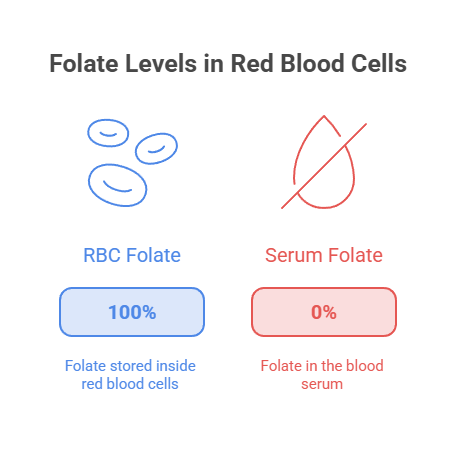
One detail separates this test from a standard folate check. About 95% of the folate in your body is stored inside red blood cells rather than the serum, according to clinical reference data from LabCorp.
Red cells take up folate as they form in the marrow and hold it for their entire life. Folate stays inside those cells for their full lifespan of about 120 days, and that long hold is what gives the test its memory.
A serum folate result captures what is circulating right now, a number that swings with recent meals, supplements, and how well you absorbed them. Picture it as today’s reading, taken in isolation.
The red blood cell folate test ignores that daily churn and reports your deeper reserve instead. Hims frames RBC folate as a steadier view of folate status than any single serum draw can give.
Patients booking tests through HealthCareOnTime often wonder why one vitamin needs two tests. The cleanest way to say it: serum folate is your checking account balance, RBC folate is your savings.
Because that contrast drives the entire decision, the first table sets it side by side.
Table 1: RBC Folate vs Serum Folate
| Feature | RBC Folate Test | Serum Folate Test | What It Reflects | Best Used For |
| What it measures | Folate inside red blood cells | Folate in the serum | Tissue storage vs circulating level | Long-term vs recent status |
| Time window | Past 8 to 12 weeks (~120 days) | Past few days | Stable reserve vs daily intake | Confirming chronic deficiency |
| Affected by recent meals | Minimal | Strongly | Diet and supplement stability | Avoiding a false “normal” reading |
| Typical US cost (direct-pay) | ~$109 to $113 | ~$18 to $59 | Cost and accessibility | Budget and availability |
| Lab availability | Often sent to specialty labs | Widely available | Convenience and turnaround | Speed of results |
| Analytical variability | Higher (red cell lysis step) | Lower | Result reliability | Reproducible monitoring |
Cost figures reflect direct-pay pricing listed by major US labs and will differ with insurance.
Why Doctors Order an RBC Folate Test
Folate testing almost never happens on a whim. A clue comes first, usually from another blood test or a run of symptoms that point toward a deficiency.
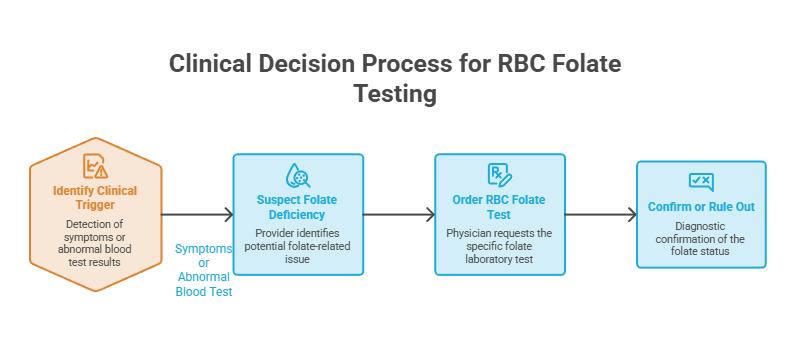
Knowing that trigger tells you what your provider is hunting for. The aim, nearly always, is to confirm or rule out a folate problem behind something already spotted.
The CBC Trigger, High MCV and Macrocytic Anemia
Most orders trace back to a complete blood count, the routine CBC run at countless checkups. When that panel shows a low red blood cell count next to unusually large red cells, it flags a high mean corpuscular volume (MCV).
Large red cells plus anemia is called macrocytic or megaloblastic anemia. The pattern is the classic signature of a folate or vitamin B12 problem, and it sends doctors checking both vitamins at once.
Testing.com notes that folate testing is often ordered to follow up an abnormal CBC or blood smear suggesting megaloblastic anemia. The folate result then helps tell a folate cause apart from a B12 cause, since the two look nearly identical on the count alone.
In cases reviewed by our medical team, a flagged MCV on a routine panel is the single most common reason a folate test reaches the order form. The CBC raises the question, and the folate value begins to answer it.
Symptoms That Prompt Testing
Other times, how you feel is the trigger rather than a number on a report. Folate deficiency can build quietly for weeks, then surface as symptoms most people recognize.
Typical signs include stubborn fatigue, general weakness, shortness of breath, and a pale look. Plenty of people also notice a sore or swollen tongue, mouth ulcers, a smaller appetite, irritability, and foggy concentration.
These complaints overlap heavily with iron-deficiency anemia and thyroid trouble, so folate is rarely tested by itself. The symptom picture suggests a nutritional cause, and folate is among the first vitamins a doctor checks.
Our lab partners report that vague, lingering tiredness is one of the most frequent complaints behind a folate order, particularly when basic iron studies come back clean. With no obvious source for the exhaustion, looking at B-vitamin status is a sensible next step.
Who’s at Higher Risk and Should Be Tested
Some groups carry a greater chance of low folate, and doctors test them sooner. Chronic alcohol use leads the list, since alcohol interferes with both folate absorption and how the body puts the vitamin to use.
Gut conditions weigh just as heavily. Celiac disease, inflammatory bowel disease, and other malabsorption disorders can block folate uptake even when the diet reads well on paper.
Medications form a third quiet path. Methotrexate, used in chemotherapy and autoimmune disease, blocks folate metabolism directly, and the seizure drug phenytoin lowers folate too. Anyone on these is watched more closely.
Pregnancy and preconception planning stand apart. The CDC recommends that all women capable of becoming pregnant get 400 micrograms of folic acid daily to help prevent neural tube defects, advice reinforced in the CDC’s clinician guidance.
That guidance has public-health muscle behind it. Mandatory folic acid fortification of US grains, in place since the late 1990s, sharply cut neural tube defects nationwide and pushed general-population folate deficiency to low levels, a fact that matters later in this article.
How the RBC Folate Test Is Done and How to Prepare
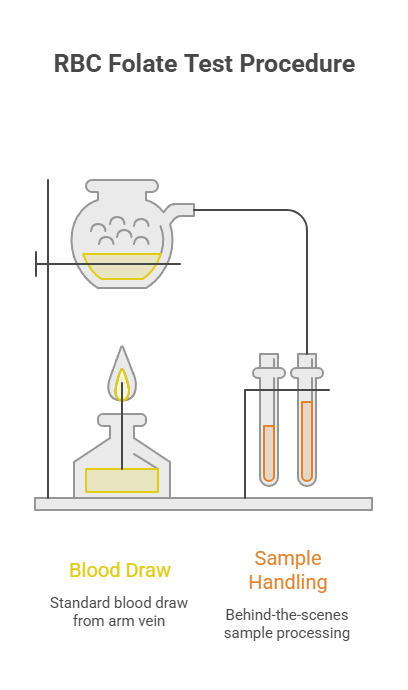
The procedure is simple, a standard blood draw from a vein in your arm. The prep details and behind-the-scenes handling are where a little knowledge keeps your result accurate the first time around.
The Blood Draw and Sample Handling
A phlebotomist draws blood from your arm, the same routine as any blood test. The sample goes into a lavender-top (EDTA) tube, and the visit is usually over in a couple of minutes.
Out of sight, RBC folate calls for more careful handling than serum folate. The sample has to be protected from light, and the lab pairs it with a hematocrit measurement to calculate the folate concentration inside the red cells specifically.
That added work, including a step where red cells are broken open to release their stored folate, explains why RBC folate costs more and shows wider lab-to-lab variation. Our medical reviewers note that smaller labs frequently send the test to specialty facilities instead of running it on site.
Fasting, Biotin, and Timing Considerations
Fasting is usually not required for a folate test, though some labs prefer an 8-hour fast for cleaner numbers. Whatever your order specifies wins, so follow your provider’s instructions over any general rule.
Biotin trips up more results than people realize. High-dose biotin supplements, the popular hair, skin, and nail vitamin, can interfere with the lab assay and distort the reading. Many labs recommend stopping biotin 48 to 72 hours before the draw.
Supplement timing carries more weight than expected. Since folic acid pills can lift a serum reading within a few days, the red blood cell folate test is the smarter pick when you want your true stored level rather than the short-lived bump from recent supplementation.
The cost difference between the two tests is real, and direct-pay patients tend to ask about it up front. Serum folate often runs between roughly $18 and $59 at major US labs, while RBC folate is commonly priced around $109 to $113 for direct-pay testing through services tied to LabCorp. Insurance can shift those figures a lot.
Understanding Your RBC Folate Results
The number coming back is only half the job. RBC folate results need context, because the line between normal and low moves depending on the lab and the method behind it.
That variability is not a flaw in your specific test. It reflects real differences in how labs run the assay, which is why a figure on its own never tells the whole story.
Normal Range and What the Numbers Mean
No single universal cutoff exists for RBC folate, and that surprises many patients. The rbc folate normal range shifts by laboratory and assay, so the figure on your report should always be read against that lab’s stated range.
A rough guide helps. Many US labs treat an RBC folate above about 280 ng/mL as adequate, though some apply wider adult ranges. Serum folate gives a clearer line: a serum folate below 3 ng/mL is considered clinical deficiency by the World Health Organization, per reference material from LabCorp.
Our medical team keeps repeating one practical rule to patients: a single borderline value is not worth panic. A result sitting just above or below the line means far less than the trend across several tests, read together with your symptoms and your CBC.
A folate number also borrows meaning from its neighbors. Providers read it next to vitamin B12, the red cell indices, and sometimes homocysteine, because those values together tell a story no lone test can.
The second table gathers the US folate figures patients ask about most.
Table 2: USA Folate Facts and Figures
| Statistic | Figure | Source |
| Share of body folate stored in red blood cells | ~95% | LabCorp clinical reference |
| Red blood cell lifespan (storage window) | ~120 days | Hims / NIH |
| Folate-deficiency anemia prevalence (post-fortification, older US adults) | <0.1% | CDC REGARDS study |
| Serum folate deficiency cutoff (WHO) | <3 ng/mL | LabCorp / WHO |
| CDC daily folic acid recommendation (women of childbearing age) | 400 mcg | CDC |
| Reduction in neural tube defects after fortification | ~30 to 50% | CDC |
Low RBC Folate, Causes and What Comes Next
A low result signals a real, longer-standing shortfall, not one rough week at the table. The usual causes cluster into a few groups.
Thin dietary intake is the simplest, often alongside chronic alcohol use that drags absorption and metabolism down with it. Malabsorption from celiac disease or inflammatory bowel disease is another common driver, joined by folate-depleting drugs such as methotrexate.
Rising demand can lower levels too. Pregnancy, rapid growth, and some blood disorders all push folate needs up, so an intake that used to be enough can suddenly fall short.
When folate reads low, providers usually check vitamin B12 before reaching for high-dose folic acid. The logic is easy to miss but important: folic acid can mask a B12 deficiency by fixing the anemia while nerve damage from low B12 keeps progressing.
High RBC Folate, What It Signals
A high result turns up far less often and rarely causes alarm. The usual explanation is plain, folic acid supplements or a folate-heavy diet nudging the number up.
One situation earns a second look, though. An elevated folate reading can occasionally ride alongside a vitamin B12 deficiency, thanks to how the two vitamins interact inside cells.
Patients commonly ask us whether a high folate number is dangerous. On its own, seldom. Even so, our medical reviewers note that an unexpectedly high folate paired with anemia symptoms is reason enough to confirm B12 rather than assume all is fine.
RBC Folate vs Serum Folate, Which Test You Actually Need
Here the topic earns real attention, and where most patient-facing pages go silent. A live clinical debate runs underneath it: whether RBC folate is worth ordering at all.
Seeing both sides puts you in a far stronger spot for the conversation with your provider. It also explains why two doctors might choose differently for identical symptoms.
The Accuracy Debate and the Post-Fortification Reality
For decades, RBC folate held the title of more accurate measure of true folate status, since it mirrors tissue stores rather than recent intake. That reputation still lingers across many lab pages.
The pushback from US laboratory authorities has been firm. The College of American Pathologists guidance states that RBC folate generally adds no diagnostic value over a serum folate level in detecting folate deficiency, and that routine testing of both is discouraged, as set out in its clinician handout.
Two forces sit behind that stance. RBC folate assays show higher analytical variation than serum folate because of the extra red cell processing steps. And US folate deficiency has grown scarce since mandatory grain fortification.
A CDC-linked REGARDS study makes the scarcity vivid. After mandatory folic acid fortification, folate-deficiency anemia turned up in under 0.1% of a community-dwelling older US population, which calls the routine value of folate testing into question.
Peer-reviewed work points the same way. A study indexed on PubMed concluded that fasting serum folate should be preferred for assessing folate status, and that the need for RBC folate testing is less meaningful than once assumed.
When RBC Folate Still Earns Its Place
If the case against it is so strong, why does the test survive and still get ordered? Because the edge cases are genuine, and a serum result does not always close the question.
RBC folate can add value when a serum folate lands in the borderline zone, often cited around 3 to 5.9 ng/mL, while symptoms or CBC findings suggest something deeper. In that gray band, the stored-folate view can tip the call.
It also helps in suspected hereditary folate-handling disorders and in certain malabsorption patterns where chronic depletion is likely. Rare, yes, but precisely where the longer memory of RBC folate pays off.
From our experience supporting patients, RBC folate performs best as a tie-breaker rather than a first move. When the serum number and the clinical story disagree, the deeper reserve reading can break the deadlock.
What Happens After Your RBC Folate Test
A result only matters if it points somewhere. The next move depends on the number, your symptoms, and what the rest of your blood work reveals.
No single value sets off an automatic plan. Providers weigh the folate result against B12, the CBC, and how you actually feel before settling on any treatment.
The third table lines up common scenarios with sensible next steps.
Table 3: Result Scenarios and Recommended Actions
| Your Result | What It May Mean | Recommended Next Step |
| Low RBC folate + large red cells | Folate-deficiency anemia likely | Confirm B12 first, then start folate replacement and find the cause |
| Low RBC folate, normal serum | Longer-term store depletion | Review diet, supplements, and possible absorption issues |
| Borderline result + symptoms | Possible early or mild deficiency | Recheck with B12 and homocysteine; track the trend |
| High RBC folate, no symptoms | Supplementation or diet effect | Usually no action; review supplement dose |
| High folate + anemia signs | Possible masked B12 deficiency | Test vitamin B12 before any high-dose folic acid |
| Normal result, ongoing fatigue | Folate is not the cause | Investigate iron, thyroid, and other causes |
Treatment Basics
Correcting low folate is usually simple and reliable. Mild cases often respond to diet alone, with more leafy greens, legumes, citrus, and fortified grains worked into daily meals.
A confirmed deficiency is generally treated with oral folic acid supplements, at a dose and duration your provider sets. Levels tend to climb back steadily once intake improves and absorption is working as it should.
The harder part is answering why folate fell in the first place, whether the cause is alcohol use, an absorption disorder, or a needed medication. Our medical reviewers note that solving the root cause matters more than the supplement. A pill that lifts the number without fixing the source only buys a little time.
When to Retest and Why B12 Comes First
Once treatment starts, providers often recheck folate to confirm levels are rising and the plan is holding. Timing depends on how low the level ran and what caused it.
The B12-first rule bears repeating, because the consequences are real. Hand folic acid to someone with an undiagnosed B12 deficiency and you can correct the blood picture while permanent nerve damage advances unseen.
That risk is exactly why folate is so rarely read in isolation. In tests booked through HealthCareOnTime, folate, vitamin B12, and a CBC routinely travel together for this reason.
Frequently Asked Questions
What does an RBC folate test check for?
It checks how much folate (vitamin B9) is stored inside your red blood cells. That stored amount reflects your folate status over the past two to three months, helping diagnose folate deficiency, investigate certain anemias, and reveal shortfalls a single serum test might miss.
What is a normal RBC folate level?
Ranges vary by lab and testing method, so read your result against the reference range printed on your own report. As a general guide, many US labs treat RBC folate above roughly 280 ng/mL as adequate, though some use broader adult ranges. The lab’s stated range is what counts.
Why would a doctor order a folate test?
Most often after a CBC shows enlarged red cells (high MCV) or unexplained anemia. Doctors also order it for symptoms like fatigue, weakness, or a sore tongue, for at-risk groups such as those with alcohol use or malabsorption, and to monitor treatment for a known deficiency.
What’s the difference between folate and RBC folate?
“Folate” usually refers to the serum test, which measures folate circulating in your blood and reflects recent intake. “RBC folate” measures folate stored inside red blood cells, reflecting longer-term status over about 120 days. Serum is a snapshot; RBC folate is the deeper reserve.
Is RBC folate or serum folate more accurate?
RBC folate was long considered more accurate for tissue stores. However, major US lab authorities now find it adds little over serum folate for most cases and shows more testing variability. Many experts recommend serum folate first, reserving RBC folate for borderline or complex situations.
Do I need to fast before an RBC folate test?
Usually not, though some labs suggest an 8-hour fast for cleaner results. Follow your provider’s specific instructions. Also tell them about any high-dose biotin supplements, since biotin can interfere with the assay; many labs advise pausing it 48 to 72 hours before your draw.
What does a high RBC folate level mean?
Most often it reflects folic acid supplements or a folate-rich diet, which is not concerning on its own. Occasionally a high reading accompanies vitamin B12 deficiency due to how the two vitamins interact. If you have anemia symptoms, your provider may check B12 to be safe.
What causes low RBC folate?
Common causes include poor dietary intake, chronic alcohol use, and malabsorption from celiac disease or inflammatory bowel disease. Certain medications, such as methotrexate and phenytoin, also deplete folate. Pregnancy raises folate needs, which can lower levels without adequate intake.
How much does an RBC folate test cost in the US?
Direct-pay pricing for RBC folate commonly runs around $109 to $113 at major labs, notably higher than serum folate at roughly $18 to $59. Insurance can change these figures significantly, and many plans cover folate testing when it is medically indicated.
Is the RBC folate test really necessary?
Often it is not the first choice. Since US grain fortification, true folate deficiency has become rare, and a serum folate usually answers the question. RBC folate earns its place mainly in borderline results, suspected malabsorption, or rare hereditary folate disorders.
Can I check folate at home?
Several direct-to-consumer lab services let you order a folate test without a doctor’s visit, then visit a partner lab for the blood draw. True fingerstick home kits for RBC folate are limited. For accurate stored-folate results, a standard venous draw at a lab remains the reliable route.
How is folate deficiency treated?
Mild cases often improve with a folate-rich diet. Confirmed deficiency is usually treated with oral folic acid supplements at a dose your provider sets, plus addressing the underlying cause. Providers typically check vitamin B12 first, since treating folate alone can mask a B12 problem.
Medical Disclaimer: This article is for educational purposes only and does not constitute medical advice. Reference ranges, costs, and recommendations vary by individual, laboratory, and insurance plan. Always consult a licensed healthcare provider to interpret your test results and to decide on any testing or treatment.
References
- CDC, About Folic Acid
- CDC, Folic Acid Facts for Clinicians
- CDC REGARDS study, folate-deficiency anemia after fortification
- LabCorp, Folate (Folic Acid) test details
- College of American Pathologists, RBC Folate clinician guidance
- Testing.com, Folate Test overview
- Journal of Clinical Pathology, serum vs RBC folate testing
- Hims, Folate RBC biomarker guide
- Hospital News, Folate: A Tale of Two Tests