Sixty people who had already quit statins over side effects agreed to spend a year taking pills again. Some months they got a real statin. Some months they got a sugar pill. Four months out of twelve, they got an empty bottle and took nothing at all.
Table of Contents
They rated their symptoms every day on a phone app. Nobody, not the patients and not the researchers, knew which month was which.
The fake pills made people feel almost exactly as bad as the real ones. Both made people feel far worse than taking nothing.
Quick Answer: Statin fatigue is a real experience, but large blinded trials suggest the statin usually is not the cause. The biggest pooled analysis of double-blind trials found fatigue occurred just as often on placebo as on statin therapy. A small number of people do have a genuine drug reaction. Targeted blood tests plus a supervised pause and restart separate the two.
At a Glance
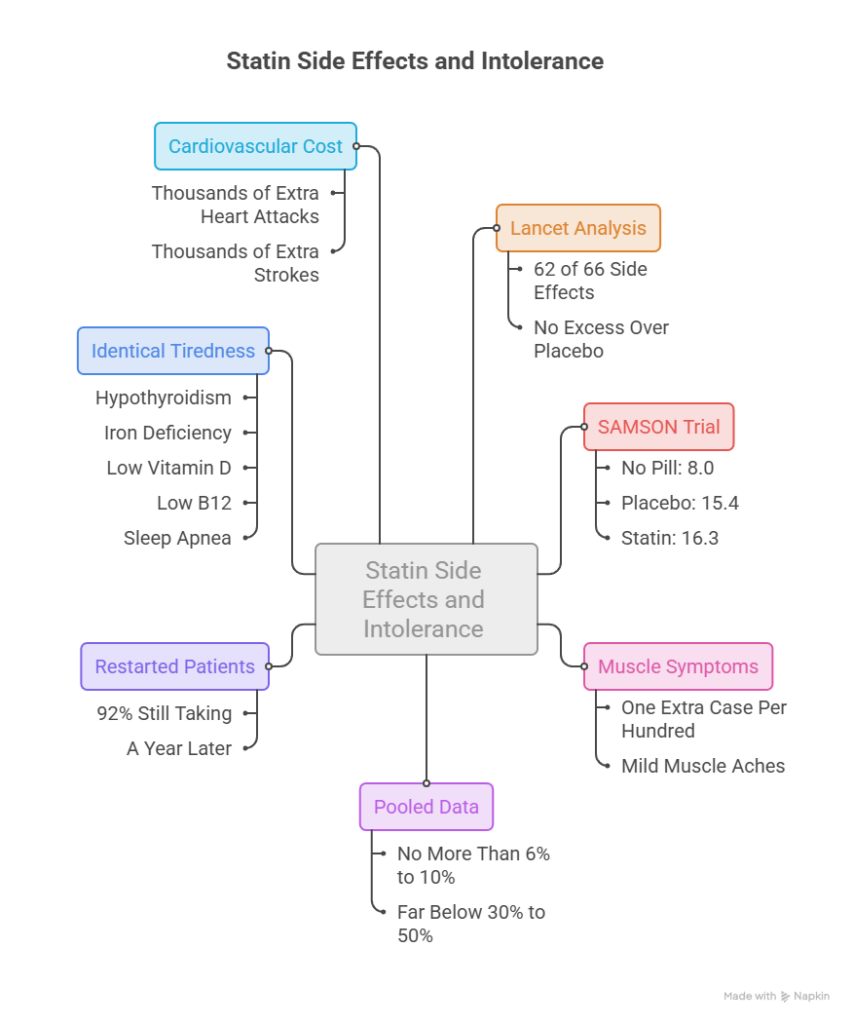
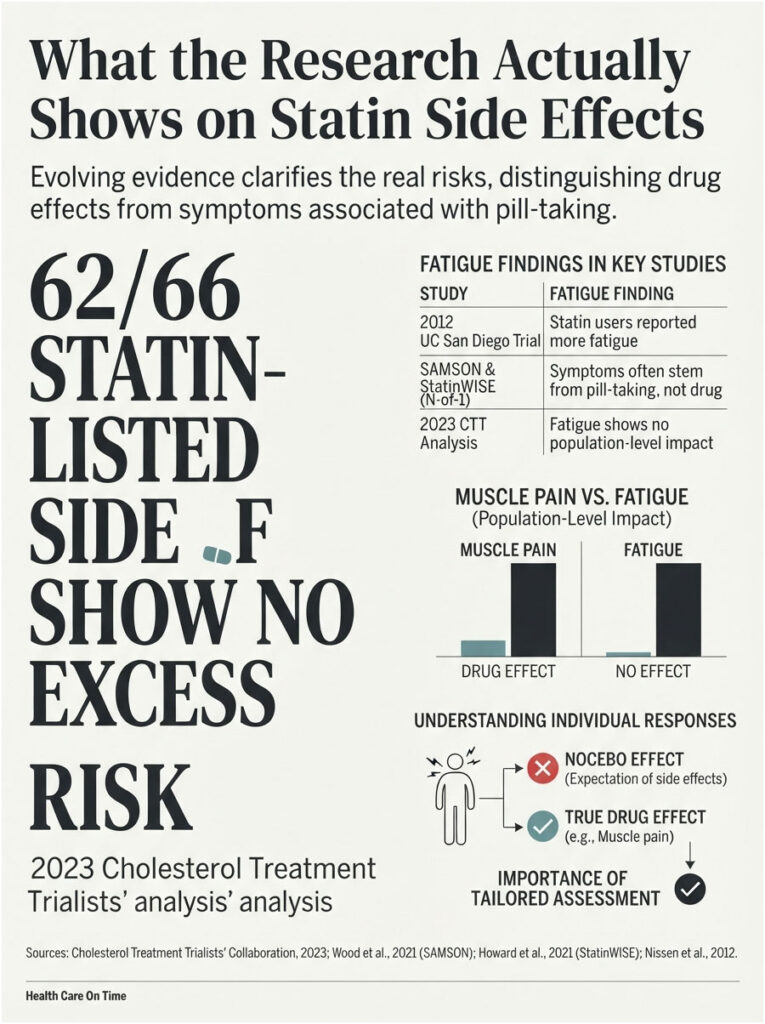
- A February analysis in The Lancet pooled 23 double-blind trials and over 150,000 participants, finding 62 of 66 side effects listed on statin labels, fatigue included, showed no excess over placebo.
- In the SAMSON trial, daily symptom scores were 8.0 with no pill, 15.4 on placebo, and 16.3 on a statin. The statin-versus-placebo gap was not statistically significant.
- Muscle symptoms are the exception. Statins do cause a small real increase in mild muscle aches, roughly one extra case per hundred people treated.
- Pooled data from 176 trials and 4.1 million users put true statin intolerance at no more than 6% to 10%, far below the 30% to 50% figures still in circulation.
- Among patients restarted on a statin after a reported reaction, 92% were still taking one a year later.
- Hypothyroidism, iron deficiency, low vitamin D, low B12, and sleep apnea all produce identical tiredness and all appear on standard blood work.
- Stopping a statin without a plan carries measurable cardiovascular cost, estimated at thousands of extra heart attacks and strokes over a decade.
Do Statins Make You Tired?
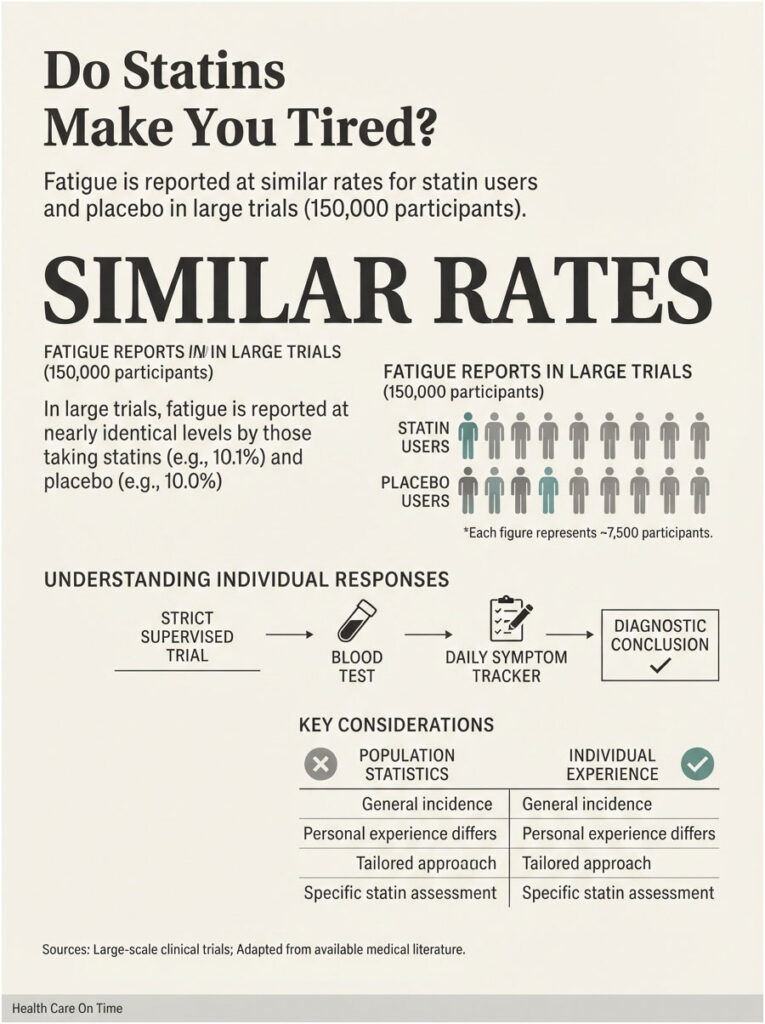
For most people, no. The largest pooled analysis of blinded trials, covering more than 150,000 participants, found fatigue occurred at the same rate on statins as on placebo. A small subset does experience a real drug effect, particularly muscle-related. Blood work and a supervised trial off the drug tell you which group you are in.
That answer frustrates people, and reasonably so. If you started atorvastatin six weeks ago and you have been dragging ever since, a population statistic does not describe your Tuesday.
So the useful version of the question is not whether statins cause fatigue in general. It is whether this statin is causing your fatigue, and there is a concrete way to find out.
What People Mean by “Statin Fatigue”
The phrase covers at least three separate complaints, and collapsing them into one is why so much online advice contradicts itself.
Ask ten patients what statin fatigue feels like and you get ten answers. Some describe a flat, all-day heaviness. Others feel fine at rest and hit a wall on the stairs.
A third group is describing something else entirely: muscle soreness that reads as weakness. That distinction matters more than almost anything else here.
Fatigue, Weakness, and Muscle Symptoms Are Three Different Complaints
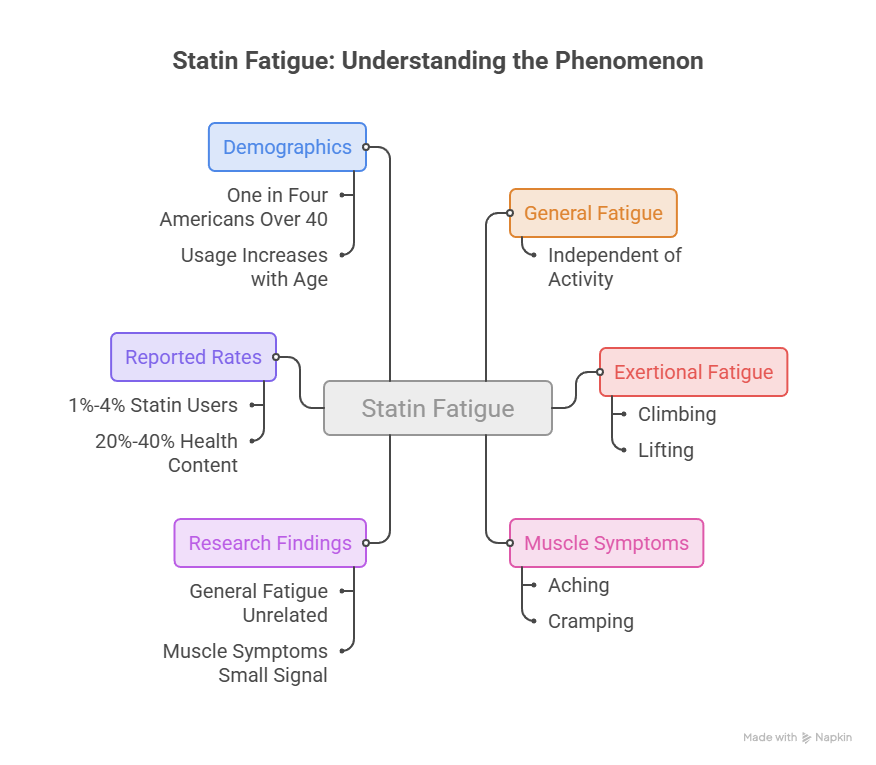
General fatigue is low energy across the whole day, independent of activity. Exertional fatigue appears only under load, when you climb, lift, or run. Muscle symptoms, known clinically as statin-associated muscle symptoms or SAMS, involve actual aching, cramping, or soreness in the tissue itself.
The research answers these three differently. General fatigue looks unrelated to the drug under blinding. Muscle symptoms carry a small but genuine drug signal.
Our medical reviewers see this confusion in patient questions constantly. Someone reports fatigue, gets told the evidence does not support it, feels dismissed, and what they actually had was a muscle complaint with better evidence behind it.
What the Drug Labels Actually List
American statin labels run long. Between FDA-approved prescribing information and the patient leaflet, well over sixty possible adverse effects appear across the class.
Fatigue is on that list, alongside insomnia, memory problems, mood changes, and sexual dysfunction. Appearing on a label does not mean a controlled trial confirmed it. Most entries came from case reports and observational data, both of which are vulnerable to bias.
Drug-safety reviews place the reported rate of fatigue on statins at roughly 1% to 4% of users, a very different picture from the 20% to 40% figures repeated across health content online.
How Common This Is in American Practice
Statins rank among the most-prescribed drugs in the country. The American Heart Association’s scientific statement on statin safety notes that one in four Americans over 40 takes a statin to lower heart attack and stroke risk.
CDC data shows cholesterol medication use climbing steeply with age, from 17% of adults aged 40 to 59 up to 48% of adults 75 and older, with statins accounting for 93% of those prescriptions.
Consider who those patients are. Mostly over 55, often carrying extra weight, frequently sleeping badly, and living with the cardiovascular disease that prompted the prescription. Tiredness in that population is close to universal, statin or not.
What the Research Actually Shows
The evidence base moved substantially in the last few years, and most consumer health pages have not caught up.
The Study That Started the Conversation
In 2012, researchers at the University of California San Diego published a randomized trial in the Archives of Internal Medicine, funded by the National Heart, Lung and Blood Institute at NIH.
More than 1,000 adults were randomly assigned to simvastatin 20 mg, pravastatin 40 mg, or placebo for six months. Those on statins were significantly more likely than those on placebo to report worsening energy, fatigue with exertion, or both, with a stronger effect on simvastatin.
The numbers get distorted in retelling. Among treated women on simvastatin, about 4 in 10 cited worsened energy or exertional fatigue, and 2 in 10 cited worsening in both.
That is a subgroup finding in women on one specific statin at one dose. It is not “40% of statin users,” yet that is how the internet quotes it today.
The N-of-1 Trials That Changed the Framing
SAMSON, run out of Imperial College London across 17 referral centers and published in the New England Journal of Medicine, took a smarter approach. It recruited people who had already abandoned statins over side effects.
Each participant received twelve one-month bottles in random order. Four held atorvastatin 20 mg, four held placebo, four were empty. Symptoms were rated daily.
Across all 60 patients, mean symptom intensity was 8.0 during no-tablet months, 15.4 during placebo months, and 16.3 during statin months. Both pill conditions were significantly worse than nothing, while statin versus placebo was not significant.
The calculated nocebo ratio came to 0.90, meaning roughly nine-tenths of the symptom burden traced to the act of swallowing a tablet rather than the medication inside it.
Six months after seeing their own personal data, half the participants had successfully restarted a statin.
StatinWISE, a larger UK n-of-1 trial, found the same pattern. Symptom scores landed at 1.68 on placebo versus 1.85 on statin, on a 1 to 10 scale.
The Largest Blinded Review to Date
This February, the Cholesterol Treatment Trialists’ Collaboration, led by Oxford Population Health, published the biggest assessment of statin side effects ever assembled.
The team pooled data from 23 large randomized double-blind studies covering more than 150,000 participants: 19 placebo-controlled trials with 123,940 people, plus four trials with 30,724 people comparing more intensive against less intensive therapy.
Across the placebo-controlled trials, with median follow-up around 4.5 years, participants on a dummy pill reported side effects at the same rate as those on a real statin. Of 66 conditions listed on statin package leaflets, 62 showed no excess risk.
Conditions with no supporting evidence included memory loss, depression, sleep disturbance, and erectile and sexual dysfunction. Fatigue sat in the same category.
Only four effects showed small genuine increases: minor liver blood test changes, minor liver abnormalities, small shifts in urine composition, and a slight rise in ankle swelling. Each affected fewer than 1 in 1,000 patients per year.
Why Muscle Symptoms Are the Exception
The February analysis deliberately left out muscle pain and diabetes risk because both had already been studied in depth. That exclusion is the detail nearly every summary misses.
Separate muscle-symptom work from the same collaboration found statins do cause a small increase in mild muscle pain, on the order of one extra case per hundred people, while more than 90% of reported muscle symptoms occur at the same rate on placebo. Serious muscle damage stays extremely rare.
The honest summary splits in two. Muscle aches: small real effect. Fatigue: no detectable effect at population level.
Table 1: What Each Major Study Found About Statin Fatigue
| Study and Design | Size and Duration | Finding on Fatigue or Symptoms | What It Proves and What It Cannot |
| UC San Diego randomized trial (Archives of Internal Medicine), simvastatin 20 mg or pravastatin 40 mg vs placebo | 1,000+ adults, 6 months | Statin groups significantly more likely to report worse energy, exertional fatigue, or both; among women on simvastatin, 4 in 10 reported one, 2 in 10 reported both | Shows a measurable energy signal at modest doses under blinding. Cannot separate drug effect from differential symptom reporting; single 6-month window |
| SAMSON (New England Journal of Medicine), double-blind n-of-1 with statin, placebo, and no-tablet months | 60 adults who had already quit statins, 12 months | Daily symptom score 8.0 on nothing, 15.4 on placebo, 16.3 on statin; statin vs placebo p=0.39 | Shows most symptoms in statin quitters come from taking a pill, not the drug. Small sample, participants pre-selected as symptomatic |
| StatinWISE (BMJ), double-blind n-of-1, atorvastatin 20 mg vs placebo | About 200 adults, 12 months | Symptom score 1.85 on statin vs 1.68 on placebo, 1 to 10 scale | Confirms SAMSON’s direction in a larger group. No no-tablet period, so background symptoms cannot be isolated |
| CTT label-effects meta-analysis (The Lancet), pooled individual data from double-blind trials | 150,000+ participants, 23 trials, median 4.5 years | 62 of 66 label-listed conditions, fatigue included, occurred no more often on statin than placebo; 4 showed small excess, each under 1 in 1,000 per year | Strongest available evidence that fatigue is not a general statin effect. Cannot exclude real effects in small susceptible subgroups |
| CTT muscle-symptom meta-analysis (The Lancet), pooled individual data from large double-blind trials | Large-scale randomized double-blind trials | About 1 extra case of mild muscle pain per 100 treated; over 90% of reported muscle symptoms occurred at placebo rates | Shows muscle symptoms are a small real drug effect, unlike fatigue. Does not address fatigue as a separate outcome |
Why the Studies Disagree
Two well-run trials reach opposite-looking conclusions when they ask slightly different questions of slightly different people.
The Nocebo Effect, Explained Without Condescension
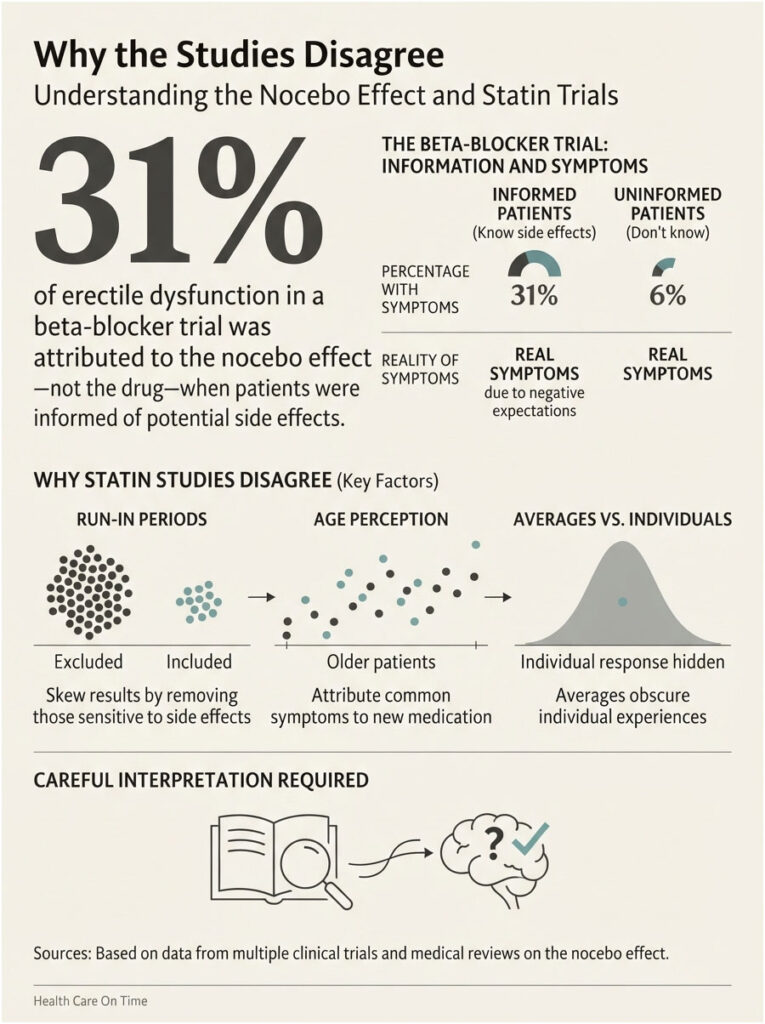
The nocebo effect is the mirror image of placebo. Negative expectation produces real, physically felt symptoms.
This gets communicated badly almost every time. Nocebo does not mean imaginary. The tiredness registers in the body, wrecks the afternoon, and deserves attention. The research says the trigger sits in expectation rather than in the molecule.
One frequently cited demonstration involved a beta-blocker given to three groups of men. Those told nothing reported erectile dysfunction at 3%, those informed about the drug at 15%, and those warned specifically about that side effect at 31%. Same drug, same dose, wildly different rates.
Patients booking cardiac and lipid panels through HealthCareOnTime push back on this regularly, and the pushback is fair. The reframe that lands: a nocebo response is a physiological event with a psychological trigger, not a verdict on your character.
Run-In Periods and Who Gets Left Out
Many older statin trials used a run-in period, giving everyone the drug briefly and dropping anyone who reacted badly before randomization began.
That design produces cleaner efficacy data and systematically removes the exact people whose side effects matter most to this question. It is one honest reason blinded trials may understate real-world symptom rates.
The Age Problem
The typical American statin user is in their sixties or seventies. Achy joints, poor sleep, thyroid drift, and low energy are already common at that stage.
Add a new daily pill and any symptom that follows has an obvious suspect. The attribution feels logical even when the timing is pure coincidence.
Our clinical reviewers frame it this way: the statin is the newest variable in a body full of old ones, so it collects blame it did not always earn.
What Blinded Trials Can Still Miss
Averages hide subgroups. A drug that does nothing to 99 people and something real to one person shows up as no effect in a trial of 100.
Trials also run on selected populations, often excluding people with significant kidney disease, liver disease, or complex drug regimens. Those are precisely the patients at highest risk for genuine statin problems.
The correct reading of the evidence is that fatigue is not a common statin effect, not that it is impossible in any individual.
The Biology: What Could Plausibly Cause Real Fatigue
Mechanism and outcome are separate questions. A plausible pathway does not prove a clinical effect, but it does tell you where a real effect would originate.
The CoQ10 and Mitochondrial Pathway
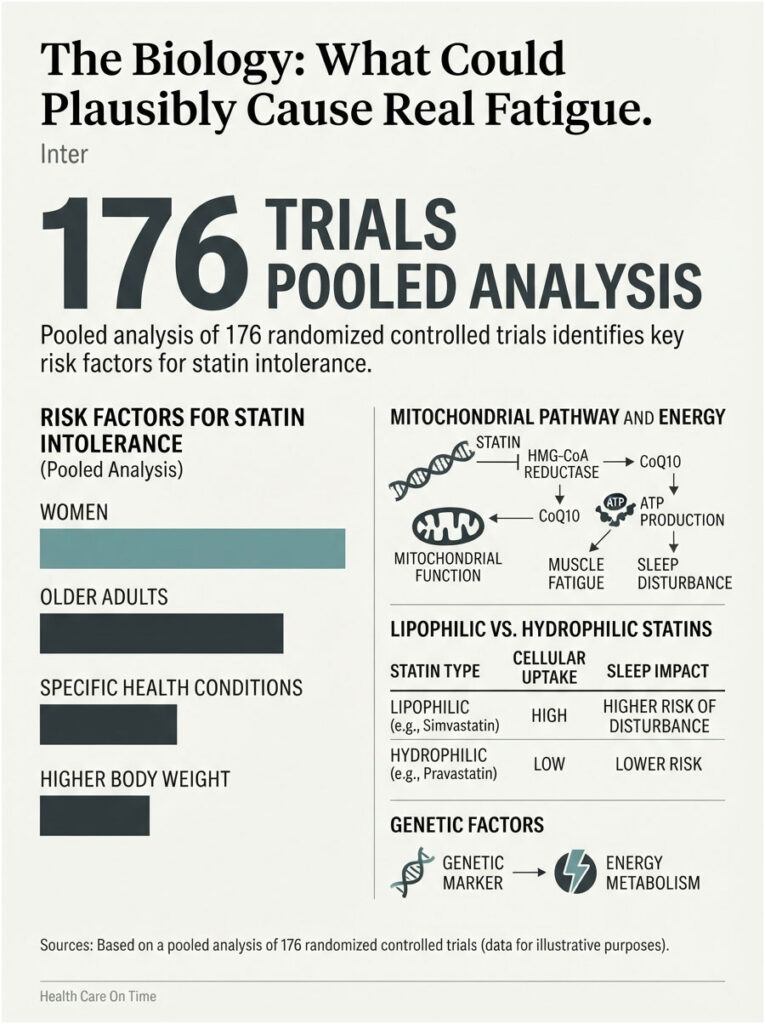
Statins block HMG-CoA reductase, an enzyme early in the mevalonate pathway. That pathway does more than produce cholesterol.
It also produces coenzyme Q10, which shuttles electrons through the mitochondrial respiratory chain. Lower CoQ10 could in theory mean less efficient ATP production in muscle, which would feel exactly like fatigue under exertion.
The mechanism is coherent. The clinical proof runs thinner than the mechanism implies, a common pattern in pharmacology.
Muscle Energy Metabolism and Genetics
Some research suggests a subset of people carry an underlying difference in how their muscles burn fat for fuel, and that these individuals tire faster once a statin is added.
Variants in the SLCO1B1 transporter gene, which governs how much statin reaches liver and muscle tissue, point the same direction. Carriers reach higher drug concentrations at the same dose.
This would explain why symptoms cluster in a minority rather than spreading evenly across everyone taking the drug.
Sleep, Dreams, and Statin Chemistry
Statins split into two groups by how they dissolve. Lipophilic ones cross into tissues including the brain more readily. Hydrophilic ones largely stay in the bloodstream and liver.
The theory that lipophilic statins disturb sleep and therefore cause daytime tiredness has been tested repeatedly. The February Lancet review found people on a dummy pill reported sleep disturbance just as often as people on a real statin.
If your sleep is broken, the statin is an unlikely culprit and a sleep study is the better use of your time.
Who Actually Sits at Higher Risk
Baselines differ. A pooled analysis of 176 trials covering more than 4.1 million statin users put true statin intolerance at no more than 6% to 10%, with higher odds among women, older adults, and people with diabetes, liver or kidney disease, or an underactive thyroid, plus those taking certain heart medications or drinking heavily.
High-intensity dosing raises risk. So does low body weight, since dose is rarely adjusted for size. So do specific drug interactions covered below.
Does One Statin Cause More Fatigue Than Another?
This question drives a large share of searches, and the honest answer has two layers.
At population level, no blinded trial has cleanly shown one statin causes more fatigue than another. At individual level, switching works often enough that it is standard clinical practice.
Lipophilic Versus Hydrophilic
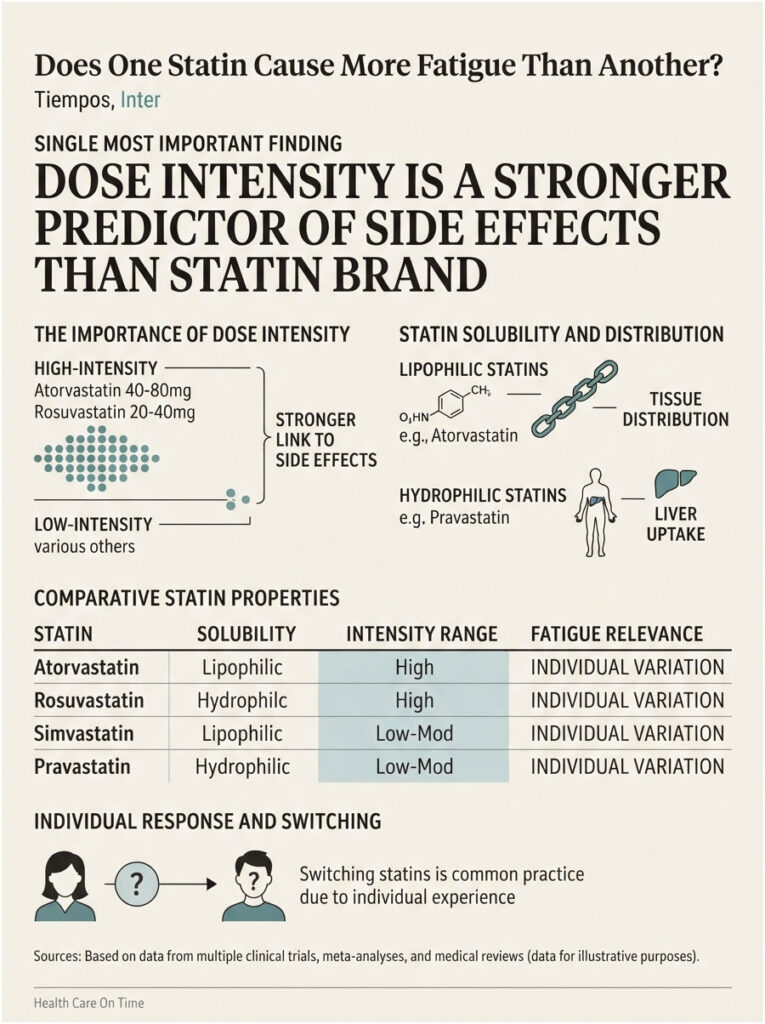
Lipophilic statins (atorvastatin, simvastatin, lovastatin, fluvastatin, pitavastatin) distribute more widely into tissue. Hydrophilic statins (pravastatin, rosuvastatin) concentrate in the liver, where the cholesterol work happens, and reach muscle less.
The theory says hydrophilic statins should produce fewer muscle and energy complaints. Trial evidence for that is inconsistent, but the biological logic is why physicians reach for pravastatin or rosuvastatin after a bad experience.
Dose Intensity Matters More Than Brand
The stronger predictor is intensity, not molecule. High-intensity therapy means atorvastatin 40 to 80 mg or rosuvastatin 20 to 40 mg. Moderate intensity covers most other regimens.
The UC San Diego team noted that statin side effects generally rise with increasing dose, and that the doses producing an energy signal in their trial were modest by current standards.
Cutting intensity, or moving to a statin that achieves the same LDL reduction at a lower milligram dose, is often more effective than switching brands at equal strength.
Table 2: Statin Comparison for Patients Reporting Fatigue or Muscle Symptoms
| Statin (Brand) | Solubility | Typical Intensity Range | Half-Life and Dosing Note | Relevance If You Report Fatigue |
| Atorvastatin (Lipitor) | Lipophilic | Moderate to high (10 to 80 mg) | Long half-life, timing flexible | Most-prescribed US statin, so most-reported symptoms; dose reduction is usually the first move |
| Rosuvastatin (Crestor) | Hydrophilic | Moderate to high (5 to 40 mg) | Long half-life, timing flexible | Common switch target; achieves strong LDL reduction at low milligram doses |
| Simvastatin (Zocor) | Lipophilic | Low to moderate (10 to 40 mg) | Short half-life, take in evening | Carries the strongest historical fatigue signal; most interaction restrictions of the class |
| Pravastatin (Pravachol) | Hydrophilic | Low to moderate (10 to 80 mg) | Short half-life, evening preferred | Frequent choice for symptomatic patients; fewest metabolic interactions |
| Pitavastatin (Livalo) | Lipophilic | Low to moderate (1 to 4 mg) | Long half-life, timing flexible | Minimal CYP3A4 involvement, useful with complex medication lists |
| Lovastatin (Altoprev) | Lipophilic | Low to moderate (10 to 60 mg) | Short half-life, take with evening meal | Older agent, largely replaced by newer options in US practice |
| Fluvastatin (Lescol XL) | Lipophilic | Low (20 to 80 mg) | Extended-release form available | Weakest LDL effect; occasionally used when tolerability outweighs potency |
Drug Interactions Worth Checking
Certain combinations raise statin blood levels sharply and with them the odds of real muscle symptoms. Clarithromycin, erythromycin, itraconazole, ketoconazole, cyclosporine, gemfibrozil, and some HIV protease inhibitors all belong on the review list.
Diltiazem, verapamil, and amiodarone interact meaningfully with simvastatin and lovastatin in particular. Large quantities of grapefruit juice do the same.
Bring your full medication list, including supplements, to any conversation about statin side effects. In cases reviewed across our diagnostic network, an overlooked interaction turns up more often than a true drug intolerance.
What Else Makes Statin Users Tired
This section is the one most articles skip, and it holds the practical answer.
The National Lipid Association’s own definition of statin intolerance is instructive. It requires that other determinants be excluded first, naming hypothyroidism, interacting drugs, concurrent illnesses, significant changes in physical activity, and underlying muscle disease.
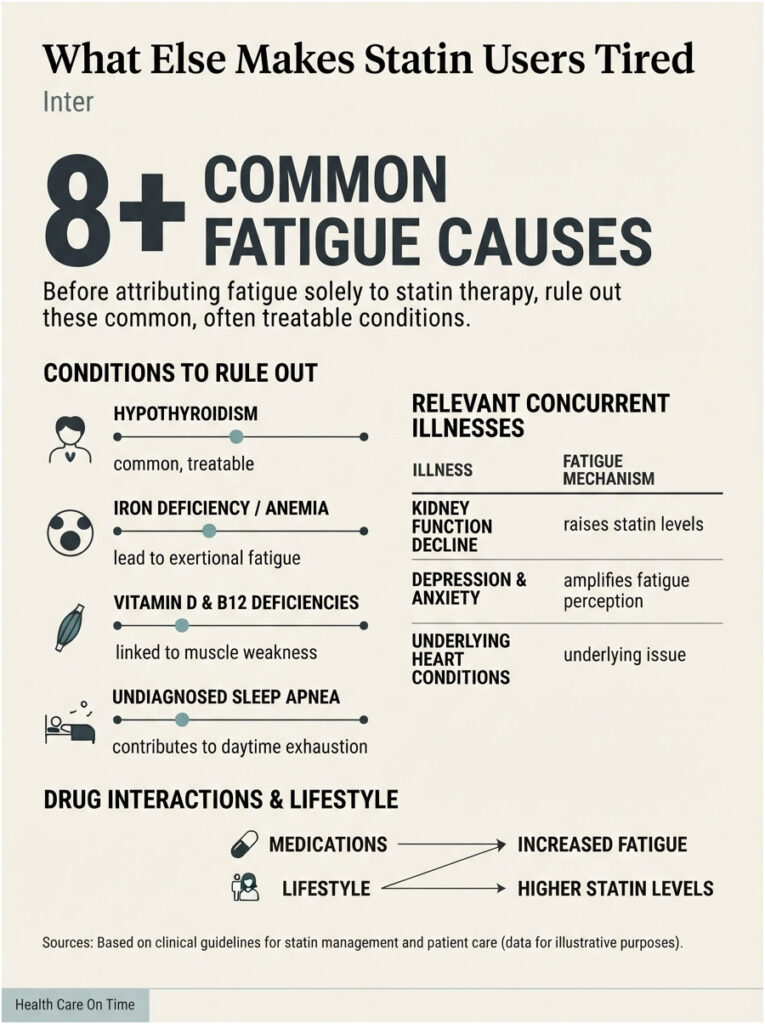
The professional standard says rule out alternatives before blaming the drug. Most patients never get that step.
Hypothyroidism
An underactive thyroid produces fatigue, muscle aches, weight gain, cold intolerance, constipation, and thinning hair. It also independently raises the risk of statin-related muscle problems, which is why it sits on the exclusion list.
It is common, cheap to test, and treatable. Across cases reviewed in our diagnostic network, thyroid dysfunction is among the most frequent explanations found once somebody actually looks.
Iron Deficiency and Anemia
Low hemoglobin means less oxygen reaching working muscle, which feels precisely like exertional fatigue. Iron stores deplete well before hemoglobin drops, so ferritin matters alongside a standard blood count.
Worth close attention in menstruating women and in anyone with gastrointestinal bleeding risk, including people on aspirin or anticoagulants.
Vitamin D and Vitamin B12
Low vitamin D is associated with muscle weakness and aching, and some evidence suggests correcting a deficiency improves statin tolerance. Low B12 causes fatigue, weakness, and nerve symptoms.
Metformin, common in this same patient population, depletes B12 over time. That interaction gets missed constantly.
Undiagnosed Sleep Apnea
Obstructive sleep apnea produces daytime exhaustion that no amount of time in bed repairs. It tracks closely with the risk profile that leads to a statin prescription: excess weight, hypertension, and cardiovascular disease.
Millions of Americans have it and do not know.
Depression and Anxiety
Fatigue is a core feature of depression, not a footnote. Low mood also amplifies symptom perception generally, which can compound a nocebo response into something considerably worse.
The Heart Condition Itself
Heart failure and progressing coronary disease both cause profound fatigue. So does poorly controlled atrial fibrillation.
These are the conditions the statin was prescribed to prevent. Stopping the drug because of fatigue that stems from the underlying disease is the worst available outcome, and it happens regularly.
Kidney Function, Blood Sugar, and Other Medications
Declining kidney function causes fatigue and simultaneously raises statin blood levels. Poorly controlled diabetes does the same. Beta-blockers, diuretics, antihistamines, and sleep aids all contribute their share.
Table 3: US Data Behind Statin Use, Fatigue, and Intolerance
| Metric | US Figure | Source | Why It Matters for You |
| Adults over 40 taking a statin | About 1 in 4 | American Heart Association scientific statement on statin safety | Overlap between statin use and ordinary age-related tiredness is close to guaranteed |
| Cholesterol medication use by age | 17% of adults 40 to 59, rising to 48% of adults 75 and older | CDC National Center for Health Statistics, Data Brief 177 | Heaviest users are the age group most likely to be tired for unrelated reasons |
| Adults on or eligible for cholesterol treatment | 36.7%, roughly 78.1 million people aged 21 and over | CDC Morbidity and Mortality Weekly Report | Shows the scale of the population exposed to misattribution |
| Fatigue reported as a statin side effect | Roughly 1% to 4% of users | Clinical review of statin safety labeling | Far lower than the 20% to 40% figures repeated across health content |
| True statin intolerance after pooled analysis | No more than 6% to 10% | European Heart Journal, 176 trials, 4.1 million users | Most people who believe they cannot tolerate a statin actually can |
| Patients still on a statin one year after supervised rechallenge | 92%, or 6,064 of 6,579 | American Heart Association scientific statement | A structured restart succeeds far more often than it fails |
| Discontinuation within the first 6 to 12 months | 25% to 50% of people prescribed a statin | Mayo Clinic Press | The gap between real intolerance and actual quitting is where preventable harm sits |
The Lab Panel Worth Running Before You Blame Your Statin
None of the causes above can be sorted out by how the fatigue feels. They separate on blood work.
Here is the panel covering the realistic differential. Discuss it with your physician rather than ordering blindly, and run it as a set so patterns are visible.
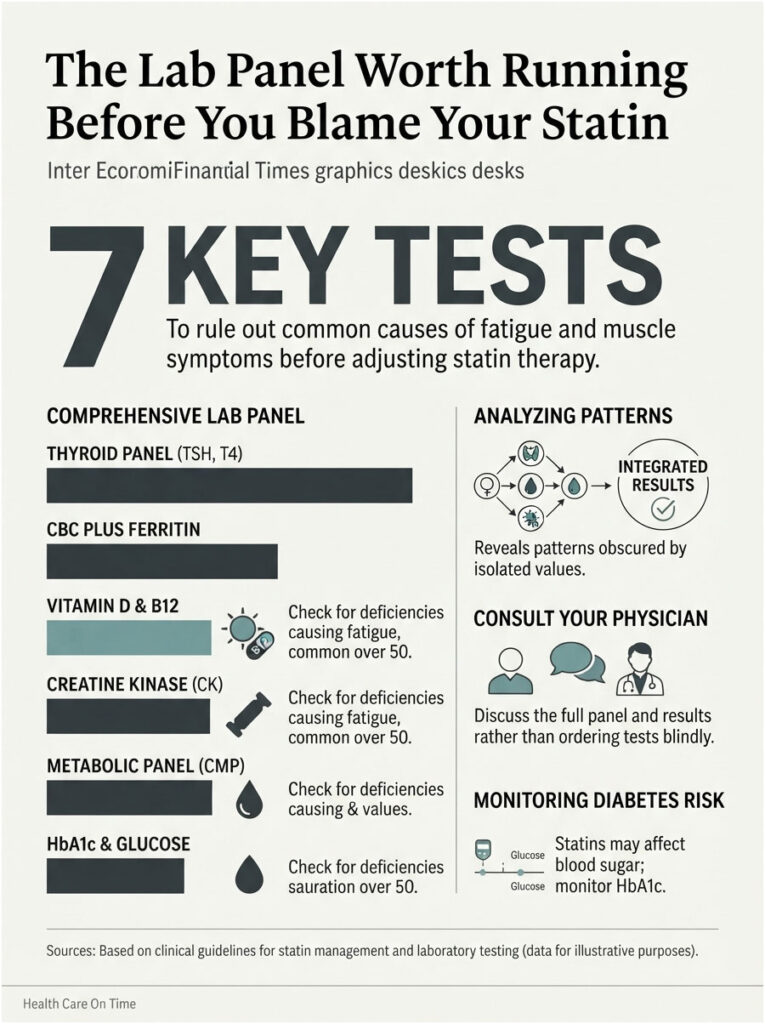
Thyroid Panel: TSH and Free T4
TSH is the screening test. Free T4 clarifies borderline results. This is the single highest-yield test for unexplained fatigue in a statin user, both because hypothyroidism is common and because it independently worsens statin tolerance.
Complete Blood Count Plus Ferritin
A CBC catches anemia. Ferritin catches iron depletion before anemia develops. Running only a CBC misses a substantial share of iron-deficient patients whose hemoglobin still reads normal.
Vitamin D and Vitamin B12
Both are inexpensive, both are commonly low in adults over 50, and both produce fatigue and muscle symptoms that mimic statin effects closely enough to fool an experienced clinician working from symptoms alone.
Creatine Kinase
CK is the muscle-damage marker. A normal CK does not rule out muscle symptoms, since most statin-associated muscle complaints occur with entirely normal enzyme levels.
What a normal CK does rule out is the dangerous end of the spectrum. A markedly elevated CK alongside muscle pain and dark urine needs same-day attention.
Metabolic Panel (CMP)
This covers liver enzymes (ALT, AST) and kidney function (creatinine, eGFR). Both matter because statins clear through these organs, and impairment raises circulating drug levels.
The February Lancet review confirmed small real increases in liver enzyme readings, making this one of the few label effects with genuine support behind it.
HbA1c and Fasting Glucose
Statins produce a modest rise in blood sugar, and people already near the diabetes threshold may cross it sooner. Poorly controlled glucose is itself a powerful cause of fatigue.
How to Read the Results Together
Bring the full set to your appointment at once rather than one test at a time. Patterns matter more than isolated values, and sequential testing stretches a two-week question into a six-month one.
Our lab partners report the same thing consistently: when this panel gets run properly on a tired statin patient, an alternative explanation surfaces more often than not.
What to Do If You Feel Tired on a Statin
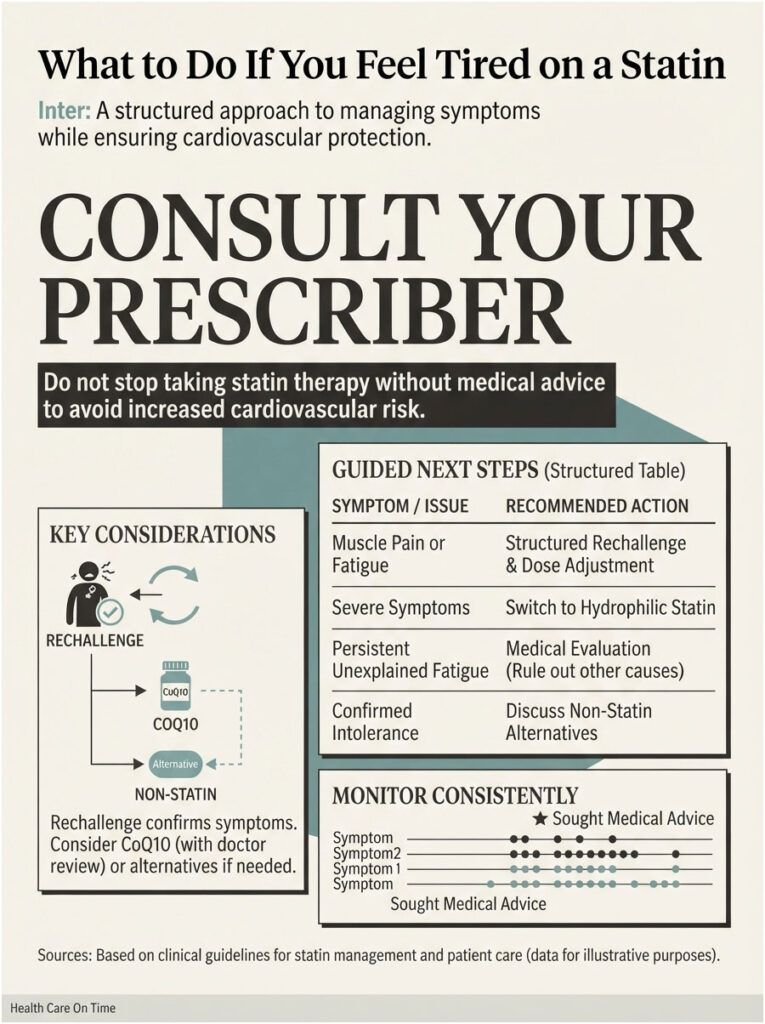
Do Not Stop on Your Own
This is the one instruction worth following without exception. Stopping abruptly after a cardiac event or with established coronary disease raises risk immediately, and the fatigue rarely resolves anyway if the statin was not the cause.
Call your prescriber first. Any pause should be planned, timed, and monitored.
Timing and Dose Adjustments
Statins with short half-lives (simvastatin, lovastatin, fluvastatin immediate-release, pravastatin) work better taken in the evening. Atorvastatin, rosuvastatin, and pitavastatin last long enough that timing barely matters.
Shifting a dose to bedtime is a reasonable low-risk experiment. So is reducing the dose, though it trades some LDL lowering for comfort. Mayo Clinic notes that alternate-day dosing is another option worth discussing, particularly with statins that stay in the blood for several days.
Switching Statins
If muscle symptoms dominate, moving from a lipophilic statin to a hydrophilic one is a standard next step. Rosuvastatin also delivers strong LDL reduction at low milligram doses, which helps if dose intensity is the driver.
Many patients who cannot tolerate one statin do fine on another. Trying two before concluding intolerance is the accepted clinical threshold.
The Structured Rechallenge
This is the SAMSON design scaled down for a clinic. Stop the statin for two to four weeks under supervision, track symptoms daily on a simple 0 to 10 scale, then restart and keep tracking.
If symptoms improve off the drug and return on it, you have a reproducible signal worth acting on. If they persist unchanged, the statin is not the driver and the search continues elsewhere.
In the GAUSS-3 trial, 43.8% of patients labeled statin intolerant were successfully rechallenged on atorvastatin 20 mg. The label is wrong more often than it is right.
CoQ10, Assessed Honestly
A 2025 meta-analysis in the Journal of Nutritional Science pooled seven randomized trials covering 389 patients on 100 to 600 mg of CoQ10 daily for 30 to 90 days. It found a statistically significant reduction in muscle pain intensity, weighted mean difference −0.96, though four trials showed benefit and three did not.
Two caveats. The trials measured muscle pain, not fatigue, and the samples were small enough that a few more null results would flip the conclusion.
CoQ10 is low risk and inexpensive. It is a reasonable adjunct after a workup, not a replacement for one.
When Non-Statin Options Make Sense
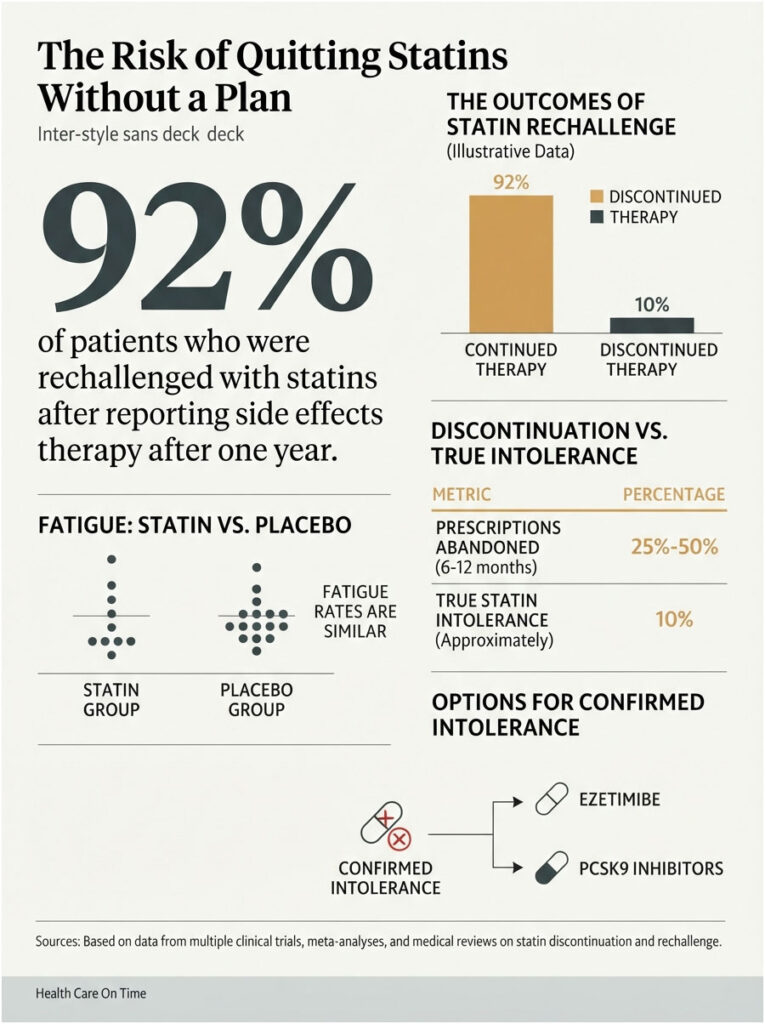
For people with confirmed intolerance to at least two statins, alternatives exist: ezetimibe, bempedoic acid, PCSK9 inhibitors such as evolocumab and alirocumab, and inclisiran.
They differ sharply in cost and insurance coverage. Six of the seven marketed statins are available as generics, which keeps them affordable for most patients, so the price gap between a statin and its alternatives is often substantial.
Check your formulary before the appointment. Prior authorization is standard for the injectable options and slows things down considerably.
Table 4: If This Is Your Situation, Here’s the Next Step
| Your Situation | What It Likely Suggests | Recommended Next Step |
| Tiredness began within 2 to 4 weeks of your first dose and seems to track with the pill | Possible drug effect, possible nocebo response, not yet distinguishable | Log symptoms daily for 4 weeks, then ask your prescriber about a planned pause and structured rechallenge |
| Tiredness began months or years into stable therapy with no dose change | Statin is an unlikely cause; something else has changed | Request thyroid panel, CBC with ferritin, vitamin D, vitamin B12, and HbA1c before touching the statin |
| Fatigue plus muscle aches that ease within 2 to 4 weeks off the drug and return on restarting | Reproducible statin-associated muscle symptoms | Discuss lower dose, alternate-day dosing, or a switch to pravastatin or rosuvastatin |
| Fatigue plus dark or cola-colored urine, severe muscle pain, or new weakness | Possible rhabdomyolysis, rare but urgent | Seek medical care the same day and ask for a creatine kinase test; do not wait for a routine appointment |
| Fatigue plus cold intolerance, weight gain, constipation, or thinning hair | Hypothyroidism, which also raises statin intolerance risk | Request TSH and free T4; treating thyroid disease often resolves fatigue and muscle symptoms together |
| Fatigue plus breathlessness, ankle swelling, or reduced exercise tolerance | Possible heart failure or progressing coronary disease | Contact your cardiologist promptly; stopping the statin here raises risk rather than lowering it |
| Fatigue while also taking clarithromycin, an antifungal, gemfibrozil, or a calcium channel blocker | Drug interaction raising statin blood levels | Ask your pharmacist for an interaction review before assuming the statin itself is at fault |
| Fatigue with a normal lab panel and identical symptoms on and off the drug | Nocebo response or background fatigue unrelated to the statin | Stay on the statin, address sleep, activity, and mood with your physician, recheck in 3 months |
The Risk of Quitting Without a Plan
Every conversation about statin side effects has a second half that rarely gets equal airtime.
What Discontinuation Actually Costs
The Oxford team behind the February analysis went past describing the nocebo problem and estimated its consequences.
Their calculation suggested symptoms wrongly attributed to statins, leading people to stop, may have produced an extra 2,000 to 6,000 cardiovascular events such as heart attacks and strokes over the following decade.
That is the price of getting attribution wrong at population scale.
Most People Who Think They Can’t Tolerate Statins Actually Can
Among 6,579 patients rechallenged after a reported statin-related event, 6,064, or 92%, were on statin therapy a year later.
Mayo Clinic notes that 25% to 50% of people prescribed a statin stop within the first 6 to 12 months, while true intolerance affects roughly one in ten at most. The distance between those two numbers is avoidable cardiovascular risk.
The Conversation to Have With Your Prescriber
Go in with data rather than a complaint. Bring a symptom log, bring lab results, and ask two specific questions.
First: what else could be causing this, and have we tested for it? Second: if we pause the statin, what is the restart plan and what are we measuring?
Across the patients we serve, the ones who get good outcomes arrive with a record instead of a recollection.
Frequently Asked Questions
Do statins make you tired?
Usually not. The largest pooled analysis of double-blind trials, covering over 150,000 participants, found fatigue occurred no more often on statins than on placebo. A small minority may have a genuine reaction, but most fatigue in statin users traces to another cause that blood work can identify.
How long does statin fatigue last?
If tiredness is drug-related, it typically eases within four to eight weeks as the body adjusts. Fatigue persisting beyond eight to twelve weeks without improvement is unlikely to be a settling-in effect and warrants a full workup rather than continued waiting.
Does statin fatigue go away on its own?
Often, yes. Many people reporting low energy in the first weeks find it resolves without any prescription change. If nothing has improved after roughly two months, stop assuming it will and ask for thyroid, iron, vitamin D, and B12 testing.
Which statin is least likely to cause fatigue?
Pravastatin and rosuvastatin are hydrophilic and reach muscle tissue less readily, making them common choices after symptoms on atorvastatin or simvastatin. Individual response varies widely, and lowering dose intensity often helps more than switching brands at equal strength.
Should I take my statin at night if it makes me tired?
For short half-life statins like simvastatin, lovastatin, and pravastatin, evening dosing is standard and may shift symptoms into sleeping hours. Atorvastatin and rosuvastatin last long enough that timing makes little difference. Ask your pharmacist which category yours falls into.
Can I stop my statin for a few weeks to test whether it’s the cause?
Only with your prescriber’s agreement and a defined plan. A supervised two to four week pause with daily symptom scoring, followed by a monitored restart, is a legitimate diagnostic approach. Doing it unsupervised, particularly after a heart attack or stroke, carries real risk.
What blood tests should I get if I feel tired on a statin?
A reasonable panel covers TSH and free T4, a complete blood count with ferritin, vitamin D, vitamin B12, creatine kinase, a metabolic panel including liver and kidney function, and HbA1c. These address the common alternative explanations that mimic statin fatigue.
Does CoQ10 help with statin fatigue?
Evidence supports a modest benefit for muscle pain, not fatigue specifically. A 2025 meta-analysis of seven trials with 389 patients found reduced pain intensity at 100 to 600 mg daily. It is low risk and inexpensive, but no substitute for proper testing.
Are women more likely to get fatigue from statins?
The 2012 UC San Diego trial found a stronger energy effect in women, particularly on simvastatin, and pooled intolerance data lists female sex among the risk factors. Larger blinded reviews have not confirmed a general fatigue effect in either sex.
Is fatigue on a statin a sign of liver or muscle damage?
Rarely, and the warning signs are specific. Unusual fatigue combined with dark urine, severe muscle pain, loss of appetite, upper stomach pain, or yellowing of the skin or eyes needs same-day medical attention. Isolated tiredness without these features very rarely indicates organ damage.
What is the nocebo effect, and does it mean my symptoms aren’t real?
No. Nocebo means real, physically experienced symptoms triggered by expectation rather than drug chemistry. Your tiredness is genuine either way. The distinction matters only because it changes what will actually fix it.
What are my options if I truly can’t tolerate any statin?
Confirmed intolerance across at least two statins opens the door to ezetimibe, bempedoic acid, PCSK9 inhibitors such as evolocumab or alirocumab, or inclisiran. Coverage and cost vary widely, so involve your insurer early. Lowering LDL stays the goal regardless of which drug gets you there.
Medical Disclaimer: This article provides general information and does not replace advice from a licensed physician. Do not start, stop, pause, or change the dose of any prescribed medication, including a statin, without speaking to your prescriber first. Stopping a statin without medical guidance can raise your risk of heart attack and stroke. If you have unusual fatigue along with dark urine, severe muscle pain, new weakness, loss of appetite, upper abdominal pain, or yellowing of the skin or eyes, seek medical care the same day. Lab results should always be interpreted by a qualified clinician in the context of your full medical history.
References
- Assessment of adverse effects attributed to statin therapy in product labels: a meta-analysis of double-blind randomised controlled trials, The Lancet
- Statins do not cause the majority of side effects listed in package leaflets, University of Oxford
- N-of-1 Trial of a Statin, Placebo, or No Treatment to Assess Side Effects (SAMSON), New England Journal of Medicine
- Side Effect Patterns in a Crossover Trial of Statin, Placebo, and No Treatment, Journal of the American College of Cardiology
- Statins Shown to Cause Fatigue, UC San Diego Health Sciences
- Statin Safety and Associated Adverse Events: A Scientific Statement From the American Heart Association
- NLA Scientific Statement on Statin Intolerance, Journal of Clinical Lipidology
- New numbers about statin drug intolerance, Harvard Health Publishing
- Statin side effects: Weigh the benefits and risks, Mayo Clinic
- Your top questions about statin intolerance, answered, Mayo Clinic Press
- Prescription Cholesterol-lowering Medication Use in Adults Aged 40 and Over, CDC NCHS Data Brief No. 177
- Prevalence of Cholesterol Treatment Eligibility and Medication Use Among Adults, CDC MMWR
- Patient-Reported Reasons for Declining or Discontinuing Statin Therapy: PALM Registry, Journal of the American Heart Association
- Effects of coenzyme Q10 supplementation on myopathy in statin-treated patients: a systematic review and meta-analysis, Journal of Nutritional Science
- Don’t be afraid of statins, Harvard Health Publishing