Here is the part nobody puts in the headline: you can eat broccoli every day for a year and absorb only a fraction of the compound that made it famous. The reason is not your body. It is your pot.
Table of Contents
Boiling destroys the enzyme that converts broccoli’s storage compound into sulforaphane, the molecule behind most of the research. Which means the useful question is not whether broccoli is good for you.
The useful question is which benefits survive human trials, and what you have to do at the stove to actually collect them. That is what this guide sorts out, with the weak claims labeled as weak.
Quick Answer
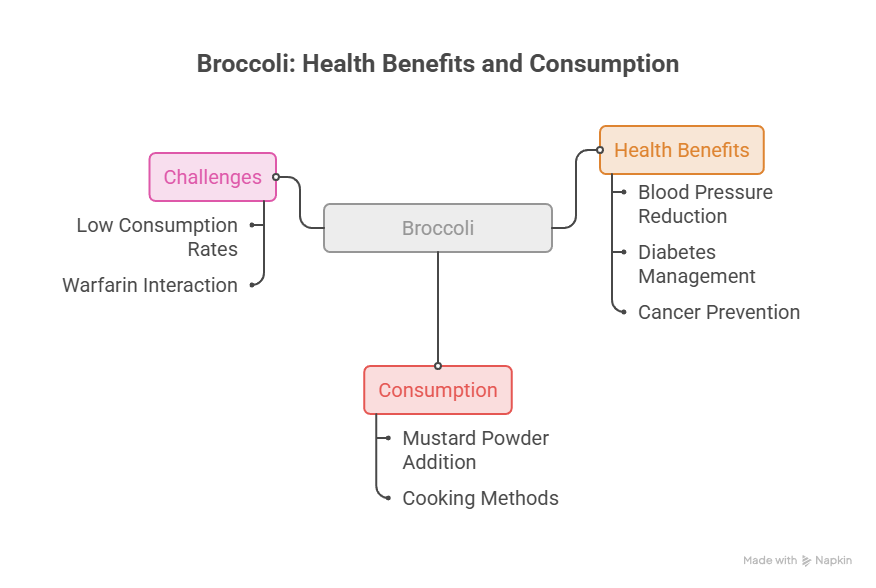
Broccoli has nine health benefits supported by human evidence: lower systolic blood pressure, better blood sugar control in specific groups, lower triglycerides, reduced inflammation, a stronger gut barrier, faster phase II detox enzymes, bone support from vitamin K, eye protection, and easier weight management. Three popular claims (cancer prevention, liver detox, hormone balance) run ahead of the data. Aim for 2 to 3 cups weekly, steamed rather than boiled.
The nine proven benefits at a glance:
- Lowers systolic blood pressure
- Improves blood sugar control in specific groups
- Reduces triglycerides
- Lowers inflammatory markers
- Strengthens the gut barrier
- Activates phase II detoxification enzymes
- Supports bone mineralization through vitamin K1
- Contributes lutein and zeaxanthin for eye health
- Aids weight management through fiber and food volume
At a Glance
• A controlled trial found roughly 300 g of cruciferous vegetables daily cut 24-hour systolic blood pressure by 2.5 mmHg in two weeks.
• Broccoli sprout extract improved HbA1c in obese adults with poorly controlled type 2 diabetes, yet a 2025 prediabetes trial missed its primary target.
• Adding 1 gram of mustard powder to cooked broccoli raised sulforaphane absorption more than fourfold.
• Only 10.0 percent of US adults meet federal vegetable recommendations, per CDC surveillance.
• Cancer prevention is the most repeated broccoli claim and the weakest one in cohort data.
• Boiling is the single worst thing you can do to broccoli. Steaming 3 to 4 minutes wins on balance.
• If you take warfarin, weekly consistency matters far more than avoidance.
What Is Actually Inside Broccoli (and Why Most of It Never Reaches You)
Broccoli (Brassica oleracea var. italica) shares a family with kale, cabbage, cauliflower, and Brussels sprouts. What sets this family apart from spinach or carrots is a group of sulfur compounds called glucosinolates.
Those compounds do nothing on their own. They activate only when a second component gets involved, and that second component is fragile.
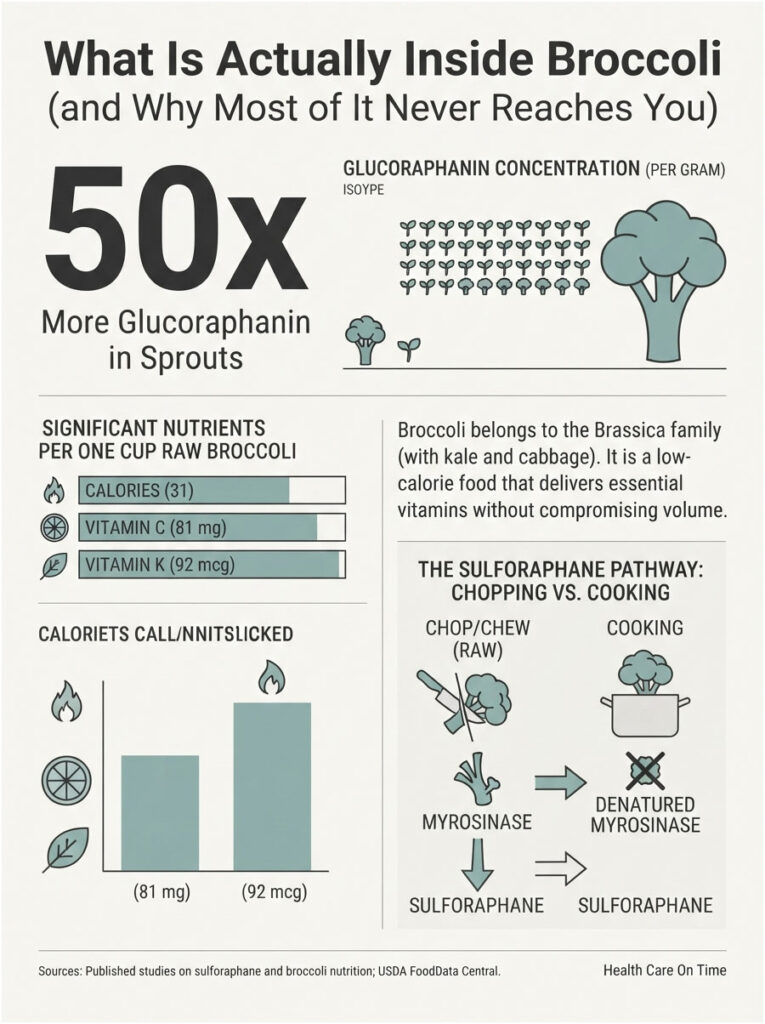
Glucoraphanin, Myrosinase, and Sulforaphane
Broccoli stores a glucosinolate called glucoraphanin. In a separate compartment of the same plant cell sits an enzyme called myrosinase.
Chopping, crushing, or chewing ruptures those compartments and lets the two meet. Myrosinase converts glucoraphanin into sulforaphane, an isothiocyanate that activates the Nrf2 pathway and switches on your body’s own phase II detoxification enzymes.
Heat is where the chain breaks. Myrosinase denatures at cooking temperatures, and once it is gone, glucoraphanin passes through your gut largely unconverted.
Glucoraphanin itself is heat-stable. That single fact is why the kitchen fix described later in this article works as well as it does.
The Vitamins and Minerals Doing the Quiet Work
Sulforaphane collects the headlines, but for most Americans the everyday nutrition matters more. One cup of chopped raw broccoli weighs about 91 grams and supplies roughly 31 calories, 2.6 g protein, 6 g carbohydrate, 2.4 g fiber, 81 mg vitamin C, 92 mcg vitamin K, 57 mcg folate, and 288 mg potassium, per USDA FoodData Central.
That cup covers about 90 percent of the daily value for vitamin C and roughly 77 percent for vitamin K, at a calorie cost you would not notice on any tracking app.
Our medical reviewers point out how unusual that pairing is. Very few foods deliver that much vitamin C and vitamin K at once while still qualifying as a low-calorie, high-volume food you can eat by the bowlful.
For the complete numbers, see our broccoli nutrition facts per cup breakdown and the full vitamin chart with daily values.
Broccoli vs Broccoli Sprouts: A 20 to 50x Gap
Three-day-old broccoli sprouts carry dramatically more glucoraphanin per gram than mature heads. Figures commonly cited from Johns Hopkins research place the concentration at 20 to 50 times higher.
That gap explains why nearly every serious sulforaphane trial uses sprout extract rather than steamed florets. It also explains why supplement labels quote sprout data while photographing a broccoli head.
A note from our nutrition team: sprouts function as a supplement-grade delivery system, not a vegetable serving. They bring almost none of the fiber, potassium, or volume that make broccoli useful at dinner.
The 9 Proven Benefits, Graded by Evidence Strength
Not every benefit carries equal weight. A finding from a randomized human trial deserves more confidence than one from cultured cells in a dish.
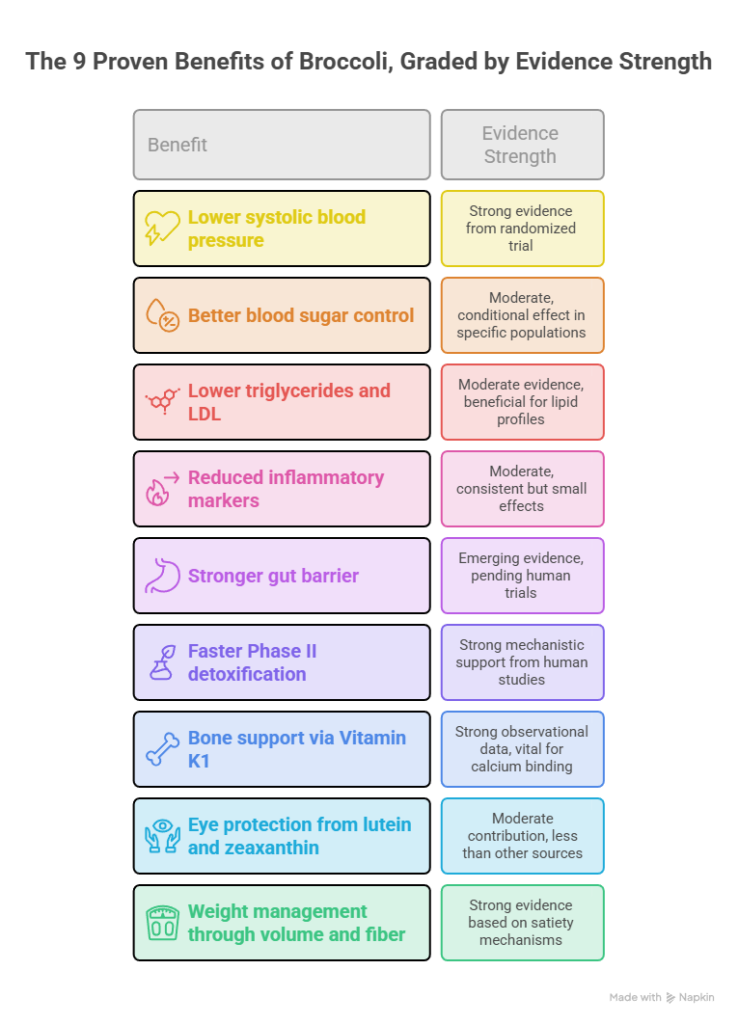
The table below grades each claim against the strongest human evidence available. The sections underneath translate the numbers into something you can act on.
Table 1: Broccoli’s Health Benefits Ranked by Evidence Quality
| Claimed Benefit | Evidence Grade | Best Human Study | Measured Effect | Practical Verdict |
| Lower systolic blood pressure | Strong | VESSEL RCT, BMC Medicine, 2024 (18 completers) | 2.5 mmHg drop in 24-hour SBP; 3.6 mmHg daytime | Real and fast. Two weeks of daily intake |
| Blood sugar control | Moderate | Science Translational Medicine, 2017 (97 adults) | HbA1c and fasting glucose fell in obese, poorly controlled T2D | Works in a narrow group, not everyone |
| Lower triglycerides | Moderate | VESSEL RCT, BMC Medicine, 2024 | 0.2 mmol/L reduction vs control | Modest but visible on a lipid panel |
| Reduced inflammation | Moderate | Multiple small sulforaphane and Nrf2 trials | Lower CRP and oxidative stress markers | Consistent direction, small effect sizes |
| Gut barrier protection | Emerging | Penn State, Laboratory Investigation, 2023 (mice) | AHR activation, improved barrier function | Mechanism solid, human trials pending |
| Phase II detox enzyme activation | Strong (mechanistic) | Johns Hopkins sprout studies, urinary markers | Measurable rise in detox enzyme activity | Well established biochemically |
| Bone support (vitamin K1) | Strong | Observational data plus established K1 biology | 92 mcg per raw cup, 110 mcg per boiled cup | Reliable, cumulative, undramatic |
| Eye protection | Moderate | Lutein and zeaxanthin cohort data | Contributes to macular pigment density | Real, though kale and spinach deliver more |
| Weight management | Strong | Volume, fiber, and satiety trials | 31 cal and 2.4 g fiber per raw cup | Works by displacement, not metabolism |
1. Lower Systolic Blood Pressure
This is the most convincing entry on the list. The VESSEL study, published in BMC Medicine, used a randomized, controlled, crossover design in adults aged 50 to 75 with mildly elevated blood pressure.
Participants ate roughly 300 grams of cruciferous vegetables daily (broccoli, cabbage, cauliflower, kale) served as soups, then crossed over to root and squash vegetable soups after a two-week washout.
Twenty-four-hour ambulatory systolic blood pressure fell 2.5 mmHg on the cruciferous arm compared with control. Daytime readings dropped further, by 3.6 mmHg.
What 2.5 mmHg Actually Means for Your Risk
Next to what a prescription does, 2.5 mmHg sounds trivial. At population scale it is anything but.
Researchers involved in the trial noted the shift could translate to roughly 5 percent lower risk of major cardiovascular events. Across the US patients we serve, that is the kind of return most people would gladly take from a free food swap.
Two caveats keep this honest. The trial had 18 completers, which is small, and 300 g daily is substantially more cruciferous vegetable than the typical American eats in three days.
2. Better Blood Sugar Control, But Only in Specific People
This benefit is genuine and heavily oversold at the same time. The nuance is the whole story.
A trial in Science Translational Medicine gave concentrated broccoli sprout extract to 97 adults with type 2 diabetes across 12 weeks. Participants whose diabetes was well controlled saw no change whatsoever.
Participants who were obese with poorly controlled diabetes saw fasting glucose and HbA1c fall, while the placebo group drifted slightly upward. The mechanism appears to be reduced hepatic glucose production through Nrf2 signaling, a different route from metformin.
Why the 2025 Prediabetes Trial Missed Its Target
The follow-up study matters more than the original, and almost no other article reports it.
A randomized, double-blind, placebo-controlled trial published in Nature Microbiology tested broccoli sprout extract in drug-naive adults with prediabetes. The prespecified target was a 0.3 mmol/L reduction in fasting blood glucose.
The trial did not hit it, landing at 0.2 mmol/L overall. Response varied by baseline gut microbiota composition, suggesting the bacteria in your colon partly determine whether you convert the compound efficiently.
Our medical team treats this as the most important honesty check in the broccoli literature. The effect is conditional, not universal, and anyone promising otherwise is selling something.
3. Lower Triglycerides and LDL
The VESSEL trial logged a secondary finding alongside the blood pressure result. Serum triglycerides fell by roughly 0.2 mmol/L on the cruciferous arm compared with control.
Broccoli’s soluble fiber also binds bile acids in the gut. The liver then pulls cholesterol out of circulation to manufacture replacements, which nudges LDL downward over time.
In tests booked through HealthCareOnTime, patients who add cruciferous vegetables while trimming refined carbohydrates typically see triglyceride movement before LDL movement. That sequence is expected, not a sign the change is failing.
4. Reduced Inflammatory Markers
Sulforaphane activates Nrf2, which upregulates your body’s own antioxidant response rather than supplying antioxidants directly. That distinction matters more than it sounds.
A direct antioxidant is consumed as it works, so the effect is dose-for-dose. An Nrf2 activator switches on a genetic program, so a modest amount produces a disproportionate response.
Human trials measuring C-reactive protein and oxidative stress markers after cruciferous intake point consistently in the same direction. The effect sizes are small and the study durations are short, which is why this grades as moderate rather than strong.
A 2025 review in Molecules catalogued antioxidant, anti-inflammatory, anti-obesity, and antidiabetic activity across in vitro and in vivo work. Reviews establish plausibility; they do not substitute for long-term human outcome data, and our reviewers grade them accordingly.
5. A Stronger Gut Barrier
Researchers at Penn State fed one group of mice a diet containing 15 percent broccoli, equivalent to roughly 3.5 cups per day for a human, against a control group on standard lab chow.
Broccoli-derived molecules bound the aryl hydrocarbon receptor in the intestinal lining. That binding improved barrier function and altered transit time through the small intestine. Mice without broccoli showed no AHR activation at all.
The work appeared in Laboratory Investigation.
The mechanism is compelling and the dose is high. Our reviewers grade this emerging rather than proven, because the equivalent human trials have not been run and 3.5 cups daily is not a realistic instruction.
6. Faster Phase II Detoxification Enzymes
This is the oldest and most biochemically settled benefit on the list, tracing back to Paul Talalay’s work at Johns Hopkins in the 1990s.
Sulforaphane induces phase II enzymes including glutathione S-transferase and NAD(P)H quinone dehydrogenase 1. These enzymes attach water-soluble groups to certain compounds so the body can clear them more readily.
Human studies have measured the resulting shift in urinary markers directly, which is why this grades as strong mechanistic evidence.
Two things this does not mean. It does not mean broccoli cleanses anything, and it does not mean you need a protocol, a powder, or a three-day juice reset. Your liver runs these pathways continuously whether or not you eat vegetables.
7. Bone Support via Vitamin K1
One cup of raw broccoli supplies about 92 mcg of vitamin K1. One cup of boiled broccoli concentrates to roughly 110 mcg, because cooking compresses more mass into the same volume.
Vitamin K1 activates osteocalcin, the protein that binds calcium into bone matrix. Without adequate K1, calcium intake alone does less than most people assume.
Broccoli also contributes roughly 45 mg of calcium per cup. That is modest against dairy, but the absorption rate from cruciferous vegetables is unusually high because broccoli is low in the oxalates that block calcium uptake in spinach.
Patients booking bone-health panels through HealthCareOnTime are often surprised by that last point. For the full comparison, see our guide to broccoli’s calcium content and absorption.
8. Eye Protection from Lutein and Zeaxanthin
Broccoli contains measurable lutein and zeaxanthin, the two carotenoids that concentrate in the macula and filter high-energy blue light. Higher macular pigment density is associated with lower age-related macular degeneration risk in cohort studies.
Broccoli is a contributor, not a leader here: kale, spinach, and egg yolks deliver considerably more lutein per serving.
9. Weight Management Through Volume and Fiber
Broccoli works for weight control through straightforward physics rather than any metabolic trick. At 31 calories and 2.4 grams of fiber per raw cup, it occupies stomach space that would otherwise go to something far denser.
Fiber slows gastric emptying and flattens the post-meal glucose curve, which reduces the rebound hunger driving mid-afternoon snacking.
Chew factor matters too, and it gets ignored in calorie math. Patients we work with consistently report better satiety from a cup of roasted florets than from an equivalent-calorie pile of spinach that collapses to two tablespoons.
There is no fat-burning effect and no negative-calorie myth here. Broccoli helps because of what it displaces. Our full portion guidance sits in Is Broccoli Good for Weight Loss?
The 3 Overhyped Claims
Every food article has a commercial incentive to say yes to everything. Saying no where the evidence says no is what separates health information from content marketing.
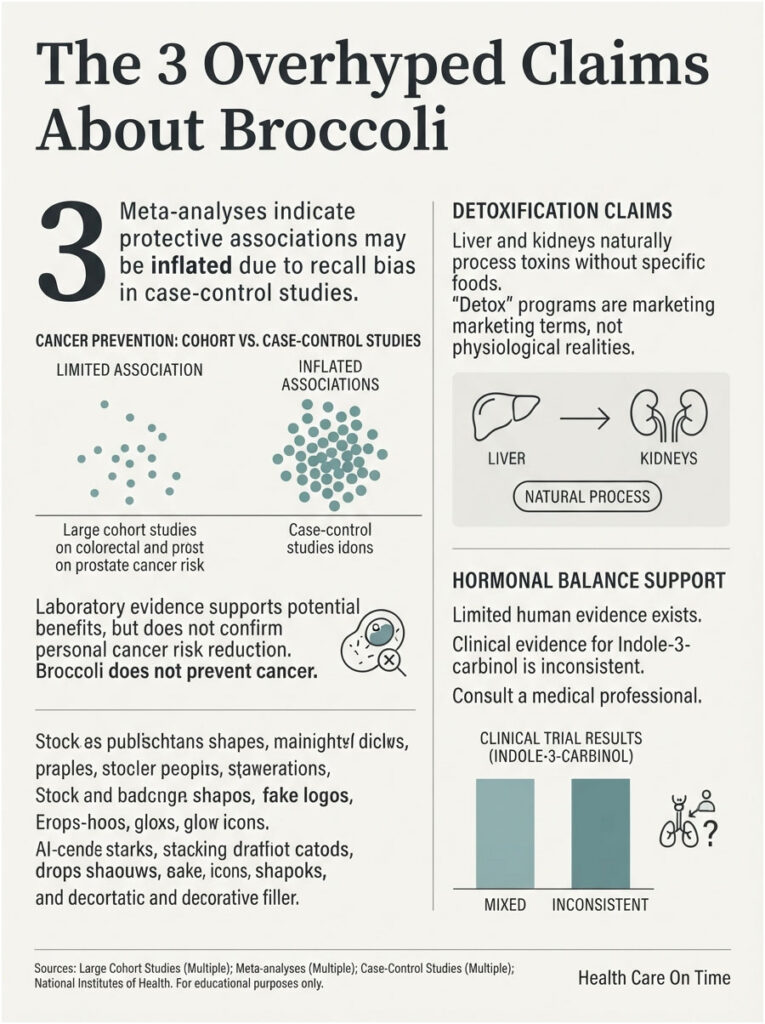
“Broccoli Prevents Cancer”
This is the most repeated broccoli claim and the least supported one in human cohort data.
The National Cancer Institute’s own fact sheet states that cohort studies in the United States and the Netherlands have generally found no association between cruciferous vegetable intake and colorectal cancer risk. For prostate cancer, large cohort studies found little or no association, though several case-control studies did.
Meta-analyses pooling case-control and cohort data do show inverse associations, with pooled relative risks near 0.82 for colorectal cancer and 0.81 for renal cell carcinoma. The catch sits in the study design: case-control work relies on patients recalling what they ate years earlier, and recall bias reliably inflates protective associations.
When prospective studies are separated out, the signal weakens to borderline significance.
The laboratory evidence is genuinely strong. Sulforaphane inhibits histone deacetylases, reactivates tumor suppressor genes, induces apoptosis, and arrests the cell cycle in cell models.
None of that establishes that eating more broccoli lowers your personal cancer risk. Our honest position: broccoli belongs inside a cancer-protective dietary pattern, and it is not a cancer preventive on its own.
“Broccoli Detoxes Your Liver”
Broccoli does increase phase II enzyme activity, and that is measurable in human urine. So the underlying biology is not fake.
What broccoli does not do is clear a backlog of accumulated toxins, reset your liver, or make a detox program necessary. Your liver and kidneys are not idling, waiting for a vegetable to start them.
In supplement marketing, “detox” usually describes a product category rather than a physiological event. If a label promises to flush or cleanse, that is a sales term.
“Broccoli Balances Your Hormones”
Indole-3-carbinol, formed from broccoli’s indole glucosinolates, does influence estrogen metabolism pathways in laboratory settings. That finding has been stretched into claims about testosterone, thyroid balance, and menopause relief.
Human evidence for meaningful hormonal shifts from dietary broccoli is limited and inconsistent. Supplemental doses of I3C or DIM are a different question entirely and should not be self-prescribed.
Our medical team’s position is simple. Eat broccoli for the nine benefits above; if you have a hormonal concern, run the relevant panel rather than adjusting your vegetable intake and hoping.
How Americans Actually Eat Broccoli (and Why It Matters)
Most broccoli articles assume the reader already eats vegetables and just wants to optimize. National data says otherwise, and that changes the advice.
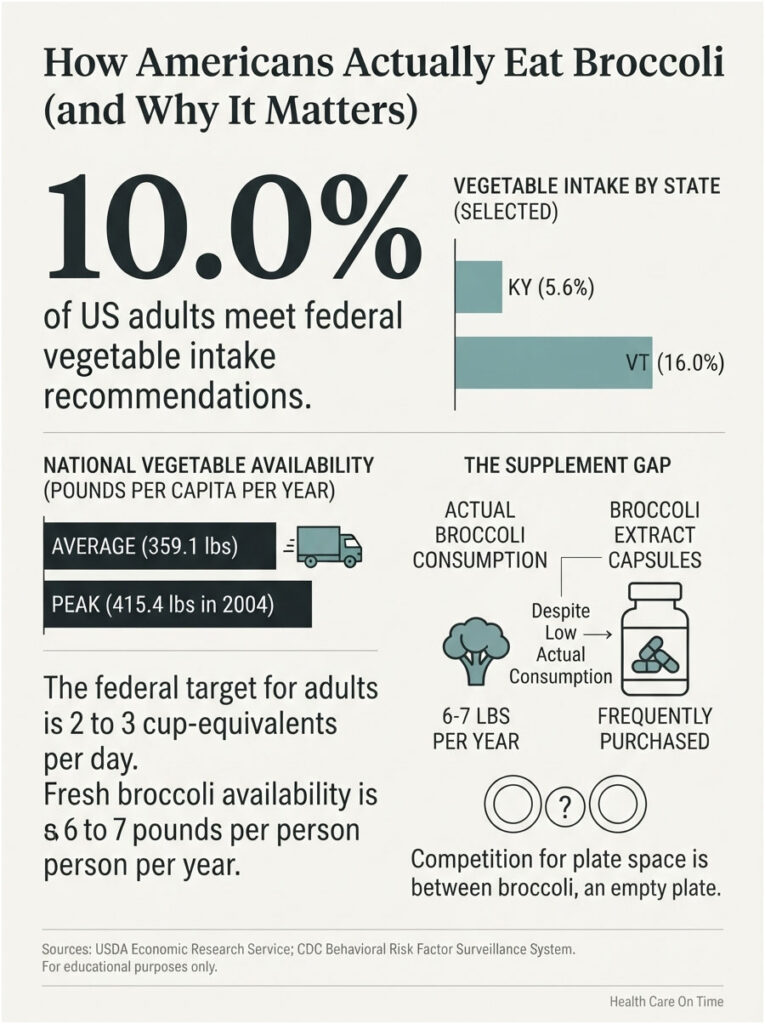
CDC surveillance found that 10.0 percent of US adults met federal vegetable intake recommendations, ranging from 5.6 percent in Kentucky to 16.0 percent in Vermont. Nine out of ten adults fall short.
Fresh broccoli availability sits near 6 to 7 pounds per person per year in USDA Economic Research Service tracking. Spread over a year, that is a few small servings a month.
Table 2: Broccoli and Vegetable Intake in the United States
| Metric | US Figure | Year / Dataset | Source |
| Adults meeting vegetable recommendations | 10.0% | 2019 BRFSS | CDC MMWR |
| Lowest state | 5.6% (Kentucky) | 2019 BRFSS | CDC MMWR |
| Highest state | 16.0% (Vermont) | 2019 BRFSS | CDC MMWR |
| Total vegetable availability per capita | 359.1 lb | 2022 | USDA ERS |
| Peak vegetable availability per capita | 415.4 lb | 2004 | USDA ERS |
| Fresh broccoli availability per capita | 6 to 7 lb/year | 2017 to 2024 | USDA ERS Vegetables Yearbook |
| Federal vegetable target, adults | 2 to 3 cup-equivalents/day | 2020 to 2025 Guidelines | Dietary Guidelines for Americans |
The distance between that last row and everything above it is the whole story. Broccoli is not competing with kale for space on your plate. It is competing with an empty plate.
There is a supplement wrinkle here too. Patients booking metabolic panels through HealthCareOnTime frequently mention taking a broccoli extract capsule while eating essentially no broccoli. The capsule is the easier purchase, and it skips fiber, potassium, and satiety entirely.
How to Cook Broccoli So the Benefits Survive
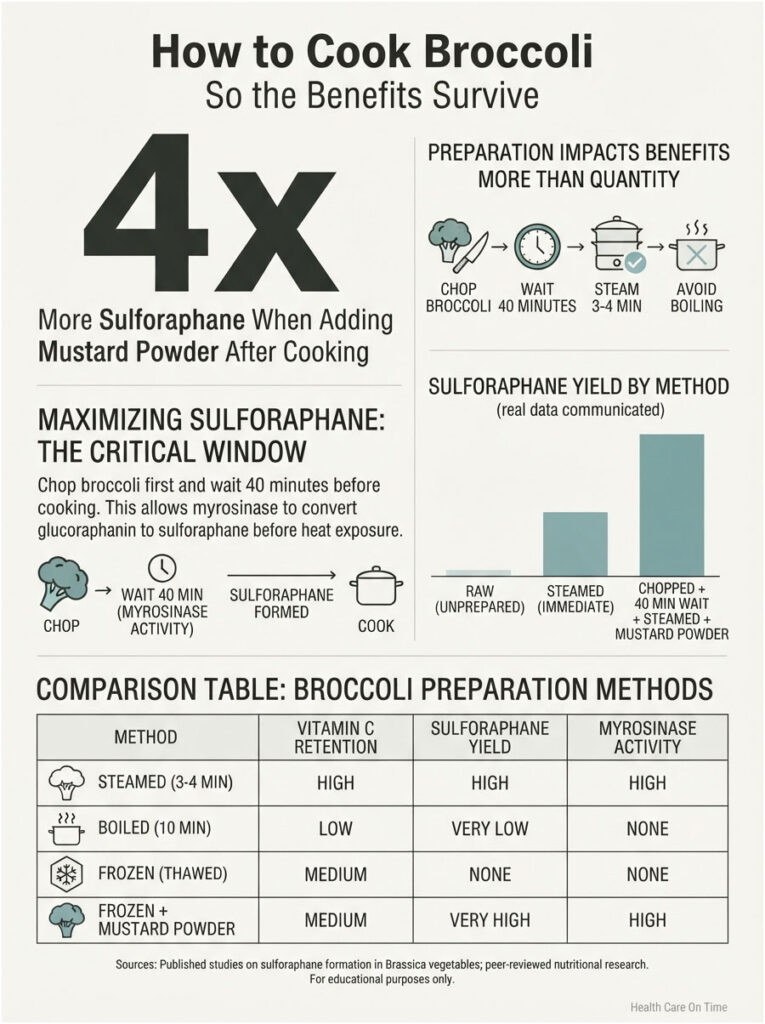
Preparation changes your outcome more than quantity does.
Chop First, Then Wait 40 Minutes
Cutting ruptures cell walls and lets myrosinase reach glucoraphanin. That reaction needs time to run.
Chop your broccoli, leave it on the board for 40 minutes, then cook. By the time heat arrives, much of the sulforaphane has already formed, and sulforaphane is far more heat-stable than the enzyme that produces it.
Practical version: chop the broccoli the moment you start cooking, prep everything else, then cook it last.
Steam 3 to 4 Minutes, Never Boil
Steaming retains the most vitamin C among cooking methods and preserves partial myrosinase activity. Short microwaving with minimal water performs about as well.
Boiling fails twice over. It inactivates myrosinase, and it leaches water-soluble vitamins into liquid you pour down the drain.
Aim for bright green and slightly firm to the bite. Grey-green and soft means you overcooked it and lost most of what you were cooking it for.
The Mustard Powder Trick That Quadruples Sulforaphane
This is the highest-return tip in this guide, and almost no major health site publishes it.
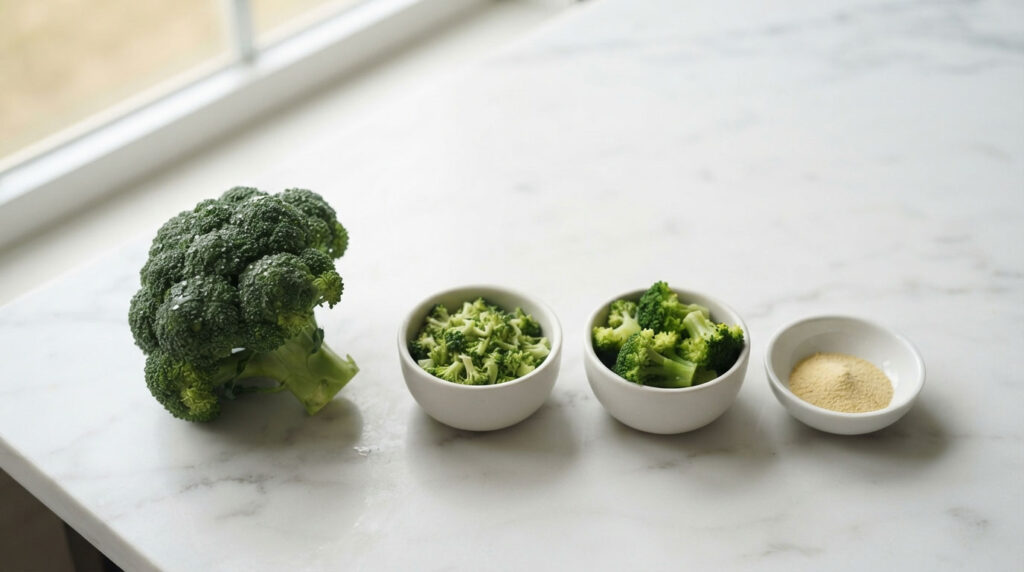
Mustard seeds contain their own myrosinase, and that version tolerates heat far better than broccoli’s. Sprinkling mustard powder on cooked broccoli restores the missing enzyme from the outside.
In a randomized crossover study published in Molecular Nutrition & Food Research, 12 healthy adults ate 200 g of cooked broccoli with and without 1 gram of powdered brown mustard. Urinary sulforaphane metabolites came back more than four times higher with the mustard.
One gram is roughly a quarter teaspoon. Add it after cooking, off the heat, so you do not destroy the enzyme you just added.
Quality check: if the powder tastes sharp and pungent, the enzyme is active. Bland mustard powder has lost its potency and will not do the job.
Frozen Broccoli: What You Lose and What You Keep
Commercial freezing involves blanching, which kills myrosinase before the bag reaches your freezer. Glucoraphanin survives the process intact.
So frozen broccoli arrives loaded with the precursor and none of the converting enzyme. That is precisely the situation the mustard powder trick solves.
Frozen also costs less, keeps for months, and gets eaten far more often than the fresh head slowly liquefying in your crisper drawer. Our nutrition team consistently prefers frozen-and-eaten over fresh-and-wasted.
Table 3: Preparation Methods Compared
| Preparation | Vitamin C Retention | Sulforaphane Yield | Best Use Case |
| Raw, chopped, chewed well | Highest, near 100% | Highest, myrosinase fully active | Salads, raw platters, slaw |
| Steamed 3 to 4 min | High, roughly 80 to 90% | High, partial enzyme survival | Everyday default method |
| Microwaved 2 to 3 min, minimal water | High, roughly 80 to 85% | Moderate to high | Fastest weeknight option |
| Stir-fried, high heat, short time | Moderate, roughly 70% | Moderate, varies with duration | Flavor-forward meals |
| Boiled 5+ min | Lowest, roughly 45 to 55% | Near zero without added myrosinase | Avoid, or rescue with mustard powder |
| Frozen, then cooked | Moderate | Near zero without added myrosinase | Budget staple, add mustard powder |
How Much, How Often, and What It Costs
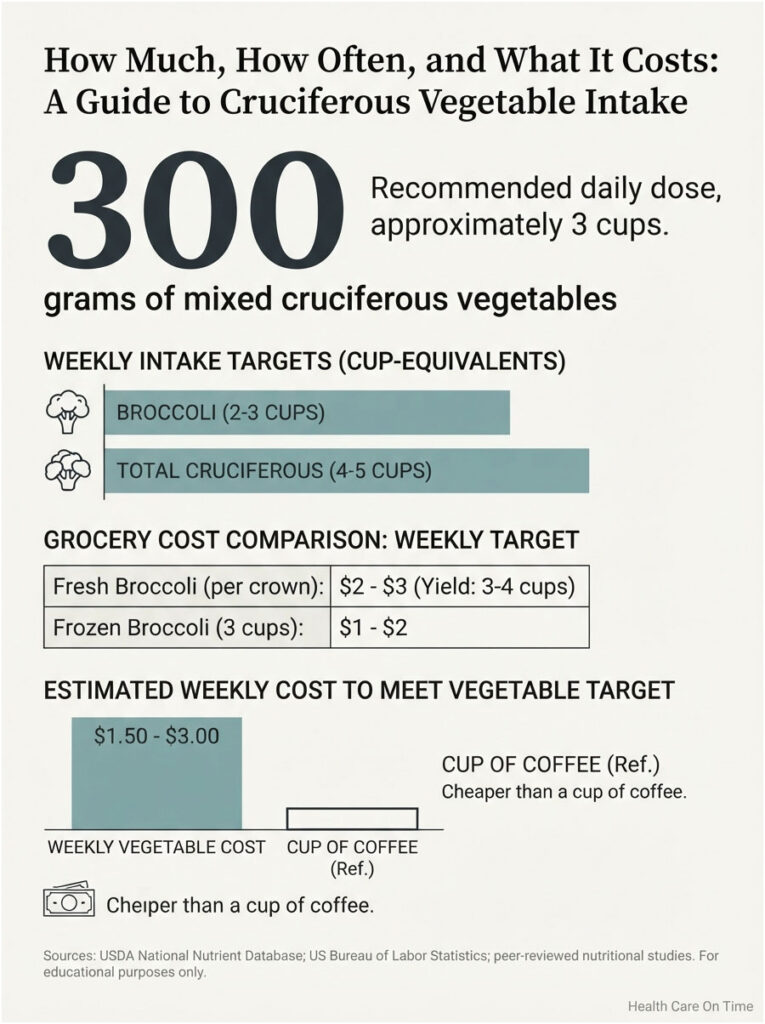
The research dose was 300 grams of mixed cruciferous vegetables daily, roughly 3 cups. Almost nobody sustains that, and pretending otherwise makes the advice useless.
Your Weekly Target in Cups
A workable target for most American adults is 2 to 3 cups of broccoli per week, sitting inside a broader cruciferous intake of 4 to 5 cups weekly across broccoli, cabbage, cauliflower, kale, and Brussels sprouts.
Spreading the load avoids palate fatigue and gets you meaningfully closer to trial-level intake without turning dinner into a clinical protocol.
The Grocery Math
A fresh crown runs roughly $2 to $3 in most US supermarkets and yields about 3 to 4 cups chopped. A 12-ounce frozen bag typically runs $1 to $2 and yields about 3 cups cooked.
At those prices, hitting the weekly target costs somewhere between $1.50 and $3.00. That is less than a single cup of coffee, which is worth stating plainly because cost is the barrier people cite most.
Peak US season for fresh broccoli runs October through April, with California supplying the bulk of domestic production. Prices dip and quality peaks in that window.
A Sample Week That Does Not Get Boring
Monday, roasted florets with olive oil and a finish of mustard powder. Wednesday, raw stems shredded into a slaw with lemon.
Friday, steamed briefly and folded into a stir-fry after the pan comes off the heat. Three appearances, three textures, roughly 3 cups total.
That is the entire plan. It does not require meal prep containers or a Sunday afternoon.
Who Should Be Careful With Broccoli
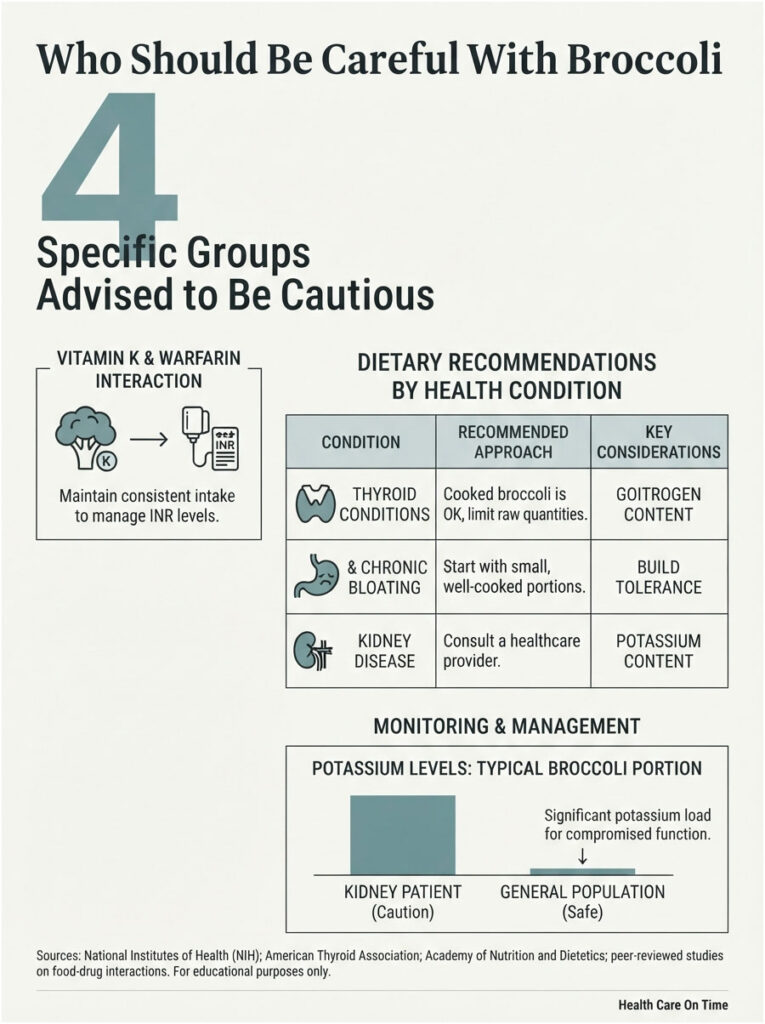
Broccoli is safe for the large majority of people. Four groups need specific guidance rather than general reassurance.
If You Take Warfarin
Broccoli is high in vitamin K1, which directly opposes warfarin’s mechanism. A sudden increase can drop your INR and reduce anticoagulation; a sudden decrease can raise it and increase bleeding risk.
Clinical advice is consistency, not avoidance. Eat about the same amount of vitamin K each week so your dose can be titrated around a steady intake.
Tell your anticoagulation clinic before making a deliberate dietary change. Direct oral anticoagulants such as apixaban and rivaroxaban do not carry this interaction at all.
If You Have a Thyroid Condition
Broccoli contains goitrogens, compounds that can interfere with iodine uptake in large quantities. Cooking sharply reduces goitrogenic activity.
A systematic review of Brassica vegetables and thyroid function found that normal dietary amounts did not meaningfully shift TSH, free T3, or free T4 in healthy subjects. The documented problems involved very large raw intakes, usually juiced.
If your thyroid is treated and your iodine intake is adequate, moderate cooked broccoli is not a concern. Our lab partners report far more thyroid variability from inconsistent levothyroxine timing than from anything on the dinner plate.
If You Have IBS or Chronic Bloating
Broccoli contains fructans and raffinose, both fermentable and both common gas triggers. This is a tolerance issue, not a toxicity issue.
Cook it thoroughly, start with half a cup, favor florets over stems, and build up across two to three weeks. Most people adapt as their gut bacteria adjust.
If You Have Kidney Disease
At 288 mg of potassium per raw cup, broccoli sits in the moderate range rather than the high one. For most people that potassium is a benefit, not a risk.
In advanced chronic kidney disease with potassium restriction, portion size should be set by your nephrologist or renal dietitian, not by a general article.
Table 4: What to Do Based on Your Situation
| Your Situation | Recommended Approach | Weekly Amount | What to Monitor |
| Mildly elevated BP (120 to 139 systolic) | Daily cruciferous rotation, steamed, low added sodium | 5 to 7 cups all crucifers | Home BP log, morning and evening |
| Prediabetes or rising HbA1c | Pair broccoli with protein at each meal; consider sprouts | 3 to 4 cups broccoli | Fasting glucose, HbA1c every 3 months |
| Taking warfarin | Keep vitamin K steady week to week, do not eliminate | Same amount every week | INR at your clinic’s usual schedule |
| Hypothyroid, on levothyroxine | Cooked broccoli, limit large raw quantities | 2 to 3 cups cooked | TSH and free T4 at routine intervals |
| IBS or chronic bloating | Small portions, well cooked, florets over stems | Start 0.5 cup, build gradually | Symptom diary across 2 weeks |
| Weight loss goal | Front-load meals with broccoli before the dense portion | 3 to 4 cups | Weight trend over 4 weeks, not daily |
| Advanced kidney disease | Discuss before increasing intake | Individualized | Serum potassium |
Which Blood Markers Show It Is Working
Dietary changes feel invisible without measurement, which is why most people quit them. These are the values that actually move.
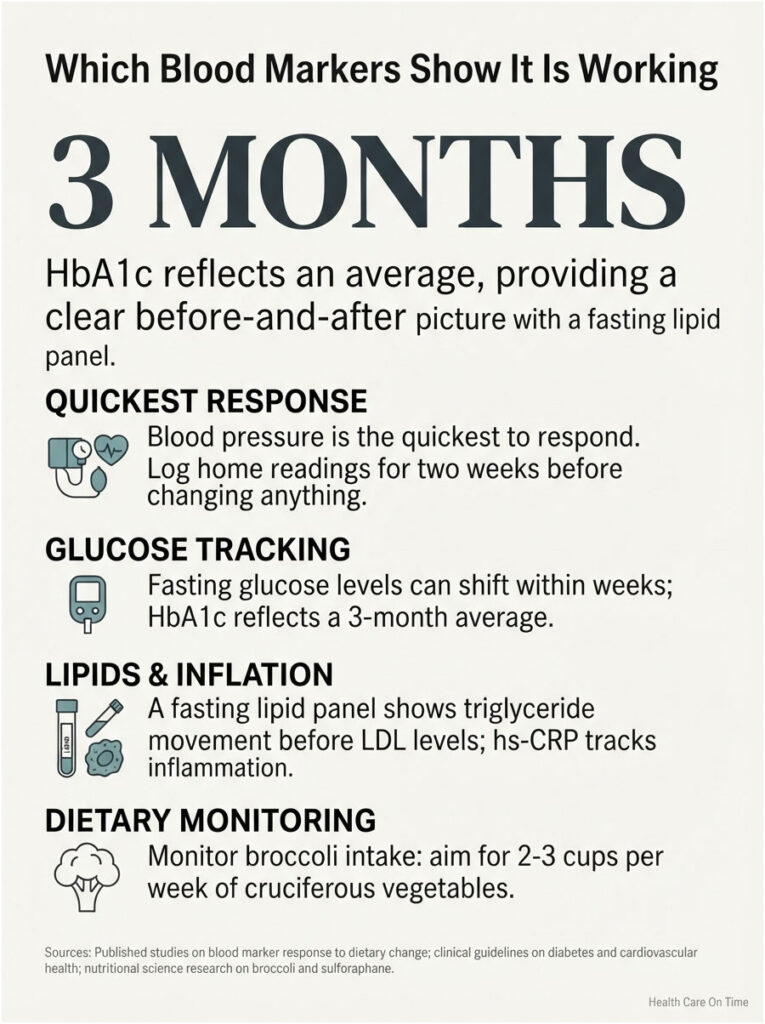
Blood pressure responds fastest. Log home readings for two weeks before changing anything, then compare against the following two weeks.
Fasting glucose can shift within weeks. HbA1c reflects roughly three months of average blood sugar, so retesting sooner than 90 days tells you nothing useful.
A fasting lipid panel usually shows triglyceride movement before LDL movement. High-sensitivity CRP can track inflammation, though it fluctuates with any infection and needs cautious interpretation.
Patients booking metabolic and lipid panels through HealthCareOnTime often ask which single test to run first. For most people making a dietary change, a fasting lipid panel paired with HbA1c gives the clearest before-and-after picture for the money.
Frequently Asked Questions
How much broccoli should you eat a day?
No official daily minimum exists for broccoli specifically. A practical target is 2 to 3 cups per week within a total of 4 to 5 cups of cruciferous vegetables. Research doses ran closer to 3 cups daily, but steady weekly intake beats a short burst at trial levels.
Is raw or cooked broccoli healthier?
Raw preserves the most vitamin C and full myrosinase activity, producing the most sulforaphane. Cooked is easier to digest and concentrates more vitamin K per cup. Steaming 3 to 4 minutes is the practical compromise, keeping most vitamin C plus partial enzyme function.
Does boiling broccoli destroy the nutrients?
Boiling causes the largest losses of any method. Vitamin C leaches into the cooking water and myrosinase is inactivated, so sulforaphane formation drops close to zero. If you boil anyway, add a quarter teaspoon of mustard powder afterward to restore the missing enzyme.
What happens if you eat broccoli every day?
For most adults, nothing but benefit: steady fiber, vitamin C, vitamin K, and potassium. Some people notice more gas during the first two weeks as gut bacteria adapt. Warfarin users should keep intake consistent, and treated thyroid patients should favor cooked over large raw amounts.
Are broccoli sprouts better than regular broccoli?
For sulforaphane alone, clearly yes. Sprouts carry roughly 20 to 50 times more glucoraphanin per gram, which is why trials use them. But sprouts lack the fiber, volume, and potassium of a real serving. Use them as a supplement alongside broccoli, not instead of it.
Does broccoli lower blood pressure?
Evidence says yes, modestly. A randomized crossover trial found roughly 300 g of cruciferous vegetables daily lowered 24-hour systolic blood pressure by 2.5 mmHg over two weeks, with a 3.6 mmHg daytime reduction. The sample was small, though the design was strong and the effect appeared quickly.
Can broccoli lower blood sugar?
In specific groups only. Broccoli sprout extract lowered HbA1c and fasting glucose in obese adults with poorly controlled type 2 diabetes. It did nothing in well-controlled diabetes, and a 2025 prediabetes trial missed its primary target. Response appears to depend partly on gut bacteria composition.
Is frozen broccoli as healthy as fresh?
Nutritionally close, with one meaningful difference. Blanching before freezing destroys myrosinase, so frozen broccoli delivers glucoraphanin without the converting enzyme. Add mustard powder after cooking to recover the sulforaphane. Vitamins, minerals, and fiber survive freezing well.
Can you eat broccoli while taking warfarin?
Yes, with consistency. Do not eliminate broccoli; eliminate variability. Eat roughly the same amount weekly so your warfarin dose matches a stable vitamin K intake. Notify your anticoagulation clinic before any deliberate change and keep your usual INR testing schedule.
Does broccoli affect your thyroid?
Not at normal dietary amounts. Broccoli contains goitrogens, but cooking sharply reduces their activity, and reviews of human studies found no meaningful TSH, free T3, or free T4 changes from typical intake. Documented problems involved very large raw quantities, usually consumed as juice.
Why does broccoli cause gas and bloating?
Broccoli contains fructans and raffinose, carbohydrates your small intestine cannot fully break down. Gut bacteria ferment them in the colon and produce gas as a byproduct. Cook broccoli thoroughly, begin with half-cup portions, choose florets over stems, and increase gradually over two to three weeks.
Are broccoli or sulforaphane supplements worth it?
For most people, no. Supplements skip the fiber, potassium, and satiety that make broccoli valuable, and potency varies widely because sulforaphane is chemically unstable. If a supplement suits a specific clinical situation, choose one listing active myrosinase and discuss it with your physician first.
Medical Disclaimer
This article is for informational purposes and does not replace advice from a licensed physician, registered dietitian, or pharmacist. Broccoli’s vitamin K content can interact with warfarin, and dietary changes may affect medication requirements for blood pressure, diabetes, thyroid, and kidney conditions. Consult your healthcare provider before making significant dietary changes, particularly if you take prescription medication or manage a chronic condition.
References
- USDA FoodData Central, broccoli nutrient composition
- CDC MMWR, Adults Meeting Fruit and Vegetable Intake Recommendations, United States
- USDA Economic Research Service, Food Availability and Consumption
- BMC Medicine, VESSEL randomized crossover trial on cruciferous vegetables and blood pressure
- Science Translational Medicine, sulforaphane and hepatic glucose production in type 2 diabetes
- Nature Microbiology, broccoli sprout extract and fasting blood glucose in prediabetes
- Penn State, broccoli consumption and gut barrier protection
- Molecular Nutrition and Food Research, mustard seed myrosinase and sulforaphane bioavailability
- National Cancer Institute, Cruciferous Vegetables and Cancer Prevention
- Molecules, review of broccoli glucosinolates, phenolics, and antimicrobial peptides
- International Journal of Molecular Sciences, systematic review of Brassica vegetables and thyroid function
- Cleveland Clinic, Health Benefits of Broccoli