It’s 2 a.m. You’re lying flat, half asleep, and something under your belly button flicks. Not a cramp. Not a gurgle. A quick muscular flutter, like a phone buzzing inside your abdominal wall.
Table of Contents
You press on it. Nothing. It happens again ten minutes later, disappears for two days, then returns while you’re sitting at a red light. It doesn’t hurt at all, which somehow makes it worse.
Here’s the part nobody leads with: this sensation is one of the most common things a healthy human body does, and it is almost never the thing you’re afraid of.
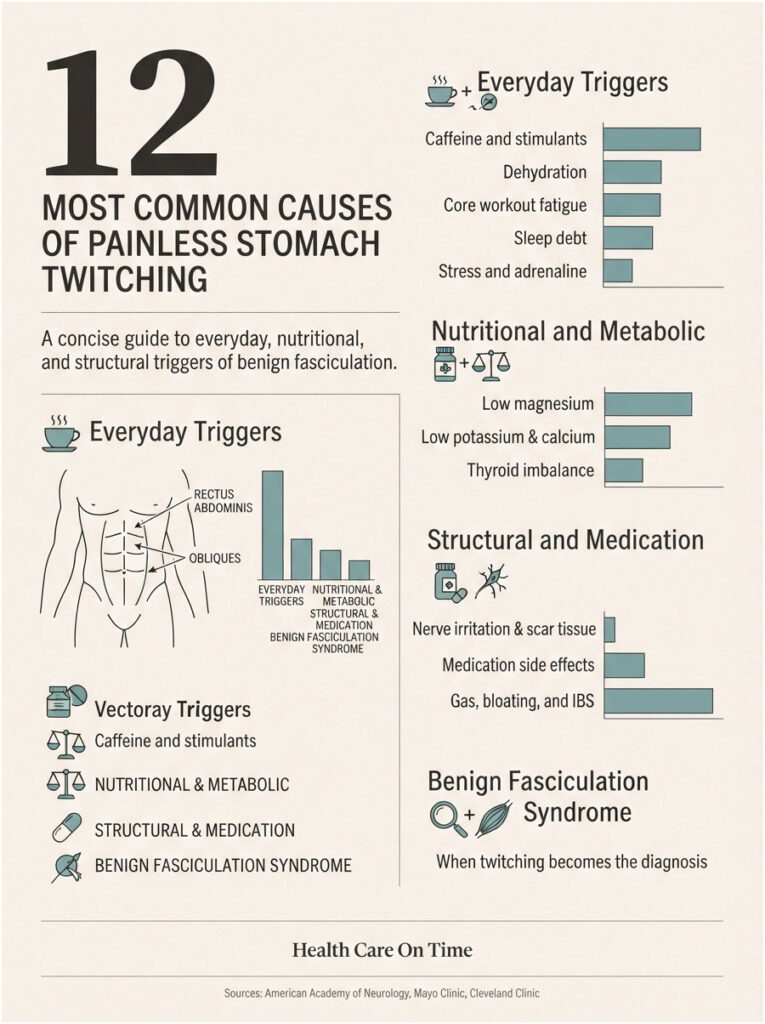
Quick Answer: Painless stomach twitching is usually harmless. It’s a benign muscle fasciculation, a small involuntary contraction in the abdominal wall, and the 12 usual causes are caffeine, dehydration, core workout fatigue, sleep loss, stress, low magnesium, low potassium or calcium, thyroid shifts, nerve irritation, medications, gas, and benign fasciculation syndrome. Twitching with no weakness and no muscle loss is rarely serious.
At a Glance
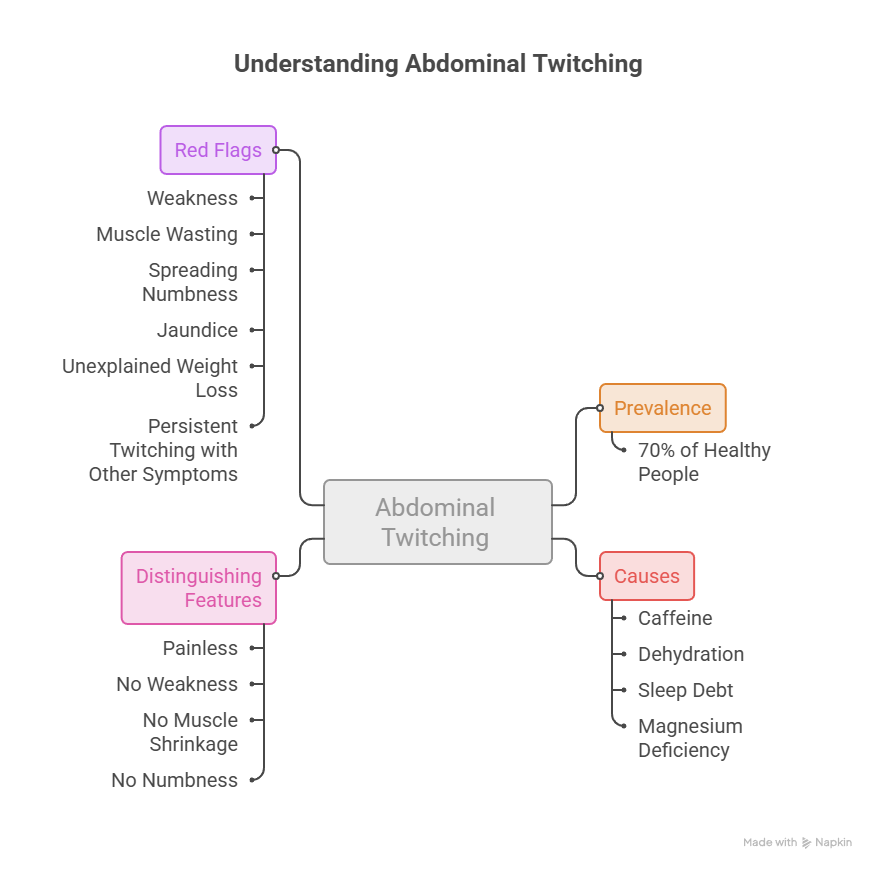
• About 70% of healthy people experience benign muscle twitching at some point, per Cleveland Clinic.
• Painless belly twitching without weakness, muscle shrinkage, or numbness is the reassuring pattern clinicians look for.
• Caffeine, dehydration, and sleep debt drive a large share of new-onset abdominal twitching.
• Nearly half of Americans fall short on magnesium, one of the most fixable stomach muscle twitching causes.
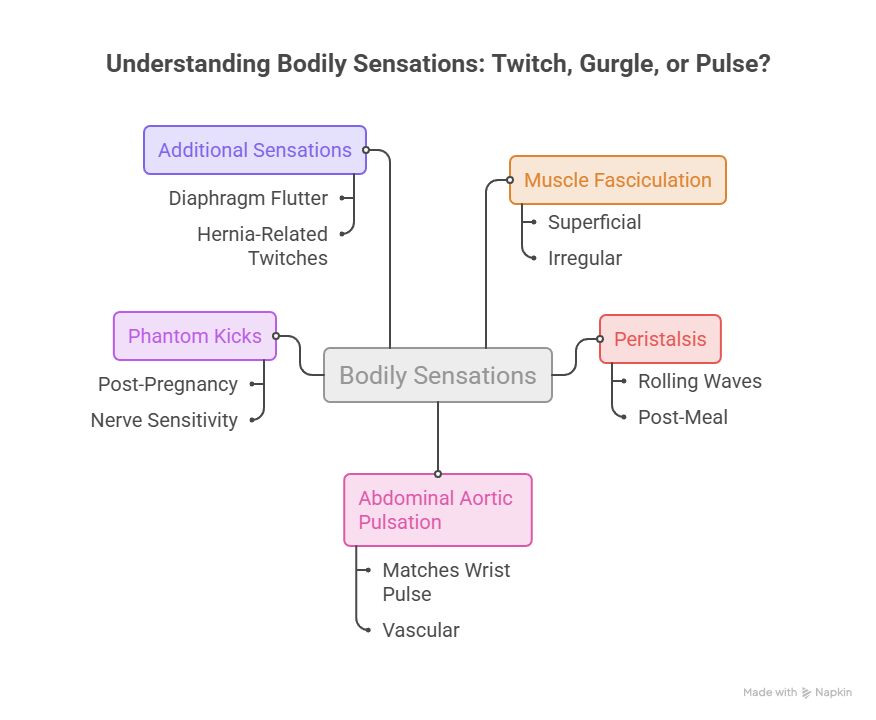
• Fasciculations, peristalsis, aortic pulsation, and phantom kicks feel alike but come from four different systems.
• US ALS incidence is roughly 1.44 new cases per 100,000 people per year, and it almost never begins as isolated painless twitching.
• Red flags: weakness, muscle wasting, spreading numbness, jaundice, unexplained weight loss, or twitching that persists past a few weeks with other symptoms.
Reviewed by the HealthCareOnTime medical content team. Sources cited from CDC, NIH, Cleveland Clinic, and peer-reviewed neurology literature.
What Painless Stomach Twitching Actually Is
Your abdominal wall isn’t one muscle. It’s a stacked, layered sheet of them, and every fiber in that sheet is wired to a motor nerve that can misfire on its own.
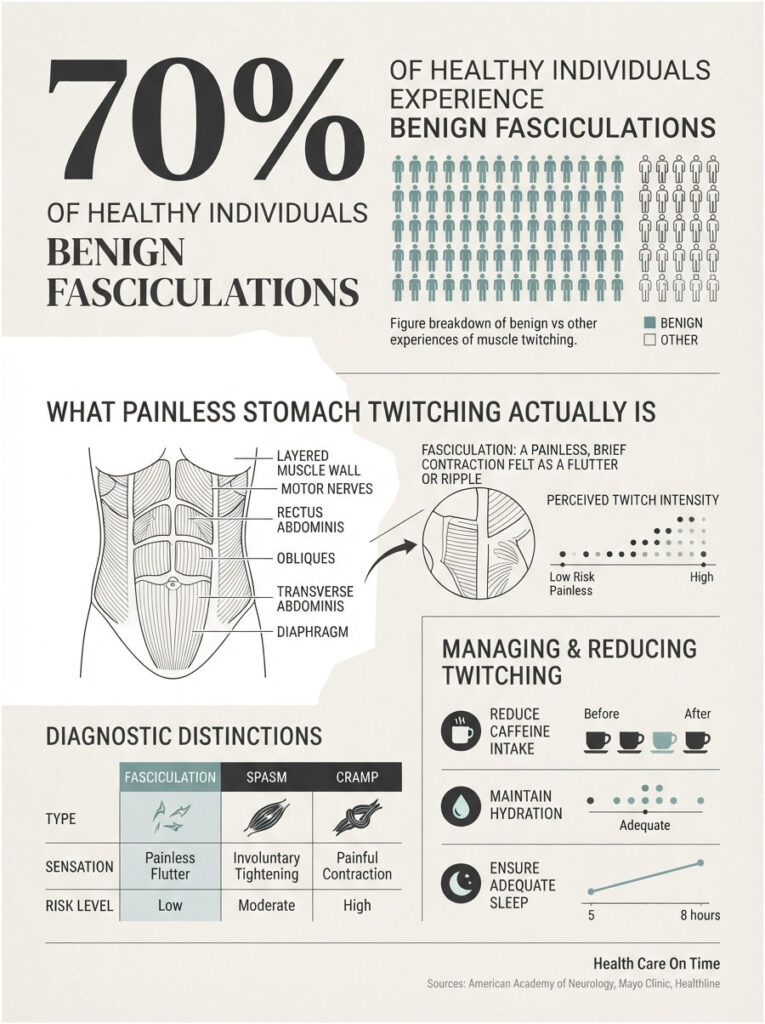
When a single motor unit fires without instruction from your brain, the small patch of muscle it controls contracts. That’s a fasciculation. Through abdominal skin, it reads as a flutter, a ripple, or a soft thump.
Our medical reviewers see three descriptions almost every time: “like a heartbeat in the wrong place,” “like a bug under my skin,” and “like a baby kicking.” All three point to the same underlying event.
If you want the short version before the long one: cut caffeine below 200 mg a day, drink to pale-yellow urine, and protect seven to eight hours of sleep for one week. That trio resolves a large share of cases before anyone orders a test.
Fasciculation vs Spasm vs Cramp: The Difference Doctors Care About
Patients use these three words interchangeably. Clinicians never do, because the distinction changes the entire differential.
A fasciculation is small, brief, painless, and involves only part of a muscle. One or two seconds. If you’re lean you might see a faint ripple, but usually you only feel it.
A spasm involves the whole muscle contracting and holding. Uncomfortable, not sharply painful. Think of the tightening after a heavy set of sit-ups.
A cramp is a sustained, involuntary, painful lock. If your stomach twitching hurts, it isn’t a fasciculation, and that shifts what needs investigating.
The word “painless” in your search is doing real diagnostic work. It drops you into the lowest-risk category before a physician examines anything.
Which Abdominal Muscles Twitch
The rectus abdominis runs vertically down the front of your belly, split into segments by tendon bands. Twitching here feels localized and superficial, usually just above or below the navel.
The external and internal obliques wrap your sides. Twitching here reads as a flank flutter and shows up after rotational exercise, or after weeks of leaning to one side at a desk.
The transverse abdominis is the deep corset layer. Twitching here feels vaguer and further in, which is why people mistake it for something internal rather than muscular.
The diaphragm sits above all of them. When it twitches you feel a flutter high under the ribs, sometimes with a faint catch in your breath. Same muscle that produces hiccups.
Why It Feels Bigger Than It Looks
Abdominal skin and fascia are thin and densely innervated. A contraction too small to notice in your calf becomes impossible to ignore on your belly.
There’s a second reason, and it’s about attention rather than anatomy. Lie down in a quiet room and your brain reallocates processing to internal sensations. Nothing changed in the muscle. Your filter changed.
Cleveland Clinic reports that benign fasciculations occur in roughly 70% of healthy people at some point in life, while benign fasciculation syndrome as a diagnosed condition remains relatively rare. An ultrasound study of 58 healthy adults detected fasciculations in 43% of participants, mostly in the foot, with strenuous exercise producing a temporary increase.
Patients booking tests with us often ask whether 70% really means what it sounds like. It does. Muscle twitching sits closer to normal physiology than to symptom.
Twitch, Gurgle, or Pulse? Telling the Four Sensations Apart
Most articles skip this section. It’s the one that resolves the majority of cases, because four completely different systems produce sensations that feel nearly identical through the abdominal wall.
Muscle Fasciculation
Superficial, irregular, unpredictable. It fires for a few seconds, stops, then may return minutes or hours later in the exact same square inch. It doesn’t track your pulse and it doesn’t track digestion.
Gentle pressure sometimes stops it briefly. Deliberately contracting the muscle, by lifting your head off the pillow, usually interrupts it.
Peristalsis: Your Gut Moving Food
Your intestines contract in slow coordinated waves to push contents forward. When a gas pocket presses against the abdominal wall, that wave registers as a distinct thump or a rolling ripple.
Timing is the tell. Peristaltic sensations cluster 30 to 90 minutes after eating, often arrive with audible gurgling, and migrate across the abdomen instead of staying put.
Abdominal Aortic Pulsation
Your abdominal aorta runs down the center of your abdomen behind the intestines. In lean people, after a meal, or lying flat, its pulse becomes noticeable.
Banner Health’s internal medicine team notes that abdominal pulsing that comes and goes without pain is usually normal. Rhythm settles it: if the sensation matches your wrist pulse exactly, it’s vascular, not muscular.
Phantom Kicks and Postpartum Sensations
Women who have been pregnant sometimes feel movements that mimic fetal kicks months or years afterward. Healthgrades notes that gas, muscle contractions, and peristalsis all mimic fetal movement in women who aren’t pregnant, and clinicians call this phantom kicks.
Leading theories involve nerve receptor changes from uterine expansion, plus a brain that spent nine months mapping that region with unusual sensitivity. In cases reviewed by our medical team, this is one of the most frequent reasons an otherwise healthy woman books a workup.
| Sensation | What It Feels Like | Typical Rhythm | Common Trigger | Usually Serious? |
| Muscle fasciculation | Flutter or buzz just under the skin, stays in one spot | Irregular bursts of 1 to 5 seconds | Caffeine, fatigue, stress, core exercise | No, when painless and without weakness |
| Peristalsis | Rolling thump or wave that moves across the belly | 30 to 90 minutes after eating, often audible | Meals, gas, carbonated drinks, IBS | No, unless paired with pain or bowel changes |
| Aortic pulsation | Steady throb deep in the center of the abdomen | Matches your heartbeat exactly | Lying flat, lean build, post-meal blood flow | No, unless pain radiates to back or flank |
| Phantom kicks | Distinct nudge or kick, low abdomen | Random, no pattern | Prior pregnancy, postpartum period, gas | No, but confirm pregnancy status if uncertain |
| Diaphragm flutter | Rapid tapping high under the ribs | Fast bursts, may catch your breath | Large meals, reflux, hiccup reflex, anxiety | No, unless persistent for days |
| Hernia-related twitch | Localized flicker near a bulge or old scar | Worse with straining, coughing, lifting | Prior abdominal surgery, heavy lifting | Needs evaluation if a bulge is present |
The 12 Most Common Causes of Painless Stomach Twitching
Our lab partners report that the overwhelming majority of patients who arrive worried about abdominal twitching turn out to have two or three of the first five causes stacked on top of each other. It’s rarely one clean answer.
Group A: Everyday Triggers
Cause 1: Caffeine and Stimulant Load
Caffeine increases motor neuron excitability. It doesn’t damage muscle. It lowers the threshold at which existing nerves fire spontaneously.
That threshold varies enormously. Some people notice twitching at 200 mg a day, roughly two 8-ounce cups of coffee. Others handle 400 mg with no trouble.
Check the hidden sources. Pre-workout powders often carry 250 to 350 mg per scoop. Energy drinks run 80 to 300 mg per can. Excedrin, matcha, and some fat-burner supplements all add to the total. Nicotine and the pseudoephedrine in decongestants work on the same pathway.
Cause 2: Dehydration
Water moves in and out of muscle cells alongside sodium, potassium, and chloride. Drop total body water and the electrical gradient across muscle membranes destabilizes.
Dehydration-driven twitching usually travels with darker urine, mild headache, and a dry mouth. It responds to fluid in hours, not days.
Summer heat, hot yoga, cross-country flights, alcohol the night before, and any illness with vomiting or diarrhea push people here fast.
Cause 3: Core Workout Fatigue and Overuse
Planks, hanging leg raises, weighted crunches, and heavy deadlifts load the abdominal wall hard. Fatigued fibers fire erratically during recovery.
The timeline is diagnostic. It starts 12 to 48 hours after the session and fades within three to five days. If you can name the workout, you’ve found your answer.
Non-gym loading counts too. Moving furniture, a long drive gripping the wheel, hauling a toddler on one hip, or shoveling snow all produce the same pattern.
Cause 4: Sleep Debt
Motor neuron regulation depends on sleep. Two or three consecutive nights under six hours measurably increases fasciculation frequency in otherwise healthy people.
This one compounds badly. Twitching causes worry. Worry wrecks sleep. Bad sleep produces more twitching. Our medical reviewers note that breaking this loop resolves a large share of cases with no testing at all.
Cause 5: Stress and the Adrenaline Response
Sustained stress keeps circulating catecholamines elevated. That primes muscle for rapid response, useful when you need it and noisy when you don’t.
Anxiety adds a second layer: hypervigilance. Start scanning your abdomen for twitches and you’ll detect ones that were always happening and never registered.
Research on benign fasciculation syndrome consistently finds high anxiety rates in affected patients. A 2025 single-center study found the syndrome in 13.9% of healthcare workers compared with 3.0% in the general population, with 60% of the affected group reporting anxiety.
Group B: Nutritional and Metabolic
Cause 6: Low Magnesium
Magnesium regulates calcium flow at the neuromuscular junction. When it runs low, muscle becomes easier to excite and harder to relax.
The NIH Office of Dietary Supplements reports that NHANES data from 2013 to 2016 found 48% of Americans consume less magnesium from food and beverages than their estimated average requirement, with older men and adolescents most likely to fall short.
There’s a testing wrinkle worth knowing. Serum magnesium reflects only about 1% of total body magnesium, so a normal blood result doesn’t fully exclude depletion. Patients commonly ask us about this, and the honest answer is that a dietary history often tells you more than the number does.
Cause 7: Low Potassium and Calcium
Potassium sets the resting electrical charge of muscle cells. Low potassium, whether from diuretics, vomiting, or heavy sweating, produces twitching, weakness, and sometimes cramping.
Calcium partners with magnesium. Low ionized calcium raises nerve excitability, and it classically causes tingling around the mouth and fingertips before it causes twitching.
Both appear on a standard comprehensive metabolic panel, which makes them among the simplest causes to rule out.
Cause 8: Thyroid Imbalance
An overactive thyroid accelerates metabolism throughout the body, neuromuscular tissue included. Hyperthyroidism can produce tremor, fine muscle twitching, heat intolerance, a racing pulse, and unintended weight loss.
An underactive thyroid causes a slower version of the same problem: muscle aching, stiffness, sluggish reflexes, and occasional twitching.
A TSH test is inexpensive and settles this cleanly, which is why it sits on almost every twitching workup.
Group C: Structural and Medication
Cause 9: Nerve Irritation and Scar Tissue
The nerves supplying your abdominal wall exit the spine in the mid-to-low thoracic region and wrap forward around your torso. Anything irritating them along that path can produce localized twitching.
Common culprits: a thoracic disc bulge, an old C-section or appendectomy scar, hernia mesh, or plain postural compression from hunching over a laptop eight hours a day.
Consistency is the signature. Nerve-driven twitching stays in exactly the same square inch, session after session, month after month. It also tends to worsen with specific positions, particularly prolonged sitting or twisting toward the affected side.
Post-surgical patients describe a related sensation as scar tissue matures. The nerves severed during the incision regenerate imperfectly, and the resulting signals can read as flicker, tingling, or a pulling sensation near the scar line. This typically peaks between three and twelve months after surgery and settles slowly.
Cause 10: Medication Side Effects
Several widely prescribed US medications list muscle twitching in their labeling. Diuretics like furosemide and hydrochlorothiazide deplete potassium and magnesium. Corticosteroids shift electrolytes. Albuterol and other beta-agonists stimulate muscle directly, which is why inhaler users often notice tremor.
Add to the list: some SSRIs and SNRIs, thyroid replacement dosed too high, certain ADHD stimulants, and occasionally statins.
Timing is your strongest clue. If twitching began within a few weeks of a new prescription or a dose change, that connection is worth raising. Never stop a prescribed medication on your own. Bring it to the prescriber, who can adjust the dose or switch the drug.
Cause 11: Gas, Bloating, and IBS
This category gets mislabeled as twitching more than any other. Distended bowel loops press against the abdominal wall from the inside, and each peristaltic contraction lands as a distinct thump.
Irritable bowel syndrome amplifies both the contractions themselves and the visceral sensitivity that reports them upstream to your brain.
The differentiator is behavior. Gas-related sensations move around, correlate with meals, worsen with carbonated drinks or high-FODMAP foods, and change after a bowel movement. True fasciculations do none of that.
Group D: Benign Fasciculation Syndrome
Cause 12: When Twitching Becomes the Diagnosis
Some people twitch persistently, in multiple locations, for months or years, with a completely normal examination and normal electromyography apart from the fasciculation potentials themselves. That pattern earns the label benign fasciculation syndrome.
The prognosis data is genuinely reassuring. Filippakis and colleagues published a 24-month prospective study in Muscle & Nerve following 35 patients. Fasciculations persisted in 93% of them, associated symptoms like subjective weakness and cramps varied, and no patient developed motor neuron disease.
The frustrating part is that the twitching often doesn’t stop. The important part is that it doesn’t progress into anything else.
| Finding | Figure | Population Studied | Source |
| Lifetime prevalence of benign fasciculations | About 70% | Healthy general population | Cleveland Clinic |
| Fasciculations detected on ultrasound | 43% of subjects | 58 healthy adults, all ages | Clinical Neurophysiology (PMID 19533451) |
| Benign fasciculation syndrome, general population | 3.0% | General population comparison group | Single-center study, 2025 (PMID 41314187) |
| Benign fasciculation syndrome, healthcare workers | 13.9% | Healthcare workers, single center | Single-center study, 2025 (PMID 41314187) |
| BFS patients developing motor neuron disease | 0 of 35 over 24 months | Prospective BFS cohort | Filippakis et al., Muscle & Nerve, 2018 |
| Americans below the magnesium EAR | 48% | All ages, NHANES 2013 to 2016 | NIH Office of Dietary Supplements |
| US ALS incidence | 1.44 per 100,000 per year | US population, CY 2019 | CDC National ALS Registry |
| US ALS prevalence | 10.1 per 100,000 | US population, CY 2025 | CDC National ALS Registry |
Where It Twitches and What That Usually Means
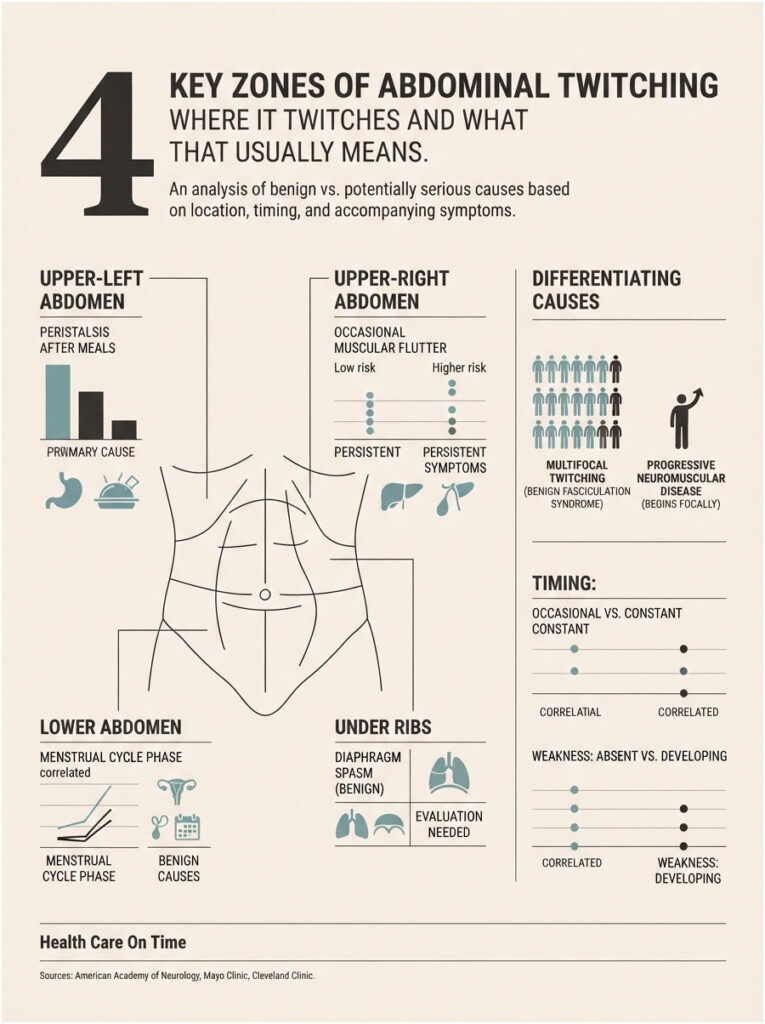
Location narrows the list faster than most people expect. It won’t hand you a diagnosis, but it separates muscular from visceral quickly.
Upper Left and Upper Right Abdomen
Upper-left twitching most often involves the left rectus segment or the left oblique. Your stomach and the splenic flexure of the colon sit here too, so peristalsis is a strong contender, especially within 90 minutes of a meal.
Upper-right twitching sits over the liver and gallbladder. Painless flutter here is still usually muscular. Persistent sensations combined with nausea, yellowing skin, or right-sided discomfort deserve a liver panel rather than reassurance.
Lower Abdomen and Pelvic Rim
The lower rectus abdominis and the strip just above the pubic bone are frequent twitch sites, particularly after core work or in anyone with prior abdominal surgery.
In women, the uterus and ovaries occupy this zone. Twitching that tracks with your menstrual cycle, appearing reliably around ovulation or the days before a period, points toward reproductive causes instead of muscular ones.
Under the Ribs
Flutter high under the ribcage usually involves the diaphragm rather than the abdominal wall. It can follow a large meal, an episode of reflux, or a bout of hiccups.
Diaphragmatic flutter that persists for days, or that noticeably interferes with breathing, is uncommon and warrants evaluation.
Twitching That Moves Around
Multifocal twitching, meaning it shows up in the abdomen one week and the calf or eyelid the next, actually leans toward benign fasciculation syndrome rather than away from it.
Progressive neuromuscular disease tends to begin focally and stay in one region while weakness develops there. Wandering twitches with intact strength follow a different pattern entirely.
The ALS Question, Answered With Actual Numbers
Let’s address the search you probably ran before this one.
Why Abdominal Twitching Triggers This Fear
Twitching somewhere unusual feels more sinister than twitching in an eyelid. A Rush University Medical Center neuromuscular specialist has described precisely this: people seek care because twitches appear in unexpected places like the chest wall or abdomen, which frightens them.
Search results then reward the most alarming content on the topic, and an ordinary physiological event becomes a 3 a.m. spiral.
What ALS Fasciculations Actually Look Like
In motor neuron disease, fasciculations are downstream of motor neurons dying. The muscle they supplied loses its innervation, and surviving nerves fire abnormally.
Because the driver is nerve loss, weakness and visible muscle shrinkage accompany or precede the twitching. A patient notices a foot dragging, a weakening grip, slurred speech, or trouble swallowing, and the twitching turns up during examination rather than being the presenting complaint.
Isolated painless twitching with full strength and normal muscle bulk does not fit that sequence.
The Math
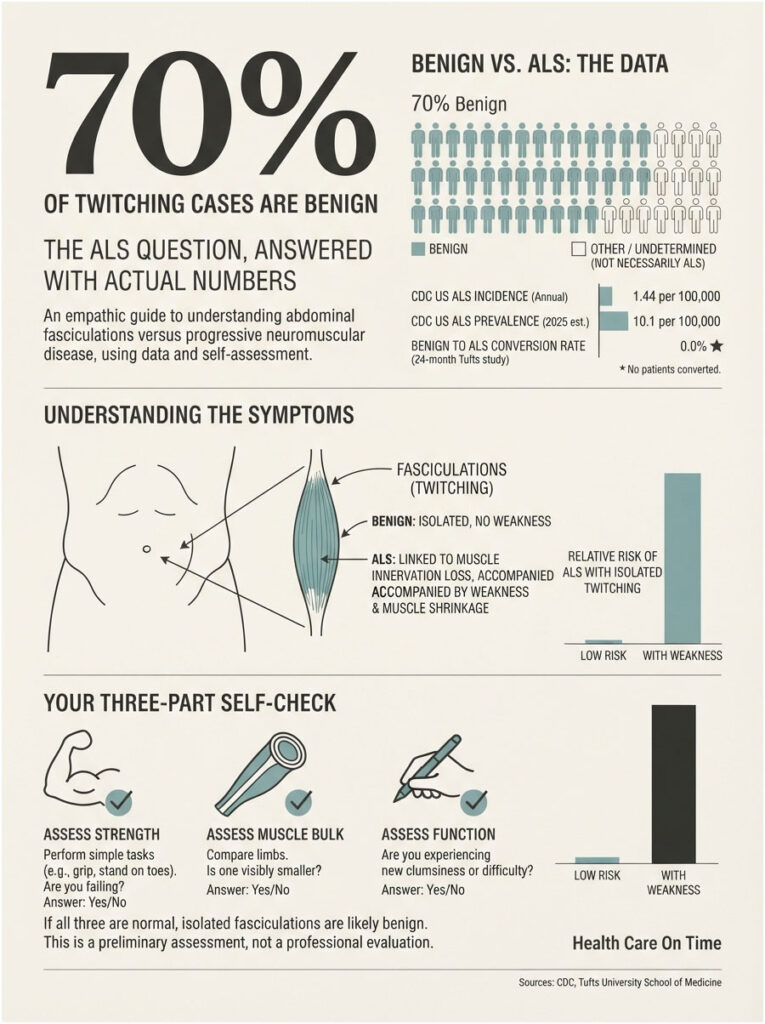
CDC National ALS Registry figures put US incidence at 1.44 new cases per 100,000 people annually, with prevalence at 10.1 per 100,000 as of 2025. Set that beside a roughly 70% lifetime rate of benign fasciculations.
Run the ratio and the arithmetic is stark. For every person whose twitching represents motor neuron disease, tens of thousands are twitching because of coffee, a plank workout, or three bad nights of sleep.
The Tufts prospective work reinforces it. Across 24 months of follow-up in a benign fasciculation syndrome cohort, not one patient converted to motor neuron disease.
The Three-Part Self-Check
Strength, bulk, and function. If all three hold, isolated fasciculations carry very little diagnostic weight.
Run through it honestly:
- Can you still open a jar, climb a flight of stairs, and hold your arms overhead for 30 seconds without unusual fatigue?
- Is the twitching muscle the same size as its counterpart on the other side of your body?
- Has anything you could actually measure, grip, gait, speech, swallowing, gotten worse over the past two months?
Three reassuring answers puts you firmly in the benign category. This is a self-check, not an examination, and it doesn’t replace one.
Red Flags That Change the Answer
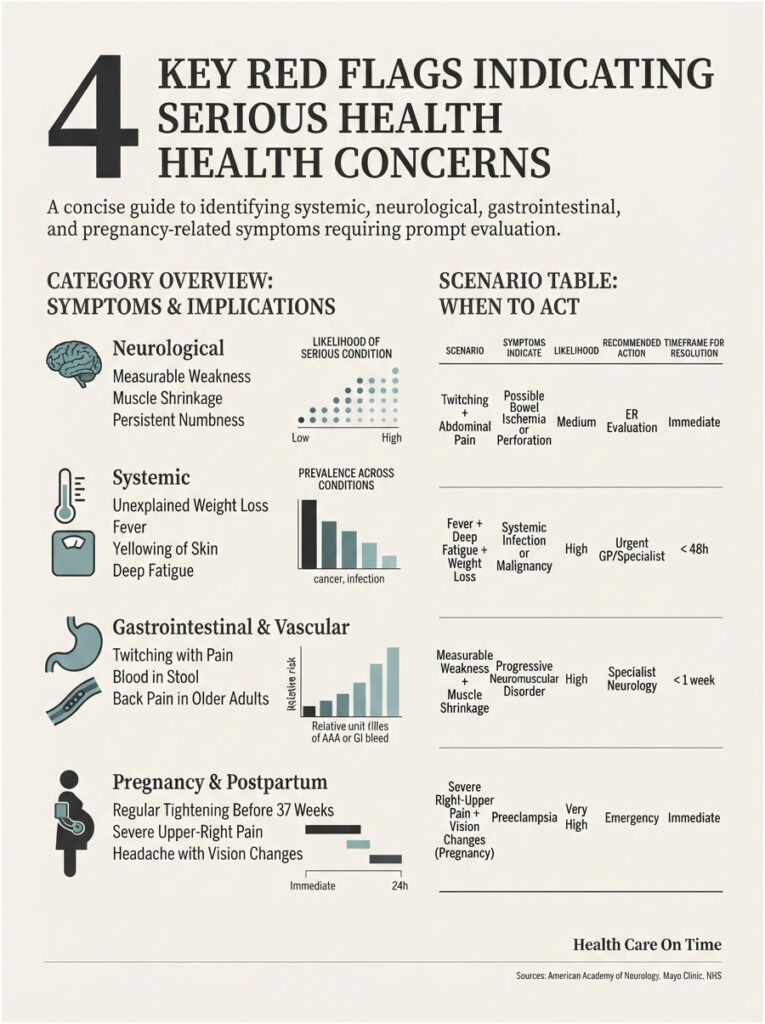
Painless twitching alone is reassuring. Painless twitching in company is a different conversation.
Neurological Red Flags
Measurable weakness, meaning genuine loss of function rather than the vague heaviness anxiety produces. Visible muscle shrinkage compared with the opposite side. Persistent numbness or loss of sensation.
Difficulty speaking, swallowing, or breathing. Twitching that spreads steadily alongside weakness in the same region.
Systemic Red Flags
Unexplained weight loss. Fever or night sweats. Yellowing of the skin or eyes. Deep fatigue that doesn’t lift with rest.
Any of these moves the workup away from muscle and toward a broader search.
Gastrointestinal and Vascular Red Flags
Twitching alongside persistent abdominal pain, blood in stool, black stools, repeated vomiting, or a marked change in bowel habits.
A pulsing sensation paired with deep back pain, especially in adults over 60 with a smoking history or high blood pressure, needs prompt evaluation rather than watchful waiting.
Pregnancy and Postpartum Red Flags
If pregnancy is possible, confirm it before attributing anything to muscle. During pregnancy, regular tightening before 37 weeks, severe upper-right pain, headache with vision changes, or sudden swelling of the face and hands all require immediate contact with your obstetric provider.
| Your Scenario | What It Likely Is | Recommended Action | Timeframe |
| Twitching started after a hard core workout, nothing else | Muscle fatigue fasciculation | Rest, hydrate, gentle stretching, magnesium-rich foods | Expect resolution in 3 to 5 days |
| Twitching plus 3 or more coffees and poor sleep | Stimulant and sleep-debt driven | Cut caffeine below 200 mg daily, target 7 to 8 hours sleep | Reassess after 7 days |
| Twitching plus dark urine, headache, hot weather | Dehydration and electrolyte shift | Increase fluids, add electrolyte replacement | Should improve within 24 to 48 hours |
| Twitching began within 6 weeks of a new prescription | Medication side effect | Contact the prescriber, do not stop the drug yourself | Within 1 to 2 weeks |
| Twitching persists past 3 weeks, everything else normal | Possible benign fasciculation syndrome | Book CMP, magnesium, TSH, CBC with your primary care provider | Within 2 to 4 weeks |
| Twitching plus measurable weakness or muscle shrinkage | Needs neurological assessment | See a physician; neurology referral and EMG likely | Within days, not weeks |
| Twitching plus jaundice, weight loss, or night sweats | Possible systemic cause | Liver panel and full clinical evaluation | Within days |
| Steady central pulsing plus deep back pain, age 60 or older | Requires vascular evaluation | Seek medical care promptly | Same day |
How to Stop Painless Stomach Twitching at Home
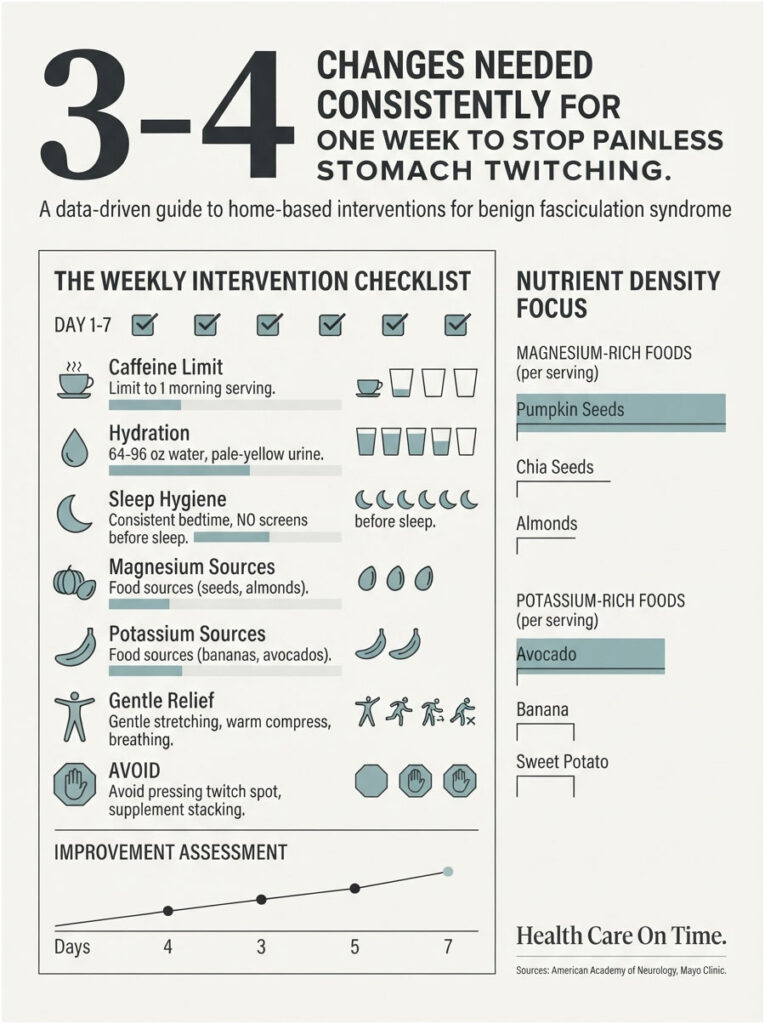
Most people don’t need a test. They need three or four changes applied consistently for a week.
The First 72 Hours
Cut caffeine to a single morning serving, or to zero if you can tolerate the withdrawal headache. Abrupt withdrawal creates its own symptoms, so taper over two or three days if you’re a heavy drinker.
Drink to pale-yellow urine. For most adults that lands between 64 and 96 fluid ounces daily, more in heat or with training. Add an electrolyte packet if you’re sweating heavily or recovering from a stomach bug.
Protect sleep aggressively. Same bedtime seven nights a week, no screens for the final 30 minutes, cool dark room. This single change resolves more twitching than any supplement on the shelf.
Food-First Magnesium and Potassium
Food beats supplementation for most people, and it avoids the loose stools that magnesium oxide reliably produces.
Strong magnesium sources per USDA data: pumpkin seeds at roughly 156 mg per ounce, chia seeds at about 111 mg per ounce, almonds around 80 mg per ounce, and cooked spinach at about 78 mg per half cup. Black beans, cashews, and dark chocolate contribute meaningfully too.
For potassium: a medium banana, half an avocado, a baked potato with the skin on, white beans, cooked spinach, or 8 ounces of orange juice. If you do supplement magnesium, NIH guidance is to stay under 350 mg per day from supplemental sources, and anyone with kidney disease should not supplement without medical direction.
Stretching, Heat, and Breath Work
A gentle standing back extension opens the abdominal wall and often quiets a fatigued rectus. Hands on the lower back, ease backward, hold 20 seconds, repeat three times.
A warm compress for 10 minutes increases local blood flow and reduces the irritability of overworked fibers. A heating pad on low works fine.
Slow diaphragmatic breathing, four seconds in and six seconds out for five minutes, lowers sympathetic drive. It helps twice: once through the nervous system, once by breaking the hypervigilance loop that keeps your attention parked on your abdomen.
What Does Not Help
Repeatedly pressing, poking, or staring at the twitching spot. Attention amplifies the symptom every single time.
Recording videos to compare day to day. Our medical reviewers see this habit escalate anxiety without ever producing information a clinician can use.
Random supplement stacking. Without knowing which electrolyte is low, you’re guessing, and several combinations interact with prescription medications.
A 7-Day Reset Checklist
- Drop caffeine to one serving or less, all of it before noon.
- Hit 64 to 96 fluid ounces of water daily, more if you sweat heavily.
- Sleep 7 to 8 hours on a fixed schedule, weekends included.
- Add one magnesium-rich food and one potassium-rich food to every day.
- Pause heavy core training for the week; walk or swim instead.
- Do five minutes of slow breathing before bed.
- Log the twitching once daily in a single line, not continuously.
If the twitching has clearly improved by day seven, you’ve found your cause. If it hasn’t budged, that’s the moment to book blood work rather than keep guessing.
Which Tests a Doctor May Order
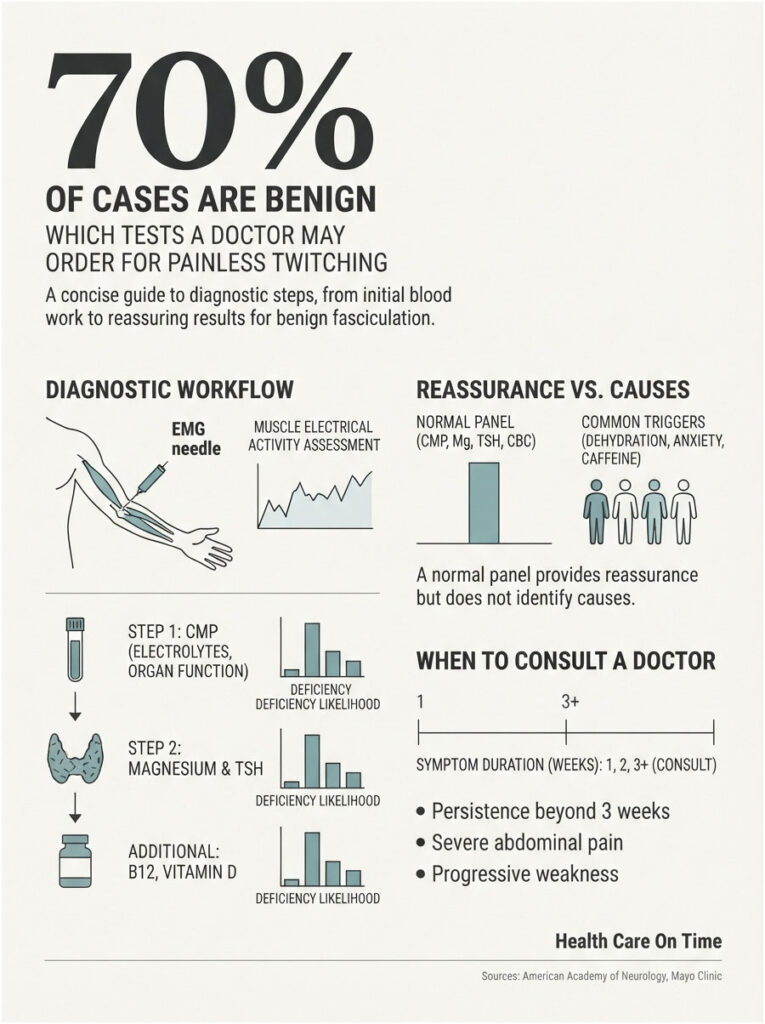
Testing for painless twitching is a short list, and most of it is routine blood work.
Blood Work First
A comprehensive metabolic panel checks sodium, potassium, calcium, glucose, kidney function, and liver enzymes in a single draw. Highest-yield first test by a wide margin.
A serum magnesium level adds the electrolyte a CMP doesn’t always include, with the caveat about total body stores noted earlier.
A TSH rules thyroid dysfunction in or out. A CBC screens for anemia and infection. Vitamin B12 and vitamin D are reasonable additions if your diet is limited or plant-based.
In tests booked through HealthCareOnTime, this combination settles the question for the large majority of people who come in worried about twitching, without imaging and without a specialist referral.
Electromyography and Nerve Conduction
Electromyography measures electrical activity in muscle directly. It’s the study that separates benign fasciculation potentials from the abnormal spontaneous activity seen in motor neuron disease.
It isn’t a first-line test for painless twitching with normal strength. Neurologists order it when weakness, muscle wasting, or reflex changes turn up on examination.
It’s mildly uncomfortable and uses a fine needle electrode placed into the muscle. Results are always interpreted alongside the clinical exam, never in isolation.
Imaging
An abdominal ultrasound is useful when a hernia, a mass, or an aortic concern is on the table. Quick, radiation-free, widely available across US imaging centers.
CT imaging enters the conversation for pain, unexplained weight loss, or a suspected structural problem an ultrasound couldn’t resolve.
Imaging does not diagnose fasciculations. It rules out the structural conditions that occasionally mimic them.
What a Normal Result Actually Tells You
A normal CMP, magnesium, TSH, and CBC alongside a normal neurological examination is a strong reassurance package. It won’t stop the twitching and it won’t name the trigger, but it closes the doors that matter.
Patients commonly ask us whether to keep testing when everything returns clean. Repeating a normal panel every few weeks tends to feed the anxiety rather than resolve it. Re-test when something new appears, not on a calendar.
Frequently Asked Questions
Is painless stomach twitching normal?
For most people, yes. Cleveland Clinic reports benign fasciculations occur in roughly 70% of healthy people at some point. Painless belly twitching without weakness, muscle shrinkage, or numbness sits in the lowest-risk category and usually resolves once caffeine, hydration, and sleep are corrected.
Can anxiety cause stomach twitching?
Yes, through two routes. Stress hormones raise motor neuron excitability, making spontaneous firing more likely. Anxiety also drives hypervigilance, so you notice twitches that were always occurring. Research on benign fasciculation syndrome consistently finds elevated anxiety rates among affected patients.
Why does my stomach twitch like a heartbeat?
If the rhythm matches your pulse exactly, you’re likely feeling your abdominal aorta rather than a muscle. This is common in lean people, after meals, and when lying flat. Banner Health notes that painless, intermittent abdominal pulsing is usually normal.
Is stomach twitching an early sign of ALS?
Very rarely. ALS fasciculations follow motor neuron loss, so weakness and visible muscle shrinkage accompany or precede them. CDC data puts US ALS incidence near 1.44 per 100,000 annually. Isolated painless twitching with normal strength does not match the disease pattern.
Why does it feel like a baby kicking when I am not pregnant?
These are often called phantom kicks. Healthgrades notes that gas, muscle contractions, and peristalsis all mimic fetal movement. Women with prior pregnancies experience it most, likely from nerve receptor changes and heightened abdominal awareness that persists long after delivery.
What vitamin deficiency causes stomach twitching?
Magnesium is the most common, and NIH data shows 48% of Americans fall below their estimated average requirement. Low potassium, calcium, vitamin D, and vitamin B12 can also contribute. A comprehensive metabolic panel plus magnesium and B12 covers most of these.
How long does abdominal muscle twitching last?
Exercise-related twitching usually clears in three to five days. Caffeine, dehydration, and sleep-related twitching improves within a week of correction. Benign fasciculation syndrome can persist for months or years; one 24-month study found twitching continued in 93% of patients without progressing.
Does caffeine make stomach twitching worse?
For many people, yes. Caffeine raises motor neuron excitability and lowers the threshold for spontaneous firing. Individual sensitivity varies widely. Try cutting to under 200 mg daily, roughly two 8-ounce cups of coffee, and reassess after seven days.
Can dehydration cause stomach muscles to twitch?
Yes. Fluid loss shifts sodium, potassium, and chloride balance across muscle cell membranes and destabilizes their electrical charge. Dehydration-related twitching usually arrives with dark urine, dry mouth, and mild headache, and improves within 24 to 48 hours of adequate fluid intake.
Why does my stomach twitch more at night?
Two reasons. Lying still removes competing sensory input, so your brain notices internal sensations it filtered out all day. Fatigue also accumulates across the day, and tired motor neurons fire more erratically. Often the twitching frequency hasn’t actually changed.
Should I get an EMG for stomach twitching?
Usually not as a first step. Electromyography is ordered when weakness, muscle wasting, or abnormal reflexes appear on examination. For painless twitching with full strength, blood work and a clinical exam come first and typically settle the question.
When should I see a doctor for stomach twitching?
Book an appointment if twitching lasts beyond three weeks, or go sooner if it comes with weakness, muscle shrinkage, numbness, trouble swallowing or breathing, unexplained weight loss, jaundice, fever, or persistent abdominal pain. Central pulsing with deep back pain needs same-day care.
Medical Disclaimer: This article is for general information and is not a substitute for professional medical advice, diagnosis, or treatment. HealthCareOnTime does not diagnose conditions or recommend treatment. Always consult a licensed physician or qualified healthcare provider about any symptom, and never delay seeking care or disregard medical advice because of something you read here. If you experience sudden weakness, difficulty breathing or swallowing, or severe abdominal pain, seek emergency care immediately.
References
- CDC National ALS Registry Dashboard
- NIH Office of Dietary Supplements: Magnesium Fact Sheet for Health Professionals
- Cleveland Clinic: Benign Fasciculation Syndrome
- Filippakis et al., A prospective study of benign fasciculation syndrome and anxiety, Muscle & Nerve (2018)
- Prevalence and distribution of fasciculations in healthy adults, PubMed
- Benign Fasciculation Syndrome Among Health Care Workers, PubMed
- Rush University Medical Center: Annoying Muscle Twitch? When to Seek Help
- Banner Health: Pulsing or Fluttering in Your Upper Right Abdomen
- Healthgrades: Why Does It Feel Like a Baby Kicking When I’m Not Pregnant?
- Prevalence of ALS in the United States, National ALS Registry