The study that made broccoli famous in diabetes circles involved 97 people, 12 weeks, and not a single floret.
Participants swallowed a concentrated sprout extract delivering as much sulforaphane as roughly 9 to 11 pounds of fresh broccoli per day. That detail rarely survives the trip from journal to headline.
Table of Contents
Broccoli still belongs on a diabetic plate. Just not for the reason most articles give you.
| QUICK ANSWER Yes. Broccoli is one of the strongest vegetable choices for type 2 diabetes and heart protection. One cup cooked carries about 11 grams of carbohydrate with 5 grams of fiber and a glycemic load near 1. Randomized trials link cruciferous vegetables to lower systolic blood pressure, lower triglycerides, and reduced LDL cholesterol. |
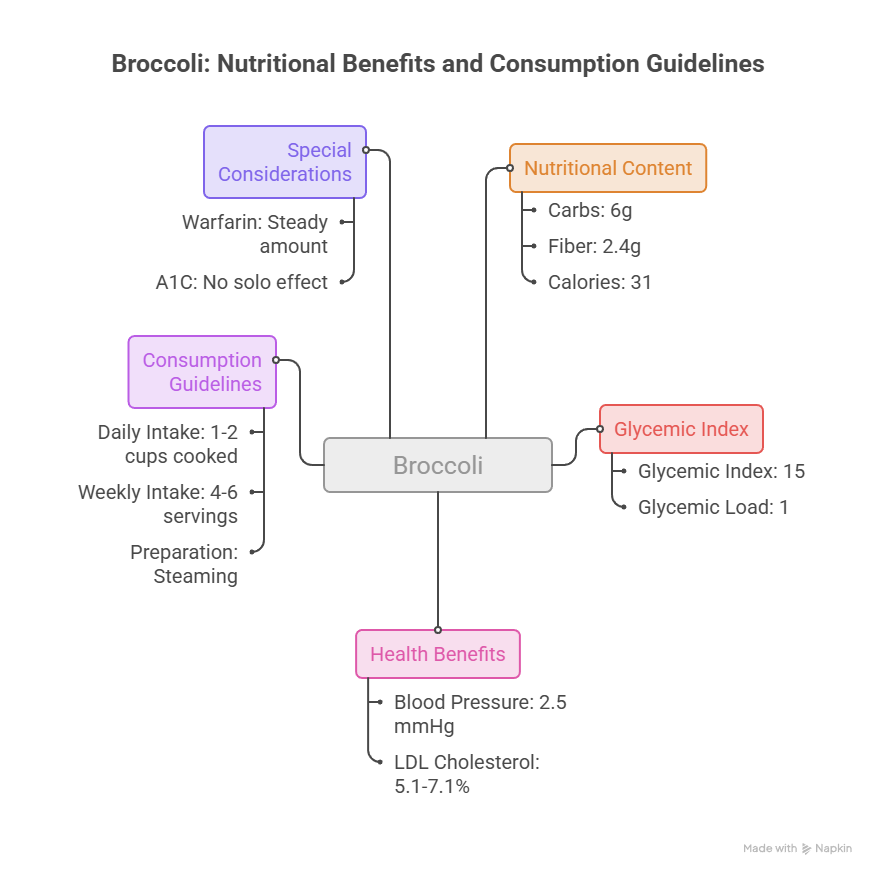
| AT A GLANCE One cup of raw chopped broccoli holds 6 grams of carbs, 2.4 grams of fiber, and 31 calories Glycemic index sits near 15, with a glycemic load close to 1 per realistic serving A two-week randomized trial cut 24-hour systolic blood pressure by 2.5 mmHg on 300 grams of cruciferous vegetables daily High-glucoraphanin broccoli lowered LDL cholesterol by 5.1 to 7.1 percent across two 12-week trials Practical target: 1 to 2 cups cooked daily, or 4 to 6 servings weekly Steaming 3 to 5 minutes preserves the enzyme that creates sulforaphane; boiling destroys it On warfarin, the rule is a steady weekly amount, never avoidance Whole broccoli has not lowered A1C on its own in any controlled trial, and articles claiming otherwise are quoting supplement doses |
What Broccoli Actually Does to Blood Sugar
Broccoli sits in a small group of foods that add real volume to a meal while contributing almost nothing to the glucose curve. That combination is harder to find than it sounds.
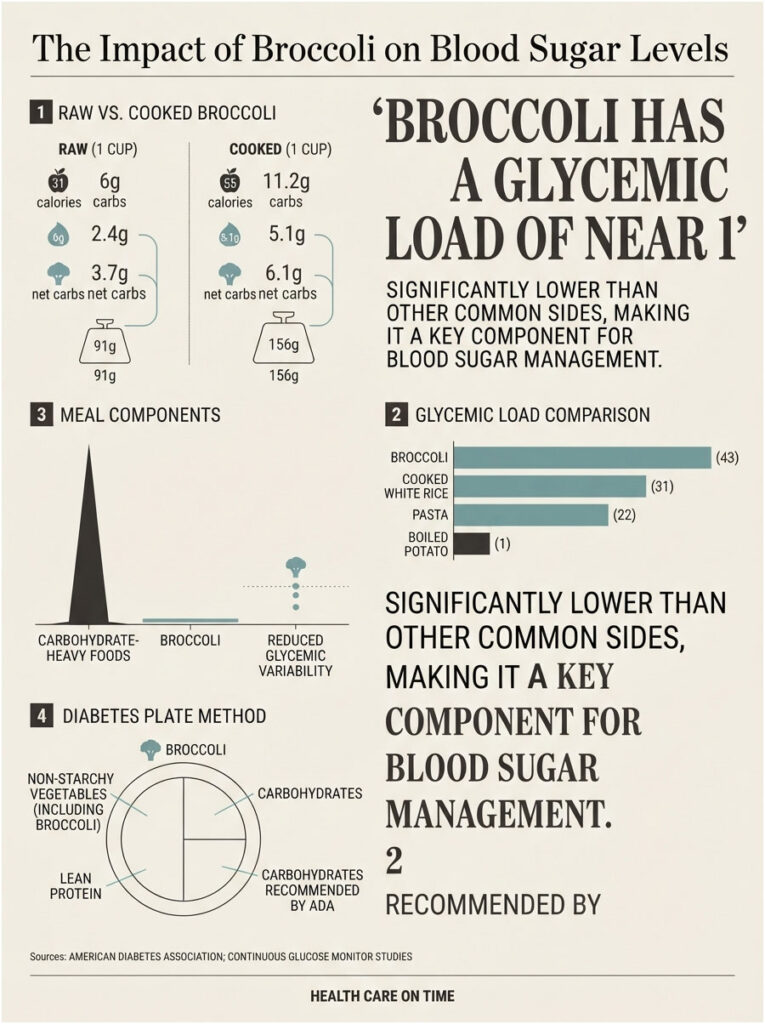
The American Diabetes Association builds its Diabetes Plate Method around filling half the plate with non-starchy vegetables. Broccoli is the textbook occupant of that half.
Patients booking diabetic panels through HealthCareOnTime ask this question more than almost any other food question. The short version is that broccoli is not the variable worth worrying about at dinner.
The Carb and Fiber Math Per Cup
One cup of raw chopped broccoli weighs about 91 grams. It delivers 31 calories, 6 grams of total carbohydrate, 2.4 grams of fiber, and 2.6 grams of protein, leaving net carbs near 3.7 grams.
Cook it and the arithmetic shifts. One cup of chopped boiled broccoli weighs roughly 156 grams and carries about 55 calories, 11.2 grams of carbohydrate, and 5.1 grams of fiber.
Our nutrition reviewers cross-check every figure here against USDA FoodData Central, the same database the FDA uses to set Nutrition Facts panel values.
Raw Versus Cooked, and Why the Cup Changes
Nothing gets added during cooking. A cooked cup simply packs more broccoli into the same measuring cup because heat collapses the cell walls and the florets settle.
If you count carbs by the cup, note which version you measured. Two cups of raw florets and one cup of steamed florets are roughly the same amount of food.
Table 1: How Broccoli Compares to Other Common American Side Vegetables
| Vegetable (1 cup, cooked) | Total Carbs | Fiber | Net Carbs | Glycemic Index | Glycemic Load |
| Broccoli, chopped | 11.2 g | 5.1 g | 6.1 g | 15 | ~1 |
| Cauliflower, chopped | 5.1 g | 2.9 g | 2.2 g | 15 | <1 |
| Green beans | 9.9 g | 4.0 g | 5.9 g | 32 | ~2 |
| Sweet corn kernels | 31.0 g | 3.6 g | 27.4 g | 52 | ~14 |
| Mashed potato | 35.0 g | 3.2 g | 31.8 g | 83 | ~26 |
Read the last column first. Glycemic load accounts for both carbohydrate quality and the amount you actually eat, which makes it a far better predictor of real-world glucose response than glycemic index alone.
Broccoli at a glycemic load near 1 lives in a different world from corn at 14 and mashed potato at 26. Swapping one for the other is the largest single change most people can make to a dinner plate.
Glycemic Index Versus Glycemic Load
Glycemic index ranks a food against pure glucose using a fixed 50-gram carbohydrate portion. Reaching 50 grams of carbohydrate from broccoli would take roughly eight cups.
Nobody eats eight cups of broccoli. That is precisely why glycemic index alone misleads people, and why glycemic load, which scales to a portion a human would actually serve, deserves your attention instead.
What Continuous Glucose Monitors Reveal
Researchers at Edith Cowan University tracked interstitial glucose every 15 minutes while adults with mildly elevated blood pressure ate either cruciferous vegetable soups or root and squash vegetable soups.
Published in Diabetes, Obesity and Metabolism in 2025, the cruciferous arm showed lower glycemic variability, a mean difference of 2.0 percent in coefficient of variation. Post-meal glucose response also fell, driven mainly by the evening meal.
The study authors raised an honest caveat themselves. Average glucose across the two weeks did not differ between arms. The benefit appeared in the smoothness of the curve, not in the overall level.
Why Broccoli Sometimes Still Shows a Spike
People occasionally message us a CGM screenshot showing a rise after a broccoli-heavy dinner. The broccoli is almost never the cause.
Cheese sauce, breadcrumb topping, a teriyaki glaze, and the rice or roll on the side all carry more carbohydrate than the vegetable. So does the protein portion if it was breaded.
Delayed gastric emptying, common in long-standing diabetes, can also shift a spike two or three hours later, making it look like the vegetable was responsible. It usually was not.
The Sulforaphane Story, Honestly Told
Sulforaphane turned a supermarket vegetable into a research subject. It is also the source of nearly every misleading claim in this topic.
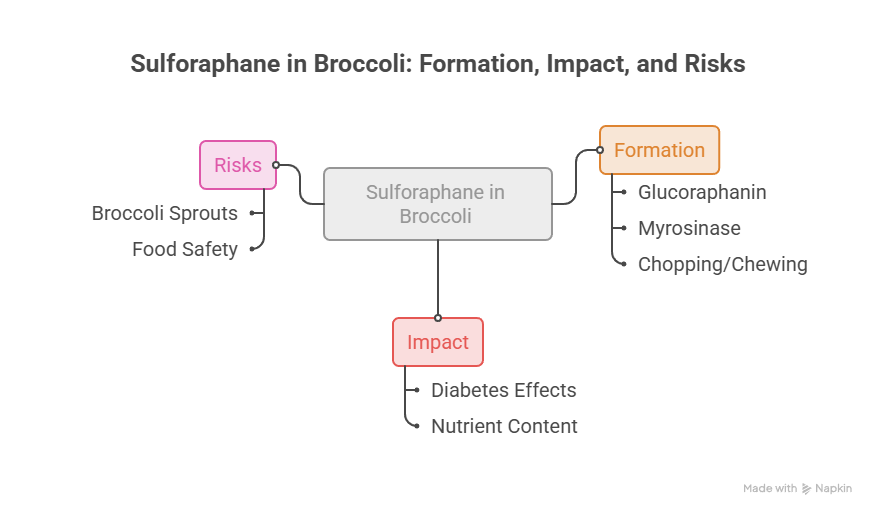
How Sulforaphane Actually Forms
Raw broccoli contains almost no sulforaphane. What it holds is glucoraphanin, an inactive storage compound, plus a separate enzyme called myrosinase kept in different cell compartments.
Chopping or chewing ruptures those compartments. Myrosinase meets glucoraphanin and converts it into sulforaphane within minutes.
Glucoraphanin Plus Myrosinase, the Two-Part Reaction
Myrosinase is heat-sensitive and breaks down permanently above roughly 158 degrees Fahrenheit. Destroy the enzyme and the reaction never happens, regardless of how much glucoraphanin the broccoli started with.
Gut bacteria can complete part of the conversion, but research suggests they manage it at least three times less efficiently than the plant enzyme does.
The Lund University Trial and Its Dose Problem
The study everyone cites appeared in Science Translational Medicine in 2017. Researchers screened thousands of compounds against a liver gene signature for type 2 diabetes and landed on sulforaphane as the leading candidate.
They then ran a randomized, double-blind, placebo-controlled trial in 97 adults with type 2 diabetes. Participants took concentrated broccoli sprout extract supplying 150 micromoles of sulforaphane daily for 12 weeks.
The results split cleanly by subgroup. Participants with well-controlled diabetes saw no change in fasting glucose or HbA1c. Those who were obese with poorly controlled diabetes saw both fall, while the placebo group drifted slightly upward.
Lund University stated in its own release that the daily dose matched the sulforaphane found in roughly 9 to 11 pounds of broccoli. That sentence disappears from almost every consumer article that cites the trial.
The Prediabetes Follow-Up and the Gut Bacteria Variable
A later randomized, placebo-controlled trial tested broccoli sprout extract in drug-naive adults with prediabetes over 12 weeks. The published findings showed fasting glucose response varied according to each participant’s baseline gut microbiota.
Some people converted and absorbed the compound efficiently. Others did not, and their glucose barely moved.
That result explains why individual experiences with sulforaphane are so inconsistent. Our medical reviewers treat any single-person testimonial about broccoli and blood sugar with corresponding caution.
Broccoli Sprouts Versus Mature Broccoli
Three-day-old broccoli sprouts carry roughly 20 to 50 times the glucoraphanin of mature florets by weight. A small handful can rival an entire head of broccoli.
Sprouts arrive with a food safety trade-off. The FDA has repeatedly linked raw sprouts to Salmonella and E. coli outbreaks, and advises children, older adults, pregnant women, and people with weakened immune systems to skip them raw.
Many people with long-standing diabetes fall into that immune-compromised group. Discuss raw sprouts with your physician before making them a daily habit.
The Bottom Line on Sulforaphane
Whole broccoli, eaten in normal amounts, has not been shown in a controlled trial to lower HbA1c on its own. Anyone claiming otherwise is quoting extract doses and calling them food.
What whole broccoli does deliver is fiber, potassium, folate, vitamin C, and near-zero glycemic load, inside a food that displaces higher-carb items from your plate. That is a real benefit, and it needs no supplement.
Broccoli and Your Heart, What the Trials Show
Cardiovascular disease is the leading cause of death among American adults with diabetes. Any food discussion for this group that stops at blood sugar is only half finished.
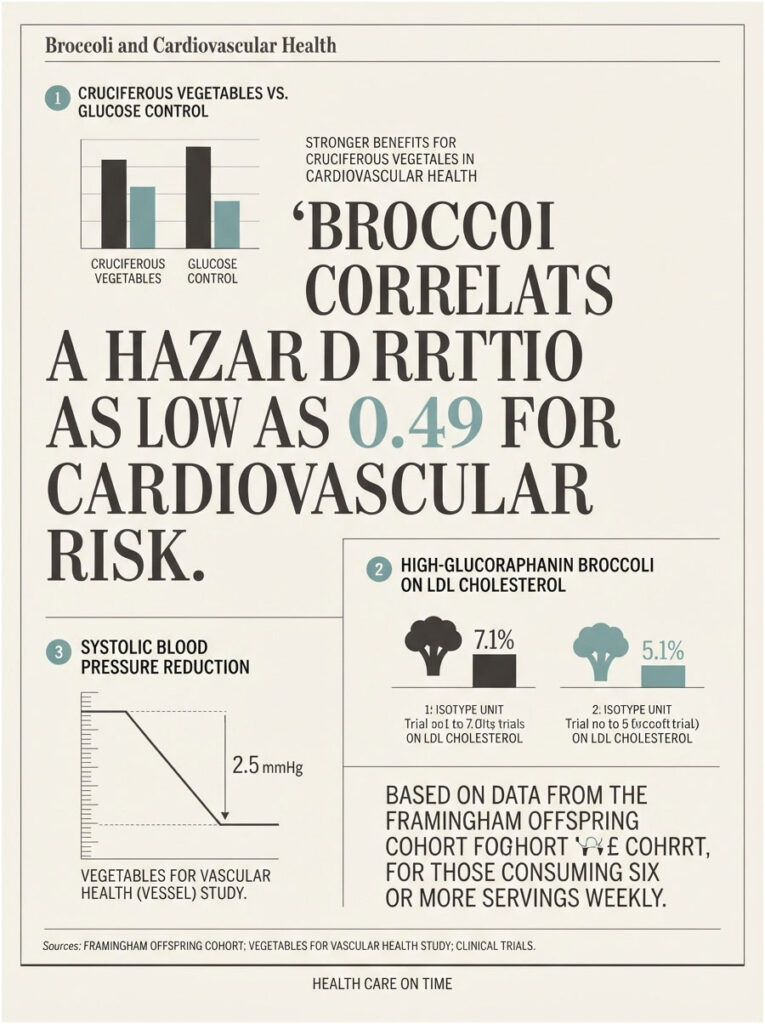
The cardiovascular evidence for cruciferous vegetables is actually stronger than the glucose evidence, and much of it comes from randomized trials using real food rather than extracts.
Blood Pressure: The 2.5 mmHg Finding
The VEgetableS for vaScular hEaLth study, published in BMC Medicine in 2024, randomized adults aged 56 to 72 with systolic pressure between 120 and 160 mmHg into a crossover design.
For two weeks, participants ate about 300 grams daily of broccoli, kale, cauliflower, and cabbage prepared as soups. For another two weeks, they ate the same weight as root and squash vegetables.
Twenty-four-hour ambulatory systolic blood pressure fell 2.5 mmHg on the cruciferous arm compared with control. Daytime systolic fell 3.6 mmHg, aortic systolic fell 2.1 mmHg, and serum triglycerides dropped as well.
Two weeks, no medication, one food swap. At a population level, a shift that size matters.
LDL Cholesterol: The Glucoraphanin Trials
British researchers bred a broccoli variety carrying two to three times the usual glucoraphanin, then tested it in two independent double-blind randomized trials totaling 130 volunteers.
Participants ate 400 grams per week, roughly three servings, for 12 weeks. Reported in Molecular Nutrition and Food Research, LDL cholesterol fell 7.1 percent in the first study and 5.1 percent in the second.
Standard broccoli produced smaller reductions that did not reach statistical significance on their own. The combined analysis showed the high-glucoraphanin variety clearly outperformed it.
Context helps here. A 1 percent reduction in LDL cholesterol has been associated with roughly a 1 to 2 percent reduction in coronary artery disease risk.
Long-Term Cohort Evidence in American Adults
The Framingham Offspring Cohort tracked cruciferous vegetable intake against cardiovascular events in US adults. Using fewer than one serving per week as the reference point, risk declined in a dose-dependent pattern across intake categories.
The highest intake group showed a hazard ratio of 0.66. In men eating six or more servings per week, the hazard ratio fell to 0.49.
A separate meta-analysis of eight studies covering green leafy and cruciferous intake found a relative risk of 0.842 for cardiovascular disease incidence, roughly 16 percent lower.
Observational data cannot prove causation. People who eat six weekly servings of cruciferous vegetables differ in other ways too. Still, the direction has held across cohorts, countries, and decades.
Why People With Diabetes Get Double the Payoff
Elevated blood glucose damages the vascular endothelium over years. Add the hypertension, high triglycerides, and low HDL that cluster with type 2 diabetes, and the arterial burden compounds.
Broccoli pulls several levers at once. Potassium and nitrate pathways influence blood pressure, soluble fiber affects lipids, and glucoraphanin appears to reduce LDL synthesis.
Across patients we serve who improve both their glucose and lipid numbers, the pattern is rarely one added food. It is a rebuilt plate, and vegetables like broccoli do the displacing.
Table 2: US Diabetes Burden and Broccoli Trial Outcomes
| Metric | Figure | Population or Study Design | Source |
| Americans living with diabetes | 40.1 million (12.0% of the population) | National estimate, 2023 data | CDC National Diabetes Statistics Report, January 2026 |
| US adults with prediabetes | 115.2 million | National estimate | CDC National Diabetes Statistics Report, January 2026 |
| Adults with diabetes who are undiagnosed | 11.0 million (27.6%) | National estimate | CDC National Diabetes Statistics Report, January 2026 |
| Adults 65 and older with prediabetes | 31.3 million (52.1%) | National estimate | CDC National Diabetes Statistics Report, January 2026 |
| Total cost of diagnosed diabetes | $412.9 billion (2022) | US economic analysis | American Diabetes Association / NIDDK |
| 24-hour systolic BP change on 300 g/day cruciferous vegetables | Down 2.5 mmHg | 18 adults aged 56 to 72, 2-week randomized crossover | BMC Medicine, 2024 (VESSEL study) |
| Glycemic variability change, same intervention | Down 2.0% (coefficient of variation) | Flash glucose monitoring, same cohort | Diabetes, Obesity and Metabolism, 2025 |
| LDL cholesterol change on 400 g/week high-glucoraphanin broccoli | Down 7.1% and 5.1% | 130 adults, two 12-week double-blind RCTs | Molecular Nutrition and Food Research, 2015 |
| HbA1c change on broccoli sprout extract (150 micromol sulforaphane/day) | Reduced in the obese, poorly controlled subgroup only | 97 adults with type 2 diabetes, 12 weeks | Science Translational Medicine, 2017 |
| Average US cruciferous vegetable intake | About 11 grams per day | US adult population estimate | National Cancer Institute trial protocol data |
How Much Broccoli, How Often, and Prepared How
Every competing article names the benefits. Almost none of them names a number. Here is the number.
The Daily Target, Answered Directly
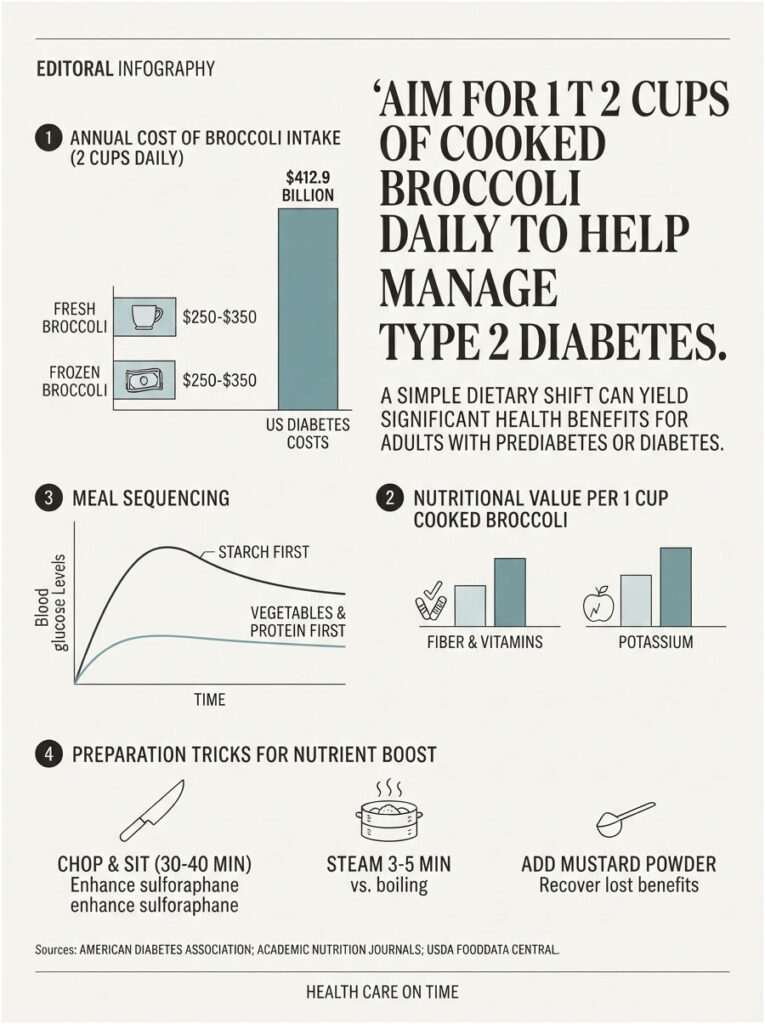
Most adults with type 2 diabetes or prediabetes should aim for 1 to 2 cups of cooked broccoli per day, or 4 to 6 servings across a week. That fits inside the USDA MyPlate goal of 2 to 3 cups of vegetables daily. No upper limit is established for healthy adults, though warfarin users and people with kidney restrictions need a fixed, repeatable amount.
The Framingham data showed benefit still climbing through six servings weekly, so the top of that range is not excessive. It is closer to optimal.
Now the reality check. Average US cruciferous vegetable intake sits near 11 grams per day, roughly one-eighth of a cup. The gap between recommendation and behavior in this country is enormous.
Cooking Method Changes the Chemistry
This is the section every competing page leaves out, and it changes what your body actually receives.
Steam 3 to 5 Minutes
Research from Elizabeth Jeffery’s lab at the University of Illinois compared boiling, microwaving, and steaming. Steaming for up to five minutes preserved myrosinase best.
Three to four minutes gives crisp-tender texture with the enzyme intact. Past five minutes, interior temperature climbs into the range where myrosinase starts to denature.
Keep florets above the water rather than submerged. Vitamin C and folate are water-soluble and leach out quickly when broccoli sits in liquid.
Why Boiling Wastes Most of It
Boiling triggers two separate losses that stack on each other. Heat destroys the enzyme, and glucoraphanin itself dissolves into the cooking water, which most people pour down the sink.
The Illinois research found boiling or microwaving for as little as one minute destroyed the majority of the enzyme. If you do boil, keep the liquid and use it as a soup base.
The Chop-and-Wait Trick and the Mustard Powder Fix
Chop your broccoli, then leave it on the cutting board for 30 to 40 minutes before cooking. The enzyme works at room temperature, forming sulforaphane that survives later heating.
If the broccoli is already fully cooked, sprinkle a quarter to half teaspoon of brown mustard powder over it. Mustard seed carries a heat-resistant form of myrosinase, and studies show it can raise sulforaphane formation several-fold in cooked broccoli.
Radish, arugula, wasabi, and raw coleslaw work through the same mechanism. A raw side salad next to cooked broccoli is doing more than decorating the plate.
Fresh, Frozen, or Pre-Cut
Frozen broccoli is blanched before freezing, and blanching inactivates the enzyme. Nutritionally the vitamins hold up well, but sulforaphane formation largely does not.
That does not make frozen a bad buy. Fiber, potassium, folate, and glycemic load are untouched, and frozen is cheaper and far less likely to rot in a crisper drawer.
Use the mustard powder trick with frozen broccoli and you recover much of the difference. Our medical team’s position is simple: the broccoli you actually eat beats the fresh broccoli you throw away.
What It Costs at a US Grocery Store
Frozen broccoli florets typically run about $1.20 to $2.00 per pound at most American supermarkets, which works out to roughly 30 to 50 cents per cooked cup. Fresh crowns usually cost more per usable ounce once you trim.
At two cups per day, a year of broccoli lands somewhere near $250 to $350. Set that against $412.9 billion in annual US diabetes costs and the arithmetic argues for itself.
Buying the whole stalk rather than pre-cut florets cuts the price further. Stalks carry as much fiber as florets and most people discard them.
Pairing and Meal Sequencing
Eating vegetables and protein before the starch portion of a meal lowers post-meal glucose peaks in several small studies. Start dinner with the broccoli, not the bread.
Add a fat source. Olive oil improves absorption of the fat-soluble vitamins A and K and slows gastric emptying slightly, flattening the curve.
Watch what the broccoli replaces. Adding a cup to an otherwise unchanged plate helps a little. Using it to displace half the rice helps considerably more.
Details on fiber content and preparation appear in the HealthCareOnTime guide to how much fiber is in broccoli.
Who Should Be Careful, and What to Do Instead
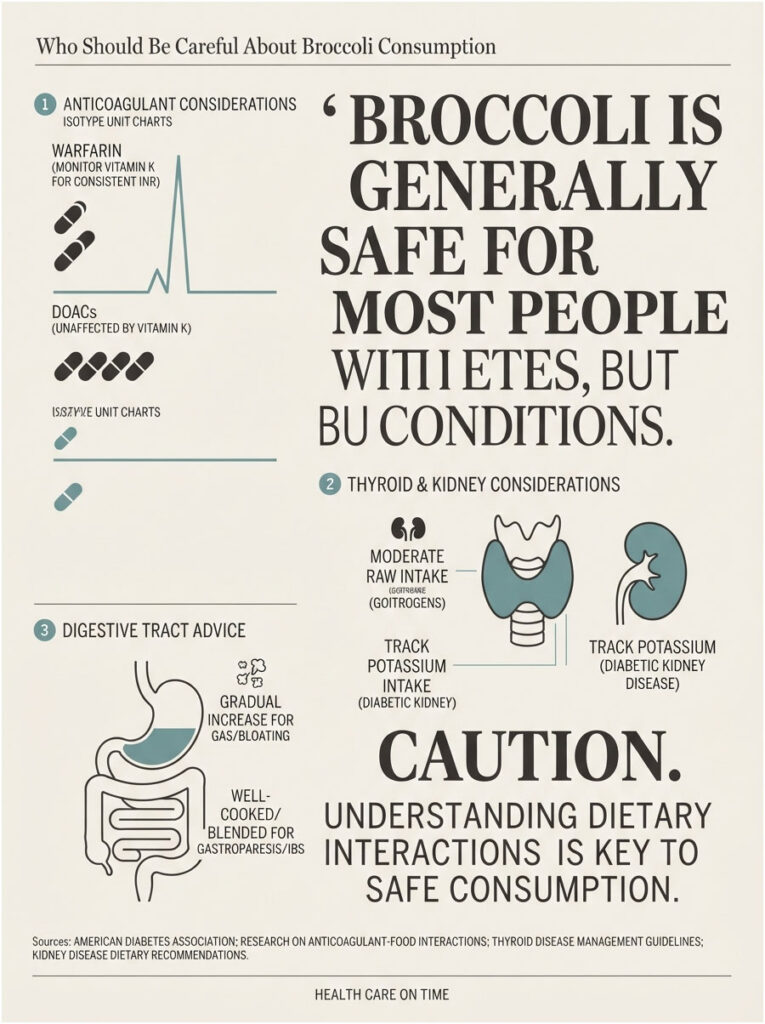
Broccoli is safe for the overwhelming majority of people with diabetes. A handful of specific situations need attention, and general articles handle them badly.
If You Take Warfarin
One cup of raw broccoli supplies about 92 micrograms of vitamin K. One cup boiled supplies about 110 micrograms. The daily reference intake is 120 micrograms for men and 90 for women.
Vitamin K directly counteracts warfarin, so a large serving one day and none the next produces unpredictable INR swings. Standard clinical guidance calls for consistency, not avoidance.
Pick an amount you can repeat, eat roughly that amount every week, and tell your anticoagulation clinic before any real change. Your warfarin dose is adjusted around your diet, not the reverse.
If You Take a DOAC
Direct oral anticoagulants including apixaban, rivaroxaban, edoxaban, and dabigatran work through entirely different mechanisms. Dietary vitamin K does not affect them.
If you take one of these, eat broccoli in whatever quantity suits you. The warfarin advice does not apply.
If You Have Thyroid Disease
Cruciferous vegetables contain goitrogens, compounds that can interfere with iodine uptake by the thyroid. The concern is genuine at extreme intakes and largely theoretical at normal ones.
Cooking reduces goitrogen content substantially. Adequate iodine intake, easy to hit in the US through iodized salt and dairy, neutralizes most of the remainder.
If you have Hashimoto’s thyroiditis and you are juicing several pounds of raw cruciferous vegetables daily, raise it with your endocrinologist. One to two cooked cups per day is a different conversation entirely.
If You Have Diabetic Kidney Disease
One cup of raw broccoli carries about 288 milligrams of potassium. That is moderate rather than high, but it counts against a restricted plan.
If you are stage 3 or beyond and your nephrologist has set a potassium ceiling, log broccoli against it rather than treating it as a free food. Boiling and discarding the water lowers potassium meaningfully, at the cost of the sulforaphane pathway.
If You Have Gastroparesis or IBS
Delayed gastric emptying is common in long-standing diabetes, and high insoluble fiber worsens it. Raw broccoli is a poor fit.
Broccoli also carries fermentable carbohydrates that provoke symptoms in people with IBS. Thoroughly cooked florets in small portions, or blended into soup, are generally tolerated far better than raw stalks.
Gas and Bloating
The sulfur compounds and fermentable fiber that make broccoli useful are also what produce gas. This is a tolerance issue, not a warning sign.
Start with half a cup cooked and build over two to three weeks. Cooking thoroughly, chewing well, and spreading intake across the day all help.
Table 3: Your Situation and What to Do
| Your Situation | What It Means for Broccoli | Recommended Action | Contact Your Doctor If |
| Type 2 diabetes on metformin | No interaction. Broccoli fills the non-starchy half of the plate | 1 to 2 cups cooked daily, steamed 3 to 5 minutes, replacing part of the starch | Fasting glucose stays above your target range for 2 weeks despite diet changes |
| Prediabetes, no medication | Best window to build the habit; cohort data favors 4 to 6 servings weekly | Add broccoli to lunch and dinner, retest HbA1c in 3 to 6 months | HbA1c rises above 6.5% on repeat testing |
| Taking warfarin (Coumadin) | 92 to 110 mcg vitamin K per cup can shift your INR | Keep intake steady week to week, record your usual portion | Your INR moves outside range or your portion will change substantially |
| Taking a DOAC (apixaban, rivaroxaban) | No dietary vitamin K interaction | Eat broccoli freely at any portion | Unusual bruising or bleeding occurs, unrelated to diet |
| Hypothyroidism or Hashimoto’s | Goitrogens matter only at extreme raw intakes | Cook it, keep iodine intake adequate, stay at 1 to 2 cups daily | TSH drifts while your medication dose is unchanged |
| Diabetic kidney disease, stage 3 or beyond | 288 mg potassium per raw cup counts toward your daily limit | Boil and discard the water to cut potassium, log the serving | Your potassium level exceeds target on lab work |
| Gastroparesis or IBS | High insoluble fiber can worsen fullness, bloating, and pain | Use well-cooked or blended broccoli in half-cup portions | Symptoms worsen or you cannot maintain adequate intake |
A Realistic Week of Broccoli on a Diabetic Plate
Knowing the science is not the same as cooking differently on a Tuesday night. Here is the practical layer.
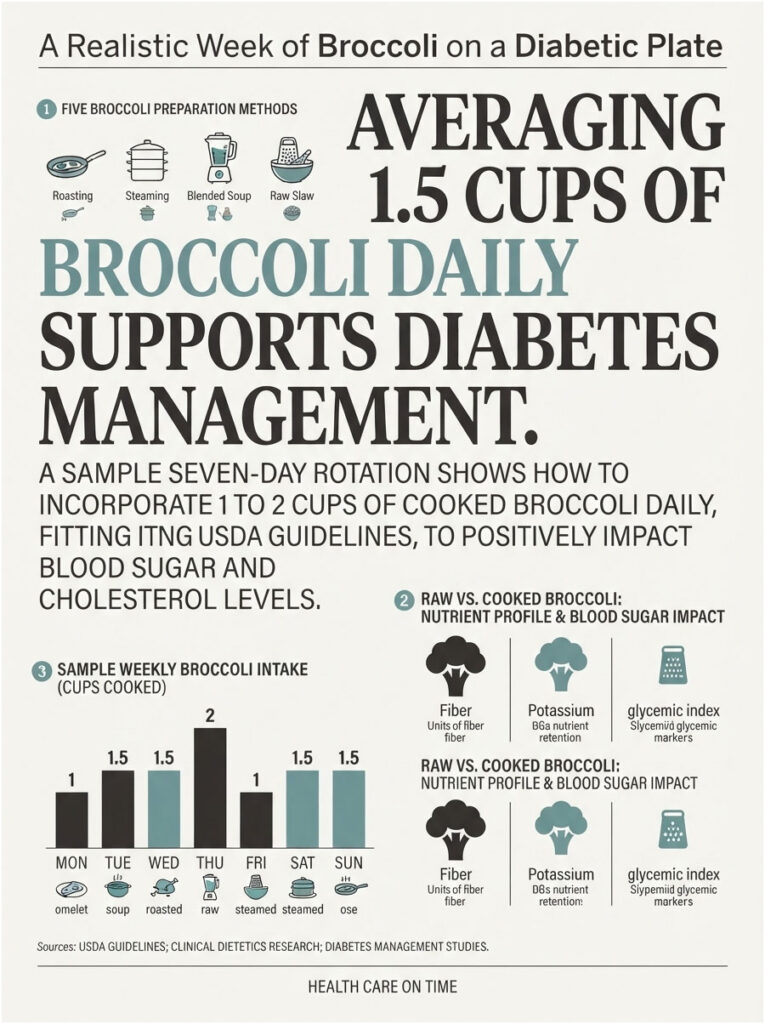
Five Preparations That Do Not Get Boring
Roast at 425 degrees Fahrenheit with olive oil and garlic for 18 minutes. Caramelization changes the flavor entirely, and dry heat avoids the leaching problem that comes with boiling.
Steam for 3 minutes, then toss with lemon juice, olive oil, and a pinch of mustard powder. This is the highest-sulforaphane preparation available in a normal home kitchen.
Blend into soup with cauliflower and a small amount of white bean for body. Broccoli soup keeps four days and reheats without turning to paste.
Shred raw stalks into slaw with cabbage and a vinegar dressing. Raw slaw also supplies active myrosinase, which helps any cooked broccoli eaten alongside it.
Fold chopped florets into a vegetable omelet or frittata. Protein plus vegetable at breakfast is the meal most Americans skip completely.
A Sample Seven-Day Rotation
- Monday: roasted broccoli with chicken thighs and a small portion of quinoa
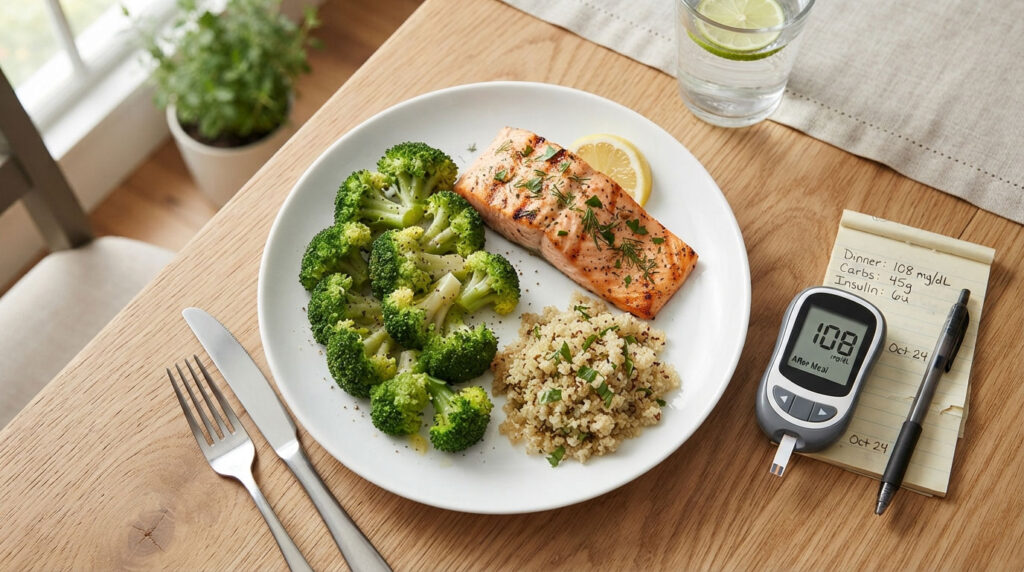
- Tuesday: steamed broccoli with lemon beside baked salmon
- Wednesday: broccoli and cauliflower soup with a side salad
- Thursday: stir-fried beef with broccoli over cauliflower rice, mustard powder added at the table
- Friday: broccoli slaw with grilled shrimp
- Saturday: broccoli frittata for brunch
- Sunday: roasted broccoli alongside whatever the family is already eating
That rotation averages roughly 1.5 cups cooked per day and lands squarely inside the 4 to 6 weekly serving target. In cases reviewed by our medical team, patients who plan the vegetable first rather than last are the ones who sustain it past month three.
What to Track and When to Retest
HbA1c every three to six months tells you whether the overall pattern is working. A single post-meal reading tells you almost nothing about a vegetable this low in carbohydrate.
Run a lipid panel annually, or as your physician directs. LDL cholesterol is the marker most likely to reflect a sustained increase in cruciferous vegetables, based on the 12-week trial data.
Home glucose or CGM patterns are most informative at dinner, since that is where the VESSEL study found the largest post-meal difference. Watch the shape of the curve, not only the peak.
Our lab partners report that patients who pair a diabetic panel with a lipid profile on the same draw catch cardiovascular drift considerably earlier than those testing glucose alone.
The full micronutrient breakdown, including exact vitamin K and folate figures per serving, appears in the HealthCareOnTime chart of what vitamins are in broccoli.
Frequently Asked Questions
How much broccoli should a diabetic eat per day?
One to two cups of cooked broccoli daily is a sensible target, or four to six servings across a week. That fits inside the USDA MyPlate goal of 2 to 3 cups of vegetables daily. No upper limit is established for healthy adults, though people on warfarin or potassium restrictions need a fixed amount.
Does broccoli raise blood sugar?
Barely. One cup of cooked broccoli contains about 11 grams of carbohydrate with 5 grams of fiber, producing a glycemic load near 1. If your meter jumps after a broccoli-containing meal, the rise almost always traces to the rice, bread, potato, or sauce beside it.
Can broccoli lower A1C?
Not on its own, based on current controlled trial evidence. The 2017 Science Translational Medicine study that lowered HbA1c used concentrated broccoli sprout extract at a dose equal to roughly 9 to 11 pounds of broccoli daily. Whole broccoli helps mainly by displacing higher-carb foods from your plate.
Is raw or cooked broccoli better for diabetics?
Raw delivers more sulforaphane and vitamin C. Cooked delivers more fiber per cup and digests more easily. Lightly steamed for 3 to 4 minutes is the best compromise, keeping myrosinase active while improving digestibility. Both versions have negligible effect on blood glucose.
Can diabetics eat broccoli every day?
Yes, for nearly everyone. Daily intake at one to two cups sits well within safe limits for adults without kidney restrictions, extreme raw thyroid concerns, or unstable warfarin dosing. Rotating other non-starchy vegetables through the week keeps your micronutrient intake varied.
Is frozen broccoli as good as fresh for blood sugar?
For blood sugar, yes. Carbohydrate, fiber, potassium, and glycemic load are essentially unchanged by freezing. Frozen broccoli is blanched first, which inactivates the enzyme needed for sulforaphane, so add a pinch of mustard powder after cooking if that compound matters to you.
Do broccoli sprout supplements work better than broccoli?
They deliver far more sulforaphane, and they are what the positive diabetes trials actually tested. Response varies widely by gut bacteria, and supplements are not FDA-regulated for potency. Discuss any sprout extract with your physician before adding it to a diabetes regimen.
Can I eat broccoli on warfarin?
Yes, provided your intake stays consistent. One cup supplies roughly 92 to 110 micrograms of vitamin K, enough to shift your INR if portions swing. Choose a regular amount, repeat it weekly, and notify your anticoagulation clinic before making a real change.
Does broccoli interfere with metformin?
No known interaction exists between broccoli and metformin. Sulforaphane reduces liver glucose production through a different pathway than metformin, which is part of why researchers found it interesting. Eating broccoli alongside metformin is safe and encouraged.
Is broccoli good for high cholesterol and diabetes together?
It is among the better single choices for that pairing. Two 12-week randomized trials found high-glucoraphanin broccoli lowered LDL cholesterol by 5.1 to 7.1 percent, and a separate trial showed cruciferous vegetables lowering systolic blood pressure and triglycerides. All of it comes at almost no carbohydrate cost.
Why does broccoli give me gas, and can I prevent it?
Sulfur compounds and fermentable fiber feed gut bacteria that produce gas. Start with half a cup cooked, increase gradually over two to three weeks, cook thoroughly, and chew well. Most people adapt. Persistent severe bloating may point to IBS and deserves a physician’s review.
Does broccoli affect the thyroid if I eat it daily?
At normal servings, no. Goitrogens in cruciferous vegetables can interfere with iodine uptake, but cooking reduces them substantially and typical American iodine intake offsets the rest. The concern applies mainly to people juicing several pounds of raw cruciferous vegetables every day.
| MEDICAL DISCLAIMER This article is provided by HealthCareOnTime for general educational purposes and does not replace advice from a licensed physician, endocrinologist, or registered dietitian. Diabetes and cardiovascular disease require individualized management. Do not start, stop, or change any medication, supplement, or restricted diet based on this content. If you take warfarin, have kidney disease, or have a thyroid disorder, speak with your treating clinician before significantly changing your vegetable intake. In a medical emergency, call 911. |
References
- CDC National Diabetes Statistics Report
- CDC Diabetes: A US Report Card
- NIDDK Diabetes Statistics
- American Diabetes Association: Statistics About Diabetes
- Sulforaphane reduces hepatic glucose production and improves glucose control in patients with type 2 diabetes (Science Translational Medicine, 2017)
- Effect of broccoli sprout extract and baseline gut microbiota on fasting blood glucose in prediabetes
- Cruciferous vegetables lower blood pressure in adults with mildly elevated blood pressure: the VESSEL study (BMC Medicine, 2024)
- Cruciferous vegetables improve glycaemic control compared to root/squash vegetables: the VESSEL study (Diabetes, Obesity and Metabolism, 2025)
- Diet rich in high glucoraphanin broccoli reduces plasma LDL cholesterol (Molecular Nutrition and Food Research, 2015)
- Cruciferous vegetable intake and cardiovascular disease risk in the Framingham Offspring Cohort
- American Institute for Cancer Research: Steaming Broccoli and Sulforaphane
- Cleveland Clinic: Health Benefits of Broccoli
- Drugs.com: Broccoli and Warfarin Interaction